By Suzanne Seryck, Master Gardener
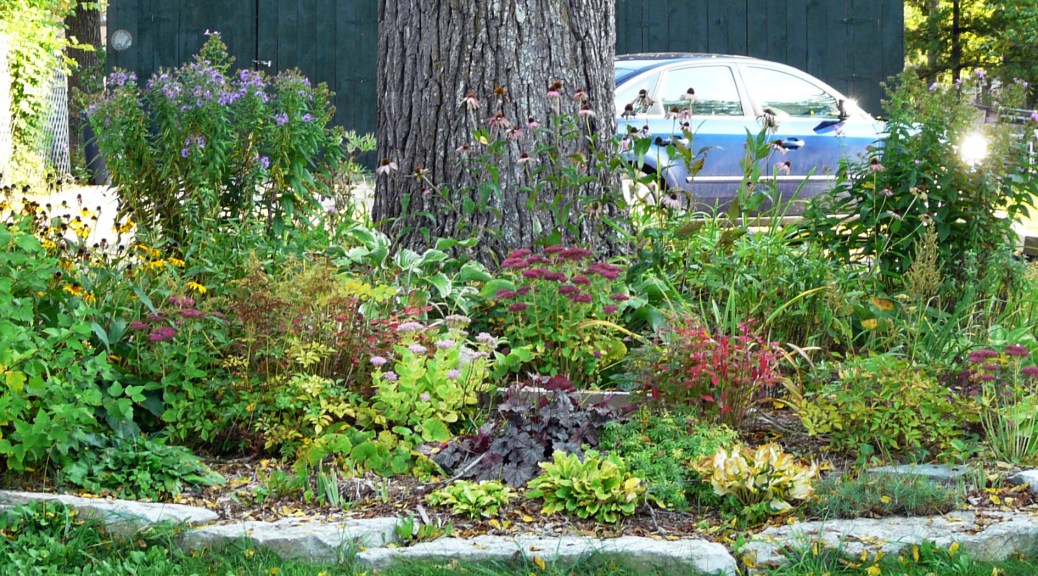
I first heard the term to be ‘caretaker of your garden’ at a permaculture course a few years ago. It has resonated with me ever since and has changed both the way in which I garden and also the way that I perceive my garden. Being the “caretaker of your garden” means that while you own the land that your garden is on, it is only temporary. You are, in fact, simply looking after that piece of land for a relatively short period of time before passing it on.
For me, being the caretaker of my garden makes me consider the longevity of the garden, what takes away from the health of the garden and what gives back to the garden; how to feed not just my family but also the wildlife whilst providing safe habitats; how to make the garden more self-sustainable reducing my time spent pruning, weeding, and imposing my unnatural demands on the garden thus allowing myself more time to simply enjoy the garden. For most of us, we are already doing the groundwork for this change already–it is simply a shift in the way we view ownership of our garden, or more specifically, the plot of land the garden sits on.
The following are some of the practices that I follow:
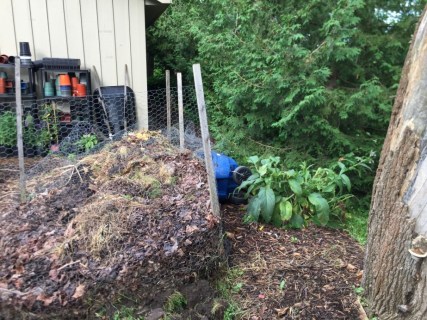
- A healthy garden always starts with healthy soil. I amend my soil annually with leaf compost. I have 2 large leaf composters in my back garden which I fill with bags of leaves I collect from neighbours. I also mulch up approximately 20 bags of leaves and spread these liberally over my vegetable and perennial gardens in the fall.
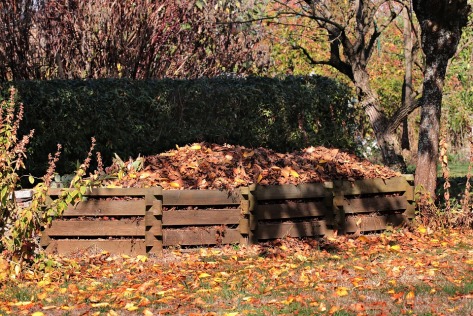
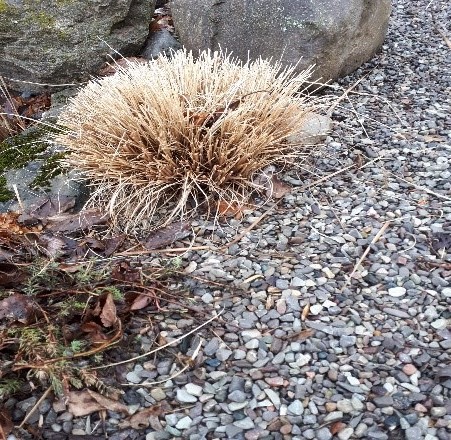
- I cut back very little in my garden in the fall mainly just anything that is diseased. In the spring I cut everything up into 1-2 inch pieces and drop them back on the garden. This also acts as a mulch as well as amending the soil.
- Plants that have multiple uses are important to me. This may be because I have a small garden; multiple functions can include fix nitrogen, use as a fertilizer, be edible or medicinal etc. as well as aesthetically pleasing.
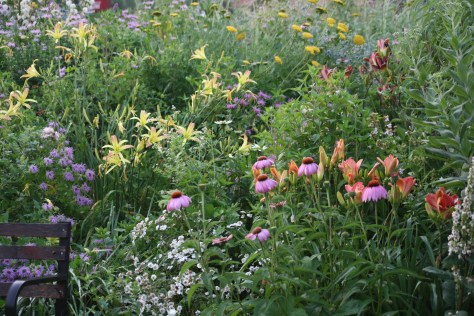
- Including vegetable plants in the perennial bed. I will often do this if I run out of room in my vegetable beds, however a lot of vegetable plants have amazing foliage and are great to line paths and place in the front of beds.
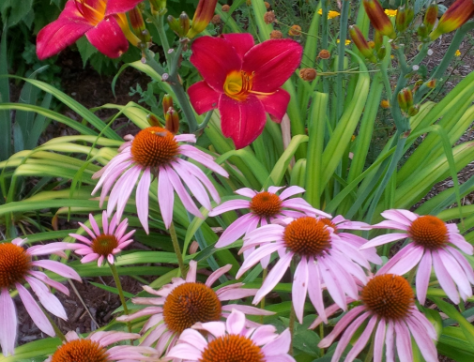
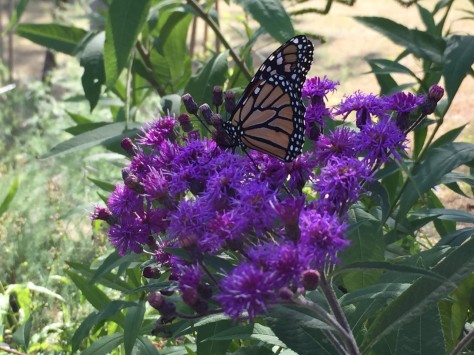
- Recently I have made efforts to increase diversity in my small garden, increasing the number of native plants. Native plants are generally hardier, more adapted to our climate and require less maintenance; they also tend to attract more wildlife and pollinators.
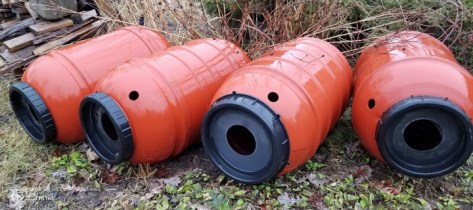
- I try to water as little as possible using rain barrels as much as I can. I must admit that any plants that do require more water, or in fact more maintenance of any kind, tend to be replaced fairly quickly.
For anyone who has not heard of permaculture, it is a set of guidelines, principles and practices for sustainable living and land use. When you narrow down permaculture to your home garden, you are in effect looking at a more sustainable, natural method of gardening mimicking that found in nature to create a cohesive garden, in which all elements benefit, nurture and interconnect with each other. Whilst that does sound like a fairly lofty aspiration, the good news is that just by implementing or adding a couple of permaculture practices can have a significant impact on your garden, but that sounds like a blog for another day.
For me the term ‘being caretaker of your garden’ and the reasoning behind it align with my passion and concern regarding climate change and environmentalism. Whilst the changes I make may only have a small impact these type of changes can add up and often lead to something bigger.
For further information on permaculture:
- https://www.theurbanfarmer.ca/permaculture-design
- https://permacultureprinciples.com/
- Permaculture podcast:

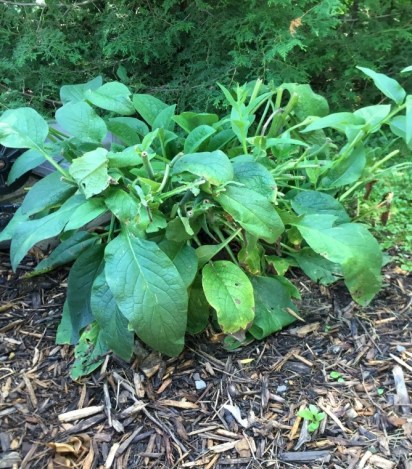
 I started my seeds inside under lights. When I planted the seedlings outside, one went into the ground in my garden and the other went into a 5 gallon bucket with holes drilled in the bottom. The bucket plant went into my little greenhouse.




 Agastache (pronounced AG-a-stak-ee) has been chosen as Herb of the Year 2019. This name is actually the plant genus and includes many different species native to North America. All species attract bees and butterflies and deer do not usually eat. The plant we are most familiar with is Anise Hyssop (Agastache foeniculum) which has a strong anise or licorice fragrance to its leaves. It is a prairie plant that likes sun and grows 3′- 5′ tall in any type soil as long as it is well drained. Anise Hyssop has average moisture requirements and is a perennial herb zone 4. Bloom time is mid summer and common flower colour is purple, but it can be found in white and pink. The native strains can reseed, but you can find sterile cultivars like Blue Fortune which may need support. Use the leaves in teas, green salads, or fruit salads. The flowers are edible also. You can use as cut flowers or dry the flowers for arrangements.