By Thom Luloff, Master Gardener
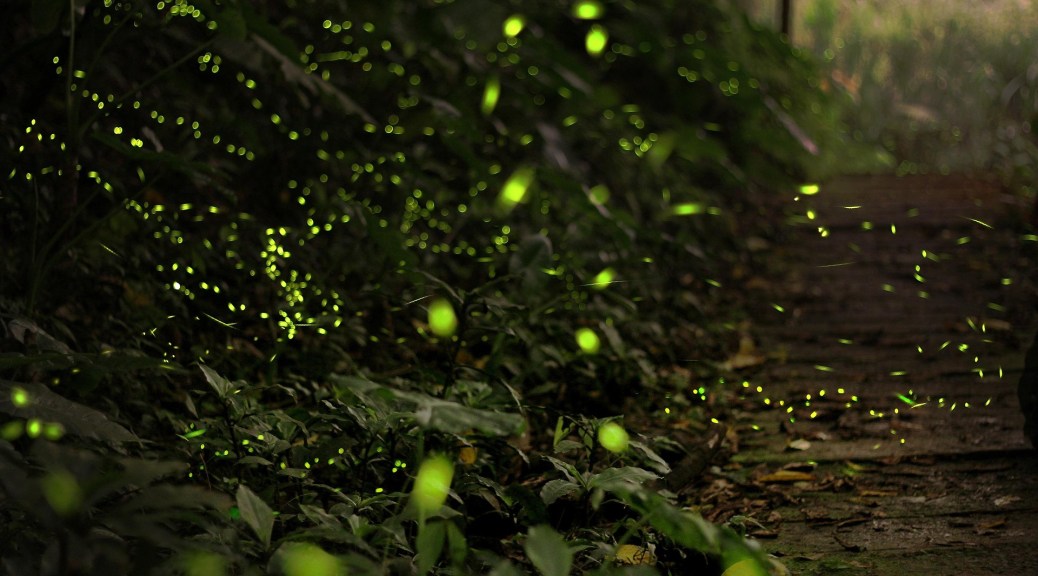
There are few things that feel more like an Ontario summer than fireflies. On a warm June evening, just as the last light disappears behind the trees, the lawn suddenly begins to sparkle. One flash appears beside the garden. Then another. Soon tiny lanterns are drifting over the grass, blinking between shrubs and hovering along the edge of the woods. For a few weeks each summer, our gardens host one of nature’s most extraordinary light shows.
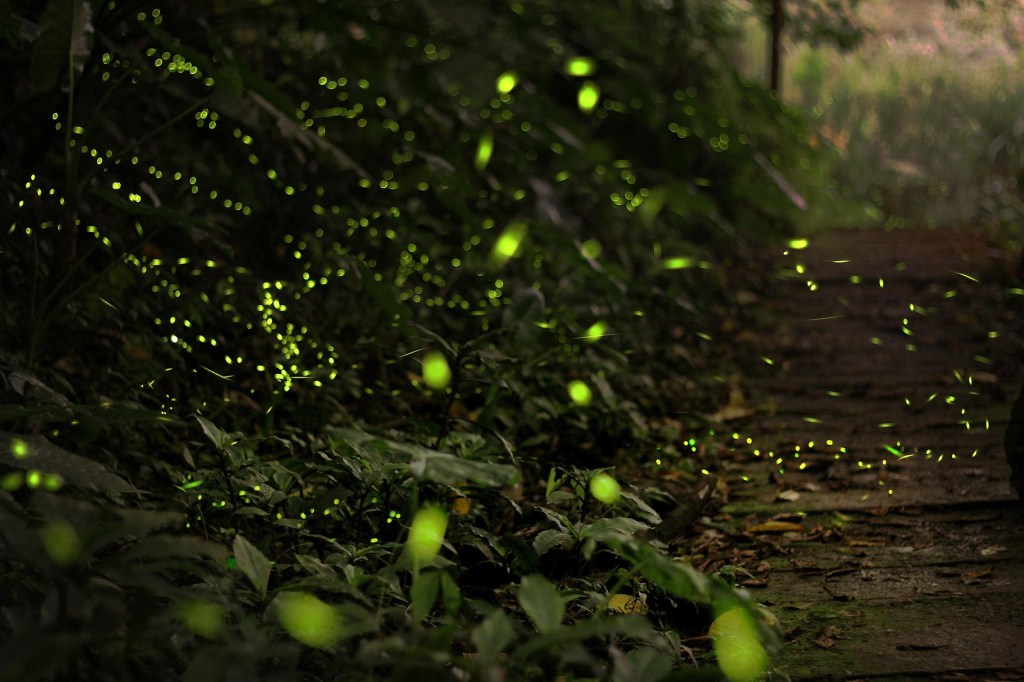
Yet there is much more happening here than summer magic and believe it or not, next summer’s “glow party” starts right now, with the steps we take in the autumn.
A Love Letter Written in Light
To get right to the point, fireflies are not actually flies at all. They are beetles belonging to the family Lampyridae, and Ontario has a surprisingly rich diversity, with 23 species of firefly all with remarkably different life histories (Luk et al., 2011).
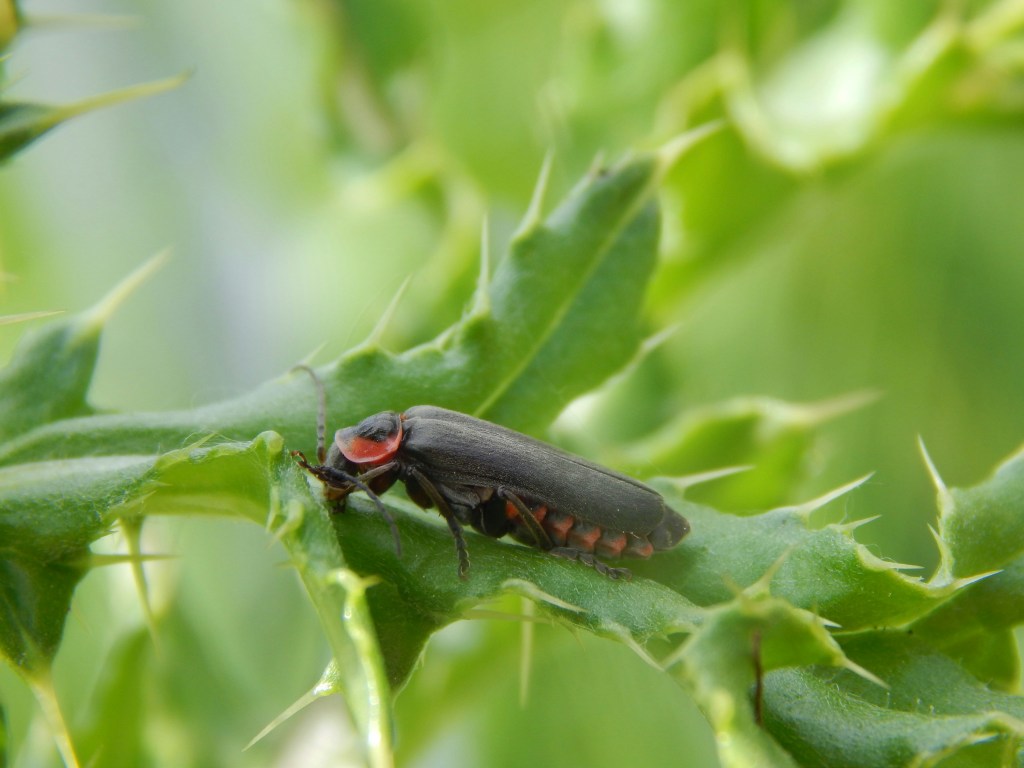
Fireflies produce light through bioluminescence, a biochemical reaction occurring in specialized light organs. But those lights we see are not random. Each species has their own unique pattern of flashes, pauses, timing, and flight behaviour. In many familiar flashing species, males fly through the darkness broadcasting their luminous courtship signals while females, often closer to the ground, evaluate them and respond.
Essentially, that peaceful-looking summer meadow is filled with beetles sending romantic text messages.
Here is where gardeners become particularly important.
The adult fireflies dancing above our lawns may live for only a relatively short period, but much of the firefly life cycle happens on or beneath the ground.
Fireflies undergo complete metamorphosis: egg, larva, pupa and adult. Depending on the species and climate, larvae can spend a year or more developing in moist soil, leaf litter, woodland edges and other protected habitats before eventually pupating and emerging as adults.
This means that for most of their lives, the fireflies in your garden aren’t flying at all. They’re crawling in it.
And those larvae are surprisingly formidable predators. Many feed on soft-bodied invertebrates, including slugs, snails, worms and other small organisms. Ontario’s fireflies are therefore not simply beautiful additions to the garden; during their larval stage, many are active participants in the soil and litter food web (Luk et al., 2011). Think about that the next time you see a slug munching its way through your hostas!
So Where Have All the Fireflies Gone?
Many people have a similar memory: There used to be many more fireflies.
Quantifying firefly declines is complicated because long-term population datasets are limited, and trends differ among species and regions. We should therefore be cautious about assuming that every firefly species is declining everywhere. But there are genuine reasons for concern.
A global assessment by firefly experts identified habitat loss, artificial light at night and pesticide use among the most important threats to firefly populations (Lewis et al., 2020). North American conservation assessments have likewise found that some species are considerably more vulnerable than others, particularly those with specialized habitat requirements (Fallon et al., 2021).
And unfortunately, many things we traditionally consider tasks of a “well-maintained” garden are almost exactly the opposite of what a firefly needs:
- We rake away the leaves.
- We remove fallen branches.
- We cut the grass short.
- We clear vegetation from damp corners.
- And then we illuminate the property all night, preventing the way they communicate
From a firefly’s perspective, we’ve removed the bedroom, emptied the refrigerator and left the stadium lights on!
Use this Autumn to GLOW UP for next summer!
To get the glow up, we need the adult beetles.
To get the beetles, we need healthy larvae.
So, leave some leaf litter beneath shrubs and trees, particularly in places where it will remain moist. Maintain some scattered patches of taller vegetation. Allow a corner beside a hedge, woodland edge or garden bed to remain slightly wild. Keep woody debris where appropriate and preserve moist, shaded areas rather than trying to make every square metre of the property look manicured.
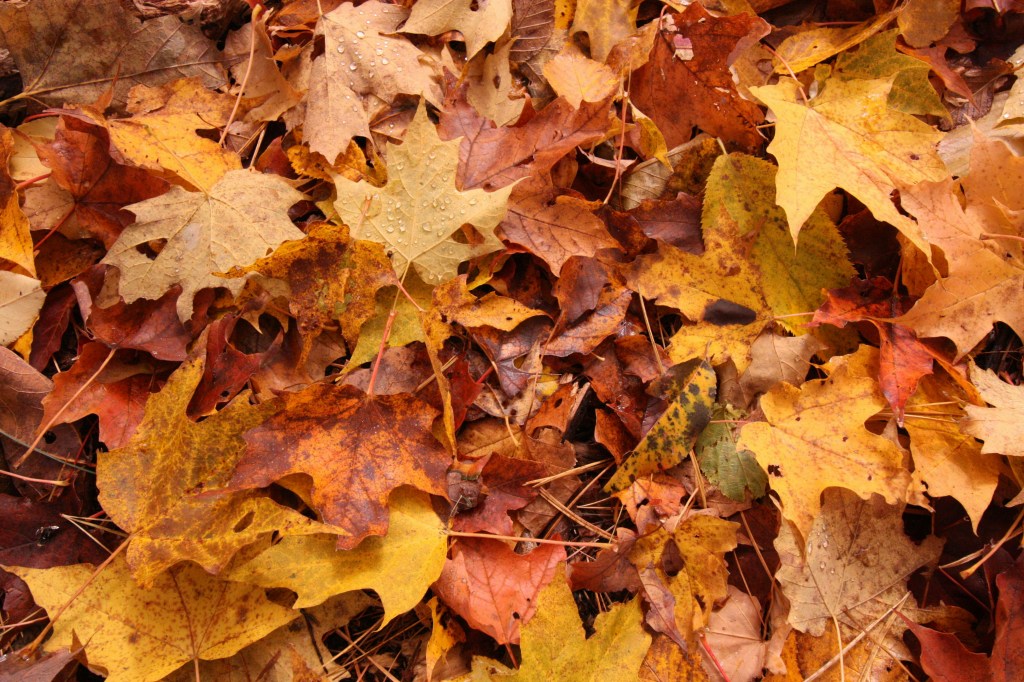
And because larvae live and hunt near the soil surface, reducing unnecessary soil disturbance and avoiding broad-spectrum insecticides can help preserve both fireflies and the invertebrate communities on which they depend. Habitat loss and pesticide exposure are among the major concerns identified for fireflies globally (Lewis et al., 2020).
And Please—Turn off (or down) the lights. Let nighttime be dark. Light pollution is now recognized as an important conservation concern for fireflies precisely because reproduction depends so heavily on visual communication (Lewis et al., 2020). To prepare, use this autumn to switch essential security lighting to motion sensors or timers. Direct necessary lights downward rather than outward into gardens and natural areas.
And next summer, when darkness finally settles over an Ontario summer evening, perhaps the garden will turn its own lights on.
References
Fallon, C. E., Hoyle, S. M., Lewis, S. M., Owens, A. C. S., Lee-Mäder, E., Black, S. H., & Jepsen, S. (2021). Evaluating firefly extinction risk: Initial red list assessments for North America. PLOS ONE, 16(11), e0259379.
Lewis, S. M., & Cratsley, C. K. (2008). Flash signal evolution, mate choice, and predation in fireflies. Annual Review of Entomology, 53, 293–321.
Lewis, S. M., Wong, C. H., Owens, A. C. S., Fallon, C., Jepsen, S., Thancharoen, A., Wu, C., De Cock, R., Novák, M., López-Palafox, T., Khoo, V., & Reed, J. M. (2020). A global perspective on firefly extinction threats. BioScience, 70(2), 157–167.
Luk, S. P. L., Marshall, S. A., & Branham, M. A. (2011). The fireflies (Coleoptera: Lampyridae) of Ontario. Canadian Journal of Arthropod Identification, 16, 1–105.


Great blog Thom and a nice complement to my one from 2023 about rethinking light in the garden, which is critical to creating a thriving habitat for our fireflies. Readers can view that here https://peterboroughmastergardeners.com/2023/04/24/like-moths-to-a-flame-rethinking-outdoor-lighting-in-your-garden/
I’ve also recently developed (and given) a presentation on Rethinking Light in Your Garden.
LikeLike