By Silvia Strobl, Master Gardener
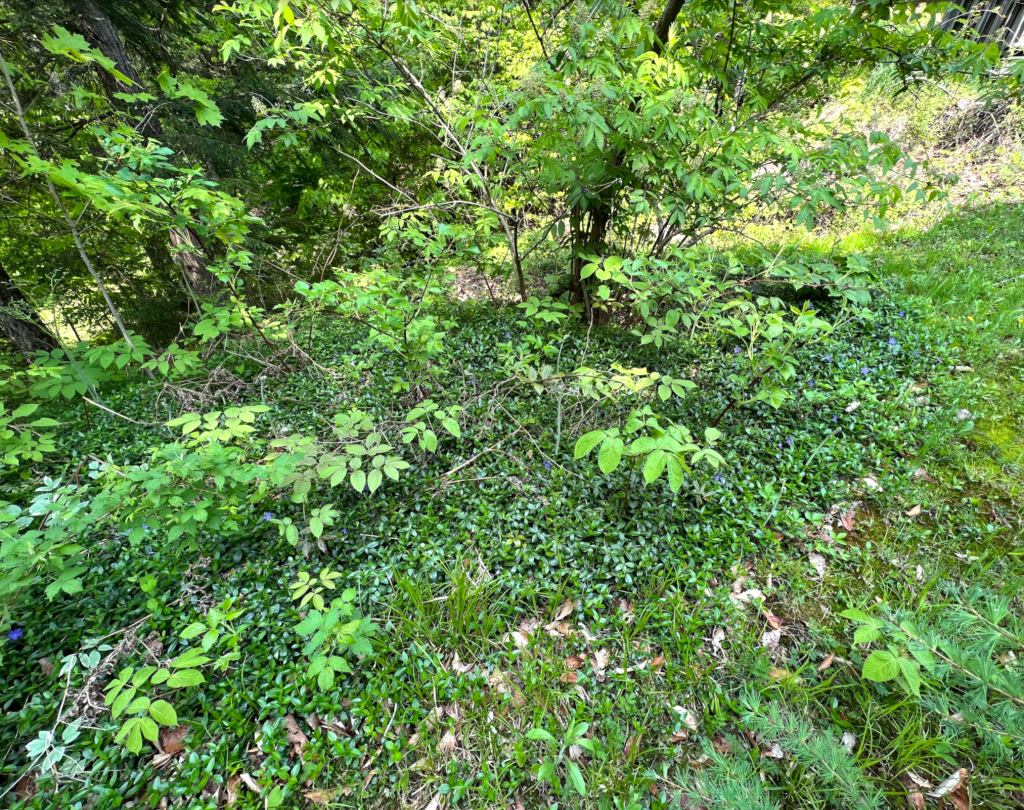
Photo: Invasive periwinkle spreading into my friend’s forest.
For years, gardening magazines praised periwinkles (Vinca spp.)¹ for their rapid growth, low maintenance, and adaptability to a wide range of growing conditions. Today, they are recognized as invasive plants that have spread into natural forests throughout much of southern and central Ontario.
Periwinkle has allelopathic properties that can inhibit the growth of other plants and alter soil chemistry, including increasing soil calcium and sulphur levels (see references cited in Mitchell and Simkovic 2025). These adaptations help periwinkle outcompete and displace native understorey plants, such as trilliums, and impede the regeneration of native trees (ibid.).
Have you been putting off removing that patch of periwinkle in your garden? Hand-pulling can be daunting because even tiny pieces of stem or root can regenerate. Nodes along both above- and below-ground runners can also take root and produce new plants.
There is another option: smothering periwinkle with heavy-duty black landscape fabric.
A three-year experiment
Over the past three years, I have helped a friend control a large patch of lesser periwinkle (V. minor) that was spreading into the native woodland on her rural property. Reluctant to use herbicides, she agreed to try heavy-duty black landscape fabric.
By excluding sunlight, the fabric prevents photosynthesis and gradually depletes the carbohydrates stored in the plants’ roots, reducing their ability to regrow.
Area 1: May 2023 to September 2025
We began by brush-cutting the periwinkle as close to the soil surface as possible. We raked the cut vines into clear plastic bags for solarization before disposal, then covered an area approximately 12 × 12 feet with landscape fabric. We carefully worked around a red elderberry and a red trillium, leaving both uncovered.
In September 2025, we lifted the fabric to find that the periwinkle had been completely killed. We immediately planted the area densely with winter-sown native species, including bluestem goldenrod, zigzag goldenrod, wild columbine, and wood poppy, adding leaf mulch to cover remaining bare soil.
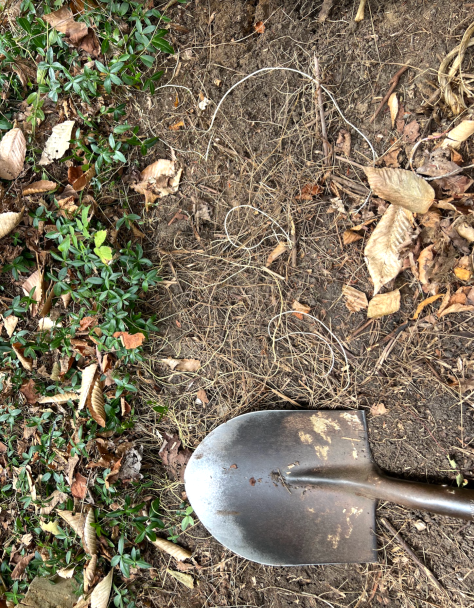
Area 2: September 2025 to August 2026
We reused the fabric and landscape staples from Area 1 to cover the adjacent patch, again brush-cutting the periwinkle first. When we lifted the fabric in late August 2026, we found that the periwinkle had again been completely killed—this time after just one year.
We planted Area 2 densely with native plants and reused the fabric and staples on the next section, Area 3.
Results
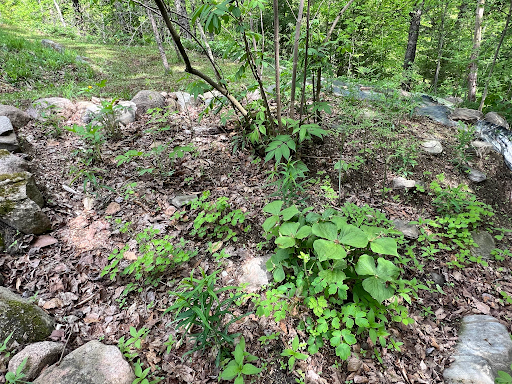
after Fall 2025 Planting
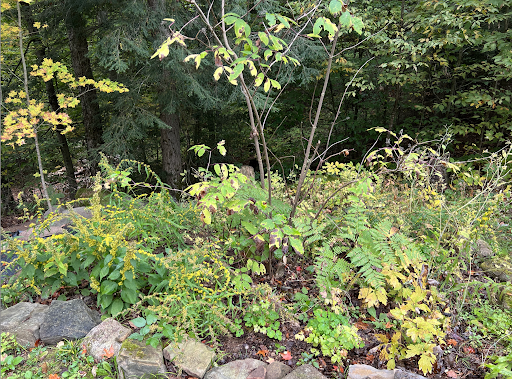
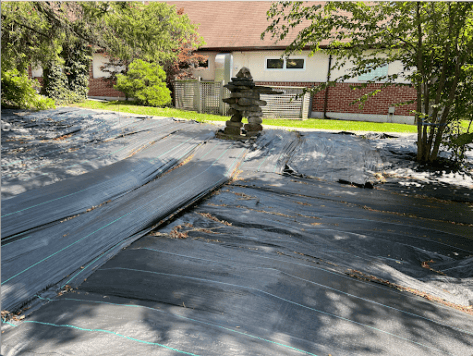
If the cost of landscape fabric and native plants is not a limiting factor, you can cover a larger area at once. The Peterborough & Area Master Gardeners used this approach in the Sundial Garden at Peterborough’s Riverview Park and Zoo in June and August 2026 as shown in the following photo.
Tips for success
| Prepare the area. Brush-cut the periwinkle as close to the soil surface as possible. Rake up the cut vines, bag them in clear plastic for solarization, and dispose of them appropriately. | 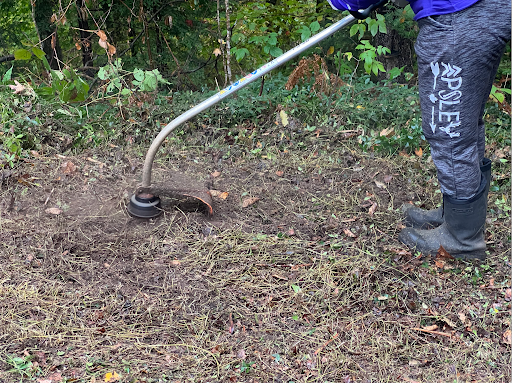 |
| Overlap generously. Periwinkle can readily grow through gaps between adjoining pieces of fabric. Overlap seams by 4–6 inches and extend the fabric beyond the edges of the infestation. Curved edges around hardscaping require extra care. | 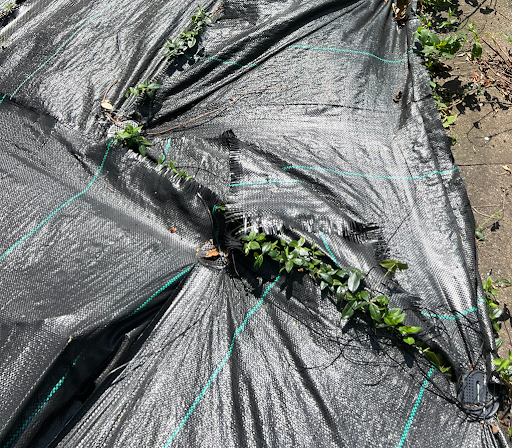 |
| Secure the fabric firmly. Place landscape staples every 2–3 feet along the edges and overlapping seams to maintain close contact with the ground. Using gaskets can make removing and reusing the staples much easier. | 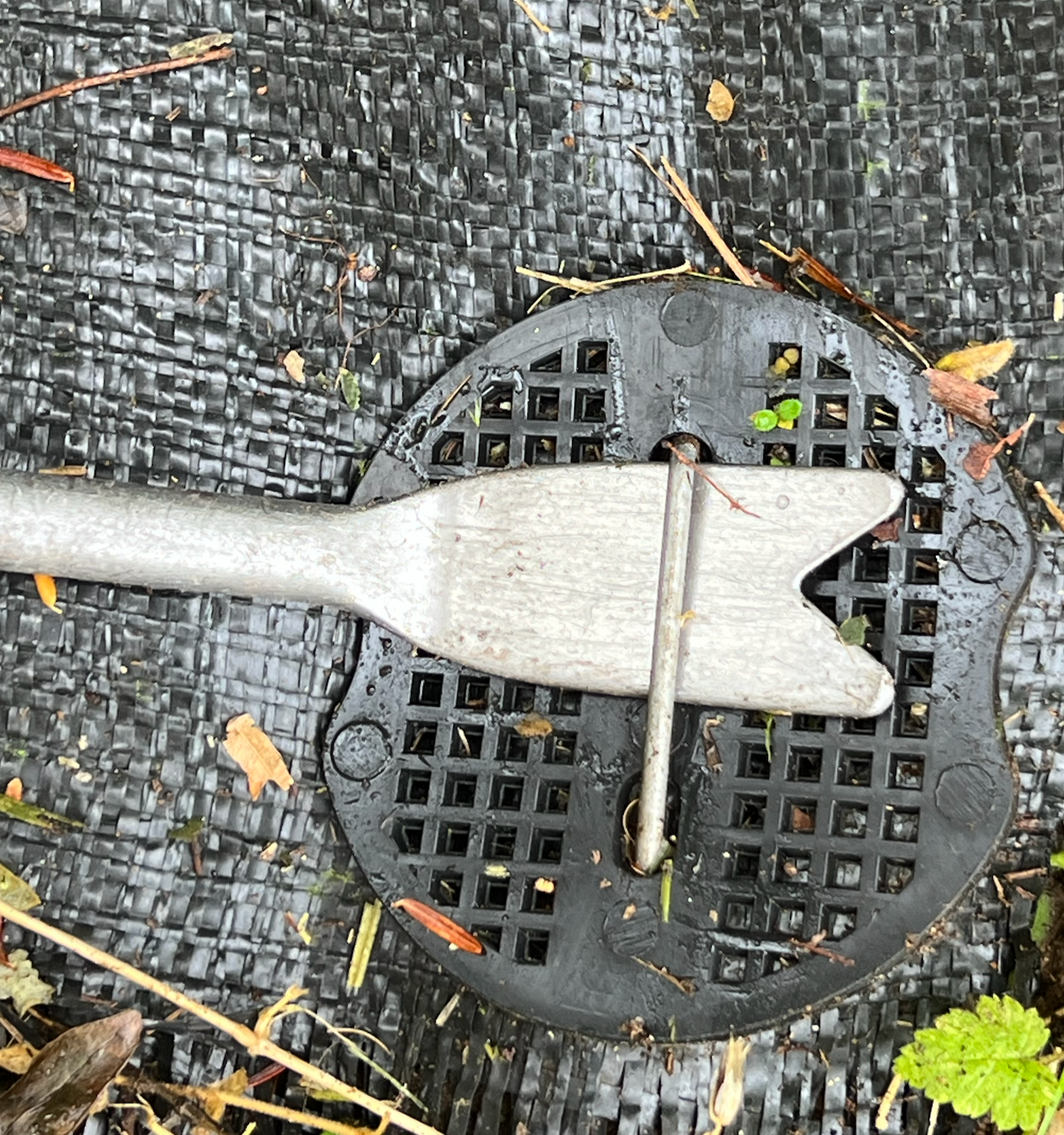 |
| Pay attention to slopes. Sloping ground can make installation more challenging. Additional rocks, along with landscape staples, may help keep the fabric in contact with the soil. | 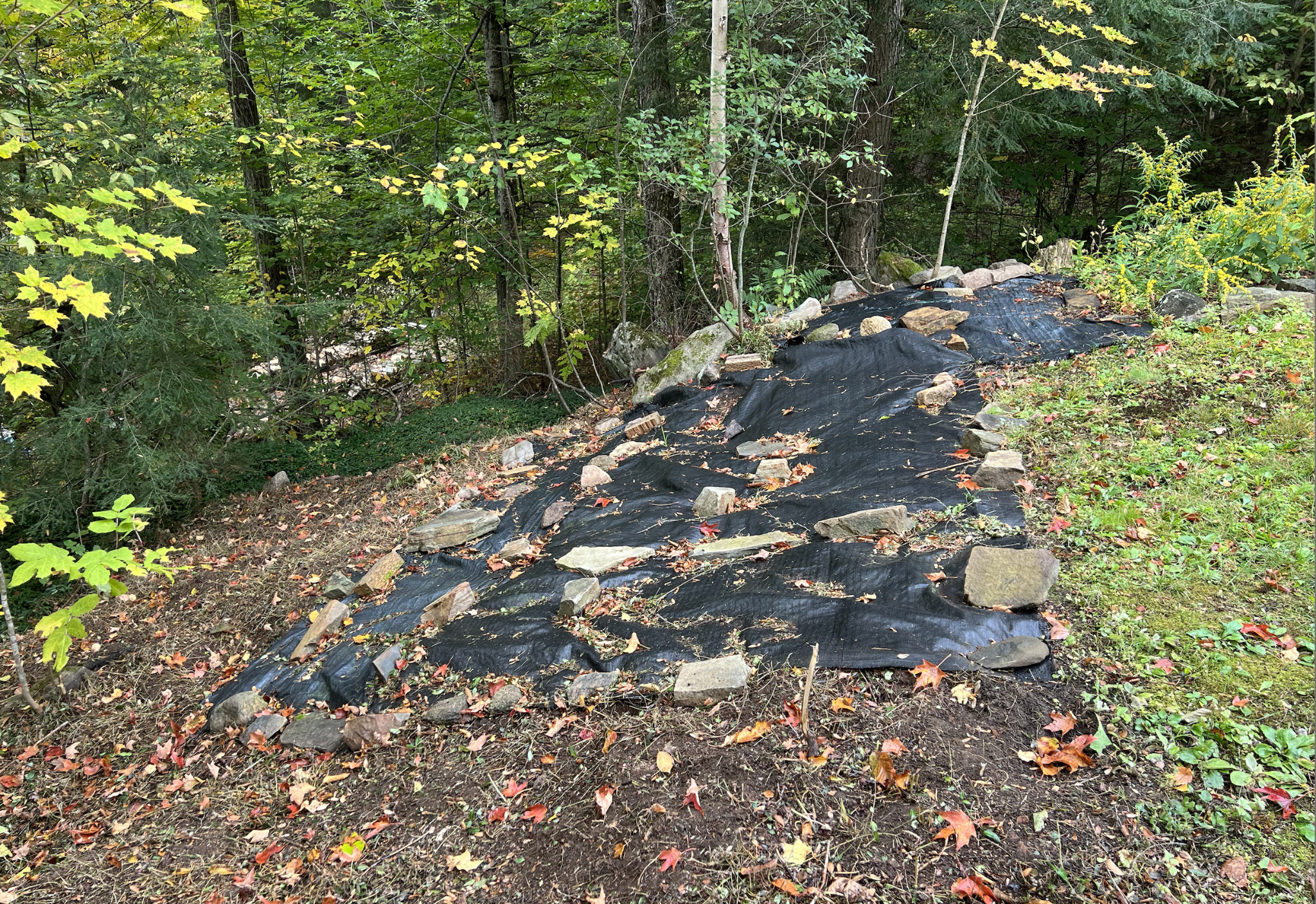 |
| Protect desirable plants. Take care when working around native plants. Poorly fitted fabric can allow periwinkle to creep back into the treated area, requiring repairs. At the Zoo, periwinkle that had been covered for three months was already white, indicating that it had been deprived of light and could no longer photosynthesize. Landscape fabric will be kept on for several more months though. | 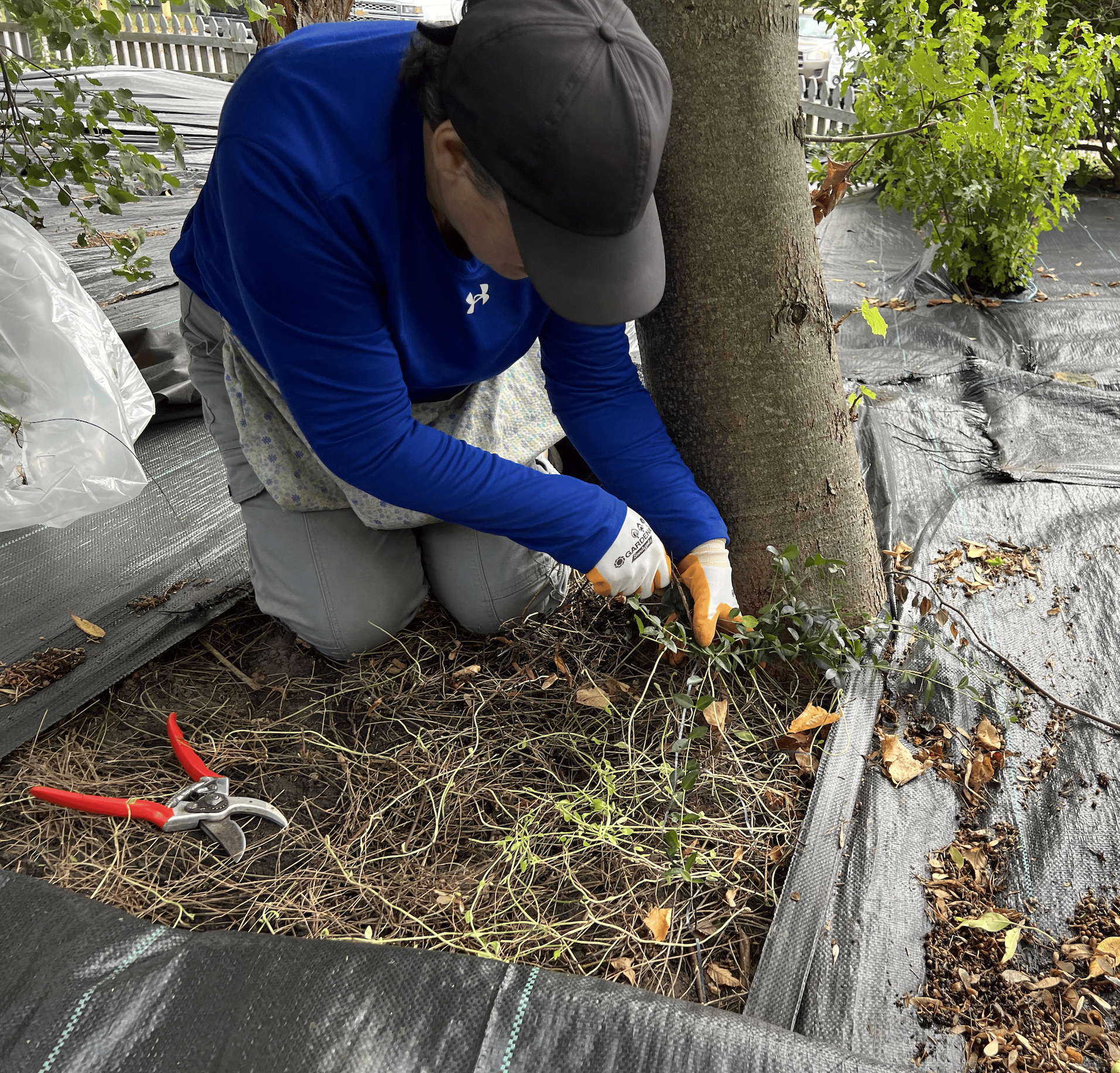 |
Be patient and plan ahead. Leave the fabric in place for at least one year, and potentially up to two years, depending on conditions and regrowth. Have native plants ready to establish a dense cover as soon as the fabric is removed. In the photograph, native plants are laid out in Area 2 in the foreground, while zigzag and bluestem goldenrods bloom in Area 1 behind them. Farther down the slope, another patch awaits treatment. | 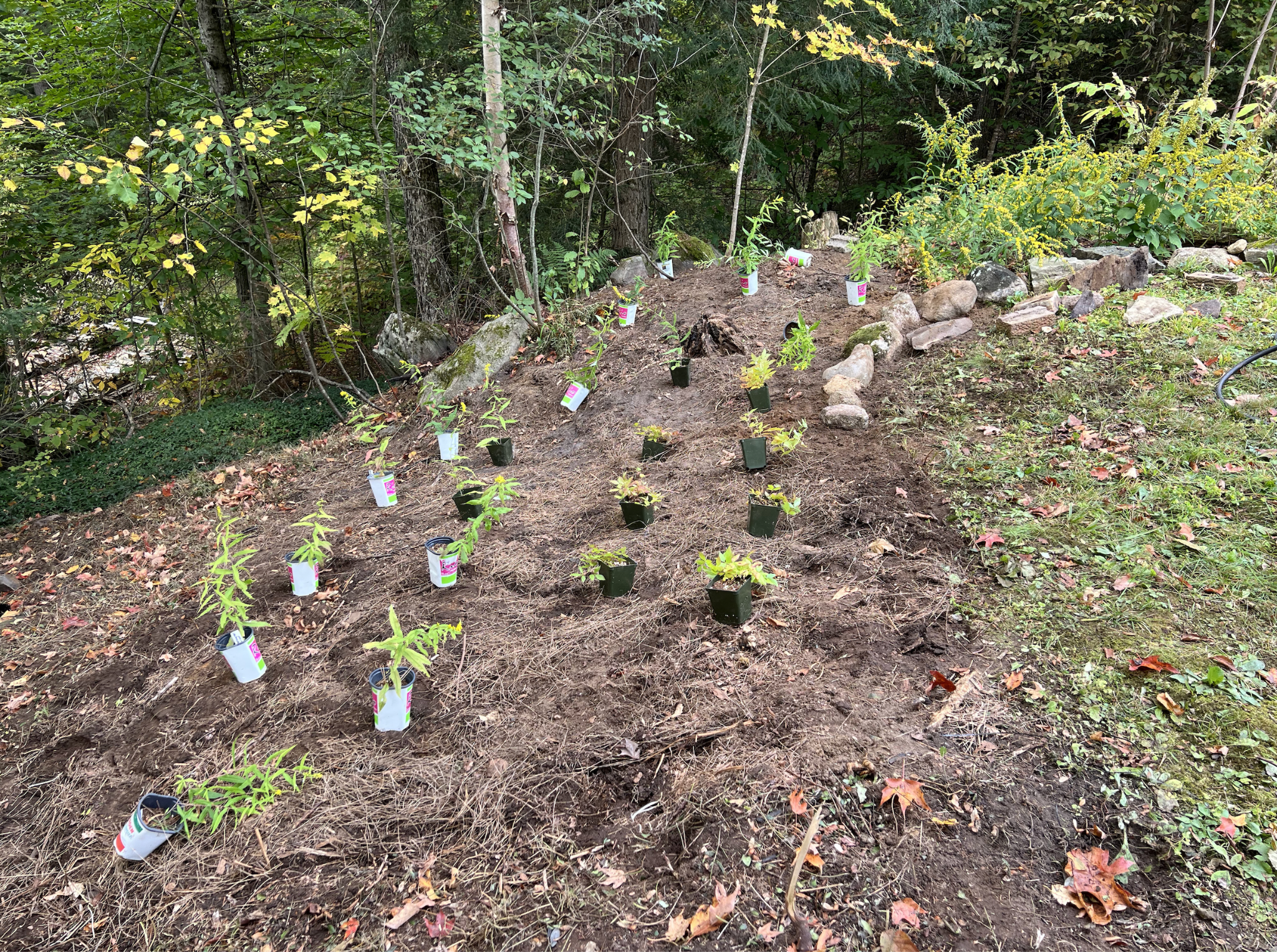 |
| Respect wildlife. At the zoo, we left the three entrances to a fox den uncovered. Foxes had successfully raised kits there the previous spring, and we wanted to leave the entrances accessible in case the adults returned that winter. We will manage the periwinkle emerging around the den by hand-pulling. | 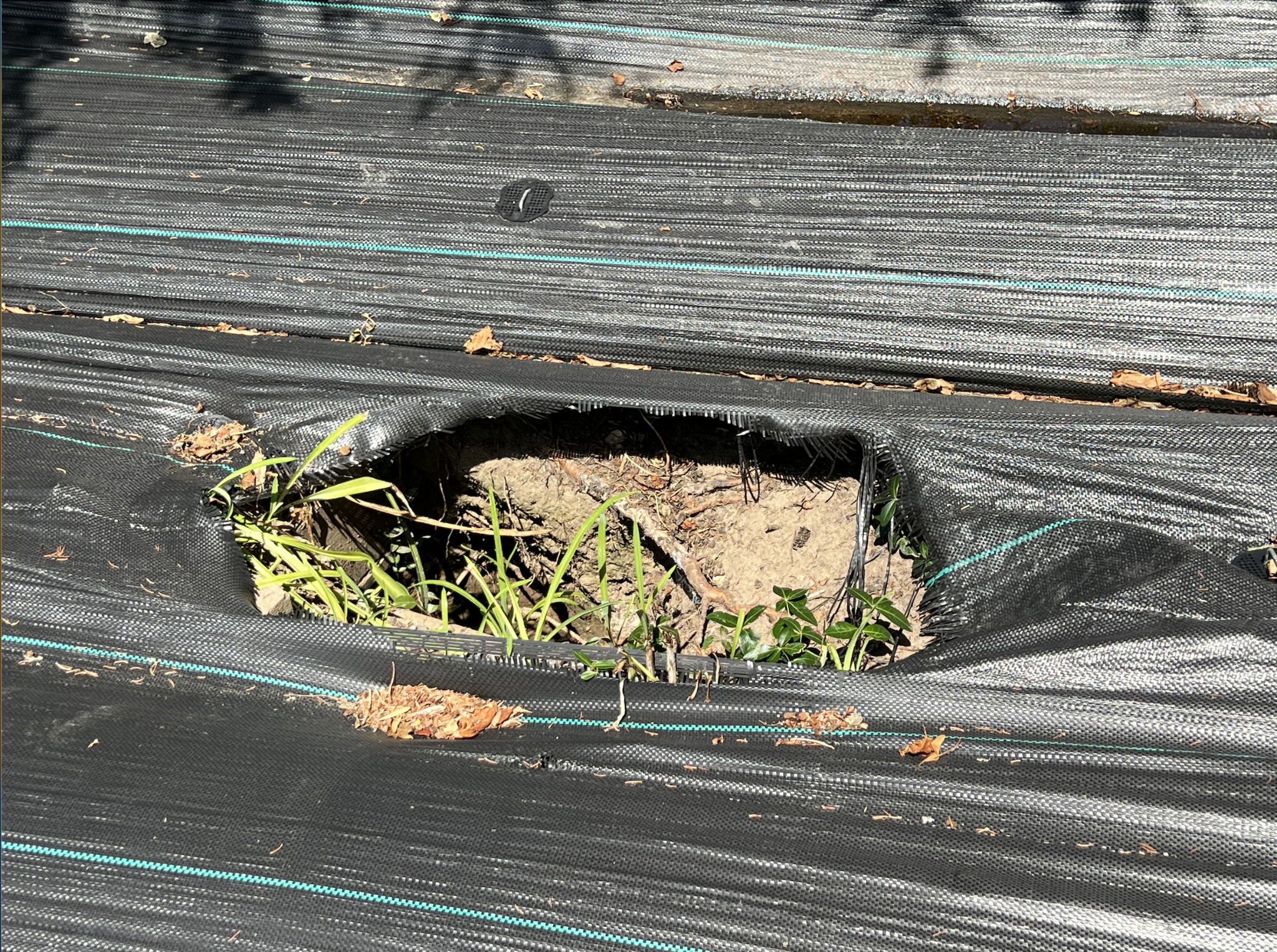 |
| Watch for surprises! After we removed the fabric from Area 1, a native round-leaved hepatica (Anemone americana) emerged from dormant seed in the soil. What a welcome discovery! | 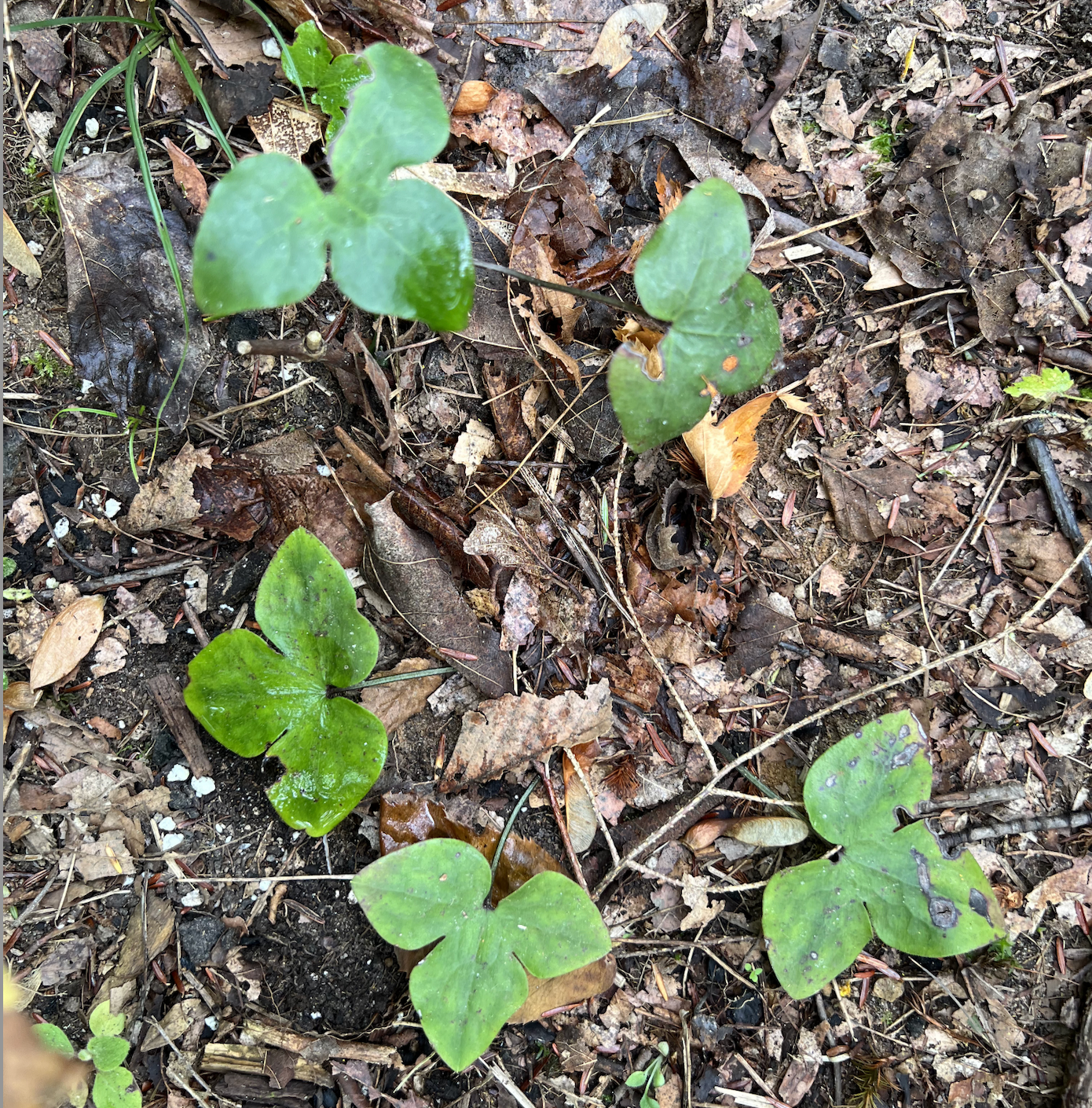 |
What else can you control this way?
Smothering with landscape fabric may also help control other creeping, non-native groundcovers, including goutweed, pachysandra, creeping Jenny, and English ivy. Both spring and fall can be suitable times to install heavy-duty fabric, provided it is secured properly and left in place long enough to suppress regrowth.
Once the fabric is removed, replant densely with native species suited to the site. This helps occupy the space, reduce opportunities for invasive plants to return, and restore habitat for native wildlife.
Could this approach help you reclaim a patch of your garden for native plants?

