Category Archives: Perennials

Why You Should Plant Flowers in Your Vegetable Garden

By Silvia Strobl, Master Gardener

Flowers planted in a vegetable garden aren’t just beautiful, nor just an edible addition to your salads, and not even just a pollinator attractant for your zucchini crop. Did you know that specific flowers that attract beneficial insects by providing pollen and nectar resources, known as insectary plants, are one part of the botanical triad preventative pest management approach used by organic farmers that you can apply in your own garden? The other two parts of the triad are the desired crop (vegetable or fruit) and a trap crop that is more attractive to insect pests than the desired crop, hence luring pest populations away. The trap crop once infested with pests is sacrificed.

Field trials have demonstrated that planting both insectary plants and trap crops is more effective at reducing pest populations than using either method alone (i). Researchers are developing guidelines for the most effective triad plant combinations for a localities’ pest and beneficial insects. Additionally, they are testing optimal planting arrangements, for example, planting insectary plants along field edges and inter-planting trap crops with the desired crop.

In Quebec, researchers evaluated 10 different flowering plants for how well they attracted both (i) beneficial natural insects and (ii) typical insect pests. Weekly surveys found that beneficial ladybeetle (Coccinellidae family) captures were twice as high in Marigold (Targetes patula), Nasturium (Tropaeolum majus), Cosmos (Cosmos bipinnatus) and Common Yarrow (Achillea millefollium) as compared to the other six plants in the study. Meanwhile, captures of Tarnished Plant Bugs (Lygus lineolaris) pests were highest in Bee (or Lady) Phacelia (Phacelia tanacetifolia) while flea beetle pests (Chrysomelidae: Alticinae) were highest in Sweet Alyssum, White Charlock (Sinapis alba), and Marigold (ii).

Trap crops can be in the same family as the desired crop, but have to be more attractive to the pest. For example, in one study 10% percent of the Broccoli crop area was interplanted with the Brassica, Pac Choi to effectively lure away flea beetles (iii). Similarly, Blue Hubbard Squash, susceptible to Squash Vine Borer (Melittia cucurbitae), Squash Bug (Anasa tristis), and spotted and striped cucumber beetles (Diabrotica undecimpunctata, Acalymma vittatum), is used by commercial farmers as a trap crop when growing other squash, cucumbers and melons (iv).

Home gardeners can apply the botanical triad by interplanting trap crops and insectary plants in their vegetable gardens.

The Pac Choi trap crop is more attractive to flea beetles than Broccoli. Once flea beetles feed on Pac Choi they can easily be controlled by other means, for example, tilling the infected Pac Choi into the ground (Photo used with permission from Dr. Joyce E. Parker, The University of Sydney).


Trap Crops


Planting a diversity of trap crops is more effective than planting only one trap crop species. The trap crop should cover at least 10% of the desired crop’s planting area to be effective, and must be destroyed to kill the pest before it moves to the desired crop (iii). A few trap crops that have been found to reduce insect pests on common vegetable crops follow.

A few studies have found that basil and marigolds effectively reduced thrip and tomato hornworm populations in tomatoes (v). The author planted a few basil (in all 4 corners of the raised bed) and marigold plants into this tomato bed.

Insectary Plants


Flowering annuals like Marigold, Nasturtium, Cosmos, Bee Phacelia and Sweet Alyssum can be started indoors before transplanting the seedlings into vegetable gardens after the frost-free date. These will flower within a month and be able to feed beneficial insects, when pest populations peak and right into late fall. Planting a succession of native flowering plants near the vegetable garden can also provide habitat for beneficial insects as well as support pollinators.

These annuals can be purchased in garden centres, but are often only available as varieties with double flowers that either produce less nectar (because energy is put into petal production) or block pollinator access to nectar and pollen (vii). Choose single or heirloom varieties to maximize pollen and nectar for beneficial insects. It is also more economical to start your own plants, because you can be certain they haven’t been treated with synthetic pesticides. After all you want to attract beneficial insects that will in turn prey on or parasitize insect pests on your vegetables!

As you plan your 2025 vegetable garden, consider whether the botanical triad could help prevent or minimize any pest problems you may have experienced in the past.

Some flowers like Marigolds both attract beneficial insects and trap pests, here helping to protect the Armenian Cucumber in the author’s garden. The Sweet Alyssum in the bottom left corner (and elsewhere in the garden) has also been found to be both an insectary plant and a trap crop (ii).


References

i. Shesthra, B., D.L. Finke, and J.C. Piñero. 2019. The ‘Botanical Triad’: The Presence of Insectary Plants Enhances Natural Enemy Abundance on Trap Crop Plants in an Organic Cabbage Agro-Ecosystem. Insects: June10(6):181 https://www.mdpi.com/2075-4450/10/6/181

ii. Boisclair, J. E. LeFrancois, M. LeBlanc, M. Grenier, M. Lefebvre, & G. Richard. 2014. Beneficial and pest insects associated with ten flowering plant species grown in Québec, Canada https://orgprints.org/id/eprint/24006/1/24006-OWC2014-Boisclair-Canada-Flowering%20strips_MM.pdf

iii. Parker, J. & W. Snyder. 2014. Diversity by Design: Using Trap Crops to Control the Crucifer Flea Beetle. https://eorganic.info/sites/eorganic.info/files/u461/trap%20cropping%20flea%20beetle%20webinar_Final.pdf

iv. University of Missouri. 2017. Trap cropping: A simple, effective, and affordable Integrated Pest Management strategy to control squash bugs and squash vine borers. https://ipm.missouri.edu/MEG/2017/3/Trap_cropping/

v. Parker, J.E., W.E. Snyder, G. C. Hamilton and C. Rodriguez‐Saona. 2013. Companion Planting and Insect Pest Control. Chapter 1 in Weed and Pest Control – Conventional and New Challenges, Pages 1-30. http://dx.doi.org/10.5772/55044

vi. Hoidal, N. 2021. Companion planting in home gardens. University of Minnesota Extension. https://extension.umn.edu/planting-and-growing-guides/companion-planting-home-gardens

vii. Silva, E. 2021. Less showy flower petals mean more pollinators. Oregon State University Extension Service. https://extension.oregonstate.edu/gardening/pollinators/less-showy-flower-petals-mean-more-pollinators

Somewhat related:

HOW CHEMISTRY PLAYS A ROLE IN PLANT-INSECT RELATIONS IN OUR GARDENS

Light in the Garden

By Marjorie Vendrig, Master Gardener in Training

It’s the darkest time of the year, daylight is at its lowest, and most gardening has ended for the season. That doesn’t mean, however, that there is nothing in the garden to be enjoyed. Garden design and planting choices should take into account the many months when the garden is still and inactive. It’s during this time when, despite the lack of light and active growth, the garden is revealed. It is stripped bare of colour and the exuberance of growth is set aside. With the leaves gone and many small plants succumbing to frost, the garden reveals itself openly and honestly.  It’s odd, but in the dark days of winter there is more light in the garden. Unencumbered by layers of leaves, loud colours, or scrambling growth, the garden becomes airy and lets us see its bones and form. There is a lot to consider and enjoy when the garden, no matter how big or how small, is revealed.

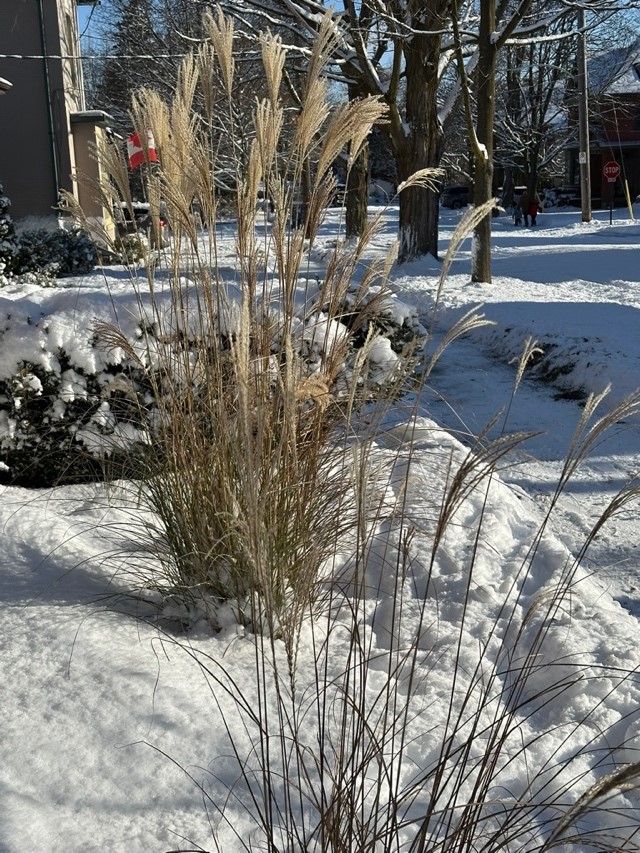
The low slanting light of late autumn and winter is an important piece of the beauty of the garden. Glancing out my bedroom window first thing every morning, I’m drawn to the morning light shining behind the swollen, grey buds of the magnolia tree next to the driveway. The buds are soft and fluffy, vulnerable yet so full of promise. In a nearby garden, there are a few large clumps of Karl Foerster grass (Calamagrostis x acutiflora) that sway and drift with the slightest breeze. Their slender stalks are a soft gentle brown, somehow able to withstand strong winds and pelting rain. Fall blooming grasses are a particular treat in fall and early winter, the slanting light is illuminated through the fluffy plumes making a beautiful statement. Hameln (Pennisetum Alopecuroides ‘Hameln’) is a favourite but there are many to choose from including some special native ones such as Side -oats Grama (Bouteloua curtipendula)  and Prairie Dropseed (Sporobolus heterolepis).

Another subtle feature of winter light is the shadow effect. The gentle lengthened shadows created by tree structure, moving grasses, seed heads, or conifer form merit consideration when choosing plants and placement. They are certainly worth more than a glance on a spectacular bright winter day.

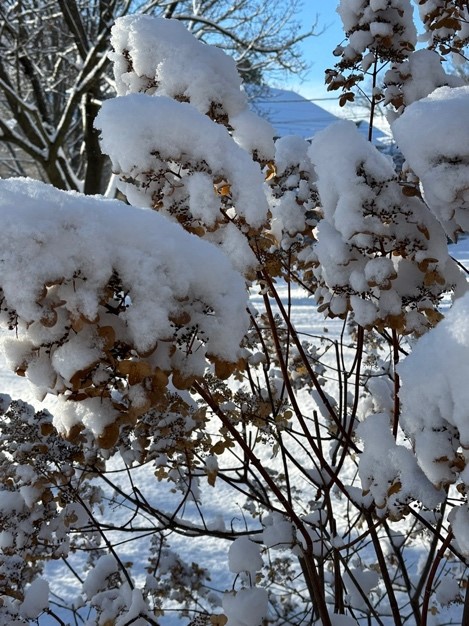
The dried flower heads of ever popular hydrangeas are a common winter garden treat especially when topped with a light dusting of early snow. Summersweet (Clethra alnifolia), a small summer flowering shrub, also retains dried flower heads through fall and winter. Other shrubs offer interest because of bark colour and texture (red twig dogwood, cornus sericea) or growth habit. Staghorn Sumac doesn’t take centre stage in the summer, but offers spectacular colour in fall.  In winter, its red fruits, antler-like branches, and graceful form make it a show-stopper.  Another shrub favourite in my fall and winter garden is Seven-Son Flower (Heptacodium miconiodes). It is an all-around wonderful, unique shrub with added appeal for its beautiful peeling bark in winter.  Other shrubs that hold particular appeal in the winter are Witch Hazel (Hamamelis virginiana)  and Corkscrew Willow (Salix babylonida).

Limelight hydrangea in the snow
Summersweet in the snow

Of course, conifers are the bones of any garden in winter. With different needle textures and lengths, and different shapes and forms, they provide obvious interest to every garden. When everything else is grey and brown, the rich textured green of a conifer stands out and when the snow comes along their interest increases. It’s important to have a variety of shapes and forms: cylindrical, mounding, conical, and weeping. In a small urban garden such as mine, I’ve found dwarf varieties and columnar species. One of my favourites is a weeping white pine (Pinus strobus ‘Pendula’), which is supported and pruned to fit a small spot.  It’s a lovely unique specimen tree with gentle movement, at certain times of the day its pleasure is doubled when the sun throws it shadow on the nearby shed. 

References

https://kawarthanow.com/2022/01/13/tips-from-peterborough-greenup-on-how-to-design-your-own-winter-garden/

Winter Gardens: Reinventing the Season by Cedric Pollet
This book features beautiful winter gardens across France and the UK

Native Grasses Provide Winter Interest and Feed the Birds

By Silvia Strobl, Master Gardener

This week I’ve been enjoying watching a flock of American Tree Sparrows that have migrated south from their summer tundra breeding grounds to my garden north of Peterborough for the winter. While I have both sunflower and nyger feeders, they are feeding exclusively on the Big Bluestem and Savannah Grass seeds in my garden. Sadly, these native grasses seem to have a bad rap among gardeners which is too bad as they have many benefits for both you and local wildlife.

I have the following four commonly occurring warm season perennial native grasses in my full sun garden:

Big Bluestem (Andropogon gerardii) is a very tall (5 – 8 ft) grass with clumps that form a dense sod but does not creep by rhizomes. It competes aggressively with shallow-rooted flowers, so it is best planted with species that form deep tap roots or spring bloomers that go dormant in the summer. In my garden it is a fall season focal point at the back of a border behind Culver’s Root (Veronicastrum virginicum) which has a central taproot as well as underground rhizomes.

In early May, Big Bluestem still hasn’t emerged, but allium foliage and some blooming tulips fill the space (left). By late June, alliums appear to float above the Big Bluestem grass (highlighted in orange) that is now 2 ft. tall (middle) and hiding the bulb foliage. By late July, Big Bluestem grass provides a green backdrop for the white flower spikes of Culver’s Root (right).

Little Bluestem (Schizachyrium scoparium) is an excellent grass for gardens due to its shorter height (2 – 4 ft), clumping form, very showy silver-white seed heads, and bright red stems in fall.It prefers dry sandy soils.

Savannah Grass (Sorghastrum nutans)is another tall grass (5 -7 ft) for the back of the border. It tends to self-sow so the young seedlings require a little annual weeding.

Native grasses add movement and colour to the garden. Little Bluestem’s red stems are illuminated by early October morning sun (left) while the late afternoon August sun highlights the tiny golden flowers and flower stalks of Savannah Grass (right).

Sideoats Grama (Bouteloua curtipendula) is a hardy, short bunchgrass that spreads very slowly by means of short, stout rhizomes and doesn’t compete with other plants. Its deep fibrous roots make it useful on slopes to prevent erosion (or on the edges of slightly sloped garden beds as in my garden). Do not plant it in clay soils.

Sideoats Grama has delicate hanging flowers (left), and later seeds (right) that are held in spikes that fall gracefully to one side of the stem.

Benefits for you

As well as being stunning fall and winter focal points, the tall native grasses, Big Bluestem and Savannah Grass, make excellent privacy borders. Their very deep roots (5-6 feet or more) make them useful for erosion control on slopes. Each of these native grasses is drought tolerant. And, each creates excellent winter interest as they tend to maintain their upright form. Another bonus is that they all have low palatability to deer.

Big Bluestem (left) and Savannah Grass (right) stand tall in the author’s garden despite 12 inches of winter snow.

Benefits for wildlife

Many butterfly skipper and moth larvae feed on these native grasses and they provide critically important seeds and habitat for native birds in fall and winter.

An adult Delaware Skipper rests on a blade of Big Bluestem in the author’s garden (left). Big Bluestem is a host plant for this butterfly’s larvae. Both Little Bluestem and Sideoats Grama are host plants for Leonard’s Skipper caterpillars. The adult butterfly is seen here nectaring on marigold in the author’s garden (right)

American Tree Sparrows feeding on a buffet of Big Bluestem (left) and Savannah Grass (right) seeds in the author’s garden. It is fun to watch them “ride” the Savannah grass stems to the ground so they can more easily peck at the seeds some of which spill onto the fresh snow.

Native Grass Establishment and Maintenance

Most native plant nurseries stock these grasses and all of them are easily propagated from seed. Plant seedlings densely at 1 ft to 1.5 ft spacing to discourage weeds. Water during the first year while roots are getting established. Fertilization is not necessary. All can be easily divided, but Sideoats Grama should be teased apart, not cut with a spade.

Remnant pockets of native grasses like this one of Big Bluestem growing on the shoreline of Little Jack Lake (left) are good places to collect seeds to propagate your own plants (right). Never collect more than 10% of seeds.

Depending on how much seed the birds eat in winter, you might get a few volunteer seedlings. If you don’t want more plants, they are easily kept in check by weeding when they are small.

If weedy cool season grasses have seeded into native warm season clumps, use a propane torch in early spring to burn emerged leaf blades while warm season native grasses are still dormant. Be sure to first cut off last year’s dry stalks and have a hose nearby. Don’t do this on a windy day!

Big Bluestem, Savannah and Little Bluestem are 3 of the 4 dominant grasses found in remnant tall grass prairies and oak savannahs, of which less than 1% of their pre-European settlement extent remains in Ontario. (The other is Switchgrass (Panicum virgatum) which can self sow quite a bit so might not be suitable for small gardens.) These grasses are also found on dunes, sandy shorelines, rock barrens, roadsides, and hydro corridors. Including these grasses in your garden can help support some of the wildlife that rely on this endangered ecosystem.

REFERENCES & ADDITIONAL RESOURCES

Diboll, N and H. Cox. 2023. The Gardener’s Guide to Prairie Plants. Pages 302-303, 306-307, 326-329.

Ehrlich, P. R. D.S. Dobkin and D. Wehte. 1988. The Birder’s Handbook A Field Guide to the Natural History of North American Birds, The Essential Companion to your Identification Guide. Page 584.

Johnson, L. and S. Colla. 2022. A Garden for the Rusty-Patched Bumblebee—Creating Habitat for Native Pollinators. Pages 149, 150, and 159.

Map of Native Plant Nurseries in Ontario maintained by Halton & Area Master  Gardeners

North American Native Plant Society. 2017. Seed collecting and saving.

RELATED

GARDENING FOR BIRDS THROUGH THE SEASONS

A FEW OF MY FAVOURITE NATIVE PLANTS

EXPANDING YOUR NATIVE PLANT PALETTE

WINTER FAVOURITES

When Ground Cover Plants Take Over

By Carol Anderson, Master Gardener

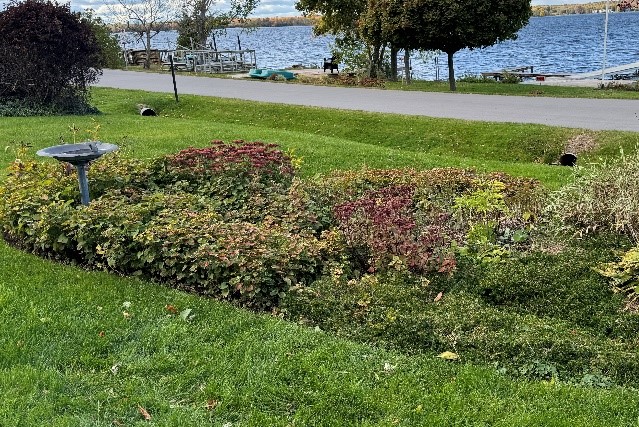
When I recently purchased a new home, I was too preoccupied with the beautiful lake view to truly notice some of the gardening challenges that lay ahead for me. Once I began the process of itemizing what garden treasures I had, I became acutely aware of the gardening style of my predecessor … a style that included utilizing ground cover plants to “fill in” raised beds … and apparently the faster they spread, the better!!! The challenge I have ahead of me is the removal or containment of numerous ground covers that have invaded every inch of the property. In this segment I will briefly touch on the management and/or extraction of 4 different commonly used ground covers that range from just “annoying” to outright invasive.

Chameleon Plant,  Bugleweed, Yellow Archangel, Periwinkle

Bugleweed (Ajuga reptans):

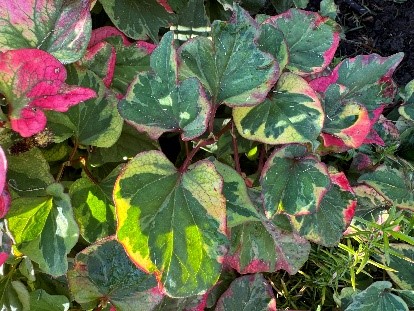
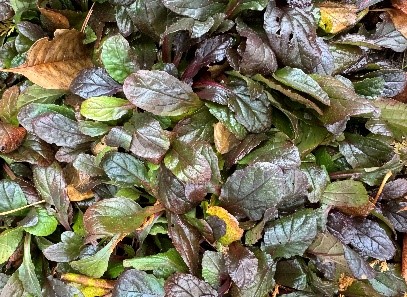
Although not considered invasive, Bugleweed can become problematic if left on its own without management, as it has a tendency to spread into adjacent lawn areas. I personally like the dark burgundy-red foliage, however, on my property it has spread across an entire garden and into the lawn. Bugleweed spreads through “shallow” underground runners with new baby plants popping up at the end of the runners. As a result, it is not impossible to remove nor contain. In the spring, I will be digging up the new plants all around the edge of the garden border and installing edging below the garden surface to stop the spread into the lawn. Periodic thinning (by digging up and removing some of the parent plants in the clump) will help to keep it manageable as well.

Yellow Archangel or Golder Deadnettle (Lamium galeobdolon):

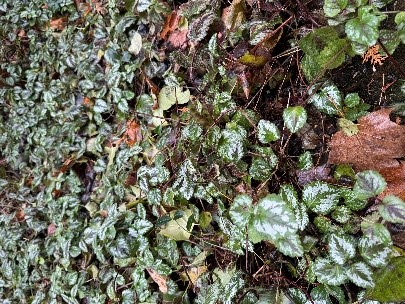
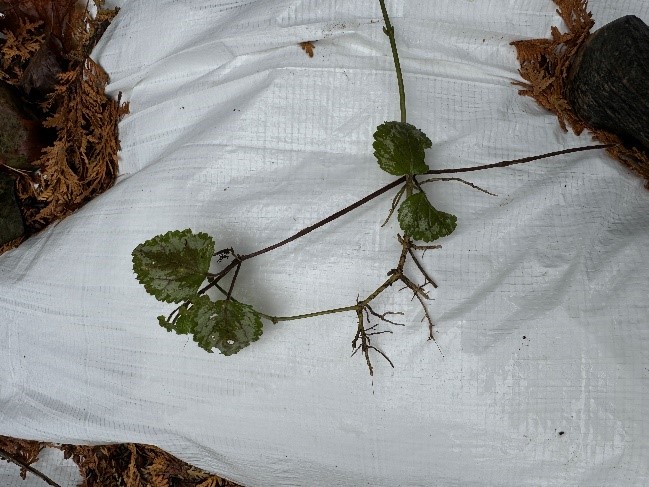
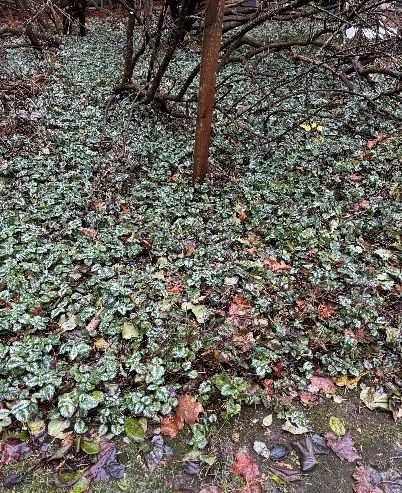
Although Lamium is a common ground cover used in many garden applications, it is invasive in Ontario. It has infested natural areas and will out-compete native groundcovers in the wild. Lamium  spreads by plant fragments, rooting along the surface on the stems (see photo below). However, it also can spread by seed which can then be carried into natural environments by birds.  For this reason, I will be completely removing it from several of the large shade gardens on the property and replacing with native species. Luckily it spreads along the surface and can be removed by mechanical means. This will be another spring project in the garden and once fully extracted, I will begin investigating other options such as anemone, wild ginger, bunchberry dogwood and ostrich fern for the heavily shaded areas of the garden.

Periwinkle (Vinca minor):

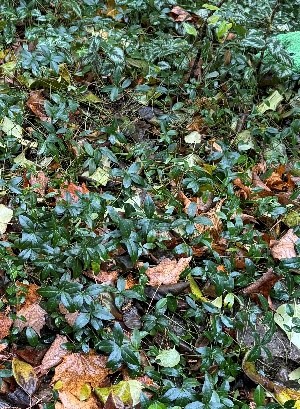
Periwinkle is a very common shade groundcover used by gardeners. It is considered to be invasive as it spreads quickly given the right climatic conditions. It poses a threat to natural biodiversity as it can out-compete other forest understory plants. However, because it spreads by rooting along the stems on the surface of the ground (stolons), it can be contained through proper management of the plant. I plan to dig up the roots and plants and cut back the excessive amount of Periwinkle in the garden, interspersing it with other shade loving plants. This will require ongoing observation and management on my part. 

Chameleon Plant (Houttuynia cordata):

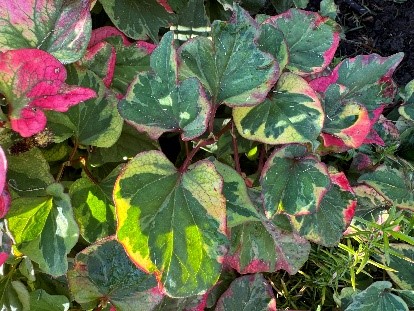
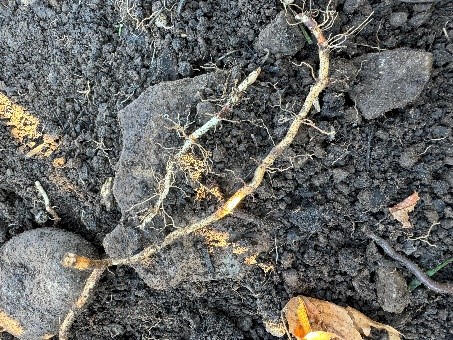
Avoid, avoid, avoid. Although an attractive groundcover, chameleon plant will invade your garden and lawn very quickly and became completely unmanageable. It is a non-native that spreads by a highly dense deep underground network of roots (rhizomes)(see pics below). Even a small segment of root left behind will live and spread for years to come making eradication very difficult. This fall, I began digging around the perimeter of the patch well outside of where the plant is visible on the surface. I dug down 12 inches and was still running into dense mats of roots!!!  I then sifted through the soil to remove all plant segments and put the soil back. At this point I have just begun the process of eradication (Step 1) and will keep you posted on my progress in my blog next spring. If I need to resort to solarization (using the sun’s heat to kill the plants under plastic), then this might be the next step for me. Stay tuned!!!

If you are a fan of using plants as groundcover in your gardens and raised beds, proceed with caution. If it spreads quickly, filling in bare areas, then it is likely invasive at worst and hard to manage at best. Proceed with caution and be prepared to observe and manage the groundcover to avoid the situation where the plant literally takes over the garden, eliminating all other species. In addition, there are many native Ontario alternatives to the traditional groundcovers…try them out and enjoy (https://www.inournature.ca/native-groundcovers).

Fall Colour in Your Garden

by Cheryl Harrison, Master Gardener

Fall is a wonderful time of year!  The leaves are changing, often it is still warm, and gardening is winding down.  However, there can still be some beautiful colour and texture in your garden.

Fall tree and shrub leaf colour is caused by less sunlight and longer nights.  Chlorophyll production, which gives leaves their green colour, slows down and then stops. Eventually all the chlorophyll is destroyed. The carotenoids and anthocyanin that are present in the leaf then show their true colours….ranging from yellow to orange to red. 

Many garden plants are known for their fall colour.  We are all familiar with maple trees especially the sugar maple (Acer saccharum).  However, sugar maple trees grow to be large trees so what might be some other options?

Evergreens

Evergreens, as their name indicates, stay green year-round.  They can add rich colour in the fall and some winter interest in the garden.  Birds love evergreens because they provide shelter from predators and from bad weather as well as nesting sites and, in some cases, food.

Some evergreen examples, in my garden, include false cypress (Chamaecyparis).  This shrub grows slowly and needs little to no pruning.  Others to consider would be the various species of dwarf spruce (Picea) shrubs.  Perhaps a dwarf blue spruce for its small stature, slow growth and beautiful blue colour or a dwarf green spruce would work.  The dwarf shrubs take up less space than a full sized shrub so are great in a small, or any size, garden.

Dwarf Blue Spruce

Flowers for Fall

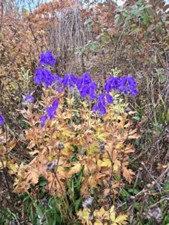
We still had annual zinnias blooming in mid-October.  This may be an old-fashioned flower but there are so many sizes, shapes and colours that it is well worthwhile.  A couple of perennials might include peonies…..not for their flowers (long gone, of course) but for their foliage.  Many develop a reddish colour in the fall.  One perennial that blooms late summer or in the fall, is monkshood (Aconitum).  Mine bloomed in October this year but note that monkshood is a poisonous plant (all parts) so this one may not be for you if you have small children or pets who visit your garden.  The perennial stonecrop (Sedum) or houseleek (Sempervivum species) and annual straw flowers (Xerochrysum bracteatum) never disappoint in fall.  Certainly, the native asters (Symphyotrichum species) and goldenrod (Solidago species), especially when grown side by side, are beautiful as they bloom in the fall garden.

Grasses

I love the grasses, particularly in the fall. Their gold, bronze, copper, red or blue foliage and seed heads, are beautiful as they sway in the breeze.  Blue fescue grass (Festuca glauca) remains a pretty blue year-round which is welcome as the gardening season winds down.  This grass may be short lived but reseeds well.

Blue switch grass ‘Heavy Metal’ (Panicum virgatum) is a taller grass which is good for the back of the border or as a focal point.  It has metallic blue leaves that turn bright yellow in the fall and is accompanied by delicate pink panicles (loose, branching cluster of flowers).

Blue fescue grass

Fall is a good time of year to walk through your garden.  Look at what catches your eye.  If you decide that more colour is needed, perhaps consider some of the choices suggested above for spring planting then texture and colour next fall.   For more information on fall colour in the garden, check here.

Things to be Thankful For

By Christine Freeburn, Master Gardener

As we celebrate Thanksgiving this year, we should think about what we are thankful for in our gardens. I recently asked my Master Gardener friends to share what they are thankful for.

Rainfall – Everyone was happy with the amount of rain we received this year. According to the Canada Weather Stats website (peterborough.weatherstats.ca), our rainfall for the period from July 2023 to June 2024 was over 100mm more than the same months in the previous year. And we seemed to have it at the right times. Although rain is great, it is important to remember that watering still needs to be done, especially containers of annuals and vegetables and hanging pots. When plants get big and fill the pots, the rain may not get down into the soil which is where you want the moisture to go.

Good educational information – As Master Gardeners, we use scientifically-based resources for answering gardening-related questions. Use the extension “.edu” or “.sci”  in the search box when you are googling. There is so much information out there, but we need to be sure it is the correct information. Master Gardeners are always asking questions, learning and sharing their knowledge.

Healthy Gardens –  Feeding the soil is a big part of having a healthy garden. Putting good quality topsoil in a new garden area, and adding organic compost annually will help your soil. Mulching holds the moisture and suppresses weeds. Leaves are great for mulching on your perennial beds. Free local wood chips supplied by Ontario Hydro were a great mulch for one gardener.

Good Harvests – Vegetable gardens were bountiful this year. Thanks to an exceptional harvest of peppers, tomatoes and beets, there are stuffed peppers in the freezer, tomato sauce and salsa and pickled beets in the cupboard. Carrots and brussel sprouts grew well and herbs like parsley and rosemary were huge and healthy. One gardener reported two butternut squash plants produced 20 squash!

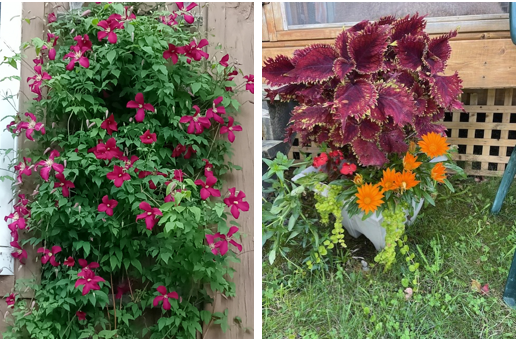
Beautiful Flowers – With all the rain and heat, hostas were huge, sunflowers towering, clematis bloomed long and luscious. Everything seemed to be big and beautiful and most bloomed earlier and longer than normal. Container annuals like coleus grew huge and healthy.

Nature in the Garden – Master Gardeners actively promote native plants in the garden to encourage more pollinators. Integrating natives amongst your cultivars works well if you don’t want that ‘wild’ appearance many natives provide. Several gardeners reported visits from birds like Chickadees, American Robins and House Wrens that made their nests and raised their babies in their gardens. Cedar Waxwings, White-Throated Sparrows, Song Sparrows, Dark-Eyed Juncos, American Goldfinches, Northern Cardinals, Hairy Woodpecker, and a Common Yellowthroat came to visit and forage. Birds are great for the garden as they will eat many pests. And they give us enjoyment.

I am trying to be thankful for the skunk who has been visiting my yard and digging grubs. My yard looks like a minefield, but it is healthier!

What are you thankful for in your garden?

Happy Thanksgiving!

And thank you to MJ, Gladys, Carol, Laura, Chris, Jenn, Silvia, Cheryl, Deb, Grant, & Mary Kathleen.

Fall is the New Spring…It’s Time to Plant

by Emma Murphy, Master Gardener

I confess to LOVING this time of year. The heat and humidity of the summer is gone, and our gardens are still looking lovely. Although my established gardens are beginning the slow process of fading and getting settled in for their winter sleep, fall is a wonderful time to plant for so many reasons.

They may not look perfect but they’ll be going to sleep soon and will wake up next spring in their new homes.

You Have Time

Unlike your annuals or tender perennials, most perennials (and native plants in particular) can be planted in September and well into October (depending on where you live in Ontario).

Smaller trees and shrubs in particular are fine to plant once they have gone dormant and leaves have dropped, as long as they are well watered until freeze up.

I love the fall as it seems less frenzied than the spring gardening season, with time to reflect on the summer that has passed. Unlike spring and summer, temperatures moderate during fall, not only for the plants but also for us! It’s terrific working weather – you start with your sweatshirt on in the morning, but by the afternoon the temperatures have warmed up considerably and you might be in a t-shirt. During July and August I can only work in my gardens in the early morning or late evening due to the heat. Your plants don’t like to be planted in the heat of summer either. So fall is my happy time.

Assessing and Dividing

Fall is the perfect time to look around your garden – do you have holes, bad-looking spots, poorly performing plants? Are there places that need something new or something moved?

I need to revamp this garden and think about moving some perennials around.

Fall is a great time to divide overgrown perennials, especially those that bloom in the spring. I just dug up all of my fragrant hostas the other day and moved them to a new location so that I can expand my shade native plant garden. Next up – planting a hedgerow.

Warmer Soil Temperatures

During fall, soil temperatures remain warm from the summer sun, so conditions are ideal for root growth.

Cooler Air Temperatures

Gone is the humidity and heat of the summer and the unpredictability of spring weather (and worries about frost). Daytime high temperatures are nice and there is less water evaporation from leaves.

More Rain, Less Work

With fall also comes more frequent rainfall and less need to water new plantings. There aren’t crazy swings in moisture levels – fall rains are warm and welcome and moisture levels are perfectly balanced, encouraging root growth.

When you plant in spring and early summer, the weather can be very variable, especially with regard to temperatures and rainfall. The soil is still cool, and plants take a while to get established.

Fall rains rejuvenate our gardens

Some Challenges

It can be challenging to plant new perennials in the fall – stock and selections at nurseries may be less (however the prices may be better!) and some plants have been sitting in plastic pots for months and look less than perfect. Be sure to purchase new plants at a nursery that takes good care of their plants over the gardening season (that generally does not include big box stores – shop local where you can) and pull the plant out and check for a healthy root mass in the pot.

Ideally, give your plants at least 6 weeks of optimal growing weather of fall before the colder winds start blowing in.

One Last Note

It’s a really good idea to add mulch to your fall gardening – it helps insulate the ground and maintains warm soil temperatures even during early winters. So, you are providing a nice warm area for young plants to establish their root systems before the frost.

A Special Note on Native Plants

They might look a little sad in the nursery, with not much top growth and it may be browning. However, under that soil are roots, lots of roots, and that is what you are buying when you purchase a native plant.

So when you see a small three inch plant with roots coming out the bottom, recognize that it’s the perfect size to plant, and don’t worry about its ability to survive the winter.

Sleep, Creep, Leap

You may have heard the phrase “sleep, creep, leap” with respect to many plants, and especially native plants. Unlike most perennials, native plants just want to get their roots established during the first year (which is why they appear to ‘sleep’).

So if you plant in the fall, the roots are growing furiously, pushing south to grab moisture and nutrients to sustain them through the heat of summer next year. In the second year native plants creep, with more top growth and maybe even flowering. Watch out in the third year! They leap to their full size and blooming capacity.

So, if you can plant in the fall, the sooner your native plants can put down their roots in their new home, and be ready to grow in the spring season.

Bottom line? Fall weather is optimal for growth.

The perfect combo of warm soil temperatures near the root and cooler air temperatures on the top offer the ideal growing conditions for any new plantings or dividing existing perennials.

So get out in your gardens! (It’s also time to think about planting your spring flowering bulbs. Check out Master Gardener Cheryl Harrison’s excellent blog on how to do this.

Underfoot & Under-Valued? The Common Liverwort

By Mary-Jane Pilgrim, Master Gardener

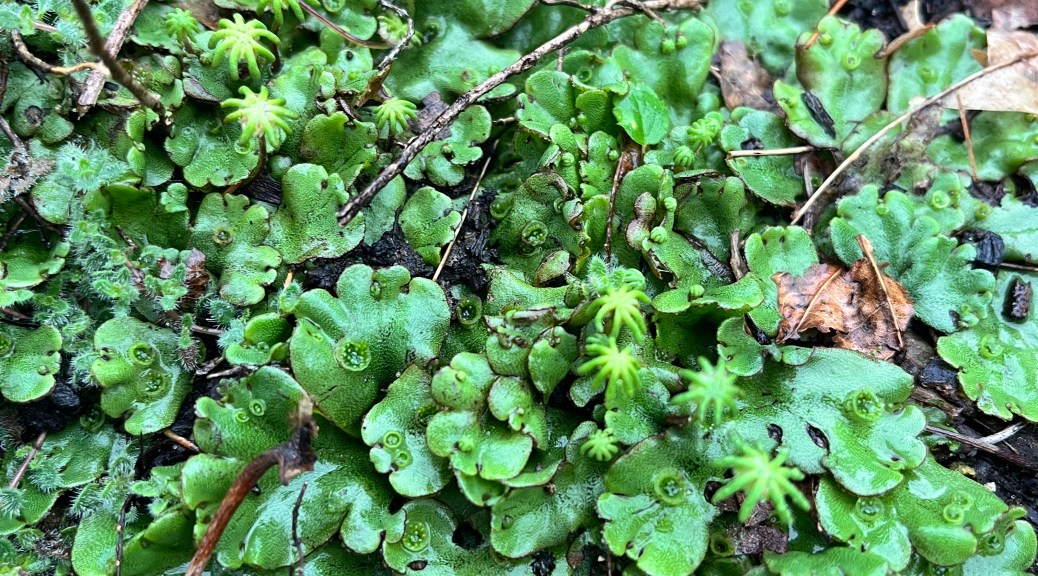
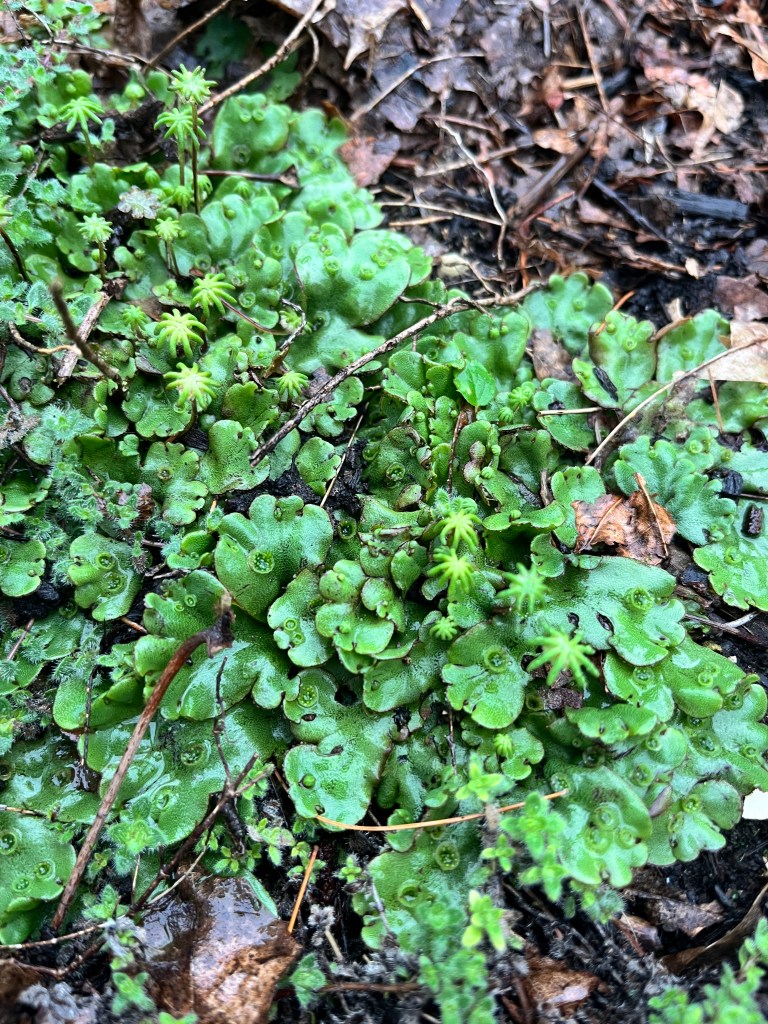
Umbrella liverwort (Marchantia polymorpha) is a fascinating plant that often catches the eye with its unique, umbrella-like structures. These small, flat, and green plants have been around for millions of years, making them one of the oldest plant species on Earth. They do not have a vascular system, and like ferns, they produce spores instead of seeds. While they do not flower, the female reproductive structures mature to look like tiny palm trees or umbrellas. For this reason, the common variety is called umbrella liverwort.

In our area, umbrella liverwort is commonly found in moist, shaded areas like garden beds, greenhouses, and along stream banks. This plant is native to many parts of the world, including Ontario, and has a long history of thriving in damp environments.

While liverwort is native, it can sometimes behave like an invasive plant, especially in gardens and greenhouses. It thrives in conditions where moisture is abundant, and air circulation is poor. If left unchecked, it can spread rapidly, covering the soil surface and competing with other plants for light and nutrients. However, its unique appearance and ancient history make it a cool plant to observe in your garden.

If you want to manage umbrella liverwort, focus on improving drainage, reducing moisture levels, and allowing more sunlight into the affected areas. But for those who appreciate its prehistoric charm, umbrella liverwort can be a delightful addition to a garden, provided it’s kept in check. An added benefit is that you don’t have to plant them — they just show up!

Off with Their Heads

By Christine Freeburn, Master Gardener

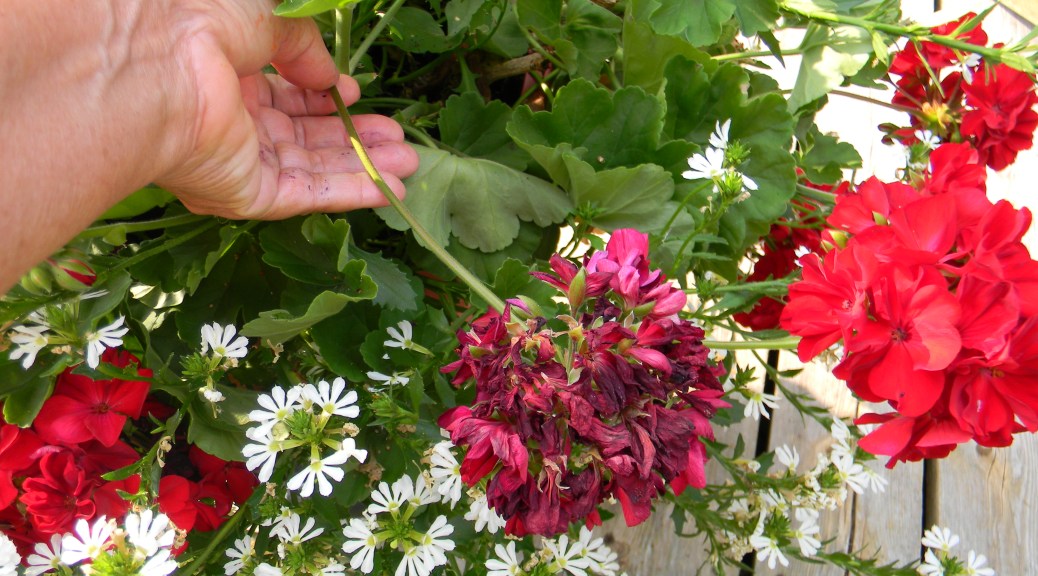
Deadheading is an important garden maintenance chore for July and there are several reasons for deadheading (or not). When deadheading, it is important to not just take the blossom off, but to cut the stem right back to the first junction and cut above that. Often you can just break the stem by hand, but be sure not to rip it. Use good pruning shears to make a clean cut. This applies to almost all deadheading, whether it is hosta, daylily or annuals.

The reason a plant grows and flowers is so it will go to seed and reproduce. If you remove the seed head you are encouraging the plant to put its energy back into the roots and leaves, making it become a stronger plant. Doing this as soon as possible after the flower is spent, is important for the overall look of the plant and the energy redirected.

Perennials that rebloom such as salvia, dianthus, delphiniums and roses should be deadheaded to encourage new blooms. Many new hybrids have tags that say “reblooming”, so watch for this when purchasing. Annuals like dahlias, marigolds and zinnia all benefit from cutting spent blooms to encourage new flowers.

Another reason to deadhead is to control self seeding in the garden. Many perennials and biennials will multiply by dropping seed. Forget Me Nots, Oriental Poppies, Lupins and Native Coneflowers will all appear in your garden if you don’t deadhead or disturb the soil.

Deadheading also makes the garden a bit neater. I deadhead Iris right after they bloom; cutting the stem right back. I often leave Siberian Iris to form seed pods as I use them in dried arrangements.  I don’t particularly like the washed out purple flowers on Hosta, so I usually cut them back. There are some Hosta flowers that are fragrant and white, and I like to leave those on. The profusion of flowers on the daylilies this year are stunning. I like to snap off the spent blossoms, so they don’t distract from the fresh new flowers. Peony petals separate and settle through the flower bed, so I like to remove them before this happens. Other perennials that benefit from deadheading include yarrow, cranesbill, phlox, and astilbe.

Clematis form a lovely fluffy seed head which can be left on. I also leave my Monarda didyma for the birds and the pretty seed heads.

Your hanging annual pots and containers also may need a bit of TLC by now. Annuals like to be cut back. It encourages new fresh growth and flowers, makes them bushier because when you cut a stem it will branch out. Cutting back also brings the planting back under control so it doesn’t look overgrown.

Removing seed heads is removing food that birds may enjoy. If you are growing natives, you may want to leave them for the birds, butterflies and other pollinators, however you can deadhead and leave in an open compost pile.  Although I deadhead throughout the summer, by late August, I stop and let the seed heads form on perennials like coneflower and black eyed susan so the chickadees and finches can feast.

So, get in your garden, enjoy the beautiful blooms and “off with the heads” of those that need it!

https://extension.psu.edu/to-deadhead-or-not-your-final-answer-is

To Stake or Not to Stake

By Marjorie Vendrig, Master Gardener in Training

It’s midsummer in the garden and many plants – annuals, perennials, vegetables – need to be staked and pulled upright or back. They might be flopping over to the point where stems break and buds and blossoms are lost, they might be spilling over onto other plants, blocking light and restricting growth. In the event of high wind or heavy rains, unsupported plants can easily be destroyed or can quickly become an unsightly mess.

Staking is one of those jobs that many gardeners avoid; it never seems to get done at planting time or early in the season when the plants don’t really require mechanical support. Another reason for putting off staking is that many stakes or plant supports are unsightly and look out of place, particularly very early in the season. The result is that staking is often done too late; emergency staking often looks more unsightly than a flopped over plant

Staking of some plants can be avoided: late bloomers such as sedums or asters can be maintained at a shortened height. This is done by developing shorter, bushier plants by pinching the plant by about one third in early summer. It’s a common practice for many annuals: cosmos, zinnias, nicotiana, and many other annuals are pinched back before they arrive at the nursery. (Pinching back of annuals has come to be known as the Chelsea chop, the timing for pinching back or ‘chopping’ coincides with Britain’s famous RHS Chelsea Flower Show at the end of May.)

Knowledge of the mature size of the plant, its light requirements, and any specific soil or nutrient needs could avoid the need for staking some plants. A plant with elongated, weak stems will require staking, whereas a strong-stemmed, sturdy plant that is not reaching for light or that has not been overwhelmed by neighbours is a more likely candidate to stand on its own. An honest evaluation of light levels in the garden and the sun / shade tolerance of plants are prerequisites for finding the optimal location for plants, helping to eliminate some staking.

Best advice for avoidance aside, there are still many plants that need to be staked and it’s best to match the type of support to the vigour and growth of the plant:

  • Circular grid supports with epoxy or plastic coated wire squares are best suited to clump forming perennials such as phlox, delphiniums, and some campanulas. These work best when put in place early on in the growing season with care taken to feed growing leaders through the squares. Any escapees can be tied loosely to the outside of the circle. Dahlia, peony and other top-heavy bloomers are also candidates for this approach.
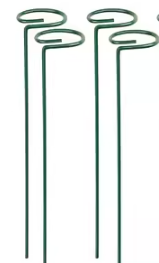
  • Once blooms appear on dahlias, or other tall growers, spiral rings or Y-shaped supports are useful to prop up the blossoms. Several supports are often needed for each plant.
  • Tall, heavy blossomed dahlias and other tall growers might do better with two or even three or more stakes surrounding the plant, making sure to avoid the tuber or roots when pushing or pounding in the stakes. Bamboo, plastic coated metal, or even rebar are good choices for the supports. They should be pounded as far as possible into the grounds so that they won’t get pulled over with the weight of a wet, heavy plant. Using twine, tie a knot around one of the stakes, then a figure eight to encircle one of the stems, do the same for the other supports and stems. An alternative technique with large multi-staked plants is to tie a knot around one of the stakes, then surround the plant and loop around the next stake. As the plants grow and the blooms get heavier, several levels of twine might be necessary. Stems and plants should not be tied too tightly.
  • For shorter plants at the front of a border (penstemon, yarrow, cone flower), pea stakes are a good approach. Pea stakes are multi-stemmed off-cuts from prunings. This is an old method, historically used in vegetable gardens to support pea vines. The twigs, from birch, forsythia, viburnum, etc., are pushed into the ground around the perimeter of the plant. The plant grows up and over the stake, no tying is required, and if done early in the season, the twigs get hidden later in the season. Pea stakes are also a good way to guide climbers over to a trellis. With a bit of practice and creativity, pea stakes can be an eye-catching approach to an otherwise unappealing chore.

References

https://www.rhs.org.uk/plants/types/perennials/staking

https://hort.extension.wisc.edu/articles/pea-staking

https://www.finegardening.com/project-guides/gardening-basics/how-to-avoid-staking-plants