By Cheryl Harrison, Master Gardener
Definitions of “spring” and “ephemeral”, curtesy of Merriam-Webster online dictionary, are “to come into being” and “lasting a very short time”. Two wonderful words, when used together, mean those lovely but short-lived flowers that we may see on our walks through woodland gardens or deciduous forests at this time of year!
My list of favourite spring ephemerals includes:
Trillium (Trillium grandiflorum) – Of course, this native plant comes to mind first. It is Ontario’s official flower but not Ontario’s only trillium … there are four other native species. Trillium grandiflorum produces one large, white, three-petaled flower above three, simple, broad leaves. The flower fades to pale pink as it ages. Red seeds are produced which are mainly dispersed by……ants! Seeds germinate slowly and take 4-5 years to become a mature flowering plant. Plants grow to reach 30-45 cm (12-18 in.) high, prefer moist rich soil and dappled shade.

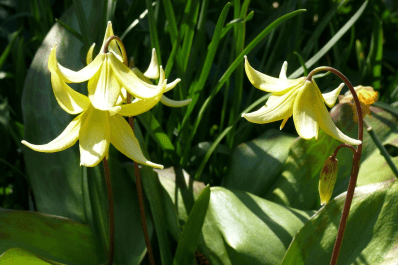
Dog-toothed violet (Erythronium americanum) – These pretty little native flowers grow from a corm. They are small, just 15 cm (6 in.) high but their bright, yellow flowers stand out and along with their spotted leaves (hence their other common name “Trout Lily”), are one of the earliest spring ephemerals to appear. They prefer rich, moist but well-drained soil and part to full shade.
Bloodroot (Sanguinaria canadensis) – If you remember your high school latin, you will recognize where Sanguinaria originates when you learn that all parts of this native contains an orange/red juice. The Latin sanguinarius means “bloody”. S. canadensis is the only species in this genus. It produces a white flower, that may be tinged in pink, and has deeply lobed, flat leaves. It prefers part to full shade and well drained, moist, rich soil but seems to survive in varying soil conditions. This plant will grow under your black walnut tree! S. canadensis grows 15-30 cm (6-12 in.) high and spreads through rhizomes.

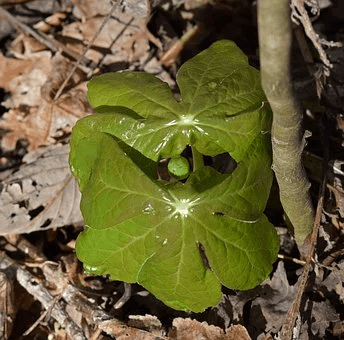
Mayapple (Polophyllum peltatum) – Mayapple makes a great groundcover. It grows up to 45 cm (1.5 ft.) tall and produces one white flower which appears under it’s umbrella-like, multi-lobed, two leaf foliage in late spring…..a single leaf means no flower and no fruit. The leaves and root are poisonous as is the immature green fruit. Only the mature yellow fruit is edible. This plant spreads through rhizomes, prefers light shade and moist, rich soil.
Jack-in-the-pulpit (Arisaema tryphyllum) – Where do I start; this plant has a very interesting flower …. the spathe is the most conspicuous part. It is a hooded, tube-like structure and houses the spadex which is a spike and is where the actual flowers are located. Clusters of bright, red berries form in the fall. It grows 30-90 cm (1-3 ft.) tall and prefers moist, rich, slightly acidic soil and part to full shade. Jack-in-the-pulpit grow from corms.

Next time you go for your woodland walk look for the spring ephemerals. Their appearance signals that warmer weather is coming very soon! Let the gardening season begin!
Many nurseries now carry native plants and some specialize in natives. Just be sure to ask about the origin of the plants that you are buying, you are looking for plants that have been nursery propagated not harvested from the wild.
Suggested Nurseries
Resources
Books
- The Ontario Naturalized Garden, by Lorraine Johnston ISBN1-55110-305-2
Websites
- Edible Wild Food
- Jack-in-the-Pulpit
- Mayapple and maidenhair fern flourish in woodland garden
- Ontario’s Trilliums
- Ontario Wildflowers
- Sanguinaria canadensis





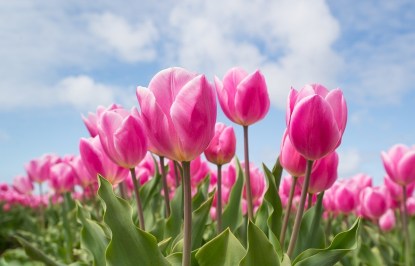 Tulips are to Turkey and Central Asia. In the 1600s, they made their way to the Netherlands. Tulipmania took hold in the 1620s and tulip prices skyrocketed. A single bulb could be worth as much as an average family farm. The market collapsed in 1637, but tulips remain widely grown in the that country. Canadians liberated much of the Netherlands during the final months of the Second World War. More than 7,200 Canadians were lost in that conflict. The Dutch have gifted Canadians with 20,000 bulbs a year since that time and they are used in Ottawa’s now famous Canadian Tulip Festival every May. This year marks the 75th anniversary of liberation and the Dutch royal family will mark the celebration by thanking Canadians this year with a gift of 100,000 tulip bulbs. If you want to join the celebration, you can purchase your own Liberation75 tulips for $15.00 through the Royal Canadian Legion. By purchasing the bulbs, you will also be entitled to win a trip to the Netherlands. To place an order visit the
 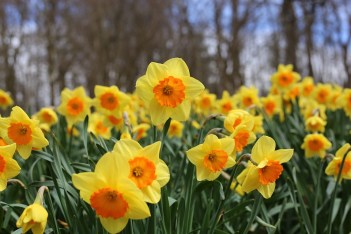 Daffodils and narcissus bloom earlier than most tulips. Spring sun is needed and they like soil that is well draining or they will rot. Oxalic acid on the bulb make them unpalatable to rodents. ‘Tete a tete’ is a mini daffodil that is very fragrant and also good for cut flowers. However, never include daffodils with other flowers in a vase as they have a sap that will cause the other flowers to wilt.
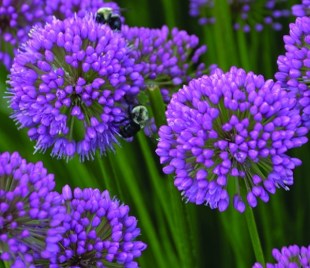 Alliums are ornamental onions. Most of the varieties bloom in June. They need free draining soil with 6 to 8 hours of sun. They make lovely dried flowers. It is best to plant alliums amongst other plants as the foliage is not desirable.


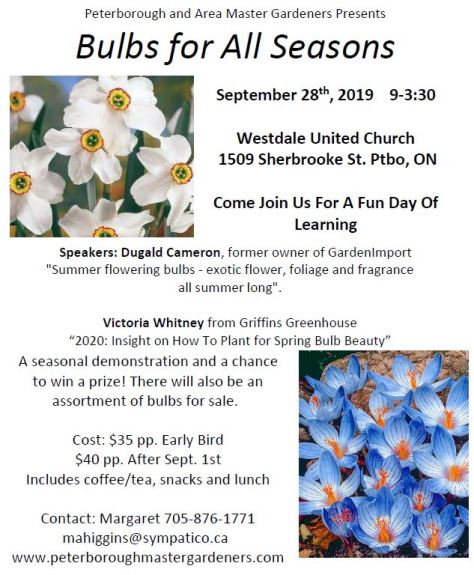
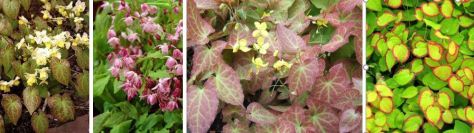


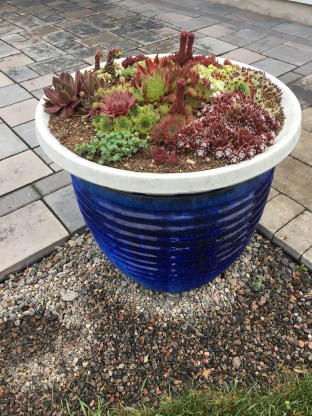
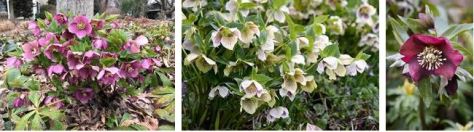
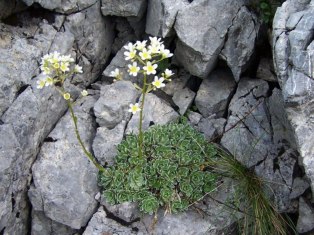


 All of these businesses and more can be found this weekend at the

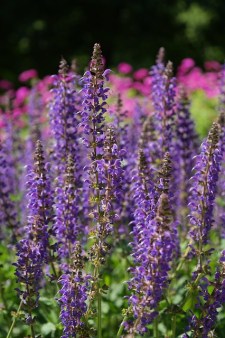
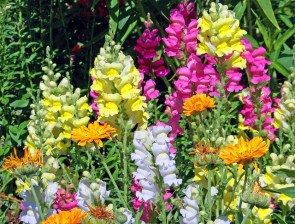 Snapdragons (Antirrhinum majus) are making a comeback with their fragrant, large, tubular, dragon-shaped flowers in a multitude of colors and heights. Considered an annual in cold temperature countries, these early spring blooming plants can interestingly withstand cold weather and slow down flowering during overly warm temperature. Great in containers, snapdragons require constant deadheading to encourage more blooms and often need staking.
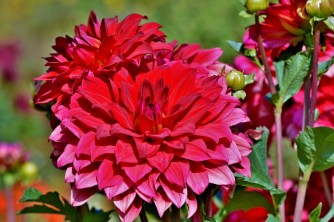 slightly acidic, and moist soil blooming from mid-summer to late fall. Outstandingly showy and dramatic, dahlias need to be fed often with organic matter once the plants begin to grow and deadheading is needed to promote blooms. Flowers can grow from two inches to 15 inches depending on the plant variety.
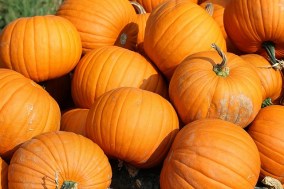 Pumpkins are healthy edibles high in fiber and vitamins to name just a few health benefits. Related to melons, squash, and cucumbers, plant pumpkin seeds indoors to start, then directly in the ground once the soil has thoroughly warmed up. Pumpkins require constant watering, pollination by bees to fruit and take from three to four months to mature. Like many other edibles, they must be replanted every year.
 The Peterborough & Area Master Gardeners