By Judy Bernard, Master Gardener
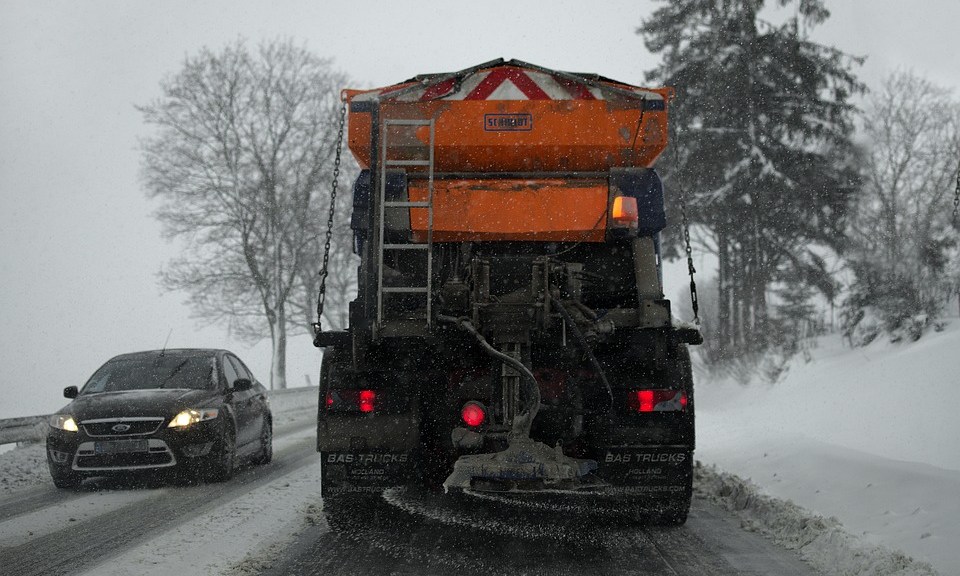
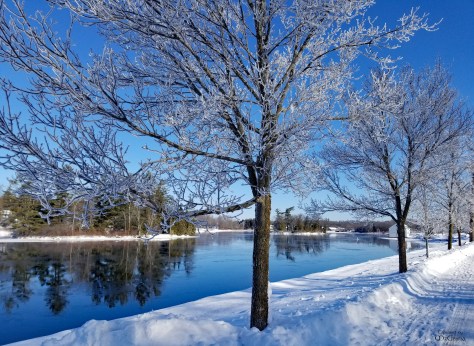
With a retaining wall and a paved boulevard, we have never had to worry about salt damage to our lawn and plants. Now, living in a new development with grass growing right to the street and grass boulevards, salt damage from road salt is a new fact of life. We have all seen the damage to certain trees (cedars especially) where the foliage has turned brown from salt spray. Sod gets chewed up from the plows and grass at the side of the road turns brown as well.
In addition to the mechanical damage from snow clearing, there are some other things which are happening to cause this damage:
- The salt spray causes the foliage to dry out. On deciduous plants, the buds can be desiccated by the salt.
- Salt absorbs a lot of water. Even if the ground is wet, if there is salt in the ground it is preventing the plants from accessing the water.
- Salt breaks down into its component ions of sodium and calcium. The calcium gets absorbed into the leaves preventing photosynthesis. The sodium prevents the roots from taking up necessary nutrients.
In early spring there are things we can do to help our plants to recover from and to mitigate the effects of salt and salt spray:
- Gently rake and remove as much of the salt and sand that has been left behind around the curb area after the snow has melted. For the rest of the lawn, you need to wait until the ground has thawed and dried out; you don’t want to leave foot impressions in the lawn.
- Hopefully we will have lots of rain to wash the salt spray from the boughs of the plants, and to wash that water away. If not, then wash the spray off of the plants.
- Water, and lots of it, applied slowly over several days is the way to rinse the salt that has gotten into the soil out. It takes 7-8cm of water to rinse 50% of the salt out of the soil; 13cm to wash 90% out. If we have a dry spring, and don’t get that much water over a few days, then where possible augment rainfall with water.
As we get ready for winter we can take steps to protect our gardens in the fall:
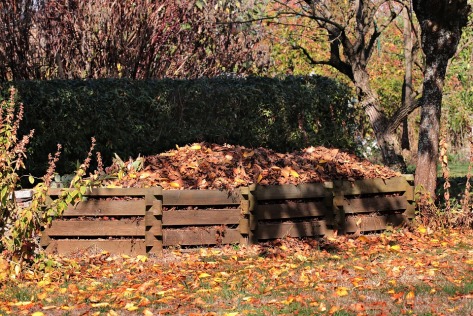
- Put a good layer of mulch in the form of leaves over the perennial beds close to the roads. This can then be removed in the spring, taking much of the salt with it.
- Protect trees and shrubs with burlap wrapping.
- Put up a barrier or screen to prevent salt runoff back onto your property.
- Use other materials around your home, like sand or salt alternatives to provide traction in icy conditions.
- Use salt-resistant plants close to roads and sidewalks.
Now, let’s hope for lots of spring rain to freshen up our gardens and get the growing season underway!
The following web sites will give you more information about what to look for as well as having suggestions for salt resistant plants:
Salt damage in Landscape Plants
Salinity, Salt Damage
Before and after the same spot of lawn.














 Plant garlic! Yes, this is the time of year to plant garlic for harvesting next summer. You can probably still find garlic bulbs at farmers markets. Buy locally grown garlic, not product of China. Separate the cloves from the bulb and plant at a depth of 3 times the height of the bulb in rows in the garden. Cover two-thirds deep with soil and then top off with straw or mulch. For full details, see this fact sheet on
  Plant tulips! Although it may be too late to plant daffodils, you can still pop some tulips into the ground, even up to freeze up. Squirrels do love tulips, but if you plant them deep enough (6 to 8 inches), use hen manure or bone meal, and cover up the bare spot with leaves or mulch, you should deter them. Check this link for more
  Don’t rake! Mulch those leaves into your lawn with your lawn mower. It’s easier on your back and is so good for the lawn. Use your leaf blower to mulch into your flower beds too.


 I started my seeds inside under lights. When I planted the seedlings outside, one went into the ground in my garden and the other went into a 5 gallon bucket with holes drilled in the bottom. The bucket plant went into my little greenhouse.


 The Peterborough & Area Master Gardeners