by Emma Murphy, Master Gardener
Full disclosure – I have never been a fan of lawns. I’ve had a 20 year plan to convert my large property to perennial gardens and paths, and I’m getting there, slowly but surely.
However, I am fascinated with how (and why) people are so attached to their square green spaces of grass.
A little history first..
Lawns became popular with the aristocracy in northern Europe from the Middle Ages onward, evolving as a sign of wealth. Originally they were mostly used as pasture – lawns like we have today first appeared in France and England in the 1700s when André Le Nôtre designed the gardens of Versailles that included a small area of grass called the tapis vert, or “green carpet”.

Immigrants to North America brought these traditions with them as they settled the land. Particularly after the Second World War, the creation of the middle class and suburbia and the advent of chemical fertilizers led to a North American culture of ‘the lawn is king’, with the requirement that it was every homeowner’s responsibility to keep it watered, mowed, repaired, and cultivated, just like their neighbours. One article I read even went so far as to blame the rise of lawns on the Scots, who brought their love of lawn bowling and golf to this continent (and therefore the need for flat green areas).

Lawn is a cognate of llan which is derived from the Common Brittonic word landa (Old French: launde) that originally means heath, barren land, or clearing.
Lawns are expensive to create and maintain, so why do we still have them? Simply put, the belief is that lawns are indicative of success – if you have a well maintained lawn you have the time and money to create and maintain it, and you care about belonging to your neighbourhood.
Fast forward to current times, where we now see articles in the Globe and Mail asking whether “it’s time to decolonize your lawn” and efforts are underway in many areas to convert lawn areas into more ecologically responsible landscapes to support our pollinators, birds, and wildlife. Whether you simply overseed with some white clover, and reduce or eliminate fertilizers, or convert your entire lawn into a wildflower meadow, there is a full range of options to consider.


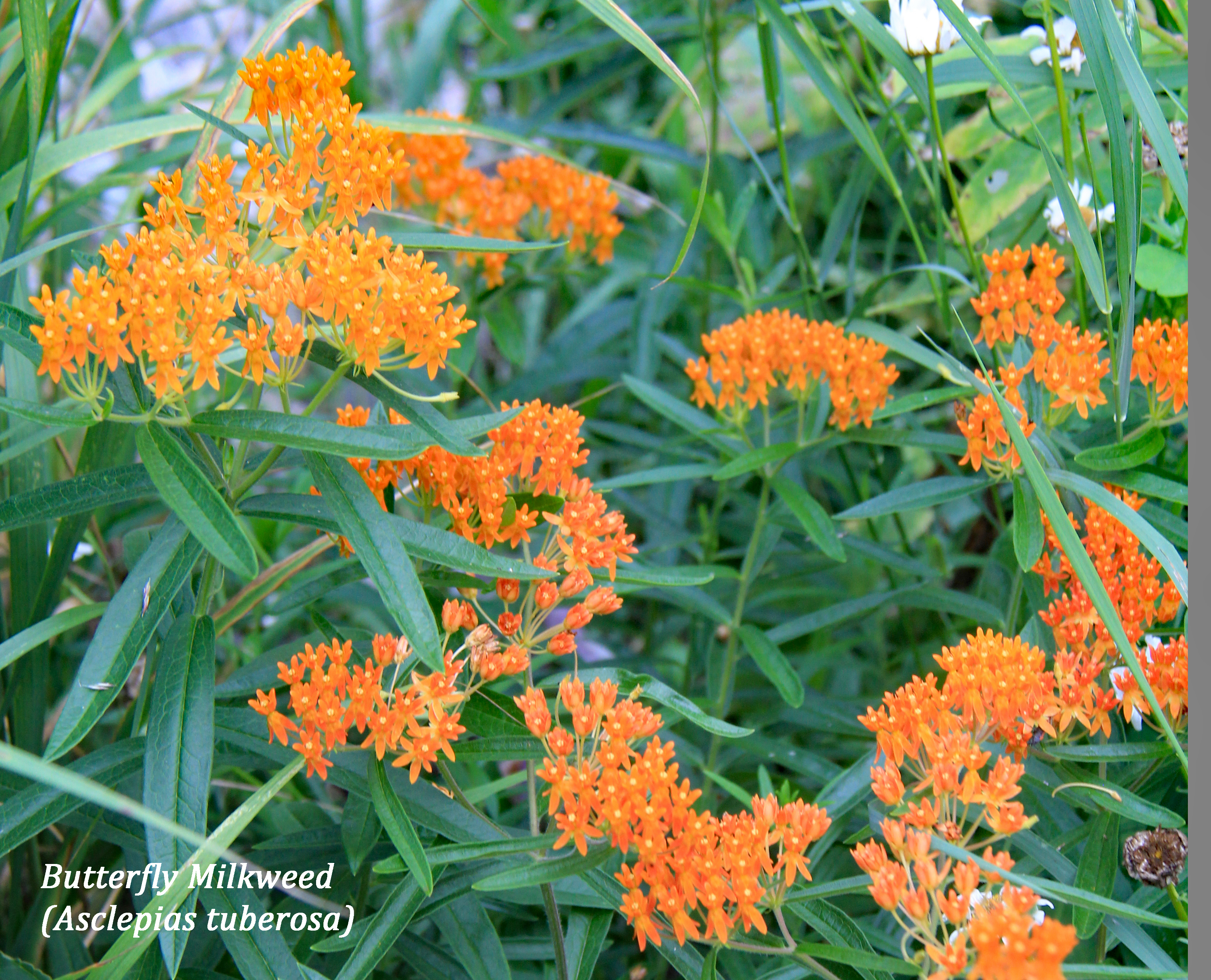
Such changes have not been without their challenges. A recent newspaper article shows the conflict between those who want a new attitude towards our properties. Nina-Marie Lister, a Ryerson University urban planner and ecologist removed all her lawn, replacing it with “a lush and layered landscape” filled with “milkweed, boneset and black-eyed Susans, among other plants largely native to the region.” Her neighbours complained and she was visited by a Toronto city bylaw officer – under Toronto’s municipal code, residents need to “cut the grass and weeds on their land” whenever they grow past 20 centimetres.
The comments community lit up, and well known gardener Lorraine Johnson even penned an editorial in the Toronto Star about it.

Naturalized gardens are becoming a widespread phenomenon, and municipal bylaws will continue to be challenged by those that advocate for increasing biodiversity by creating landscapes that support an abundance of species of flora and fauna. Wouldn’t it be interesting to see someone complain to bylaw about a green lawn destroying biodiversity, filling the landscape with chemicals, wasting water by watering, and creating air and noise pollution through mowing? You see, it’s all a matter of perspective.
The debate is far from over, but gardeners should enter the discussion and think about whether there is a way for their green spaces to be just a bit more ecologically friendly.
Whatever your opinion, I encourage you to read these articles and think about the issues surrounding our garden spaces. I know I will never convert the staunch, lawnmower riding king to create a wildflower meadow, but if I just get a few people to think about how they can make a small difference in their own backyards I will be happy. I don’t have all the answers – I just want to stimulate the discussion.
FUN FACT – clover was an accepted part of lawns until the early 1950s, only becoming a ‘weed’ because the earliest 2,4-D herbicides killed it off along with the dandelions.


For those interested the Canadian Society for Organic Urban Land Care is hosting an online discussion and learning series on the role of land care, horticulture and landscaping in cultivating social and land equity. One of the topics is “Cultural values and how they frame horticultural norms” where the colonization and control of our natural landscapes will be the topic.
For more information:
The American Obsession with Lawns
Decolonizing Horticulture by Sundaura Alford-Purvis


This book is, without a doubt, one of my favourite go-to gardening books! The new revised third edition of Lorraine Johnson’s book, 100 Easy-to-Grow Native Plants for Canadian Gardens, is a testament to Lorraine’s expertise. She writes in the forward that “one of the greatest satisfactions of growing native plants is that you are supporting a complex web of ecological relationships that are the basis of a healthy, resilient ecosystem.” Lorraine Johnson is the former president of the North American Native Plant Society and the author of numerous other books. She lives in Toronto.
The photos by Andrew Layerle, along with detailed descriptions of the plants, make this book most helpful when trying to decide what native plants you would like to incorporate into your garden. I think many of us can relate to her point that “gardeners tend to be voyeuristic creatures and plant lists are our chaste form of porn”! We all crave the perfect plant and often browse through books over the winter months with dreams of starting a new garden and we wait patiently for the spring weather that allows us to once again get our hands dirty.
The plants are divided into a number of different categories and Lorraine does a good job at listing the common name (although she warns there are sometimes many), the botanical name, the height, blooming period, exposure, moisture, habitat and range. She gives a good description, the maintenance and requirements, along with suggestions on propagation and good companions. I love that she also mentions the wildlife benefits of each plant.
Lorraine has also included Quick-Reference Charts at the back of the book that separate the plants by region as well as specific conditions, such as acidic soil, water requirements, etc. She has lists of plants suitable to prairie habitat, drought-tolerant plants, plants for moist areas, and plants that attract butterflies and other pollinators.