Category Archives: Native Plants

Expanding Your Native Plant Palette

By Laura Gardner, Master Gardener in Training

Last year I posted about Doug Tallamy’s most recent book and talked about how Quercus (Oaks) are the number one “keystone plant species.” A keystone plant is one that supports the entire life cycle of many different wildlife species—all critical to the food web. The list of keystone plants is actually quite short as only 14% of native plants support 90% of butterfly and moth species.[i] Some of these, like Danaus plexipplus (Monarch Butterfly), are specialists in that they require host plants from the genus Asclepias (Milkweed) to complete their lifecycles. Recently I learned that while most native bees are generalists and they seek out a range of plants for pollen, there are certain specialist native bees that are restricted to either a single plant genus or to a few genera. Horticulturist Jarrod Fowler determined that of native bees in the Northeastern United States, only 15% restricted pollen foraging to 33 plant genera and only 201 native host plants.[ii]

Bombus (Bumblebee) on Asclepias incarnata (Swamp Milkweed)

As examples of specialist bees, authors Lorraine Johnson and Sheila Colla mention in their book A Flower Patch for the Rusty-Patched Bumblebee: Creating Habitat Gardens for Native Pollinators in the Greater Toronto Area, two whose sole pollen source plants include Oenothera (Evening Primrose) and Monarda (Bee Balm): Lasioglossum oenotherae (Evening Primrose Sweat Bee) and Dufourea monardae (Bee Balm Sweat Bee). The former is considered vulnerable and the latter is imperiled in Ontario. A recent online presentation by biologist Heather Holm indicated that there are also specific plants that are the sole providers of pollen to Bombus (Bumblebees). For example, Monarda (Bee Balm) provide nectar to them but they do not provide pollen. Pollen is a necessary protein source as is also nectar as a carbohydrate source. Other plants are required for their pollen sources. This list can help as a guide to some of these.

When I first started gardening, I planted different Milkweed and it was all for the endangered Monarch Butterfly. I think I was influenced more by aesthetics and an influential marketing campaign than anything else. While I will continue to have these plants in my garden and continue to support Monarchs, I have become more thoughtful in my choices—especially since the percentage of native plants that are supportive is so small. What can we do to improve our native garden palettes? A good approach is to choose a wide range of geographically appropriate native plants from the top keystone genera that have flowers of different shapes, colours, season-wide blooming periods, and provide nectar and pollen. Plants that historically or genetically evolved in our region will be the most supportive of the native wildlife in our region. Consider also adding some individual species that support specific specialists. As with all plants, you still need to consider whether your planting site is suitable [e.g., light level, soil type (loam, clay, sandy), pH (acidic, alkaline), moisture, drainage, etc.].

Danaus plexippus (Monarch Butterfly) on Asclepias incarnata (Swamp Milkweed)

To help, here are two lists provided by the National Wildlife Federation that can apply to gardeners of the Peterborough area—one for northern gardens in the Northern Forests ecoregion and one for southern gardens in the Eastern Temperate Forests ecoregion. There are also two other related lists for Eastern Temperate Forests and Northern Forests—these also provide examples of ferns, vines, and grasses that are host plants and/or provide nectar and pollen. Heather Holm has also put together a wonderful list of native trees and shrubs for pollinators with their flowering periods. There are a few plants on a couple of the lists that are not found in nature in Peterborough County, however, the majority are.

Euchaetes egle (Milkweed Tussock Moth)

You may be surprised to see Solidago spp. (Goldenrod) listed as the top flowering keystone plant genus. There are 25 species native to Ontario and some of them are easily managed and do not spread like the ubiquitous S. canadensis (Canada Goldenrod) that you tend to see along roadsides and in fields. Last year I added S. caesia (Blue-Stem Goldenrod) to my garden and this year I am looking forward to adding S. rigida (Stiff Leaf Goldenrod) and S. flexacaulis (Zig-Zag Goldenrod). What will you be planting this year?

For Expanded Learning

Johnson, Lorraine and Ryan Godfrey. Get to Know Goldenrod. Online: https://www.toronto.ca/wp-content/uploads/2021/09/97fc-DS-21-0224-GoldenRodFactsheetDigital.pdf

Holm, Heather. Pollinators of Native Plants: Attract, Observe and Identify Pollinators and Beneficial Insects with Native Plants (Pollination Press, 2014).

Ohio State University’s online learning program: Tending Nature: Native Plants and Every Gardener’s Role in Fostering Biodiversity

Pollinator Partnership Canada. Selecting Plants for Pollinators: a Guide for Gardeners, Farmers, and Land Managers in the Manitoulin-Lake Simcoe Ecoregion. Online: https://pollinatorpartnership.ca/assets/generalFiles/Manitoulin.LakeSimcoe.2017.pdf


[i] Narango, D.L., Tallamy, D.W. & Shropshire, K.J. Few keystone plant genera support the majority of Lepidoptera species. Nat Commun 11, 5751 (2020). https://doi.org/10.1038/s41467-020-19565-4

[ii] Fowler, Jarrod. “Specialist Bees of the Northeast: Host Plants and Habitat Conservation.” Northeastern Naturalist 23, no. 2 (2016): 305–20. https://www.jstor.org/stable/26453772.

Are You in the Zone?

By Cheryl Harrison, Master Gardener

Gardeners are used to seeing the “zone” as part of the information provided on the label of most perennial plants, trees and shrubs purchased from a nursery.  Some labels will list a zone with the corresponding temperature in brackets afterwards.  This seems like an easy way to determine if your chosen plant will successfully grow in your garden–you will need to know the average lowest winter temperature, in your region, then figure out your zone.  You then just buy the plant labelled with your zone for success!  Easy, right?  Yes and no!

In Canada, the original 1960’s plant hardiness zones were based on information gathered at 640 weather stations across the country along with the survival results of selected trees and shrubs.  In 2012, revised maps were released using elevation, more locations and more environmental details resulting in a hardiness index which corresponds to a zone .   At present, there are 13 zones ranging from 1-13.  You may also see an “a” or “b” beside the number.  This indicates a slight variation within that region. See Plant Hardiness Zone by Municipality to find your zone.

Zone 5, author’s garden.

In the USA, the system is different.  Again, there are 13 zones ranging from 1-13 and  “a” or “b” indicates variation within the region. See US Plant Hardiness Zones.   However, the US system is only based on minimum temperature and no other factors.  You may read about a plant grown in the US and designated US zone 5.  A US zone 5 labelled plant may require warmer winter conditions than it’s corresponding zone 5 labelled Canadian plant.  Bottom line, US zones may not be the same as Canada’s.

Canadian data is based on previously collected information but we know that the weather does not always follow past patterns — it can, and will, fluctuate (e.g. freeze/thaw cycles).  There may be microclimates (see Microclimate in Wikipedia) in your own gardening space.  Good gardening practices (e.g. soil preparation)  will contribute to the successful growth of your plant.  Plant survival and growth depends on your gardening expertise and knowledge.  The zone is just one indicator of whether, or not, the plant that you are contemplating will grow well in your garden.  Oh, and Peterborough is a Canadian plant hardiness zone 5 b.

Tips: 

#1 The plant hardiness zone site now can be used to explore where the specific plant that you are thinking about purchasing will grow through the “Species-Specific Models and Maps”.  It does this by creating a “climate profile” of the plant and then mapping where it will grow in Canada.  These are preliminary maps but click here to try it out.

#2 Grow native plants!  Native plants are specifically well suited to an area especially if you can purchase locally grown plants or find locally sourced seeds. 

#3 Consult local nursery staff and your knowledgeable fellow gardeners.  They will know what will successfully grow in your area.

#4 Experiment!  If there is a plant that you really must have, but the zone is off a little…..try it.  You will need to choose a protected location for planting and probably baby it along but sometimes it may be worth it. Talking to other knowledgeable local gardeners may be especially helpful….someone may have successfully grown that special plant in their garden and may share their growing tips with you!
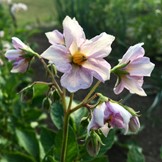
Zone 5, author’s garden.

Mushrooms in the Wild

By Mary-Jane Pilgrim, Master Gardener

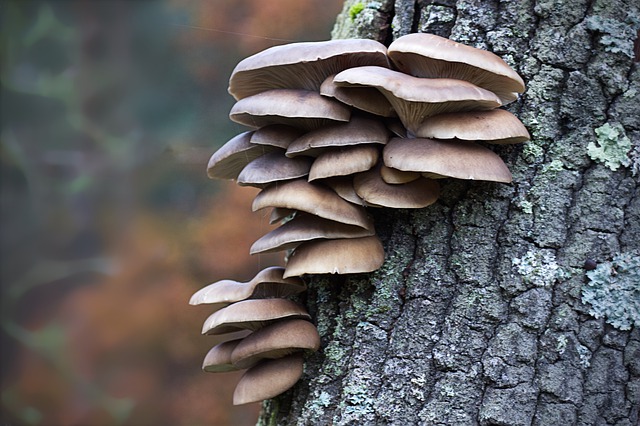
Go for a hike in the woods in November, and you’ll see plants you’ve probably never seen before. With the wetness of fall comes an entire forest of miniature fungus elements of many different shapes, sizes and colours. Some can be eaten, others don’t taste very good, some will make you sick and a small number of them will kill you. In general, the types of trees in the forest will determine what fungus and hence what mushrooms will grow there.

Mushrooms are the fleshy, spore-bearing fruit of various fungi. They are generally short-lived. They can emerge from the ground, expand, produce spores, and die back in a matter of a few days. Some are as big as dinner plates and some as small as pinheads.

This fall, myself and two active friends have been going hiking in different parks, conservation areas and public wild spaces in our area. Whenever we see a new mushroom, we generally stop and take a closer look and we’re often amazed at what we find. In additional to the white, brown and sometimes orange mushrooms, we also find different mosses and lichens. We often taunt each other to try to eat the different mushrooms, but just in jest — recognizing the danger of improper identification.

Mushrooms play an important role in our ecosystem. They are capable of decomposing pretty much any material (plant or animal) in the woods and breaking it down into the primary components of forest soil; providing nutrients that feed the plants growing in it. Many animals rely on mushrooms for food, especially squirrels and other rodents. Slugs also dine on mushrooms, and certain types of flies spend their whole lives on, and in, mushrooms.
Mushrooms develop from a mycelium; a mass of threadlike structures that make up the main part of the fungus. It is usually embedded in soil or wood. These mycelia often form connections, called mycorrhizae, with the roots of coniferous trees and other plants. Unlike plants, mushrooms cannot synthesize their own food from the sun’s energy. They lack chlorophyll – the substance which permits plants to use sunlight to form food. Mycorrhizae assist the plants around mushrooms in absorbing water and nutrients, and in turn, the fungi receives some of the carbohydrates the plant produces through photosynthesis — it’s a symbiotic relationship.

Most interesting to me are the mushrooms that grow in rings. Recently, while hiking the “UpTown” trail in HaroldTown Conservation Area east of Peterborough, we spotted several large rings of mushrooms and wondered how and why they were growing like that. Turns out that when a mushroom spore lands in a suitable location, the underground roots grow out evenly in all directions. As the fungus grows and ages, the oldest parts in the center of the pile die, creating a circle. When the fungus roots produce its mushrooms, they appear above-ground in a ring. The ring continues to grow outwardly, eating up all of the nutrients in its path, and leaving behind nutrient-rich soil.

There are edible mushrooms in our forests like chanterelles, morels, and porcini mushrooms. Also to be found from the fungi family are edible puff balls. Foraging is prohibited in Ontario’s provincial parks without proper authorization and also in conservation reserves, unless the forager is harvesting for personal consumption. In Toronto, foraging for any purpose is illegal in city parks and natural spaces. The Ontario Poison Centre views foraging as an “extremely dangerous” hobby because the difference between safe and toxic mushrooms can be microscopic.

Warning: Never consume a wild mushroom unless you are certain of its identity and edibility. Do not attempt to identify a mushroom from comparing photographs alone. Check out all the characteristics and if in any doubt, do not eat them.

Foraging aside, my suggestion after my experiences this fall is to get out and hike in the forest before the snow falls because there are still thousands of mushroom creatures along the forest floor in different shapes, sizes and colors. It’s a whole new garden in the fall once most of the green has disappeared. Take a camera along with you!

Resources:

https://www.tvo.org/article/where-the-wild-things-are-foraging-in-ontario

https://www.thecanadianencyclopedia.ca/en/article/wild-mushrooms-in-canada

Not Your Everyday Goldenrod

By Cheryl Harrison, Master Gardener

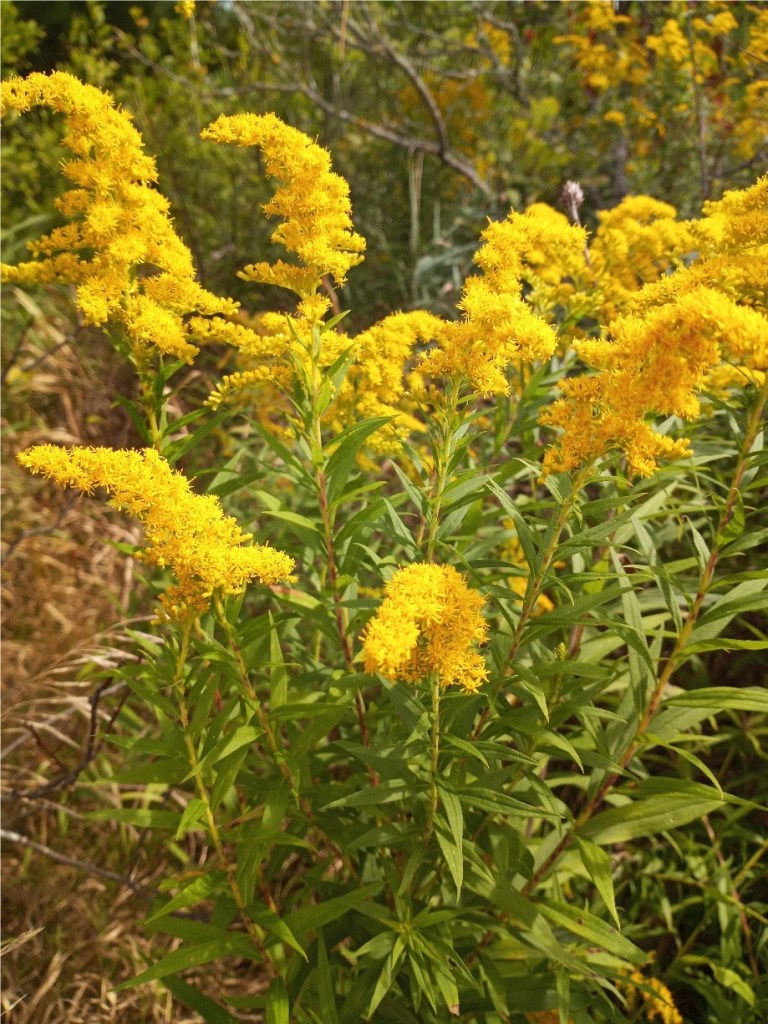
I was recently at a market where a local garden group was selling some plants including many native plants. I noticed a striking goldenrod. I remarked to one of the vendors that it still seems odd to me to see goldenrod for sale when it is so common in rural Ontario. The vendor rightly chastised me because this goldenrod was not your very common goldenrod (Solidago canadensis), it was Gray Goldenrod (S. nemoralis) . The vendor went on to describe some of the positive attributes of this plant. I have to say that the bright yellow, fluffy flowers were beautiful!

This market interaction set me thinking more about the native varieties of goldenrod, or Solidago, species. There are over 100 species of this perennial native with over 25 being found in Ontario. This plant often gets bad press as being a plant whose pollen causes allergies but the likely culprit is ragweed (Ambrosia species). Ragweed and goldenrod bloom at the same time and are often found growing in the same areas. Goldenrod’s lovely yellow flowers (note that there are a couple of Ontario species with white flowers) are attractive to bees and butterflies. They serve as a good source of nectar in the fall and their heavy pollen grains attach easily to the bodies of pollinators. Ragweed flowers are green, do not produce nectar and produce large amounts of light pollen that easily becomes airborne … hence your sneezing and your itchy eyes.

Solidago canadensis, author’s garden

Goldenrod is an easy keeper in the garden. It can grow in a variety of soils, many prefer sun but some grow well in part shade or shade and most prefer average moisture but some can grow well in very moist soil. Goldenrod spreads via seed and through rhizomes (horizontal underground stems). Some species (Tall goldenrod (S. altissima), Canada goldenrod (S. canadensis), and Giant goldenrod (S. gigantea) can quickly take over a small garden. These may be grown in a pot , in a bordered area or in that hot dry area of the garden where not many other plants will grow. This will help to keep them in check.

Goldenrod can be quite a tall plant and is very pretty in drifts in the garden, as a background plant or even as a focal point. I started a woodland garden this year and planted a zigzag goldenrod (S. flexicaulis) which grows in full shade. Goldenrod is great for adding colour to the fall garden and when grown alongside beautiful purple asters (for example, New England Aster (Symphyotrichum novae-angliae), the display is stunning!

Goldenrod has many positive attributes from its beautiful, bright yellow flowers and its tall upright growth habit to the many species that will grow in a variety of conditions including that hot, dry spot in your garden.

Goldenrod may be purchased at most native plant nurseries or grown from seed. For more information on the different species of goldenrod, please check here. For more information on growing golden rod, please check here.

Seed Saving and Bombing

By Anica James, Master Gardener in Training

With the autumn equinox right around the corner, this is the perfect time of year to be collecting seeds. I don’t know about the rest of you, but I find seed collecting both rewarding and therapeutic. There is something about spending an intimate amount of time with different plant species, getting to know them and discover how the plant truly grew. It’s amazing that something as tall and beautiful as a Foxglove grows from the tiniest of seeds. Whether you are collecting seeds from fruits and vegetables, wildflowers, ornamental flowers, grasses or trees, you will notice that each seed has various characteristics that make it unique.

A homemade seed saving library that was installed in East City

I always carry a pen for labeling, a big stack of envelopes, usually a pair of secateurs or snips, and sometimes paper lunch bags for larger seeds. I go for a meditative walk through the woods or around my yard, carefully collecting my stash, labeling the envelopes or bags, and bringing them home for extra drying time. For some seeds I use a sieve to take off any chaff that is still clinging on, and then I weigh everything out on my scale and divide certain seeds up into packages I make out of old scraps of paper (vintage National Geographic magazines are my favourite to use). Before the pandemic started, there was an annual Seedy Sunday event held every March in Peterborough; keep your eyes and ears peeled for future dates because this is a great place to meet other seed collectors and swap findings.

Insects love to hang out amongst the pods. Always be sure to clean your seeds.

I encourage you to go for a walk around your property or nearby country road and collect your own seeds because not only is it a fun and free way to help you grow different plants on your own, but you can also share or sell any leftover seeds you have. Some of my favourite native varieties to collect are:

Aquilegia canadensis, wild columbine

Asclepsias tuberosa, butterfly weed

Aster novae-angliae, New England aster

Coreopsis lanceolata, lanceleaf coreopsis

Dalea purpurea, purple prairie clover

Monarda fistulosa, wild bergamot

Rudbeckia hirta, black-eyed Susan

Symphyotrichum oblongifolium, aromatic aster

Another thing that I like to do is create seed bombs that I can use for guerilla gardening projects. Seed bombs are a great activity to do with kids and it encourages them to get messy and add to the beauty of this world. I personally like to “bomb” public areas around commercial properties and newly built subdivisions with wildflower seeds, anything to bring some life back into the beige-grey landscape.

Basic envelopes that I use when I am collecting seeds. Once I have everything at home I sort and clean them and put them in new labeled envelopes.

Materials you will need:

  • Wildflower seeds or seeds collected from the garden
  • Water
  • Peat-free compost.
  • Powdered clay (found in craft shops); some people also use cat litter
  • A bowl to mix everything in
  • A tray to dry the seed bombs on

How to build your bombs:

  1. In a bowl, mix together 1 cup of seeds with 5 cups of compost and 2-3 cups of clay powder.
  2. Slowly mix in water with your hands until everything sticks together. It should have the same texture and consistency as muffin batter (kids love this because it’s like making slime)
  3. Roll the mixture into firm, even balls and then leave the balls to dry in a sunny or warm spot
  4. Once they are dry, plant your seed bombs by throwing them at bare parts of the garden or land and wait to see what pops up! (I usually like to time my guerrilla plantings with the rain).

If you are interested in learning more about seed saving locally, Jill Bishop from Nourish has some great reference material and sometimes offers workshops, especially to those who are members of local community gardens. https://nourishproject.ca/basics-seed-saving

Seeds of Diversity is another great resource https://seeds.ca/

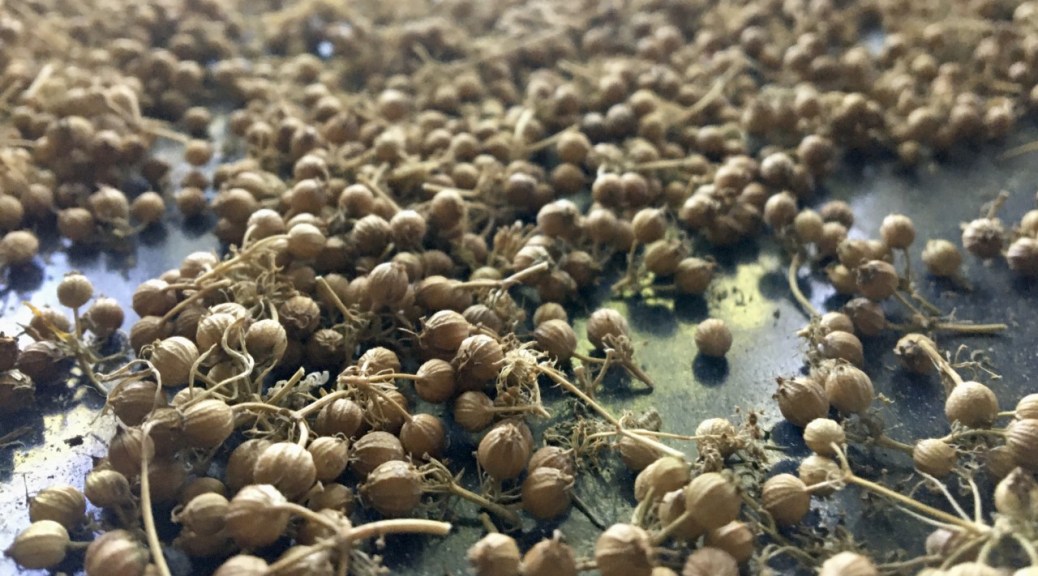
Coriander seeds which I save and collect every year for culinary purposes.

The Late Summer/Fall Garden

By Cheryl Harrison, Master Gardener

Your once showy, spectacular plants have finished blooming and their foliage may have withered.  Do not despair, the late summer/fall garden can still be something to behold as well as feeding the pollinators and other wildlife!

Annuals

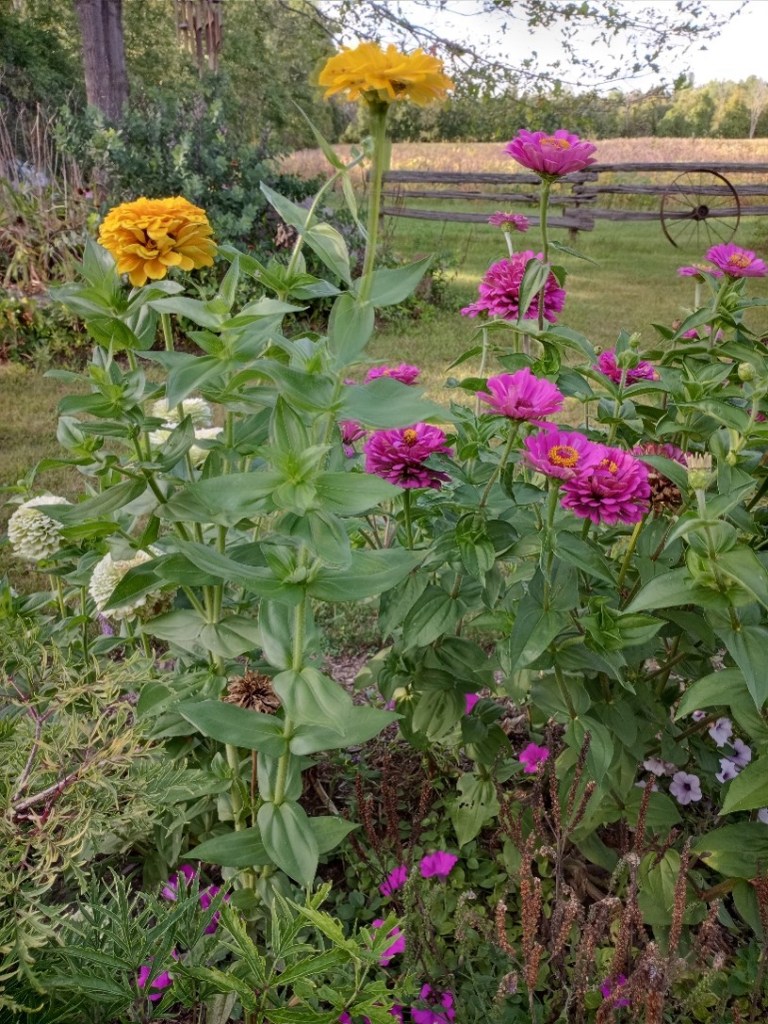
Plants that grow, bloom, go to seed then die all in one season are annuals.  Annuals may be used to add some much needed colour at the end of our summer season.  Zinnia, Petunia, annual sunflower (Helianthus annuus) and Cosmos are easy to source and grow.  The ornamental kales and cabbages are dramatic plants that will look good in your pots or your garden.

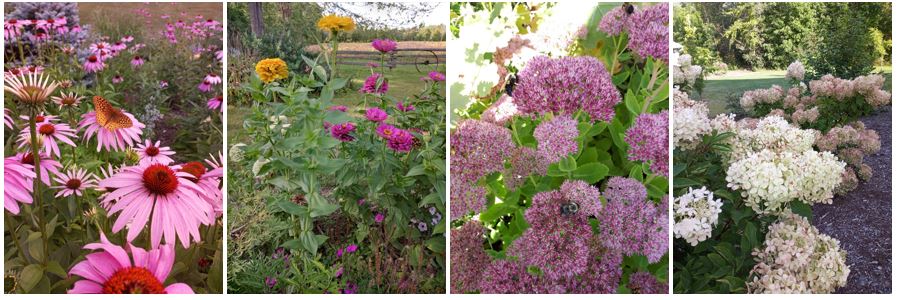
Zinnia various — author’s garden

Shrubs

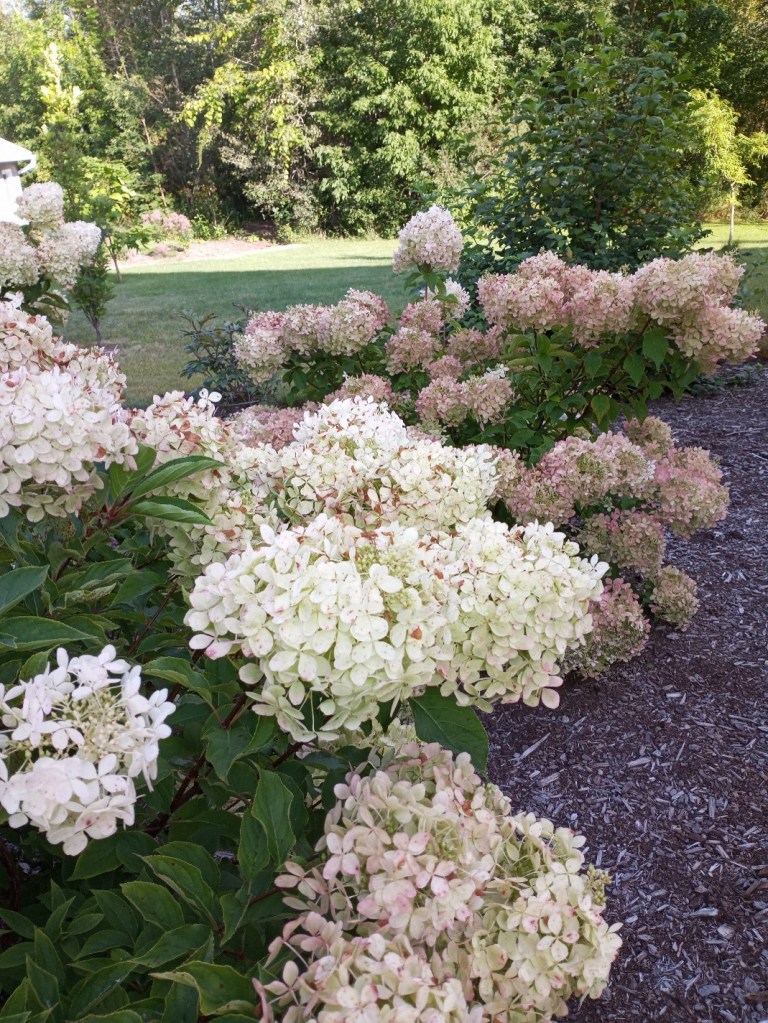
Hydrangea – I am referring to the panicle (H. paniculata) and smooth hydrangeas (H. arborescens) that bloom on new wood and may be pruned in late winter or very early spring.  This is a plant that steals the show in late summer, fall and even into winter.  They produce large, pink, white or pink/white poufy blooms.  The blooms may be dried for inside décor or left on the plant outside for winter interest. 

Witch hazel – Hamamelis virginiana is a native that blooms with interesting, spidery petaled, yellow flowers in the fall.  This plant will attract birds to your garden.

Perennials

Plants that grow, bloom and produce seed but do not die after just one season … some are short lived but some live for many years.  There are lots of perennials that bloom in late summer and fall.  Many, like the native Aster species and golden rod (Solidago species) provide food for wildlife including the pollinators.

Echinacea purpurea — author’s garden

Some others in my garden include:

Phlox – There are lots of P. paniculata cultivars that bloom in the fall.  This plant comes in a myriad of colours.  Do not confuse this plant with the mid-summer/August blooming dame’s rocket (Hesperis matronalis) which can be quite invasive.  Phlox flowers have five petals and dame’s rocket have four.

Black eyed susan – Bright, happy native plants and cultivars (Rudbeckia species) that may be annual, biennial (germinate in spring of first growing season but do not flower and go to seed until the next growing season) or perennial.  The wild ones that we see on the Ontario road side are most often biennials. 

Bugbane – Another pretty native (Actaea species formerly Cimicifuga) that blooms in the fall.  I spent lots of time trying to get a good photo of a bumblebee on this plant’s bloom but it was too fast for me!

Anise hyssop – The bees love Agastache foeniculum.  I have mine planted along a path.  It is tall and quite dramatic when in bloom.

Antennaria — author’s garden

Plume poppy – This is the plant that everyone will ask “what is that”.  Macleaya cordata growsvery tall and has an interesting seed head and large leaves.  Beware though because it can spread through rhizomes (underground roots) and it exudes an orangey sap when pulled.  It is easy to control just by pulling the plants when small but wear gloves to avoid touching the sap…it is poisonous.

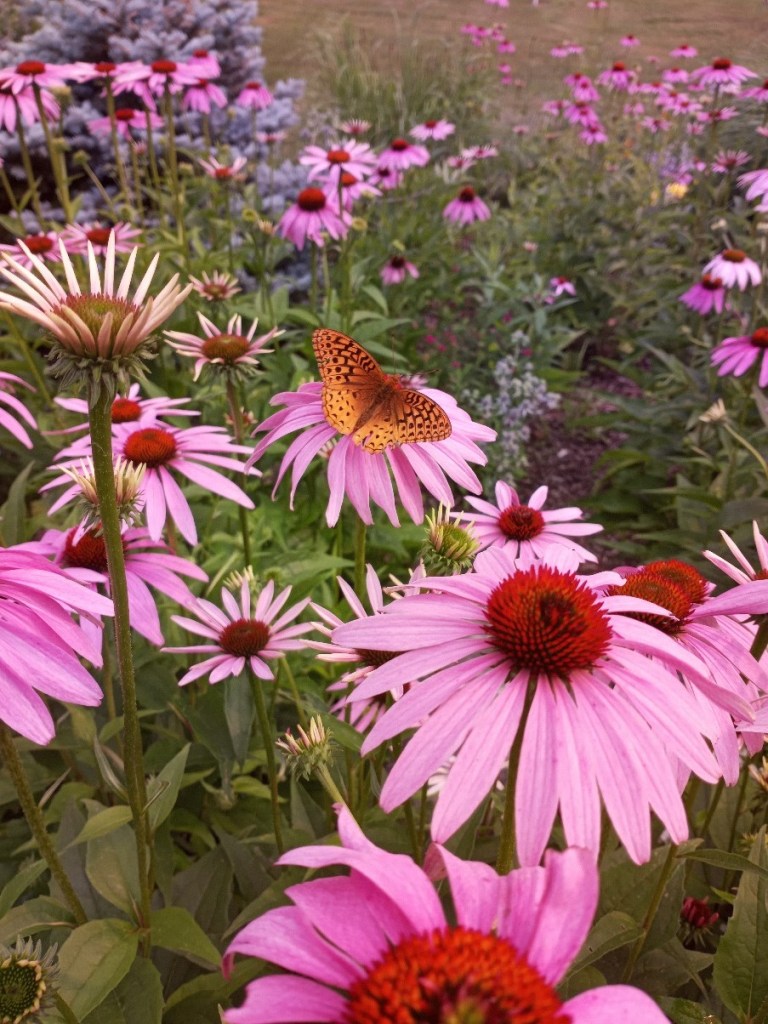
Coneflower –  Echinacea purpurea is a native plant but there are lots of colourful cultivars.   Birds eat the seeds held in the spent blooms in winter.

Hydrangea — author’s garden

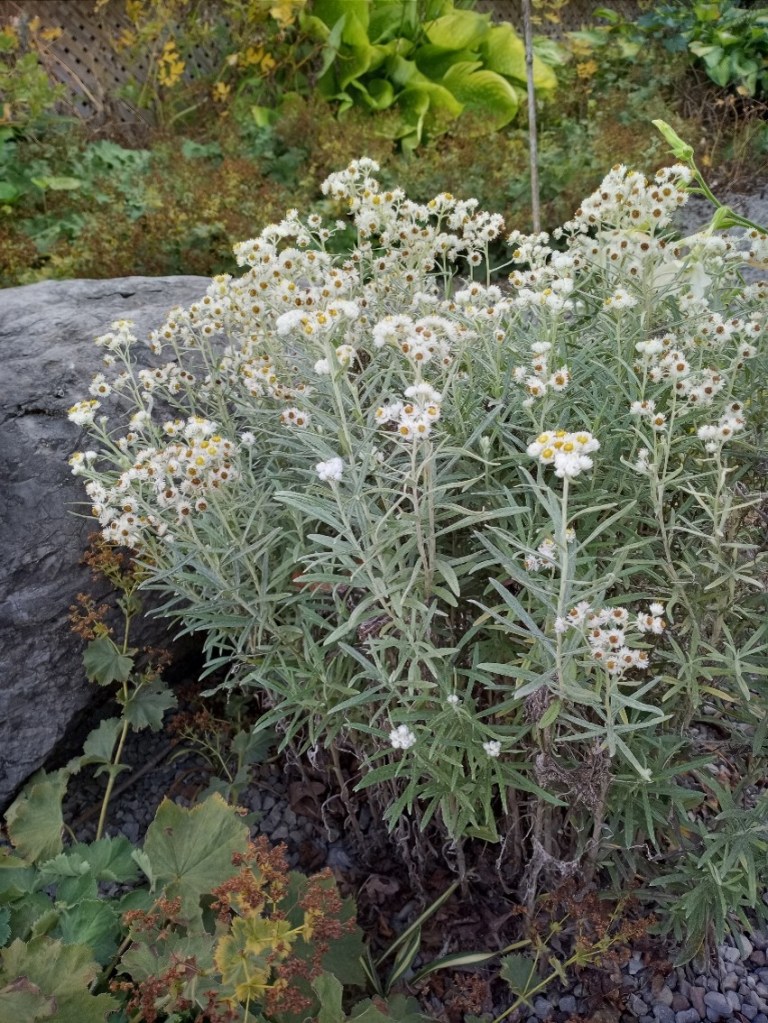
Pussy toes –  The bees love this native (Atennaria species) too.  Just like it’s common name, this plant has cute little flowers that resemble the toes of a soft, white kitten.

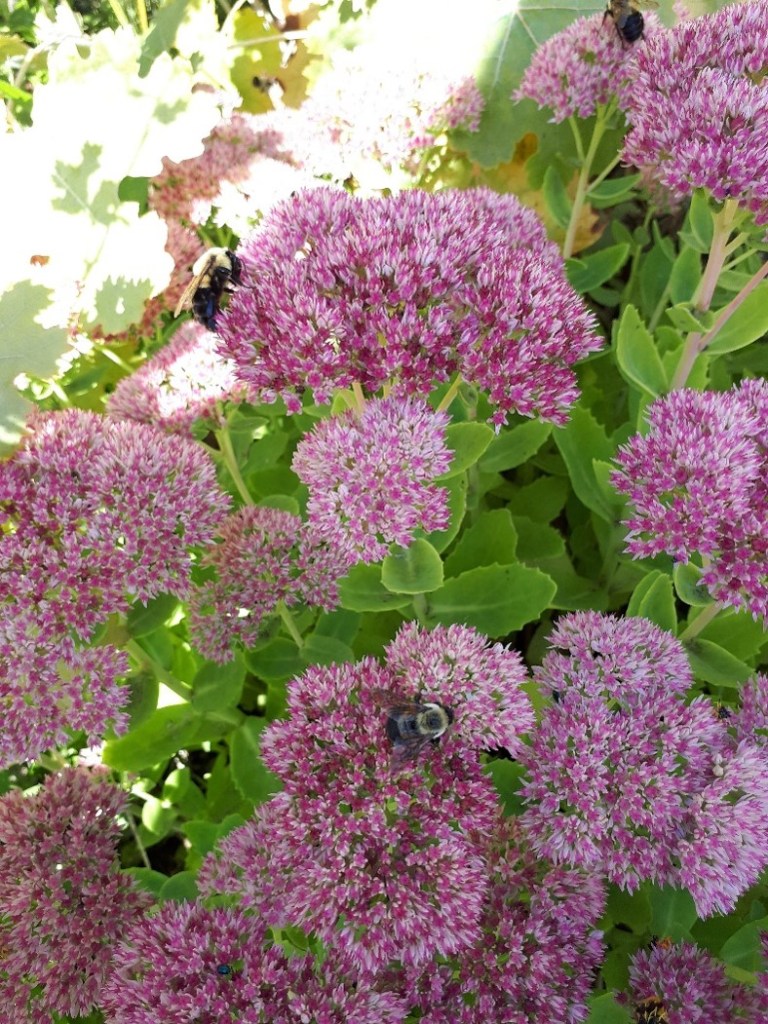
Sedum/stonecrops – These plants are some of the toughest, hardworking plants in your garden.  They can take lots of heat and dry conditions. There are many, many to choose from … some bloom in spring and some bloom into the fall. The sometimes colorful foliage can add interest and the blooms will attract pollinators.

Sedum — author’s garden

So observe your garden, does it need some help this time of year?  Try shopping the fall sales at your local nursery.  If you can fit in some of these plants, you will have a beautiful garden full of late season blooms. 

Ditch Lilies – a Cautionary Tale

By Emma Murphy, Master Gardener

Once upon a time there was a gardener who wanted something that grew quickly to screen a neighbour’s unsightly yard and house addition. She noticed that the ‘ditch lilies’ that surrounded her front yard tree (already there when she moved in) seemed to be pretty vigorous, so she planted a row of them between the yards, along with some small bridal wreath spirea (Spirae aprunifolia).

What she didn’t realize was that she had unleashed a horrible monster into her garden, one that quickly engulfed any other plants, sucked all the moisture out of the soil, and eventually killed most of those spirea.

Yes that gardener was me, many years ago, before I knew better and before I became a master gardener. So this year I knew I had to finally tackle the monster, remove all these plants, and reclaim this garden area. I knew how much work it would be (it took me three weekends this spring), but I got it done. Here’s my story…

Even though you see it growing in ditches around the province, Hemerocallis fulva (aka ditch lily, tawny daylily, orange daylily, tiger lily) is native to China, Japan and Korea and was introduced to North America in the early 19th century. They spread via seed and a network of tuberous roots, and can reproduce and proliferate from a small fragment left behind during removal. In 2020 the Ontario Invasive Plant Council added this plant to their invasives list, and their Grow Me Instead Guides offer some native alternatives to consider.

Screen capture from the Grow Me Instead Guide on Hemerocallis fulva

Garden bed, spring 2021

So this was my garden bed in May this year – just waiting to burst out and take over, again. Every single one of these plants had to be dug and lifted, making critically sure to get every last bulb. These photos show how many bulblets can be on just one stem – it was quite overwhelming to think of the job ahead.

All the plants that were dug out were put in black plastic garbage bags and left out in the hot sun beside our barn for a month. At last count I used 45 garbage bags, and they were a slog to carry as they were heavy!! Eventually they went to our rural dump, where the hot composting they do should ensure their demise.

Bit by bit, over three weekends, I got them all out. It was beneficial to have a dry spring, as it made digging them out a little easier. But still a workout!

Once everything was cleared out, I weeded the soil for anything else. All that remained were my tulips and a few hardy perennials that had been gasping for air for more than a decade.

Getting there.
Ready for a fresh load of soil.

With a fresh load of soil on top and a final check for bulblets done (and knowing that I would have missed a few), I put in some new plants, aiming for 50 percent native plants (those marked with a *). The area has both sun and shade spots so I needed to be careful with my choices.

For sun, Echinacea*, Gray-headed coneflower* (Ratibida pinnata), summer phlox (Phlox paniculata), American Witch Hazel* (Hamamelis virginiana), New England asters (Symphyotrichum novae-angliae), Sedums, Switch grass* (Panicum virgatum), Lesser catmint (Calamintha nepeta ssp. nepeta), Black-eyed Susans* (Rudbeckia hirta), lupins, Giant fleeceflower (Persicaria polymorpha), Cyclindrical Blazing Star* (Liatris cylindracea)[once I can convince the bunnies to stop eating it – see green covers], and Virginia Mountain Mint (Pycnanthemum virginianum).

For part shade/shade, Mourning Widow Geranium (Geranium phaeum), Purple Flowering Raspberry* (Rubus odoratus), hostas, Sensitive Fern* (Onoclea sensibilis), Virginia Waterleaf* (Hydrophyllum virginianum), Columbine (Aquilegia), Starry False Solomon’s Seal* (Maianthemum stellatum), Buttonbush* (Cephalanthus occidentalis), Zig-zag goldenrod* (Solidago flexicaulis) and Berry Bladder fern* (Cystopteris bulbifera). Also the infamous Outhouse Plant (Rudbeckia laciniata ‘Hortensia’), to be replaced with something else next year. Any suggestions for fast growing native shrubs that can handle part share welcome!

The garden bed needs time to fill in, so we’ll see what it looks like next year. In August I went back into the bed and sure enough, there were new ditch lilies growing in a few places. Remember it only takes one bulblet for them to grow. But half an hour later they were all gone as well.

I suspect I will on alert for the odd ditch lily plant showing up for the next few years, but I’m really proud to have removed this nasty invasive plant from my garden and rejuvenated it with native plants. And my two lovely sugar maple trees are glad for some more breathing room.

NOTE: The orange, single flower, diploid Hemerocallis fulva is the only daylily currently listed as invasive. Most daylily cultivars are diploid or triploid and do not spread invasively like the ditch lily.

Gardening is a Privilege

By Anica James, Master Gardener in Training

It’s May 24, and according to the Farmer’s Almanac, now is the calendar time people in the Peterborough area are normally getting ready to sow seeds, plant vegetable seedlings, and put new plants in the ground because all danger of frost has past. But that’s only if you are privileged enough to own space to do so and have enough disposable income to spend on plants and gardening supplies.

According to the Oxford English Dictionary, the word privilege means “a special right, advantage, or immunity granted or available only to a particular person or group”. Historically, having a large beautiful garden was saved for the wealthy and elite, because they were the ones who could afford the land, exotic plants, and an entire staff of gardeners. Unfortunately not much has changed, but thankfully more resources are becoming available to those who might not have the materials but wish to garden.

Although increased property ownership in the past century has allowed for most homeowners to have some slice of yard space for themselves’ to work on, it still costs a lot. Realtors even suggest that homeowners need to spend approximately 10% of the property value on landscaping. Gardening is still a very private and solo act and everyone has their own vision and version of what the “perfect garden” looks like. Maybe you’re privileged enough to be able to hire a gardener or landscaping company to maintain your property and get that bowling green lawn which costs money to water, fertilize, and mow it. Having a garden bed and maintaining said garden bed is also a privilege because it costs money to fill it with plants (whether they are annuals, perennials or shrubs), in which most are non-native and many can be detrimental to the natural environment.

Buying plants, soil, mulch, seeds and seed starting kits also costs money. The average 1 gallon potted perennial costs $15, and if you follow the rules of design you just learned about on Pinterest which says you need “at least three of every plant to form nice clumps and groupings”, the cost of gardening really starts to add up. Next time you go to a garden centre to buy a non-native Hydrangea in a 2 Gallon pot for $59.99, think to yourself what it must be like for someone who cannot afford that. Recently I was at a local grocery store looking at plants–in which I had already loaded my cart with over $100 worth of colourful annuals adorning cheap plastic pots–and I overheard a woman my age say to whoever she was speaking with on the phone “I really want this lavender plant because my therapist said it would help calm and ground me, but I really need milk and eggs to make breakfast for my kid.” Although I do not have children, I have been in a similar position where I really wanted a $5 plant and knew that I couldn’t afford it at the time. This is the reality for many people I know, the working poor, but they still want to be able to have access to nature that will bring them joy. Plants are supposed to help relax us, not stress us out.

There are still ways for people who do not have enough money or space to do a bit of gardening, thanks to seed sharing, plant swapping, and learning through books or the internet, but even so, it is a struggle for many in our community. Consider the balancing act and constant budget decisions that less privileged people in our city must make every day. Shouldn’t everyone have the right to access home grown produce and beautiful flowers?

So how can those of us who are fortunate enough to have time, money and space to garden change and/or make a positive impact this growing season?

As you get your vegetable plots ready for the season, if you have the space and can afford to, consider growing extra vegetables and herbs that you can donate to a local food bank or a less privileged neighbour on your street. Or consider renting out your front lawn to other people who want to install a garden, like what they have done in Charlottetown, PEI https://www.cbc.ca/news/canada/prince-edward-island/pei-garden-share-program-1.6005297

The flowers of a potato plant, a practical and pretty addition to any garden bed that doesn’t cost a lot of money and rewards you with delicious food. Photo by Anica James.

Thankfully here in Peterborough we are fortunate enough to have over 40 community gardens, but there could still be more. If you have time to give, volunteering at a community garden has many benefits to help you grow in multiple ways. Or do you know of a place in your neighbourhood where you would like to see a garden installed? Local organization Nourish has great resources to help you get started. https://nourishproject.ca/factsheets

Reconsider the manicured look of popular garden plants and switch them out for something that is going to be more beneficial for you, wildlife, your community and the environment in the long run.  Incorporate more native plants and collect seeds to share with others in the community. GreenUP Ecology Park is a great place to buy native plants and learn about local greening initiatives.

Remember: Gardens should be both practical and pretty while always serving a purpose. If the pandemic has taught us anything, we need to start being more empathetic and finding ways to grow through this together as a community.

St. Luke’s Community Garden located in East City has 18 individual allotment plots and a few plots for volunteers to grow produce, which is then donated to the Food Cupboard at the church. Photo by Anica James.

Native Plants: Guilt

By Suzanne Seryck, Master Gardener

Like a lot of other gardeners during this time of COVID, I have taken advantage of the many, many gardening presentations, seminars, talks, and webinars that have all been available online–not to mention catching up on my reading. The two books that I am currently reading are both by Douglas Tallamy and have been recommended numerous times. They are ‘Bringing Nature Home’ and ‘Nature’s Best Hope’. Both are packed full of facts and figures; the first one providing a list of recommended native plants as well as basic information regarding the insects that are eaten by bird and wildlife. The second book, which is one of the main reasons why I like it so much actually has a plan (or approach as the book calls it) for turning our home gardens into wildlife habitats and extending that approach to create corridors preserving our native wildlife.

What I have noticed among the many presentations, seminars, etc. is the focus on native plants, native wildlife preservation, sustainable and organic gardening and environmental gardening.  I am definitely all in favour of this shift; in fact I believe that this has been too long coming. We, as a whole, are definitely a little late to the table. Now this is just my personal opinion but I feel that as a nation, as a people, we do seem to be forever running behind a problem trying to come up with solutions only when the situation becomes critical!

I have to admit that I am as much at fault as the next person. My garden is only approximately 40% native plants, the rest being ornamental. Although if you count bulbs and annuals, that figure could drop down to about 30%.

But do not panic just yet, Douglas Tallamy does not recommend that we ‘adopt a slash and burn policy towards the aliens that are now in your garden’, thank goodness for that. What he does suggest is two-fold, if an alien plant dies replace it with a native plant that has the same characteristics, and two, create new beds with native plants if you have space and if not, dig up some of your lawn.

So here is my dilemma, and guilt. I have no more space to expand and only a very narrow patch of lawn in the back garden for my husband, dogs and future grandchildren. So I either have to wait for something to die, which is not happening fast enough to outweigh my guilt, or dig up a plant replacing it with a native. This is not quite as easy as you think. I have walked around my garden a number of times looking for plants to give away to plant sales or neighbours. The problem is the less plants you have the more each plant tends to have its own story, your mother or good friend gave it to you, you’ve inherited it from someone you care about, the plant reminds you of a certain time, the list and stories go on.

Photo of backyard in author’s garden showing on the left the narrow strip of lawn

One of my favourite native plants is culver’s root. It always and consistently has the most insect activity of any plant in the garden. I already have two. But would I want to dig up the rose bush that my mother bought me because coincidentally it has the same name as my grandmother and replace it with a third culver’s root?

What about ironweed? I love this tall, stately plant covered in late summer with purple flowers. Again I already have two, but would I want to dig up the delphinium that a neighbour gave me 15 years ago, that had apparently been growing in her yard for 30 years prior to that and replace with an ironweed?

Picture of Ironweed in author’s backyard

What about all the daylilies I have spent years collecting, each one unique and individual, or the peonies I bought from my last garden, one in each colour? Now, I understand that maybe not all of my ornamentals have the same level of memories, and that, yes, they would be going to good homes. But it is a difficult decision, I want to increase the natives in my garden, I want to do what is right and sustainable, and I want to increase the wildlife in my garden. I have even given talks myself encouraging gardeners to add at least one native plant to their garden each year. But do I really have time to wait; my guilt levels and motivation levels want me to act now, to take a stand, to encourage by action.

As Douglas Tallamy concludes: ‘Our success is up to each one of us individually. We can each make a measurable difference almost immediately by planting a native nearby. As gardeners and stewards of our land, we have never been so empowered – and the ecological stakes have never been so high.’

Joys of Nature and Spring Garden Tasks

By Sharleen Pratt, Master Gardener

April 22nd was Earth Day.  It is a time for reflection on what we can do to help develop a new approach to conservation and it can all start in our own yard. As we experience what we all hope will be our last full shutdown, we need to remain optimistic in the growing interest in gardening with natives and the number of younger people who are learning to grow their own vegetables.  Douglas Tallamy, author of Nature’s Best Hope, writes that as homeowners, we need to “turn our yards into conservation corridors that provide wildlife habitats”.

Spring is a time of renewal.  To help us get through the stressful days of this lockdown, a walk outdoors will help you experience the joys of nature and all it has to offer! 

I have created two lists.  The first is ‘Joys of Nature’ that you will encounter this time of year.  The second is ‘Garden Tasks’ to tackle over the next few weeks.

JOYS OF NATURE

Hepatica image compliments of Joan Harding, Peterborough MG
  • My garden makes me smile this time of year with all the blooming Daffodils (Narcissus), Hyacinths, Hellebores and even Lungwort (Pulmonaria officinalis). 
  • Local ponds are alive with the sounds of the spring peepers and the chorus frogs.  If you take a walk and come across a wetland, you will be amazed at the sound.
  • Many of the migrating birds and waterfowl have returned.  My feeders are being well used by the yellow finches, grackles, house finches and mourning doves.  If you enjoy the hummingbirds, don’t forget to get your feeders out now.  They will soon be back!
  • A walk through the woods will reveal the beauty of the spring ephemerals.  Ephemerals are short-lived spring flowers that take advantage of the sunshine before the trees get their leaves.  I have seen bloodroot, hepatica, coltsfoot and the beginnings of the trilliums and the dog-toothed violets.
  • If you are out digging in your garden, don’t be surprised if a robin will follow you around in the hopes you might throw him a much sought-after worm.  Robins are already nesting so the female is likely to be at the nest site.
  • Watch for early butterflies such as the Mourning Cloaks, Eastern Comma and the Spring Azure.
  • In early May, you should begin to see the white blossoms of serviceberries and the beginnings of the lilacs and the cherry blossoms.

Get outdoors, take a deep breath and walk slowly through a local park or wooded area and enjoy many of the items mentioned above.  Do it now before the return of the blackflies and mosquitoes!!

If you are interested in a sample of simple nature events in the Kawarthas, Drew Monkman, a retired teacher and well known environmentalist and advocate for climate control, has written this monthly almanac: https://www.drewmonkman.com/sample-page/monthly-almanacs/

SPRING GARDEN TASKS

Author’s Spring Garden… Hyacinths, Bloodroot and Daffodils
  • Only rake your lawn if walking on it leaves NO footprint.  The time to overseed your lawn is generally when the lilacs are in bloom.
  • Now is the time to top dress a generous amount of compost and other organic material into your garden beds.  Let the earthworms do the work.  I do not suggest that you rototill your garden as this disturbs the beneficial life in the soil.  Bacteria, mycorrhiza and insects are damaged, sometimes beyond repair, with rototilling.
  • Prune overgrown vines and shrubs such as some hydrangea and some of the clematis; basically all the shrubs and vines that do not bloom in spring.  Do not prune lilacs as they bloom on last year’s growth.
  • Gradually remove protection on rose bushes and prune down to a swollen bud.  Remove dead, diseased and crossing branches.
  • If you haven’t already, now is the time to sow frost tolerant veggies such as peas, carrots, spinach, lettuce, beets, kale and radishes directly into the garden.
  • Divide and transplant perennials as growth resumes.
  • Now is a good time to think about planting shrubs and trees.  Maybe you would like to replace an old shrub with something native, such as Black chokeberry (Aronia melanocarpa), Eastern snowberry (Symphoricarpos albus) or Gray dogwood (Cornus racemosa)
  • Be sure to have your rain barrels set-up and ready to collect that wonderful spring rain.
  • Keep your bird baths filled and cleaned.
  • If you have been growing tomatoes, peppers, cucumbers and annual flowers indoors, early May is the time to begin to harden off those young seedlings.
  • The soil is still quite soft, so now is a good time to edge your garden beds as well as start to pull all those weeds that seem to survive no matter what the weather.

    Get out in your gardens, enjoy the warmer temperatures and don’t forget to get your knees dirty!