Category Archives: Health

Gardening Is Not Cancelled

by Emma Murphy, Master Gardener

Just when Ontario gardeners thought spring was peeking through the piles of snow – with warmer weather and the change to daylight savings time – we’ve been derailed, and not by Mother Nature.
GDD2

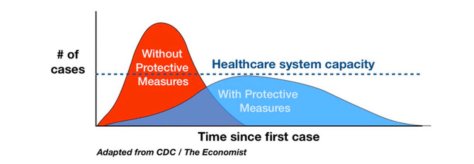
It’s been a tough few weeks with the increasing spread of the coronavirus disease (COVID-19) to North America. People are becoming increasingly alarmed, and in the past few days we have seen measures by our local health authorities and governments to ‘flatten the curve’ of the pandemic by imposing restrictions on travel, movement, and large events. For best information on the COVID-19 situation contact your local health unit or the Government of Ontario website. Peterborough Public Health, led by Medical Officer of Health Rosana Salvaterra, also has great resources.
curve
Flattening the curve – Proactively instituting protective measures to protect our healthcare system’s capacity to respond.

For Ontario gardeners, the past week has seen the cancellation of two major garden shows, numerous Seedy Sundays (and Saturdays), various Ontario Horticultural Association District meetings, and local meetings (in venues that have closed their doors to external groups). 90116313_3010310689020706_8668654371803758592_oThe biggest shock was the last minute cancellation of Canada Blooms just before its opening (March 13-22) as so much hard work and preparation goes into this event (6 days of building, but also plant-forcing, planning, designing etc.). But all is not lost! Thanks to Paul Gellatly (new Director of Horticulture at the Toronto Botanical Gardens), Sean James (Master Gardener and gardening consultant), and Helen Battersby (Toronto-based writer and garden speaker), we have photos and video of Canada Blooms before it was dismantled so that everyone can appreciate the results, even if we don’t have “smell-o-rama” and can’t see it in person.

Photos of Canada Blooms (thanks Paul Gellatly) Here and here

(note that all the TBG’s plants from Canada Blooms will be on sale at the TBG at 777 Lawrence Ave East on March 14th and 15th from 10 a.m. to 4 p.m.)

Video Tour of Canada Blooms (thanks Sean James) Here

More Photos of Canada Blooms (thanks Helen Battersby) Here

gardenshow

The Peterborough Garden Show is also a huge draw for Ontario Gardeners. This year was to be the 20th Anniversary show – completely community run by volunteers from the Peterborough Horticultural Society, with all profits being reinvested in the community in Peterborough.

In addition, our beloved Peterborough Seedy Sunday this March 15th has been cancelled (along with many others across the province). Organizer Jillian Bishop (of Nourish and Urban Tomato) is encouraging people to visit the website and click on links for the various vendors to support them by buying seeds online.

89690140_2770661179669493_8297570305530920960_o

What are Gardeners to Do?

Don’t give up hope.

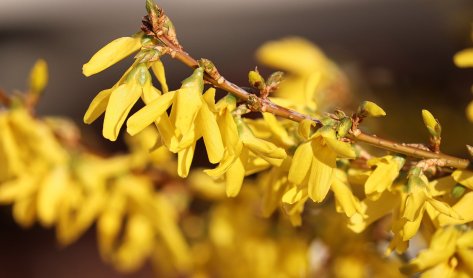
  1. Bring spring inside! Check out my recent blog on bringing dormant spring flowering branches inside and forcing them for early colour and bloom.forsythia-4083551_1920
  2. Plant some seeds! You may not be able to go to Seedy Saturdays/Sundays but you can order seeds from local companies or find them at your local nurseries. A great activity for March Break with kids.
  3. Do some virtual garden tours! Google Arts and Culture has some, or there’s a virtual tour of Prince Charles’ Highgrove Gardens that I just found. I’m sure a quick Google search for “virtual tour” and “gardens” would bring up many more.Highgrove
  4. Plan your 2020 garden. Whether it’s reworking your perennial beds, planning a new garden, or deciding on your vegetables and herbs for this year, best to get your design ideas laid out now before spring arrives. Maybe think about a rain garden or pollinator garden for this year?
  5. Clean your tools. Get in your garage or garden shed and take inventory of what tools need repair or replacing, and what new tools may be helpful this season. Clean your tools now so you are ready for the season.20190713_140635
  6. Get outside. Yes we might still have snow (well some of us do) but that doesn’t stop you wandering around your garden and dreaming does it?
  7. Go wander in nature. Many of the COVID-19 restrictions are stopping our regular activities in our communities. But that is no reason not to enjoy our wonderful environment. Take this opportunity to get out for a hike, see the plants emerging from their winter hibernation, listen to the spring birds singing, and relax in nature. (more on this in our MG Sharleen’s blog on Monday)09_RiverView

These are challenging times, but our gardens and love of gardening will help get us through. If you have other ideas please tweet them out to us or share them on our Facebook page.


Pot, eh?

By Mary-Jane Parker, Master Gardener

This past growing season was my first foray ever into growing marijuana. I tried this because I want to attempt to make a salve that I have been purchasing locally for arthritis (which, by the way, seems to work for me!)

marijuana-101796_960_720I started my seeds inside under lights. When I planted the seedlings outside, one went into the ground in my garden and the other went into a 5 gallon bucket with holes drilled in the bottom. The bucket plant went into my little greenhouse.
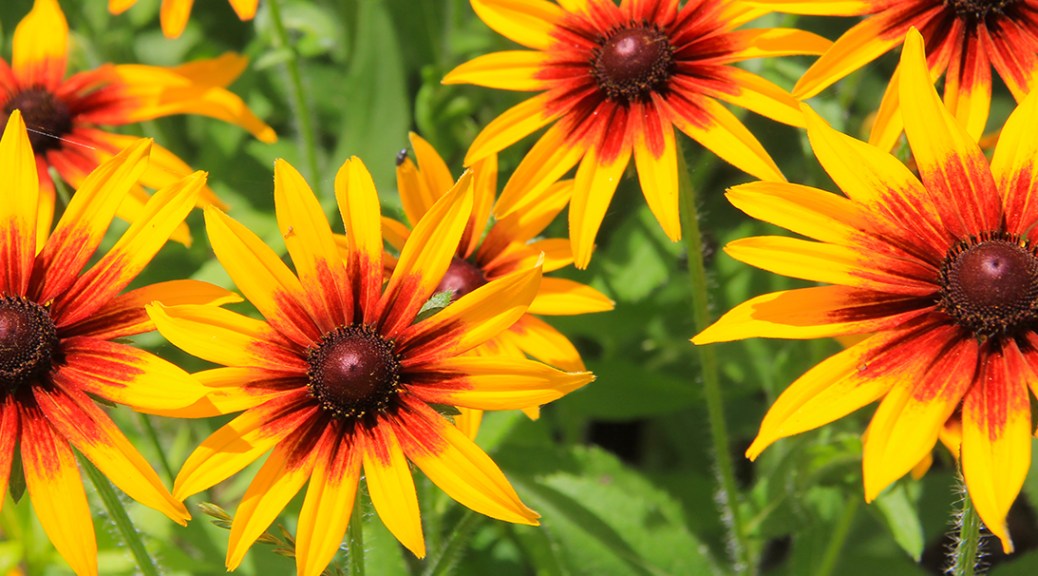
I did not fertilize either plant regularly – maybe 3 times the whole summer – but I did water the potted plant pretty well daily. I gather from other growers that I should have fertilized a lot more and then held back on the fertilizing later in season to clear chemicals out of the plants.

I thought this would be a good way to test growing techniques – greenhouse as opposed to outdoors but in the end it was not. I had planted 2 varieties that had very different characteristics. One had a beautiful bluish, reddish tinge to it and the other was twice as bushy.

Both plants ended up being well over 5 feet tall with lots of flowers. I cut them down before first frost and hung them in the greenhouse with shade cloth draped overhead.

So now, I am not sure if all the work was worth the effort and I haven’t even made the salve yet. I don’t know how the hippies from the 60’s and 70’s did it. I was told to trim off all the leaves before I hung the plants. That took an incredibly long time. And apparently I will have to trim the dried flowers off in the very near future. The marijuana plants themselves are kind of interesting architecturally but they stink. Birds for the most part avoided them and I don’t think I saw even one bee on them and I have lots of bees here. At any rate, I will make the salve and reserve judgement until then. We have to try new things, right?

Links:

How to grow marijuana outdoors: a beginner’s guide

How to Grow Cannabis in 10 Easy Steps

Master Gardeners of Ontario Information Sheet: How to grow Cannabis

.

The Light in Your Garden

by Chris Freeburn, Master Gardener

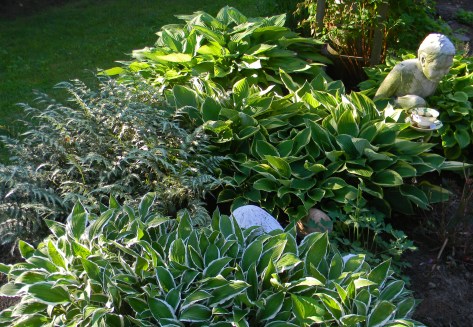
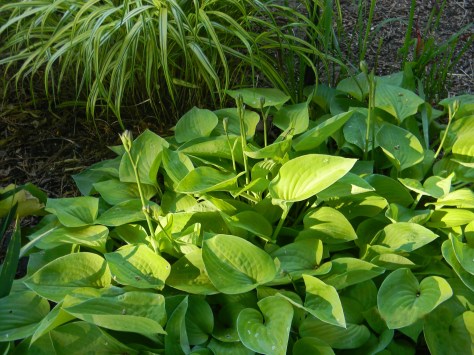
Growing any plant successfully in your garden depends on many factors and an important one is the amount of light you get throughout the day. Growing Hosta out in the blazing sunshine is fine when they first emerge in springtime, but most Hosta will fry with the hot summer sun all day long. A peony without enough sun will have lovely green leaves, but will probably not give you any flowers.

Take a day or two to notice when your flower beds are in sun and for how long. Full sun means at least 6 hours of sun a day. Full shade means no direct sun. Part sun should only be about 3 hours. Morning sun is the best as it is not harsh and hot like late afternoon sun, so if you have gardens facing east, you have the best light for most plants.

3

Knowing which direction your home sits is important too. Get your orientation fixed in your mind. Remember that trees and buildings will shade the gardens as the sun moves throughout the day. As the seasons change, the sun will move slightly in its orientation and where the sunlight comes from will change. Be prepared when you go plant shopping, read plant tags and talk to experts to be sure you are putting the right plant in the right place for the right light requirements.

Like growing just outside your garden growing zones, gardeners can also grow outside sun requirements. Hybridizing has enabled us to have plants that will grow outside their normal light needs. For instance, there are now Hosta that will take a lot of sun. Try to stretch the limits if you want that certain plant in that certain place, but remember to monitor it to be sure it is not being stressed and is performing at its best.

1

Lighting may change in your garden. If a big tree is removed, a full shade garden can become a full sun garden. As a tree grows in your or your neighbour’s yard, or if a new building goes up, it will become more shaded. You may find that you will have to relocate plants when this happens.

Spend more time in your garden, just watching. It is good for your education and good for your soul.

The Peterborough Garden Show

By Mary-Jane Pilgrim, Master Gardener

It’s coming in 25 days.  It can’t come soon enough.  In our city, “The Garden Show” is a true sign of spring.  It’s an occasion that brings together speakers, workshop leaders, vendors, horticultural society members, master gardeners, exhibitors and many others for one reason:  “For the Love of Gardening”.PGS-logo-small

This year marks the 19th fantastic show: 
April 26 – 28, 2019 (Friday 5-9pm, Saturday 10am-5pm & Sunday 10am-4pm).

And there’s great news ! The show has MOVED – to Fleming College’s brand new Trades and Technology Centre on Brealey Drive with lots of FREE parking and a $10, one-price ticket so you can enjoy the show all weekend.

The Peterborough and Area Master Gardeners will have a booth at the show, and will be happy to answer any gardening questions that you may have. Watch for our red aprons!

The theme “Coming Up Roses” is reflected in several of the amazing speakers along with educational and fun workshops and demos.

This award-winning show was honoured in 2017 with both a “Canada 150 Garden Experience”, and “Garden Event of the Year” by the Canadian Garden Council, so come and see what all the fuss is about.

You will find many of your old favourite vendors along with some new ones.

…and don’t forget the popular “Little Green Thumbs” Children’s Garden that is always teaming with liveliness and action! There are learning activities, face painting, crafts and even a take-home project. Their theme this year is “Miniature Gardens for Elves and Fairies”.

All the show profits go back into our community to fund scholarships for post-secondary students studying in horticulture-related fields,various local projects & Community Gardens.  Since 2002, the show has put over $200,000 back into our community.

Please save the date, visit and and learn why “Everything’s Coming Up Roses” in 2019.

Learn more about the incredible speakers, workshops, bus trips, places to stay and tickets here: peterboroughgardenshow.com.


Caring for Your Houseplants in Winter

By Chris Freeburn, Master Gardener

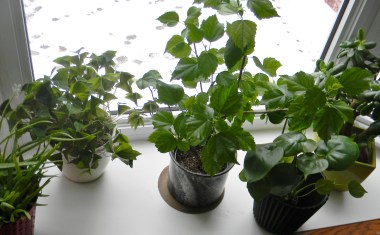
For avid gardeners, winter months are a resting period with little to do but read about gardening and plan for spring. But we also need to take more care with our houseplants during this time as conditions in our homes have changed from months where windows are open and furnaces are not running.

To give your plants the best chance to stay happy and healthy, remember these four important factors.

Water

Most plants do drink less in the winter months so you can let them dry out between watering. However, plants like asparagus fern, anthurium, dracaena and ferns will still want to be kept moist. Check the soil an inch down or feel how heavy the pot is to be sure you are giving those plants enough water. Always fill your watering can and let it sit for a few hours before using. This allows the water to come to room temperature and also gives time for any chlorine or other chemicals to dissipate. Plants like jade, sansevieria, succulents and cactus will still want to be dry through the resting period.dscn6541

Temperature

Palm, croton, dieffenbachia and most tropicals prefer it warmer while ivies, wandering jew, cyclamen and jasmine like it cooler. So if you have your cyclamen in the same room as your fireplace, it might not be happy. Watch for drafts of cool air from open doors or from hot air blowing from furnaces. Many plants will suffer from this.

Light

Give your plants as much light as you can. That south window that burns everything in summer will give just enough light in the early months of the year. You may need to move some of the plants you keep in other areas to a brighter window. Plants like ferns, figs or philodendrons may want to be in that brighter spot. But be aware of how cool it is. You may have to move your plant back away from the glass

Humidity

dscn6545 (1)Most homes in winter are too dry for most houseplants and this is why we see them suffer by dropping leaves. To increase humidity, you can mist the plant, give it a shower (at room temperature – this also will dust for you!), or set in a saucer with rocks (elevate so the pot and roots are not constantly wet). Placing plants in kitchens or bathrooms where there tends to be more humidity is another idea. Plants that like it humid include ferns, palms, dieffenbachia and dracaena.

Fertilizing in the winter months when plants often rest is not recommended, however if your plant is actively growing with new sprouts, use a weak solution of water soluble fertilizer (20-20-20) once or twice a month.

It is also very important to have a good look at your houseplants on a regular basis. Besides removing spent leaves or flowers, watch for chewed leaves, spidery webs, or wet patches on leaves which can indicate pests. If you spot something, isolate the plant to avoid the pest migrating to the rest of your collection. Pick off the infested leaves, give the plant a good shower or gently wash the leaves with water or safers soap and get a good insecticide. Take your sick plant to the bath tub for a good spray. Remember to spray the soil as well as the plant as many pests lay their eggs in the soil. You can also use plant pest strips. These work very well for fungus gnats and other flying pests.

With a little attention and care over these stressful months, you can keep you houseplants happy and healthy and ready for the next season.

Forest Bathing

By Suzanne Seryck, Master Gardener

As gardeners we spend a lot of time in our gardens; some might even say a little too much. There is always something to do. This time of the year when we’re not harvesting our vegetables, we are weeding, maybe still deadheading, amending the soil or mulching ready for next year, some more weeding, planting (fall is a great time to plant trees, shrubs, perennials or spring bulbs), over-seeding the lawn and of course, more weeding. What we tend not to do, and I’m speaking very much for myself here, is to slow down or even stop for a few hours to enjoy our gardens, someone else’s garden or maybe just take a walk.

There is a new gardening trend in North America called ‘Forest Bathing’. Forest bathing  or Shinrin-yoku was first developed in Japan in the late 1980’s and means to bathe in the forest atmosphere or to take the forest in through our senses. By being outside in a natural environment, you are letting in the sights, sounds and smells of nature which help calm, rejuvenate and restore. The intention of forest bathing is to slow down, taking the time to unwind and become immersed and connected to the natural environment.away-3024773_640

I know that on many mornings, when I take a cup of tea and venture into my garden early, I am always filled with a sense of peace and wonder, and immediately take a few deep breaths and feel at ease ready to take on the day. So it comes as no surprise to me to learn that over the past several decades scientific studies have discovered numerous health benefits associated with being in both wild and natural areas.  Researchers have found that many trees give off organic compounds that may be beneficial to people. Studies comparing the effects of walking in the city to those of walking in the forest have found that for those walking in forest environments, there was a significant reduction in both blood pressure and stress hormones (http://www.natureandforesttherapy.org/the-science.html). Other health benefits include, improved mood, increased ability to focus, accelerated recovery from surgery or illness, an increase in energy levels, improved sleep and a boosted immune system with an increase in the Natural Killer (NK) cells.

Living in the City of Kawartha Lakes and Peterborough we are lucky enough to have an abundance of trails,  parks and forests, all of which will be at their best in the new few weeks. After writing this article, I will be finding my inner peace in my local conservation area and I hope you will too.

For more information: http://www.shinrin-yoku.org/shinrin-yoku.html