Category Archives: Advice

Year in Review, Part II

By Suzanne Seryck, Master Gardener

I wrote the first part of this two-part blog on a beautiful fall day, with a temperature of around 20 degrees and blue skies. Today as I’m writing it is the type of winter day that I love, temperature hovering around zero, snow on the ground and I don’t need 4 or 5 layers of clothes on when I go out for a walk. The first part of my year in review blog that was published back in November described some of the many challenges and learning experiences I faced gardening in 2020, including growing Sicilian zucchinis, handling Creeping Charlie in my lawn, and becoming more selective when deadheading. In this second section I’ll continue on with the challenges, including staking perennials, trying to grow an English cucumber and battling with the wildlife over the grapes, blueberries and currants.  

Now I have to admit before I start, that staking is not really my thing; it typically needs planning and thinking ahead. You can stake reactively as I tend to do, but by then it is often too late; the plants still look untidy, flop over adjacent plants and you can see the stakes, which for me personally is an issue. Last spring my iris, lupins and especially peonies grew so tall so quickly that they easily outgrew the old peony cages that surrounded them.  My fall asters also fell over as they hadn’t been staked at all and were easily over six feet tall. So this spring I need to be more preventative and stake as early as I can. There are many different types of stakes that you can use such as grow-through supports as in peony cages or tomato cages. These work well if the plants are not too tall, although I do have some of the larger tomato cages in my garden. Grid-type supports also work well for plants that bloom heavily, and for irises I tend to use single stakes that I can just move around the garden as needed. You can also make your own supports using bamboo stakes or tree branches and twine or even chicken wire. Most gardening catalogues, such as Veseys or Lee Valley sell plant supports in many styles. For me however, I tend to find them quite expensive and tend to work with tomato cages or make my own.  For more information please see the following article: https://www.bhg.com/gardening/flowers/perennials/staking-and-training-perennials/

English cucumbers, what can I say, I still tend to prefer these over other varieties that definitely grow much better here. English cucumbers tend to be longer, thinner, with an edible skin and in my opinion taste better. They do not however like cold temperatures, so if planting in the garden ensure that all danger of frost has long passed, and in fact, wait a further week or two after that. They also have shallow roots so need more frequent watering. I also find that for me they grow stronger and healthier if I provide some type of shade when it gets really hot. English cucumbers will also grow straighter and longer if the fruit can hang, so growing on a vertical support works really well. However, after saying all that, I still am unable to grow them as well as I would like and they are definitely very labour-intensive. So for this year, I am going to grow a different variety, although in saying that I have not tried growing cucumbers in containers, so that might be an option to try. Greta’s Organic Gardens have some interesting cucumber varieties for seed purchase, including Crystal Apple Cucumber that is shaped like an apple when mature, a Miniature White Cucumber which needs no peeling and is eaten when smaller than 3 inches. Lastly a Spacemaster Picking Cucumber that can be grown in either a container or a hanging basket. This company is one of many Organic seed companies based in Ontario. https://www.seeds-organic.com/pages/contact-us

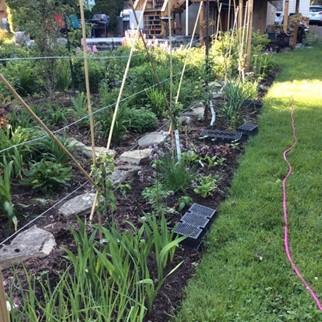
And last but not least, one of my favourite subjects last year in the garden was the wildlife, namely the dreaded squirrels and rabbits. We have a few different structures that we have built to keep out the animals, including:

And:

Not to mention:

This last picture shows simple plant trays with a mesh bottom lying upside down over new seedlings. I use these both to deter the animals and also to help keep the seedlings shady. However, none of these prevented the squirrels from taking bites out of most of my tomatoes, eating all my grapes, of which we had a bountiful crop, and the birds from eating my blueberries and white currants. The previous year I had put nets over the blueberries and currants which had helped, however since then I have read a few articles stating that the types of netting I was using could damage both birds and other wildlife so I was reluctant to put it on again. I have since done more research but not found anything yet suitable for my needs. However it is only January and will likely get a lot colder, which gives me plenty of time to do more investigation and come up with something suitable.

My covid-19 project for 2021 — starting a cutting garden

By Marilyn Homewood, Master Gardener in Training

Last October as I planted the last of my fall bulbs, my thoughts turned to what next???  How to extend my garden experience by stretching the season.  I adore flowers in the house and between retirement and lockdowns seem to have the time so why not try a cutting garden?

Used with permission from antoniovalenteflowers.com

I have no experience with the subject matter and it made sense to find some resources.  A good comprehensive book is “Floret Farms Cut Flower Garden” by Erin Benzakein.  It covers the basics of cut flower gardening as well as highlighting tips for commonly grown flowers.  How to plan, grow, harvest and even some basics on arranging.  This book proved to be a doorway into a plethora of other references and websites on the subject.  “YouTube” was also a plentiful source of information.

Site selection is key.  Most cutting flowers require full sun and well drained, fertile soil.  A site sheltered from the wind is preferable.  I decided on an area on the west side of the house where the sunshine is ample and my water source is nearby.  Since it will be windy, the support provided to the plants is important and will be discussed in future entries. The final length of a bed will depend on the amount you want to grow. The recommended width is 4 feet. This width allows you to reach the entire bed without stepping into the bed.  The type of flowers to grow is personal preference but regardless of the variety, look for plants with long stems and lots of blooms.  Try to have plants that bloom in the spring (eg. snapdragons), summer (eg. zinnias) and fall (eg. dahlias).  If space is limited, skip the plants that bloom once (like many sunflowers) and concentrate on continual bloomers such as zinnia and dahlias.  These are known as “cut and come again varieties” as they provide blooms for long periods if they are cut or deadheaded. You may also wish to grow some plants as fillers such as Dara.  Fillers are the backbone of arrangements, lending structure, supporting delicate blooms and filling gaps between focal flowers.

Dara filler used with permission from antoniovalenteflowers.com

Cut flowers are grown more densely than usual and most commonly are spaced 6,9 or 12 inches apart.  References abound on the internet indicating which spacing is best for each variety.  The number of seedlings, corms or tubers required is calculated using the area available for that plant and the spacing distance.  Once calculated, order your seeds as soon as you can.  Goods for the garden seem to sell out quickly in these days of lockdown. Seed vendors have been discussed in a previous blog.  In addition to those already cited, many of the cut flower farmers also sell seed. 

Once you have selected your seed, you then need to determine when to start them indoors using the last spring frost date for your area (OMAFRA lists Peterborough as May 17).  For each variety, check the seed package for timing and work backwards from there.  This allows you to make a seed starting schedule.  For those seeds you intend to direct seed, you may need to consider time to maturity in order to give the plants time to bloom (work backwards from first frost date in your area).  I make a list of seed sowing dates to help keep me organized.

Now all there is to do is wait for the seeds to arrive.  I start sowing in February.  Please join me through this blog on my horticultural adventure.

Resources

https://antoniovalenteflowers.com/
https://www.johnnyseeds.com/flowers/
https://www.damseeds.com/pages/flowers
https://www.floretflowers.com/

To plant a garden is to believe in tomorrow” Audrey Hepburn

Planning for pollinators

by Rachel Burrows, Master Gardener

Did you know that pollinators are responsible for pollinating over 30% of the foods that we eat? Many pollinator species are at risk due to climate change, habitat loss, and pesticide exposure.

So, what are pollinators and what do they do? Bees and other insects, butterflies, moths, hummingbirds and other small birds all need a constant source of food from early spring through to fall. They are looking for pollen-bearing flowers with fairly easy collection of nectar and pollen.

How can we help? There are many ways that we can help in our own gardens. We can provide habitat for pollinator birds and insects by installing nesting boxes both for birds and cavity nesting bees. Fallen trees and an area of bare ground will provide access for ground nesting bees and butterflies. Pollinators really prefer a little less manicured garden!

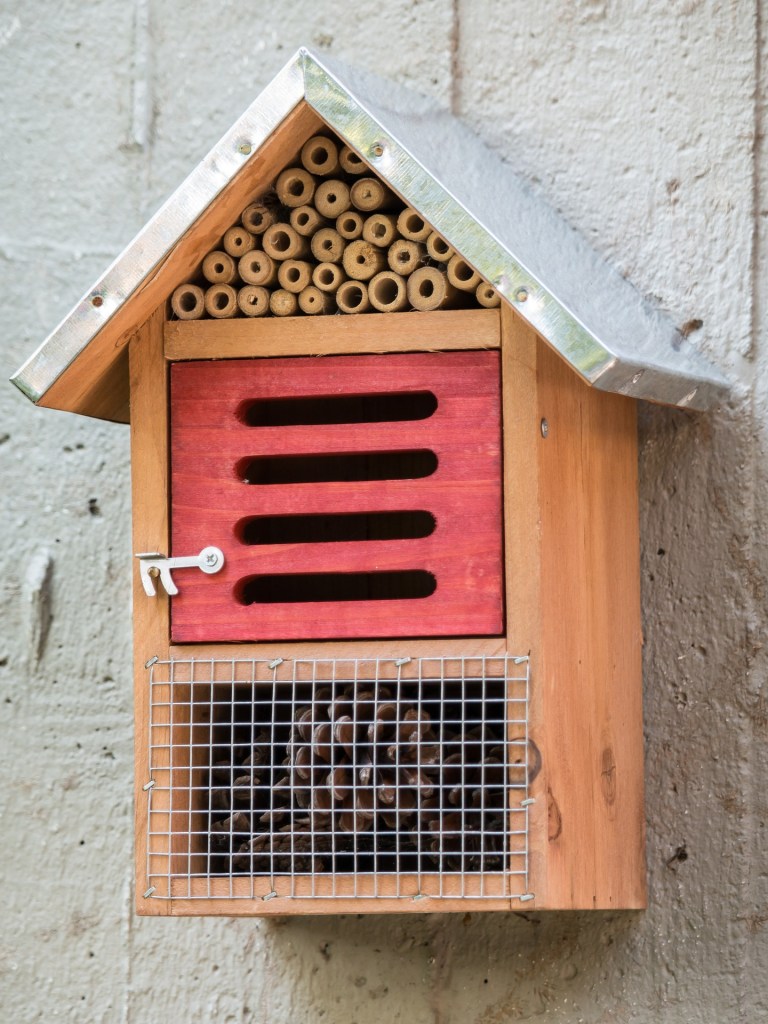
A pollinator hotel, although brush and logs on the ground are just as good. It’s important to keep in mind that these hotels require regular upkeep. Because they host pollinators at a higher density than a natural nesting site, disease and pathogens can quickly spread among visitors.

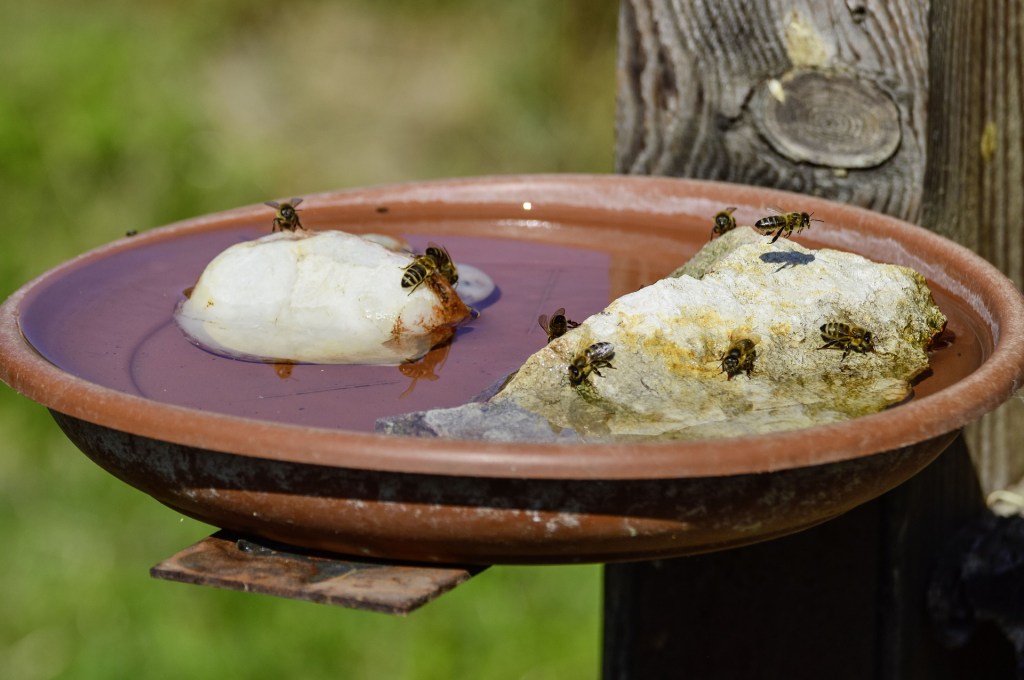
Water is another necessity and a shallow container with a couple of small rocks in it is the perfect drinking spot. Try to avoid chemical fertilizers and use compost instead which is better for both your plants and the pollinators.

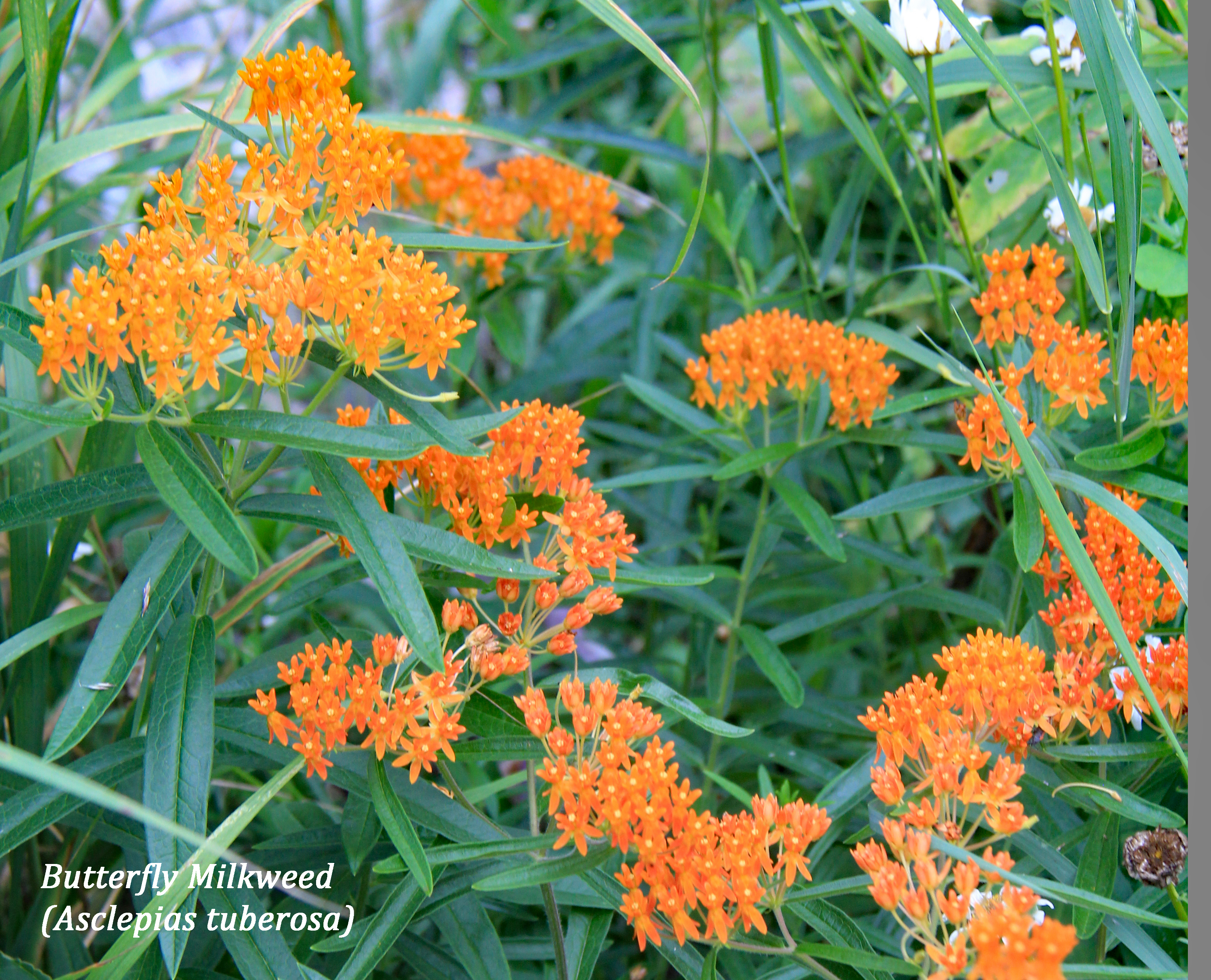
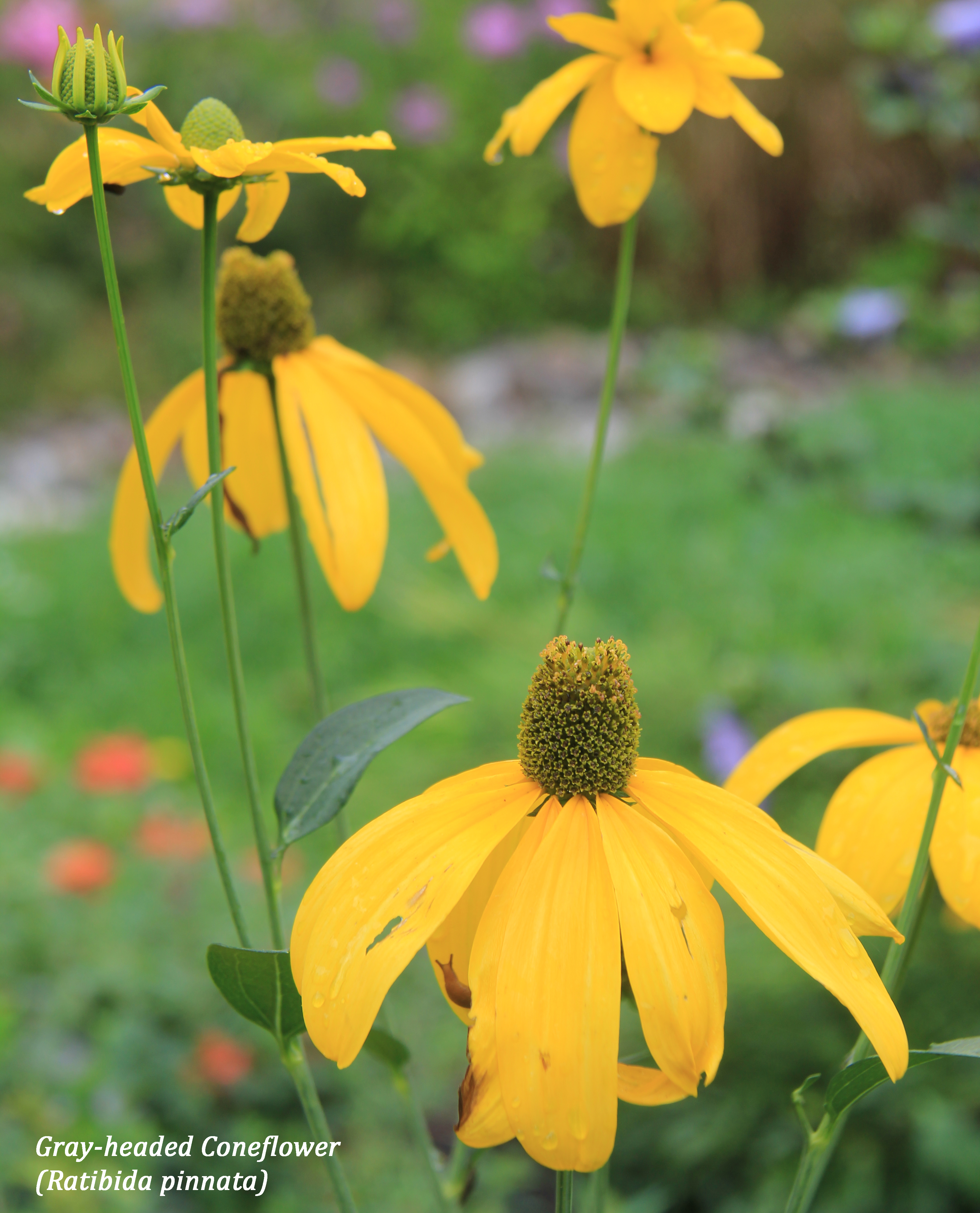
What plants to choose – plant native when ever possible. Native plants have co-evolved with pollinator species and are well adapted to our local conditions. Pollinators can more easily access single bloom flowers such as echinacea and asters as their stamens and pollen are more exposed. Plant species in clumps to provide a target for pollinators, bees tend to gather pollen from one type of plant at a time. Provide host plants as butterflies such as the Monarch, lay their eggs on specific plants for their caterpillars to feed on. In the Monarchs case milkweeds are the only plant that they will feed on.

Try to have plants to provide four season interest, this can include grasses as they will provide shelter and food. Aim for at least three different species of plants blooming in each of the growing seasons. Study your site to determine the amount of sun and wind exposure and how much water will the plants receive?

Pollinators locate their food sources by sight and smell and the bees will go crazy around plants such as lavender and anise hyssop. Honey bees love white, yellow, blue and purple flowers.

The Peterborough Master Gardeners in conjunction with the City of Peterborough and the Ontario Federation of Anglers and Hunters have installed a pollinator garden with all native species at the McNamara Park. This is a City owned park on McNamara Rd. which runs off Guthrie Drive and along the Otonabee River across from the OFAH building. It is a very peaceful park with many trees and seating areas. It is well worth a visit and may give you further ideas for helping our pollinators in your own garden. You can make a difference!

For more information

Pollinator Hotels

Pollinator Conservation in Yards and Gardens

Ontario Nature Pollinator Page

Winter, when a gardener’s thoughts turn to Spring

By Emma Murphy, Master Gardener

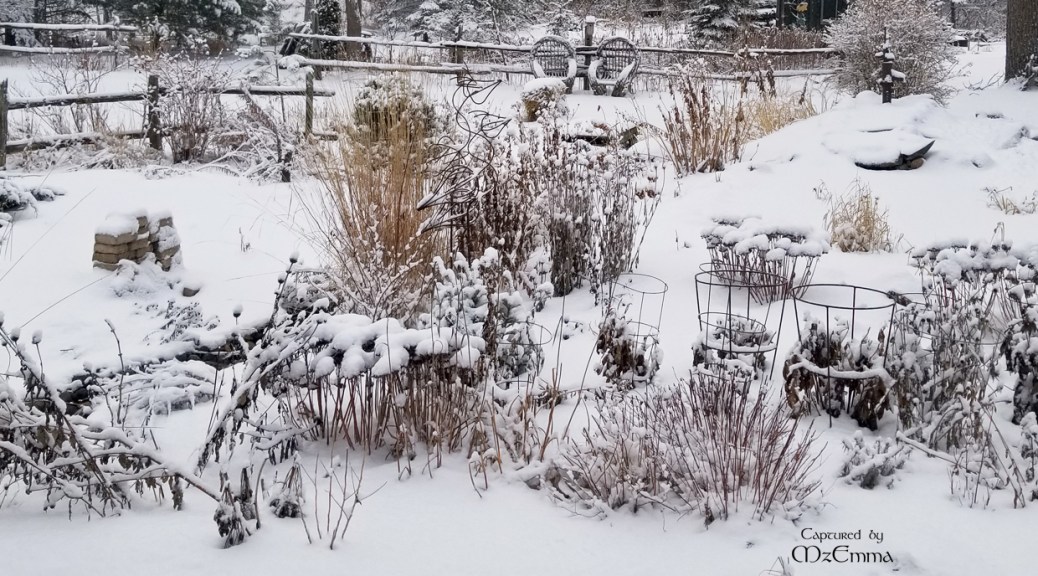
So now it’s wintertime. Our plants are sleeping quietly beneath a bed of wonderful white snow, and although we hibernate and rest to a degree, a gardener’s thoughts turn to springtime. I’m exploring some new ideas for my gardens for next spring, and thought I would share them with you.

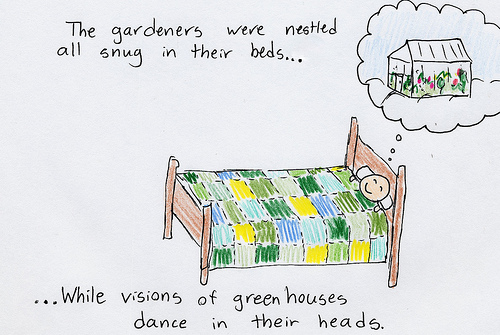
Credit: Joseph Tychonievich; cartoon from https://www.facebook.com/FineGardeningMagazine/photos

No I didn’t get a greenhouse for Christmas…yet.

RAISED BEDS FOR GARDENING

But I do have a wonderful husband who knows how to make his wife – the Master Gardener – a happy person. His Christmas 2020 gift to me was to create some raised beds so we will be doing that this spring. I have been wanting to do raised beds for a few years since seeing Tara Nolan do a presentation at the Peterborough Garden Show, and I guess dropping those significant hints finally worked 😉

So we did a little research. Have you been thinking of creating raised beds for either vegetable or other gardening? They are great to extend the gardening season, be able to control soil quality, provide accessibility for older gardeners or those with disabilities, create a garden for special purposes (youngsters or horticultural therapy), increase yields, reduce weeds, and keep critters at bay. They also work well for condos and rooftops in our urban centres. Here’s some great sites I found for those interested in the idea.

One of my favourite gardeners with a similar climate to mine in Central Ontario – Erin Schanen in Southeastern Wisconsin (zone 5) – The Impatient Gardener. She has several good articles on growing in raised beds, from layout through to construction.

Tara Nolan’s book Raised Bed Revolution emerged at a time when this idea was gaining a lot of traction, and it’s an excellent source of information on size requirements for constructing raised beds, height suggestions, types of materials you can use, and creative tips for fitting the maximum garden capacity into small spaces—including vertical gardening. The Toronto Botanical Garden also wrote a great review. We also have a copy of Mel Bartholomew’s Square Foot Gardening, which focuses on growing more fresh produce in less space, and is very complementary to the raised bed philosophy.

For some general information on raised beds try here and here.

ORDERING YOUR SEEDS

Maybe it was just the crazy rush (and delay on delivery) for seeds this past spring, but we just ordered our vegetable and flower seeds for the 2021 season. There are lots of seed companies to choose from, but please try to shop from Canadian companies and especially those local to you. Although COVID-19 meant the cancellation of Peterborough’s wonderful Seedy Sunday, the organizers did post a list of all the vendors who would have been there, and it’s a great resource, as is the Seeds of Diversity site.

ESPALIERED FRUIT TREES

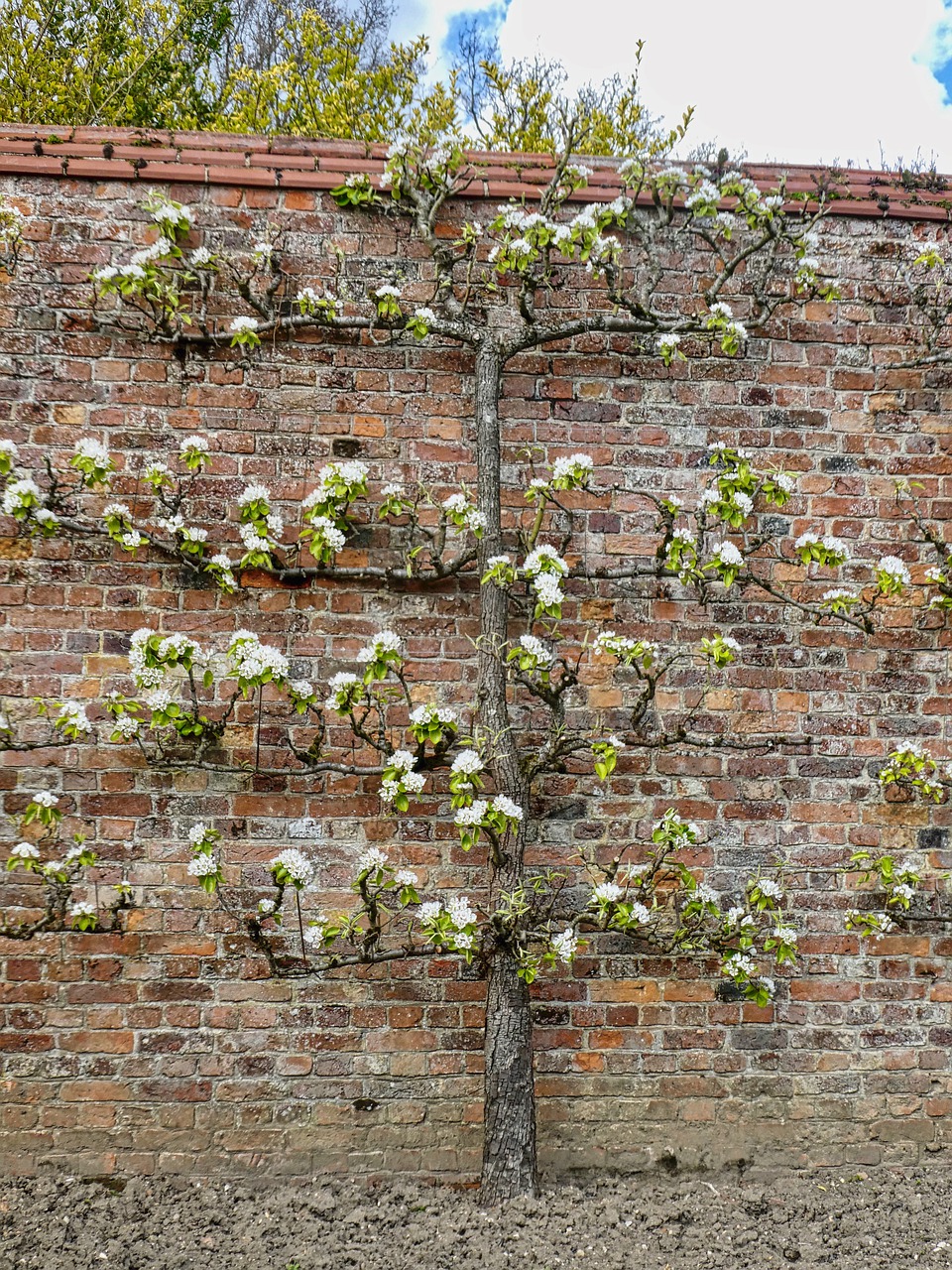
Espaliered fruit trees (espalier – to train a tree or shrub to grow flat against a support or wall) have been on my garden wish list for several years, and I missed an opportunity to pick up a mixed apple espalier tree several years ago which I have been kicking myself for ever since. I saw amazing espaliered fruit (English style) in the Victorian Kitchen Garden at Meadow View Gardens (just north of Cobourg) on a Master Gardener tour several years ago, and was entranced (well I’m entranced by owners Julie and Garry Edwards’ entire English-inspired gardens, but that’s another story).  

Although they can be any kind of fruit they are most often apples, and the key to doing it well is understanding how to prune the trees. Garden Therapy has an excellent article on how to grow these edible gardens, in ways that can accommodate both small spaces but be decorative. There are many different shapes that can be done – cordon (branches straight out to the sides), fan (branches fanning up and to the side), candelabra (like a cordon but the branches turn at a right angle to form the shape of a candelabra), lattice (multiple trees with crossing branches), and “Y” shapes. Maybe this is something you can try in your garden as well? The Ontario Ministry of Agriculture, Food and Rural Affairs (OMAFRA) has a list of nut and fruit tree nurseries. I know one company I have dealt with is Silver Creek Nurseries in Wellesley, who specialize in fruit trees, and they offer the following advice on their website:

“Spur bearing varieties are recommended (rather than tip bearing), such as Cox’s Orange Pippin, Winesap, Fuji, Belle de Boskoop, Calville Blanc, Sweet 16 and many more. Apple and pears are generally the easiest fruits to train, but other species may be espaliered with varying degrees of difficulty.”

Grow a Little Fruit Tree: Simple Pruning Techniques for Small-Space, Easy-Harvest Fruit Trees is also recommended as a resource (although I haven’t read it).

I’ll be in touch with them once spring rolls around, which should be in 82 days or so (but who’s counting?). Enjoy your winter garden dreaming, and spring will be here soon enough.

Recycling Live Christmas Trees

By Mary-Jane Pilgrim, Master Gardener

Don’t throw out the tree after the holidays — put it to work. Here are some ways to recycle a live Christmas tree.

  1. Mulch tender plants with recycled Christmas tree boughs.
    Gardeners know how important mulch, like straw, hay or crisp oak leaves, is for protecting plants through a harsh winter. But evergreen branches add a little extra punch to your plants’ protection. Just lay the branches in a crisscross pattern over tender perennial plants. Weave the stems together to keep them from blowing away on a windy day.

The branches will moderate the soil temperature, keeping everything nice and cold until it’s really time to warm up. Piled on top of other mulch such as leaves, they’ll prevent the bottom layer of mulch from blowing away. And branches catch and hold snow, which is a good insulator. Place evergreen branches over your garden anytime the ground is frozen, from late November to midwinter, after you’re done enjoying your Christmas tree indoors. Pick them up when it starts to warm up in spring.

  1. Repurpose your live Christmas tree in the garden by leaving it out for the birds.
    Your old Christmas tree is the perfect winter gift for your feathered friends. Anchor the tree securely in a deep bucket of sand. The branches are enough to provide cover from the winter weather, but if you want to add treats, strings of popcorn will be popular with birds. Hang the treats on the branches, but push them toward the middle of the tree so birds won’t be frightened by any swinging ornaments that move with the wind.
  2. Simmer some pine needle potpourri.
    You can keep enjoying that piney scent with a simmering potpourri. The idea is similar to mulling spices on the back burner during the holidays. Add water, lemon and orange rinds, a cinnamon stick, whole cloves and other spices. Cover them with water and simmer for hours to scent your home and drive away the January blues.
  3. Make coasters and trivets.
    This is a particularly nice project for young kids who are having a hard time saying goodbye to the tree and the Christmas season. Cut thin slabs off the trunk, sand them smooth and apply a thin coat of polyurethane to keep the sap off tables and glassware.
  4. Donate it to the zoo.
    If you live in an area with a zoo, see if they need discarded Christmas trees for the animals to play with and eat. Same goes for local nature centers, which often use the trees as shelter for birds or even fish. Note that our Peterborough Zoo has accepted leftover christmas trees from vendors in the past.
  5. Add needles to the compost.
    You can finally quit worrying about needles falling on the carpet and make use of your tree’s tendency to shed. Place the tree on a tarp until it’s done shedding and then pour the brown needles into the compost to enrich your soil for next year. As the needles are quite dry, layer them with wetter materials for faster decomposition.

Ground Covers

By Judy Bernard, Master Gardener

Now that you’ve read with delight all about  the plants that are a Christmas Tradition, I’m turning my attention to a favourite group of plants that I enjoy for my garden. Ground covers.

Also known as living mulch, ground covers can go a long way to enhancing your garden. Not only can they stand alone as beautiful additions to your garden, they can also enhance other existing plants by pairing  them with a complementary shrub or perennial. Like mulch, ground covers perform much the same purposes: they insulate the soil from the hot sun, help to keep moisture at the roots of plants, choke out weeds by preventing germination of  weed seeds due to the shade they produce, help protect the soil from erosion through their network of roots and they’re easy to care for. Ground covers also don’t need to be a certain size, although most are less than 30cm tall; think of a collection of large hostas under a treed area, or on a shaded slope that’s difficult to reach with a lawn mower. Although they spread, they shouldn’t be invasive.

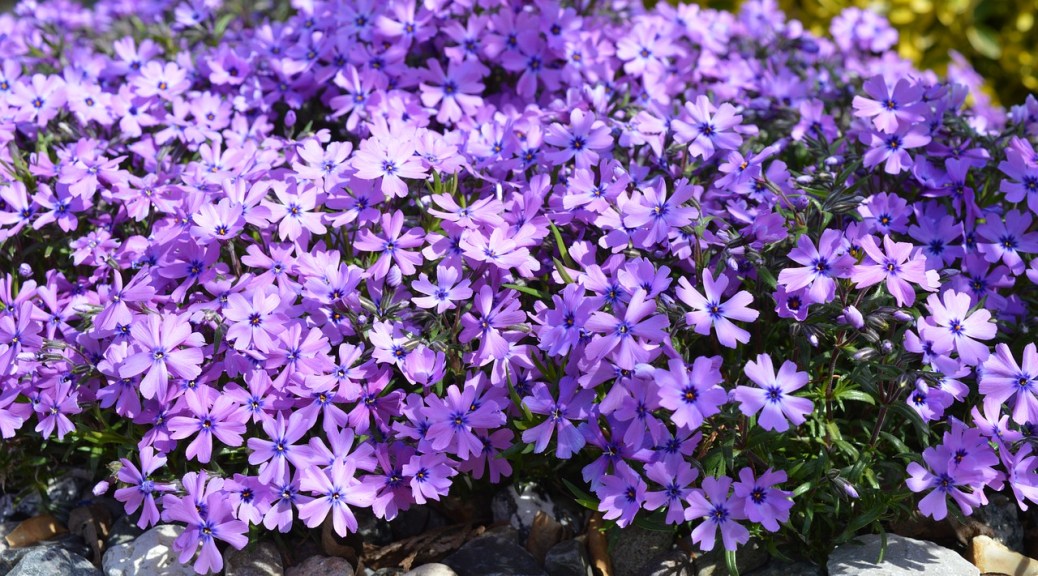
Many different types of plants can function as ground covers. From perennials (I’ve already mentioned hostas) to herbs, to shrubs and to mosses – almost any type of low growing plant can function as ground cover. Some are best adapted to shade, as are woodland plants like wild ginger which finds a welcome home under deciduous trees. Others grow best in sun, like creeping phlox which works well with clematis to keep the soil cool at the roots of the vine.

Creeping thymes can not only be walked on, they release their wonderful aroma as you stroll through the patch. They’re wonderful not only for a rockery, but also in between pavers or stepping stones. Since they can be walked on, they also work well as a path through a large flower bed to allow gardening work to be done.

Ground covers can be found for almost any soil type and growing conditions. Many, like sedums, adapt to poor soil, are drought tolerant  and will grow quickly once established to fill in that troublesome area where grass doesn’t want to grow. The article below lists several evergreen ground covers with helpful information about each. Most will grow in our area:

11 Best Evergreen Ground Cover Plants That Make Your Garden Look Greener & Better

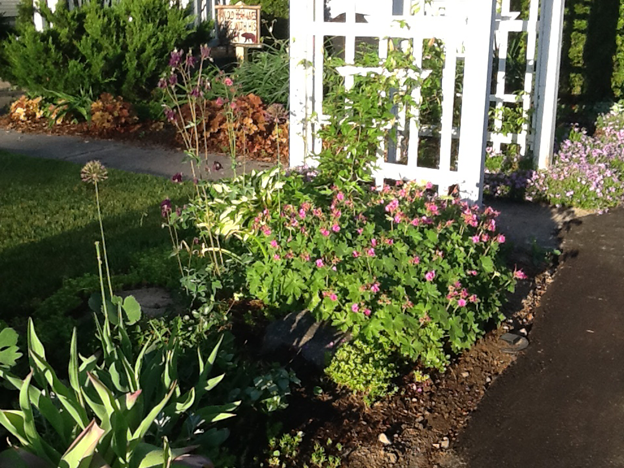
Ground covers in the author’s garden

This photo shows two of my favourite ground covers: cranesbill geranium in the foreground, and creeping phlox in the background. Both are keeping the ground cool for the clematis on the arbor.

Bromeliads

By Sharleen Pratt, Master Gardener

Continuing on a similar theme to last week’s blog on Orchids by Master Gardener Cheryl Harrison, I thought I would touch on another family of plants that are tropical and exotic; the Bromeliaceae family.  Known as Bromeliads, it is a large family which includes more than 50 genera and at least 2,500 known species which are native mainly from an area stretching from the southern U.S. to Central and South America.

Before COVID, we would do an annual visit to the Sarasota area in Florida.  One of my favourite places to visit is the Marie Selby Botanical Gardens.  Selby Garden botanists have made hundreds of expeditions into the tropics and subtropics and have contributed to the most diverse living and preserved collection of epiphytes in the world.  They have a greenhouse that is beautiful to walk through with very knowledgeable volunteers to answer questions.

Many bromeliads are stiff-leaved, rosette-forming plants with brightly coloured leaves, bracts and flowers.  The majority of them are epiphytic, meaning that they grow on the branches of trees without taking nutrients from the tree.  They can also be lithophytic which means they reside on rocks, and the remaining are generally terrestrial, meaning that they grow in soil.  Bromeliad flowers can last several months, but they generally only bloom once.  The mother plant will produce new plantlets, also called ‘pups’.  They are incredibly resilient but do not like to be overwatered.  Their roots are usually used for balance and not for transferring nutrients.  Instead, the leaves take in all of the water and nutrients the plant needs.  They never breath out carbon dioxide almost as if they hold their breath in order not to lose moisture.  It is a very special photosynthesis.

A picture of a Bromeliad Tree taken at the Edison & Ford Winter Estates in Fort Myers

Many bromeliads have leaves that form a reservoir to hold water at their bases (known as tank bromeliads), with the largest holding up to two gallons of water.  Types that don’t hold water are called xerophytic or atmospheric bromeliads.

One of the most well-known Bromeliads is in the Ananas genera.  This is the pineapple, Ananas comosus.  Europeans first found out about bromeliads when Columbus went on his second trip to the New World in 1493.  The pineapple was being cultivated by the Carib tribe in the West Indies.  After colonization, it was rapidly transported to all areas of the tropics and became a very important fruit.

Another genus is Tillandsia.  It is the largest group in the family and this genus is also known as “air plants”.  Most do not form tanks and have grey-green leaves and are densely covered with fuzzy scales that give the plants their characteristic colour.  Tillandsia require more humidity than other bromeliads and tend to dehydrate in the dry air of most homes, but can still be grown successfully with more frequent watering.

Spanish Moss falls under this genus, Tillandsia usneoides.  It is very prevalent in Florida and is neither Spanish nor a moss.  Unlike other epiphytes that have roots to anchor themselves to their host tree, Spanish moss has tiny scales on its leaves and its curved structure to cling to its host tree.  It is important for diversity as its large mats that drip from trees harbor a great variety of insects, birds and bats.  In Florida, you usually see Spanish Moss clinging to Live Oaks.

Author standing under a Live Oak tree covered in Spanish Moss


Bromeliads will survive for months or even years under less than ideal conditions.  They need satisfactory light, temperature and humidity.  It is best to use water that is not softened.  You should use a potting mix that holds moisture yet drains quickly.  Orchid bark mixed with course perlite and humus is good for most bromeliads.  The small air plants only need to be misted with a spray bottle or put in a bowl of water for an hour.  If you would like to learn more about these amazing plants, visit University of Wisconsin-Madison.

don’t be afraid!

By Cheryl Harrison, Master Gardener

The idea of growing and caring for orchids may be daunting, but perhaps you would like to try something new.  Don’t be afraid! A few years ago, I was seduced by a beautiful, exotic bloom and bought my first orchid.  I was very happy to discover that even I could successfully grow orchids!

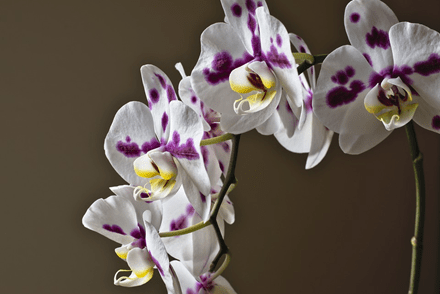
All of my orchids are  Phalaenopsis orchids; these are the easiest ones to grow.  I love the airy sound of the Latin name and it suits the common name perfectly which is “moth orchid”.   These orchids bloom in many different gorgeous colours and have shiny, thick and leathery green leaves.  Their aerial roots are part of what makes them look so exotic.  They like the average home’s indoor temperatures and light levels so make great indoor plants.

Phalaenopsis orchids.

Phalaenopsis orchids are epiphytes, or air plants, which means that they grow on rocks or trees in their natural, usually tropical or subtropical, habitat.  They get much of their water and nutrients from the air.  As indoor plants, these orchids will need to be potted in a special potting mix.  Orchid potting mix often contains bark, vermiculite, perlite and moss. Regular potting soil retains too much water which will rot the roots of your Phalaenopsis orchid.  Orchid pots often have holes in the sides of the pot in order to keep the roots well aerated. This inner orchid pot is then often placed in an outer more decorative pot as shown in the picture above.  Orchids need to be repotted every 2-3 years as the bark in the potting mix breaks down.  Orchid potting mix is available from many of our local nurseries.

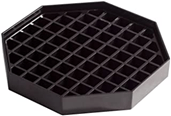
Phalaenopsis orchids do not like direct sun but will do well in indirect light close to an east or west window.   You may put them outdoors during the warm summer months but not in direct sunlight.  They like high humidity and may benefit from sitting on a drip tray.

Example of a drip tray.

I water my orchids once a week.  I flood the surface of the potting medium with room temperature, non-chlorinated water until it runs through the bottom of the orchid’s pot.  I allow the excess water to drip from the bottom of the orchid pot before placing it back into its outer pot.   I have also used ice cubes to water my orchids.  Place 2-3 ice cubes on the surface of the potting media, not on the plant, once a week, and let them melt.  I know, I know, ice to water a tropical plant??!!  The Ohio State University and the University of Georgia did some experimenting to prove that ice cubes will not harm your orchid.  Check out the results here (Watering Phalaenopsis orchids with ice cubes) .  I do not fertilize my orchids but if you wish to do so here is a link (How do I feed my orchid).

When you purchase your orchid, it may be in full bloom.  Don’t just look at that beautiful bloom!  Check the plant for signs of poor health, disease and/or pests.  The plant’s leaves should be firm, shiny and green not pale and floppy, wrinkled, cracked or missing pieces.  There should be no insects living on your plant.  If you can, look at the roots in the pot, make sure that they are white/cream coloured.  Black/brown roots indicate root rot.  The best place to purchase your orchid is from a reputable local nursery.  Big box stores may have what appear to be lovely plants but you may bring home more than you bargained for…perhaps pests or disease that will kill your orchid and infect your other indoor plants. 

The gorgeous blooms on your orchid will eventually die and drop off.  Cut the flower stem back to the node closest to the where the bottom flower was located.  The stem may die then you will cut it off close to the parent plant or it may develop into a new flower or a baby plant called a keiki.  Cooler night temperatures may encourage reblooming.  I move my plants to my cooler basement to encourage them to rebloom.  Note that they are still exposed to lots of indirect light during the day in my basement.

Don’t be afraid.  Give Phalaenopsis orchids a try.  They are well behaved indoor house plants and their blooms are spectacular!

Phalaenopsis orchid.

Resources

American Orchid Society   
Canadian Orchid Congress

Year in review: part 1

By Suzanne Seryck, Master Gardener

It is a beautiful fall day as I’m writing this blog, blue sky and temperature around 20 degrees. I have just finished the last jobs before putting my garden to bed for the winter. The last of my 30 or so bags of leaves have been mulched and put onto the gardens, apple trees have all been wrapped to prevent rabbits and squirrels from eating the bark off of them, and I have emptied the rain barrels onto the trees, shrubs and fruit bushes.

Time for both a well earned rest and for me to put together my garden review list for this year. All season long I jot down notes of anything that is working, not working or something that I need to concentrate on or remember for next year and then I compile it into one list. This year I’m going to share my list in this blog, although the list is a little long for just 1 blog so I’ll split it in 2 parts.

I don’t plant many annuals in my garden–a couple of urns out front with 2 hanging baskets, and some large pots at the back. I love the colour that annuals provide all season, but they typically need more watering than I like to do, and I find them expensive. Last year I overwintered some cuttings I took from both my coleus and sweet potato vines as well as overwintering the purple fountain grass. All the cuttings worked great, and in the spring after hardening off I was able to plant them into my pots and urns; they grew really lush and full. The green potato vine was much stronger and more robust all season than either the purple or copper plants, however the purple fountain grass grew back very slowly never really getting the vibrant purple colour back. This year I’ve taken even more cuttings from my coleus along with the green and purple sweet potato vine. However, I decided that I would rather spend the money on new fountain plants each spring.

Urn in author’s garden

I have 2 large compost piles that I use all year, filling to the top with leaves and then burying food scraps the rest of the year. This year I religiously turned the one pile every couple of weeks starting as early as I could and was rewarded with compost all gardening season. In the second pile though, a couple of errant zucchini plants started growing producing lush growth and lots of flowers and I thought ‘why not leave them?’. I’m sure you can guess the rest, not a single zucchini and I was not able to use any of the compost all season. Note to myself if anything accidentally grows out of the compost next year, turn it back in.

For the first time this season I grew Sicilian zucchini, now I didn’t actually realize I had bought this variety until it started growing up the espaliered tree fence and growing 2-3 foot long zucchinis. I’m definitely going to grow them again next year, although in a different location. When the frost finally killed off the plants and we pulled them off the fence, the wires were no longer taut and needed some tightening. Another point to note is that the zucchinis were consistently eaten throughout August and September when they were barely an inch or two longer. I’m not sure why that only happened later in the summer, maybe the squirrel or rabbit population doubled when I wasn’t looking. I’m thinking of placing bags over the fruit as it is growing, hoping by the time it gets to a foot or more it won’t be quite so attractive to predators.

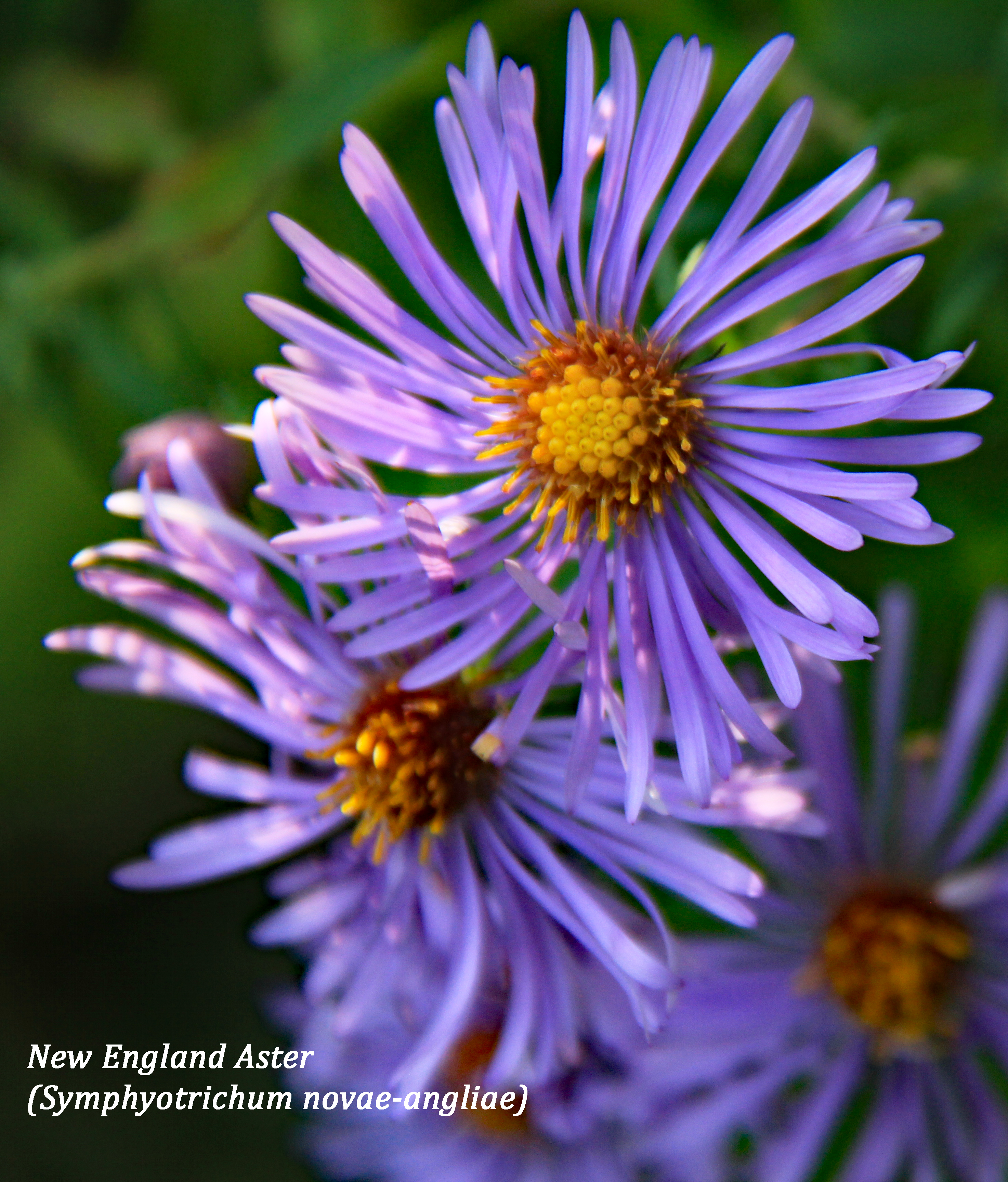
I tend to leave my perennials to self seed as I love growing plants from seed; it is probably one of my favourite things to do in the garden. I have set aside a nursery plot and any seedlings I find in the garden I move into the nursery. Unfortunately this year I noticed a definite increase in the number of swamp milkweed, verbascum and New England asters seedlings. Now I love these plants, but they are taking over both my garden and my garden paths. I grow Verbascum nigrum which is a beautiful stately plant with either yellow or white flowers. It tends to be a short lived perennial but as it grows profusely from seed, I always have a few plants in my garden. Swamp milkweed is a host for the monarch butterfly; in my garden I have both pink and white flowering plants. They prefer moist to wet soil and because my soil is dry, they are also short-lived. Not so the New England aster; this is a native aster which grows 4 to 5 foot with beautiful purple blue flowers, however it can get very large in just a couple of years. Next year I have to dead head these plants, leaving only a couple to go to seed, which I can then harvest and plant in a specific area of the nursery.

Verbascum in author’s garden; this one plant bloomed all summer.

On the positive side, I was surprised by an abundance of aquilegia (commonly known as columbine) in my front garden that I was not expecting. I had left the seedlings thinking from a distance they were meadow rue, only to be surprised by this showing:

Aquilegia in author’s front garden

Aquilegia are one of my favourite plants, but I tend not to grow them as I find in my garden they are eaten by slugs. One day I have a beautiful plant in full flower, and the next day just a few stems still standing. I’ve slowly been replacing them by meadow rue, which for me has a similar lacy look, which I like when paired with hostas and brunnera. Slugs don’t seem to like meadow rue, but for some unknown reason this year, they also left the aquilegia alone. Based on this I have since ordered some seeds from the native aquilegia, Aquilegia Canadensis, which has beautiful red and yellow flowers and also likes sun to part-shade.

And finally the dreaded creeping charlie in my lawn. I have a small lawn which I have been overseeding with clover in my attempt to make the lawn healthier and more low maintenance. Clover has a lot of great benefits in a law including growing in poor soils. Clover is a nitrogen fixing legume, so it will improve the health of the soil and the surrounding grass, needs less watering and mowing, attracts beneficial insects, and crowds out weeds. Unfortunately though it does not crowd out the creeping charlie and actually seems to co-exist with it harmoniously. The recommended solution in a lawn is to hand pull the creeping charlie and because it grows by rhizomes which then root into the soil, removing all parts of the plant can be very time consuming. I have heard that it is easier if you soak the ground first or weed after it has rained. Note to myself, recruit an army to help me after each rainfall in the spring, either that or learn to love it!

Meditation in Motion – Gardening as Therapy

By Emma Murphy, Master Gardener

“Caring for your garden can be a great form of mindfulness meditation. By connecting with the earth and with the practice of gardening, you can cultivate a healthy mind and feel calm and connected. Simply planting a seed with intention, or touching soil, can be transformative. Go ahead and get a little dirty.” — Suze Yalof Schwartz, founder of Unplug Meditation and author of “Unplug: A Simple Guide to Meditation for Busy Skeptics and Modern Soul Seekers.”

As I watched the first snowflakes fall on my gardens the other day, I reflected on this growing season and how much my gardens (and gardening) have supported my physical, mental, and emotional health, especially during this COVID-19 pandemic where so many other activities have not been possible.

Gardening is just so therapeutic on many levels. What I love best from year to year is the transformation from an area of soil with some structure (shrubs etc.) to a lush environment buzzing with pollinators and birds and chipmunks just a few months later. A garden is so satisfying because it builds over time – plants, shrubs, and trees get larger and healthier with each passing year, and your garden becomes more beautiful over time.

Medical studies have shown that gardeners live longer because they are active, have better body circulation, lower blood pressure, less stress, the list goes on….

Horticultural therapy is now widely practiced, where participants become “plant caretakers”, supporting their recovery and improving their moods, resulting in shorter stays in medical facilities. Some of my fellow Peterborough Master Gardeners do wonderful work at our local retirement and nursing homes with their gardening activities.

Basically, our gardens are a more intimate form of enjoying and appreciating nature, helping us understand how everything is interrelated in nature, and how we can contribute to the cycle of life by planting a seed and nurturing our flowers, shrubs, and trees. It’s a powerful connection that gives us a sense of optimism and purpose. As Audrey Hepburn said..

My experience with gardeners is that they are lifelong learners, much of that from trial and error. In general we are a patient lot, planning each year and persevering through the seasons. We can also be stubborn and focused, to be found in the garden from early morning through sunset, having totally forgotten about time.

Gardening as Active Meditation

Active meditation or “meditation in motion” is an activity that requires full attention and concentration without needing much deep intellectual thought. Trail running, mountain biking, hiking, and riding a horse are all examples of active meditation, where you must focus on what’s right in front of you.

Trying to figure out the emerging weeds from the young seedlings, setting up your pots and planting your seeds, determining the best tool for an activity – all these things demand your full attention and presence. At the same time, you are allowing your mind to relax and stop worrying about all of life’s daily concerns. Of course, all is this is premised on your attitude. If you look forward to spending time in your garden, viewing it as a pleasure instead of as a “chore” or something that must get done, then you will experience all the positive benefits of gardening.

Certainly no one is saying gardening is not hard work, but on a sunny spring day I can lose hours working in the garden, totally absorbed in the physicality of the activities. Especially after a long winter I appreciate the texture and smell of the soil, the breeze, the birds, the flowers, the trees, and the clouds and sky.

So as the season of outside gardening winds down (yes I actually got all my bulbs in the ground already), my thoughts turn to all that my garden gave me this past year, and I start on my plans for next year. Ever the optimist..

Whether you call it meditation, mindfulness, or ecotherapy, gardeners are blessed to have a steady place of solace in these trying times. Here’s to great memories and planning for next spring.

Some further reading if you are interested

How a Garden Grows You

Why are Gardens so Good for the Soul?

Why COVID gardening is about more than just food

How the Coronavirus Changed Gardening

Gardening is fundamentally an act of enormous hope because everything you do in the garden is for the future.
Barbara Frum, Canadian Broadcast Journalist