The Magic of Transformation

By Marilyn Homewood, Master Gardener

As we draw closer to the Autumn Equinox, my thoughts dwell more frequently on the topic of fall planted bulbs.  For me, they evoke a powerful sense of anticipation similar to what I felt as a child when the Eaton’s and Simpson’s Christmas catalogues arrived.  The suspense and delayed gratification that both provide is beyond words.  A seemingly lifeless bulb has the potential to create a stunning spring display of bloom after the harshness of the Canadian winter!

Participating in this ritual is easy with not too many things to looks for.  When purchasing in person, look for the largest bulb for the type you can find (good quality tulips are typically 12+ cm in circumference, daffodils may be larger or smaller depending on variety).  The larger the bulb, the more blooms that you will have in the spring.  Bulb size is probably most important in tulips as not all varieties size up well once planted.  Major bulbs known to perennialize (narcissus, allium for example) will size up.  I once bought some Leucojum (summer snowflake) bulbs late in the year locally knowing nothing about them, planted them and had to wait 2 years for bloom. They were worth the wait. Last year, I dug some of them up and the bulbs were at least three times the size of what I planted.  Bulbs should also be plump and firm with no mold or black spots.


Local nurseries are a good source of bulbs as are some of the larger outlets with nurseries. 

More frequently, bulbs are purchased online.  Online suppliers will usually be able to provide bulb size and the bulbs they ship should be healthy.  Ask for a recommendation from someone in your horticultural society (there is always at least one bulb nut in every club). Vesey’s and Brecks are long time reputable suppliers of bulbs.  Also, have a look at the local flower farmer’s webpage.  It is quite common for them to retail some of the varieties they have ordered for themselves.  In this area Dahlia May Flower Farm and Antonio Valente Flowers both have attractive offerings each fall.  With online orders of course, there is the additional cost of the shipping.

A British Columbia company, “Wildwood Express” offers packaged bulbs for sale that are sourced from a reputable importer in BC.  They often have last minute sales that are hard to resist and of course end of year sales late in the season.  Bulbs can be planted very late into the season (if the ground can still be worked, and YOU are hardy enough).

Of course, there are often good local sales.  Not for profit organizations often sell bulbs as a fundraiser.  Consider these sales, both to buy some magic and to support a good cause.  In our area the Port Hope Garden Club and the Peterborough Master Gardeners have bulbs for sale. Consult the PMG website for details on their sale and for Port Hope, drop me an email through this website.

Some of us have succumbed to temptation long ago.  For this year, I ordered around 1700 bulbs last spring (less than last year!), have bought some from the club sale in Port Hope and still broke down and ordered a few fancy new narcissus from a flower farmer. 

The Secret Life of the Eastern Bumblebee


By Thom Luloff, Master Gardener in Training

On a warm spring morning in Ontario, a familiar hum drifts through the air. Low, steady, and purposeful, it comes from a black-and-yellow visitor weaving between garden blossoms—the Eastern Bumblebee (Bombus impatiens). To most of us, it’s a sign of summer’s return, but beneath that fuzzy exterior lies a fascinating story of evolution, resilience, and quiet importance.

Bumblebees belong to the genus Bombus, a group that diverged from honeybee ancestors around 25 to 40 million years ago (Hines, 2008). Unlike honeybees, which thrive in massive colonies, bumblebees are social but live in smaller, more seasonal groups. The Eastern Bumblebee has evolved as a master of cool and temperate climates, thanks to its thick fuzz and the ability to generate heat by vibrating its flight muscles—a survival skill that lets it fly on chilly mornings when other pollinators remain grounded (Heinrich, 2004).

Every spring, the story begins anew with a solitary queen who has survived winter hibernation beneath leaf litter (leave the leaves!) or soil. Emerging hungry, she forages for nectar and pollen while searching for a suitable nest site—often an abandoned rodent burrow or a hollow beneath grasses. There, she lays her first clutch of eggs, which hatch into female workers. These workers soon take over foraging, allowing the queen to remain in the nest and focus on laying eggs (Colla et al., 2011). As the colony grows through summer, new males and future queens are produced. Mating occurs in late summer and early fall, after which the old colony dies, leaving only the fertilized young queens to overwinter and begin the cycle again the following year.

Eastern Bumblebees are generalist foragers, meaning they visit a wide range of flowers. They sip nectar for energy and collect pollen to feed their larvae. Unlike honeybees, which rely heavily on certain crops, Eastern Bumblebees are flexible, visiting everything from clovers and goldenrods to tomatoes and blueberries (Goulson, 2010). Their unique ability to perform “buzz pollination”—vibrating flowers to release hidden pollen—makes them essential for crops like tomatoes, peppers, and cranberries, which depend on this technique.

In the grand web of life, Eastern Bumblebees are lynchpins. By transferring pollen as they forage, they ensure the reproduction of wildflowers and food crops alike. This not only feeds people but also supports wildlife, since countless birds and mammals depend on the seeds and fruits that bumblebees help create. In forests, meadows, and city gardens, their work sustains plant communities that form the backbone of biodiversity.

Despite their adaptability, Eastern Bumblebees face mounting challenges. Habitat loss from urbanization and intensive agriculture has reduced nesting and foraging opportunities. Pesticides—especially neonicotinoids—pose lethal and sublethal risks, impairing navigation and reproduction (Woodcock et al., 2017). Climate change adds another layer of stress, disrupting flowering times and exposing bees to extreme weather (Kerr et al., 2015). 

The Eastern Bumblebee may be small, but its impact is enormous. With every hum in your backyard or park, it carries the story of millions of years of evolution, a seasonal cycle of resilience, and a vital role in keeping our ecosystems alive. Protecting them means protecting the beauty and abundance of the natural world.

References

Colla, S. R., Richardson, L., & Williams, P. H. (2011). Guide to the Bumble Bees of North America. Princeton University Press.

Goulson, D. (2010). Bumblebees: Behaviour, Ecology, and Conservation. Oxford University Press.

Heinrich, B. (2004). Bumblebee Economics. Harvard University Press.

Hines, H. M. (2008). Historical biogeography, divergence times, and diversification patterns of bumblebees (Bombus). Systematic Biology, 57(1), 58–75. https://doi.org/10.1080/10635150801898912

Kerr, J. T., Pindar, A., Galpern, P., et al. (2015). Climate change impacts on bumblebees converge across continents. Science, 349(6244), 177–180. https://doi.org/10.1126/science.aaa7031

Woodcock, B. A., Bullock, J. M., Shore, R. F., et al. (2017). Country-specific effects of neonicotinoid pesticides on honey bees and wild bees. Science, 356(6345), 1393–1395. https://doi.org/10.1126/science.aaa1190

Cold Frames – A Mini Greenhouse in Your Garden

by Brandi McNeely, Master Gardener in Training

I’m sipping my coffee on the deck, overlooking my vegetable garden. Everything shows signs of fall. The onions and garlic have been harvested. The green beans are finished for the season and are ready for the compost pile. The zucchini and summer squash are suffering from powdery mildew, and the tomatoes are carrying the last few fruits of the season. Although summer is ending, the fall gardening season is just beginning – and I have a secret weapon: a cold frame.

Why Cold Frames Work

Several leafy green vegetables can survive and even thrive in cooler temperatures. Kale, lettuce, Swiss chard, and spinach produce sugars that lower the freezing point of water in their cells, protecting them from damaging ice crystals. These crops tend to bolt in the heat of summer but thrive in the crisp days of fall. Still, even hardy plants will eventually succumb to our harsh Canadian winters.

That’s where a cold frame comes in – you can significantly extend your growing season with one. Imagine brushing snow off your cold frame in November to harvest fresh kale for a salad!

Cold frame basics (Source: “Large Cold Frame” by Ofer El-HashaharCC BY-SA 2.0)

What Is a Cold Frame?

A cold frame is a low, bottomless structure with a transparent lid that protects plants from wind and cold. The lid lets sunlight in, while the insulated base traps heat and creates a microclimate that can run several degrees warmer than the surrounding air. Ventilation is key – open the lid on sunny days to prevent overheating and ensure proper airflow.

Cold frames come in various styles depending on budget, materials, and space.

Types of Cold Frames

Traditional Cold Frame
Built from wood with an angled, hinged top – this could use glass, polycarbonate, or heavy plastic. They can be permanent or portable and built with reclaimed or new materials. An old window makes a perfect lid.

Straw Bale Cold Frame
 Stack straw bales to form a frame and cover with windows or plastic sheeting. Straw provides insulation and can be reused or composted in spring.

Hot Bed
 A sunken bed filled with compostable material such as horse manure, straw, or poultry bedding, covered with soil and topped with a cold frame. As the material decomposes, it generates heat, warming the soil below.

Traditional cold frame using wood and an old window (Source:“cold-frame-in-winter” by The Art of Doing StuffCC BY-NC-ND 2.0)
Straw bale cold frame (Source: “Quick coldframe, straw bales and old windows” by Irene KightleyCC BY-SA 2.0 – Flickr)

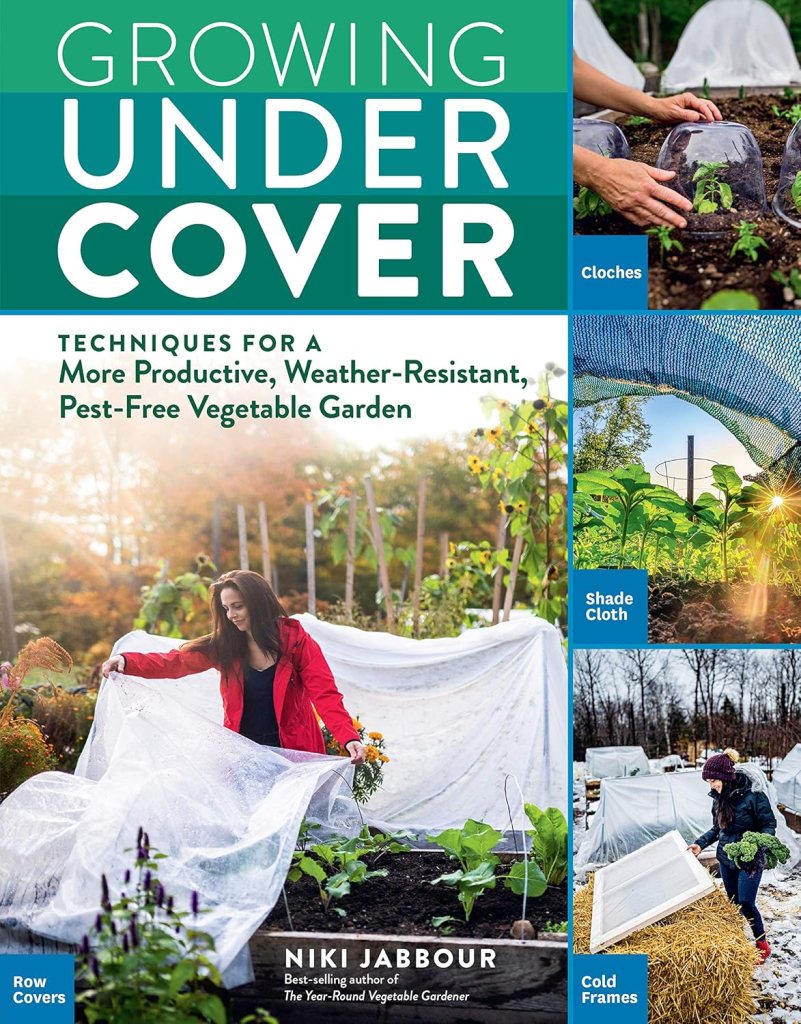
Need a visual? Watch DIY Cold Frame • Easy How‑to Tutorial with Niki Jabbour to see an easy cold frame build using recycled materials—great for Canadian gardeners. Or for a classic approach, check out How to Build a Cold Frame | This Old House, a clear demo using a salvaged window lid.

Tips for Success

  • Timing is everything: Sow spinach, kale, or lettuce in late August or early September to harvest well into late fall – or even December, depending on snow cover.
  • Ventilation matters: Even on sunny October days, closed frames can overheat. Keep lids open when needed.
  • Spring bonus: In March or April, use your cold frame to start early crops like lettuce or radishes, or to harden off seedlings before planting.

The Quiet Magic of Cold Frames

No matter which style you choose, a cold frame is a valuable addition to any garden. It helps you garden later into the season and gives you a head start in spring.

With one simple structure, you don’t have to say goodbye to your garden when frost arrives. Picture a crisp November morning—brushing snow from the lid and harvesting fresh spinach for breakfast. That’s the quiet magic a cold frame brings to your backyard.

Banner photo “Large Cold Frame With Props” by Ofer El-HashaharCC BY-SA 2.0

Growing and using culinary herbs

by Rachel Burrows, Master Gardener

Do you want to put some ‘oomph” in your meals? Culinary herbs are the answer.

After my husband was diagnosed with heart disease, I needed to rethink some of the rich, fatty meals that were full of salt. Luckily I had two friends who had a small herb business and were willing to share their expertise with me.

Master Gardener Christine Freeburn wrote a great blog in June on herbs in containers. She gave us lots of good ideas and I will take this a step further. I will look specifically at growing and using culinary herbs in the garden. I love Chris’ idea of planting herb containers close to the kitchen for accessibility.

While many herbs will flourish in pots let’s look at perennial herbs and how to use them. Specifically, I am going to write about  more unusual herbs and what to do with them.

Most herbs are fairly easy to grow as they don’t require a rich soil and most bugs don’t bother them due to their strong smell. Several herbs such as oregano, sage and lavender have a Mediterranean origin and love hot sunny weather. There a few such as chives, parsley and lovage that prefer partial shade.  It really important to provide herbs with good drainage, they hate having wet feet. If you have heavy soil you can mix in some grit when you are planting.

Lavender loves hot sunny weather

We all know the sweet basil that can be found in pots in grocery stores but why not try dark opal, lemon or Thai basil? I love to grow calendula and use the petals in salads, fish and rice.

Dark opal basil
Calendula

Lovage is a tall herb that grows well in this area and has a strong celery flavour, useful when you forget to buy celery.

Lovage

Salad burnet is another of my favourites for  salads and flavouring butters. It has a nutty, cucumber taste.

Salad burnet

Winter savory is a perennial that has a more intense flavour than summer savory. I use it to make stuffing, vinegars and jellies.

Winter savory (source: Friviere on WikiCommons)

Sweet cicely is an interesting , tall plant with many uses.  Use the  leaves in soups and omelettes and  the seeds in fruit salads. Cook the young leaves with tart fruit such as rhubarb to reduce acidity and the need for extra sugar.

Sweet cicely

Young sorrel leaves are great in soups and salads. Lavender is an amazing herb that reduces stress but is also used by cooks in cookies, jams and jellies.

Sorrel

Of course there are many herbs that can be dried and used to make tea. These include lemon balm, anise hyssop and bergamot and there are many more. Although I was born and raised in England I am not a regular tea lover but I do like to experiment with other herbs.

Anise hyssop

I have only touched sparingly on a few of the less well known herbs and their culinary uses.

Part two of this blog (you’ll have to wait until November 17th) will cover where to buy unusual seeds and plants, taking cuttings, layering, harvesting , drying, freezing, pestos and vinegars.

More info on how to use herbs in November!

Further information

Rodale’s Illustrated Encyclopedia of Herbs

The Complete Book of Herbs (by Lesley Bremness)

How to Grow Herbs

Richters Herbs

Hot News in the Vegetable Garden

by Lois Scott, Master Gardener

Excessive heat can certainly make it hard for me to work in the garden.  It can also affect how your vegetables work.

For most plants ideal growing temperatures range from 15 to 30 degrees Celsius (C).  When temperatures are above 32 degrees C for long periods of time plant growth is slowed and some plants will begin to show stress.  This link describes a number of heat-related issues and some solutions. 

A neighbour and new gardener commented that he wasn’t getting any fruit forming on his only squash plant and wondered if he had a plant with only female or male flowers.  I reassured him that squash plants and other cucurbit vegetables like cucumber and zucchini all produced male and female flowers on the same plant. 

While this is true, apparently daytime temperatures of 32 degrees C and up and night time temperatures of over 21 degrees C can change the ratio of male to female flowers to more male than female flowers.  These same temperatures can also cause flowers and small fruit to drop.  Too much or too little water can also cause flowers and fruit to drop. 

Watering may be within our control but temperatures may not be!  There are varieties that are touted to be heat tolerant and could be a good option for our increasingly hot summers.

Another cause of no fruit or deformed fruit is poor pollination.  Apparently, many bees don’t like to work when it’s hot.  Temperatures over 32 degrees C causes many bees to slow down and pollinate less. 

Tomatoes may also be affected by very hot weather.  During hot spells with daytime temperatures above 29 degrees C and night time temperatures above 21 degrees C, tomato plants may become stressed, depleting the plants energy stores and changing the flower making it harder for them to be pollinated.  The flower will then drop from the plant.

Heat may also keep your tomatoes from turning red.  Tomatoes ripen in two stages.  They are green, seeds form, the area around the seeds becomes soft and gelatinous and they are mature.  Then they turn red.  The ideal temperature for turning red is 20 to 25 degrees C. The pigments that turn mature tomatoes red are not produced when the temperature is above 29 degrees C. 

The good news is that when the temperature is ideal, they will turn red. More here.

Gardening provides lots of learning opportunities to improve outcomes but sometimes the weather gets in the way!

Mother Nature – Good or Bad?

by Rachel Burrows, Master Gardener

There have been several instances lately when terrible “natural” things have occurred. The disastrous wildfires, the tragic floods in Texas and many more. Are they due to Mother Nature or is something else at work here?

I live close to the Warsaw Caves Conservation Area in Douro Township and walk there often. The derecho storm of 3 years ago caused enormous damage — trees were downed and uprooted in the path of the powerful wind and torrential rain. You could call this a disaster and blame Mother Nature.

However, the following spring I had never seen such stunning swathes of white trilliums (Trillium grandiflorum) where the trees had been. Trilliums prefer semi-shade, particularly under maples and aspens and it had been too shady under the evergreens. Mother Nature compensated with an amazing display where the trees had been uprooted and destroyed.

Spring trilliums

I was walking at the Caves recently and spotted 5 foot tall trembling aspens and some young maples that had taken advantage of Mother Nature’s help in providing the extra light to flourish.

This last winter was colder and snowier than we have had for several years. You might think that we would have lost some of our wonderful wild flowers. Not a bit of it.

Mother Nature put on an amazing display of our native red columbines, (Aquilegia canadensis), harebells (Campanula rotundifolia), violets (both purple and yellow), wild bergamot (Monarda fistula) and many more. We may have grumbled about the cold and snow but Mother Nature put on wonderful displays as a result.

The wildfires have caused enormous damage and it’s easy to blame Mother Nature. However, most of them have been caused by humans and the majority are caused by warming temperatures.

Mother Nature does her best to restore the landscape with plants such as willow herb ( Epilobium augustifolium), also known as fireweed. The indigenous people have used this herb as an anti-inflammatory and antioxidant.

Fireweed

Something I learned this week is that since lowbush wild blueberries (Vaccinium angustifolium) like an acid soil they flourish in areas after a fire has gone through. In fact, wild blueberries are being planted as firebreaks due to their low fuel load and fire resistant properties and the ability to be managed through controlled burns and pruning.

Wild blueberries

Mother nature is amazing and wonderful and we humans seem to do our best to work against her. We tend to blame Her for many so called “natural” events when most are caused by our polluting habits. Climate change is real and although Mother Nature does her best to compensate for the results, we need to do more to help her.

If you like to enjoy Mother Nature at her best, visit many of the wonderful conservation areas and parks that are available to us. Take a few precautions to guard against bites from black legged ticks as they are the primary carrier of Lyme and other diseases. They are particularly bad in April, May and June but due to our warmer winters they can be found year round. Wear long pants tucked into socks and long-sleeved tops, and check yourself carefully after walking in fields and woods.

Watch out for the Black legged tick

Overall Mother Nature is good, so get outside and enjoy all the wonderful things that she has given us and leave the places as you found them, take your garbage home and don’t be tempted to dig up any plants!

For More Information

Peterson’s Field Guide to Wild Flowers ( North and Central North America)

Study by the National Research Council of Canada and the Kineepik/ Metis local 9 ( wild blueberries as firebreaks)

Climate change, ticks and Lyme disease risk in Canada – Public Health Agency of Canada

Searching for Rain – Rethinking the Future of our Gardens

By Emma Murphy, Master Gardener

Heat. Humidity. Thunderstorms but no real rain. Dry soil.

cracked soil and dry leaves

What I wouldn’t give for a week of solid, consistent rain in our gardens. After the March ice storm, followed by a cool, wet spring and high water conditions until May, Mother Nature turned the water faucet off and we haven’t had solid rain for what feels like months.

I rarely have to water our established perennial gardens, which are a mix of native and non-native plants, but this month has been the exception.

So it’s time to think about the future. What can we do so our gardens survive (and thrive) during future dry or drought conditions?

Maintain Healthy Soils

Good soil is the foundation for good plant growth. Anything you can add to your soil like compost or other organic matter will make it easier for roots to penetrate deeper, creating more expansive root systems that can seek out water and nutrients. Check out Master Gardener Sharleen Pratt’s previous blog.

The result? Healthier, more drought-resistant plants. Good soils are better able to absorb surface water runoff, minimize erosion, and access nutrients and sediments.

hands holding soil with small plant seedling

Think About Future Plant Selection

Evaluate your plants for their resistance to dry conditions or drought; look for new plants (hey, who doesn’t want more plants?) that are identified as drought-tolerant or drought-resistant. Group plants according to how much water they need. Ask your local garden centre or nursery staff which plants they recommend.

Consider incorporating more native plants, which generally adapt better, have lower water demands, and fewer pest problems, plus of course the many benefits they provide to our pollinators and wildlife. In Our Nature has some great ideas.

bumble bee on native purple asters
Bumblebee on native asters

Use Mulch

Mulch reduces evaporation, moderates soil temperature, and inhibits weed growth. It is estimated that three quarters of the rain falling on bare soil is lost to plants through evaporation and runoff.

Use compost, wood chips, bark nuggets, shredded bark mulch, shredded leaves, or any other organic material to cover the surface of the soil at least 5 cm in thickness. More info and a deeper dive here.

shredded bark mulch
Shredded wood mulch

Water Well

Long, deep watering encourages roots to go deep down in the soil to where it is moist and a lot cooler. Water less frequently but for longer periods, so water reaches deep into soil. Good thorough watering promotes healthier plants.

Water only when necessary. Most plants will normally wilt in hot sun and then recover when watered. Also, a dry surface is not always a sign of water need. The surface generally dries out first and is not a true indicator of what is going on down deep near the plant root. Make use of a hand trowel or your fingers to check for moisture.

Weed Management

Weeds will compete with your plants for moisture and nutrients. Keep your gardens and areas beneath trees and shrubs weed free. Once the weeds are eradicated, apply mulch.

Consider Alternate Water Collection and Distribution Methods

Water harvesting is a great way to use water from your home’s roof and direct it onto the landscape, where the soil becomes your “holding tank.” The best example is using a rain barrel – we have various rain barrels and tanks in our garden and they are a great investment.

You can also practice ‘passive’ water harvesting by creating depressions that fill with water from the roof runoff or formal rain gardens, both of which help with stormwater runoff issues. Peterborough Greenup Rain Program

Investigate use of soaker hoses or other irrigation techniques using timers, which keep water on the soil and reduce losses by evaporation. Adjust watering frequency and amounts based on season, temperature, and amount of rainfall. Overhead watering uses more water and encourages fungal diseases.

rainwater barrel beside house
Rainwater barrel and water diverters – check out Rainbarrel.ca for location of sales

Practice Water Conservation Everywhere

Not just in your gardens. Water is our most valuable resource. Learn how to reduce water use throughout your house and gardens. The Simple Guide to Water Conservation and Make Every Raindrop Count.

water droplets on leaf

Can You Help our Most Effective Pollinator?

By Silvia Strobl, Master Gardener

Pollinator insects – bees, wasps, beetles, flower flies, ants and butterflies–play an important role in the production of almost 75% of global food crops (FAO 2018). For example, only the tiny chocolate midge is able to pollinate flowers of the cacao tree and produce cacao pods! But bees, including native bees, are responsible for the biggest share at 35% of global food production (Ritchie 2021), including economically important commercial crops such as apples and blueberries! 

Bees are such effective pollinators because of the specialized hairs and pollen carrying structures on their legs that enable them to gather and transport pollen. The vast majority of bee pollinators are wild, including over 20,000 species of native bees worldwide and 400 species in North America. In natural ecosystems, bees visit the most plants and have the most interactions with flowers as compared to other insect pollinators (Radar et al. 2020). 

Bees have specialized hairs and pollen carrying structures as seen in the large filled pollen sacs of this Common Eastern Bumble Bee (Bombus impatiens) collecting nectar and pollen on native Shrubby St. John’s-wort (Hypericum prolificum). 

I enjoy photographing the busy native Bumble Bees in my garden that collect pollen from a wide variety of flowers, often late into summer evenings. Here are a few species that you may see, too. 

This Yellow-banded Bumblebee (B. terricola) with its distinct yellow and black abdominal band pattern is collecting nectar and pollen from the native Virginia Mountain Mint (Pycnanthemum virginianum). This species is ranked as “Special Concern” in Ontario, meaning it is not endangered or threatened, but may become threatened or endangered due to a combination of biological characteristics and identified threats. Its nests are often underground in abandoned rodent burrows or decomposing logs.
Here the Perplexing Bumblebee (B. perplexus) is collecting nectar and pollen from native Anise Hyssop (Agastache foeniculum). As its name suggests, this bumble bee can be rather perplexing to identify! As it’s not very common, rather little is known about it.
The Brown-belted (B. griseocollis) is a short-tongued Bumble Bee and native Butterfly Milkweed (Asclepsis tuberosa) is just one of the flowers it prefers. It is one of the most abundant and widespread bumble bees in northeast North America.

You can find excellent guides to help you identify the bumble bees in your garden here and you can learn more about native bees in this excellent publication.

Sadly, all pollinators are experiencing alarming declines due to habitat loss, pesticide exposure, invasive species, parasites/diseases and climate change. One study found that when compared to 125 years ago, 30% of plant:pollinator associations have been lost (Mathiasson and Rehan 2020).  Five Bumble Bee species, American, Gypsy Cuckoo, Rusty-patched, Suckley’s Cuckoo, and Yellow-banded, are currently listed as Endangered, Threatened or Special Concern in Ontario.

Gardeners Can Help!

Gardeners can help native bees by creating habitat, providing floral resources and maintaining a pesticide-free garden:

  1. Nesting & overwintering habitat 
  • Most native bees (60-70%) nest in the ground. Use a thin layer of mulch and avoid using landscape paper/fabric which prevents bees from making a nest in the ground.
  • Leave some scrubby areas in your garden for bees
  • For the 30-40% of stem nesting bees, cut back perennials later in spring leaving those with hollow stems at varying lengths (20 to 60 cm) as shown in this excellent guide. If you do cut, leave the bottom 20 cm in place, bundle the cut stems, and place them in your garden.
An entrance hole of a bumble bee ground nest in a patch of native Pussy Toes (Antennaria neglecta) in the author’s garden.
  1. Floral resources
  • Plant a diversity of native and non-native plants to have continuous blooms, and sources of nectar and pollen, from early spring to late fall
  • Include at least one native early spring blooming shrub or tree (e.g., willow, redbud, cherry) for emerging queen bees
  1. Pesticide-free habitat
  • Avoid using pesticides. Recent research from the University of Guelph has shown that ground-nesting native bees experience reduced pollen collection, induced hyperactivity or decreased number of offspring emerging per nest even when so-called “bee-safe” pesticides were used (Rondreau and Raine 2024).

Your habitat restoration efforts, especially adding native flowering plants, will go a long way to helping our native bee pollinators, and also our food security.

References

FAO. 2018. Why bees matter. https://openknowledge.fao.org/server/api/core/bitstreams/0f47dba8-ab04-4968-a2bc-8a9c06218653/content

Mathiasson, M.E. and S. M. Rehan. 2020. Wild bee declines linked to plant-pollinator network changes and plant species introductions. Insect Conservation & Diversity. https://resjournals.onlinelibrary.wiley.com/doi/abs/10.1111/icad.12429

Radar, R., S.A. Cunningham, B.G, Howlett, and D.W. Inouye. 2020. Non-bee insects as Visitors and Pollinators of Crops: Biology, Ecology, and Management. Annual Reviews Vol. 65:391-407. https://www.annualreviews.org/content/journals/10.1146/annurev-ento-011019-025055

Ritchie, H. 2021. How much of the world’s food production is dependent on pollinators? Retrieved from: https://ourworldindata.org/pollinator-dependence

Rondreau, S. and N.E. Raine. 2024. Single and combined exposure to ‘bee safe’ pesticides alter behaviour and offspring production in a ground-nesting solitary bee (Xenoglossa pruinosa). Proceedings of the Royal Society Biological Sciences. https://royalsocietypublishing.org/doi/10.1098/rspb.2023.2939

When Plants + Sun = Trouble

By Mary-Jane Pilgrim, Master Gardener

Have you ever gotten a weird red rash or burn after spending time outside? If you were pulling weeds or brushing up against certain plants, you might’ve had something called phytophotodermatitis. It sounds scary, but it’s really just a fancy name for a skin reaction that happens when plant juice meets sunshine.

Here’s how it works: some plants (like wild parsnip, giant hogweed, gas plant (Dictamnus), citrus fruits, dill, parsley, celery, fennel and even carrots) have natural chemicals in them called furanocoumarins. When these chemicals get on your skin and are then exposed to sunlight — especially strong summer sun — your skin can react. It might not hurt at first, but after a day or so you might notice red patches, streaks, or even blistering. It often looks like a burn or a splash mark.

People sometimes mistake it for poison ivy, but phytophotodermatitis is different. Poison ivy causes allergic contact dermatitis due to the urushiol oil in its sap. Phytophotodermatitis is not an allergic reaction, and it doesn’t usually itch. It’s more like a sunburn that was triggered by a plant.

Sometimes the blistering can be quite severe.

The good news? It usually goes away on its own in a few weeks, though it can leave behind darker patches of skin for a while. Severe burns may require medical treatment, including potential debridement (removal of damaged tissue) and skin grafts. Protect the affected area from sunlight for an extended period to prevent further irritation.

To avoid it, wear gloves when gardening, wash your skin after handling plants outdoors, and try to avoid sun exposure right after. And if you’re chopping limes for drinks on a sunny patio — wash your hands and arms!

It’s a sneaky kind of sunburn (or worse!), but a little knowledge goes a long way in preventing it.

Roadside Attractions – Ontario Wildflowers (or are they?)

by Emma Murphy, Master Gardener

Growing up in southwestern Ontario, I loved seeing these bluish star flowers in summer along roadsides. When we stopped to take a look, we were surprised to see them somehow growing out of straight gravel or other disturbed soil. Eventually, I found out they were Wild Chicory (Cichorium intybus), not native to Ontario. This plant is opportunistic and hardy, but incredibly hard to grow in a home garden (believe me, I tried, before I knew better). The root, roasted and ground, is used as a coffee substitute.

Wild Chicory flowers (Cichorium intybus)

It’s interesting how many people assume that the Ontario roadside flowers they see out their car windows are native to our province – in fact, many are non-native opportunists from Europe or Asia that colonize quickly on disturbed sites or ditches and wetlands and outcompete native species, negatively affecting biodiversity and increasing habitat loss.

Here are some of the plants you may recognize from your travels – none of them are native to Ontario. Are you surprised?

Chicory (Cichorium intybus)
This plant grows everywhere, often in close proximity to Queen Anne’s Lace (see below), and the colour combination of white and blue is very pretty. Both the leaves and roots of chicory are used for culinary and medicinal purposes, and it’s also known for its use as a coffee substitute. More info HERE.

Dame’s Rocket (Hesperis matronalis)
From Europe, people also refer to this as spring phlox, but it’s not our true native spring wild blue phlox (Phlox divaricata) – as the ditty goes – Dame’s Rocket has 4 petals, while our native phlox has 5 petals. Dame’s Rocket also has ALTERNATE leaves and phlox has OPPOSITE leaves. It is a prolific self-seeder and fast-grower and thrives in roadsides, forest edges, and disturbed areas. More info HERE and HERE.

Common Dandelion (Taraxacum officinale)
Yes, the dandelions we see on the roadside (and in our lawns and gardens) are not native to Canada. While they show up early and provide some pollen, they definitely don’t support our native bees. More info HERE.

Creeping Bellflower (Campanula rapunculoides)
Introduced from Siberia, this pretty looking plant spreads aggressively in gardens and natural areas. As many gardeners know, once you have it, it’s really hard to get rid of the long, parsnip-like roots as even small root fragments can regrow. More info HERE and a Facebook support group HERE.

Red, White, and White Sweet Clovers (Trifolium repens, T. pratense, and Melilotus albus)
While Ontario has three native clovers – Purple Prairie Clover (Dalea purpurea), White Prairie Clover (Dalea candida) and Slender Bush-clover (Lespedeza virginica), the white, red, and sweet white clovers you see on the roadsides are likely to be non-native escapees from agricultural operations. The worst of these is sweet white clover. All are legumes, so they fix nitrogen in the soil. More info HERE.

Bird’s-foot Trefoil (Lotus corniculatus)
Brought to North America as a forage crop for animals and a green manure, this low growing plant with bright yellow flowers is now found along roadsides all over Ontario. Its name comes from the seed pods splayed in the shape of a bird’s foot. It’s attractive to bees and converts nitrogen, so it is often used in soil stabilization or rehabilitation projects. More info HERE.

Crown Vetch (Securigera varia)
In decades past, this dense, quickly spreading plant was used by highway department crews to stabilize new road cuts. Though it looks pretty with its pink flowers, it’s often grows wildly out of control. More info HERE.

Yellow and red hawkweed (Pilosella aurantiaca formerly Hieracium aurantiacum)
While very colourful, these are aggressive plants that can outcompete native species and form dense mats, reducing biodiversity and forage for wildlife. They are known to spread through seeds, stolons (aboveground stems), and rhizomes (below ground stems). More info HERE.

Oxeye Daisy (Leucanthemum vulgare)
This colourful white daisy resembles the English daisy but it not a true daisy, and is smaller than a Shasta daisy. The white petals are, in fact, discrete flowers. It’s the same with the yellow central disc, which is made up of hundreds of tiny individual flowers. It seeds profusely (I speak from experience) which makes it very hard to remove from your garden. More info HERE.

Queen’s Anne Lace/Wild Carrot (Daucus carota)
Native to Europe and Asia, it is a common roadside plant with white flowers and feathery leaves. If you crush the leaves of this familiar, flat-topped flower, which looks like a flurry of tiny snowflakes, and you will smell carrot. It’s a secondary Noxious Weed in Canada and appears on invasive lists in some US states. This is the species which developed into our domestic carrot, Daucus carota subsp. sativus. More info HERE.

Mullein (Verbascum thapsus)
Non-native mullein is easy to spot with its very distinctive appearance. About 2-3 ft tall (but can be taller), flowers appear on the top of the stalk, but it’s well-known in herbal medicine for use in coughs and skin irritations. While not typically a concern in cultivated agricultural land, it can be problematic in pastures and roadsides due to its ability to colonize disturbed soil. More info HERE.