Category Archives: Weed Control

Cover Your Bases with These Cover Crops

By Rachel Foebel, Master Gardener in Training

What are cover crops?  

These are plants that are seeded and grown in a specific area for the purpose of covering the soil with plant matter and then allowing that green material (and its roots) to return to the soil by decomposing, thereby feeding the soil and its constituents. Specific crops are used for this purpose as you can choose the cover crop to fit the needs of your soil or the period of time that your garden space is not being used for other crops. 

Benefits of Cover Crops  

  • Covers the soil – preventing soil run off, evaporation of moisture, and suppresses weeds 
  • Feeds microbial life in the soil  
  • Creates organic matter for the soil to feed itself with 
  • Convert atmospheric nitrogen into a form that is usable for plants 
  • Their roots can loosen compacted soil and allow for aeration as they decompose  

Where to use them?  

You can use them in any garden space that is not otherwise in use, is about to come out of production or to prepare a garden space for future use. Cover crops are often used by farmers and market gardeners, but can be used in your backyard veggie garden, annual beds, or a garden space you hope to use next year.  

image.png

Freshly mowed cover crop

Winter-Kill Cover Crops 

These are the types that you plant in early fall. They grow to a nearly mature size before winter and then are killed by the frost. They then form a nice mulch over the winter to protect the soil. Choose these varieties in spaces that you want to be able to plant early in the spring.  

Oats – Good for suppressing weeds, improving soil health, protecting from erosion. Sow 6-10 weeks before first frost.  

Field Peas – Grow well in cool weather, great for nitrogen fixation. Plant about 6-8 weeks before first frost for maximum benefit.

  Field peas in bloom

Field Peas in Bloom

Daikon Radish (Tillage Radish) – Most known for its bio-tillage capabilities. The long tap root grows deep into the soil and then breaks down over winter and early spring, aerating the soil, providing organic material for the microbes and can be useful in loosening compacted soil.  image.png

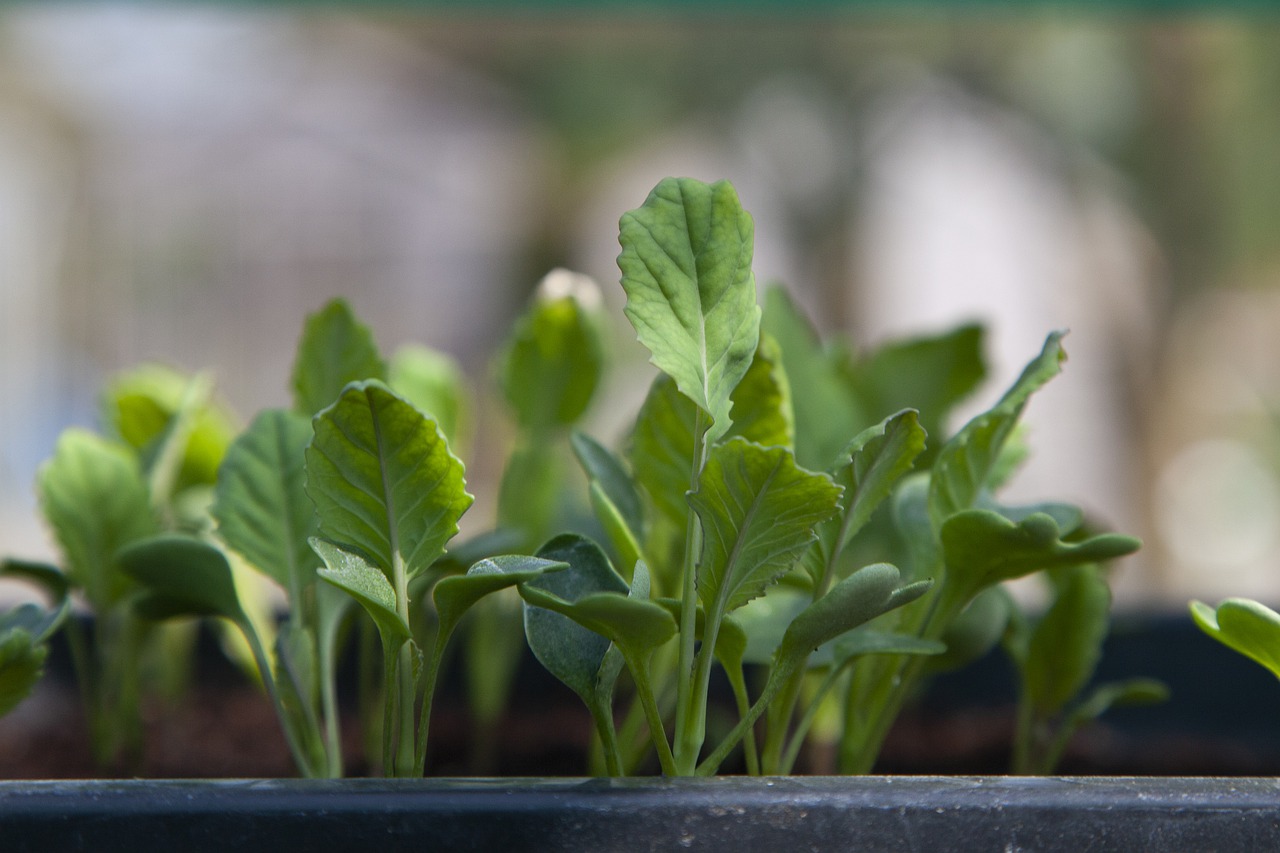
Radish Sprouts  –  I planted these around Sept 3. This photo was taken Sept 12. 

Sorghum Sudan Grass – Great for weed suppression and moisture retention in the soil. Be sure to plant when soil is still warm. It will die after frost but if planted too early will go to seed so be sure to mow before it sets seed if it hasn’t been killed by frost yet.  image.png

Mature Sorghum (when used as a cover crop you would terminate before this stage)

Cold-Hardy Cover Crops  

These are types that you plant in mid to late fall. They begin to grow in fall, become dormant in the winter and re-emerge in the early spring. You then wait for them to develop appropriate bio-mass and terminate before they go to seed. These are usually more difficult to terminate and may require tillage, crimping or tarping. Choose these varieties for a space in the garden that won’t be needed until very late spring.   

Rye – Can thrive in low-fertility soil. Very cold hardy. It is recommended to till it into the soil in the spring when it reaches 12-18 in high.  

image.png

Mature Rye (Should be terminated by crimping or tilling before this stage)

Hairy vetch – Not as great for weed control at first as it is slow growing, but an excellent nitrogen fixator as it is a legume. Plant in early fall and then till or mow it down in the spring and it can remain in place as a nitrogen-rich mulch.  

image.png

Vetch Flowers

Crimson Clover & Red Clover – If allowed to grow to mid-May in the spring, will provide lots of nitrogen for the soil and provide a spring flower source for pollinators. Has a strong root system that helps reduce compaction.  

image.png

Crimson Clover

Red Clover

 Resources

Field Peas – SARE https://www.sare.org/publications/managing-cover-crops-profitably/legume-cover-crops/field-peas/ 

Radish as a cover crop – Integrated Pest and Crop Management – UW–Madison https://ipcm.wisc.edu/blog/2011/04/radish-as-a-cover-crop/ 

University of Vermont – Winter Rye: A Reliable Cover Crop  https://www.uvm.edu/vtvegandberry/factsheets/winterrye.html 

Crimson Clove Cover Crop Fact Sheet https://www.nrcs.usda.gov/sites/default/files/2024-04/Crimson%20Clover%20Crop%20Fact%20Sheet.pdf  

Hairy Vetch – https://www2.gov.bc.ca/assets/gov/farming-natural-resources-and-industry/agriculture-and-seafood/agricultural-land-and-environment/soil-nutrients/cover-crops/hairy_vetch_final.pdf  

Where are the weeds?

By Mary-Jane Pilgrim, Master Gardener

I was honoured to be part of the Lakefield Horticultural Society’s Garden Tour last summer, along with fellow MG Emma Murphy. It was a glorious day, and I loved the wide range of people who came to tour — each with different backgrounds and gardening styles.

The one question I fielded more than once is “where are the weeds”?

First of all, what’s a weed? To me, a weed is a plant that is growing where it is not wanted. My weeds could be your prized “Lubauchnia” (my hubby’s fabricated word for plants he doesn’t know the name of, which includes most plants).

Disclaimer: I didn’t inherit a bunch of the nasty weeds as there were no gardens at my house when we bought it 32 years ago. I do deal with the nasties at my gardening clients’ homes weekly, though!

For plants that are growing where they’re not wanted in my gardens, here’s what works for me:

  1. Don’t wait — smaller weeds are easier to get rid of than larger ones. This applies to spring and fall when we’re often not as diligent in getting outside. Sometimes it seems like a full grown weed can appear overnight during those seasons!
  2. Use mulch — I love my leaf mulch, and it seems to be very effective in suppressing weeds. A chipper makes short work of a pile of leaves. Mulch also conditions your soil and encourages earthworms and microorganisms, a win-win situation.
  3. It’s especially important to weed BEFORE the seed heads develop — you’ll save yourself a LOT of trouble getting them early in their life cycle.
  4. Cut back perennials after they’ve finished blooming, and check for the inevitable “weeds” underneath.
  5. Weed when the soil is moist, so that the maximum amount of root comes with the weed. Weeding in dry/hard soil results in small pieces of the root being left behind, which can usually regrow. I rarely weed without my trusty Lee Valley Root Knife — loosening the soil around the root before pulling.
  6. Watch newly planted perennials closely, especially natives. If they send out runners or if they are very proficient at casting seedlings, they get “shovel pruned” at my place. You can do you at your place.
  7. Lastly, “know your garden“. The more time you spend out there, the fewer undesirable plants there will be.

Simple knife-in then pulling works well for most regular weeds. However, some types such as japanese knotweed, lily of the valley, bindweed, cow vetch, DSV or creeping bellflower will require more diligence as their mother-roots are buried deep underground. Eradicating those weeds involves a lot of deep digging, soil sifting, and extreme diligence. There are actually support groups on Facebook for those truly invasive plants. May actually be easier to move!

Weeds that contain viable seeds should be “solarized” — left in a black plastic bag on the driveway for a couple weeks. The heat will fry the seeds. Dispose of the bag in the garbage. Don’t put seed heads attached into your composter.

There’s a new thought process that suggests that repetitively cutting difficult weeds at soil level is more effective than pulling them. It’s true that if it’s done often enough, those roots will eventually die for lack of nutrient supply from any top growth — however the weeds are usually much more persistent than the weeders! I read that cutting bindweed every 2 weeks will still take multiple years to make an impact. Sigh.

What are your tricks?

Winter Weeds

By Laura Gardner, Master Gardener

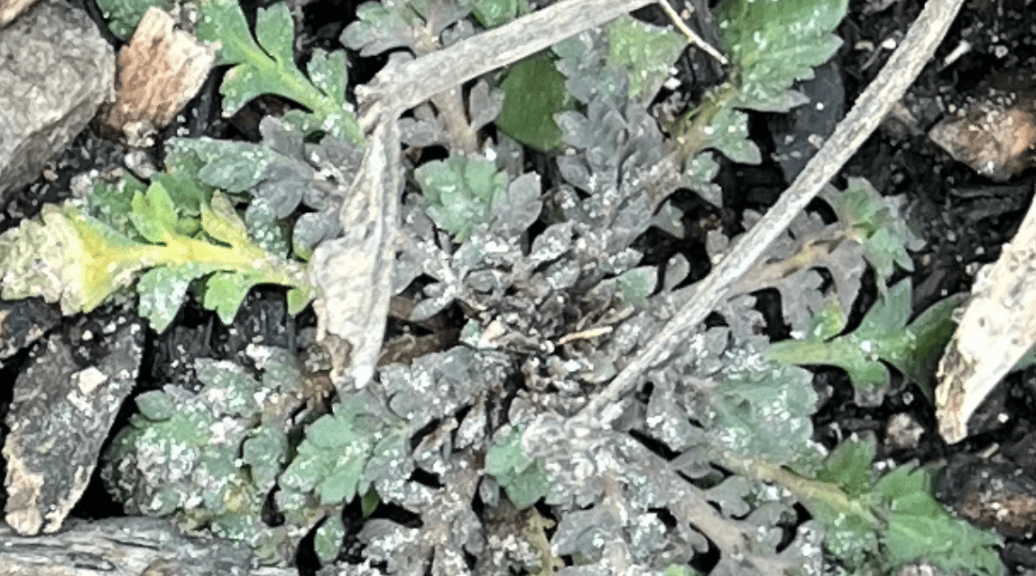
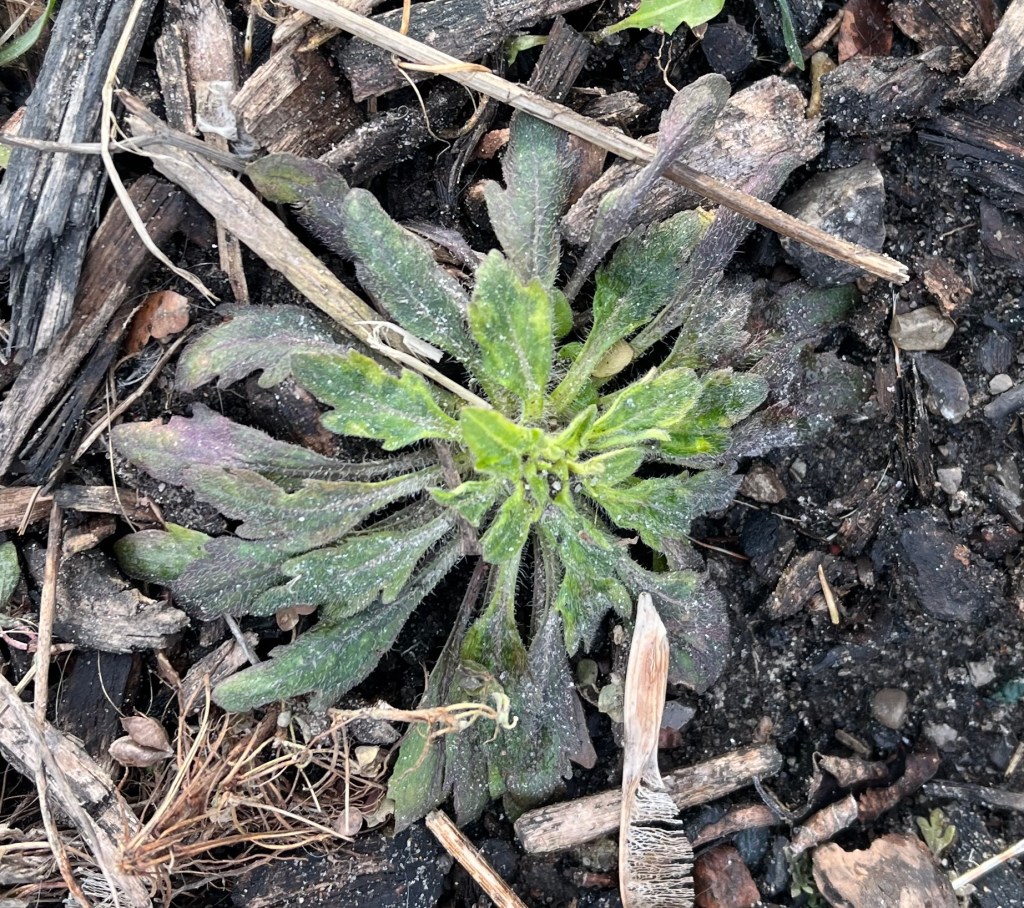
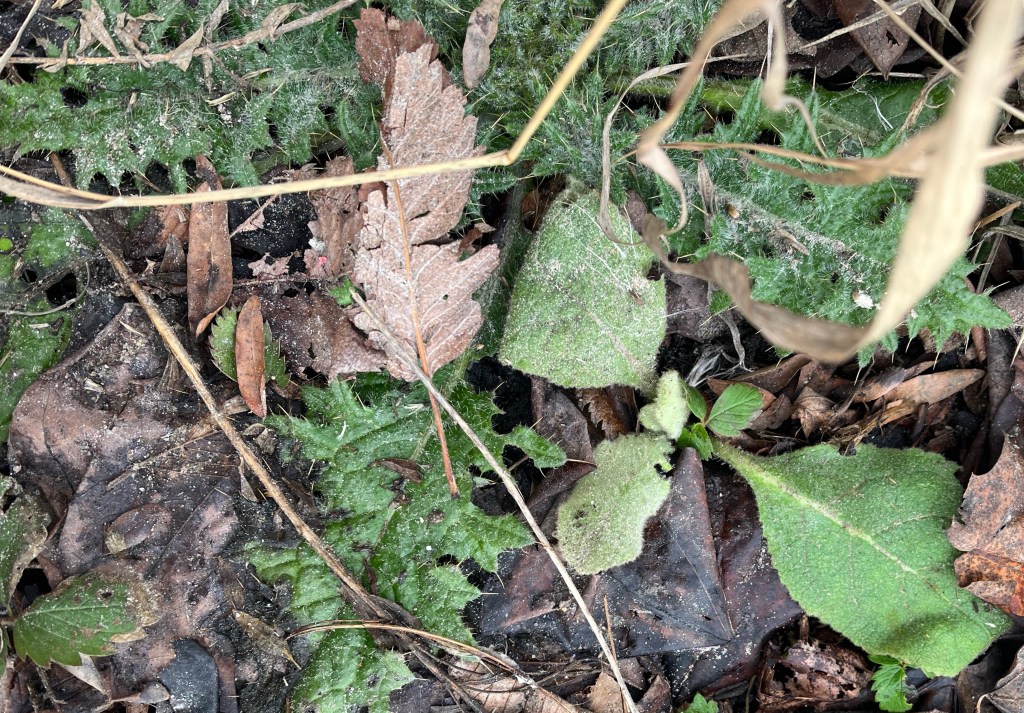
At this time of year there are two kinds of easily identifiable weeds: “winter annuals” and “biennials.” Biennials begin their lifecycle by germinating from seed in the first growing season. Winter annuals germinate from seed in the fall. They both form a vegetative basal rosette that lies in a suspended state over winter. The rosette protects what is known as the shoot apical meristem—stem cells of the plant that are responsible for the generation of shoots and leaves later in the spring. They will then grow more upright, flower, produce seeds, and then die, finishing their lifecycle. Some species may function as either a winter annual or a summer annual. Summer annuals germinate from seed in the spring and complete their life cycle that same year. One of the challenges of managing summer annuals is that they can reproduce more than once a year, potentially contributing to a large seed bank. Biennials generally take two years to complete their lifecycles. However, some so called biennial species may extend into subsequent growing seasons and be more like perennials if they have sufficient root energy stores and have not had the opportunity to flower and go to seed. This can happen if you do not remove at least the root crown of the plant when weeding.

In the Peterborough Public Library’s native plant garden, I took some photographs of some basal rosettes with the idea of identifying them later at home. Coincidentally, a copy of a book that I had on order for more than a year finally arrived: Weeds of the Northeast, 2nd Edition, by Joseph C. Neal et al. (Cornell University Press). In addition to the US Northeastern, Mid-Atlantic, and Upper Midwestern states, the book includes Southern Canada. In the 26 years since the first edition was published in 1997, more than 200 new species have been added. Many of these new species are invasive plants from the horticultural trade [e.g. Common Periwinkle (Vinca minor)]. It is strictly an identification guide and so if you are looking for weed management guidance, this type of information will need to be found elsewhere.

The book has a dichotomous key that is a bit different from others. It relies on identifying the plants through their vegetative parts such as leaf lobes, leaf arrangement, leaf margins, leaf hairs, etc., but not on their floral traits. It also does not lead you to an immediate single species identification, but rather enables you to compare your plant with several possible matches through their photos and descriptions. The photos are particularly valuable for identification purposes—showing plants in various stages of life—from seedling to maturity. The glossary is helpful for those that are unfamiliar with some of the botanical terms. This is a great resource for anyone to use to confirm the findings of a plant identification app.

Here are some of the weeds I found and identified using this guidebook:

Shepherd’s Purse (Capsella bursa-pastoris): A summer or winter annual.

Shepherd’s Purse (Capsella bursa-pastoris)

Field Pennycress (Thlaspi arvense): A Summer or Winter Annual

Field Pennycress (Thlaspi arvense)

Canada Horseweed (Erigeron canadensis): Summer or Winter Annual

Canada Horseweed (Erigeron canadensis)

Bull Thistle (Cirsium vulgare) and Common Mullein (Verbascum thapsus): Biennials

Bull Thistle (Cirsium vulgare) and Common Mullein (Verbascum thapsus)

Ditch Lilies – a Cautionary Tale

By Emma Murphy, Master Gardener

Once upon a time there was a gardener who wanted something that grew quickly to screen a neighbour’s unsightly yard and house addition. She noticed that the ‘ditch lilies’ that surrounded her front yard tree (already there when she moved in) seemed to be pretty vigorous, so she planted a row of them between the yards, along with some small bridal wreath spirea (Spirae aprunifolia).

What she didn’t realize was that she had unleashed a horrible monster into her garden, one that quickly engulfed any other plants, sucked all the moisture out of the soil, and eventually killed most of those spirea.

Yes that gardener was me, many years ago, before I knew better and before I became a master gardener. So this year I knew I had to finally tackle the monster, remove all these plants, and reclaim this garden area. I knew how much work it would be (it took me three weekends this spring), but I got it done. Here’s my story…

Even though you see it growing in ditches around the province, Hemerocallis fulva (aka ditch lily, tawny daylily, orange daylily, tiger lily) is native to China, Japan and Korea and was introduced to North America in the early 19th century. They spread via seed and a network of tuberous roots, and can reproduce and proliferate from a small fragment left behind during removal. In 2020 the Ontario Invasive Plant Council added this plant to their invasives list, and their Grow Me Instead Guides offer some native alternatives to consider.

Screen capture from the Grow Me Instead Guide on Hemerocallis fulva

Garden bed, spring 2021

So this was my garden bed in May this year – just waiting to burst out and take over, again. Every single one of these plants had to be dug and lifted, making critically sure to get every last bulb. These photos show how many bulblets can be on just one stem – it was quite overwhelming to think of the job ahead.

All the plants that were dug out were put in black plastic garbage bags and left out in the hot sun beside our barn for a month. At last count I used 45 garbage bags, and they were a slog to carry as they were heavy!! Eventually they went to our rural dump, where the hot composting they do should ensure their demise.

Bit by bit, over three weekends, I got them all out. It was beneficial to have a dry spring, as it made digging them out a little easier. But still a workout!

Once everything was cleared out, I weeded the soil for anything else. All that remained were my tulips and a few hardy perennials that had been gasping for air for more than a decade.

Getting there.
Ready for a fresh load of soil.

With a fresh load of soil on top and a final check for bulblets done (and knowing that I would have missed a few), I put in some new plants, aiming for 50 percent native plants (those marked with a *). The area has both sun and shade spots so I needed to be careful with my choices.

For sun, Echinacea*, Gray-headed coneflower* (Ratibida pinnata), summer phlox (Phlox paniculata), American Witch Hazel* (Hamamelis virginiana), New England asters (Symphyotrichum novae-angliae), Sedums, Switch grass* (Panicum virgatum), Lesser catmint (Calamintha nepeta ssp. nepeta), Black-eyed Susans* (Rudbeckia hirta), lupins, Giant fleeceflower (Persicaria polymorpha), Cyclindrical Blazing Star* (Liatris cylindracea)[once I can convince the bunnies to stop eating it – see green covers], and Virginia Mountain Mint (Pycnanthemum virginianum).

For part shade/shade, Mourning Widow Geranium (Geranium phaeum), Purple Flowering Raspberry* (Rubus odoratus), hostas, Sensitive Fern* (Onoclea sensibilis), Virginia Waterleaf* (Hydrophyllum virginianum), Columbine (Aquilegia), Starry False Solomon’s Seal* (Maianthemum stellatum), Buttonbush* (Cephalanthus occidentalis), Zig-zag goldenrod* (Solidago flexicaulis) and Berry Bladder fern* (Cystopteris bulbifera). Also the infamous Outhouse Plant (Rudbeckia laciniata ‘Hortensia’), to be replaced with something else next year. Any suggestions for fast growing native shrubs that can handle part share welcome!

The garden bed needs time to fill in, so we’ll see what it looks like next year. In August I went back into the bed and sure enough, there were new ditch lilies growing in a few places. Remember it only takes one bulblet for them to grow. But half an hour later they were all gone as well.

I suspect I will on alert for the odd ditch lily plant showing up for the next few years, but I’m really proud to have removed this nasty invasive plant from my garden and rejuvenated it with native plants. And my two lovely sugar maple trees are glad for some more breathing room.

NOTE: The orange, single flower, diploid Hemerocallis fulva is the only daylily currently listed as invasive. Most daylily cultivars are diploid or triploid and do not spread invasively like the ditch lily.

Winter, when a gardener’s thoughts turn to Spring

By Emma Murphy, Master Gardener

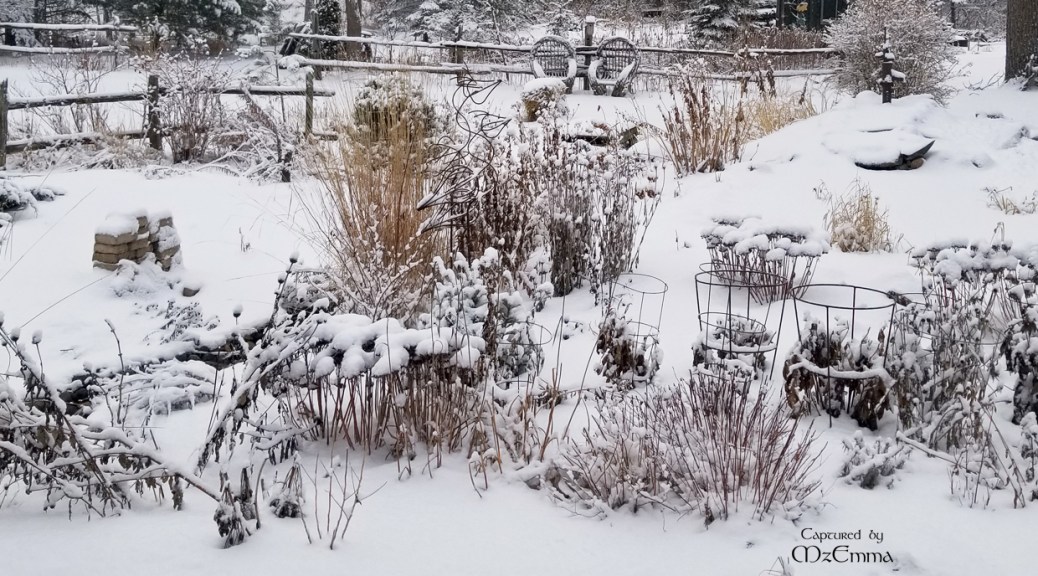
So now it’s wintertime. Our plants are sleeping quietly beneath a bed of wonderful white snow, and although we hibernate and rest to a degree, a gardener’s thoughts turn to springtime. I’m exploring some new ideas for my gardens for next spring, and thought I would share them with you.

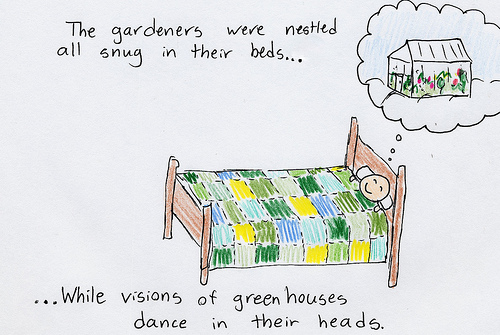
Credit: Joseph Tychonievich; cartoon from https://www.facebook.com/FineGardeningMagazine/photos

No I didn’t get a greenhouse for Christmas…yet.

RAISED BEDS FOR GARDENING

But I do have a wonderful husband who knows how to make his wife – the Master Gardener – a happy person. His Christmas 2020 gift to me was to create some raised beds so we will be doing that this spring. I have been wanting to do raised beds for a few years since seeing Tara Nolan do a presentation at the Peterborough Garden Show, and I guess dropping those significant hints finally worked 😉

So we did a little research. Have you been thinking of creating raised beds for either vegetable or other gardening? They are great to extend the gardening season, be able to control soil quality, provide accessibility for older gardeners or those with disabilities, create a garden for special purposes (youngsters or horticultural therapy), increase yields, reduce weeds, and keep critters at bay. They also work well for condos and rooftops in our urban centres. Here’s some great sites I found for those interested in the idea.

One of my favourite gardeners with a similar climate to mine in Central Ontario – Erin Schanen in Southeastern Wisconsin (zone 5) – The Impatient Gardener. She has several good articles on growing in raised beds, from layout through to construction.

Tara Nolan’s book Raised Bed Revolution emerged at a time when this idea was gaining a lot of traction, and it’s an excellent source of information on size requirements for constructing raised beds, height suggestions, types of materials you can use, and creative tips for fitting the maximum garden capacity into small spaces—including vertical gardening. The Toronto Botanical Garden also wrote a great review. We also have a copy of Mel Bartholomew’s Square Foot Gardening, which focuses on growing more fresh produce in less space, and is very complementary to the raised bed philosophy.

For some general information on raised beds try here and here.

ORDERING YOUR SEEDS

Maybe it was just the crazy rush (and delay on delivery) for seeds this past spring, but we just ordered our vegetable and flower seeds for the 2021 season. There are lots of seed companies to choose from, but please try to shop from Canadian companies and especially those local to you. Although COVID-19 meant the cancellation of Peterborough’s wonderful Seedy Sunday, the organizers did post a list of all the vendors who would have been there, and it’s a great resource, as is the Seeds of Diversity site.

ESPALIERED FRUIT TREES

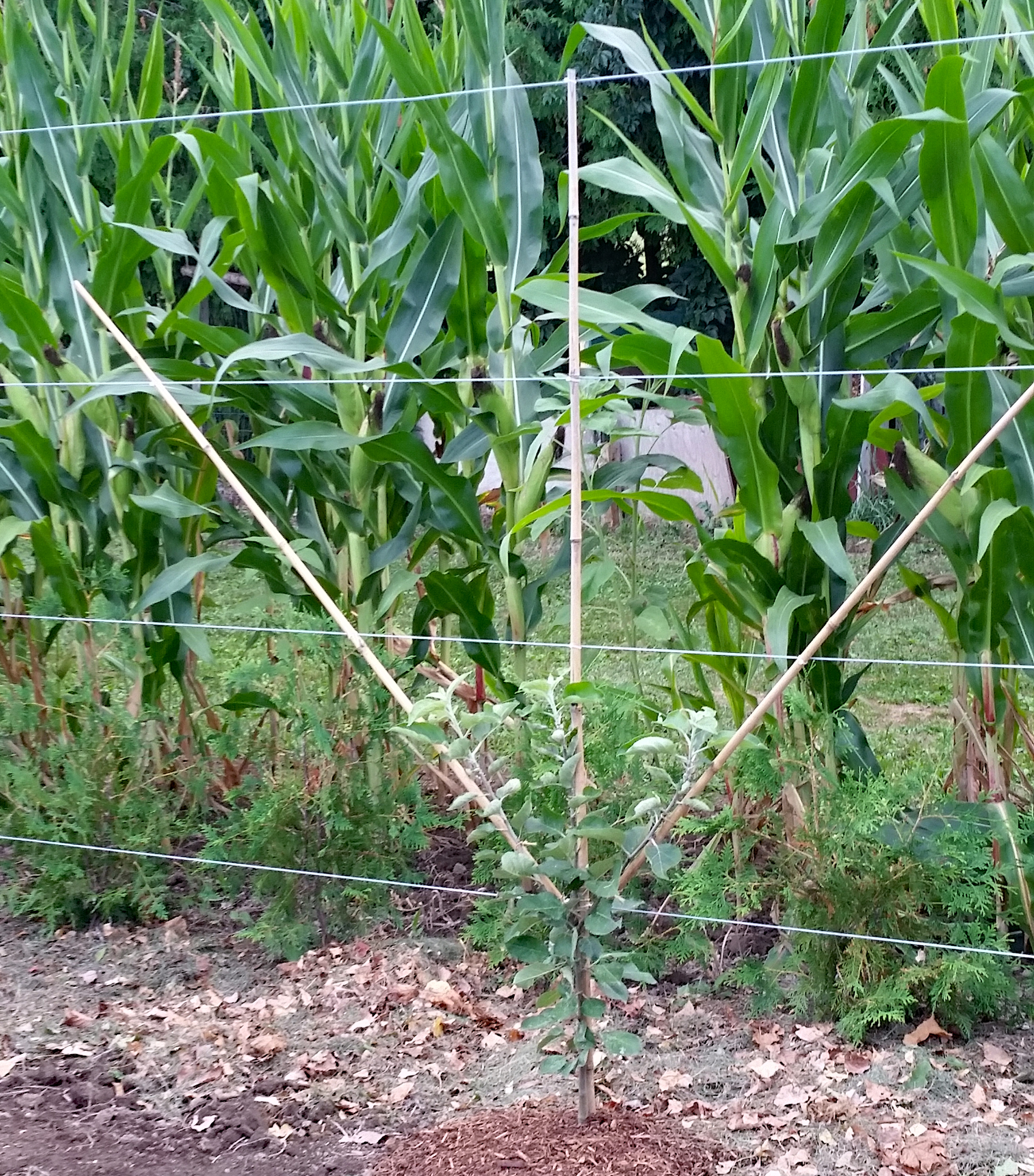
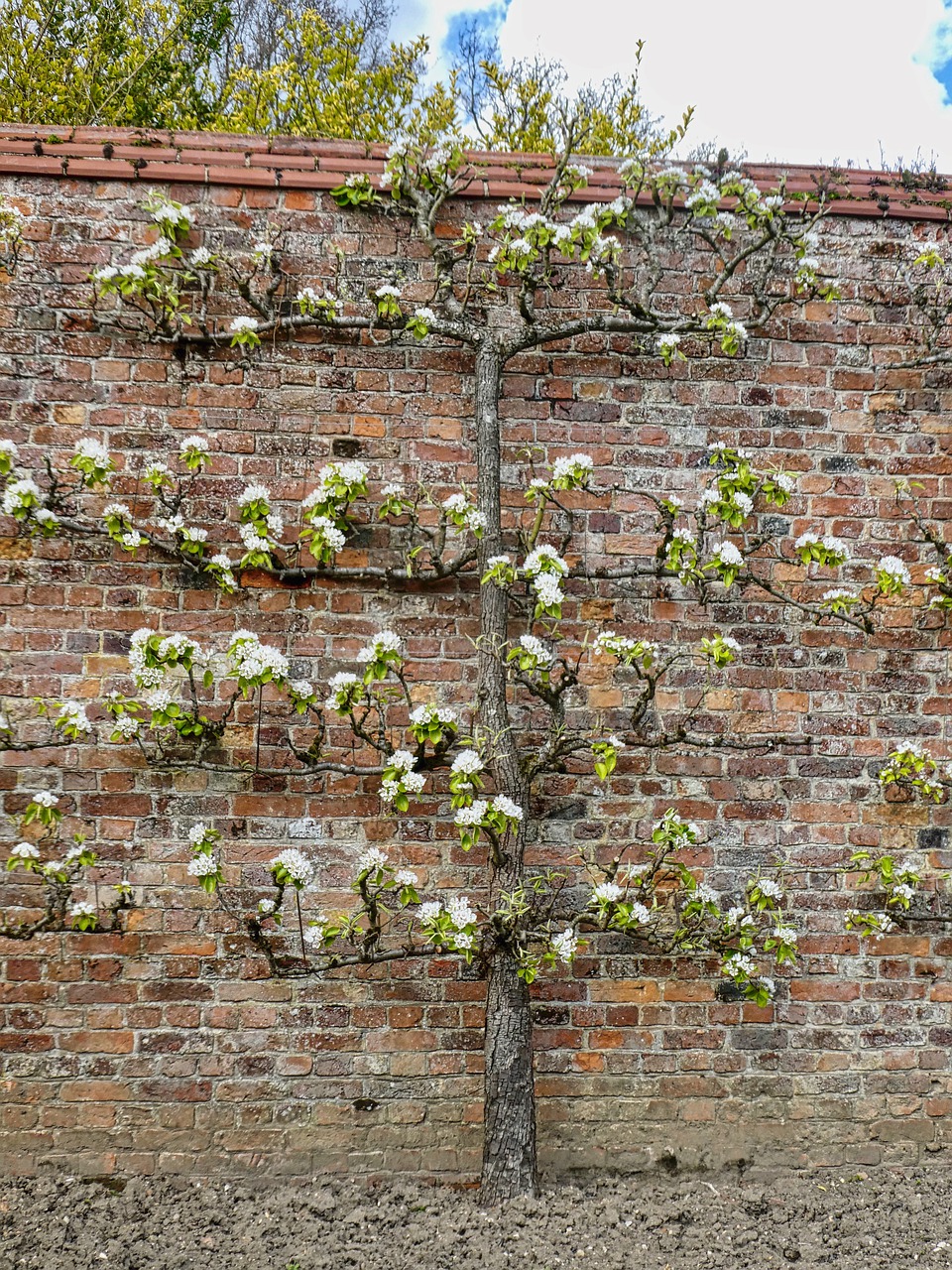
Espaliered fruit trees (espalier – to train a tree or shrub to grow flat against a support or wall) have been on my garden wish list for several years, and I missed an opportunity to pick up a mixed apple espalier tree several years ago which I have been kicking myself for ever since. I saw amazing espaliered fruit (English style) in the Victorian Kitchen Garden at Meadow View Gardens (just north of Cobourg) on a Master Gardener tour several years ago, and was entranced (well I’m entranced by owners Julie and Garry Edwards’ entire English-inspired gardens, but that’s another story).  

Although they can be any kind of fruit they are most often apples, and the key to doing it well is understanding how to prune the trees. Garden Therapy has an excellent article on how to grow these edible gardens, in ways that can accommodate both small spaces but be decorative. There are many different shapes that can be done – cordon (branches straight out to the sides), fan (branches fanning up and to the side), candelabra (like a cordon but the branches turn at a right angle to form the shape of a candelabra), lattice (multiple trees with crossing branches), and “Y” shapes. Maybe this is something you can try in your garden as well? The Ontario Ministry of Agriculture, Food and Rural Affairs (OMAFRA) has a list of nut and fruit tree nurseries. I know one company I have dealt with is Silver Creek Nurseries in Wellesley, who specialize in fruit trees, and they offer the following advice on their website:

“Spur bearing varieties are recommended (rather than tip bearing), such as Cox’s Orange Pippin, Winesap, Fuji, Belle de Boskoop, Calville Blanc, Sweet 16 and many more. Apple and pears are generally the easiest fruits to train, but other species may be espaliered with varying degrees of difficulty.”

Grow a Little Fruit Tree: Simple Pruning Techniques for Small-Space, Easy-Harvest Fruit Trees is also recommended as a resource (although I haven’t read it).

I’ll be in touch with them once spring rolls around, which should be in 82 days or so (but who’s counting?). Enjoy your winter garden dreaming, and spring will be here soon enough.

Perennial Gardening with Less Effort

By Mary-Jane Pilgrim, Master Gardener

Are you spending more time working in your perennial garden this hot, dry summer than enjoying it?  You may want to consider some of these low maintenance tips for fall renovations and next year’s plans.

What does low maintenance mean? Low maintenance does not mean no maintenance and low maintenance is not for lazy gardeners. Low maintenance means making wise plant decisions and doing your homework up front, so you don’t end up with a flower garden that requires tons of work to look good.

Getting to the point of ‘lower maintenance’, however, will be tough.  Prepping a new garden is pure slogging, involving wheelbarrowing compost and mulch, digging & then digging some more.  If your current reality involves plants that were plentiful at your neighbour’s house or at a recent plant sale, it could involve even more digging to get rid of persistent roots.

thumbnail_IMG_1658
Well behaved full sun perennials in the author’s garden

However, you will love the end result of an easy to care for garden if you follow some of the following suggestions.

The first rule of thumb in creating a low maintenance flower garden is to keep it small. Don’t go crazy when you’re picking out plants; stick with 3 or 4 groupings of 3 of the same perennial, and then fill in with annuals if you wish.

The most important tip of all in creating a low maintenance flower bed is mulch. Mulch is a gardener’s best friend. After planting your flower garden and watering it well, always apply a 2 – 3 inch layer of a good, shredded mulch. If you can’t afford mulch right away, shredded leaves and untreated grass clippings will do the trick. Mulch is your #1 defense against weeds and it helps the soil retain moisture so that your plants don’t dry out. Skipping mulch in a low maintenance flower garden is not an option.

Another important step to keeping your flower garden low maintenance is to install an edging of some type. Allowing the grass to creep into the garden, or allowing the garden to creep into the grass are both problem situations that will require a lot of work to deal with.

Choose and plant flowers that:

  • aren’t vigorous, invasive or self-seeding spreaders (avoid “creeping” anything!
  • aren’t too picky about the soil
  • will survive a wee bit of neglect
  • are relatively drought tolerant
  • don’t require deadheading or minimal deadheading (removal of spent flowers)
  • don’t require staking
  • are not prone to pest problems or diseases.

A good nursery or garden centre with knowledgeable staff is a great place to start — and we are blessed with some great ones in the Peterborough area!

The best easy-care perennials for sun or part sun: Clumping ornamental grasses, Coneflower, Salvia, Daylilies, Black-eyed Susan, Shasta Daisies, Veronica, Lavender, Peony, Blanket Flower, Perennial Geranium (cranesbill), Russian Sage, Penstemon, Sedum Stonecrop (there are some new cultivars out that are amazing, like Firecracker or Lime Zinger), Autumn Joy Sedum, Hens & chicks (Sempervivum).

Low maintenance perennials for shade: Hosta, Ferns (not ostrich), Coral bells, Barrenwort (epimedium), Astilbe, Hellebore, Brunnera, Primula.

thumbnail_IMG_1659
Well behaved shade perennials in the author’s garden

The goal is to get to the point where you only need to set aside 15 or 20 minutes every couple of days to weed and deadhead your plants. Deadheading also reduces the number of “volunteer” plants that you will get as the seeds will also be removed. You can combine weeding with deadheading and get the chores done at the same time. This will keep your flower garden looking beautiful and will help the plants produce more blooms.

Invasive Species

By Sharleen Pratt, Master Gardener

According to the Ontario Invasive Plant Council, an Invasive Species is an alien species whose introduction or spread negatively impact native biodiversity, the economy and/or society, including human health.

Therefore, an invasive plant species is often a plant that has been brought into Ontario from another country, possibly for medicinal reasons or as an addition to one’s garden.  For various reasons, it becomes aggressive, spreads quickly and often displaces native plants.

Here is a detailed description of five invasive species that could show up in your garden.  They are all Category 1 Invasive as designated by the Credit Valley Conservation described as species that exclude all other species and dominate sites indefinitely. Plants in this category are a threat to natural areas wherever they occur because they tend to disperse widely (for example, through transport by birds or water). They are the top priority for control but control may be difficult.

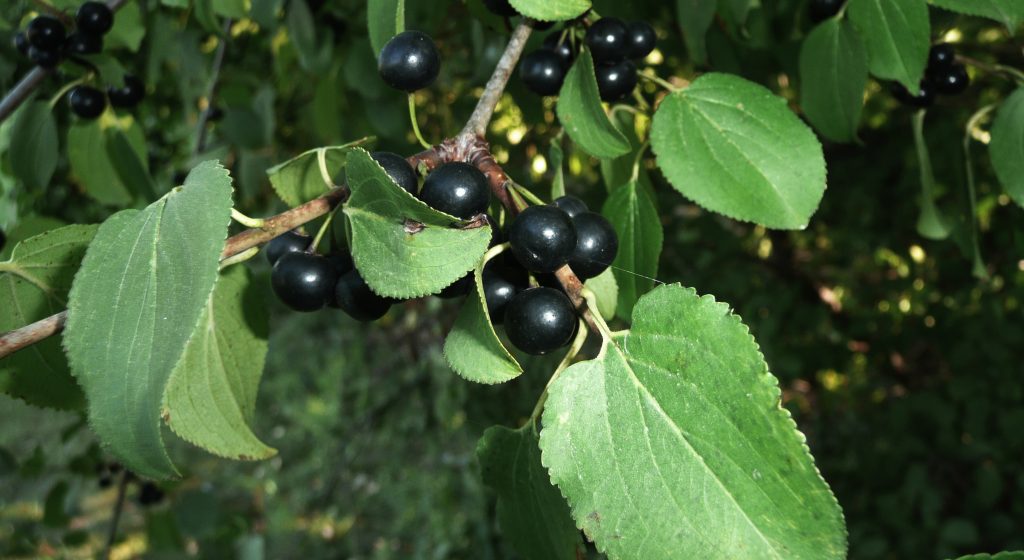
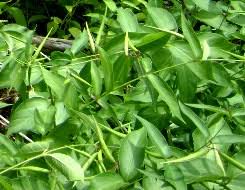
Rhamnus cathartica
Common Name:  Common Buckthorn, European Buckthorn Common-Buckthorn

Height:  Up to 10m tall
Type of Plant:  Deciduous Shrub or small tree that is fast growing and short lived
Leaves:  Smooth, dark green leaves with slightly serrated leaf margins, somewhat elliptical and arranged in opposite to sub-opposite pairs along the stem.  A sharp thorn can be found on the end of most branches.
Flowers:  Flowers occur in the spring.  They are yellowish/green, with four petals in clusters of 2 to 6 near the base of the petioles.  They are small and inconspicuous.
Fruit:  Produces clusters of berry-like globose black fruit in late summer and fall; although it’s mildly poisonous, birds and other wildlife eat the fruit and disperse the seeds.
Culture:  Can thrive in a wide range of soil and light conditions.  It is shade tolerant.
Invasion Pathway:  Introduced from Eurasia to North America in the 1880s for ornamental landscaping.  It was widely planted for fencerows and windbreaks in agricultural fields.  The large number of seeds are spread by birds and animals.
Impacts:  Habitat destruction and because it leafs out early, it is a danger to native species.  It also alters the nitrogen levels in the soil. The soybean aphid, an insect that damages Ontario soybean crops, can use buckthorn as a host plant to survive the winter.
Control Measures:  Physical removal, herbicides, fire, girdling

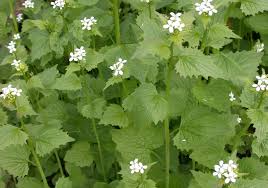
Alliaria petiolata
Common Name:  Garlic Mustard
Garlic Mustard
Height:  30 – 100cm tall
Type of Plant:  Biennial Herb in Mustard Family
Leaves:  In First Year:  Leaves are dark green, cordate shaped with crenate margin edges. In Second Year:  Leaves are alternate on a larger stem with somewhat doubly serrated edges.  The lower leaves on the stem are broad, cordate shaped and up to 10cm across.  The upper leaves on the stem start to narrow.
Flowers:  In Second Year:  Four white petals appear, arranged in cross shape.
Fruit:  In Second Year:  The fruit is erect, slender, 4-sided pod, green, maturing pale grey-brown, two rows of small shiny black seeds.  Hundreds of seeds can be produced from a single plant.
CultureAlliaria can grow in a wide range of sunny and fully shaded habitats, including undisturbed forest, forest edges, riverbanks and roadsides.
Invasion Pathway:  Introduction for perceived medicinal value as a disinfectant, a diuretic and sometimes being used to treat gangrene and ulcers.  It was also planted as a form of erosion control. European settlers also used it as a garlic type flavouring.  Seeds can remain in the soil for several years and still be able to germinate.  Hundreds of seeds produced from one plant.
Impacts:   Alliaria forms dense stands, replacing native plants and has been implicated as partial cause for endangered status of our native wood poppy (Stylophorum diphyllum), American ginseng (Panax quinquefolius) and our provincial Trillium (Trillium cernuum).  It is toxic to larvae of certain butterfly species that lay eggs on the plant.
Control Measures:  Removal by hand, mowing or burning in early spring before flowering.  Should always be bagged and burned.

Cynanchum louiseae and C. rossicum
Common Name:  Dog Strangling VineDog Strangling Vine

Height:  2m high
Type of Plant:  Twining Vine
Leaves:  Oval with a pointed tip and grow opposite
Flowers:  Pink to dark purple star-shaped flowers have five petals
Fruit:  Produces bean-shaped seed pods that open to release feathery white seeds in late summer
Culture:  Prefers open sunny areas but can handle some shade. More dominant in meadows or woodland edges.
Invasion Pathway:  Introduced in the U.S. in the mid 1800s for use in gardens. Produces 28,000 seeds per square metre.  Seeds spread by wind and new plants also can grow from root fragments
Impacts:   Forms dense stands that overwhelm and crowd out native plants and young trees, preventing forest regeneration.  Invading ravines, hillsides, stream banks and utility corridors.  Leaves and roots may be toxic to livestock.
Control Measures:  Digging is most effective.  Hand pulling is not recommended as the plant will send up multiple shoots.

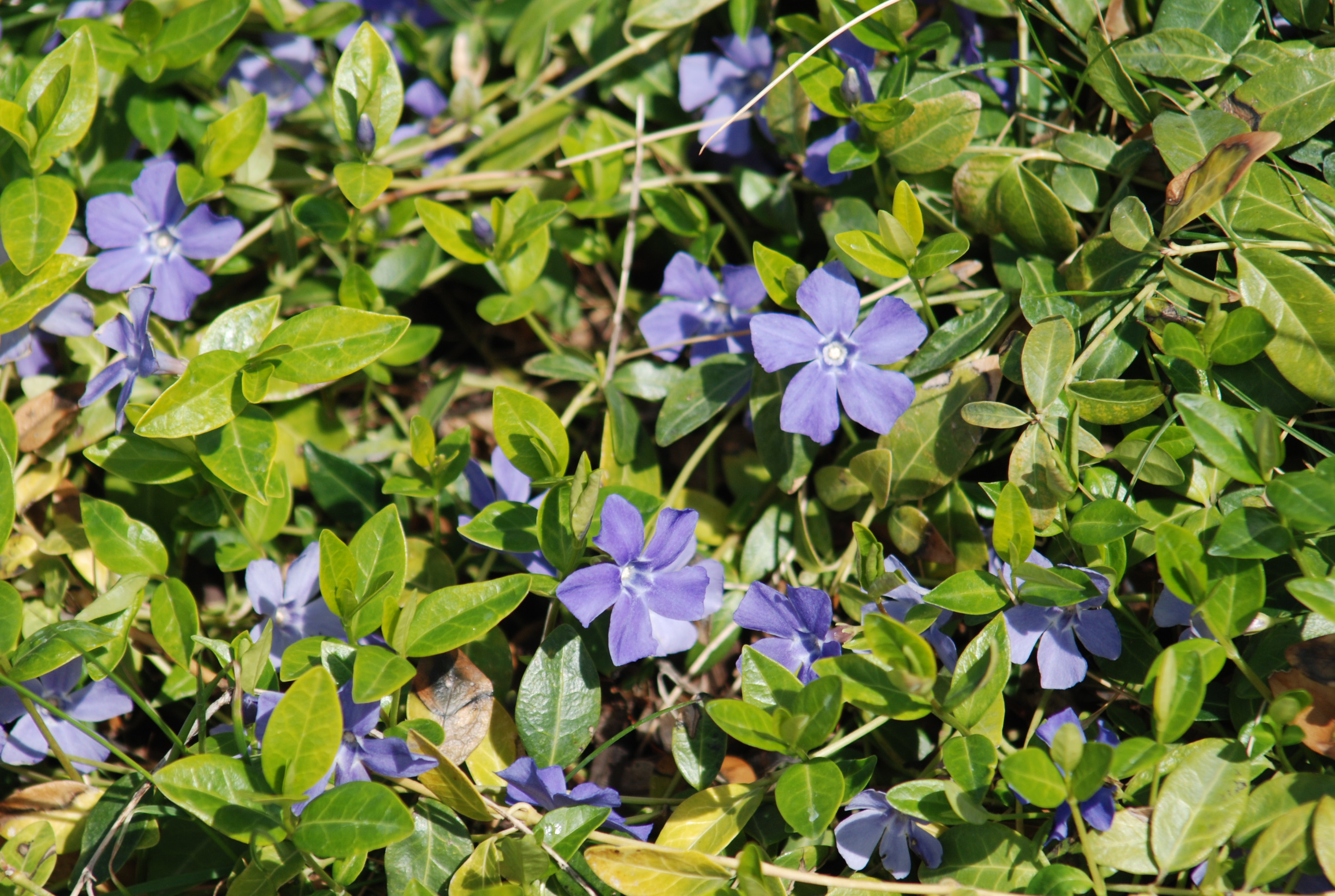
Vinca minor
Common Name:  PeriwinklePeriwinkle

Height:     Up to 15 cm tall
Type of Plant:  Evergreen herb that exhibits a trailing mat with a medium growth rate.
Leaves:  Lance shaped, shiny, evergreen with a subtle white mid vein.  They are opposite along stem.
Flowers:   Showy blue/purple with 5 fused pin-wheel like petals and a short tubular throat that bloom in late spring.
Culture:  Various soil types.  Found in forests and along streams, roads and wetlands.  Typically associated with residential gardens.
Invasion Pathway:  Introduced as a garden ornamental and medicinal herb.  It spreads by means of arching stolons, which root at the tips.  Grows most vigorously in moist soil with only partial sun, but it can grow in the deepest shade and even in poor soil.
Impacts:  Still sold as a groundcover which is a major concern.  It spreads quickly and is a threat to native biodiversity.
Control Measures:  It can be pulled, raked, or dug up, though re-sprouting will likely occur.  It can also be cut or mowed in spring during its rapid growth stage.

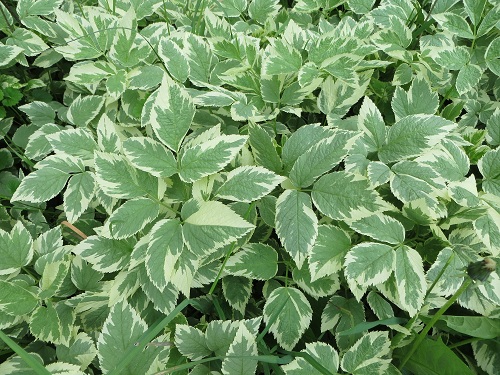
Aegopodium podagraria
Common Name:  GoutweedGoutweed

Height:  2m tall
Type of Plant: Herb
Leaves:  Compound leaf with serrated edges, can be non-variegated or variegated green and white, alternate
Flowers:  Flat topped ‘umbrella like’ flower head with many small white flowers in late spring held above the foliage on leafy stems (which look similar to Queen Anne’s Lace).
Culture:  Various habitat.  Full sun to part shade.  An escapee from residential gardens into forested areas.
Invasion Pathway:  Goutweed seeds require recently disturbed soil and a sunny location to survive after germination. For this reason, Goutweed does not have much success reproducing by seed in forest ecosystems. However, even one established plant can create a large colony by spreading through its aggressive rhizomes.
Impacts:  Forms dense patches that displace native plants.
Control Measures: Because it has limited reproductive success by seed, small patches of Goutweed can be easily controlled by digging up the plant (with careful attention given to removing the entire rhizome) or covering with a tarp or weed barrier for at least one growing season.

A reliable resource for invasive species is the Ontario Invasive Plant Council

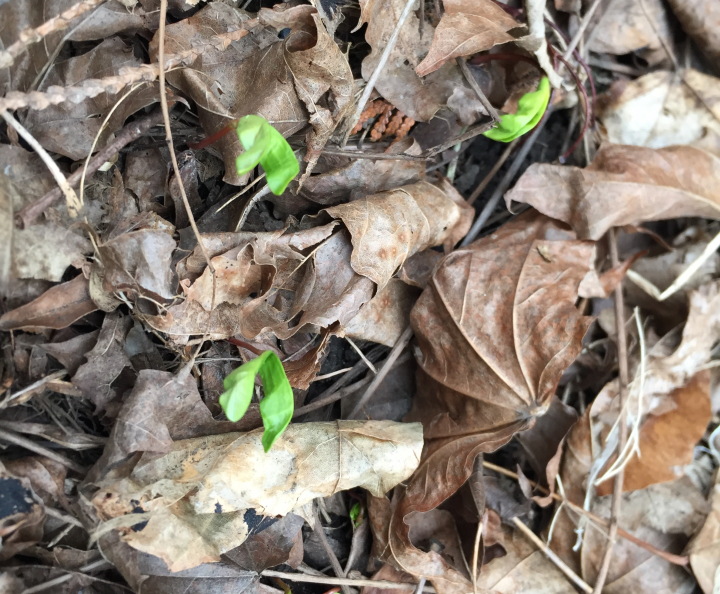
Maple Seedlings — it’s that time of year again!

By Suzanne Seryck, Master Gardener

One of the main reasons why I bought my current home in the centre of Lindsay was the majestic Maple and Walnut trees lining each side of the road. I was lucky enough to purchase a house with a Silver Maple and a red Norway Maple in the front yard. I now have the front yard of my dreams, partial- to full-shade, and full of hostas, cimicifugas, astilbes, and countless other shade perennials and bulbs.

Front Garden

However as I learned in the first spring, having two very large maple trees, especially a Norway maple, in the garden does come with some disadvantages. The first spring after I moved in, thousands of seedlings emerged in the front perennial bed. At that time I had not dug out my entire front garden; 50% of it was still lawn, so it was a little more manageable. The small seedlings in the perennial bed I pulled out and I mowed over the seedlings in the lawn. Once my entire front garden became perennial beds three years ago, the number of seedlings exploded. I probably should add, just to be fair to my two maple trees, that it is not entirely their fault. In the fall I leave most of the leaves on the soil, occasionally raking them up, mulching them and spreading them back down. I also collect bags of leaves from friends and neighbours and after mulching them up, I spread them liberally over both the front and back garden. Both these practices definitely increases the number of seedlings I get, but I tend to weigh the benefits of improving the soil against dealing with the seedlings.

many seedlings
The photo above shows approximately 10 maple seedlings in between spring bulbs

Norway maples, as most people are now aware, are considered an invasive species. They are fast growing, often out-competing native trees. There were widely planted in most cities due to their vigorous growth and tolerance of city conditions including soil compaction, pollution, and salt. They also produce huge numbers of seed, which can grow in very dense conditions and grow very quickly. Now, I have to add here that my other maple tree, the silver maple, also produces large numbers of seed. Whilst it is a native tree, it also grows very quickly and is widely planted in cities. It is also a tree that is disliked by many; you only have to do a search on the internet to find many articles similar to this one by the Globe and Mail.

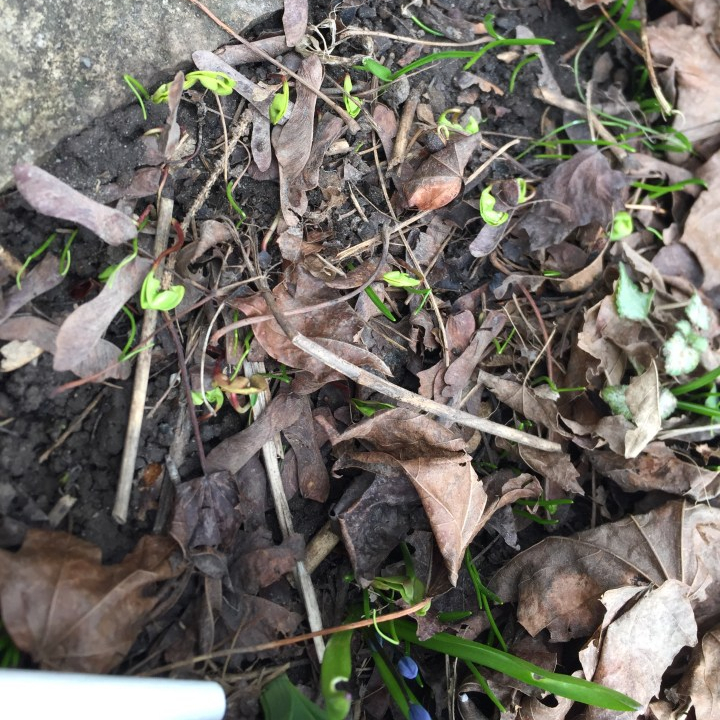
So back to the main reason for writing this blog — how to deal with the thousands of maple seedlings that germinate every spring. Before you can begin to eradicate anything you need to be able to identify it.  I quickly learned how to identify a maple seedling; see picture below.

3 maple seedlings 1
Close up picture of maple seedlings

Once you have pulled out a few hundred or thousand of these, you will be able to spot one from at least a 20-30 foot distance. Beware, they like to hide under piles of leaves, or try to blend in with your other spring ephemerals, such as under the leaves of yellow wood poppies or hellebore. They germinate rapidly once the weather warms, making it difficult to pull them out without stepping on other bulbs or perennials that are just starting to emerge. They often stand there taunting you in the middle of your bloodroot, knowing that you won’t weed in between until after the plant has finished flowering, at which point the maple seedling has grown a few more inches. The following are some of the strategies that I have developed over the past three years for handling the maple seedlings that germinate in my garden each year:

  • Pull them out as early as you can. If you can pull them when they are only 1 or 2 inches tall they can easily be pulled by hand. When I say easily here I am referring to the strength needed to pull them, not the wear and tear on your back and knees, which I will attempt to address later. But beware as I mentioned earlier, the seeds grow quickly. If the seedling is more than a few inches in height you might want to use a pair of pliers allowing you to get a good grip on the seedling before pulling out. Unfortunately if the seedling is much bigger than that, you may have to dig it up.
  • The strategy that I use most often is to try and turn it into a game as this also stops you from tearing your hair out. Whenever I leave the house, I make myself pull out 10-50 seedlings. The amount often depends on how much of a rush I am in, but I never leave the house without pulling at least 10 out. I must admit that this has occasionally made me late for an appointment, but the knowledge that I have done something productive is well worth it. Now this game can also be played in reverse (I know, it’s sounding more fun all the time), meaning that you can play it when you return from whatever you were doing. If it’s dark you may have to grab a flashlight and if you’re carrying grocery bags, they can be left on the driveway, at least for a short while. Before you go into the house, pull up at least 10 seedlings. Trust me, this game will grow on you.
  • Enlist family and anyone else who (usually) routinely visits you to partake in this game also. Do not make them a cup of tea unless they can produce 10 pulled seedlings. I was able last year to persuade my husband on a couple of occasions to join me, although I’m not sure that he participated in it strictly for the enjoyment factor.
  • Pay your children or your neighbour’s children (when it’s safe to invite them over) to pull them out.  The only trouble with this is they will only be able to pull out the seedlings that can be reached via the path. But if you’re lucky, they may take cookies as part payment.

Do not, on any account leave any seedlings, thinking you will pull them out next year. When I moved into my current house, I had maple trees 3 to 4 feet tall growing next to the foundations of the house, the garage, and anywhere where it was almost impossible to get a spade in to dig them out. They grow very quickly; do not look away!

pile of maple seedlings

Photo above shows how many seedlings I collected in 5 minutes yesterday.  Unfortunately, this year looks like another bumper year for these volunteers in my garden.

Permaculture: Where do I start?

By Suzanne Seryck, Master Gardener

So what do gardeners do in the winter? Once we’ve read all our seed magazines and compiled our purchasing lists, or designed new or changes to existing perennial beds, or decided on our vegetable crop rotation for the upcoming season, or read a new gardening book, or watched some gardening videos or TED talks, or found ourselves in the middle of taking a gardening course, what next? Personally, once I’ve exhausted all these possibilities, I tend to reread my favourite gardening books. I have an incredibly bad memory and find it really helps me when I reread the same books over and over; hoping eventually something will sink in. My books to reread this year are both permaculture-related: Toby Hemingway’s “Gaia’s Garden” and Rosemary Morrow’s “Earth User’s Guide to Permaculture”.

When I first became interested in permaculture a number of years ago, I started reading books and watching videos by the two founders, Australians Bill Mollison and David Holmgren. The concept, ethics, and principles resonated with me, but I have to admit that I struggled based on the literature available at that time, to understand how to translate this into my own Canadian garden. It was not until a couple of years later that I attended a couple of local permaculture design courses and read the book by Toby Hemingway who focuses on North American gardens, that I felt confident enough to bring some of those concepts and methods into my home garden

As I mentioned in my last blog, permaculture is a design system, a set of guidelines, principles and practices for sustainable living and land use, working with nature in a continuous cycle that benefits both people and wildlife. As with anything new or overwhelming, it is easy to be deterred by the big picture.  Instead, focus on smaller ideas or concepts. If you start implementing smaller more manageable tasks, it will give you confidence to tackle the larger concepts.

The following are a few easy-to-implement permaculture techniques to get you started:

  1. Sheet mulching. This was actually the first group activity I performed in my first design course.  It can also be called lasagna gardening. Permaculture encompasses a no-dig philosophy focusing on building soil life. Sheet mulching allows you to create new beds whilst eliminating weeds and building up the health of the soil. It is also a lot healthier on your back. You simply lay a heavy layer of newspaper or cardboard over the area and top it with 12 inches or so of organic mulch.
  2. Keyhole garden beds. Keyhole beds are often used in permaculture because they maximize use of space, whilst building soil fertility.  They decrease irrigation needs and are easy to plant, harvest and maintain. The bed can be either raised or not, and is often created in a circular pattern which decreases the space required for paths and increases space for plants. This type of bed is most often used for growing herbs & vegetables and because of the circular design, plants with different growing requirements can be planted together often creating different microclimates. For more information: https://permaculturefoodforest.wordpress.com/2016/04/14/keyhole-gardens/
  3. Creating gardening communities or guilds. In permaculture, a guild can be defined as a grouping of plants, trees, animals and insects that work together protecting their health, habitat and productivity. Probably one of the most familiar guilds is the Three Sisters Guild in which squash, corn and beans are grown together; each one supporting and benefiting the others. The beans grow up the corn and provide nitrogen, whilst the squash mulches and covers the soil. In my last garden, I grew apple tree guilds, surrounding each apple tree with daffodils in the spring (deter predators from chewing bark), comfrey and yarrow, and herbs such as dill & fennel along with chives & onions.
  4. Multiple stories or forest gardens. As an avid gardener and someone who has difficulty saying ‘enough is enough’ when it comes to plants–and also the owner of a small city garden–this technique is one I am especially interested in. The idea is that a garden can have multiple stories or layers; from a low herb or ground cover layer up to perennials, shrubs, small trees and finally the canopy trees. The plants in each layer combine and support each other to create and maintain a healthy ecosystem.

seryck1
Vegetable garden incorporating annuals and perennials

Permaculture is much more than the simple examples I have given.  It can encompass everything from designing landscapes and buildings, to water and waste management. The benefits for me include enriching the land, feeding and providing habitat, growing food for my family, and giving me somewhere to unwind and feel good about life. However, I am omitting one very important benefit for myself–by incorporating some permaculture practices into my garden, the garden tends to look after itself much more with less interference and work for me!

Mulch–Do you love it or hate it?

By Cheryl Harrison, Master Gardener

Mulch may be used as a noun or as a verb.  I make a list to pick up some “mulch” (noun) at the garden centre so that I can come home and “mulch” (verb) my flower garden.

I mulch my gardens including my vegetable garden, my flower gardens and my container gardens. Mulch is amazing and is even used by mother nature without any human intervention. If you walk through a pine forest, you will notice that the pine needles are in a thick layer on the forest floor. Mother nature does this for a reason!

Benefits of Mulch

Mulch helps to:

  • moderate soil temperature – it keeps soil cooler in summer and warmer in winter.
  • reduce weed growth – covers the soil to reduce sunlight for weed seed germination and weakens growth of sprouted weeds.
  • retain moisture – it provides protection from drought.
  • build good soil structure and improve soil texture as it decomposes.
  • protect the soil – reduce erosion by water and wind.
  • protect plant foliage from soil splash which can transfer fungus to the leaves of plants.

There are so many types of mulch to choose from that there is sure to be something to suit every gardener.

Organic Mulch

pine needle mulch
Pine needle mulch – waiting for plants. South Carolina garden. 

  • Adds nutrients to the soil as it decomposes, living mulches may be fragrant and attract pollinators.
  • Grass clippings, dried shredded fall leaves, leaf mould, conifer needles, clean straw or hay, wood chips or sawdust, shredded newspapers, shredded bark, coconut/nut husks, finished compost, cover crops, creeping groundcover perennials (eg. Thyme – covers the ground well and it flowers) or even closely planted gardens.

Inorganic Mulch

stone mulch
Stone mulch, author’s garden

  • Permanent, does not break down easily and does not add nutrients to the soil.
  • Geotextiles (landscape fabric), plastic and stone.


Mulch Application

Yes, mulching your gardens is work but the benefits are definitely worth it.

Apply mulch to damp soil, 5-10 cm (2-4 inches) deep using a shovel, a garden fork or a bucket. It really depends on the type of mulch which tool will work the best for you.

Do not cover the crown (centre of plant where the stems originate) or mulch right up to the trunk of your trees. You may smother your plant if you cover it with mulch or attract insects to your tree’s trunk if you mulch too close. You will need to re-apply organic mulch every couple of years as it breaks down and becomes part of the garden soil.

Purchasing Mulch

Mulch may be purchased in bulk or in bags. Be sure to ask questions about the product. You want mulch that is free of weed seeds and disease. If you prefer dyed mulch, you will want mulch where the dye used is not poisonous to you or the other critters in your garden.

Oh, I forgot one of the most important benefits of mulch … your soil and your plants are healthy and happy, so enjoy those beautiful gardens!

authors garden
Author’s garden