by Mary Jane Parker, Master Gardener
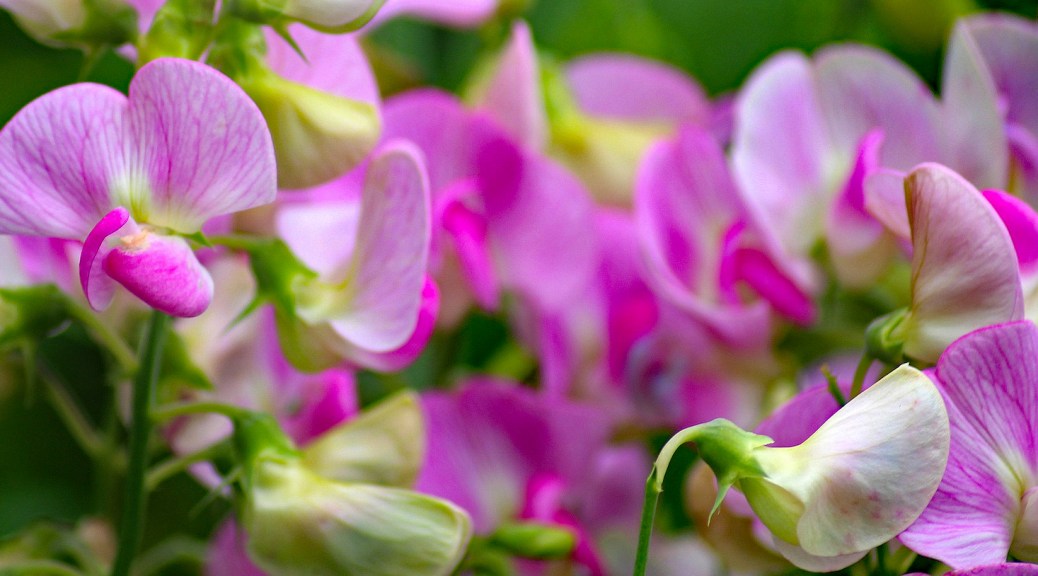
Somebody once told me that you should try growing something six times unsuccessfully before you give up. I have not stopped there yet with Sweet Peas. I grow them but they never are as full and beautiful as the pictures I have seen or the seed package covers. So I bought The Sweet Pea Book by Graham Rice. It has lots of interesting ideas and a multitude of cultivation tips.
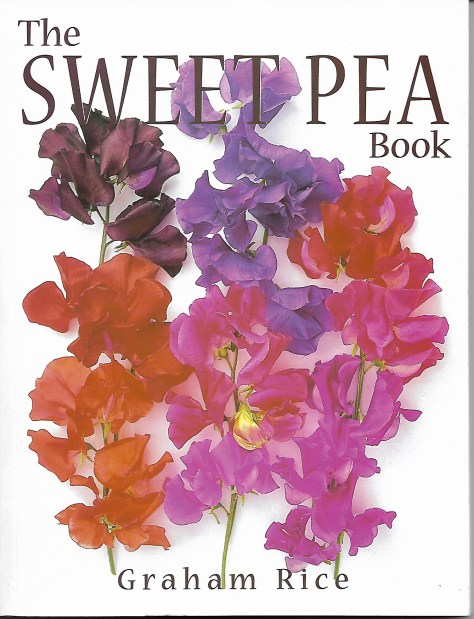
The first thing that I learned is that some varieties were selected over time for our climate of hot summers and cold winters. Cuthbertsons and the Royals are two examples. This is at variance with the British climate where they can be planted either in pots or the ground in the fall and overwintered outside.
Another thing that I learned is that timing is everything. I planted mine March 6. If you grow them and pinch the growth at 3 inches, how much more will they grow and how fast? Graham Rice says that if they get too tall and lanky before planting out they will not thrive. The package says to plant in April outside and I remember my Dad (he of the farming roots) saying that they used to plant peas as soon as the ground could be worked – sometimes even in February. This, I think, has been my downfall in years past.


Planting is straightforward and cultivation is pretty easy. Low nitrogen fertilizer every couple of weeks and good organic compost. Situating your sweet peas is pretty important. Here iour zone they require full sun in early spring but not so much when temperatures heat up. As with lots of other plants, do not plant in dry zones around walls of buildings and tree bases.
So here’s hoping that this year’s crop of Sweet Peas will be an enormous success at last.













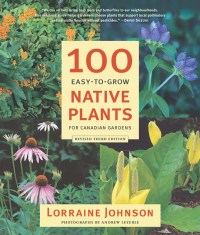 This book is, without a doubt, one of my favourite go-to gardening books! The new revised third edition of Lorraine Johnson’s book, 100 Easy-to-Grow Native Plants for Canadian Gardens, is a testament to Lorraine’s expertise. She writes in the forward that “one of the greatest satisfactions of growing native plants is that you are supporting a complex web of ecological relationships that are the basis of a healthy, resilient ecosystem.” Lorraine Johnson is the former president of the North American Native Plant Society and the author of numerous other books. She lives in Toronto.
 The photos by Andrew Layerle, along with detailed descriptions of the plants, make this book most helpful when trying to decide what native plants you would like to incorporate into your garden. I think many of us can relate to her point that “gardeners tend to be voyeuristic creatures and plant lists are our chaste form of porn”! We all crave the perfect plant and often browse through books over the winter months with dreams of starting a new garden and we wait patiently for the spring weather that allows us to once again get our hands dirty.
 The plants are divided into a number of different categories and Lorraine does a good job at listing the common name (although she warns there are sometimes many), the botanical name, the height, blooming period, exposure, moisture, habitat and range. She gives a good description, the maintenance and requirements, along with suggestions on propagation and good companions. I love that she also mentions the wildlife benefits of each plant.
 Lorraine has also included Quick-Reference Charts at the back of the book that separate the plants by region as well as specific conditions, such as acidic soil, water requirements, etc. She has lists of plants suitable to prairie habitat, drought-tolerant plants, plants for moist areas, and plants that attract butterflies and other pollinators.
 Plant garlic! Yes, this is the time of year to plant garlic for harvesting next summer. You can probably still find garlic bulbs at farmers markets. Buy locally grown garlic, not product of China. Separate the cloves from the bulb and plant at a depth of 3 times the height of the bulb in rows in the garden. Cover two-thirds deep with soil and then top off with straw or mulch. For full details, see this fact sheet on
  Plant tulips! Although it may be too late to plant daffodils, you can still pop some tulips into the ground, even up to freeze up. Squirrels do love tulips, but if you plant them deep enough (6 to 8 inches), use hen manure or bone meal, and cover up the bare spot with leaves or mulch, you should deter them. Check this link for more
  Don’t rake! Mulch those leaves into your lawn with your lawn mower. It’s easier on your back and is so good for the lawn. Use your leaf blower to mulch into your flower beds too.
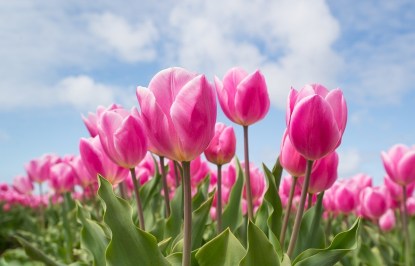 Tulips are to Turkey and Central Asia. In the 1600s, they made their way to the Netherlands. Tulipmania took hold in the 1620s and tulip prices skyrocketed. A single bulb could be worth as much as an average family farm. The market collapsed in 1637, but tulips remain widely grown in the that country. Canadians liberated much of the Netherlands during the final months of the Second World War. More than 7,200 Canadians were lost in that conflict. The Dutch have gifted Canadians with 20,000 bulbs a year since that time and they are used in Ottawa’s now famous Canadian Tulip Festival every May. This year marks the 75th anniversary of liberation and the Dutch royal family will mark the celebration by thanking Canadians this year with a gift of 100,000 tulip bulbs. If you want to join the celebration, you can purchase your own Liberation75 tulips for $15.00 through the Royal Canadian Legion. By purchasing the bulbs, you will also be entitled to win a trip to the Netherlands. To place an order visit the
 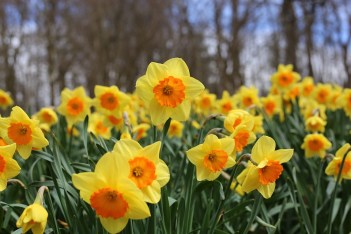 Daffodils and narcissus bloom earlier than most tulips. Spring sun is needed and they like soil that is well draining or they will rot. Oxalic acid on the bulb make them unpalatable to rodents. ‘Tete a tete’ is a mini daffodil that is very fragrant and also good for cut flowers. However, never include daffodils with other flowers in a vase as they have a sap that will cause the other flowers to wilt.
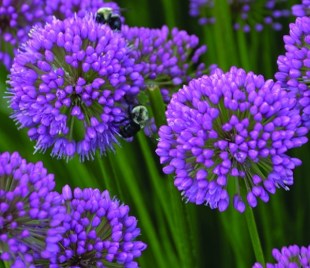 Alliums are ornamental onions. Most of the varieties bloom in June. They need free draining soil with 6 to 8 hours of sun. They make lovely dried flowers. It is best to plant alliums amongst other plants as the foliage is not desirable.


 The Peterborough & Area Master Gardeners