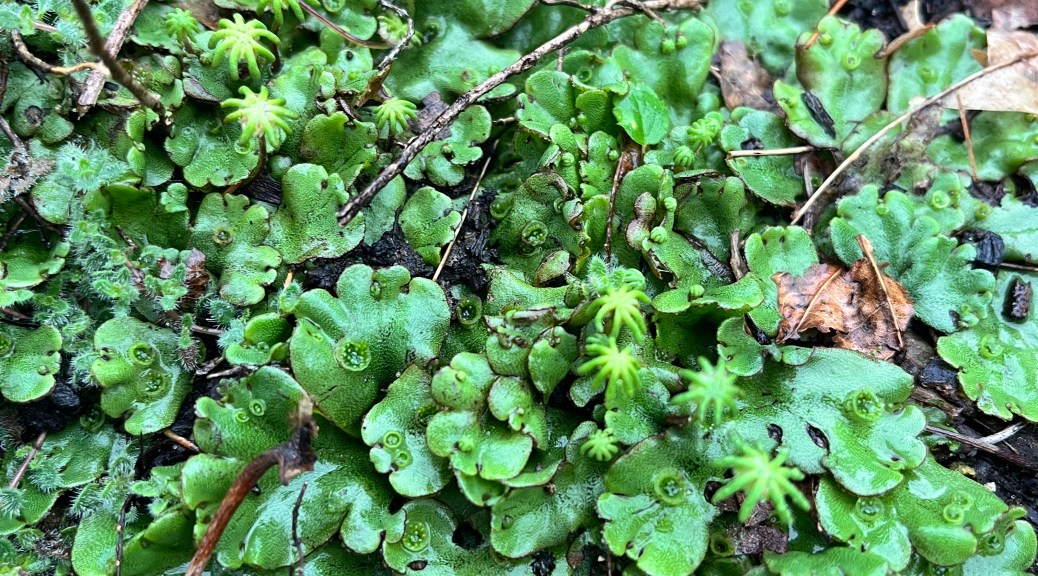
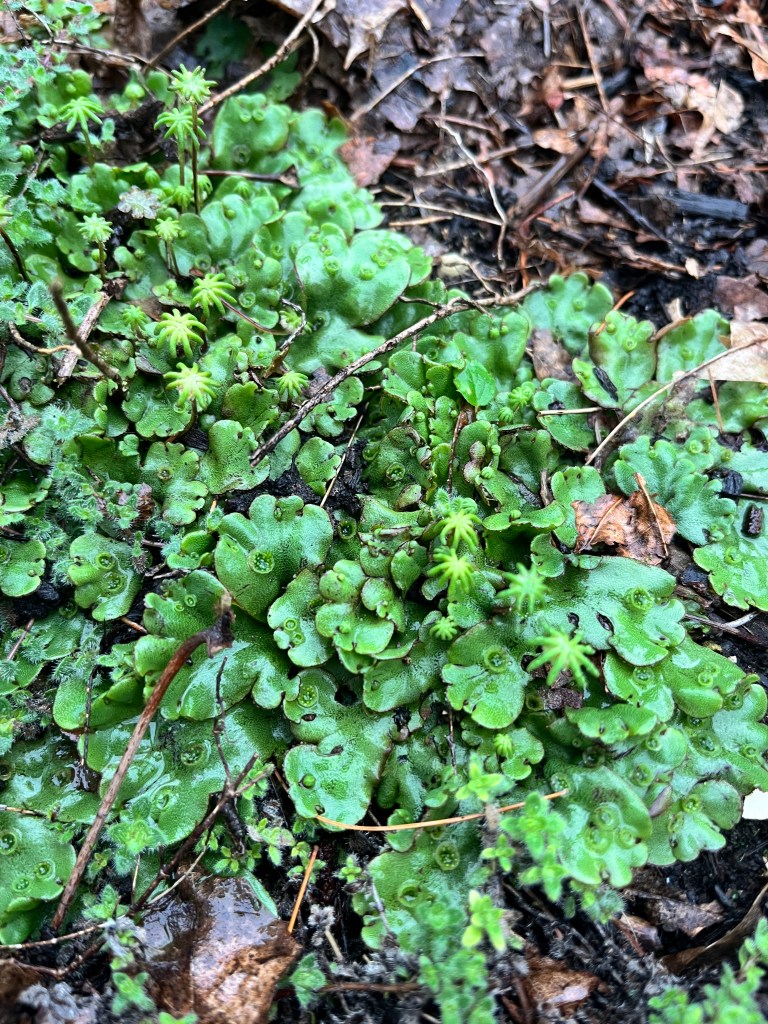
Umbrella liverwort (Marchantia polymorpha) is a fascinating plant that often catches the eye with its unique, umbrella-like structures. These small, flat, and green plants have been around for millions of years, making them one of the oldest plant species on Earth. They do not have a vascular system, and like ferns, they produce spores instead of seeds. While they do not flower, the female reproductive structures mature to look like tiny palm trees or umbrellas. For this reason, the common variety is called umbrella liverwort.
In our area, umbrella liverwort is commonly found in moist, shaded areas like garden beds, greenhouses, and along stream banks. This plant is native to many parts of the world, including Ontario, and has a long history of thriving in damp environments.
While liverwort is native, it can sometimes behave like an invasive plant, especially in gardens and greenhouses. It thrives in conditions where moisture is abundant, and air circulation is poor. If left unchecked, it can spread rapidly, covering the soil surface and competing with other plants for light and nutrients. However, its unique appearance and ancient history make it a cool plant to observe in your garden.
If you want to manage umbrella liverwort, focus on improving drainage, reducing moisture levels, and allowing more sunlight into the affected areas. But for those who appreciate its prehistoric charm, umbrella liverwort can be a delightful addition to a garden, provided it’s kept in check. An added benefit is that you don’t have to plant them — they just show up!
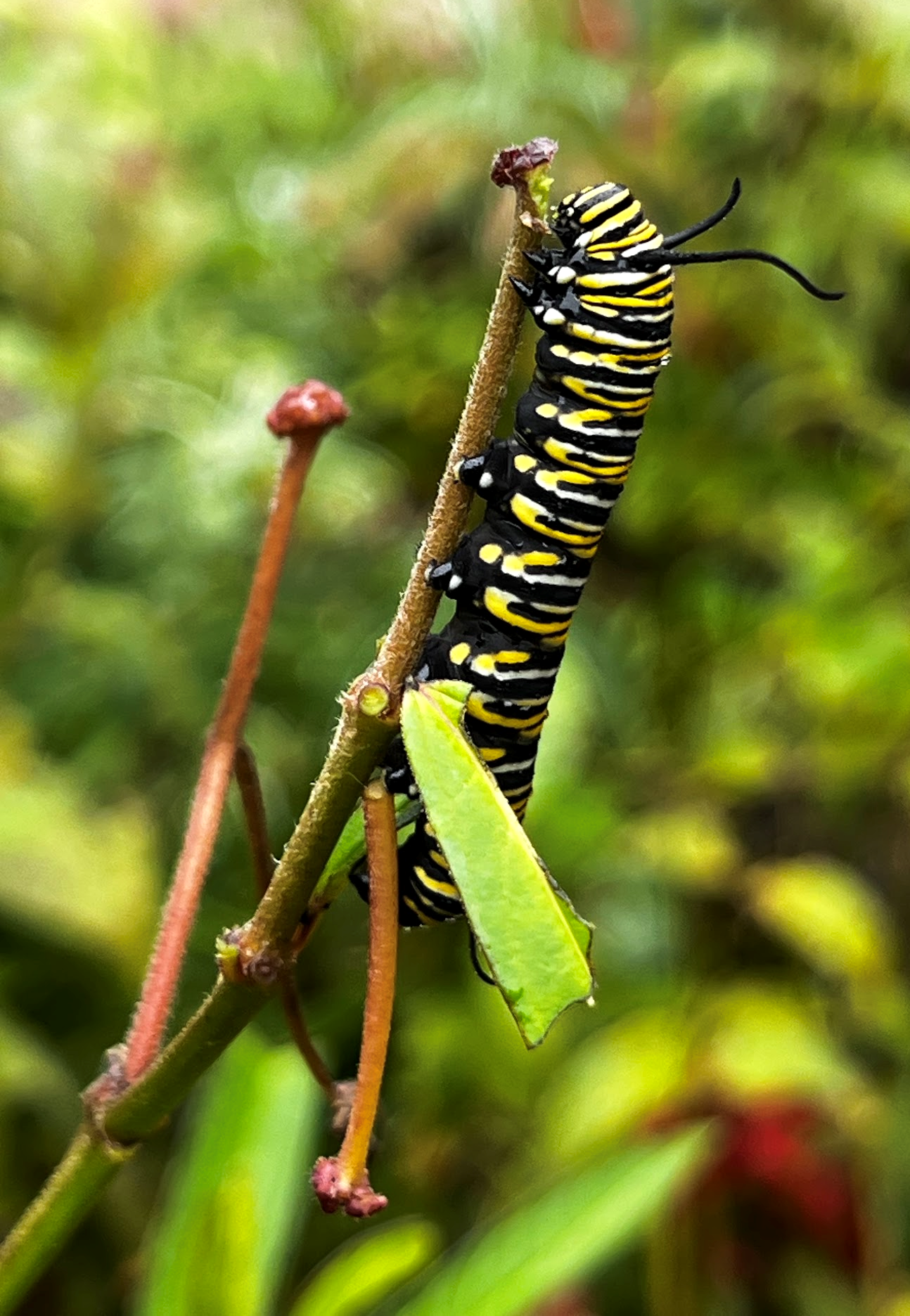
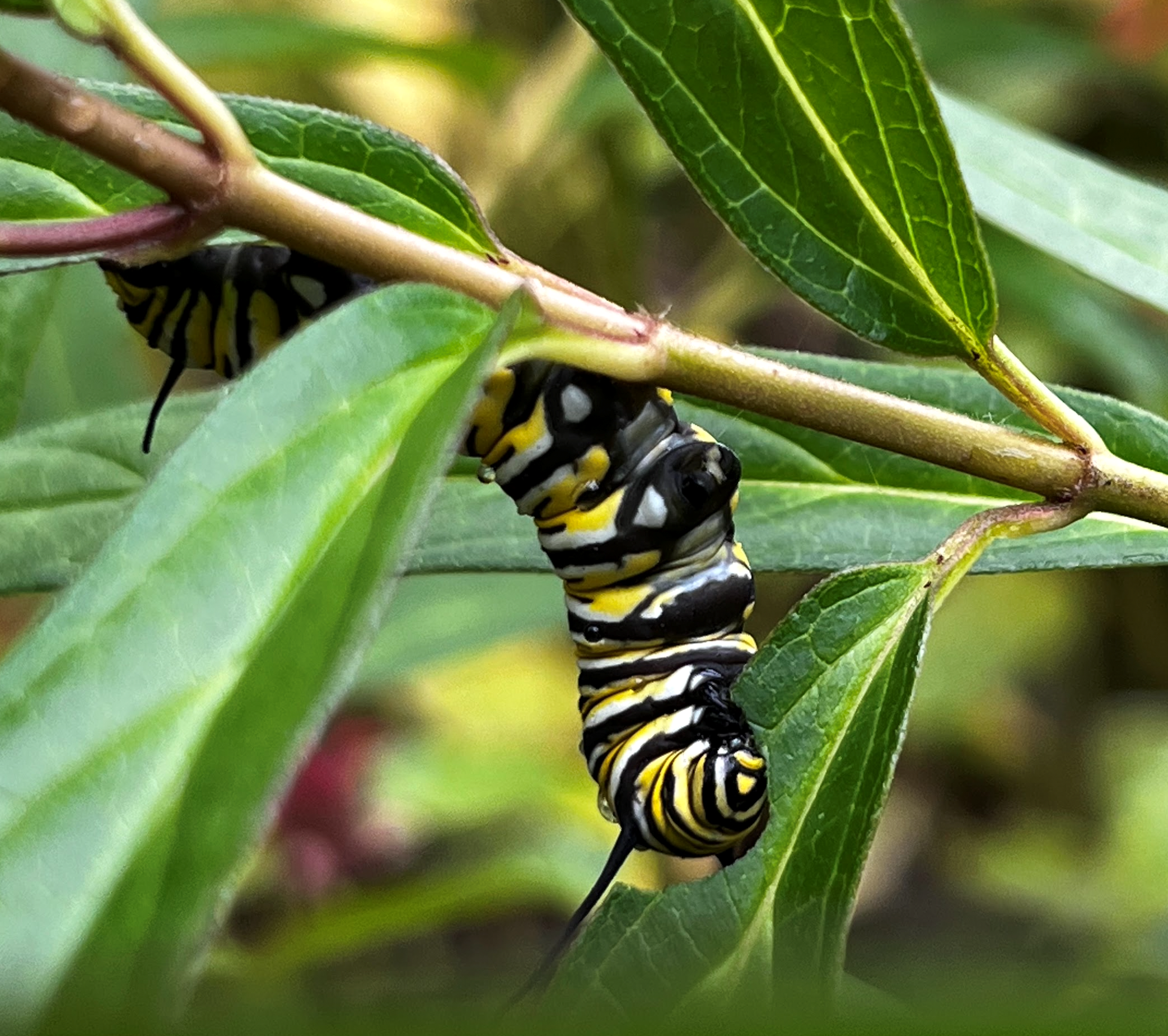
My 2023 garden gave me a front row seat for observing the monarch butterfly (Danaus plexippus) lifecycle. Two monarch caterpillars fed on my garden’s swamp milkweed (Asclepias incarnata) lower leaves for about 10-12 days. I was very concerned when one started a long journey across the 10-foot-long patio and then climbed 10 feet up the house wall to make its chrysalis just under the eaves! I was relieved to read that monarch caterpillars typically do leave their host plant to make their chrysalis elsewhere just in case there are younger caterpillar instars feeding on the same plant. It would be tragic if their chrysalis came crashing down as another caterpillar feeds on the leaf from which it is suspended!
One of the two caterpillars in my garden last year feasting on swamp milkweed on August 8. By August 13, many more swamp milkweed leaves at been eaten (right)
I expectantly watched the “eaves” chrysalis daily and was rewarded on September 5th when the green and gold flecked chrysalis became more translucent with visible orange and black inside. An adult male, identified by the two dots on its hindwings (pheromone patches), emerged later that day.
One monarch caterpillar travelled across the patio and climbed up the house wall to make its chrysalis just under the eaves on August 17 (left). On September 5, the chrysalis became translucent, and the butterfly emerged. It dried its wings for a few hours (centre). Once it opened its wings, I could identify it as a male by the two pheromone patches on its hindwings (right).
I never saw the second caterpillar leave the swamp milkweed host plant but discovered its chrysalis suspended from the leaves of savannah grass (Sorghastrum nutans) one day.
Swamp milkweed is a common species in Ontario, usually found in wetlands, wet roadsides, floodplains and wet meadows, but looks beautiful in the garden with its upright stature and slender leaves. Its flowers also bloom for a long time and are floral and vanilla scented. It grows quite tall and maintains its structure well into the winter months to provide winter garden interest.
Swamp milkweed is a better choice for the garden than common milkweed (A. syriaca) which is not recommended for small gardens due to its rhizomatous aggressive spreading nature. Although butterfly milkweed (A. tuberosa) is a great nectar plant it is also a less desirable monarch caterpillar food due to its hairier leaves and lower protein content (UNC Charlotte Institute 2022). Both swamp and common milkweed averaged the highest number of eggs laid by female adult monarch butterflies in a study that evaluated the attractiveness of nine milkweed species common to Iowa (Pocius et al. 2018).
Typical habitat for swamp milkweed in the wild, but “it is fairly drought tolerant and will thrive in drier areas once established” (Gray and Booth 2024) (left). A 2-year-old swamp milkweed plant in my dry, sandy garden (right).
Well-intentioned people hope to increase the monarch population by home-rearing monarchs. However, an analysis of over 135,000 monarch observations at 403 annual butterfly count locations across the species’ large summer range[1] compared population numbers in 1993 to those from 2018 and found that although some areas had population decreases, overall summer monarch population numbers in North America are relatively stable i.e., reproduction in summer is compensating for losses at wintering grounds in Mexico (Crossley 2022).
A naturally occurring parasite (Ophryocystis electroscirrha) adversely affects how well monarchs fly as well as their migration survival. It has increased in the last 15 years, raising concerns that parasite transmission is decreasing winter colony populations (Majewska et al., 2021). The Xerces Society has published a joint statement against the release of purchased or mass-reared monarchs by backyard and commercial breeders. If you are raising small numbers of wild-collected monarch eggs and larvae for personal enjoyment, education, or as part of citizen science project they encourage you to follow protocols for safe rearing and collect data on your reared monarchs for programs such as the Monarch Larva Monitoring Project and Monarch Health.
Although the research is not definitive, I recommend letting nature take its course and simply providing for the monarch caterpillar’s habitat needs by planting host plants, particularly swamp milkweed, in your garden. This spring I planted two more patches of swamp milkweed plants in my garden. I can’t wait to observe the monarch caterpillar drama that unfolds this summer!
[1] The NA monarch breeding range spans nearly the entire United States and southern Canada. Butterfly counts by citizen scientists are held between July 1 and August 31. Only data with at least 5 years of Monarch observations over a 10-year period were used in the Crossley (2022) analysis. An average of 25 butterfly counts are held annually in southern Ontario. Each count covers a 24-kilometer diameter circle. Last year I participated in my first count in Haliburton, Ontario.
Tips for growing swamp milkweed in your garden
If space allows, plant a group of 3 to 5 plants so pollinators can more easily find the flowers. It can grow in sand, loam or clay and prefers full sun.
Water consistently during the first year so swamp milkweed can build roots to support flowering in year 2.
Remove seed heads before seed pods open if you want to control the number of volunteer seedlings.
Swamp milkweed is not palatable to deer.
References
Crossley, M.S., T.D. Meehan, M.D. Moran, J. Glassberg, W.E. Snyder, A.K. Davis. 2022. Opposing global change drivers counterbalance trends in breeding North American monarch butterflies. Global Change Biology https://onlinelibrary.wiley.com/doi/full/10.1111/gcb.16282
Gray, R. and S. Booth. 2024. The Gardener’s Guide to Native Plants of the Southern Great Lakes Region. Firefly Books. 352 pp.
Majewska, A. A., Davis, A. K., Altizer, S., & Roode, J. C. (2021). Parasite dynamics in North American monarchs predicted by host density and seasonal migratory culling. Journal of Animal Ecology, 2022, 1–14. https://doi.org/10.1111/1365-2656.13678
If you’re thinking of creating a pollinator garden with native perennial plants, there will be a period where your space will be rather underwhelming or undeveloped.
There is a saying, “first year they sleep, second year they creep, and third year they leap.” In the first year of their growth, many native plants focus channeling their energy into root development instead of flowering. It is important to consider other ways to increase floral resources for pollinators while you wait for these plants to grow.
Consider adding a few native species that are short-lived annuals or biennials—either potted plants or directly sown seed. If started early in the spring, Black-Eyed Susan (Rudbeckia hirta), for example, will bloom in the first year. It usually produces enough seed to ensure future generations.
Spotted Horsemint (Monarda punctata) and Lanceleaf Coreopsis (Coreopsis lanceolata) are a couple of others that will also bloom the first year when started early. Near-native annual sunflowers (Helianthus annuus) are another great choice for new pollinator gardens. An important consideration for choosing annual sunflowers is to make sure that they are not pollenless types.
That said, there really are not a whole lot of native annual species that you can add. To help fill in the gap, it is possible to consider some non-native annuals. An aspect of this that is concerning is whether these plants provide adequate nectar and/or pollen to pollinators.
Many annuals have been bred for size, colour, vigour, and length of bloom period and not so much for their nectar and pollen production. When I visit a garden centre, I pay attention to see if there are any insects visiting the plants. I usually don’t see a whole lot of activity. Of course, this is anecdotal, so what does the research say?
From my cursory reading, the research is a bit uneven. A UK study in 2017 found that most ornamental flowering plants found in garden centres were unattractive to pollinators.[i]
Another US study that looked at a select group of annuals found that while native plants were superior overall, there were some non-native annuals that could be important forage for pollinators. It was found that in comparison with Zinnia, Marigold (Tagetes), Lantana, and Starcluster (Pentas), Sweet Alyssum (Lobularia maritima) was the top performer. In particular, the cultivars “Frosty Knight” and “Snow Princess” showed the greatest diversity and abundance of pollinators compared to the other Lobularia types as well as the other species.[ii]
This year I planted some Lobularia near my vegetable garden in the hopes of attracting beneficial parasitic wasps. The adult wasps will seek out the nectar from the flowers and look for caterpillars on my Brassicas for their young.
Another more recent study from June of this year also found that while the native plants in the study were visited more by pollinators than the non-native plants, there were still some desirable non-native annuals. Specifically, Begonia and Impatiens were visited more frequently by pollinators than Pansy, Petunia, New Guinea Impatiens, and Geranium.
Similar to the previously mentioned study, these researchers found that there was variability between cultivars of a species. Of the cultivars, the four most visited were Begonia ‘Cocktail Brandy’, Begonia ‘Ambassador Rose Blush’, Impatiens ‘Accent Coral’, and Impatiens ‘Super Elfin XP White.’[iii]
Now, an important question that comes out of this is whether these plants provide quality floral resources for pollinators. Pollinator visits to flowers does not necessarily mean that they are benefiting from the resource. More research is needed in this area. Until then, we can make a few reasonable annual plant choices to help in the interim while the other plants in our new pollinator gardens mature.
[i] Garbuzov, Mihail & Alton, Karin & Ratnieks, Francis. (2017). Most ornamental plants on sale in garden centres are unattractive to flower-visiting insects. PeerJ. 5. e3066. 10.7717/peerj.3066.
[ii] E Erickson, S Adam, L Russo, V Wojcik, H M Patch, C M Grozinger, More Than Meets the Eye? The Role of Annual Ornamental Flowers in Supporting Pollinators, Environmental Entomology, Volume 49, Issue 1, February 2020, Pages 178–188, https://doi.org/10.1093/ee/nvz133
[iii] David Smitley, Colin Oneil, Erica Hotchkiss, Erik Runkle, Jared Studyvin, Evaluation of the most popular annual flowers sold in the United States and Europe indicates low visitation rates by pollinators and large variation among cultivars, Journal of Economic Entomology, Volume 117, Issue 3, June 2024, Pages 1057–1070, https://doi.org/10.1093/jee/toae084
Back in the 1890s, the mouth of the Don River in Toronto was filled in to make way for industry—known as the Port Lands. This changed the landscape and the plants that used to grow there “disappeared.” In 2021 while the site was being ecologically restored as part of the Port Lands Flood Protection Project, workers discovered some unusual plants that had sprouted shortly after seven metres of soil had been excavated. They were thought to be different than the usual species seen at the site.[i] Researchers at the University of Toronto began working to identify the species of plants and seeds found.[ii] Some of the plants included Schoenoplectus (Bulrush), Typha (Cattail), Salix exigua (Coyote Willow), Equisetum (Horsetail), as well as mosses and liverworts. Research is still ongoing as they seek to verify whether these plants came from an ancient seed bank. Through carbon dating, the research team was able to determine that some of the seeds from soil samples were between 150-400 years old! So far, most of the seeds that have been identified were from the Cyperaceae (Sedge) family with the majority in the Carex (True Sedges) genus followed by Schoenoplectus (Bulrushes), Sparganium (Bur-Reed) and Typha (Cattail).[iii] This is all very exciting because it shows that while some urban environments may be drastically altered, they are not necessarily permanently altered, and we may be able to successfully restore such landscapes to their pre-industrialized states.
Seed Dispersal and Physical Dormancy
Most seeds are known to be “physiologically dormant.” This means that they have an internal inhibiting mechanism (“endogenous”) that requires exposure to certain conditions to break dormancy (e.g. light, temperature, etc.).[iv] “Physically dormant” seeds have an external inhibiting mechanism (“exogenous”)—a hard coating that inhibits germination unless it becomes permeable–allowing water to enter, and then germination is initiated.[v] Some years ago, I planted a Zebrina Hollyhock Mallow (Malva sylvestris) in my garden. It is considered a biennial or a short-lived perennial. It bloomed but didn’t come back the following year and no new plants emerged from any possible dispersed seeds. It was not until about five years later that two plants emerged—about four metres away from the original plant site. These seeds are quite hard and require some form of natural scarification to break their seed coats. Scarification can occur through fluctuations in temperature, damage by gardening tools, damage by microorganisms, fungi, or animals; or transit through animals’ digestive tracts.”[vi] Myrmecochory could possibly explain the transfer of the seed from one location to another as seeds in the Malva family are frequently targeted by ants.[vii] In myrmecochory, ants transport the seeds and then remove and eat a nutritious coating from the seeds called the elaiosome. Sometimes when the elaiosome is removed, the seed coat becomes thinner, and this enables water to enter. However, Baskin and Baskin suggest that removal of the elaiosome by ants on seeds like this may not influence the seed’s ability to imbibe moisture.[viii]
When I think about some of the plants I grew from seed last year, I recall one species that did not have good germination—Geranium maculatum (Wild Geranium). There are different causes for poor germination, but one possibility is that the seed was not fresh enough or that their moisture content was not sufficiently retained. I learned that this species is somewhat recalcitrant or hydrophilic. These types of seeds are sensitive to drying and as time progresses, the percentage of seed death increases. William Cullina, in Wildflowers: A Guide to Growing and Propagating Native Flowers of North America, recommends sowing Geranium maculatum immediately upon harvest of the seeds in the summer. However, germination may be successful with seeds stored in plastic for 4-6 months—perhaps indicating this species inclination towards being partially recalcitrant.[xi] According to Dr. Norman Deno in Seed Germination Theory and Practice, Geranium maculatum is best sown in the summer from fresh seed and then is exposed to winter temperatures before germinating in the spring. Seeds are mostly dead when kept in dry storage for more than 6 months.[xii] One of the lessons learned here is to research the germination requirements thoroughly as well as inquire about the storage conditions/age of the seed before obtaining seed of a recalcitrant species from a supplier.
Heteromorphic or Dimorphic Seeds
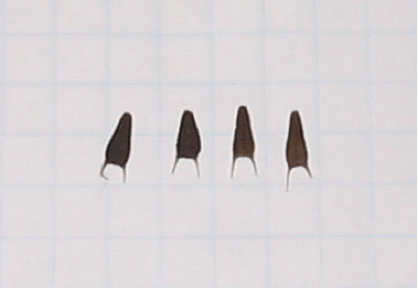
Although considered a composite species, Bidens frondosa (Devil’s Beggarticks), usually lacks ray flowers and only has disk flowers. As a result, they are less attractive to pollinators than the other Bidens species.[xiii] It also has a weedier reputation. Being an annual, each plant can produce around 1,200 seeds that are viable for 3-5 years. The seed is a two-barbed achene that can stick to clothing and pet fur. Interestingly, the achenes are known to be heteromorphic or dimorphic in nature—there are two different kinds. Those produced on the periphery are black, thicker, and are less dormant than the ones produced in the middle. Those in the middle are brown, elongated, and are more dormant than the others. This is an example of how a plant has a particular way of increasing its rate of reproductive survival—the less dormant achenes fall close to the mother plant and germinate the following year while the ones that are more dormant are carried by animals (“epizoochory’) or by wind (“anemochory’) to germinate at different times in new environments.[xiv] These seed features help explain the resiliency and ability of this species to proliferate.
[iii] Riskin, Shelby. Email communication (December 2023).
[iv] Willis, C.G., Baskin, C.C., Baskin, J.M., Auld, J.R., Venable, D.L., Cavender-Bares, J., Donohue, K., Rubio de Casas, R. and (2014), The evolution of seed dormancy: environmental cues, evolutionary hubs, and diversification of the seed plants. New Phytol, 203. p. 301. https://doi.org/10.1111/nph.12782
[v] Baskin, Carol C. and Jerry M. Baskin. Seeds: Ecology, Biogreography, and Evolution of Dormancy and Germination. 2nd Edition. 2014. p. 72.
Wow. What a pleasure to finally see this book in print. Written by two very knowledgeable Ontario gardeners — Rick Gray and Shaun Booth — this is the native plant gardening resource I wish I had more than 5 years ago when I started incorporating native plants in my garden.
Focused specifically on the Southern Great Lakes Region, it’s an all-in-one, easy to use resource for those interested in plants that not only look wonderful but fulfill a critical role in our gardens in supporting wildlife, birds, and pollinators like butterflies, moths, bees, and insects.
It reminds me of an encyclopedia, with a full page spread on each native plant (and there’s over 150!). It’s not surprising to me that’s it’s already #4 on the Globe & Mail’s bestseller list.
The book is visually designed to make it easy to see key information at a glance, using quick guide key icons and two colour-coded bars providing exposure/light and moisture requirements. We’ve been blessed with several excellent native plant books in the past few years, but I appreciated several unique elements I hadn’t seen before – numerous appendices (matching soil types, seed collection and preparation, propagation, and butterflies and their host plants), as well as each plant’s Ontario’s Species at Risk status.
You’ll understand what each plant needs to thrive, how big they will get, and how to make more plants to share with your friends!
Sample spread page
As a Peterborough Master Gardener I have long been engaged in two Facebook groups – theOntario Native Plant Gardeninggroup (started by Shaun) and the Master Gardeners of Ontario group (where I am an admin and moderator). I remember clearly in May 2023 Rick trying to gauge interest from members on their proposed native plant book, and the incredibly positive response that they received. So full disclosure – I knew I was going to love this book before it was ever published.
The authors explain why the plants are organized by botanical/Latin name, which is important because common names can vary by region. However, if you only know the common name you can always search using the alphabetical index at the back of the book.
Essentially, each entry is a ‘checklist in a page’ on what you need to grow the plant. There are lots of photos (whole plant, leaves, flowers, fruiting bodies), a detailed description, easy to see symbols (the Quick Guide), information on the USDA Hardiness Zone, lifespan, propagation, and wildlife/pollinator value.
Skill levels are also mentioned but don’t be alarmed – most are listed as beginner, but there are certainly a few native plants that are a bit more challenging to grow and propagate.
Table of Contents plus shameless plug for my wonderful local, independent bookstore where I ordered the book.
I appreciate that in the introductory chapters the authors clearly explain things such as:
What is a native plant?
Aggressive vs invasive
Origin of the term weed
Nativar vs cultivar
Value of native plants
The authors clearly have a good sense of humour – there are pages titled “How to use this book”, “A coneflower by any other name”, “Fifty shades of…shade” and my favourite “2b or not 2b” (on the rationale for using USDA Hardiness zones). I loved the section on propagation and codes as I’m actively trying to grow more native plant material in my area.
I have to say that as a seasoned gardener I was surprised to see Echinacea pallida (pale purple coneflower) is not in the book (not native to most of this region but often sold as a native apparently) and Agastache foeniculum (Anise hyssop) is one that is included specifically because it is non-native to Ontario (it’s a western prairie plant). Oops! I have both in my garden north of Peterborough.
Was anything missing? Technically no, as the authors were clear that this was not a garden design book. Perhaps after putting out Vol. 2 (the other 150+ plants I know they wanted to include), they’ll consider something on understanding planting density and creating root competition, which I am learning is different to conventional perennials, and good plant pairings (which native plants support others).
One quick comment I will add is that native plants are wonderful once they are established, so you may need to do a bit of watering that first year, but after that they need no watering or fertilizing.
This book is perfect for reading at home (my husband gave me a quick quiz contest this afternoon on the Latin names) or taking with you to your local nursery as you search for native plants to add to your garden. Having trouble finding these plants? The Halton Region Master Gardeners maintain a dynamic map listing native plant nurseries around the province. Check it out!
The bottom line – a wonderful addition to my garden library, and to anyone interested in incorporating more native plants in their Ontario gardens.
The Gardener’s Guide to Native Plants of the Southern Great Lakes Region
By Rick Gray and Shaun Booth Publisher: Firefly Books, 2024 Paperback: 352 pages ISBN-10: 0-2281-0460-2 Price: C$45.00; available through local booksellers and larger book companies
About the Authors
Rick Gray (The Native Plant Gardener) has more than 300 species of native plants in his garden in southwestern Ontario and provides native plant garden design services.
Shaun Booth runs In Our Nature, an ecological garden design business, and launched the Ontario Native Plant Gardening group on Facebook.
Want More Information?
Many wonderful books on native plant gardening and naturalization have been published in the past few years – anything byLorraine Johnsonis a great complement to this book, and I love Piet Oudolf’s work (although he doesn’t always use native plants).
Dr Linda Chalker-Scott (and the Garden Professors blogon Facebook) is a great source of good, solid scientific information on gardeners keen to avoid the misinformation often seen on social media.
Although I’ve lived in Canada for almost 50 years, I grew up in Bristol, England for some of my formative years, and always loved the traditional hedgerows that existed along rural roads and properties. Every time we return to the UK on a trip, I marvel at the diversity and intricacy of these functional garden/farm structures.
On our three quarter of an acre property in a small village north of Peterborough (Zone 4b/5a) I have a neighbour on one side who has a chain link fence and loves their golf green lawn. On the other side there is no fence at all, but I’ve been growing a few elderberries (Sambucus canadensis) and cup plants (Silphium perfoliatum) to hide a poorly maintained house – the first shrub suckers well and the second plant grows fast and tall.
So I’d love to have a traditional English-style hedgerow on both edges that would provide visual screening as well as animal and bird habitat…so I went looking to see how to adapt the traditional English hedgerow to Ontario.
Hedgerows can provide amazing bird habitat
The origins of hedgerows
It’s thought that hedgerows (or hedges) were first used by humans as ‘dead hedges’ to enclose livestock using thorny plants. Once agriculture began, clearing woodlands created fields with tree and shrub boundaries that were managed to create livestock-proof ‘living fences’.
Hedgerows have been planted since the time of the Romans and reached their peak in Britain during the Enclosure Acts of the 1700s when an estimated 200,000 miles of mostly hawthorn (Crataegus spp) hedgerows were planted.
Credit: People’s Trust for Endangered Species, UK
Hedgerows have many purposes, as you can see from this graphic from the People’s Trust for Endangered Species. They have an excellent video on how to manage a hedgerow here, but it’s not quite the same in Ontario, as we don’t have the same hedgerow species or coppicing techniques.
In their best form I think hedgerows can be a mini-ecosystem with key ingredients that animals and birds need to survive — food, shelter, nesting and denning sites. Hedgerows also function as corridors, connecting one habitat to another and offering a safe passage for wildlife. They help muffle sound, create privacy, and act as windbreaks.
Planted with a variety of berry- and seed-bearing shrubs for food
Interspersed with cedar for added cover
Thick, bushy, largely unpruned and entangled with vines
The Ontario Rural Skills Network suggests that hedgerows can be single species but are best if they comprise a diversity of plants. Planting should be very dense, with a double line spaced 40cm (16in) apart with plants in a staggered pattern at 30cm (12in), giving 5 plants per metre.
Because they’re comprised of living shrubs, hedgerows grow and require management. It’s all about creating a balance between growth and avoiding them becoming gapped and unmanageable. A hedgerow may take seven to 10 years to establish, depending on the species composition.
I’m just at the beginning of my plan for hedgerows on our property, but winter is a great time to do research. Both sites are sunny and have well drained soil, and I want to focus on using Ontario native plants as much as possible. I’m looking at a combination of seed- or nut-bearing shrubs (like speckled alder and hazel) and berry producers (serviceberry, chokecherry, red osier dogwood). Thorny shrubs (native roses, wild raspberry, hawthorns) will give added wildlife protection. The design will probably be different for each one, but that’s the fun of it.
The OFNC has excellent lists of plants you can consider for an Ontario hedgerow. I’m thinking about using
Speckled alder (Alnus incana)
Beaked hazel (Corylus cornuta)
Hawthorns (Crataegus spp.)
Common elderberry (Sambucus canadensis)
Flowering raspberry (Rubus odoratus)
Willow spp. (Salix spp.) – native if I can find them – there is an amazing group in
Choke cherry (Prunus virginiana)
Red osier dogwood (Cornus stolonifera or C. sericea)
Eastern white cedar (Thuja occidentalis)
Wild (riverbank) grape (Vitis riparia)
Next steps
I’m just at the beginning of my journey. In my next blog post on March 25th, I’ll give you an update on my research and my plans for my spring hedgerow projects. Until then, here’s some interesting sites to look at if you are thinking about something similar. And, by all means, if you have created a hedgerow in your Ontario garden, I would love to hear about it.
More than 1 in 4 birds have disappeared in North America since 1970, primarily due to habitat loss according to a recent study. As gardeners we can help to mitigate further declines by adding native plants to our gardens that meet seasonal bird habitat needs. If you would like to help, consider whether you can add one or more of the Ontario native plants noted below in your 2024 garden plans. All these are easy to grow, low maintenance, prefer full to part sun, and tolerate a wide range of soil conditions—ideal for almost any garden! Click on the plant names for Ontario specific growing information and photos.
In spring, food for early returning migrants is critical. The catkins of Pussy Willow (Salixdiscolor) and other willow species are an important early nectar and pollen source for native bees, but they also attract insects which feed returning Eastern Phoebes, Ruby-crowned Kinglets, Chickadees, and other insect eating birds.
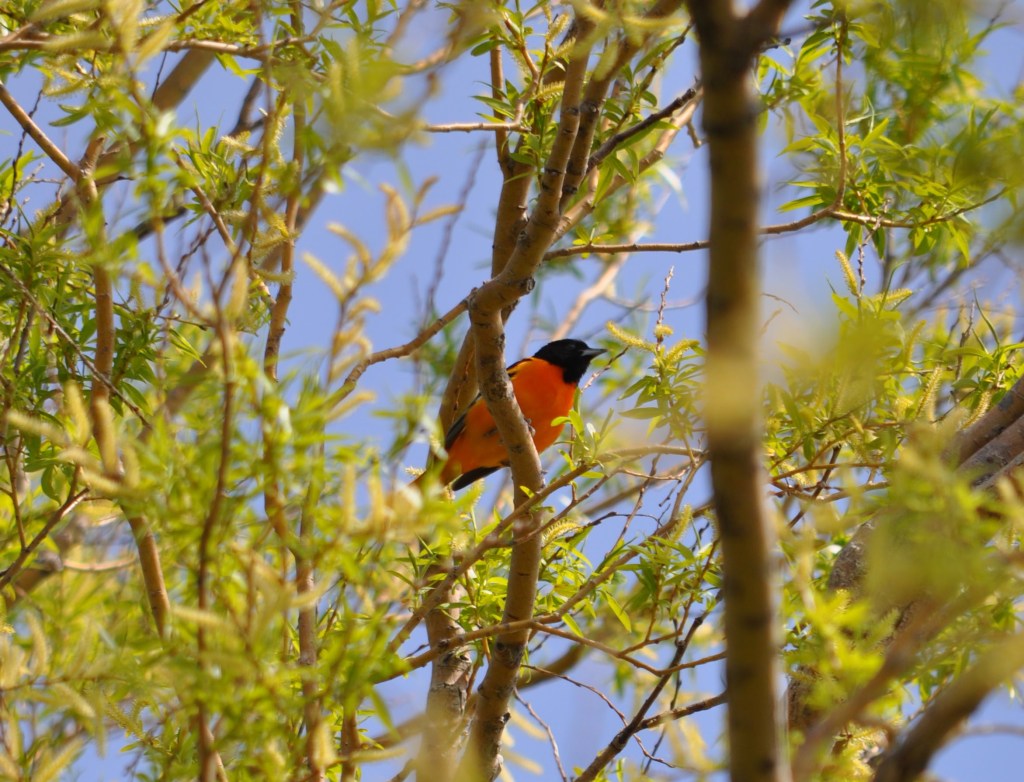
Northern Oriole among Willow catkins in early spring (photo credit: Beth McEwen)
For returning Ruby-throated Hummingbirds, growing a patch of Wild Columbine (Aquilegia canadensis) provides a critical source of early nectar. Providing a succession of nectar sources for hummingbird parents will entice them to nest and let you enjoy the flight chases of the juvenile birds in late summer. Include native plants with red, orange, or pink tubular flowers such as Scarlet Beebalm (Monarda didyma), Fly Honeysuckle (Lonicera canadensis), or Northern Bush Honeysuckle (Diervilla lonicera).
If you have room to plant only one tree in your yard, make it a Bur Oak (Quercus macrocarpa), Red Oak (Q. rubra), or Black Cherry (Prunus serotina). These trees support the greatest numbers of caterpillar species and hence provide important food high in protein for Chickadees and other birds raising nestlings in our short, temperate summers. To rear one clutch, Chickadees require up to 9000 caterpillars. Trees also provide structure and cover for nests.
Small, garden-size shrubs such as Serviceberries (Amelanchier spp.), Common Elderberry (Sambucus canadensis) and Chokecherry (Prunus virginiana) produce early season berries that provide food for Cedar Waxwings, Rose-breasted Grosbeaks, Catbirds, and Robins. These shrubs also provide cover for nesting birds.
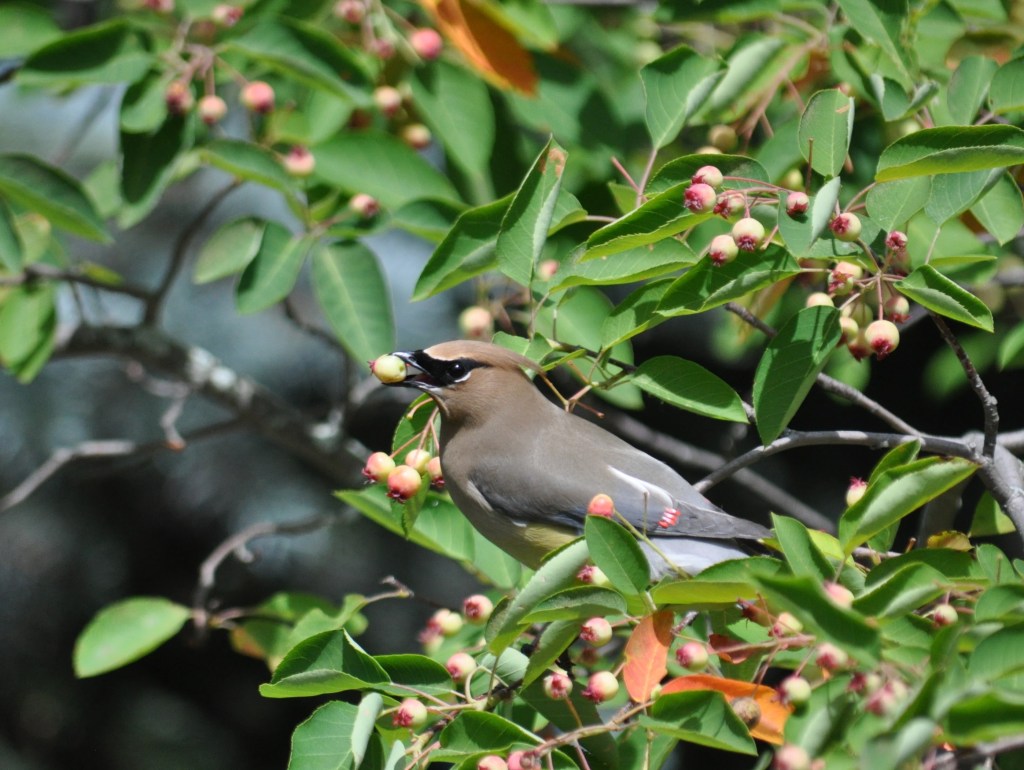
Cedar Waxwing eating a Smooth Serviceberry (Amelanchier laevis) berry in late June/early July in the author’s former Peterborough Garden (photo credit: Silvia Strobl)
For fall and winter bird habitat, grow a variety of plants that provide food, including:
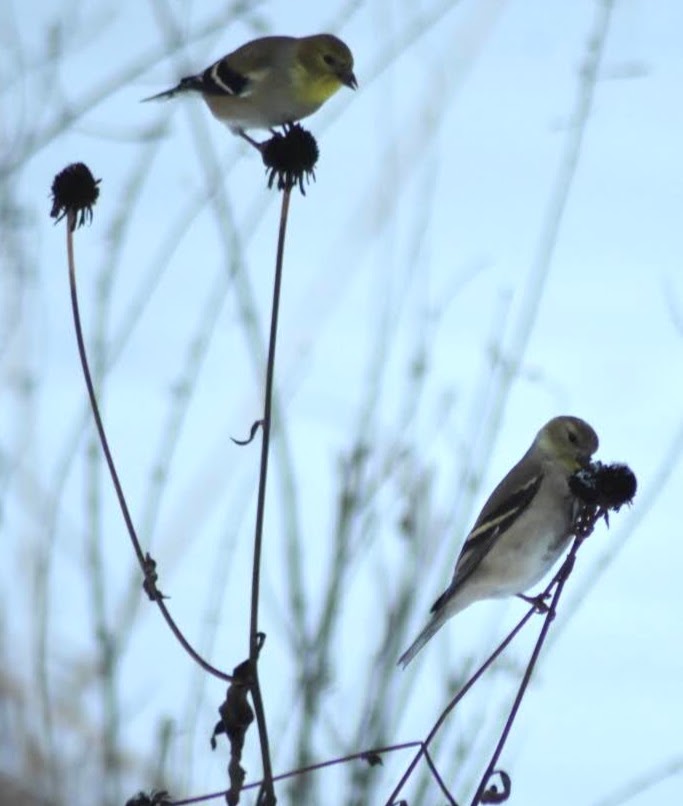
Native Sunflowers, Purple Coneflower (Echinacea purpurea), Black-eyed Susan (Rudebekia hirta), and Asters(Symphyotrichum spp.) and stop deadheading at the end of August to promote production of seeds. Leave these plants standing overwinter to provide food for Goldfinches, Northern Cardinals, and Dark-eyed Juncos.
Shrubs such as Grey Dogwood (Cornus racemosa), American Plum (Prunus americana), Chokeberry (Aronia melanocarpa) and the vine, Virginia Creeper (Parthenocissus quinquefolia) produce late-season berries that are rich in fats. Many insect-eating birds switch to eating berries in fall to store fat under their chests and wings to support either long journeys south or survival in our chilly winters. Berries of native shrubs have higher percentages of fat (6.5% to 48.7%) than most non-native shrubs (less than 1%) according to this study.
Conifer trees and shrubs such as Eastern White Cedar (Thuja occidentalis) provide sheltering cover for year-round resident birds such as Chickadees, Nuthatches and Mourning Doves.
Decaying stumps and logs attract numerous beetles and ants. If you must remove a tree that has died or outgrown your garden, consider leaving the standing dead tree or stump to decay and provide insect food for Pileated and other Woodpeckers.
Goldfinches enjoying seeds of Purple Coneflower against a backdrop of winter snow in the author’s current garden (photo credit: Silvia Strobl)
You can have a spectacular garden by adding native plants. And, when you see birds using your garden, you will not only feel good about your contribution to bird conservation, but you will enjoy your garden even more!
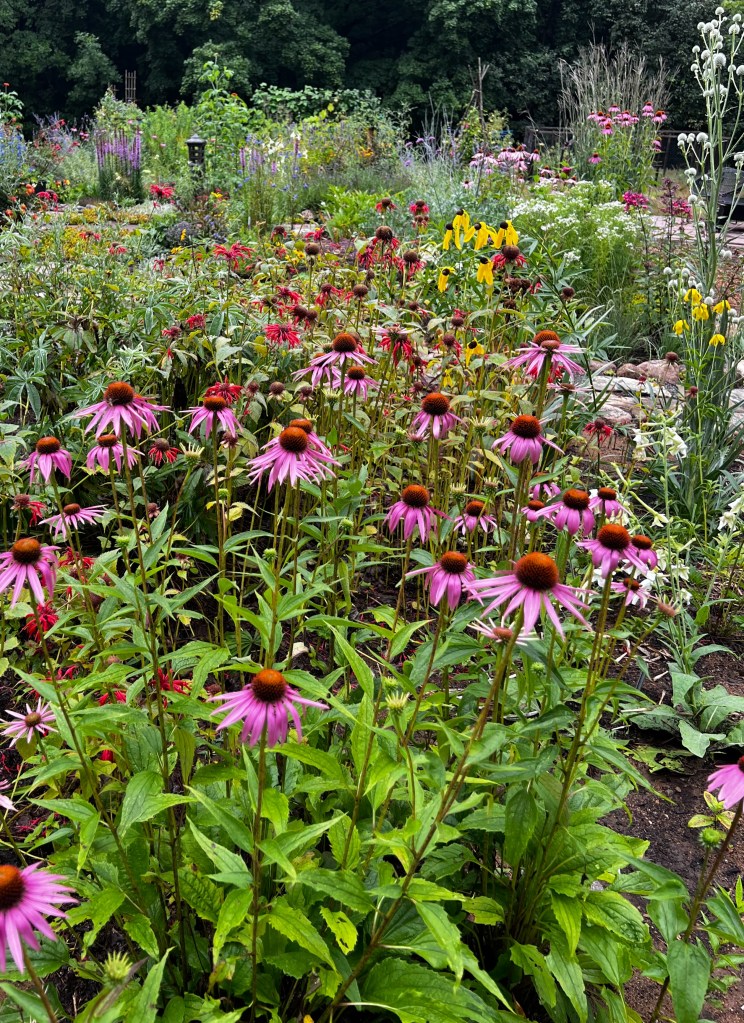
The author’s (mostly native plant) garden in early August (photo credit: Silvia Strobl)
Native Plant Sources
A key issue for those trying to grow native plants is finding them. To help you, the Halton Master Gardeners maintains a map of Ontario native plant nurseries that also provides websites and contact information. Always phone the nursery first to confirm they will be open.
As this year ends, I’m offering a few New Year’s resolutions for gardeners for 2024. If you want more of a challenge, the Chicago Botanic Garden offers 50.
Add Native Plants To Your Garden
We’re all seeing the effects of climate change on our gardens.
Native plants adapt more readily to stressful and changing weather patterns, such as prolonged droughts or winter cold snaps, than hybrids and non-natives often seen in our nurseries.
Native plants help sustain beneficial insects and bird populations because they attract native pollinators and birds that might not be drawn to non-natives.
Create less work for you, as native plants tend to be lower maintenance than non-native ones.
The Native Conservancy of Canada offers some suggestions to get you started, or consult with your local Master Gardener group or Horticultural Society.
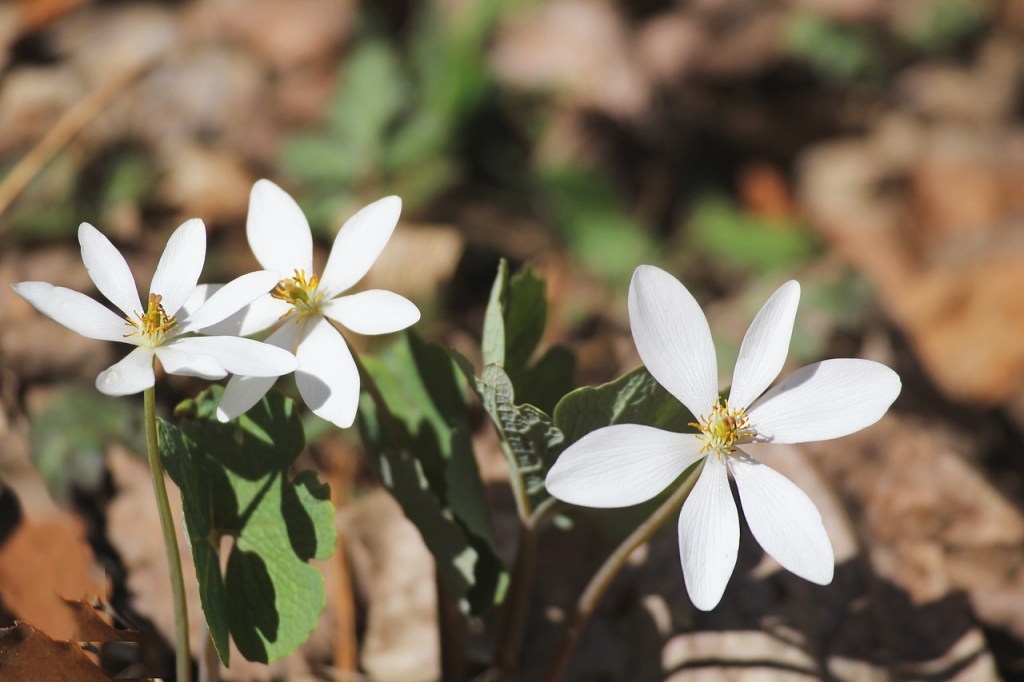
Bloodroot, Sanguinaria canadensis
Start A Compost Bin
Composting helps keep waste out of landfill by collecting and processing organics into material that can be used to create nutrient-rich compost used to feed and nourish soil.
Canadian Living offers a simple outline, as shared by Ed Begley Jr.
Or more here from the Thames Region Ecological Association, including troubleshooting issues.
Compost bin
Grow More Of Your Own Food
The pandemic has highlighted how our agricultural systems are vulnerable to global shocks. Issues with supply chains, migrant workers, transport, trade and border closures have resulted in some foods being in short supply or prices going up (while quality goes down).
Insects do all the hard work, and all pollinators benefit.
Gardening provides benefits for your wallet, your nutrition, and reduces your environmental footprint. By growing your own food (either from seeds or small plants), your food is automatically more sustainable simply because you are doing it onsite or in a community garden. If you control the ‘inputs’ and do it well, you can save a lot of money.
Ultimately there is nothing more rewarding than planting and maintaining your own vegetable garden and harvesting (and sharing) your results. And we all know how much better homegrown produce tastes versus conventional produce at the grocery store. If you have too much produce, then you can just share the love with others!
Plastic is a major component in the garden, from plastic plant pots and seed trays to watering cans, and compost bins. Most plastic gardening equipment will end up in landfills, where plastic pots alone can take up to 500 years to decompose.
There are a few easy swaps you can make in going plastic-free: Many of us want to use less plastic in the garden, from plant labels to watering cans, tools, plant pots and the sheeting used to suppress weeds. Buying (and therefore using) less plastic will not only reduce your plastic footprint but also sends a message to manufacturers that gardeners want alternatives to plastic (especially single-use plastic).
Try to find biodegradable pots that made from natural materials such as coir, bamboo, wood chips, or seaweed (or commit to using your plastic pots year after year).
If you use plastic string, make the swap for a natural jute or hemp, and protect your fruits and vegetables with metal mesh instead of plastic netting – it lasts for years.
Find alternatives to plastic pots, or commit to using (and reusing them) for many years
Happy gardening dreams until we can get out into our gardens again….
A little forest … seems like a bit of an oxymoron. I always thought of a forest as a loose grouping of trees and other plants that covers a large area? I was introduced to a little, or Miyawaki, forest this past spring at the Lilac Festival in Warkworth, Ontario. The Peterborough & Area Master Gardeners partnered with the Northumberland Master Gardeners to offer a Native Plant educational event on the same May weekend as the Festival. We had a successful educational event, the Lilac Festival was great fun AND I saw my first little forest!
The Miyawaki forest method was created by Japanese botanist Akira Miyawaki. He developed the idea of restoring damaged ecosystems by layering various species of native trees, shrubs and ground cover. A site is chosen and prepared by layering cardboard and mulch. Various species of young native plants are then planted close together in a relatively small area, as compared to traditional planting methods, for the number of plants chosen. This method has been used in urban areas to demonstrate native plant forest environments.
The Miyawaki method of planting a forest is relatively new to Canada but there are more of this type of forest creation popping up across the country. All mixed native plant forests have many benefits including improving air quality, providing wildlife habitat, sequestering carbon and more. However, even though the Miyawaki forest creation method is a fairly new concept, it is bringing the forest closer to people by getting the benefits, and importance, of forests more widely noticed just because it is a relatively new concept. I know that I enjoyed looking at the plants in the Warkworth little forest. It gave me ideas about what I could do on my own property. Let’s face it, a walk through a forest, even a little one, is always a relaxing way to spend an afternoon!
Book Review: Tiny + Wild: Build a Small-Scale Meadow Anywhere by Graham Laird Gardner (Cool Springs Press, 2023).
More and more, gardeners are looking to transform their spaces with an ecological focus in mind. The goal may be to provide food and habitat for pollinators and other wildlife, or to reduce or eliminate traditional high-maintenance and less environmentally friendly practices (e.g., mowing, watering, fertilizing, tilling, weeding, pesticide use). There is a treasure-trove of how-to guidance on the web but sometimes it is nice to pick up a book that also contains photos of ecological gardens that are practical as well as beautiful. I recently picked-up such a book called Tiny + Wild: Build a Small-Scale Meadow Anywhere by Graham Laird Gardner (no relation, lol). A meadow-styled garden on a small scale can be both aesthetically pleasing as well as have high ecological impact. Gardner provides step-by-step guidance on how to evaluate your property, how to select the best location, learn basic design principles, determine how best to prepare your site, as well as how to choose, install, and maintain the plants for your project.
Some people have eliminated their lawns entirely and have converted them to gardens. However, it may be daunting to think about a whole-scale lawn conversion project. What I like about this book is that it encourages beginners that starting small is ok. Gardner advises selecting a small area to experiment with first and then look at expansion later (p. 51). Some examples of starting small include creating a “micro meadow” on a balcony, stoop, patio, or rooftop using containers; or creatively incorporating flowering plants in raised beds or a vegetable garden that are both edible to humans and are attractive to pollinators. Other possible interesting small-scale projects include developing a meadow in a rain garden, a drainage swale, a boulevard, or even a gravel garden.
The book is full of great tips. For example, when considering adopting a meadow-styled garden, it is important for the design to emphasize grasses and sedges over flowering plants. Incorporating too many of the latter can make it disjointed and unnatural. The former serve as the foundation that brings everything together. Aim for 1/4 tall, structural species, 1/2 medium-height species, and 1/4 ground cover species (p. 69).
Another suggestion that did not occur to me is to use annuals in the first couple of years after installing the native plants (p. 150). The reason for this is because it usually takes three years for native plants to become established and annuals can be used for a short time to fill in the initial gap. The only disadvantage I can see with using annuals is that most are not native species and they do have a tendency to self-seed. The latter can be managed with some dead-heading maintenance, however.
This book in some areas is only a starting point and the reader still needs to do more research. In the last chapter, there are some suggested plants in lists grouped by height, bloom colour, bloom time, lighting, and moisture; however, some of these are not native to our area or may be difficult to acquire. In some cases, you can select a plant from the same genus that is listed in the book. For example, the listed Erigeron compositus (Cutleaf Fleabane) is not native to Ontario but Erigeron pulchellus (Robin’s-Plantain Fleabane) is. They both are comparable in size (height).
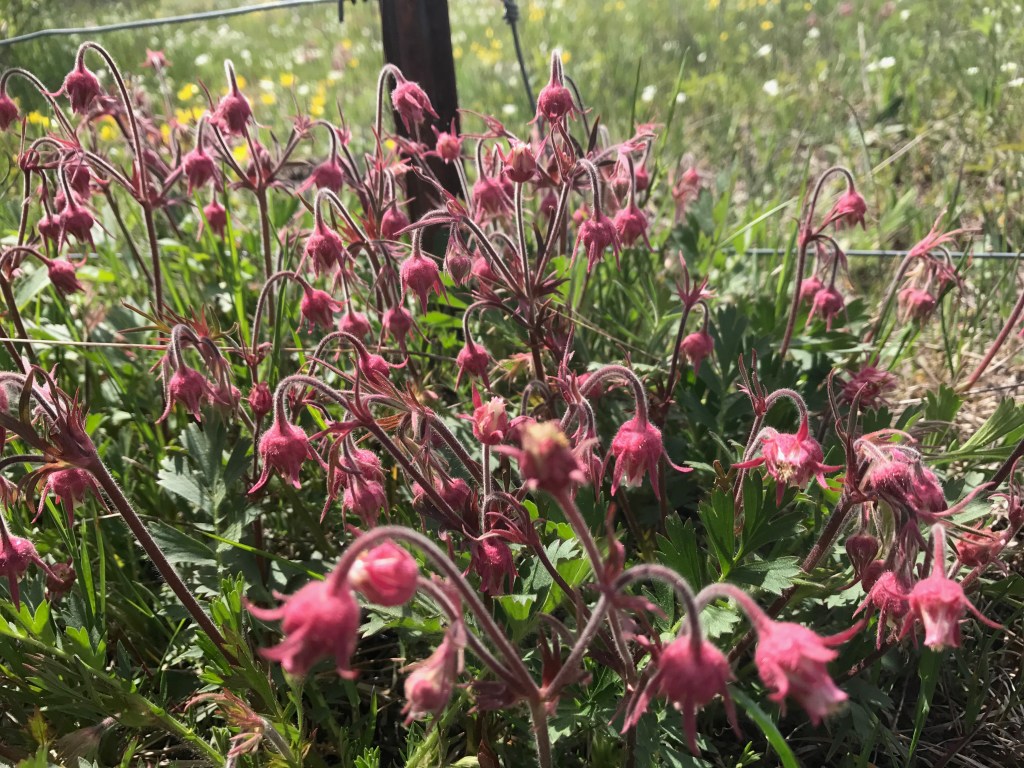
Geum triflorum: a great native selection for a meadow
There are just a few parts of the book where I have suggestions:
1) Although there is a warning to the reader to verify that the plants listed in the book are not invasive in their area (p. 139), I think that there are a couple known to be widely problematic that should have been left out: Ajuga reptans (Bugleweed) and Scilla siberica (Siberian Squill).
2) In the section on shade meadows (p. 50), I would point out that gardeners should be careful when planting in the vicinity of trees. Some species are more sensitive than others. Planting under trees should be a gradual process that is staggered over the course of a few seasons. In addition, small plugs are more appropriate than larger potted plants. These practices can minimize disturbances to tree roots. Gardeners should think of the tree’s health first.
3) The section on removing the existing vegetation (e.g., sod) suggests that you can forgo using layers of organic matter and cardboard and simply top dress with topsoil. After applying the topsoil, you can plant and at the same time; the vegetation below is smothered and decomposes (p. 88). It is not clear how thick a layer of topsoil is needed as I suspect grass and other weeds will poke through. While Gardner is generally opposed to using wood mulch in a meadow garden (p. 89), I think that a very thick layer can be used initially to eliminate the grass and it will break down over time quickly enough and does not need to be replenished—allowing for the plantings to expand.