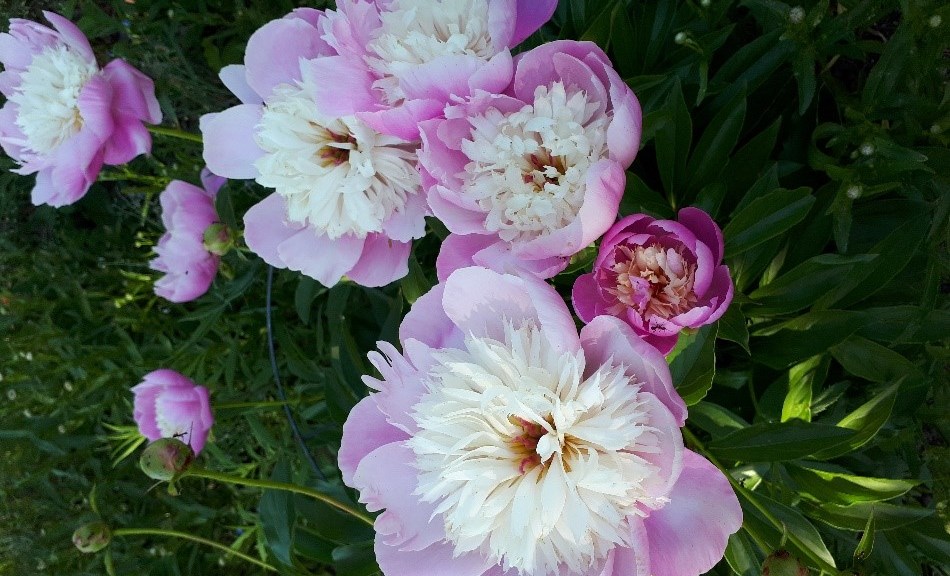
By Cheryl Harrison, Master Gardener
Ok, I know that peonies may not be the trending plant but I love them! Like many grandmothers, my maternal grandmother grew peonies around her farmhouse… Their fragrance filled the air and they sprawled magnificently after a rain. I found them captivating!
Peonies were first described as medicinal herbs in China around 200 B.C. Traditional Chinese medicine still uses peony extracts to treat various ailments. Peonies were introduced to Europe, and England, in the late 1700’s. English, and French, nursery sales began in the early 1800’s as did hybridization. The public was delighted!
There are many reasons to use peonies in your garden. They are beautiful in bloom and many are wonderfully fragrant. Peonies are excellent when used as a focal point, an accent plant, to hide spent tulip blooms, to shade clematis roots or even as a hedge whose flowers can be used for cutting.
Peony flowers come in various colours including red, rose, lavender, yellow and lots of lovely shades of pink and white. The flowers can be many petaled or have as few as five petals. Peonies are not invasive and are long-lived. Once established, peonies are drought-resistant, easy-care perennials. They are also deer and rabbit resistant probably because the flowers and leaves have a bitter taste.
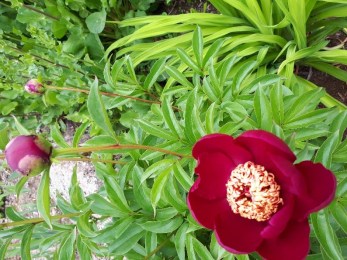
Herbaceous peonies are the most common of the three common types. Herbaceous peonies grow in zones 2-8. They die back to the ground in the fall and are dormant all winter. They bloom in May to June depending on the cultivar. Woody peonies, often called tree peonies, are small shrubs that lose their leaves in the fall but keep their strong, woody stems all winter. Woody peonies like it a bit warmer growing in zones 4-8. They do not like to be moved once established. Finally, itoh, or intersectional, peonies are fairly new. They are a cross between the woody peony and the herbaceous peony. They too prefer zones 4-8 and die back to the ground in the fall followed by winter dormancy. Itoh peonies have strong stems, often a longer flowering period and large blooms.


In the fall, plant peonies in well drained, rich soil in full sun or full sun/part shade in areas with very hot afternoon sun. Do not plant the peony crown any deeper than a couple of inches. Lightly fertilize your plants annually with composted manure but do not allow the manure to come in direct contact with the plant’s crown. Mulch to help retain moisture. Water if soil is dry in the spring for good bloom production and as needed usually just the first summer after planting. Maintain space around your peonies to encourage good air circulation otherwise, peonies can be prone to fungal diseases. In late fall, remove all peony debris to help prevent disease and pests.
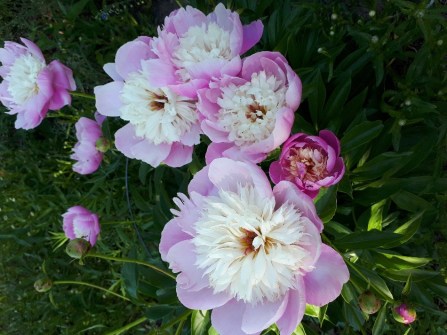
My peony is not blooming…..why?
Reasons include planted too deep, not enough sun, weather extremes (eg. hard spring freeze may damage flower buds), disease or pests, newly planted (can take up to three years for a young plant to bloom), too old (takes several decades, divide the plant to rejuvenate), too much fertilizer will encourage foliage growth not blooms but not enough can result in undernourished roots that are unable to support blooming. Just a caution, do not remove peony leaves in July or August, their removal can weaken the roots so that they are unable to support blooms.
I love peonies! Their blooms are glorious and their foliage stays lovely and green after the flowers are gone. They are easy care perennials that can add colour, texture, drama and a sumptuous fragrance to your garden. If you grow peonies now, you know already, if not, try them… You will be captivated too!
More Information:
Peonies by Allan Rogers, Timber Press Inc., ISBN 0-88192-662-0






 *For best information on the COVID-19 situation contact your local health unit or the Government of Ontario
















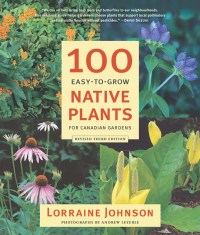 This book is, without a doubt, one of my favourite go-to gardening books! The new revised third edition of Lorraine Johnson’s book, 100 Easy-to-Grow Native Plants for Canadian Gardens, is a testament to Lorraine’s expertise. She writes in the forward that “one of the greatest satisfactions of growing native plants is that you are supporting a complex web of ecological relationships that are the basis of a healthy, resilient ecosystem.” Lorraine Johnson is the former president of the North American Native Plant Society and the author of numerous other books. She lives in Toronto.
 The photos by Andrew Layerle, along with detailed descriptions of the plants, make this book most helpful when trying to decide what native plants you would like to incorporate into your garden. I think many of us can relate to her point that “gardeners tend to be voyeuristic creatures and plant lists are our chaste form of porn”! We all crave the perfect plant and often browse through books over the winter months with dreams of starting a new garden and we wait patiently for the spring weather that allows us to once again get our hands dirty.
 The plants are divided into a number of different categories and Lorraine does a good job at listing the common name (although she warns there are sometimes many), the botanical name, the height, blooming period, exposure, moisture, habitat and range. She gives a good description, the maintenance and requirements, along with suggestions on propagation and good companions. I love that she also mentions the wildlife benefits of each plant.
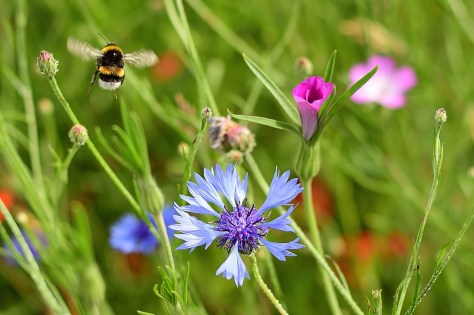
 Lorraine has also included Quick-Reference Charts at the back of the book that separate the plants by region as well as specific conditions, such as acidic soil, water requirements, etc. She has lists of plants suitable to prairie habitat, drought-tolerant plants, plants for moist areas, and plants that attract butterflies and other pollinators.
