Category Archives: Garden Design

Low Maintenance Gardening

By Marilyn Homewood, Master Gardener

Sound too good to be true??  Years of trial and error on a property with a (shallow) dug well has taught me the value of adequate bed preparation for long term success of the landscape garden that consists primarily of perennials, shrubs and bulbs (with the odd annual and biennial tossed in).  I have large landscape beds and could not keep up without some kind of strategy. 

It may seem somewhat discordant to be discussing bed preparation in July but a little planning and preparation can go a long way towards achieving a garden that requires less maintenance, is easier to work in, requires little to no supplemental water or feeding all while looking attractive. The solution lies under our feet. 

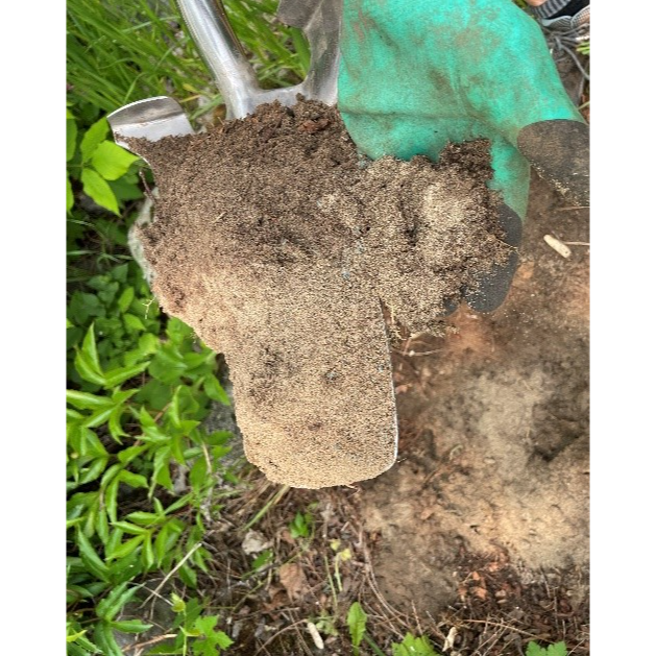
My beds have all been dug to a depth of 18 inches.  This one time initial dig allows for loosening of compacted earth, removal of rocks (or boulders) and generous amendment of the soil with organic matter such as rotted manure or leaf or mushroom compost. This preparation will allow plant roots to reach deeper into the earth (especially those with large fibrous roots or tap roots) where residual moisture is still available during drought. Plants will become more resilient and able to survive on the rainfall alone.  In my garden, I have not watered the landscape beds since they were begun with the exception for first year plants that are getting established.  In dry spells, the blooms may be somewhat smaller but are still found in abundance.   

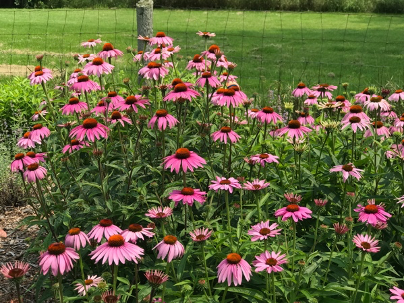
Coneflowers blooming well despite drought

The loosening of the soil also creates a better-draining soil makes it less likely that plants become water-logged or oxygen-deprived in those times when water is abundant.  This also minimizes loss of plants/bulbs to rot.   

The use of organic matter amendments helps the soil to retain the water that is provided by the rainfall by increasing the porosity of the soil.  And finally, an application of a thick layer of mulch (I use shredded bark) on the surface of the soil helps prevent evaporation of moisture from the ground and well as inhibiting the greedy weeds that will compete for moisture.

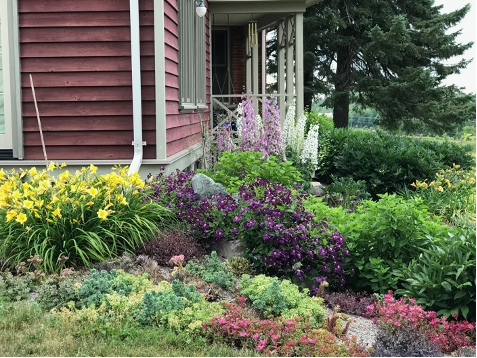
Second year delphiniums are 6-7 feet despite no water

Organic matter (OM) amendments provide a number of other benefits which ultimately gives healthy plants while saving us labour.  It enhances soil structure which increases the porosity of the soil leading to improved water infiltration, better drainage/aeration and help soils to resist compaction.  This makes soil more friable and easier for the gardener to work in as well as easing root penetration in the soil profile.  

OM helps to store and supply macronutrients (ex. nitrogen) and makes micronutrients (calcium, magnesium and potassium) available to the plant by increasing the soils’ ability to hold onto these elements (prevents leeching).  Also binds metal micronutrients (iron, aluminum, zinc, copper, manganese) and increases their availability to the plant.  All this means that your need for chemical fertilizers will be reduced or not required. 

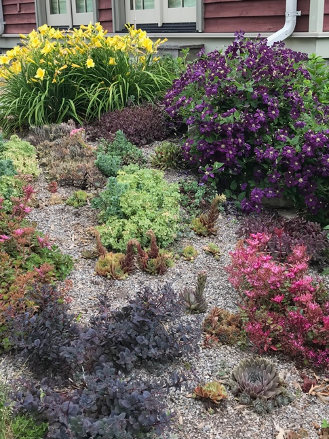
Despite my best efforts, I had to make a succulent only garden in a difficult spot

OM also enhances soil microbial diversity that assists in the suppression of disease so plants are healthier. 

Deep beds mean deep roots; improved soil structure means better drainage and water holding capacity; increased biological activity mean more nutrients released for plant use and microbial diversity means less disease.  The result is healthy, vigorous plants that need less watering, less additional feeding/supplementation and less treatment for disease. 

Resources: 

Cornell University Cooperative Extension, Agronomy Factsheet 41, “Soil Organic Matter”, http://franklin.cce.cornell.edu/resources/soil-organic-matter-fact-sheet 

Leslie Cooperband (2002), “Building Soil Organic Matter with Organic Amendments” University of Wisconsin-Madison, 

Lois Berg Stack (2016), “Soil and Plant Nutrition: A Gardener’s Perspective” University of Maine Cooperative Extension: Garden & Yard, https://extension.umaine.edu/gardening/manual/soils/soil-and-plant-nutrition/ 

Gardening in July

by Cheryl Harrison, Master Gardener

July is the month that I tend to really enjoy the garden….most of the work is done! The planting of seeds, and plants into pots and garden beds, dividing and thinning and garden creating is behind me for now. However, there are still a few garden tasks.

I try to keep up with weeding because weeds can quickly overrun your garden as they begin to set seed. Weeds take nutrients from the soil which your plants need and can smother out young plants. And I am one of those gardeners who enjoys weeding. I feel a great sense of accomplishment when I finish weeding a garden bed and when I pull out a weed and get the root….well that is simply thrilling.

Early July is a good time to trim back your annuals in order to encourage bushier growth and to trim off the spent blooms of your perennials to prevent seed production and allow the plant to put its energy into its roots. You may want to start fertilizing your potted plants because any fertilizer that was contained in the potting soil has probably been used up by now. There are lots of choices when it comes to fertilizers so talk to the staff of your favorite local nursery. They will be able to advise you and will likely carry the best products.

July is also the month when that garlic that you planted last fall is ready to harvest. We grow hard neck garlic that a kind neighbor started us on a few years ago. I removed the curled scapes last week and froze them for future use. I will keep an eye on the leaves on the garlic because when a few leaves have started to turn brown then the garlic is ready to harvest.

The rest of your vegetable garden may be starting to produce now as well. We have harvested some tomatoes already which is a bit earlier than usual for us. It is a good idea to check your vegetable garden daily so that you harvest and enjoy the results at their peak and to respond quickly to any issues that may arise.

I evaluate the appearance of my ornamental gardens in July. It is interesting to see if the garden looks the way that I had planned. I do not mean, “is it perfect” but how close is it this year to the feeling that I would like to achieve when someone walks through the gardens for the first time. I look at how the colours and textures work together. I ask myself if there are any bare spots or areas that I will need to renovate soon (eg. crowded and/or overgrown plants).

I am starting to plan my fall and next spring projects now. This year, two smaller gardens were joined and planted with mainly annuals for quick impact. I know that I plan to fill this garden with perennials and native woodland plants. This means keeping this garden in mind when I am shopping at the local nurseries.

Spring, and early summer, gardening can be a very busy time. July is the month to really enjoy your gardens and dream about what you might like to do next!

How to Make Your Vegetable Garden Beautiful

By Cheryl Harrison, Master Gardener

I was recently browsing through a hard copy April, 2009 issue of the “Fine Gardening” magazine.  I came across an article, “Who Says Your Kitchen Garden Can’t Be Beautiful”… to see the full article check the link here.   The author, Jennifer Bartley,  planted her raised vegetable garden for the edibles that it produced but in such a way that the garden was also beautiful! 

This appeals to me because vegetable gardens are definitely not my passion.  However, I do love to eat my own fresh veggies and so I have a vegetable garden.

I have raised vegetable beds where I have intermittently practiced square foot gardening (see square foot gardening for more information).  I have also planted marigolds and nasturtiums amongst my vegetables which are pretty but also serve a purpose….the marigolds for insect control and the nasturtiums because they are edible.  For more information on flowers for your vegetable garden check the link here. I have been inching towards trying to make my vegetable garden more visually appealing without realizing it.

Ms. Bartley talks about using “four simple design tips” including:

  • Arrange bunches of bold colour.
  • Plant snug beds.
  • Smooth out the edges.
  • Define your space.

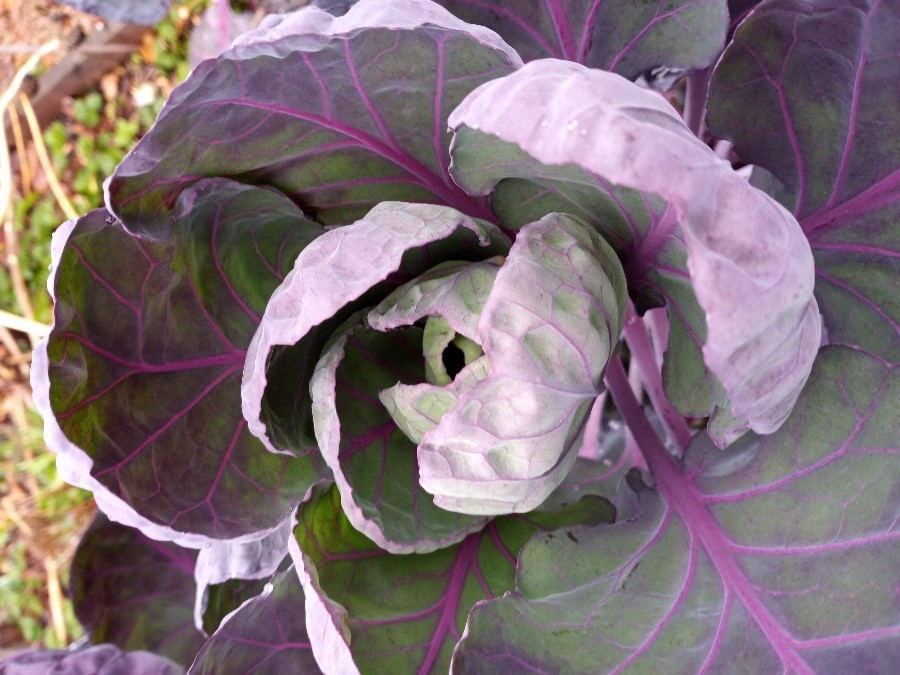
Arrange bunches of bold colour – I do a planting plan ahead of time every year.  Try grouping your vegetables, flowers, fruits and herbs together so that you have lots of colour and texture (different leaf shapes).  For example, you may edge the bed with the leafy fronds of carrot followed by beets and parsnip, maybe you plant some asparagus in the centre for the height or an obelisk in the centre and plant runner beans to climb it.  You could use yellow, green or purple bush beans to fill in the blanks.  I grew some purple Brussel sprouts last year and the leaves were spectacular!

Plant snug beds – This tip works well with raised beds.  There is no need to plant your vegies in rows.  Instead, group the vegetables together close enough to cover the soil when they are grown but not so close that they will crowd each other to prevent proper maturity.  Covering the soil helps with moisture retention and weed suppression.  Thinning your carrots allows them to mature properly and provides the delicious “thinnings” for your salad.

Smooth out the edges – Just like your flower beds, vegetable gardens are at their best when they are clean and pathways are clear.  I use straw in my pathways because it is available and my garden is wet in the spring so the straw covers the mud between the raised beds.  You could use bark mulch, gravel, brick or whatever you have. 

Define your space – We humans like a certain amount of order and proportion in our world.  If a space is too big, or too small, it can make us feel uncomfortable.  The edges of a raised bed help to define the space.  In our garden, we have several raised beds so have a defined entry to the garden and a wooden cedar fence to further define the space.  You might choose to use a pot filled with herbs at your entry, a rock or cedar stump on either side or a berry producing shrub.

It is also a great idea to have a bench in the garden where you may rest and admire your work.  Also, don’t stop with just a scarecrow … you may choose to add other garden ornaments in order to make your own beautiful vegetable garden!

Mulling about Mulches

By Laura Gardner, Master Gardener

At the beginning of February, the snow had melted on the grounds of the native plant garden at the Peterborough Public Library. This garden is an ongoing project between the library and the Peterborough and Area Master Gardeners. I noticed a few weeds in areas that did not have a thick enough layer of wood mulch. Ideally, they would have been removed in the fall, but I didn’t get that opportunity. Being situated downtown, the library garden is open to many types of plants that arrive via wind-blown seeds. As the intentional plantings continue to grow and fill in the empty spaces, weeds will become less of a concern.

However, it may be a good idea to consider incorporating living green mulch such as low sedges and reducing or eliminating the wood mulch in the garden to minimize weeds and to develop a more natural aesthetic that mimics nature. Benjamin Vogt of Monarch Gardens defines a green mulch as a lower plant layer that covers more than 90% of the ground. Vogt talks about how sedges, short grasses, and other low-lying forbs can be used as an initial base layer in a garden with taller plants interspersed throughout. They can also be used to plug in holes in between existing plantings. Vogt also mentions that wood mulch can inhibit the growth and spread of the plantings—which reduces the overall natural aesthetic.

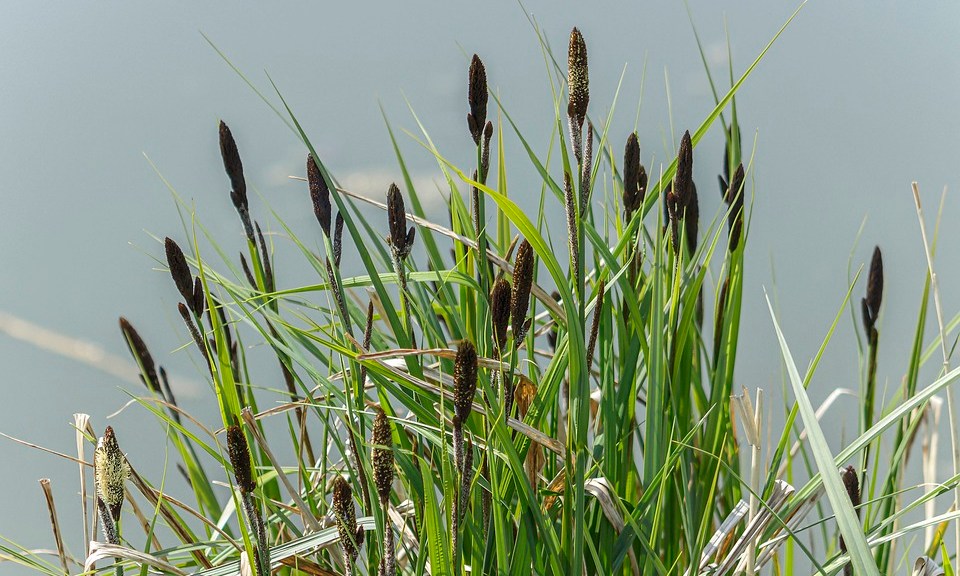
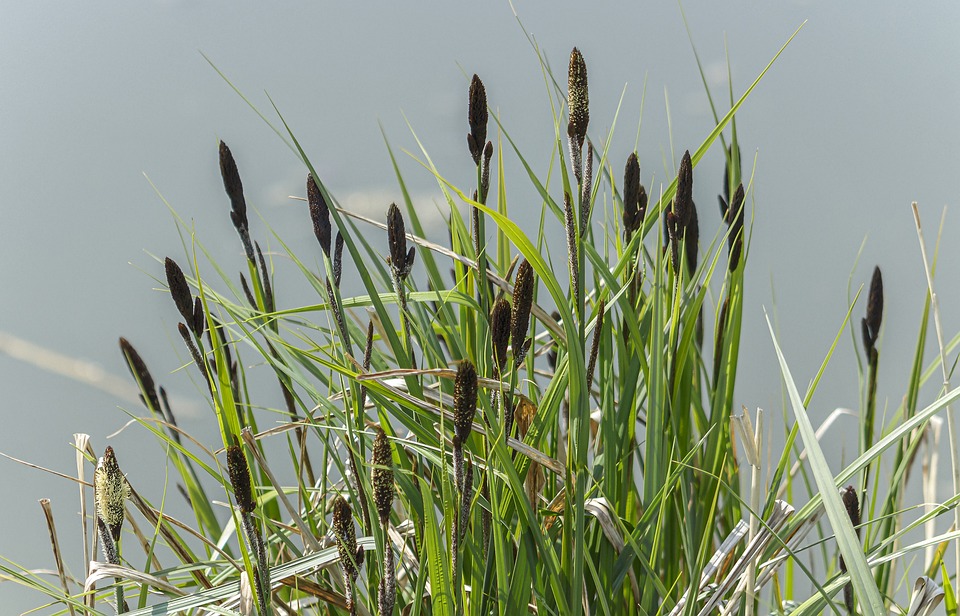
Tussock sedge

Incorporating green mulch does have an initial cost but over time will cost less than wood mulch as the latter needs to be constantly replenished as it breaks down. Native plant nurseries may have smaller plugs that can be purchased in bulk at a lower cost than larger potted plants. In addition, sedges and grasses can be divided and replanted. Wood mulch is also not as environmentally friendly as it needs to be transported to the site.

Green mulch offers the same benefits as wood mulch—the ability to provide organic matter to the soil when it dies back in the fall; it helps to regulate soil temperature and moisture levels; it shields weed seeds from the light exposure they require to germinate, and it prevents soil erosion. One thing I have noticed about a particular area in the garden is that despite the heavy application of wood mulch, invasive perennial weeds like Canada Thistle (Cirsium arvense) and Field Bindweed (Convolvulis arvensis) still have the strength to poke through. The long-term and more practical solution to managing these perennial weeds here is to encourage dense plantings of green mulch and the spread of existing plantings. These weed species thrive in the sun but will weaken if shaded out by other plants.

Green mulch provides support to various wildlife species. For example, unlike traditional turf grass, sedges grow with a space around them, thus providing access for ground-nesting bees. If wood mulch is too heavily applied in the garden, it inhibits pollinator lifecycles. Sedges and grasses also serve as host plants for some Lepidoptera species and produce seeds that are valued by birds.

When considering sedges, note that many prefer at least partial shade and moist soil conditions and so the right ones need to be selected. For the library garden, the area that is sunny and dry could accommodate Short-Beaked Sedge (Carex brevior), Ivory Sedge or Bristle-Leaved Sedge (Carex eburnea); while the partially shaded but dry areas could be home to Pennsylvania Sedge (Carex pensylvanica). A low-lying grass that could be used is Blue Grama (Bouteloua gracilis).  When sourcing these, it is best to check area native plant nursery catalogues this spring for available stock. The ones to check locally are Natural Themes in Frankford, Grow Wild in Omemee, GreenUp Ecology Park Nursery in Peterborough, and Native Plants in Claremont. Ontario Native Plants is an online mail order provider. For hard-to-find sedges, Prairie Moon in Minnesota has a wide variety available to ship to Canada as seed.

Further Reading

For more on sedges, the 1000 Islands Master Gardeners wrote a wonderful article about them.

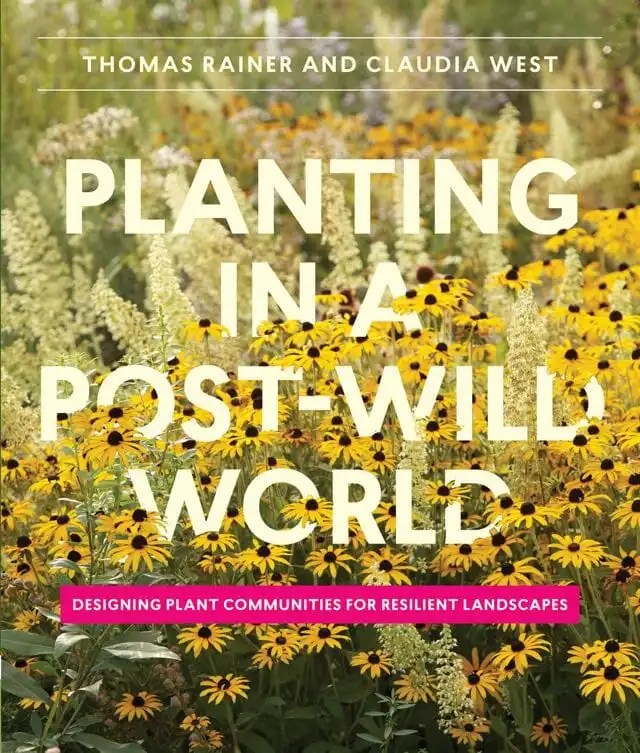
Planting in a Post-Wild World: Designing Plant Communities for Resilient Landscapes, by Thomas Ranier and Claudia West (Timber Press, 2015).

Groundcover Revolution by Kathy Jentz (Cool Springs Press, 2023).

Prairie Up! An Introduction to Natural Garden Design by Benjamin Vogt (3 Fields Books, 2023).

The Matrix

By Lois Scott, Master Gardener

Planting in a Post-Wild World by Thomas Rainer and Claudia West, is a book described by Doug Tallamy as a how-to guide to sustainable landscaping.  The prescribed way to create this sustainable landscape is referred to as matrix planting, wildscaping or new American style.  Check out this link for a very good description of this type of planting.   https://www.hortmag.com/gardens/matrix-planting-garden-design

The book spends a lot of time describing ‘landscape archetypes’, design processes and site preparation etc., with the finished planting being a matrix or array of plants that thrive in related habitats with root systems that don’t compete.  Planting is done in layers using structural/framework plants (10-15%), seasonal theme plants (25-40%), and ground cover plants (50%).  Plant spacing is based on the mature width of plants and their growing behaviour.  This method usually requires a large number of plants so using ‘plugs’ is the most economical way of starting.  This style of garden does rely on some plants self-seeding to create a dense planting, so this may not be to everyone’s liking!

As an example, I have a stretch of garden along the sidewalk that I refer to as my ‘hell-strip’ and I have found few plants that have thrived there.  A boulevard tree that shaded part of this area was damaged last year and was taken down, so I can now use sun-loving plants that I have had success with in an adjacent area.  So, to translate that into what I might plant, I could use 25 Prairie Dropseed (Sporobolus heterolepsis) plugs as a ground cover plant, 15 Lance-leafed Tickseed (Coreopsis lanceolata) plugs as a seasonal theme plant and 9-10 Dense Blazing Star (Liatris spicata) plugs as a structural/framework plant.  Or maybe … ???  Isn’t that the fun part? 

The goal is to have a dense planting that will discourage weeds, be resilient, provide habitat, sequester carbon, reduce storm water run-off and to create a beautiful garden!

Start a New Habitat

By Marilyn Homewood, Master Gardener

Over the past few years, it has become increasing clearer that loss of biodiversity due to loss of habitat is at a crisis level.  It is also well documented that the planting of native species provides us with an opportunity to help reverse this process by creating or enhancing ecological networks.

Renowned entomologist Douglas Tallamy has been beating this drum for some time.  It is his belief that all of us can provide part of the solution no matter our area of interest and no matter the scale of effort (no need to be a native plant purist!). He believes that small efforts by many people can make a significant contribution. Tallamy provides practical, positive advice for adapting his principles into your situation.  His philosophy is about encouraging folks to participate in regenerating biodiversity in the way they are most comfortable versus prescribing “must do’s” or formulas. He doesn’t let the perfect be the enemy of good. To this end, he is spearheading a grass roots, science-based solution called Homegrown National Park. Participants in both the US and Canada involved in this effort are encouraged to register their properties on the parks map in order to be counted towards the park’s goal of planting 20 million acres.  The website provides extensive resources to gardeners such as blogs and videos as well as a newsletter.  You can also follow the park on Instagram  @homegrownnationalpark.

Tallamy suggests 10 steps that anyone can all do to get started and make a contribution (see the link for more detail). They are as follows:

  1.  Shrink your lawn – All of us could probably do with a little less lawn to cut but no need to go without.  Replace some turf with trees, shrubs or gardens.
  2. Remove invasive species – Invasive species interfere with the ecosystems ability to function and will affect any type of garden. Removing some if not all out will reduce the impact on your plants and reduce the amount of seed that is shed into the environment.
  3. Encourage Keystone Genera – Research has shown that a few genera of plants are the backbone of local ecosystems especially as a food source for insects. Without local keystone plants, food webs will fail. Common keystone plants in the east are oak, willow, birch, elm, goldenrod, aster and sunflower. In my own case, goldenrod and aster is abundant on the farm. I now let it grow along the perimeter of my fields instead of cutting it down.
  4. Be generous with your plantings. Increasing the abundance and diversity of our plantings will assist in realizing the ecological potential of our landscape.
  5. Reduce Nighttime Light Pollution. White porch lights and security lights are a major cause of insect decline. Consider switching lighting with motion sensors or replace white bulbs with yellow (less attractive to bugs).
  6. Network with neighbours and encourage them to get involved.  Be a role model by transforming your property in attractive ways.  Display a sign to show your commitment.
  7. Build a conservation hardscape by using window well covers to prevent toads and frogs from falling into the wells where they starve to death. Mowing your lawn no lower than 3 inches helps to ensure that you mow over the turtles, toads and other small critters.
  8. Create caterpillar pupations sites under trees. Most caterpillars drop from trees to pupate in duff on ground. Replace the lawn under trees with well planted beds full of ground cover to encourage pupation.
  9. Avoid use of chemical fertilizer. Create soils rich in organic matter instead.
  10. Educate, educate and educate. Spread the word.

    “Education is the most powerful weapon which you can use to change the world.” -Nelson Mandela

Winter Gardening Activities

By Cheryl Harrison, Master Gardener

Winter in Ontario, Canada, is a time for gardeners to relax, plan, learn and become inspired…..so let’s explore!If you are new to gardening and want to learn more and/or would like to connect with other gardeners then joining one or more local horticultural groups might be of interest. The Ontario Horticultural Association divides Ontario into districts.  District 4  lists horticultural groups for Bobcaygeon, Brighton, Campbellford, Coboconk, Cobourg, Cramahe, Ennismore, Fenelon Falls, Grafton, Lakefield, Lindsay, Minden, Omemee, Norland, Norwood, Peterborough and Port Hope..   For more information check Ontario Horticultural Association / GardenOntario.

For those who have been gardening for awhile, you may wish to become a Master Gardener.  Master Gardeners inform, educate and inspire others to create healthy and vibrant gardens, landscapes and communities.  We promote horticultural practices that are safe, effective, proven and sustainable.  For more information check Master Gardeners of Ontario and Peterborough and Area Master Gardeners.

There are many Horticulture related educational opportunities….some offered on-line and some in-person.  Both the University of Guelph and Dalhousie University offer on-line courses that will fulfill the requirements for a Master Gardener certificate.  The Horticulture and the Master Gardener groups all have an educational component to their meetings and some may be accessible on-line.  The Peterborough and Area Master Gardeners are again offering, on March 4, 2023, the inspirational and in-person “A Day for Gardeners”  after a 2 year hiatus.  Watch the web site, Peterborough and Area Master Gardeners, for registration and more information.

Plan for next summer with catalogues, books and on-line research.  We are fortunate to have many seed companies in Canada.  A list of “Home for the Harvest’s” top 25 may be found here.  Please save room in your garden plans for plant shopping at your local nurseries too.  Local nursery staff are able to provide you with invaluable information on growing in your region.  Your local library is guaranteed to have some gardening books that you could borrow.  On-line research will also provide a wealth of information…..try a search for “Gardening in Ontario”  and you will see what I mean.  A really great source of information is a fellow gardener.  Ask any gardener a gardening question and they will be thrilled to give you some guidance.

And last but not least, please make time in your day for fitness.  You need to keep yourself fit for all of the gardening activity that you have planned for next summer.  Gardening is an excellent way to maintain a good level of fitness, both mentally and physically.  Read more about the benefits of gardening as exercise here .  There are YouTube videos that can get you started.  I particularly liked the video located here.  The presenter demonstrates some exercises and some things that you can do to prevent injury while gardening. You might consider just getting together with a couple of friends to practice yoga, do some strengthening and flexibility exercises or go for a walk.

The world of gardening is immense.  Keep track of your ideas and resources so that when gardening season returns, you will have the information readily available.  I hope that this medley of gardening choices will help you to relax, plan, learn and become inspired during the upcoming Ontario winter!

Exploring Two Special English Gardens (and the Gardeners behind them)

by Emma Murphy, Master Gardener

This week I had the pleasure of doing my first in-person presentation in almost three years to the Peterborough Horticultural Society on some very special south England gardens that my husband and I were able to visit in May 2022.

National Garden Scheme

I also talked about the amazing UK National Garden Scheme (NGS), where gardeners open their private gardens on specific days during the year to raise funds for primarily health charities. Since many people had never heard of the NGS, I thought I’d share with a wider audience with my blog for this month.

Screen capture from NGS website

The NGS gives access to over 3,500 exceptional private gardens in England, Wales, Northern Ireland and the Channel Islands, which in turn raise impressive amounts of money for nursing and health charities through admissions, teas and cake. And it’s not just about seeing beautiful gardens – there is a strong focus on physical and mental health benefits of gardens too. They also support other charities doing amazing work in gardens, and provide health and grant bursaries to help community gardening projects. You can read more here.

How I wish we could start something similar here in Canada (or Ontario, or Peterborough)! Imagine all the good that could happen just from sharing our gardens with people. I’ll have to think more about this.

So we managed to see two very special private gardens (that both open for the NGS as well) and get to meet the gardeners behind the garden, which is always my favourite thing to do when I visit to a garden. I want to understand the inspiration, the goals and objectives, and the plans for the future…because we all know our gardens are ever evolving places.

Waterperry Gardens

Waterperry Gardens (east of Oxford in Oxfordshire) has a long legacy and an amazing history as one of the few horticultural schools for women (from 1943 to 1971) – run by two outstanding women – Beatrix Havergal and her partner Avice Sanders.

Photo courtesy of Waterperry Gardens

It’s an 80 acre estate with 8 acres of formal gardens, and is famous for the herbaceous border. This is what it looked like May 2022 when we visited, and how it looks now (fall 2022, photo courtesy of Head Gardener Pat Havers, who I was lucky enough to meet in person in probably the busiest time of the year!) I love this blog written about her in 2017.

You know you’re a hard core gardener when your Mum takes you to work in a wheelbarrow!

Photo courtesy of Pat Havers

Pat grew up in the gardens as her mother worked there, and has been working there herself for the past 20 years -10 years as Head Gardener.

“Living in the village it was every little girl’s dream to have this haven on their doorstep”, says Pat. “I would spend hours running through the beds and asking all the gardeners questions about their work. This soon caught Miss Havergal’s eye and I became the youngest student of hers at just the age of 4. My guess is perhaps she did this to keep me out of trouble.

Her passion for the gardens were evident in everything she said. I found out about her favourite quiet space (down by the River Thame), and the incredible legacy established by Havergal and Sanders, that continues to this day in terms of courses, plant identification tags, and garden design.

This garden is the Formal Garden/Silent Garden, where people are encouraged to turn off the phones and just enjoy the beautiful knot garden, sculptures, and seasonal changes.

St Timothee Garden

Just a bit further east near Maidenhead in Berkshire is St Timothee, a spectacular 2 acre private country garden planted for year-round interest with a variety of different colour-themed borders, each featuring a wide range of hardy perennials, shrubs and ornamental grasses.

The garden artist at work here is Sarah Pajwani, and I love her approach to gardening (similar to my own), and especially her focus on making her gardens appealing all year round, including those winter months. While England obviously doesn’t have the harsh winters we have here, her focus is on maintaining structure and colour in the garden.

photo courtesy of Sarah Pajwani

An overgrown field area when she moved in (2006), Sarah created a design rationale with the help of professional landscapers, but then set about filling her garden with plants of her choice, border by border. She definitely loves her purples and pinks, but also has a few ‘hot’ borders with lovely reds, oranges and yellows.

There are so many lovely aspects to her gardens, including a large pond, wild meadow, potting shed, and formal parterre garden. While we were there in May, her photos of her winter garden are amazing, designed to have year round interest that’s easy to manage.

Sarah’s garden received national recognition in 2021, being recognized by The English Garden magazine as the National Winner for favourite garden. A garden not to be missed if you are in the area!

This excellent garden blog shows the beauty of the St Timothee Garden in wintertime, when it’s one of the first to open for the NGS.

While we did enjoy seeing many of the ‘signature’ ‘must see’ gardens on our English trip – like Sissinghurst, Hidcote, Kiftsgate Court Gardens, and Great Dixter – it was these private gardens – where we had the opportunity to meet the gardeners – that were the highlight of our trip. So if you’re in the UK, be sure to check out the NGS website for what gardens are open while you are there – they have a great interface to help you – either by week or by arrangement.

(Special thanks to the magic of Twitter for connecting me to Ontario gardener Lynette, who connected me to master gardener Nicki in Sussex, who helped me find these very special gardens and gardeners. You will both be on my list of gardens to see next time I’m in your area.)

Reflecting on the Past Season

By Marilyn Homewood, Master Gardener

The frost has made its first appearance marking the end of the summer growing season.  Before plunging headlong into bulb planting, I find it valuable to use this time to take stock of the past season as it serves to help me plan for next year (although I must admit I have already submitted a lengthy list of dahlia tubers for next spring).  I find it helpful to keep a gardening journal throughout the year for reference purposes and it becomes an important part of this process. There are many entries especially in spring when I am propagating, not so much in the summer but I always do a fall summary.  This written record has served me well over the past few years.  I also take this opportunity to look back over the photos I took throughout the season. They sometime remind me of just how much I enjoyed a certain plant.  One plant whose value seems to fade from my memory is sweet peas. Time consuming to grow, somewhat fleeting in our climate, I am always ready to drop them from next year’s list until I look at the photo.  Then I recall just how much I enjoyed their appearance and scent!!

Successes: It can be hard to see all the good things that happen when you are in the midst of seed starting, weeding, transplanting and harvesting.  I tend to dwell on what is not working (don’t all gardeners?) and often pass over the good stuff.  Evaluating the successes allows you to repeat or expand on your wins for next year.  This year I grew lisianthus (prairie gentian) for the first time.  It grew well in our climate and produces a bloom that is both attractive and long lasting.  It has continued to push out buds and I am still cutting it for the vase.  Next year, I will try starting it from seed, grow more of them and also plant some in the landscape for bloom from August to frost.

Challenges: Identify what did not go well and try to ascertain what the problem was and if it can be addressed.  Sometimes things just don’t work in your situation and its worth evaluating if the time, effort and money is worth allocating to this endeavor.  After a couple years of trying, I have decided to give up on ranunculus.  They are labour intensive as they require pre-sprouting in March with planting out in April under hoops and frost cloth.  Growth was great on the plants however each time a plant budded up an unidentified varmint would come in and make off with the flower bud.  So it’s a choice between adding rabbit protection to the already busy growing regime or devoting the resources elsewhere.

Future Opportunities: Always be on the lookout for possibilities for next season.  Whether it is a major project or a plant acquisition, this is a good time to firm up ideas.  I watch a lot of different types of gardening webinars and do a lot of reading and am always jotting down plant ideas that might work for me.  This is a good time to evaluate that list and based on available space, determine what to try for next year.  If it involves propagation, it might mean acting now.  I have decided to expand my planting of perennial poppies and am going to take root cuttings for the first time which will be overwintered in my extension.  With any luck, I will have new plants for next spring.

Try investing in a few hours musing over you garden and you reap the rewards next year.

https://extension.psu.edu/evaluating-the-garden

https://www.canr.msu.edu/news/garden-health-evaluation-part-1

The Golden Glow Has Got To Go

By Emma Murphy, Master Gardener

Last year around this time I wrote a blog about reclaiming a garden bed from the dreaded ditch lily (Hemerocallis fulva), now considered an invasive species by many organizations including Ontario Parks and the US Fish & Wildlife Service and the U. S. National Park Service. If you’ve ever struggled with this plant you know what I mean.

The other plant growing in our large Lakefield garden when we moved in (more than 20 years ago) is what I was told was called an ‘outhouse plant‘. I eventually learned that the Latin name for this plant (also called golden glow or tall coneflower) was Rudbeckia laciniata “Hortensia”.

Rudbeckia laciniata “Hortensia” or Outhouse Plant, circa 2005 in my garden

It’s a cultivar of our native Rudbeckia laciniata, also known as Cut Leaf Coneflower or Green Headed Coneflower, which has a lovely simple daisylike flower (whereas the Hortesia cultivar is a double ‘puffy’ flower).

Our lovely R. laciniata elsewhere in the garden. It will do better (and flop less) if it’s in a garden bed with other tall and native plants.

The outhouse plant was pleasant enough so I let them grow for years in what I call our ‘back 40’, meaning our naturalized garden area at the back of the property, behind the cedar rail fence. Yes they were tall and gangly, and fell over in thunderstorms. Yes they spread, but they gave the prolific Canada Goldenrod (Solidago canadensis) and New England Asters (Symphyotrichum novae-angliae) a run for their money in August/September. And hey, I had more than enough to deal with in the rest of my more organized garden!

However, as I started to learn more about both native (and invasive) plants over the years I realized that I might have a problem. The outhouse plant isn’t a huge problem per se, as it can be controlled through digging, Chelsea chop etc., but its double shape means that it offers minimal benefit as food for our pollinators. And I wanted plants that not only look beautiful but have an ecological benefit. So I sat in my hammock and pondered.

Sitting in my hammock contemplating the outhouse plant’s fate
(he’s watching on the right)

As a result of winter sowing (first time this past winter – highly recommend!) I have lots of new native plant seedlings, including some of the ones I featured in my May blog – A Few of My Favourite Native Plants – Culver’s Root (Veronicastrum Virginicum), Cardinal Flower (Lobelia cardinalis), and Green Headed Coneflower (Rudbeckia laciniata). I certainly have lots of the native Rudbeckia, as well as Boneset (Eupatorium perfoliatum), Giant Ironweed (Vernonia gigantea), and Purple Giant Hyssop (Agastache scrophulariifolia).

So the clearing of the outhouse plant began in earnest last week, and by the end of two afternoons I had an area to work with.

The initial chop of material
Then removal of the actual plants and roots

Definitely not light work, but not too difficult either compared to other plants. The area is now clear, and I’ll be putting in Green Headed Coneflower (the native), Boneset, Giant Ironweed, and Purple Giant Hyssop. They can all tolerate a little competition (a good thing for native plants, especially tall ones) and basic soils.

If I have space I might even mix in some shorter plants like native Bush honeysuckle (Diervilla lonicera) and Pearly Everlasting (Anaphalis margaritacea) in at the front as they can tolerate dry conditions. The area is mostly sunny all day. Unfortunately my beloved Cardinal Flower and Turtlehead are too dry for this location.

We’ll see how this experiment works and check back in with you all on another blog. If it works we’ll expand into another area of outhouse plant that I recently cut down, but haven’t removed yet…a work in progress. There are only so many hours in my (still working part time) day. And I still need to get that Canada Ggoldenrod under control…but that’s another story…