Category Archives: Fruits

Time for Reading Garden Books

by Christine Freeburn, Master Gardener

In this day and age, we spend so much time on our computers, googling all the information we want and need. But there is something about sitting by a sunny window on a cold winter’s day with a good book.

The winter months are a great time to pull out an old gardening book or invest in a new one. The days are now getting longer and spring is coming, but actual gardening is a few months away. Time to learn something new to help you improve your gardening skills. There are many good Canadian and zone appropriate books that can help you.

Below, I have listed a few of my favourite books on my bookshelf. I have also asked my fellow Master Gardeners to share their favourites. Some of the books are out of print, but check your local library, used book stores or online sites. Enjoy!

For the Houseplant Gardener
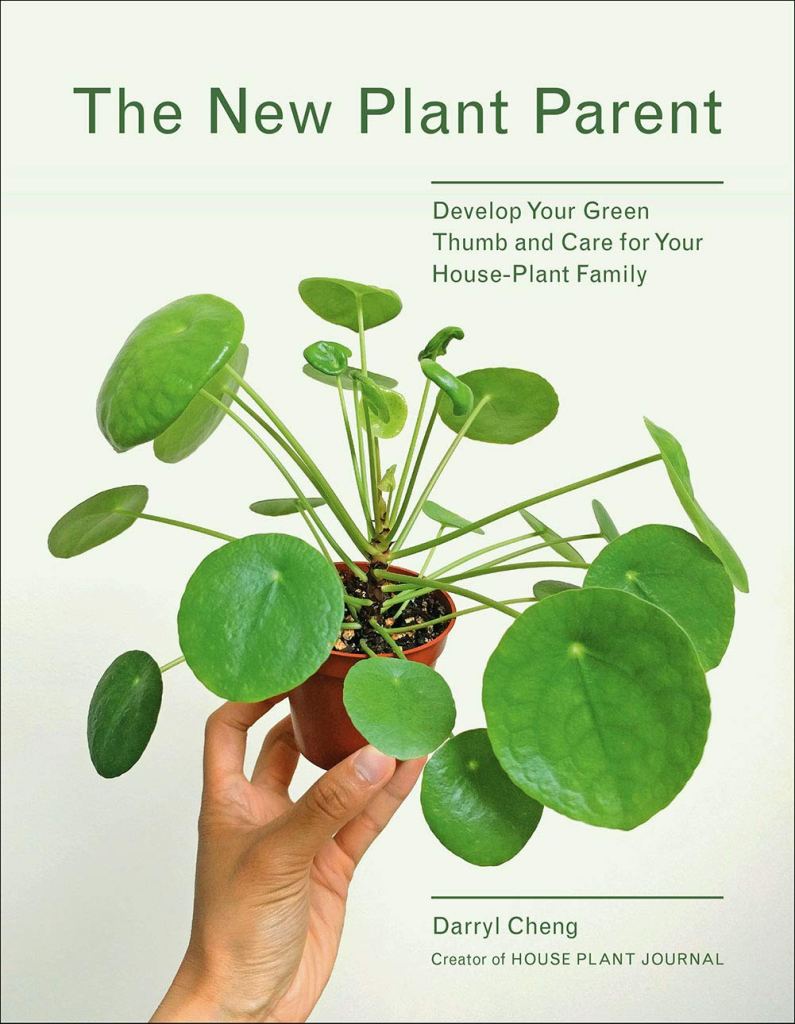
The New Plant Parent

Darryl Cheng gives advice that is full of common sense. He explains that leaves do die and plant care should be enjoyable, not a chore. He discusses basic requirements for healthy plants including the right light, soil care and proper watering. Great illustrations and nineteen plant varieties are listed in detail. Look for his newer books also.

For the Vegetable Gardener

Plant Partners

Companion planting has been around for years. Jessica Walliser gives us “science-based companion planting strategies” that help with disease and pests, improves soil and supports pollinators. Lovely illustrations throughout will have you dreaming of your next vegetable garden.

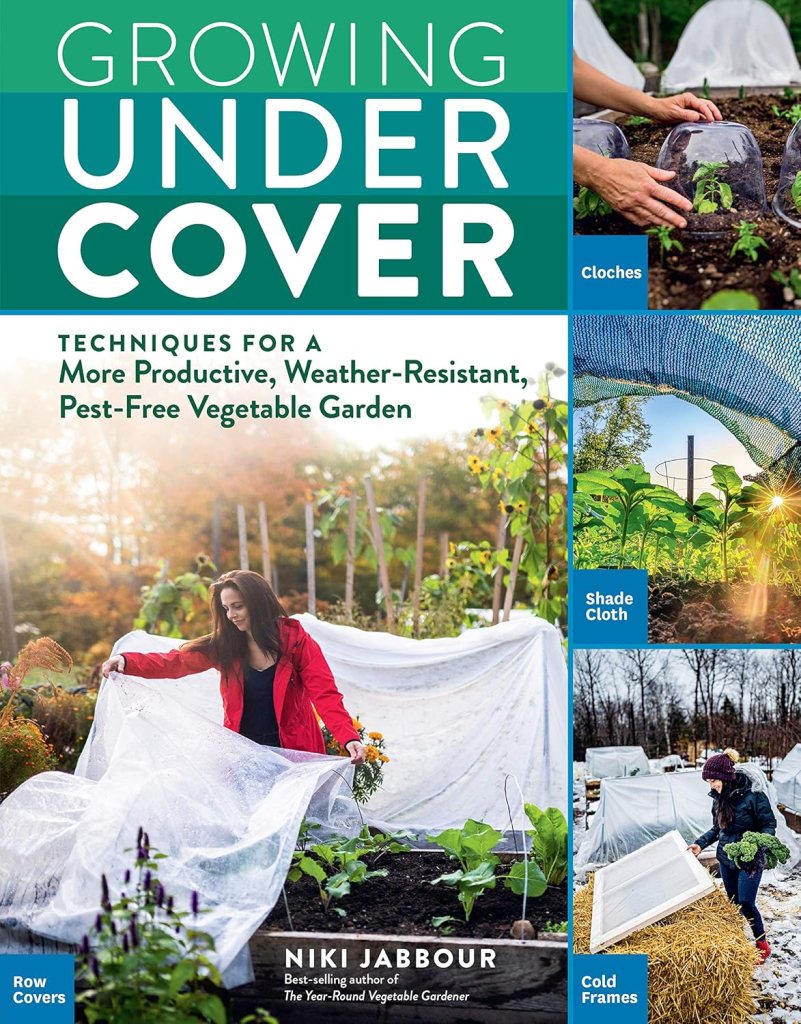
Growing Under Cover

Niki Jabbour is the Canadian half of the popular website Savvy Gardening (along with Jessica Walliser). She has several books out, but this one gives great information about how to reduce pests with row covers. Niki has several books out, so check them out.

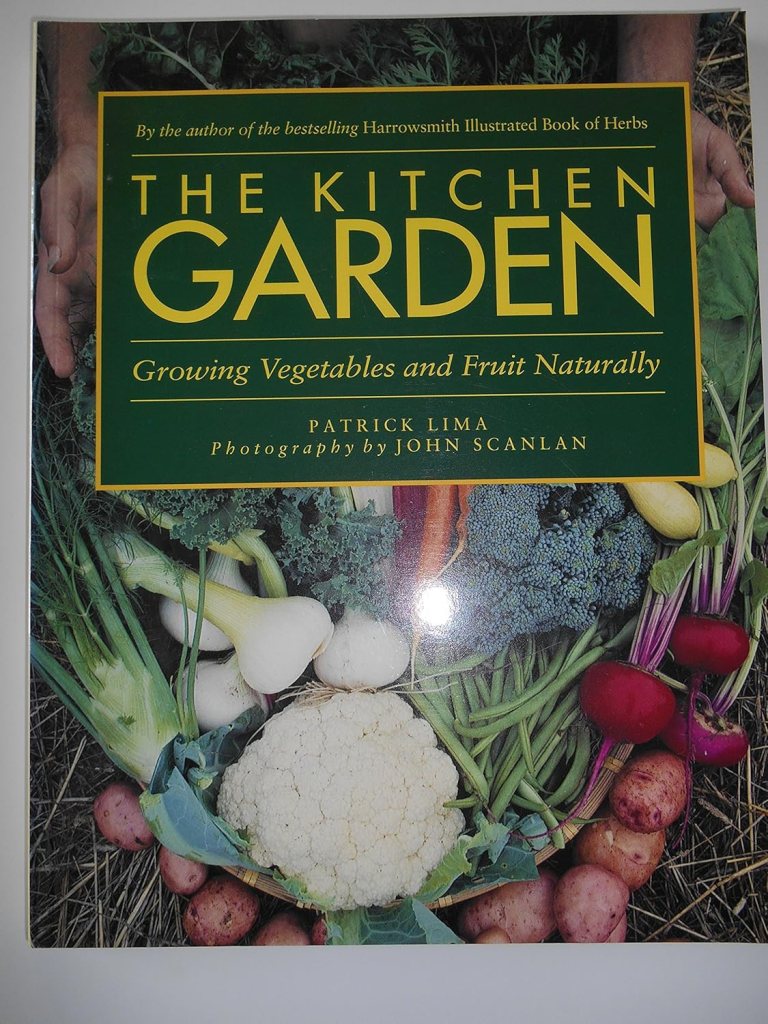
The Kitchen Garden

Peterborough MG Silvia Strobl first toured Patrick Lima and John Scanlan’s garden on the Bruce Peninsula over 40 years ago and was inspired by both their colourful perennial and productive vegetable gardens. Each spring, she still refers to this book’s excellent information to refresh her memory on time to sow, spacing, thinning, harvesting, etc. for the vegetable crops she grows! Unfortunately, this book is out of print, but you may find a used copy online.

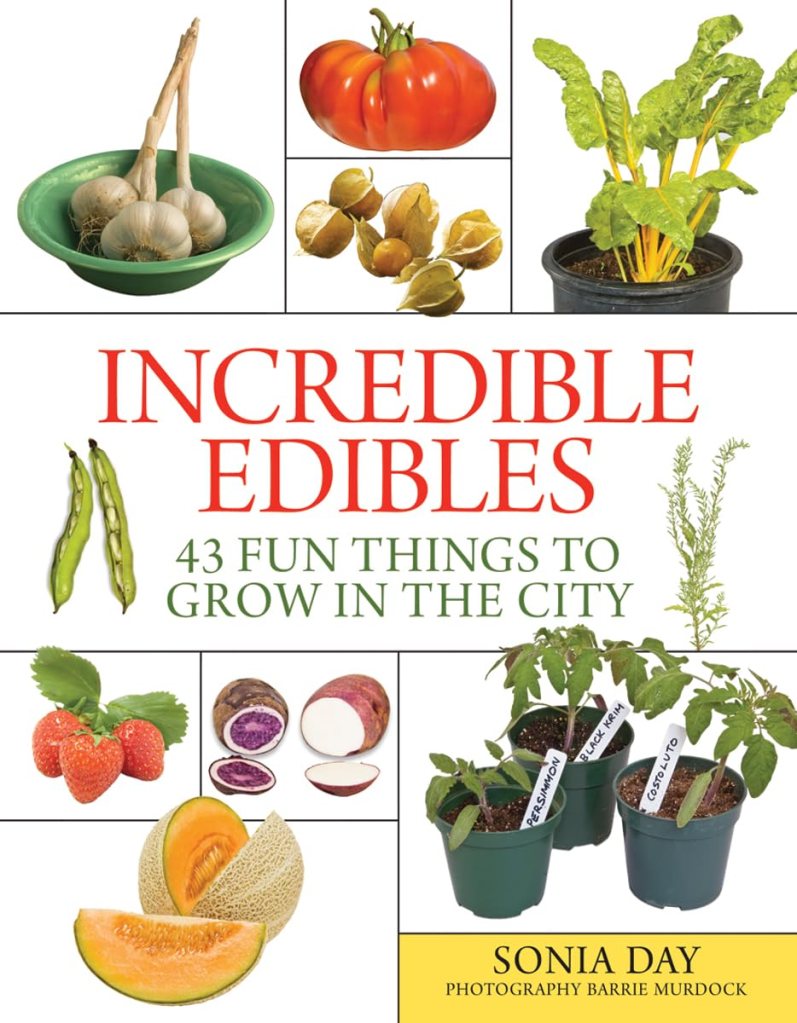
Incredible Edibles

This book by Sonia Day is recommended by Peterborough MG Deb Fraser. It is very basic for the beginner gardener. It answers when, where, how, as well as other questions for herbs and vegetables. She even gives a recipe for each plant. Another book that is out of print. Try used book sites.

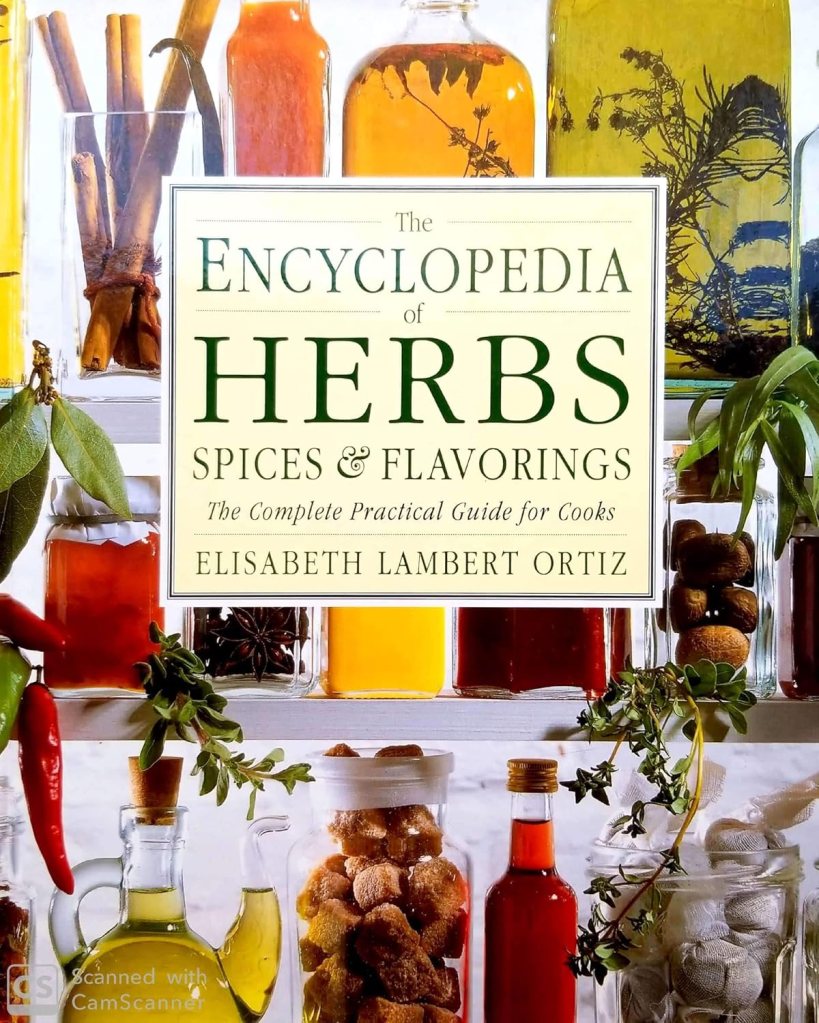
Encyclopedia of Herbs, Spices & Flavorings

Deb also suggests the Encyclopedia of Herbs, Spices & Flavorings, a cook’s compendium by Elisabeth Lambert Ortiz. Originally British but published in Canada by Readers Digest, 1992. It is beautifully illustrated and very detailed about the origin of herbs, spices, oils, sauces, coffees and teas around the world. She details the origin of these, how to cook with them and a recipe. When the weather is frightful with a nice warm drink in hand it makes for interesting reading, perhaps planning to add a few herbs to your garden next spring.

For the Perennial Gardener
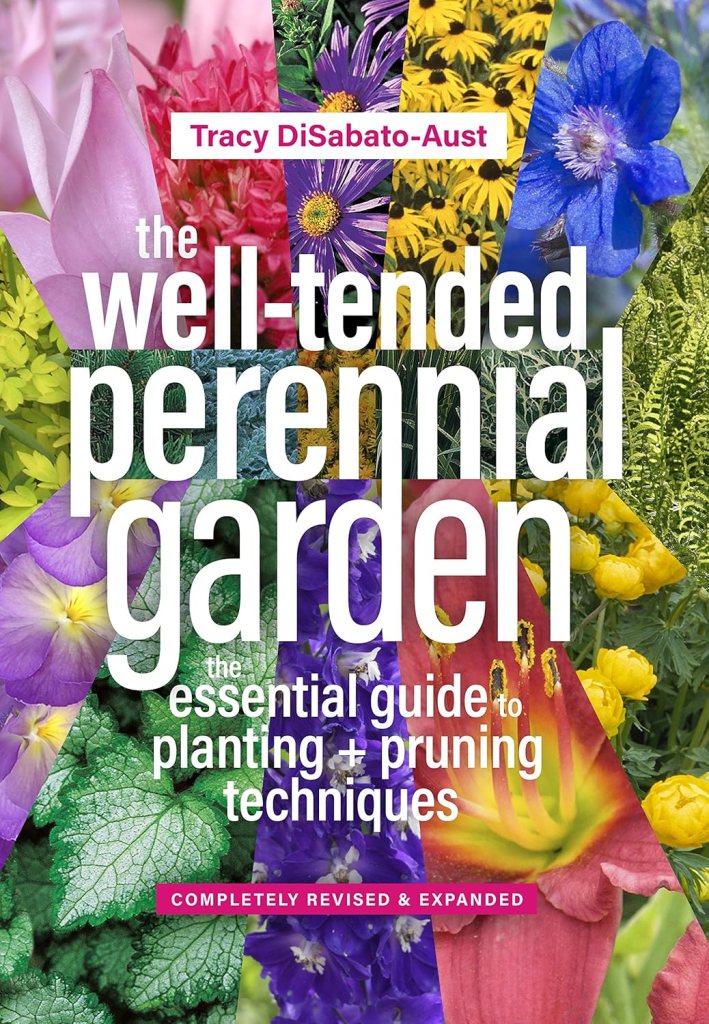
The Well-Tended Perennial Garden

Peterborough MG Gladys Fowler’s favourite book is the Well Tended Perennial Garden. Tracy DiSabato-Aust’s book has an extensive encyclopedia of perennial species and cultivars and she explains the maintenance and pruning needs of each plant. The explanations and illustrations are excellent.

For the Native Plant Enthusiast
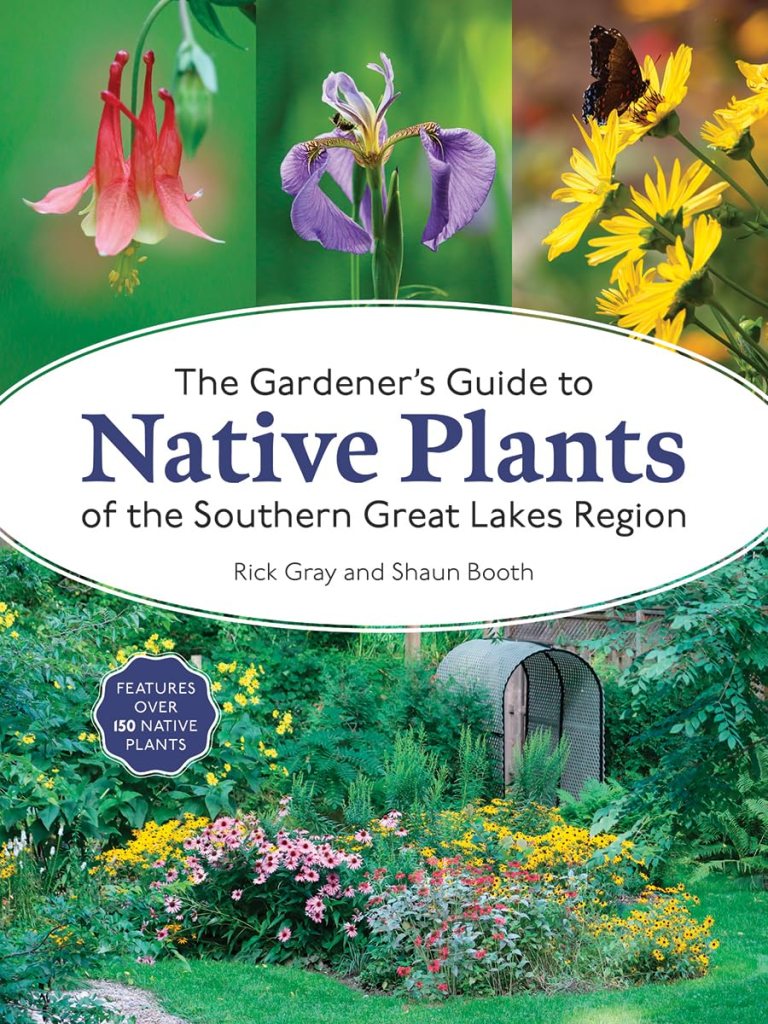
The Gardener’s Guide to Native Plants of the Southern Great Lakes Region

For Peterborough MG Emma Murphy, definitely this one on native plant gardening – for our region, gives everything you need to know about growing the plant, including propagation, wildlife value and what butterflies and moths it is a larva host for. For a full book review she did on Rick Gray and Shaun Booth’s book when it was published in 2024 click here.
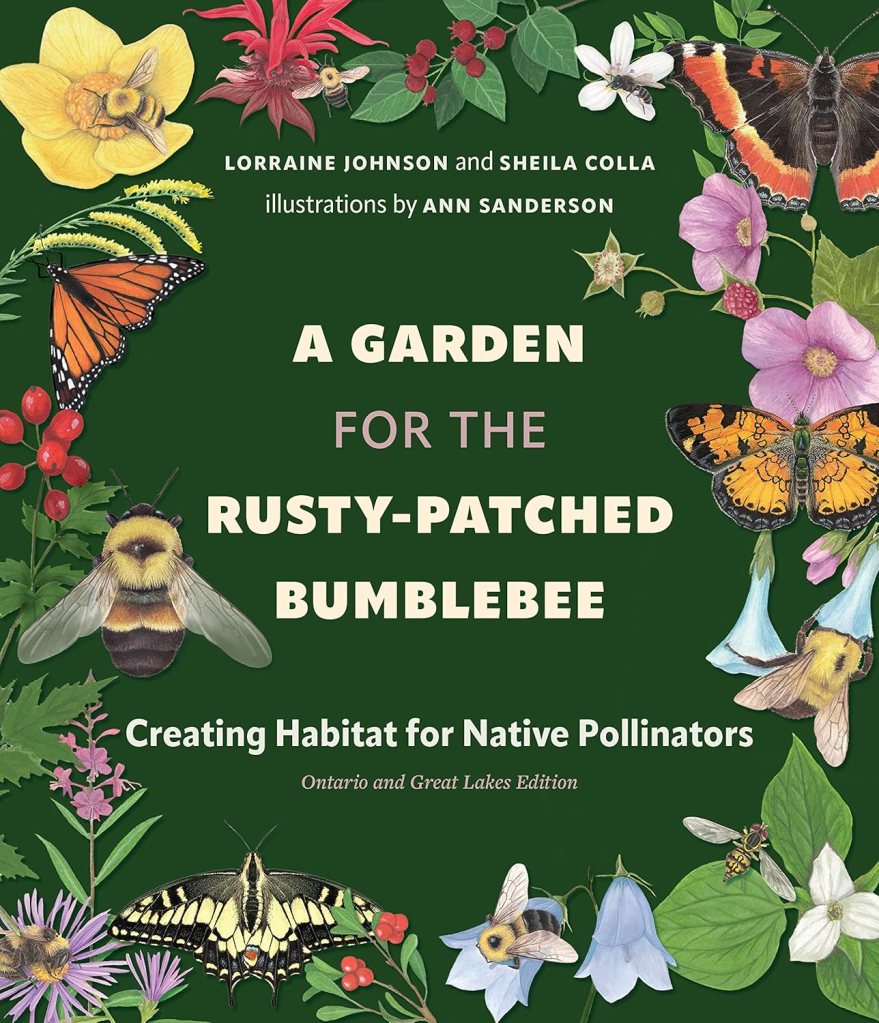
A Garden for the Rusty-Patched Bumblebee

Peterborough MG Sharleen Pratt says this book by Lorraine Johnson and Sheila Colla not only goes into great detail about Ontario native plants, vines, shrubs and trees, but it also encourages us all to think about the spaces we create so that pollinators can thrive.

For the Environmentalist
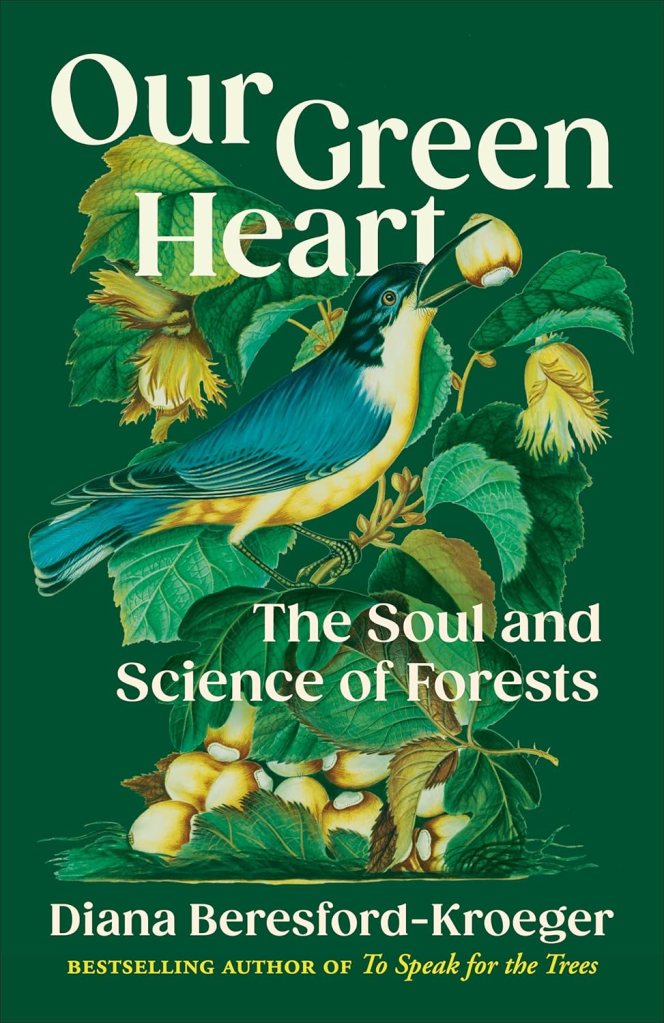
Our Green Heart

Peterborough MG Carol Ireland says it feels good to sit down and read something that requires absolute attention while at the same time causes you to make all the connections between what you are reading and the place trees have in the survival of our planet. This one by Diana Beresford-Kroeger is also on my reading list!

What is your favourite gardening book? What do you have on your list to find and read next? Eleven more weeks till spring!

Check out previous reviews on our website

Favourites From My Bookshelf

Four Great Books

Things to be Thankful For

By Christine Freeburn, Master Gardener

As we celebrate Thanksgiving this year, we should think about what we are thankful for in our gardens. I recently asked my Master Gardener friends to share what they are thankful for.

Rainfall – Everyone was happy with the amount of rain we received this year. According to the Canada Weather Stats website (peterborough.weatherstats.ca), our rainfall for the period from July 2023 to June 2024 was over 100mm more than the same months in the previous year. And we seemed to have it at the right times. Although rain is great, it is important to remember that watering still needs to be done, especially containers of annuals and vegetables and hanging pots. When plants get big and fill the pots, the rain may not get down into the soil which is where you want the moisture to go.
Good educational information – As Master Gardeners, we use scientifically-based resources for answering gardening-related questions. Use the extension “.edu” or “.sci”  in the search box when you are googling. There is so much information out there, but we need to be sure it is the correct information. Master Gardeners are always asking questions, learning and sharing their knowledge.

Healthy Gardens –  Feeding the soil is a big part of having a healthy garden. Putting good quality topsoil in a new garden area, and adding organic compost annually will help your soil. Mulching holds the moisture and suppresses weeds. Leaves are great for mulching on your perennial beds. Free local wood chips supplied by Ontario Hydro were a great mulch for one gardener.

Good Harvests – Vegetable gardens were bountiful this year. Thanks to an exceptional harvest of peppers, tomatoes and beets, there are stuffed peppers in the freezer, tomato sauce and salsa and pickled beets in the cupboard. Carrots and brussel sprouts grew well and herbs like parsley and rosemary were huge and healthy. One gardener reported two butternut squash plants produced 20 squash!

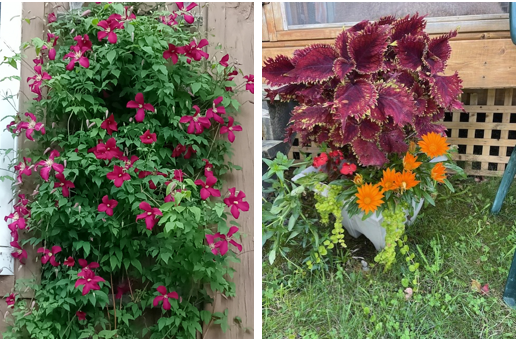
Beautiful Flowers – With all the rain and heat, hostas were huge, sunflowers towering, clematis bloomed long and luscious. Everything seemed to be big and beautiful and most bloomed earlier and longer than normal. Container annuals like coleus grew huge and healthy.

Nature in the Garden – Master Gardeners actively promote native plants in the garden to encourage more pollinators. Integrating natives amongst your cultivars works well if you don’t want that ‘wild’ appearance many natives provide. Several gardeners reported visits from birds like Chickadees, American Robins and House Wrens that made their nests and raised their babies in their gardens. Cedar Waxwings, White-Throated Sparrows, Song Sparrows, Dark-Eyed Juncos, American Goldfinches, Northern Cardinals, Hairy Woodpecker, and a Common Yellowthroat came to visit and forage. Birds are great for the garden as they will eat many pests. And they give us enjoyment.

I am trying to be thankful for the skunk who has been visiting my yard and digging grubs. My yard looks like a minefield, but it is healthier!

What are you thankful for in your garden?

Happy Thanksgiving!

And thank you to MJ, Gladys, Carol, Laura, Chris, Jenn, Silvia, Cheryl, Deb, Grant, & Mary Kathleen.

All About Pumpkins…

By Emma Murphy, Master Gardener

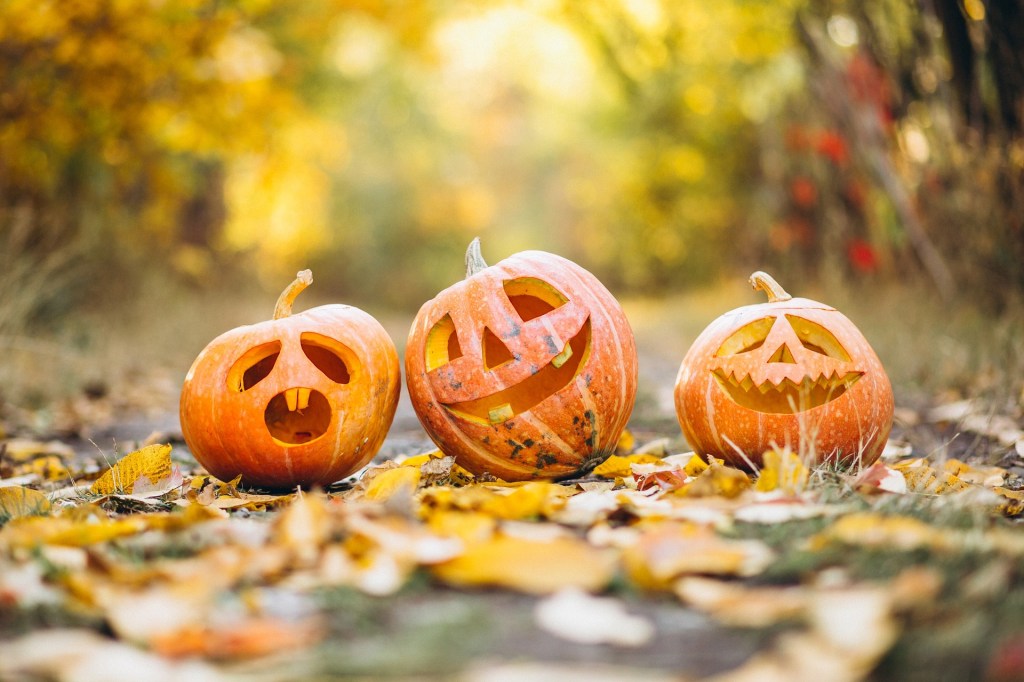
What says fall or October more than the iconic pumpkin? But how much do you really know about them?

Here’s 10 things about pumpkins that might surprise you.

  1. They’re technically a fruit, not a vegetable. Pumpkins are a winter squash in the family Cucurbitaceae (which includes cucumbers, melons, and gourds.) Pumpkins, along with cucumbers, tomatoes, and avocados, grow from the flowers of their plants. So yes, all squashes are technically fruits as well. It is the official State Fruit of New Hampshire.
  2. They’re native to the Americas. Scientists believe that pumpkins originated in the Americas about 9000 years ago. The oldest pumpkin seeds were found in Mexico and date to somewhere between 7000-5550 B.C.. Originally small and bitter, they were selectively bred by native peoples to be bigger, sweeter, and have more flesh.
  3. They weren’t originally called pumpkins. The word “pumpkin” originates from “pepon” – which means “large melon” in Greek. Then it evolved to “pompon” (in French) and “pumpion” (in Britain). The evolution in North America was to “pumpkin,” what we use today.
  4. Every single part of a pumpkin is edible. That means the skin, leaves, flowers, pulp, seeds, and stems. And they’re 92 percent water. Pumpkin and other squash blossoms can be eaten raw or I’m told they are tasty when lightly battered and fried. Pumpkin pie is a traditional part of Thanksgiving meals in Canada and the United States.
  5. Bumble bees and squash bees are the primary pollinators of the cucurbit family of plants. They help transfer pollen from the male flower to the female flower by visiting each flower to drink the nectar located in the flower. As the bee drinks nectar it vibrates and moves its body around and in doing so, collects grains of pollen on the fine hairs of its body and in pollen baskets located in some species on their legs.
  6. Pumpkins (along with other squash) were a historically important food staple among Native Americans. Using the “Three Sisters Method,” three crops (squash, maize, beans) were grown together – usually near riverbanks – so they could sustain each other. Corn is the trellis upon which the beans climb; beans keep the corn stalks stable on windy days, while also nourishing their soil; and pumpkins/squash shelter the corn’s shallow roots and prevent weeds from forming.
  7. They’re a great source of beta carotene (which is what gives it the orange colour). It turns into vitamin A after you eat it, so it’s excellent for your eye and skin health.
  8. They can get REALLY big. The heaviest pumpkin ever recorded was a staggering 1,226 kg (2,702 lb 13.9 oz), grown by Stefano Cutrupi (Italy) in Tuscany, Italy in 2021.
  9. How long do they last? After a pumpkin is cut, it will usually last about seven to 10 days. Find out how to pick the perfect pumpkin.
  10. Each pumpkin contains about 500 seeds. Once they sprout, pumpkins take between 90 and 120 days to reach maturity, which is why it’s recommended to plant them between May and July.

A LAST NOTE: Just a reminder that you’ll see lots of social media posts after Halloween about giving your pumpkins a second life by putting them out for wildlife. In your own garden, break the pumpkin into small pieces and monitor and remove the pieces when they rot, mold, or aren’t eaten.

Check and see whether local zoos or wildlife rehabilitation centres are interested in donations for animal enrichment. NOTE: they must still be fresh – carved pumpkins break down quickly and whole pumpkins that have been sitting in the sun for weeks can quickly become contaminated and shouldn’t be given to animals to eat. Some municipalities also offer a drop-off program.

Please don’t put them on the side of the road or in natural areas, as this creates problems because if they are near ditches or roadsides, animals will be drawn in close to traffic where they may get hit.

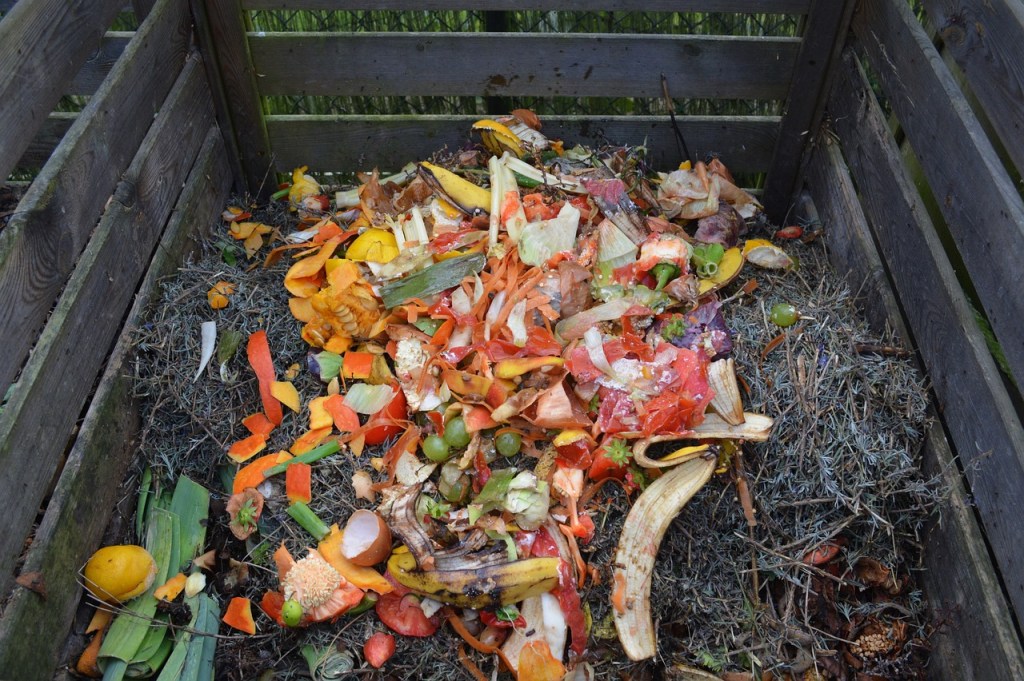
Last but not least, if a pumpkin is starting to decompose, turn it into compost! Chop it up to speed up the process.

A Garden for the Winter Solstice

by Lois Scott, Peterborough Master Gardener

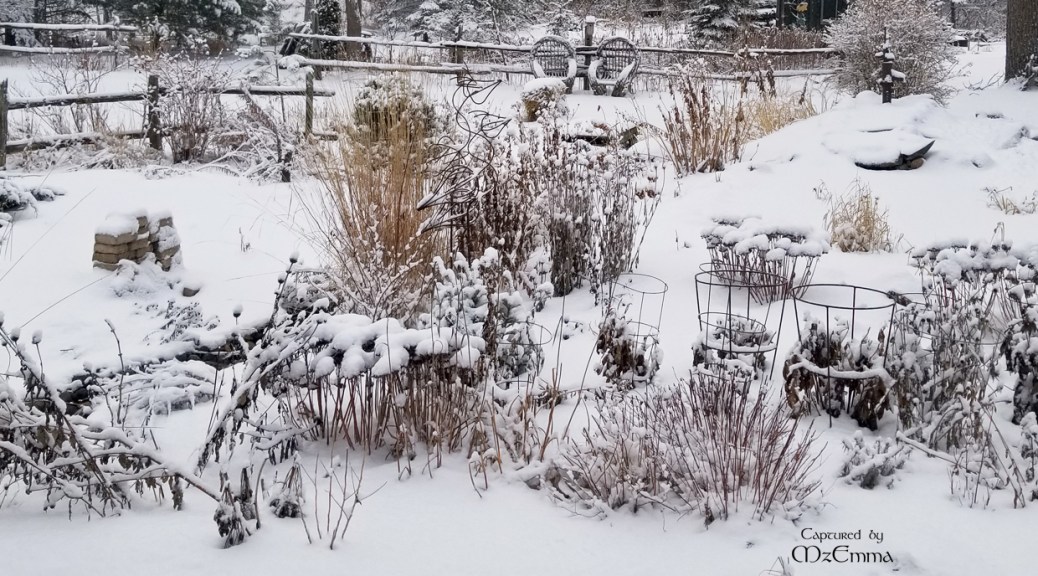
The winter solstice, which this year happens December 21 at 4:47pm, marks the northern hemisphere’s furthest tilt from the sun and results in the shortest day and longest night of the year.  Many ancient cultures celebrated at this time to welcome the return of longer days and the promise of spring with plants playing a large symbolic role.  I certainly welcome the return of longer days and the pleasure in watching my garden wake up but for right now I enjoy the garden as it stands in winter.

I won’t be burning a yule log, which was traditionally Oak as it represented strength and endurance, but I enjoy the knowledge that the Oak trees in my environment are valuable contributors to supporting life in the garden.  Oaks (Quercus spp.) support over 500 species of lepidoptera (butterfly and moths) caterpillars which is more than any other native tree or plant. Read more

I don’t have the shiny, English holly (Ilex aquifolium which is invasive in the Pacific Northwest) in my garden. I do have a native holly, Ilex verticillata or Common Winterberry.  I have a male and female plant as you need both for pollination and the resulting flowers and red berries.  Although it is found naturally in swampy, acidic areas it is growing in my average garden soil.  It doesn’t have evergreen leaves but the persistent red berries are loved by over 40 species of birds!  Beautiful red berries and birds in the winter?  That is a win-win for me! 

A winter garden is certainly enhanced by including coniferous (evergreen) trees.  Coniferous trees such as pines, spruce and cedar are considered by many cultures to be a symbol of resilience and renewal.  For many of us we enjoy using the greenery to brighten our winter pots and interiors at this time of year.  In our winter gardens native evergreens provide not only beautiful contrast with the snow but provide important sources of shelter and food for local wildlife. Well placed coniferous trees can also provide windbreaks for our homes. Read more.

I hope that this winter solstice finds you happily enjoying your winter garden and appreciating its benefit to our environment.

Winter, when a gardener’s thoughts turn to Spring

By Emma Murphy, Master Gardener

So now it’s wintertime. Our plants are sleeping quietly beneath a bed of wonderful white snow, and although we hibernate and rest to a degree, a gardener’s thoughts turn to springtime. I’m exploring some new ideas for my gardens for next spring, and thought I would share them with you.

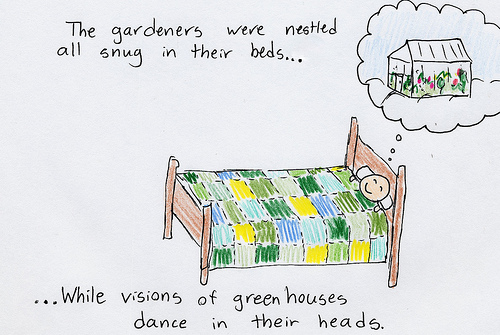
Credit: Joseph Tychonievich; cartoon from https://www.facebook.com/FineGardeningMagazine/photos

No I didn’t get a greenhouse for Christmas…yet.

RAISED BEDS FOR GARDENING

But I do have a wonderful husband who knows how to make his wife – the Master Gardener – a happy person. His Christmas 2020 gift to me was to create some raised beds so we will be doing that this spring. I have been wanting to do raised beds for a few years since seeing Tara Nolan do a presentation at the Peterborough Garden Show, and I guess dropping those significant hints finally worked 😉

So we did a little research. Have you been thinking of creating raised beds for either vegetable or other gardening? They are great to extend the gardening season, be able to control soil quality, provide accessibility for older gardeners or those with disabilities, create a garden for special purposes (youngsters or horticultural therapy), increase yields, reduce weeds, and keep critters at bay. They also work well for condos and rooftops in our urban centres. Here’s some great sites I found for those interested in the idea.

One of my favourite gardeners with a similar climate to mine in Central Ontario – Erin Schanen in Southeastern Wisconsin (zone 5) – The Impatient Gardener. She has several good articles on growing in raised beds, from layout through to construction.

Tara Nolan’s book Raised Bed Revolution emerged at a time when this idea was gaining a lot of traction, and it’s an excellent source of information on size requirements for constructing raised beds, height suggestions, types of materials you can use, and creative tips for fitting the maximum garden capacity into small spaces—including vertical gardening. The Toronto Botanical Garden also wrote a great review. We also have a copy of Mel Bartholomew’s Square Foot Gardening, which focuses on growing more fresh produce in less space, and is very complementary to the raised bed philosophy.

For some general information on raised beds try here and here.

ORDERING YOUR SEEDS

Maybe it was just the crazy rush (and delay on delivery) for seeds this past spring, but we just ordered our vegetable and flower seeds for the 2021 season. There are lots of seed companies to choose from, but please try to shop from Canadian companies and especially those local to you. Although COVID-19 meant the cancellation of Peterborough’s wonderful Seedy Sunday, the organizers did post a list of all the vendors who would have been there, and it’s a great resource, as is the Seeds of Diversity site.

ESPALIERED FRUIT TREES

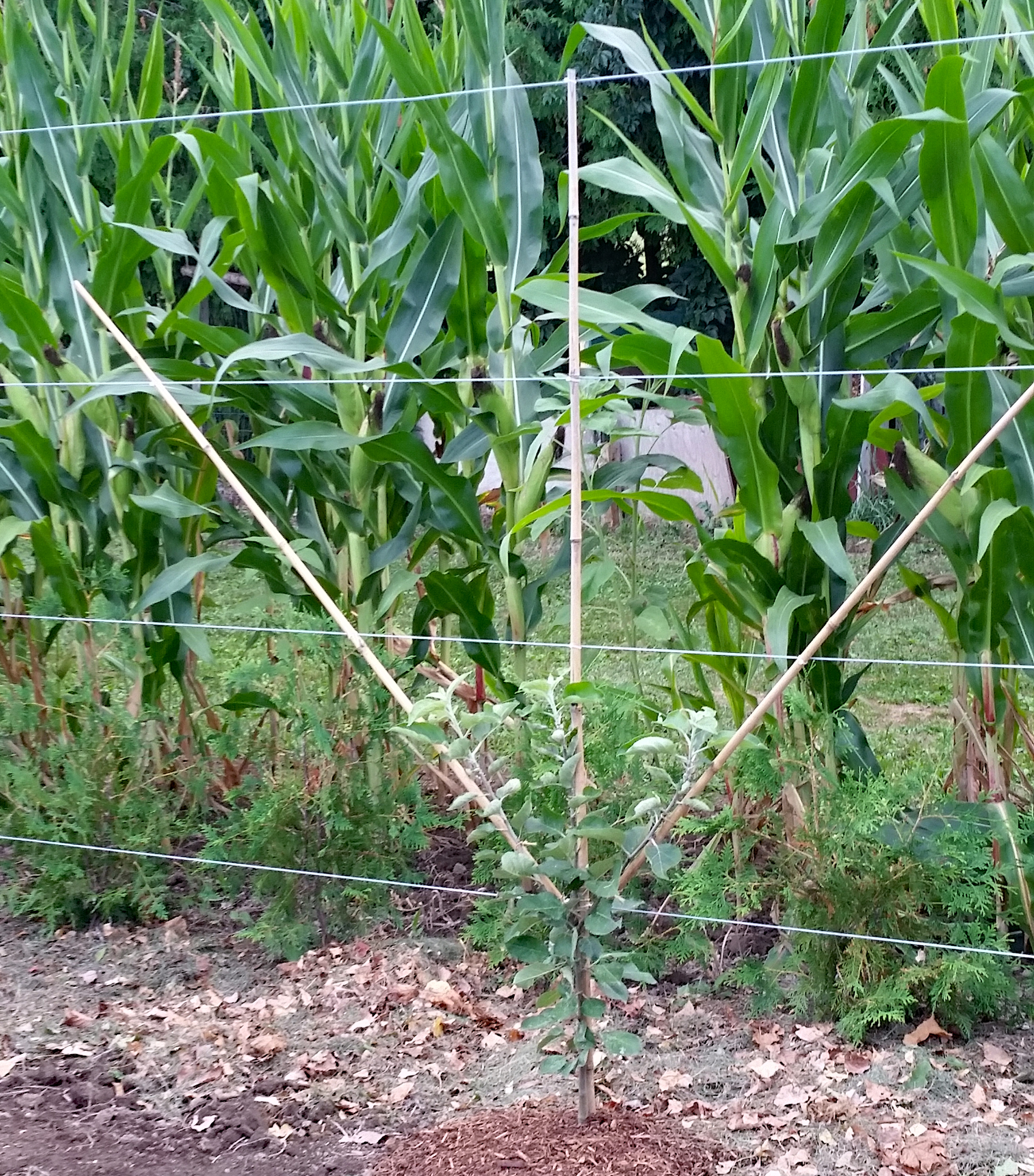
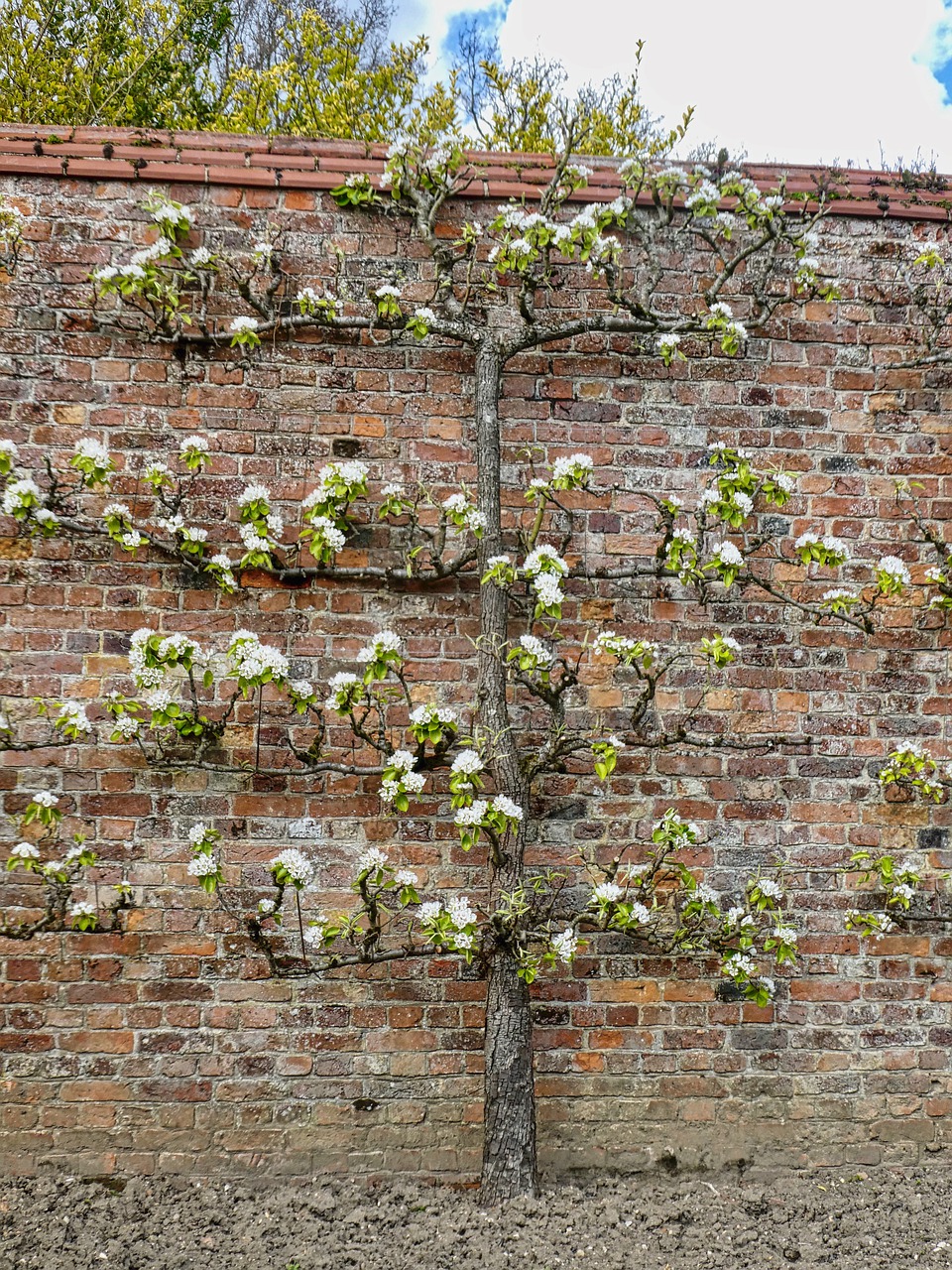
Espaliered fruit trees (espalier – to train a tree or shrub to grow flat against a support or wall) have been on my garden wish list for several years, and I missed an opportunity to pick up a mixed apple espalier tree several years ago which I have been kicking myself for ever since. I saw amazing espaliered fruit (English style) in the Victorian Kitchen Garden at Meadow View Gardens (just north of Cobourg) on a Master Gardener tour several years ago, and was entranced (well I’m entranced by owners Julie and Garry Edwards’ entire English-inspired gardens, but that’s another story).  

Although they can be any kind of fruit they are most often apples, and the key to doing it well is understanding how to prune the trees. Garden Therapy has an excellent article on how to grow these edible gardens, in ways that can accommodate both small spaces but be decorative. There are many different shapes that can be done – cordon (branches straight out to the sides), fan (branches fanning up and to the side), candelabra (like a cordon but the branches turn at a right angle to form the shape of a candelabra), lattice (multiple trees with crossing branches), and “Y” shapes. Maybe this is something you can try in your garden as well? The Ontario Ministry of Agriculture, Food and Rural Affairs (OMAFRA) has a list of nut and fruit tree nurseries. I know one company I have dealt with is Silver Creek Nurseries in Wellesley, who specialize in fruit trees, and they offer the following advice on their website:

“Spur bearing varieties are recommended (rather than tip bearing), such as Cox’s Orange Pippin, Winesap, Fuji, Belle de Boskoop, Calville Blanc, Sweet 16 and many more. Apple and pears are generally the easiest fruits to train, but other species may be espaliered with varying degrees of difficulty.”

Grow a Little Fruit Tree: Simple Pruning Techniques for Small-Space, Easy-Harvest Fruit Trees is also recommended as a resource (although I haven’t read it).

I’ll be in touch with them once spring rolls around, which should be in 82 days or so (but who’s counting?). Enjoy your winter garden dreaming, and spring will be here soon enough.

My Favourite Pruning Book

by Suzanne Seryck, Master Gardener

I have a lot of gardening books and whilst I do search on the internet if I have a quick question, there are a few books that I go to repeatedly and often. One of these is from the UK Royal Horticultural Society Pruning & Training. I am sure you could find a similar book in Canada but as this book was given to me a few years ago by my father-in-law as a present, it has special meaning for me.

I love growing fruit, apples, grapes, currants, blueberries, to name a few and as I have a smaller city garden, this comes with challenges. I have to make use of all available space and prune effectively to fit everything I want into my garden. Hence the reason why this book is so important to me and why I use it so often.

There are chapters on ornamental trees as well as ornamental shrubs and roses and a good introduction describing the parts of a plant as well as the principles of pruning and training. But it is the chapters on tree fruits, soft fruits and climbing plants that I refer to most often. I actually have PostIt® notes on the sections that describe the pruning shapes I have chosen for my apples, currants, gooseberries and grape so I can check I am doing it correctly. I must admit it took a few years to observe the effectiveness of pruning well, I was always hesitant to cut off too much of the plant, much as I still save every perennial seedling that comes up in my garden. In my last house we had a grape for approximately 6 years and whilst we did get some fruit on it, we could have doubled or tripled the harvest with better pruning, but I hated to cut so much off.

For my grape vine I originally had it growing over an arch, but it soon outgrew that support, so we had to build a new support system and then re-prune it into its new system. There are many different systems that can be used for grapes including the rod and spur system in which the grape is grown along 3-4 horizontal wires to the guyot system in which shoots from two horizontal stems are grown vertically.

The chapter on tree fruits starts by showing diagrams of all the different forms or shapes as well as describing basic and pruning techniques. There are lots of photos and diagrams in this book so that you can visually see everything being discussed, which I really like. There is also a section on renovating neglected tree fruits.

I chose to prune my apples trees as espaliers on a four tiered tree, this is my trees fourth year and first year that they have blossoms, so I am hoping to have my first apples. It is fairly time consuming, especially as I didn’t know what I was doing the first couple of years, but I followed the instructions religiously and am now beginning to approach the trees with pruners in hand confidently.

espalieredapple
Espaliered apple tree (Year 4)

My currant and gooseberry bushes were pruned as multiple cordons with three vertical arms. I have this grown both on the same support system that I have for the fruit trees but also on bamboo poles. I find that by growing them in this way as opposed to a bush, I can fit more currant bushes into the same space, I grow red, pink, white and black, and they are easier for me to pick. I still have a high yield of berries and am able to harvest almost all of them.

currentcloseup
Close up of currants

redcurrent
Redcurrent bushes

There are plenty of videos on the internet showing different pruning techniques, maybe even too many as it is often difficult to choose just one, and then you end up getting side tracked. As I was writing this article and looking up videos, I ended up watching three including one on heucheras. Here’s one you might like from the RHS on renovating fruit trees.


Late February: Tree Pruning Time!

By MJ (Mary-Jane) Pilgrim, Master Gardener

Last year at around this time on a beautiful, sunny and mild Saturday, I found myself in an apple orchard south of Norwood learning the intricacies of pruning apple trees. Fruit trees need to be pruned in order to open up the tree canopy to sunlight and air circulation which promotes fruit production and a healthy plant.

Most trees benefit from some pruning, but an important aspect of the task is knowing when to prune. Proper timing helps to insure attractive, healthy, productive trees and shrubs.

February through March is generally regarded as the best time to prune most deciduous trees. The absence of foliage at this time of year gives the individual a clear view of the tree and allows the selection and removal of appropriate branches.

The best time to prune flowering trees or shrubs is right after they’ve finished blooming. Unlike other trees in this article, pruning of these is unlikely to have anything to do with February or March!

Prune evergreen shrubs, such as juniper and yew, in late March or early April before new growth begins. Light pruning may also be done in mid-summer. Avoid pruning evergreen shrubs in the fall as fall pruned evergreens are more susceptible to winter injury. Late winter is the best time to remove unwanted lower branches on evergreen trees.

Back to the apple orchard. Late February to early April is the best time to prune fruit trees in our area. Pruning should be completed before the fruit trees begin to break bud (leaf out) in early spring.

branch-3873825_640
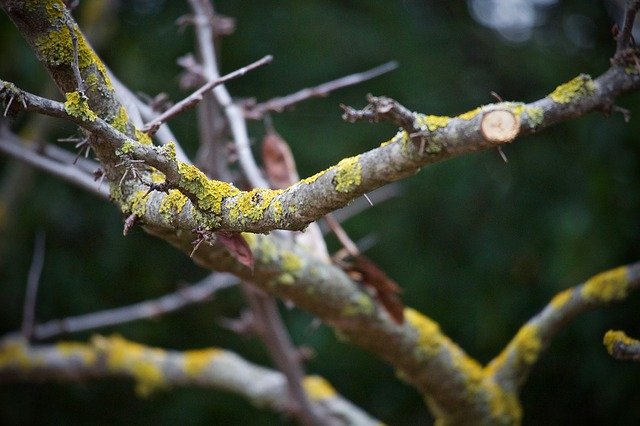
I learned that the first rule of pruning is to remove any dead, injured or diseased branches. Cut just past the “branch collar”–the wrinkled part where the branch connects to the trunk or another branch.

Then, moving up and around the tree, look for branches that cross each other and eliminate the ones that are not evenly spaced or are not at the best angle. Competing branches will cause problems for the tree. Fruit trees should only have one central leading branch. If two or more exist, choose the healthier one and remove the others.

It was definitely an interesting afternoon. Much thanks to my friend Carl for the lesson!

Three Items of Likely Interest

While we’re on the subject of trees, I thought the following timely items would be of interest to our readers.

Ecology Park Spring Sale, Victoria Day Weekend. Mark your calendar now and plan to support Ecology Park programs with purchases of over 150 species of edible and native plants, shrubs, and trees that thrive in our region of Ontario and provide important habitat for wildlife and pollinators.

ORCA Seedling Program — Otonabee Conservation can assist you in reforesting or planting additional trees on your property through the Tree Seedling Program. Orders for trees can be placed in early March for delivery in late April. Tree whips (3-4yrs old) come bare root. Trees range in price from $1 per tree to $4 per tree, but there is a minimum order of 25 trees of a single variety so you may want to split an order with a friend or two (or three). See the link below for more information. Order deadline this year is March 10, 2020.

Coincidentally, the Peterborough Horticultural Society speaker this coming Wednesday February 26 (2020) is Vern Bastable from Peterborough Green Up. Vern will be speaking about “Choosing the Right Tree”. Guests are always welcome for a nominal $2 charge. The meeting is held at the Peterborough Lions Centre in Ashburnham from 7pm-8:30pm sharp and refreshments are served before the meeting.

Lastly, here are some resources that you may find helpful.

Back to the Garden…

By Vince Picchiello, Master Gardener in Training

It wasn’t long ago that Joni Mitchell sang about making it to Woodstock. In these last few years though, there is a more serious and vibrant movement when the subject turns to the foods we eat and their genetic composition. Additionally, there are real concerns about the lack of nutrition and vitamins that exist in many of the fruits and vegetables that we purchase at our local supermarkets what with the deteriorating state of soils that are infested with herbicides and pesticides. Hence, the return to our own gardens for fresh organic fruits and vegetables.

First and foremost of concern is the introduction of foods that are Genetically Modified Organisms or GMO’s. Genetically modified foods are organisms that have had their characteristics changed through the modification of their own DNA (deoxyribonucleic acid). GMO’s have had their genomes (organisms that contain the complete set of genetic instructions) changed in a way that doesn’t happen naturally.banner4-min

In the United States, in large scale agricultural crops, at least 90% of soy, cotton, canola, corn and sugar beets have been genetically engineered. In Canada, canola, soy beans, corn and sugar beet are crops that are genetically modified. However, most of these foods are exported. The lingering issue is whether these foods have any health issues now or in the future. The Center for Food Safety is of the opinion that not enough information has been gathered to deem these foods safe for consumption in the long term. Regardless of the debates, there is an awakening among consumers of the foods we eat.

Obviously, not everyone has access to a garden and some only have room for container plants but the awareness arises from the quality and certainty of the foods we eat. It becomes about choices. We can choose to shop at our local farmers markets whereby we can engage directly with the lovely people who sell their foods. We can ask about farming techniques; whether they use pesticides or herbicides, whether their soil is certified organic or if they use GMOs. Alternatively, for those of us blessed with space on our properties we can slowly begin to amend our soils and start our own self-sustaining journey.

Not to be forgotten through this movement to the garden is our choice of using heirloom seeds in order to preserve some of our declining specimens of fruits and vegetables that have been marginalized by corporate “farmers” in their quest for profitable crops.

Finally, not only is gardening a rewarding endeavour that enhances our health, it attracts nature with the butterflies and bees and the multitude of insects that cultivate our soils, ultimately we get to enjoy the fruits of our labour with pure authentic produce. Back to the garden is a reality that is picking up steam. Why not join us!

The Soil in Your Garden

by Christine Freeburn – Master Gardener

For the plants in your garden to be the best they can be, you need to start with the best soil you can make. Enhancing your soil with compost and manure is the best way to do this.

Soil provides physical anchorage for plants

You need your soil to have enough texture to hold your plants without being so heavy that it strangles them.

You should know what your SOIL TEXTURE is.  To do this, you can try this simple test:

  • fill a quart jar one third full with a sample of your soil
  • dig down into the soil to get a sample
  • fill the jar with water, put the lid on tightly and shake well.

As the soil settles, you will be able to see different layers.  The bottom level is the sand portion.  Next will be silt. Silt has larger particles than sand, but smaller than clay.  Last will be clay.

The amount of each that you have in your soil will determine what type of soil you have….clay, sandy, silty or any combination of these. The best soil is sandy loam, which is about 60% sand and 40% clay.

This will also tell you how your soil deals with water….does it drain well or hold and stay wet longer.

You can amend your soil to improve the texture, but it is a constant challenge. Sometimes it is better to accept what type of soil you have and grow plants that prefer a sandy soil or a clay soil.

Soil supplies water and nutrients to plants

When you water, water the soil and roots of your plants, not the leaf portions. Water is absorbed through the roots and channels up into the leaves.

pH

Another thing you should know about your soil is it’s pH…is it acidic or alkaline. pH has a scale of 1 to 10, with acidic soil have a low number. Most plants like 6.0 to 7.5. This is where they can best absorb the nutrients in your soil. You might have heard that plants like rhodendrons prefer acidic soil, which would have a lower pH.

Knowing the nutrients in your soil is important also. You can send away to Guelph University to get your soil tested, however that can be expensive. You can use an inexpensive soil testing kit also. It will also test for pH.

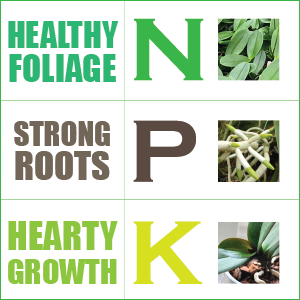
There are 3 big nutrients and these are Nitrogen, Phosphorus and Potassium. You will be familiar with them as the three numbers on fertilizers. Many fertilizers are synthetic, however you can get organic types.

Nitrogen is for leaves and greening of your plants.NPK-01.png

  • fish emulsion
  • blood meal

Phosphorus is for bloom

  • bone meal

Potassium is for roots and overall health of plant

  • wood ash
  • composted seaweed

Other natural fertilizers

  • animal manures – make sure they are well composted or they will burn your plants or be full of weeds
  • manure tea – dilute manure in water, let sit for a week, then water plants
  • comfrey tea – another good nutritional source
  • epson salts – put a tsp in hole when planting

Know your soil, it’s texture, pH and nutritional content

Grow the plants that will thrive in those conditions or be prepared to make amendments

Soil is a living thing which needs to be enriched on a regular basis

Compost and Topdress

Growing Strawberries in Containers

by Pat Freistatter

Why grow strawberries in containers? 

  • It does not require a lot of space.
  • Containers can be close to your kitchen
  • Bacterial and fungal diseases and damage from slugs are reduced.
  • Containers can be moved around to take advantage of warmth and light from the sun.

Note: Strawberries on plants still need to be protected from Insects and birds

What type of strawberry plant grows best in containers?

  • Any type of strawberry plant can be used.
  • June bearing strawberry plants provide one large crop.
  • Day neutral strawberry plants produce fruit throughout summer, except during hot weather.
  • Ever-bearing strawberry plants produce 2-3 harvests each summer from early spring to fall.

What type of container can be used?

  • Many types of containers can be used: eg. hanging basket, pot, wooden box (must have several drainage holes in the bottom)
  • Strawberry plants have a small and shallow root ball so they can be grown in small containers; as small as 25 cm in diameter and 20 cm deep (Note: small containers must be watered more often)
  • Light coloured pots keep the plant roots cooler in the heat of the summer.

What type of soil should be used?

  • Use loose, loamy potting soil that will hold water, but allow excess water to drain away.

How do you plant the strawberry plant?

  • Fill the container with potting soil to within 2.5 cm of the rim
  • Put plant in pot and cover the roots, up to the crown (where the leaves emerge), with the soil and water well. Add more potting mix if needed after the soil settles.
  • Strawberry plants can spread out about 60 cm – put only 1– 2 plants in a small container.

When should the plant be watered?

  • Water strawberries whenever the soil feels dry to about 2.5 cm below the surface.
  • Avoid both soggy and dried out soil.
  • Daily watering may be needed in periods of hot, dry weather.
  • Keep moisture off the leaves to prevent fungal diseases that will damage the fruit.

How should the plant be fertilized and when?

  • Strawberries should be fertilized every 3-4 weeks, as soon as the first flowers appear, with a fertilizer high in phosphorus.

How much sun should the plant receive?

  • At least 6-8 hours of sun – rotate container every 3-4 days if possible

Fun things to do with strawberries in containers: Create a Strawberry Waterfall

  • Stack a few lightweight pots filled with potting mix, starting from largest to smallest.
  • Plant strawberries around the edge.
  • Take care of your strawberry fountain following the previous directions for containers.