Category Archives: Perennials

Glorious Lilies

by Christine Freeburn, Master Gardener

One of the most spectacular blooming flowers in the garden are from the genus Lilium. The large 6-petalled trumpet flowers stand on upright herbaceous stems. The fragrance emitted from some can perfume the entire neighbourhood. Lilies form from bulbs that have scaly layers and depending on the variety can bloom in your garden for a short period from June or into the summer months.

There are hundreds of species and varieties, and more being hybridized each year. There are basically 9 different types described by the North American Lily Society. They include hybrids like Asiatic, Oriental, Longiflorum, Trumpet, Martagon, Candidum, American and Interdivisional as well as Species. Most are perennial in our zone, some are fragrant.

Lilies prefer full sun and need well drained soil to grow well. Lilies are toxic to cats. Many lilies from the Asiatic, Oriental, Trumpet and Martagon families are susceptible to attack from Asian Lily Beetle.

For more information about lilies you might want to add to your garden Ontario Regional Lily Society and North American Lily Society

Check out a previous article written by PMG Mary Jane Parker on Falling In Love With Lilies
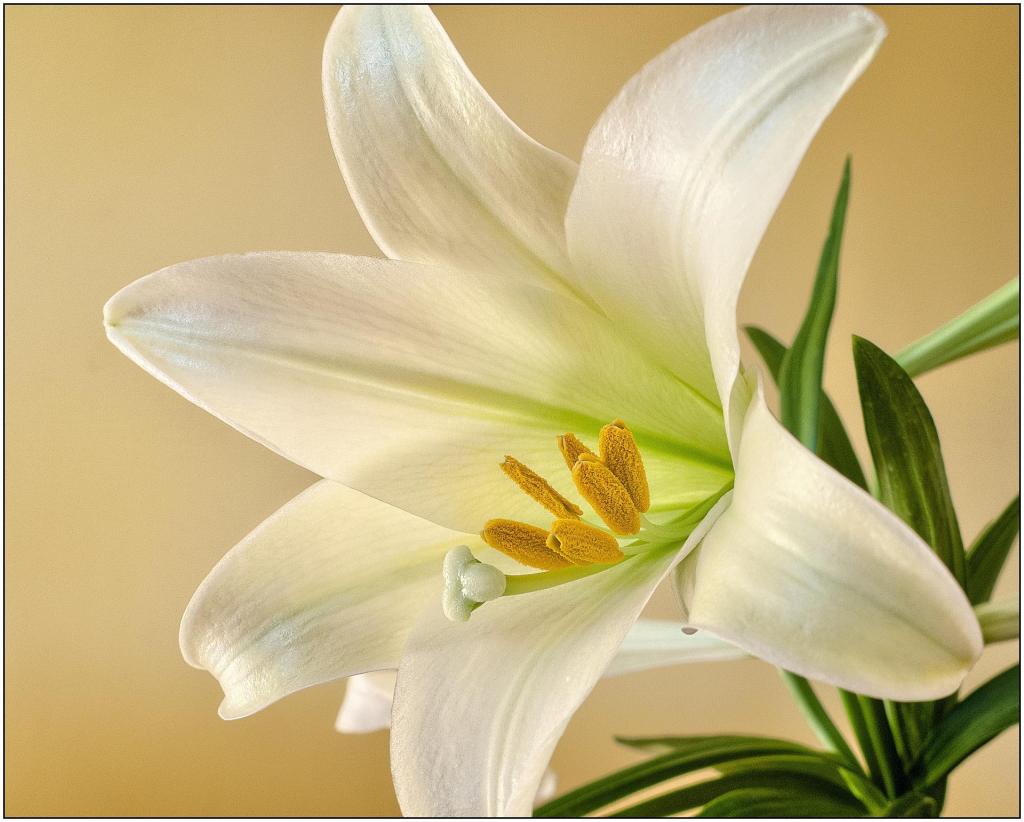
Easter Lily

Easter Lily (Lilium longiflorum)

• Forced in greenhouses for bloom at Easter
• 2 to 3 feet tall with a slight fragrance
• Will take full sun or part shade in your garden
• If planted in your garden, should overwinter and bloom the next summer, but be patient as it has had stress put on it from being forced

Asiatic Lily

Asiatic Lilies (Lilium auratum)

• Look like small artichokes as they emerge in spring
• Long slender glossy leaves
• Varieties may grow from 1 to 6 feet tall
• Many colours available, no fragrance
• Easy to grow, bulbs multiply quickly, very popular
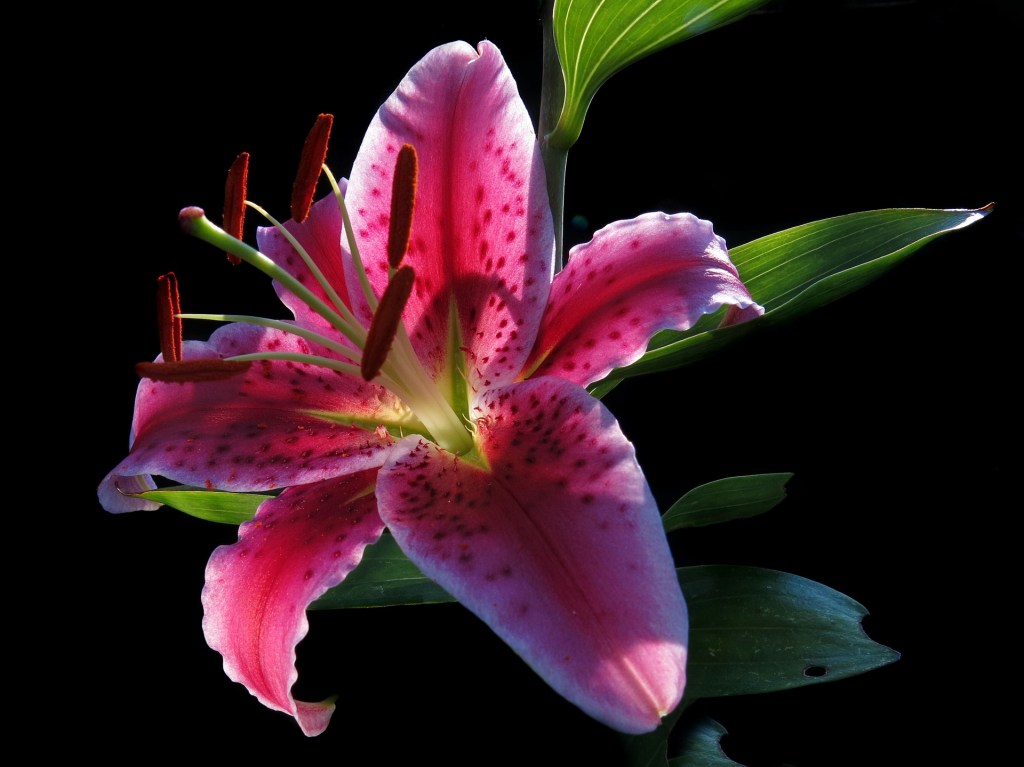
Oriental Lily – Stargazer

Oriental Lilies (Lilium orientalis)

• Pointy tips emerge from ground in spring
• Leaves are broader, slightly heart shaped and farther apart on stem
• Usually bloom in June with very fragrant flowers
• Slower to multiply than Asiatic
• Most popular of all lilies
• Popular varieties include “Stargazer” and “Casablanca”

Trumpet Lilies (Lilium aurelian)

• Tend to bloom earlier than Oriental and after Asiatic
• Fragrant multiple blooms on each stem
• Some varieties can grow up to 8′ tall
• Popular varieties include “African Queen”

Martagon Lilies (Lilium martagon)

• Known as Turk’s Cap
• Has blooms which tend to face downward
• Likes moist, well drained soil in sun to part shade

American Hybrid

• Native to North America and blooming mid to late summer
• Downward facing yellow flowers
• Sun to part shade and moist soil
L. canadense and L. michiganense are two varieties grown in Ontario

Interdivisional Hybrids

• Also know as “Orienpet”
• Cross between Oriental and Trumpet
• Lots of hybridized types available
• Easier to grow varieties

Madonna Lilies (Candidum)

• Similar to Easter lily, but susceptible to viral disease
• Bulb is planted near surface, not like other lily bulbs
• Difficult to find to purchase

There are many plants with “lily” in the common name that are not related to those mentioned above. Always look at the Latin name to determine what family plants belong to.

Daylilies (Hemerocallis) are a beautiful low maintenance perennial which grow in clumps.
Lily of the Valley (Convallaria majalis) is an invasive perennial! Do not plant, grow or share!
Toad Lily (Tricyrtis hirta) is perennial , 2′-3′ tall, likes partial to full shade and moist loamy soil.
Trout Lily (Eryyhronium americanum) is a yellow wildflower with mottled purple lance shaped leaves found in forests
Canna Lilies (Canna) are a tender perennial with rhizomes that need to be lifted in fall and stored over winter
And there are the houseplants Calla Lily (Zantedeshia) which likes moist soil and grows from rhizomes and the Peace Lily (Spathiphyllum) which is related to but not the same as calla lily.

Why Do We Garden?

by Emma Murphy, Master Gardener

“To plant a garden is to believe in tomorrow.” Audrey Hepburn

If you’re like me, you love to garden. Time in my garden provides me with joy on so many levels — emotional, physical, social, creative — and connects me with the outdoors and the environment. And while the COVID-19 pandemic has turned our lives upside down, one of the silver linings is that we’ve seen a renewed interest in gardening and its benefits, whether you’re working in a large garden or a few containers on your balcony. So I thought I would explore some of the top reasons I think we garden.

Physical and Emotional Health

Gardening is physical. As a low to medium impact exercise that requires both strength and stretching, you’ll see increased muscle strength and cardiovascular fitness over time, as well as improved sleep and diet (if you grow your own produce). On the emotional side, gardening reduces stress, anxiety, and depression and improves self esteem.

It’s good for the mind — gardening calms me down and helps me be more patient with myself and those I interact with on a daily basis. It gives me time to contemplate as I go about my tasks, up to my elbows in soil. Even weeding is cathartic, pulling out those little terrors by the root!

Just visiting gardens helps to calm the mind, bringing a sense of contentment and tranquility from looking at beautiful landscapes, flowers, or just colour and texture.

Building Relationships

While gardening can be a solo activity (some of my favourite moments are just by myself in my green oasis), it’s also a fabulous way to connect with people, whether they be family or strangers!

Teaching people how to nurture a living thing and to be responsible for a little bit of the environment is a lesson and gift we can share with others. Gardening knowledge is shared through generations — I love hearing about plants handed down from grandparents, or children working with their parents to grow seeds for the first time. It’s a great way to pass on critical life lessons — about patience as plants and vegetables grow, responsibility as they look after their care, and loss when flowers die at the end of a season.

Beyond family, gardening helps us connect with the broader community. Whether you plant too many tomatoes or zucchinis and end up giving them away to neighbours, or participate in a community garden plot, gardening can be a very social activity and a chance to learn from, and share your bounty, with others.

Learning Life Values

Gardening teaches you important life values like patience, determination, caring, and hard work. It also makes you very humble as you realize that there is always something new to learn. You need to observe the seasons and the weather, and this puts you in contact with the natural world. I love that I can get dirty and do this very physical activity, working with seeds and plants and seeing growth in all I do.

Growing Your Own Food

Gardening provides benefits for your wallet, your nutrition, and reduces your environmental footprint. By growing your own food (either from seeds or small plants), your food is automatically more sustainable simply because you are doing it onsite or in a community garden. If you control the ‘inputs’ and do it well, you can save a lot of money.

But ultimately there is nothing more rewarding than planting and maintaining your own vegetable garden and harvesting (and sharing) your results. And we all know how much better homegrown produce tastes versus conventional produce at the grocery store. If you have too much produce, then you can just share the love with others!

Connecting With Nature

I think this is one of the best reasons why people have a garden — the sunshine on your face, hands in the dirt, and feeling connected to nature. The garden is so much more than just plants and flowers — it’s the birds, the bugs, the bees, the spiders, the snakes and all the small mammals. I feel like I am establishing a little ecosystem in my own garden and that I am trying to give back for all the benefits that I receive.

Working in the garden also gives you that sense of wonder, accomplishment, and reward. To grow plants is to give life. It keeps you busy but reminds you to be one with the earth. To see the results of something growing from seed to six feet tall is just incredible.

Exploring Creativity

I find gardening to be an incredibly creative activity. Finding the right plant for the right spot, mixing colours, and making sure there is interest for every season — these are real challenges. I’ve spent much of the past few years learning about new plants to consider in my garden, especially natives.

Helping The Environment

Finally, gardening is so important for our planet. Even though we create our gardens (so they are human made) they do represent natural environments, with trees and shrubs and plants that are all taking in carbon and releasing oxygen. The plant roots stabilize the soil and filter water, and the plants themselves support our pollinators.

We live in a symbiotic relationship with our gardens. We give back by planting and maintaining them, but we receive so much more from them than we give.

Why do you garden?

Expanding Your Native Plant Palette

By Laura Gardner, Master Gardener in Training

Last year I posted about Doug Tallamy’s most recent book and talked about how Quercus (Oaks) are the number one “keystone plant species.” A keystone plant is one that supports the entire life cycle of many different wildlife species—all critical to the food web. The list of keystone plants is actually quite short as only 14% of native plants support 90% of butterfly and moth species.[i] Some of these, like Danaus plexipplus (Monarch Butterfly), are specialists in that they require host plants from the genus Asclepias (Milkweed) to complete their lifecycles. Recently I learned that while most native bees are generalists and they seek out a range of plants for pollen, there are certain specialist native bees that are restricted to either a single plant genus or to a few genera. Horticulturist Jarrod Fowler determined that of native bees in the Northeastern United States, only 15% restricted pollen foraging to 33 plant genera and only 201 native host plants.[ii]

Bombus (Bumblebee) on Asclepias incarnata (Swamp Milkweed)

As examples of specialist bees, authors Lorraine Johnson and Sheila Colla mention in their book A Flower Patch for the Rusty-Patched Bumblebee: Creating Habitat Gardens for Native Pollinators in the Greater Toronto Area, two whose sole pollen source plants include Oenothera (Evening Primrose) and Monarda (Bee Balm): Lasioglossum oenotherae (Evening Primrose Sweat Bee) and Dufourea monardae (Bee Balm Sweat Bee). The former is considered vulnerable and the latter is imperiled in Ontario. A recent online presentation by biologist Heather Holm indicated that there are also specific plants that are the sole providers of pollen to Bombus (Bumblebees). For example, Monarda (Bee Balm) provide nectar to them but they do not provide pollen. Pollen is a necessary protein source as is also nectar as a carbohydrate source. Other plants are required for their pollen sources. This list can help as a guide to some of these.

When I first started gardening, I planted different Milkweed and it was all for the endangered Monarch Butterfly. I think I was influenced more by aesthetics and an influential marketing campaign than anything else. While I will continue to have these plants in my garden and continue to support Monarchs, I have become more thoughtful in my choices—especially since the percentage of native plants that are supportive is so small. What can we do to improve our native garden palettes? A good approach is to choose a wide range of geographically appropriate native plants from the top keystone genera that have flowers of different shapes, colours, season-wide blooming periods, and provide nectar and pollen. Plants that historically or genetically evolved in our region will be the most supportive of the native wildlife in our region. Consider also adding some individual species that support specific specialists. As with all plants, you still need to consider whether your planting site is suitable [e.g., light level, soil type (loam, clay, sandy), pH (acidic, alkaline), moisture, drainage, etc.].

Danaus plexippus (Monarch Butterfly) on Asclepias incarnata (Swamp Milkweed)

To help, here are two lists provided by the National Wildlife Federation that can apply to gardeners of the Peterborough area—one for northern gardens in the Northern Forests ecoregion and one for southern gardens in the Eastern Temperate Forests ecoregion. There are also two other related lists for Eastern Temperate Forests and Northern Forests—these also provide examples of ferns, vines, and grasses that are host plants and/or provide nectar and pollen. Heather Holm has also put together a wonderful list of native trees and shrubs for pollinators with their flowering periods. There are a few plants on a couple of the lists that are not found in nature in Peterborough County, however, the majority are.

Euchaetes egle (Milkweed Tussock Moth)

You may be surprised to see Solidago spp. (Goldenrod) listed as the top flowering keystone plant genus. There are 25 species native to Ontario and some of them are easily managed and do not spread like the ubiquitous S. canadensis (Canada Goldenrod) that you tend to see along roadsides and in fields. Last year I added S. caesia (Blue-Stem Goldenrod) to my garden and this year I am looking forward to adding S. rigida (Stiff Leaf Goldenrod) and S. flexacaulis (Zig-Zag Goldenrod). What will you be planting this year?

For Expanded Learning

Johnson, Lorraine and Ryan Godfrey. Get to Know Goldenrod. Online: https://www.toronto.ca/wp-content/uploads/2021/09/97fc-DS-21-0224-GoldenRodFactsheetDigital.pdf

Holm, Heather. Pollinators of Native Plants: Attract, Observe and Identify Pollinators and Beneficial Insects with Native Plants (Pollination Press, 2014).

Ohio State University’s online learning program: Tending Nature: Native Plants and Every Gardener’s Role in Fostering Biodiversity

Pollinator Partnership Canada. Selecting Plants for Pollinators: a Guide for Gardeners, Farmers, and Land Managers in the Manitoulin-Lake Simcoe Ecoregion. Online: https://pollinatorpartnership.ca/assets/generalFiles/Manitoulin.LakeSimcoe.2017.pdf


[i] Narango, D.L., Tallamy, D.W. & Shropshire, K.J. Few keystone plant genera support the majority of Lepidoptera species. Nat Commun 11, 5751 (2020). https://doi.org/10.1038/s41467-020-19565-4

[ii] Fowler, Jarrod. “Specialist Bees of the Northeast: Host Plants and Habitat Conservation.” Northeastern Naturalist 23, no. 2 (2016): 305–20. https://www.jstor.org/stable/26453772.

Dreams of Spring Gardens

By Emma Murphy, Peterborough Master Gardener

It’s really cold out. I mean REALLY cold. -25 degrees Celsius cold. With lots of snow. And wind. And ice. So it’s got me dreaming of springtime and things that are green and not white.

So indulge me while I research and share with you some of my favourite English gardens in southern England that we plan to visit later this spring. Hoping things improve to celebrate my aunt’s 95th birthday and fulfill a long held dream to visit England in late springtime. While I’m planting many more natives in my messy “English-style” garden, I’m still fascinated with the diversity, structure, and composition of more formal English gardens.

Here’s my top 5 ‘not to be missed South England gardens” – there are (of course) more on our list but these are the key ones. Some of these may be familiar to you, and some not…

Hoping that these profiles help ease the January blues. Since I’ve haven’t been there yet these are photos taken by others. If you have been lucky enough to visit these gardens please share your photos in the comments.

1. Great Dixter House and Gardens, Rye, East Sussex

Great Dixter is an historic house, a garden, a centre of education, and a place of pilgrimage for horticulturists from across the world. Certainly it’s the one garden that has the highest reputation with overseas visitors.

Surprisingly, it’s maintained this reputation for many decades, even through a change of hands. Initially famous through its owner Christopher Lloyd (1921-2006) – who lived in the half-timbered fifteenth-century house all his life – Lloyd (or “Christo” as he was known) was not only a gifted and artistic gardener but a prolific and knowledgeable writer whose articles and books inspired a generation of gardeners.

Today, the gardens are managed by the Great Dixter Charitable Trust and Fergus Garrett, who became head gardener in 1992. I was lucky enough to hear him speak at a Toronto Master Gardeners’ Technical Update a few years ago.

The two gardeners had a creative working relationship, both loving plants and their combinations, and even though Lloyd is gone more than 50,000 visitors a year find Great Dixter as vibrant a garden as ever, and full of things to learn from.

This is an ‘arts and crafts’ style garden, with topiary, a long border, an orchard and a wild flower meadow. The planting is profuse, yet structured, and has featured many bold experiments of form, colour and combination.

On the grounds are three 18th-century oast houses, under a common roof, and a 15th-century barn. Find out more here.

2. Sissinghurst Castle Gardens, Sissinghurst, Kent

Located in beautiful Kent, Sissinghurst Castle Garden was created by poet and writer Vita Sackville-West and her husband Harold Nicolson, author and diplomat in 1930 and developed over 30 years with some notable head gardeners.

Designated Grade I on Historic England’s register of historic parks and gardens, it’s among the most famous gardens in England. They transformed a farmstead of “squalor and slovenly disorder” into one of the world’s most influential gardens.

Following her death in 1962, the estate was donated to the National Trust for Places of Historic Interest or Natural Beauty. It is one of the Trust’s most popular properties, with more than 200,000 visitors each year (and I hope to be one of them!).

There are a number of specialty gardens, including the Rose Garden, the (famous) White Garden, the South Cottage Garden, the Herb Garden, the Nuttery, the Lime Walk (Spring Garden), the Delos Garden (Mediterranean garden), Moat Walk, the Orchard, and the Purple Border. Learn more here.

3. Hidcote Gardens, Hidcot Bartim, Gloucestershire

Hidcote is a world-famous garden located in the north Cotswolds (not far from [the original] Stratford-upon-Avon). Created by the talented horticulturist Major Lawrence Johnston (and inspired by the work of designers Alfred Parsons and Gertrude Jekyll), yew, holly and beech hedges define a series of outdoor garden rooms – the Circle, the Fuchsia garden , the Bathing Pool Garden, the Red Borders and the steps up to the two gazebos. The outbreak of the Great War (1914 – 1918) in which Lawrence fought, suspended progress.

You might recognize the narrow-leaved lavender, Lavandula angustifolia ‘Hidcote’, and Penstemon ‘Hidcote Pink’, as developed by Johnston. Many of the plants found growing in the garden were collected from Johnston’s many plant-hunting trips to faraway places so it will be the perfect source for gardening inspiration. More history here.

4. Gravetye Manor, East Grinstead, Sussex

Created in 1885 at the former home of William Robinson, who championed naturalistic planting, the site today is a prestigious hotel, but visitors can still enjoy the gardens which are curated and cared for by Tom Coward (who trained with Fergus Garrett at Great Dixter).

An oasis of calm with over 35 acres of beautiful grounds, Robinson created a landscape that celebrates nature rather than controls it. He also introduced the idea of the modern mixed border and popularized common place items such as secateurs and hose pipes. In many ways Robinson created modern gardening as we know it.

Some of his most influential books include The Wild Garden and The English Flower Garden, which remains the bestselling gardening book ever printed. He also ran several gardening journals such as The Garden and Garden Illustrated.

Robinson made Gravetye “the paradigm in which house, garden, fields, and forest are united in a pastoral work of art as quintessentially English as a painting by Constable,” wrote landscape designer Elizabeth Barlow Rogers. Some ideas on how to create the Gravetye look here.

5. Wisley Gardens, Wisley, Surrey

Royal Horticultural Society (RHS) Garden Wisley is operated by the RHS and is a beautiful garden with romantic half-timbered Tudor-style buildings. Unlike many English gardens, the soil is mainly acid sand which is poor in nutrients and fast draining.

There is a canal designed by Sir Geoffrey Jellicoe, a rock garden, formal and walled gardens by Lanning Roper, a country garden by Penelope Hobhouse and long borders by Piet Oudolf.

Then there are long herbaceous borders, the alpine gardens, the model gardens, soft fruit garden, rose-garden, summer garden, winter garden and woodland garden, a fruit field, glasshouses and an arboretum.

This garden is home to some of the largest plant collections anywhere in the world, with constantly evolving planting schemes to inspire visitors. In June 2021, Hilltop – The Home of Gardening Science opened at Wisley so I’m looking forward to exploring this impressive exhibition space and three beautiful new gardens.

Well that’s it for this blog – I hope you feel inspired to explore gardens wherever you live or travel – they are so many incredible gardens here in Canada and the U.S. alone. Even if we can’t travel much at the moment, many gardens have developed virtual visits, presentations, and videos so you can explore that way until we can move more freely. One of my favourites is the Lewis Ginter Botanical Garden in Richmond, Virginia, which I hope to visit in person in the future. Check it out here.

I leave you with a photo of my messy Lakefield “English garden” from last summer, my hardworking husband and our 2021 new greenhouse and dreams of springtime.

Two Plants that Never Stop Giving

By Sharleen Pratt, Master Gardener

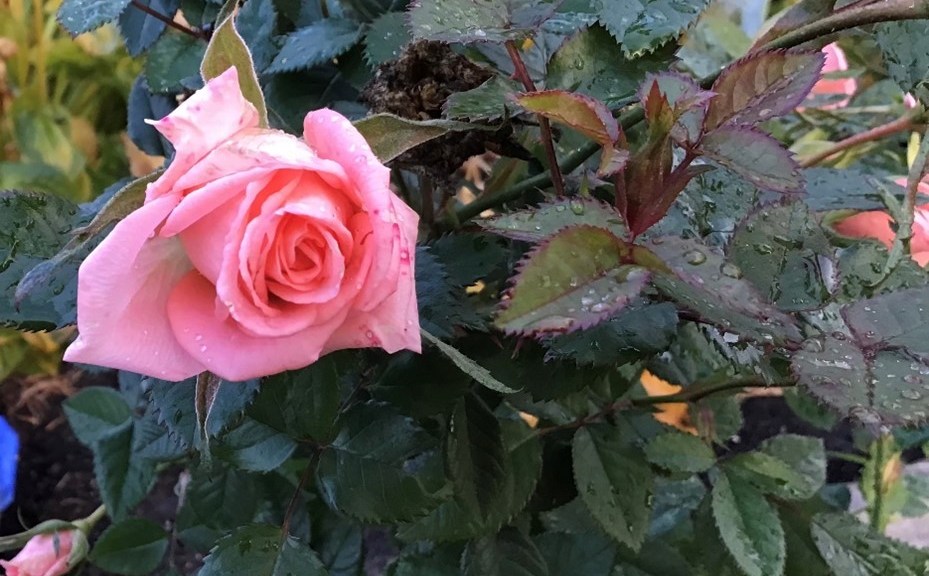
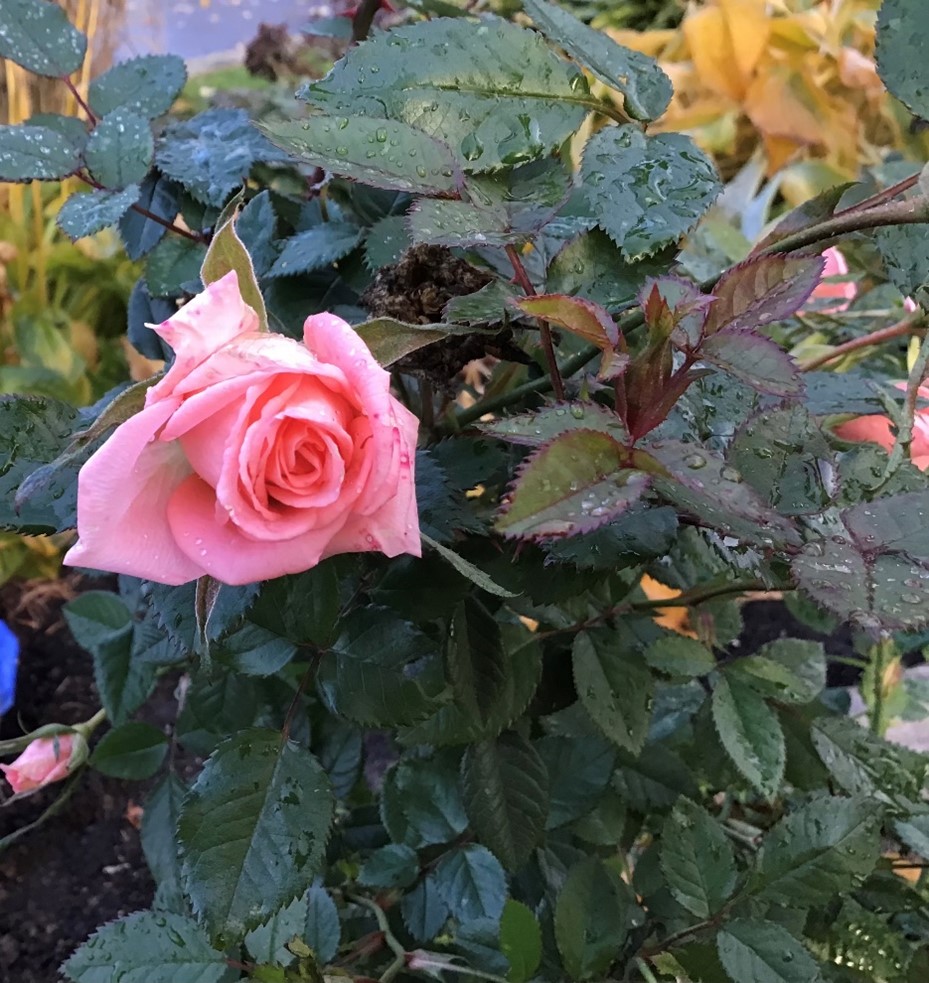
My Mom passed away last October at the age of 97 during a difficult period of the pandemic.  A dear friend gifted me a miniature rose plant that is a beautiful coral pink.  My parents were from Ireland and they always grew roses in their garden.  I adore the flowers but have never been a huge fan because of the many common diseases they get such as powdery mildew, rust and block spot.  Also, it seems that every time I am near a bush, the thorns love to grab me and wreak havoc on my skin!

Close-up of the Coral Pink Rose!  November 2021 in Author’s Garden

However, this rose was special and I managed to keep it alive during the winter months and after all signs of frost, I planted it in my front garden, tucked amongst other annuals such as the Impatiens walleriana ‘Variegata’, common name Variegated Impatiens.  This plant belonged to Norma Evans, a well-known founding member of the Peterborough Master Gardeners as well as a member of both the Peterborough and Omemee Horticultural Societies.  She passed away in 2017 at the age of 90.  Through cuttings, this gorgeous plant that is a perennial in warmer climates, has been passed amongst many friends and family.

Rose beside the Impatiens, October 2021, Author’s Garden

I was gob smacked by how well that little rose and that one small cutting of the variegated impatiens performed in my garden this summer.  The rose was blooming well into November.  The impatiens succumbed to the frost on November 4th, however, it was as large as a small bush.  It also had lovely deep pink flowers all summer long.

The Rose continues to bloom! Author’s Garden, November 2021

I have two cuttings of the impatiens growing in my kitchen window so that this plant can continue to be grown year after year.  As for the rose, I have heaped it with lots of leaves and soil in the hopes that it survives our Peterborough winter.

My Mom and Norma would be smiling and I believe they both have had an invisible hand in the success of these plants.  I know they have brought me peace and happiness. Memories are what we hold on to, and what better way to honour a person’s life than through the growth of a plant!

Happy holidays!  I hope you have all been able to safely celebrate Christmas with a few loved ones. Wishing you all the best in 2022.

Deck the Halls with Boughs of Holly

By Mary-Jane Pilgrim, Master Gardener

Common European holly (Ilex aquifolium) has a long history of use as a Christmas symbol. It appears on Christmas cards, in holiday arrangements, in Christmas carols, and my personal favourite: in stained glass ornaments. This shiny, spikey evergreen plant is easy to use for decorating, plus it has a long history of cultural significance.

Holly is a shrub-like tree that can grow up to 10-15 feet in height. Its leaves are thick and leathery, with serrated edges and spiky points. The female versions of the tree produce the red berries we’re so used to seeing everywhere at Christmastime. It is sold as a perennial in our region, but very few of the over 400 species are actually hardy in zone 5 (Peterborough). One such variety is American holly (Ilex opaca). The plant requires four or more hours of direct, unfiltered sunshine per day, and requires acidic, rich, and well-drained soil.

For centuries this magical shrub-tree has been been used in winter solstice decorating in central and northern Europe, specifically among the Celts who wore crowns of holly for good luck. They would hang holly sprigs from their windows and doorways to keep evil spirits away. Holly gradually became a symbol of hospitality and welcome.

In pre-Victorian times Christmas trees were not pines, but holly bushes. Christian culture adopted the holly – along with ivy – in Christmas celebrations; holly symbolized Christ’s crown of thorns; the crimson berries represented His blood and the evergreen a metaphor for life after death.

Holly is a real showstopper in winter when little else is green. The same features that make it so attractive today are what made holly a mythical plant to ancient cultures.

Holly’s red berries, toxic to humans and most household pets, are only produced on female plants. Hollies are dioecious, which means male and female flowers occur on separate plants (female flowers must be pollinated by male flowers to produce berries). So if you would like to see those bright red holly berries in winter, you’ll have to plant one male for every 5-10 female plants. The berries are a food source for some of our native birds in the winter.

While most of us no longer believe in the magic of plants, holly is indeed a beautiful adornment for our winter homes (“deck the halls with boughs of holly”), and has a long history of significance throughout the world.

From the Peterborough Master Gardeners to each of our amazing subscribers, we’d like to wish you all a blessed Christmas & holiday season!

Resources

A Favourite Plant

by Judy Bernard, Master Gardener

Agastache foeniculum, also known as Anise hyssop, is an herb belonging to the mint family. It was originally purchased by me as a garden thriller. It has since become a workhorse for my garden. The mother plant of the ones I now have was planted in my garden in Havelock – the “Blue Fortune” cultivar.

The seeds of the ones I have now arrived in my new garden in Norwood in the compost I brought from my old place. This delightful aromatic native plant is tolerant of a wide range of soils, drought tolerant once established, deer resistant and will do well in sun to part shade.

Although it self seeds very readily, it is easily pulled when small. The plant will grow 2-3” tall with a branching habit. The flowers are produced on the tips of the branches starting in early July. Some are still flowering in mid September. As far as it’s attraction to pollinators is concerned; it is a bee magnet. It also doesn’t seem to attract insect pests or diseases.

Anise hyssop in my garden (photo taken September 13th 2021)

Since I had so many seedlings coming up all over my garden, I decided to let them develop and act as filler plants until I had something else coming along or decided to use them elsewhere. I have since used them as a border for some of my flower beds next to my neighbour’s property.

Others I use as specimen plant for some of my beds and some others next to my vegetables to attract pollinators. For me, this is one of the most enjoyable and versatile plants in my garden.

More information

Ditch Lilies – a Cautionary Tale

By Emma Murphy, Master Gardener

Once upon a time there was a gardener who wanted something that grew quickly to screen a neighbour’s unsightly yard and house addition. She noticed that the ‘ditch lilies’ that surrounded her front yard tree (already there when she moved in) seemed to be pretty vigorous, so she planted a row of them between the yards, along with some small bridal wreath spirea (Spirae aprunifolia).

What she didn’t realize was that she had unleashed a horrible monster into her garden, one that quickly engulfed any other plants, sucked all the moisture out of the soil, and eventually killed most of those spirea.

Yes that gardener was me, many years ago, before I knew better and before I became a master gardener. So this year I knew I had to finally tackle the monster, remove all these plants, and reclaim this garden area. I knew how much work it would be (it took me three weekends this spring), but I got it done. Here’s my story…

Even though you see it growing in ditches around the province, Hemerocallis fulva (aka ditch lily, tawny daylily, orange daylily, tiger lily) is native to China, Japan and Korea and was introduced to North America in the early 19th century. They spread via seed and a network of tuberous roots, and can reproduce and proliferate from a small fragment left behind during removal. In 2020 the Ontario Invasive Plant Council added this plant to their invasives list, and their Grow Me Instead Guides offer some native alternatives to consider.

Screen capture from the Grow Me Instead Guide on Hemerocallis fulva

Garden bed, spring 2021

So this was my garden bed in May this year – just waiting to burst out and take over, again. Every single one of these plants had to be dug and lifted, making critically sure to get every last bulb. These photos show how many bulblets can be on just one stem – it was quite overwhelming to think of the job ahead.

All the plants that were dug out were put in black plastic garbage bags and left out in the hot sun beside our barn for a month. At last count I used 45 garbage bags, and they were a slog to carry as they were heavy!! Eventually they went to our rural dump, where the hot composting they do should ensure their demise.

Bit by bit, over three weekends, I got them all out. It was beneficial to have a dry spring, as it made digging them out a little easier. But still a workout!

Once everything was cleared out, I weeded the soil for anything else. All that remained were my tulips and a few hardy perennials that had been gasping for air for more than a decade.

Getting there.
Ready for a fresh load of soil.

With a fresh load of soil on top and a final check for bulblets done (and knowing that I would have missed a few), I put in some new plants, aiming for 50 percent native plants (those marked with a *). The area has both sun and shade spots so I needed to be careful with my choices.

For sun, Echinacea*, Gray-headed coneflower* (Ratibida pinnata), summer phlox (Phlox paniculata), American Witch Hazel* (Hamamelis virginiana), New England asters (Symphyotrichum novae-angliae), Sedums, Switch grass* (Panicum virgatum), Lesser catmint (Calamintha nepeta ssp. nepeta), Black-eyed Susans* (Rudbeckia hirta), lupins, Giant fleeceflower (Persicaria polymorpha), Cyclindrical Blazing Star* (Liatris cylindracea)[once I can convince the bunnies to stop eating it – see green covers], and Virginia Mountain Mint (Pycnanthemum virginianum).

For part shade/shade, Mourning Widow Geranium (Geranium phaeum), Purple Flowering Raspberry* (Rubus odoratus), hostas, Sensitive Fern* (Onoclea sensibilis), Virginia Waterleaf* (Hydrophyllum virginianum), Columbine (Aquilegia), Starry False Solomon’s Seal* (Maianthemum stellatum), Buttonbush* (Cephalanthus occidentalis), Zig-zag goldenrod* (Solidago flexicaulis) and Berry Bladder fern* (Cystopteris bulbifera). Also the infamous Outhouse Plant (Rudbeckia laciniata ‘Hortensia’), to be replaced with something else next year. Any suggestions for fast growing native shrubs that can handle part share welcome!

The garden bed needs time to fill in, so we’ll see what it looks like next year. In August I went back into the bed and sure enough, there were new ditch lilies growing in a few places. Remember it only takes one bulblet for them to grow. But half an hour later they were all gone as well.

I suspect I will on alert for the odd ditch lily plant showing up for the next few years, but I’m really proud to have removed this nasty invasive plant from my garden and rejuvenated it with native plants. And my two lovely sugar maple trees are glad for some more breathing room.

NOTE: The orange, single flower, diploid Hemerocallis fulva is the only daylily currently listed as invasive. Most daylily cultivars are diploid or triploid and do not spread invasively like the ditch lily.

beware! Think twice about these plants for your garden

by Rachel Burrows, Master Gardener

Plants are unable to hide or run away when faced with danger such as being eaten by a hungry rabbit. However some plants are toxic and can cause anything from mild discomfort to fatal consequences. Many of them are lovely to look at but it is wise to know which are poisonous especially if you have young children or pets.

Castor bean plant

Castor Bean Plant (Ricinus communis)

A friend phoned me and said that she had a fabulous plant with very unusual seed heads and would I like to take a look at it as she didn’t know what it was. Castor bean plants contain ricin, one of the most toxic substances known. The ricin is in the seeds which are covered with a prickly coating and are pretty shade of dark red. If the seed is swallowed whole without damaging the seed coat it will likely pass through the digestive system harmlessly. However, if it is chewed and swallowed the ricin will be absorbed within minutes and is usually fatal. One seed is enough for a deadly dose for a child and about four for an adult. My friend was very surprised and agreed to dig the plant put of her garden and dispose of it safely. These plants are often grown for their ornamental properties as they are tall and a lovely colour.

Yew

Yews (Taxus)

Again, another popular plant for hedges and often seen in gardens. The entire shrub is poisonous except for the red flesh of the berries. The oval, black seeds within the berries are highly toxic and can be fatal within a few hours of eating as few as 3 seeds. The toxin in yews is taxine which is a cardiac suppressant. I grew up on a farm and we all knew not to have yews in fields with livestock.

Rhododendron

Rhododendron

Not so hardy and a little harder to grow in this area but very common further south and in parts of England. All parts of the rhododendron are poisonous, even honey produced form the shrubs is poisonous.

Mountain laurel flower

Mountain Laurel (Kalmia latifolia)

This shrub is a close relative to Mountain Laurel and all the green parts, twigs, blooms and pollen are toxic. It’s blooms are gorgeous but beware!

Lily of the Valley

Lily of the Valley (Convalliaria majalis)

Lily of the Valley is valued for its lovely perfume and as a ground cover, although some people see it as a menace as it does spread quickly. The entire plant is poisonous and causes the heart’s contractions to intensify.

Monkshood

Monkshood (Aconitum)

This is a stunning, tall perennial which blooms late in the season with striking purple flowers. All parts of the plant especially the roots and seeds are extremely poisonous. Eating as little as 1 gram may cause death. Even the sap can cause fingers to become numb.

Delphinium

Delphinium

Another lovely and showy perennial, but all parts of the plant are poisonous, especially the seeds. Death can be caused in as little as 6 hours.

Foxglove

Foxglove (Digitalis purpurea)

Another commonly grown plant that produces the well known heart medication. However, the whole plant is poisonous and the toxin is deadly in high doses.

There are several other poisonous plants that you might want to think twice about before bringing them into your garden. Be aware of their deadly potential especially if you have young children or pets. By all means grow them if you love them, just be careful.

Did you know? There’s a garden in England dedicated to poisonous plants? Take a tour – virtually..

For further information and pictures of other poisonous garden, wild and house plants check out these websites

Ontario Poison Centre – Plants

Good Housekeeping List of Poisonous Plants Around the Home

Landscape Ontario – List of Poisonous Plants


Native Plants: Guilt

By Suzanne Seryck, Master Gardener

Like a lot of other gardeners during this time of COVID, I have taken advantage of the many, many gardening presentations, seminars, talks, and webinars that have all been available online–not to mention catching up on my reading. The two books that I am currently reading are both by Douglas Tallamy and have been recommended numerous times. They are ‘Bringing Nature Home’ and ‘Nature’s Best Hope’. Both are packed full of facts and figures; the first one providing a list of recommended native plants as well as basic information regarding the insects that are eaten by bird and wildlife. The second book, which is one of the main reasons why I like it so much actually has a plan (or approach as the book calls it) for turning our home gardens into wildlife habitats and extending that approach to create corridors preserving our native wildlife.

What I have noticed among the many presentations, seminars, etc. is the focus on native plants, native wildlife preservation, sustainable and organic gardening and environmental gardening.  I am definitely all in favour of this shift; in fact I believe that this has been too long coming. We, as a whole, are definitely a little late to the table. Now this is just my personal opinion but I feel that as a nation, as a people, we do seem to be forever running behind a problem trying to come up with solutions only when the situation becomes critical!

I have to admit that I am as much at fault as the next person. My garden is only approximately 40% native plants, the rest being ornamental. Although if you count bulbs and annuals, that figure could drop down to about 30%.

But do not panic just yet, Douglas Tallamy does not recommend that we ‘adopt a slash and burn policy towards the aliens that are now in your garden’, thank goodness for that. What he does suggest is two-fold, if an alien plant dies replace it with a native plant that has the same characteristics, and two, create new beds with native plants if you have space and if not, dig up some of your lawn.

So here is my dilemma, and guilt. I have no more space to expand and only a very narrow patch of lawn in the back garden for my husband, dogs and future grandchildren. So I either have to wait for something to die, which is not happening fast enough to outweigh my guilt, or dig up a plant replacing it with a native. This is not quite as easy as you think. I have walked around my garden a number of times looking for plants to give away to plant sales or neighbours. The problem is the less plants you have the more each plant tends to have its own story, your mother or good friend gave it to you, you’ve inherited it from someone you care about, the plant reminds you of a certain time, the list and stories go on.

Photo of backyard in author’s garden showing on the left the narrow strip of lawn

One of my favourite native plants is culver’s root. It always and consistently has the most insect activity of any plant in the garden. I already have two. But would I want to dig up the rose bush that my mother bought me because coincidentally it has the same name as my grandmother and replace it with a third culver’s root?

What about ironweed? I love this tall, stately plant covered in late summer with purple flowers. Again I already have two, but would I want to dig up the delphinium that a neighbour gave me 15 years ago, that had apparently been growing in her yard for 30 years prior to that and replace with an ironweed?

Picture of Ironweed in author’s backyard

What about all the daylilies I have spent years collecting, each one unique and individual, or the peonies I bought from my last garden, one in each colour? Now, I understand that maybe not all of my ornamentals have the same level of memories, and that, yes, they would be going to good homes. But it is a difficult decision, I want to increase the natives in my garden, I want to do what is right and sustainable, and I want to increase the wildlife in my garden. I have even given talks myself encouraging gardeners to add at least one native plant to their garden each year. But do I really have time to wait; my guilt levels and motivation levels want me to act now, to take a stand, to encourage by action.

As Douglas Tallamy concludes: ‘Our success is up to each one of us individually. We can each make a measurable difference almost immediately by planting a native nearby. As gardeners and stewards of our land, we have never been so empowered – and the ecological stakes have never been so high.’