Category Archives: New Gardens

Creating a Garden Journal

by Emma Murphy, Master Gardener

Full confession – I have never kept a garden journal. I have been given one from time to time as a gift, but I’ve never got round to using them.

This winter I’m thinking about finally using one (because my memory isn’t getting any better with age!) and because I’d like to record my gardening experiments in our main perennial beds year over year, as well as my experiences with native plants in my small native plant nursery in Lakefield, Ontario.

Keeping a garden journal is a valuable practice for both novice and experienced gardeners. It helps you document your gardening journey, learn from your experiences, and plan for the future.

So Why Keep a Garden Journal?

To Track Progress – A journal can help document plant growth, flowering times, and harvest yields to see how your garden evolves over time.

Record Weather Conditions – Noting temperature, rainfall, and seasonal changes that affect your plants will help you understand their influence on growth.

For Inspiration – A journal is a great place to document ideas, designs, and observations that inspire your gardening, serving as a creative outlet.

For Improved Planning – Use your past experiences to inform future planting decisions, such as choosing the right plants for specific locations.

Pest and Disease Management – It’s great to keep a record of any pest issues or diseases, along with effective treatments, to reference in the future.

For Budgeting Purposes – Keeping track of expenses related to your gardening supplies and plants allows you to manage your gardening budget effectively.

Some Thoughts on Creating a Garden Journal

I found some great ideas on how to have a successful garden journal.

Choose the Right Format – Decide between a physical notebook, a binder, or a digital platform that suits your preferences. You might want to keep several different journals – one for your vegetable garden, one for seeds etc. It’s up to you.

Include Essential Information – Record planting dates, plant names, care instructions, and observations on growth and health. This allows you to compare information year to year.

Photos – Incorporate photos of your garden at various stages, including bloom times and harvests.

Be Descriptive – Use descriptive language to capture your feelings and thoughts about your garden’s progress and challenges. Think about how your garden makes you feel during different times of the seasons.

Create Seasonal Sections – Consider organizing your journal by seasons or gardening phases (preparation, planting, maintenance, and harvesting) for easier reference.

Set Goals and Then Reflect – Write down your gardening goals for each season and include reflections on what worked well and what didn’t.

Add Design Elements – Include sketches or diagrams of your garden layout. Use colour, stickers, or drawings to make it visually engaging.

Maintain Regular Updates – Set a schedule to update your journal regularly, such as weekly or monthly, to maintain consistency. This is one thing I will have to do in order to successfully use a journal.

Experimentation Section – Dedicate a space to document any new gardening techniques, experiments, or plant varieties you try.

Review and Revise – Regularly review your entries to spot trends and adjust for future growing seasons.

Resources and Inspiration

Toronto & Golden Horseshoe Gardener’s Journal (now Canada Gardener’s Journal)
This journal has been reimagined for gardeners across Canada, providing tools, resources, and tips for successful gardening. Started by Margaret Bennet-Alder to aid Toronto area gardeners, in 2017 she transferred ownership to Helen and Sarah Battersby and now it’s run by Steven Biggs of Food Garden Life. (might make a great Christmas gift?)

Garden Therapy
This site has several articles about the importance of keeping a gardening journal and shares tips.
How to Start Keeping a Garden Journal (and Why You’ll Thank Me)
Keeping a Gardening Journal: Reflecting on Growth and Healing

Lee Valley 10 Year Gardening Journal
A very detailed 10 year perpetual diary, where each diary page is for one day of the year, and each page is divided into 10 sections. There is a diary, a section on gardening techniques, reference material, many charts, and places to record your inventory of perennials, a place to sketch etc.

DIY Garden Journal and Planner
Discusses the importance of a garden journal and provides printable pages and organizing tips. 

Purdue University – County Extension
Consider a garden journal – discusses the benefits of keeping a garden journal and what to include.

Penn State University – County Extension
Offers insights into Keeping a Garden Journal.

The Garden Continuum
Why a Journal is a Gardener’s Best Friend – explains the benefits of and tips for choosing the right format. This last link I found interesting as it explained the benefits of a digital vs hard copy journal.

“A digital journal can offer several advantages. First, it’s easily searchable so you can quickly find information on specific plants, techniques or projects. Second, you can easily add photos and other digital media to your entries, which can help you document your garden’s progress visually. Third, a digital journal can be accessed anywhere and from multiple devices so you can update it from your computer, tablet or phone. 

Writing by hand, however, can be a meditative and reflective experience, and it may help you to connect more deeply with your garden. Additionally, a handwritten journal can serve as a keepsake or heirloom that can be passed down through generations or to the future owners of your home.”

What I learned from my research on starting a garden journal (for this blog) is that you have to think about what YOU want to get out of your journal – inspiration, documentation, templates, a diary…whatever that is. So find a journal (or create your own journal) that meets your needs. If you find a great resource, please share it in the comments!

For now our garden in asleep for the winter, but it doesn’t mean we can’t start our journal and dream of springtime!

Meadowscaping for Beginners

By Laura Gardner, Master Gardener

Book Review: Tiny + Wild: Build a Small-Scale Meadow Anywhere by Graham Laird Gardner (Cool Springs Press, 2023).

More and more, gardeners are looking to transform their spaces with an ecological focus in mind. The goal may be to provide food and habitat for pollinators and other wildlife, or to reduce or eliminate traditional high-maintenance and less environmentally friendly practices (e.g., mowing, watering, fertilizing, tilling, weeding, pesticide use). There is a treasure-trove of how-to guidance on the web but sometimes it is nice to pick up a book that also contains photos of ecological gardens that are practical as well as beautiful. I recently picked-up such a book called Tiny + Wild: Build a Small-Scale Meadow Anywhere by Graham Laird Gardner (no relation, lol). A meadow-styled garden on a small scale can be both aesthetically pleasing as well as have high ecological impact. Gardner provides step-by-step guidance on how to evaluate your property, how to select the best location, learn basic design principles, determine how best to prepare your site, as well as how to choose, install, and maintain the plants for your project.

Some people have eliminated their lawns entirely and have converted them to gardens. However, it may be daunting to think about a whole-scale lawn conversion project. What I like about this book is that it encourages beginners that starting small is ok. Gardner advises selecting a small area to experiment with first and then look at expansion later (p. 51). Some examples of starting small include creating a “micro meadow” on a balcony, stoop, patio, or rooftop using containers; or creatively incorporating flowering plants in raised beds or a vegetable garden that are both edible to humans and are attractive to pollinators. Other possible interesting small-scale projects include developing a meadow in a rain garden, a drainage swale, a boulevard, or even a gravel garden.


The book is full of great tips. For example, when considering adopting a meadow-styled garden, it is important for the design to emphasize grasses and sedges over flowering plants. Incorporating too many of the latter can make it disjointed and unnatural. The former serve as the foundation that brings everything together. Aim for 1/4 tall, structural species, 1/2 medium-height species, and 1/4 ground cover species (p. 69).

Another suggestion that did not occur to me is to use annuals in the first couple of years after installing the native plants (p. 150). The reason for this is because it usually takes three years for native plants to become established and annuals can be used for a short time to fill in the initial gap. The only disadvantage I can see with using annuals is that most are not native species and they do have a tendency to self-seed. The latter can be managed with some dead-heading maintenance, however.

This book in some areas is only a starting point and the reader still needs to do more research. In the last chapter, there are some suggested plants in lists grouped by height, bloom colour, bloom time, lighting, and moisture; however, some of these are not native to our area or may be difficult to acquire. In some cases, you can select a plant from the same genus that is listed in the book. For example, the listed Erigeron compositus (Cutleaf Fleabane) is not native to Ontario but Erigeron pulchellus (Robin’s-Plantain Fleabane) is. They both are comparable in size (height).

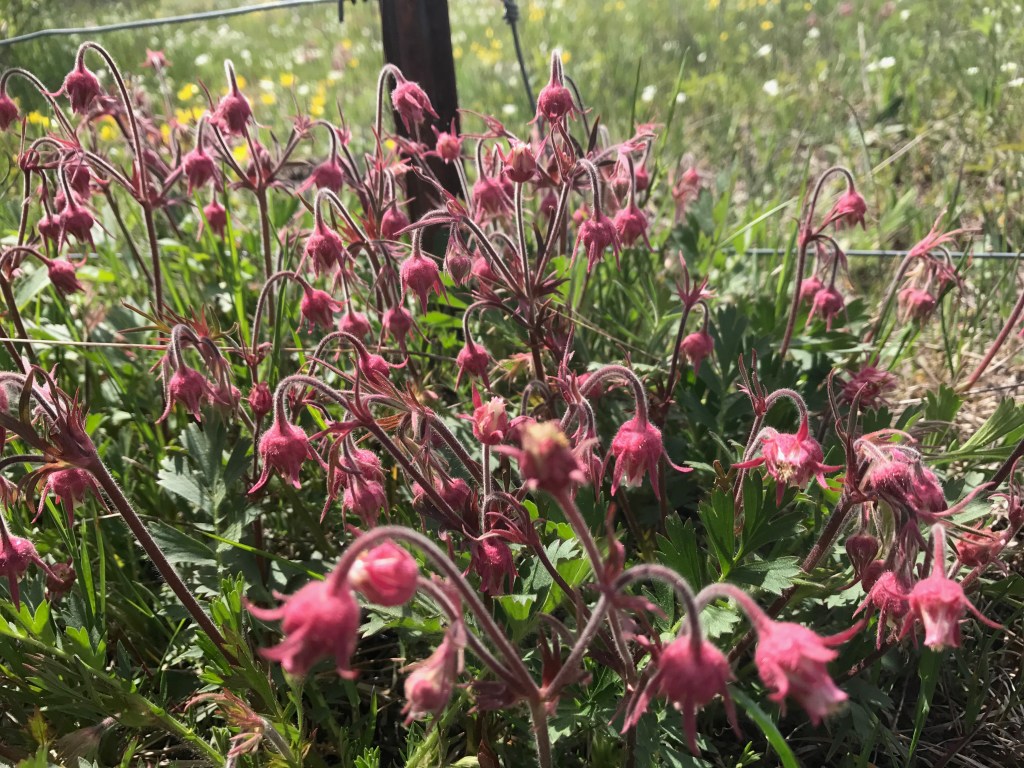
Geum triflorum: a great native selection for a meadow

There are just a few parts of the book where I have suggestions:

1) Although there is a warning to the reader to verify that the plants listed in the book are not invasive in their area (p. 139), I think that there are a couple known to be widely problematic that should have been left out: Ajuga reptans (Bugleweed) and Scilla siberica (Siberian Squill).

2) In the section on shade meadows (p. 50), I would point out that gardeners should be careful when planting in the vicinity of trees. Some species are more sensitive than others. Planting under trees should be a gradual process that is staggered over the course of a few seasons. In addition, small plugs are more appropriate than larger potted plants. These practices can minimize disturbances to tree roots. Gardeners should think of the tree’s health first.

3) The section on removing the existing vegetation (e.g., sod) suggests that you can forgo using layers of organic matter and cardboard and simply top dress with topsoil. After applying the topsoil, you can plant and at the same time; the vegetation below is smothered and decomposes (p. 88). It is not clear how thick a layer of topsoil is needed as I suspect grass and other weeds will poke through. While Gardner is generally opposed to using wood mulch in a meadow garden (p. 89), I think that a very thick layer can be used initially to eliminate the grass and it will break down over time quickly enough and does not need to be replenished—allowing for the plantings to expand.

All in all, this is an exciting and inspirational book and I recommend it to beginners who want to create naturalistic gardens. I know that I will be going back to my copy over and over. A great complementary title for this would be A Garden for the Rusty-Patched Bumblebee: Creating Habitat for Native Pollinators: Ontario and Great Lakes Edition by Lorraine Johnson and Sheila Colla.

Gardening in July

by Cheryl Harrison, Master Gardener

July is the month that I tend to really enjoy the garden….most of the work is done! The planting of seeds, and plants into pots and garden beds, dividing and thinning and garden creating is behind me for now. However, there are still a few garden tasks.

I try to keep up with weeding because weeds can quickly overrun your garden as they begin to set seed. Weeds take nutrients from the soil which your plants need and can smother out young plants. And I am one of those gardeners who enjoys weeding. I feel a great sense of accomplishment when I finish weeding a garden bed and when I pull out a weed and get the root….well that is simply thrilling.

Early July is a good time to trim back your annuals in order to encourage bushier growth and to trim off the spent blooms of your perennials to prevent seed production and allow the plant to put its energy into its roots. You may want to start fertilizing your potted plants because any fertilizer that was contained in the potting soil has probably been used up by now. There are lots of choices when it comes to fertilizers so talk to the staff of your favorite local nursery. They will be able to advise you and will likely carry the best products.

July is also the month when that garlic that you planted last fall is ready to harvest. We grow hard neck garlic that a kind neighbor started us on a few years ago. I removed the curled scapes last week and froze them for future use. I will keep an eye on the leaves on the garlic because when a few leaves have started to turn brown then the garlic is ready to harvest.

The rest of your vegetable garden may be starting to produce now as well. We have harvested some tomatoes already which is a bit earlier than usual for us. It is a good idea to check your vegetable garden daily so that you harvest and enjoy the results at their peak and to respond quickly to any issues that may arise.

I evaluate the appearance of my ornamental gardens in July. It is interesting to see if the garden looks the way that I had planned. I do not mean, “is it perfect” but how close is it this year to the feeling that I would like to achieve when someone walks through the gardens for the first time. I look at how the colours and textures work together. I ask myself if there are any bare spots or areas that I will need to renovate soon (eg. crowded and/or overgrown plants).

I am starting to plan my fall and next spring projects now. This year, two smaller gardens were joined and planted with mainly annuals for quick impact. I know that I plan to fill this garden with perennials and native woodland plants. This means keeping this garden in mind when I am shopping at the local nurseries.

Spring, and early summer, gardening can be a very busy time. July is the month to really enjoy your gardens and dream about what you might like to do next!

Soil Maintenance

By Sharleen Pratt, Master Gardener

Dry soil with little nutrient value; amended soil with many nutrients

As we approach the reawakening of our spring gardens, I thought it would be a good idea to review the importance of soil maintenance.

How you prepare your soil will have huge implications on the health and survival of all your plants. Two years ago, my husband dug a deep hole in preparation for building a small pond.  All the clay, rocky soil was removed.  In the end, we decided on a smaller water feature, so I filled the hole with what was left in my two compost bins and backfilled with some of the clay that had been dug up.  I hadn’t tested the soil, but through the use of good quality compost, I ended up creating a garden bed that was rich in nutrients and a soil that had good water-holding capabilities.  The following spring, I decided to plant annuals in my ‘new’ garden bed.  They were fantastic!  All plants in this particular area of the garden flourish!  The old saying, “Tend the soil, not the plants” is right on the mark!

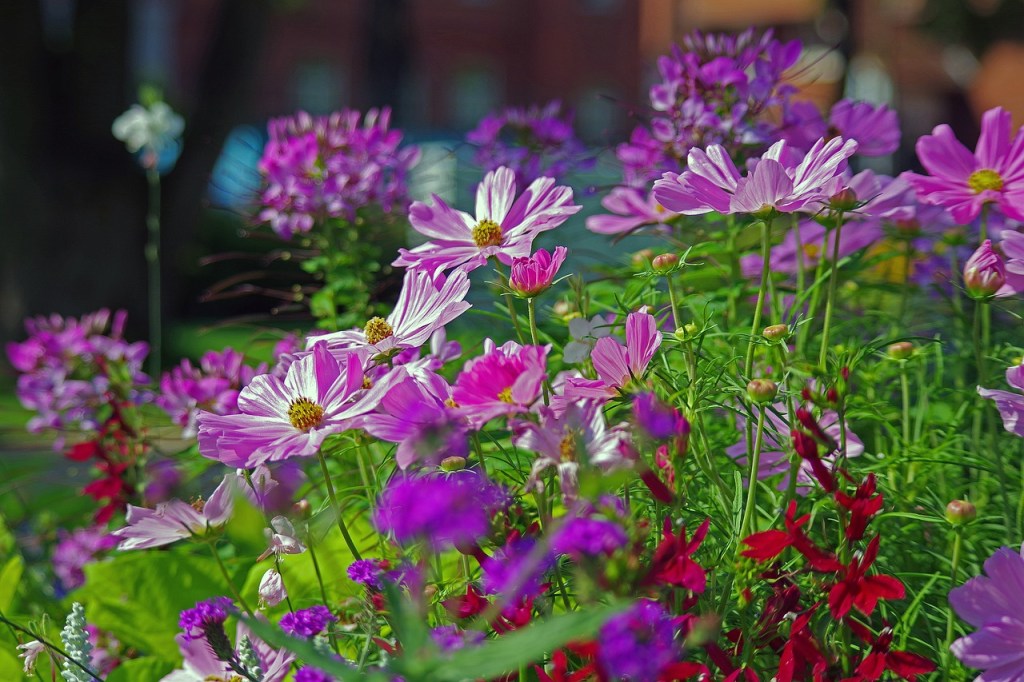
My late summer garden with zinnias & cosmos

A well-fed soil will produce healthy and beautiful plants. It provides a physical anchorage, water, and nutrients and allows the exchange of gasses between plant roots and the atmosphere.  The ideal soil is made up of 50% solids (mineral and organic materials) and 50% pore spaces (air and water). Water is best at 20-30%, air at 20-30%, mineral at 45%, and organic at 5%.  These proportions can and do change dramatically in response to climate and rainfall.

There are 3 types of soil that most of us are familiar with; clay, silt and sand.

Clay is tiny particles about the same size as bacteria.  Silt’s particles are 10 times larger than clay.  Sand particles are 10 times larger than silt.  The larger the particles, the easier it is for water to penetrate.  I have lived with both sand and clay soils, and each have their own challenges.

Soil is full of living things like decaying organic matter, microbes, bacteria, fungi and microorganisms.  It is very much alive!  The world is depleting its soil at a much faster rate than the soil is able to replenish itself.  One inch of topsoil that is lost due to erosion, wind or farming takes many, many years to replace.

There are more organisms living in one teaspoon of soil than there are people on this earth.  Think about that!  Soil is so very important and many of us are not aware of the benefits of keeping our soils healthy!

Here are a few ideas.

MULCHING

Mulching can greatly benefit the health of your plants.  Some of those benefits include:

  1. Improving the nutrient content over time of the soil (depending on the type of mulch used)
  2. Reduces weeding as it often smothers them
  3. Reduces water evaporation, therefore less watering is required
  4. Protects the soil from temperature fluctuations, therefore avoiding the freeze/thaw cycle
  5. Prevents soil compaction and reduces soil erosion

There are many materials available to be used as mulches in the spring.  Refrain from using black or red coloured mulch.  I prefer a natural cedar mulch.

DIVERSIFY AND PLANT MORE NATIVES

We are stewards of our land, no matter how small of an area we own.  Native plants have evolved over thousands of years and because they have adapted to their environment, they are easy to grow, provide habitat and food to a variety of insects and wildlife, are remarkably resistant to disease and are generally tolerant of many soil conditions.  The majority of native plants have very long root systems which work to improve the structure of the soil.

Doug Tallamy, author of Nature’s Best Hope, speaks about the decline in wildlife populations because of the disappearance of the many native plants they depend upon. He would like us to turn all our yards into what he calls our own Home Grown National Park. This would create corridors of conservation for all the wildlife, insects and birds.  Take some of the grassy area you have and create a new pollinator garden with some local native plants.  You will be amazed at the wildlife you will see!

BUILD UP YOUR SOIL WITH LOTS OF ORGANIC MATTER

Soil improvement can be a long process.  It is recommended that you add a yearly application of organic matter, preferably in early spring.  Do not be tempted to dig it in.  Weed seeds can lay dormant for many years and as soon as they are disturbed and see the light, they will begin to grow.  Lay the organic matter on top of your beds and the worms will do the work.

  1. Use your own homemade compost.  Check out this blog by a fellow Master Gardener Fellow Master Gardener – All About Compost
  2. Use shredded leaves in the fall.  I shred my leaves, rake them on my garden beds and leave them over the winter. Come the spring, the worms will do the job of taking them down into the soil.
  3. Manure, Triple Mix or Compost from a reputable Landscape Supply Store

CONSIDER LASAGNA GARDENING

Consider creating new garden beds without removing turf by first covering it with newspaper or cardboard and then layers of soil and compost.  If you do this in the fall, you will have a brand ‘new’ garden bed that you can plant in come the following spring!

My new garden bed; compost/leaves on top of cardboard and left to decompose over the winter!

PLANT COVER CROPS

Bare soils encourage erosion, loss of nitrogen, growth of weeds, water accumulation and spring runoff.  Cover crops create a universe of microbes, mycorrhizae, fungi, and bacteria.  By planting a cover crop in your vegetable garden in the fall, you will receive many benefits such as reducing water run-off, restoring carbon to the soil, erosion prevention and pest and disease resistance.  Some of the more common cover crops that are used are legumes such as clover, beans and peas and grasses such as ryegrass or oats.  Plants in the legume family take nitrogen gas from the air and convert it to a form that plants can use.  In the spring, turn the dead material into the soil.

RESOURCES

Fellow Master Gardener Blog on Regenerative Agriculture

Soil Health in Ontario

Five Ways to Improve Soil – Oregon State University

Keeping This Gardener Humble

By Marilyn Homewood, Master Gardener in Training

Gardeners learn as much from their setbacks as from their successes. By now, I should have a prepared cutting garden partially planted with frost hardy annuals.  These are plants that prefer cooler growing conditions and can withstand a light frost allowing them to be planted early in the season. The group includes snapdragons, bachelor buttons, foxglove, scabiosa and sweet peas. However, instead of plants on their way to producing beautiful blooms, I have a 40 foot trench in my lawn.

The only cut flowers from this gardener so far

This garden was an end-of-year decision which meant a spring bed preparation, something I rarely do as the weather is not reliable and soil can be too wet to work. Working wet soil destroys the soil structure and porosity as well as wreaking havoc on soil microbial populations. 

Progress so far

Not to be deterred, I had the sod removed both to see what I had to deal with (this part of the yard had not been turned since 1964, if then!) and to allow the area to dry more readily when the sun returns. When the soil does become workable, I intend to use a modified version of the “no till” method popularized by Charles Dowding to create the bed. A fork (or broadfork) will be inserted into the bed at close intervals and gently pried up. This will permit some aeration, rock removal and opportunities for soil amendment (compost).  The amendments will be folded into the topsoil and the bed topped off with approximately 4 inches of compost.  The portion of the bed slated for the hardy annuals may be planted while the remainder can continue to warm until it is time to plant the warm season varieties such as zinnia and dahlia.  Lastly, a thin layer (1”) of shredded cedar mulch will protect the bed from incoming weed seed as well as help to keep the soil cool and retain moisture in the heat of the summer.

Hardening off in the morning sun

Ever hopeful, I have started to harden off plants. This is a gradual process over about a week that exposes tender plants to the outdoors and results in a thickening of the cuticle on the leaves. A thicker cuticle allows plants to retain moisture when exposed to the elements and helps to prevent transplant shock.  As my seedlings are grown “cold and slow” indoors (at 55 degrees), they seem to hardened off more readily.

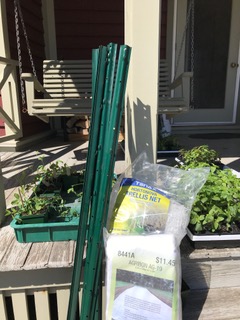
T posts will be placed every 8 feet along both sides of the garden and will be used to suspend the flower netting horizontally. The netting is a 6 inch square grid in plastic that will be positioned tautly about 18 inches above the ground keeping long stemmed flowers erect and preventing them from being blown over by wind and rain.  Heavy, tall, floriferous plants will require a second layer of netting about 12 inches above the first.

The ranunculus will be planted using 6 inch spacings and Chantilly snapdragons will have 9 inch spacings.  The delay in planting will mean limited or no bloom as these plants go dormant with the summer heat.  However, the ranunculus corms can be dried and saved for next year and there are 2 other varieties of snapdragons started that tolerate the heat of summer.

The supplies are waiting

Once in the ground, plants will be hooped with temporary PVC hoops so that frost cloth can be used at night in case of frost or wind and to protect the young plants from deer and rabbits.

A wise gardener remembers that Mother Nature always bats last.

“it’s never too late to start anything, except maybe being a ballerina” Wendy Liebman

References

Cool Flowers, Lisa Mason Ziegler, St. Lyons Press, 2014

https://charlesdowding.co.uk

https://antoniovalenteflowers.com/blogs/gardening/growing-ranunculus-anemones

https://extension.unh.edu/blog/using-row-covers-garden

Starting from scratch — 2 months later

By Judy Bernard, Master Gardener

As mentioned in the my previous blog, creating healthy soil is to be the topic of this article.

Healthy soil is made up of the following components:

Sand, silt and clay – in any soil they are the bones, the structure that is the foundation on which the rest is built. About 48% of the soil.

Air spaces – are the lungs of the soil. They allow for movement of oxygen, water, and nutrients. About 25% of the soil

Organic material – is the food which nourishes the soil to make it a living microcosm for plants to grow in. The microorganisms in the soil process the organic material into a form that plants can use when they need it. The larger organisms in the soil help to maintain its structure. The organic material in the soil is also like a sponge which will hold many times its weight in water. This represents ideally about 4% of the soil.

Water – is like blood. It carries the nutrients from the soil to the roots of plants in a form the plants can use.

In the housing development where I live, we have been provided with good bones. Some of the soils may have more or less of one component than another, but for the most part the bones are good.

From my perspective, the biggest issues are:

  1. compaction from all of the heavy construction equipment that has been driven over and over the sites. Even when the topsoil was put down, dump trucks and bulldozers were used. The soil and sub soil are deeply compacted.
  2. lack of organic material in the soil.
  3. the inability of the soil to retain water.

To overcome these problems the soil needs to be aerated, whether by mechanical means with a core aerator or by hand with a shovel. The plugs of soil, although unsightly, can be left on top of the soil to dry out and then run over with a lawn mower to break them up and spread them over the ground or lawn. Then organic material needs to be added to the soil. For the grass, I would add compost which you can purchase in bulk from garden centres. Spread 1-2 cm (1/2”) over the lawn and rake it in. You may want to add a little grass seed where there are bare spots. With the compost, you won’t have to add any other fertilizer and you won’t have to water very much. For my flower and vegetable beds I add a more generous amount of compost or manure, working the manure into the soil so it doesn’t smell.

It takes 2.5cm (1”) of water to penetrate 15cm (6”) into the soil. With air spaces and multiple surfaces for the water to adhere to and with organic material to act as a sponge and hold the water, the water will stay In the soil better and not run off. For growing vegetables 2.5cm per week is a good rule of thumb. Add more if it’s very hot or windy. With healthy soil, watering the lawn and garden is less of an issue.

The most common grass used for sodding is Kentucky Blue Grass. It is natural for this grass to go dormant in the hot summer months. With good healthy soil to support it, the grass will be able to overcome the drought and revive as the weather gets cooler.

You know you have healthy soil when it has a nice crumbly texture, the surface of the soil doesn’t crack from the heat and when the soil absorbs water instead if having the water sit in pools or run off into ditches. I’ve added a couple of web sites with further information about healthy soils and adding compost to lawns.

Resources

Healthy Soils, UMass Extension
Compost for Summer Lawns, Planet Natural Research Center

Perennial Gardening with Less Effort

By Mary-Jane Pilgrim, Master Gardener

Are you spending more time working in your perennial garden this hot, dry summer than enjoying it?  You may want to consider some of these low maintenance tips for fall renovations and next year’s plans.

What does low maintenance mean? Low maintenance does not mean no maintenance and low maintenance is not for lazy gardeners. Low maintenance means making wise plant decisions and doing your homework up front, so you don’t end up with a flower garden that requires tons of work to look good.

Getting to the point of ‘lower maintenance’, however, will be tough.  Prepping a new garden is pure slogging, involving wheelbarrowing compost and mulch, digging & then digging some more.  If your current reality involves plants that were plentiful at your neighbour’s house or at a recent plant sale, it could involve even more digging to get rid of persistent roots.

thumbnail_IMG_1658
Well behaved full sun perennials in the author’s garden

However, you will love the end result of an easy to care for garden if you follow some of the following suggestions.

The first rule of thumb in creating a low maintenance flower garden is to keep it small. Don’t go crazy when you’re picking out plants; stick with 3 or 4 groupings of 3 of the same perennial, and then fill in with annuals if you wish.

The most important tip of all in creating a low maintenance flower bed is mulch. Mulch is a gardener’s best friend. After planting your flower garden and watering it well, always apply a 2 – 3 inch layer of a good, shredded mulch. If you can’t afford mulch right away, shredded leaves and untreated grass clippings will do the trick. Mulch is your #1 defense against weeds and it helps the soil retain moisture so that your plants don’t dry out. Skipping mulch in a low maintenance flower garden is not an option.

Another important step to keeping your flower garden low maintenance is to install an edging of some type. Allowing the grass to creep into the garden, or allowing the garden to creep into the grass are both problem situations that will require a lot of work to deal with.

Choose and plant flowers that:

  • aren’t vigorous, invasive or self-seeding spreaders (avoid “creeping” anything!
  • aren’t too picky about the soil
  • will survive a wee bit of neglect
  • are relatively drought tolerant
  • don’t require deadheading or minimal deadheading (removal of spent flowers)
  • don’t require staking
  • are not prone to pest problems or diseases.

A good nursery or garden centre with knowledgeable staff is a great place to start — and we are blessed with some great ones in the Peterborough area!

The best easy-care perennials for sun or part sun: Clumping ornamental grasses, Coneflower, Salvia, Daylilies, Black-eyed Susan, Shasta Daisies, Veronica, Lavender, Peony, Blanket Flower, Perennial Geranium (cranesbill), Russian Sage, Penstemon, Sedum Stonecrop (there are some new cultivars out that are amazing, like Firecracker or Lime Zinger), Autumn Joy Sedum, Hens & chicks (Sempervivum).

Low maintenance perennials for shade: Hosta, Ferns (not ostrich), Coral bells, Barrenwort (epimedium), Astilbe, Hellebore, Brunnera, Primula.

thumbnail_IMG_1659
Well behaved shade perennials in the author’s garden

The goal is to get to the point where you only need to set aside 15 or 20 minutes every couple of days to weed and deadhead your plants. Deadheading also reduces the number of “volunteer” plants that you will get as the seeds will also be removed. You can combine weeding with deadheading and get the chores done at the same time. This will keep your flower garden looking beautiful and will help the plants produce more blooms.

Starting from Scratch

By Judy Bernard, Master Gardener

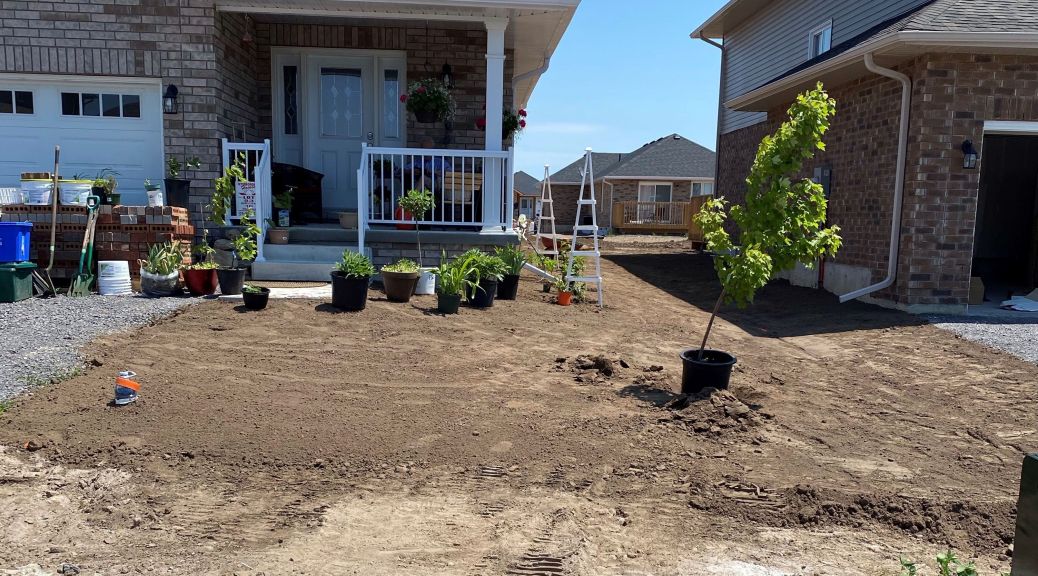
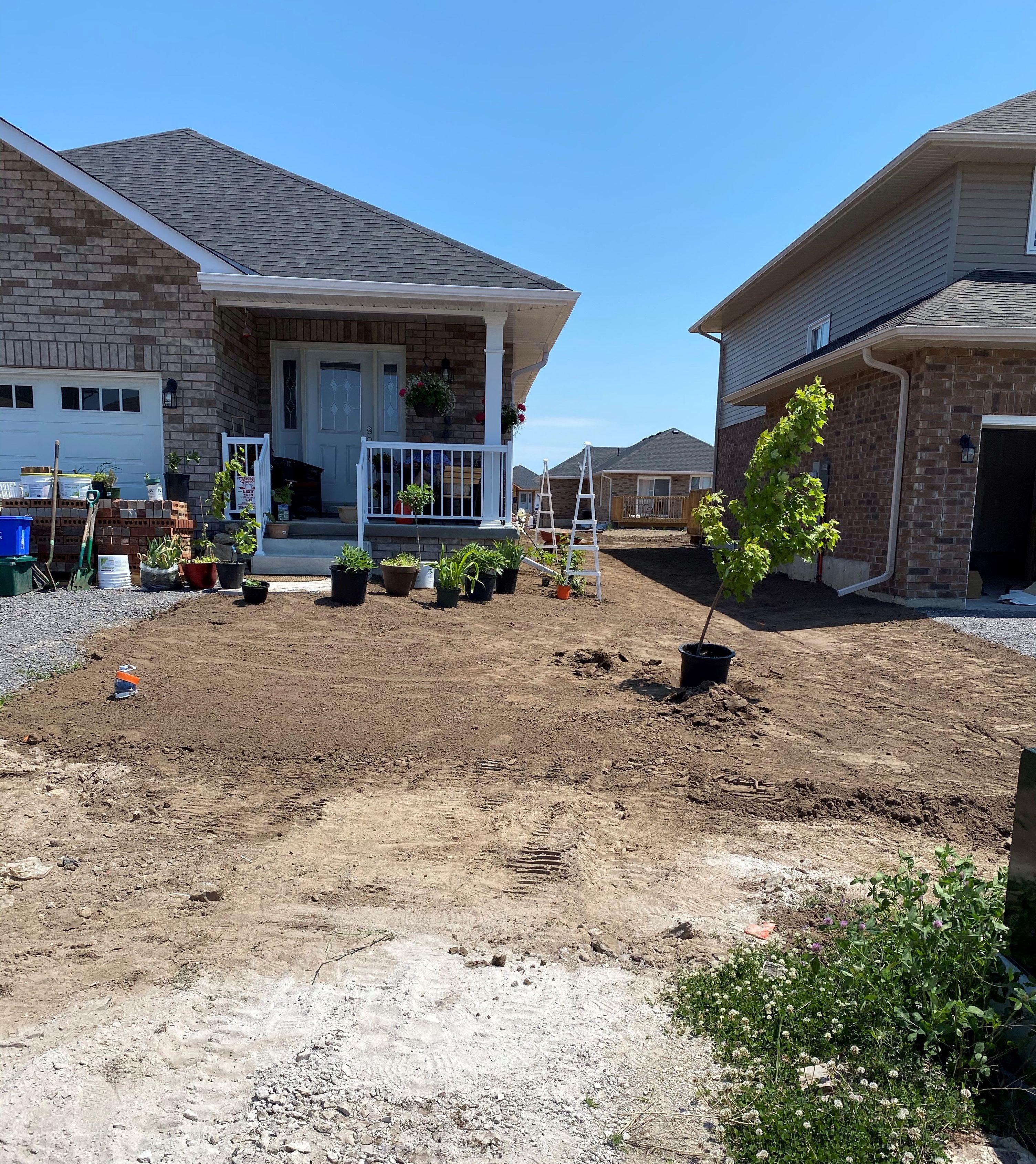
My dream is coming closer to being realized. The construction company cleaned up the construction area, removed a lot of the larger stones and graded the property. When it rains this grading directs water to the road in front and to the catch basin in the back. (I’m going to have to plan how to plant my water loving plants to take advantage of this drainage.) We have told the excavating people that we will be putting in a walkway and water barrels. They kindly set up the fill to accommodate that.

As soon as the topsoil was delivered in mid June, I did the mason jar soil composition test, using the Clemson fact sheet I posted in the previous blog and again below. The soil test results show loam. However there is no organic material in this soil. Heavy equipment was used to spread and grade the soil. It is extremely compacted. We ordered enough compost to cover the topsoil to a depth  1-2cm. We really need 5-10 cm of compost.

Clemson Soil Texture Analysis

Once we got the sod installed we were told to water it well twice a day for 5-7 days, then daily  for a week. I watered as required, making sure the water had penetrated the sod. In spite of my best efforts the sod turned yellow within a couple of days in places. After 2 weeks it was coming back, but needed continued watering of those difficult areas.

Before we had received our sod, I’d gone crazy planting trees and shrubs. I’ve dug holes and loosened up the soil as much as possible, added organic material, and I’m hoping for the best. I’ve planted my vegetables, loosened the soil and added more organic material. Some beds I’ve made for future plants by turning the sod upside down and covering with cardboard and mulch. Next spring they will be ready for planting.

It is going to be an ongoing process of trying to create a healthy soil environment for lawns and gardens. That will be the topic of my next blog.

judy 1

All about Compost

By MJ (Mary-Jane) Pilgrim, Master Gardener

Spring is here, but it’s still not great weather outside for gardening. In a few more weeks, once the temperature reaches 10 degrees Celsius on a regular basis, you will have lots to do! But for now, here’s something to think about: compost.

Compost is decomposed organic matter like leaves, grass clippings and kitchen waste, and it’s the ultimate garden fertilizer. It contains virtually all the nutrients a living plant needs and delivers them in a slow-release manner over a period of years. Compost made with a wide variety of ingredients will provide an even more nutritious meal to your growing plants. Compost is free, and you can make your own.

April is a great time to check the compost pile if you already have one. If it’s too wet, stir and add dry (brown) material like dry leaves, then cover. If it’s too dry, stir and add water (or green material), and mix thoroughly. Either way, mix thoroughly!

At the end of the month, when the weather has improved and the garden is dry enough to work in, add a 1-2 inch layer of well composted material (sweet smelling, crumbly and dark brown) to your garden beds, scratching it in lightly or even just laying it on top. When the earthworms wake up, they will pull that material further into the soil, saving you the trouble of digging it in.

If you don’t have a compost bin, spring is a great time to start one! In our area (Peterborough, ON), composters are available at City Hall, 500 George St. N., or at the Household Hazardous Waste Depot, 400 Pido Rd.  GreenUp, Ecology Park, hardware stores and your local municipality likely also carries them. By next spring you could have your own fertilizer ready for the garden, and save a lot of food waste like peelings from going directly to the landfill.

If you don’t have/want a physical composter, a different plan is the trench method of adding compost to the garden. In this method, you dig a series of holes or a trench and lay compost down into it throughout the summer. It’s wise to plan where this trench will be and where this year’s garden will stand. At the end of the summer, cover the trench with one to three inches of soil, and plant your garden next spring in the spot where this year’s trench is. That will get different spots of the soil nourished throughout the years. You can learn more about this type of composting from fellow MG Suzanne Seryck’s article from May 2018.

compost-709020_960_720

If you’re new to composting, here are some pointers:

  • Patience is key. It’ll take six months to a year for compost to be ready to use, so think about investing in a compost pile now as part of your spring garden prep. Your garden will have plenty of natural, nutritious food come next gardening season.
  • Don’t forget the water. If your pile is covered or you are having a dry spell, add moisture. The pile should be always be damp, but not wet.
  • Keep the compost loose and turn every so often. That will keep air in the system and allow for healthy decomposition.
  • Have a balance between wet (green) and dry (brown) compost. Add natural items like grass clippings, leaves, pulled plants, weeds, plant-based food scraps and wood chips.
  • Don’t add meats or fatty foods, dairy, fresh animal droppings, or diseased plants.
  • Never add plants containing seed heads to the compost, or next year that plant will pop up everywhere! I will never look at feverfew kindly again, after this happened to me.
  • The basic rule of thumb is to never add a significant amount of one type of material at the same time. Variety is key.
  • Again, always remember patience. Using compost that is not ready will rob garden plants of nitrogen. You’ll know the compost is ready when it crumbles easily and has a very earthy smell.

Resources:

All about Compost
Composting 101
Everything you need to know about compost:

Gardening Is Not Cancelled

by Emma Murphy, Master Gardener

Just when Ontario gardeners thought spring was peeking through the piles of snow – with warmer weather and the change to daylight savings time – we’ve been derailed, and not by Mother Nature.

GDD2

It’s been a tough few weeks with the increasing spread of the coronavirus disease (COVID-19) to North America. People are becoming increasingly alarmed, and in the past few days we have seen measures by our local health authorities and governments to ‘flatten the curve’ of the pandemic by imposing restrictions on travel, movement, and large events. For best information on the COVID-19 situation contact your local health unit or the Government of Ontario website. Peterborough Public Health, led by Medical Officer of Health Rosana Salvaterra, also has great resources.

curve
Flattening the curve – Proactively instituting protective measures to protect our healthcare system’s capacity to respond.

For Ontario gardeners, the past week has seen the cancellation of two major garden shows, numerous Seedy Sundays (and Saturdays), various Ontario Horticultural Association District meetings, and local meetings (in venues that have closed their doors to external groups). 90116313_3010310689020706_8668654371803758592_oThe biggest shock was the last minute cancellation of Canada Blooms just before its opening (March 13-22) as so much hard work and preparation goes into this event (6 days of building, but also plant-forcing, planning, designing etc.). But all is not lost! Thanks to Paul Gellatly (new Director of Horticulture at the Toronto Botanical Gardens), Sean James (Master Gardener and gardening consultant), and Helen Battersby (Toronto-based writer and garden speaker), we have photos and video of Canada Blooms before it was dismantled so that everyone can appreciate the results, even if we don’t have “smell-o-rama” and can’t see it in person.

Photos of Canada Blooms (thanks Paul Gellatly) Here and here

(note that all the TBG’s plants from Canada Blooms will be on sale at the TBG at 777 Lawrence Ave East on March 14th and 15th from 10 a.m. to 4 p.m.)

Video Tour of Canada Blooms (thanks Sean James) Here

More Photos of Canada Blooms (thanks Helen Battersby) Here

gardenshow

The Peterborough Garden Show is also a huge draw for Ontario Gardeners. This year was to be the 20th Anniversary show – completely community run by volunteers from the Peterborough Horticultural Society, with all profits being reinvested in the community in Peterborough.

In addition, our beloved Peterborough Seedy Sunday this March 15th has been cancelled (along with many others across the province). Organizer Jillian Bishop (of Nourish and Urban Tomato) is encouraging people to visit the website and click on links for the various vendors to support them by buying seeds online.

89690140_2770661179669493_8297570305530920960_o

What are Gardeners to Do?

Don’t give up hope.

  1. Bring spring inside! Check out my recent blog on bringing dormant spring flowering branches inside and forcing them for early colour and bloom.forsythia-4083551_1920
  2. Plant some seeds! You may not be able to go to Seedy Saturdays/Sundays but you can order seeds from local companies or find them at your local nurseries. A great activity for March Break with kids.
  3. Do some virtual garden tours! Google Arts and Culture has some, or there’s a virtual tour of Prince Charles’ Highgrove Gardens that I just found. I’m sure a quick Google search for “virtual tour” and “gardens” would bring up many more.Highgrove
  4. Plan your 2020 garden. Whether it’s reworking your perennial beds, planning a new garden, or deciding on your vegetables and herbs for this year, best to get your design ideas laid out now before spring arrives. Maybe think about a rain garden or pollinator garden for this year?
  5. Clean your tools. Get in your garage or garden shed and take inventory of what tools need repair or replacing, and what new tools may be helpful this season. Clean your tools now so you are ready for the season.20190713_140635
  6. Get outside. Yes we might still have snow (well some of us do) but that doesn’t stop you wandering around your garden and dreaming does it?
  7. Go wander in nature. Many of the COVID-19 restrictions are stopping our regular activities in our communities. But that is no reason not to enjoy our wonderful environment. Take this opportunity to get out for a hike, see the plants emerging from their winter hibernation, listen to the spring birds singing, and relax in nature. (more on this in our MG Sharleen’s blog on Monday)09_RiverView

These are challenging times, but our gardens and love of gardening will help get us through. If you have other ideas please tweet them out to us or share them on our Facebook page.