Category Archives: Native Plants

Gardening for Birds Through the Seasons

By Silvia Strobl, Master Gardener in Training

More than 1 in 4 birds have disappeared in North America since 1970, primarily due to habitat loss according to a recent study. As gardeners we can help to mitigate further declines by adding native plants to our gardens that meet seasonal bird habitat needs. If you would like to help, consider whether you can add one or more of the Ontario native plants noted below in your 2024 garden plans. All these are easy to grow, low maintenance, prefer full to part sun, and tolerate a wide range of soil conditions—ideal for almost any garden! Click on the plant names for Ontario specific growing information and photos.

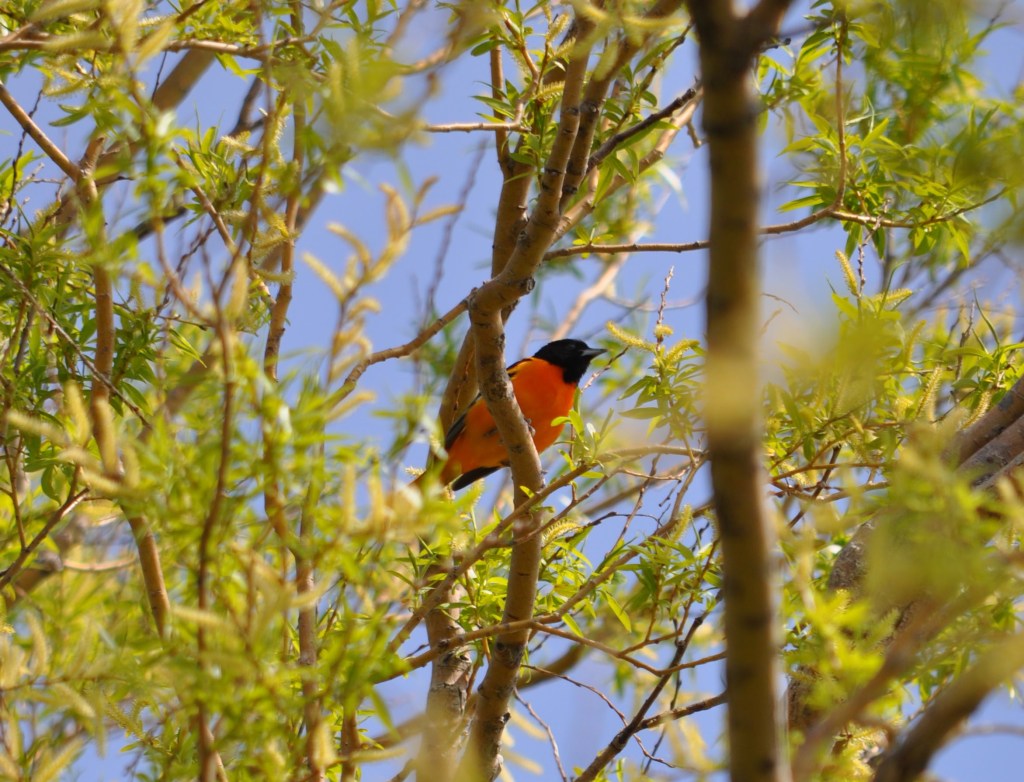
In spring, food for early returning migrants is critical. The catkins of Pussy Willow (Salix discolor) and other willow species are an important early nectar and pollen source for native bees, but they also attract insects which feed returning Eastern Phoebes, Ruby-crowned Kinglets, Chickadees, and other insect eating birds.

Northern Oriole among Willow catkins in early spring (photo credit: Beth McEwen)

For returning Ruby-throated Hummingbirds, growing a patch of Wild Columbine (Aquilegia canadensis) provides a critical source of early nectar. Providing a succession of nectar sources for hummingbird parents will entice them to nest and let you enjoy the flight chases of the juvenile birds in late summer. Include native plants with red, orange, or pink tubular flowers such as Scarlet Beebalm (Monarda didyma), Fly Honeysuckle (Lonicera canadensis), or Northern Bush Honeysuckle (Diervilla lonicera).

If you have room to plant only one tree in your yard, make it a Bur Oak (Quercus macrocarpa), Red Oak (Q. rubra), or Black Cherry (Prunus serotina). These trees support the greatest numbers of caterpillar species and hence provide important food high in protein for Chickadees and other birds raising nestlings in our short, temperate summers. To rear one clutch, Chickadees require up to 9000 caterpillars. Trees also provide structure and cover for nests.

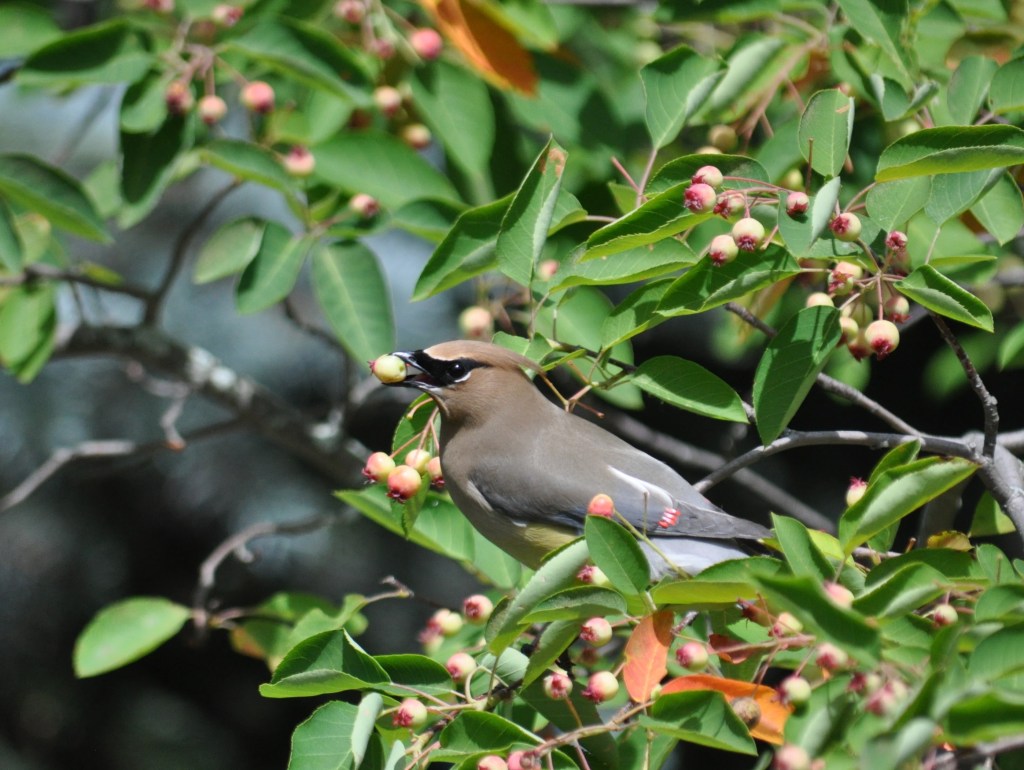
Small, garden-size shrubs such as Serviceberries (Amelanchier spp.), Common Elderberry (Sambucus canadensis) and Chokecherry (Prunus virginiana) produce early season berries that provide food for Cedar Waxwings, Rose-breasted Grosbeaks, Catbirds, and Robins. These shrubs also provide cover for nesting birds.

Cedar Waxwing eating a Smooth Serviceberry (Amelanchier laevis) berry in late June/early July in the author’s former Peterborough Garden (photo credit: Silvia Strobl)

For fall and winter bird habitat, grow a variety of plants that provide food, including:

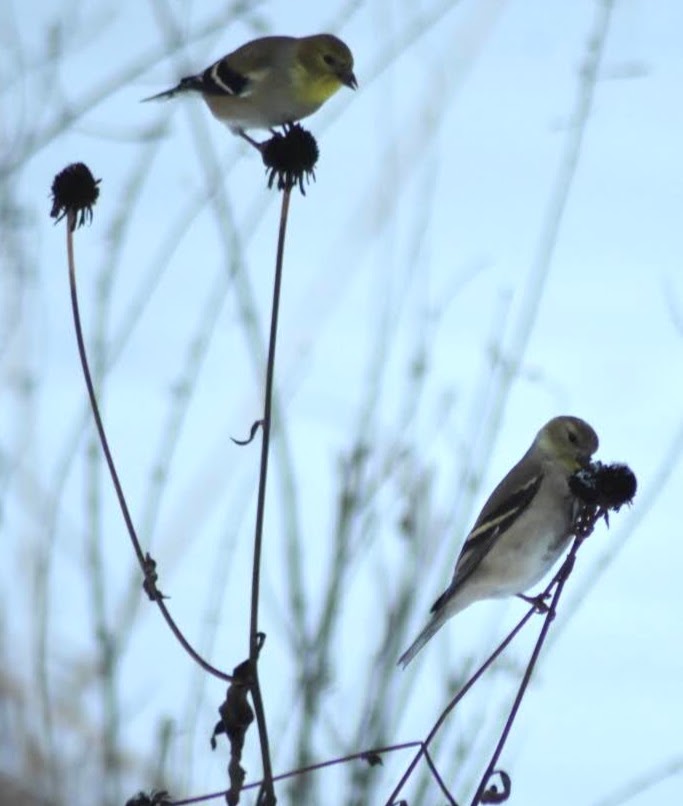
  • Native Sunflowers, Purple Coneflower (Echinacea purpurea), Black-eyed Susan (Rudebekia hirta), and Asters (Symphyotrichum spp.) and stop deadheading at the end of August to promote production of seeds. Leave these plants standing overwinter to provide food for Goldfinches, Northern Cardinals, and Dark-eyed Juncos.
  • Shrubs such as Grey Dogwood (Cornus racemosa), American Plum (Prunus americana), Chokeberry (Aronia melanocarpa) and the vine, Virginia Creeper (Parthenocissus quinquefolia) produce late-season berries that are rich in fats. Many insect-eating birds switch to eating berries in fall to store fat under their chests and wings to support either long journeys south or survival in our chilly winters. Berries of native shrubs have higher percentages of fat (6.5% to 48.7%) than most non-native shrubs (less than 1%) according to this study.
  • Conifer trees and shrubs such as Eastern White Cedar (Thuja occidentalis) provide sheltering cover for year-round resident birds such as Chickadees, Nuthatches and Mourning Doves.
  • Decaying stumps and logs attract numerous beetles and ants. If you must remove a tree that has died or outgrown your garden, consider leaving the standing dead tree or stump to decay and provide insect food for Pileated and other Woodpeckers.
Goldfinches enjoying seeds of Purple Coneflower against a backdrop of winter snow in the author’s current garden (photo credit: Silvia Strobl)

You can have a spectacular garden by adding native plants. And, when you see birds using your garden, you will not only feel good about your contribution to bird conservation, but you will enjoy your garden even more!

The author’s (mostly native plant) garden in early August (photo credit: Silvia Strobl)

Native Plant Sources

A key issue for those trying to grow native plants is finding them. To help you, the Halton Master Gardeners maintains a map of Ontario native plant nurseries that also provides websites and contact information. Always phone the nursery first to confirm they will be open.

Other Resources

In Our Nature. Nd. Native Plants for Hummingbirds. https://www.inournature.ca/plants-for-hummingbirds

In our Nature. N. 30 Native Shrubs for Ontario Gardens: Your go-to reference for the best shrubs for gardeners and wildlife. https://www.inournature.ca/best-native-shrubs

Tallamy, D.W. 2019, Nature’s Best Hope: a new approach to conservation that starts in your yard. Timber Press. 256 pp.

Related Over the Fence Blogs

EXPANDING YOUR NATIVE PLANT PALETTE

ATTRACTING BIRDS 1

ATTRACTING BIRDS, PART 2

ATTRACTING BIRDS PART 3

5 Simple New Year’s Resolutions for Gardeners

by Emma Murphy, Master Gardener

As this year ends, I’m offering a few New Year’s resolutions for gardeners for 2024. If you want more of a challenge, the Chicago Botanic Garden offers 50.

Add Native Plants To Your Garden

  • We’re all seeing the effects of climate change on our gardens.
  • Native plants adapt more readily to stressful and changing weather patterns, such as prolonged droughts or winter cold snaps, than hybrids and non-natives often seen in our nurseries.
  • Native plants help sustain beneficial insects and bird populations because they attract native pollinators and birds that might not be drawn to non-natives.
  • Create less work for you, as native plants tend to be lower maintenance than non-native ones.
  • The Native Conservancy of Canada offers some suggestions to get you started, or consult with your local Master Gardener group or Horticultural Society.
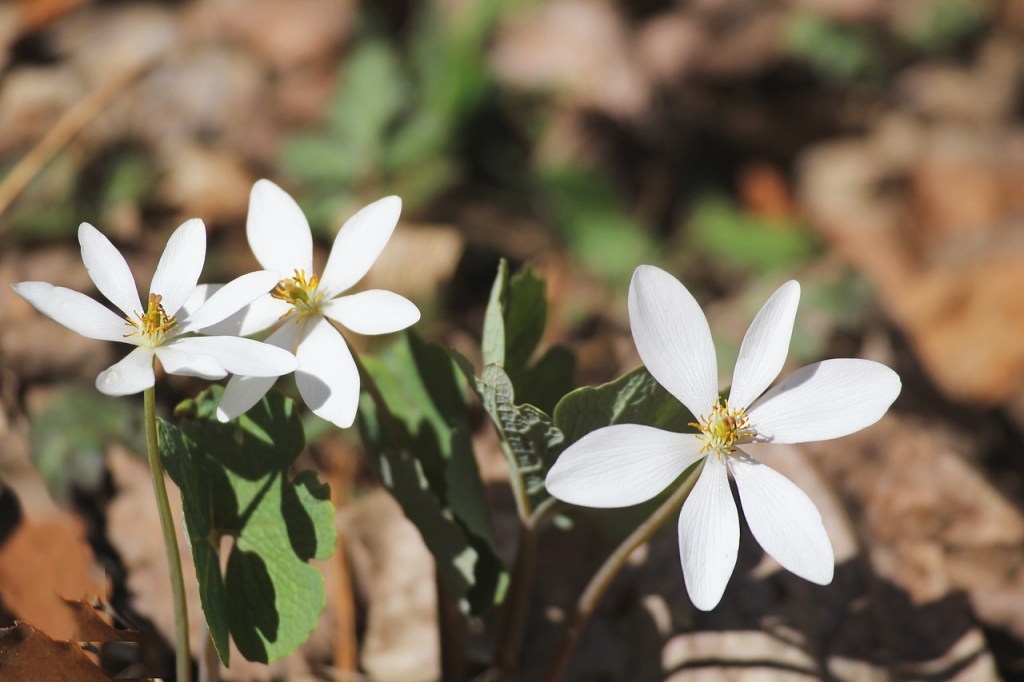
Bloodroot, Sanguinaria canadensis

Start A Compost Bin

  • Composting helps keep waste out of landfill by collecting and processing organics into material that can be used to create nutrient-rich compost used to feed and nourish soil.
  • Canadian Living offers a simple outline, as shared by Ed Begley  Jr.
  • Or more here from the Thames Region Ecological Association, including troubleshooting issues.
Compost bin

Grow More Of Your Own Food

  • The pandemic has highlighted how our agricultural systems are vulnerable to global shocks. Issues with supply chains, migrant workers, transport, trade and border closures have resulted in some foods being in short supply or prices going up (while quality goes down).
  • Insects do all the hard work, and all pollinators benefit.
  • Gardening provides benefits for your wallet, your nutrition, and reduces your environmental footprint. By growing your own food (either from seeds or small plants), your food is automatically more sustainable simply because you are doing it onsite or in a community garden. If you control the ‘inputs’ and do it well, you can save a lot of money.
  • Ultimately there is nothing more rewarding than planting and maintaining your own vegetable garden and harvesting (and sharing) your results. And we all know how much better homegrown produce tastes versus conventional produce at the grocery store. If you have too much produce, then you can just share the love with others!
  • Royal City Nursery in Guelph offers 8 Reasons to Start Growing Your Own Food from Seed
Creating a vegetable garden

Continuous Learning

  • Do what you love but keep on top of what’s trending in garden design to see if anything sparks your interest.
  • Keep track of what’s working and what’s not by documenting your garden happenings in a journal.
  • Expand your garden library and treat yourself to a new gardening book.
  • There are so many amazing (and free) garden webinars available now – learn from the experts.
  • Some of my favourite bloggers – The Impatient Gardener (in Wisconsin, similar climate to us), The Empress of Dirt (Ontario), Niki Jabbour (Halifax), The Laidback Gardener (Montreal), and Garden Myths (Robert Pavlis in Guelph, Ontario).
Online learning is a great opportunity

Reduce Your Use Of Plastic

  • Plastic is a major component in the garden, from plastic plant pots and seed trays to watering cans, and compost bins. Most plastic gardening equipment will end up in landfills, where plastic pots alone can take up to 500 years to decompose.
  • There are a few easy swaps you can make in going plastic-free: Many of us want to use less plastic in the garden, from plant labels to watering cans, tools, plant pots and the sheeting used to suppress weeds. Buying (and therefore using) less plastic will not only reduce your plastic footprint but also sends a message to manufacturers that gardeners want alternatives to plastic (especially single-use plastic).
  • Try to find biodegradable pots that made from natural materials such as coir, bamboo, wood chips, or seaweed (or commit to using your plastic pots year after year).
  • If you use plastic string, make the swap for a natural jute or hemp, and protect your fruits and vegetables with metal mesh instead of plastic netting – it lasts for years.
Find alternatives to plastic pots, or commit to using (and reusing them) for many years

Happy gardening dreams until we can get out into our gardens again….

Little Forests

By Cheryl Harrison, Master Gardener

A little forest … seems like a bit of an oxymoron.  I always thought of a forest as a loose grouping of trees and other plants that covers a large area?  I was introduced to a little, or Miyawaki, forest this past spring at the Lilac Festival in Warkworth, Ontario.  The Peterborough & Area Master Gardeners partnered with the Northumberland Master Gardeners to offer a Native Plant educational event on the same May weekend as the Festival.  We had a successful educational event, the Lilac Festival was great fun AND I saw my first little forest!

The Miyawaki forest method was created by Japanese botanist Akira Miyawaki.  He developed the idea of restoring damaged ecosystems by layering various species of native trees, shrubs and ground cover.  A site is chosen and prepared by layering cardboard and mulch.  Various species of young native plants are then planted close together in a relatively small area, as compared to traditional planting methods, for the number of plants chosen.  This method has been used in urban areas to demonstrate native plant forest environments.

The Miyawaki method of planting a forest is relatively new to Canada but there are more of this type of forest creation popping up across the country.  All mixed native plant forests have many benefits including improving air quality, providing wildlife habitat, sequestering carbon and more.  However, even though the Miyawaki forest creation method is a fairly new concept, it is bringing the forest closer to people by getting the benefits, and importance, of forests more widely noticed just because it is a relatively new concept.  I know that I enjoyed looking at the plants in the Warkworth little forest.  It gave me ideas about what I could do on my own property.  Let’s face it, a walk through a forest, even a little one, is always a relaxing way to spend an afternoon!  

For more information, check out the links below:

A Community Miniature Forest

The Many Benefits of the Miniscule but Mighty Miyawaki Forests

Miyawaki Forest – Do Mini-Forests Really Work?

Green Communities Canada, National Mini Forest Pilot

Meadowscaping for Beginners

By Laura Gardner, Master Gardener

Book Review: Tiny + Wild: Build a Small-Scale Meadow Anywhere by Graham Laird Gardner (Cool Springs Press, 2023).

More and more, gardeners are looking to transform their spaces with an ecological focus in mind. The goal may be to provide food and habitat for pollinators and other wildlife, or to reduce or eliminate traditional high-maintenance and less environmentally friendly practices (e.g., mowing, watering, fertilizing, tilling, weeding, pesticide use). There is a treasure-trove of how-to guidance on the web but sometimes it is nice to pick up a book that also contains photos of ecological gardens that are practical as well as beautiful. I recently picked-up such a book called Tiny + Wild: Build a Small-Scale Meadow Anywhere by Graham Laird Gardner (no relation, lol). A meadow-styled garden on a small scale can be both aesthetically pleasing as well as have high ecological impact. Gardner provides step-by-step guidance on how to evaluate your property, how to select the best location, learn basic design principles, determine how best to prepare your site, as well as how to choose, install, and maintain the plants for your project.

Some people have eliminated their lawns entirely and have converted them to gardens. However, it may be daunting to think about a whole-scale lawn conversion project. What I like about this book is that it encourages beginners that starting small is ok. Gardner advises selecting a small area to experiment with first and then look at expansion later (p. 51). Some examples of starting small include creating a “micro meadow” on a balcony, stoop, patio, or rooftop using containers; or creatively incorporating flowering plants in raised beds or a vegetable garden that are both edible to humans and are attractive to pollinators. Other possible interesting small-scale projects include developing a meadow in a rain garden, a drainage swale, a boulevard, or even a gravel garden.


The book is full of great tips. For example, when considering adopting a meadow-styled garden, it is important for the design to emphasize grasses and sedges over flowering plants. Incorporating too many of the latter can make it disjointed and unnatural. The former serve as the foundation that brings everything together. Aim for 1/4 tall, structural species, 1/2 medium-height species, and 1/4 ground cover species (p. 69).

Another suggestion that did not occur to me is to use annuals in the first couple of years after installing the native plants (p. 150). The reason for this is because it usually takes three years for native plants to become established and annuals can be used for a short time to fill in the initial gap. The only disadvantage I can see with using annuals is that most are not native species and they do have a tendency to self-seed. The latter can be managed with some dead-heading maintenance, however.

This book in some areas is only a starting point and the reader still needs to do more research. In the last chapter, there are some suggested plants in lists grouped by height, bloom colour, bloom time, lighting, and moisture; however, some of these are not native to our area or may be difficult to acquire. In some cases, you can select a plant from the same genus that is listed in the book. For example, the listed Erigeron compositus (Cutleaf Fleabane) is not native to Ontario but Erigeron pulchellus (Robin’s-Plantain Fleabane) is. They both are comparable in size (height).

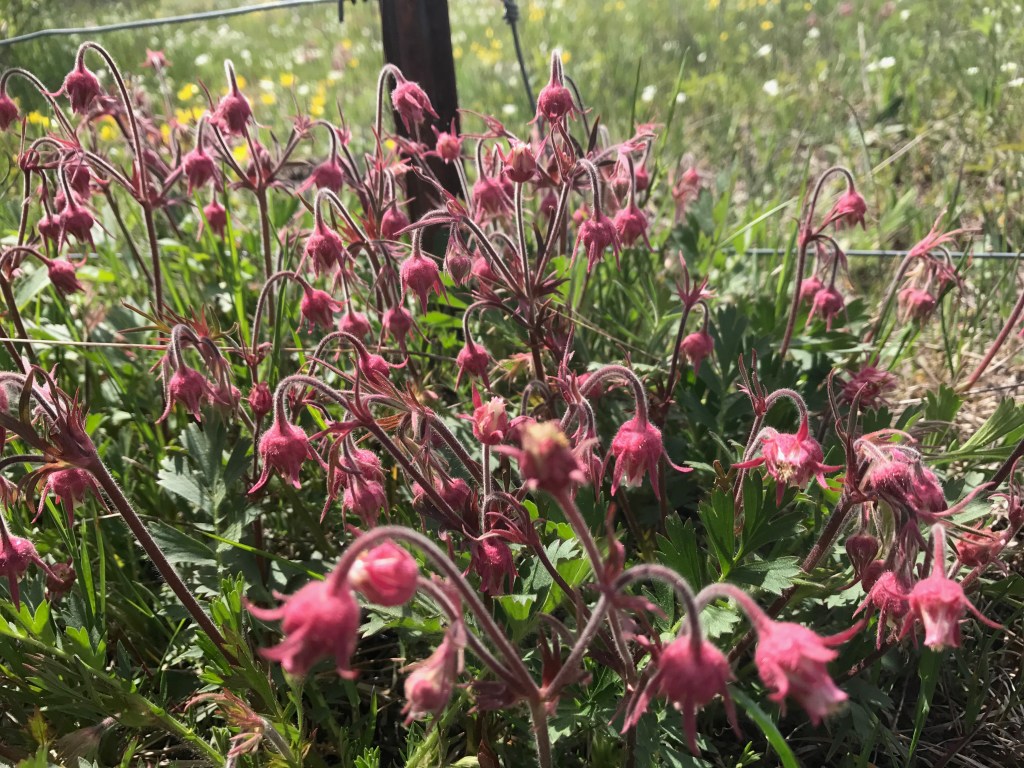
Geum triflorum: a great native selection for a meadow

There are just a few parts of the book where I have suggestions:

1) Although there is a warning to the reader to verify that the plants listed in the book are not invasive in their area (p. 139), I think that there are a couple known to be widely problematic that should have been left out: Ajuga reptans (Bugleweed) and Scilla siberica (Siberian Squill).

2) In the section on shade meadows (p. 50), I would point out that gardeners should be careful when planting in the vicinity of trees. Some species are more sensitive than others. Planting under trees should be a gradual process that is staggered over the course of a few seasons. In addition, small plugs are more appropriate than larger potted plants. These practices can minimize disturbances to tree roots. Gardeners should think of the tree’s health first.

3) The section on removing the existing vegetation (e.g., sod) suggests that you can forgo using layers of organic matter and cardboard and simply top dress with topsoil. After applying the topsoil, you can plant and at the same time; the vegetation below is smothered and decomposes (p. 88). It is not clear how thick a layer of topsoil is needed as I suspect grass and other weeds will poke through. While Gardner is generally opposed to using wood mulch in a meadow garden (p. 89), I think that a very thick layer can be used initially to eliminate the grass and it will break down over time quickly enough and does not need to be replenished—allowing for the plantings to expand.

All in all, this is an exciting and inspirational book and I recommend it to beginners who want to create naturalistic gardens. I know that I will be going back to my copy over and over. A great complementary title for this would be A Garden for the Rusty-Patched Bumblebee: Creating Habitat for Native Pollinators: Ontario and Great Lakes Edition by Lorraine Johnson and Sheila Colla.

Around My Garden

by Laura Gardner, Master Gardener

To Squish or Not to Squish?

For over 13 years, I have had a Hydrangea arborescens ‘Annabelle’ (Smooth Hydrangea) in my garden. A few years ago, contractors put in a fence, and I thought it was a goner — trampled into the ground. It was their version of rejuvenation pruning.

Well, I learned they are hard to kill. Every summer there is a profusion of blooms. Every spring, some of the leaves are curled and fused together—a temporary home for Olethreutes ferriferana (Hydrangea Leaftier Moth) caterpillar—a native insect. Anecdotally, it seems to favour Hydrangea arborescens over others, although the food plant database for Tortricid (Leafroller) moths indicates simply Hydrangea spp.

Most sites I have seen online advise you to squish the caterpillars because they can cause a reduction in blooms. They feed on the leaves and the flower buds. While my Hydrangea has likely seen a reduction, I have not noticed.  It does not affect the overall health of the plant. Another consideration is that often within these rolled-up leaves, spiders make their home. It is thought that they take up residence before the moth leaves but do not predate the caterpillar.[i] Year after year, I just let this moth complete its lifecycle.

In Integrated Pest Management (IPM) there is something called a threshold of action. Is the damage enough to warrant taking any action to control the pest? Is it possible that other beneficial organisms may be harmed in the process? If there are only a few blooms that could be affected, consider not doing anything.

Hydrangea arborescens ‘Annabelle’ in July
Curled and fused leaves of Hydrangea arborescens ‘Annabelle’ in June. Note the pupal skin hanging out of the leaf pouch—this indicates that there is no caterpillar within and the adult moth had exited.

Is it Real or an Imposter?

Last year I planted what I thought was Agastache foeniculum (Anise Hyssop). It was a huge Bombus (Bumblebee) magnet and flowered virtually up until frost. It did not come back this spring — apparently it is considered a short-lived perennial, but in the end, I concluded that its demise was mainly due to a sustained dog pee assault. I am the crazy gardener that runs after my dogs with a watering can. I digress.

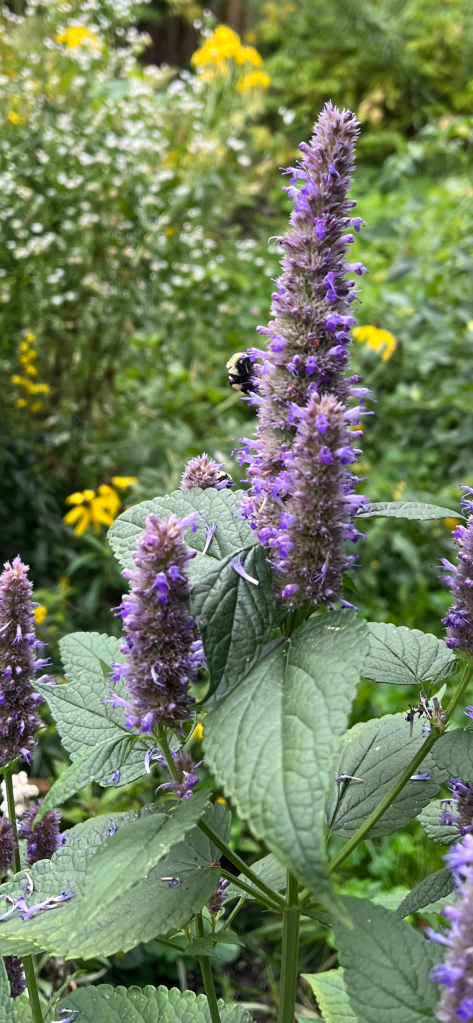
Agastache rugosa (Korean Mint) and a Bumblebee visitor

Like many in the mint family, there were many seedlings that popped up in its place. Fast forward to this week, and I noticed a discussion online about how some nurseries are inadvertently selling Agastache rugosa (Korean Mint) instead of A. foeniculum.

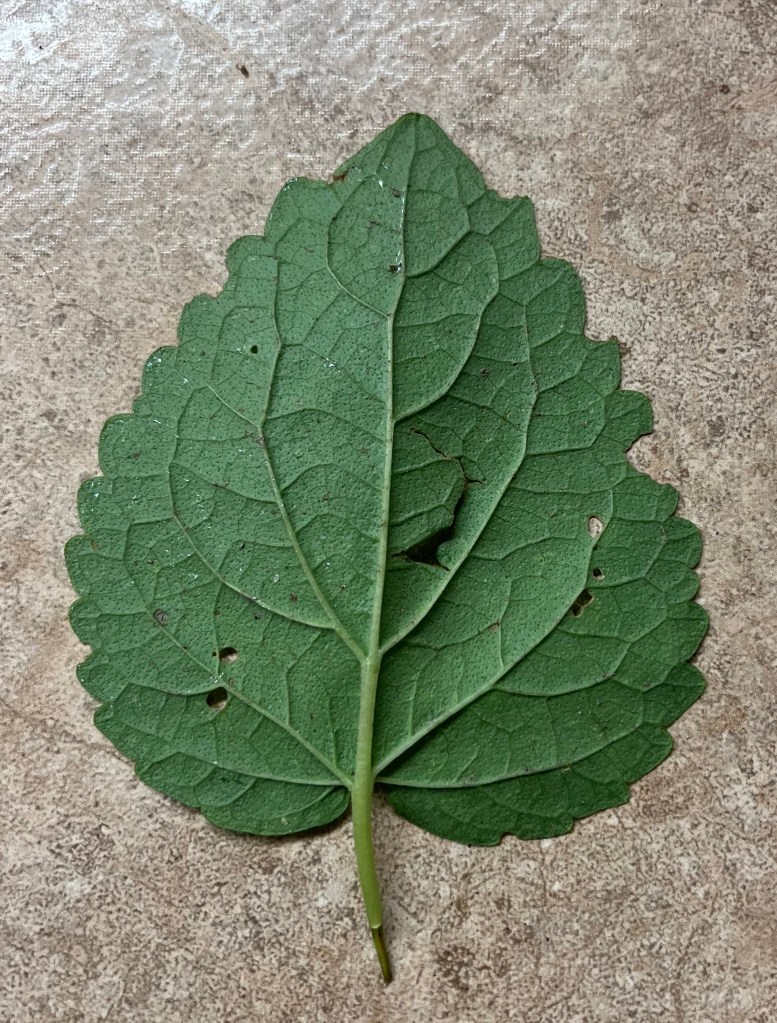
After careful inspection, I am now certain that I am one of many who got the non-native species. “Both these species are aromatic and have flowers of similar colors, but Korean mint has rugose, dark green leaves with cordate bases, whereas Anise Hyssop has shiny, bright green leaves with feltlike undersides and cunate bases.”[ii] The undersides of the leaves of A. rugosa also have little indentations (areoles) that A. foeniculum lacks.[iii]

Underside of Agastache rugosa leaf

The question is, should I keep it in my garden? A field study of Agastache spp. in Iowa over a three-year period found that more Apis mellifera (European Honey Bee) visited the Korean Mint and hybrids than Anise Hyssop.[iv]

Judging from the number of Bumblebees on the few plants that sprung up this year, it would seem like a keeper. If I were to find and plant Anise Hyssop, there would be a high probability that it would cross-pollinate with the Korean Mint, creating hybrid plants. According to the literature, these hybrids are sterile[v] and so there would not be a problem of the hybrids re-seeding. Korean Mint is also morphologically like Anise Hyssop.[vi] This means that there is a greater chance that pollinators can benefit from the non-native species. I am waffling.


[i] Boggs, Joe. Hydrangea Leaftier. Buckeye Yard and Garden Online. May 22, 2022. Ohio State University. Online: https://bygl.osu.edu/node/1979 Accessed August 24, 2023

[ii] Widrlechner, Mark P. A Field Evaluation of Native Mint Family Plants as Honey Bee Forage in Iowa. Proceedings of the Twelfth North American Prairie Conference 1990. p. 40. Online: https://dr.lib.iastate.edu/handle/20.500.12876/55985 Accessed: August 24, 2023.

[iii] Serres, Terry. Buyer Beware. Agastache foeniculum vs. Agastache rugosa. September 2018.

https://bigriverbigwoods.org/wp-content/uploads/2019/03/ThreeProblemSpecies_v3.pdf Accessed: August 24, 2023.

[iv] Ibid., p.40.

[v] Vogelmann, James E. “Crossing Relationships among North American and Eastern Asian Populations of Agastache Sect. Agastache (Labiatae).” Systematic Botany 10, no. 4 (1985): p. 451. Online: https://doi.org/10.2307/2419137 Accessed: August 24, 2023.

[vi] Ibid., p. 451.

Native Ontario Goldenrods for Your Garden

by Emma Murphy, Master Gardener

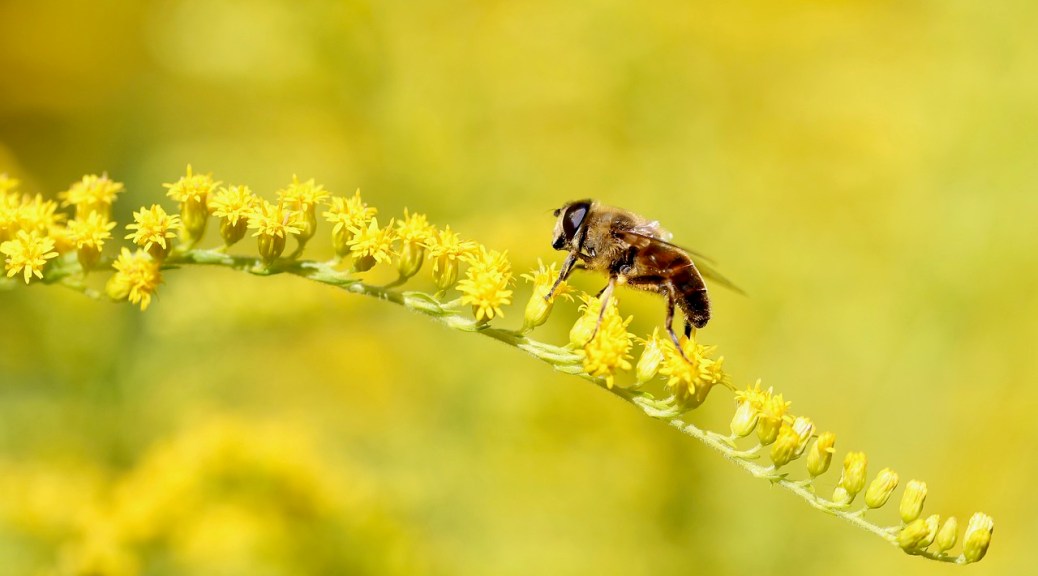
The burst of bright yellow in our late summer gardens and surrounding countryside heralds the blooming of our iconic native goldenrods. Although there are more than 25 goldenrods native to Ontario, most people are familiar with Canada Goldenrod (Solidago canadensis), which is likely the tall one you see as you are out driving.

I have lots of Canada Goldenrod in the naturalized back of my garden, but I also call it my garden thug, because it’s very happy there and trying to take over the world (or at least my backyard). First it outcompeted my New England Asters, and then started crowding out my newer planted trees.

So I started exploring other, more well-behaved goldenrods to add to my garden that still bring all the benefits of this lovely plant, including acting as important nectar and pollen sources for many specialist pollinators and host plants for many moth and butterfly caterpillars. Goldenrods are important late season fuel for migrating butterflies (like monarchs) and our bumblebees.

Here are 3 goldenrods that you should be able to find at native plant nurseries (and maybe eventually in our regular nurseries) that I am experimenting with in my garden.

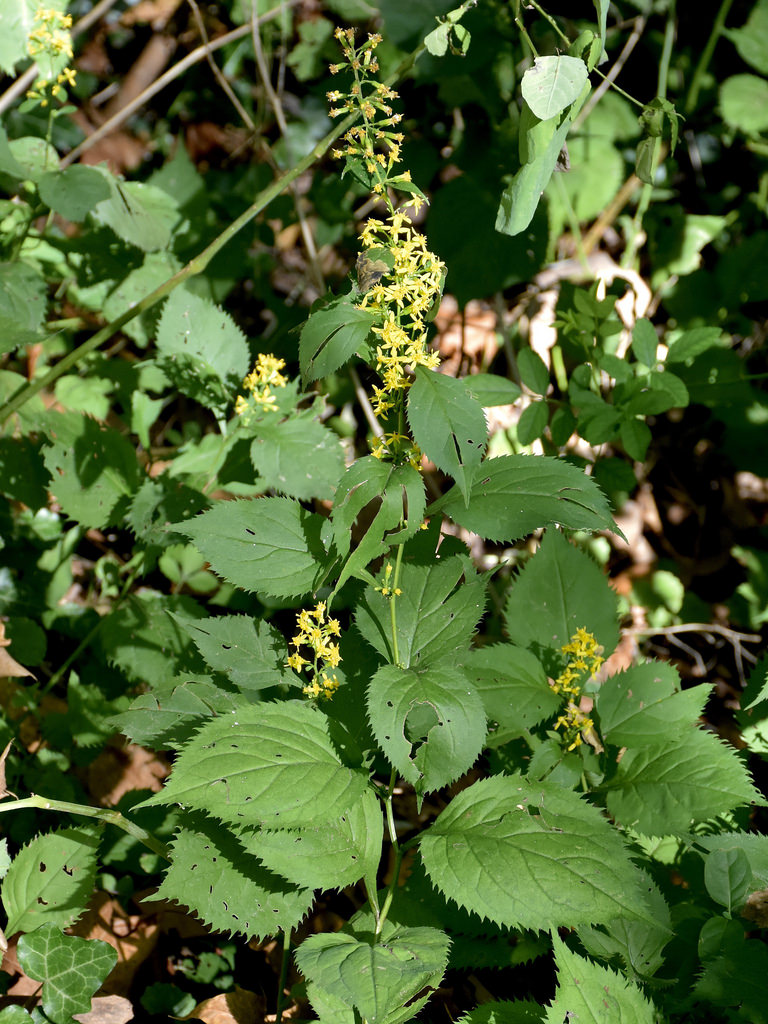
Zigzag Goldenrod (Solidago flexicaulis)

I first saw this goldenrod in a local provincial park and fell in love with it because it thrives in shade/part shade! It can take fairly dry conditions and will grow up to 3 feet high. I’m told if it’s happy it will spread nicely by rhizomes and seed. The name refers to the “zigzaggy” form of the stems. Added bonus? It’s fragrant.

Photo credit: Kirsten Johnson

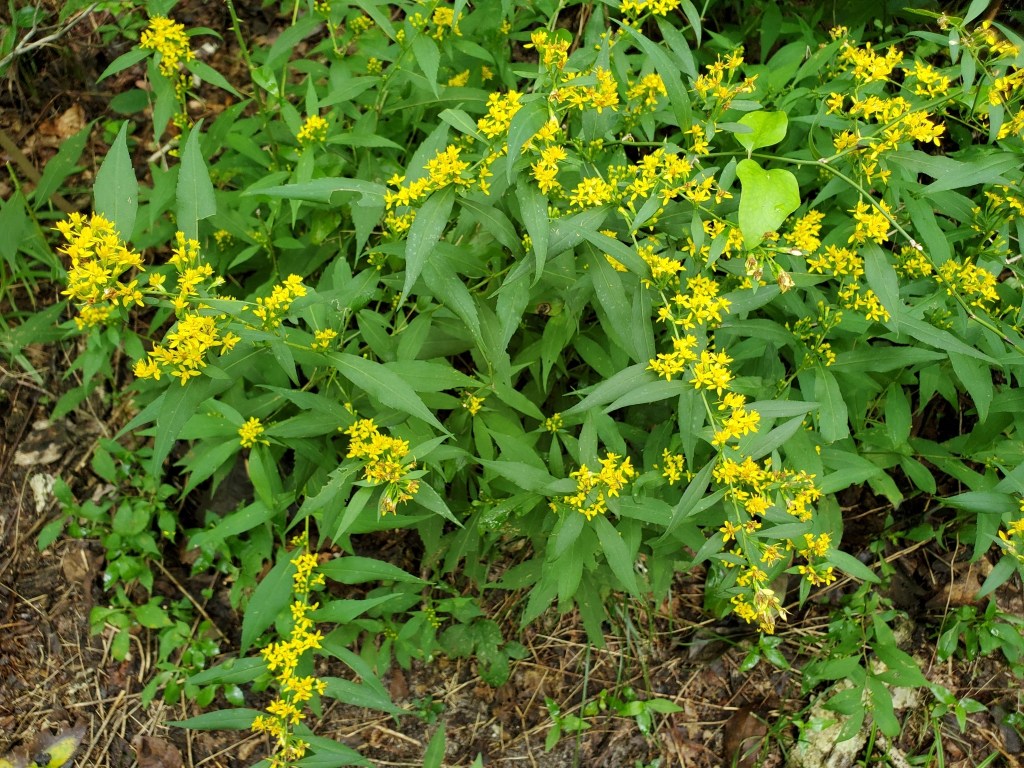
Bluestem Goldenrod (Solidago caesia)

Another winner in my book (before it’s even flowered) because it also brightens up shade gardens, although this one prefers moister soils. Bluestem Goldenrod has graceful, arching stems and bright yellow flowers and can reach 3 feet tall – the name comes from the purplish stems. It will colonize over time by self seeding. Also known as Wreath Goldenrod.

Photo credit: Tom Feild

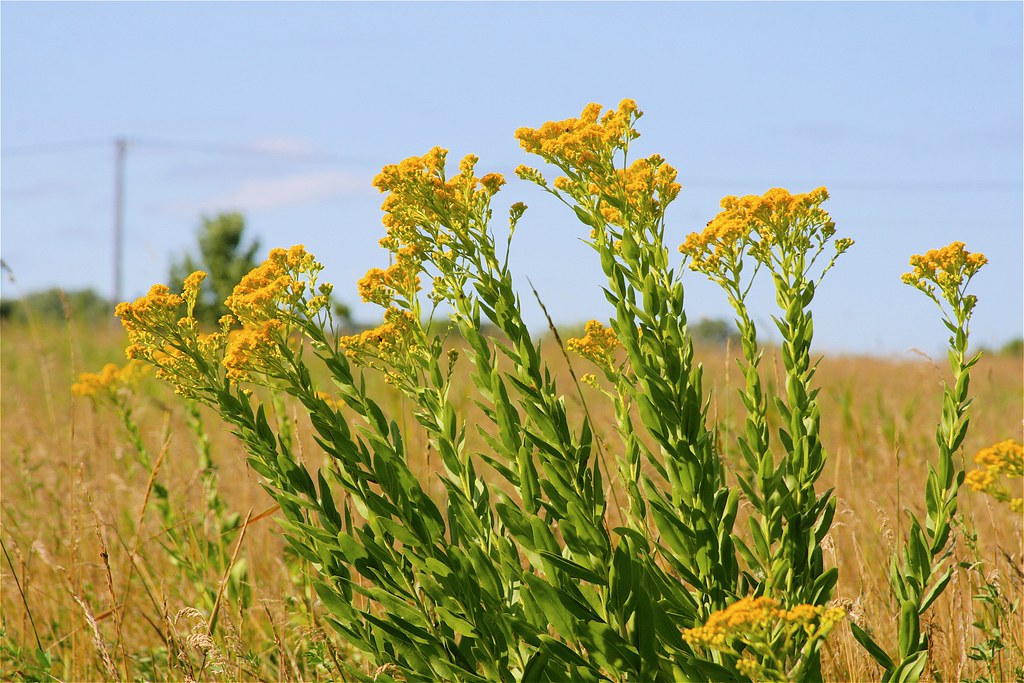
Stiff Goldenrod (Solidago rigida)

This one’s a sun lover and can reach 5 feet; I’m trying it in my front garden bed with my New England Asters (Symphyotrichum novae-angliae), cup plant (Silphium perfoliatum) and false sunflowers (Heliopsis helianthoides) because it needs similar height plants to avoid floppiness. Unlike the bluestem goldenrod, this one is upright and has large oval leaves and a cluster of yellow flowers at the top of the stems.

Photo credit: Dan Mullen

The City of Toronto’s LiveGreen initiative has some excellent additional information on various other goldenrods here. There is one to meet whatever garden conditions (sun/shade; dry/wet etc) you might have. You can also grow some in containers!

For those interested in more information on identifying and learning about goldenrods here are a few resources:

Ontario Wildflowers – Goldenrods Group

Ontario Wildflowers – Learn the Goldenrods

Goldenrods

Native Goldenrods for Ontario Gardens

So what new goldenrods will you try in YOUR garden?

Do Goldenrods Cause Hay Fever?

And finally (because we’re always asked this question as soon as fall hay fever starts) no, goldenrods do not cause hay fever. Their pollen is far too heavy to be blown around in the wind – the real culprit is Common Ragweed (Ambrosia artemisiifolia) which is easily blown around by the wind and while native, will never find a place in our garden (my husband gets hay fever). NOTE: yes I acknowledge that some people are allergic to goldenrod but they have to literally stand beside them to get the pollen on them). I love what Horticulture Magazine has to say

So why do we blame goldenrod instead of ragweed? Probably because goldenrod flowers are so showy. Ragweed’s green flowers are inconspicuous. It makes sense that people suffering from allergies suspect the plant that they can see is in full, abundant bloom.

Horticulture Magazine

Mulling about Mulches

By Laura Gardner, Master Gardener

At the beginning of February, the snow had melted on the grounds of the native plant garden at the Peterborough Public Library. This garden is an ongoing project between the library and the Peterborough and Area Master Gardeners. I noticed a few weeds in areas that did not have a thick enough layer of wood mulch. Ideally, they would have been removed in the fall, but I didn’t get that opportunity. Being situated downtown, the library garden is open to many types of plants that arrive via wind-blown seeds. As the intentional plantings continue to grow and fill in the empty spaces, weeds will become less of a concern.

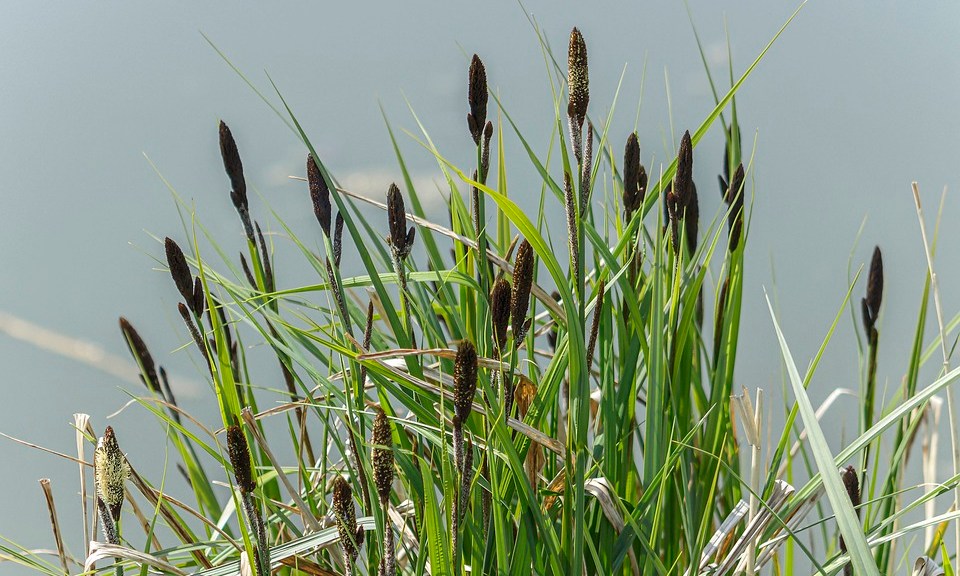
However, it may be a good idea to consider incorporating living green mulch such as low sedges and reducing or eliminating the wood mulch in the garden to minimize weeds and to develop a more natural aesthetic that mimics nature. Benjamin Vogt of Monarch Gardens defines a green mulch as a lower plant layer that covers more than 90% of the ground. Vogt talks about how sedges, short grasses, and other low-lying forbs can be used as an initial base layer in a garden with taller plants interspersed throughout. They can also be used to plug in holes in between existing plantings. Vogt also mentions that wood mulch can inhibit the growth and spread of the plantings—which reduces the overall natural aesthetic.

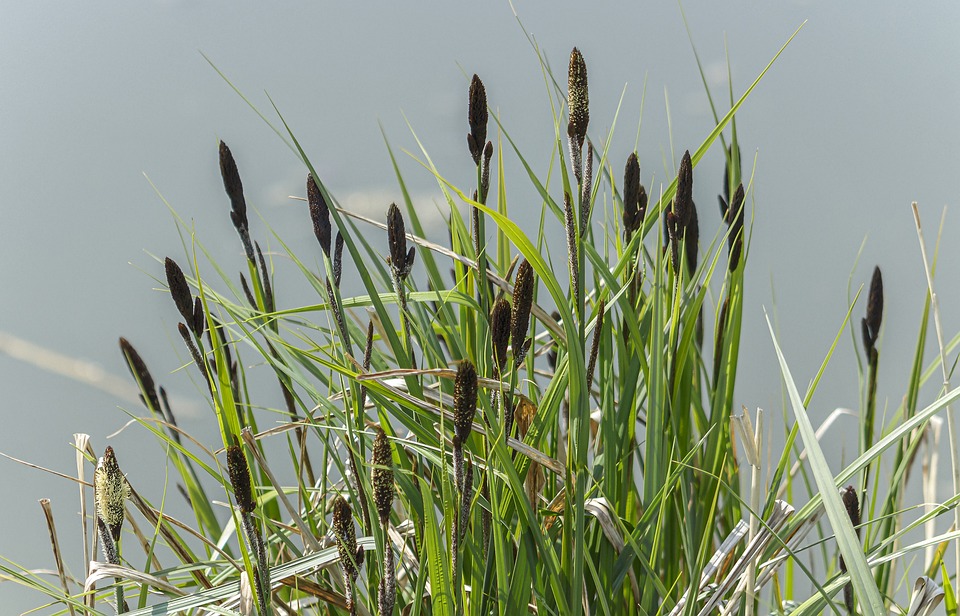
Tussock sedge

Incorporating green mulch does have an initial cost but over time will cost less than wood mulch as the latter needs to be constantly replenished as it breaks down. Native plant nurseries may have smaller plugs that can be purchased in bulk at a lower cost than larger potted plants. In addition, sedges and grasses can be divided and replanted. Wood mulch is also not as environmentally friendly as it needs to be transported to the site.

Green mulch offers the same benefits as wood mulch—the ability to provide organic matter to the soil when it dies back in the fall; it helps to regulate soil temperature and moisture levels; it shields weed seeds from the light exposure they require to germinate, and it prevents soil erosion. One thing I have noticed about a particular area in the garden is that despite the heavy application of wood mulch, invasive perennial weeds like Canada Thistle (Cirsium arvense) and Field Bindweed (Convolvulis arvensis) still have the strength to poke through. The long-term and more practical solution to managing these perennial weeds here is to encourage dense plantings of green mulch and the spread of existing plantings. These weed species thrive in the sun but will weaken if shaded out by other plants.

Green mulch provides support to various wildlife species. For example, unlike traditional turf grass, sedges grow with a space around them, thus providing access for ground-nesting bees. If wood mulch is too heavily applied in the garden, it inhibits pollinator lifecycles. Sedges and grasses also serve as host plants for some Lepidoptera species and produce seeds that are valued by birds.

When considering sedges, note that many prefer at least partial shade and moist soil conditions and so the right ones need to be selected. For the library garden, the area that is sunny and dry could accommodate Short-Beaked Sedge (Carex brevior), Ivory Sedge or Bristle-Leaved Sedge (Carex eburnea); while the partially shaded but dry areas could be home to Pennsylvania Sedge (Carex pensylvanica). A low-lying grass that could be used is Blue Grama (Bouteloua gracilis).  When sourcing these, it is best to check area native plant nursery catalogues this spring for available stock. The ones to check locally are Natural Themes in Frankford, Grow Wild in Omemee, GreenUp Ecology Park Nursery in Peterborough, and Native Plants in Claremont. Ontario Native Plants is an online mail order provider. For hard-to-find sedges, Prairie Moon in Minnesota has a wide variety available to ship to Canada as seed.

Further Reading

For more on sedges, the 1000 Islands Master Gardeners wrote a wonderful article about them.

Planting in a Post-Wild World: Designing Plant Communities for Resilient Landscapes, by Thomas Ranier and Claudia West (Timber Press, 2015).

Groundcover Revolution by Kathy Jentz (Cool Springs Press, 2023).

Prairie Up! An Introduction to Natural Garden Design by Benjamin Vogt (3 Fields Books, 2023).
Patience in the Garden

By Chris Freeburn, Master Gardener

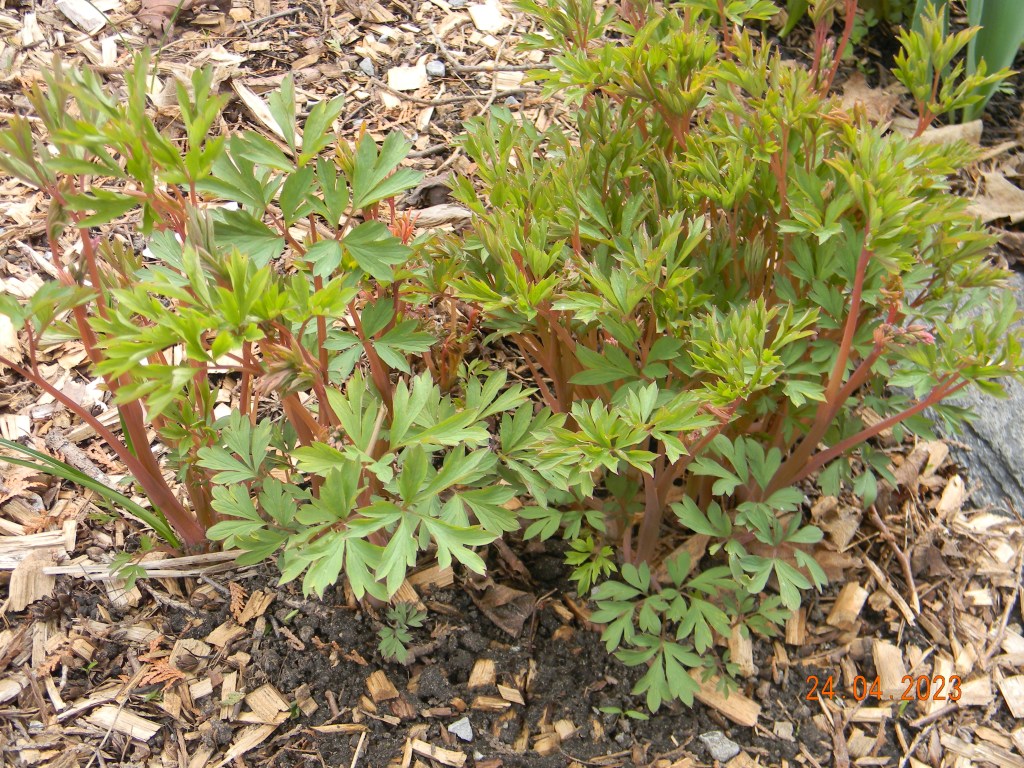
When spring finally arrives, gardeners are outside daily looking for signs of life in our flower beds. Snowdrops, crocus, tulips and daffodils along with many other spring bulbs give us that pop of colour we have missed. Hellebores, primula, magnolia, Iris reticulata, lungwort are all beginning to bloom. Spring perennials like ground phlox, poppies, pasque flowers, daylilies are showing their green shoots and will soon be flowering. Bleeding Hearts, trilliums, lupins and salvia are all growing in leaps and bounds. 

Bleeding heart is well on its way

This past April, we experienced a week of abnormally hot weather that encouraged plants like peonies to jump up. Note to self – get peony rings up. The return to “normal” temperatures is better for all the plants. And it reminds us that spring is an unpredictable season and we can’t rush it.

As gardeners, we need to practice a bit of patience. We need to leave our gardens to thaw, give the soil time to warm up and give the overwintering insects time to awaken from the garden litter we are so excited to “clear up”. We also need to be aware that not all perennials show life at the same time.
Hostas show their poking dark shoots just as we are getting into the flower beds, so we need to watch when stepping around or moving mulch in those gardens. Perennial Hibiscus are probably one of the the later showing perennials that will look dead until mid June. Be patient! When Hibiscus decide to begin growing, they grow quickly, inches in a day. Lilacs are making buds and maples are leafing out, but hydrangeas are still looking asleep. Although early flowering clematis like Blue Bird and other group 1 types will be popping up, later bloomers with still be sleeping. Don’t despair. Be patient!

Hibiscus is very late to show growth

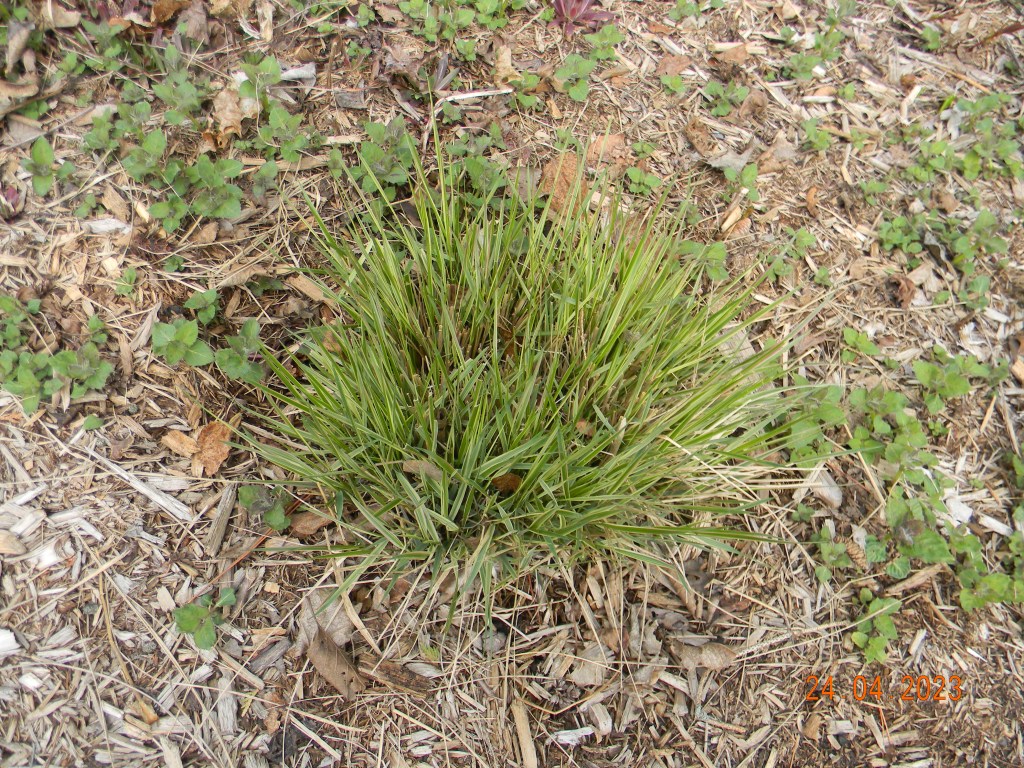
Grasses can also be deceptive. Cool season grasses begin to grow in early spring and have reached their best by mid summer. Karl Foerster, which is a Calamagrostis or feather reed grass is a well known cool season, zone 5 grass that grows 5′- 6′ tall. It likes sun, will take it wet or dry and tolerates poor soil. Overdam and Avalanche are two other feather reed grasses that will be showing green now.

Cool season grass

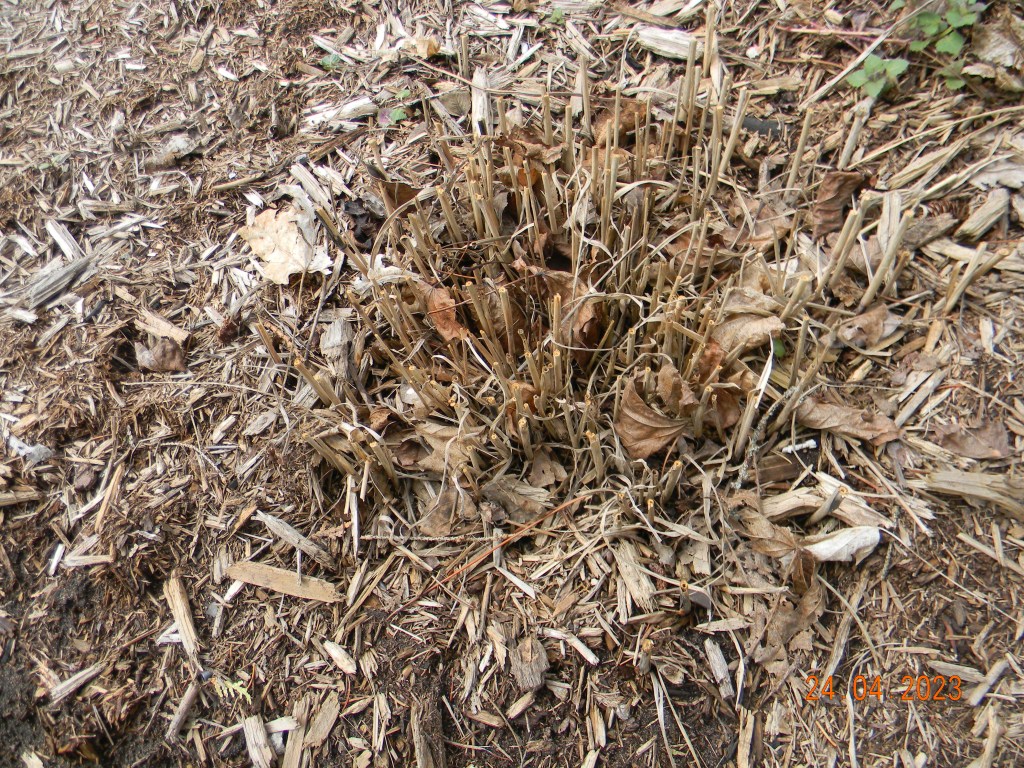
Warm season grasses do not come up until June and are at their best in fall. They will look dead until the weather warms up. Patience! Because they will not show green until later in the spring, you can plant warm season grasses behind other earlier growing perennials to hide their brown bottoms.

Warm season grass

Miscanthus grasses are warm season types and are available in different heights from 3′ to 8′ tall. Miscanthus sinensis & M. Sacchariflorus are classed as invasives, spreading by rhizomes and seeds. Other warm season grasses include Japanese Forest Grass or Hakonechloa, Japanese Blood Grass and Sedges. Panicum or switch grass is a warm season grass with many varieties native to North America. ‘Northwind’ is the most commonly know variety and it is drought resistant, will grow in any type soil and likes full sun.

Native grasses like Little Bluestem  (Schizachyrium scoparium), Big Blue Stem (Andropogon gerardii)  and Indian Grass (Sorghastrum nutans) are warm season grasses. These are beautiful additions to your garden, but will not green up until the weather warms.

May is the most active month in the garden. Sometimes we forget to enjoy the moments, slow down, breath deeply and have patience. New wonders will be happening for many days ahead. Enjoy them!

https://landscapeontario.com/perennials-in-bloom-month-by-month

https://www.invadingspecies.com/

The Matrix

By Lois Scott, Master Gardener

Planting in a Post-Wild World by Thomas Rainer and Claudia West, is a book described by Doug Tallamy as a how-to guide to sustainable landscaping.  The prescribed way to create this sustainable landscape is referred to as matrix planting, wildscaping or new American style.  Check out this link for a very good description of this type of planting.   https://www.hortmag.com/gardens/matrix-planting-garden-design

The book spends a lot of time describing ‘landscape archetypes’, design processes and site preparation etc., with the finished planting being a matrix or array of plants that thrive in related habitats with root systems that don’t compete.  Planting is done in layers using structural/framework plants (10-15%), seasonal theme plants (25-40%), and ground cover plants (50%).  Plant spacing is based on the mature width of plants and their growing behaviour.  This method usually requires a large number of plants so using ‘plugs’ is the most economical way of starting.  This style of garden does rely on some plants self-seeding to create a dense planting, so this may not be to everyone’s liking!

As an example, I have a stretch of garden along the sidewalk that I refer to as my ‘hell-strip’ and I have found few plants that have thrived there.  A boulevard tree that shaded part of this area was damaged last year and was taken down, so I can now use sun-loving plants that I have had success with in an adjacent area.  So, to translate that into what I might plant, I could use 25 Prairie Dropseed (Sporobolus heterolepsis) plugs as a ground cover plant, 15 Lance-leafed Tickseed (Coreopsis lanceolata) plugs as a seasonal theme plant and 9-10 Dense Blazing Star (Liatris spicata) plugs as a structural/framework plant.  Or maybe … ???  Isn’t that the fun part? 
The goal is to have a dense planting that will discourage weeds, be resilient, provide habitat, sequester carbon, reduce storm water run-off and to create a beautiful garden!

Seedy Saturdays and Sundays – What are They?

by Emma Murphy, Master Gardener

Prior to 1990, the word ‘seedy’ tended to be associated with shabby or run down areas or clothes, or a somewhat disreputable reputation.

Synonyms for Seedy. (2016). Retrieved 2023, February 24, from https://thesaurus.plus/synonyms/seedy

Ironically enough, some speculate that the term probably came from the appearance of flowers after they’ve shed their seeds, when they start to lose colour and eventually die.

However, that all changed in 1990, when the first Seedy Saturday was held at the VanDusen Botanical Garden in Vancouver, BC. At the time, the idea of conserving heritage seeds from garden plants or agricultural crops wasn’t really a thing, and it was hard to find heritage varieties of vegetables, fruits, flowers, and grains.

In  1988 Sharon Rempel wanted to find period-appropriate heritage vegetables, flowers and wheat for the 1880s heritage gardens she was creating at the Keremeos Grist Mill museum. As a pioneer in Canada’s organic and heritage seed movements, she organized the first Seedy Saturday event, and has kept the titles “Seedy Saturday” and “Seedy Sunday” dedicated to the public domain.

In Canada, these events have continued to be locally or regionally organized events, although the amazing organization Seeds of Diversity maintains a national presence. Almost all of these events occur in the late winter, with a few in the autumn.

Screen capture from Seeds of Diversity website http://www.seeds.ca

We totally get it. Canadian winters are long and cold and by February, gardeners are already looking forward to the springtime and planting. Seedy Saturdays/Sundays are non-profit, public events organized by individuals and community groups to bring together gardeners, seed companies, nurseries, gardening organizations, historic sites, and community groups so they can learn from one another, exchange ideas and seeds, and purchase seeds and plants in a social setting. Seeds of Diversity promotes these events on their website.

Many Master Gardener and Ontario Horticultural Association organizations are critical partners in these events – I love this poster from the London Middlesex Master Gardeners for this year’s event.

Every year more communities join the movement – according to Seeds of Diversity more than 170 events were held in 2019 across Canada. These events can be small or large, depending on the community. I love that they all have the same themes of encouraging use of open-pollinated and heritage seeds, enabling local seed exchanges, and educating the public about seed saving and environmentally-responsible gardening practices.

They’re a great opportunity to swap and exchange your seeds with others, get new varieties from other seed savers, meet seed companies in person, attend workshops/talks, and of course buy seeds!

In the Peterborough area, we are finally getting back to an in-person event. 2023’s Seedy Sunday will be held on Sunday March 12th from 11am to 3pm in a new location at the Peterborough Square Mall in downtown Peterborough (where the winter Farmers’ Market is being held). It’s a great venue, with lots of space (the pre-pandemic Seedy Sunday was held at the Emmanuel United Church and George St United Church).

Long time organizer Jillian Bishop (who runs her own UrbanTomato business and hosts seed saving workshops) says the event is “the perfect place to get inspired for spring. Come out to get all the knowledge, tools and resources needed to get growing this season.”

Jillian Bishop with her Urban Tomato sales stand.

This year’s Peterborough Seedy Sunday event includes:

  • An incredible diversity of vegetables, flowers, herb seeds available for sale
  • Community groups showcasing the great work they do locally
  • Informative hands-on workshops
  • A popular Seed Exchange Area where you can trade seeds with other gardeners

Get more information at:

Facebook: @SeedySundayPeterborough

Search for #PtboSeedySunday

PeterboroughSeedySunday

Jillian says the last few years have been challenging because of the pandemic.

“As many of you know, in 2020, two days before we were set to host our 15th annual event, we had to cancel as the world began to shut down. As disappointed as we were, we knew it was the right thing to do! Of course, no one could have predicted what happened in the weeks, months and years to come, particularly in the world of seeds and gardening.

All of a sudden seeds became a hot commodity, and seed vendors across the world saw unprecedented demand as people became more concerned about securing their food sources, and had more time at home to plan, plant and enjoy their gardens.”

Peterborough Seedy Sunday, like similar events, went virtual for a few years, but Jillian is very happy to be planning a return to in-person seed fun and spring mania for the 15th annual event, with 13 vendors selling seeds, compost supplies and more! Workshops will be focusing on hands-on skills sharing.

If you’d like to take part in the Seed Exchange, please bring your seeds divided into smaller envelopes (approx. 25 seeds) labeled with the name of the plant, year harvested, and any other information you would like to share! Once you have them all ready, you can bring them down to the Seed Exchange and swap them for other fun varieties you have yet to try in your garden!

Hope to see you in Peterborough, or join your local ‘seedy’ event!

Words of Wisdom from Jillian Bishop

Why I Save Seeds

“Saving seeds means a lot to me. It means a lot to the world. Each heirloom seed contains history and future. Past and present, the ability to adapt to unforeseen climate change and unique environments, to spread stories and knowledge through generations it contains the capacity for communities to grow their own food in sprawling fields, community gardens, abandoned lots and fire escape pots.

Those seeds are living beings. They want to grow. They needs stewards. Citizens willing to give them water, sun, soil and yes, cheesily enough, love.”

More links and information

Seed Companies in Canada -list of seed companies in Canada, as well as the vegetable and fruit seed they’ve sold in recent years.

Peterborough Seed Savers Collective – Great short film (2015) about seed saving work happening locally – follow local seeds being grown out by the emerging Seed Savers Collective, and being shared at an annual Seedy Sunday event.

Why is Biodiversity Important? – Learn why diversity of plants and animals is important.

Canadian Seed Security – The Bauta Family Initiative on Canadian Seed Security works with farmers, researchers, universities, and other organizations to develop resources that can help farmers and seed growers advance their knowledge on seed in Canada.

Seed Savers Exchange – Stewards America’s culturally diverse and endangered garden and food crop legacy for present and future generations. We educate and connect people through collecting, regenerating, and sharing heirloom seeds, plants, and stories.