I first became aware of Suzanne Simard and her forestry research through an online TED talk that I watched as part of an arboriculture course that I had taken. The talk was engaging, enlightening, and inspiring. In it she spoke about the interconnectedness of and the collaborative, communicative, and nurturing nature of different tree species and how networks of mycorrhizal fungi serve as connectors between them. These mycorrhizal fungi, located within a tree’s roots, enable the transfer of nutrients and help them to thrive.
When I saw a year later that she was to publish a book as a follow-up, I jumped at the chance to read it. Finding the Mother Tree: Discovering the Wisdom of the Forest (Knopf, 2021) not only covers her scientific research but it is also part memoir in that the author weaves her own personal life story within the narrative. We hear how at an early age she had become in tune with and respectful of the forests, influenced by her grandfather, who had practiced logging in a sustainable manner. She would go on to work for logging companies as well as conduct research for the British Columbia Forest Service, trying to determine why certain conifer species grown for harvesting were not thriving and whether eliminating certain tree species would contribute to a more productive end result or be a hindrance.
Simard was skeptical that this long-standing “free to grow” policy was sound practice for the long-term survival of the forests. Her eventual research findings would conflict and effecting change would prove to be difficult and was met with resistance. The view that trees were in strict competition with each other and that best results would be derived though eliminating “unproductive” or “devalued” trees such as Alder and Birch from the plantations could no longer be supported. It would not be easy to convince policy writers to change course and see the more collaborative, symbiotic nature between the different species and the importance of mycorrhizae – that eliminating certain deciduous species actually made the conifers more vulnerable to Armillaria root disease or insect pests such as the Mountain Pine Beetle. Simard would also show that the sharing of resources extended not only between parent and offspring trees, but also between genetically unrelated trees.
Simard demonstrates the disadvantages of developing monoculture environments in the forestry industry but her research should also give much food for thought for those working in urban forestry, landscaping, agriculture, or even at the individual homeowner level. The common practice of planting the same kinds of species or the isolated planting of an individual species should be reconsidered more widely. These practices lead to less ecological diversity and may reduce the potential for a planted tree’s optimum growth. Perhaps we should consider planting certain species of trees together or in close proximity in order to foster the underground mycorrhizal networks that help strengthen and support them. Perhaps for planting consideration is an alder and a pine or a fir and a birch combination?
Reading this book will change the way you think about trees and you will want to continue to follow Simard’s research. Learn more about the Mother Tree Project.
Like a lot of other gardeners during this time of COVID, I have taken advantage of the many, many gardening presentations, seminars, talks, and webinars that have all been available online–not to mention catching up on my reading. The two books that I am currently reading are both by Douglas Tallamy and have been recommended numerous times. They are ‘Bringing Nature Home’ and ‘Nature’s Best Hope’. Both are packed full of facts and figures; the first one providing a list of recommended native plants as well as basic information regarding the insects that are eaten by bird and wildlife. The second book, which is one of the main reasons why I like it so much actually has a plan (or approach as the book calls it) for turning our home gardens into wildlife habitats and extending that approach to create corridors preserving our native wildlife.
What I have noticed among the many presentations, seminars, etc. is the focus on native plants, native wildlife preservation, sustainable and organic gardening and environmental gardening. I am definitely all in favour of this shift; in fact I believe that this has been too long coming. We, as a whole, are definitely a little late to the table. Now this is just my personal opinion but I feel that as a nation, as a people, we do seem to be forever running behind a problem trying to come up with solutions only when the situation becomes critical!
I have to admit that I am as much at fault as the next person. My garden is only approximately 40% native plants, the rest being ornamental. Although if you count bulbs and annuals, that figure could drop down to about 30%.
But do not panic just yet, Douglas Tallamy does not recommend that we ‘adopt a slash and burn policy towards the aliens that are now in your garden’, thank goodness for that. What he does suggest is two-fold, if an alien plant dies replace it with a native plant that has the same characteristics, and two, create new beds with native plants if you have space and if not, dig up some of your lawn.
So here is my dilemma, and guilt. I have no more space to expand and only a very narrow patch of lawn in the back garden for my husband, dogs and future grandchildren. So I either have to wait for something to die, which is not happening fast enough to outweigh my guilt, or dig up a plant replacing it with a native. This is not quite as easy as you think. I have walked around my garden a number of times looking for plants to give away to plant sales or neighbours. The problem is the less plants you have the more each plant tends to have its own story, your mother or good friend gave it to you, you’ve inherited it from someone you care about, the plant reminds you of a certain time, the list and stories go on.
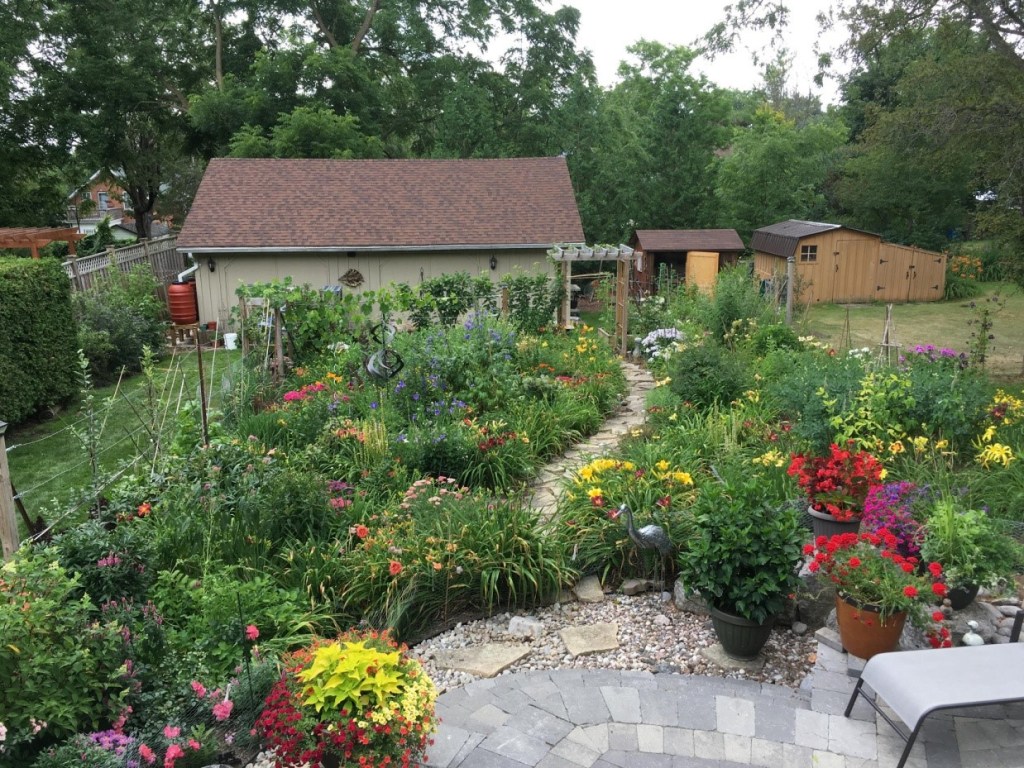
Photo of backyard in author’s garden showing on the left the narrow strip of lawn
One of my favourite native plants is culver’s root. It always and consistently has the most insect activity of any plant in the garden. I already have two. But would I want to dig up the rose bush that my mother bought me because coincidentally it has the same name as my grandmother and replace it with a third culver’s root?
What about ironweed? I love this tall, stately plant covered in late summer with purple flowers. Again I already have two, but would I want to dig up the delphinium that a neighbour gave me 15 years ago, that had apparently been growing in her yard for 30 years prior to that and replace with an ironweed?
Picture of Ironweed in author’s backyard
What about all the daylilies I have spent years collecting, each one unique and individual, or the peonies I bought from my last garden, one in each colour? Now, I understand that maybe not all of my ornamentals have the same level of memories, and that, yes, they would be going to good homes. But it is a difficult decision, I want to increase the natives in my garden, I want to do what is right and sustainable, and I want to increase the wildlife in my garden. I have even given talks myself encouraging gardeners to add at least one native plant to their garden each year. But do I really have time to wait; my guilt levels and motivation levels want me to act now, to take a stand, to encourage by action.
As Douglas Tallamy concludes: ‘Our success is up to each one of us individually. We can each make a measurable difference almost immediately by planting a native nearby. As gardeners and stewards of our land, we have never been so empowered – and the ecological stakes have never been so high.’
Ed: This post was released in error on March 22. Apologies if you’ve already read it — perhaps you can glean something from it upon second reading as well?
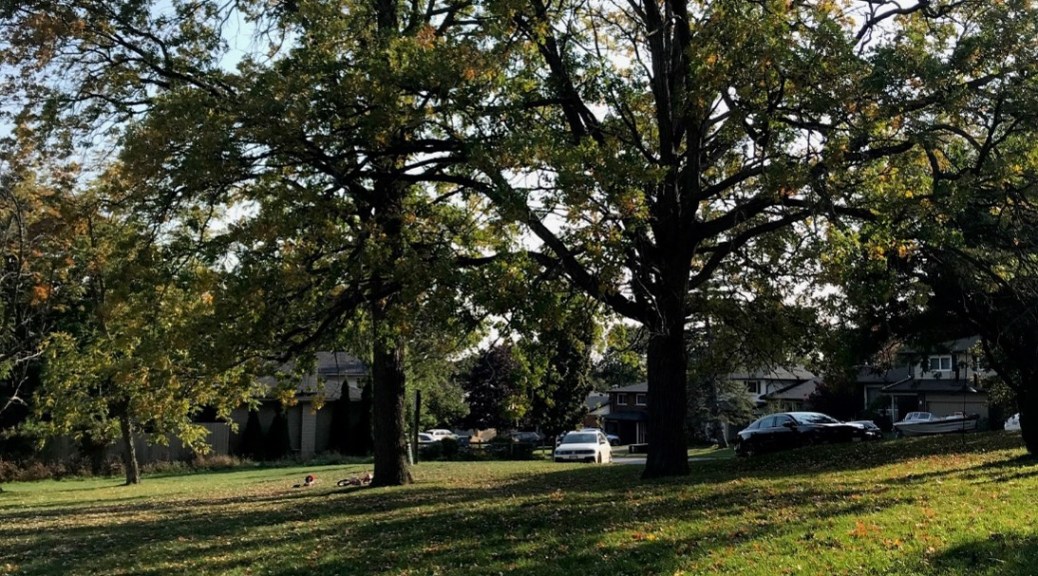
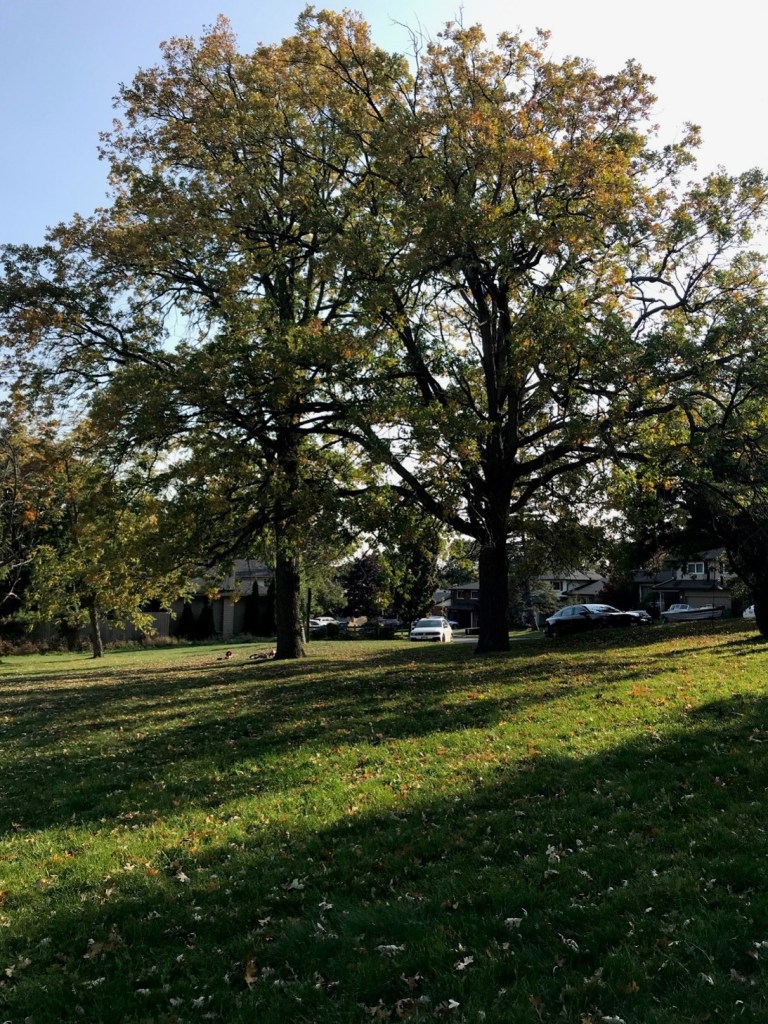
Quercus macrocarpa (bur oak) in Centennial Park, Peterborough, ON.
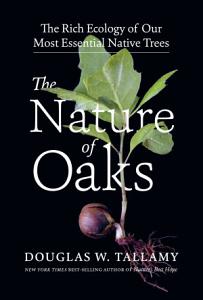
There are a pair of Quercus macrocarpa (bur oak) trees in a park near my house in Peterborough and I often look at them in awe. I estimate that these trees are between 100 and 150 years old. What is amazing is that they could live another 150 years. If they receive enough sunlight and moisture and their roots are undisturbed, this lifespan is possible. Sadly, most trees planted in cities are not long-lived due to stresses like heat, drought, road salt, compacted soil and interference by sewer or other utility lines. For these reasons, backyards tend to be the better locations for trees in urban environments. If you are planning to plant a tree on your property this year, Douglas W. Tallamy’s latest book, The Nature of Oaks: the Rich Ecology of Our Most Essential Native Trees, published by Timber Press, will make you seriously consider an oak tree.
Tallamy, an entomologist who researches the relationships between insects and plants, is well known for his other books that seek to change the way we garden by encouraging us to incorporate more native plants. His latest book honours the oak tree and provides a month-to-month chronicle of the life of one on his property. While small at 200 pages, the book has many interesting and informative anecdotes about the types of insects, birds, mammals, fungi, and micro-organisms that live in, on, and around these trees. Tallamy aims to instill in us an interest in these great trees and to recognize their important role within the food web.
What makes oak trees so special? In addition to moderating the climate, reducing pollution, producing oxygen, and storing carbon from the atmosphere, they have an enormous impact on the lives of other species. Within our ecosystem, oaks support more life than any other North American tree genus (p. 12) and they are considered a “keystone species.” A “keystone species” is one that produces food that supports a broad range of life forms. Over the course of its lifetime, an oak can produce over 3,000,000 acorns. Other trees such as birch, cherry, hickory, pine, maple, and willow are also “keystone” species (p. 39) but they are not as supportive as oaks. In his research, Tallamy measured the degree of this support by counting the number of moth and butterfly species that live, feed, and reproduce on different trees. The Lepidoptera Index places oaks at the top of the list at 532 species of moths and butterflies. One of the reasons as to why they support so many species is because they grow in a wide range of ecological zones (p. 41). Most species near the bottom of the list are non-native trees and shrubs. Most of our native insects and animals have not fully adapted or evolved to non-native plants or are only adapted to a small number of plants—referred to as host plant specialization (p. 37). Certain birds, like the black-capped chickadee need between 6,000 and 9,000 caterpillars to raise one clutch of young. Filling bird feeders with seed can be beneficial for them, but planting trees are necessary as up to 50% of their diet consists of insects (p. 34).
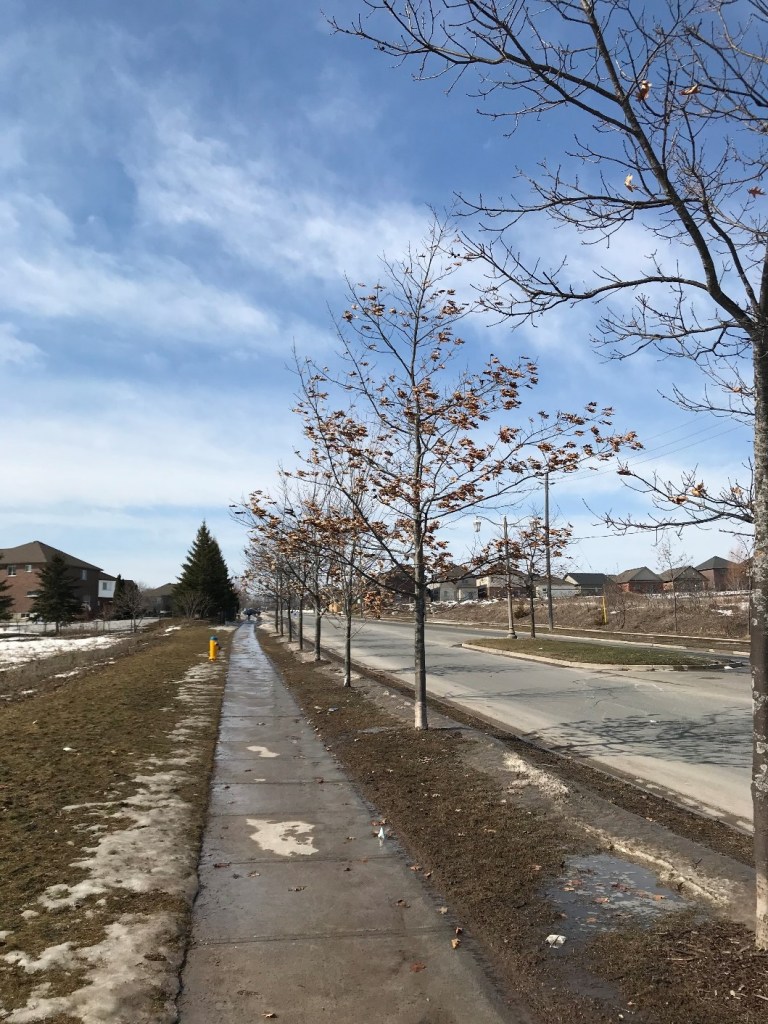
There are a number of unique and fascinating attributes of oaks that are explored in the book. Masting is a survival adaptation that occurs periodically in oaks where they produce many acorns. Since animals cannot eat them all, this allows more trees to grow (p. 18). Masting occurs on different cycles for both white and red oaks and this ensures food is consistently available for animals (p. 120). Many oaks retain their dead leaves through the fall and winter. Marcescence is thought to be a defence mechanism that deters animals from eating the tender buds (pp. 27-28). Concerning acorn production, as an oak tree has both male and female flowers, a few can self-pollinate and grow acorns. However, for optimum production, an oak tree must be planted with another of its own species or be in close proximity to another of its own species for pollination (by wind) to occur (from either the “red oak” or the “white oak” group).
Marcescent Quercus rubra (northern red oak) along Heritage Trail, Peterborough, ON
Tallamy also provides us with some tree planting advice and seeks to dispel some of the myths around planting oaks. His first choice would be for us to plant an acorn in the fall but the next best choice would be to plant a bareroot whip in the spring. A bareroot whip is a pruned dormant tree that is only a few feet tall. It should be planted in the spring so it can break its dormancy naturally. Overall, he recommends purchasing the youngest tree available because it will have a better chance of survival than a larger tree. Larger trees often have damaged roots at planting and have a 50% chance of dying in the first few years after transplant. (p. 47)
While some oak species grow to great heights and widths, they do grow relatively slowly, and most people will not live to see their tree at its peak. Some may be concerned about its root system, but they extend deeply into the ground and tend not to interfere with driveways or sidewalks like some other species. Tallamy recommends planting two or three trees spaced 10 feet apart—in a grove. This may seem too close, but it is true to their nature in the wild. The trees’ roots will also bind together and the resulting strength of them will be able to withstand extreme weather and lessen the chances of damaging property.
For those with smaller lots, it may not be practical to plant more than one oak, let alone a larger species like Quercus alba (white oak) or Quercus macrocarpa (bur oak). There are several smaller oak species that may suit. Of these, two are native to the Carolinian zone of Southwestern Ontario: Quercus prinoides (dwarf chinquapin oak) and Quercus ilicifolia (bear oak) and one from the US Northeast: Quercus marilandica (blackJack oak). While the soils of the Carolinian zone are drier and sandier, these trees can be adaptable to other soil conditions. Nutcracker Nursery in Maskinonge, Quebec specializes in growing these hard-to-find oaks and they ship bareroot stock. The stock is grown in cooler zone 4B and in clay-loam soils. Peterborough GreenUp advises that while it is preferable that trees be selected from within their native eco-zone, climate change is making it more possible for us to consider some species from outside. Selecting a site that is shielded from winter winds is recommended.
Since an oak is a shade tree, there may be concerns about what can be grown beneath them but there are many plants that are suitable for the understory. Tallamy makes recommendations that are more suited to US states but I will suggest some possible plants suited to our area: Asarum canadense (wild ginger), Polygonatum biflorum (smooth solomon’s seal), Aquilegia canadensis (eastern red columbine), Ceanothus americanus (New Jersey tea), and Amelanchier alnifolia (Saskatoon serviceberry), just to name a few.
This little book is not only fascinating to read, it is inspiring. When the declining non-native Acer platanoides (Norway maple) is eventually removed from my yard, I am going to see about replacing it with a native oak “keystone species.”
I have often heard permaculture referred to as ‘common sense’ gardening and their usage of ‘zones’ as one of their design principles is no exception. However, I have to admit up front that when I designed my previous garden, I had not heard of permaculture and was also unfortunately also lacking in common sense that day! What did I do that would ultimately cause me so much grief over the next 15 years?
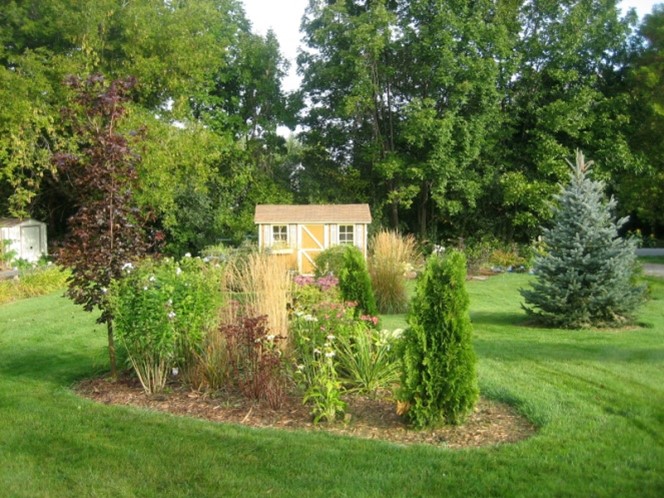
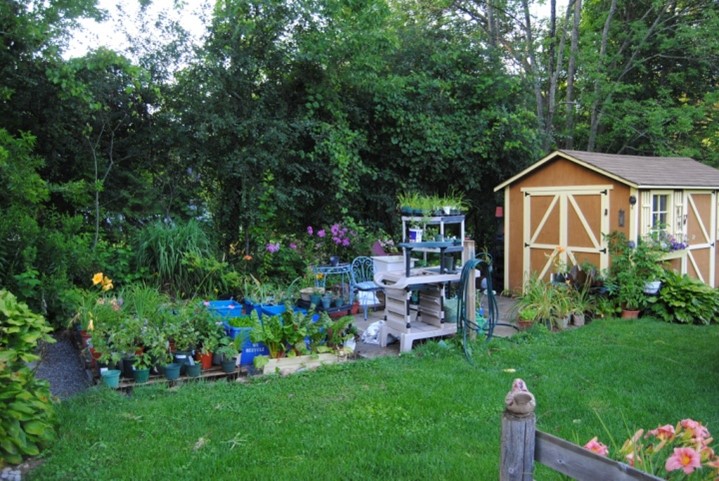
We had just over 1 acre and the house was located towards the back of the property, so I decided to place the shed, vegetable garden, herb garden, nursery and greenhouse at the very front of the property. The result was that was pretty well everything that I needed to garden daily was all located as far away from the house as possible.
Shed way at the bottom of the garden
Closer look at shed
At the time I thought I had a good reason for this, keeping the children and pets close to the house. But ultimately when I needed the pruners to prune the hedge at the back of the garden, or I needed some herbs for the supper I was in the middle of cooking, or I was harvesting or watering, I ultimately came to regret my poor planning choice. So, a few years later when it came to finding a location for the chickens, by then I had attended a couple of permaculture courses, and I placed them as close to the house as possible. A location that while waking me up in the morning, ultimately made me pat myself on the back every day in the winter just before putting on all my winter gear to take out their food and water.
Zoning is a permaculture design tool that allows you to design your landscape according to usage and attention required. It is not limited to home gardens, and can be used on almost anything from a large farm to a kitchen design. By designing your garden using zones, you take into account the usefulness or frequency of each element in your garden, and place those elements closer to your location, which is your house. So something that you use daily, such as a herb garden, would be placed closest to the house, along with pots of annuals which require frequent watering and dead-heading. Using the same principle, fruit trees or a meadow garden requiring less maintenance would be placed further away from the house.
Zones are numbered from 0 through to 5, where 0 is the location of the house, and will be different in everyone’s garden. They are typically shaped by topography, soil type, placement of the sun, and the homeowner’s requirements. So while they are often shown in diagrams and books as either exact circles or half circles, they are more flexible often merging into one another.
Most permaculture books describe the following zones:
0 – Home 1 – Areas closest to your house that requires the most attention, harvesting, weeding, dead-heading, herb and vegetable garden 2 – Less intensively managed areas 3 – Fruit and nut trees, twice weekly maintenance 4 – Wild foods and timber, weekly maintenance 5 – Natural area
But again, these zones can be changed according to your requirements.
To start designing using zones, you need to look at each element in your garden according to how often you use the element or how often you need to care for the element. Zones are created based on relationships, our relationship to our garden, and how different elements in our garden connect with each other. It is best to start with elements closest to your house and work outward.
As an example, I have perennial flower beds in the front of my house and also in the back. The beds in the front are full to partial shade, heavily composted with leaves and packed with large leaved plants. I get very few weeds in the front beds and also do very little deadheading. The beds in the back meanwhile are full sun, plants are not placed as close together, they typically need more dead heading, and while they are also heavily mulched with leaves, the leaves typically only last until mid June. My front beds are in zone 3 and the beds in my back garden are in zone 2. Zone 1 in my garden is for annuals and vegetables in pots and hanging baskets surrounding the house that have to be watered frequently.
Permaculture zones are a tool that can be used when designing your garden to make your life easier. In the book Gaia’s Garden, A Guide to Home-scale Permaculture by Toby Hemingway, the author includes a quote from Bill Mollison, the co-founder of Permaculture, offering guidance for where to plant a herb garden.
“When you get up in the morning and the dew is on the ground, put on your woolly bathrobe and your fuzzy slippers. Then walk outside to cut some chives and other herbs for your omelet. When you get back inside, if your slippers are wet, your herbs are too far away.”
Last October as I planted the last of my fall bulbs, my thoughts turned to what next??? How to extend my garden experience by stretching the season. I adore flowers in the house and between retirement and lockdowns seem to have the time so why not try a cutting garden?
Used with permission from antoniovalenteflowers.com
I have no experience with the subject matter and it made sense to find some resources. A good comprehensive book is “Floret Farms Cut Flower Garden” by Erin Benzakein. It covers the basics of cut flower gardening as well as highlighting tips for commonly grown flowers. How to plan, grow, harvest and even some basics on arranging. This book proved to be a doorway into a plethora of other references and websites on the subject. “YouTube” was also a plentiful source of information.
Site selection is key. Most cutting flowers require full sun and well drained, fertile soil. A site sheltered from the wind is preferable. I decided on an area on the west side of the house where the sunshine is ample and my water source is nearby. Since it will be windy, the support provided to the plants is important and will be discussed in future entries. The final length of a bed will depend on the amount you want to grow. The recommended width is 4 feet. This width allows you to reach the entire bed without stepping into the bed. The type of flowers to grow is personal preference but regardless of the variety, look for plants with long stems and lots of blooms. Try to have plants that bloom in the spring (eg. snapdragons), summer (eg. zinnias) and fall (eg. dahlias). If space is limited, skip the plants that bloom once (like many sunflowers) and concentrate on continual bloomers such as zinnia and dahlias. These are known as “cut and come again varieties” as they provide blooms for long periods if they are cut or deadheaded. You may also wish to grow some plants as fillers such as Dara. Fillers are the backbone of arrangements, lending structure, supporting delicate blooms and filling gaps between focal flowers.
Dara filler used with permission from antoniovalenteflowers.com
Cut flowers are grown more densely than usual and most commonly are spaced 6,9 or 12 inches apart. References abound on the internet indicating which spacing is best for each variety. The number of seedlings, corms or tubers required is calculated using the area available for that plant and the spacing distance. Once calculated, order your seeds as soon as you can. Goods for the garden seem to sell out quickly in these days of lockdown. Seed vendors have been discussed in a previous blog. In addition to those already cited, many of the cut flower farmers also sell seed.
Once you have selected your seed, you then need to determine when to start them indoors using the last spring frost date for your area (OMAFRA lists Peterborough as May 17). For each variety, check the seed package for timing and work backwards from there. This allows you to make a seed starting schedule. For those seeds you intend to direct seed, you may need to consider time to maturity in order to give the plants time to bloom (work backwards from first frost date in your area). I make a list of seed sowing dates to help keep me organized.
Now all there is to do is wait for the seeds to arrive. I start sowing in February. Please join me through this blog on my horticultural adventure.
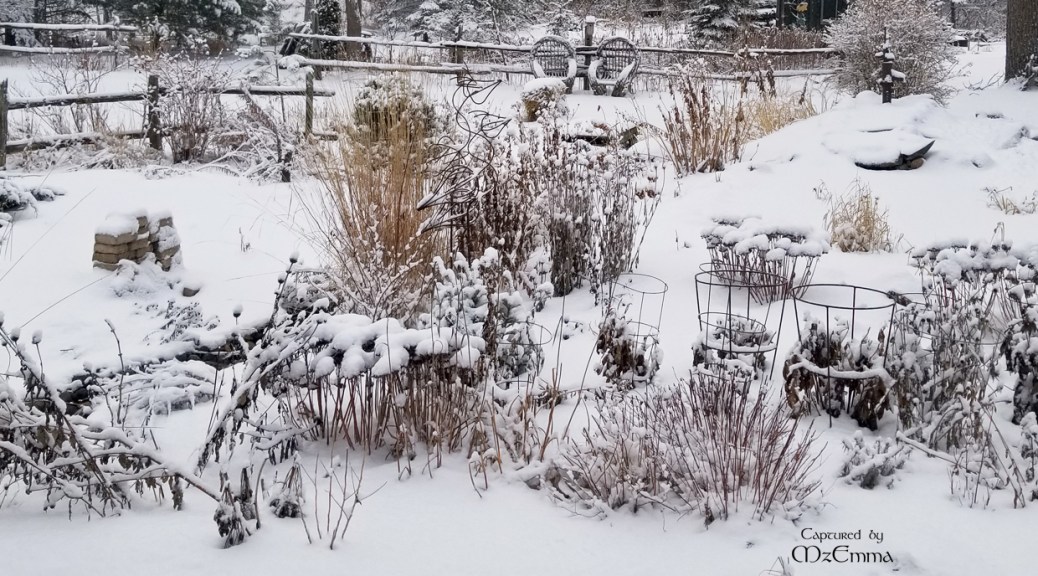
So now it’s wintertime. Our plants are sleeping quietly beneath a bed of wonderful white snow, and although we hibernate and rest to a degree, a gardener’s thoughts turn to springtime. I’m exploring some new ideas for my gardens for next spring, and thought I would share them with you.
But I do have a wonderful husband who knows how to make his wife – the Master Gardener – a happy person. His Christmas 2020 gift to me was to create some raised beds so we will be doing that this spring. I have been wanting to do raised beds for a few years since seeing Tara Nolan do a presentation at the Peterborough Garden Show, and I guess dropping those significant hints finally worked 😉
So we did a little research. Have you been thinking of creating raised beds for either vegetable or other gardening? They are great to extend the gardening season, be able to control soil quality, provide accessibility for older gardeners or those with disabilities, create a garden for special purposes (youngsters or horticultural therapy), increase yields, reduce weeds, and keep critters at bay. They also work well for condos and rooftops in our urban centres. Here’s some great sites I found for those interested in the idea.
One of my favourite gardeners with a similar climate to mine in Central Ontario – Erin Schanen in Southeastern Wisconsin (zone 5) – The Impatient Gardener. She has several good articles on growing in raised beds, from layout through to construction.
Tara Nolan’s book Raised Bed Revolution emerged at a time when this idea was gaining a lot of traction, and it’s an excellent source of information on size requirements for constructing raised beds, height suggestions, types of materials you can use, and creative tips for fitting the maximum garden capacity into small spaces—including vertical gardening. The Toronto Botanical Garden also wrote a great review. We also have a copy of Mel Bartholomew’s Square Foot Gardening, which focuses on growing more fresh produce in less space, and is very complementary to the raised bed philosophy.
For some general information on raised beds try here and here.
ORDERING YOUR SEEDS
Maybe it was just the crazy rush (and delay on delivery) for seeds this past spring, but we just ordered our vegetable and flower seeds for the 2021 season. There are lots of seed companies to choose from, but please try to shop from Canadian companies and especially those local to you. Although COVID-19 meant the cancellation of Peterborough’s wonderful Seedy Sunday, the organizers did post a list of all the vendors who would have been there, and it’s a great resource, as is the Seeds of Diversity site.
ESPALIERED FRUIT TREES
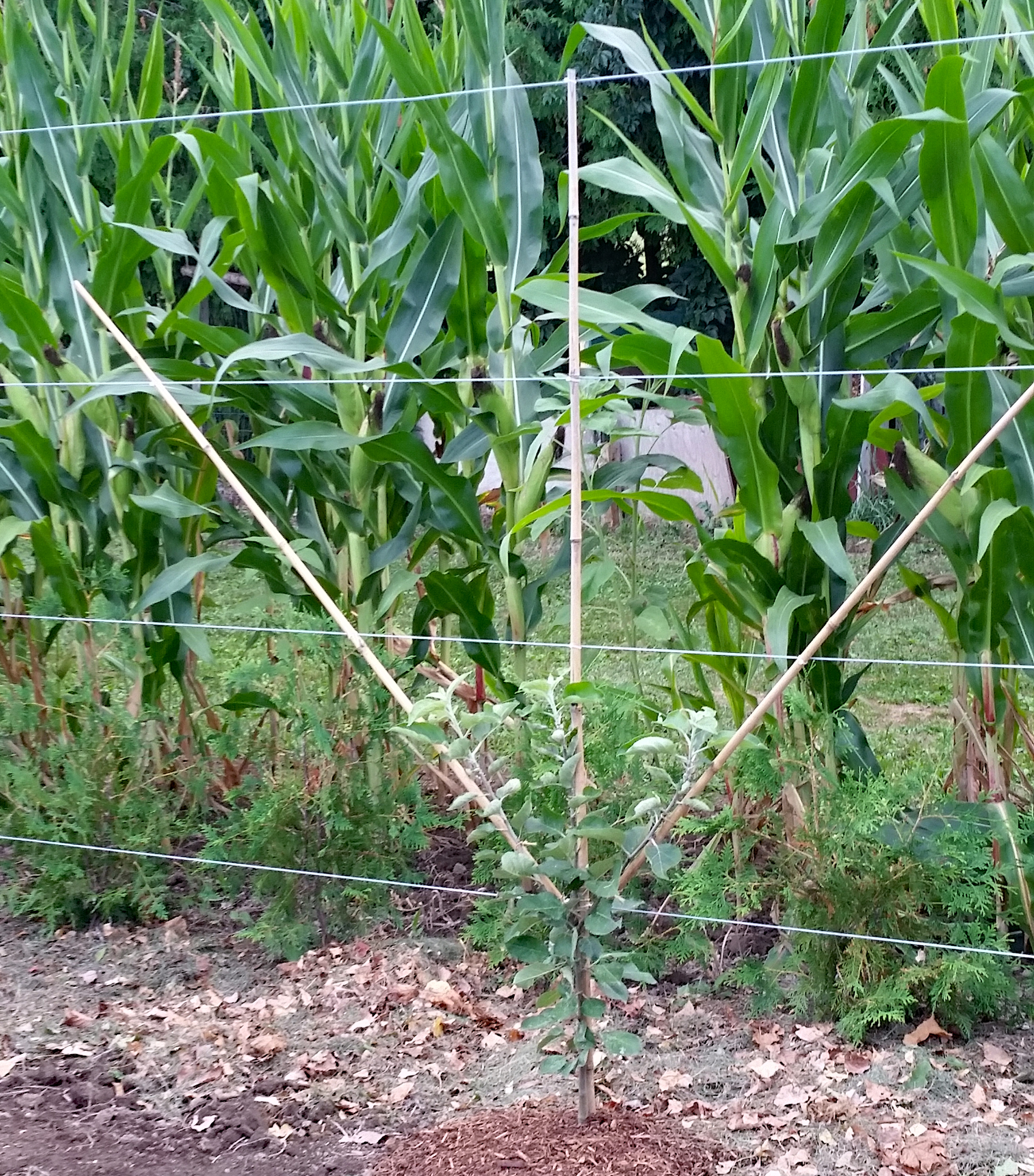
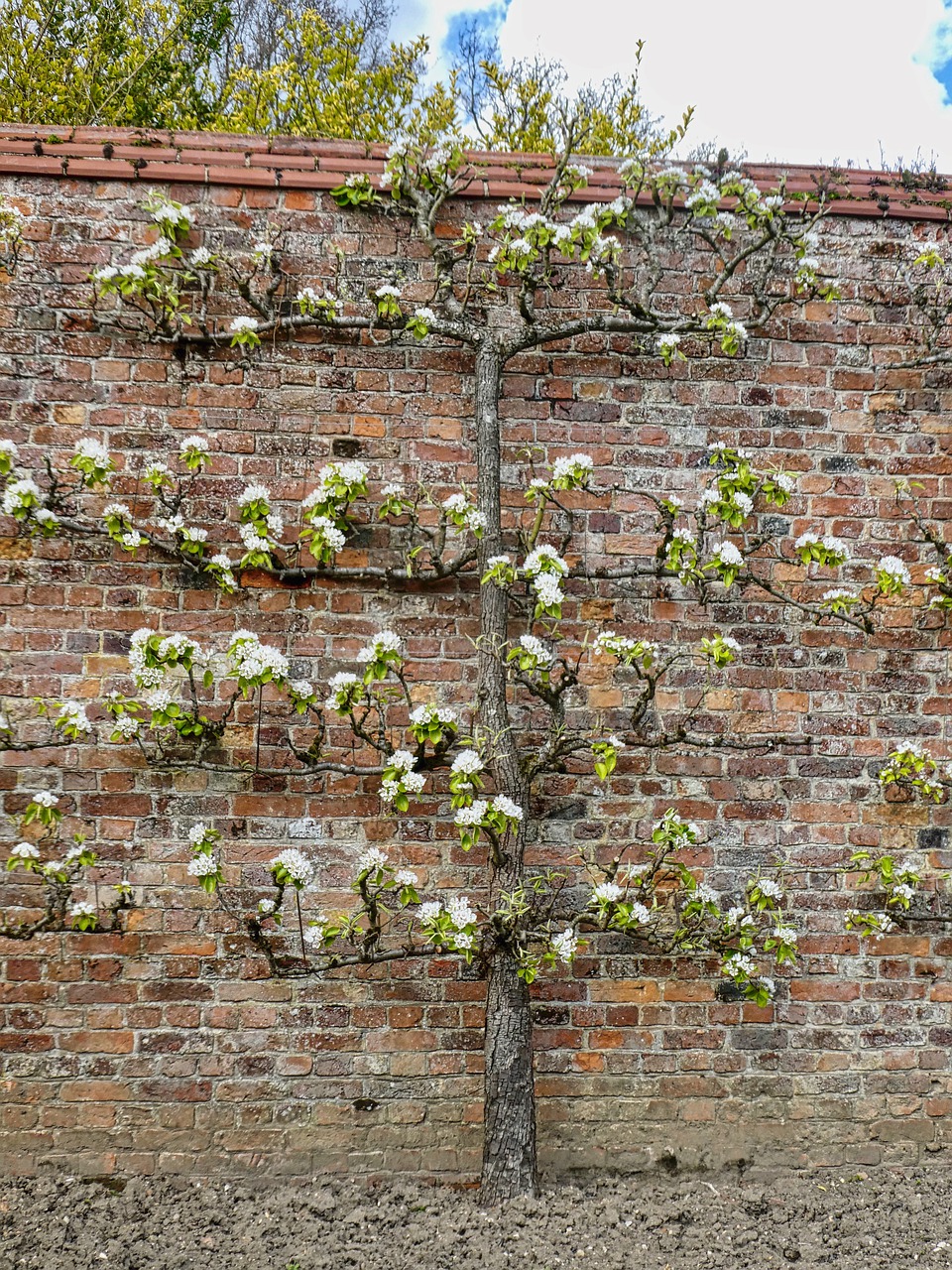
Espaliered fruit trees (espalier – to train a tree or shrub to grow flat against a support or wall) have been on my garden wish list for several years, and I missed an opportunity to pick up a mixed apple espalier tree several years ago which I have been kicking myself for ever since. I saw amazing espaliered fruit (English style) in the Victorian Kitchen Garden at Meadow View Gardens (just north of Cobourg) on a Master Gardener tour several years ago, and was entranced (well I’m entranced by owners Julie and Garry Edwards’ entire English-inspired gardens, but that’s another story).
Although they can be any kind of fruit they are most often apples, and the key to doing it well is understanding how to prune the trees. Garden Therapy has an excellent article on how to grow these edible gardens, in ways that can accommodate both small spaces but be decorative. There are many different shapes that can be done – cordon (branches straight out to the sides), fan (branches fanning up and to the side), candelabra (like a cordon but the branches turn at a right angle to form the shape of a candelabra), lattice (multiple trees with crossing branches), and “Y” shapes. Maybe this is something you can try in your garden as well? The Ontario Ministry of Agriculture, Food and Rural Affairs (OMAFRA) has a list of nut and fruit tree nurseries. I know one company I have dealt with is Silver Creek Nurseries in Wellesley, who specialize in fruit trees, and they offer the following advice on their website:
“Spur bearing varieties are recommended (rather than tip bearing), such as Cox’s Orange Pippin, Winesap, Fuji, Belle de Boskoop, Calville Blanc, Sweet 16 and many more. Apple and pears are generally the easiest fruits to train, but other species may be espaliered with varying degrees of difficulty.”
Grow a Little Fruit Tree: Simple Pruning Techniques for Small-Space, Easy-Harvest Fruit Trees is also recommended as a resource (although I haven’t read it).
I’ll be in touch with them once spring rolls around, which should be in 82 days or so (but who’s counting?). Enjoy your winter garden dreaming, and spring will be here soon enough.
The Internet conveniently provides seemingly endless avenues when searching for information on best practices for gardening but there are times I prefer to turn to my bookshelf for a favourite and trusted author. Here is a collection of books that I find useful in a practical sense or just to reread to refresh my mind on certain topics.
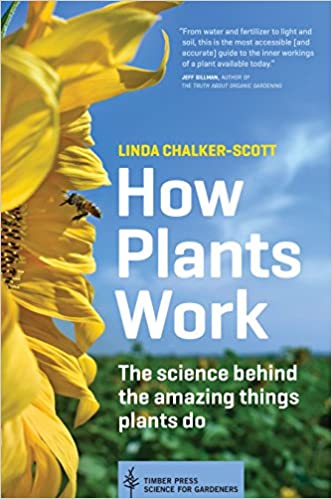
How Plants Workby Linda Chalker-Scott, a well-known “associate professor and extension urban horticulturist at Washington State University” is an excellent resource for me. Quoting the back cover “this book arms you with the information that will change the way you garden. You’ll learn how to fertilize and prune more effectively, how to weed less and how to determine which garden products are worth your time and money”. She discusses the science of how plants work but most importantly for me, translates that into practical science-based practices for my garden. As a bonus it does include attractive, instructive photographs. Dr. Chalker-Scott is a very engaging author. I also recommend her other books The Informed Gardener and The Informed Gardener Blooms Again which are both collections of her Garden Myths.
What A Plant Knows: A Field Guide to the Senses by Daniel Chamovitz is another fascinating book about how plants work. In this book Dr. Chamovitz discusses the science around what a plant sees, smells, feels, hears (or doesn’t hear), how it knows where it is and what it remembers. This book is beautifully written, very engaging and the science quite accessible.
The Pruning Book by Lee Reich is very useful, practical and well written. . Dr. Reich takes the reader through the basics of pruning, the tools and the plants, including ornamental trees and bushes, evergreens, vines, fruit and nut trees/bushes, houseplants and herbaceous plants. For the adventurous he also describes specialized techniques such as topiary and espalier. There are many useful photographs and diagrams along the way that are both instructive and attractive.
I am looking forward to adding to the bookshelf in the near future. I do have two of Doug Tallamy’s books on order from The Hunter Street Book Store in Peterborough where the above books can also be ordered. The Peterborough Public Library has a hard copy of The Informed Gardener, and electronic copies of How Plants Work and What a Plant Knows. Also available at the library are electronic copies of two of Lee Reich’s other books Weedless Gardening and The Ever Curious Gardener. I am also always interested in other gardener’s favourite books to potentially add to my collection.
I have a lot of gardening books and whilst I do search on the internet if I have a quick question, there are a few books that I go to repeatedly and often. One of these is from the UK Royal Horticultural Society – Pruning & Training. I am sure you could find a similar book in Canada but as this book was given to me a few years ago by my father-in-law as a present, it has special meaning for me.
I love growing fruit, apples, grapes, currants, blueberries, to name a few and as I have a smaller city garden, this comes with challenges. I have to make use of all available space and prune effectively to fit everything I want into my garden. Hence the reason why this book is so important to me and why I use it so often.
There are chapters on ornamental trees as well as ornamental shrubs and roses and a good introduction describing the parts of a plant as well as the principles of pruning and training. But it is the chapters on tree fruits, soft fruits and climbing plants that I refer to most often. I actually have PostIt® notes on the sections that describe the pruning shapes I have chosen for my apples, currants, gooseberries and grape so I can check I am doing it correctly. I must admit it took a few years to observe the effectiveness of pruning well, I was always hesitant to cut off too much of the plant, much as I still save every perennial seedling that comes up in my garden. In my last house we had a grape for approximately 6 years and whilst we did get some fruit on it, we could have doubled or tripled the harvest with better pruning, but I hated to cut so much off.
For my grape vine I originally had it growing over an arch, but it soon outgrew that support, so we had to build a new support system and then re-prune it into its new system. There are many different systems that can be used for grapes including the rod and spur system in which the grape is grown along 3-4 horizontal wires to the guyot system in which shoots from two horizontal stems are grown vertically.
The chapter on tree fruits starts by showing diagrams of all the different forms or shapes as well as describing basic and pruning techniques. There are lots of photos and diagrams in this book so that you can visually see everything being discussed, which I really like. There is also a section on renovating neglected tree fruits.
I chose to prune my apples trees as espaliers on a four tiered tree, this is my trees fourth year and first year that they have blossoms, so I am hoping to have my first apples. It is fairly time consuming, especially as I didn’t know what I was doing the first couple of years, but I followed the instructions religiously and am now beginning to approach the trees with pruners in hand confidently.
Espaliered apple tree (Year 4)
My currant and gooseberry bushes were pruned as multiple cordons with three vertical arms. I have this grown both on the same support system that I have for the fruit trees but also on bamboo poles. I find that by growing them in this way as opposed to a bush, I can fit more currant bushes into the same space, I grow red, pink, white and black, and they are easier for me to pick. I still have a high yield of berries and am able to harvest almost all of them.
Close up of currants
Redcurrent bushes
There are plenty of videos on the internet showing different pruning techniques, maybe even too many as it is often difficult to choose just one, and then you end up getting side tracked. As I was writing this article and looking up videos, I ended up watching three including one on heucheras. Here’s one you might like from the RHS on renovating fruit trees.
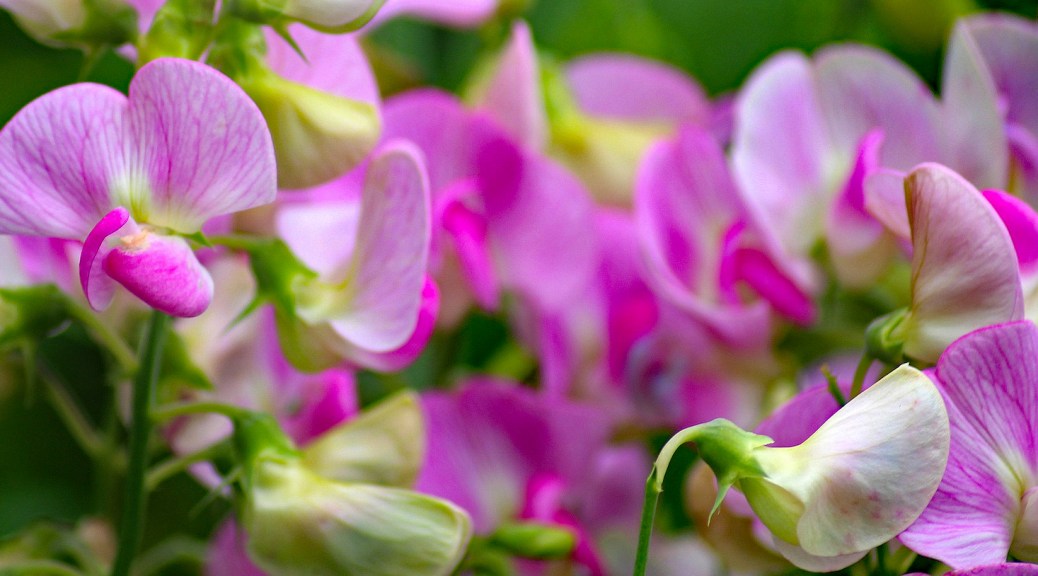
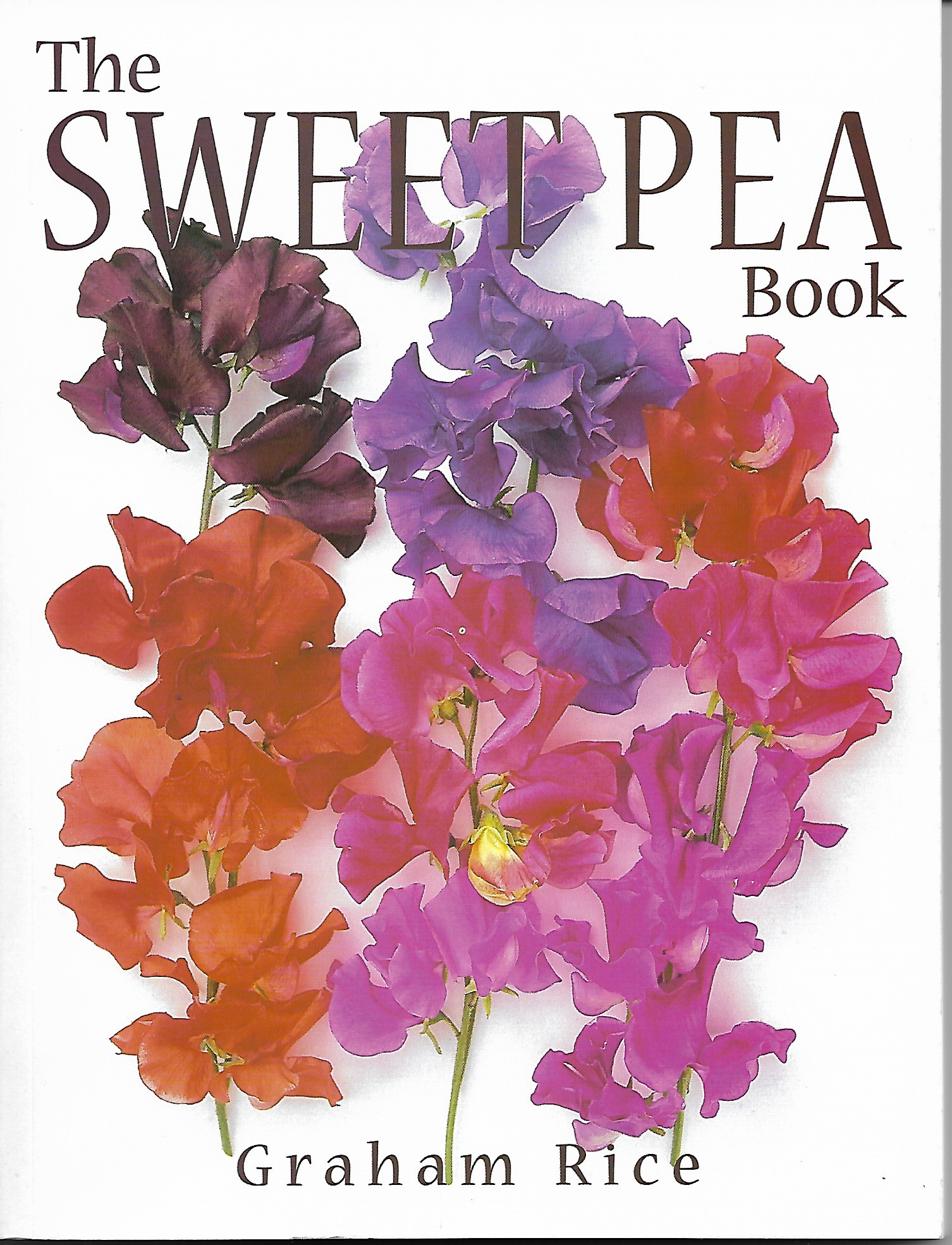
Somebody once told me that you should try growing something six times unsuccessfully before you give up. I have not stopped there yet with Sweet Peas. I grow them but they never are as full and beautiful as the pictures I have seen or the seed package covers. So I bought The Sweet Pea Book by Graham Rice. It has lots of interesting ideas and a multitude of cultivation tips.
The first thing that I learned is that some varieties were selected over time for our climate of hot summers and cold winters. Cuthbertsons and the Royals are two examples. This is at variance with the British climate where they can be planted either in pots or the ground in the fall and overwintered outside.
Another thing that I learned is that timing is everything. I planted mine March 6. If you grow them and pinch the growth at 3 inches, how much more will they grow and how fast? Graham Rice says that if they get too tall and lanky before planting out they will not thrive. The package says to plant in April outside and I remember my Dad (he of the farming roots) saying that they used to plant peas as soon as the ground could be worked – sometimes even in February. This, I think, has been my downfall in years past.
Planting is straightforward and cultivation is pretty easy. Low nitrogen fertilizer every couple of weeks and good organic compost. Situating your sweet peas is pretty important. Here iour zone they require full sun in early spring but not so much when temperatures heat up. As with lots of other plants, do not plant in dry zones around walls of buildings and tree bases.
So here’s hoping that this year’s crop of Sweet Peas will be an enormous success at last.
Are you concerned about the natural world? Do you want to know what you, one person, one gardener, can do?
Douglas W. Tallamy is Professor and Chair of the Department of Entomology and Wildlife Ecology at the University of Delaware in Newark, Delaware, USA. In 2007, Mr. Tallamy’s book, “Bringing Nature Home”, was published. It has been updated and expanded several times since then but his message has remained the same:
“Plants are not optional on this planet. With few exceptions, neither we, nor anything else, can live without them.”
Plants, through photosynthesis, take energy from the sun and turn it into food. Only plants can do this, we can’t and we, like all other creatures, depend on plants for our energy in order to survive. Mr. Tallamy explains the reliance that exists between the diversity of animal species and the diversity of plants. He explains the damage we are causing with our large lawns and our ornamental trees, shrubs and garden plants. Mr. Tallamy explains what one person, one gardener, can do and why we must. “Bringing Nature Home” is a beautiful book. Its language is compelling, its photos inspiring, and by the end, you will want to tear out your ornamental garden and plant all native plants! Or, at least look at your garden and re-evaluate and elevate what you are trying to achieve…..a pretty garden just won’t cut it anymore.
“The Living Landscape”, published in 2014, and written by Rick Darke and Doug Tallamy, again explains why, then how, to develop home gardens that are ecologically sound but beautiful and that meet our other land use needs (eg. vegetable garden, kids and dogs play area). They help us to also understand that, by using native plants, we will make a “layered landscape” that supports diverse wildlife and a healthy ecosystem. They provide beautiful photos to show us what can be achieved followed by detailed information to tell us exactly how to achieve it.
In 2019, “Nature’s Best Hope” by Douglas W. Tallamy was released. In this book, Mr. Tallamy tries again to not only inspire us but to also unite us in his vision of “a homegrown national park.” At first, I was disappointed with this book….ho hum, more of the same with fewer, and less dynamic, photos. Mr. Tallamy does explain again why we must start living on the earth in a way that is sustainable. However, with this book, he proves to us that we can do this because we want to and not because we feel we are forced to. We can create biological systems in our own yards that connect to others in your neighbour’s yard…..”a homegrown national park.” We can do this with native plants which will attract native insect species including pollinators, native birds and so on, to spread out across the food web to humans. “Nature’s Best Hope” was a harder read maybe because Mr. Tallamy states just the facts. In Chapter 11, titled “What Each of Us Can Do”, he succinctly lists exactly that. Mr. Tallamy believes that humans have “the intelligence, knowledge and ability” and “wisdom” to successfully restore natural habitat and ecosystems. I do too.
I recommend that you read all three of the books listed.
Resources
Darke, Rick & Tallamy, Doug.( 2014). The Living Landscape. Timber Press, Portland, Oregon, USA.
Tallamy, Douglas W. (2016 – 10th printing). Bringing Nature Home. Timber Press, Portland, Oregon, USA.
Tallamy, Douglas W. (2019). Nature’s Best Hope. Timber Press, Portland, Oregon, USA.

















 The Peterborough & Area Master Gardeners