Category Archives: Birds

Time for Reading Garden Books

by Christine Freeburn, Master Gardener

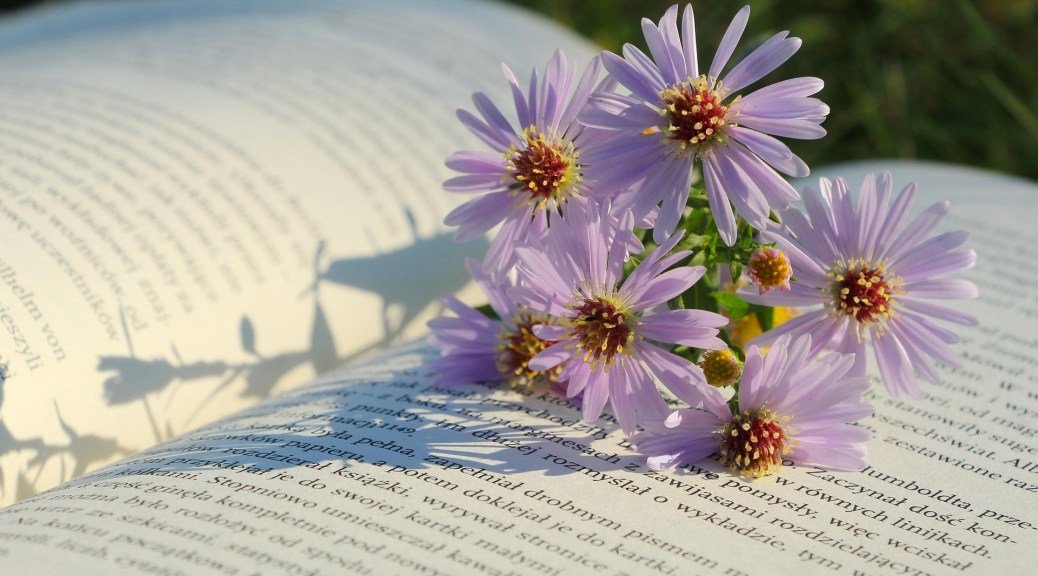
In this day and age, we spend so much time on our computers, googling all the information we want and need. But there is something about sitting by a sunny window on a cold winter’s day with a good book.

The winter months are a great time to pull out an old gardening book or invest in a new one. The days are now getting longer and spring is coming, but actual gardening is a few months away. Time to learn something new to help you improve your gardening skills. There are many good Canadian and zone appropriate books that can help you.

Below, I have listed a few of my favourite books on my bookshelf. I have also asked my fellow Master Gardeners to share their favourites. Some of the books are out of print, but check your local library, used book stores or online sites. Enjoy!

For the Houseplant Gardener

The New Plant Parent

Darryl Cheng gives advice that is full of common sense. He explains that leaves do die and plant care should be enjoyable, not a chore. He discusses basic requirements for healthy plants including the right light, soil care and proper watering. Great illustrations and nineteen plant varieties are listed in detail. Look for his newer books also.

For the Vegetable Gardener

Plant Partners

Companion planting has been around for years. Jessica Walliser gives us “science-based companion planting strategies” that help with disease and pests, improves soil and supports pollinators. Lovely illustrations throughout will have you dreaming of your next vegetable garden.

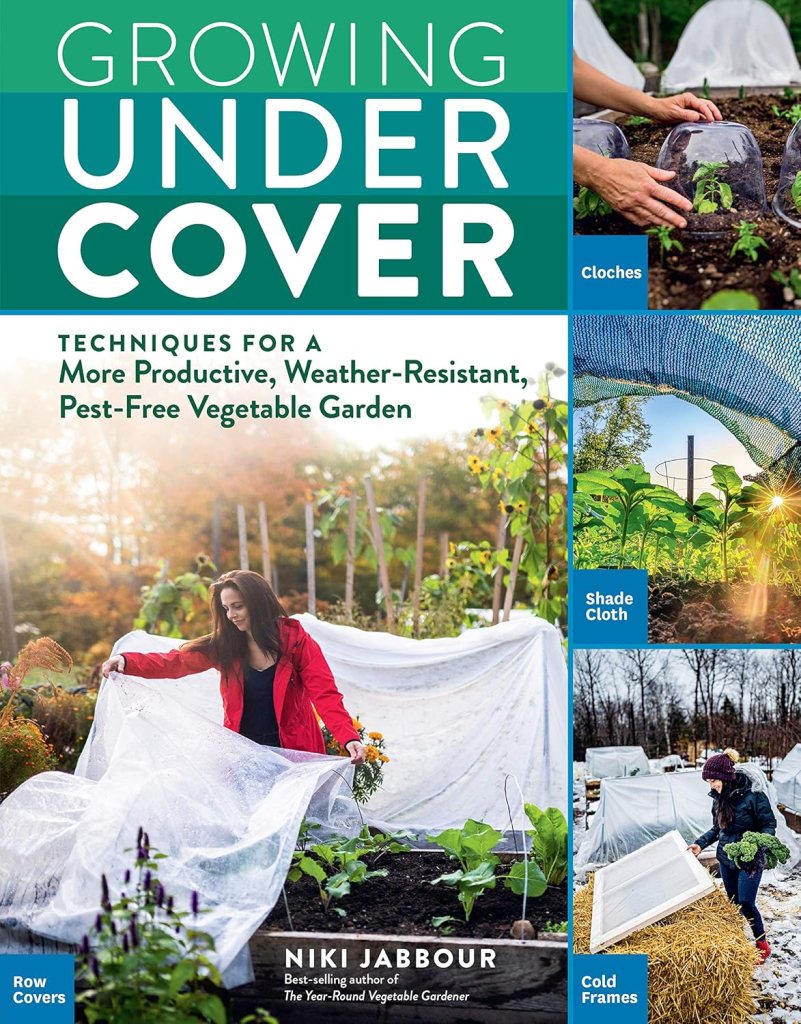
Growing Under Cover

Niki Jabbour is the Canadian half of the popular website Savvy Gardening (along with Jessica Walliser). She has several books out, but this one gives great information about how to reduce pests with row covers. Niki has several books out, so check them out.

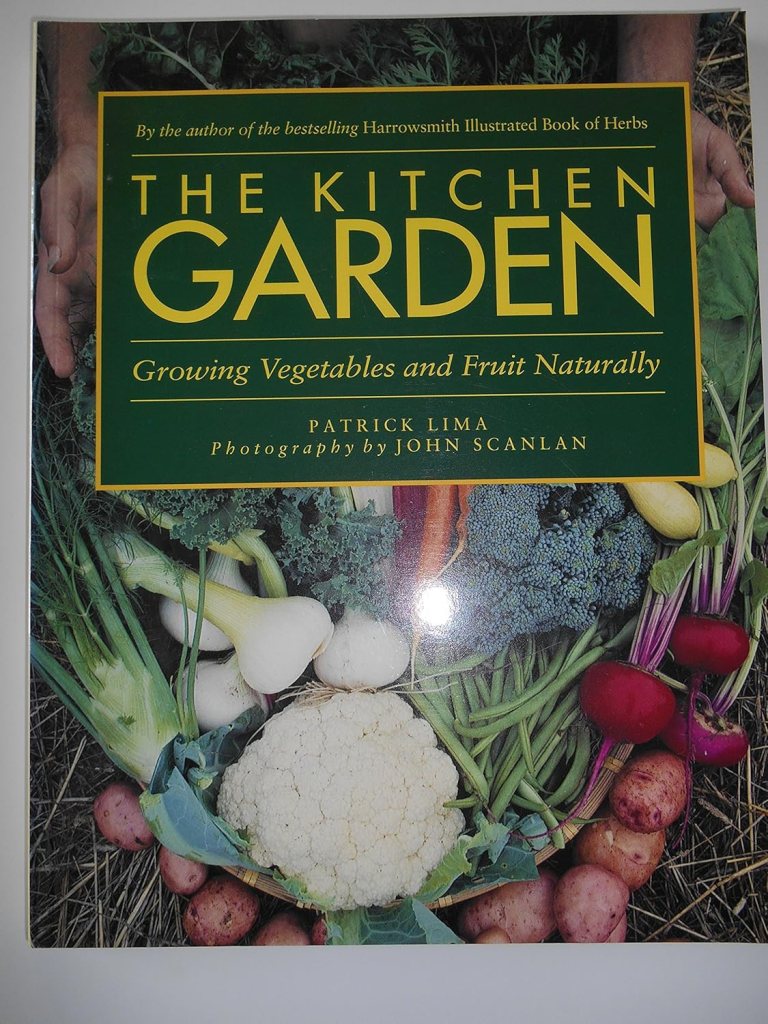
The Kitchen Garden

Peterborough MG Silvia Strobl first toured Patrick Lima and John Scanlan’s garden on the Bruce Peninsula over 40 years ago and was inspired by both their colourful perennial and productive vegetable gardens. Each spring, she still refers to this book’s excellent information to refresh her memory on time to sow, spacing, thinning, harvesting, etc. for the vegetable crops she grows! Unfortunately, this book is out of print, but you may find a used copy online.

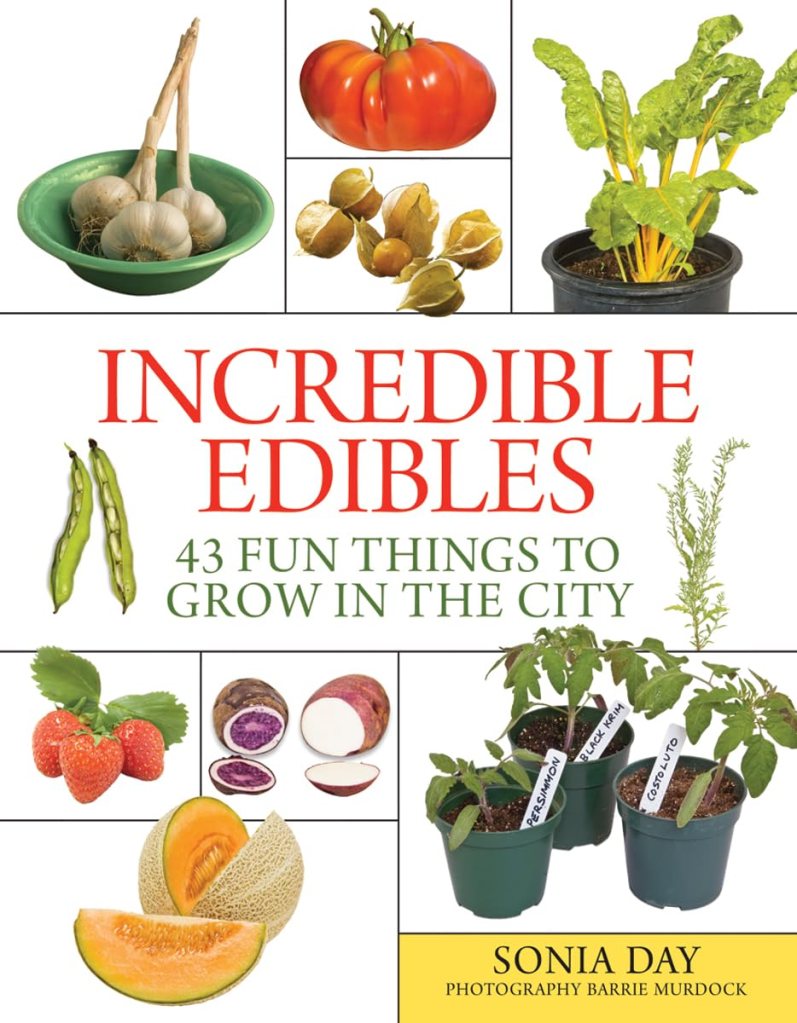
Incredible Edibles

This book by Sonia Day is recommended by Peterborough MG Deb Fraser. It is very basic for the beginner gardener. It answers when, where, how, as well as other questions for herbs and vegetables. She even gives a recipe for each plant. Another book that is out of print. Try used book sites.

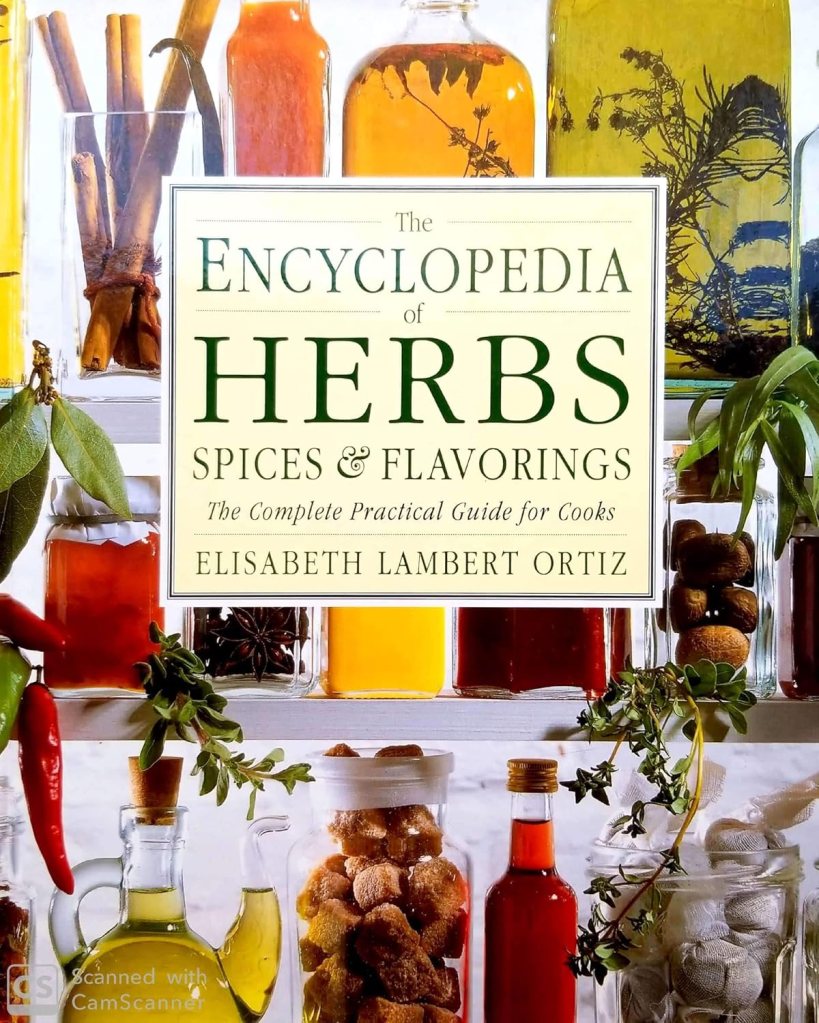
Encyclopedia of Herbs, Spices & Flavorings

Deb also suggests the Encyclopedia of Herbs, Spices & Flavorings, a cook’s compendium by Elisabeth Lambert Ortiz. Originally British but published in Canada by Readers Digest, 1992. It is beautifully illustrated and very detailed about the origin of herbs, spices, oils, sauces, coffees and teas around the world. She details the origin of these, how to cook with them and a recipe. When the weather is frightful with a nice warm drink in hand it makes for interesting reading, perhaps planning to add a few herbs to your garden next spring.

For the Perennial Gardener

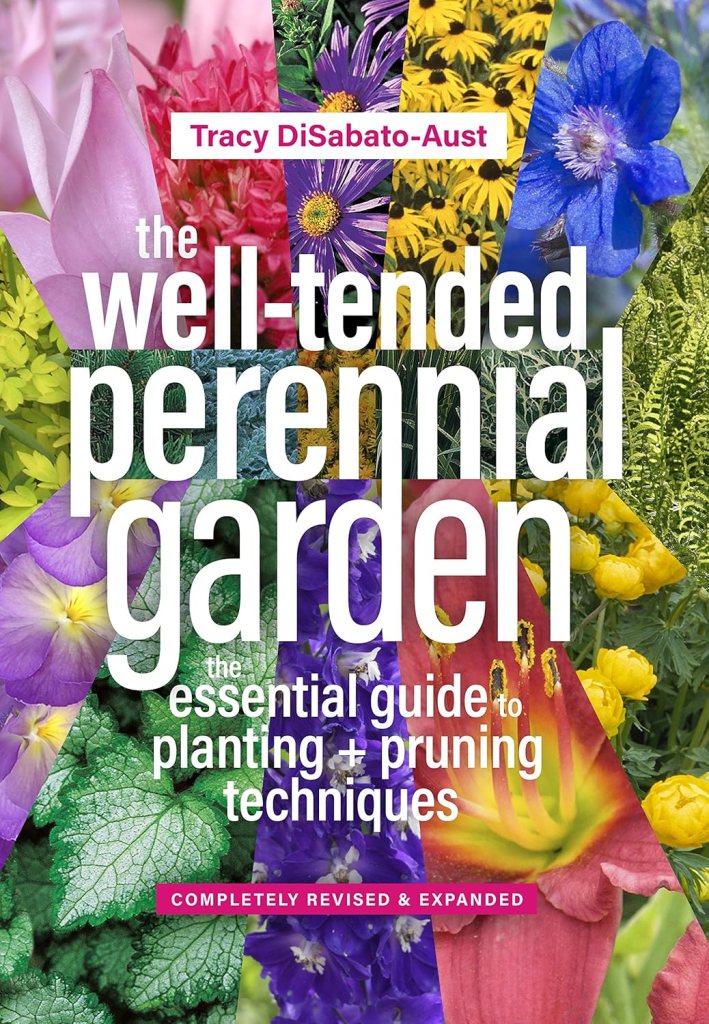
The Well-Tended Perennial Garden

Peterborough MG Gladys Fowler’s favourite book is the Well Tended Perennial Garden. Tracy DiSabato-Aust’s book has an extensive encyclopedia of perennial species and cultivars and she explains the maintenance and pruning needs of each plant. The explanations and illustrations are excellent.

For the Native Plant Enthusiast

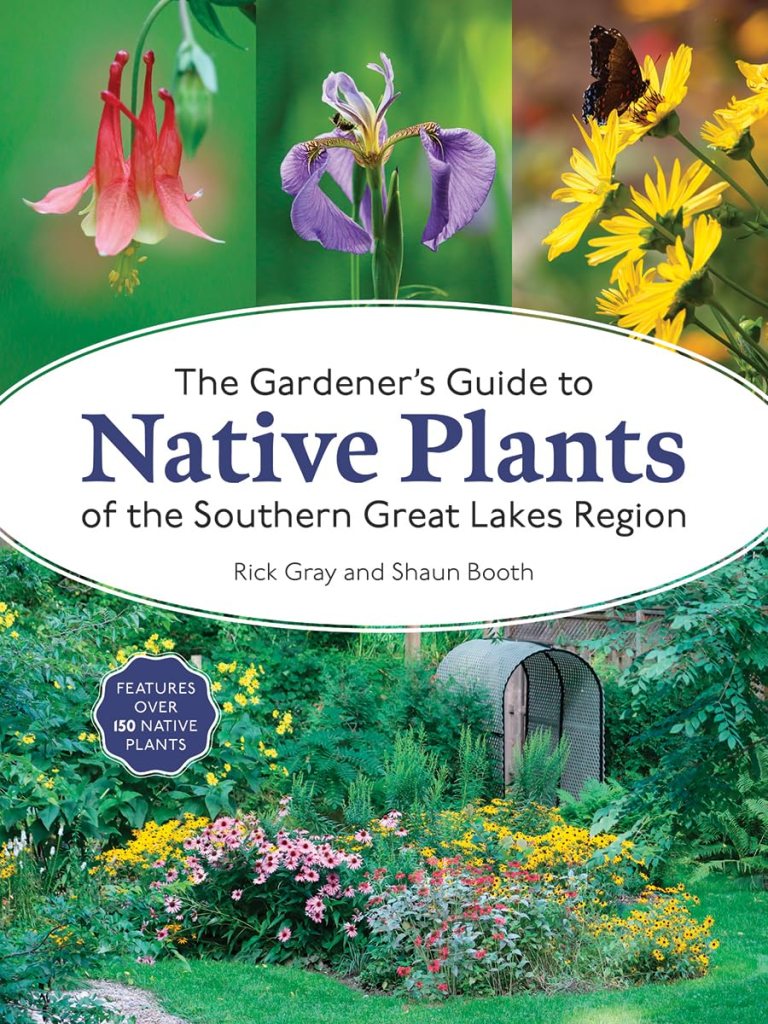
The Gardener’s Guide to Native Plants of the Southern Great Lakes Region

For Peterborough MG Emma Murphy, definitely this one on native plant gardening – for our region, gives everything you need to know about growing the plant, including propagation, wildlife value and what butterflies and moths it is a larva host for. For a full book review she did on Rick Gray and Shaun Booth’s book when it was published in 2024 click here.

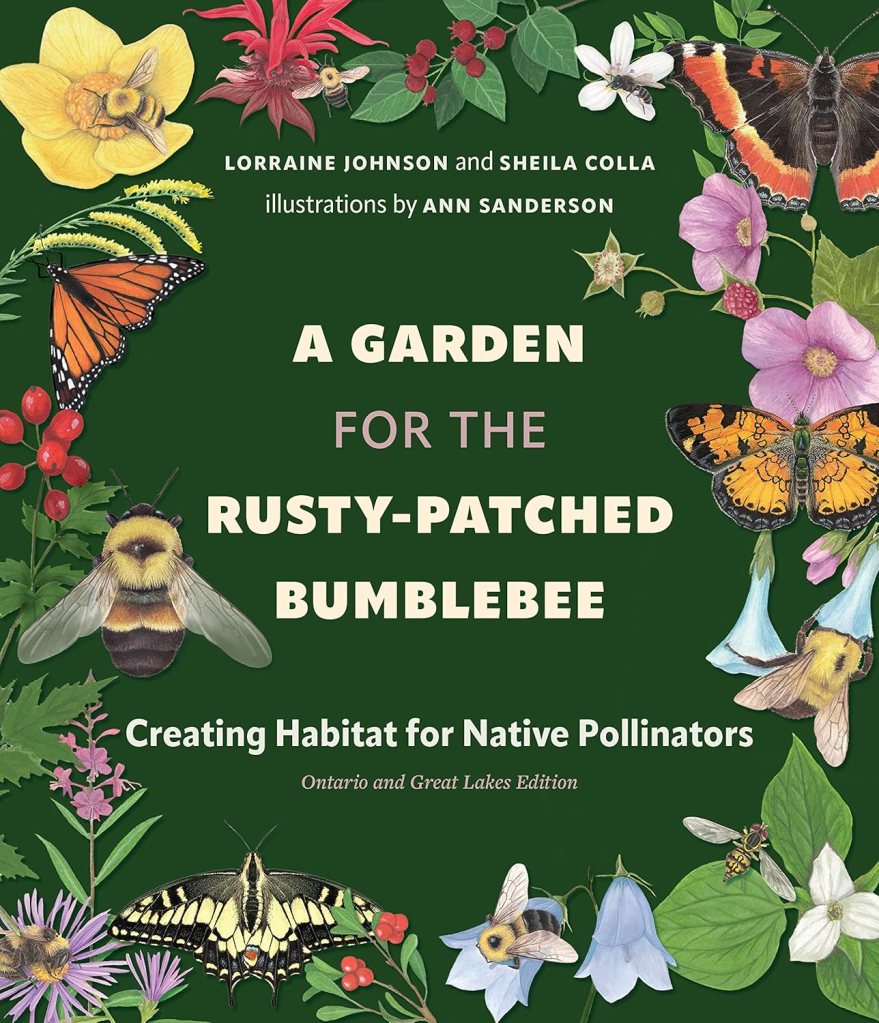
A Garden for the Rusty-Patched Bumblebee

Peterborough MG Sharleen Pratt says this book by Lorraine Johnson and Sheila Colla not only goes into great detail about Ontario native plants, vines, shrubs and trees, but it also encourages us all to think about the spaces we create so that pollinators can thrive.

For the Environmentalist

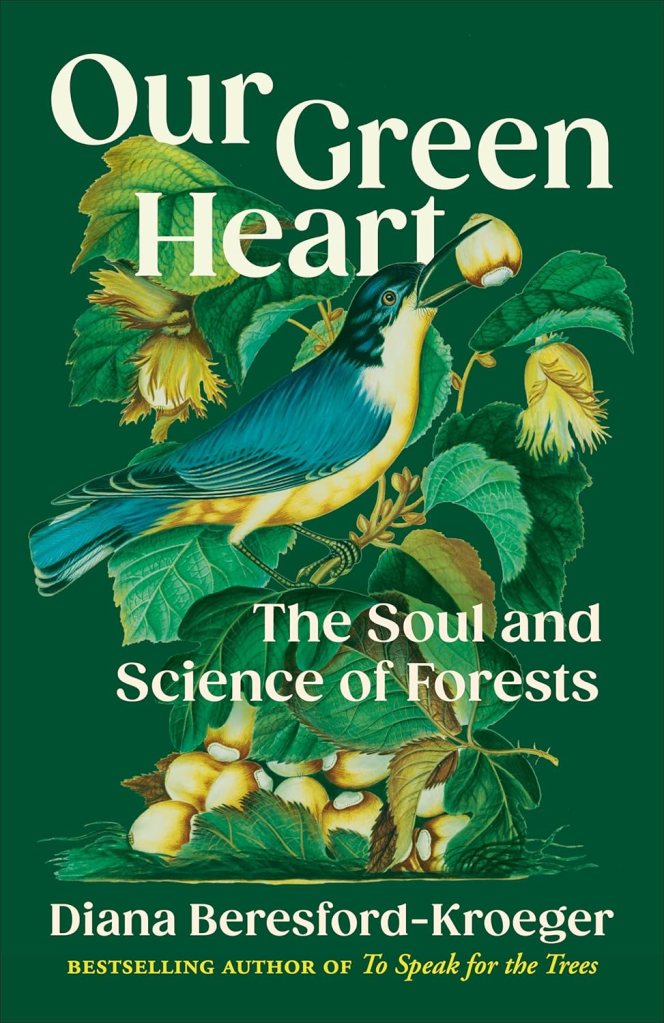
Our Green Heart

Peterborough MG Carol Ireland says it feels good to sit down and read something that requires absolute attention while at the same time causes you to make all the connections between what you are reading and the place trees have in the survival of our planet. This one by Diana Beresford-Kroeger is also on my reading list!

What is your favourite gardening book? What do you have on your list to find and read next? Eleven more weeks till spring!

Check out previous reviews on our website

Favourites From My Bookshelf

Four Great Books

Cedar Trees: A Winter Food Source for Wildlife

By Mary-Jane Pilgrim, Master Gardener

In February of 2023, I wrote an article about cedar trees; their botanical family, the medicinal history and their use by the early pioneers of our region.

Although the article alluded to its use as a food source for critters, that wasn’t the main purpose of the article. In this blog, I’d like to expand on that initial description to provide more information on the importance of the tree to our mostly four-legged friends and planet co-habitants.

The eastern white cedar (Thuja occidentalis), common in forests and along shorelines, provides a reliable food source for many animals when other options are scarce during our harsh winters. I have a row of cedars at the back of my lot mostly for wind control but it provides other functions for local wildlife.

Deer are among the most frequent consumers of cedar during winter. When snow covers ground vegetation, deer browse on cedar foliage, which is rich in nutrients. This evergreen tree helps sustain deer populations, especially in areas with limited winter food. However, over-browsing can damage young cedar trees and affect forest regeneration.

Other animals also rely on cedar. Snowshoe hares feed on cedar bark and twigs when their preferred food sources, like shrubs, are unavailable. Porcupines chew on cedar bark for nourishment. Even small birds, such as chickadees and finches, eat the seeds found in cedar cones.

Cedar trees provide shelter. Their dense, evergreen foliage offers protection from wind and snow, creating warm habitats for birds and small mammals. This shelter can be as important as food for survival in winter.

If you own land with cedar trees, consider their value to wildlife. Protect young trees from over-browsing by using barriers or planting more cedars in areas where they are heavily used. Maintaining healthy cedar stands can support local ecosystems and provide crucial resources for animals during winter.

In addition to cedar, deer and other wild animals rely on a variety of other trees, shrubs, and woody plants for food. These sources are critical when grasses, green plants, and other ground vegetation are buried under snow. Below are some examples:

Trees Consumed by Deer

  1. Aspen and Poplar (Populus species): Deer often browse the twigs and bark of these trees, especially younger specimens.
  2. Maple (Acer species): Deer will eat twigs and buds from sugar maple and red maple trees.
  3. Birch (Betula species): Twigs and bark of birch trees can be a winter food source.
  4. Hemlock (Tsuga canadensis): Eastern hemlock is a favorite winter food, with deer browsing its soft, green needles.
  5. Willow (Salix species): Willows near wetlands provide twigs and bark for deer and other animals.
  6. Oak (Quercus species): Acorns, if not consumed in the fall, remain an important energy source for deer and squirrels during winter.

Other Trees and Shrubs for Wildlife

  1. Alder (Alnus species): Twigs and catkins are eaten by small mammals and birds.
  2. Pine (Pinus species): Seeds from pine cones are consumed by squirrels and birds, while deer sometimes nibble on needles.
  3. Dogwood (Cornus species): Red osier dogwood is a common browse species for deer and rabbits.
  4. Sumac (Rhus species): Deer eat sumac twigs and fruit clusters during the winter.
  5. Apple and Crabapple (Malus species): Wild or abandoned apple trees provide fruit, twigs, and bark for wildlife.

Conservation Tips

To support wildlife during winter, maintaining diverse tree species in forests and natural areas is crucial. Planting native shrubs and trees that produce berries or nuts can also help sustain wildlife through the cold months.

Resources

How do Deer Survive Harsh Winter Weather?

Do Cedar Trees Make Good Deer Habitat?

Northern White Cedar – An important winter food source for White-tailed Deer

5 native plants that benefit wildlife in winter

Native Grasses Provide Winter Interest and Feed the Birds

By Silvia Strobl, Master Gardener

This week I’ve been enjoying watching a flock of American Tree Sparrows that have migrated south from their summer tundra breeding grounds to my garden north of Peterborough for the winter. While I have both sunflower and nyger feeders, they are feeding exclusively on the Big Bluestem and Savannah Grass seeds in my garden. Sadly, these native grasses seem to have a bad rap among gardeners which is too bad as they have many benefits for both you and local wildlife.

I have the following four commonly occurring warm season perennial native grasses in my full sun garden:

Big Bluestem (Andropogon gerardii) is a very tall (5 – 8 ft) grass with clumps that form a dense sod but does not creep by rhizomes. It competes aggressively with shallow-rooted flowers, so it is best planted with species that form deep tap roots or spring bloomers that go dormant in the summer. In my garden it is a fall season focal point at the back of a border behind Culver’s Root (Veronicastrum virginicum) which has a central taproot as well as underground rhizomes.

In early May, Big Bluestem still hasn’t emerged, but allium foliage and some blooming tulips fill the space (left). By late June, alliums appear to float above the Big Bluestem grass (highlighted in orange) that is now 2 ft. tall (middle) and hiding the bulb foliage. By late July, Big Bluestem grass provides a green backdrop for the white flower spikes of Culver’s Root (right).

Little Bluestem (Schizachyrium scoparium) is an excellent grass for gardens due to its shorter height (2 – 4 ft), clumping form, very showy silver-white seed heads, and bright red stems in fall.It prefers dry sandy soils.

Savannah Grass (Sorghastrum nutans)is another tall grass (5 -7 ft) for the back of the border. It tends to self-sow so the young seedlings require a little annual weeding.

Native grasses add movement and colour to the garden. Little Bluestem’s red stems are illuminated by early October morning sun (left) while the late afternoon August sun highlights the tiny golden flowers and flower stalks of Savannah Grass (right).

Sideoats Grama (Bouteloua curtipendula) is a hardy, short bunchgrass that spreads very slowly by means of short, stout rhizomes and doesn’t compete with other plants. Its deep fibrous roots make it useful on slopes to prevent erosion (or on the edges of slightly sloped garden beds as in my garden). Do not plant it in clay soils.

Sideoats Grama has delicate hanging flowers (left), and later seeds (right) that are held in spikes that fall gracefully to one side of the stem.

Benefits for you

As well as being stunning fall and winter focal points, the tall native grasses, Big Bluestem and Savannah Grass, make excellent privacy borders. Their very deep roots (5-6 feet or more) make them useful for erosion control on slopes. Each of these native grasses is drought tolerant. And, each creates excellent winter interest as they tend to maintain their upright form. Another bonus is that they all have low palatability to deer.

Big Bluestem (left) and Savannah Grass (right) stand tall in the author’s garden despite 12 inches of winter snow.

Benefits for wildlife

Many butterfly skipper and moth larvae feed on these native grasses and they provide critically important seeds and habitat for native birds in fall and winter.

An adult Delaware Skipper rests on a blade of Big Bluestem in the author’s garden (left). Big Bluestem is a host plant for this butterfly’s larvae. Both Little Bluestem and Sideoats Grama are host plants for Leonard’s Skipper caterpillars. The adult butterfly is seen here nectaring on marigold in the author’s garden (right)

American Tree Sparrows feeding on a buffet of Big Bluestem (left) and Savannah Grass (right) seeds in the author’s garden. It is fun to watch them “ride” the Savannah grass stems to the ground so they can more easily peck at the seeds some of which spill onto the fresh snow.

Native Grass Establishment and Maintenance

Most native plant nurseries stock these grasses and all of them are easily propagated from seed. Plant seedlings densely at 1 ft to 1.5 ft spacing to discourage weeds. Water during the first year while roots are getting established. Fertilization is not necessary. All can be easily divided, but Sideoats Grama should be teased apart, not cut with a spade.

Remnant pockets of native grasses like this one of Big Bluestem growing on the shoreline of Little Jack Lake (left) are good places to collect seeds to propagate your own plants (right). Never collect more than 10% of seeds.

Depending on how much seed the birds eat in winter, you might get a few volunteer seedlings. If you don’t want more plants, they are easily kept in check by weeding when they are small.

If weedy cool season grasses have seeded into native warm season clumps, use a propane torch in early spring to burn emerged leaf blades while warm season native grasses are still dormant. Be sure to first cut off last year’s dry stalks and have a hose nearby. Don’t do this on a windy day!

Big Bluestem, Savannah and Little Bluestem are 3 of the 4 dominant grasses found in remnant tall grass prairies and oak savannahs, of which less than 1% of their pre-European settlement extent remains in Ontario. (The other is Switchgrass (Panicum virgatum) which can self sow quite a bit so might not be suitable for small gardens.) These grasses are also found on dunes, sandy shorelines, rock barrens, roadsides, and hydro corridors. Including these grasses in your garden can help support some of the wildlife that rely on this endangered ecosystem.

REFERENCES & ADDITIONAL RESOURCES

Diboll, N and H. Cox. 2023. The Gardener’s Guide to Prairie Plants. Pages 302-303, 306-307, 326-329.

Ehrlich, P. R. D.S. Dobkin and D. Wehte. 1988. The Birder’s Handbook A Field Guide to the Natural History of North American Birds, The Essential Companion to your Identification Guide. Page 584.

Johnson, L. and S. Colla. 2022. A Garden for the Rusty-Patched Bumblebee—Creating Habitat for Native Pollinators. Pages 149, 150, and 159.

Map of Native Plant Nurseries in Ontario maintained by Halton & Area Master  Gardeners

North American Native Plant Society. 2017. Seed collecting and saving.

RELATED

GARDENING FOR BIRDS THROUGH THE SEASONS

A FEW OF MY FAVOURITE NATIVE PLANTS

EXPANDING YOUR NATIVE PLANT PALETTE

WINTER FAVOURITES

Book Review – The Gardener’s Guide to Native Plants of the Southern Great Lakes Region

by Emma Murphy, Master Gardener

Wow. What a pleasure to finally see this book in print. Written by two very knowledgeable Ontario gardeners — Rick Gray and Shaun Booth — this is the native plant gardening resource I wish I had more than 5 years ago when I started incorporating native plants in my garden.

Focused specifically on the Southern Great Lakes Region, it’s an all-in-one, easy to use resource for those interested in plants that not only look wonderful but fulfill a critical role in our gardens in supporting wildlife,  birds, and pollinators like butterflies, moths, bees, and insects.

It reminds me of an encyclopedia, with a full page spread on each native plant (and there’s over 150!). It’s not surprising to me that’s it’s already #4 on the Globe & Mail’s bestseller list.

The book is visually designed to make it easy to see key information at a glance, using quick guide key icons and two colour-coded bars providing exposure/light and moisture requirements. We’ve been blessed with several excellent native plant books in the past few years, but I appreciated several unique elements I hadn’t seen before – numerous appendices (matching soil types, seed collection and preparation, propagation, and butterflies and their host plants), as well as each plant’s Ontario’s Species at Risk status.

You’ll understand what each plant needs to thrive, how big they will get, and how to make more plants to share with your friends!

Sample spread page

As a Peterborough Master Gardener I have long been engaged in two Facebook groups – the Ontario Native Plant Gardening group (started by Shaun) and the Master Gardeners of Ontario group (where I am an admin and moderator). I remember clearly in May 2023 Rick trying to gauge interest from members on their proposed native plant book, and the incredibly positive response that they received. So full disclosure – I knew I was going to love this book before it was ever published.

The authors explain why the plants are organized by botanical/Latin name, which is important because common names can vary by region. However, if you only know the common name you can always search using the alphabetical index at the back of the book.

Essentially, each entry is a ‘checklist in a page’ on what you need to grow the plant. There are lots of photos (whole plant, leaves, flowers, fruiting bodies), a detailed description, easy to see symbols (the Quick Guide), information on the USDA Hardiness Zone, lifespan, propagation, and wildlife/pollinator value.  

Skill levels are also mentioned but don’t be alarmed – most are listed as beginner, but there are certainly a few native plants that are a bit more challenging to grow and propagate.

Table of Contents plus shameless plug for my wonderful local, independent bookstore where I ordered the book.

I appreciate that in the introductory chapters the authors clearly explain things such as:

  • What is a native plant?
  • Aggressive vs invasive
  • Origin of the term weed
  • Nativar vs cultivar
  • Value of native plants

The authors clearly have a good sense of humour – there are pages titled “How to use this book”, “A coneflower by any other name”, “Fifty shades of…shade” and my favourite “2b or not 2b” (on the rationale for using USDA Hardiness zones). I loved the section on propagation and codes as I’m actively trying to grow more native plant material in my area.

I have to say that as a seasoned gardener I was surprised to see Echinacea pallida (pale purple coneflower) is not in the book (not native to most of this region but often sold as a native apparently) and Agastache foeniculum (Anise hyssop) is one that is included specifically because it is non-native to Ontario (it’s a western prairie plant). Oops! I have both in my garden north of Peterborough.

Was anything missing? Technically no, as the authors were clear that this was not a garden design book. Perhaps after putting out Vol. 2 (the other 150+ plants I know they wanted to include), they’ll consider something on understanding planting density and creating root competition, which I am learning is different to conventional perennials, and good plant pairings (which native plants support others).

One quick comment I will add is that native plants are wonderful once they are established, so you may need to do a bit of watering that first year, but after that they need no watering or fertilizing.

If you’re interested in hearing about how this book came to be check out Rick’s Native Plant Gardener website.

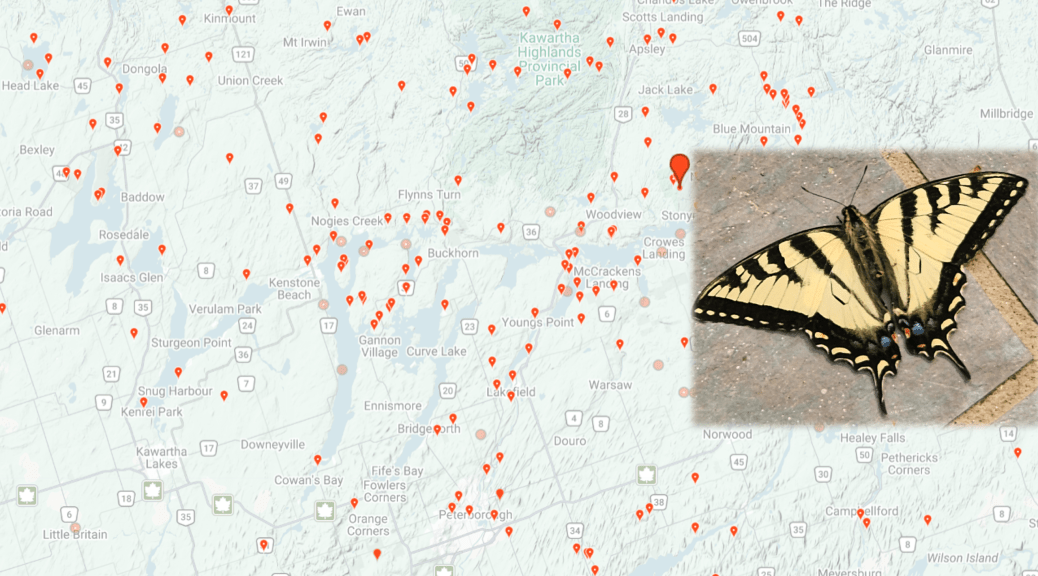
This book is perfect for reading at home (my husband gave me a quick quiz contest this afternoon on the Latin names) or taking with you to your local nursery as you search for native plants to add to your garden. Having trouble finding these plants? The Halton Region Master Gardeners maintain a dynamic map listing native plant nurseries around the province. Check it out!

The bottom line – a wonderful addition to my garden library, and to anyone interested in incorporating more native plants in their Ontario gardens.

__________________________________________________________________________

The Gardener’s Guide to Native Plants of the Southern Great Lakes Region

By Rick Gray and Shaun Booth
Publisher: ‎Firefly Books, 2024
Paperback‏:‎ 352 pages ISBN-10: 0-2281-0460-2
Price: C$45.00; available through local booksellers and larger book companies

About the Authors

Rick Gray (The Native Plant Gardener) has more than 300 species of native plants in his garden in southwestern Ontario and provides native plant garden design services.

Shaun Booth runs In Our Nature, an ecological garden design business, and launched the Ontario Native Plant Gardening group on Facebook.

Want More Information?

Many wonderful books on native plant gardening and naturalization have been published in the past few years – anything by Lorraine Johnson is a great complement to this book, and I love Piet Oudolf’s work (although he doesn’t always use native plants).

Dr Linda Chalker-Scott (and the Garden Professors blog on Facebook) is a great source of good, solid scientific information on gardeners keen to avoid the misinformation often seen on social media.

And if you’re on Facebook, please follow both the Master Gardeners of Ontario and Ontario Native Plant Gardening groups.

Other Native Plant Blog Posts By Me

A Few of My Favourite Native Plants

Native Ontario Goldenrods for Your Garden

Why Do We Garden?

Ditch Lilies – A Cautionary Tale

The KISS Principle – Winter Sowing 101

Creating a Wildlife Friendly Hedgerow in my Ontario Garden

by Emma Murphy, Master Gardener

Although I’ve lived in Canada for almost 50 years, I grew up in Bristol, England for some of my formative years, and always loved the traditional hedgerows that existed along rural roads and properties. Every time we return to the UK on a trip, I marvel at the diversity and intricacy of these functional garden/farm structures.

On our three quarter of an acre property in a small village north of Peterborough (Zone 4b/5a) I have a neighbour on one side who has a chain link fence and loves their golf green lawn. On the other side there is no fence at all, but I’ve been growing a few elderberries (Sambucus canadensis) and cup plants (Silphium perfoliatum) to hide a poorly maintained house – the first shrub suckers well and the second plant grows fast and tall.

So I’d love to have a traditional English-style hedgerow on both edges that would provide visual screening as well as animal and bird habitat…so I went looking to see how to adapt the traditional English hedgerow to Ontario.

Hedgerows can provide amazing bird habitat

The origins of hedgerows

It’s thought that hedgerows (or hedges) were first used by humans as ‘dead hedges’ to enclose livestock using thorny plants. Once agriculture began, clearing woodlands created fields with tree and shrub boundaries that were managed to create livestock-proof ‘living fences’.

Hedgerows have been planted since the time of the Romans and reached their peak in Britain during the Enclosure Acts of the 1700s when an estimated 200,000 miles of mostly hawthorn (Crataegus spp) hedgerows were planted.

Credit: People’s Trust for Endangered Species, UK

Hedgerows have many purposes, as you can see from this graphic from the People’s Trust for Endangered Species. They have an excellent video on how to manage a hedgerow here, but it’s not quite the same in Ontario, as we don’t have the same hedgerow species or coppicing techniques.

In their best form I think hedgerows can be a mini-ecosystem with key ingredients that animals and birds need to survive — food, shelter, nesting and denning sites. Hedgerows also function as corridors, connecting one habitat to another and offering a safe passage for wildlife. They help muffle sound, create privacy, and act as windbreaks.

Definitely not a short term project

According to the Ottawa Field Naturalists Club (OFNC), the ideal hedgerow is

  • Planted with a variety of berry- and seed-bearing shrubs for food
  • Interspersed with cedar for added cover
  • Thick, bushy, largely unpruned and entangled with vines

The Ontario Rural Skills Network suggests that hedgerows can be single species but are best if they comprise a diversity of plants. Planting should be very dense, with a double line spaced 40cm (16in) apart with plants in a staggered pattern at 30cm (12in), giving 5 plants per metre.

Because they’re comprised of living shrubs, hedgerows grow and require management. It’s all about creating a balance between growth and avoiding them becoming gapped and unmanageable. A hedgerow may take seven to 10 years to establish, depending on the species composition.

This young hedgerow bordering a field features native plants that provide habitat for beneficial insects and pollinators. Photo: Janet Donnelly, © Oregon State University

Making a plan

I’m just at the beginning of my plan for hedgerows on our property, but winter is a great time to do research. Both sites are sunny and have well drained soil, and I want to focus on using Ontario native plants as much as possible. I’m looking at a combination of seed- or nut-bearing shrubs (like speckled alder and hazel) and berry producers (serviceberry, chokecherry, red osier dogwood). Thorny shrubs (native roses, wild raspberry, hawthorns) will give added wildlife protection. The design will probably be different for each one, but that’s the fun of it.

The OFNC has excellent lists of plants you can consider for an Ontario hedgerow. I’m thinking about using

  • Speckled alder (Alnus incana)
  • Beaked hazel (Corylus cornuta)
  • Hawthorns (Crataegus spp.)
  • Common elderberry (Sambucus canadensis)
  • Flowering raspberry (Rubus odoratus)
  • Willow spp. (Salix spp.) – native if I can find them – there is an amazing group in
  • Choke cherry (Prunus virginiana)
  • Red osier dogwood (Cornus stolonifera or C. sericea)
  • Eastern white cedar (Thuja occidentalis)
  • Wild (riverbank) grape (Vitis riparia)

Next steps

I’m just at the beginning of my journey. In my next blog post on March 25th, I’ll give you an update on my research and my plans for my spring hedgerow projects. Until then, here’s some interesting sites to look at if you are thinking about something similar. And, by all means, if you have created a hedgerow in your Ontario garden, I would love to hear about it.

More resources

Creating a hedgerow for wildlife (Canada)

Hedgelink (UK)

National Hedgelaying Society (UK)

The traditional farm hedgerow (Canada)

Surrey Wildlife Trust – how to lay a hedge (UK)

1000 Islands Master Gardeners – Wildscaping with hedgerows (Canada)

How to plant a hedgerow in the home landscape (Ohio, US)

How to Start a Hedgerow (5 Steps) (Washington State, US)

A Guide to Hedgerows: Plantings That Enhance Biodiversity, Sustainability and Functionality (Oregon State U Extension)

Healthy hedgerows on your land (UK)

What have hedgerows ever done for us? how hedges benefit us (UK)

Gardening for Birds Through the Seasons

By Silvia Strobl, Master Gardener in Training

More than 1 in 4 birds have disappeared in North America since 1970, primarily due to habitat loss according to a recent study. As gardeners we can help to mitigate further declines by adding native plants to our gardens that meet seasonal bird habitat needs. If you would like to help, consider whether you can add one or more of the Ontario native plants noted below in your 2024 garden plans. All these are easy to grow, low maintenance, prefer full to part sun, and tolerate a wide range of soil conditions—ideal for almost any garden! Click on the plant names for Ontario specific growing information and photos.

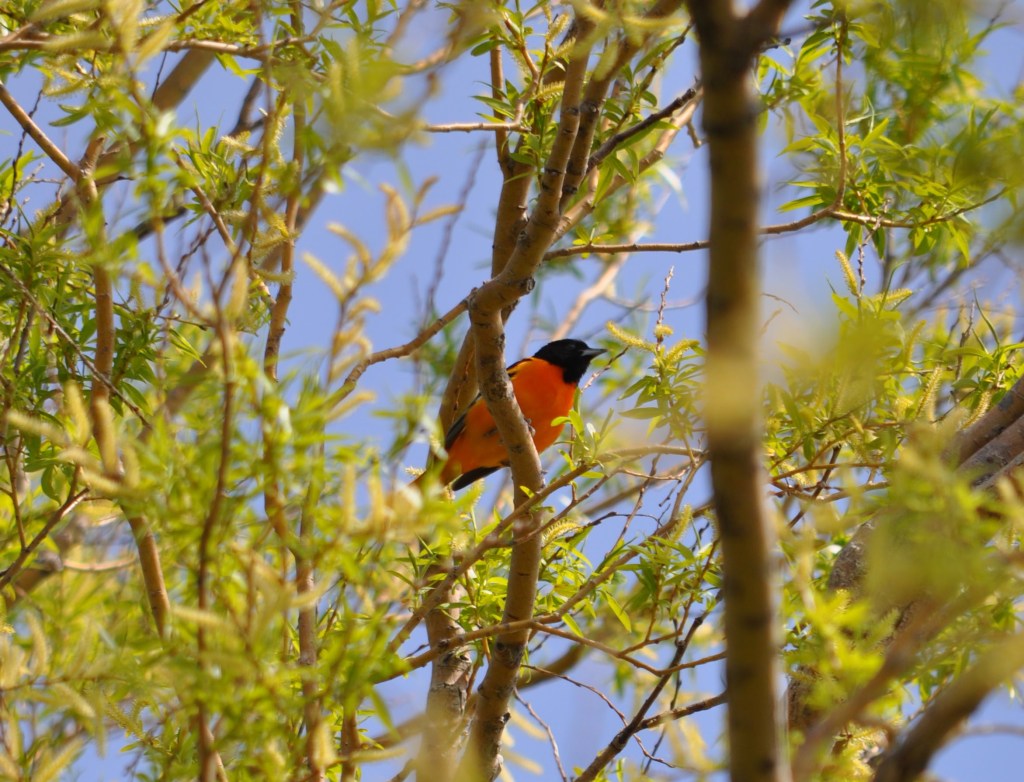
In spring, food for early returning migrants is critical. The catkins of Pussy Willow (Salix discolor) and other willow species are an important early nectar and pollen source for native bees, but they also attract insects which feed returning Eastern Phoebes, Ruby-crowned Kinglets, Chickadees, and other insect eating birds.

Northern Oriole among Willow catkins in early spring (photo credit: Beth McEwen)

For returning Ruby-throated Hummingbirds, growing a patch of Wild Columbine (Aquilegia canadensis) provides a critical source of early nectar. Providing a succession of nectar sources for hummingbird parents will entice them to nest and let you enjoy the flight chases of the juvenile birds in late summer. Include native plants with red, orange, or pink tubular flowers such as Scarlet Beebalm (Monarda didyma), Fly Honeysuckle (Lonicera canadensis), or Northern Bush Honeysuckle (Diervilla lonicera).

If you have room to plant only one tree in your yard, make it a Bur Oak (Quercus macrocarpa), Red Oak (Q. rubra), or Black Cherry (Prunus serotina). These trees support the greatest numbers of caterpillar species and hence provide important food high in protein for Chickadees and other birds raising nestlings in our short, temperate summers. To rear one clutch, Chickadees require up to 9000 caterpillars. Trees also provide structure and cover for nests.

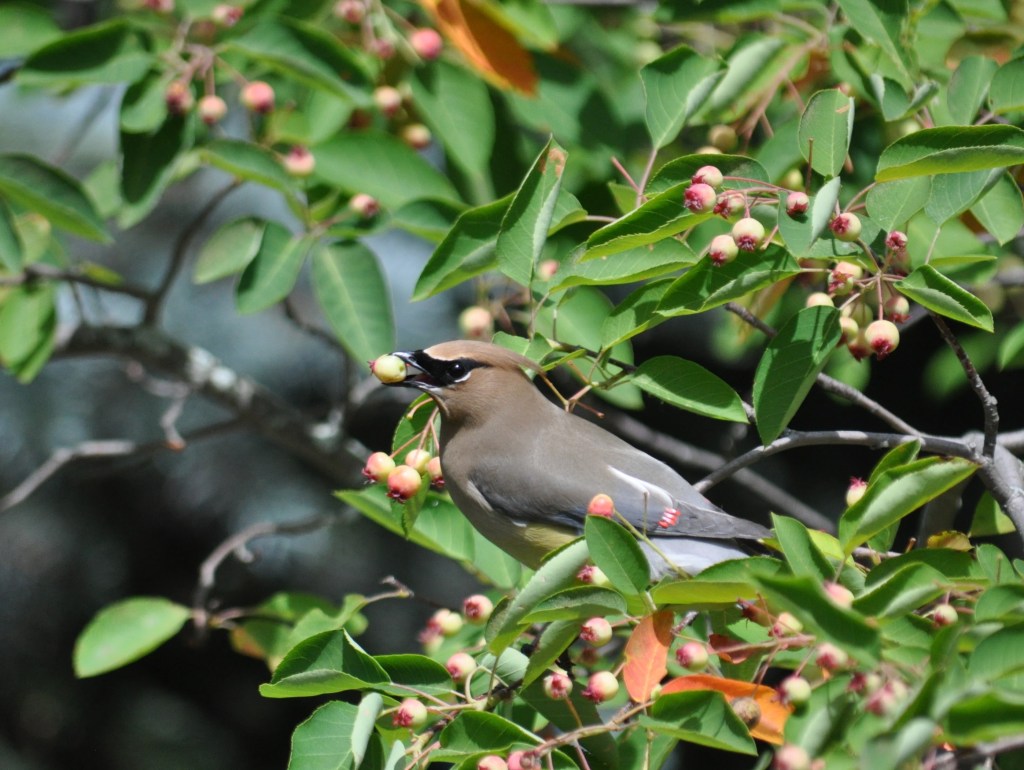
Small, garden-size shrubs such as Serviceberries (Amelanchier spp.), Common Elderberry (Sambucus canadensis) and Chokecherry (Prunus virginiana) produce early season berries that provide food for Cedar Waxwings, Rose-breasted Grosbeaks, Catbirds, and Robins. These shrubs also provide cover for nesting birds.

Cedar Waxwing eating a Smooth Serviceberry (Amelanchier laevis) berry in late June/early July in the author’s former Peterborough Garden (photo credit: Silvia Strobl)

For fall and winter bird habitat, grow a variety of plants that provide food, including:

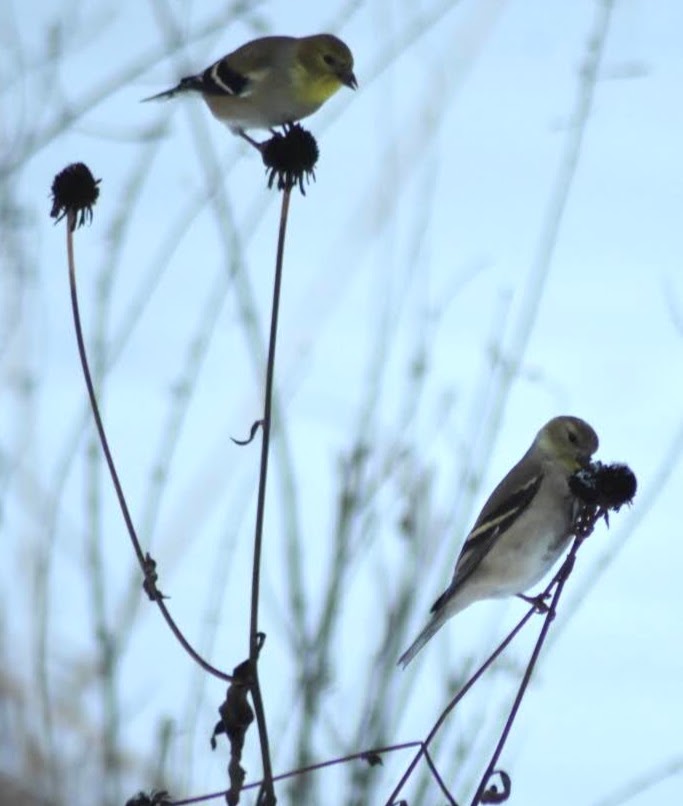
  • Native Sunflowers, Purple Coneflower (Echinacea purpurea), Black-eyed Susan (Rudebekia hirta), and Asters (Symphyotrichum spp.) and stop deadheading at the end of August to promote production of seeds. Leave these plants standing overwinter to provide food for Goldfinches, Northern Cardinals, and Dark-eyed Juncos.
  • Shrubs such as Grey Dogwood (Cornus racemosa), American Plum (Prunus americana), Chokeberry (Aronia melanocarpa) and the vine, Virginia Creeper (Parthenocissus quinquefolia) produce late-season berries that are rich in fats. Many insect-eating birds switch to eating berries in fall to store fat under their chests and wings to support either long journeys south or survival in our chilly winters. Berries of native shrubs have higher percentages of fat (6.5% to 48.7%) than most non-native shrubs (less than 1%) according to this study.
  • Conifer trees and shrubs such as Eastern White Cedar (Thuja occidentalis) provide sheltering cover for year-round resident birds such as Chickadees, Nuthatches and Mourning Doves.
  • Decaying stumps and logs attract numerous beetles and ants. If you must remove a tree that has died or outgrown your garden, consider leaving the standing dead tree or stump to decay and provide insect food for Pileated and other Woodpeckers.
Goldfinches enjoying seeds of Purple Coneflower against a backdrop of winter snow in the author’s current garden (photo credit: Silvia Strobl)

You can have a spectacular garden by adding native plants. And, when you see birds using your garden, you will not only feel good about your contribution to bird conservation, but you will enjoy your garden even more!

The author’s (mostly native plant) garden in early August (photo credit: Silvia Strobl)

Native Plant Sources

A key issue for those trying to grow native plants is finding them. To help you, the Halton Master Gardeners maintains a map of Ontario native plant nurseries that also provides websites and contact information. Always phone the nursery first to confirm they will be open.

Other Resources

In Our Nature. Nd. Native Plants for Hummingbirds. https://www.inournature.ca/plants-for-hummingbirds

In our Nature. N. 30 Native Shrubs for Ontario Gardens: Your go-to reference for the best shrubs for gardeners and wildlife. https://www.inournature.ca/best-native-shrubs

Tallamy, D.W. 2019, Nature’s Best Hope: a new approach to conservation that starts in your yard. Timber Press. 256 pp.

Related Over the Fence Blogs

EXPANDING YOUR NATIVE PLANT PALETTE

ATTRACTING BIRDS 1

ATTRACTING BIRDS, PART 2

ATTRACTING BIRDS PART 3

5 Simple New Year’s Resolutions for Gardeners

by Emma Murphy, Master Gardener

As this year ends, I’m offering a few New Year’s resolutions for gardeners for 2024. If you want more of a challenge, the Chicago Botanic Garden offers 50.

Add Native Plants To Your Garden

  • We’re all seeing the effects of climate change on our gardens.
  • Native plants adapt more readily to stressful and changing weather patterns, such as prolonged droughts or winter cold snaps, than hybrids and non-natives often seen in our nurseries.
  • Native plants help sustain beneficial insects and bird populations because they attract native pollinators and birds that might not be drawn to non-natives.
  • Create less work for you, as native plants tend to be lower maintenance than non-native ones.
  • The Native Conservancy of Canada offers some suggestions to get you started, or consult with your local Master Gardener group or Horticultural Society.
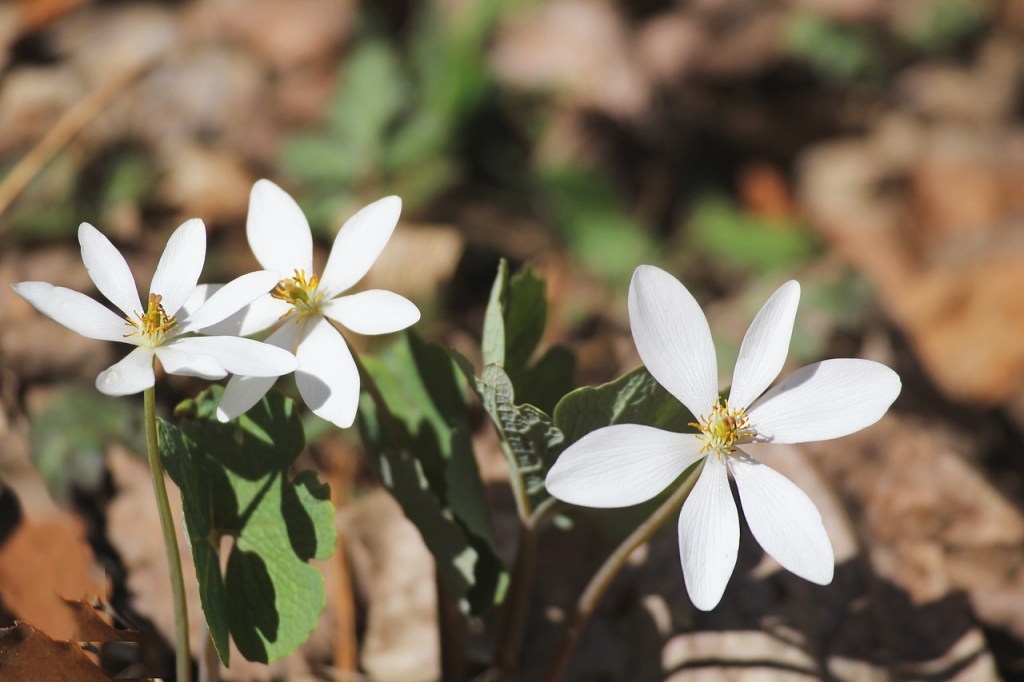
Bloodroot, Sanguinaria canadensis

Start A Compost Bin

  • Composting helps keep waste out of landfill by collecting and processing organics into material that can be used to create nutrient-rich compost used to feed and nourish soil.
  • Canadian Living offers a simple outline, as shared by Ed Begley  Jr.
  • Or more here from the Thames Region Ecological Association, including troubleshooting issues.
Compost bin

Grow More Of Your Own Food

  • The pandemic has highlighted how our agricultural systems are vulnerable to global shocks. Issues with supply chains, migrant workers, transport, trade and border closures have resulted in some foods being in short supply or prices going up (while quality goes down).
  • Insects do all the hard work, and all pollinators benefit.
  • Gardening provides benefits for your wallet, your nutrition, and reduces your environmental footprint. By growing your own food (either from seeds or small plants), your food is automatically more sustainable simply because you are doing it onsite or in a community garden. If you control the ‘inputs’ and do it well, you can save a lot of money.
  • Ultimately there is nothing more rewarding than planting and maintaining your own vegetable garden and harvesting (and sharing) your results. And we all know how much better homegrown produce tastes versus conventional produce at the grocery store. If you have too much produce, then you can just share the love with others!
  • Royal City Nursery in Guelph offers 8 Reasons to Start Growing Your Own Food from Seed
Creating a vegetable garden

Continuous Learning

  • Do what you love but keep on top of what’s trending in garden design to see if anything sparks your interest.
  • Keep track of what’s working and what’s not by documenting your garden happenings in a journal.
  • Expand your garden library and treat yourself to a new gardening book.
  • There are so many amazing (and free) garden webinars available now – learn from the experts.
  • Some of my favourite bloggers – The Impatient Gardener (in Wisconsin, similar climate to us), The Empress of Dirt (Ontario), Niki Jabbour (Halifax), The Laidback Gardener (Montreal), and Garden Myths (Robert Pavlis in Guelph, Ontario).
Online learning is a great opportunity

Reduce Your Use Of Plastic

  • Plastic is a major component in the garden, from plastic plant pots and seed trays to watering cans, and compost bins. Most plastic gardening equipment will end up in landfills, where plastic pots alone can take up to 500 years to decompose.
  • There are a few easy swaps you can make in going plastic-free: Many of us want to use less plastic in the garden, from plant labels to watering cans, tools, plant pots and the sheeting used to suppress weeds. Buying (and therefore using) less plastic will not only reduce your plastic footprint but also sends a message to manufacturers that gardeners want alternatives to plastic (especially single-use plastic).
  • Try to find biodegradable pots that made from natural materials such as coir, bamboo, wood chips, or seaweed (or commit to using your plastic pots year after year).
  • If you use plastic string, make the swap for a natural jute or hemp, and protect your fruits and vegetables with metal mesh instead of plastic netting – it lasts for years.
Find alternatives to plastic pots, or commit to using (and reusing them) for many years

Happy gardening dreams until we can get out into our gardens again….

Like Moths to a Flame – Rethinking Outdoor Lighting in Your Garden

by Emma Murphy, Master Gardener

A few weeks ago, the incomparable Lorraine Johnson spoke at my local horticultural society. She summarized four key actions gardeners could do to help our pollinators, and the last one stuck out for me — reduce/reconsider outdoor lighting (see her full list of actions at the bottom of the blog).

I thought, what does outdoor lighting around my house or garden have to do with pollinators? I know that the presence of lighting (or even more importantly, light frequency) is disruptive for migrating birds and nesting sea turtles, but for pollinators in my garden?

However, what I’ve learned in my research is that artificial lighting at night (aka ALAN) poses a hazard to nocturnal pollinators and prevents proper navigation, reproduction, and their ability to find food.

This really cool graphic (from Kenilworth Park and Aquatic Gardens in Washington DC) shows some examples of day and night pollinators.

Why is it a problem?

Use of ALAN has rapidly spread around the globe over the past few decades. This 2021 Nature Communications journal article states increasing evidence that ALAN adversely affects the behaviour, physiology, and survival of animals and plants, ultimately leading to a significant decline in their abundance and diversity.

This 2020 Biological Conservation journal article says that although habitat loss, pesticide use, invasive species, climate change all play a role in insect decline, ALAN is another important—but often overlooked—bringer of the “insect apocalypse”.

A Nature journal article back in 2017 also sounded the alarm, showing that in ALAN plant–pollinator communities, nocturnal visits to plants were reduced by 62% compared to dark areas.

This UK Royal Horticultural Society article lists some of the effects of ALAN, not just on pollinators but all wildlife:

  • Nocturnal insects (including many moths) who navigate using natural light sources (like the moon) are disoriented by ALAN (although research is now indicating that ALAN disrupts circadian rhythms in both nocturnal and diurnal animals).
  • Security lights appear to temporarily blind some animals and may even attract them (for example, frogs – I have seen this in my backyard near my pond).
  • Birds are disturbed from sleep by sudden lighting and can begin singing before dawn (robins especially seem sensitive to light). Birds that start migration flights at night can become disoriented.
  • In ALAN areas, shorter periods of nighttime darkness means less time for foraging/hunting for crepuscular (dawn/dusk) or nocturnal species.
  • ALAN is thought to be partly to blame for the decline of fireflies/glow worms; the females emit low, greenish light to attract mates and even low level ‘skyglow’ from distant light sources such as floodlit playing fields or towns will lessen their breeding success.

The type (frequency) of light seems to affect species differently. For example, research indicates that LEDs seem to attract more moths and flies, but fewer beetles than sodium lamps. And LEDs with cool white light (blue end of the spectrum) attract more insects than warm white ones. As a general rule insects are more sensitive or attracted to short-wavelength (UV, blue and green) than long-wavelength (orange, red and infra-red) light.

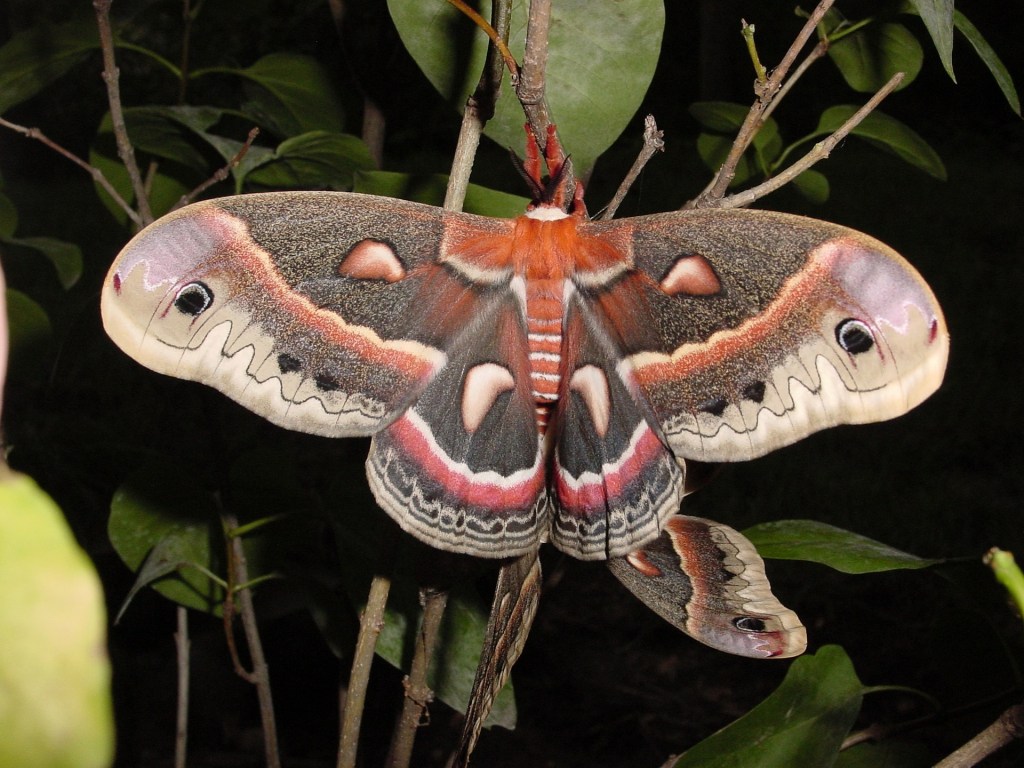
Cecropia moth (Hyalophora cecropia)

So what can gardeners do?

While ALAN has become a trendy part of our outdoor living spaces, consider whether you really need it, or modify it to minimize its impact. In my back garden I definitely need some path lighting for visiting guests, but I make sure it’s shielded lighting that is on a motion sensor so it’s only on for a short time. The International Dark-Sky Association has some great information on keeping our skies dark, including using shielded light fixtures that minimize glare, light trespass, and skyglow.

Besides, a garden can be just as magical a place enjoyed in moonlight or simply with the aid of a flashlight! And if you minimize ALAN you might just see more fireflies/glow worms in your garden, like I do (hint: having a pond or water feature also attracts them).

Want More Information?

Moths do the pollinator night shift – and they work harder than daytime insects

Fatal attraction: how street lights prevent moths from pollinating

The Darkness Manifesto: On Light Pollution, Night Ecology, and the Ancient Rhythms that Sustain Life by Johan Eklöf (on my to read list)

In Praise of the Eastern White Cedar

By Mary-Jane Pilgrim, Master Gardener

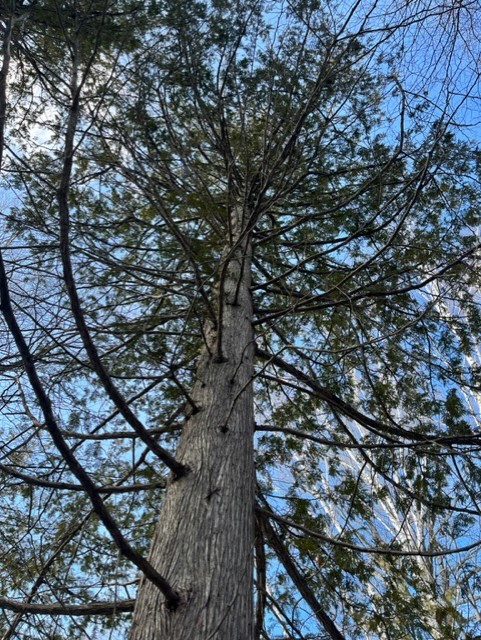
The Eastern White Cedar (Thuja Occidentalis) is also known as the swamp-cedar. Although it’s most often found in the wild in wet areas, it is also widely cultivated as an ornamental plant. It’s a slow to moderate growing evergreen that has a pyramidal shape; some of them live over 800 years. Despite having “cedar” in its name, this particular tree is not a true cedar but a cypress tree (Cupressaceae).

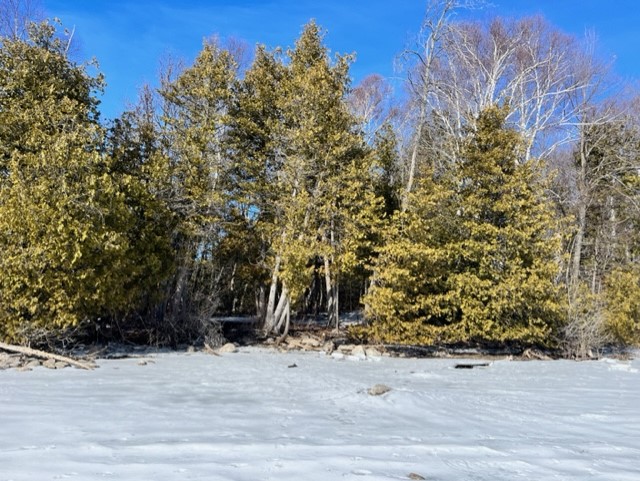
Cedar trees lining Chemong Lake at the Selwyn Conservation Area. Photo credit: MJ Pilgrim

While on a hike today at the Selwyn Conservation Area, this tree could be seen skirting the hardwood forest with its roots on the lake edge. It was widely prolific in some areas but noticeably absent in others. It’s rare to find one growing separate and distinct from others — they grow in ever widening clumps.

Although cedars are not flowering plants, they produce reproductive organs called “cones.” Because of this, they fit in the conifer family. Winds facilitate the pollination of the cones which results in production of seeds. Both male and female cones occur, but only the female cones yield seeds which are then spread by the wind.

Cedar branch showing cones bearing seeds. Photo credit: MJ Pilgrim

This tree is a member of the redwood family and is important for people and animals alike. Snowshoe hares, porcupines, red squirrels, birds and insects take shelter in its branches, especially during harsh winters. White-tailed deer and moose utilize it for food and shelter.

This tree has a long history of medicinal and practical uses. In the 1500s, on his 2nd trip to Canada, Jacques Cartier called the tree “arborvitae,” which is Latin for “tree of life.” The indigenous peoples gathered branches and boiled them into a tea. The vitamin C from the branches helped to ward off the threat of scurvy for Cartier and his men.

Practically, the Eastern White Cedar is valuable as a decay-resistant timber for canoes, posts, shingles and more. In our area specifically, cedar split rail fences are often still seen — remnants of the challenging farming situation in our rocky landscape. Most of these fences have the rails stacked in an interlocking zig-zag fashion that is self-supporting, easy to create, easy to repair, and easy to disassemble. These fences are ecologically positive, in that while they do the job of keeping larger animals in or out, smaller wildlife can pass through them easily. Being made of wood, they are less intrusive on the landscape, and will naturally break down over time.

Photo credit: MJ Pilgrim

The native cedar’s mature size is 40-50′ tall and 10-15′ wide which is much too large for the average city lot. However, they can be pruned heavily to form dense hedges for windbreaks and privacy fences. Hybridizers have created several popular cultivars for smaller lots including ‘Emerald’, a compact and dense tree with a height of 12-15ft that does not require pruning.

The author would like to gratefully acknowledge the assistance of Darcy, Tom and Jim in the writing of this article.

Resources

Nature With Us: Eastern White Cedar

Evergreen: Eastern White Cedar, a tall treasure

Credit Valley Conservation: Eastern White Cedar

In Praise of the Lowly Common Juniper

By Mary-Jane Pilgrim, Master Gardener

I am always amazed that wildlife makes it through winter in our zone, as food doesn’t appear to be all that plentiful when everything is covered in snow and ice. However difficult it seems, native wildlife have a variety of adaptations to surviving winter; knowing where to find food is one of them.

Juniperus communis or common juniper is one of the most widely distributed trees in the world. They are members of the Cupressaceae family. They can tolerate a wide range of conditions; they are tough, they can survive with a lot of wind, and thereby can provide protection for animals in harsh weather. Junipers have a strong scent, bitter taste, and sharp needles. Deer tend to ignore plants with these attributes.

The berries, however, are a different story. They begin life a grey-green color, and ripen in 18 months to a deep purple-black hue with a blue waxy coating. While they are called juniper berries, the “berry” is actually a cone, the female seed cone. Junipers are almost always dioecious which means that in order for the female plants to set fruit, a male plant must be in the vicinity.

Juniper berries are one of the top late winter foods for many birds and mammals which covet the deep blue orbs. They aren’t particularly high energy or calorie-dense; they are soft and fleshy, and have a strong, woody, spicy, pepper-like flavor with a gritty texture. Perhaps this is why they are ignored early on, but in the depths of winter when all the other really desirable food is gone, they become more popular with wildlife. Juniper berries could be the difference between survival and starvation for the species who rely upon them.

Junipers have a long history with humans as well as wildlife. These trees are responsible for one of the only spices derived from a conifer. The ripe, blue berries were and are currently used throughout the world to flavor meats (particularly wild game) – and sauerkraut. The first record of juniper berries was in Ancient Egypt at around 1500 BC.

During the Black Death in the 14th century, plague doctors wore masks with long beaks full of juniper berries and other botanicals to mask the unpleasant smells they’d encounter tending the sick. They believed that juniper stopped the spread of the disease. This was somewhat true – the disease was spread by fleas and juniper is an effective and natural flea repellent.

Most famously, the unripe, green berries are used to flavor gin. Gin is originally from the Netherlands — in the 16th century, a schnaps was distilled with juniper berries to become so called “Genever” (in dutch: juniper berry) which was consumed for medical purposes. “Genever” developed to become the today’s “Gin”.

Juniper berries have since been used to flush out toxins, heal infections and even aid in digestion. Caution: If you intend to forage your local woodlot for berries, be wary because while most of them are harmless, there are some species that have mildly toxic berries. Do not randomly harvest juniper berries unless you are sure of the species.

Foraging aside, if you are looking for native plants for your garden, a few juniper bushes are a great choice. They’re hardy, provide cover and food for a variety of wildlife, and will definitely help our wild neighbors survive particularly difficult winters.