A little forest … seems like a bit of an oxymoron. I always thought of a forest as a loose grouping of trees and other plants that covers a large area? I was introduced to a little, or Miyawaki, forest this past spring at the Lilac Festival in Warkworth, Ontario. The Peterborough & Area Master Gardeners partnered with the Northumberland Master Gardeners to offer a Native Plant educational event on the same May weekend as the Festival. We had a successful educational event, the Lilac Festival was great fun AND I saw my first little forest!
The Miyawaki forest method was created by Japanese botanist Akira Miyawaki. He developed the idea of restoring damaged ecosystems by layering various species of native trees, shrubs and ground cover. A site is chosen and prepared by layering cardboard and mulch. Various species of young native plants are then planted close together in a relatively small area, as compared to traditional planting methods, for the number of plants chosen. This method has been used in urban areas to demonstrate native plant forest environments.
The Miyawaki method of planting a forest is relatively new to Canada but there are more of this type of forest creation popping up across the country. All mixed native plant forests have many benefits including improving air quality, providing wildlife habitat, sequestering carbon and more. However, even though the Miyawaki forest creation method is a fairly new concept, it is bringing the forest closer to people by getting the benefits, and importance, of forests more widely noticed just because it is a relatively new concept. I know that I enjoyed looking at the plants in the Warkworth little forest. It gave me ideas about what I could do on my own property. Let’s face it, a walk through a forest, even a little one, is always a relaxing way to spend an afternoon!
Trees have had a social network for hundreds of years!
Do trees communicate? This concept is still up for discussion.
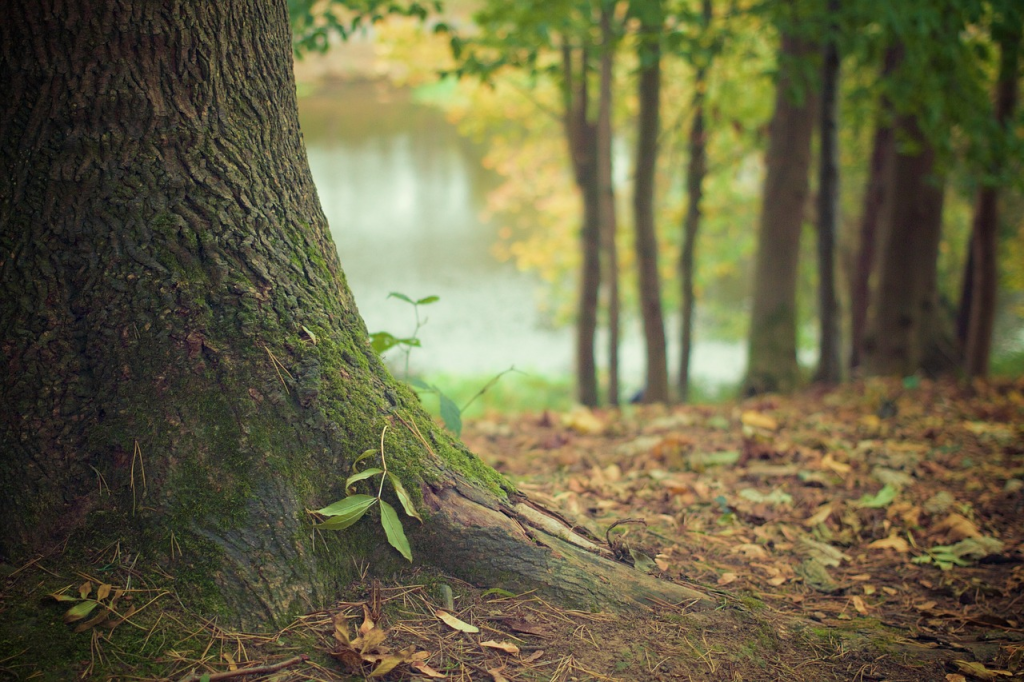
Trees communicate amongst themselves – one form of communication is through electrical impulses through their roots. Another form of communication is by scent released into the air.
For example:
“On the African savannah, giraffes were feeding on Vachellia tortilis (umbrella thorn acacias), the trees didn’t like this, so minutes later they started pumping toxic substances into their leaves to rid themselves of the large herbivores. The tree gave off a “warning gas” and other trees in the vicinity got the signal and followed suit.”1
The giraffes got the message and moved onto other trees.
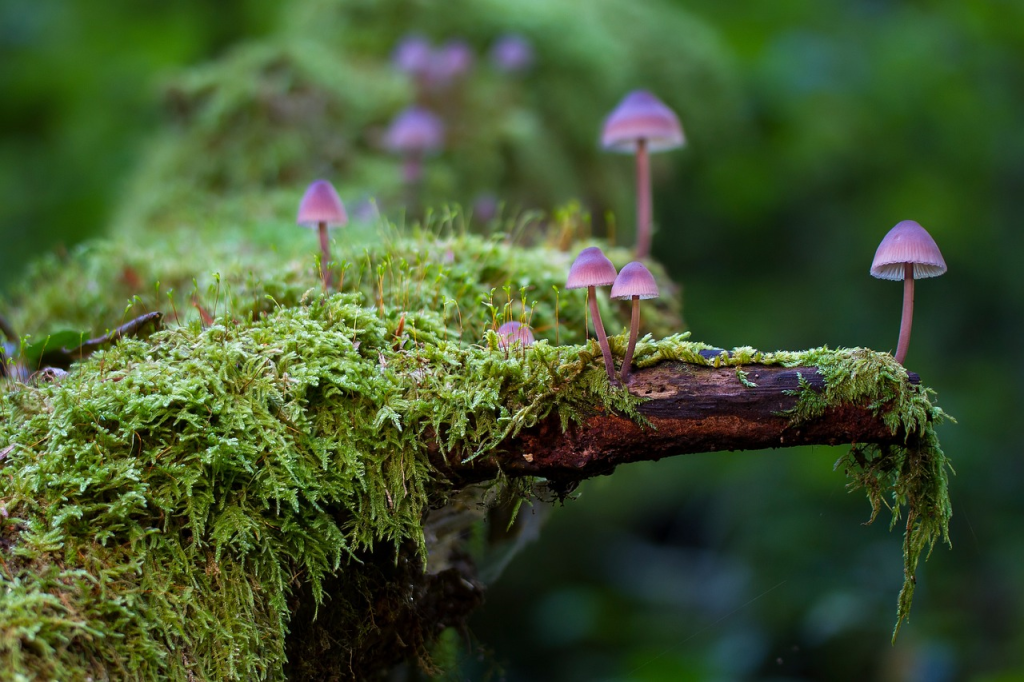
Communication by electrical impulses through their root system to other trees is accomplished through the fungal networks around their root tips. Messages are transmitted to the fungi which in-turn “operate like fiber-optic Internet cables”2 sending messages for miles along the fungal network to other trees in the forest about insects and other dangers lurking.
There are various scent compounds depending on the attack that is occurring. Trees have the ability to identify which species of insect is attacking by its saliva. The identification is so specific, it can release pheromones which attract the predator of the species attacking the tree.
If a tree finds itself in harm’s way it sends a message through the tree’s internal network which in turn signals the leaves to release a scent compound. “Not just any old scent compounds, but compounds specifically formulated for the task at hand”3.
The transmission of scent compounds travels in the air for miles. Animals and small critters in the forest detect the scents being released. If a predator picks up the scent, it knows a food source is nearby and follows the scent.
Tree Root Facts
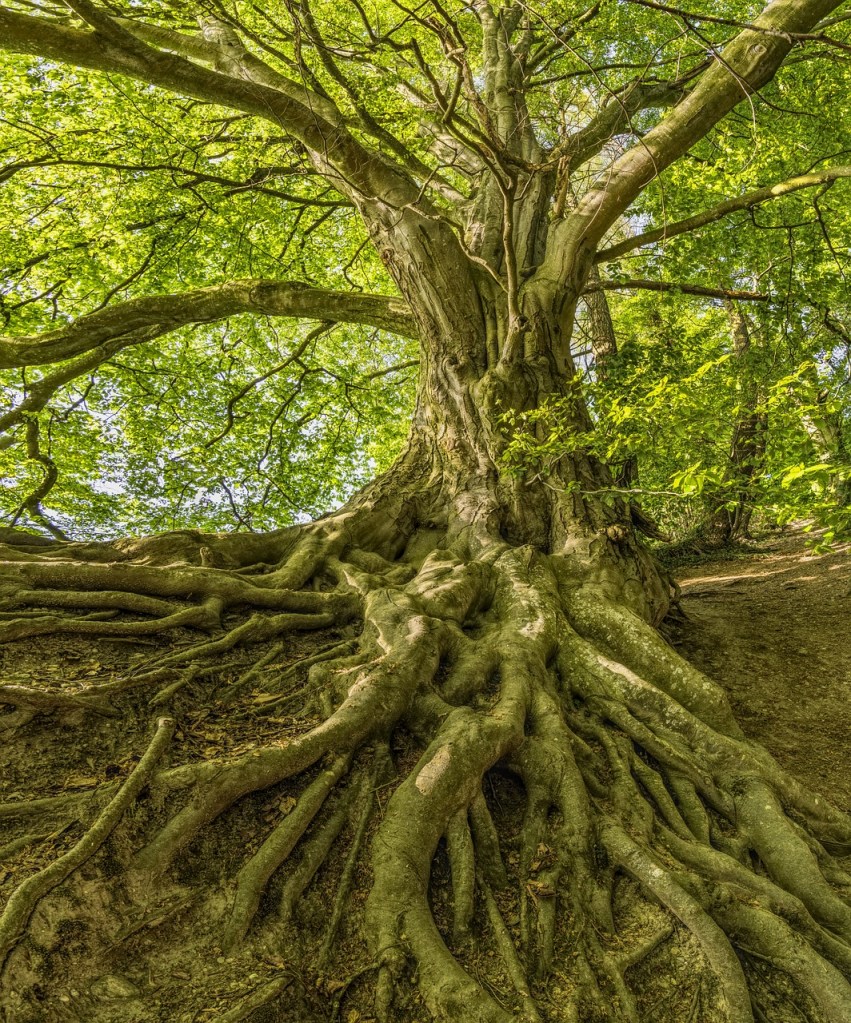
Most tree roots do not penetrate deep into the soil. Root depths range from 6 – 18 inches, staying close to the surface of the soil in order to absorb water, nutrients and oxygen from the soil.
Tree root systems cover more ground horizontally. Some irregular root patterns extend 2 – 3 times larger than the crown of the tree.
There are three basic root systems: a. Tap root systems (straight, thick and tapering) include species such as Pine, Eastern Redbud, Walnut, White Oak, Sycamore, American Hornbeam and Douglas Fir. b. Heart root systems (combination of large and small roots descending down and across) include species such as Norway Maple, Larch, Lime and Beech. c. Flat root systems (no obvious primary root, several horizontal roots spreading laterally) include species such as Spruce, Sugar Maple, Silver Maple, Hackberry, Birch, Fir and Cottonwood.
I believe this is a form of communication or social networking – communicating to other trees, animals, fungi, insects, pests and beneficial predators.
References
Wohlleben, Peter (forward by Tim Flannery; translated by Jane Billinghurst) The Hidden Life of Trees: What They Feel, How They Communicate – Discoveries from a Secret World. Greystone Books Ltd. Vancouver, BC 2015, P.7.
As the snow blankets our gardens in Ontario, many might assume it’s time to hang up the gardening gloves until spring. However, seasoned gardeners know that December can be a time of indoor/outdoor preparation for the upcoming growing season.
One key activity for this month is winter mulching. While it may seem counterintuitive to spread mulch in the cold, it’s a crucial step to protect your plants from the harsh Canadian winter. A thick layer of mulch acts as a cozy blanket, shielding the soil and plant roots from extreme temperature fluctuations. Thankfully in our region, Mother Nature does this job for us in the form of snow!
For those dreaming of vibrant spring blooms, December is the ideal time to start forcing bulbs indoors. Tulips, daffodils, and hyacinths can be coaxed into early flowering by providing them with a period of cold storage, mimicking the winter chill they would experience outdoors.
Don’t forget about your compost! While your outdoor compost pile may slow down in the winter, it’s still a valuable resource. If you don’t do this already, consider continuing your indoor composting with kitchen scraps to keep the nutrient-rich compost coming, even in the colder months. People living in the city will probably be already doing this thanks to the new green bin program, but for others living outside of the city limits, sometimes the outdoor compost pile seems like it’s just too far to venture to in the cold. However, a little bit of effort now will divert a lot of food waste from the landfill.
Lastly, embrace the festive spirit by incorporating evergreen plants into your outdoor decor. Hollies, spruces, and winterberry bushes add a touch of green to the winter landscape and can be adorned with festive lights or ornaments.
December in Ontario might be chilly, but for gardeners, it’s a time of planning, protecting, and finding joy in the small wonders that the winter garden has to offer. So, bundle up, grab your gardening tools, and let the December gardening adventures begin!
When we are using plant nomenclature, there are a couple family names for the evergreens we love and include in our winter decorating. Phinaceae includes hemlock (Tsuga), spruce (Picea), pine (Pinus) and fir (Abies). Cedar (Thuja) and cypress are in the Cupressaceae family.
One good way to identify evergreens is to look at the needle arrangement. Pine needles are bunched together in two, three or five groupings rather than single needles like hemlock or balsam. Spruce needles are four sided, so when you roll them in your fingers you can feel the sides.
Cone size and shape also helps with evergreen identification. PIne cones hang down as do spruce cones, but spruce cones are flexible while pine cones are stiff and more woody. Balsam cones grow upwards.
Native Evergreens
White Pine (Pinus strobus) has 5 needles bunched together which can be up to 15 cm long. They give the appearance of being wispy and soft. These boughs flow over your container, giving it shape.
Red Pine (Pinus resinosa ) has needles in bunches of two that will snap if bent. Needles tend to be stiffer than white pine and are longer. These branches can be the “bones” of your container, including the centre piece.
Ontario Cedar (Thuja occidentalis) has a lighter underside to the fan-like branches which give a pop of lime green colour to your display. It also drapes nicely in your arrangement.
Balsam Fir (Abies balsamea) has smooth, flat needles that are soft and aromatic. Balsam are the most popular tree for live Christmas trees because of the soft needles and bushy appearance. Adding another texture to your pines and cedar gives more dimension to your creation.
Hemlock (Tsuga canadensis) is another native tree that is similar to balsam with flat needles that have a white stripe on the underside. Hemlock needles are shorter than balsam and have stalks that the needles form on. They have a lighter coloured underside.
Spruce needles are square and prickly growing all the way around the twig. Black spruce, white spruce & red spruce are native while Norway Spruce (Picea abies) are not..White spruce (Picea glauca) needles are much longer than black spruce (Picea mariana) needles.Check out this article from the Toronto Master Gardeners on the difference between white and black spruce.
Non Native Evergreens
Scotch Pine (Pinus sylvestris) is easy to spot along roadsides in the area. Needles are grouped in twos, slightly twisty, sharp and 4-8 cm long. It was one of the first trees to be brought to Canada from Europe. It was imported to help with soil erosion in the early 1900s. This tree is listed on the Ontario Invasive Species list. Its sturdy branches make it another good choice for the “bones” of your container if you don’t use red pine.
Natural additions like pine cones or dried flowers like hydrangea, sedum, sumac or allium add to the natural look. Coloured ornaments can add a pop of colour, but the textures and colours of the greens are the true stars of an arrangement.
There are boughs that you can purchase that you cannot find in the wild. BC cedar has beautiful drapey branches. Incense cedar has lovely seed pods that you won’t want to put in your indoor displays as they will burst when the warmth hits them. Carolina Sapphire Cypress, Noble Fir and Leyland Cypress will add different shades and textures. Many of us cut from ditches and our own properties. Remember if you are out cutting to do it responsibly and respect private property.
Enjoy the green of the season….along with the white of the sparkling snow.
As the final days of the year tick past and the garden gets ready for winter, it’s the perfect time to reflect on the lessons that the past gardening season have meant to me. From the first tentative sprouts of spring to the vibrant foliage of autumn, many moments in the garden have been a source of inspiration and gratitude.
In the quiet solitude of my gardens, I find peace and beauty. The garden has tried to teach me patience as I witnessed the transformation of tiny shoots into flourishing plants, reminding me that growth takes time, both in nature and in life. Each new plant, bulb, tree and shrub has been a learning experience as I determine how best to care for them. Watering, weeding, watching things grow – it’s a simple kind of satisfaction. Success and failure are both reflected in the final layout at the end of the gardening season.
Fall brings a slow-down as the garden prepares for the coldest months of the year; dormancy for some, death for others. I’m grateful for the colours & textures in the autumn garden and the resiliency that many plants display.
As winter settles in, I’m grateful for the quiet months too. The garden might be sleeping, but it’s not forgotten. It’s there, waiting for the days to get longer and the sun to warm up the soil. I’m grateful for open spaces, hills, fields and parks nearby where I can wander through trees and rocks throughout this season, sometimes regardless of the temperature. I do have to admit that I’m not always a fan of the ultra cold, though!
Looking forward to spring, it’s like a natural reset button. New shoots, new colors – everything waking up again. Planning for the next season is already on my mind. What to plant, where to plant it – it’s the anticipation of starting the cycle all over again.
In this simple plot of earth that I call home, there’s a lot to be thankful for. The lessons, the wonder, the beauty – it’s all there, waiting for the next round. Here’s to another year of growing, learning, and being grateful for what the garden brings.
Full disclosure: Just a few short years ago, before Master Gardener training, I considered my house the place where houseplants came to die. Changing my plant care routines has saved plant lives but winter has its challenges.
Watering
As a Master Gardener in training, I learned that 80% of house plant “failures” were due to over-watering. That was empowering for me and changing watering practices has led to success. In winter, plant growth is decreased and house plants need less water. Before watering check to see if the top 1-2” of soil is dry. With smaller plants you can also get to know the weight of a saturated pot relative to a dry pot by lifting them a few times between waterings. Water thoroughly only when your plant feels dry. Underwatering is much better than overwatering. Signs of overwatering include the wilting or yellowing of lower leaves and inner leaves advancing to scorch, leaf drop and plant death.
Fertilizing
During the winter when houseplants may not be actively growing, they do not need fertilizing.
Humidity levels are lower in our homes during the winter. For house plants that prefer higher humidity the only sure way to provide this is by increasing the humidity in your home which may be problematic. Some people advocate misting plants, placing them on a pebble tray filled with water or clustering plants so that they can benefit from the water that each plant transpires. The effectiveness of these methods is questionable. Choosing plants that tolerate less humid conditions, like succulents is another option. Plants suffering from low humidity may develop drying and browning around leaf edges.
Light
As light levels drop in winter some plants may need to be moved to increase the amount of light they receive or have supplemental light provided such as fluorescent grow lights. Symptoms of not enough light include pale green, yellow to white leaves, leggy stems, dropping leaves, variegated leaves becoming solid green or flowering plants not flowering. Lighting for plants is an involved discussion but this article https://extension.umn.edu/planting-and-growing-guides/lighting-indoor-plants has good information.
Houseplants are a beautiful indoor feature providing pleasure for many. Mastering winter care for your house plants will keep them healthy and beautiful, a wonderful touch of green in our winter world.
At a recent horticulture meeting, the subject of using wood ash in the garden came up. As the days grow shorter and the temperatures drop, I was reminded of this. As someone who used to heat the house with wood, I am no stranger to finding uses for my ashes. Although most of the time, the ash went onto icy paths and the lane, there was always some left in the spring. Those were spread in a thin layer over some of the soil in the garden. As with most things, ashes in moderation can be a good thing, sometimes!
Why use wood ash in the garden? From my perspective there are two reasons for wanting to use ash in the garden.
1. Recycling. Better to see the ash returned to the earth than ending up in the landfill.
2. Benefits to the soil. Constituents of ash can vary depending on what type of wood is burned but generally the largest component is calcium carbonate (20%). Next is potassium (10%), phosphorous (1%) and possibly some trace amounts of micro-nutrients such as iron, manganese, boron, copper and zinc. Used in moderation, ash does act as a fertilizer but note it is not a complete fertilizer as it doesn’t contain nitrogen.
Keep your eye on Soil pH
Ash is alkaline due to its calcium carbonate component and has the ability to affect soil pH. For those growing acid loving plants such as azalea or blueberry, the addition of wood ash will not be appreciated. Folks with neutral to slightly sweet soil probably will not notice any deleterious effects however if you are struggling with an elevated pH, ashes could end up tying up more micronutrients such as iron and result in even more chlorosis in plants.
How do I use wood ash and how much?
As a general rule of thumb, an application rate of 20 pounds (approximately a 5 gallon pail) per 1000 square feet per year (it takes about one cord of wood to produce this much ash). I have seen recommendations on applications for both spring and fall. Just recall that wood ash is very fine and blows away quite easily. It seems best to apply a thin layer to moist soil or to dig it in. Wood ash can also be added to compost piles at a low rate (sprinkle one or two cups on top of pile when adding green or brown material to the pile but do not exceed more than 5% of the total volume of the compost).
Cautions when using wood ash
Ash is caustic. Wear a mask to avoid breathing it in and wear appropriate PPE. Never mix ash with nitrogen fertilizers such as urea or ammonium sulphate as such a mixture will produce ammonia gas. There are certain things you should not burn if you plan on using your ashes in the garden as they could contain heavy metals such cadmium, chromium or lead. These things include: Treated lumber, painted or stained wood, cardboard, fake fireplace logs, coal, BBQ briquets and any wood that was ignited with a fuel such as gasoline. Some references caution against using the ash from wood that was grown near industrial locations for fear of heavy metal contamination.
Since wood ash does have some benefit as a soil amendment, it seems like this is one more way to reduce the amount of waste going to our landfill. Why not give it a try?
Canna lily (Canna X generalis) is an herbaceous perennial. This means that Cannas will die back over winter and regrow from the root in spring. However, in our zone 5 area, it is too cold for the Canna’s underground rhizome to survive and regrow the following spring. What to do?
Cannas may grow to be very large (that is, up to 6 feet tall). They may be used as a mass planting, at the back or center of a border or flower bed, and in pots as the “thriller”. They have large colourful blooms and large leaves that appear almost tropical. The foliage and flower colour vary depending on the cultivar. Even the seed pods are interesting.
Cannas in a mixed garden
Cannas prefer full sun but will still do well in part shade. They will bloom all summer. They prefer slightly acidic, well-drained soil which contains lots of organic matter.
I used a bright orange Canna in a large pot this year on our deck. It was quite striking against our pale gray house…..definitely worth saving for next year!
Canna closeup
I have been emptying pots over the last week or so and decided it was time to tackle the Canna. It is best to do this after the first frost. Up until the first frost, the plant is still growing and putting energy into the roots. As mentioned, Cannas may grow quite large. Mine was about 60 cm (2 ft) tall.
I thought that it would be a difficult task to remove the Canna and prepare it for winter storage. I was happily surprised to find it an easy task. Gently remove the Canna from the pot using a garden trowel to loosen it first. Grasp the stem and lift the entire plant, with root attached, out of the pot. The Canna has a fibrous rhizome which may then be divided into individual stems. Do not wash the rhizomes but do gently remove as much soil as possible. Allow the rhizomes to airdry for a few days. The Canna rhizomes may then be stored in peat or vermiculite in a cool dry space.
You may also leave your Canna in its pot, cut back the foliage and store the pot in a cool, above freezing, spot over the winter. I do not have a cool space where I can store potted plants so I chose to store just the rhizomes.
Seed pod
Next spring, after all danger of frost has past, repot or plant your Canna rhizomes. You will be thrilled to see that your beautiful Canna survived the winter and is soon ready to start blooming again for another season.
For more information on overwintering Cannas and other plants, please check out the links below.
Book Review: Tiny + Wild: Build a Small-Scale Meadow Anywhere by Graham Laird Gardner (Cool Springs Press, 2023).
More and more, gardeners are looking to transform their spaces with an ecological focus in mind. The goal may be to provide food and habitat for pollinators and other wildlife, or to reduce or eliminate traditional high-maintenance and less environmentally friendly practices (e.g., mowing, watering, fertilizing, tilling, weeding, pesticide use). There is a treasure-trove of how-to guidance on the web but sometimes it is nice to pick up a book that also contains photos of ecological gardens that are practical as well as beautiful. I recently picked-up such a book called Tiny + Wild: Build a Small-Scale Meadow Anywhere by Graham Laird Gardner (no relation, lol). A meadow-styled garden on a small scale can be both aesthetically pleasing as well as have high ecological impact. Gardner provides step-by-step guidance on how to evaluate your property, how to select the best location, learn basic design principles, determine how best to prepare your site, as well as how to choose, install, and maintain the plants for your project.
Some people have eliminated their lawns entirely and have converted them to gardens. However, it may be daunting to think about a whole-scale lawn conversion project. What I like about this book is that it encourages beginners that starting small is ok. Gardner advises selecting a small area to experiment with first and then look at expansion later (p. 51). Some examples of starting small include creating a “micro meadow” on a balcony, stoop, patio, or rooftop using containers; or creatively incorporating flowering plants in raised beds or a vegetable garden that are both edible to humans and are attractive to pollinators. Other possible interesting small-scale projects include developing a meadow in a rain garden, a drainage swale, a boulevard, or even a gravel garden.
The book is full of great tips. For example, when considering adopting a meadow-styled garden, it is important for the design to emphasize grasses and sedges over flowering plants. Incorporating too many of the latter can make it disjointed and unnatural. The former serve as the foundation that brings everything together. Aim for 1/4 tall, structural species, 1/2 medium-height species, and 1/4 ground cover species (p. 69).
Another suggestion that did not occur to me is to use annuals in the first couple of years after installing the native plants (p. 150). The reason for this is because it usually takes three years for native plants to become established and annuals can be used for a short time to fill in the initial gap. The only disadvantage I can see with using annuals is that most are not native species and they do have a tendency to self-seed. The latter can be managed with some dead-heading maintenance, however.
This book in some areas is only a starting point and the reader still needs to do more research. In the last chapter, there are some suggested plants in lists grouped by height, bloom colour, bloom time, lighting, and moisture; however, some of these are not native to our area or may be difficult to acquire. In some cases, you can select a plant from the same genus that is listed in the book. For example, the listed Erigeron compositus (Cutleaf Fleabane) is not native to Ontario but Erigeron pulchellus (Robin’s-Plantain Fleabane) is. They both are comparable in size (height).
Geum triflorum: a great native selection for a meadow
There are just a few parts of the book where I have suggestions:
1) Although there is a warning to the reader to verify that the plants listed in the book are not invasive in their area (p. 139), I think that there are a couple known to be widely problematic that should have been left out: Ajuga reptans (Bugleweed) and Scilla siberica (Siberian Squill).
2) In the section on shade meadows (p. 50), I would point out that gardeners should be careful when planting in the vicinity of trees. Some species are more sensitive than others. Planting under trees should be a gradual process that is staggered over the course of a few seasons. In addition, small plugs are more appropriate than larger potted plants. These practices can minimize disturbances to tree roots. Gardeners should think of the tree’s health first.
3) The section on removing the existing vegetation (e.g., sod) suggests that you can forgo using layers of organic matter and cardboard and simply top dress with topsoil. After applying the topsoil, you can plant and at the same time; the vegetation below is smothered and decomposes (p. 88). It is not clear how thick a layer of topsoil is needed as I suspect grass and other weeds will poke through. While Gardner is generally opposed to using wood mulch in a meadow garden (p. 89), I think that a very thick layer can be used initially to eliminate the grass and it will break down over time quickly enough and does not need to be replenished—allowing for the plantings to expand.
As gardeners, we are aware of the importance of trees. In our yards they give us shade from the hot sun, dropping the temperature beneath them and cooling the air. They give habitat to birds and insects. They purify the air and help reduce greenhouse gases. They anchor the soil and help with soil erosion. They give us privacy. Studies have shown that trees also help our mental health. In the past few years, ice storms, spongy moths, wind storms, and the recent derecho have damaged many trees in our area. Around every neighbourhood, you hear the buzz of chainsaws throughout the year. Last week, we had one of our lovely big sugar maples cut down because it became diseased. Heartbreaking but necessary to have it taken down.
Fungal diseases are often the culprit of the decline and death of many species of trees. Trees that are planted where their roots have no good earth to grow in become stressed. A stressed plant is easier for pests and diseases to invade. Our sugar maple was close to our driveway and although it is not paved, the ground is compacted.
Years of drought also affect a tree’s health. Wind storms can damage branches and leave open wounds where disease can find its way in. We are all familiar with Dutch Elm disease which has been in Ontario since 1946. It is a highly contagious fungal disease that has almost wiped out elm trees. Many of the dead trees you see along roadsides are elms.
Anthracnose is a common disease in maple and oak trees. It often appears after a damp cool spring. Brown blotches appear on leaves, they dry up and fall off. When combating this disease, you need to rake up and dispose of infected leaves. Tar Spot is common on norway maples. Although it may not kill your tree, it is a fungal disease and will continue to spread. It is recommended to rake up leaves and dispose of them rather than mulching them.
Spruce trees were stressed by the spongy moths and drought and we are seeing them suffering with Cytospora Canker. Signs of this disease are needles turning purple, then brown, then dropping off leaving branches bare but covered with a white resin. Cankers appear on the branches near the trunk.
Last week’s post was on Oak Wilt, a recent fungal disease which has no chemical control yet. Pests are also a huge problem with our trees. Emerald Ash Borer has been in Ontario since 2002. The metallic green beetle emerges in late June, laying eggs in crevices of bark. Larvae overwinter under bark and tunnel under the bark leaving “S” shaped marks which cuts off the trees ability to draw food and water. There is an insecticide that a professional can inject into the tree.
Spruce budworm is native to North America. It attacks balsam fir (Abies balsamea), white and black spruce (Picea), hemlock (Tsuga), jack and eastern white pine (Pinus) and Larch (Larix). BTK has been used to control, however if you have a mature tree this option is overwhelming. We all need to be aware of the health of the mature trees on our property. Ensure they are getting enough water, watch for small leaves or broken branches and pest infestations. Call an expert arborist to give advice on an ailing trees. They can also help with any pruning issues that might need to be addressed.
If you are investing in a tree for your property, be sure to do some research and find the right tree for the right spot. Take into consideration how big the tree will get, where the sun will shine on it, how much ground it will have to absorb moisture and what competition it might have. Young trees need lots of water to get established and grow. What’s that old saying? Hug a tree? Well, after you hug your tree, check out the references below for more information on diseases and pests and ways to help your trees.