Patience in the Garden

By Chris Freeburn, Master Gardener

When spring finally arrives, gardeners are outside daily looking for signs of life in our flower beds. Snowdrops, crocus, tulips and daffodils along with many other spring bulbs give us that pop of colour we have missed. Hellebores, primula, magnolia, Iris reticulata, lungwort are all beginning to bloom. Spring perennials like ground phlox, poppies, pasque flowers, daylilies are showing their green shoots and will soon be flowering. Bleeding Hearts, trilliums, lupins and salvia are all growing in leaps and bounds. 

Bleeding heart is well on its way

This past April, we experienced a week of abnormally hot weather that encouraged plants like peonies to jump up. Note to self – get peony rings up. The return to “normal” temperatures is better for all the plants. And it reminds us that spring is an unpredictable season and we can’t rush it.

As gardeners, we need to practice a bit of patience. We need to leave our gardens to thaw, give the soil time to warm up and give the overwintering insects time to awaken from the garden litter we are so excited to “clear up”. We also need to be aware that not all perennials show life at the same time.

Hostas show their poking dark shoots just as we are getting into the flower beds, so we need to watch when stepping around or moving mulch in those gardens. Perennial Hibiscus are probably one of the the later showing perennials that will look dead until mid June. Be patient! When Hibiscus decide to begin growing, they grow quickly, inches in a day. Lilacs are making buds and maples are leafing out, but hydrangeas are still looking asleep. Although early flowering clematis like Blue Bird and other group 1 types will be popping up, later bloomers with still be sleeping. Don’t despair. Be patient!

Hibiscus is very late to show growth

Grasses can also be deceptive. Cool season grasses begin to grow in early spring and have reached their best by mid summer. Karl Foerster, which is a Calamagrostis or feather reed grass is a well known cool season, zone 5 grass that grows 5′- 6′ tall. It likes sun, will take it wet or dry and tolerates poor soil. Overdam and Avalanche are two other feather reed grasses that will be showing green now.

Cool season grass

Warm season grasses do not come up until June and are at their best in fall. They will look dead until the weather warms up. Patience! Because they will not show green until later in the spring, you can plant warm season grasses behind other earlier growing perennials to hide their brown bottoms.

Warm season grass

Miscanthus grasses are warm season types and are available in different heights from 3′ to 8′ tall. Miscanthus sinensis & M. Sacchariflorus are classed as invasives, spreading by rhizomes and seeds. Other warm season grasses include Japanese Forest Grass or Hakonechloa, Japanese Blood Grass and Sedges. Panicum or switch grass is a warm season grass with many varieties native to North America. ‘Northwind’ is the most commonly know variety and it is drought resistant, will grow in any type soil and likes full sun.

Native grasses like Little Bluestem  (Schizachyrium scoparium), Big Blue Stem (Andropogon gerardii)  and Indian Grass (Sorghastrum nutans) are warm season grasses. These are beautiful additions to your garden, but will not green up until the weather warms.

May is the most active month in the garden. Sometimes we forget to enjoy the moments, slow down, breath deeply and have patience. New wonders will be happening for many days ahead. Enjoy them!

https://landscapeontario.com/perennials-in-bloom-month-by-month

https://www.invadingspecies.com/

Like Moths to a Flame – Rethinking Outdoor Lighting in Your Garden

by Emma Murphy, Master Gardener

A few weeks ago, the incomparable Lorraine Johnson spoke at my local horticultural society. She summarized four key actions gardeners could do to help our pollinators, and the last one stuck out for me — reduce/reconsider outdoor lighting (see her full list of actions at the bottom of the blog).

I thought, what does outdoor lighting around my house or garden have to do with pollinators? I know that the presence of lighting (or even more importantly, light frequency) is disruptive for migrating birds and nesting sea turtles, but for pollinators in my garden?

However, what I’ve learned in my research is that artificial lighting at night (aka ALAN) poses a hazard to nocturnal pollinators and prevents proper navigation, reproduction, and their ability to find food.

This really cool graphic (from Kenilworth Park and Aquatic Gardens in Washington DC) shows some examples of day and night pollinators.

Why is it a problem?

Use of ALAN has rapidly spread around the globe over the past few decades. This 2021 Nature Communications journal article states increasing evidence that ALAN adversely affects the behaviour, physiology, and survival of animals and plants, ultimately leading to a significant decline in their abundance and diversity.

This 2020 Biological Conservation journal article says that although habitat loss, pesticide use, invasive species, climate change all play a role in insect decline, ALAN is another important—but often overlooked—bringer of the “insect apocalypse”.

A Nature journal article back in 2017 also sounded the alarm, showing that in ALAN plant–pollinator communities, nocturnal visits to plants were reduced by 62% compared to dark areas.

This UK Royal Horticultural Society article lists some of the effects of ALAN, not just on pollinators but all wildlife:

  • Nocturnal insects (including many moths) who navigate using natural light sources (like the moon) are disoriented by ALAN (although research is now indicating that ALAN disrupts circadian rhythms in both nocturnal and diurnal animals).
  • Security lights appear to temporarily blind some animals and may even attract them (for example, frogs – I have seen this in my backyard near my pond).
  • Birds are disturbed from sleep by sudden lighting and can begin singing before dawn (robins especially seem sensitive to light). Birds that start migration flights at night can become disoriented.
  • In ALAN areas, shorter periods of nighttime darkness means less time for foraging/hunting for crepuscular (dawn/dusk) or nocturnal species.
  • ALAN is thought to be partly to blame for the decline of fireflies/glow worms; the females emit low, greenish light to attract mates and even low level ‘skyglow’ from distant light sources such as floodlit playing fields or towns will lessen their breeding success.

The type (frequency) of light seems to affect species differently. For example, research indicates that LEDs seem to attract more moths and flies, but fewer beetles than sodium lamps. And LEDs with cool white light (blue end of the spectrum) attract more insects than warm white ones. As a general rule insects are more sensitive or attracted to short-wavelength (UV, blue and green) than long-wavelength (orange, red and infra-red) light.

Cecropia moth (Hyalophora cecropia)

So what can gardeners do?

While ALAN has become a trendy part of our outdoor living spaces, consider whether you really need it, or modify it to minimize its impact. In my back garden I definitely need some path lighting for visiting guests, but I make sure it’s shielded lighting that is on a motion sensor so it’s only on for a short time. The International Dark-Sky Association has some great information on keeping our skies dark, including using shielded light fixtures that minimize glare, light trespass, and skyglow.

Besides, a garden can be just as magical a place enjoyed in moonlight or simply with the aid of a flashlight! And if you minimize ALAN you might just see more fireflies/glow worms in your garden, like I do (hint: having a pond or water feature also attracts them).

Want More Information?

Moths do the pollinator night shift – and they work harder than daytime insects

Fatal attraction: how street lights prevent moths from pollinating

The Darkness Manifesto: On Light Pollution, Night Ecology, and the Ancient Rhythms that Sustain Life by Johan Eklöf (on my to read list)

Oh no! My Spring Bulbs are Flowering, and it’s Starting to Snow!

By Mary-Jane Pilgrim, Master Gardener

Spring bulbs are hardy plants that are adapted to survive even in cold and unpredictable weather conditions. While a late frost or spring snow may cause damage to the leaves and flowers of spring bulbs, it is unlikely to kill them altogether.

One of the main reasons why spring bulbs can survive a late frost or spring snow is their ability to go dormant during periods of extreme cold or drought. During dormancy, the bulbs store energy and nutrients in their underground structures, allowing them to survive until conditions improve.

Spring bulbs have a unique growth habit that enables them to emerge from the soil before the last frost date. They grow and develop quickly, taking advantage of the early spring sun and warmth to build up their energy reserves. By the time a late frost or spring snow arrives, most of the growth and development has already taken place, minimizing the impact of the cold on the plant. You may lose any blooms at the time of the adverse weather, but new blooms will likely wait until the weather changes again, and it will!

Snowdrops, hyacinths and some daffodils seem to be particularly resistant to cold, wet spring precipitation. Tulips and lilies are a little more prone to damage once they’ve formed buds or blooms. If a hard freeze or extended cold period is in the forecast, it may be wise to cover budding or flowering tulips and lilies to ensure that you get to enjoy their blooms this year. Make sure that you uncover them if daytime temps rise above freezing. If they’re not budding or blooming, no covering is necessary as the foliage is quite robust.

When planting spring bulbs in the fall, make sure that they are planted deep enough in the soil to avoid the worst effects of a late frost or spring snow. This means that even if the surface of the soil is frozen or covered in snow, the bulbs remain insulated and protected underground.

If frost damage does occur, don’t cut off the leaves as bulbs need even damaged foliage to feed the bulb for next year’s blooms!

In conclusion, while a late frost or spring snow may cause some damage to spring bulbs, they are unlikely to be killed off completely. These hardy plants have developed a range of adaptations to cope with the unpredictable and often harsh conditions of spring, allowing them to survive and thrive year after year.

To Prune or Not to Prune your Deciduous Shrubs … that is the Question!!

By Carol Anderson, Master Gardener in Training

Spring is upon us and most of us are venturing out into the garden to undertake some much needed clean up, anticipating the beautiful days and growing season ahead. However, do you find yourself looking at your shrubs and wondering whether to prune or not, and if so, when, and how? If this describes you, then this blog might be helpful as you consider your spring work ahead. Although we know that pruning supports the growth of healthy and robust shrubs, it is one of the most inconsistent and often poorly executed garden techniques. Pruning is not only essential to maintaining plant health, but also an essential part of woody plant maintenance used to:


ü  improve the quality of your plant/shrub (e.g. flowers or yield),


ü  “train” plants (shape and structure),


ü  remove dead of broken branches,


ü  control their size and shape, and


ü  create an esthetically appealing specimen in your garden. 

Perhaps the reason that pruning is avoided by many gardeners is because proper pruning takes careful planning and execution; knowing your plants growth habit (mounding, cane or tree-like) and life cycle will determine pruning time and technique to be used. The following tips will hopefully turn this daunting task into something more enjoyable.

  1. Develop a pruning plan for your garden – a plan that outlines each plant’s pruning requirements (including timing). Create a table that identifies, at a minimum, what species of shrub you have, its location in the garden and when to prune. In addition, you may wish to add details and notes about any observations you have made and when it was last pruned. Keep this plan as a reference tool going forward.
2. Determine your objective for pruning – are you cleaning up broken or diseased branches? Is the shrub too big? Is the shrub dying in the middle and too dense? Or is the shrub very old and has lost much of its’ vigour?

3. Determine how much to prune – rule of thumb: don’t remove more than 1/3 of a shrub in any one season (Exception: if you are undertaking gradual or extensive rejuvenation pruning – see below)

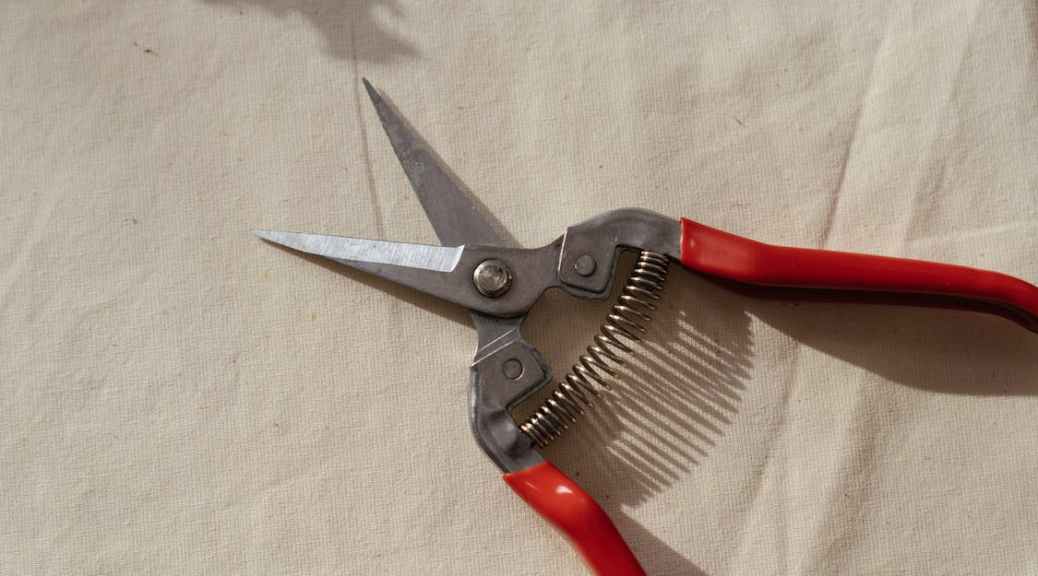
4. Understand the proper tools and technique to use – general rule of thumb is that secateurs can be used for branches up to ¾” and lopping shears up to 2” branches – anything beyond that may require a specialized saw. Cuts should be clean and taken back to the next lateral branch, node or close to the ground (described below), but never randomly in the middle of a branch.

5. Determine when to prune – the following table provides an overview of pruning objectives, techniques, and timing.

Special Note: most evergreen shrubs do not need pruning, except sanitation pruning as required. The proper selection of the shrub and then allowing them to grow to their natural form is always recommended, unless you are training them to a specific form. Evergreen shrubs require special consideration as they cannot withstand the pruning described here for deciduous shrubs.  

Pruning Objective

Purpose

Technique

Timing

Sanitation Pruning

Used to remove dead, dying or diseased branches. Note: broken stems can lead to disease and insect infestations

Cut below area of damage (into healthy wood) just above an outward facing branch node

Throughout the growing season (inspection of your shrubs should be done regularly)

Thinning

Used to improve air flow and light penetration and prevent branches in the middle or bottom of the shrub from dying; thinning stimulates growth throughout the shrub

Remove branches to their point of origin (next lateral branch). Note: for shrubs with cane type growth, remove the oldest growth cane close to the ground

*Regardless of the objective and method, it is important to know whether the shrub blooms on “new” growth (this year’s branches) or “old growth” (branches formed the previous year). For example, a Common Lilac blooms on last year’s growth – pruning right after blooms dies off will ensure sufficient time for new growth to become established  prior to dormancy and exposure to harsh cold temperatures.

Reducing Size

Used to reduce the overall size of the shrub. Note: it is recommended that when choosing a garden shrub, the mature size should be considered given the space

“Head-back” to the next lateral branch that is at least 1/3 the size of the one being removed

Stimulating Growth

Used to improve overall yield of flowers or enhanced foliage growth (bushiness)

Head back to an outward facing bud (new growth will be stimulated at the bud closest to the cut and in the direction the bud is facing)

Rejuvenation Pruning

Older shrubs have large portions of unproductive wood; these are removed to stimulate new growth

Gradual: requires ~ 3 years of gradual removal of old and new shoots

Extensive: removal to 6-10” from ground with gradual removal of some of the new growth

*In general, spring blooming shrubs most often bloom from buds formed on last years’ “old growth”, such as the Common Lilac. In contrast, most summer blooming shrubs will flower on “new growth” requiring a late winter/early spring prune to stimulate new growth for flowering in the same year, such as most Hydrangeas. Pruning your shrubs (and trees…although not covered in this blog), should become an essential technique to managing your home garden – and it will pay off in spades (😊).

Be clear on your objective before starting and take notes that will guide you in subsequent years. Do not be fearful of doing some rejuvenation for those shrubs that are just not what they used to be; but it is recommended that you do some homework on this technique before embarking on anything extensive. So get out those secateurs, clean them thoroughly and start pruning – your shrubs will thank you for it!

The Matrix

By Lois Scott, Master Gardener

Planting in a Post-Wild World by Thomas Rainer and Claudia West, is a book described by Doug Tallamy as a how-to guide to sustainable landscaping.  The prescribed way to create this sustainable landscape is referred to as matrix planting, wildscaping or new American style.  Check out this link for a very good description of this type of planting.   https://www.hortmag.com/gardens/matrix-planting-garden-design

The book spends a lot of time describing ‘landscape archetypes’, design processes and site preparation etc., with the finished planting being a matrix or array of plants that thrive in related habitats with root systems that don’t compete.  Planting is done in layers using structural/framework plants (10-15%), seasonal theme plants (25-40%), and ground cover plants (50%).  Plant spacing is based on the mature width of plants and their growing behaviour.  This method usually requires a large number of plants so using ‘plugs’ is the most economical way of starting.  This style of garden does rely on some plants self-seeding to create a dense planting, so this may not be to everyone’s liking!

As an example, I have a stretch of garden along the sidewalk that I refer to as my ‘hell-strip’ and I have found few plants that have thrived there.  A boulevard tree that shaded part of this area was damaged last year and was taken down, so I can now use sun-loving plants that I have had success with in an adjacent area.  So, to translate that into what I might plant, I could use 25 Prairie Dropseed (Sporobolus heterolepsis) plugs as a ground cover plant, 15 Lance-leafed Tickseed (Coreopsis lanceolata) plugs as a seasonal theme plant and 9-10 Dense Blazing Star (Liatris spicata) plugs as a structural/framework plant.  Or maybe … ???  Isn’t that the fun part? 

The goal is to have a dense planting that will discourage weeds, be resilient, provide habitat, sequester carbon, reduce storm water run-off and to create a beautiful garden!

Divide to Multiply

by Marilyn Homewood, Master Gardener

Despite the lingering snow, the longer days and stronger sun tell us that spring is indeed here! With that we begin to think about all of the chores we wish to accomplish. Division of perennials is a common task. So why do we divide?

Division is a common means of vegetative propagation. It is an easy way to increase the number of plants you have available. Division is also required maintenance for some perennials in order to achieve maximum bloom year after year. Although a fairly simple process, there are a couple of considerations you must make.

Time of Year

Because successful division depends on the growth of new roots, the best times of the year to divide are spring and fall when the soil is warm, water is available and stressors are at a minimum.

Many perennials can also be divided during the summer months but high temperatures mean an increase in water loss. This leads to a stressed plant so extra care must be provided to ensure the plant remain well hydrated. Also, there are some ornamental grasses that only grow new roots in the spring. These plants should not be divided in the fall as they will not grow new roots that can take up water.

Method of Division

This will depend on the type of root and crown system the plant has. No matter the type of plant, keep in mind that each plant division must contain at least one bud or growing point and a few healthy roots. If you are unsure of the what you are dealing with, there is a link to a list from the University of Minnesota at the end of this blog.

Clumpers – These plants often have fibrous root systems sometimes with rhizomes but grow many smaller crowns at the base of the original each having its own root system. This often makes for easy separation with little tissue damage. Examples include ajuga, daylily and hosta.

Runners – These are plants that spread by covering the ground by shallow horizontal stems. They root along their nodes and send up new shoots making them easily dividable by separating the root ball. Examples include bee balm and goldenrod.

Tight, woody crowns – These plants are a little more challenging to divide as the buds are often tightly packed on a hardened crown. For best results the plant must be older when split to ensure that divisions with have growing points. Examples include baptisia and peony.

Thick rhizomes or tubers – Rhizomes are technically stems that grow underground. Divided sections must contain at least one growing eye. Examples in this group would be bearded iris and dahlia. These varieties should only be divided when dormant.

Tap rooted plants –These cannot rarely be divided unless multiple tap roots have developed and are better propagated by using root cuttings. Plants in this group includes oriental poppies.

Basic Steps for Division

  1. Dig out the plant. If not replanting immediately, protect from desiccation. Removing the plant from the ground can destroy tiny root hairs (responsible for water uptake). Protecting the plant means a faster recovery on the division is replanted. I often place the root ball in a plastic bag and place in a shaded area.
  2. Separate your plant into pieces using the most appropriate method. Make sure to take generous divisions of sufficient size to ensure growing points and healthy roots.
  3. Replant, digging hole wide enough. Roots like to grow out and down so give them enough space to spread out. Be sure that the soil has good contact with the root system by firming the soil then water the division in, slowly allowing the soil to further settle against the roots.

Resources

The Science Behind Plant Division

Divide and Conquer: How to Divide and Multiply Perennials

How and When to Divide Perennials

Table for Dividing Perennials

It’s Spring… It’s Spring!

By Cheryl Harrison, Master Gardener

Yes, it is finally spring!  We can feel the sun getting warmer and see the light lasting longer and so can your orchids.

Before the outdoor gardening season starts, have a look at your Phalaenopsis orchids … actually check all of your houseplants but I am going to stick with just Phalaenopsis orchids for now.  Your orchids may have already started to bloom.  I have 5 Phalaenopsis orchids and one of them has been in bloom for a couple of weeks.  The others are not in bloom but, after inspection, I realized that they all needed to be repotted.  How do I know that??

Orchids are epiphytes which means that they grow on other plants but are not parasitic so do not hurt the other plants.  Epiphytes have aerial roots to anchor themselves to a tree, for example, or in a pot. The aerial roots pull minerals, moisture and nutrients from the air.  They are not growing in soil.  When I checked the medium in the pots of my Phalaenopsis, by gently lifting the plant from its pot, the medium had broken down and looked more like soil than the appropriate mixture of bark, perlite and sphagnum moss (or renewable coconut chips).

Phalaenopsis orchids often need to be repotted after purchase because they may have been in the pot for quite some time and the potting medium has decomposed or they may be in an incorrect potting medium.  Incorrect potting mediums include anything that holds too much moisture and/or is compacted around the plant’s roots e.g. regular potting soil or a ball of sphagnum moss.  They also need to be repotted every 2 to 3 years because again, the medium in their pots will have decomposed, begun to become compacted around the roots and hold too much water. Too much water will lead to root rot followed by a decline in plant health and subsequent plant death.

The other indicator that repotting may be needed with Phalaenopsis orchids occurs because the plant is monopodial which means that it grows taller with new leaf growth at the tip of the stem.  The plant can end up top heavy and if not well anchored in its pot, it can fall over as flowers, stem and leaves are pushed up out of the pot by the roots.  With repotting, you can settle the plants roots back down into the pot.  If the potting medium is still in good shape, then it does not need to be replaced but if you are repotting the plant anyway then it may be a good time to replace the medium.

I have collected my supplies to repot my plants.  Note that I am not going to disturb the one that is blooming.  I will leave it until it is done blooming then repot because I do not want it to drop its flowers with the shock of being repotted.  The flowers are way too pretty!

Now you know why my Phalaenopsis orchids need to be repotted, so check your plants before you get too busy with the start of outdoor gardening season … it’s spring!

For more information:

How to Repot an Orchid: Phalaenopsis, Chicago Botanical Garden

Winter Weeds

By Laura Gardner, Master Gardener

At this time of year there are two kinds of easily identifiable weeds: “winter annuals” and “biennials.” Biennials begin their lifecycle by germinating from seed in the first growing season. Winter annuals germinate from seed in the fall. They both form a vegetative basal rosette that lies in a suspended state over winter. The rosette protects what is known as the shoot apical meristem—stem cells of the plant that are responsible for the generation of shoots and leaves later in the spring. They will then grow more upright, flower, produce seeds, and then die, finishing their lifecycle. Some species may function as either a winter annual or a summer annual. Summer annuals germinate from seed in the spring and complete their life cycle that same year. One of the challenges of managing summer annuals is that they can reproduce more than once a year, potentially contributing to a large seed bank. Biennials generally take two years to complete their lifecycles. However, some so called biennial species may extend into subsequent growing seasons and be more like perennials if they have sufficient root energy stores and have not had the opportunity to flower and go to seed. This can happen if you do not remove at least the root crown of the plant when weeding.

In the Peterborough Public Library’s native plant garden, I took some photographs of some basal rosettes with the idea of identifying them later at home. Coincidentally, a copy of a book that I had on order for more than a year finally arrived: Weeds of the Northeast, 2nd Edition, by Joseph C. Neal et al. (Cornell University Press). In addition to the US Northeastern, Mid-Atlantic, and Upper Midwestern states, the book includes Southern Canada. In the 26 years since the first edition was published in 1997, more than 200 new species have been added. Many of these new species are invasive plants from the horticultural trade [e.g. Common Periwinkle (Vinca minor)]. It is strictly an identification guide and so if you are looking for weed management guidance, this type of information will need to be found elsewhere.

The book has a dichotomous key that is a bit different from others. It relies on identifying the plants through their vegetative parts such as leaf lobes, leaf arrangement, leaf margins, leaf hairs, etc., but not on their floral traits. It also does not lead you to an immediate single species identification, but rather enables you to compare your plant with several possible matches through their photos and descriptions. The photos are particularly valuable for identification purposes—showing plants in various stages of life—from seedling to maturity. The glossary is helpful for those that are unfamiliar with some of the botanical terms. This is a great resource for anyone to use to confirm the findings of a plant identification app.

Here are some of the weeds I found and identified using this guidebook:

Shepherd’s Purse (Capsella bursa-pastoris): A summer or winter annual.

Shepherd’s Purse (Capsella bursa-pastoris)

Field Pennycress (Thlaspi arvense): A Summer or Winter Annual

Field Pennycress (Thlaspi arvense)

Canada Horseweed (Erigeron canadensis): Summer or Winter Annual

Canada Horseweed (Erigeron canadensis)

Bull Thistle (Cirsium vulgare) and Common Mullein (Verbascum thapsus): Biennials

Bull Thistle (Cirsium vulgare) and Common Mullein (Verbascum thapsus)

The Case for Coir

By Christine Freeburn, Master Gardener

For many years, we have been told of the depleted bogs where peat has been harvested and why we should not be buying it. Many gardeners wonder what they would use to replace this product that is a great soil amendment and seed starting medium.

Peat is an organic naturally forming product which can take hundreds of years to replace. We all know the history of peat bogs in the British Isles when peat was used to heat homes and then mined irresponsibly, destroying wetlands and ecosystems. The International Union for Conservation of Nature (IUCN) is a group which is responsible for setting up a Peatland Programme in the UK.

Peat harvesting

Did you know that Canada is the largest producer and exporter of horticultural peat, with about 1.3 million tonnes of peat being mined in 2010? Peat companies must, however, follow federal and provincial guidelines. Just recently, in Manitoba, this ruling occurred: On January 20th, 2023, Moswa Meadows and Fish Lake Fen were designated as provincially significant peatlands in the newly created Provincially Significant Peatlands Regulation in order to ensure the biodiversity of the two areas is preserved. Specified development activities, including mining, forestry, agriculture, and peat harvesting, are now prohibited across the nearly 28,000 hectares that make up Moswa Meadows and Fish Lake Fen and will ensure the areas can continue to provide long-term beneficial goods and services including carbon sequestration and storage, water filtration, and flood mitigation. For more about peat management in Canada, check out

Peat Mining in Manitoba

Coir  (pronounced COY-er) comes from the coconut plant.  It is the part between the meaty white flesh and the hard outer shell. Because coconuts are grown and harvested for food, coir is readily available. India is the largest exporter of coir. It can be used on its own as a growing medium for seed starting and root cuttings or as a soil amendment for holding moisture and is a great replacement for peat.

Sample package of coir

Coir has a pH of 5.7 to 6.5 which is perfect for plants to obtain nutrients. It can be used in containers to help hold moisture and lighten soil. The square foot garden formula is one third peat moss, vermiculite and compost, so coir would be an excellent peat replacement. Coir last longer than peat, being slower to breakdown. It has no odour. It gives sandy soil more structure. Excess salt may be a problem, however, rinsing with fresh water a few times should remove enough of the salt.

Coir is available in many different ways including bales, bricks, pots and discs. Compressed blocks need to have warm water added for it to absorb and expand, just like peat. Place the brick in a bucket, add water and watch it expand. The coir will absorb the water, and can expand by up to 15%. It will soften and have a fluffy texture which can then be placed in pots for planting slips or rooting plants. The small disks also need to have water for them to expand and act like the peat pods we are familiar with. And like the peat pods, these coir disks can be planted directly into the garden. Check out this article:  What is Coconut Coir?

Coir products are available online at many sites like Veseys Seeds. I have also found them in Peavey’s and Home Hardware in Peterborough. Let’s all be responsible by purchasing coir rather than peat.

Seedy Saturdays and Sundays – What are They?

by Emma Murphy, Master Gardener

Prior to 1990, the word ‘seedy’ tended to be associated with shabby or run down areas or clothes, or a somewhat disreputable reputation.

Synonyms for Seedy. (2016). Retrieved 2023, February 24, from https://thesaurus.plus/synonyms/seedy

Ironically enough, some speculate that the term probably came from the appearance of flowers after they’ve shed their seeds, when they start to lose colour and eventually die.

However, that all changed in 1990, when the first Seedy Saturday was held at the VanDusen Botanical Garden in Vancouver, BC. At the time, the idea of conserving heritage seeds from garden plants or agricultural crops wasn’t really a thing, and it was hard to find heritage varieties of vegetables, fruits, flowers, and grains.

In  1988 Sharon Rempel wanted to find period-appropriate heritage vegetables, flowers and wheat for the 1880s heritage gardens she was creating at the Keremeos Grist Mill museum. As a pioneer in Canada’s organic and heritage seed movements, she organized the first Seedy Saturday event, and has kept the titles “Seedy Saturday” and “Seedy Sunday” dedicated to the public domain.

In Canada, these events have continued to be locally or regionally organized events, although the amazing organization Seeds of Diversity maintains a national presence. Almost all of these events occur in the late winter, with a few in the autumn.

Screen capture from Seeds of Diversity website http://www.seeds.ca

We totally get it. Canadian winters are long and cold and by February, gardeners are already looking forward to the springtime and planting. Seedy Saturdays/Sundays are non-profit, public events organized by individuals and community groups to bring together gardeners, seed companies, nurseries, gardening organizations, historic sites, and community groups so they can learn from one another, exchange ideas and seeds, and purchase seeds and plants in a social setting. Seeds of Diversity promotes these events on their website.

Many Master Gardener and Ontario Horticultural Association organizations are critical partners in these events – I love this poster from the London Middlesex Master Gardeners for this year’s event.

Every year more communities join the movement – according to Seeds of Diversity more than 170 events were held in 2019 across Canada. These events can be small or large, depending on the community. I love that they all have the same themes of encouraging use of open-pollinated and heritage seeds, enabling local seed exchanges, and educating the public about seed saving and environmentally-responsible gardening practices.

They’re a great opportunity to swap and exchange your seeds with others, get new varieties from other seed savers, meet seed companies in person, attend workshops/talks, and of course buy seeds!

In the Peterborough area, we are finally getting back to an in-person event. 2023’s Seedy Sunday will be held on Sunday March 12th from 11am to 3pm in a new location at the Peterborough Square Mall in downtown Peterborough (where the winter Farmers’ Market is being held). It’s a great venue, with lots of space (the pre-pandemic Seedy Sunday was held at the Emmanuel United Church and George St United Church).

Long time organizer Jillian Bishop (who runs her own UrbanTomato business and hosts seed saving workshops) says the event is “the perfect place to get inspired for spring. Come out to get all the knowledge, tools and resources needed to get growing this season.”

Jillian Bishop with her Urban Tomato sales stand.

This year’s Peterborough Seedy Sunday event includes:

  • An incredible diversity of vegetables, flowers, herb seeds available for sale
  • Community groups showcasing the great work they do locally
  • Informative hands-on workshops
  • A popular Seed Exchange Area where you can trade seeds with other gardeners

Get more information at:

Facebook: @SeedySundayPeterborough

Search for #PtboSeedySunday

PeterboroughSeedySunday

Jillian says the last few years have been challenging because of the pandemic.

“As many of you know, in 2020, two days before we were set to host our 15th annual event, we had to cancel as the world began to shut down. As disappointed as we were, we knew it was the right thing to do! Of course, no one could have predicted what happened in the weeks, months and years to come, particularly in the world of seeds and gardening.

All of a sudden seeds became a hot commodity, and seed vendors across the world saw unprecedented demand as people became more concerned about securing their food sources, and had more time at home to plan, plant and enjoy their gardens.”

Peterborough Seedy Sunday, like similar events, went virtual for a few years, but Jillian is very happy to be planning a return to in-person seed fun and spring mania for the 15th annual event, with 13 vendors selling seeds, compost supplies and more! Workshops will be focusing on hands-on skills sharing.

If you’d like to take part in the Seed Exchange, please bring your seeds divided into smaller envelopes (approx. 25 seeds) labeled with the name of the plant, year harvested, and any other information you would like to share! Once you have them all ready, you can bring them down to the Seed Exchange and swap them for other fun varieties you have yet to try in your garden!

Hope to see you in Peterborough, or join your local ‘seedy’ event!

Words of Wisdom from Jillian Bishop

Why I Save Seeds

“Saving seeds means a lot to me. It means a lot to the world. Each heirloom seed contains history and future. Past and present, the ability to adapt to unforeseen climate change and unique environments, to spread stories and knowledge through generations it contains the capacity for communities to grow their own food in sprawling fields, community gardens, abandoned lots and fire escape pots.

Those seeds are living beings. They want to grow. They needs stewards. Citizens willing to give them water, sun, soil and yes, cheesily enough, love.”

More links and information

Seed Companies in Canada -list of seed companies in Canada, as well as the vegetable and fruit seed they’ve sold in recent years.

Peterborough Seed Savers Collective – Great short film (2015) about seed saving work happening locally – follow local seeds being grown out by the emerging Seed Savers Collective, and being shared at an annual Seedy Sunday event.

Why is Biodiversity Important? – Learn why diversity of plants and animals is important.

Canadian Seed Security – The Bauta Family Initiative on Canadian Seed Security works with farmers, researchers, universities, and other organizations to develop resources that can help farmers and seed growers advance their knowledge on seed in Canada.

Seed Savers Exchange – Stewards America’s culturally diverse and endangered garden and food crop legacy for present and future generations. We educate and connect people through collecting, regenerating, and sharing heirloom seeds, plants, and stories.