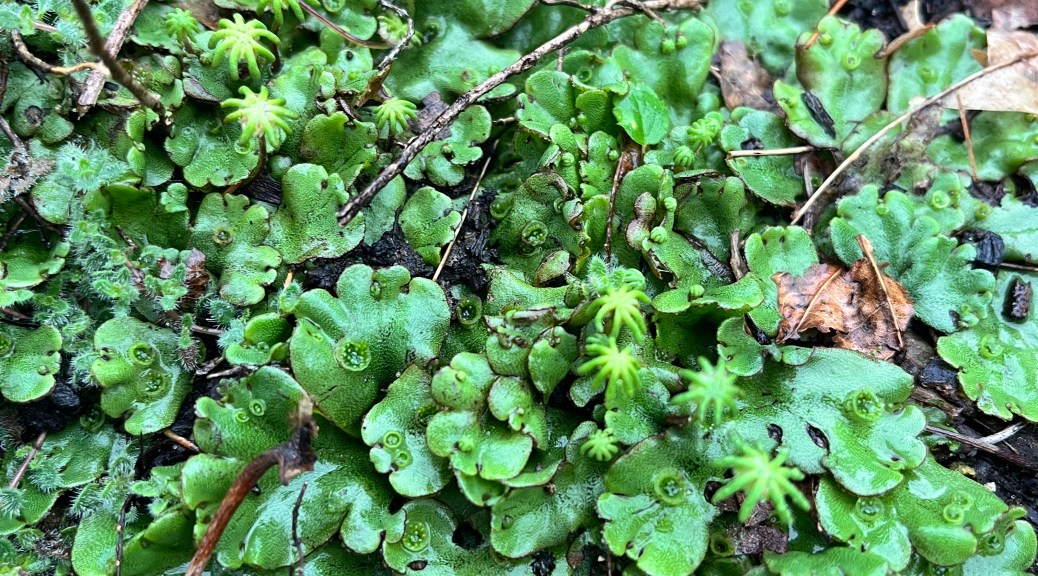
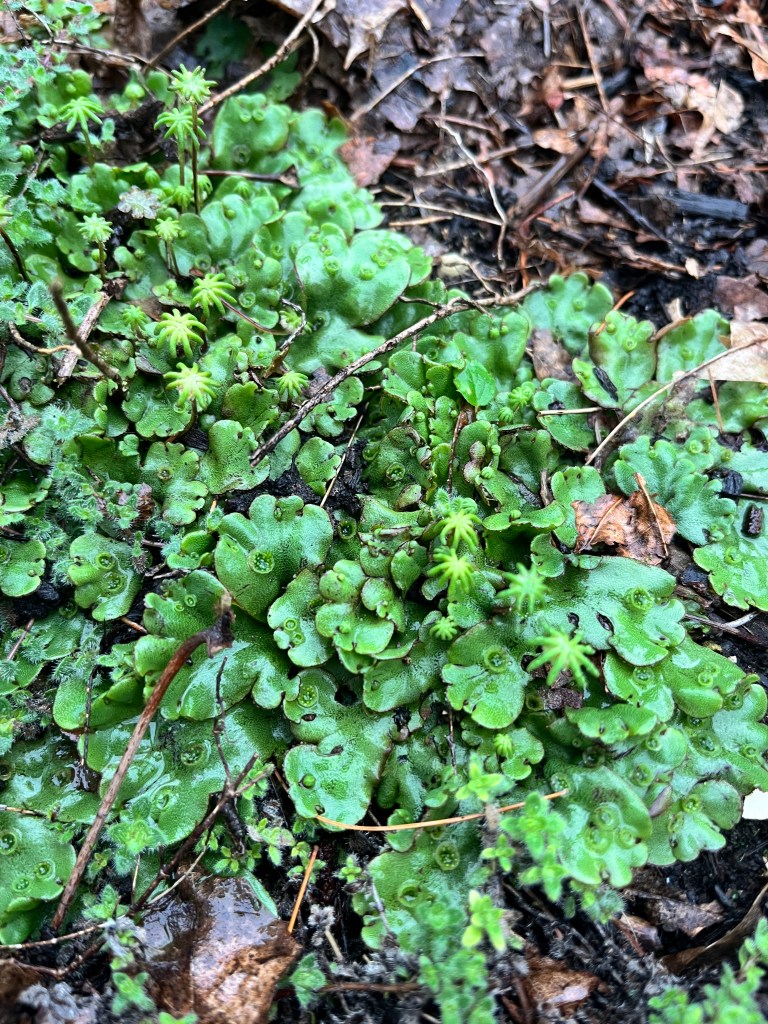
Umbrella liverwort (Marchantia polymorpha) is a fascinating plant that often catches the eye with its unique, umbrella-like structures. These small, flat, and green plants have been around for millions of years, making them one of the oldest plant species on Earth. They do not have a vascular system, and like ferns, they produce spores instead of seeds. While they do not flower, the female reproductive structures mature to look like tiny palm trees or umbrellas. For this reason, the common variety is called umbrella liverwort.
In our area, umbrella liverwort is commonly found in moist, shaded areas like garden beds, greenhouses, and along stream banks. This plant is native to many parts of the world, including Ontario, and has a long history of thriving in damp environments.
While liverwort is native, it can sometimes behave like an invasive plant, especially in gardens and greenhouses. It thrives in conditions where moisture is abundant, and air circulation is poor. If left unchecked, it can spread rapidly, covering the soil surface and competing with other plants for light and nutrients. However, its unique appearance and ancient history make it a cool plant to observe in your garden.
If you want to manage umbrella liverwort, focus on improving drainage, reducing moisture levels, and allowing more sunlight into the affected areas. But for those who appreciate its prehistoric charm, umbrella liverwort can be a delightful addition to a garden, provided it’s kept in check. An added benefit is that you don’t have to plant them — they just show up!
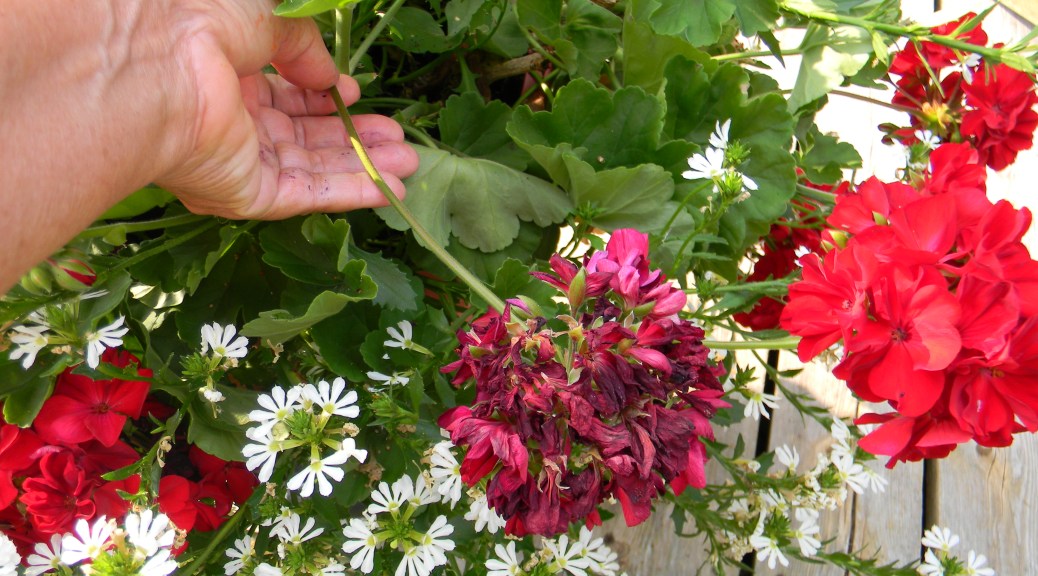
Deadheading is an important garden maintenance chore for July and there are several reasons for deadheading (or not). When deadheading, it is important to not just take the blossom off, but to cut the stem right back to the first junction and cut above that. Often you can just break the stem by hand, but be sure not to rip it. Use good pruning shears to make a clean cut. This applies to almost all deadheading, whether it is hosta, daylily or annuals.
The reason a plant grows and flowers is so it will go to seed and reproduce. If you remove the seed head you are encouraging the plant to put its energy back into the roots and leaves, making it become a stronger plant. Doing this as soon as possible after the flower is spent, is important for the overall look of the plant and the energy redirected.
Perennials that rebloom such as salvia, dianthus, delphiniums and roses should be deadheaded to encourage new blooms. Many new hybrids have tags that say “reblooming”, so watch for this when purchasing. Annuals like dahlias, marigolds and zinnia all benefit from cutting spent blooms to encourage new flowers.
Another reason to deadhead is to control self seeding in the garden. Many perennials and biennials will multiply by dropping seed. Forget Me Nots, Oriental Poppies, Lupins and Native Coneflowers will all appear in your garden if you don’t deadhead or disturb the soil.
Deadheading also makes the garden a bit neater. I deadhead Iris right after they bloom; cutting the stem right back. I often leave Siberian Iris to form seed pods as I use them in dried arrangements. I don’t particularly like the washed out purple flowers on Hosta, so I usually cut them back. There are some Hosta flowers that are fragrant and white, and I like to leave those on. The profusion of flowers on the daylilies this year are stunning. I like to snap off the spent blossoms, so they don’t distract from the fresh new flowers. Peony petals separate and settle through the flower bed, so I like to remove them before this happens. Other perennials that benefit from deadheading include yarrow, cranesbill, phlox, and astilbe.
Clematis form a lovely fluffy seed head which can be left on. I also leave my Monarda didyma for the birds and the pretty seed heads.
Your hanging annual pots and containers also may need a bit of TLC by now. Annuals like to be cut back. It encourages new fresh growth and flowers, makes them bushier because when you cut a stem it will branch out. Cutting back also brings the planting back under control so it doesn’t look overgrown.
Removing seed heads is removing food that birds may enjoy. If you are growing natives, you may want to leave them for the birds, butterflies and other pollinators, however you can deadhead and leave in an open compost pile. Although I deadhead throughout the summer, by late August, I stop and let the seed heads form on perennials like coneflower and black eyed susan so the chickadees and finches can feast.
So, get in your garden, enjoy the beautiful blooms and “off with the heads” of those that need it!
It’s midsummer in the garden and many plants – annuals, perennials, vegetables – need to be staked and pulled upright or back. They might be flopping over to the point where stems break and buds and blossoms are lost, they might be spilling over onto other plants, blocking light and restricting growth. In the event of high wind or heavy rains, unsupported plants can easily be destroyed or can quickly become an unsightly mess.
Staking is one of those jobs that many gardeners avoid; it never seems to get done at planting time or early in the season when the plants don’t really require mechanical support. Another reason for putting off staking is that many stakes or plant supports are unsightly and look out of place, particularly very early in the season. The result is that staking is often done too late; emergency staking often looks more unsightly than a flopped over plant
Staking of some plants can be avoided: late bloomers such as sedums or asters can be maintained at a shortened height. This is done by developing shorter, bushier plants by pinching the plant by about one third in early summer. It’s a common practice for many annuals: cosmos, zinnias, nicotiana, and many other annuals are pinched back before they arrive at the nursery. (Pinching back of annuals has come to be known as the Chelsea chop, the timing for pinching back or ‘chopping’ coincides with Britain’s famous RHS Chelsea Flower Show at the end of May.)
Knowledge of the mature size of the plant, its light requirements, and any specific soil or nutrient needs could avoid the need for staking some plants. A plant with elongated, weak stems will require staking, whereas a strong-stemmed, sturdy plant that is not reaching for light or that has not been overwhelmed by neighbours is a more likely candidate to stand on its own. An honest evaluation of light levels in the garden and the sun / shade tolerance of plants are prerequisites for finding the optimal location for plants, helping to eliminate some staking.
Best advice for avoidance aside, there are still many plants that need to be staked and it’s best to match the type of support to the vigour and growth of the plant:
Circular grid supports with epoxy or plastic coated wire squares are best suited to clump forming perennials such as phlox, delphiniums, and some campanulas. These work best when put in place early on in the growing season with care taken to feed growing leaders through the squares. Any escapees can be tied loosely to the outside of the circle. Dahlia, peony and other top-heavy bloomers are also candidates for this approach.
Once blooms appear on dahlias, or other tall growers, spiral rings or Y-shaped supports are useful to prop up the blossoms. Several supports are often needed for each plant.
Tall, heavy blossomed dahlias and other tall growers might do better with two or even three or more stakes surrounding the plant, making sure to avoid the tuber or roots when pushing or pounding in the stakes. Bamboo, plastic coated metal, or even rebar are good choices for the supports. They should be pounded as far as possible into the grounds so that they won’t get pulled over with the weight of a wet, heavy plant. Using twine, tie a knot around one of the stakes, then a figure eight to encircle one of the stems, do the same for the other supports and stems. An alternative technique with large multi-staked plants is to tie a knot around one of the stakes, then surround the plant and loop around the next stake. As the plants grow and the blooms get heavier, several levels of twine might be necessary. Stems and plants should not be tied too tightly.
For shorter plants at the front of a border (penstemon, yarrow, cone flower), pea stakes are a good approach. Pea stakes are multi-stemmed off-cuts from prunings. This is an old method, historically used in vegetable gardens to support pea vines. The twigs, from birch, forsythia, viburnum, etc., are pushed into the ground around the perimeter of the plant. The plant grows up and over the stake, no tying is required, and if done early in the season, the twigs get hidden later in the season. Pea stakes are also a good way to guide climbers over to a trellis. With a bit of practice and creativity, pea stakes can be an eye-catching approach to an otherwise unappealing chore.
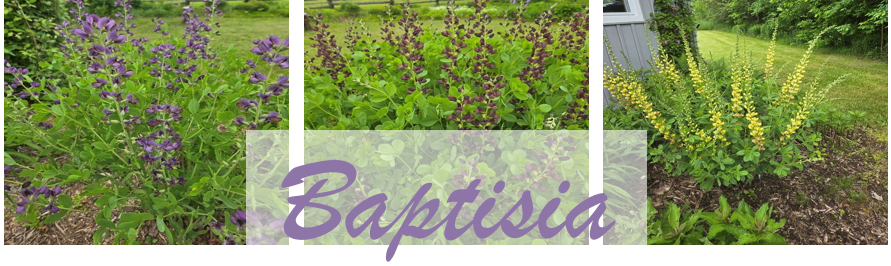
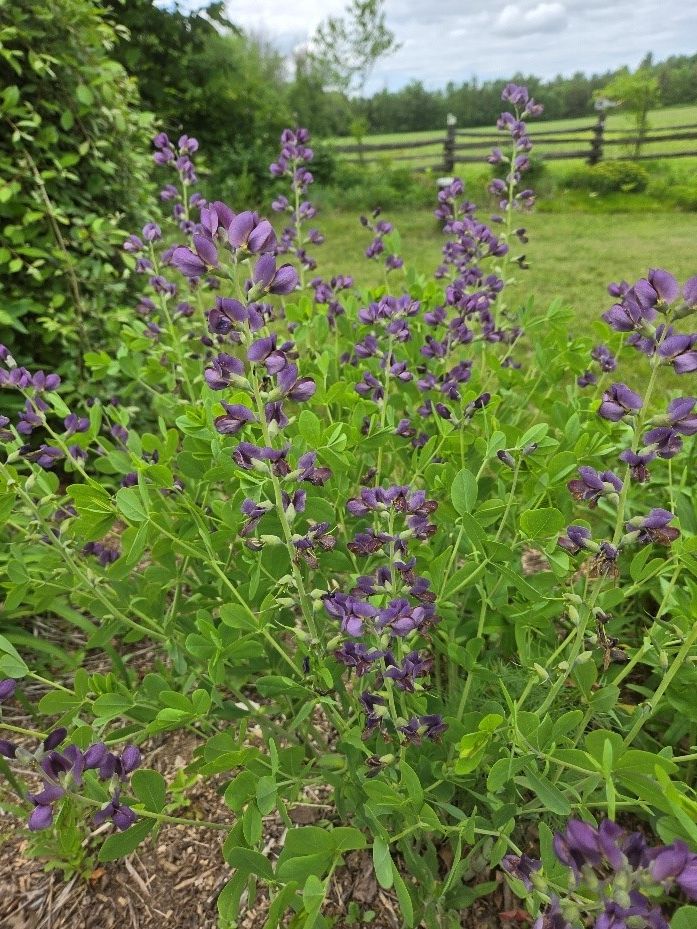
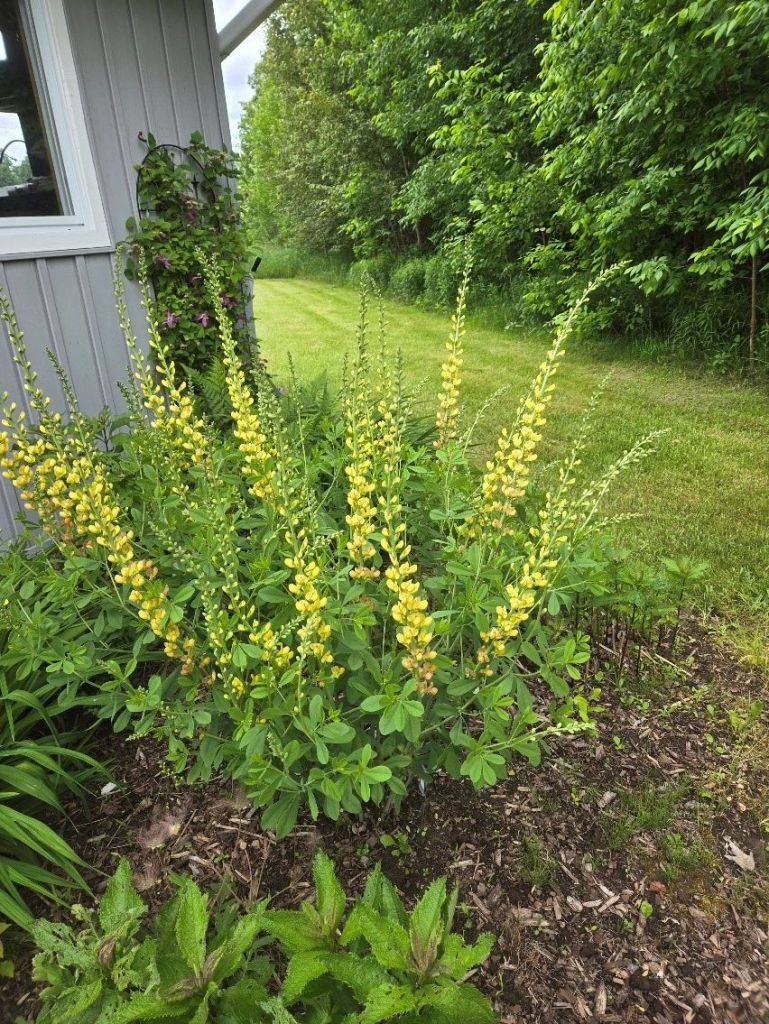
Baptisia species are part of the pea, or legume, family (Fabaceae) of plants. The folks who develop new plants have been working on Baptisia for a few years. The old reliable B. australis, with its pretty blue flowers, is still very available but the new hybrids feature various different flower colours.
As expected with all members of the pea family, Baptisia host rhizobia bacteria on root nodules. These bacteria are able to take nitrogen from the air and convert it to a form that is usable by the plant. This is called nitrogen fixation. Nitrogen is a necessary nutrient for most plants.
Baptisia prefers full sun but will grow in part shade and may reach .5-1.5 Metres (2-4 ft.) high and will die back to the ground in fall after a hard frost. They prefer moist, well-drained soil and are drought tolerant. All my Baptisia grow well in our zone 4-5 garden. Baptisia spread by seeds which are pea/bean-like and form in pods. The dry seeds rattle in the pods in the fall winds and if you brush against the plant….this makes an unusual sound in the garden. You can prune the plant after flowering to help maintain a more rounded form but you will lose those interesting seed pods! My plants do not flop but you may wish to add some support if needed. The numerous, and gorgeous, flower blooms are lined up along the tall stems in late spring to early summer. Once the flowers are done, this shrub-like herbaceous perennial will still look good in your garden with its lush green foliage and attractive seed pods. For more information, check out this “Baptisia Plant Guide”.
Bonus….this plant is deer and rabbit resistant. We have at least one resident rabbit and the odd deer passing through, but I have never seen any foraging damage on my Baptisia plants. However, they are attractive to bees and butterflies.
Baptisia australis, wild/blue false indigo, are native to the eastern half of the U.S. although it has become naturalized in Ontario. The old common name wild/blue false indigo refers to the plant’s use in the southern states as a substitute for the dye indigo during the 18th century. As mentioned, this plant has blue flowers.
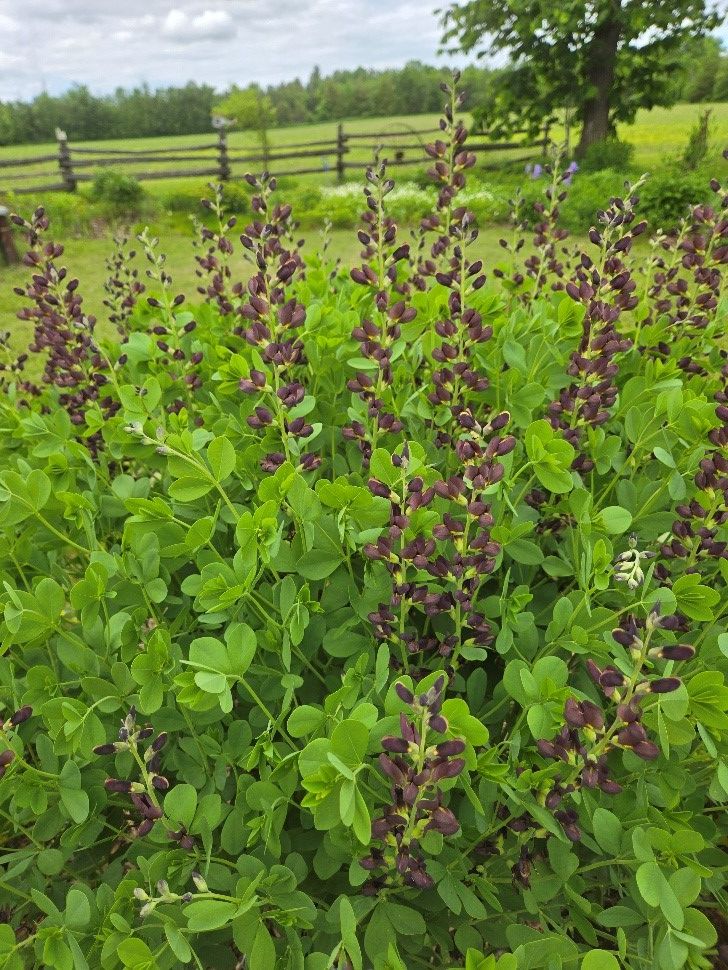
Baptisia hybrid ‘Dark Chocolate’ is one that I have in my garden. It has all of the usual Baptisia characteristics with the addition of dark brown flower blooms. That may sound odd but they really are quite attractive. Mine is growing beside a garden path so that a garden visitor can have a close look when strolling by.
Another Baptisia hybrid is ‘Lemon Meringue’. This one, as you likely can guess, has yellow flowers. It too has the typical Baptisia look.
Baptisia flowers also come in white, lavender and purple…..I hope to collect them all. With its eye-catching presence, a Baptisia would make a great specimen plant in anyone’s garden!
For many gardeners, deer are a constant problem in the garden. They can destroy a hosta display or your treasured roses in an afternoon. In my neighbourhood rabbits are plentiful and they eat many kinds of plants from tulips to hosta. I have chicken wire around the base of most of my clematis. I fence off my euonymus, willow and Rose of Sharon in the winter with fencing high enough to be well above the snow line. I have my vegetable garden fenced and try to remember to keep the gates closed. (although, this spring a determined female rabbit learned how to jump into my fenced compost pile and then into the vegetable garden where she decided to make a nest). I spray my tulips, roses and anything else that the critters start munching on with a product that repels deer and rabbits. It is stinky and washes off if there is heavy rain so needs to be resprayed for best results. I also use a product called Hen Manure to deter squirrels and chipmunks. Sprinkling hen manure in your freshly planted annual containers, will keep these creatures from digging. And it is an organic fertilizer too. I also cover a raised vegetable garden bed with a row cover which looks and feels like a bridal veil. It allows sun and rain in, but keeps squirrels, chipmunks and pests like beetles out and can be good for light frosts. Doesn’t look pretty but it works.
Rabbits & deer generally don’t like plants that have a fragrance. Think of mints, marigolds, sages and monardas. Rough or fuzzy leaf textures are also characteristics that deer and rabbits don’t enjoy.
There are some lovely perennials available that fit in those categories. Check plant tags as many growers are now listing if the plant is resistant to deer and rabbits.
Below, I have listed some plants that are generally resistant.
Perennials for Sun
Monkshood Aconitum carmichaelii
Geranium Geranium macrorrhizum
Peony Paeonia officinalis
False Indigo Baptisia australis
Salvia Salvis x sylvestris
Yarrow Achillea millefolium
Lavender Lavandula augustifolia
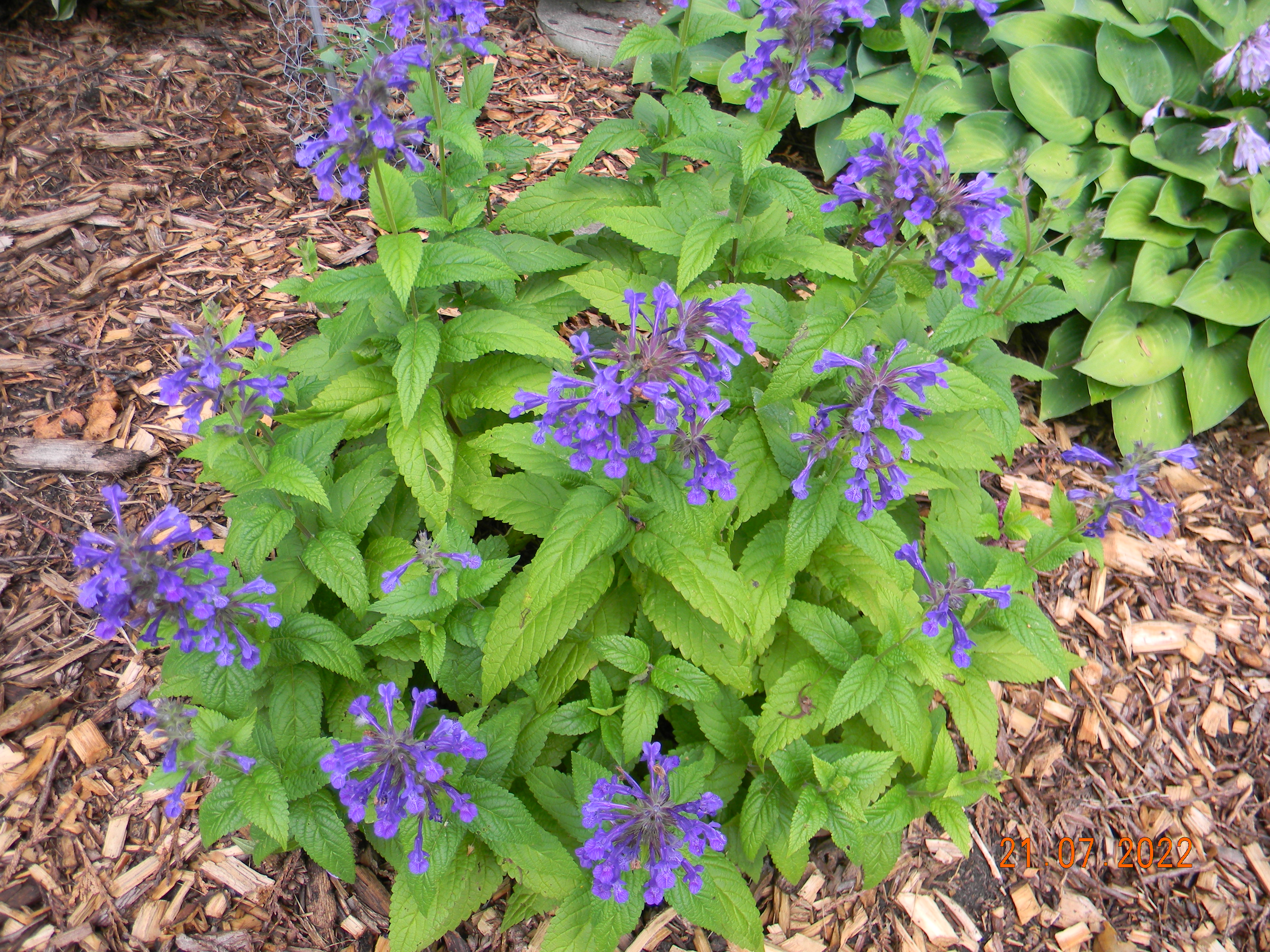
Catmint Nepeta
BeeBalm Monarda
Russian Sage Perovskia atriplicifolia
Amsonia Amsonia
Grasses – Karl Foerster, Big Bluestem, Northern Sea Oats, Blue Fescue, Blue Oat Grass
[Above, clockwise from left: Astilbe, yarrow, sage, monarda]
Perennials for Shade
Bleeding Heart Dicentra eximia
Hellebore Helleborus orientalis
Lady’s Mantle Alchemilla mollis
Snakeroot Actaea racemosa
Spurge Euphorbia polychroma
Astilbe Astilbe x arendsii
Japanese Spurge Pachysandra terminalis
Barrenwort Epimedium graniflorum
Bugloss Brunnera macrophylla
Hakone Grass Hakonechloa macra
Lungwort Pulmonaria
Sedge Carex morrowii
Ferns – Christmas, Cinnamon, Ostrich, Autumn, Japanese Painted
[Above, clockwise from left: Rabbit, geranium, Japanese painted fern, bleeding heart]
There are some shrubs that deer and rabbits usually don’t bother with. They include Weigela (Weigela florida), Spirea (Spiraea japonica) and Potentilla (Potentilla fruticosa).
Bulbs like Daffodils (Narcissus), Snowdrop (Galanthus nivalis), Ornamental Onion (Allium) and Autumn Crocus (Colchicum) are not favourites for deer.
Annuals like Dusty Miller (Senecio cineraria), Licorice (Helichrysum petiolare), Caster Bean (Ricinus communis) and Marigold (Tagetes tenuifolia) have rough or fuzzy leaves or a strong smell that deer or rabbits don’t like.
Herbs like Oregano, Rosemary, Thyme, Sage & Basil have a fragrance creatures stay away from also.
The plants listed above are generally resistant, but are not guaranteed to be deer and rabbit proof. If food is scarce or the creature is adventurous, they will try anything. Sometimes, rabbits just nip the flowers and leave them (grrrrr!)
Having wildlife in the garden is lovely and we enjoy watching our rabbits. But it is nice to have enough of the right plants that will survive and give a nice display of flowers. Balance in nature.
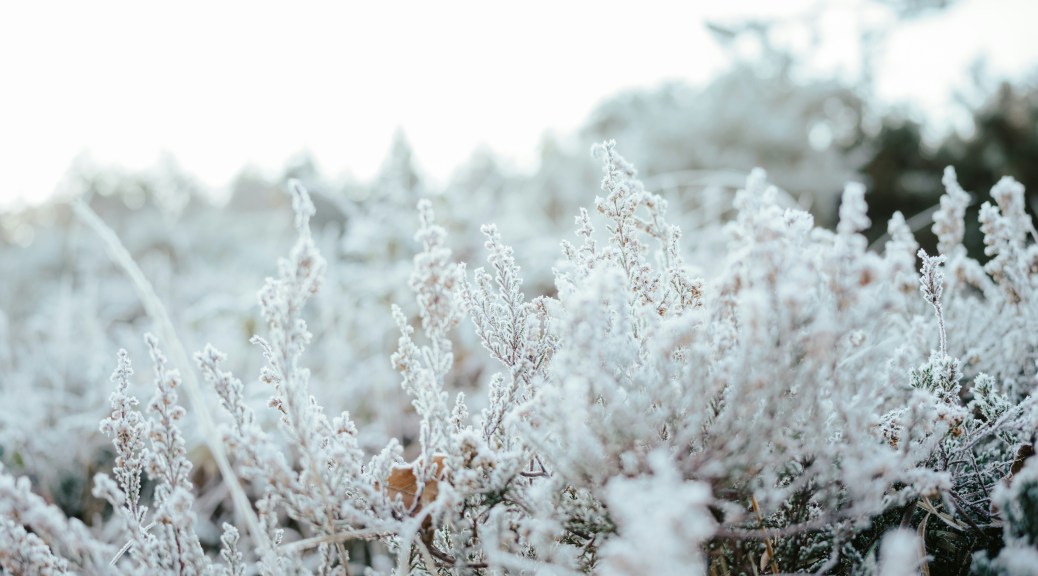
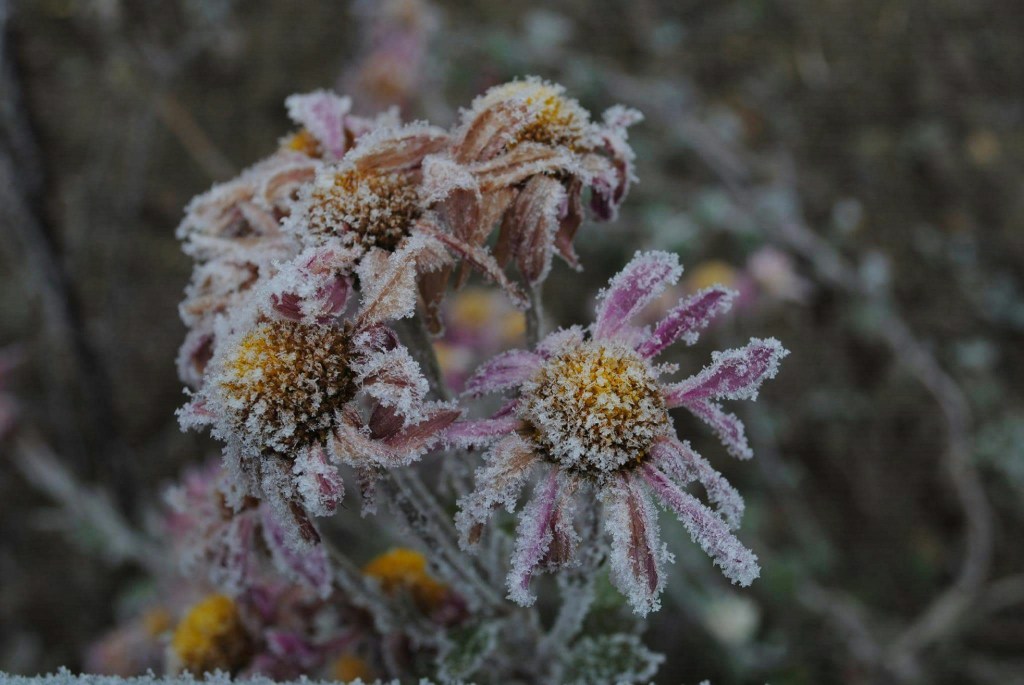
Have you ever wondered how some plants manage to survive freezing temperatures while others wither away at the slightest frost? It all comes down to a fascinating trait called hardiness.
Hardiness in plants refers to their ability to endure cold weather conditions, especially freezing temperatures, without being damaged. Plants that are considered hardy have evolved various mechanisms to protect themselves from the harsh effects of cold.
Most perennials sold in garden centres in our region are hardy if their tags refer to zone 5 or lower. Zone 6 perennials may survive if planted near a foundation in a sheltered spot. Trees are also labelled with a zone, and I’ve given up buying trees that are not in zone 4 or lower. Plants listed as “annuals” like most vegetable seedlings are simply not hardy at all in our zone. They may be hardy in other zones like Florida, though! In general, Peterborough is listed as hardiness zone 5a. The lower the number and letter of the alphabet, the colder it gets in the winter and the more hardy a plant needs to be in order to survive.
So how does hardiness work? One key factor contributing to a plant’s hardiness is its genetic makeup. Some plants naturally possess traits that make them more resistant to freezing temperatures. These traits can include thickened cell walls which provide structural support and help prevent cell damage when temperatures drop. Additionally, certain plants produce antifreeze proteins that lower the freezing point of their cell fluids, allowing them to survive in sub-zero temperatures.
Another important aspect of plant hardiness is acclimation. Just like animals, plants can adapt to their environment over time. As temperatures gradually decrease in the fall, hardy plants undergo physiological changes that prepare them for the cold ahead. This process, known as cold acclimation, involves the production of protective compounds such as sugars and proteins, as well as changes in cell membrane composition to maintain fluidity and prevent cells from rupturing.
Lastly, some hardy plants have developed mechanisms to avoid freezing altogether. They might shed their leaves, which are more susceptible to damage, or enter a state of dormancy until warmer temperatures return.
In summary, a combination of genetic traits and adaptive mechanisms allows the hardy plants in my gardens and yours to brave some of the chilliest of climates.
Wow. What a pleasure to finally see this book in print. Written by two very knowledgeable Ontario gardeners — Rick Gray and Shaun Booth — this is the native plant gardening resource I wish I had more than 5 years ago when I started incorporating native plants in my garden.
Focused specifically on the Southern Great Lakes Region, it’s an all-in-one, easy to use resource for those interested in plants that not only look wonderful but fulfill a critical role in our gardens in supporting wildlife, birds, and pollinators like butterflies, moths, bees, and insects.
It reminds me of an encyclopedia, with a full page spread on each native plant (and there’s over 150!). It’s not surprising to me that’s it’s already #4 on the Globe & Mail’s bestseller list.
The book is visually designed to make it easy to see key information at a glance, using quick guide key icons and two colour-coded bars providing exposure/light and moisture requirements. We’ve been blessed with several excellent native plant books in the past few years, but I appreciated several unique elements I hadn’t seen before – numerous appendices (matching soil types, seed collection and preparation, propagation, and butterflies and their host plants), as well as each plant’s Ontario’s Species at Risk status.
You’ll understand what each plant needs to thrive, how big they will get, and how to make more plants to share with your friends!
Sample spread page
As a Peterborough Master Gardener I have long been engaged in two Facebook groups – theOntario Native Plant Gardeninggroup (started by Shaun) and the Master Gardeners of Ontario group (where I am an admin and moderator). I remember clearly in May 2023 Rick trying to gauge interest from members on their proposed native plant book, and the incredibly positive response that they received. So full disclosure – I knew I was going to love this book before it was ever published.
The authors explain why the plants are organized by botanical/Latin name, which is important because common names can vary by region. However, if you only know the common name you can always search using the alphabetical index at the back of the book.
Essentially, each entry is a ‘checklist in a page’ on what you need to grow the plant. There are lots of photos (whole plant, leaves, flowers, fruiting bodies), a detailed description, easy to see symbols (the Quick Guide), information on the USDA Hardiness Zone, lifespan, propagation, and wildlife/pollinator value.
Skill levels are also mentioned but don’t be alarmed – most are listed as beginner, but there are certainly a few native plants that are a bit more challenging to grow and propagate.
Table of Contents plus shameless plug for my wonderful local, independent bookstore where I ordered the book.
I appreciate that in the introductory chapters the authors clearly explain things such as:
What is a native plant?
Aggressive vs invasive
Origin of the term weed
Nativar vs cultivar
Value of native plants
The authors clearly have a good sense of humour – there are pages titled “How to use this book”, “A coneflower by any other name”, “Fifty shades of…shade” and my favourite “2b or not 2b” (on the rationale for using USDA Hardiness zones). I loved the section on propagation and codes as I’m actively trying to grow more native plant material in my area.
I have to say that as a seasoned gardener I was surprised to see Echinacea pallida (pale purple coneflower) is not in the book (not native to most of this region but often sold as a native apparently) and Agastache foeniculum (Anise hyssop) is one that is included specifically because it is non-native to Ontario (it’s a western prairie plant). Oops! I have both in my garden north of Peterborough.
Was anything missing? Technically no, as the authors were clear that this was not a garden design book. Perhaps after putting out Vol. 2 (the other 150+ plants I know they wanted to include), they’ll consider something on understanding planting density and creating root competition, which I am learning is different to conventional perennials, and good plant pairings (which native plants support others).
One quick comment I will add is that native plants are wonderful once they are established, so you may need to do a bit of watering that first year, but after that they need no watering or fertilizing.
This book is perfect for reading at home (my husband gave me a quick quiz contest this afternoon on the Latin names) or taking with you to your local nursery as you search for native plants to add to your garden. Having trouble finding these plants? The Halton Region Master Gardeners maintain a dynamic map listing native plant nurseries around the province. Check it out!
The bottom line – a wonderful addition to my garden library, and to anyone interested in incorporating more native plants in their Ontario gardens.
The Gardener’s Guide to Native Plants of the Southern Great Lakes Region
By Rick Gray and Shaun Booth Publisher: Firefly Books, 2024 Paperback: 352 pages ISBN-10: 0-2281-0460-2 Price: C$45.00; available through local booksellers and larger book companies
About the Authors
Rick Gray (The Native Plant Gardener) has more than 300 species of native plants in his garden in southwestern Ontario and provides native plant garden design services.
Shaun Booth runs In Our Nature, an ecological garden design business, and launched the Ontario Native Plant Gardening group on Facebook.
Want More Information?
Many wonderful books on native plant gardening and naturalization have been published in the past few years – anything byLorraine Johnsonis a great complement to this book, and I love Piet Oudolf’s work (although he doesn’t always use native plants).
Dr Linda Chalker-Scott (and the Garden Professors blogon Facebook) is a great source of good, solid scientific information on gardeners keen to avoid the misinformation often seen on social media.
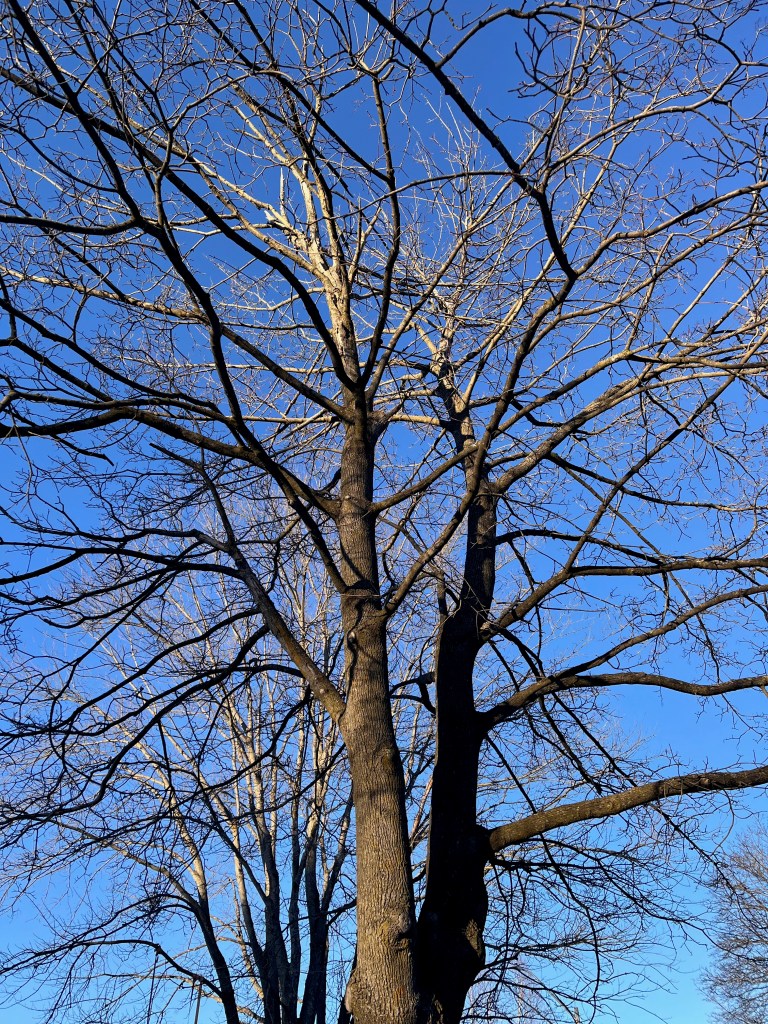
When a deciduous tree or shrub doesn’t have its foliage, other parts of the plant such as the stems and branches are more noticeable. For example, some species like this Manitoba Maple (Acer negundo) have a noticeable waxy cuticle or bloom on its young stems. This coating or layer acts as a defense mechanism that protects the plant from moisture loss, ultraviolet radiation, dust, fungi, pathogens, and insects. Concerning the latter, researchers found that a certain beetle species could temporarily lose its grip after its “tarsal setae” was covered with the wax stem crystals from A. negundo.[i] Research has also shown that A. negundo is able to regenerate the wax within only a few hours after its removal.[ii]
Waxy Cuticle of a Young Manitoba Maple (Acer negundo)
Dandelions in February?
I don’t remember the last time I saw a Dandelion (Taraxacum officinale) in my garden bloom so early in the year. Coltsfoot (Tussilago farfara) are usually the first yellow flowered plants to appear, but this one is clearly a Dandelion. From what I’ve read, it isn’t all that unusual. A researcher at the University of Western observed that “if there is a January or February thaw that lasts for at least a week, then flowering and seed production can occur.”[iii] This week’s mild temperatures caused the snow to recede by my walkway, unveiling a yellow bloom. It may be considered a “day-neutral” plant, but some also view it as a “short-day” species. “Day-neutral” species do not require a specific photoperiod to flower and “short-day” species flower with day lengths less than 12 hours.[iv] Its non-dormant seeds are also able to germinate at temperatures as low as 5 degrees Celsius.[v] In winter, they lie close to the ground as a basal rosette with the crown drawn towards the ground for maximum protection from the elements.[vi] More developed plants will have large energy stores in their tap roots to fuel more vegetative and flower growth in the spring.
Closeup of Dandelion
No Fall Cleanup
Last summer I planted a mass of Annual Sunflowers (Helianthus annus). Ideally, the dead plants would have been left completely intact in the fall to overwinter, but the flower/seed heads were so heavy that the stems had broken under the weight. I cut the pithy stems and seed heads and left them in a pile nearby for wildlife. The chipmunks were quite appreciative. Come spring, the old stems will remain for stem nesting bees such as Megachillidae species (e.g. Small Mason Bees and Leaf-Cutter Bees). Approximately 30% of our native bees require above-ground nesting sites. Rather than including commercial “bee hotels” in my garden, I am aiming for a constant cycle of old and new plant stems. New sunflowers will be planted around the old stems to eventually become new nest sites. Providing a wide range of different sized hollow and pithy-stemmed plants will also attract a variety of different bees. Some hollow-stemmed species in my garden include Milkweed (Asclepias), Bee Balm (Monarda), Cup Plant (Silphium), Anise Hyssop (Agastache), and Joe Pye Weed (Eutrochium). Some pithy-stemmed species include Ironweed (Vernonia), Aster (Symphyotrichum), Goldenrod (Solidago), and Coneflower (Echinacea).[vii]
An Arrangement of Dead Plant Stems for Nesting Bees
A Dying Maple
Last summer, I noticed that a Norway Maple (Acer platanoides) tree in my front yard was showing dieback of the canopy in the centre. I can only guess, but I suspect that root girdling was the main cause. Environmental stresses such as drought and road salt could only have compounded the situation. Another strike against this tree is that it has weak co-dominant stems. I contacted the city to have them check it out. I came home to see the dreaded pink spot spray-painted on the trunk—it is marked to come down. I feel mixed emotions—on one hand, it is an invasive species that isn’t the best for our ecosystem but on the other hand, it is still sad to see any living tree come down—especially one that wasn’t very old. If it could remain safely standing as a snag, that would be beneficial for wildlife. A snag is a dead tree that is left to breakdown naturally. It serves as a nesting site for birds and other wildlife and the insects that reside in them serve as food for wildlife, fungi, and other microorganisms.
A Dying Maple
A Neighbour’s Snag
What’s going on in your garden?
[i] Gorb, E.V. and Gorb, S.N. (2002), Attachment ability of the beetle Chrysolina fastuosa on various plant surfaces. Entomologia Experimentalis et Applicata, 105: 13-28. https://doi.org/10.1046/j.1570-7458.2002.01028.x
[ii] Tomaszewski, Dominik & Zieliński, Jerzy. (2014). Sequences of epicuticular wax structures along stems in four selected tree species. Biodiversity: Research and Conservation. 35. 9-14. 10.2478/biorc-2014-0014.
[iii] S. M. Stewart-Wade, S. Neumann, L. L. Collins, and G. J. Boland. 2002. The biology of Canadian weeds. 117. Taraxacum officinale G. H. Weber ex Wiggers. Canadian Journal of Plant Science. 82(4). p. 835. https://doi.org/10.4141/P01-010
Although I’ve lived in Canada for almost 50 years, I grew up in Bristol, England for some of my formative years, and always loved the traditional hedgerows that existed along rural roads and properties. Every time we return to the UK on a trip, I marvel at the diversity and intricacy of these functional garden/farm structures.
On our three quarter of an acre property in a small village north of Peterborough (Zone 4b/5a) I have a neighbour on one side who has a chain link fence and loves their golf green lawn. On the other side there is no fence at all, but I’ve been growing a few elderberries (Sambucus canadensis) and cup plants (Silphium perfoliatum) to hide a poorly maintained house – the first shrub suckers well and the second plant grows fast and tall.
So I’d love to have a traditional English-style hedgerow on both edges that would provide visual screening as well as animal and bird habitat…so I went looking to see how to adapt the traditional English hedgerow to Ontario.
Hedgerows can provide amazing bird habitat
The origins of hedgerows
It’s thought that hedgerows (or hedges) were first used by humans as ‘dead hedges’ to enclose livestock using thorny plants. Once agriculture began, clearing woodlands created fields with tree and shrub boundaries that were managed to create livestock-proof ‘living fences’.
Hedgerows have been planted since the time of the Romans and reached their peak in Britain during the Enclosure Acts of the 1700s when an estimated 200,000 miles of mostly hawthorn (Crataegus spp) hedgerows were planted.
Credit: People’s Trust for Endangered Species, UK
Hedgerows have many purposes, as you can see from this graphic from the People’s Trust for Endangered Species. They have an excellent video on how to manage a hedgerow here, but it’s not quite the same in Ontario, as we don’t have the same hedgerow species or coppicing techniques.
In their best form I think hedgerows can be a mini-ecosystem with key ingredients that animals and birds need to survive — food, shelter, nesting and denning sites. Hedgerows also function as corridors, connecting one habitat to another and offering a safe passage for wildlife. They help muffle sound, create privacy, and act as windbreaks.
Planted with a variety of berry- and seed-bearing shrubs for food
Interspersed with cedar for added cover
Thick, bushy, largely unpruned and entangled with vines
The Ontario Rural Skills Network suggests that hedgerows can be single species but are best if they comprise a diversity of plants. Planting should be very dense, with a double line spaced 40cm (16in) apart with plants in a staggered pattern at 30cm (12in), giving 5 plants per metre.
Because they’re comprised of living shrubs, hedgerows grow and require management. It’s all about creating a balance between growth and avoiding them becoming gapped and unmanageable. A hedgerow may take seven to 10 years to establish, depending on the species composition.
I’m just at the beginning of my plan for hedgerows on our property, but winter is a great time to do research. Both sites are sunny and have well drained soil, and I want to focus on using Ontario native plants as much as possible. I’m looking at a combination of seed- or nut-bearing shrubs (like speckled alder and hazel) and berry producers (serviceberry, chokecherry, red osier dogwood). Thorny shrubs (native roses, wild raspberry, hawthorns) will give added wildlife protection. The design will probably be different for each one, but that’s the fun of it.
The OFNC has excellent lists of plants you can consider for an Ontario hedgerow. I’m thinking about using
Speckled alder (Alnus incana)
Beaked hazel (Corylus cornuta)
Hawthorns (Crataegus spp.)
Common elderberry (Sambucus canadensis)
Flowering raspberry (Rubus odoratus)
Willow spp. (Salix spp.) – native if I can find them – there is an amazing group in
Choke cherry (Prunus virginiana)
Red osier dogwood (Cornus stolonifera or C. sericea)
Eastern white cedar (Thuja occidentalis)
Wild (riverbank) grape (Vitis riparia)
Next steps
I’m just at the beginning of my journey. In my next blog post on March 25th, I’ll give you an update on my research and my plans for my spring hedgerow projects. Until then, here’s some interesting sites to look at if you are thinking about something similar. And, by all means, if you have created a hedgerow in your Ontario garden, I would love to hear about it.
More than 1 in 4 birds have disappeared in North America since 1970, primarily due to habitat loss according to a recent study. As gardeners we can help to mitigate further declines by adding native plants to our gardens that meet seasonal bird habitat needs. If you would like to help, consider whether you can add one or more of the Ontario native plants noted below in your 2024 garden plans. All these are easy to grow, low maintenance, prefer full to part sun, and tolerate a wide range of soil conditions—ideal for almost any garden! Click on the plant names for Ontario specific growing information and photos.
In spring, food for early returning migrants is critical. The catkins of Pussy Willow (Salixdiscolor) and other willow species are an important early nectar and pollen source for native bees, but they also attract insects which feed returning Eastern Phoebes, Ruby-crowned Kinglets, Chickadees, and other insect eating birds.
Northern Oriole among Willow catkins in early spring (photo credit: Beth McEwen)
For returning Ruby-throated Hummingbirds, growing a patch of Wild Columbine (Aquilegia canadensis) provides a critical source of early nectar. Providing a succession of nectar sources for hummingbird parents will entice them to nest and let you enjoy the flight chases of the juvenile birds in late summer. Include native plants with red, orange, or pink tubular flowers such as Scarlet Beebalm (Monarda didyma), Fly Honeysuckle (Lonicera canadensis), or Northern Bush Honeysuckle (Diervilla lonicera).
If you have room to plant only one tree in your yard, make it a Bur Oak (Quercus macrocarpa), Red Oak (Q. rubra), or Black Cherry (Prunus serotina). These trees support the greatest numbers of caterpillar species and hence provide important food high in protein for Chickadees and other birds raising nestlings in our short, temperate summers. To rear one clutch, Chickadees require up to 9000 caterpillars. Trees also provide structure and cover for nests.
Small, garden-size shrubs such as Serviceberries (Amelanchier spp.), Common Elderberry (Sambucus canadensis) and Chokecherry (Prunus virginiana) produce early season berries that provide food for Cedar Waxwings, Rose-breasted Grosbeaks, Catbirds, and Robins. These shrubs also provide cover for nesting birds.
Cedar Waxwing eating a Smooth Serviceberry (Amelanchier laevis) berry in late June/early July in the author’s former Peterborough Garden (photo credit: Silvia Strobl)
For fall and winter bird habitat, grow a variety of plants that provide food, including:
Native Sunflowers, Purple Coneflower (Echinacea purpurea), Black-eyed Susan (Rudebekia hirta), and Asters(Symphyotrichum spp.) and stop deadheading at the end of August to promote production of seeds. Leave these plants standing overwinter to provide food for Goldfinches, Northern Cardinals, and Dark-eyed Juncos.
Shrubs such as Grey Dogwood (Cornus racemosa), American Plum (Prunus americana), Chokeberry (Aronia melanocarpa) and the vine, Virginia Creeper (Parthenocissus quinquefolia) produce late-season berries that are rich in fats. Many insect-eating birds switch to eating berries in fall to store fat under their chests and wings to support either long journeys south or survival in our chilly winters. Berries of native shrubs have higher percentages of fat (6.5% to 48.7%) than most non-native shrubs (less than 1%) according to this study.
Conifer trees and shrubs such as Eastern White Cedar (Thuja occidentalis) provide sheltering cover for year-round resident birds such as Chickadees, Nuthatches and Mourning Doves.
Decaying stumps and logs attract numerous beetles and ants. If you must remove a tree that has died or outgrown your garden, consider leaving the standing dead tree or stump to decay and provide insect food for Pileated and other Woodpeckers.
Goldfinches enjoying seeds of Purple Coneflower against a backdrop of winter snow in the author’s current garden (photo credit: Silvia Strobl)
You can have a spectacular garden by adding native plants. And, when you see birds using your garden, you will not only feel good about your contribution to bird conservation, but you will enjoy your garden even more!
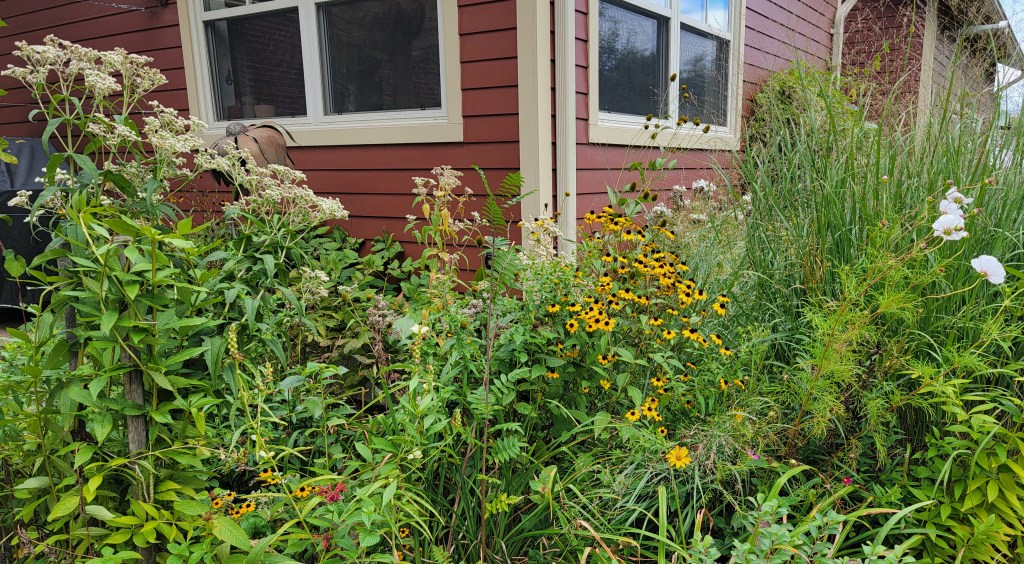
The author’s (mostly native plant) garden in early August (photo credit: Silvia Strobl)
Native Plant Sources
A key issue for those trying to grow native plants is finding them. To help you, the Halton Master Gardeners maintains a map of Ontario native plant nurseries that also provides websites and contact information. Always phone the nursery first to confirm they will be open.