Category Archives: Perennials

The Christmas Rose: Helleborus niger

By Judy Bernard, Master Gardener

Nothing warms a home up as much as plants do. At this time of the year there are so many options to choose from: Poinsettias ranging in colour from white to deep reds, Cyclamen, Christmas Cactus, Amaryllis, Rosemary to name a few. There is one, however, that is usually found in garden centres in the spring but which one can occasionally find in a grocery store or florist in the fall, and that is the Christmas Rose. Its botanical name is Helleborus niger and its common name is Hellebore.

Helleborus niger is a hardy perennial in the Raniculaceae or buttercup family. It has dark green evergreen foliage and delicate white flowers resembling a wild rose. They are hardy to zones 3-4. Bloom times vary from November to February/March, depending on the location. They like semi-shade and grow well in sheltered areas in well-draining soils.

If you are fortunate enough to find one in your local store, not only will you have a conversation piece, you will be able to plant it outside in your garden and enjoy it for many years.

Links:

Photo credit: Sue Flinders Adams: After being purchased in a  grocery store in November/December, it was planted at Portage Lakehouse, Haliburton and bloomed under the ice and snow the following spring. Picture taken April, 2017.

Falling in Love with Lilies

By Mary Jane Parker, Master Gardener

Many years ago, while driving down Water Street in Lakefield, I was stopped in my tracks by a garden full of 7 to 8 foot tall trumpet lilies in every colour shade imaginable. I stopped many times to admire them and talked to the gentleman that owned the garden. He urged me to join the North American Lily Society (NALS). So began my love affair with the genus lilium.

img_1563.jpg
Lilium Michiganense

I have been a NALS member since at least 2005. I firmly believe that belonging to a specialist group is the best way to learn about a genus. Four times a year a newsletter is sent out with articles about current research, amazing new cultivars and important people.

But best of all, NALS has an amazing seed exchange. I have ordered and received seed annually from countries all over the world.

cottagejune23 067 (2)
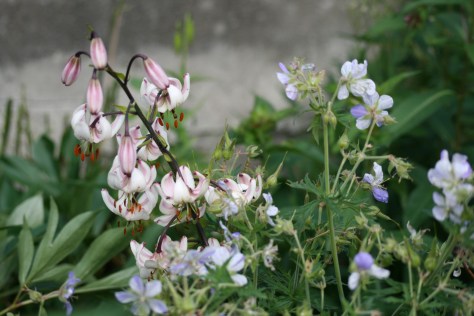
Lilium Martagon

This coming year, for the first time that I can remember, the NALS annual meeting is being held at the Royal Botanical Gardens in Burlington from July 8th to 12th. I am so excited because I will get to meet some of the people I’ve only ready about from all over the world and play host to such an amazing group of people. I will be able to participate in 5 days of exciting events: a lily bulb auction, various garden tours and seminars among other events.

For more info click HERE.

ScreenCapture.png

houseonriver 033 (2)
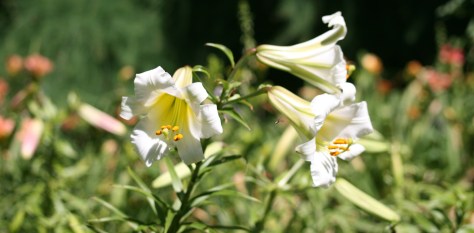
Lilium Regale

Book Review: 100 Easy-To-Grow Native Plants for Canadian Gardens

By Sharleen Pratt, Master Gardener

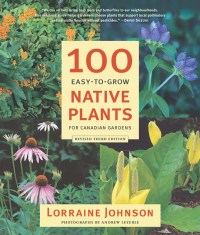
100 Easy-to-Grow Natvie Plants_RGB 300This book is, without a doubt, one of my favourite go-to gardening books! The new revised third edition of Lorraine Johnson’s book, 100 Easy-to-Grow Native Plants for Canadian Gardens, is a testament to Lorraine’s expertise. She writes in the forward that “one of the greatest satisfactions of growing native plants is that you are supporting a complex web of ecological relationships that are the basis of a healthy, resilient ecosystem.” Lorraine Johnson is the former president of the North American Native Plant Society and the author of numerous other books. She lives in Toronto.

Bloodroot (1)The photos by Andrew Layerle, along with detailed descriptions of the plants, make this book most helpful when trying to decide what native plants you would like to incorporate into your garden. I think many of us can relate to her point that “gardeners tend to be voyeuristic creatures and plant lists are our chaste form of porn”! We all crave the perfect plant and often browse through books over the winter months with dreams of starting a new garden and we wait patiently for the spring weather that allows us to once again get our hands dirty.

Wood PoppyThe plants are divided into a number of different categories and Lorraine does a good job at listing the common name (although she warns there are sometimes many), the botanical name, the height, blooming period, exposure, moisture, habitat and range. She gives a good description, the maintenance and requirements, along with suggestions on propagation and good companions. I love that she also mentions the wildlife benefits of each plant.

Pasque (1)Lorraine has also included Quick-Reference Charts at the back of the book that separate the plants by region as well as specific conditions, such as acidic soil, water requirements, etc. She has lists of plants suitable to prairie habitat, drought-tolerant plants, plants for moist areas, and plants that attract butterflies and other pollinators.

I have grown several of her suggested native plants, such as wild ginger, solomon’s seal, pasque flower, foamflower, wood poppy, dutchman’s breeches, cardinal flower, butterfly milkweed, bottle gentian, bloodroot, and big bluestem .. I love them all!

Check out this book over the winter months. I guarantee you will not be disappointed.


Becoming the Caretaker of your Garden

By Suzanne Seryck, Master Gardener

I first heard the term to be ‘caretaker of your garden’ at a permaculture course a few years ago. It has resonated with me ever since and has changed both the way in which I garden and also the way that I perceive my garden. Being the “caretaker of your garden” means that while you own the land that your garden is on, it is only temporary. You are, in fact, simply looking after that piece of land for a relatively short period of time before passing it on.

For me, being the caretaker of my garden makes me consider the longevity of the garden, what takes away from the health of the garden and what gives back to the garden; how to feed not just my family but also the wildlife whilst providing safe habitats; how to make the garden more self-sustainable reducing my time spent pruning, weeding, and imposing my unnatural demands on the garden thus allowing myself more time to simply enjoy the garden. For most of us, we are already doing the groundwork for this change already–it is simply a shift in the way we view ownership of our garden, or more specifically, the plot of land the garden sits on.

The following are some of the practices that I follow:

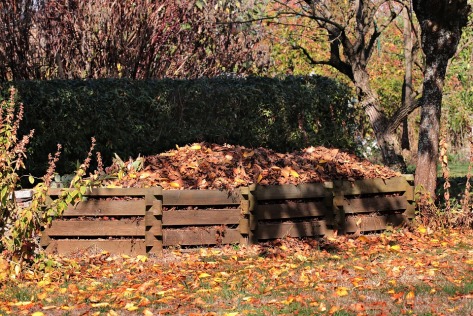
  • A healthy garden always starts with healthy soil. I amend my soil annually with leaf compost. I have 2 large leaf composters in my back garden which I fill with bags of leaves I collect from neighbours. I also mulch up approximately 20 bags of leaves and spread these liberally over my vegetable and perennial gardens in the fall.

autumn-3755125_960_720

  • I cut back very little in my garden in the fall mainly just anything that is diseased. In the spring I cut everything up into 1-2 inch pieces and drop them back on the garden. This also acts as a mulch as well as amending the soil.
  • Plants that have multiple uses are important to me. This may be because I have a small garden; multiple functions can include fix nitrogen, use as a fertilizer, be edible or medicinal etc. as well as aesthetically pleasing.
  • Including vegetable plants in the perennial bed. I will often do this if I run out of room in my vegetable beds, however a lot of vegetable plants have amazing foliage and are great to line paths and place in the front of beds.
  • Recently I have made efforts to increase diversity in my small garden, increasing the number of native plants. Native plants are generally hardier, more adapted to our climate and require less maintenance; they also tend to attract more wildlife and pollinators.
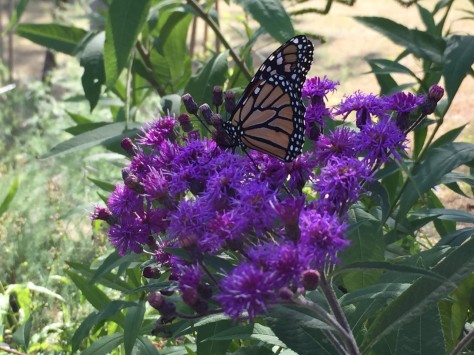
  • I try to water as little as possible using rain barrels as much as I can.  I must admit that any plants that do require more water, or in fact more maintenance of any kind, tend to be replaced fairly quickly.ironweed suzanne

For anyone who has not heard of permaculture, it is a set of guidelines, principles and practices for sustainable living and land use. When you narrow down permaculture to your home garden, you are in effect looking at a more sustainable, natural method of gardening mimicking that found in nature to create a cohesive garden, in which all elements benefit, nurture and interconnect with each other. Whilst that does sound like a fairly lofty aspiration, the good news is that just by implementing or adding a couple of permaculture practices can have a significant impact on your garden, but that sounds like a blog for another day.

For me the term ‘being caretaker of your garden’ and the reasoning behind it align with my passion and concern regarding climate change and environmentalism. Whilst the changes I make may only have a small impact these type of changes can add up and often lead to something bigger.

For further information on permaculture:

Halloween Gardening

By Christine Freeburn, Master Gardener

What can you do in the garden now, with Hallowe’en just around the corner?

DSCN7053Plant garlic! Yes, this is the time of year to plant garlic for harvesting next summer. You can probably still find garlic bulbs at farmers markets. Buy locally grown garlic, not product of China. Separate the cloves from the bulb and plant at a depth of 3 times the height of the bulb in rows in the garden. Cover two-thirds deep with soil and then top off with straw or mulch. For full details, see this fact sheet on growing garlic.

DSCN5616Plant tulips! Although it may be too late to plant daffodils, you can still pop some tulips into the ground, even up to freeze up. Squirrels do love tulips, but if you plant them deep enough (6 to 8 inches), use hen manure or bone meal, and cover up the bare spot with leaves or mulch, you should deter them. Check this link for more spring bulb information.

Cut some hydrangea blooms! Hydrangeas have been tinged by the frost and many are lovely shades of pink. Bring some into your home and place in an empty vase and they will dry naturally.

Cut back some perennials. Putting your garden to bed in the fall, gives you a head start in spring. It also gets you into the garden to pull any weeds that have sprung up and may be going to seed. Cutting back daylilies, iris and hosta can tidy up the garden, but I recommend not chopping everything down. Cut back any seed heads that you don’t want to reseed. Leave your grasses and sedums standing. They will help to hold the snow in the garden which helps to insulate the frozen ground, which is a good thing.

DSCN4263Don’t rake! Mulch those leaves into your lawn with your lawn mower. It’s easier on your back and is so good for the lawn. Use your leaf blower to mulch into your flower beds too.

Spring Flowering Bulbs

By Sharleen Pratt, Master Gardener

Charles Dickens said “Nature gives to every time and season some beauties of its own”. Who can deny that spring-flowering bulbs are a promise of warmer temperatures and hopeful thoughts? Knowing the bulbs will emerge from the near frozen ground helps us to get through the bitter winter. They should be planted now in order for you to be rewarded with wonderful colour in early spring. They can stay in the ground year after year. There are several varieties of bulbs to choose from. The following are some of the more recognizable ones.

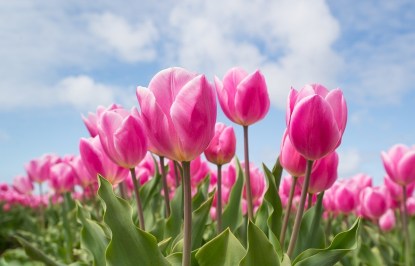
thumbnail_tulipsTulips are to Turkey and Central Asia. In the 1600s, they made their way to the Netherlands. Tulipmania took hold in the 1620s and tulip prices skyrocketed. A single bulb could be worth as much as an average family farm. The market collapsed in 1637, but tulips remain widely grown in the that country. Canadians liberated much of the Netherlands during the final months of the Second World War. More than 7,200 Canadians were lost in that conflict. The Dutch have gifted Canadians with 20,000 bulbs a year since that time and they are used in Ottawa’s now famous Canadian Tulip Festival every May. This year marks the 75th anniversary of liberation and the Dutch royal family will mark the celebration by thanking Canadians this year with a gift of 100,000 tulip bulbs. If you want to join the celebration, you can purchase your own Liberation75 tulips for $15.00 through the Royal Canadian Legion. By purchasing the bulbs, you will also be entitled to win a trip to the Netherlands. To place an order visit the Royal Canadian Legion.

There are hundreds of cultivars of tulips; early, mid and late blooming. They need a sunny location with soil that is well-drained and sheltered from the wind since they can be easily broken. Six weeks are needed for the foliage to die back in order to put energy back into the bulb. A rainy spring is bad for success with tulips. Some of the ‘old fashioned’ tulips are Darwin and Triumph. They are very reliable and come back year after year. Squirrels love tulips, so to deter rodents, mix tulips and daffodils together in order to get the scent of daffodils on the tulips. You can also try hen manure which comes in a pellet form. You could use barberry cuttings or crushed egg shells in and around the hole. Others have had success with plastic snakes. Also, squirrels won’t dig past their peripheral vision, so plant at least 6 – 8” deep. You could also try laying a flat board on top and remove it when the ground is frozen.

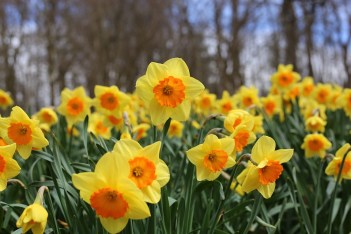
DaffodilsDaffodils and narcissus bloom earlier than most tulips. Spring sun is needed and they like soil that is well draining or they will rot. Oxalic acid on the bulb make them unpalatable to rodents. ‘Tete a tete’ is a mini daffodil that is very fragrant and also good for cut flowers. However, never include daffodils with other flowers in a vase as they have a sap that will cause the other flowers to wilt.

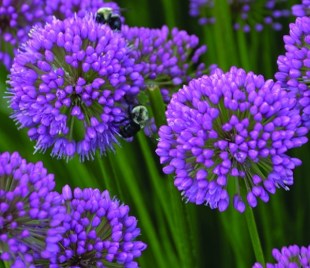
IMG_4638Alliums are ornamental onions. Most of the varieties bloom in June. They need free draining soil with 6 to 8 hours of sun. They make lovely dried flowers. It is best to plant alliums amongst other plants as the foliage is not desirable.

Muscari or grape hyacinths are amazing small bulbs known as minor bulbs. Snowdrops are also minor bulbs and are the first to emerge, often pushing up through the snow.

Snow crocus are an early blooming crocus and work well in a lawn as they bloom before you need to cut the grass. Dutch crocus are good for forcing and are bigger than snow crocus and tend to bloom a little later in the spring.

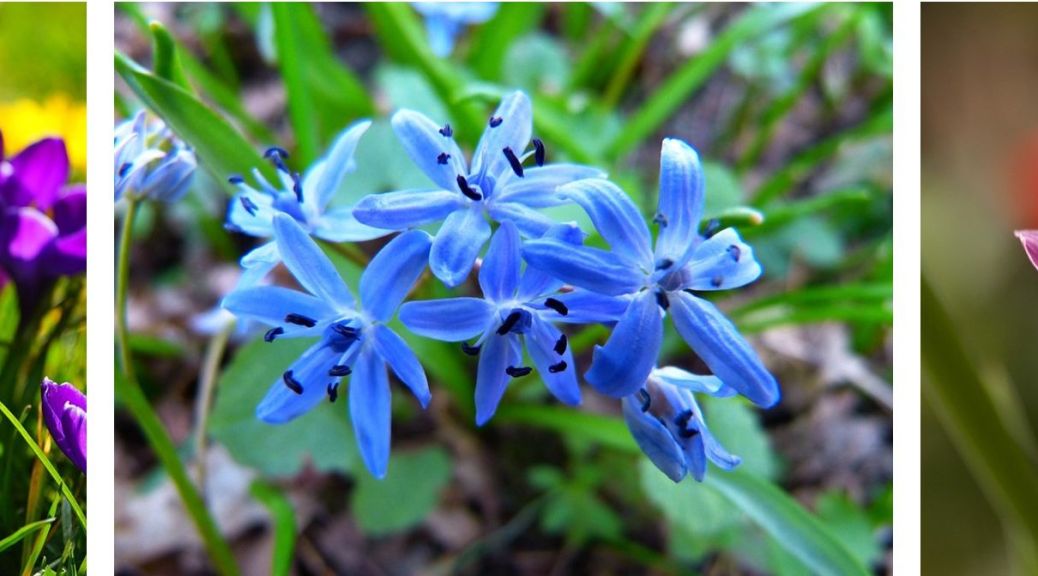
Beware of Scilla or Spanish blue bells! They are a small bulb and multiply prolifically, and although they are very pretty, they now sit on the invasive list. Scilla siberica is on the Highly Invasive category of this list put together by Credit Valley Conservation.

Bulbs can also be planted in pots and put in a cool area over the winter. This way, they can be brought in and forced to bloom early. Who wouldn’t be happy with a large pot of beautiful colour after a long hard winter. More information on forcing spring bulbs can be found in this article by Dugald Cameron in Garden Making Magazine.

Happy Planting!

Adding Diversity to Garden Design

By Suzanne Seryck, Master Gardener

In June this year, I was sitting with my son on the deck looking at the backyard. He asked me why I had so much grass in the garden. Now, he is definitely not a gardener, so I was a little confused until I realized he was referring to all of the daylily leaves. I felt it my duty to point out the stunning delphiniums, peonies, irises, and lupins which were all in bloom. I also tried to explain that in another month or so the garden will be a riot of colour when all the daylilies and coneflowers started flowering. Daylilies have always been my favourite plants; they are hardy, drought tolerant, low maintenance and beautiful in bloom. See our blog post from July 22 describing how daylilies are the perfect perennial. I probably have at least fifty different varieties, all of which I bought over from my last garden four years ago. But as I sat there looking at the garden I did wonder if maybe I should add more diversity.

thumbnail_garden in latespring
Author’s garden in late spring

Shortly after, I was watching my new favourite garden show on Netflix, ‘Big Dreams, Small Spaces’ with Monty Don. If you have not heard of him, Monty Don is something close to a hero to most British gardeners. In this episode, he was relaying a gardening principle to the couple that were designing their new backyard.  He mentioned that for simplicity and cohesiveness “no garden needs more than seven different plants”.  I was trying to remember where the back button was on the remote as I wasn’t sure I’d heard correctly, but he did partially redeem himself when he clarified that statement by saying that you do not have to take this too literally, but that a good garden can be made with just seven different plants. My current garden design is more of an English cottage garden, informal with little space between plants and if I was going to add more diversity this summer, I would definitely have more than seven different plants.

I spent this summer with pen and paper in hand walking around the garden, asking myself if I really needed 20 different variations of pink daylily, some of which even I struggled to tell apart or did I need the same daylily variety in four different places in the garden. I also noticed the daylily blooms had very few insects compared to the spectacular activity around the native plants. I made copious notes in my notebook and labelled many plants I wanted to move or give away. Because of a rising concern for environmentalism and climate change, I also wanted this to be reflected more in my garden. To do this I decided I needed to do the following:

  • Plant more native plants. I have collected seed from most of my native plants including swamp milkweed, culver’s root and liatris and will use these to fill in over the next few years.
  • Add more edibles to the perennial garden. I tend to edge with swiss chard, beets or cardoon. I don’t actually eat the cardoon but I love the foliage on the plant.
  • Choose more plants that have multiple functions, i.e. yarrow which attracts insects, is drought tolerant, is a nutrient accumulator bringing nutrients from deep in the soil and storing them in the leaves, has attractive flowers in many colors, and can be used as a manure tea.
thumbnail_Garden in August
Author’s garden in summer

I’m excited for next year to see the changes I’ve made. I’m hoping that I have still kept the basic structure of the garden design with the emphasis on the summer color whilst adding more variety, especially pollinator and native plants. I learned this summer that a garden design does not have to be static; it can evolve as your values and beliefs evolve.

The design of your garden can be very personal, ever changing, reflecting who you are. For me it is somewhere where I feel at peace with the world–there is nothing I like more than taking a cup of tea out to the garden in the morning and just sitting and looking around.

September in the Garden

By Mary-Jane Pilgrim, Master Gardener

Fall is in the air.  You can see the days getting shorter, and feel that the temperatures are cooling.  The Canada Geese are grouping; ready to make their noisy trip south.  The boats and camping trailers are also heading south.  The monarchs will soon be leaving us for sunnier climates in Mexico.  It’s that time of year where every living thing in our region starts preparing for the colder seasons to come.monarch2015

In the garden, fall is a great time for planting, dividing, weeding, mulching and planning for spring renovations.  The soil is warm, the days are cooler and the rain is usually frequent.  These three items are a big part of what is needed to get new plantings well established before the snow flies.

Fall Planting

Now is the time to plant buy and plant spring-flowering bulbs like tulips, daffodils, allium, snowdrops and crocus.  Shop early for the best selection.  If you are plagued by squirrels, know that they do not go after daffodils — so fill your basket with these instead of some of the more delicious bulbs like tulips that may just make a tasty snack.

Now is also a great time to plant late season annuals like pansies, kale and cabbage for garden bed interest or for front door planters.  It’s also prime tree and shrub planting time.  Water well until freeze-up.

Fall Dividingrudbeckia

September is a great time to divide some of those perennials that have outgrown their space, or that you’d like to share with others.  Watch for obvious division points for hosta, black-eyed susans, coneflower, iris and daylilies.  Plants will have enough time to establish roots in their new homes if this splitting and replanting is done now.  After splitting, cut back any unnecessary leaves or flower stalks from these to make the transition a little easier for these perennials.

Fall Weeding

Many of us have lost interest in this task by now.  However, if you consider that every weed that remains in your beds is likely to go to seed, and that most weeds carry hundreds of seeds, it’s totally in your best interest to keep those beds as weed-free as possible.  For me, this includes deadheading any self-seeding perennials as well.

Fall Mulching

Add some compost, and a two- to three-inch layer of mulch to beds to get them ready for winter. It’s like putting the comforter on the bed.  You can use garden-centre mulch for this, but I have a neighbour with mature maple trees that provide all of the leaves that I can use.  Leaves are great insulator, and best of all, they’re completely free!

Spring Renovation Planning

Lastly, fall is a great time for you to assess areas of the garden which may need renovation next spring.  I sometimes draw maps of the different plants in my garden beds, and it’s not uncommon to see the words “remove”, “divide” and “move” scrawled across these drawings. You may think that you’ll remember all of this next spring, but I have my bets against you on this one!

Here’s to some great fall preparation to make next spring just a little bit more organized and successful.

What I Found at the Landfill…

By Mary-Jane Parker, Master Gardener

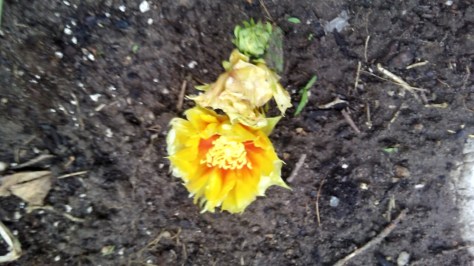
The other day I took four garbage pails of green waste to the local landfill composting facility. As I was emptying my pails, I looked down and discovered a huge pile of cactus that someone had discarded. I carefully (because they are covered in spines!) put one in a pail, took it home and planted it in a hot , dry and sandy area around the pumping chamber, hoping it would root.

Opuntia are native to the Americas and hardy even in southern Canada. After flowering, they produce fruit which I have seen in grocery stores – albeit bigger varieties of the plant.

Three days later, this is what happened! The little pear shaped protrusions above the pad started blooming one by one. Awesome!

thumbnail_2019-07-17 July182019 004

Mulch–Do you love it or hate it?

By Cheryl Harrison, Master Gardener

Mulch may be used as a noun or as a verb.  I make a list to pick up some “mulch” (noun) at the garden centre so that I can come home and “mulch” (verb) my flower garden.

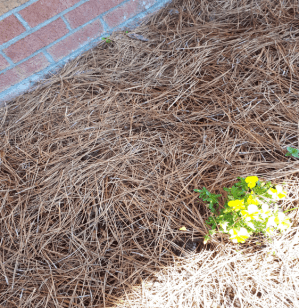
I mulch my gardens including my vegetable garden, my flower gardens and my container gardens. Mulch is amazing and is even used by mother nature without any human intervention. If you walk through a pine forest, you will notice that the pine needles are in a thick layer on the forest floor. Mother nature does this for a reason!

Benefits of Mulch

Mulch helps to:

  • moderate soil temperature – it keeps soil cooler in summer and warmer in winter.
  • reduce weed growth – covers the soil to reduce sunlight for weed seed germination and weakens growth of sprouted weeds.
  • retain moisture – it provides protection from drought.
  • build good soil structure and improve soil texture as it decomposes.
  • protect the soil – reduce erosion by water and wind.
  • protect plant foliage from soil splash which can transfer fungus to the leaves of plants.

There are so many types of mulch to choose from that there is sure to be something to suit every gardener.

Organic Mulch

pine needle mulch
Pine needle mulch – waiting for plants. South Carolina garden. 
  • Adds nutrients to the soil as it decomposes, living mulches may be fragrant and attract pollinators.
  • Grass clippings, dried shredded fall leaves, leaf mould, conifer needles, clean straw or hay, wood chips or sawdust, shredded newspapers, shredded bark, coconut/nut husks, finished compost, cover crops, creeping groundcover perennials (eg. Thyme – covers the ground well and it flowers) or even closely planted gardens.

Inorganic Mulch

stone mulch
Stone mulch, author’s garden
  • Permanent, does not break down easily and does not add nutrients to the soil.
  • Geotextiles (landscape fabric), plastic and stone.


Mulch Application

Yes, mulching your gardens is work but the benefits are definitely worth it.

Apply mulch to damp soil, 5-10 cm (2-4 inches) deep using a shovel, a garden fork or a bucket. It really depends on the type of mulch which tool will work the best for you.

Do not cover the crown (centre of plant where the stems originate) or mulch right up to the trunk of your trees. You may smother your plant if you cover it with mulch or attract insects to your tree’s trunk if you mulch too close. You will need to re-apply organic mulch every couple of years as it breaks down and becomes part of the garden soil.

Purchasing Mulch

Mulch may be purchased in bulk or in bags. Be sure to ask questions about the product. You want mulch that is free of weed seeds and disease. If you prefer dyed mulch, you will want mulch where the dye used is not poisonous to you or the other critters in your garden.

Oh, I forgot one of the most important benefits of mulch … your soil and your plants are healthy and happy, so enjoy those beautiful gardens!

authors garden
Author’s garden