Category Archives: Health

Time for Reading Garden Books

by Christine Freeburn, Master Gardener

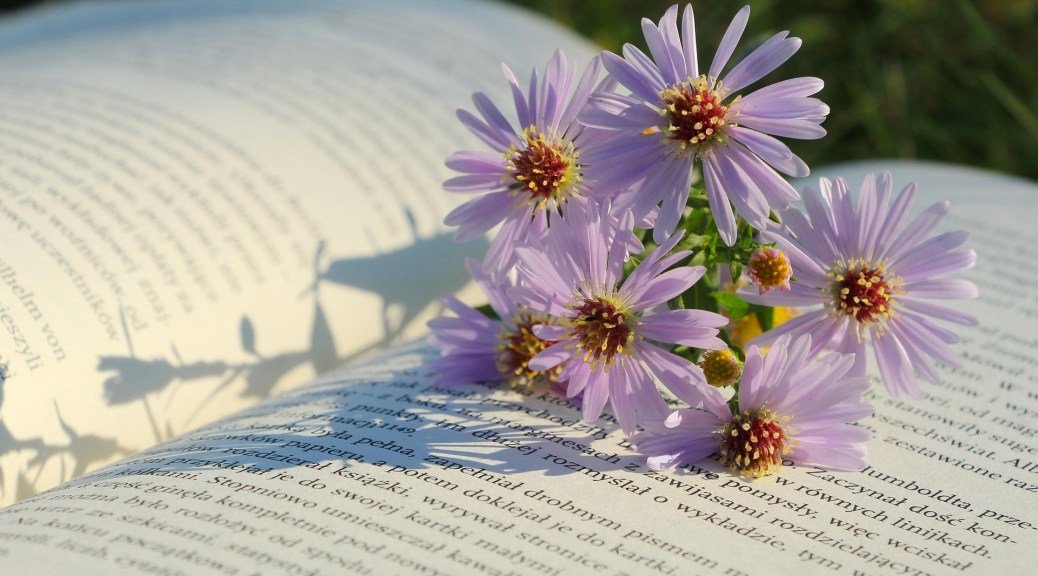
In this day and age, we spend so much time on our computers, googling all the information we want and need. But there is something about sitting by a sunny window on a cold winter’s day with a good book.

The winter months are a great time to pull out an old gardening book or invest in a new one. The days are now getting longer and spring is coming, but actual gardening is a few months away. Time to learn something new to help you improve your gardening skills. There are many good Canadian and zone appropriate books that can help you.
Below, I have listed a few of my favourite books on my bookshelf. I have also asked my fellow Master Gardeners to share their favourites. Some of the books are out of print, but check your local library, used book stores or online sites. Enjoy!

For the Houseplant Gardener

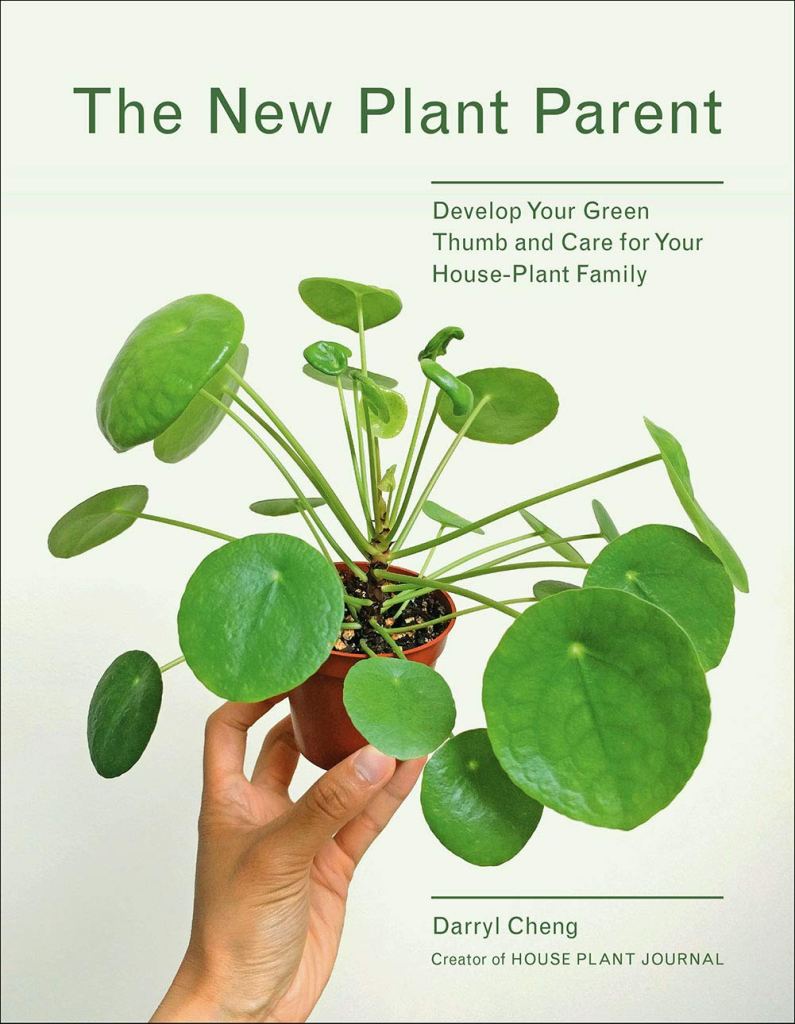
The New Plant Parent

Darryl Cheng gives advice that is full of common sense. He explains that leaves do die and plant care should be enjoyable, not a chore. He discusses basic requirements for healthy plants including the right light, soil care and proper watering. Great illustrations and nineteen plant varieties are listed in detail. Look for his newer books also.

For the Vegetable Gardener

Plant Partners

Companion planting has been around for years. Jessica Walliser gives us “science-based companion planting strategies” that help with disease and pests, improves soil and supports pollinators. Lovely illustrations throughout will have you dreaming of your next vegetable garden.

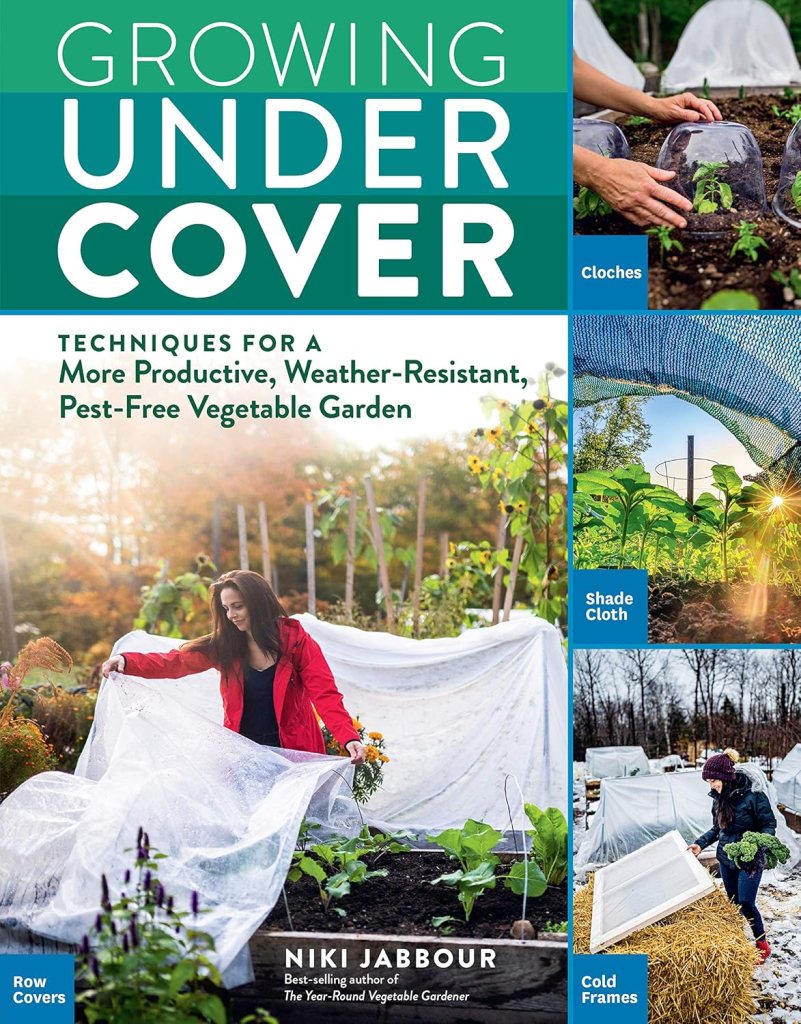
Growing Under Cover

Niki Jabbour is the Canadian half of the popular website Savvy Gardening (along with Jessica Walliser). She has several books out, but this one gives great information about how to reduce pests with row covers. Niki has several books out, so check them out.

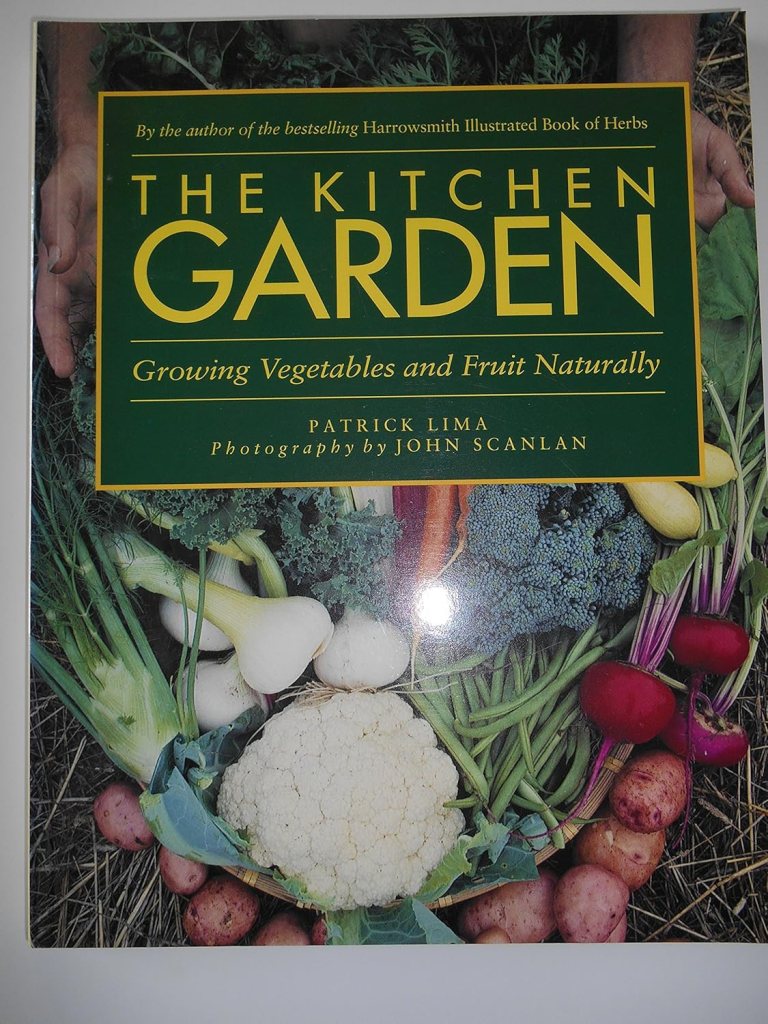
The Kitchen Garden

Peterborough MG Silvia Strobl first toured Patrick Lima and John Scanlan’s garden on the Bruce Peninsula over 40 years ago and was inspired by both their colourful perennial and productive vegetable gardens. Each spring, she still refers to this book’s excellent information to refresh her memory on time to sow, spacing, thinning, harvesting, etc. for the vegetable crops she grows! Unfortunately, this book is out of print, but you may find a used copy online.

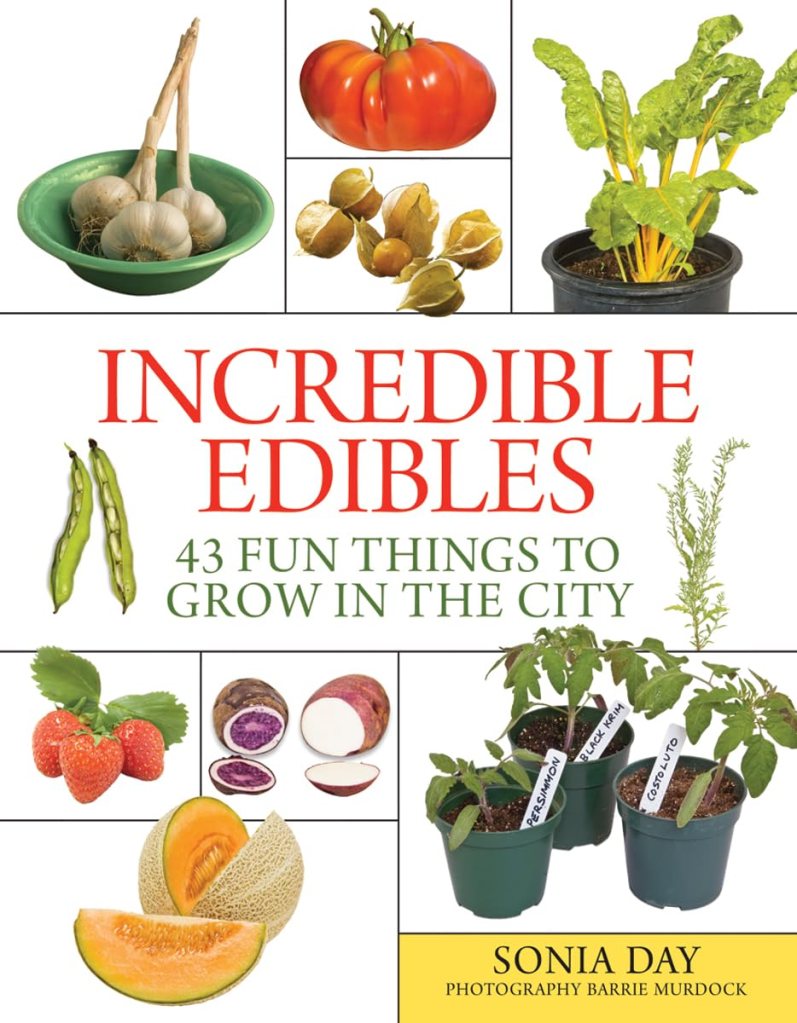
Incredible Edibles

This book by Sonia Day is recommended by Peterborough MG Deb Fraser. It is very basic for the beginner gardener. It answers when, where, how, as well as other questions for herbs and vegetables. She even gives a recipe for each plant. Another book that is out of print. Try used book sites.

Encyclopedia of Herbs, Spices & Flavorings

Deb also suggests the Encyclopedia of Herbs, Spices & Flavorings, a cook’s compendium by Elisabeth Lambert Ortiz. Originally British but published in Canada by Readers Digest, 1992. It is beautifully illustrated and very detailed about the origin of herbs, spices, oils, sauces, coffees and teas around the world. She details the origin of these, how to cook with them and a recipe. When the weather is frightful with a nice warm drink in hand it makes for interesting reading, perhaps planning to add a few herbs to your garden next spring.

For the Perennial Gardener

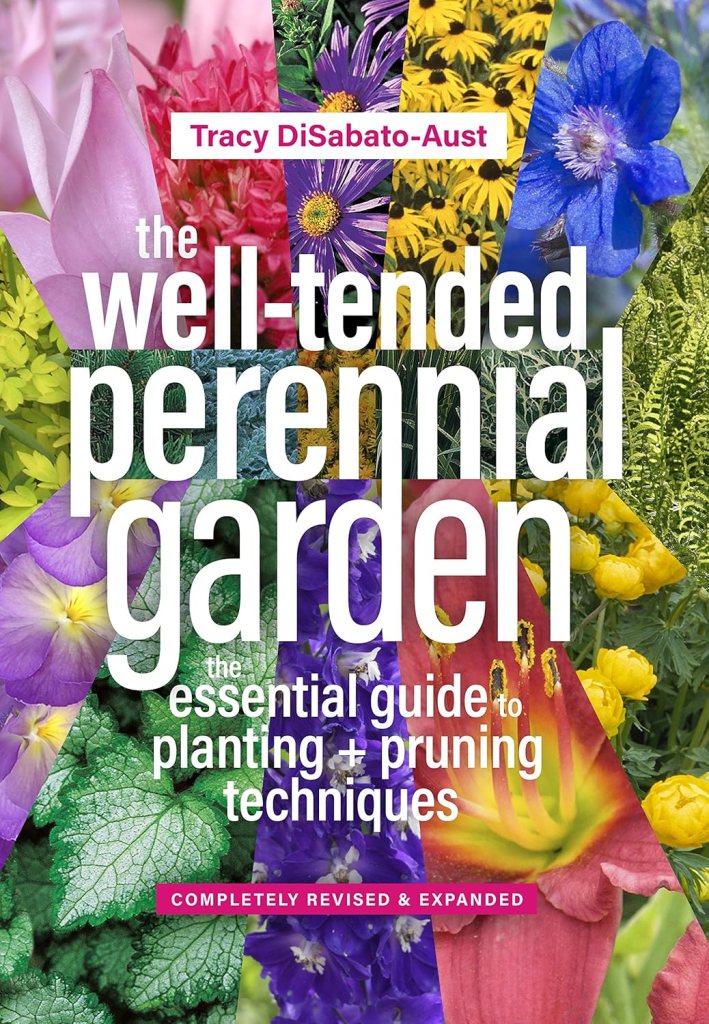
The Well-Tended Perennial Garden

Peterborough MG Gladys Fowler’s favourite book is the Well Tended Perennial Garden. Tracy DiSabato-Aust’s book has an extensive encyclopedia of perennial species and cultivars and she explains the maintenance and pruning needs of each plant. The explanations and illustrations are excellent.

For the Native Plant Enthusiast

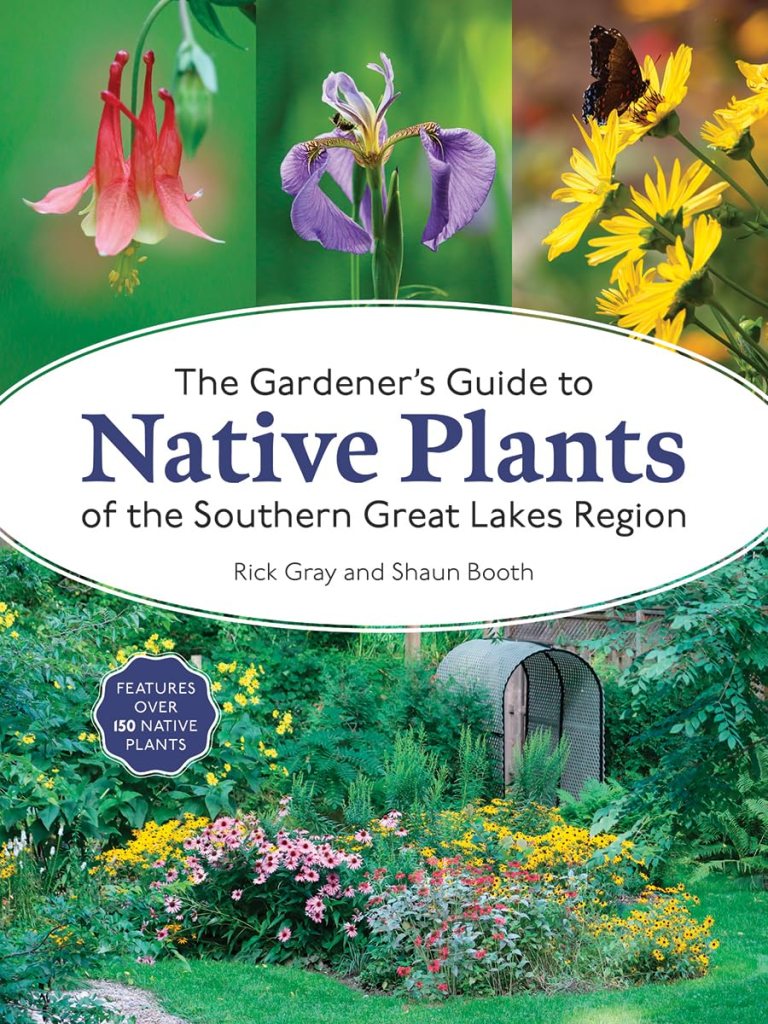
The Gardener’s Guide to Native Plants of the Southern Great Lakes Region

For Peterborough MG Emma Murphy, definitely this one on native plant gardening – for our region, gives everything you need to know about growing the plant, including propagation, wildlife value and what butterflies and moths it is a larva host for. For a full book review she did on Rick Gray and Shaun Booth’s book when it was published in 2024 click here.

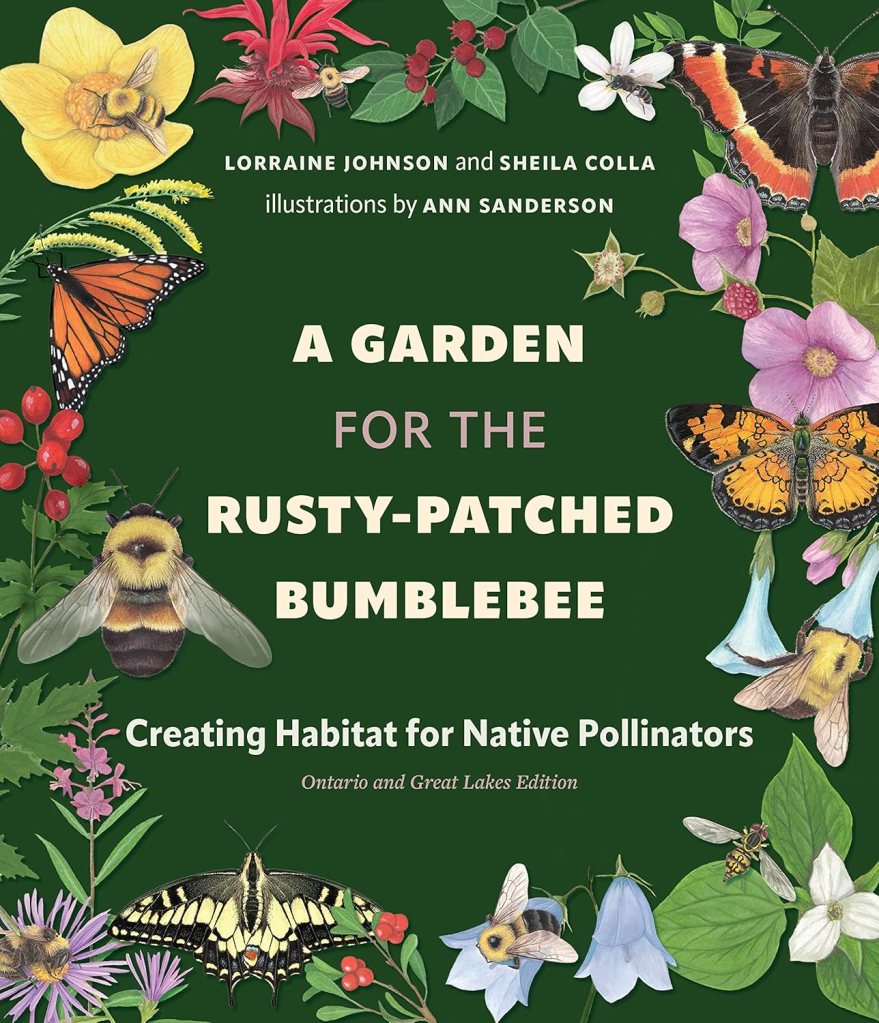
A Garden for the Rusty-Patched Bumblebee

Peterborough MG Sharleen Pratt says this book by Lorraine Johnson and Sheila Colla not only goes into great detail about Ontario native plants, vines, shrubs and trees, but it also encourages us all to think about the spaces we create so that pollinators can thrive.

For the Environmentalist

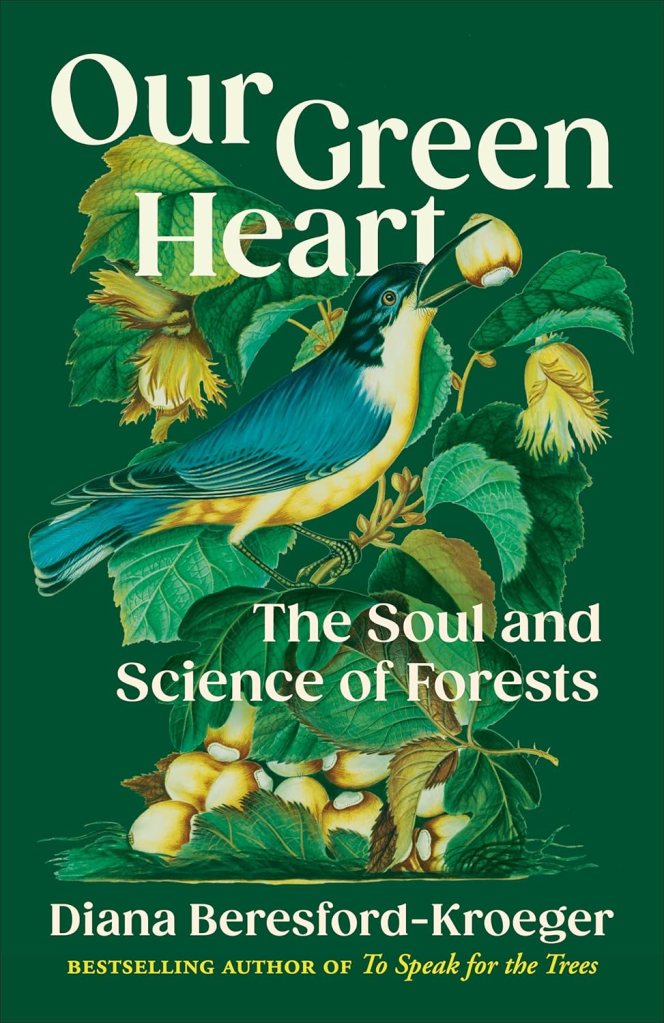
Our Green Heart

Peterborough MG Carol Ireland says it feels good to sit down and read something that requires absolute attention while at the same time causes you to make all the connections between what you are reading and the place trees have in the survival of our planet. This one by Diana Beresford-Kroeger is also on my reading list!

What is your favourite gardening book? What do you have on your list to find and read next? Eleven more weeks till spring!

Check out previous reviews on our website

Favourites From My Bookshelf

Four Great Books

The Five Stages of November Gardening: From Denial to Hibernation

By Mary-Jane Pilgrim, Master Gardener

November can be a odd and awkward time for gardeners. The blooms of summer are long gone, and even the hardiest plants are starting to fade. As we temporarily pack up our tools for winter, many of us go through something like the five stages of grief—only with more dirt under our fingernails than we usually have when grieving.

1. Denial
It starts with pretending the frost and snow aren’t really that bad. You convince yourself that a touch of frost won’t actually kill your tomatoes and that they’ll bounce back by noon when they get a bit warmer. Spoiler: They won’t.

2. Anger
Then comes the frustration. Why did you forget to cover the basil? Why didn’t the weather app warn you about that early freeze? You glare at the sky, muttering about how unfair it all is, and plan to move south at the earliest opportunity.

3. Bargaining
You start making deals with nature: “If I bring the pots inside, maybe they’ll survive.” You shuffle plants indoors, rearranging windowsills in a desperate act of hope with space in the south window at a serious premium. You conveniently forget that most plants won’t actually survive inside of our dry as a desert homes—but you’ve gotta try, right?

4. Mulching
Reality sets in, and you finally take action. You clean up the garden beds (leaving flower stalks for our nesting insects, of course), spread mulch, finally finish planting those tulip bulbs, and then tuck everything in for winter. The tools have been oiled and the mushy hosta leaves are in the composter, just in time for the fluffy stuff to start falling. It’s a quiet, grounding ritual—part farewell, part promise to return but mostly it’s acceptance of our fate as Canadians in a four season climate.

5. Hibernation
At last, peace. You sip tea by the window, dream over seed catalogs, and plan next year’s garden. November reminds us that rest is part of the growing cycle too—and even gardeners need a little dormancy.

Things to be Thankful For

By Christine Freeburn, Master Gardener

As we celebrate Thanksgiving this year, we should think about what we are thankful for in our gardens. I recently asked my Master Gardener friends to share what they are thankful for.

Rainfall – Everyone was happy with the amount of rain we received this year. According to the Canada Weather Stats website (peterborough.weatherstats.ca), our rainfall for the period from July 2023 to June 2024 was over 100mm more than the same months in the previous year. And we seemed to have it at the right times. Although rain is great, it is important to remember that watering still needs to be done, especially containers of annuals and vegetables and hanging pots. When plants get big and fill the pots, the rain may not get down into the soil which is where you want the moisture to go.

Good educational information – As Master Gardeners, we use scientifically-based resources for answering gardening-related questions. Use the extension “.edu” or “.sci”  in the search box when you are googling. There is so much information out there, but we need to be sure it is the correct information. Master Gardeners are always asking questions, learning and sharing their knowledge.

Healthy Gardens –  Feeding the soil is a big part of having a healthy garden. Putting good quality topsoil in a new garden area, and adding organic compost annually will help your soil. Mulching holds the moisture and suppresses weeds. Leaves are great for mulching on your perennial beds. Free local wood chips supplied by Ontario Hydro were a great mulch for one gardener.

Good Harvests – Vegetable gardens were bountiful this year. Thanks to an exceptional harvest of peppers, tomatoes and beets, there are stuffed peppers in the freezer, tomato sauce and salsa and pickled beets in the cupboard. Carrots and brussel sprouts grew well and herbs like parsley and rosemary were huge and healthy. One gardener reported two butternut squash plants produced 20 squash!

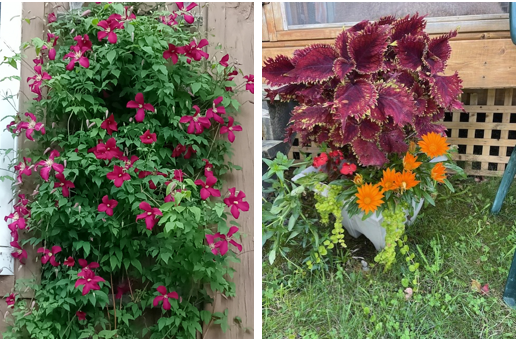
Beautiful Flowers – With all the rain and heat, hostas were huge, sunflowers towering, clematis bloomed long and luscious. Everything seemed to be big and beautiful and most bloomed earlier and longer than normal. Container annuals like coleus grew huge and healthy.

Nature in the Garden – Master Gardeners actively promote native plants in the garden to encourage more pollinators. Integrating natives amongst your cultivars works well if you don’t want that ‘wild’ appearance many natives provide. Several gardeners reported visits from birds like Chickadees, American Robins and House Wrens that made their nests and raised their babies in their gardens. Cedar Waxwings, White-Throated Sparrows, Song Sparrows, Dark-Eyed Juncos, American Goldfinches, Northern Cardinals, Hairy Woodpecker, and a Common Yellowthroat came to visit and forage. Birds are great for the garden as they will eat many pests. And they give us enjoyment.

I am trying to be thankful for the skunk who has been visiting my yard and digging grubs. My yard looks like a minefield, but it is healthier!

What are you thankful for in your garden?

Happy Thanksgiving!

And thank you to MJ, Gladys, Carol, Laura, Chris, Jenn, Silvia, Cheryl, Deb, Grant, & Mary Kathleen.

Finding Natural Connections in a World That is Busier than Ever!

By Thom Luloff, Master Gardener in Training

Our schedules are brimming, and life is back to “normal” after those challenging years of a global pandemic.  We may be busier than ever, but are things truly back to normal? 

Crises–locally and internationally–politically, socially and economically are unfolding everywhere, and our social bonds and community engagement appear more distant than ever.  

Or does it just seem that way? 

If we take a step back just a couple of years, we had a very different perspective that is worth remembering and taking forward as those memories start to fade.  

Amidst the confusion, anxiety, and fear of the onset of the Coronavirus pandemic, we all took a deep pause.  Without distractions, we were able to focus on the important.  Synchronously with the first lockdown announcement, public health agencies began promoting safe activities.  Without much surprise, almost all of them involved the outdoors and being immersed in nature.  Walking, hiking, biking, roller blading; these merchandise items flew off shelves just as fast as skis, snowmobiles, and fat bikes did.  Not to mention everybody was baking bread and planting seeds in soil, many for the first time in their lives!

We found connections by connecting with and within nature.

As the lockdown progressed, we celebrated stories showing how the retreat of human impact allowed nature the room to thrive.  Whether it be clearer skies, fewer cars on the roads, or less garbage in nature areas, we could see the human impact.  

Yet within almost moments of relaxation of restrictions, our old ways returned.  Our newfound appreciation gave way to the rush for normalcy.

Can we do better than normalcy? 

We think of our human normalcy as being set apart from nature.  In control.  We live in houses, drive cars, and eat food which is specially grown to feed us; and nature exists “somewhere” else. Somewhere where you can go on your terms.  But there are examples from nature that do provide us valuable insight and one of the is in the form of a fungus, Armillaria solidipes (honey fungus).

Armillaria solidipes

Like humans, this honey fungus has enormous potential to affect its local environment.  One of these organisms lives in Oregon’s Malheur National Forest and covers 3.7 square miles (2,400 acres) and is roughly 8,000 years old and weighs over 34,000 tons, making it both the single largest and heaviest terrestrial organism on the planet.

But interesting, this remarkable fungus is not a product of individual success.  It is a product of connections, where individuals connecting together strengthen and enlarge the whole.

Honey fungi grow in individual networks using fibers called mycelia. Mycelia work in a similar fashion to plant roots whereby they take water and nutrients from the soil. At the same time, they make chemicals that are shared with other soil organisms.  When mycelia from different individual honey fungus bodies meet, they can attempt to fuse to each other. When the mycelia successfully fuse to each other, they link their very large fungal bodies together. This, in turn, has created the largest terrestrial organism on the planet.

All. Accomplished. By. Connections. 

This giant organism plays an essential role soil development and maintenance, with mycelium working to prevent soil erosion.   It also happens to be a parasite, killing and consuming conifer trees, and has wrecked havoc on Fir stands throughout the area.

I can’t help but compare this fungus–built by connections–to us, as humans. We are more connected than ever before and our potential to impact our environment (positively or negatively) has never been greater.

We must choose to grow positive connections with positive impacts. 

And you (yes you!) are likely doing exactly that and reaping the rewards of those natural connections that you have carefully nourished.  As gardeners tend to their plants, we develop a deep appreciation for the environment, understanding the intricate relationships between soil, water, sunlight, and living organisms. This hands-on interaction promotes mindfulness and a sense of responsibility toward ecological health.

The act of nurturing plants from seeds to full bloom cultivates patience and respect for the time it takes for nature to flourish and reinforces the idea that the best things are worth waiting for and done for others.  What an incredible feeling of joy it is when we see pollinators thriving on the plants we planted, along with the birds and biodiversity that they in turn support.   

As we grow these connections, we show our neighbours, friends, and visitors a living example of this positivity; making it so much easier to follow themselves.

Our stewardship mentality that encourages a harmonious coexistence with the natural world needs water and sunlight and effort, just like our gardens.  Late July is the perfect time to reset from a busy year, giving us the opportunity to embrace a slower pace and regain balance, prioritize self-care, and set intentions for the rest of the year with renewed energy and clarity. 

Let’s prioritize nature and reap the rewards of those natural connections with those around us!

Photo Credit: Keith Riggs. (2012).  United States Forest Service

Little Forests

By Cheryl Harrison, Master Gardener

A little forest … seems like a bit of an oxymoron.  I always thought of a forest as a loose grouping of trees and other plants that covers a large area?  I was introduced to a little, or Miyawaki, forest this past spring at the Lilac Festival in Warkworth, Ontario.  The Peterborough & Area Master Gardeners partnered with the Northumberland Master Gardeners to offer a Native Plant educational event on the same May weekend as the Festival.  We had a successful educational event, the Lilac Festival was great fun AND I saw my first little forest!

The Miyawaki forest method was created by Japanese botanist Akira Miyawaki.  He developed the idea of restoring damaged ecosystems by layering various species of native trees, shrubs and ground cover.  A site is chosen and prepared by layering cardboard and mulch.  Various species of young native plants are then planted close together in a relatively small area, as compared to traditional planting methods, for the number of plants chosen.  This method has been used in urban areas to demonstrate native plant forest environments.

The Miyawaki method of planting a forest is relatively new to Canada but there are more of this type of forest creation popping up across the country.  All mixed native plant forests have many benefits including improving air quality, providing wildlife habitat, sequestering carbon and more.  However, even though the Miyawaki forest creation method is a fairly new concept, it is bringing the forest closer to people by getting the benefits, and importance, of forests more widely noticed just because it is a relatively new concept.  I know that I enjoyed looking at the plants in the Warkworth little forest.  It gave me ideas about what I could do on my own property.  Let’s face it, a walk through a forest, even a little one, is always a relaxing way to spend an afternoon!  

For more information, check out the links below:

A Community Miniature Forest

The Many Benefits of the Miniscule but Mighty Miyawaki Forests

Miyawaki Forest – Do Mini-Forests Really Work?

Green Communities Canada, National Mini Forest Pilot

Why Do We Garden?

by Emma Murphy, Master Gardener

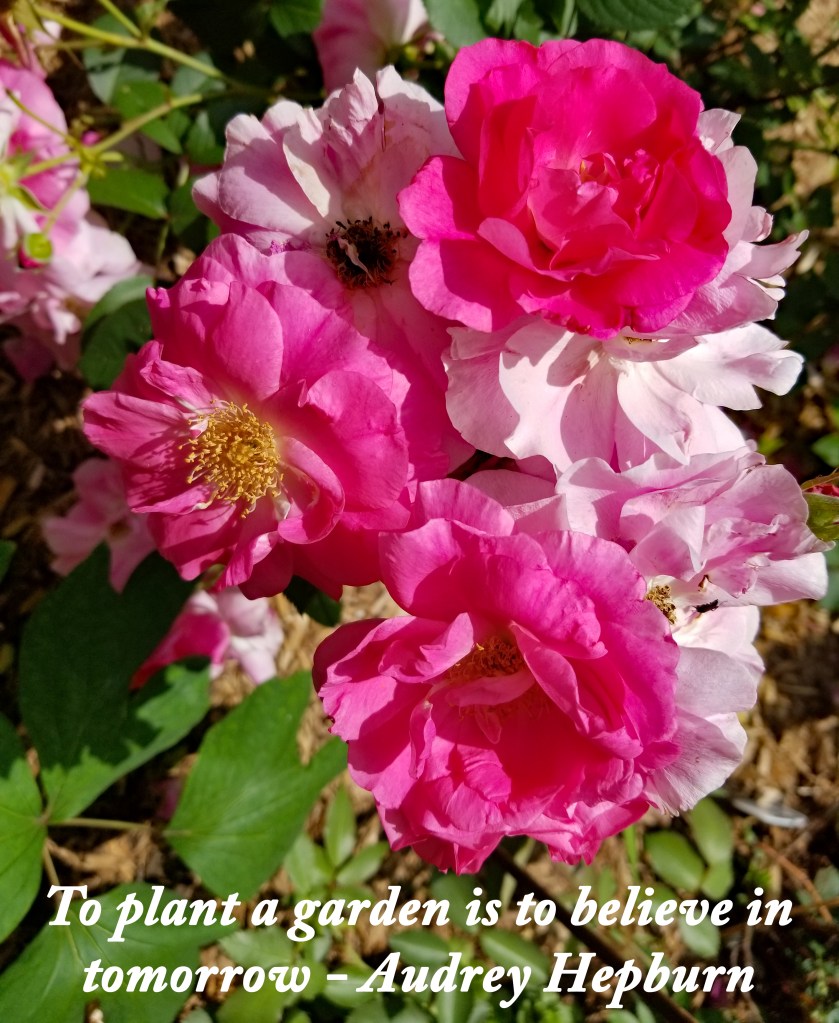
“To plant a garden is to believe in tomorrow.” Audrey Hepburn

If you’re like me, you love to garden. Time in my garden provides me with joy on so many levels — emotional, physical, social, creative — and connects me with the outdoors and the environment. And while the COVID-19 pandemic has turned our lives upside down, one of the silver linings is that we’ve seen a renewed interest in gardening and its benefits, whether you’re working in a large garden or a few containers on your balcony. So I thought I would explore some of the top reasons I think we garden.

Physical and Emotional Health

Gardening is physical. As a low to medium impact exercise that requires both strength and stretching, you’ll see increased muscle strength and cardiovascular fitness over time, as well as improved sleep and diet (if you grow your own produce). On the emotional side, gardening reduces stress, anxiety, and depression and improves self esteem.

It’s good for the mind — gardening calms me down and helps me be more patient with myself and those I interact with on a daily basis. It gives me time to contemplate as I go about my tasks, up to my elbows in soil. Even weeding is cathartic, pulling out those little terrors by the root!

Just visiting gardens helps to calm the mind, bringing a sense of contentment and tranquility from looking at beautiful landscapes, flowers, or just colour and texture.

Building Relationships

While gardening can be a solo activity (some of my favourite moments are just by myself in my green oasis), it’s also a fabulous way to connect with people, whether they be family or strangers!

Teaching people how to nurture a living thing and to be responsible for a little bit of the environment is a lesson and gift we can share with others. Gardening knowledge is shared through generations — I love hearing about plants handed down from grandparents, or children working with their parents to grow seeds for the first time. It’s a great way to pass on critical life lessons — about patience as plants and vegetables grow, responsibility as they look after their care, and loss when flowers die at the end of a season.

Beyond family, gardening helps us connect with the broader community. Whether you plant too many tomatoes or zucchinis and end up giving them away to neighbours, or participate in a community garden plot, gardening can be a very social activity and a chance to learn from, and share your bounty, with others.

Learning Life Values

Gardening teaches you important life values like patience, determination, caring, and hard work. It also makes you very humble as you realize that there is always something new to learn. You need to observe the seasons and the weather, and this puts you in contact with the natural world. I love that I can get dirty and do this very physical activity, working with seeds and plants and seeing growth in all I do.

Growing Your Own Food

Gardening provides benefits for your wallet, your nutrition, and reduces your environmental footprint. By growing your own food (either from seeds or small plants), your food is automatically more sustainable simply because you are doing it onsite or in a community garden. If you control the ‘inputs’ and do it well, you can save a lot of money.

But ultimately there is nothing more rewarding than planting and maintaining your own vegetable garden and harvesting (and sharing) your results. And we all know how much better homegrown produce tastes versus conventional produce at the grocery store. If you have too much produce, then you can just share the love with others!

Connecting With Nature

I think this is one of the best reasons why people have a garden — the sunshine on your face, hands in the dirt, and feeling connected to nature. The garden is so much more than just plants and flowers — it’s the birds, the bugs, the bees, the spiders, the snakes and all the small mammals. I feel like I am establishing a little ecosystem in my own garden and that I am trying to give back for all the benefits that I receive.

Working in the garden also gives you that sense of wonder, accomplishment, and reward. To grow plants is to give life. It keeps you busy but reminds you to be one with the earth. To see the results of something growing from seed to six feet tall is just incredible.

Exploring Creativity

I find gardening to be an incredibly creative activity. Finding the right plant for the right spot, mixing colours, and making sure there is interest for every season — these are real challenges. I’ve spent much of the past few years learning about new plants to consider in my garden, especially natives.

Helping The Environment

Finally, gardening is so important for our planet. Even though we create our gardens (so they are human made) they do represent natural environments, with trees and shrubs and plants that are all taking in carbon and releasing oxygen. The plant roots stabilize the soil and filter water, and the plants themselves support our pollinators.

We live in a symbiotic relationship with our gardens. We give back by planting and maintaining them, but we receive so much more from them than we give.

Why do you garden?

beware! Think twice about these plants for your garden

by Rachel Burrows, Master Gardener

Plants are unable to hide or run away when faced with danger such as being eaten by a hungry rabbit. However some plants are toxic and can cause anything from mild discomfort to fatal consequences. Many of them are lovely to look at but it is wise to know which are poisonous especially if you have young children or pets.

Castor bean plant

Castor Bean Plant (Ricinus communis)

A friend phoned me and said that she had a fabulous plant with very unusual seed heads and would I like to take a look at it as she didn’t know what it was. Castor bean plants contain ricin, one of the most toxic substances known. The ricin is in the seeds which are covered with a prickly coating and are pretty shade of dark red. If the seed is swallowed whole without damaging the seed coat it will likely pass through the digestive system harmlessly. However, if it is chewed and swallowed the ricin will be absorbed within minutes and is usually fatal. One seed is enough for a deadly dose for a child and about four for an adult. My friend was very surprised and agreed to dig the plant put of her garden and dispose of it safely. These plants are often grown for their ornamental properties as they are tall and a lovely colour.

Yew

Yews (Taxus)

Again, another popular plant for hedges and often seen in gardens. The entire shrub is poisonous except for the red flesh of the berries. The oval, black seeds within the berries are highly toxic and can be fatal within a few hours of eating as few as 3 seeds. The toxin in yews is taxine which is a cardiac suppressant. I grew up on a farm and we all knew not to have yews in fields with livestock.

Rhododendron

Rhododendron

Not so hardy and a little harder to grow in this area but very common further south and in parts of England. All parts of the rhododendron are poisonous, even honey produced form the shrubs is poisonous.

Mountain laurel flower

Mountain Laurel (Kalmia latifolia)

This shrub is a close relative to Mountain Laurel and all the green parts, twigs, blooms and pollen are toxic. It’s blooms are gorgeous but beware!

Lily of the Valley

Lily of the Valley (Convalliaria majalis)

Lily of the Valley is valued for its lovely perfume and as a ground cover, although some people see it as a menace as it does spread quickly. The entire plant is poisonous and causes the heart’s contractions to intensify.

Monkshood

Monkshood (Aconitum)

This is a stunning, tall perennial which blooms late in the season with striking purple flowers. All parts of the plant especially the roots and seeds are extremely poisonous. Eating as little as 1 gram may cause death. Even the sap can cause fingers to become numb.

Delphinium

Delphinium

Another lovely and showy perennial, but all parts of the plant are poisonous, especially the seeds. Death can be caused in as little as 6 hours.

Foxglove

Foxglove (Digitalis purpurea)

Another commonly grown plant that produces the well known heart medication. However, the whole plant is poisonous and the toxin is deadly in high doses.

There are several other poisonous plants that you might want to think twice about before bringing them into your garden. Be aware of their deadly potential especially if you have young children or pets. By all means grow them if you love them, just be careful.

Did you know? There’s a garden in England dedicated to poisonous plants? Take a tour – virtually..

For further information and pictures of other poisonous garden, wild and house plants check out these websites

Ontario Poison Centre – Plants

Good Housekeeping List of Poisonous Plants Around the Home

Landscape Ontario – List of Poisonous Plants


Meditation in Motion – Gardening as Therapy

By Emma Murphy, Master Gardener

“Caring for your garden can be a great form of mindfulness meditation. By connecting with the earth and with the practice of gardening, you can cultivate a healthy mind and feel calm and connected. Simply planting a seed with intention, or touching soil, can be transformative. Go ahead and get a little dirty.” — Suze Yalof Schwartz, founder of Unplug Meditation and author of “Unplug: A Simple Guide to Meditation for Busy Skeptics and Modern Soul Seekers.”

As I watched the first snowflakes fall on my gardens the other day, I reflected on this growing season and how much my gardens (and gardening) have supported my physical, mental, and emotional health, especially during this COVID-19 pandemic where so many other activities have not been possible.

Gardening is just so therapeutic on many levels. What I love best from year to year is the transformation from an area of soil with some structure (shrubs etc.) to a lush environment buzzing with pollinators and birds and chipmunks just a few months later. A garden is so satisfying because it builds over time – plants, shrubs, and trees get larger and healthier with each passing year, and your garden becomes more beautiful over time.

Medical studies have shown that gardeners live longer because they are active, have better body circulation, lower blood pressure, less stress, the list goes on….

Horticultural therapy is now widely practiced, where participants become “plant caretakers”, supporting their recovery and improving their moods, resulting in shorter stays in medical facilities. Some of my fellow Peterborough Master Gardeners do wonderful work at our local retirement and nursing homes with their gardening activities.

Basically, our gardens are a more intimate form of enjoying and appreciating nature, helping us understand how everything is interrelated in nature, and how we can contribute to the cycle of life by planting a seed and nurturing our flowers, shrubs, and trees. It’s a powerful connection that gives us a sense of optimism and purpose. As Audrey Hepburn said..

My experience with gardeners is that they are lifelong learners, much of that from trial and error. In general we are a patient lot, planning each year and persevering through the seasons. We can also be stubborn and focused, to be found in the garden from early morning through sunset, having totally forgotten about time.

Gardening as Active Meditation

Active meditation or “meditation in motion” is an activity that requires full attention and concentration without needing much deep intellectual thought. Trail running, mountain biking, hiking, and riding a horse are all examples of active meditation, where you must focus on what’s right in front of you.

Trying to figure out the emerging weeds from the young seedlings, setting up your pots and planting your seeds, determining the best tool for an activity – all these things demand your full attention and presence. At the same time, you are allowing your mind to relax and stop worrying about all of life’s daily concerns. Of course, all is this is premised on your attitude. If you look forward to spending time in your garden, viewing it as a pleasure instead of as a “chore” or something that must get done, then you will experience all the positive benefits of gardening.

Certainly no one is saying gardening is not hard work, but on a sunny spring day I can lose hours working in the garden, totally absorbed in the physicality of the activities. Especially after a long winter I appreciate the texture and smell of the soil, the breeze, the birds, the flowers, the trees, and the clouds and sky.

So as the season of outside gardening winds down (yes I actually got all my bulbs in the ground already), my thoughts turn to all that my garden gave me this past year, and I start on my plans for next year. Ever the optimist..

Whether you call it meditation, mindfulness, or ecotherapy, gardeners are blessed to have a steady place of solace in these trying times. Here’s to great memories and planning for next spring.

Some further reading if you are interested

How a Garden Grows You

Why are Gardens so Good for the Soul?

Why COVID gardening is about more than just food

How the Coronavirus Changed Gardening

Gardening is fundamentally an act of enormous hope because everything you do in the garden is for the future.
Barbara Frum, Canadian Broadcast Journalist

Gardening and Our Quality of Life

by Sharleen Pratt, Master Gardener

There are many different reasons to garden. Some garden to enhance the look of their homes, some love to grow their own vegetables, and many of us garden for colour after a long hard winter. There is another more powerful reason to garden. It can be a medicine and a natural source of therapy. Gardening can relax and invigorate us. The medical profession now recognizes gardening as a means to help heal people.

Being in the outdoors, whether gardening or walking in a wooded area can relax us, rejuvenate us and enliven our senses to what is around us. We can connect with the natural world and be creative and forget for a moment all the everyday worries that we carry with us.

My meditation comes when I’m out digging or planting in the garden and yes, sometimes I will be caught talking to myself. It is my time to be ‘in the moment’ and like many other gardeners the hours will slip away peacefully.

I have a fond memory in Grade 5 of a teacher during a really hot spell in June taking us outside and reading a book to us while we sat on the grass under a mature tree. Why do I remember this? I can’t remember the book but it has something to do with the coolness of the tree, the peaceful surroundings and maybe just the feel of the grass.

Science is now supporting what we have intuitively known for many years. By deepening our relationship with nature, we can reduce stress levels, increase creativity and improve our mood.

IMG_1644

Kawartha Conservation offers Forest Therapy walks that are used to help support healing and wellness. Forest Therapy is inspired by the Japanese practice of shinrin yoku which translates to “forest bathing”. For centuries, poets and philosophers extolled the benefits of a walk in the woods. Florence Williams set out to uncover the science behind nature’s positive effects on the brain in her book, The Nature Fix. She has travelled extensively and investigates cutting-edge research to demonstrate that even small amounts of exposure to the living world can improve our creativity and enhance our mood. Through her research, Williams shows how time in nature is not a luxury but is, in fact, essential to our humanity.

Rudolf Steiner (1861-1925), founder of the biodynamic approach to agriculture, was a highly trained scientist and respected philosopher in his time who later in his life came to prominence for his spiritual-scientific approach to knowledge called “anthroposophy.” Anthroposophy is a formal educational, therapeutic, and creative system which he established by seeking to use mainly natural means to optimize physical and mental health and well-being.

IMG_3900

In Kent, England there is a unique facility, Blackthorn Trust, which offers specialist therapies and rehabilitation and their work is based on the belief that more than medication is required to effect positive change in people. The work of Rudolf Steiner underpins all their work, and the belief that people should pay more attention to feelings, to the imagination, to the emotions, to the body and space it occupies and to nature and all its rhythms.

Community Gardens can play a large role in helping people feel more connected with the natural world, supply good physical exercise, allow creative juices to flow, supply opportunities for those in small urban settings to participate in an outdoor activity, escape the stresses of everyday life, and improve well-being by creating a reduction in neighbourhood-based fear. Community Gardens have been popular in England for many years and one of the more interesting ones in Oxfordshire is for people with Parkinson’s disease. To learn more about the community gardens in the Peterborough area, visit Nourish.

The Royal Botanical Gardens have realized the benefits of using plants and gardening to enhance emotional, physical and mental well-being. They offer a number of programs from yoga and tai chi, afternoon teas, making mead, kids and family programs as well as lectures and workshops. (Editor’s note – unfortunately due to a recent announcement from Ontario’s Chief Medical Officer of Health regarding COVID-19, the RBG will be closed until April 6, 2020)

IMG_1647

In summary, if you are finding this to be a long winter and you are feeling overwhelmed with everyday stresses, I encourage you to go for a walk in a nearby wooded area, be observant of your surroundings, take a deep breath and enjoy. I guarantee you will return home feeling calmer and rejuvenated!

Gardening Is Not Cancelled

by Emma Murphy, Master Gardener

Just when Ontario gardeners thought spring was peeking through the piles of snow – with warmer weather and the change to daylight savings time – we’ve been derailed, and not by Mother Nature.

GDD2

It’s been a tough few weeks with the increasing spread of the coronavirus disease (COVID-19) to North America. People are becoming increasingly alarmed, and in the past few days we have seen measures by our local health authorities and governments to ‘flatten the curve’ of the pandemic by imposing restrictions on travel, movement, and large events. For best information on the COVID-19 situation contact your local health unit or the Government of Ontario website. Peterborough Public Health, led by Medical Officer of Health Rosana Salvaterra, also has great resources.

curve
Flattening the curve – Proactively instituting protective measures to protect our healthcare system’s capacity to respond.

For Ontario gardeners, the past week has seen the cancellation of two major garden shows, numerous Seedy Sundays (and Saturdays), various Ontario Horticultural Association District meetings, and local meetings (in venues that have closed their doors to external groups). 90116313_3010310689020706_8668654371803758592_oThe biggest shock was the last minute cancellation of Canada Blooms just before its opening (March 13-22) as so much hard work and preparation goes into this event (6 days of building, but also plant-forcing, planning, designing etc.). But all is not lost! Thanks to Paul Gellatly (new Director of Horticulture at the Toronto Botanical Gardens), Sean James (Master Gardener and gardening consultant), and Helen Battersby (Toronto-based writer and garden speaker), we have photos and video of Canada Blooms before it was dismantled so that everyone can appreciate the results, even if we don’t have “smell-o-rama” and can’t see it in person.

Photos of Canada Blooms (thanks Paul Gellatly) Here and here

(note that all the TBG’s plants from Canada Blooms will be on sale at the TBG at 777 Lawrence Ave East on March 14th and 15th from 10 a.m. to 4 p.m.)

Video Tour of Canada Blooms (thanks Sean James) Here

More Photos of Canada Blooms (thanks Helen Battersby) Here

gardenshow

The Peterborough Garden Show is also a huge draw for Ontario Gardeners. This year was to be the 20th Anniversary show – completely community run by volunteers from the Peterborough Horticultural Society, with all profits being reinvested in the community in Peterborough.

In addition, our beloved Peterborough Seedy Sunday this March 15th has been cancelled (along with many others across the province). Organizer Jillian Bishop (of Nourish and Urban Tomato) is encouraging people to visit the website and click on links for the various vendors to support them by buying seeds online.

89690140_2770661179669493_8297570305530920960_o

What are Gardeners to Do?

Don’t give up hope.

  1. Bring spring inside! Check out my recent blog on bringing dormant spring flowering branches inside and forcing them for early colour and bloom.forsythia-4083551_1920
  2. Plant some seeds! You may not be able to go to Seedy Saturdays/Sundays but you can order seeds from local companies or find them at your local nurseries. A great activity for March Break with kids.
  3. Do some virtual garden tours! Google Arts and Culture has some, or there’s a virtual tour of Prince Charles’ Highgrove Gardens that I just found. I’m sure a quick Google search for “virtual tour” and “gardens” would bring up many more.Highgrove
  4. Plan your 2020 garden. Whether it’s reworking your perennial beds, planning a new garden, or deciding on your vegetables and herbs for this year, best to get your design ideas laid out now before spring arrives. Maybe think about a rain garden or pollinator garden for this year?
  5. Clean your tools. Get in your garage or garden shed and take inventory of what tools need repair or replacing, and what new tools may be helpful this season. Clean your tools now so you are ready for the season.20190713_140635
  6. Get outside. Yes we might still have snow (well some of us do) but that doesn’t stop you wandering around your garden and dreaming does it?
  7. Go wander in nature. Many of the COVID-19 restrictions are stopping our regular activities in our communities. But that is no reason not to enjoy our wonderful environment. Take this opportunity to get out for a hike, see the plants emerging from their winter hibernation, listen to the spring birds singing, and relax in nature. (more on this in our MG Sharleen’s blog on Monday)09_RiverView

These are challenging times, but our gardens and love of gardening will help get us through. If you have other ideas please tweet them out to us or share them on our Facebook page.