
by Judy Bernard, Master Gardener
Winter is a time for planning and dreaming about our gardens.
Since we decided to move and downsize, I’ve been planning on how I want to create my new garden. Right now, under the snow, is mostly compacted construction zone. Debris from bricks, rocks, and stones ( I’ve collected some of the larger stones for garden beds) and weeds have been partly covered by sand fill. I’m hoping that we will have topsoil and sod fairly early in the spring. In the meantime, I’ve been dreaming and planning.

Our house is oriented east-west. There are two story houses to the north and south of us. Before planning on what shrubs and plants to put in those areas, I want to see how much shade they provide and for how long during the daytime. I’m keeping a record of where the sun is in the sky relative to those areas. The front and back are wide open, like a blank canvas.
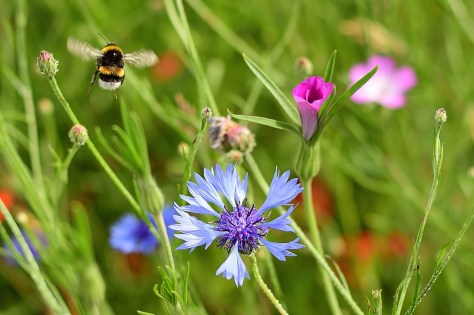
At the same time, I’m making plans for what trees and shrubs I want to put in those areas. My choices are for mostly native shrubs, trees and and fruit producing plants. Other than the usual garden centres, I’ve been looking for places to purchase native plants and have found some close by Peterborough that grow shrubs and trees. Richardson’s Pineneedle Farms in Pontypool is one. They are a major commercial grower and have a lot of native shrubs and trees for sale. You can buy in bulk there. Another one Eastern Evergreen Inc. grows white cedar for hedges and is located in Warkworth.
With an office in downtown Peterborough, Cedar Ontario has a long track record of providing healthy natural eastern white cedar trees and installing hedges throughout Peterborough and the Kawarthas.

When it opens, Ecology Park in Peterborough is another good place to purchase native plants. Their big annual plant sale is Saturday May 16th at 10 am. Remember to bring your own containers for leaf compost and cedar mulch. The bulk sales are self loading , with a 20 bucket limit per person, per visit. Knowledgeable staff and are there to help you (and often Master Gardeners are there too).

In the meantime, I’m researching trees and shrubs, drawing plans, and dreaming.






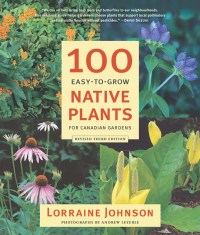 This book is, without a doubt, one of my favourite go-to gardening books! The new revised third edition of Lorraine Johnson’s book, 100 Easy-to-Grow Native Plants for Canadian Gardens, is a testament to Lorraine’s expertise. She writes in the forward that “one of the greatest satisfactions of growing native plants is that you are supporting a complex web of ecological relationships that are the basis of a healthy, resilient ecosystem.” Lorraine Johnson is the former president of the North American Native Plant Society and the author of numerous other books. She lives in Toronto.
 The photos by Andrew Layerle, along with detailed descriptions of the plants, make this book most helpful when trying to decide what native plants you would like to incorporate into your garden. I think many of us can relate to her point that “gardeners tend to be voyeuristic creatures and plant lists are our chaste form of porn”! We all crave the perfect plant and often browse through books over the winter months with dreams of starting a new garden and we wait patiently for the spring weather that allows us to once again get our hands dirty.
 The plants are divided into a number of different categories and Lorraine does a good job at listing the common name (although she warns there are sometimes many), the botanical name, the height, blooming period, exposure, moisture, habitat and range. She gives a good description, the maintenance and requirements, along with suggestions on propagation and good companions. I love that she also mentions the wildlife benefits of each plant.
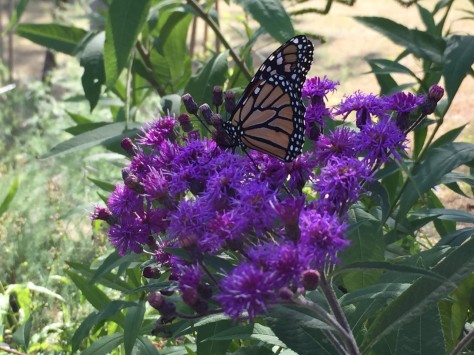
 Lorraine has also included Quick-Reference Charts at the back of the book that separate the plants by region as well as specific conditions, such as acidic soil, water requirements, etc. She has lists of plants suitable to prairie habitat, drought-tolerant plants, plants for moist areas, and plants that attract butterflies and other pollinators.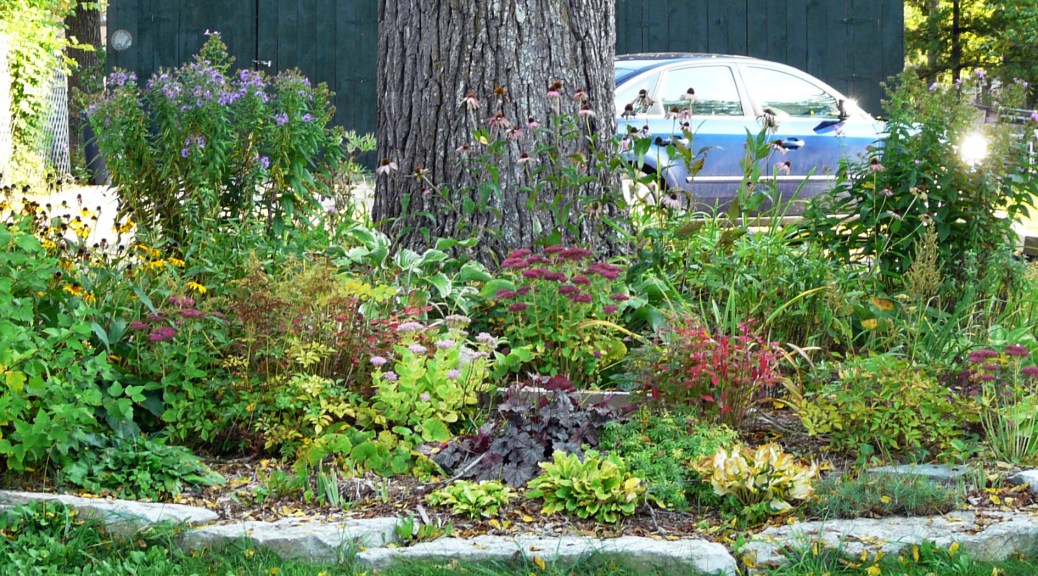
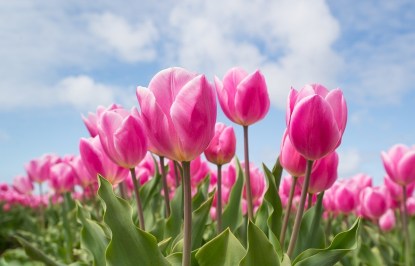 Tulips are to Turkey and Central Asia. In the 1600s, they made their way to the Netherlands. Tulipmania took hold in the 1620s and tulip prices skyrocketed. A single bulb could be worth as much as an average family farm. The market collapsed in 1637, but tulips remain widely grown in the that country. Canadians liberated much of the Netherlands during the final months of the Second World War. More than 7,200 Canadians were lost in that conflict. The Dutch have gifted Canadians with 20,000 bulbs a year since that time and they are used in Ottawa’s now famous Canadian Tulip Festival every May. This year marks the 75th anniversary of liberation and the Dutch royal family will mark the celebration by thanking Canadians this year with a gift of 100,000 tulip bulbs. If you want to join the celebration, you can purchase your own Liberation75 tulips for $15.00 through the Royal Canadian Legion. By purchasing the bulbs, you will also be entitled to win a trip to the Netherlands. To place an order visit the
 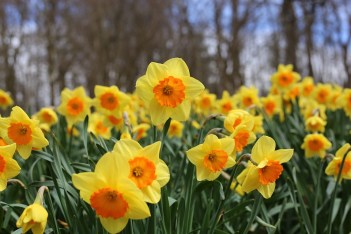 Daffodils and narcissus bloom earlier than most tulips. Spring sun is needed and they like soil that is well draining or they will rot. Oxalic acid on the bulb make them unpalatable to rodents. ‘Tete a tete’ is a mini daffodil that is very fragrant and also good for cut flowers. However, never include daffodils with other flowers in a vase as they have a sap that will cause the other flowers to wilt.
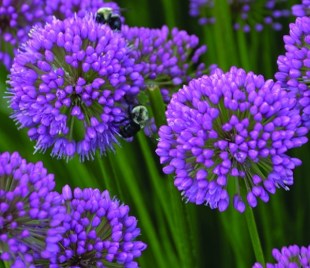 Alliums are ornamental onions. Most of the varieties bloom in June. They need free draining soil with 6 to 8 hours of sun. They make lovely dried flowers. It is best to plant alliums amongst other plants as the foliage is not desirable.


 The Peterborough & Area Master Gardeners