Category Archives: Fertilizer

Cover Your Bases with These Cover Crops

By Rachel Foebel, Master Gardener in Training

What are cover crops?  
These are plants that are seeded and grown in a specific area for the purpose of covering the soil with plant matter and then allowing that green material (and its roots) to return to the soil by decomposing, thereby feeding the soil and its constituents. Specific crops are used for this purpose as you can choose the cover crop to fit the needs of your soil or the period of time that your garden space is not being used for other crops. 

Benefits of Cover Crops  

  • Covers the soil – preventing soil run off, evaporation of moisture, and suppresses weeds 
  • Feeds microbial life in the soil  
  • Creates organic matter for the soil to feed itself with 
  • Convert atmospheric nitrogen into a form that is usable for plants 
  • Their roots can loosen compacted soil and allow for aeration as they decompose  

Where to use them?  

You can use them in any garden space that is not otherwise in use, is about to come out of production or to prepare a garden space for future use. Cover crops are often used by farmers and market gardeners, but can be used in your backyard veggie garden, annual beds, or a garden space you hope to use next year.  

image.png

Freshly mowed cover crop

Winter-Kill Cover Crops 

These are the types that you plant in early fall. They grow to a nearly mature size before winter and then are killed by the frost. They then form a nice mulch over the winter to protect the soil. Choose these varieties in spaces that you want to be able to plant early in the spring.  

Oats – Good for suppressing weeds, improving soil health, protecting from erosion. Sow 6-10 weeks before first frost.  

Field Peas – Grow well in cool weather, great for nitrogen fixation. Plant about 6-8 weeks before first frost for maximum benefit.

  Field peas in bloom

Field Peas in Bloom

Daikon Radish (Tillage Radish) – Most known for its bio-tillage capabilities. The long tap root grows deep into the soil and then breaks down over winter and early spring, aerating the soil, providing organic material for the microbes and can be useful in loosening compacted soil.  image.png

Radish Sprouts  –  I planted these around Sept 3. This photo was taken Sept 12. 

Sorghum Sudan Grass – Great for weed suppression and moisture retention in the soil. Be sure to plant when soil is still warm. It will die after frost but if planted too early will go to seed so be sure to mow before it sets seed if it hasn’t been killed by frost yet.  image.png

Mature Sorghum (when used as a cover crop you would terminate before this stage)

Cold-Hardy Cover Crops  

These are types that you plant in mid to late fall. They begin to grow in fall, become dormant in the winter and re-emerge in the early spring. You then wait for them to develop appropriate bio-mass and terminate before they go to seed. These are usually more difficult to terminate and may require tillage, crimping or tarping. Choose these varieties for a space in the garden that won’t be needed until very late spring.   

Rye – Can thrive in low-fertility soil. Very cold hardy. It is recommended to till it into the soil in the spring when it reaches 12-18 in high.  

image.png

Mature Rye (Should be terminated by crimping or tilling before this stage)

Hairy vetch – Not as great for weed control at first as it is slow growing, but an excellent nitrogen fixator as it is a legume. Plant in early fall and then till or mow it down in the spring and it can remain in place as a nitrogen-rich mulch.  

image.png

Vetch Flowers

Crimson Clover & Red Clover – If allowed to grow to mid-May in the spring, will provide lots of nitrogen for the soil and provide a spring flower source for pollinators. Has a strong root system that helps reduce compaction.  

image.png

Crimson Clover

Red Clover

 Resources

Field Peas – SARE https://www.sare.org/publications/managing-cover-crops-profitably/legume-cover-crops/field-peas/ 

Radish as a cover crop – Integrated Pest and Crop Management – UW–Madison https://ipcm.wisc.edu/blog/2011/04/radish-as-a-cover-crop/ 

University of Vermont – Winter Rye: A Reliable Cover Crop  https://www.uvm.edu/vtvegandberry/factsheets/winterrye.html 

Crimson Clove Cover Crop Fact Sheet https://www.nrcs.usda.gov/sites/default/files/2024-04/Crimson%20Clover%20Crop%20Fact%20Sheet.pdf  

Hairy Vetch – https://www2.gov.bc.ca/assets/gov/farming-natural-resources-and-industry/agriculture-and-seafood/agricultural-land-and-environment/soil-nutrients/cover-crops/hairy_vetch_final.pdf  

Bokashi Method of Composting

By Marjorie Vendrig, Master Gardener in Training

Five years ago I moved from a large rural garden outside Ottawa to a small urban lot in downtown Peterborough. One of the biggest changes in my gardening practice was making the switch from large, multi-bin composting to a single, small, black plastic bin. Over the years in my Ottawa garden I had developed a good system for adding kitchen and garden waste, turning the compost, adding leaf mulch,  then spreading the compost over the gardens. Here in Peterborough, my small plastic bin was productive on a smaller scale but the raccoons, bunnies, and rats managed to chew through the plastic and serve themselves. It was more of a mess than a benefit. They defeated me. Thankfully, the municipal kitchen waste program kicked in about the time the racoons moved in, giving me a reasonable alternative for kitchen waste. My garden wasn’t getting much benefit except for the fall leaves that I mulched and put over the beds.

I realized that I really miss composting and I would prefer to be putting my own food scraps back into my garden.  I started looking into composting systems for small spaces and came across bokashi composting. It’s not really composting, rather a fermentation process, and described as perfect for small spaces. Sometimes called a ‘pre-compost’ process,  the fermented results are added to worm compost or outdoor compost where decomposition is completed. It’s also anaerobic so there’s no need to turn the compost or layer materials. The process is fairly fast, about two weeks for the initial fermentation step. Any kitchen waste, including meat, cheese, oil, can be added. Bokashi is a Japanese word meaning fermented organic matter; the practice originated in Japan.

The anaerobic fermentation process  requires an accelerator, something like a starter for sourdough baking. It is often referred to as ‘bokashi bran’, the bran inoculated with microorganisms – fungi,  lactobacteria, phytobacteria.  It’s easy enough to put together a homemade system with a few 5-gallon buckets –  one with a tight sealing lid – and other household items. One bucket should have holes drilled in the bottom; this bucket is placed inside the other; the holes allowing any moisture from the fermenting food to drip into the bottom bucket. Fill the top bucket with layers of small 2 – 3” kitchen scraps and bokashi bran until the bucket is almost full, cover and press with a layer of waxed paper, a cloth, or even some foam before sealing the bucket with the lid and leaving for a few weeks to ferment.  After about one week some white mold with develop, after two weeks the bucket will smell like pickles and the fermented material can be buried in the garden about 6-12”deep. It will decompose fairly quickly in the garden and planting can be done around the fermented trough after a few weeks. Alternatively, it can be added to the compost heap or even into a large tub of soil indoors where it will continue to decompose. Any liquid  – the ‘tea’ in the bottom bucket can be added to the compost or garden as well.

Bokashi bran is widely available online and at some garden centres; it’s also possible to buy a kit that includes bran, several buckets, and instructions. The buckets in the kits often have a tap and reservoir so the ‘tea’ can be collected at the bottom of the bucket.  Like sourdough starter, the bran can be made at home, though some starters work more quickly than others. It’s worth experimenting to test a few products and compare results. I’ve learned that a few cities in western Canada have municipal bokashi programs so it is possible in colder climates. On a large scale, it is also being trialled at Sissinghurst, a famous garden in the UK. 

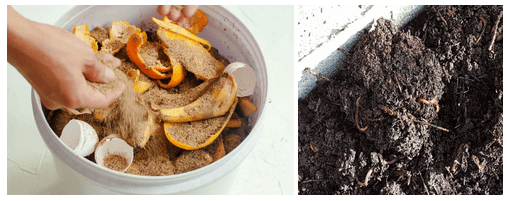
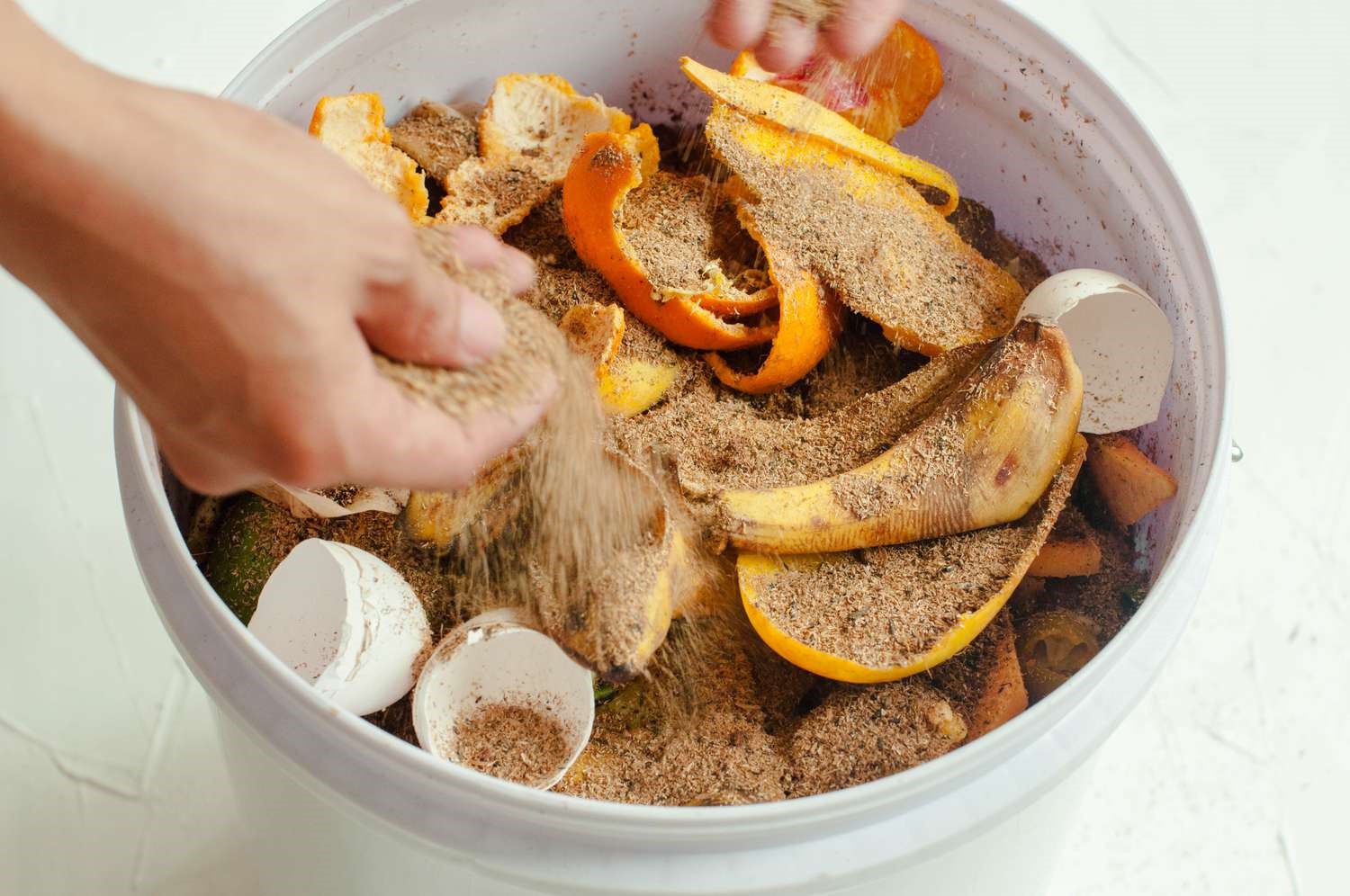
The image on the left shows bokashi bran sprinkled on kitchen scraps.

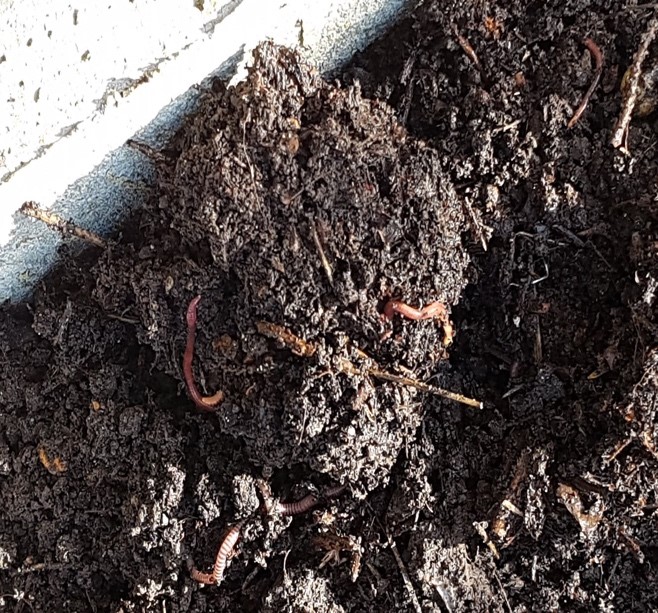
The image on the right shows soil with fermented kitchen scraps after a few weeks in soil.

Resources

https://www.saskwastereduction.ca/recycle/resources/composting/bokashi-buckets/

https://en.wikipedia.org/wiki/Bokashi_(horticulture)#:~:text=Bokashi%20is%20a%20process%20that,by%20specialist%20bacteria%2C%20not%20decomposed.

https://www.gardensillustrated.com/garden-equipment/lifestyle/best-bokashi-bins

Managing your Lawn

By Carol Anderson, Master Gardener in Training

Have you ever looked out at your lawn and wondered why it is not as lush and green as the neighbors? Have you tried seeding and fertilizing your lawn but are still unhappy with the results? Here are some considerations that may help you create a lawn management plan that is successful in helping you achieve what you are looking for. Keep in mind that a healthy thick lawn will reduce your lawn susceptibility to pests and disease…so keep it healthy!  And if you suspect an insect infestation such as chinch bugs (see Figure 1), web worms or grubs, you must endeavor to address this first. Similarly, a lawn with a heavy weed infestation requires special treatment, perhaps even a full lawn “renovation”, prior to a lawn management plan being initiated.

Figure 1. Chinch bug damage (https://www.ontario.ca/page/hairy-chinch-bugs-lawns)

Lawn Management Plan:

Watering: One of the most misunderstood, yet critical, elements of any lawn management plan is ensuring that your lawn receives the proper amount of water. A specific watering schedule cannot be provided given that each lawn is subject to different environmental conditions impacting its’ watering requirements. For example, the lawns facing south/west will dry out very quickly, depending upon the amount of shade. In contrast, lawns facing north/east will tend to hold moisture much longer and will require less frequent watering.  The general rule of thumb is that a lawn typically requires about 1” (30cm or 300mm) of water per week to stay healthy. If there is sufficient rainfall and overcast days, no watering may be required 😊. However, if you determine that watering is required (soil feels dry several inches below grade), the following guidelines should be followed:

1.           Sod should not be watered in the middle of the day. Sunlight on a freshly watered lawn will burn the grass blades as the water droplets act as a magnifying glass for the suns’ rays. Sod is best watered in the early morning. Watering grass at night leads to infestations with grubs and other sod loving parasites and can facilitate fungus spores to develop.

2.           It is important to water your lawn deeply and less frequently. Why? It is very important to encourage grass to grow roots that are deep in the soil. Frequent light watering encourages superficial roots to develop and eventually the creation of grass that is not drought tolerant. A good rule of thumb…a sprinkler set for 30 minutes should provide the necessary moisture to thoroughly wet the sod 4-6” below the surface.

3.           Keep in mind…once your lawn is beginning to turn brown…it is too late to start watering it!! Try to stay on top of watering and watch the weather…hopefully mother nature will help you out!

Mowing and “Grass-cycling”: Under normal conditions, an established lawn should be mowed with the blades at a height of 2½ – 3” with sharp mower blades.  For many, this feels too long. However, removing too much of the grass blade puts the lawn into a state of stress making it susceptible to disease and insect infestations.  Under normal circumstances, grass clippings can be mulched and left on the lawn (grass-cycling) as a source of additional nutrients, protection from dehydration and to attract earthworms that will naturally improve both aeration and water filtration. However, in the Spring IF the grass is heavy with moisture, and the lawn is growing quickly, you may wish to remove grass clippings.

Dethatching (deep raking): A lawn with a high percentage of fescue grass will benefit from dethatching – the removal of a thick layer of dead grass and roots that have not decomposed. This should be done if thatch is present and before aeration and topdressing the lawn.

Aeration & Topdressing and “Grass-cycling”: Grass needs nutrients and your lawn might benefit from adding a thin layer of top-dressing (compost) on the surface, particularly if the soil has a lot of clay. A lawn that has a large amount of clay will need to be top-dressed regularly with compost to provide both a steady supply of nutrients, and to improve the soil texture and water/nutrient holding capacity over time. This can be done in the spring and fall. Aerating with a core aerator, topdressing with compost and then raking will break up the cores and improve the penetration of the compost into the soil.  

Fertilization: To maintain healthy lawns, 1.5-2.0kg/100m2 of nitrogen is recommended. If using a slow-release fertilizer, it can be applied twice in the growing season (spring, late summer/early fall), with a third application of specially formulated “winter” fertilizer in late fall. Keep in mind that grass grown in the shade requires ~ 50% less nitrogen than a lawn in the sun, so it is advisable to reduce the fertilization rate by one half in the shady areas of the lawn.

Overseeding: If your lawn could benefit from thickening, overseeding should be done in the late summer/early fall when there is less competition, and the roots can take hold.

In the end, if you desire a beautiful and lush lawn, with a little bit of work and a good management plan, you can achieve this. If your lawn is suffering from a significant weed infestation, or poor soil, you may require a full “renovation” – stay tuned for my next in the series to learn about what to do!

5 Simple New Year’s Resolutions for Gardeners

by Emma Murphy, Master Gardener

As this year ends, I’m offering a few New Year’s resolutions for gardeners for 2024. If you want more of a challenge, the Chicago Botanic Garden offers 50.

Add Native Plants To Your Garden

  • We’re all seeing the effects of climate change on our gardens.
  • Native plants adapt more readily to stressful and changing weather patterns, such as prolonged droughts or winter cold snaps, than hybrids and non-natives often seen in our nurseries.
  • Native plants help sustain beneficial insects and bird populations because they attract native pollinators and birds that might not be drawn to non-natives.
  • Create less work for you, as native plants tend to be lower maintenance than non-native ones.
  • The Native Conservancy of Canada offers some suggestions to get you started, or consult with your local Master Gardener group or Horticultural Society.
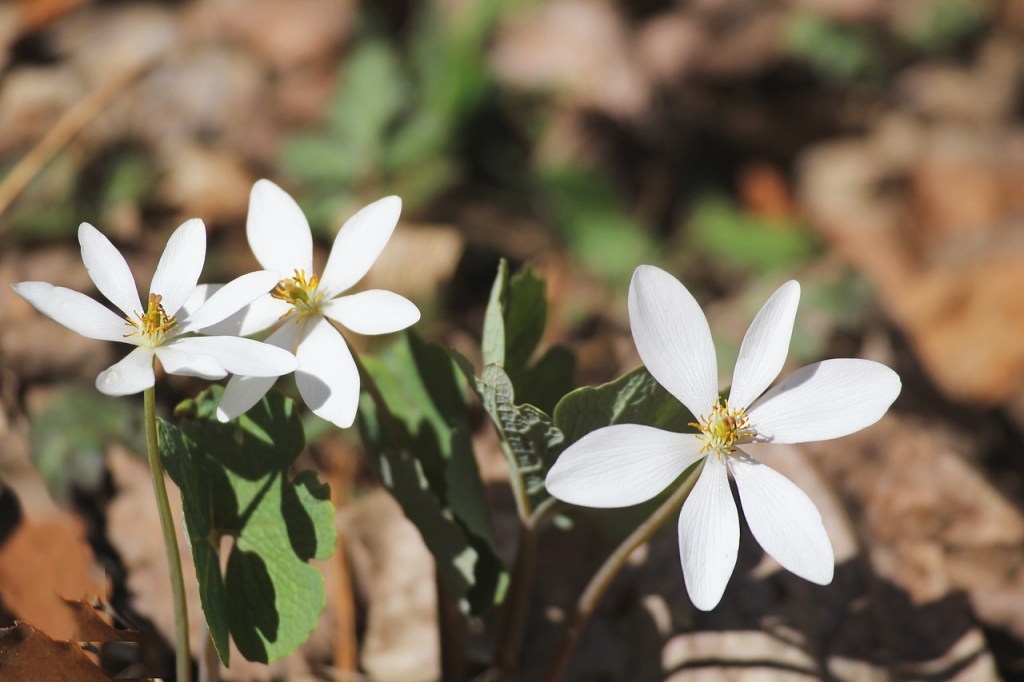
Bloodroot, Sanguinaria canadensis

Start A Compost Bin

  • Composting helps keep waste out of landfill by collecting and processing organics into material that can be used to create nutrient-rich compost used to feed and nourish soil.
  • Canadian Living offers a simple outline, as shared by Ed Begley  Jr.
  • Or more here from the Thames Region Ecological Association, including troubleshooting issues.
Compost bin

Grow More Of Your Own Food

  • The pandemic has highlighted how our agricultural systems are vulnerable to global shocks. Issues with supply chains, migrant workers, transport, trade and border closures have resulted in some foods being in short supply or prices going up (while quality goes down).
  • Insects do all the hard work, and all pollinators benefit.
  • Gardening provides benefits for your wallet, your nutrition, and reduces your environmental footprint. By growing your own food (either from seeds or small plants), your food is automatically more sustainable simply because you are doing it onsite or in a community garden. If you control the ‘inputs’ and do it well, you can save a lot of money.
  • Ultimately there is nothing more rewarding than planting and maintaining your own vegetable garden and harvesting (and sharing) your results. And we all know how much better homegrown produce tastes versus conventional produce at the grocery store. If you have too much produce, then you can just share the love with others!
  • Royal City Nursery in Guelph offers 8 Reasons to Start Growing Your Own Food from Seed
Creating a vegetable garden

Continuous Learning

  • Do what you love but keep on top of what’s trending in garden design to see if anything sparks your interest.
  • Keep track of what’s working and what’s not by documenting your garden happenings in a journal.
  • Expand your garden library and treat yourself to a new gardening book.
  • There are so many amazing (and free) garden webinars available now – learn from the experts.
  • Some of my favourite bloggers – The Impatient Gardener (in Wisconsin, similar climate to us), The Empress of Dirt (Ontario), Niki Jabbour (Halifax), The Laidback Gardener (Montreal), and Garden Myths (Robert Pavlis in Guelph, Ontario).
Online learning is a great opportunity

Reduce Your Use Of Plastic

  • Plastic is a major component in the garden, from plastic plant pots and seed trays to watering cans, and compost bins. Most plastic gardening equipment will end up in landfills, where plastic pots alone can take up to 500 years to decompose.
  • There are a few easy swaps you can make in going plastic-free: Many of us want to use less plastic in the garden, from plant labels to watering cans, tools, plant pots and the sheeting used to suppress weeds. Buying (and therefore using) less plastic will not only reduce your plastic footprint but also sends a message to manufacturers that gardeners want alternatives to plastic (especially single-use plastic).
  • Try to find biodegradable pots that made from natural materials such as coir, bamboo, wood chips, or seaweed (or commit to using your plastic pots year after year).
  • If you use plastic string, make the swap for a natural jute or hemp, and protect your fruits and vegetables with metal mesh instead of plastic netting – it lasts for years.
Find alternatives to plastic pots, or commit to using (and reusing them) for many years

Happy gardening dreams until we can get out into our gardens again….

To Fertilize or Not Fertilize?

By Lois Scott, Master Gardener

Gardeners are typically highly invested in having a beautiful and productive garden and want to do what is best for their plants.  Although fertilizers are very often considered a necessary tool in providing optimal growing conditions they should be used with care and only when a soil test says they are needed.  https://www.ontario.ca/page/soil-leaf-and-petiole-tissue-and-forages-and-feed-testing-labs

Commercial fertilizers or ‘plant food’ usually list three major nutrients on their products; nitrogen, phosphorus and potassium or N-P-K.  These are very important plant nutrients but according to Linda Chalker-Scott PhD, author of the book “How Plants Work” https://horticulture.wsu.edu/people/chalker-scott/ “Our home landscape soils usually have enough phosphorus and potassium to meet our plant’s needs.  So, wouldn’t more be better?  She goes on to explain that excess levels of phosphate fertilizer can be bad for soil organisms by inhibiting the “development of the mycorrhizal relationship between fungi and plant roots causing plants to expend more energy for root growth.  Another negative aspect of excess phosphorus is that it reduces the ability of plants to take up iron, a plant micronutrient.  Excess phosphorus may also dissolve in runoff water causing blooms of harmful algae, depleting waterways of oxygen.  Organic fertilizers such as bone meal, guano and chicken manure can also create an excess of phosphate in the soil”. https://gardenprofessors.com/fertilizers-a-cautionary-tale/

When your vegetable garden and/or annuals are growing abundantly but you start seeing older leaves turning yellow, your soil may need a boost of nitrogen-rich fertilizer.  Nitrogen can become deficient in an actively growing garden and using something like alfalfa meal can replenish it.

Slow and steady may be the best approach to providing your plants with the ideal growing conditions.  According to Dr. Chalker-Scott, “using organic mulches like composts, wood chips and pine needles provide a slow feed of nutrients to the soil, the way that nature provides nutrients”.

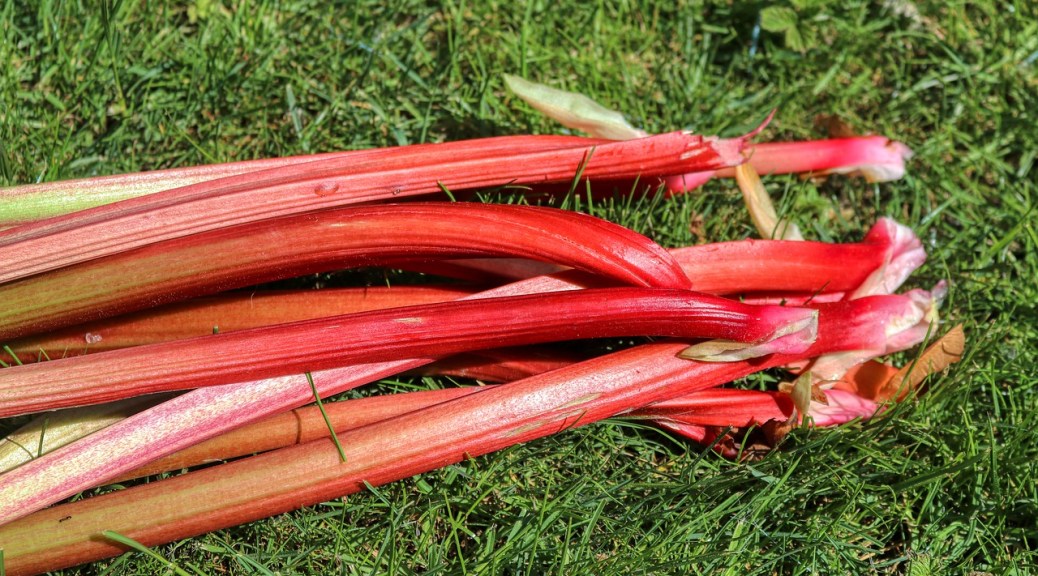
Rhubarb

By Lois Scott, Master Gardener

It is early May and my husband has been watching the rhubarb emerging with great anticipation.  I like rhubarb, he loves rhubarb and it will soon be time to start harvesting the stalks (petioles)!

Rhubarb (Rheum rhabarbarum), native to central Asia,is an easy, hardy, and edible perennial.  Technically a vegetable but treated as a fruit, it is long-lived, easy to care for and bothered by few pests and diseases. 

Rhubarb is sold by ‘crowns’ or perhaps you can get a division of a plant from another gardener.  Spring and early fall are the best times to plant it.  Rhubarb likes a well-drained site with full sun (6-8 hours minimum).  Give your plant plenty of space to grow, about 3m2.  Rhubarb is a heavy feeder so mulch around your new or established plant with compost or well-rotted manure.  I generally give mine a spring dressing of compost as it starts to emerge in the spring.  Rhubarb should be watered deeply during times of drought.

A new rhubarb plant will need a couple of years to get established before you start harvesting it.  Don’t harvest any stalks the first year and then very little the second year.  The plant needs those large leaves to develop to provide energy for the roots and crown to grow.  Over the growing season, flower stalks will start appearing and these should be cut off at the base to reserve energy for the plant.

Rhubarb is ready to harvest when the stalks are 25 – 40 cm long.  Grab the stalk part way down and pull or twist to the side.  When I pull rhubarb, I come prepared with a paring knife and cut off the leaves after pulling the stalks and leave them as mulch.  Rhubarb leaves are toxic as they have high levels of oxalic acid, however they can be safely composted. 

Rhubarb is a cool weather plant so as the season warms up growth may slow down.  Let your plant rest so the crown can recover.  If you have an established plant that doesn’t seem to be as vigorous as it was, it may need division which should be done in early spring.  Dig up the whole plant if possible.  Rhubarb has a very deep tap root but if you capture enough, you can divide the plant making sure each division as at least one or two buds.  Plant your divisions with the buds 4 – 5cm deep, gently firming the soil.

The only other job to do is weed through all the tempting rhubarb recipes.  Enjoy!

https://extension.psu.edu/rhubarb-be-patient-and-you-will-be-rewarded

Regenerative Agriculture and the Garden

By Marilyn Homewood, Master Gardener

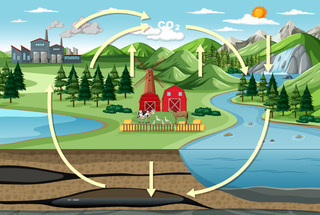
Regenerative Agriculture describes soil management practices that help to reverse climate change while rebuilding soil organic matter and restoring degraded soil.  Through photosynthesis, plants remove carbon from the atmosphere and sequester it in the soil. In addition to carbon sequestration, practices that increase soil organic matter also increase biodiversity both above and below the soil surface, while increasing water holding capacity and improving soil structure helping to reverse soil loss. 

Carbon cycle diagram with nature farm landscape illustration

While the movement was initially geared towards farmers, more and more gardeners, particularly those involved with the growing of annual crops, have adopted some of these principles recognizing the benefit for both the garden and the environment.   In fact, many of the practices have been employed by gardeners for years without realizing how the benefits for the environment.

Regenerative Agriculture aims to:

  • generate/build soils, increase soil fertility and health;
  • increase water percolation and water retention;
  • increase biodiversity, ecosystem health and plant resiliency;
  • increase carbon sequestration thereby helping to cleanse the atmosphere of excess CO2.

Specific Practices include:

  1. No-till/minimum tillage. Tillage breaks up soil and destroys soil structure. Tillage greatly increases soil erosion and releases carbon sequestered in the soil.  A secondary effect is soil capping and slaking that can plug soil spaces reducing water percolation creating  more water runoff and soil loss.

Conversely, no-till/minimum tillage, enhances soil aggregation, water infiltration and retention, and carbon sequestration. Some soils benefit from interim ripping to break apart hardpans which can increase root zones, improved soil structure and carbon sequestration. At a low level, chiseling in some beds may have similar positive effects.  Cracking the soil slightly allows amendments such as compost to infiltrate the soil without damaging it.  A broadfork can be a very effective tool here.

Lasagna gardening or Charles Dowding’s No Till Gardening Methods are good examples of these practices.  One can put away the roto-tiller and get a broadfork instead.

Fall garden after upper stalks have been removed leaving plant crowns and roots

2. Increase soil fertility biologically through application of cover crops,crop rotations, compost, and animal manures.  These increase the soil organic matter and restore the plant/soil biome which promotes the cycling of essential soil nutrients. Increased organic matter (OM) enhances soil structure, increases porosity which increases water infiltration and drainage.  Increased OM also stores and supplies micronutrients and enhances soil microbial populations. A tip for annual beds; When removing the plant in the fall, only remove the portion above ground.  Leave the root ball in the ground to decompose over winter.

3. Build biological ecosystem diversity with inoculation of soils with composts or compost extracts to restore soil microbial community population and functionality. Restore soil system energy through full-time planting of inter- crop plantings, multispecies cover crops, and borders planted for bee habitat and other beneficial insects.

Increased organic matter means more friable soil.  Friable soil means deep roots; increased biological activity mean more nutrients released for plant use and microbial diversity means less disease.  The result is healthy, vigorous plants that need less watering, less additional feeding/supplementation and less treatment for disease while sequestering carbon at the same time.  That is a win win!

“Earth is what we all have in common” Wendell Berry

Resources:

https://www.csuchico.edu/regenerativeagriculture/ra101-section/ra101-definitions.shtml

https://www.bbc.com/future/article/20211020-carbon-farming-a-better-use-for-half-earths-land

Ode to the Clematophile!

By Cheryl Harrison, Master Gardener

I can not claim to be a clematophile (Clematis expert) but I do like Clematis!   Clematis are wonderful perennial flowering plants … many grow as vines, some are more like small shrubs, some are evergreen and some are herbaceous so die back to the ground each winter.  Their flowers come as bell-like or more star-like shapes with sepals that are single or double; some are scented.  And the colours!  They range from white or yellow to pink or red to purple or blue … pale to deep and some are even striped.  Some flowers grow as large as 25 cm (10in) across!  The beautiful clematis blooms are followed by eye-catching fuzzy seed heads.  There are lots of choices in the genus Clematis.

Clematis seed head

Clematis grow in zones ranging from 3-11.  If you are not sure which zone you are in, check here.   Choose a plant from a reputable dealer.  Look for those that have strong stems and are at least 2 years old so that their root structure is well developed.  Most Clematis prefer sun or part shade but like their roots kept cool so mulch or plant another perennial close by to shade the roots.  Plant your Clematis in moist but well drained soil with lots of well-rotted, organic matter (eg. finished compost) added.  Plant the ripened stem (brown, no longer green) about 16 cm (6 in) below the final soil level.  Clematis prefer neutral to slightly alkaline soil.  All new plants need to be watered regularly until they are established and during dry conditions.  Fertilize with an all purpose organic fertilizer monthly but stop when flower buds are ready to bloom in order to prolong bloom time.  You may start fertilizing again after flowering has ended but stop feeding in late summer early autumn.

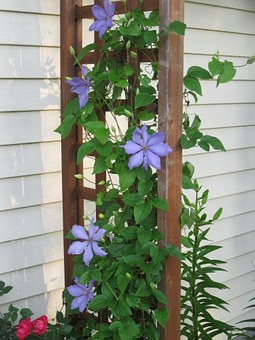
Clematis on trellis

Pruning your Clematis for the best blooms may seem complicated.  The confusing part for me was that some references refer to groups 1,2,3 and others use group A, B, C  while others will use the species names.  What is important is knowing what you have and then you can determine how to prune.  Read your plant label for pruning directions or if you do not know which Clematis you have:

When does your Clematis flower?

  1. *flowers on old (previous year) wood in early to late spring, early summer.
    *does not need regular pruning – prune to remove damaged stems or to keep your plant tidy and growing within it’s allocated space.  Prune after the flowering period has ended.
  2. *flowers  early on old (previous year) wood and again in late summer on new current year’s growth. 
    *prune to remove damaged or weak stems and the early flower shoots (encourages the second period of flowering) immediately after the early flowering period.
  3. * flowers on current year’s growth in mid to late summer. 
    * prune back all of the previous year’s stems to the lowest pair of live buds in  early spring.
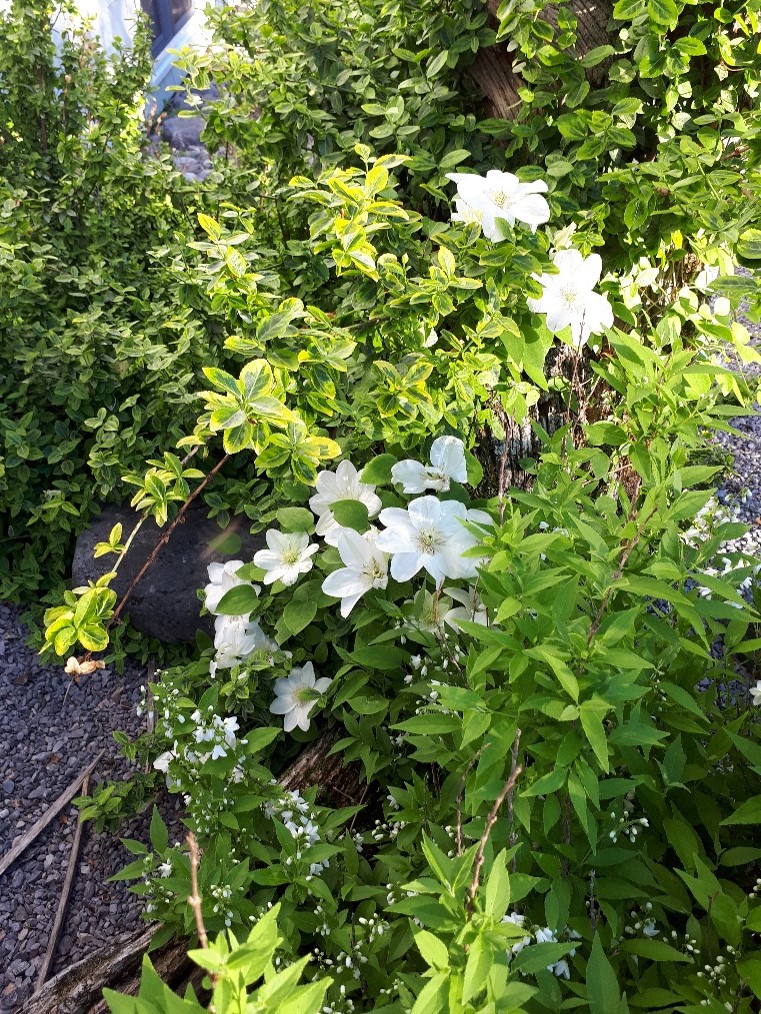
Clematis growing through shrub, author’s garden

Clematis may suffer from snails, slugs, aphids or mildew.  Clematis wilt is a fungal disease that may result in the sudden collapse of a previously healthy plant.  Cut back affected part of the plant, even right to the ground if necessary, if fungus wilt occurs.  I have to say that I have only ever experienced the odd slug-chewed clematis leaf in my garden just east of Peterborough.

Clematis will grow on a trellis and in a container, through the branches of another shrub or even up into trees.  It may be used as a ground cover and the shrub types look great in the perennial border.  Clematis flowers are lovely and will attract pollinators and provide them with pollen and nectar.

Read plant labels, talk to garden nursery staff  and other gardeners in your area and/or google to ensure that you purchase the clematis that is right for you.  We may not all become clematophiles but we can still have some of these wonderful plants in our gardens!

For more information check out:

Clearview Horticultural Products – Clematis and Vine Guide

International Clematis Society

Timber Press Pocket Guide to Clematis by Mary Toomey with Everett Leeds and Charles Chesshire, ISBN-13:978-0-88192-814-3

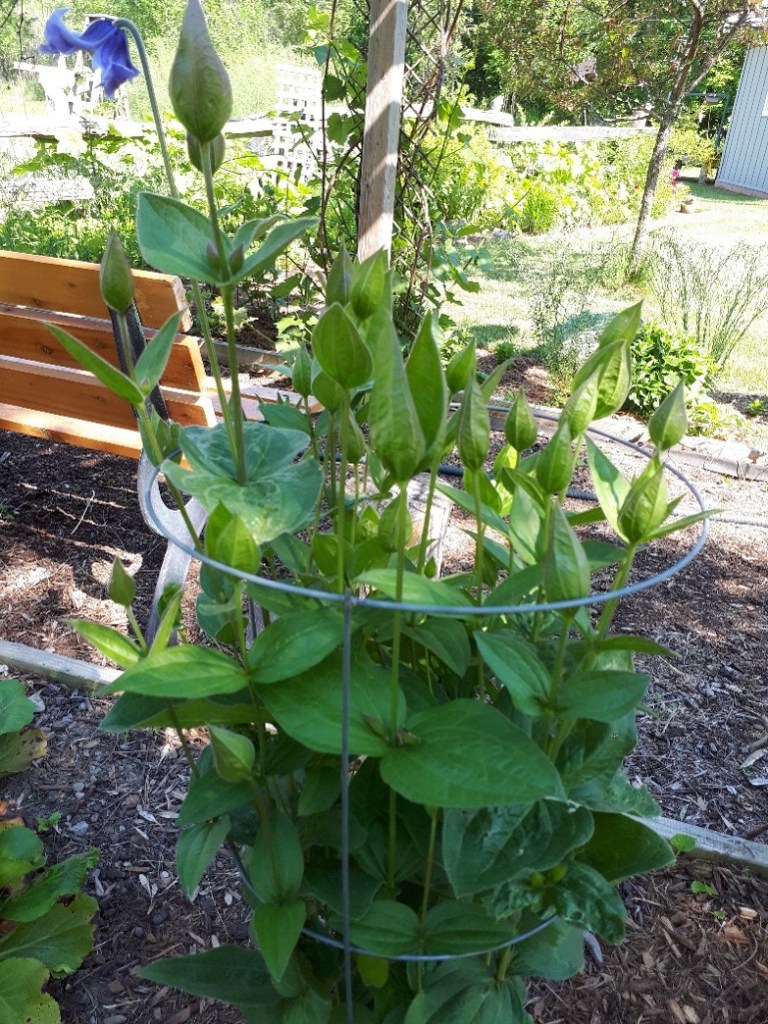
Clematis ‘Stand by Me’, bush type, author’s garden

don’t be afraid!

By Cheryl Harrison, Master Gardener

The idea of growing and caring for orchids may be daunting, but perhaps you would like to try something new.  Don’t be afraid! A few years ago, I was seduced by a beautiful, exotic bloom and bought my first orchid.  I was very happy to discover that even I could successfully grow orchids!

All of my orchids are  Phalaenopsis orchids; these are the easiest ones to grow.  I love the airy sound of the Latin name and it suits the common name perfectly which is “moth orchid”.   These orchids bloom in many different gorgeous colours and have shiny, thick and leathery green leaves.  Their aerial roots are part of what makes them look so exotic.  They like the average home’s indoor temperatures and light levels so make great indoor plants.

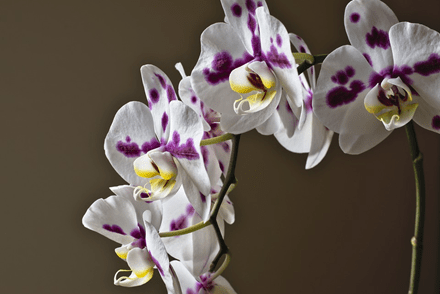
Phalaenopsis orchids.

Phalaenopsis orchids are epiphytes, or air plants, which means that they grow on rocks or trees in their natural, usually tropical or subtropical, habitat.  They get much of their water and nutrients from the air.  As indoor plants, these orchids will need to be potted in a special potting mix.  Orchid potting mix often contains bark, vermiculite, perlite and moss. Regular potting soil retains too much water which will rot the roots of your Phalaenopsis orchid.  Orchid pots often have holes in the sides of the pot in order to keep the roots well aerated. This inner orchid pot is then often placed in an outer more decorative pot as shown in the picture above.  Orchids need to be repotted every 2-3 years as the bark in the potting mix breaks down.  Orchid potting mix is available from many of our local nurseries.

Phalaenopsis orchids do not like direct sun but will do well in indirect light close to an east or west window.   You may put them outdoors during the warm summer months but not in direct sunlight.  They like high humidity and may benefit from sitting on a drip tray.

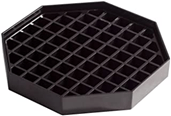
Example of a drip tray.

I water my orchids once a week.  I flood the surface of the potting medium with room temperature, non-chlorinated water until it runs through the bottom of the orchid’s pot.  I allow the excess water to drip from the bottom of the orchid pot before placing it back into its outer pot.   I have also used ice cubes to water my orchids.  Place 2-3 ice cubes on the surface of the potting media, not on the plant, once a week, and let them melt.  I know, I know, ice to water a tropical plant??!!  The Ohio State University and the University of Georgia did some experimenting to prove that ice cubes will not harm your orchid.  Check out the results here (Watering Phalaenopsis orchids with ice cubes) .  I do not fertilize my orchids but if you wish to do so here is a link (How do I feed my orchid).

When you purchase your orchid, it may be in full bloom.  Don’t just look at that beautiful bloom!  Check the plant for signs of poor health, disease and/or pests.  The plant’s leaves should be firm, shiny and green not pale and floppy, wrinkled, cracked or missing pieces.  There should be no insects living on your plant.  If you can, look at the roots in the pot, make sure that they are white/cream coloured.  Black/brown roots indicate root rot.  The best place to purchase your orchid is from a reputable local nursery.  Big box stores may have what appear to be lovely plants but you may bring home more than you bargained for…perhaps pests or disease that will kill your orchid and infect your other indoor plants. 

The gorgeous blooms on your orchid will eventually die and drop off.  Cut the flower stem back to the node closest to the where the bottom flower was located.  The stem may die then you will cut it off close to the parent plant or it may develop into a new flower or a baby plant called a keiki.  Cooler night temperatures may encourage reblooming.  I move my plants to my cooler basement to encourage them to rebloom.  Note that they are still exposed to lots of indirect light during the day in my basement.

Don’t be afraid.  Give Phalaenopsis orchids a try.  They are well behaved indoor house plants and their blooms are spectacular!

Phalaenopsis orchid.

Resources

American Orchid Society   
Canadian Orchid Congress

Is it time to rethink our lawns?

by Emma Murphy, Master Gardener

Full disclosure – I have never been a fan of lawns. I’ve had a 20 year plan to convert my large property to perennial gardens and paths, and I’m getting there, slowly but surely. 

However, I am fascinated with how (and why) people are so attached to their square green spaces of grass. 

A little history first..

Lawns became popular with the aristocracy in northern Europe from the Middle Ages onward, evolving as a sign of wealth.  Originally they were mostly used as pasture – lawns like we have today first appeared in France and England in the 1700s when André Le Nôtre designed the gardens of Versailles that included a small area of grass called the tapis vert, or “green carpet”.

versailles-4074418_1920

Immigrants to North America brought these traditions with them as they settled the land. Particularly after the Second World War, the creation of the middle class and suburbia and the advent of chemical fertilizers led to a North American culture of ‘the lawn is king’, with the requirement that it was every homeowner’s responsibility to keep it watered, mowed, repaired, and cultivated, just like their neighbours. One article I read even went so far as to blame the rise of lawns on the Scots, who brought their love of lawn bowling and golf to this continent (and therefore the need for flat green areas).

lawn-mower-2127637_1920

Lawn is a cognate of llan which is derived from the Common Brittonic word landa (Old French: launde) that originally means heath, barren land, or clearing.

Lawns are expensive to create and maintain, so why do we still have them? Simply put, the belief is that lawns are indicative of success – if you have a well maintained lawn you have the time and money to create and maintain it, and you care about belonging to your neighbourhood.

Fast forward to current times, where we now see articles in the Globe and Mail asking whether “it’s time to decolonize your lawn” and efforts are underway in many areas to convert lawn areas into more ecologically responsible landscapes to support our pollinators, birds, and wildlife. Whether you simply overseed with some white clover, and reduce or eliminate fertilizers, or convert your entire lawn into a wildflower meadow, there is a full range of options to consider.

Such changes have not been without their challenges. A recent newspaper article shows the conflict between those who want a new attitude towards our properties. Nina-Marie Lister, a Ryerson University urban planner and ecologist removed all her lawn, replacing it with “a lush and layered landscape” filled with “milkweed, boneset and black-eyed Susans, among other plants largely native to the region.” Her neighbours complained and she was visited by a Toronto city bylaw officer – under Toronto’s municipal code, residents need to “cut the grass and weeds on their land” whenever they grow past 20 centimetres.

The comments community lit up, and well known gardener Lorraine Johnson even penned an editorial in the Toronto Star about it.

houseonriver 044 (2)

Naturalized gardens are becoming a widespread phenomenon, and municipal bylaws will continue to be challenged by those that advocate for increasing biodiversity by creating landscapes that support an abundance of species of flora and fauna. Wouldn’t it be interesting to see someone complain to bylaw about a green lawn destroying biodiversity, filling the landscape with chemicals, wasting water by watering, and creating air and noise pollution through mowing? You see, it’s all a matter of perspective.

The debate is far from over, but gardeners should enter the discussion and think about whether there is a way for their green spaces to be just a bit more ecologically friendly.

Whatever your opinion, I encourage you to read these articles and think about the issues surrounding our garden spaces. I know I will never convert the staunch, lawnmower riding king to create a wildflower meadow, but if I just get a few people to think about how they can make a small difference in their own backyards I will be happy. I don’t have all the answers – I just want to stimulate the discussion.

FUN FACT – clover was an accepted part of lawns until the early 1950s, only becoming a ‘weed’ because the earliest 2,4-D herbicides killed it off along with the dandelions.

For those interested the Canadian Society for Organic Urban Land Care is hosting an online discussion and learning series on the role of land care, horticulture and landscaping in cultivating social and land equity. One of the topics is “Cultural values and how they frame horticultural norms” where the colonization and control of our natural landscapes will be the topic.

For more information:

The American Obsession with Lawns

The History of Lawns

Decolonizing Horticulture by Sundaura Alford-Purvis