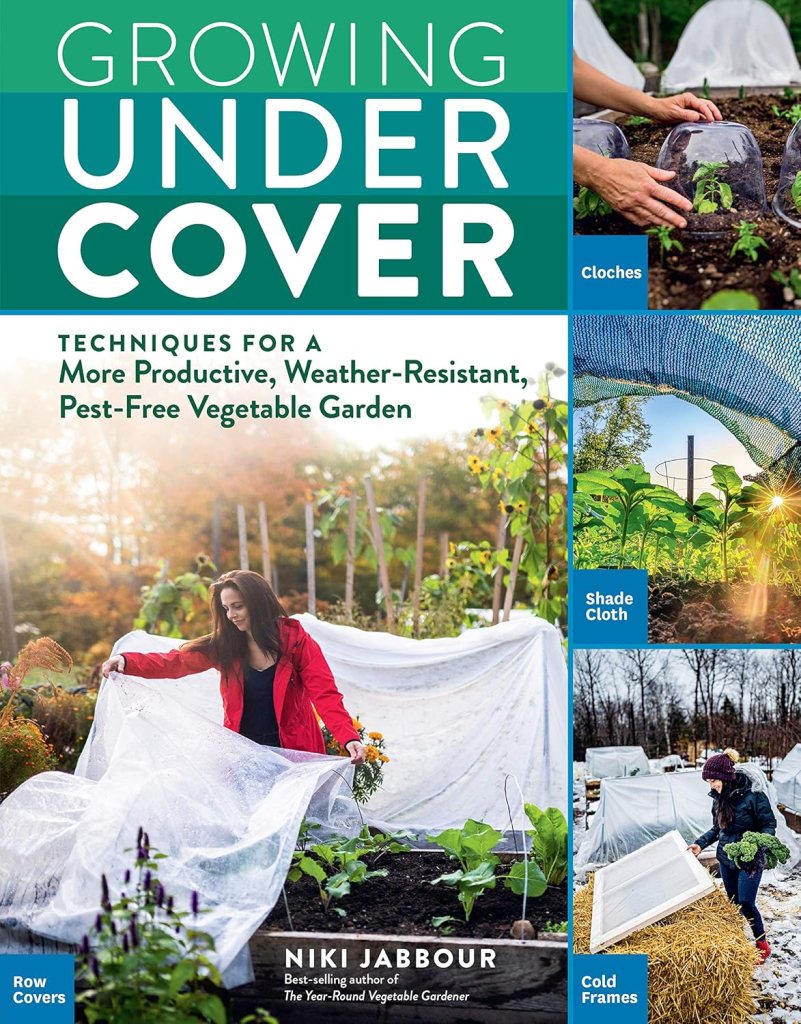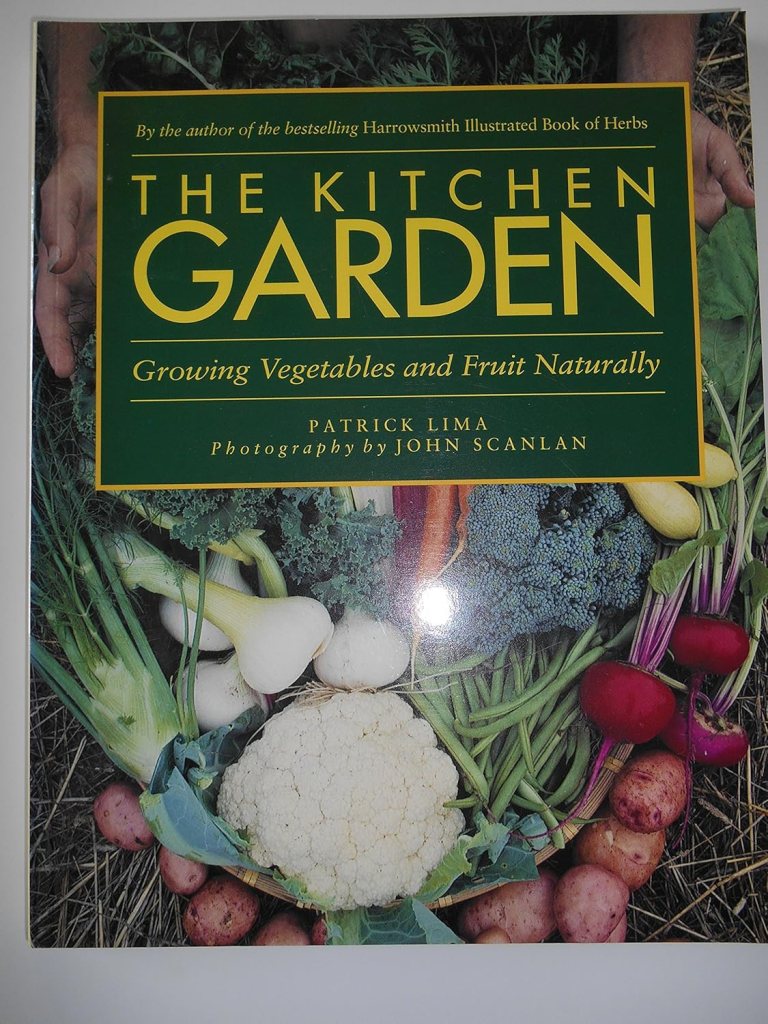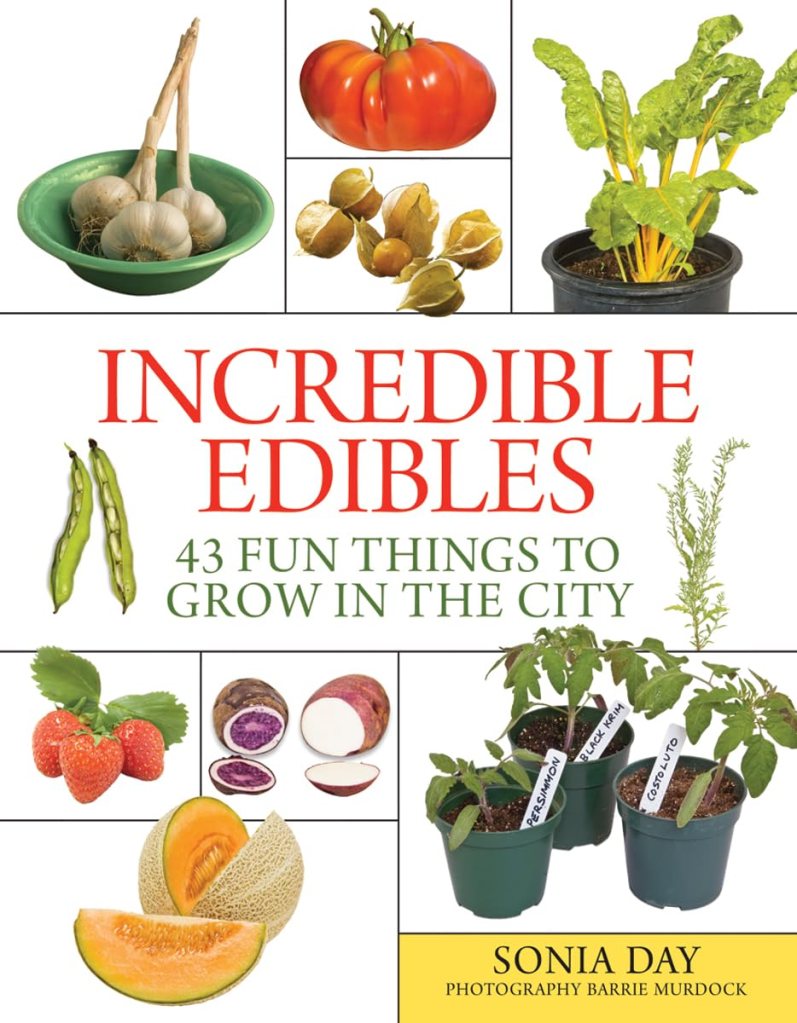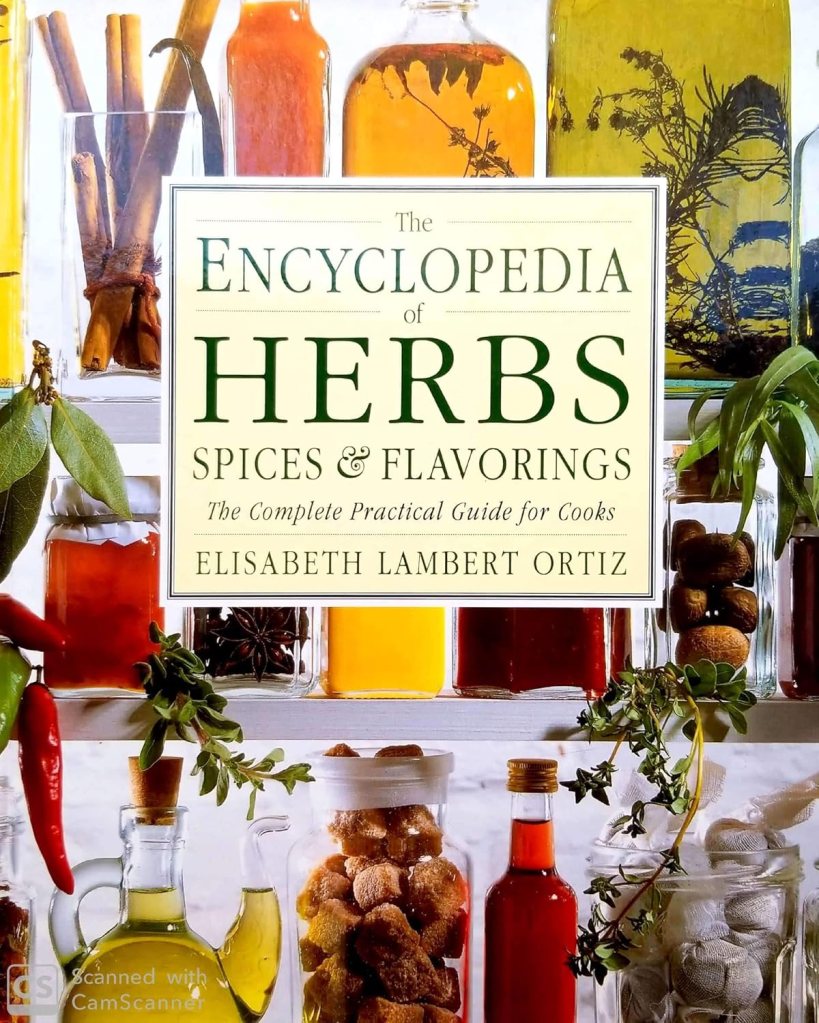
Category Archives: Books

Creating a Garden Journal

by Emma Murphy, Master Gardener

Full confession – I have never kept a garden journal. I have been given one from time to time as a gift, but I’ve never got round to using them.

This winter I’m thinking about finally using one (because my memory isn’t getting any better with age!) and because I’d like to record my gardening experiments in our main perennial beds year over year, as well as my experiences with native plants in my small native plant nursery in Lakefield, Ontario.

Keeping a garden journal is a valuable practice for both novice and experienced gardeners. It helps you document your gardening journey, learn from your experiences, and plan for the future.

So Why Keep a Garden Journal?

To Track Progress – A journal can help document plant growth, flowering times, and harvest yields to see how your garden evolves over time.

Record Weather Conditions – Noting temperature, rainfall, and seasonal changes that affect your plants will help you understand their influence on growth.

For Inspiration – A journal is a great place to document ideas, designs, and observations that inspire your gardening, serving as a creative outlet.

For Improved Planning – Use your past experiences to inform future planting decisions, such as choosing the right plants for specific locations.

Pest and Disease Management – It’s great to keep a record of any pest issues or diseases, along with effective treatments, to reference in the future.

For Budgeting Purposes – Keeping track of expenses related to your gardening supplies and plants allows you to manage your gardening budget effectively.

Some Thoughts on Creating a Garden Journal

I found some great ideas on how to have a successful garden journal.

Choose the Right Format – Decide between a physical notebook, a binder, or a digital platform that suits your preferences. You might want to keep several different journals – one for your vegetable garden, one for seeds etc. It’s up to you.

Include Essential Information – Record planting dates, plant names, care instructions, and observations on growth and health. This allows you to compare information year to year.

Photos – Incorporate photos of your garden at various stages, including bloom times and harvests.

Be Descriptive – Use descriptive language to capture your feelings and thoughts about your garden’s progress and challenges. Think about how your garden makes you feel during different times of the seasons.

Create Seasonal Sections – Consider organizing your journal by seasons or gardening phases (preparation, planting, maintenance, and harvesting) for easier reference.

Set Goals and Then Reflect – Write down your gardening goals for each season and include reflections on what worked well and what didn’t.

Add Design Elements – Include sketches or diagrams of your garden layout. Use colour, stickers, or drawings to make it visually engaging.

Maintain Regular Updates – Set a schedule to update your journal regularly, such as weekly or monthly, to maintain consistency. This is one thing I will have to do in order to successfully use a journal.

Experimentation Section – Dedicate a space to document any new gardening techniques, experiments, or plant varieties you try.

Review and Revise – Regularly review your entries to spot trends and adjust for future growing seasons.

Resources and Inspiration

Toronto & Golden Horseshoe Gardener’s Journal (now Canada Gardener’s Journal)
This journal has been reimagined for gardeners across Canada, providing tools, resources, and tips for successful gardening. Started by Margaret Bennet-Alder to aid Toronto area gardeners, in 2017 she transferred ownership to Helen and Sarah Battersby and now it’s run by Steven Biggs of Food Garden Life. (might make a great Christmas gift?)

Garden Therapy
This site has several articles about the importance of keeping a gardening journal and shares tips.
How to Start Keeping a Garden Journal (and Why You’ll Thank Me)
Keeping a Gardening Journal: Reflecting on Growth and Healing

Lee Valley 10 Year Gardening Journal
A very detailed 10 year perpetual diary, where each diary page is for one day of the year, and each page is divided into 10 sections. There is a diary, a section on gardening techniques, reference material, many charts, and places to record your inventory of perennials, a place to sketch etc.

DIY Garden Journal and Planner
Discusses the importance of a garden journal and provides printable pages and organizing tips. 

Purdue University – County Extension
Consider a garden journal – discusses the benefits of keeping a garden journal and what to include.

Penn State University – County Extension
Offers insights into Keeping a Garden Journal.

The Garden Continuum
Why a Journal is a Gardener’s Best Friend – explains the benefits of and tips for choosing the right format. This last link I found interesting as it explained the benefits of a digital vs hard copy journal.

“A digital journal can offer several advantages. First, it’s easily searchable so you can quickly find information on specific plants, techniques or projects. Second, you can easily add photos and other digital media to your entries, which can help you document your garden’s progress visually. Third, a digital journal can be accessed anywhere and from multiple devices so you can update it from your computer, tablet or phone. 

Writing by hand, however, can be a meditative and reflective experience, and it may help you to connect more deeply with your garden. Additionally, a handwritten journal can serve as a keepsake or heirloom that can be passed down through generations or to the future owners of your home.”

What I learned from my research on starting a garden journal (for this blog) is that you have to think about what YOU want to get out of your journal – inspiration, documentation, templates, a diary…whatever that is. So find a journal (or create your own journal) that meets your needs. If you find a great resource, please share it in the comments!

For now our garden in asleep for the winter, but it doesn’t mean we can’t start our journal and dream of springtime!

Got the Gardening Winter Blues?

by Emma Murphy, Master Gardener

Last night I dreamed of green, lush tropical gardens. It was yet another sign I am suffering from the February winter blues or as I call it “Garden Deficit Disorder”.

Yes, the days are getting a little longer with every sunrise, and we have had a fair bit of sun over the past month (which helps a lot) but I have more than half a metre of snow blanketing my gardens while my English cousins are sending photos of snowdrop drifts after their ‘long winter’.

I do like the winter season, if for no other reason than my aging body needs a rest from the garden. But it’s also the only downtime I have to plan for next year’s garden, order seeds and attend garden workshops, because I know once spring arrives I will not have a minute to spare.

So I’ll offer up a few gardening related activities for the wintertime that may help you through the blues…

Browse those Seed Catalogues

Whether you get paper copies or just look at them online, seed catalogues will bring a smile to your face, even if you don’t buy anything. The wonderful folks at Seeds of Diversity have put together an great map of Canadian seed companies. Some of my favourites are Northern Wildflowers (Sudbury), William Dam Seeds (near Dundas), Floribunda Seeds (near Peterborough) and Hawthorn Seeds (Mount Forest).

cartoon showing someone in bed with seed catalogs
Credit: Joseph Tychonievich

Catch Up on Your Reading

Winter is the only time (and my favourite time) to cuddle up with my newest garden book, while enjoying beautiful photos and deciding which new plants will be my garden next year.

If you’re interested in native plants I highly recommend The Gardener’s Guide to Native Plants of the Southern Great Lakes Region (I did a book review here) and A Northern Gardener’s Guide to Native Plants and Pollinators: Creating Habitat in the Northeast, Great Lakes and Upper Midwest by Lorraine Johnson.

Another favourite I’ll be drooling over (it’s visually stunning) is Planting – A New Perspective by Piet Oudolf and Nigel Kingsbury.

Or even a fictional book involving gardening makes me happy – highly recommend The Last Garden in England by Julia Kelly.

Buy a New Houseplant (or 2, or 10)

While I love seeing colourful houseplants over the winter, our harsh interior conditions (furnace heat and low humidity) are not ideal for them. I will confess – I am a much better gardener outside than inside, plus I have the additional challenge of two cats that like to nibble. But do a little research and find the right plant for your space, or if you’re not ready for that investment, just pick up some fresh cut flowers to brighten your day.

Review your Garden Photos

On dull winter days I try to review and organize the zillions (ok maybe a slight exaggeration) of garden photos on my phone (I even have a gardening folder). I download the photos to my computer and organize them, all the while just enjoying the memories and seeing the colour! It’s wonderful that digital cameras and our smart phones now make it so much easier these days to capture our gardens in all their glory.

Here’s one of my chipmunks munching on some Green-headed/cutleaf coneflower (Rudbeckia laciniata) buds this summer.

Attend a Seedy Saturday or Sunday

If you’d like some more social interaction with likeminded gardeners or even just some advice, finding a local Seedy Saturday or Sunday is perfect. They occur across Canada, mostly in February and March. Seeds of Diversity have a comprehensive list – use the menu on the right of the page to filter by province. Peterborough’s Seedy Sunday is March 9th.

Find Gardening Seminars (online or in person)

If I can think of anything positive about the pandemic, it’s that we all transitioned to more online learning, and platforms like Zoom made it easy for garden experts to reach large audiences. While it’s always wonderful to see speakers in person, online presentations mean I can watch gardening experts that I might otherwise never have the chance to see in person.

Our Grey County Master Gardeners offer a great series, as does Mississauga-based Blooming Boulevards, and I’ve also been attending the Home Gardening seminars offered by the Iowa State MG Program and some by the Wild Ones organization in the US.

An upcoming in-person gardening event in Peterborough is the very popular A Day for Gardeners – save the date!

Gardening Blogs and Websites

Personally I tend to follow those who have similar growing conditions to me (Zone 4b, harsh winters, Central Ontario) but I do have several (including a few in the UK) which I like to just view and enjoy.

You should of course sign up to receive the weekly Peterborough Master Gardener blog, delivered straight into your email on Monday mornings. Our members cover various topics and issues which will be of interest to gardeners, and you can also search older blogs for specific information using the search function.

Here are a few of my favourite blogs/newsletters. Many of these folks also have YouTube channels and extensive information on their websites.

The Empress of Dirt (Ontario)

The Impatient Gardener (Wisconsin)

The Laidback Gardener (Quebec)

The folks at Savvy Gardening (Pittsburgh, Halifax, Dundas)

I hope these ideas help get you through these cold winter days and nights. Let’s all dream about spring and a new gardening season!

photo of butterfly on echinacea with text on garden deficit disorder

What’s In A Name?

by Lois Scott, Master Gardener

Many years ago, I was encouraged by an expert gardener to learn the botanical names of plants.  The observation was made that gardeners already know many botanical names such as Delphinium, Dahlia, Phlox and Hosta so not to be intimidated by the process. I began to learn the botanical names of the plants in my own garden and find that using them regularly helps me remember them.  There is still a lot to learn!

There are benefits to knowing what the botanical names are versus calling them by a common name.  Botanical plant names are the same world-wide and are written in italics.  Common names can be problematic.  Take for example ‘Snow on the Mountain’.  If you do a web search for that plant name you will find at least two different plants including Ageopodium podograria and Euphorbia marginata.  Both these plants have multiple common names including Snow on the Mountain.  Both these plants have very different habits.  The first is an invasive ground cover also known as Goutweed.  The second is a self-seeding annual.  You may not want either!
The botanical name is in italics.  The cultivar name is in apostrophes and is not italicized.  The common name is not italicized.

Years ago, before the internet I was gifted two books to help with understanding and pronouncing botanical names.  They have been very useful to me.  I still like to look at them but truly the internet is where I turn to first.  If you haven’t already discovered it the Missouri Botanical Garden Plant Finder site is helpful.

It will not only give you valuable plant information but it offers a recorded pronunciation.  For me, my first attempt at pronouncing Schizachyrium scoparium (Little Bluestem) was fraught with anxiety.  Hearing it pronounced is very helpful!

Two favourite resources from the past!

If you are still with me, thank you!  I am not proposing that one needs to be able to understand or know all the botanical names but it is useful to know that if someone offers you some lilies you know whether you are getting Lilium longiflorum, commonly known as an Easter Lily or Hemerocallis fulva, which we know as daylilies.  For me, getting to know the botanical names for my plants is another useful gardening tool.

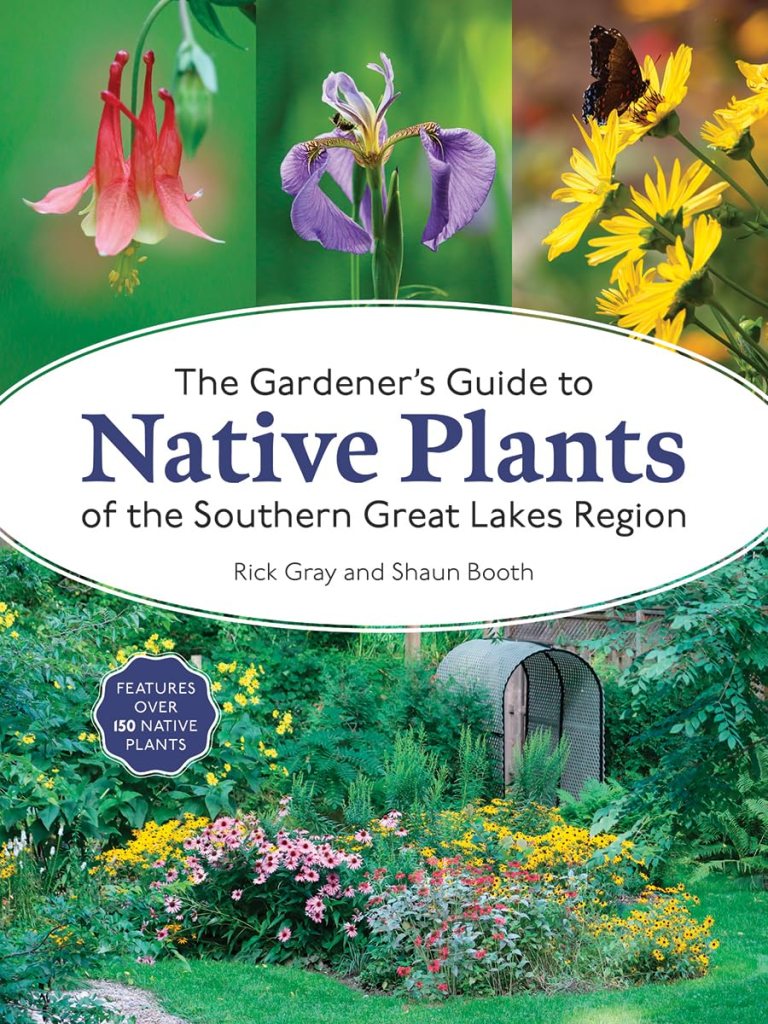
Book Review – The Gardener’s Guide to Native Plants of the Southern Great Lakes Region

by Emma Murphy, Master Gardener

Wow. What a pleasure to finally see this book in print. Written by two very knowledgeable Ontario gardeners — Rick Gray and Shaun Booth — this is the native plant gardening resource I wish I had more than 5 years ago when I started incorporating native plants in my garden.

Focused specifically on the Southern Great Lakes Region, it’s an all-in-one, easy to use resource for those interested in plants that not only look wonderful but fulfill a critical role in our gardens in supporting wildlife,  birds, and pollinators like butterflies, moths, bees, and insects.

It reminds me of an encyclopedia, with a full page spread on each native plant (and there’s over 150!). It’s not surprising to me that’s it’s already #4 on the Globe & Mail’s bestseller list.

The book is visually designed to make it easy to see key information at a glance, using quick guide key icons and two colour-coded bars providing exposure/light and moisture requirements. We’ve been blessed with several excellent native plant books in the past few years, but I appreciated several unique elements I hadn’t seen before – numerous appendices (matching soil types, seed collection and preparation, propagation, and butterflies and their host plants), as well as each plant’s Ontario’s Species at Risk status.

You’ll understand what each plant needs to thrive, how big they will get, and how to make more plants to share with your friends!

Sample spread page

As a Peterborough Master Gardener I have long been engaged in two Facebook groups – the Ontario Native Plant Gardening group (started by Shaun) and the Master Gardeners of Ontario group (where I am an admin and moderator). I remember clearly in May 2023 Rick trying to gauge interest from members on their proposed native plant book, and the incredibly positive response that they received. So full disclosure – I knew I was going to love this book before it was ever published.

The authors explain why the plants are organized by botanical/Latin name, which is important because common names can vary by region. However, if you only know the common name you can always search using the alphabetical index at the back of the book.

Essentially, each entry is a ‘checklist in a page’ on what you need to grow the plant. There are lots of photos (whole plant, leaves, flowers, fruiting bodies), a detailed description, easy to see symbols (the Quick Guide), information on the USDA Hardiness Zone, lifespan, propagation, and wildlife/pollinator value.  

Skill levels are also mentioned but don’t be alarmed – most are listed as beginner, but there are certainly a few native plants that are a bit more challenging to grow and propagate.

Table of Contents plus shameless plug for my wonderful local, independent bookstore where I ordered the book.

I appreciate that in the introductory chapters the authors clearly explain things such as:

  • What is a native plant?
  • Aggressive vs invasive
  • Origin of the term weed
  • Nativar vs cultivar
  • Value of native plants

The authors clearly have a good sense of humour – there are pages titled “How to use this book”, “A coneflower by any other name”, “Fifty shades of…shade” and my favourite “2b or not 2b” (on the rationale for using USDA Hardiness zones). I loved the section on propagation and codes as I’m actively trying to grow more native plant material in my area.

I have to say that as a seasoned gardener I was surprised to see Echinacea pallida (pale purple coneflower) is not in the book (not native to most of this region but often sold as a native apparently) and Agastache foeniculum (Anise hyssop) is one that is included specifically because it is non-native to Ontario (it’s a western prairie plant). Oops! I have both in my garden north of Peterborough.

Was anything missing? Technically no, as the authors were clear that this was not a garden design book. Perhaps after putting out Vol. 2 (the other 150+ plants I know they wanted to include), they’ll consider something on understanding planting density and creating root competition, which I am learning is different to conventional perennials, and good plant pairings (which native plants support others).

One quick comment I will add is that native plants are wonderful once they are established, so you may need to do a bit of watering that first year, but after that they need no watering or fertilizing.

If you’re interested in hearing about how this book came to be check out Rick’s Native Plant Gardener website.

This book is perfect for reading at home (my husband gave me a quick quiz contest this afternoon on the Latin names) or taking with you to your local nursery as you search for native plants to add to your garden. Having trouble finding these plants? The Halton Region Master Gardeners maintain a dynamic map listing native plant nurseries around the province. Check it out!

The bottom line – a wonderful addition to my garden library, and to anyone interested in incorporating more native plants in their Ontario gardens.

__________________________________________________________________________

The Gardener’s Guide to Native Plants of the Southern Great Lakes Region

By Rick Gray and Shaun Booth
Publisher: ‎Firefly Books, 2024
Paperback‏:‎ 352 pages ISBN-10: 0-2281-0460-2
Price: C$45.00; available through local booksellers and larger book companies

About the Authors

Rick Gray (The Native Plant Gardener) has more than 300 species of native plants in his garden in southwestern Ontario and provides native plant garden design services.

Shaun Booth runs In Our Nature, an ecological garden design business, and launched the Ontario Native Plant Gardening group on Facebook.

Want More Information?

Many wonderful books on native plant gardening and naturalization have been published in the past few years – anything by Lorraine Johnson is a great complement to this book, and I love Piet Oudolf’s work (although he doesn’t always use native plants).

Dr Linda Chalker-Scott (and the Garden Professors blog on Facebook) is a great source of good, solid scientific information on gardeners keen to avoid the misinformation often seen on social media.

And if you’re on Facebook, please follow both the Master Gardeners of Ontario and Ontario Native Plant Gardening groups.

Other Native Plant Blog Posts By Me

A Few of My Favourite Native Plants

Native Ontario Goldenrods for Your Garden

Why Do We Garden?

Ditch Lilies – A Cautionary Tale

The KISS Principle – Winter Sowing 101

Some Fascinating Off-Season Reading

By Laura Gardner, Master Gardener

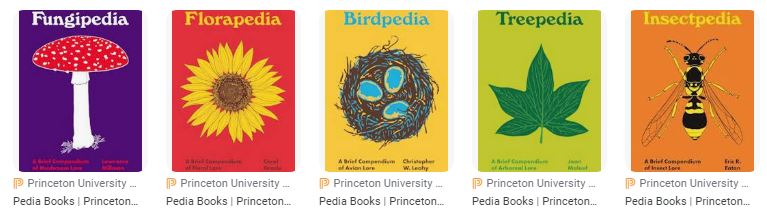
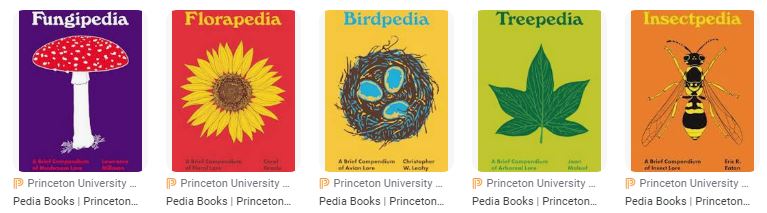
Now that the gardening season has winded down, I’ve turned my attention to some interesting reading. On my nightstand there are some little books that I’ll pick up and read a few snippets just before bed. They are part of a series called “Pedia” published by Princeton University Press.[i] The word “pedia” comes from the Greek word “paideia” for “learning” or “education.” There may be a perception that University presses publish only heavy academic titles. However, many do publish titles that are suited for the general reader. In this particular series, so far it covers the subjects flora, insects, trees, fungi, geology, dinosaurs, birds, and neurology. The petite clothbound books are like miniature encyclopedias, each with around 100 entries on a wide range of topics. Some of the entries are so fascinating that I needed to find out more.

Here are three entries that show gardeners the symbiotic relationship between insect species such as bumblebees, beetles, ants and selected plants:

In “Florapedia,” there is an entry for the plant Cornus canadensis (Bunchberry), a native of the Dogwood family that can be found in some of our Peterborough County forests. Its flowers are said to be capable of the fastest movement in the plant world. As a self-incompatible plant (i.e., unable to self-pollinate), it relies on a unique process of pollen transfer. Amazingly, it has the ability to project its pollen at a rate of 4 metres per second—more than 2,000 times the acceleration of gravity (p. 20). When an insect touches on an unopened flower, it triggers the firing of the pollen through the release of stored energy. The pollen then transfers to the insect which in turn moves on to another flower to cross-pollinate. Larger pollinators such as Bombus (Bumblebees) are required to initiate the opening of the flowers; although flowers that open by themselves are able to fire the pollen at a distance of about 1 metre to adjacent plants.[ii]

In “Treepedia,” we learn that Magnolia trees were among the first flowering species on the evolutionary scale (about 100 million years ago) and that they were and still are pollinated by beetles (p. 82). Magnolias developed hardened carpels (female reproductive parts) so they are able to tolerate the beetles’ chewing mandibles.[iii] The beetles are attracted to the large, strongly scented flowers as well as the pollen and other secretions. Pollen grains are readily captured by the insects’ hairy bodies—which are transferred to other flowers.[iv] Some gardeners may only think of bees as being pollinators and don’t think of the importance of beetles. Some other species that are pollinated by beetles here in Ontario include Asimina triloba (Pawpaw), Nymphaeaceae spp. (Water Lillies), and Lindera benzoin (Northern Spicebush).

In “Insectopedia,” the topic of seed dispersal, the term myrmecochory is explored. More than 4,000 plant species rely on ants for seed dispersal. Ants are attracted to the nutritious fatty seed coats called elaiosomes and take them back to their nests. The remaining unwanted parts of the seeds are discarded near the nests and subsequently germinate into new plants (pp. 155-156). Have you ever wondered how some new plants pop-up some distance from the parent plant? Species such as Sanguinaria canadensis (Bloodroot), Trillium spp., (Trillium), Scilla spp., (Squill), Hepatica acutiloba (Sharp Lobed Hepatica), Viola spp. (Violets), are just a few examples of plants that can spread with the help of ants.

These little books would make a nice gift for any curious gardener, amateur botanist, or nature enthusiast.


[i] Pedia series. Princeton University Press: https://press.princeton.edu/series/pedia-books

[ii] Edwards, J., Whitaker, D., Klionsky, S. et al. A record-breaking pollen catapult. Nature 435, 164 (2005). https://doi.org/10.1038/435164a

[iii] Evich, Philip. The Botany of Magnolias. Smithsonian Gardens. Online: https://gardens.si.edu/learn/blog/the-botany-of-magnolias/

[iv] Hooks, Cerruti R., and Anahí Espíndola. Beetles and Pollination. Maryland Agronomy News. Online: https://blog.umd.edu/agronomynews/2020/06/29/beetles-and-pollination/

Native Plant Gardening for Birds, Bees & Butterflies

by MJ Parker, Master Gardener

I recently downloaded “Native Plant Gardening for Birds, Bees & Butterflies” from my local library. This book was a fabulous find for me because I am currently planning a buffer area by the water in our new place. Going through this book reminded me of when I was a kid with a new Sears or Eaton’s catalogue – always an exciting event – something only people of a certain age will remember.

Book cover

The book was written by an entomologist, Jaret C. Daniels, currently living in Florida but the area covered by the book is the upper Midwest which is roughly parallel to us here. I have ordered plants from Minnesota before with no problems and some of the plants I currently grow are in the book.About 1/4 of the book is devoted to why we should plant gardens for birds, bees and butterflies. He does a brief summary on a number of topics about the actual mechanics.

False Indigo (Baptisia australis)

Most of the book, however, was a precis of individual plants roughly divided into sun, shade, and bog. Each plant started with a picture, then a summary of what it would attract and ended with specific location and cultivar tips. And this plant section was the part that I found extremely interesting and helpful.

New Jersey Tea (Ceanothus americanus)

So what I did was I sat down with a pen and paper over a number of days and compiled a list of what would work for me and plants I wanted to get. I ended up with a comprehensive list of plants, some I had forgotten to bring from the old place and some completely new to me.

And to date I have already placed 2 seed orders for some of the things on my list.

Some Cures for Plant Blindness

By Laura Gardener, Master Gardener in Training

I was recently reading about a condition called “plant blindness.” The phrase was coined back in 1998 by botanists Elizabeth Schussler and James Wandersee.[i] It is defined as the “inability to see or notice the plants in one’s own environment.” Plants are not as obvious as animals because they often “lack visual attention cues.” They can seem ubiquitous–have the same colour, form, and lack a “face.” They don’t move and they usually aren’t threatening. For example, if you look at a photo of a pond containing birds, surrounded by plants, which of these would you most likely know by name or recall later? This bias results in lower levels of plant knowledge, awareness of plant names, of plant functions, and their roles resulting in less interest in plant protection, conservation, and reduced funding. Plants are vital to our survival and we need to see their importance, appreciate them, and put them on the same level as animals.[ii] It is possible to overcome ”plant blindness.” We need to introduce and share plant knowledge with children at an early age in the same way we encourage learning about animals.  

Recently I was out walking and was trying out the Seek identification app by iNaturalist on my phone. I was attempting to identify a specific type of Elm (Ulmus) and a couple that I know walked by and we started a conversation about the app. They mentioned that their son and grandchildren use it on their nature walks. It can be used to identify other lifeforms other than plants and while the app isn’t 100%, it is fairly reliable. If it is uncertain, it will restrict its identification to a family or a genus and won’t offer a guess. An Oxford University study[iii] found that it was in the top five of plant identification apps (the others included Plant.ID, Google Lens, Flora Incognita, PlantNet). It has some fun nature challenges built into it as well as the ability to earn badges for the number of species observed. Photos of plants may also be uploaded to the iNaturalist citizen science web site where they can be confirmed through crowd-sourcing. In terms of correcting “plant blindness,” this app has great potential. 

Photo by PhotoMIX Company on Pexels.com

It is only the beginning of October but the holiday season is just around the corner. It is not too early to be thinking of presents. Why not give the gift of a book about gardening, botany, or nature to a child in your life? The following are a selection of some of the best books for a range of age levels. Most of the books listed have been well-received by reviewers in publications such as Booklist, Horn Book, Kirkus Reviews, and School Library Journal. Titles marked with an asterisk have received at least one starred review. If purchasing is not an option, you can check to see if your local library carries them (or recommend that they do). 

*A Seed is Sleepy by Dianna Hutts Aston; illus. Sylvia Long (Chronicle Books, 2007). Level: Grade 1 to 4.

*Begin with a Bee by Liza Ketchum et al.; illus. Claudia McGehee (University of Minnesota Press, May 2021). Level: Preschool to Grade 4.

*Botanicum: Welcome to the Museum by K.J. Willis; illus. Katie Scott (Penguin Random House, March 2017). Level: Grade 3 to 7.

Gardening with Emma: Grow and Have Fun: A Kid-to-Kid Guide by Emma Biggs and Stephen Biggs (Storey Publishing, January 2019). Level: Grade 3 to 7.

*Oscar’s Tower of Flowers by Lauren Tobia (Candlewick Press, May 2021). Level: Preschool to Kindergarten.

*Plant, Cook, Eat: a Children’s Cookbook by Joe Archer and Caroline Craig (Penguin Random House, March 2018). Level: Grade 2 to 5.

What’s Inside a Flower?: And Other Questions About Science & Nature by Rachel Ignotofsky (January 2021). Level: Preschool to Grade 2.

*The Wisdom of Trees: How Trees Work Together to Form a Natural Kingdom by Lita Judge (Roaring Book Press, March 2021). Level: Grade 3-5.

[i] Plant Blindness. Native Plant Society of the United States. Online: https://plantsocieties.cnps.org/index.php/about-main/plant-blindness. Accessed: October 2, 2021.

[ii] Seventeen Years of Plant Blindness: Is Our Vision Improving? Elizabeth Schussler. Online: https://appliedeco.org/wp-content/uploads/NativeSeed2017-Schussler-SeventeenYearsPlantBlindness.pdf Accessed: October 2, 2021.

[iii] Jones, Hamlyn G. What plant is that? Tests of automated image recognition apps for plant identification on plants from the British flora. AoB PLANTS, Volume 12, Issue 6, December 2020. Online: https://doi.org/10.1093/aobpla/plaa052 Accessed: October 2, 2021.

Lending Insects a Helping Hand in our Gardens

By Laura Gardner, Master Gardener in Training

When some of us think of insects, it is common for them to be thought of in a negative light. Some of our earliest childhood memories include being stung, bitten, or just plain scared by the sight of them. I can remember running screaming from an outhouse at a provincial park when I was about five years old. What was so scary? It was the sight of a Yellow Garden Spider (Argiope aurantia) hanging in its web in the stall. Fortunately, the experience didn’t make me fear or dislike spiders and as a gardener I know how beneficial they are to have around. While some insects certainly do deserve our scorn— invasive species such as the LDD moth (Lymantria dispar dispar); Emerald Ash Borer (Agrilus planipennis); Japanese Beetle (Popillia japonica), etc.—by and large, the majority of insects are harmless and beneficial. Not long ago, I saw a couple—perhaps grandparents, out for a walk with their grandson. One of them was urging the young boy to stomp on an ant on the pavement, calling out “Get it! Get it!” It was disheartening to see. It is experiences like this that call for a shift in our thinking about insects.

Bumblebee (Bombus sp.) on False Sunflower (Heliopsis helianthoides)

I recently got a sneak preview of a book by British entomologist Dave Goulson called Silent Earth: Averting the Insect Apocalypse (Harper Collins). It is to be published this Fall (September 2021). The copy I reviewed was an e-book proof and so page numbers referred to here may change in the final published copy. Goulson’s work is primarily focused on bumblebees and as the founder of the Bumblebee Conservation Trust in the UK, he is dedicated to reversing the decline of them. He is also known for his work that was instrumental in influencing the European Union’s decision to ban neonicotinoids in 2013. Goulson wrote this book in an effort to bring more public attention to the recent and rapid decline of global insect populations—which are critical for our planet’s survival. He also explores the chief causes of insect declines such as habitat fragmentation, industrial farming practices, pesticides, climate change, and non-native insect diseases (p. 71) and provides suggestions for readers that can help support insects—especially gardeners.

Bumblebee (Bombus sp.) on Sweet Joe Pye Weed (Eutrochium purpureum)

Here are a few highlights from the book:

Goulson refers to a phenomenon called “Shifting Baseline Syndrome” where humans tend to only see their current world as “normal” and are unable to detect changes over time. Humans also tend to have something called “personal amnesia” in which they downplay the extent of change (p. 64-65). With these points in mind, it is no wonder that most people would not know that insect populations have recently declined by as much as 75% (p. 50) and that there have been parallel declines in populations of insectivorous birds (p. 58). One bird that I remember as a child that I haven’t seen since is the Eastern Meadowlark (Sturnella magna). This species is one of those that depends on insects in its diet.

One concern that the author has is the level of human awareness of the existence of the natural world. It is important to learn the names of plants and animals—otherwise they cease to exist. If they don’t exist, their importance can’t be recognized. Astonishingly, in 2007, some of the words eliminated from the Oxford Junior Dictionary included words such as acorn, fern, moss, clover, kingfisher, otter, among others (p. 225).

87% of all plant species require pollination in order to flower, produce fruit/seeds, and ensure perpetuation of the species. This includes 75% of all agricultural crops (p. 26). Most of this is performed by insects and a large part is performed by those other than bees—flies, ants, beetles, wasps, moths and butterflies. A world without insects means that we would need to subsist mainly on cereal crops as these can be wind-pollinated. I can’t imagine going without fruits such as strawberries, apples, cherries, raspberries, and even my morning coffee (p. 26).

Insects are not only important pollinators, but they assist in the development of healthy soils. Not only do they help to aerate soil, they are valuable decomposers of organic matter—participating in a process along with bacteria that help make nutrients more available to plants (p. 29, 31).  As biological control agents, predatory insects such as Lady Bugs (Coccinellidae spp.), Lacewings (Chrysopidae spp.), Ground Beetles (Carabidae spp.), Wasps (Vespidae spp.), etc., can help us reduce the need for pesticides.

Blue Mud Dauber (Chalybion californicum) on Swamp Milkweed (Syriaca incarnata)

What can we do to help?

Despite the current state, Goulson is optimistic that insect declines can be stabilized or reversed because they are generally good at reproducing—we just need to support them better (p. 216). Here are some ideas:

  1. Learn how to identify the difference between harmful and beneficial insects. The majority (95%) are the latter.
  2. Reduce or avoid the use of pesticides and give beneficial predatory insects a chance to take care of the problem first (p. 277). Even so-called organic treatments such as diatomaceous earth, BTK, horticultural oils, etc. need thoughtful consideration before use as they can harm harmful as well as beneficial insects.
  3. Learn how to differentiate between irreversible and cosmetic damage in your plants. Accept that plants are meant to be food sources for insects and some imperfections and damage is ok. Give up growing ornamental plants that are persistently defoliated by certain insects (e.g. Asiatic Lilies).
  4. Incorporate a wide range of native plants that flower throughout the season in your garden to attract beneficial insects. One of the best late flowering perennials is New England Aster (Symphyotrychum novae-angliae). It provides a valued food source for migrating Monarch butterflies. Some of the best food sources for insects are early flowering trees such as Serviceberry (Amelanchier spp.), Maple (Acer spp.), and Crabapple (Malus spp.).
  5. When using mulch in flower beds, leave some soil exposed so that ground nesting bees can have easy access. Some solitary wasps such as Mud Daubers (Sphecidae spp.) also need easy access to bare soil in order to glean material to build their nests.
  6. Reduce lawn and use the space for more plants. Reduce mowing of the lawn that exists. Allow a corner of your garden to “grow wild” and “get messy.”  (p. 277).
  7. Choose native plants over “nativars.” A nativar is a cultivated variation of a native plant. Some are supportive of pollinators but many are sterile or lack pollen and therefore are unable to provide food. The ones that are most likely to be the least supportive will have features such as double blooms, different leaf colours, etc. Reduce planting of ornamental annuals like Petunias, Begonias, Pansies, etc. because of their tendency to have no pollen or nectar (p. 233). That being said, some of these plants can still be enjoyed.
  8. Choose a range of plants that support the broadest number of insect species. While Milkweeds (Asclepias spp.) are in the limelight as being supportive of Monarch Butterflies (Danaus plexippus), compared to some other plants, they only support 12 Butterfly and Moth species (Tallamy, Bringing Nature Home). Goldenrods (Solidago spp) support 115 different species. Some, like Canada Goldenrod (Solidago canadensis) can be aggressive in small gardens but there are more restrained types such as Blue-Stemmed Goldenrod (Solidago caesia), and Zigzag Goldenrod (Solidago flexicaulis).
  9. Avoid aggressive fall and spring clean-up of leaves and hollow, dead stems. Doug Tallamy describes the practice of waiting 7-10 consecutive days of 10 degree C. temperatures for insects to emerge as myth as many insects emerge at different periods throughout the season. For example, Io (Automeris io) and Luna Moth (Actius luna) emerge around mid May (Tallamy, Leaf Litter: Love it and Leave it).
  10. Recognize that commercially produced “Bee Hotels” can become populated by non-native bees such as European Orchard Bee (Osmia cornuta), Horned-Face Bee (Osmia cornifrons), and Blue Mason Bee (Osmia coerulescens) as well as native bees (p. 135). If used, periodically clean them so as to reduce mites and fungi that can be harmful to the bees.
  11. Reconsider taking up beekeeping as a hobby. The European Honey Bee (Apis mellifera) threatens native bees because they take the lion’s share of available plant pollen (p. 139). It is also not a good strategy to rely on one species for pollination in case something happens to that species (p. 33).
  12. Raise awareness and share your knowledge with family and friends. You can convince others that insects need our help if they realize they themselves will be personally impacted by their decline (p. 216).

Selected Resources

Holm, Heather. Pollinators of Native Plants: Attract, Observe and Identify Pollinators and Beneficial Insects with Native Plants (Pollination Press, 2014).

Tallamy, Doug. Bringing Nature Home: How you can Sustain Wildlife with Native Plants (Timber Press, 2009).

Tallamy, Doug. Leaf Litter: Love it and Leave it. April 2021. Online: https://tinyurl.com/4jphhnbc

Walliser, Jessica. Attracting Beneficial Bugs to your Garden: a Natural Approach to Pest Control (Timber Press, 2013).

Xerces Society for Invertebrate Conservation. Visit https://xerces.org/publications to view and download a wide range of factsheets and other guidance documents concerning beneficial insects, native plant lists, pesticides, habitat construction, and more.

Monarch Butterfly Caterpillar (Danaus plexippus) on Swamp Milkweed (Syriaca incarnata)

The Intricate Nature of Trees

By Laura Gardner, Master Gardener in Training

I first became aware of Suzanne Simard and her forestry research through an online TED talk that I watched as part of an arboriculture course that I had taken. The talk was engaging, enlightening, and inspiring. In it she spoke about the interconnectedness of and the collaborative, communicative, and nurturing nature of different tree species and how networks of mycorrhizal fungi serve as connectors between them. These mycorrhizal fungi, located within a tree’s roots, enable the transfer of nutrients and help them to thrive.

When I saw a year later that she was to publish a book as a follow-up, I jumped at the chance to read it. Finding the Mother Tree: Discovering the Wisdom of the Forest (Knopf, 2021) not only covers her scientific research but it is also part memoir in that the author weaves her own personal life story within the narrative. We hear how at an early age she had become in tune with and respectful of the forests, influenced by her grandfather, who had practiced logging in a sustainable manner. She would go on to work for logging companies as well as conduct research for the British Columbia Forest Service, trying to determine why certain conifer species grown for harvesting were not thriving and whether eliminating certain tree species would contribute to a more productive end result or be a hindrance.

Simard was skeptical that this long-standing “free to grow” policy was sound practice for the long-term survival of the forests. Her eventual research findings would conflict and effecting change would prove to be difficult and was met with resistance. The view that trees were in strict competition with each other and that best results would be derived though eliminating “unproductive” or “devalued” trees such as Alder and Birch from the plantations could no longer be supported. It would not be easy to convince policy writers to change course and see the more collaborative, symbiotic nature between the different species and the importance of mycorrhizae – that eliminating certain deciduous species actually made the conifers more vulnerable to Armillaria root disease or insect pests such as the Mountain Pine Beetle. Simard would also show that the sharing of resources extended not only between parent and offspring trees, but also between genetically unrelated trees.

Simard demonstrates the disadvantages of developing monoculture environments in the forestry industry but her research should also give much food for thought for those working in urban forestry, landscaping, agriculture, or even at the individual homeowner level. The common
practice of planting the same kinds of species or the isolated planting of an individual species should be reconsidered more widely. These practices lead to less ecological diversity and may reduce the potential for a planted tree’s optimum growth. Perhaps we should consider planting certain species of trees together or in close proximity in order to foster the underground mycorrhizal networks that help strengthen and support them. Perhaps for planting consideration is an alder and a pine or a fir and a birch combination?

Reading this book will change the way you think about trees and you will want to continue to follow Simard’s research. Learn more about the Mother Tree Project.

Native Plants: Guilt

By Suzanne Seryck, Master Gardener

Like a lot of other gardeners during this time of COVID, I have taken advantage of the many, many gardening presentations, seminars, talks, and webinars that have all been available online–not to mention catching up on my reading. The two books that I am currently reading are both by Douglas Tallamy and have been recommended numerous times. They are ‘Bringing Nature Home’ and ‘Nature’s Best Hope’. Both are packed full of facts and figures; the first one providing a list of recommended native plants as well as basic information regarding the insects that are eaten by bird and wildlife. The second book, which is one of the main reasons why I like it so much actually has a plan (or approach as the book calls it) for turning our home gardens into wildlife habitats and extending that approach to create corridors preserving our native wildlife.

What I have noticed among the many presentations, seminars, etc. is the focus on native plants, native wildlife preservation, sustainable and organic gardening and environmental gardening.  I am definitely all in favour of this shift; in fact I believe that this has been too long coming. We, as a whole, are definitely a little late to the table. Now this is just my personal opinion but I feel that as a nation, as a people, we do seem to be forever running behind a problem trying to come up with solutions only when the situation becomes critical!

I have to admit that I am as much at fault as the next person. My garden is only approximately 40% native plants, the rest being ornamental. Although if you count bulbs and annuals, that figure could drop down to about 30%.

But do not panic just yet, Douglas Tallamy does not recommend that we ‘adopt a slash and burn policy towards the aliens that are now in your garden’, thank goodness for that. What he does suggest is two-fold, if an alien plant dies replace it with a native plant that has the same characteristics, and two, create new beds with native plants if you have space and if not, dig up some of your lawn.

So here is my dilemma, and guilt. I have no more space to expand and only a very narrow patch of lawn in the back garden for my husband, dogs and future grandchildren. So I either have to wait for something to die, which is not happening fast enough to outweigh my guilt, or dig up a plant replacing it with a native. This is not quite as easy as you think. I have walked around my garden a number of times looking for plants to give away to plant sales or neighbours. The problem is the less plants you have the more each plant tends to have its own story, your mother or good friend gave it to you, you’ve inherited it from someone you care about, the plant reminds you of a certain time, the list and stories go on.

Photo of backyard in author’s garden showing on the left the narrow strip of lawn

One of my favourite native plants is culver’s root. It always and consistently has the most insect activity of any plant in the garden. I already have two. But would I want to dig up the rose bush that my mother bought me because coincidentally it has the same name as my grandmother and replace it with a third culver’s root?

What about ironweed? I love this tall, stately plant covered in late summer with purple flowers. Again I already have two, but would I want to dig up the delphinium that a neighbour gave me 15 years ago, that had apparently been growing in her yard for 30 years prior to that and replace with an ironweed?

Picture of Ironweed in author’s backyard

What about all the daylilies I have spent years collecting, each one unique and individual, or the peonies I bought from my last garden, one in each colour? Now, I understand that maybe not all of my ornamentals have the same level of memories, and that, yes, they would be going to good homes. But it is a difficult decision, I want to increase the natives in my garden, I want to do what is right and sustainable, and I want to increase the wildlife in my garden. I have even given talks myself encouraging gardeners to add at least one native plant to their garden each year. But do I really have time to wait; my guilt levels and motivation levels want me to act now, to take a stand, to encourage by action.

As Douglas Tallamy concludes: ‘Our success is up to each one of us individually. We can each make a measurable difference almost immediately by planting a native nearby. As gardeners and stewards of our land, we have never been so empowered – and the ecological stakes have never been so high.’