Welcome to the second edition of Garden Jeopardy featuring a number of smaller native trees.
I do love trees and in my suburban garden the opportunity to grow multiple smaller varieties is appealing. The choices are many and discovering an interesting characteristic or benefit about a particular species inspires my choices. Hopefully this edition will be inspiring for gardeners looking to add more trees to their gardens this fall. You can confirm your responses at the end.
A shade-tolerant tree with smooth, blue-tinged bark and a fluted trunk sometimes known as ‘musclewood’.
A tree that bears white, showy clusters of flowers in June or July that develop into orange or red fruits that are persistant throughout the winter and much loved by birds.
A small evergreen tree that is resistant to insects and rot, rarely requires pruning and produces dark blue, berry-like cones that are a food source for Cedar Waxwings.
A species at risk tree for part to full shade that is a host tree for the Giant Swallowtail butterfly, the largest butterfly found in Canada.
An understory tree with branches in distinct layers that produces clusters of white flowers in spring, red leaves in the fall and is an important butterfly larval host.
A tough, adaptable and urban friendly tree with a distinct upright trunk, wide-spreading crown and the densest Canadian wood.
A tree bearing pea-flower shaped intense pink flowers in spring prior to leafing out, that is not native to Peterborough but will thrive here in a protected area.
An excellent Peterborough source for the aforementioned trees.
A bedraggled Giant Swallowtail in my garden.
What is the Blue Beech; Carpinus caroliniana?
What is the American Mountain Ash; Sorbus americana?
What is the Eastern Redcedar; Juniperus virginiana?
What is the Common Hoptree; Ptelea trifoliata?
What is the Alternate-Leaf Dogwood; Cornus alternifolia?
What is the Ironwood, Hop-hornbeam; Ostrya virginiana?
Master Gardeners (MGs) in the Province of Ontario are experienced gardeners who have studied horticulture extensively and who continue to upgrade their skills through technical training. With this training MG’s are able provide quality horticultural advice to the general public via garden clinics, telephone, letters, displays, workshops, television, radio, the web and newspaper articles. This provides the public with advice based on science.
BUT… “Book Learning” (as the older farmers in my neighbourhood refer to it) doesn’t always tell the whole story. There are many instances where the “right” answer is not always the best or the only answer. For example, Dr. Keith Hammett, a famous sweet pea breeder and researcher maintains that sweet pea seeds do not require soaking in order to aid in germination.
However, at my house any of the unsoaked sweet peas seeds never germinate while the soaked seeds of the same varieties do. Same seeds, same potting mix, same growing conditions. What’s up??? In order to ensure I have plants; I simply soak my seeds.
For the past couple of years I have been trying (unsuccessfully) to grow breadseed poppies. Conventional wisdom states that these seeds are best direct seeded outside in early spring as poppies do not tolerate root disturbance and transplanting. But when I direct seed nothing comes of it.
This past winter, I decided to ignore conventional wisdom and to conduct my own trial at home. I sowed the same type of bread seed poppies three different ways: Winter sowing, in trays indoors that would later be transplanted and direct sown into the ground.
The winter sown seeds were not as plentiful as I thought they may be but some germinated which I transplanted in the bed. I suspect that a heavy rain had washed the seed to the side of the shed the seed to the sides of the container where only a few germinated.
Winter sown seedlings at container’s edge
The direct sown seeds for the most part did not germinate and the few that developed did so late in the year. However, the indoor raised seeds did well. So much so that I always seemed to be thinning them.
Being mindful of their sensitive roots I sowed a number of seeds into larger cells. Plants were thinned not by pulling which might disturb the remaining roots but by cutting off at the soil surface with scissors. When it came time to transplant outside, the entire cell was lifted and transplanted into the soil.
Seedlings started indoors in large cells.
Seedlings transplanted to garden. Tiny seedlings are from direct sowing.
I had direct sown 4 lines of seed in the area that I transplanted the winter sown and indoor started plants. As time passed the indoor started seedlings overtook the others and produced the best and the most plants. The other methods did work but not well and the method cautioned against was the most successful. I suspect that I mitigated the problems of root disturbance by using an overly large cell to start them in and handle them as a unit.
Mature Sissinghurst White Breadseed Poppies.
Seed pod on Bowling Ball Poppy.
It isn’t that the conventional recommendation is wrong, it is wrong for my situation (I often do not have enough consistent moisture in order for direct seeding to be successful).
Here’s how I look at it. The facts are the guidelines we use to get started and our experience can fill in rest. Never stop experimenting with new methods. After all, someone had to be the first to try winter sowing or no till gardening.
In the world of vegetable gardening, the fall garden starts about mid to late summer. This is an unusual time to think about starting seedlings or putting seeds in the ground for many.
Busy summer schedules, hot dry weather and maybe even lack of interest in the garden at this point in the year make the fall garden less popular. Perhaps gardening is not a project that’s high on your list in the middle of summer vacation.
Here is why I think you should do it anyway!
A chance to try some cool weather crops that don’t like the heat of summer.
Many fall garden vegetables taste better or sweeter in the cooler weather or after a frost.
Tasty herbs that can be enjoyed fresh and brought inside for winter.
Making use of available space after harvesting a summer crop.
Fewer bugs and weeds to contend with (in theory).
Helps the garden to look fresh and tidy and less like a shaggy jungle this time of year (if you’re anything like me).
How To Get Started
In general, you learn the first frost date for your area and count backwards based on the number of days your fall garden varieties need to reach maturity. In the Peterborough area, we can expect our first frost around the end of September or early October. This means there are about 40-50 days to work with from the day of this post (mid-August). Keep in mind, a lot of fall- friendly garden varieties can easily survive light frosts. This means you have more than enough time to grow some delicious food.
Here are some sources to help determine your growing zone’s last frost date:
Below is a list of plants that can be harvested 40-50 days from germination and tolerate light frosts. (The numbers can vary depending on the variety. Choose short season varieties if possible.)
Spinach
Lettuce (greens, not head)
Bok Choy
Cilantro
Turnips
Radishes
Green Onions
Mustard Greens
Swiss Chard
Arugula
This website has some more unique varieties to suggest:
Additionally, here are some vegetables that take longer to reach maturity but can also handle light frosts:
Carrots (70-80 days, depending on the variety – can be stored in the cool soil until snow comes)
Leeks (100-120 days – can be harvested as early as 60 days)
Parsley (60-70 days – these can be slow to germinate, so if you can find a plant, perfect!)
Some late season carrot seedlings popping up in the bed I recently harvested my garlic from.
You can also consider some cool weather crops with a slightly longer growing time by starting your fall garden a little earlier next year. Examples: Broccoli, Cauliflower, Cabbage, Potatoes.
Get Planting!
You can start your seeds in trays in a sunny window or sow right into the garden, outdoor pot, window box, etc.
Amend your soil with compost if you have it available.
Plant your seeds and water daily to ensure the seeds have a good chance to germinate. Decrease the frequency as sprouts appear.
Don’t forget to leave space to plant your garlic in the fall!
Trouble Seed Sourcing in Late Summer?
Use any extra seeds from spring.
Look for seed sales as companies look to clear out their seeds that can’t be sold next year.
Learn to seed save. It’s easier than you might think!
Allow your spring/summer plants to self seed. Ex. kale, cilantro, lettuce, spinach, etc.
Some kale seed pods from my spring plants that I can use for a fall crop.
A few trays of greens to go out into the garden for fall eating.
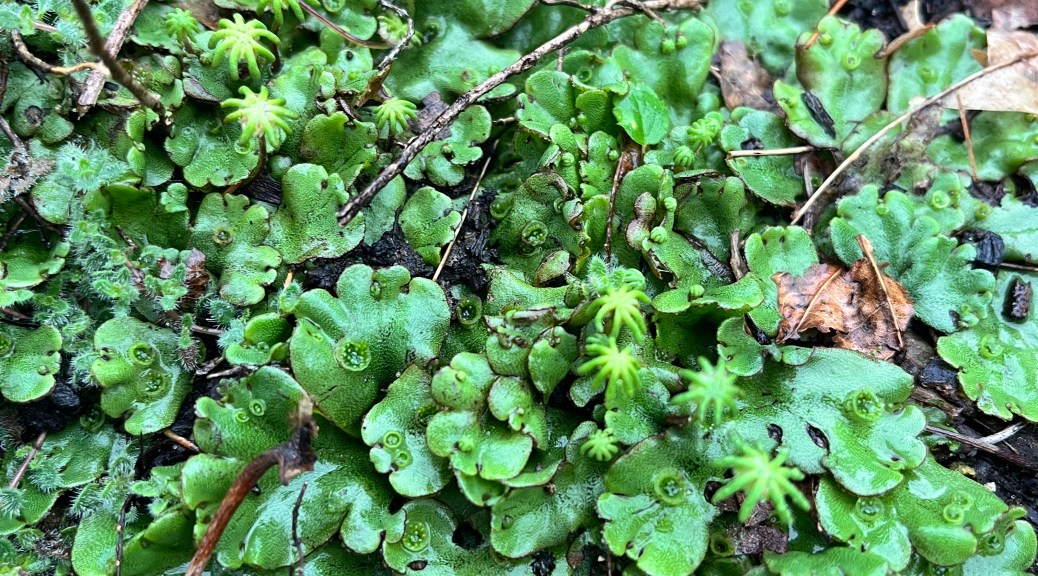
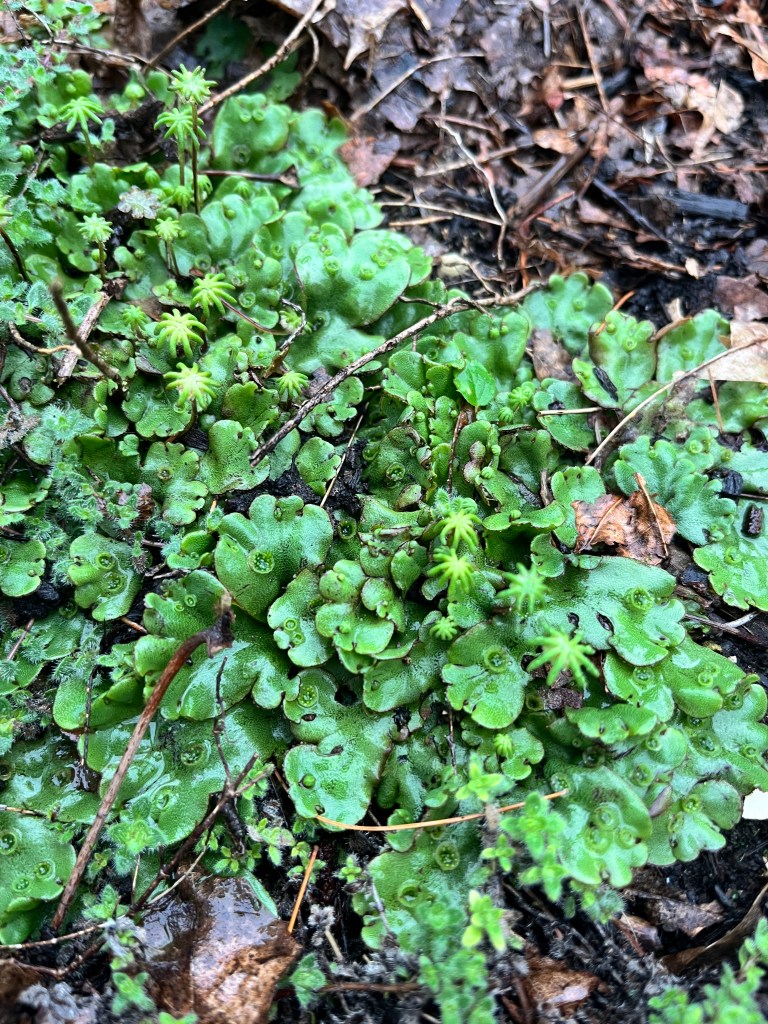
Umbrella liverwort (Marchantia polymorpha) is a fascinating plant that often catches the eye with its unique, umbrella-like structures. These small, flat, and green plants have been around for millions of years, making them one of the oldest plant species on Earth. They do not have a vascular system, and like ferns, they produce spores instead of seeds. While they do not flower, the female reproductive structures mature to look like tiny palm trees or umbrellas. For this reason, the common variety is called umbrella liverwort.
In our area, umbrella liverwort is commonly found in moist, shaded areas like garden beds, greenhouses, and along stream banks. This plant is native to many parts of the world, including Ontario, and has a long history of thriving in damp environments.
While liverwort is native, it can sometimes behave like an invasive plant, especially in gardens and greenhouses. It thrives in conditions where moisture is abundant, and air circulation is poor. If left unchecked, it can spread rapidly, covering the soil surface and competing with other plants for light and nutrients. However, its unique appearance and ancient history make it a cool plant to observe in your garden.
If you want to manage umbrella liverwort, focus on improving drainage, reducing moisture levels, and allowing more sunlight into the affected areas. But for those who appreciate its prehistoric charm, umbrella liverwort can be a delightful addition to a garden, provided it’s kept in check. An added benefit is that you don’t have to plant them — they just show up!
Our schedules are brimming, and life is back to “normal” after those challenging years of a global pandemic. We may be busier than ever, but are things truly back to normal?
Crises–locally and internationally–politically, socially and economically are unfolding everywhere, and our social bonds and community engagement appear more distant than ever.
Or does it just seem that way?
If we take a step back just a couple of years, we had a very different perspective that is worth remembering and taking forward as those memories start to fade.
Amidst the confusion, anxiety, and fear of the onset of the Coronavirus pandemic, we all took a deep pause. Without distractions, we were able to focus on the important. Synchronously with the first lockdown announcement, public health agencies began promoting safe activities. Without much surprise, almost all of them involved the outdoors and being immersed in nature. Walking, hiking, biking, roller blading; these merchandise items flew off shelves just as fast as skis, snowmobiles, and fat bikes did. Not to mention everybody was baking bread and planting seeds in soil, many for the first time in their lives!
We found connections by connecting with and within nature.
As the lockdown progressed, we celebrated stories showing how the retreat of human impact allowed nature the room to thrive. Whether it be clearer skies, fewer cars on the roads, or less garbage in nature areas, we could see the human impact.
Yet within almost moments of relaxation of restrictions, our old ways returned. Our newfound appreciation gave way to the rush for normalcy.
Can we do better than normalcy?
We think of our human normalcy as being set apart from nature. In control. We live in houses, drive cars, and eat food which is specially grown to feed us; and nature exists “somewhere” else. Somewhere where you can go on your terms. But there are examples from nature that do provide us valuable insight and one of the is in the form of a fungus, Armillaria solidipes (honey fungus).
Armillaria solidipes
Like humans, this honey fungus has enormous potential to affect its local environment. One of these organisms lives in Oregon’s Malheur National Forest and covers 3.7 square miles (2,400 acres) and is roughly 8,000 years old and weighs over 34,000 tons, making it both the single largest and heaviest terrestrial organism on the planet.
But interesting, this remarkable fungus is not a product of individual success. It is a product of connections, where individuals connecting together strengthen and enlarge the whole.
Honey fungi grow in individual networks using fibers called mycelia. Mycelia work in a similar fashion to plant roots whereby they take water and nutrients from the soil. At the same time, they make chemicals that are shared with other soil organisms. When mycelia from different individual honey fungus bodies meet, they can attempt to fuse to each other. When the mycelia successfully fuse to each other, they link their very large fungal bodies together. This, in turn, has created the largest terrestrial organism on the planet.
All. Accomplished. By. Connections.
This giant organism plays an essential role soil development and maintenance, with mycelium working to prevent soil erosion. It also happens to be a parasite, killing and consuming conifer trees, and has wrecked havoc on Fir stands throughout the area.
I can’t help but compare this fungus–built by connections–to us, as humans. We are more connected than ever before and our potential to impact our environment (positively or negatively) has never been greater.
We must choose to grow positive connections with positive impacts.
And you (yes you!) are likely doing exactly that and reaping the rewards of those natural connections that you have carefully nourished. As gardeners tend to their plants, we develop a deep appreciation for the environment, understanding the intricate relationships between soil, water, sunlight, and living organisms. This hands-on interaction promotes mindfulness and a sense of responsibility toward ecological health.
The act of nurturing plants from seeds to full bloom cultivates patience and respect for the time it takes for nature to flourish and reinforces the idea that the best things are worth waiting for and done for others. What an incredible feeling of joy it is when we see pollinators thriving on the plants we planted, along with the birds and biodiversity that they in turn support.
As we grow these connections, we show our neighbours, friends, and visitors a living example of this positivity; making it so much easier to follow themselves.
Our stewardship mentality that encourages a harmonious coexistence with the natural world needs water and sunlight and effort, just like our gardens. Late July is the perfect time to reset from a busy year, giving us the opportunity to embrace a slower pace and regain balance, prioritize self-care, and set intentions for the rest of the year with renewed energy and clarity.
Let’s prioritize nature and reap the rewards of those natural connections with those around us!
Photo Credit: Keith Riggs. (2012). United States Forest Service
Deadheading is an important garden maintenance chore for July and there are several reasons for deadheading (or not). When deadheading, it is important to not just take the blossom off, but to cut the stem right back to the first junction and cut above that. Often you can just break the stem by hand, but be sure not to rip it. Use good pruning shears to make a clean cut. This applies to almost all deadheading, whether it is hosta, daylily or annuals.
The reason a plant grows and flowers is so it will go to seed and reproduce. If you remove the seed head you are encouraging the plant to put its energy back into the roots and leaves, making it become a stronger plant. Doing this as soon as possible after the flower is spent, is important for the overall look of the plant and the energy redirected.
Perennials that rebloom such as salvia, dianthus, delphiniums and roses should be deadheaded to encourage new blooms. Many new hybrids have tags that say “reblooming”, so watch for this when purchasing. Annuals like dahlias, marigolds and zinnia all benefit from cutting spent blooms to encourage new flowers.
Another reason to deadhead is to control self seeding in the garden. Many perennials and biennials will multiply by dropping seed. Forget Me Nots, Oriental Poppies, Lupins and Native Coneflowers will all appear in your garden if you don’t deadhead or disturb the soil.
Deadheading also makes the garden a bit neater. I deadhead Iris right after they bloom; cutting the stem right back. I often leave Siberian Iris to form seed pods as I use them in dried arrangements. I don’t particularly like the washed out purple flowers on Hosta, so I usually cut them back. There are some Hosta flowers that are fragrant and white, and I like to leave those on. The profusion of flowers on the daylilies this year are stunning. I like to snap off the spent blossoms, so they don’t distract from the fresh new flowers. Peony petals separate and settle through the flower bed, so I like to remove them before this happens. Other perennials that benefit from deadheading include yarrow, cranesbill, phlox, and astilbe.
Clematis form a lovely fluffy seed head which can be left on. I also leave my Monarda didyma for the birds and the pretty seed heads.
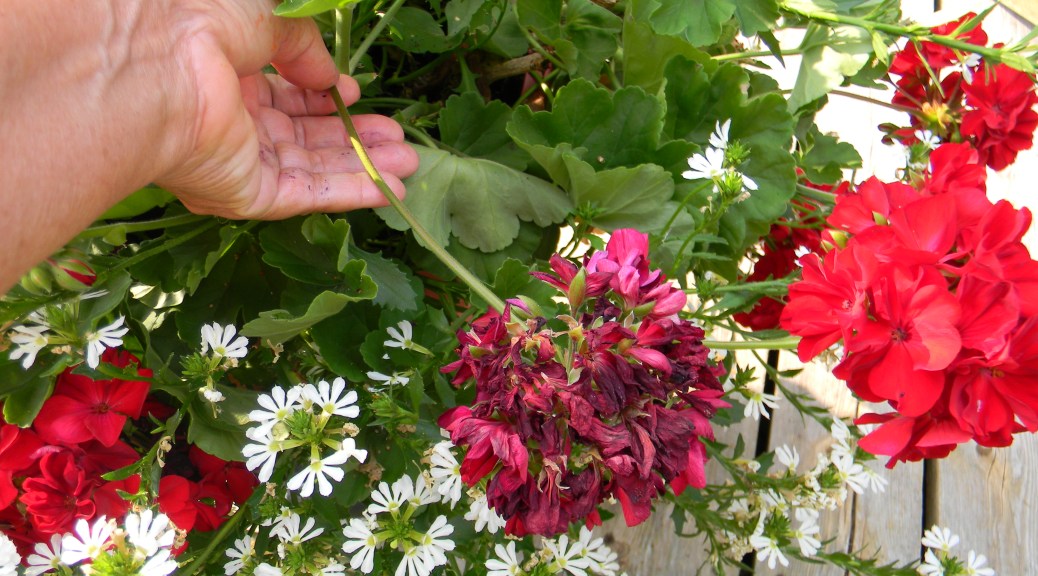
Your hanging annual pots and containers also may need a bit of TLC by now. Annuals like to be cut back. It encourages new fresh growth and flowers, makes them bushier because when you cut a stem it will branch out. Cutting back also brings the planting back under control so it doesn’t look overgrown.
Removing seed heads is removing food that birds may enjoy. If you are growing natives, you may want to leave them for the birds, butterflies and other pollinators, however you can deadhead and leave in an open compost pile. Although I deadhead throughout the summer, by late August, I stop and let the seed heads form on perennials like coneflower and black eyed susan so the chickadees and finches can feast.
So, get in your garden, enjoy the beautiful blooms and “off with the heads” of those that need it!
It’s midsummer in the garden and many plants – annuals, perennials, vegetables – need to be staked and pulled upright or back. They might be flopping over to the point where stems break and buds and blossoms are lost, they might be spilling over onto other plants, blocking light and restricting growth. In the event of high wind or heavy rains, unsupported plants can easily be destroyed or can quickly become an unsightly mess.
Staking is one of those jobs that many gardeners avoid; it never seems to get done at planting time or early in the season when the plants don’t really require mechanical support. Another reason for putting off staking is that many stakes or plant supports are unsightly and look out of place, particularly very early in the season. The result is that staking is often done too late; emergency staking often looks more unsightly than a flopped over plant
Staking of some plants can be avoided: late bloomers such as sedums or asters can be maintained at a shortened height. This is done by developing shorter, bushier plants by pinching the plant by about one third in early summer. It’s a common practice for many annuals: cosmos, zinnias, nicotiana, and many other annuals are pinched back before they arrive at the nursery. (Pinching back of annuals has come to be known as the Chelsea chop, the timing for pinching back or ‘chopping’ coincides with Britain’s famous RHS Chelsea Flower Show at the end of May.)
Knowledge of the mature size of the plant, its light requirements, and any specific soil or nutrient needs could avoid the need for staking some plants. A plant with elongated, weak stems will require staking, whereas a strong-stemmed, sturdy plant that is not reaching for light or that has not been overwhelmed by neighbours is a more likely candidate to stand on its own. An honest evaluation of light levels in the garden and the sun / shade tolerance of plants are prerequisites for finding the optimal location for plants, helping to eliminate some staking.
Best advice for avoidance aside, there are still many plants that need to be staked and it’s best to match the type of support to the vigour and growth of the plant:
Circular grid supports with epoxy or plastic coated wire squares are best suited to clump forming perennials such as phlox, delphiniums, and some campanulas. These work best when put in place early on in the growing season with care taken to feed growing leaders through the squares. Any escapees can be tied loosely to the outside of the circle. Dahlia, peony and other top-heavy bloomers are also candidates for this approach.
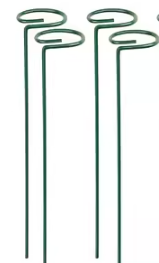
Once blooms appear on dahlias, or other tall growers, spiral rings or Y-shaped supports are useful to prop up the blossoms. Several supports are often needed for each plant.
Tall, heavy blossomed dahlias and other tall growers might do better with two or even three or more stakes surrounding the plant, making sure to avoid the tuber or roots when pushing or pounding in the stakes. Bamboo, plastic coated metal, or even rebar are good choices for the supports. They should be pounded as far as possible into the grounds so that they won’t get pulled over with the weight of a wet, heavy plant. Using twine, tie a knot around one of the stakes, then a figure eight to encircle one of the stems, do the same for the other supports and stems. An alternative technique with large multi-staked plants is to tie a knot around one of the stakes, then surround the plant and loop around the next stake. As the plants grow and the blooms get heavier, several levels of twine might be necessary. Stems and plants should not be tied too tightly.
For shorter plants at the front of a border (penstemon, yarrow, cone flower), pea stakes are a good approach. Pea stakes are multi-stemmed off-cuts from prunings. This is an old method, historically used in vegetable gardens to support pea vines. The twigs, from birch, forsythia, viburnum, etc., are pushed into the ground around the perimeter of the plant. The plant grows up and over the stake, no tying is required, and if done early in the season, the twigs get hidden later in the season. Pea stakes are also a good way to guide climbers over to a trellis. With a bit of practice and creativity, pea stakes can be an eye-catching approach to an otherwise unappealing chore.
Have you ever looked out at your lawn and wondered why it is not as lush and green as the neighbors? Have you tried seeding and fertilizing your lawn but are still unhappy with the results? Here are some considerations that may help you create a lawn management plan that is successful in helping you achieve what you are looking for. Keep in mind that a healthy thick lawn will reduce your lawn susceptibility to pests and disease…so keep it healthy! And if you suspect an insect infestation such as chinch bugs (see Figure 1), web worms or grubs, you must endeavor to address this first. Similarly, a lawn with a heavy weed infestation requires special treatment, perhaps even a full lawn “renovation”, prior to a lawn management plan being initiated.
Watering: One of the most misunderstood, yet critical, elements of any lawn management plan is ensuring that your lawn receives the proper amount of water. A specific watering schedule cannot be provided given that each lawn is subject to different environmental conditions impacting its’ watering requirements. For example, the lawns facing south/west will dry out very quickly, depending upon the amount of shade. In contrast, lawns facing north/east will tend to hold moisture much longer and will require less frequent watering. The general rule of thumb is that a lawn typically requires about 1” (30cm or 300mm) of water per week to stay healthy. If there is sufficient rainfall and overcast days, no watering may be required 😊. However, if you determine that watering is required (soil feels dry several inches below grade), the following guidelines should be followed:
1. Sod should not be watered in the middle of the day. Sunlight on a freshly watered lawn will burn the grass blades as the water droplets act as a magnifying glass for the suns’ rays. Sod is best watered in the early morning. Watering grass at night leads to infestations with grubs and other sod loving parasites and can facilitate fungus spores to develop.
2. It is important to water your lawn deeply and less frequently. Why? It is very important to encourage grass to grow roots that are deep in the soil. Frequent light watering encourages superficial roots to develop and eventually the creation of grass that is not drought tolerant. A good rule of thumb…a sprinkler set for 30 minutes should provide the necessary moisture to thoroughly wet the sod 4-6” below the surface.
3. Keep in mind…once your lawn is beginning to turn brown…it is too late to start watering it!! Try to stay on top of watering and watch the weather…hopefully mother nature will help you out!
Mowing and “Grass-cycling”: Under normal conditions, an established lawn should be mowed with the blades at a height of 2½ – 3” with sharp mower blades. For many, this feels too long. However, removing too much of the grass blade puts the lawn into a state of stress making it susceptible to disease and insect infestations. Under normal circumstances, grass clippings can be mulched and left on the lawn (grass-cycling) as a source of additional nutrients, protection from dehydration and to attract earthworms that will naturally improve both aeration and water filtration. However, in the Spring IF the grass is heavy with moisture, and the lawn is growing quickly, you may wish to remove grass clippings.
Dethatching (deep raking): A lawn with a high percentage of fescue grass will benefit from dethatching – the removal of a thick layer of dead grass and roots that have not decomposed. This should be done if thatch is present and before aeration and topdressing the lawn.
Aeration & Topdressing and “Grass-cycling”: Grass needs nutrients and your lawn might benefit from adding a thin layer of top-dressing (compost) on the surface, particularly if the soil has a lot of clay. A lawn that has a large amount of clay will need to be top-dressed regularly with compost to provide both a steady supply of nutrients, and to improve the soil texture and water/nutrient holding capacity over time. This can be done in the spring and fall. Aerating with a core aerator, topdressing with compost and then raking will break up the cores and improve the penetration of the compost into the soil.
Fertilization: To maintain healthy lawns, 1.5-2.0kg/100m2 of nitrogen is recommended. If using a slow-release fertilizer, it can be applied twice in the growing season (spring, late summer/early fall), with a third application of specially formulated “winter” fertilizer in late fall. Keep in mind that grass grown in the shade requires ~ 50% less nitrogen than a lawn in the sun, so it is advisable to reduce the fertilization rate by one half in the shady areas of the lawn.
Overseeding: If your lawn could benefit from thickening, overseeding should be done in the late summer/early fall when there is less competition, and the roots can take hold.
In the end, if you desire a beautiful and lush lawn, with a little bit of work and a good management plan, you can achieve this. If your lawn is suffering from a significant weed infestation, or poor soil, you may require a full “renovation” – stay tuned for my next in the series to learn about what to do!
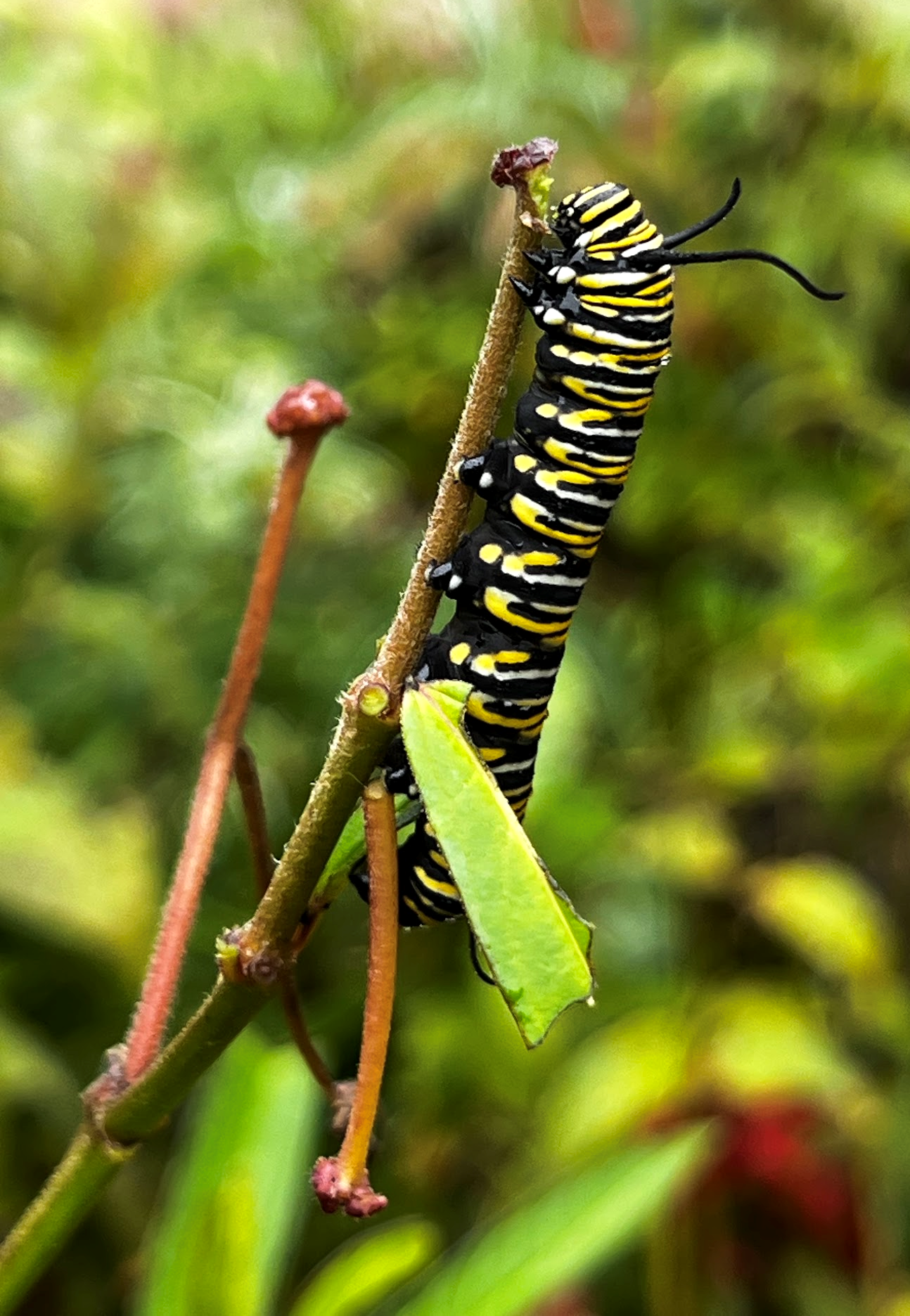
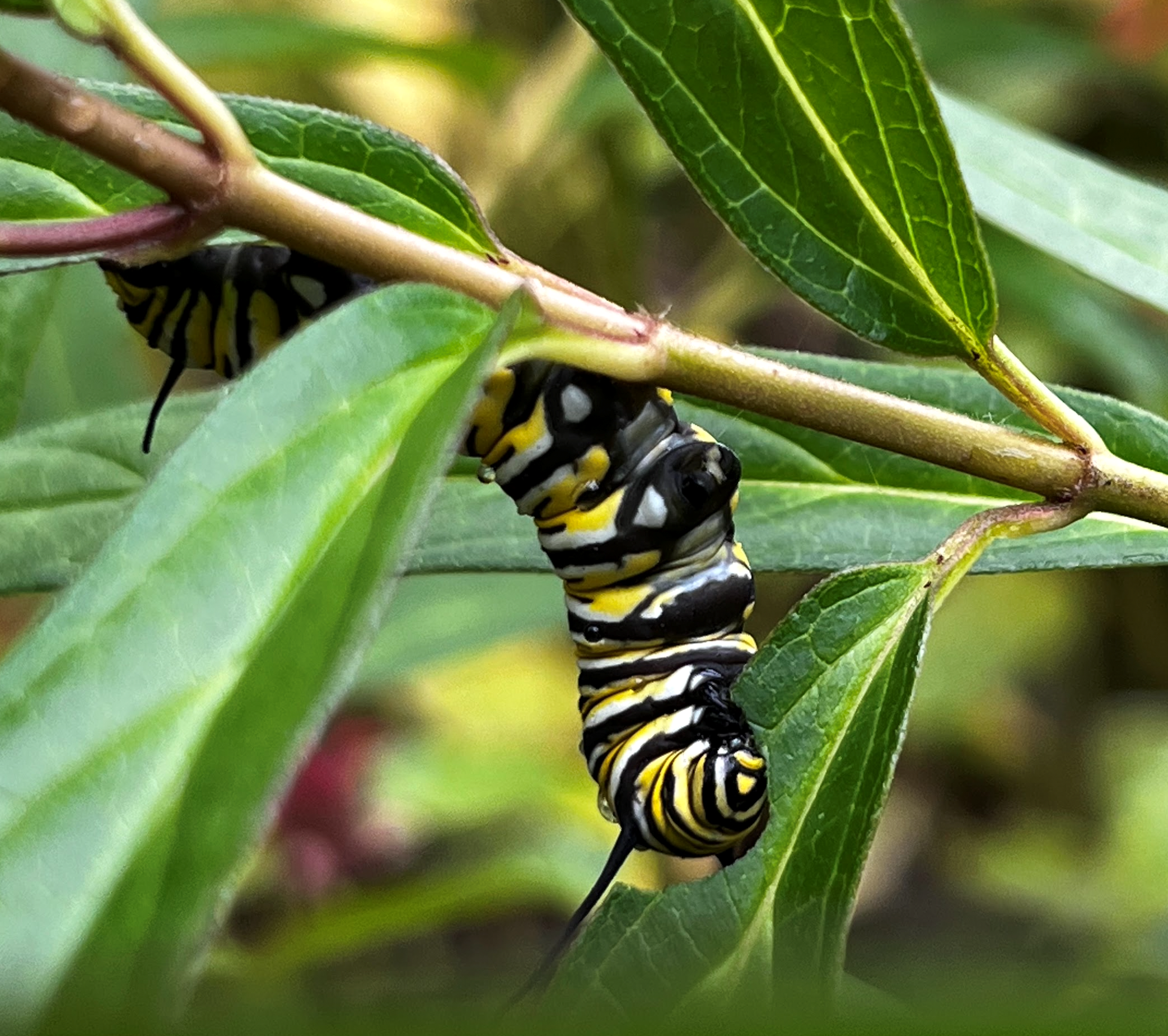
My 2023 garden gave me a front row seat for observing the monarch butterfly (Danaus plexippus) lifecycle. Two monarch caterpillars fed on my garden’s swamp milkweed (Asclepias incarnata) lower leaves for about 10-12 days. I was very concerned when one started a long journey across the 10-foot-long patio and then climbed 10 feet up the house wall to make its chrysalis just under the eaves! I was relieved to read that monarch caterpillars typically do leave their host plant to make their chrysalis elsewhere just in case there are younger caterpillar instars feeding on the same plant. It would be tragic if their chrysalis came crashing down as another caterpillar feeds on the leaf from which it is suspended!
One of the two caterpillars in my garden last year feasting on swamp milkweed on August 8. By August 13, many more swamp milkweed leaves at been eaten (right)
I expectantly watched the “eaves” chrysalis daily and was rewarded on September 5th when the green and gold flecked chrysalis became more translucent with visible orange and black inside. An adult male, identified by the two dots on its hindwings (pheromone patches), emerged later that day.
One monarch caterpillar travelled across the patio and climbed up the house wall to make its chrysalis just under the eaves on August 17 (left). On September 5, the chrysalis became translucent, and the butterfly emerged. It dried its wings for a few hours (centre). Once it opened its wings, I could identify it as a male by the two pheromone patches on its hindwings (right).
I never saw the second caterpillar leave the swamp milkweed host plant but discovered its chrysalis suspended from the leaves of savannah grass (Sorghastrum nutans) one day.
Swamp milkweed is a common species in Ontario, usually found in wetlands, wet roadsides, floodplains and wet meadows, but looks beautiful in the garden with its upright stature and slender leaves. Its flowers also bloom for a long time and are floral and vanilla scented. It grows quite tall and maintains its structure well into the winter months to provide winter garden interest.
Swamp milkweed is a better choice for the garden than common milkweed (A. syriaca) which is not recommended for small gardens due to its rhizomatous aggressive spreading nature. Although butterfly milkweed (A. tuberosa) is a great nectar plant it is also a less desirable monarch caterpillar food due to its hairier leaves and lower protein content (UNC Charlotte Institute 2022). Both swamp and common milkweed averaged the highest number of eggs laid by female adult monarch butterflies in a study that evaluated the attractiveness of nine milkweed species common to Iowa (Pocius et al. 2018).
Typical habitat for swamp milkweed in the wild, but “it is fairly drought tolerant and will thrive in drier areas once established” (Gray and Booth 2024) (left). A 2-year-old swamp milkweed plant in my dry, sandy garden (right).
Well-intentioned people hope to increase the monarch population by home-rearing monarchs. However, an analysis of over 135,000 monarch observations at 403 annual butterfly count locations across the species’ large summer range[1] compared population numbers in 1993 to those from 2018 and found that although some areas had population decreases, overall summer monarch population numbers in North America are relatively stable i.e., reproduction in summer is compensating for losses at wintering grounds in Mexico (Crossley 2022).
A naturally occurring parasite (Ophryocystis electroscirrha) adversely affects how well monarchs fly as well as their migration survival. It has increased in the last 15 years, raising concerns that parasite transmission is decreasing winter colony populations (Majewska et al., 2021). The Xerces Society has published a joint statement against the release of purchased or mass-reared monarchs by backyard and commercial breeders. If you are raising small numbers of wild-collected monarch eggs and larvae for personal enjoyment, education, or as part of citizen science project they encourage you to follow protocols for safe rearing and collect data on your reared monarchs for programs such as the Monarch Larva Monitoring Project and Monarch Health.
Although the research is not definitive, I recommend letting nature take its course and simply providing for the monarch caterpillar’s habitat needs by planting host plants, particularly swamp milkweed, in your garden. This spring I planted two more patches of swamp milkweed plants in my garden. I can’t wait to observe the monarch caterpillar drama that unfolds this summer!
[1] The NA monarch breeding range spans nearly the entire United States and southern Canada. Butterfly counts by citizen scientists are held between July 1 and August 31. Only data with at least 5 years of Monarch observations over a 10-year period were used in the Crossley (2022) analysis. An average of 25 butterfly counts are held annually in southern Ontario. Each count covers a 24-kilometer diameter circle. Last year I participated in my first count in Haliburton, Ontario.
Tips for growing swamp milkweed in your garden
If space allows, plant a group of 3 to 5 plants so pollinators can more easily find the flowers. It can grow in sand, loam or clay and prefers full sun.
Water consistently during the first year so swamp milkweed can build roots to support flowering in year 2.
Remove seed heads before seed pods open if you want to control the number of volunteer seedlings.
Swamp milkweed is not palatable to deer.
References
Crossley, M.S., T.D. Meehan, M.D. Moran, J. Glassberg, W.E. Snyder, A.K. Davis. 2022. Opposing global change drivers counterbalance trends in breeding North American monarch butterflies. Global Change Biology https://onlinelibrary.wiley.com/doi/full/10.1111/gcb.16282
Gray, R. and S. Booth. 2024. The Gardener’s Guide to Native Plants of the Southern Great Lakes Region. Firefly Books. 352 pp.
Majewska, A. A., Davis, A. K., Altizer, S., & Roode, J. C. (2021). Parasite dynamics in North American monarchs predicted by host density and seasonal migratory culling. Journal of Animal Ecology, 2022, 1–14. https://doi.org/10.1111/1365-2656.13678
Amidst the blooms and foliage in our garden lies an unsung group of heroes tirelessly working behind the scenes: detritivores. These animals have a “creepy” reputation—we all know the surprise when we move a pot and then there is an explosive scatter of multitudes of legs!
But aside from the free ‘thrill’, these critters play an essential role in nutrient cycling, soil health, and our overall garden productivity.
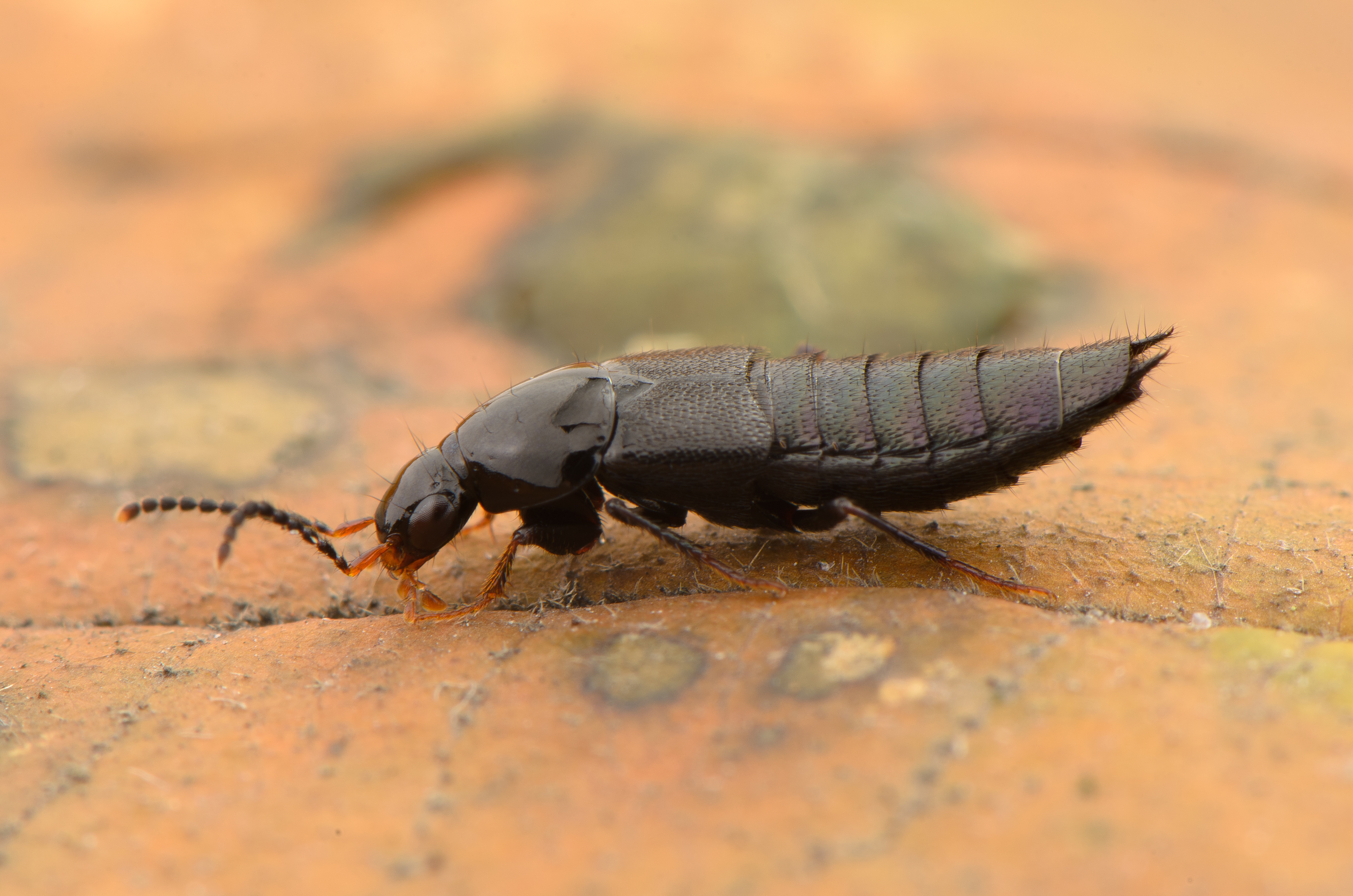
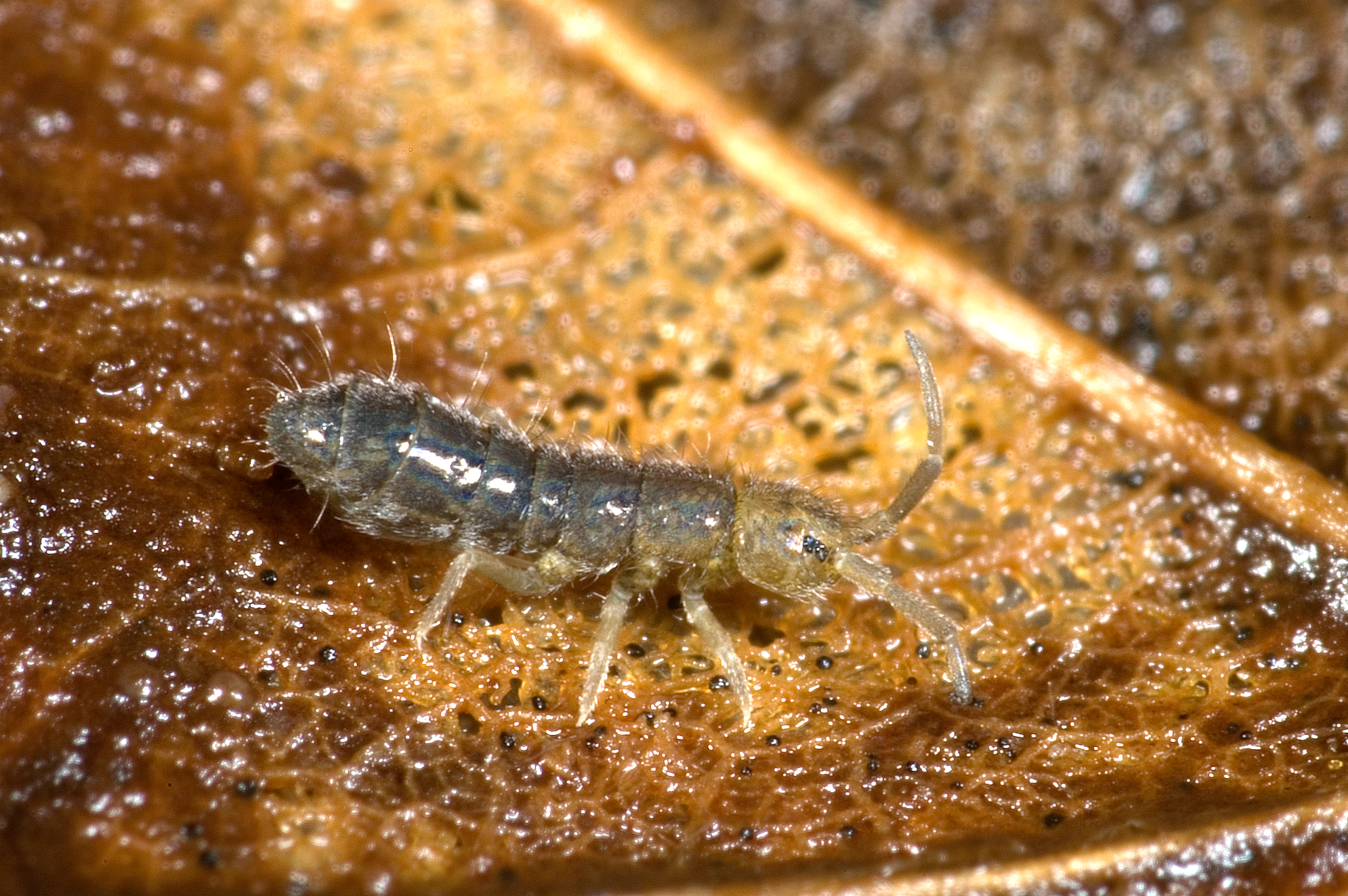
Rove Beetle and Springtail
What Are Detritivores?
Detritivores are organisms that feed on dead plant and animal matter, breaking it down into simpler substances such as nitrogen, phosphorus, and potassium, which plants can readily absorb. This recycling of nutrients ensures that the soil remains fertile and capable of supporting healthy plant growth. Invertebrates such as earthworms, beetles, and millipedes are some of the most common detritivores found in Ontario gardens.
Furthermore, the physical activity of detritivores, such as burrowing and feeding, enhances soil structure. Improved soil structure leads to better water retention and drainage, preventing issues such as soil compaction and erosion. A healthy soil ecosystem, rich in detritivores, is more resilient and productive.
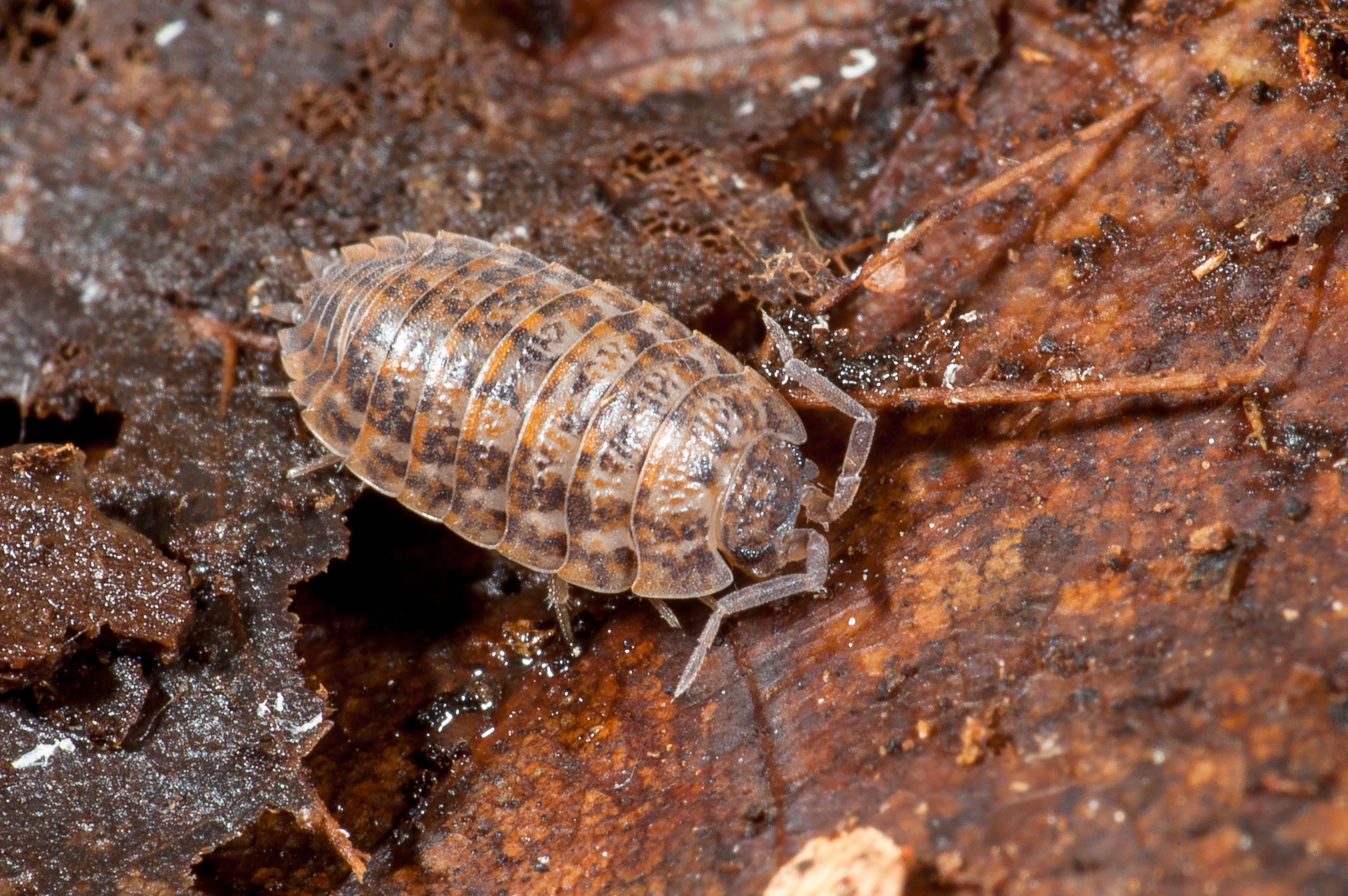
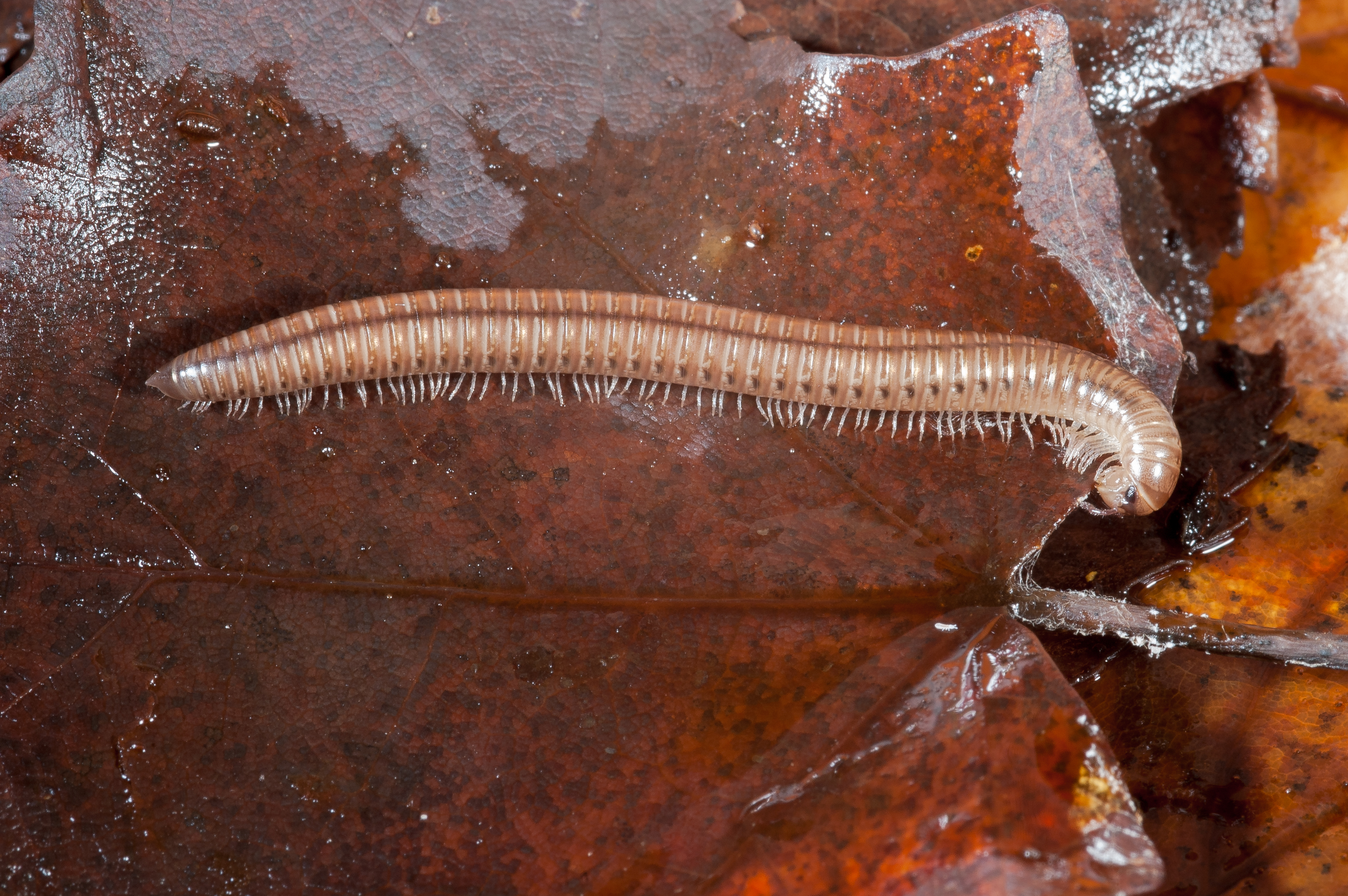
Pill Bug and Millipede
Key Detritivores in Ontario Gardens
Earthworms (Lumbricus terrestris) are perhaps the most well-known detritivores. These segmented worms burrow through the soil, ingesting organic matter and excreting nutrient-rich castings. Their burrowing activity aerates the soil, improving its structure and allowing plant roots to access oxygen and water more easily (Edwards & Bohlen, 1996).
Rove Beetles (Staphylinidae family) are another group of beneficial detritivores. These beetles feed on decaying plant material and fungi, helping to break down organic matter and control populations of other pests. Their presence in the garden is an indicator of healthy soil (Newton, 2010).
Millipedes (Diplopoda class) are often mistaken for pests, but they play a crucial role in decomposition. These multi-legged arthropods consume decaying leaves and wood, breaking them down into smaller particles that microorganisms can further decompose (Hopkin & Read, 1992).
Springtails (Collembola order) are tiny, soil-dwelling insects that thrive in moist environments. They feed on fungal hyphae and decaying plant material and promote microbial growth, which is essential for nutrient cycling (Hopkin, 1997).
And my personal favourite…
Pill bugs, also known as woodlice or roly-polies (Armadillidiidae family), are common detritivores found in Ontario gardens. These small, segmented crustaceans are often mistaken for insects due to their similar size and terrestrial habits, but they belong to the class Malacostraca, closely related to shrimp and crabs. Yes! A terrestrial crab—how awesome is that?! Pill bugs are easily recognizable by their ability to roll into a tight ball when threatened, a defensive behavior known as conglobation (also, an incredibly cool word!). They thrive in moist environments, often found under rocks, logs, leaf litter, flower pots, and other debris where they can avoid drying out.
Harnessing Detritivores to Make your Garden more Productive!
To encourage a thriving population of detritivores in your garden (and better soil as a result), consider the following practices:
Mulching: Apply organic mulch, such as leaves or compost, to garden beds. Mulch provides a habitat and food source for detritivores, promoting their activity.
Composting: Incorporate compost into your garden. Compost is rich in organic matter and attracts detritivores, enhancing soil fertility and structure.
Avoiding Pesticides: Minimize the use of chemical pesticides, which can harm detritivores.
Maintaining Soil Moisture: Ensure that your soil remains consistently moist, as many detritivores, such as earthworms and springtails, thrive in damp environments.
Detritivore insects may be small, but their impact on garden health is enormous. Embracing these crawly creatures in your garden can lead to more productive and healthier plants, making your gardening experience even more rewarding.
More to learn!
To learn more about these amazing creatures, please download Bugdex wherever you get your smart device apps. Bugdex is a revolutionary app introducing the world of insects. It is filled with stunning photographs, interactive animations and a beautiful interface designed to make entomology accessible to all. Learn how to identify major insect groups by recognizing distinctive body features that are beautifully illustrated within the guide. Bugdex is developed by a Danish-Canadian team of entomologists from the Natural History Museum of Denmark and DKB Digital Designs.
All photos in this blog are provided with permission of Dave Cheung, Bugdex.
References:
Edwards, C. A., & Bohlen, P. J. (1996). Biology and Ecology of Earthworms. Chapman and Hall.
Hopkin, S. P. (1997). Biology of the Springtails (Insecta: Collembola). Oxford University Press.
Hopkin, S. P., & Read, H. J. (1992). The Biology of Millipedes. Oxford University Press.
Newton, A. F. (2010). “Staphylinidae Latreille, 1802.” In: Beutel, R. G., & Leschen, R. A. B. (Eds.), Handbook of Zoology: Coleoptera, Beetles. Walter de Gruyter.