By Marilyn Homewood, Master Gardener
Here in Ontario we have a long enough growing season to accommodate both the cold hardy annuals such as sweet peas and the tender annuals like zinnia and celosia. So why do so many gardeners wait until the third week of May to plant their cold hardy annuals? Fear of frost. How many times have you heard the mantra “Don’t plant until Victoria Day weekend”. While that is good advice for many plants, it actually works against this class of plants that like to put down roots in cold soil.
There are actually 2 ways to deal this class of plants:
Direct sow in the spring. As soon as winter has left and the ground can be worked in April, seed varieties such as Nigella, Ammi, Bupleurum and Calendula. Seed thickly and thin the seedlings. This method takes advantage of the abundant moisture that is in the ground, allows plants to develop good root systems prior to facing the heat of summer. Some types such as Larkspur actually do better this way for many folks as Larkspur is quite heat intolerant and germinates poorly in the average Canadian home. I actually germinate mine indoors in my sunroom which is kept at 50 F in the winter.
Transplant seedlings in spring. This is my preferred method for the cutting garden. This method is more precise than sowing seed into the ground and allows for sequencing of seeding to produce the best sized transplant. The first seed that I start is Lisianthus (January 1) followed by snapdragons and sweet peas in February. My seedlings are grown slowly at 50 F which produces less top growth and more root.
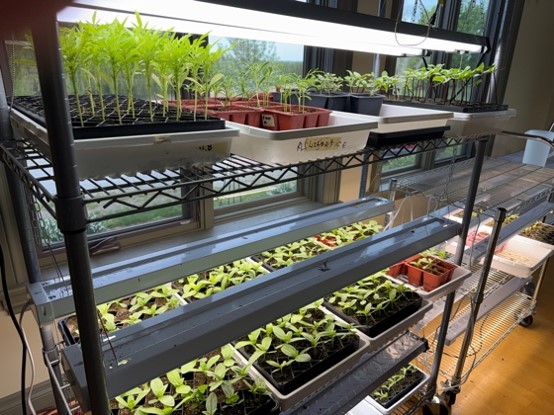
On average, I plant these varieties out around the third week of April. The key to planting successfully is proper “hardening off”. This is a process of gradually acclimating your seedling to the harsher outdoor conditions (sunlight, wind and temperature fluctuations) over 7 days. This helps to prevent transplant shock, sunburned leaves and weak stems. A rough guideline for hardening plants is as follows:
Day 1-3: Place plants outside in out of direct sunlight and wind for 1-2 hours
Day 4-7: Gradually increase time spent outside by a couple hours each day and move into sunlight for part of that time
By day 7, if temperatures are staying above 7 C, plants can stay out all night.
Avoid the midday sun early on. Water carefully. Your plants will dry out faster when outside. Watch the wind initially as it can snap stems.
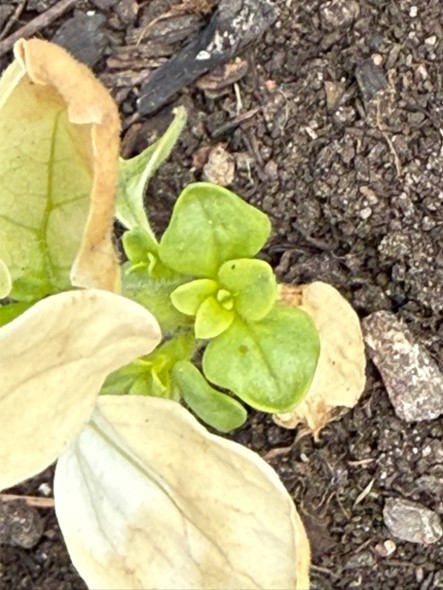
Once seedlings are in the ground, the work is still not over. Watch the weather forecast carefully. Some young seedlings may need protection if temperatures drop below freezing. If temperatures are going to drop, I cover seedlings with frost cloth. Frost cloth is a lightweight, breathable garden fabric designed to protect plants by trapping warmth radiating from the soil to create a microclimate. This cloth can also be used in fall to protect tender plants like dahlias from early frosts. I also use this cloth as a shade cloth to protect delicate flowering plants from the harsh July sun.
This year has been a real challenge. We have had a very cold and windy spring. It was hard to even find consistent conditions in which to harden the plants off. I held off from my usual third week of April planting and ended up hardening plants for about 11 days. Most of the seedlings were planted in the first week of May. A couple days after planting, temperatures were forecasted to be less than 0 C. Of more concern was the wind. My cutting garden receives the full force of the wind as it blows across my farm fields. On went the frost cloth. But the wind must have found its’ way under cloth as the next day some of the snapdragons showed damage to leaves. However, the seedlings were planted deeply with some stem in the ground and in the next week or so, new growth started to appear from the base of the plant. I still can’t access the full extent of damage but am willing to wait to see how many plants recover.
In the meantime, there were tulips to harvest, sunflower seeds to sow, weeding to be done. Soon it will be time to start hardening off the tender annuals like the zinnias!