Category Archives: Websites

Are You in the Zone?

By Cheryl Harrison, Master Gardener

Gardeners are used to seeing the “zone” as part of the information provided on the label of most perennial plants, trees and shrubs purchased from a nursery.  Some labels will list a zone with the corresponding temperature in brackets afterwards.  This seems like an easy way to determine if your chosen plant will successfully grow in your garden–you will need to know the average lowest winter temperature, in your region, then figure out your zone.  You then just buy the plant labelled with your zone for success!  Easy, right?  Yes and no!

In Canada, the original 1960’s plant hardiness zones were based on information gathered at 640 weather stations across the country along with the survival results of selected trees and shrubs.  In 2012, revised maps were released using elevation, more locations and more environmental details resulting in a hardiness index which corresponds to a zone .   At present, there are 13 zones ranging from 1-13.  You may also see an “a” or “b” beside the number.  This indicates a slight variation within that region. See Plant Hardiness Zone by Municipality to find your zone.

Zone 5, author’s garden.

In the USA, the system is different.  Again, there are 13 zones ranging from 1-13 and  “a” or “b” indicates variation within the region. See US Plant Hardiness Zones.   However, the US system is only based on minimum temperature and no other factors.  You may read about a plant grown in the US and designated US zone 5.  A US zone 5 labelled plant may require warmer winter conditions than it’s corresponding zone 5 labelled Canadian plant.  Bottom line, US zones may not be the same as Canada’s.

Canadian data is based on previously collected information but we know that the weather does not always follow past patterns — it can, and will, fluctuate (e.g. freeze/thaw cycles).  There may be microclimates (see Microclimate in Wikipedia) in your own gardening space.  Good gardening practices (e.g. soil preparation)  will contribute to the successful growth of your plant.  Plant survival and growth depends on your gardening expertise and knowledge.  The zone is just one indicator of whether, or not, the plant that you are contemplating will grow well in your garden.  Oh, and Peterborough is a Canadian plant hardiness zone 5 b.

Tips: 

#1 The plant hardiness zone site now can be used to explore where the specific plant that you are thinking about purchasing will grow through the “Species-Specific Models and Maps”.  It does this by creating a “climate profile” of the plant and then mapping where it will grow in Canada.  These are preliminary maps but click here to try it out.

#2 Grow native plants!  Native plants are specifically well suited to an area especially if you can purchase locally grown plants or find locally sourced seeds. 

#3 Consult local nursery staff and your knowledgeable fellow gardeners.  They will know what will successfully grow in your area.

#4 Experiment!  If there is a plant that you really must have, but the zone is off a little…..try it.  You will need to choose a protected location for planting and probably baby it along but sometimes it may be worth it. Talking to other knowledgeable local gardeners may be especially helpful….someone may have successfully grown that special plant in their garden and may share their growing tips with you!

Zone 5, author’s garden.

Houseplant Facts and Fictions

By Laura Gardner, Master Gardener in Training

We turn to searching for information online or in books on how to care for our plants. Unfortunately there are a lot of inaccuracies surrounding certain beliefs and practices concerning them. Since most of our attention is now focused on indoor gardening, let’s look at five questions concerning houseplants.

1. Are Poinsettias Poisonous?

You may have been gifted with a Poinsettia (Euphorbia pulcherrima) and you may be concerned because you have heard that they are poisonous. The plant, while not edible, would need to be consumed in large quantities to be harmful. That being said, it still is wise to keep the plants out of reach of pets and children as some consumption may lead to digestive distress. Like other members of the Euphorbiaceae family, Poinsettias produce a milky sap and so handling the plant without gloves may affect those with a latex allergy.1

2. Can Houseplants Filter or Absorb Pollutants?

Recently I read in a book on houseplant care that plants draw in harmful volatile organic compounds (VOCs) such as formaldehyde and benzene and clean the air for us. Two examples mentioned included the Peace Lily (Spathiphyllum) and the Spider plant (Chlorophytum comosum). It stated that the former can filter out formaldehyde and the latter both formaldehyde and benzene. While it is true that plants have the ability to absorb pollutants, large numbers are required to have a significant impact. The belief that plants clean the air may be associated with a single NASA study2 from the 1980s that was conducted in an air-controlled laboratory setting and not in an open home or office setting. More recent research has determined that a building’s air handling system or open windows is more effective at reducing pollutants than plants. One would require 10-1000 plants per square meter in order to be comparable.3

3. Will Misting and Pebble Trays Increase Humidity?

We may struggle with maintaining optimum humidity levels in the winter for our tropical houseplants. Many books and online sources recommend increasing relative humidity around plants through misting and placing the plant pots on trays filled with pebbles and water. Misting is generally ineffective because the water evaporates so quickly. It would have to be done constantly to have an impact. Concerning pebble trays, an experiment published in the American Orchid Society Bulletin found that in the winter (set in a home in Minnesota), relative humidity levels were raised only slightly. The RH at 40 mm above the tray was measured at 3%; at 110 mm 2%; and at 300 mm it measured 0%.4 Using a humidifier is really the only method that has the ability to increase humidity levels significantly.

4. Should you Use Ice Cubes for Watering Orchids?

Recently I read a comment on the Master Gardeners of Ontario Facebook site that someone said that their Moth Orchid (Phalaenopsis) came with a tag advising them to use ice cubes as a method of watering it. It seems that this advice is really intended to help prevent new Orchid owners from overwatering their plants. While there is a study that found that using ice cubes did not negatively affect the health of the orchids, it was only conducted for a period of 4-6 months. A problem with using ice cubes is that it has the potential to accumulate salt build-up (from water and fertilizer) that can affect the plant’s longevity in the long term.5

5. Should you use Leaf Shining Products or Oils?

Some sources advise using commercial shine products or oils to help make a plant’s leaves shiny and reduce build-up of dust. However, there is research indicating that the use of leaf shine on Weeping Fig (Ficus benjamina) caused the plants to have a reduced tolerance to low light stress, resulting in three times as much leaf loss as untreated plants.Treated plants required higher light levels.6 Another problem is that they can block the pores or stomata in the leaves of some plants, resulting in reducing the plant’s ability to photosynthesize and respire.

Here are three easy to care for houseplants:
Schefflera, Aloe Vera, and Epipremnum aureum (Pothos)

References

  1. Newman, S.E. and B.E. Edmunds. Poinsettias. Colorado State University Extension. Online: https://extension.colostate.edu/topic-areas/yard-garden/poinsettias-7-412
  2. Wolverton, B.C. et al. Interior Landscape Plants for Indoor Air Pollution Abatement. Online: https://ntrs.nasa.gov/citations/19930073077
  3. Cummings, Bryan E. and Michael S. Waring. Potted plants do not improve indoor air quality: a review and analysis of reported VOC removal efficiencies. Journal of Exposure Science & Environmental Epidemiology. Volume 30, pp. 253–261 (2020). Online: https://www.nature.com/articles/s41370-019-0175-9
  4. Kohl, Douglas. A Study in Humidity: Douglas Kohl Evaluates the Effectiveness of a Common Method to Raise Humidity around Orchids Growing in the Home. American Orchid Society Bulletin, 63(8). 1994. pp. 916-917.
  5. American Orchid Society. Greenhouse Chat Webinar. June 2021. Online: https://www.aos.org/All-About-Orchids/Webinars/chat/Greenhouse-Chat-June-2021.aspx
  6. Steinkamp, K. et al. Acclimatization of Ficus benjamina: A Review. Online: https://mrec.ifas.ufl.edu/foliage/resrpts/rh_91_5.htm

Winter Favourites

By Lois Scott, Master Gardener

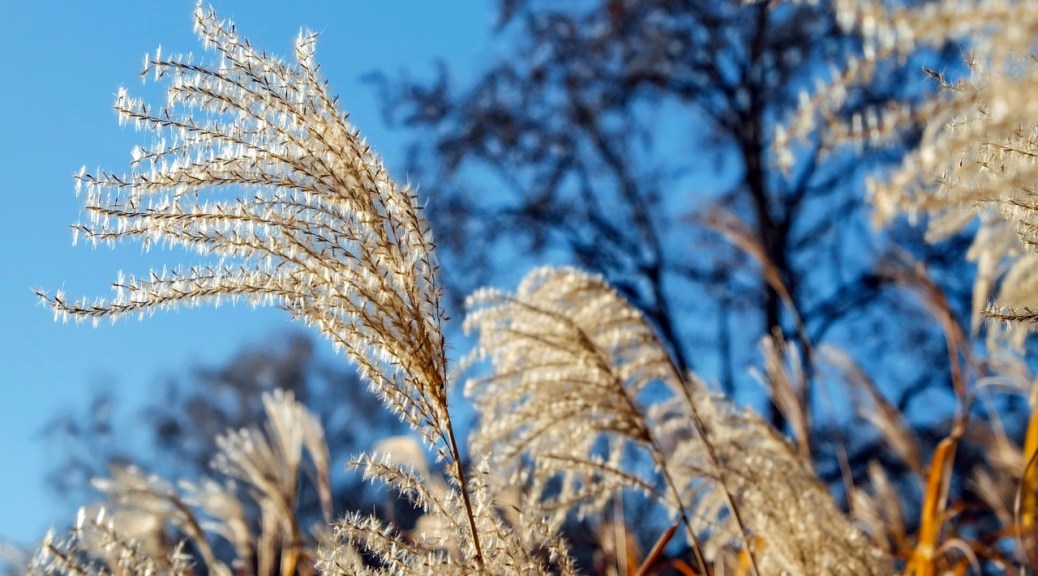
As I begin to hunker down for winter, the garden outside my windows still gives me pleasure.  Some plants are blackened and not particularly attractive but grasses continue to look beautiful throughout the winter months. 

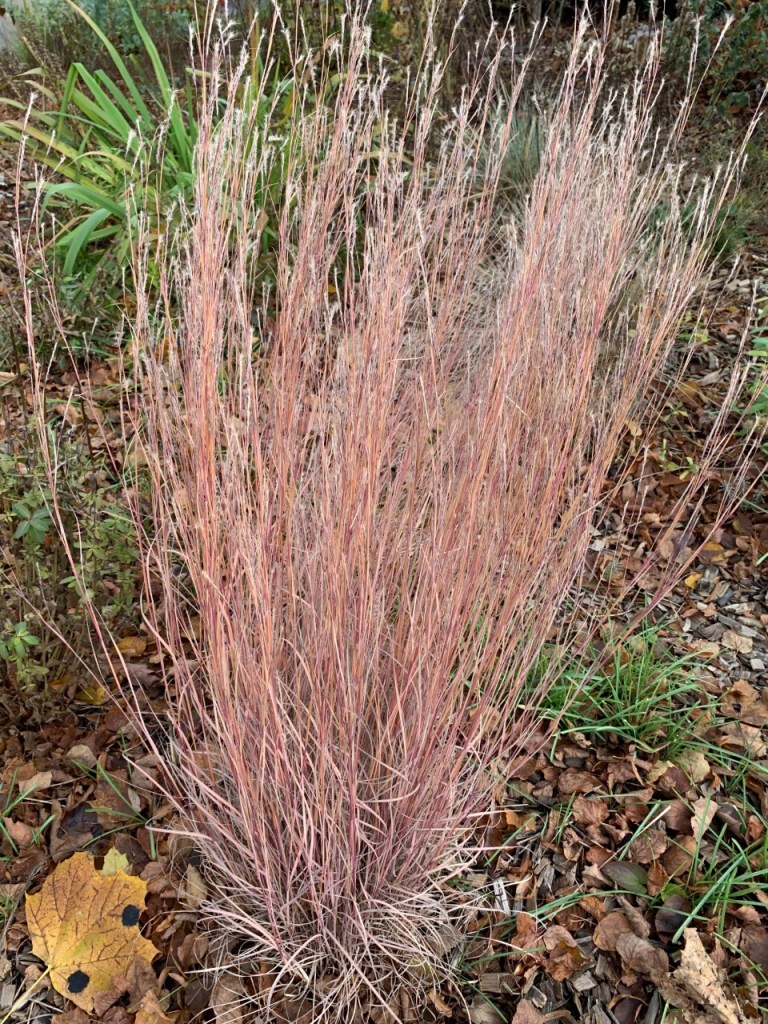
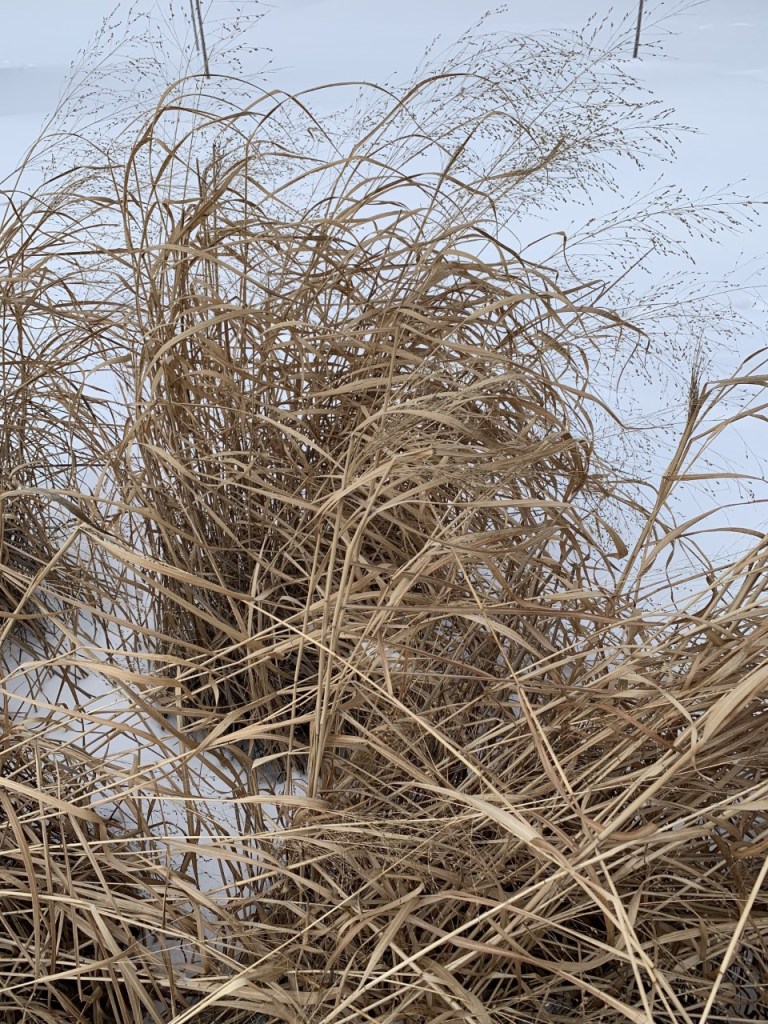
Two of my favourite grasses for winter are Little Bluestem (Schizachyrium scoparium) and Switchgrass (Panicum virgatum).  These are both native grasses that are not only beautiful but well behaved in my garden.  Little Bluestem is a great choice for a dry, sunny spot or even a rain garden that may flood and then dry out.  It can grow up to 4 feet high and 2 feet wide. Switchgrass is a taller grass that grows to 6 feet with a 3-foot spread.  It prefers soil that is medium to wet and is also a great choice for rain gardens. 

Bluestem in author’s garden

Both these grasses are host plants for many species of butterflies.  They also provide seeds and nesting materials for birds and shelter for small mammals.

Switchgrass in author’s garden

Little Bluestem and Switchgrass are “warm season” grasses which means that unlike “cool season” grasses they don’t go dormant in the heat of summer.  Warm season grasses thrive in the heat.  They start growing later in springtime and flower later in the summer. 

This brings me to why I love them in winter.  They hold up their beautiful seed heads that look stunning when frosty, they create movement in the garden, provide colour all winter long and they help make my garden a winter refuge.

Resource:

https://www.inournature.ca/native-grasses-for-ontario-gardens

The Plastic Dilemma

By Marilyn Homewood, Master Gardener

The recent severe weather experienced by the west coast drives home the reality of our changing climate. Gardeners pride themselves on being good stewards of the land and are always trying new techniques to improve. However, there is a fly in the sustainability ointment.

The horticultural industry uses a lot of plastic. Pots, weed barrier, netting, propagation equipment; it’s overwhelming.  On a global basis, about 4 percent of world oil production is used as a feedstock for all plastic and another 4 percent is consumed as energy in the manufacturing process. Emissions are just the beginning of the problem.  The Earthways Center at the Missouri Botanical Garden estimates that about 350,000 lbs. of horticultural plastic enters the waste stream each year in America. Plastic is ubiquitous, does not degrade rather it disintegrates and some types (PVC and polystyrene) leech toxins into the soil and groundwater.  As it disintegrates, it becomes microplastic fragments that can be found both in marine settings and in the soil.  We are all aware of the impact on marine life but it has now been discovered that these fragments are in the soil and have a significant negative impact on arthropods and roundworms (all important in the breakdown of organic matter). 

Freedom from plastic is the goal but will take time. There are things gardeners can do right now to reduce their plastic consumption.

  • Extend the life of plastic you already own by careful handling and reuse
  • Forgo plastic when workable alternatives exist. Use biodegradable pots made of coir or fibre and try soil blocking for starting seedlings. Use wooden plant markers.
  • Buy bare root plants and or start plants from seeds to cut down on plastic pots
  • Use planters made of terra cotta, metal or ceramics.
  • Only use tools made from metal and wood
  • Skip the use of bagged products and purchase these products at a bulk outlet using preowned containers.
  • Use weed barriers that biodegrade such as cardboard or biofilm (made from corn)
Metal tools that last a lifetime

There may still be items for which no good alternative exists in your situation.  In these cases, purchase higher quality versions that are more durable and last a long time.  Companies such as Bootstrapped Farmer are now specializing in this type of product.

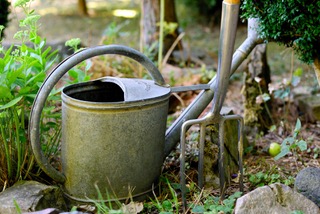
Many years ago (1996) I purchased 2 large plant trays from Lee Valley Tools and am still using them.  The trays are still in the catalogue and I am going to purchase more.  I have a metal watering can which I have had since I started to garden.  These things can be passed along to younger gardeners.  As the urgency of this issue becomes apparent, additional products come to market assisting in the transition to freedom from plastic.

“We have forgotten how to be good guests, how to walk lightly on the earth as its other creatures do.” ~ Barbara Ward


Resources

https://www.gardenorganic.org.uk/say-no-plastic-garden

https://www.npr.org/2019/07/09/735848489/plastic-has-a-big-carbon-footprint-but-that-isnt-the-whole-story

https://www.bootstrapfarmer.com/

Mushrooms in the Wild

By Mary-Jane Pilgrim, Master Gardener

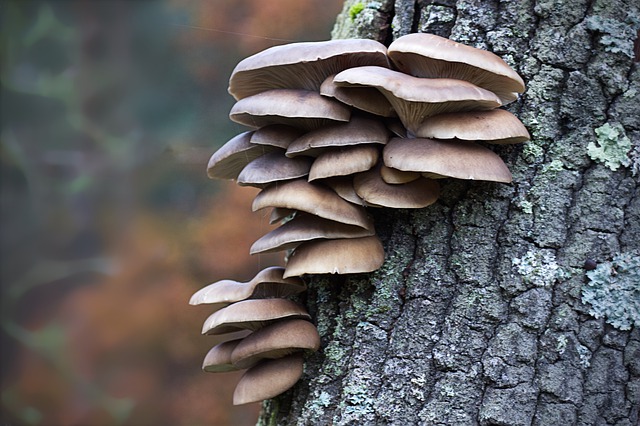
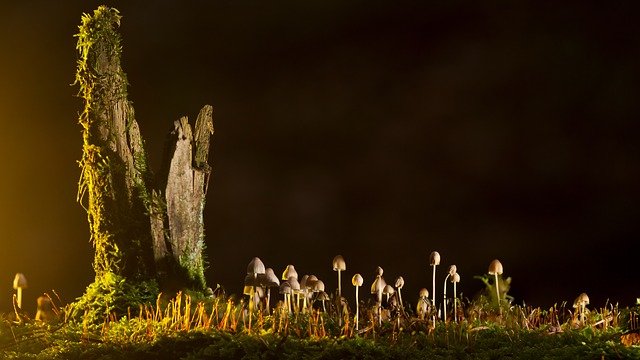
Go for a hike in the woods in November, and you’ll see plants you’ve probably never seen before. With the wetness of fall comes an entire forest of miniature fungus elements of many different shapes, sizes and colours. Some can be eaten, others don’t taste very good, some will make you sick and a small number of them will kill you. In general, the types of trees in the forest will determine what fungus and hence what mushrooms will grow there.

Mushrooms are the fleshy, spore-bearing fruit of various fungi. They are generally short-lived. They can emerge from the ground, expand, produce spores, and die back in a matter of a few days. Some are as big as dinner plates and some as small as pinheads.

This fall, myself and two active friends have been going hiking in different parks, conservation areas and public wild spaces in our area. Whenever we see a new mushroom, we generally stop and take a closer look and we’re often amazed at what we find. In additional to the white, brown and sometimes orange mushrooms, we also find different mosses and lichens. We often taunt each other to try to eat the different mushrooms, but just in jest — recognizing the danger of improper identification.

Mushrooms play an important role in our ecosystem. They are capable of decomposing pretty much any material (plant or animal) in the woods and breaking it down into the primary components of forest soil; providing nutrients that feed the plants growing in it. Many animals rely on mushrooms for food, especially squirrels and other rodents. Slugs also dine on mushrooms, and certain types of flies spend their whole lives on, and in, mushrooms.

Mushrooms develop from a mycelium; a mass of threadlike structures that make up the main part of the fungus. It is usually embedded in soil or wood. These mycelia often form connections, called mycorrhizae, with the roots of coniferous trees and other plants. Unlike plants, mushrooms cannot synthesize their own food from the sun’s energy. They lack chlorophyll – the substance which permits plants to use sunlight to form food. Mycorrhizae assist the plants around mushrooms in absorbing water and nutrients, and in turn, the fungi receives some of the carbohydrates the plant produces through photosynthesis — it’s a symbiotic relationship.

Most interesting to me are the mushrooms that grow in rings. Recently, while hiking the “UpTown” trail in HaroldTown Conservation Area east of Peterborough, we spotted several large rings of mushrooms and wondered how and why they were growing like that. Turns out that when a mushroom spore lands in a suitable location, the underground roots grow out evenly in all directions. As the fungus grows and ages, the oldest parts in the center of the pile die, creating a circle. When the fungus roots produce its mushrooms, they appear above-ground in a ring. The ring continues to grow outwardly, eating up all of the nutrients in its path, and leaving behind nutrient-rich soil.

There are edible mushrooms in our forests like chanterelles, morels, and porcini mushrooms. Also to be found from the fungi family are edible puff balls. Foraging is prohibited in Ontario’s provincial parks without proper authorization and also in conservation reserves, unless the forager is harvesting for personal consumption. In Toronto, foraging for any purpose is illegal in city parks and natural spaces. The Ontario Poison Centre views foraging as an “extremely dangerous” hobby because the difference between safe and toxic mushrooms can be microscopic.

Warning: Never consume a wild mushroom unless you are certain of its identity and edibility. Do not attempt to identify a mushroom from comparing photographs alone. Check out all the characteristics and if in any doubt, do not eat them.

Foraging aside, my suggestion after my experiences this fall is to get out and hike in the forest before the snow falls because there are still thousands of mushroom creatures along the forest floor in different shapes, sizes and colors. It’s a whole new garden in the fall once most of the green has disappeared. Take a camera along with you!

Resources:

https://www.tvo.org/article/where-the-wild-things-are-foraging-in-ontario

https://www.thecanadianencyclopedia.ca/en/article/wild-mushrooms-in-canada

Grow Lights

By Judy Bernard, Master Gardener

It’s getting close to that time of year when our thoughts turn to gardening and starting seeds. The seed catalogues come in the mail in the new year, the Master Gardeners have their Day for Gardeners (pre-covid, this was usually held in late February), and then there’s Seedy Sunday (usually held in mid-March, and still possible for 2022).

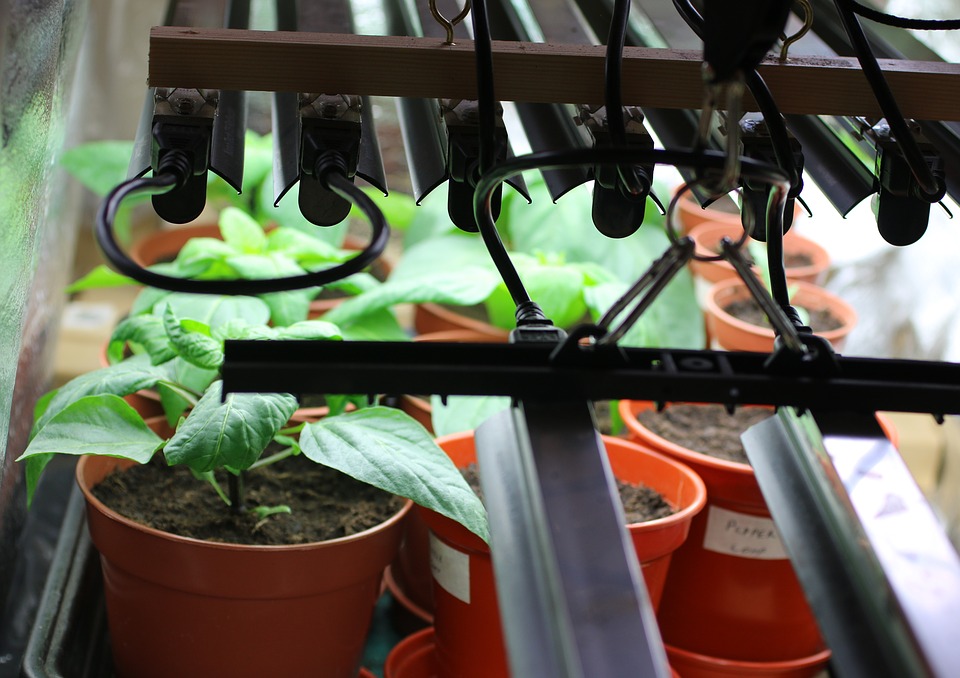
Starting seeds in your sunniest south-facing window is your best bet if you don’t have grow lights. When grow lights are used properly, you will have more compact, healthier seedlings to put out in your garden. And grow lights can be used year round to grow veggies indoors. They can be used for houseplants as well.

grow-lights-2683982_960_720

There are lots of different options for choosing grow lights from plant stands with fluorescent or LED lights suspended over your seed flats, to incandescent light bulbs that fit into a standard lamp. There are pros and cons to each type of light. For example, incandescent lights are cheapest, but the most expensive to operate. There is a lot to take into consideration when choosing and selecting the grow lights that will work best for you and the plants you want to grow. I’ve done a little research and found Lamps Plus and Modern Farmer have some good information to help you select and use your lights efficiently.

Resources:

Check out these sites for all you need to know to get started using these amazing lights.

Overwintering Dahlias

By Marilyn Homewood, Master Gardener

A riddle, wrapped in a mystery inside an enigma.  Winston Churchill’s famous quotation is the way that I as a novice dahlia grower feel about this subject.  So many variations exist. Can they all be correct??  The answer to this mystery seems to be fine tuning a storage method to suit your own situation, which means some trial and error. So, expect some losses at first.

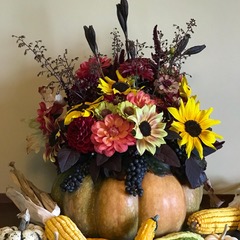
Pumpkin centrepiece with year end flowers

When to dig? Conventional advice says to wait for the frost but this year’s fine weather made other alternatives a consideration. Dahlias originate from the mountains of Mexico where the fall is semi-arid.  It is the lack of water that causes the plant to go dormant.  Here that happens either with a killing frost or by cutting the plant down. Both cause the onset of dormancy and once begun, the tubers underground start to set “eyes”.  Leave the tubers in ground for 1-2 weeks before digging (this also helps the thin skinned tubers to toughen up, which helps them store better).

Divide now or in the spring?  This is entirely personal preference.  Dahlia are easier to split in the fall as the stalk hardens over winter.  However, the eyes are easier to see in the spring.  If you choose to split in the fall, tubers will need washing and drying before splitting.  For plants being overwintered as a clump, knock off excess soil and let dry before storing.  Some sources conjecture that the fine covering of soil helps to protect the tubers from shriveling over the winter. 

Successful dahlia storage is a balance between the right temperature range and the relative humidity.  Ideally, dahlias should be stored around 45 to 50 F and at a RH of 75-85%.  The method you use should try to ameliorate the conditions you are storing in.  For example, the dryness of the air in winter in Ontario means that shriveling of tubers is more of a problem than rot.  Use of a packing material such as vermiculite or wood shavings can provide a more stable environment, absorbing excess moisture when necessary and giving back when needed. 

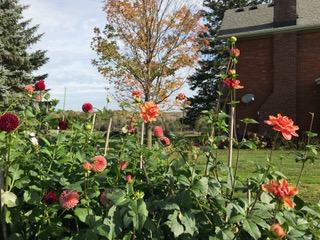
Last of dahlias on a sunny October day

Specifics of various techniques are referenced for your information.  I have decided to try 3 methods. I am going to split some this fall and store using the saran wrap method as well as in vermiculite in plastic tubs. I will also leave some in clumps with a slight covering of earth, pack in vermiculite in a large plastic tote.  I lean towards the plastic tubs as my basement in quite dry in the winter so am concerned with moisture retention.  Don’t forget to check your tubers over the winter and remove any ones with rot or spritz with water if they appear to be shriveling. 

Good luck!!

Resources

https://summerdreamsfarm.com/dahlia-care

Some Cures for Plant Blindness

By Laura Gardener, Master Gardener in Training

I was recently reading about a condition called “plant blindness.” The phrase was coined back in 1998 by botanists Elizabeth Schussler and James Wandersee.[i] It is defined as the “inability to see or notice the plants in one’s own environment.” Plants are not as obvious as animals because they often “lack visual attention cues.” They can seem ubiquitous–have the same colour, form, and lack a “face.” They don’t move and they usually aren’t threatening. For example, if you look at a photo of a pond containing birds, surrounded by plants, which of these would you most likely know by name or recall later? This bias results in lower levels of plant knowledge, awareness of plant names, of plant functions, and their roles resulting in less interest in plant protection, conservation, and reduced funding. Plants are vital to our survival and we need to see their importance, appreciate them, and put them on the same level as animals.[ii] It is possible to overcome ”plant blindness.” We need to introduce and share plant knowledge with children at an early age in the same way we encourage learning about animals.  

Recently I was out walking and was trying out the Seek identification app by iNaturalist on my phone. I was attempting to identify a specific type of Elm (Ulmus) and a couple that I know walked by and we started a conversation about the app. They mentioned that their son and grandchildren use it on their nature walks. It can be used to identify other lifeforms other than plants and while the app isn’t 100%, it is fairly reliable. If it is uncertain, it will restrict its identification to a family or a genus and won’t offer a guess. An Oxford University study[iii] found that it was in the top five of plant identification apps (the others included Plant.ID, Google Lens, Flora Incognita, PlantNet). It has some fun nature challenges built into it as well as the ability to earn badges for the number of species observed. Photos of plants may also be uploaded to the iNaturalist citizen science web site where they can be confirmed through crowd-sourcing. In terms of correcting “plant blindness,” this app has great potential. 

Photo by PhotoMIX Company on Pexels.com

It is only the beginning of October but the holiday season is just around the corner. It is not too early to be thinking of presents. Why not give the gift of a book about gardening, botany, or nature to a child in your life? The following are a selection of some of the best books for a range of age levels. Most of the books listed have been well-received by reviewers in publications such as Booklist, Horn Book, Kirkus Reviews, and School Library Journal. Titles marked with an asterisk have received at least one starred review. If purchasing is not an option, you can check to see if your local library carries them (or recommend that they do). 

*A Seed is Sleepy by Dianna Hutts Aston; illus. Sylvia Long (Chronicle Books, 2007). Level: Grade 1 to 4.

*Begin with a Bee by Liza Ketchum et al.; illus. Claudia McGehee (University of Minnesota Press, May 2021). Level: Preschool to Grade 4.

*Botanicum: Welcome to the Museum by K.J. Willis; illus. Katie Scott (Penguin Random House, March 2017). Level: Grade 3 to 7.

Gardening with Emma: Grow and Have Fun: A Kid-to-Kid Guide by Emma Biggs and Stephen Biggs (Storey Publishing, January 2019). Level: Grade 3 to 7.

*Oscar’s Tower of Flowers by Lauren Tobia (Candlewick Press, May 2021). Level: Preschool to Kindergarten.

*Plant, Cook, Eat: a Children’s Cookbook by Joe Archer and Caroline Craig (Penguin Random House, March 2018). Level: Grade 2 to 5.

What’s Inside a Flower?: And Other Questions About Science & Nature by Rachel Ignotofsky (January 2021). Level: Preschool to Grade 2.

*The Wisdom of Trees: How Trees Work Together to Form a Natural Kingdom by Lita Judge (Roaring Book Press, March 2021). Level: Grade 3-5.

[i] Plant Blindness. Native Plant Society of the United States. Online: https://plantsocieties.cnps.org/index.php/about-main/plant-blindness. Accessed: October 2, 2021.

[ii] Seventeen Years of Plant Blindness: Is Our Vision Improving? Elizabeth Schussler. Online: https://appliedeco.org/wp-content/uploads/NativeSeed2017-Schussler-SeventeenYearsPlantBlindness.pdf Accessed: October 2, 2021.

[iii] Jones, Hamlyn G. What plant is that? Tests of automated image recognition apps for plant identification on plants from the British flora. AoB PLANTS, Volume 12, Issue 6, December 2020. Online: https://doi.org/10.1093/aobpla/plaa052 Accessed: October 2, 2021.

Seed Saving and Bombing

By Anica James, Master Gardener in Training

With the autumn equinox right around the corner, this is the perfect time of year to be collecting seeds. I don’t know about the rest of you, but I find seed collecting both rewarding and therapeutic. There is something about spending an intimate amount of time with different plant species, getting to know them and discover how the plant truly grew. It’s amazing that something as tall and beautiful as a Foxglove grows from the tiniest of seeds. Whether you are collecting seeds from fruits and vegetables, wildflowers, ornamental flowers, grasses or trees, you will notice that each seed has various characteristics that make it unique.

A homemade seed saving library that was installed in East City

I always carry a pen for labeling, a big stack of envelopes, usually a pair of secateurs or snips, and sometimes paper lunch bags for larger seeds. I go for a meditative walk through the woods or around my yard, carefully collecting my stash, labeling the envelopes or bags, and bringing them home for extra drying time. For some seeds I use a sieve to take off any chaff that is still clinging on, and then I weigh everything out on my scale and divide certain seeds up into packages I make out of old scraps of paper (vintage National Geographic magazines are my favourite to use). Before the pandemic started, there was an annual Seedy Sunday event held every March in Peterborough; keep your eyes and ears peeled for future dates because this is a great place to meet other seed collectors and swap findings.

Insects love to hang out amongst the pods. Always be sure to clean your seeds.

I encourage you to go for a walk around your property or nearby country road and collect your own seeds because not only is it a fun and free way to help you grow different plants on your own, but you can also share or sell any leftover seeds you have. Some of my favourite native varieties to collect are:

Aquilegia canadensis, wild columbine

Asclepsias tuberosa, butterfly weed

Aster novae-angliae, New England aster

Coreopsis lanceolata, lanceleaf coreopsis

Dalea purpurea, purple prairie clover

Monarda fistulosa, wild bergamot

Rudbeckia hirta, black-eyed Susan

Symphyotrichum oblongifolium, aromatic aster

Another thing that I like to do is create seed bombs that I can use for guerilla gardening projects. Seed bombs are a great activity to do with kids and it encourages them to get messy and add to the beauty of this world. I personally like to “bomb” public areas around commercial properties and newly built subdivisions with wildflower seeds, anything to bring some life back into the beige-grey landscape.

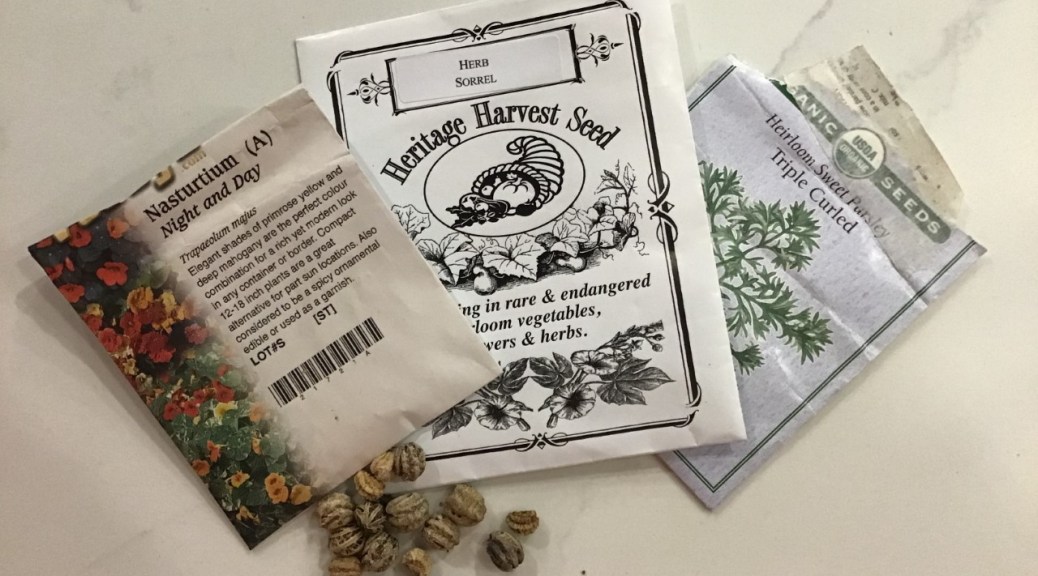
Basic envelopes that I use when I am collecting seeds. Once I have everything at home I sort and clean them and put them in new labeled envelopes.

Materials you will need:

  • Wildflower seeds or seeds collected from the garden
  • Water
  • Peat-free compost.
  • Powdered clay (found in craft shops); some people also use cat litter
  • A bowl to mix everything in
  • A tray to dry the seed bombs on

How to build your bombs:

  1. In a bowl, mix together 1 cup of seeds with 5 cups of compost and 2-3 cups of clay powder.
  2. Slowly mix in water with your hands until everything sticks together. It should have the same texture and consistency as muffin batter (kids love this because it’s like making slime)
  3. Roll the mixture into firm, even balls and then leave the balls to dry in a sunny or warm spot
  4. Once they are dry, plant your seed bombs by throwing them at bare parts of the garden or land and wait to see what pops up! (I usually like to time my guerrilla plantings with the rain).

If you are interested in learning more about seed saving locally, Jill Bishop from Nourish has some great reference material and sometimes offers workshops, especially to those who are members of local community gardens. https://nourishproject.ca/basics-seed-saving

Seeds of Diversity is another great resource https://seeds.ca/

Coriander seeds which I save and collect every year for culinary purposes.

Reaping the Flower Harvest

By Marilyn Homewood, Master Gardener

Despite a delayed start followed by early heat and drought,  seedlings did grow and flowers eventually bloomed. The biggest challenge proved to be the prolonged early drought.  Being on a dug well, I was only really prepared to water the dahlias from the well.  Luckily, I have a free running spring behind my farm.  After assembling a sufficient number of containers, I found that fetching water from the spring provided enough moisture to get plants established and supported until it rained.  I divided the bed into 4 sections and watered each on a rotating basis.    

Fetching water

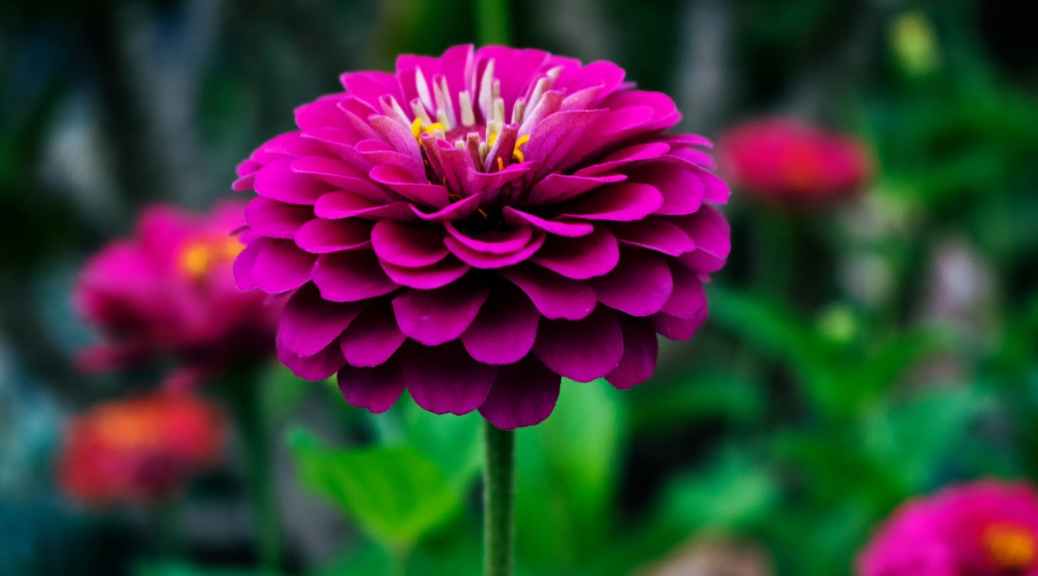
The lack of water and heat made for some small blooms initially but attractive non the less.  By mid-August, I was cutting snapdragons (who proved to be the workhorses of the garden), loads of zinnias and scabiosa as well as various fillers such as dara and celosia.  Then the gladioli, sunflowers and dahlias decided to show up. Suddenly, I seemed to be doing as much deadheading as harvesting cut flowers. 

Harvesting flowers correctly and caring for them ensures a longer vase life and more enjoyment from your flowers. To keep flowers alive, you must preserve the stems’ ability to take up water after cutting.  The tubules that water moves through can become blocked either by air bubbles or by bacterial growth.  Recutting stems exposes fresh tubules to water and the use of a few drops of bleach in vase water reduces bacterial growth.

Conditioning Flowers

Key things to remember:

  • Cut the flower at the correct stage.  This varies between flower types.  Some like peonies are best cut when the bud is unopened but coloured and soft.  Conversely, zinnias must be fully open.
  • Harvest during the coolest parts of the day (early morning or dusk) when plants are well hydrated
  • Use clean, sharp clippers to prevent crushing the stems (which damages the tubules in the stem)
  • Take a clean bucket of warm water into the garden and place newly cut flowers in bucket after stripping lower leaves off
  • Allow flowers to rest (condition) in a dark, cool place prior to allow them to rehydrate
  • Use clean vases and recut stems prior to arranging
  • Change water daily and recut stems every other day
  • Homemade flower food can be helpful.  Use one teaspoon sugar and one teaspoon to bleach per litre of water
  • Keep flowers out of direct sunlight and away from ripening fruit (ethylene gas).  Both shorten bloom life

In addition to those flowers grown specifically in the cutting garden, I was able to utilize some of the plants in the landscape beds as accents for arrangements without taking away from the landscape value.  Perennials such as liatris, grass seed heads and foliage are interesting additions.  

The only thing left to do is to sit back and enjoy!!

Earth laughs in flowers.” – Ralph Waldo Emerson

Resources

A Year in Flowers, Erin Benakein, Chronicle Books, 2020

https://thekokorogarden.com/flower-growing-guides

https://www.thegardenersworkshop.com/how-to/lisas-tips-tricks/cut-flower-harvest-guide/