by Sharleen Pratt, Master Gardener
There are many different reasons to garden. Some garden to enhance the look of their homes, some love to grow their own vegetables, and many of us garden for colour after a long hard winter. There is another more powerful reason to garden. It can be a medicine and a natural source of therapy. Gardening can relax and invigorate us. The medical profession now recognizes gardening as a means to help heal people.
Being in the outdoors, whether gardening or walking in a wooded area can relax us, rejuvenate us and enliven our senses to what is around us. We can connect with the natural world and be creative and forget for a moment all the everyday worries that we carry with us.
My meditation comes when I’m out digging or planting in the garden and yes, sometimes I will be caught talking to myself. It is my time to be ‘in the moment’ and like many other gardeners the hours will slip away peacefully.
I have a fond memory in Grade 5 of a teacher during a really hot spell in June taking us outside and reading a book to us while we sat on the grass under a mature tree. Why do I remember this? I can’t remember the book but it has something to do with the coolness of the tree, the peaceful surroundings and maybe just the feel of the grass.
Science is now supporting what we have intuitively known for many years. By deepening our relationship with nature, we can reduce stress levels, increase creativity and improve our mood.
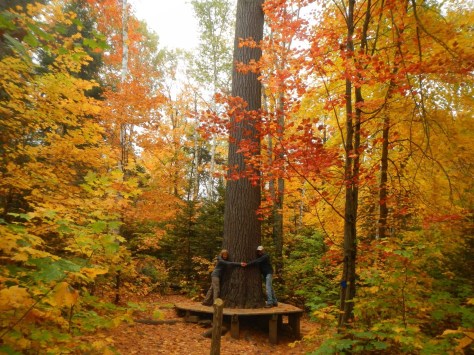
Kawartha Conservation offers Forest Therapy walks that are used to help support healing and wellness. Forest Therapy is inspired by the Japanese practice of shinrin yoku which translates to “forest bathing”. For centuries, poets and philosophers extolled the benefits of a walk in the woods. Florence Williams set out to uncover the science behind nature’s positive effects on the brain in her book, The Nature Fix. She has travelled extensively and investigates cutting-edge research to demonstrate that even small amounts of exposure to the living world can improve our creativity and enhance our mood. Through her research, Williams shows how time in nature is not a luxury but is, in fact, essential to our humanity.
Rudolf Steiner (1861-1925), founder of the biodynamic approach to agriculture, was a highly trained scientist and respected philosopher in his time who later in his life came to prominence for his spiritual-scientific approach to knowledge called “anthroposophy.” Anthroposophy is a formal educational, therapeutic, and creative system which he established by seeking to use mainly natural means to optimize physical and mental health and well-being.

In Kent, England there is a unique facility, Blackthorn Trust, which offers specialist therapies and rehabilitation and their work is based on the belief that more than medication is required to effect positive change in people. The work of Rudolf Steiner underpins all their work, and the belief that people should pay more attention to feelings, to the imagination, to the emotions, to the body and space it occupies and to nature and all its rhythms.
Community Gardens can play a large role in helping people feel more connected with the natural world, supply good physical exercise, allow creative juices to flow, supply opportunities for those in small urban settings to participate in an outdoor activity, escape the stresses of everyday life, and improve well-being by creating a reduction in neighbourhood-based fear. Community Gardens have been popular in England for many years and one of the more interesting ones in Oxfordshire is for people with Parkinson’s disease. To learn more about the community gardens in the Peterborough area, visit Nourish.
The Royal Botanical Gardens have realized the benefits of using plants and gardening to enhance emotional, physical and mental well-being. They offer a number of programs from yoga and tai chi, afternoon teas, making mead, kids and family programs as well as lectures and workshops. (Editor’s note – unfortunately due to a recent announcement from Ontario’s Chief Medical Officer of Health regarding COVID-19, the RBG will be closed until April 6, 2020)

In summary, if you are finding this to be a long winter and you are feeling overwhelmed with everyday stresses, I encourage you to go for a walk in a nearby wooded area, be observant of your surroundings, take a deep breath and enjoy. I guarantee you will return home feeling calmer and rejuvenated!












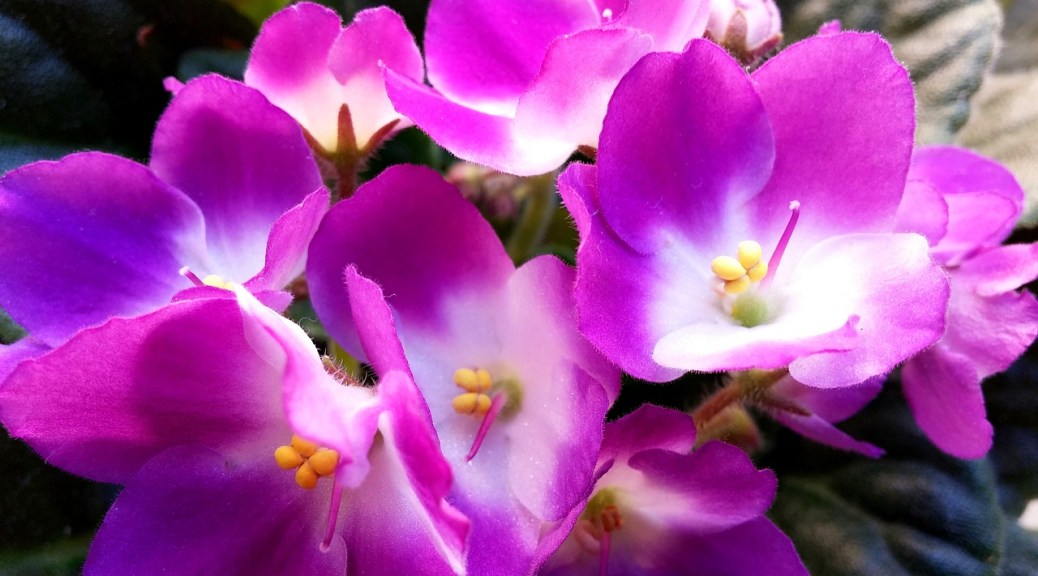
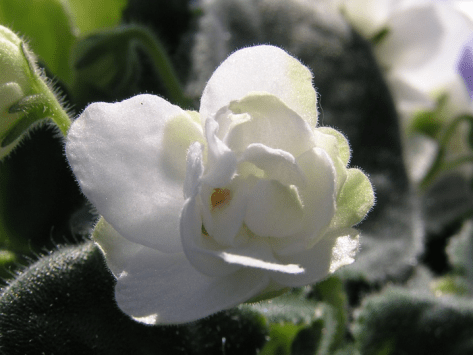
 African violets like bright indirect light. A sunny, warm window is okay in winter but in summer, place your plant in a north or east window or just sit it back from a south or west window so that it does not receive direct sunlight. African violets prefer cooler temperatures at night around18C (60F) and up to 27-29C (80-85F) in the day. Too cool temperatures will stunt their growth.


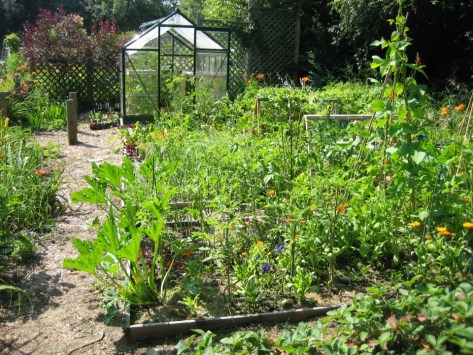








 Plant garlic! Yes, this is the time of year to plant garlic for harvesting next summer. You can probably still find garlic bulbs at farmers markets. Buy locally grown garlic, not product of China. Separate the cloves from the bulb and plant at a depth of 3 times the height of the bulb in rows in the garden. Cover two-thirds deep with soil and then top off with straw or mulch. For full details, see this fact sheet on
  Plant tulips! Although it may be too late to plant daffodils, you can still pop some tulips into the ground, even up to freeze up. Squirrels do love tulips, but if you plant them deep enough (6 to 8 inches), use hen manure or bone meal, and cover up the bare spot with leaves or mulch, you should deter them. Check this link for more
  Don’t rake! Mulch those leaves into your lawn with your lawn mower. It’s easier on your back and is so good for the lawn. Use your leaf blower to mulch into your flower beds too.


 The Peterborough & Area Master Gardeners