Category Archives: Vegetable Gardening

How Chemistry Plays a Role in Plant-Insect Relations in our Gardens

By Laura Gardner, Master Gardener

Have you ever wondered how certain insects are able to discover a plant in your garden? How do they know it is there? Some of them may already have been hanging out there but others fly in from afar. How does a predatory insect seem to find its prey without much effort? Both insects and plants engage in the production and release of chemicals such as pheromones and allelochemicals. These can act as insect attractants and deterrents. 

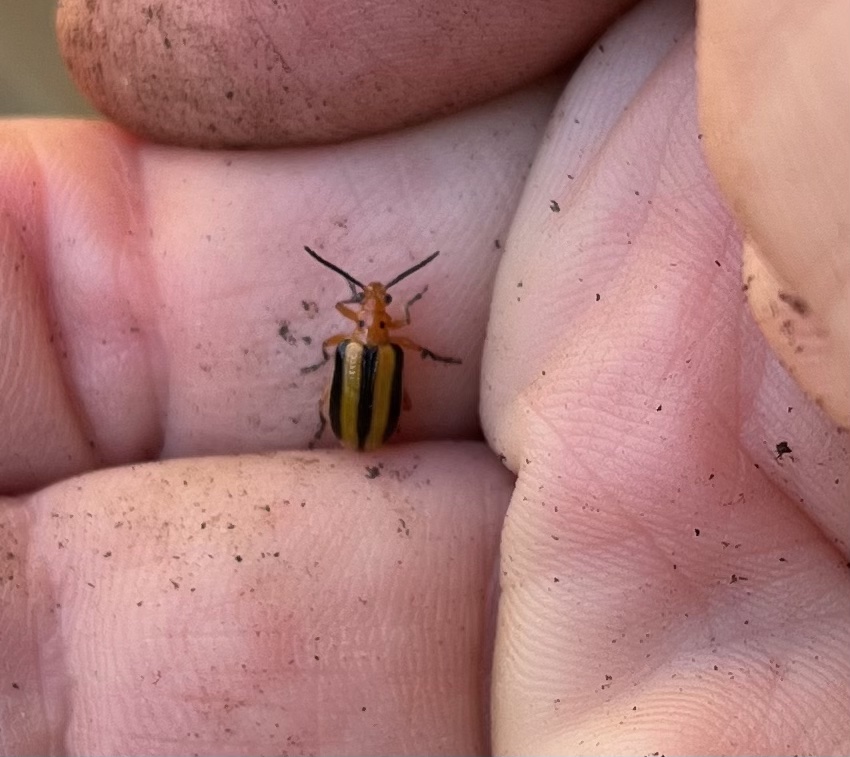
Last year I grew Tomatillos. I usually grow Tomatoes but I thought I would try Tomatillos instead. One of my plants was visited by Three-Lined Potato Beetles (Lema daturaphila). These insects feed on plants in the Solanaceae family such as Tomato, Potato, Eggplant, Tomatillo, and Groundcherry. From my reading, this species is not very damaging so I was willing to monitor and see if beneficial insects would step in to act as biological control agents. Sure enough, soon afterwards, when I was inspecting my plants, I found an assassin bug eating the beetle larva that were under a leaf. Just like Lily Leaf Beetle (Lilioceris lilii) larvae, the Three-Lined Potato Beetle larvae cover their backs with their own excrement called a “fecal shield,” as a means of defence. Clearly the assassin bug was undeterred.  Plant volatiles had likely been released by the plant in response to the larvae feeding damage to the leaves. This has been described as an indirect defence mechanism[i].” The assassin bug responded as it detected the plant volatiles.

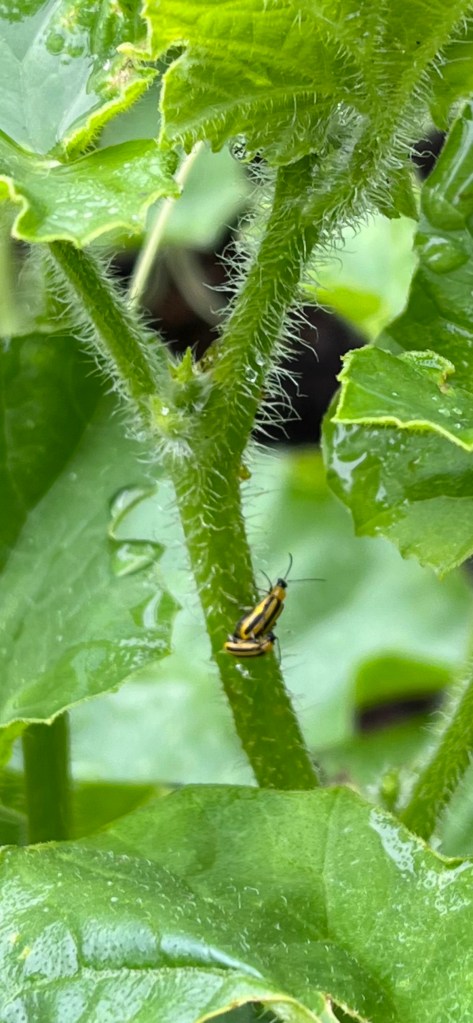
This spring, I planted some cantaloupe and watermelon seedlings in a raised bed. I read up on the various insects that are attracted to these plants—their life cycles and behaviours. One of the insects that favours cantaloupe and other members of the cucurbit family is the Striped Cucumber Beetle (Acalymma vittatum). Up until recently, I hadn’t seen any on my plants. Often, I will use floating row covers for protection from insect damage but these plants are currently flowering so they are uncovered so pollinators can access them. When I saw my first beetle, I thought about how it knew I was growing cantaloupe. Cucurbit plants emit floral volatiles in the air that travel. Adult cucumber beetles are attracted because the pollen of the plants makes up a part of their diet.[ii] These same and other volatiles also attract pollinators of these plants such as Squash Bees (Eucerini spp.).[iii]

Cucurbit plants also contain a chemical called cucurbitacin. This is the substance that gives some cucurbits a bitter taste. When cucumber beetles feed on the leaves and other parts of the plant, they absorb the cucurbitacin, rendering them unpalatable to many predators. Young plants produce more cucurbitacin than older plants—which make them more attractive and vulnerable to damage.[iv] Cucurbitacin is so attractive to the beetles that it encourages more and more feeding—called a “phagostimulant.”[v] (Is this the same as sugar, salt, and fat for us humans?) As the beetle feeding progresses, adult male beetles give off an aggregation pheromone called vittalactone that invites others to come and join the party.[vi] Cucurbitacin also plays a role in their reproductive activities as males transfer it to the females as “nuptial gifts.”[vii]

The beetles can also transmit bacteria via their feeding that causes a fatal wilt in the plant. What is also unfortunate is that the wilting plant gives off more volatiles that attract more beetles. The flowers of wilting plants are not as attractive as non-wilting plants—this encourages the beetles to move on to other nearby plants, thus causing further spread of the disease.[viii]

In the end, the key is to try to deter adult beetle feeding as much as possible. This can be achieved in a number of ways such as using floating row covers; delaying planting in the spring; planting more developed transplants; hand-picking beetles in early evening when they are most active; planting cucurbit varieties with lower levels of cucurbitacin,[ix] interplanting plants like radishes and nasturtium with melons,[x] and using straw mulch around plants to attract beneficial wolf spider predators.[xi] Some cucurbits like watermelon are resistant to bacterial wilt,[xii] unlike cantaloupe. So perhaps by the end of the summer I will at least have watermelon.


[i] Dicke, M. (2009), Behavioural and community ecology of plants that cry for help. Plant, Cell & Environment, 32: 654-665. https://doi.org/10.1111/j.1365-3040.2008.01913.x

[ii] Rojas, Erika Saalau et al. Bacterial Wilt of Cucurbits: Resurrecting a Classic Pathosystem. Plant Disease 2015 99:5, p. 569. https://apsjournals.apsnet.org/doi/pdf/10.1094/PDIS-10-14-1068-FE

[iii] Andrews ES, Theis N, Adler LS. Pollinator and herbivore attraction to cucurbita floral volatiles. J Chem Ecol. 2007 Sep;33(9):1682-91. doi: 10.1007/s10886-007-9337-7. Epub 2007 Jul 21. PMID: 17659427.

[iv] Rojas, p. 569.

[v] Wallingford, Anna. What Cucumber Beetles Want. Over Informed on IPM. August 13, 2020, Episode 24. https://extension.unh.edu/blog/2020/08/over-informed-ipm-episode-025-what-cucumber-beetles-want

[vi] Ibid.

[vii] Rojas, p. 569.

[viii] Alexander, Lauren Maria. Take Control of Cucumber Beetles. Growing Produce. https://www.growingproduce.com/vegetables/take-control-of-cucumber-beetles/

[ix] Ibid.

[x] Cline, G. R., Sedlacek, J. D., Hillman, S. L., Parker, S. K., & Silvernail, A. F. (2008). Organic Management of Cucumber Beetles in Watermelon and Muskmelon Production, HortTechnology hortte, 18(3), p. 444. https://doi.org/10.21273/HORTTECH.18.3.436

[xi] Striped and Spotted Cucumber Beetle: Insect Pests of Vegetable Gardens. Kansas State Research and Extension. https://bookstore.ksre.ksu.edu/pubs/MF3545.pdf

[xii] Rojas, p. 565.

How to Make Your Vegetable Garden Beautiful

By Cheryl Harrison, Master Gardener

I was recently browsing through a hard copy April, 2009 issue of the “Fine Gardening” magazine.  I came across an article, “Who Says Your Kitchen Garden Can’t Be Beautiful”… to see the full article check the link here.   The author, Jennifer Bartley,  planted her raised vegetable garden for the edibles that it produced but in such a way that the garden was also beautiful! 
This appeals to me because vegetable gardens are definitely not my passion.  However, I do love to eat my own fresh veggies and so I have a vegetable garden.

I have raised vegetable beds where I have intermittently practiced square foot gardening (see square foot gardening for more information).  I have also planted marigolds and nasturtiums amongst my vegetables which are pretty but also serve a purpose….the marigolds for insect control and the nasturtiums because they are edible.  For more information on flowers for your vegetable garden check the link here. I have been inching towards trying to make my vegetable garden more visually appealing without realizing it.

Ms. Bartley talks about using “four simple design tips” including:

  • Arrange bunches of bold colour.
  • Plant snug beds.
  • Smooth out the edges.
  • Define your space.

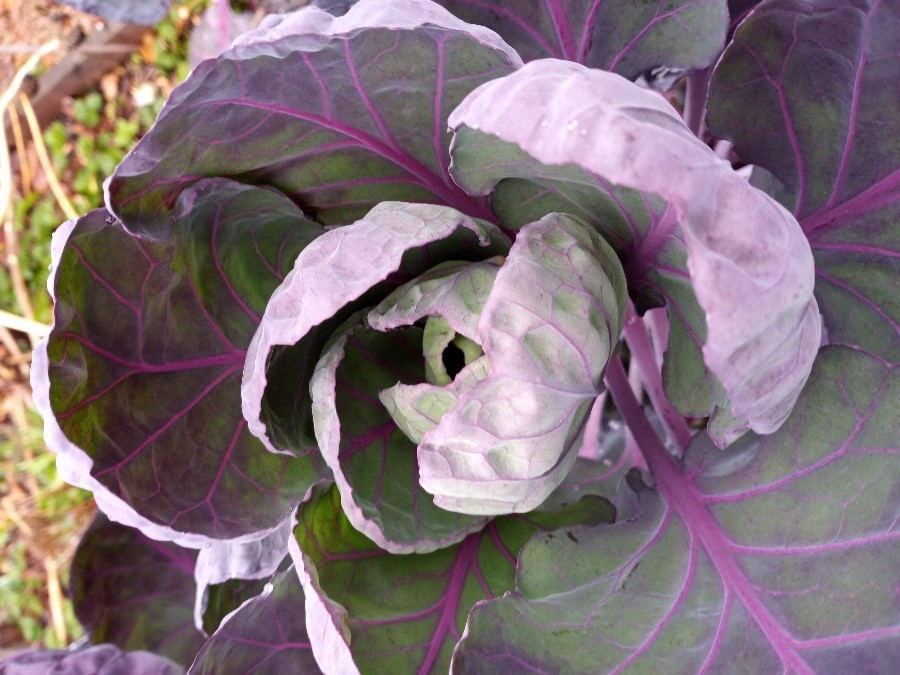
Arrange bunches of bold colour – I do a planting plan ahead of time every year.  Try grouping your vegetables, flowers, fruits and herbs together so that you have lots of colour and texture (different leaf shapes).  For example, you may edge the bed with the leafy fronds of carrot followed by beets and parsnip, maybe you plant some asparagus in the centre for the height or an obelisk in the centre and plant runner beans to climb it.  You could use yellow, green or purple bush beans to fill in the blanks.  I grew some purple Brussel sprouts last year and the leaves were spectacular!

Plant snug beds – This tip works well with raised beds.  There is no need to plant your vegies in rows.  Instead, group the vegetables together close enough to cover the soil when they are grown but not so close that they will crowd each other to prevent proper maturity.  Covering the soil helps with moisture retention and weed suppression.  Thinning your carrots allows them to mature properly and provides the delicious “thinnings” for your salad.

Smooth out the edges – Just like your flower beds, vegetable gardens are at their best when they are clean and pathways are clear.  I use straw in my pathways because it is available and my garden is wet in the spring so the straw covers the mud between the raised beds.  You could use bark mulch, gravel, brick or whatever you have. 

Define your space – We humans like a certain amount of order and proportion in our world.  If a space is too big, or too small, it can make us feel uncomfortable.  The edges of a raised bed help to define the space.  In our garden, we have several raised beds so have a defined entry to the garden and a wooden cedar fence to further define the space.  You might choose to use a pot filled with herbs at your entry, a rock or cedar stump on either side or a berry producing shrub.

It is also a great idea to have a bench in the garden where you may rest and admire your work.  Also, don’t stop with just a scarecrow … you may choose to add other garden ornaments in order to make your own beautiful vegetable garden!

Will This Old Veggie Seed Grow?

By Lois Scott, Master Gardener

You have probably heard this adage applied to various activities/hobbies, but here I go.  Buying seeds and starting seeds are two different activities.  I engage in both, but sometimes the buying outruns the starting and I find myself looking at an unused package of vegetable seed purchased in the past and wondering if those seeds are viable.  Checking vegetable seed viability is easy and may save you from the disappointment of a poor harvest.

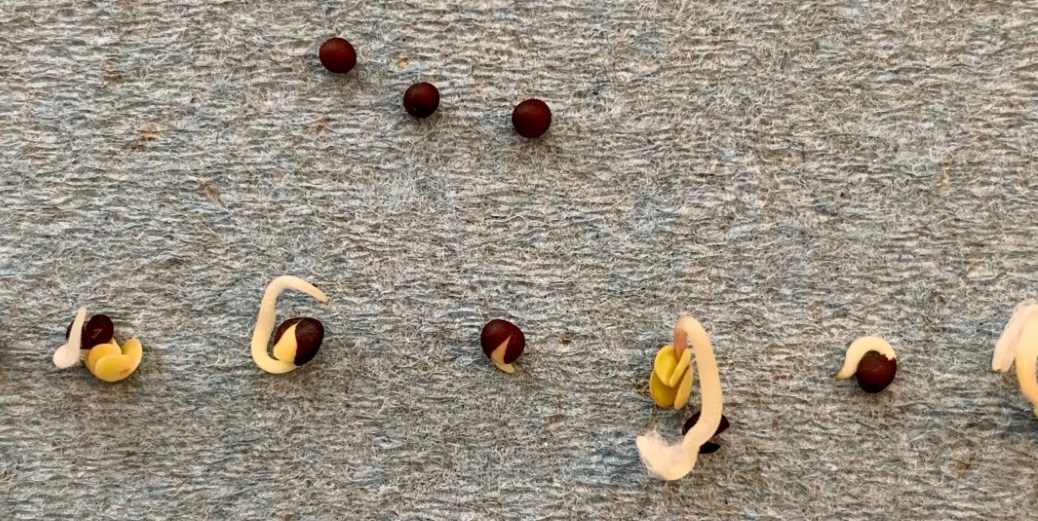
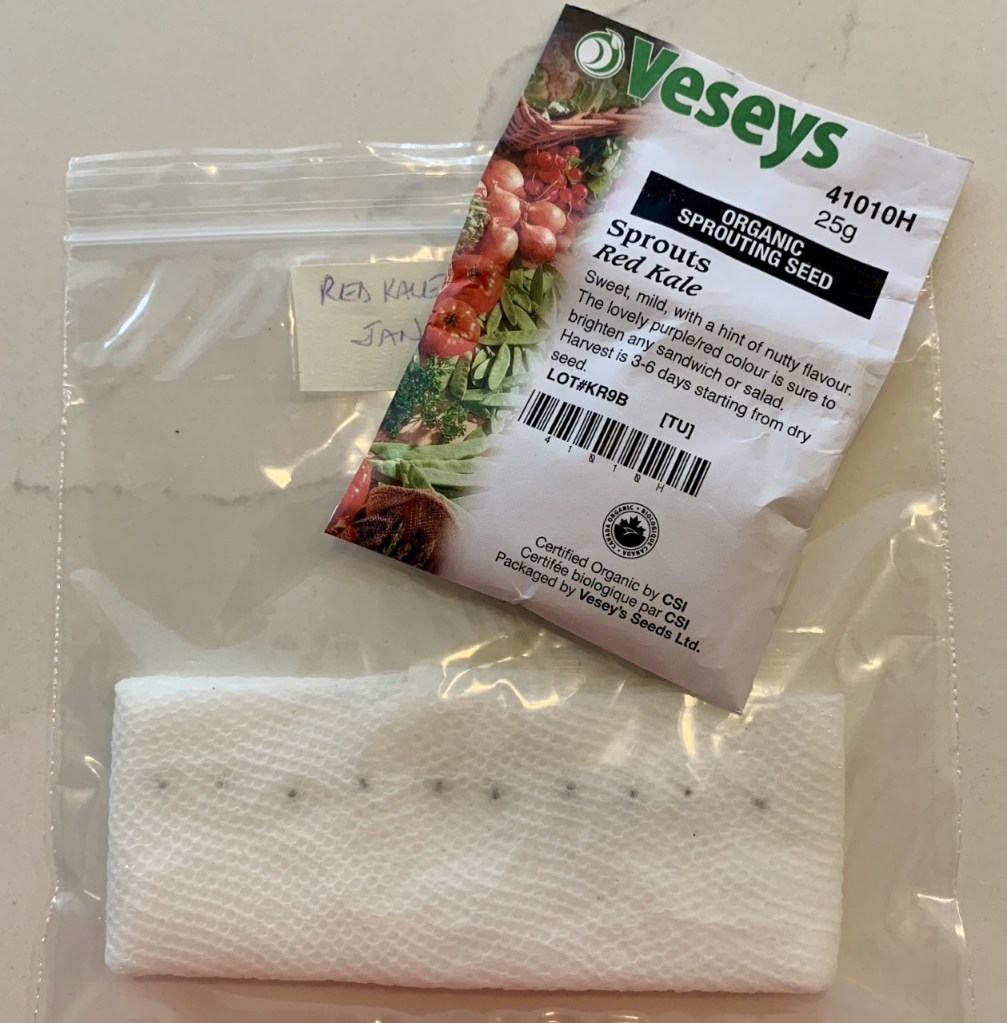
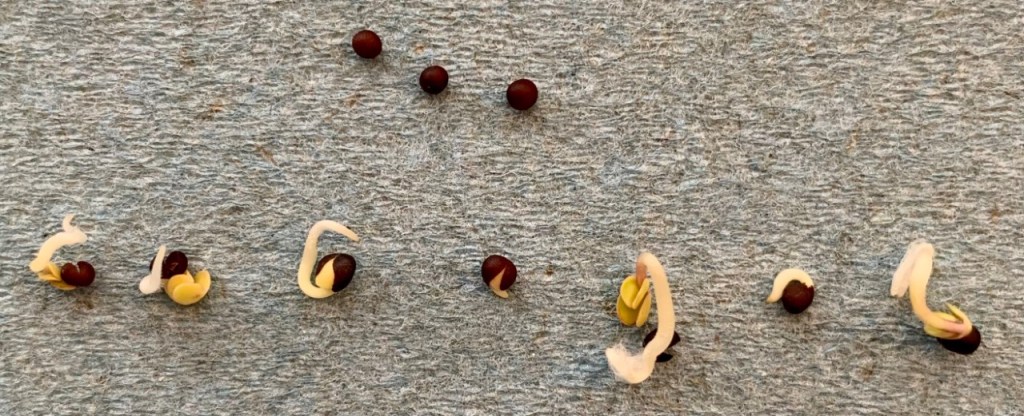
To say a seed is viable is to say it is alive.  Checking for this can be easily done by wrapping a number of seeds (10-20) in a moistened paper towel, placing them in a sealed plastic bag in a warm place (21-26*C) and then checking for germination in a week or so.  Your germination rate is a percentage, calculated by multiplying the seeds germinated by 100 and dividing that by the total number of seeds in your trial.  It is recommended that if your germination rate is below 70% you should buy new seed.  In my demonstration featured in the two photos shown, I used 10 seeds and 7 sprouted.  My germination rate is 70%. 

Checking for seed viability by putting seeds in water and discarding the floating ones is not a reliable test.

Different types of vegetable seeds remain viable for different lengths of time https://today.oregonstate.edu/news/give-seeds-test-performance but proper storage of seeds will optimize their viability.  They are best stored in a cool place like a refrigerator, cool basement or root cellar. https://hortnews.extension.iastate.edu/how-store-seeds-and-test-germination-rates 

Some seed companies also list on the back of their seed packages the optimum germination rate and the year the seeds were packed and tested.  So, I know that the rapini seeds I haven’t used were packed in 2022 and maybe I should plant them this year!

It’s coming to that seed starting time of year so don’t hesitate to give some of your older seeds a chance to prove themselves and save yourself from vegetable garden let-down.

For Garlic Lovers Only … How to Grow and Harvest Garlic in Ontario

By Carol Anderson, Master Gardener in Training

Unlike many of our more tender vegetable and herb favorites, garlic prefers to spend the winter “contemplating” spring from a safe and protected spot in your outdoor garden bed. And the good news is that the timing is perfect – planting garlic in October, after the first frost (or two), is ideal for ensuring a healthy crop of garlic that will be ready for harvest the following summer (usually mid to end of July).

The reason for this is that garlic is considered a “winter annual” and exposure to the cold temperatures ensures proper bulb development. The cold of winter, also known as vernalization, prompts the clove to break open after a period of dormancy. However, the garlic cloves that you plant (also called “seed stock”) must be planted to the correct:

  • Depth: to ensure that they are insulated from extreme or harsh conditions, and
  • Distance: to ensure that the stock has enough room to multiply into large and healthy buds.

What you will need:

-small trowel
-garlic seed stock (*see special note)
-leaves or hay (as mulch)
-compost (recommended)
-pen and paper
-toothpicks (optional)

Planting Guidelines:

  1. Condition your Soil. Although garlic will grow in many soil types, adding 2 inches of compost and working this into your soil is recommended. A soil that can hold nutrients and water easily (making them available to your plants) will improve your overall yield.
  2. Split the garlic bulb into the seeds while trying to keep as much of the soft shell on each of the cloves.
  3. Make a “map” of your garlic field on the ground with either toothpicks or the end of your trowel marking where each garlic “seed” will be placed. It is recommended that each seed (clove) is planted ~6” apart and ~4” deep in rows that are 10” apart. (Note: the clove should be planted to a depth that is 4 X the length of the clove – e.g. 4” for a 1” clove).
  4. Place the clove with the pointy side up in the 4” deep hole and cover gently with soil.
  5. Make a paper “map” of your garlic field so that you remember where each garlic bulb will be growing in the Spring.
  6. Cover our garlic field with 12-18” of leaf or straw mulch.

Growing and Harvesting Recommendations:

  1. In the Spring, you may need to remove or refresh the mulch. It is recommended to keep the garlic field mulched with a few inches of mulch to keep the moisture in and reduce weed growth.
  2. Using a standard garden hoe, weed frequently between the rows to uproot any early weed growth.
  3. Most garlic varieties produce a garlic “scape” – a thin curly green end of the plant. If the scape is left on the plant, energy will go to flower formation, instead of bulb growth. Remove the scape immediately after it has curled (see below) by cutting or snapping it off (see Special Note below).
  1. Harvest the garlic by using a garden fork or spade – loosen the soil 4-6 inches around the bulb and then lift the entire plant with bulb attached gently from the soil. (Note: garlic is usually ready to harvest in July when some of the leaves have begun to turn brown. Leaving them too long will allow decay. It is recommended, however, that during a moist summer a “test” is done by digging up a bulb before the leaves start to brown to avoid premature decay).
  2. Tie 5-10 garlic bulbs together in a bunch with garden twine/hemp and hang to dry/cure for 2-3 weeks in a dry well-ventilated area.
  1. Cut the dried garlic stem close to the bulb using garden cutters and remove the dried roots close to the bulb using kitchen scissors. Store the bulbs in a cold cellar or cool dark location for later use (never in the refrigerator), keeping as much of the sheath/covering of the bulb intact as possible. Garlic can be stored for up to one year in the right conditions.
  2. Enjoy!!!!

Special Notes:

Garlic Stock: Do not use imported garlic purchased from the grocery store as this could introduce unwanted diseases into your garden. Garlic stock (or seed garlic) can be purchased from local growers near you….and the good news…once you grow your own…you will have an endless supply of “stock” acclimatized to your own growing conditions.

Spring Planting: Garlic can be planted in the spring. However, you must keep your “stock” in cold storage prior to spring planting to ensure that the bulbs experience a prolonged cold period to stimulate flowering/bulb development.

Garlic Scapes are not garden waste, they are delicious in salad…and they make a deliciously potent pesto!!!! Try this garlic pesto recipe out.

Sources:

Garlic Growers of Ontario
Garlic Growers Association – Toronto Garlic Festival
The Old Farmer’s Almanac

The Joy of Sharing our Gardens

Reflections after a Garden Tour

by Emma Murphy, Master Gardener

It’s been a tough few years for all of us because of COVID-19, but I had time to reflect this weekend on why it’s been hard for me as a gardener. While it’s been wonderful to have our gardens as an oasis and source of comfort during the pandemic, I realized that other than a few close friends, no one had seen all the work (and the results) that my husband Grant and I had achieved over that time.

So it was with great anticipation that we looked forward to our Lakefield garden being featured on a garden tour organized as a fundraiser to celebrate 60 years of the Lakefield Horticultural Society.

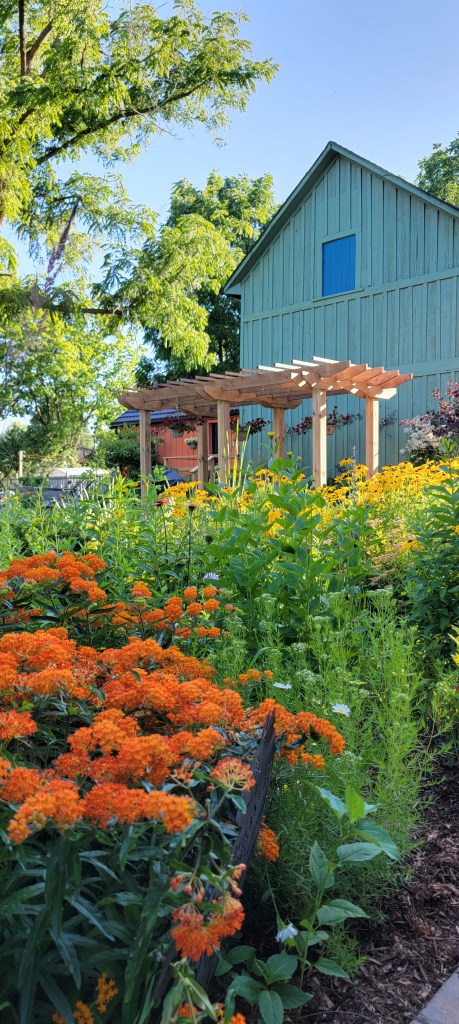
While we spent a few very crazy days trying to put the final touches on our garden (my husband decided he would build a beautiful pergola [awesome] a week before the event [not so awesome] so plants had to be moved into pots and then back into the beds just a few days before) — sorry I digress — everything was perfect on the day — the weather was spectacular, we placed the last bits of mulch to cover a few empty patches and we looked forward to welcoming our guests.

The new pergola.

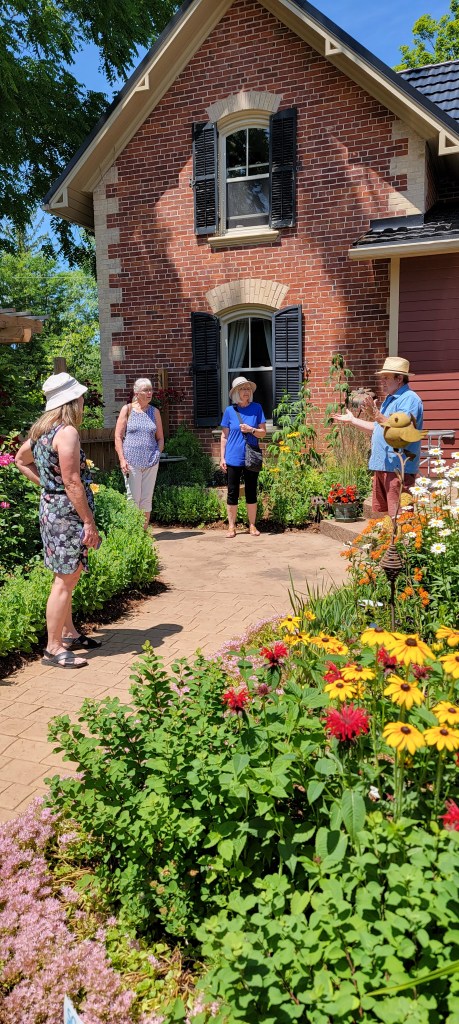
As the first people arrived (I think our first visitor was a man on a bicycle!) I began to realize how much I had missed the joy of sharing our gardens with others. And as the day progressed, it was wonderful to hear other people’s perceptions — for some it was inspiring, for some a bit overwhelming (we have a 3/4 acre property in a small village), for some they loved that we had plants they had never seen before (not your typical garden). Everyone seemed to leave with a smile on their face, which made our day.

Grant created numerous raised beds over the past few years — at my request — and we’ve had great success with them. We also purchased a “COVID present” for ourselves — a long wished-for greenhouse to extend our gardening season, and it’s been put to good use.

We’ve spent time over the past few years planting more native plants as I learn more about the benefits of creating habitat as well as having an aesthetically pleasing garden. Hey, it’s not all about me!! Doug Tallamy’s book is a great start to understanding the benefits we can provide in our humble gardens to the greater ecosystem.

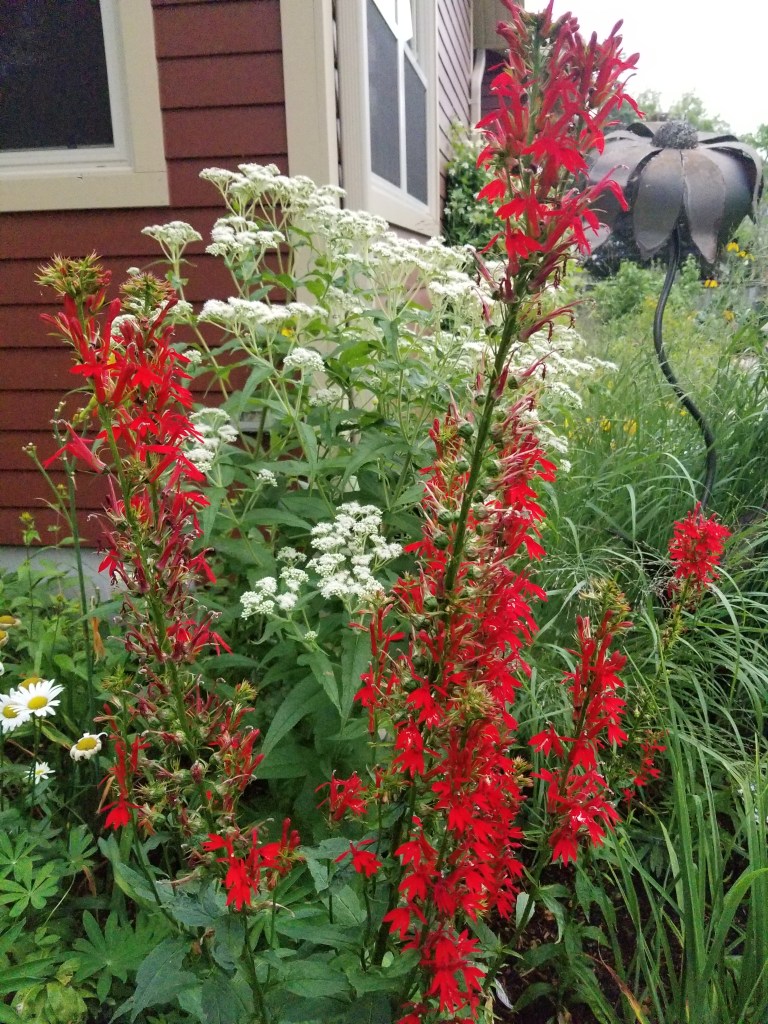
There is definitely a balance — we’re aiming for a 50/50 balance of native/non-native — because I love my daylilies and peonies and don’t want to give them up (they give me pleasure), but I also love the hundreds of pollinators (bees, butterflies, wasps etc.) that flock to my Common Boneset (Eupatorium perfoliatum), Pearly Everlasting (Anaphalis margaritacea), Cup Plant (Silphium perfoliatum), and Cardinal Flower (Lobelia cardinalis) because I am choosing to plant native plants.

Boneset (white) and Cardinal Flower (red)

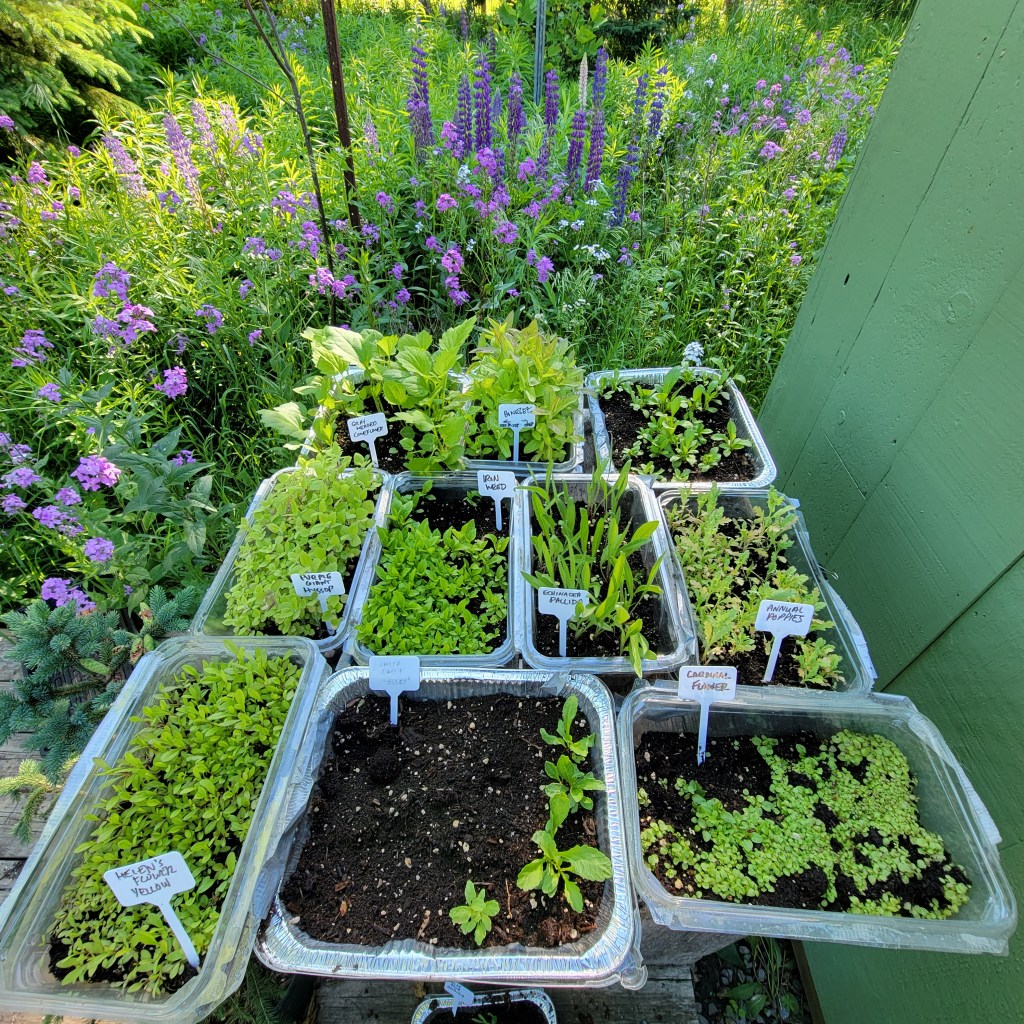
Last winter I grew some native (and non-native) plants using the Winter Sowing technique (because most native plant seed requires winter/cold stratification) and it was a great success (with some lessons learned – but that’s another blog).

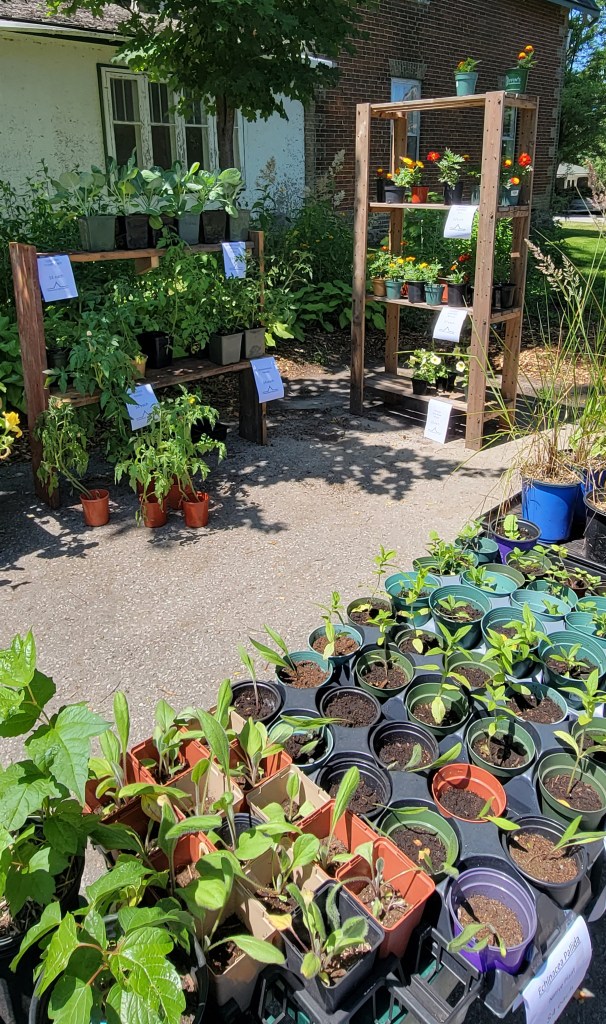
Grant set up a Plant Sale area for the garden tour and people were able to buy plants that they saw in the garden (although alas, I did not take any cuttings on my amazing orange Butterfly Weed – a type of milkweed – which really caught everyone’s attention).

The Plant Sale area

Over the day I saw many gardening friends I hadn’t seen in several years, and made all sorts of new friends. It felt like my community was coming together — like we were reconnecting after a long time apart in a beautiful place. And I realized that gardening is both a solitary and a very social activity. We even got featured in the local newspaper.

We raised funds to support our local horticultural society, we got back to feeling ‘a bit normal’, and most importantly we got to reconnect with people over a common passion — the love of gardening.

I hope that all of you will find opportunities to reconnect with people this summer and share your gardens and plants and trade stories about attracting pollinators etc. with others. It’s a feeling like no other. #happygardening

Our lovely rudbeckia and greenhouse in the background.

Rhubarb

By Lois Scott, Master Gardener

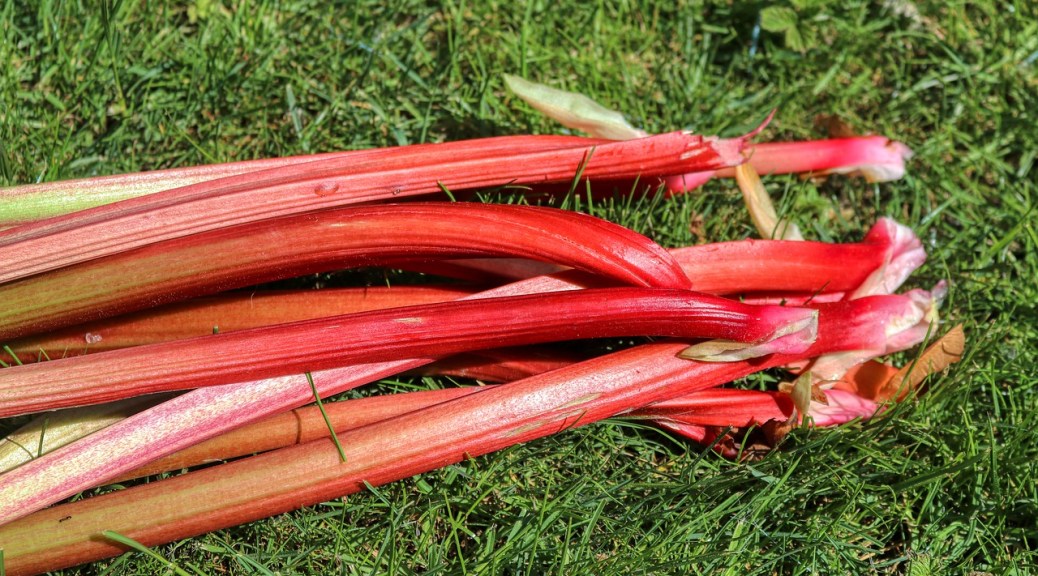
It is early May and my husband has been watching the rhubarb emerging with great anticipation.  I like rhubarb, he loves rhubarb and it will soon be time to start harvesting the stalks (petioles)!

Rhubarb (Rheum rhabarbarum), native to central Asia,is an easy, hardy, and edible perennial.  Technically a vegetable but treated as a fruit, it is long-lived, easy to care for and bothered by few pests and diseases. 

Rhubarb is sold by ‘crowns’ or perhaps you can get a division of a plant from another gardener.  Spring and early fall are the best times to plant it.  Rhubarb likes a well-drained site with full sun (6-8 hours minimum).  Give your plant plenty of space to grow, about 3m2.  Rhubarb is a heavy feeder so mulch around your new or established plant with compost or well-rotted manure.  I generally give mine a spring dressing of compost as it starts to emerge in the spring.  Rhubarb should be watered deeply during times of drought.

A new rhubarb plant will need a couple of years to get established before you start harvesting it.  Don’t harvest any stalks the first year and then very little the second year.  The plant needs those large leaves to develop to provide energy for the roots and crown to grow.  Over the growing season, flower stalks will start appearing and these should be cut off at the base to reserve energy for the plant.

Rhubarb is ready to harvest when the stalks are 25 – 40 cm long.  Grab the stalk part way down and pull or twist to the side.  When I pull rhubarb, I come prepared with a paring knife and cut off the leaves after pulling the stalks and leave them as mulch.  Rhubarb leaves are toxic as they have high levels of oxalic acid, however they can be safely composted. 

Rhubarb is a cool weather plant so as the season warms up growth may slow down.  Let your plant rest so the crown can recover.  If you have an established plant that doesn’t seem to be as vigorous as it was, it may need division which should be done in early spring.  Dig up the whole plant if possible.  Rhubarb has a very deep tap root but if you capture enough, you can divide the plant making sure each division as at least one or two buds.  Plant your divisions with the buds 4 – 5cm deep, gently firming the soil.

The only other job to do is weed through all the tempting rhubarb recipes.  Enjoy!

https://extension.psu.edu/rhubarb-be-patient-and-you-will-be-rewarded

Why Do We Garden?

by Emma Murphy, Master Gardener

“To plant a garden is to believe in tomorrow.” Audrey Hepburn

If you’re like me, you love to garden. Time in my garden provides me with joy on so many levels — emotional, physical, social, creative — and connects me with the outdoors and the environment. And while the COVID-19 pandemic has turned our lives upside down, one of the silver linings is that we’ve seen a renewed interest in gardening and its benefits, whether you’re working in a large garden or a few containers on your balcony. So I thought I would explore some of the top reasons I think we garden.

Physical and Emotional Health

Gardening is physical. As a low to medium impact exercise that requires both strength and stretching, you’ll see increased muscle strength and cardiovascular fitness over time, as well as improved sleep and diet (if you grow your own produce). On the emotional side, gardening reduces stress, anxiety, and depression and improves self esteem.

It’s good for the mind — gardening calms me down and helps me be more patient with myself and those I interact with on a daily basis. It gives me time to contemplate as I go about my tasks, up to my elbows in soil. Even weeding is cathartic, pulling out those little terrors by the root!

Just visiting gardens helps to calm the mind, bringing a sense of contentment and tranquility from looking at beautiful landscapes, flowers, or just colour and texture.

Building Relationships

While gardening can be a solo activity (some of my favourite moments are just by myself in my green oasis), it’s also a fabulous way to connect with people, whether they be family or strangers!

Teaching people how to nurture a living thing and to be responsible for a little bit of the environment is a lesson and gift we can share with others. Gardening knowledge is shared through generations — I love hearing about plants handed down from grandparents, or children working with their parents to grow seeds for the first time. It’s a great way to pass on critical life lessons — about patience as plants and vegetables grow, responsibility as they look after their care, and loss when flowers die at the end of a season.

Beyond family, gardening helps us connect with the broader community. Whether you plant too many tomatoes or zucchinis and end up giving them away to neighbours, or participate in a community garden plot, gardening can be a very social activity and a chance to learn from, and share your bounty, with others.

Learning Life Values

Gardening teaches you important life values like patience, determination, caring, and hard work. It also makes you very humble as you realize that there is always something new to learn. You need to observe the seasons and the weather, and this puts you in contact with the natural world. I love that I can get dirty and do this very physical activity, working with seeds and plants and seeing growth in all I do.

Growing Your Own Food

Gardening provides benefits for your wallet, your nutrition, and reduces your environmental footprint. By growing your own food (either from seeds or small plants), your food is automatically more sustainable simply because you are doing it onsite or in a community garden. If you control the ‘inputs’ and do it well, you can save a lot of money.

But ultimately there is nothing more rewarding than planting and maintaining your own vegetable garden and harvesting (and sharing) your results. And we all know how much better homegrown produce tastes versus conventional produce at the grocery store. If you have too much produce, then you can just share the love with others!

Connecting With Nature

I think this is one of the best reasons why people have a garden — the sunshine on your face, hands in the dirt, and feeling connected to nature. The garden is so much more than just plants and flowers — it’s the birds, the bugs, the bees, the spiders, the snakes and all the small mammals. I feel like I am establishing a little ecosystem in my own garden and that I am trying to give back for all the benefits that I receive.

Working in the garden also gives you that sense of wonder, accomplishment, and reward. To grow plants is to give life. It keeps you busy but reminds you to be one with the earth. To see the results of something growing from seed to six feet tall is just incredible.

Exploring Creativity

I find gardening to be an incredibly creative activity. Finding the right plant for the right spot, mixing colours, and making sure there is interest for every season — these are real challenges. I’ve spent much of the past few years learning about new plants to consider in my garden, especially natives.

Helping The Environment

Finally, gardening is so important for our planet. Even though we create our gardens (so they are human made) they do represent natural environments, with trees and shrubs and plants that are all taking in carbon and releasing oxygen. The plant roots stabilize the soil and filter water, and the plants themselves support our pollinators.

We live in a symbiotic relationship with our gardens. We give back by planting and maintaining them, but we receive so much more from them than we give.

Why do you garden?

Cool Season Crops

By Sharleen Pratt, Master Gardener

It is that time of year where we turn our attention to thoughts of what we would like to grow in the coming season.  Because of the pandemic, many of us have dabbled in sowing some seeds indoors. It does require time, space, proper lighting and the patience to check your seedlings every few days for proper moisture levels or any signs of disease.

Author’s Seed Catalogues for 2022

Begin planning your garden early.  Now is a good time to browse through the seed catalogues and decide what crops you want to grow based on your own likes and dislikes, as well as how much of each you will need.

If you don’t have the time or desire to start seedlings indoors, there are many vegetables that can be seeded outdoors in the very early spring. They are known as cool season crops.

I look forward to getting out into my garden in the early spring, however, we should not start digging too soon as there are many beneficial insects and native bees that overwinter in the soil or under leaf litter.  They all need time to emerge from their long winter nap.  By growing cool season crops, I get to play in my garden early and benefit from a good supply of fresh vegetables.

Courtesy of Pixabay.com

All the following vegetables can be seeded outdoors as soon as the soil is workable.

LETTUCE & GREENS

There are so many varieties of salad greens such as leaf, mustard, arugula and mesclun. Lettuce is generally a cool season plant, but newer varieties have been developed that will grow happily in the summer.  Salad greens can bolt quickly when the weather gets really warm, however, there are varieties that are more bolt tolerant.  I usually choose seed that I can sow early in the season.  These particular varieties can withstand some shade in the summer so I plant the seed behind a larger vegetable such as kale so that they get the protection they need from the hot sun. Be sure to check the seed package to understand when to sow, how to harvest, and how quickly the lettuce will bolt.

CARROT

Carrots need good drainage and work very well in raised beds.  They work best when planted as soon as the soil can be worked. They require plenty of sun.  The cultivated carrot originated in Afghanistan and was purple.  According to William Dam Seeds, they believe the orange carrot was developed around the 16th Century.  There are many different varieties and some of my favourites are the Nantes and I had great success last year with Nantes Napoli.

KALE

I find Kale a very easy vegetable to grow and it will last well into the fall.  It likes well drained soil.  It is best to harvest the young leaves as the older leaves will get quite tough and stringy.  It is rich in Vitamin C and frost will actually improve its flavour.  I really enjoy Vates, which is ruffled with a medium dark green leaf.  By using a row cover, we were enjoying kale in our salads well into the fall.

RADISH

Radish is amazingly quick to germinate.  I think they add the perfect crispy, peppery taste to a salad. If you plant the seeds early, it will be one of the first vegetables ready for harvest. Radishes also work well for Succession Planting.  Radish varieties have evolved over the years and there are now several different sizes and colours.  I enjoy the French Breakfast varieties.

PEAS

Homegrown peas, whether cooked or raw always taste amazing.  Taller varieties do require some kind of support and will benefit from a fence or string for the vines.  Dwarf varieties are ideal for smaller gardens and don’t require support.  They do need lots of sun but will tolerate some shade in the summer.  Smaller peas are tastier than larger ones, so be sure to harvest often.  The edible garden pea dates back to 16th century England.  I will admit not to have a lot of luck with peas.  I may be getting them planted too late in the spring and with instant summer heat, they do not do well! I am determined to try again this year.  My favourite are sugar snap peas and I would like to try one called Sugar Ann, that matures in 55 days and is a dwarf variety.

SPINACH

A favourite cool season vegetable to grow is the vitamin-rich spinach.  Spinach can be eaten cooked or raw and is full of vitamins and minerals, especially iron and calcium. They mature quickly.  As the plants grow, harvest the outer leaves often to encourage fresh leaf production, but pull the plants before they bolt. Once the flowering process begins, spinach quickly turns bitter, so don’t wait to harvest. Row covers are advisable to protect the plants from leaf miner.  Many varieties have been developed to resist Downy Mildew.

Resources

A good resource for seed planting is Planting Chart Cheat Sheets – Square Foot Gardening

To understand your first and last frost date and when to plant, check out the following on-line tools OMAFRA Frost Dates

Growing Vegetables

By Cheryl Harrison, Master Gardener

I am not a vegetable gardener but I love eating fresh vegetables so … I am a vegetable gardener.  I learned how not to grow vegetables from my wonderful Dad.  He liked to grow veggies in rows and hand weed those rows.  This meant that my sister and I were tasked with hand weeding  those never ending rows.  Despite Dad’s best efforts, this was not “fun”.

I first learned about growing vegetables in raised beds from a fellow Master Gardener.  Gardens that have few weeds, are up off the ground to help save my back and look neat and orderly and even kind of pretty … what more can you ask for?  And the best part, the plants are edible!  Since then we have installed several raised beds close  to our house for easy access to watering and harvesting.  They are made of 2” X 8’  untreated spruce lumber.  Some of my beds are 5 years old and the lumber is still going strong.  We staple chicken wire around the beds to keep out the rabbits.  The beds were filled with a combination of perlite, to minimize soil compaction, peat moss, to help retain water, and soil.  Note that peat moss is a non-renewable resource so I would rethink it’s use for the next time.  My composters are in the middle of the garden to make it easy to annually add the finished compost to the beds.  Soil needs to have organic matter replenished regularly in order to feed your plants.

We use straw in between the beds to keep the weeds down and to create clean walkways.  Hay tends to be full of weed seeds.  Shredded bark mulch is used to mulch the vegetables although straw would work for this as well. 

Grow what you eat but try something new each year too!

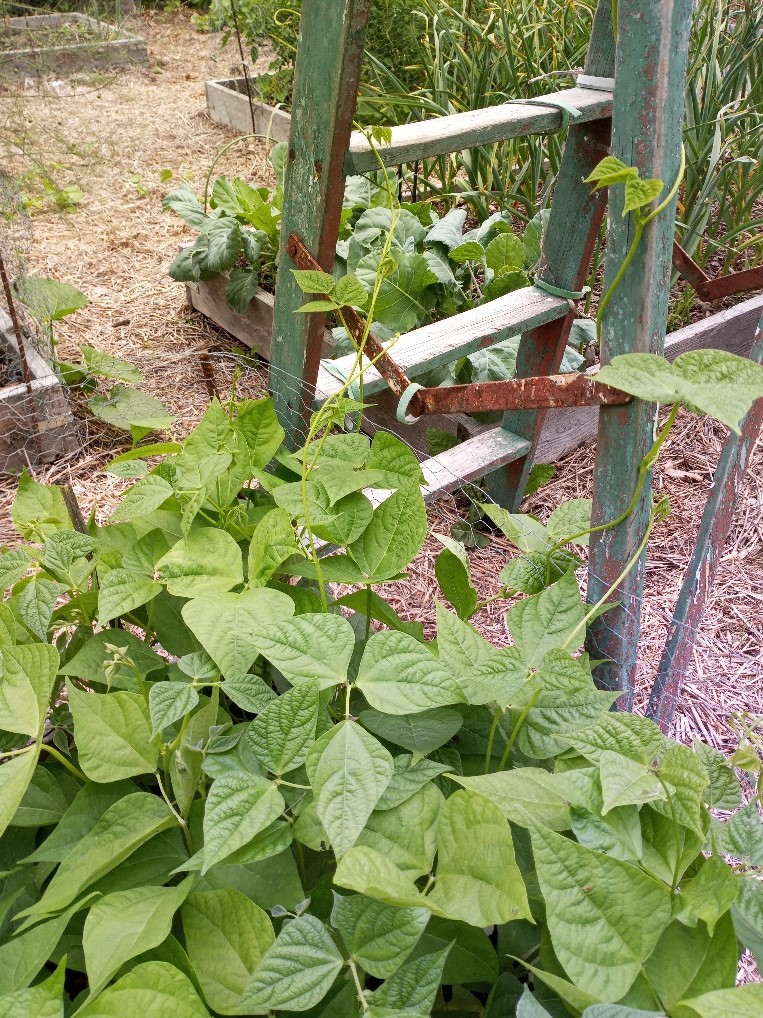
Beans – using an old ladder as a trellis. Author’s garden.

Some Basics

Most vegetables prefer full sun – 6-8 hours/day, regular water – 1” of moisture per week and heat.  The necessary nutrients are pulled in through water absorbed by the plant’s roots from the soil. 

Most years, we  grow cucumbers, squash, kale, beets, spinach, lettuce, garlic, parsnips, brussels sprouts and onions.  We are usually successful but not always.  New to us, this year, is turnips.  Sometimes nature throws out a challenge like an unexpected late frost or an insect pest which can quickly destroy or damage your crop.  Try to visit your garden each day to stay on top of problems and to harvest those ripe veggies. 

For more info on growing veggies in Ontario check here.  Also check the Peterborough & Area Master Gardeners resources page here for fact sheets on growing lots of different kinds of vegetables.

I am not a vegetable gardener but I have learned how to grow vegetables because I love to eat them.  Have fun and enjoy your vegetables!

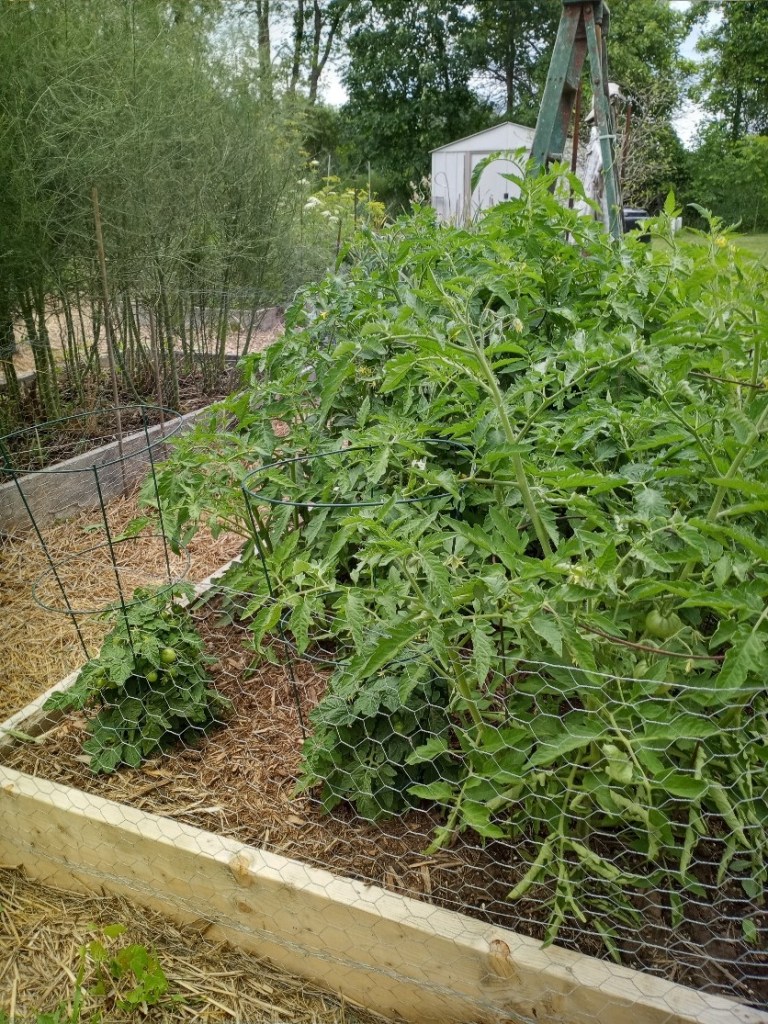
Tomatoes – cages in raised bed with shredded bark mulch. Straw used in walkways.
Author’s garden.

Winter, when a gardener’s thoughts turn to Spring

By Emma Murphy, Master Gardener

So now it’s wintertime. Our plants are sleeping quietly beneath a bed of wonderful white snow, and although we hibernate and rest to a degree, a gardener’s thoughts turn to springtime. I’m exploring some new ideas for my gardens for next spring, and thought I would share them with you.

Credit: Joseph Tychonievich; cartoon from https://www.facebook.com/FineGardeningMagazine/photos

No I didn’t get a greenhouse for Christmas…yet.

RAISED BEDS FOR GARDENING

But I do have a wonderful husband who knows how to make his wife – the Master Gardener – a happy person. His Christmas 2020 gift to me was to create some raised beds so we will be doing that this spring. I have been wanting to do raised beds for a few years since seeing Tara Nolan do a presentation at the Peterborough Garden Show, and I guess dropping those significant hints finally worked 😉

So we did a little research. Have you been thinking of creating raised beds for either vegetable or other gardening? They are great to extend the gardening season, be able to control soil quality, provide accessibility for older gardeners or those with disabilities, create a garden for special purposes (youngsters or horticultural therapy), increase yields, reduce weeds, and keep critters at bay. They also work well for condos and rooftops in our urban centres. Here’s some great sites I found for those interested in the idea.

One of my favourite gardeners with a similar climate to mine in Central Ontario – Erin Schanen in Southeastern Wisconsin (zone 5) – The Impatient Gardener. She has several good articles on growing in raised beds, from layout through to construction.

Tara Nolan’s book Raised Bed Revolution emerged at a time when this idea was gaining a lot of traction, and it’s an excellent source of information on size requirements for constructing raised beds, height suggestions, types of materials you can use, and creative tips for fitting the maximum garden capacity into small spaces—including vertical gardening. The Toronto Botanical Garden also wrote a great review. We also have a copy of Mel Bartholomew’s Square Foot Gardening, which focuses on growing more fresh produce in less space, and is very complementary to the raised bed philosophy.

For some general information on raised beds try here and here.

ORDERING YOUR SEEDS

Maybe it was just the crazy rush (and delay on delivery) for seeds this past spring, but we just ordered our vegetable and flower seeds for the 2021 season. There are lots of seed companies to choose from, but please try to shop from Canadian companies and especially those local to you. Although COVID-19 meant the cancellation of Peterborough’s wonderful Seedy Sunday, the organizers did post a list of all the vendors who would have been there, and it’s a great resource, as is the Seeds of Diversity site.

ESPALIERED FRUIT TREES

Espaliered fruit trees (espalier – to train a tree or shrub to grow flat against a support or wall) have been on my garden wish list for several years, and I missed an opportunity to pick up a mixed apple espalier tree several years ago which I have been kicking myself for ever since. I saw amazing espaliered fruit (English style) in the Victorian Kitchen Garden at Meadow View Gardens (just north of Cobourg) on a Master Gardener tour several years ago, and was entranced (well I’m entranced by owners Julie and Garry Edwards’ entire English-inspired gardens, but that’s another story).  

Although they can be any kind of fruit they are most often apples, and the key to doing it well is understanding how to prune the trees. Garden Therapy has an excellent article on how to grow these edible gardens, in ways that can accommodate both small spaces but be decorative. There are many different shapes that can be done – cordon (branches straight out to the sides), fan (branches fanning up and to the side), candelabra (like a cordon but the branches turn at a right angle to form the shape of a candelabra), lattice (multiple trees with crossing branches), and “Y” shapes. Maybe this is something you can try in your garden as well? The Ontario Ministry of Agriculture, Food and Rural Affairs (OMAFRA) has a list of nut and fruit tree nurseries. I know one company I have dealt with is Silver Creek Nurseries in Wellesley, who specialize in fruit trees, and they offer the following advice on their website:

“Spur bearing varieties are recommended (rather than tip bearing), such as Cox’s Orange Pippin, Winesap, Fuji, Belle de Boskoop, Calville Blanc, Sweet 16 and many more. Apple and pears are generally the easiest fruits to train, but other species may be espaliered with varying degrees of difficulty.”

Grow a Little Fruit Tree: Simple Pruning Techniques for Small-Space, Easy-Harvest Fruit Trees is also recommended as a resource (although I haven’t read it).

I’ll be in touch with them once spring rolls around, which should be in 82 days or so (but who’s counting?). Enjoy your winter garden dreaming, and spring will be here soon enough.