Category Archives: Perennials

The Golden Glow Has Got To Go

By Emma Murphy, Master Gardener

Last year around this time I wrote a blog about reclaiming a garden bed from the dreaded ditch lily (Hemerocallis fulva), now considered an invasive species by many organizations including Ontario Parks and the US Fish & Wildlife Service and the U. S. National Park Service. If you’ve ever struggled with this plant you know what I mean.

The other plant growing in our large Lakefield garden when we moved in (more than 20 years ago) is what I was told was called an ‘outhouse plant‘. I eventually learned that the Latin name for this plant (also called golden glow or tall coneflower) was Rudbeckia laciniata “Hortensia”.

Rudbeckia laciniata “Hortensia” or Outhouse Plant, circa 2005 in my garden

It’s a cultivar of our native Rudbeckia laciniata, also known as Cut Leaf Coneflower or Green Headed Coneflower, which has a lovely simple daisylike flower (whereas the Hortesia cultivar is a double ‘puffy’ flower).

Our lovely R. laciniata elsewhere in the garden. It will do better (and flop less) if it’s in a garden bed with other tall and native plants.

The outhouse plant was pleasant enough so I let them grow for years in what I call our ‘back 40’, meaning our naturalized garden area at the back of the property, behind the cedar rail fence. Yes they were tall and gangly, and fell over in thunderstorms. Yes they spread, but they gave the prolific Canada Goldenrod (Solidago canadensis) and New England Asters (Symphyotrichum novae-angliae) a run for their money in August/September. And hey, I had more than enough to deal with in the rest of my more organized garden!

However, as I started to learn more about both native (and invasive) plants over the years I realized that I might have a problem. The outhouse plant isn’t a huge problem per se, as it can be controlled through digging, Chelsea chop etc., but its double shape means that it offers minimal benefit as food for our pollinators. And I wanted plants that not only look beautiful but have an ecological benefit. So I sat in my hammock and pondered.

Sitting in my hammock contemplating the outhouse plant’s fate
(he’s watching on the right)

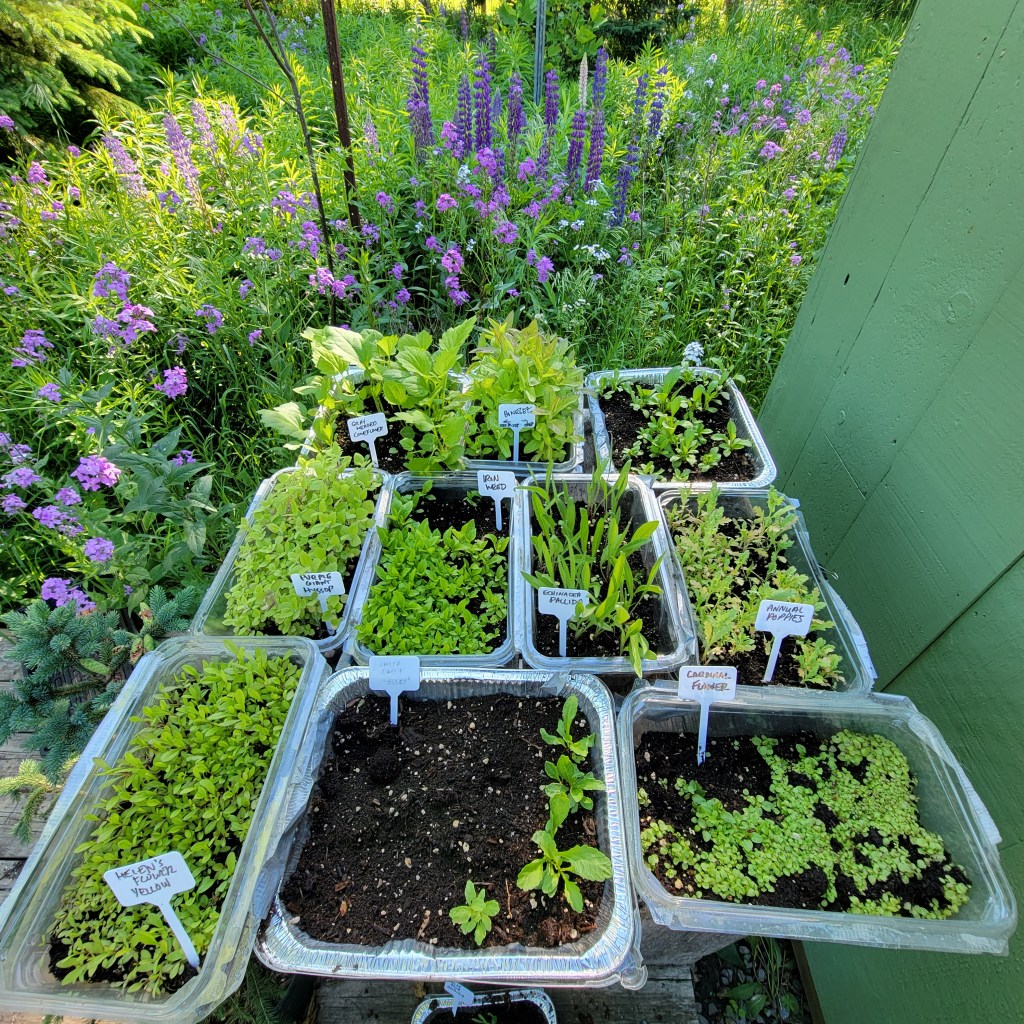
As a result of winter sowing (first time this past winter – highly recommend!) I have lots of new native plant seedlings, including some of the ones I featured in my May blog – A Few of My Favourite Native Plants – Culver’s Root (Veronicastrum Virginicum), Cardinal Flower (Lobelia cardinalis), and Green Headed Coneflower (Rudbeckia laciniata). I certainly have lots of the native Rudbeckia, as well as Boneset (Eupatorium perfoliatum), Giant Ironweed (Vernonia gigantea), and Purple Giant Hyssop (Agastache scrophulariifolia).

So the clearing of the outhouse plant began in earnest last week, and by the end of two afternoons I had an area to work with.

The initial chop of material
Then removal of the actual plants and roots

Definitely not light work, but not too difficult either compared to other plants. The area is now clear, and I’ll be putting in Green Headed Coneflower (the native), Boneset, Giant Ironweed, and Purple Giant Hyssop. They can all tolerate a little competition (a good thing for native plants, especially tall ones) and basic soils.

If I have space I might even mix in some shorter plants like native Bush honeysuckle (Diervilla lonicera) and Pearly Everlasting (Anaphalis margaritacea) in at the front as they can tolerate dry conditions. The area is mostly sunny all day. Unfortunately my beloved Cardinal Flower and Turtlehead are too dry for this location.

We’ll see how this experiment works and check back in with you all on another blog. If it works we’ll expand into another area of outhouse plant that I recently cut down, but haven’t removed yet…a work in progress. There are only so many hours in my (still working part time) day. And I still need to get that Canada Ggoldenrod under control…but that’s another story…

Naked Ladies in my Garden

By Lois Scott, Master Gardener

Although this may sound shocking to some and possibly enticing to others, the Naked Ladies in my garden are a welcome arrival at this time of year.  It is not so much that they are truly naked, they are just minus their leaves.  Naked Ladies, Autumn Crocus and Meadow Saffron are all common names for a bulb-like corm called Colchicum autumnale that produces leaves in the spring and flowers in the fall.  Over the summer the plant appears dormant but by late August or early September it starts pushing up beautiful mauve flowers with 6 showy stamens, all atop white stems.  Colchicum autumnale likes organically rich, well-drained soil and sun to part shade conditions. https://onrockgarden.com/index.php/plant-of-the-month?view=article&id=92:colchicum-autumnale&catid=22

This is a sentimental plant for me as years ago I dug up the corms from my grandparents’ garden.  I remember they were still a mass of blooms at Thanksgiving.  But as much as they mean to me, they can be a garden design challenge.  The leaves that are produced in spring grow a good 25-30 cm and then go through a bit of a collapse as they die off.  At that point you are left with a hole.  The flowers grow to be about 15-20 cm tall and could easily be overwhelmed by larger plants around them.  I have my most favourite site for them at the base of a Witchhazel shrub which is close to a garden bed edge. There are a few rocks surrounding the area where the plants are sited and otherwise, I leave the area bare.  The photo I have included is a previous arrangement but I found the leaves in spring overwhelmed the Heuchera, so the heuchera have been moved out a bit.  The other photo shows the leaves in spring.

Colchicum autumnale in fall

You may find corms for sale in the fall or perhaps you know someone who wants to divide up their clump.  They can easily be divided every few years and speaking for myself, I am happy to share.  The ladies in my garden are trouble free and never disappoint.

Colchicum autumnale in spring

Outcompeting Invasive Plants, Part II

By Laura Gardner, Master Gardener in Training

This article was published in err a couple of weeks ago, and is being republished today as a corrective measure. Apologies. -Ed.

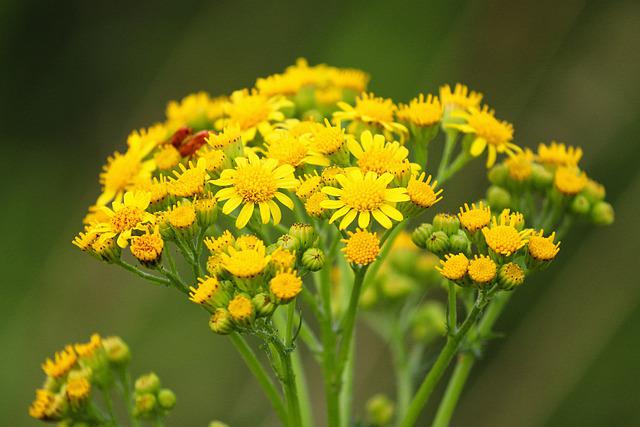
Back in a June post[i], I referenced the Ontario Native Plant Council’s best management practices for Alliaria petiolata (Garlic Mustard).[ii] In it they referred to certain native plants that can be used to outcompete it. I would like to mention one other that I am fond of having in my garden. Packera aurea (Golden Groundsel) has a diminutive orange inflorescence and is native to the Peterborough area. It can be aggressive as it reproduces through rhizomes and adventitious shoots on the stems. It is better situated in moist soils and so it may be more subdued in a drier location. In her blog, The Humane Gardener[iii], Nancy Lawson discovered that when she inserted clumps of Golden Groundsel into patches of Garlic Mustard, the latter quickly became surrounded. Garlic Mustard is known to be allelopathic and inhibits the growth of some plants. However, Golden Groundsel does not appear to be inhibited by it.

Golden groundsel, Packera aurea

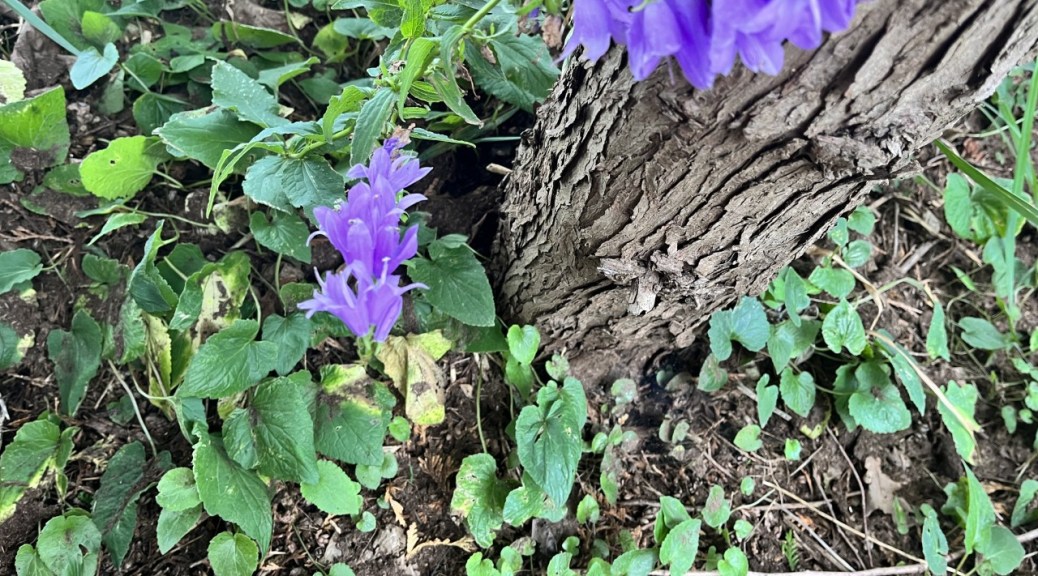
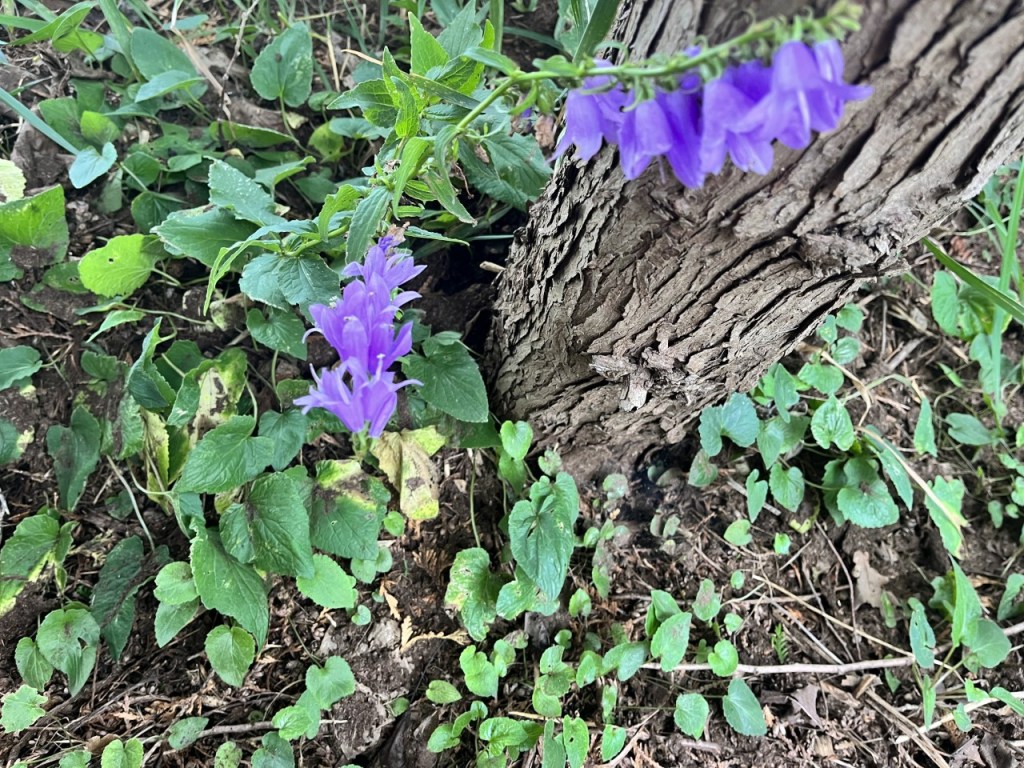
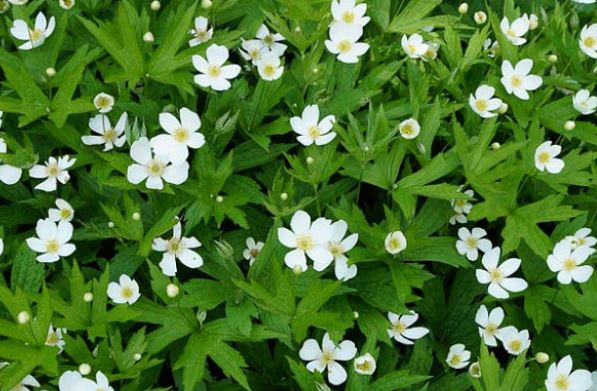
Anemonastrum canadense (Canada Anemone) is a beautiful vigorous native ground cover that performs well in sun to shaded environments; although it can develop brown leaves in more arid conditions. I am using it to limit the advance of Campanula rapunculoides (Creeping Bellflower). The intent is to envelope it so that it is unable to photosynthesize, grow more foliage, and store energy in its roots. One might argue that this is simply a matter of replacing one problem with another. While it is true that Canada Anemone can be overwhelming, it may be limited by deadheading the flowers, removing rhizomes, adding mulches, and by installing edging below the soil surface. As a native plant, it supports pollinators such as miner bees, sweat bees, and hover flies. The Xerces Society notes that it supports “conservation biological control.”[iv] This is a plant that attracts beneficial insects to your garden which in turn will help control other insects that damage your other plants.

So far, the Creeping Bellflower’s development has been slowed but there are still some basal leaves within the patch and at the perimeter. Right now, it is still a team effort: Canada Anemone and me.


[i] Outcompeting Invasive Plants: Part I. https://peterboroughmastergardeners.com/2022/06/13/outcompeting-invasive-plants-part-1/

[ii] Garlic Mustard (Alliaria petiolata): Best Management Practices in Ontario. Ontario Invasive Plant Council.  https://www.ontarioinvasiveplants.ca/wp-content/uploads/2016/07/OIPC_BMP_GarlicMustard.pdf

[iii] How to Fight Plants with Plants. The Human Gardener. Online: https://www.humanegardener.com/how-to-fight-plants-with-plants/

[iv] Habitat Planning for Beneficial Insects: Guidelines for Conservation Biological Control. Xerces Society. http://www.xerces.org/publications/guidelines/hab

Drought Tolerant Plants

By Sharleen Pratt, Master Gardener

We are into the middle of summer, a time to relax and enjoy all the hard work we have put into our gardens.  I struggle with my plants receiving enough moisture during the summer months and each year I think more about drought tolerance and what I could grow that would require less water and care.

There are several drought tolerant perennials and we are lucky that many of them are native.  Once established they will withstand periods of prolonged drought. Choosing native is a good choice as native plants are tolerant with our soils and climate and have evolved with the birds and pollinators who often use them for shelter and food.

Here are a few drought-tolerant plants that grow well in my garden:

Butterfly Weed (Asclepias tuberosa)

It has been growing at the bottom of my garden near the road and in full sun.  It has a beautiful orange flower and is one of the top butterfly-attracting plants around.  The stems grow 2-3 feet with narrow leaves that are dark green.  If given the room, the plants will get bushy.  The large seed pods are also attractive.  It is a wonderful native plant that tolerates a broad range of conditions.  Beware as this plant emerges very late in the spring and does not like to be disturbed, so mark it well in order not to dig around it.

Prairie Smoke (Geum triflorum)

This is a tough plant that grows to about 6-12 inches.  It has a lovely reddish pink to purple bloom with interesting seed heads.  It has flourished in my native garden at the bottom of my property in full sun and exposed to winter salt.  As the flowers fades and the seeds begin to form, the styles elongate (to 2” long) to form upright, feathery gray tails which collectively resemble a plume or feather duster.  They are very unique.  It spreads by rhizomes and can be naturalized to form an interesting groundcover.

Blanket Flower (Gaillardia)

This perennial is not native but has beautiful brightly-coloured daisy flowers, often with a contrasting central eye.  They are all long blooming and if you have the time to remove the faded flowers, they will continue to bloom for several weeks.  Mine is a compact form that looks lovely at the front of the border.  It prefers hot, dry areas and are therefore, very drought tolerant!  They have a life-span of 2 to 4 years, so cut the plants back hard in early September.  This forces new leaf growth from the base and helps to prevent plants from blooming themselves to death.

Russian Sage (Perovskia atriplicifolia)

It forms an upright bush of fine-textured grey-green leaves that are actually fragrant when rubbed.  The plant becomes a haze of lavender-blue flowers by the end of July.  It continues to bloom for weeks.  Russian Sage is an excellent filler plant for a border.  Leave the woody stems over the winter months to encourage new shoots to appear.  In spring, prune the plant back to 6”. It is very attractive to butterflies.

Little Bluestem (Schirachyrium scoparium)

This is a lovely native grass and is often found growing in open woodlands and prairies. It is a warm season grass so doesn’t start its growth until later in the spring.  Its’ early growth has a blue/green colour. The flowers on this grass are very attractive and the seed heads are fine with a fluffy appearance. The mature seeds are greatly favoured by small birds. This plant is clump forming and grows typically between 2 to 4 feet. The plant looks lovely year-round and the deep roots penetrate deep into the soil. In the fall, it turns a golden to reddish brown. There is a large version called Big Bluestem, but I much prefer the Little Bluestem.  These two plants are actually from a different genus so although they have some similarities, they are also quite different.

Here is an excellent article by the Toronto Master Gardeners with an extensive list of drought tolerant perennials for many different types of conditions.

What’s the Deal with Green Leaves on Variegated Plants and Trees?

By Mary-Jane Pilgrim, Master Gardener

Photosynthesis is the process by which plants use sunlight, water, and carbon dioxide to create oxygen and energy in the form of sugar. Plant leaves are most often green because that colour is the part of sunlight reflected by a pigment in the leaves called chlorophyll. However, not all plants are completely green!

Variegated plants can be a beautiful and unique-looking addition to your plant collection. Variegation simply means that the plant’s leaves have both green and non-green parts. Some have shades of cream, or yellow, light green, pink, purple, or red – to name a few. Some plants have a stark white variegation that makes these plants really stand out. Many times, these plants are used to brighten up shady, dim areas or as used as focal points in landscapes or as striking indoor plants. Variegated plants can be the result of engineered breeding or a grower taking advantage of some type of random genetic flaw (chimera).

Leaves of variegated plants occasionally lose their colorful markings and return to plain green. This twist of nature can be frustrating when extra money is spent for the unique foliage markings. Variegated plants often have smaller leaves and are less vigorous than green specimens because the lack of the green pigment means less chlorophyll for generating energy.

Variegated plants can revert or turn green beginning on a stem, branch, or another area. Reverting back to solid green leaves could be a protective way that the plant returns itself back to a healthier form. When this happens, the best thing to do is prune out the affected leaves because if you don’t, the plain green can actually take over the plant because of the increased chlorophyll and vigour as compared to the variegated foliage. If the reversion continues, try to provide your plant with some extra light by moving it to a sunnier location if possible.

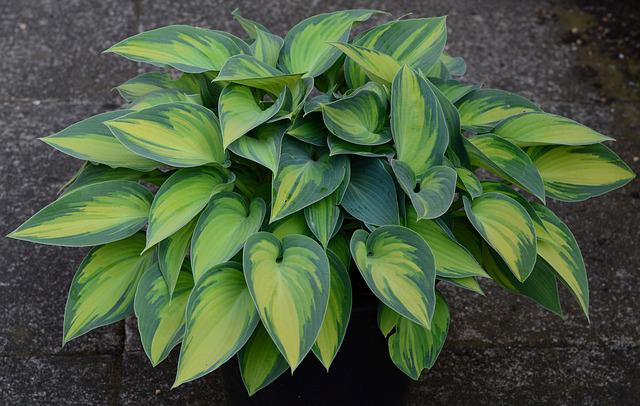
The hosta in this picture shows great variegation in all leaves except one. That leaf should be removed to preserve the variegation.

Resources

Spotting the signs: Variegated plant reversion
Reversion
Variegated leaves reverting

The Joy of Sharing our Gardens

Reflections after a Garden Tour

by Emma Murphy, Master Gardener

It’s been a tough few years for all of us because of COVID-19, but I had time to reflect this weekend on why it’s been hard for me as a gardener. While it’s been wonderful to have our gardens as an oasis and source of comfort during the pandemic, I realized that other than a few close friends, no one had seen all the work (and the results) that my husband Grant and I had achieved over that time.

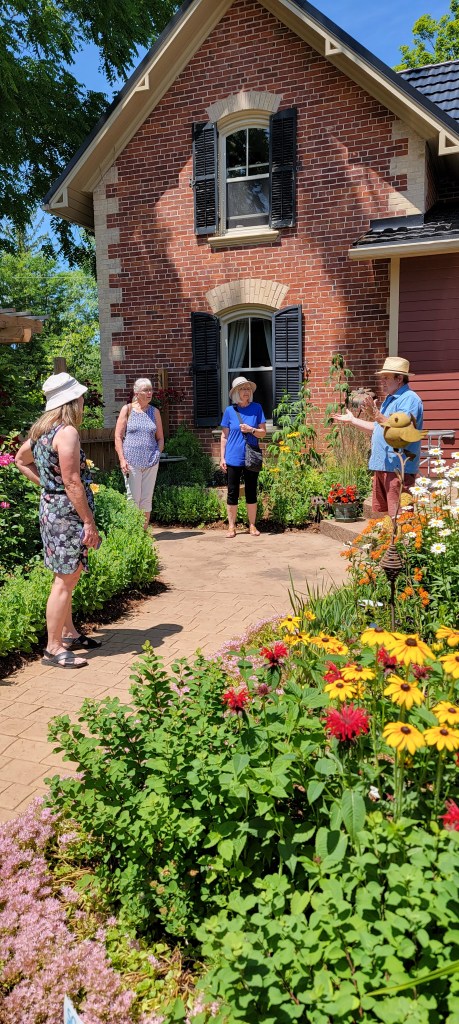
So it was with great anticipation that we looked forward to our Lakefield garden being featured on a garden tour organized as a fundraiser to celebrate 60 years of the Lakefield Horticultural Society.

While we spent a few very crazy days trying to put the final touches on our garden (my husband decided he would build a beautiful pergola [awesome] a week before the event [not so awesome] so plants had to be moved into pots and then back into the beds just a few days before) — sorry I digress — everything was perfect on the day — the weather was spectacular, we placed the last bits of mulch to cover a few empty patches and we looked forward to welcoming our guests.

The new pergola.

As the first people arrived (I think our first visitor was a man on a bicycle!) I began to realize how much I had missed the joy of sharing our gardens with others. And as the day progressed, it was wonderful to hear other people’s perceptions — for some it was inspiring, for some a bit overwhelming (we have a 3/4 acre property in a small village), for some they loved that we had plants they had never seen before (not your typical garden). Everyone seemed to leave with a smile on their face, which made our day.

Grant created numerous raised beds over the past few years — at my request — and we’ve had great success with them. We also purchased a “COVID present” for ourselves — a long wished-for greenhouse to extend our gardening season, and it’s been put to good use.

We’ve spent time over the past few years planting more native plants as I learn more about the benefits of creating habitat as well as having an aesthetically pleasing garden. Hey, it’s not all about me!! Doug Tallamy’s book is a great start to understanding the benefits we can provide in our humble gardens to the greater ecosystem.

There is definitely a balance — we’re aiming for a 50/50 balance of native/non-native — because I love my daylilies and peonies and don’t want to give them up (they give me pleasure), but I also love the hundreds of pollinators (bees, butterflies, wasps etc.) that flock to my Common Boneset (Eupatorium perfoliatum), Pearly Everlasting (Anaphalis margaritacea), Cup Plant (Silphium perfoliatum), and Cardinal Flower (Lobelia cardinalis) because I am choosing to plant native plants.

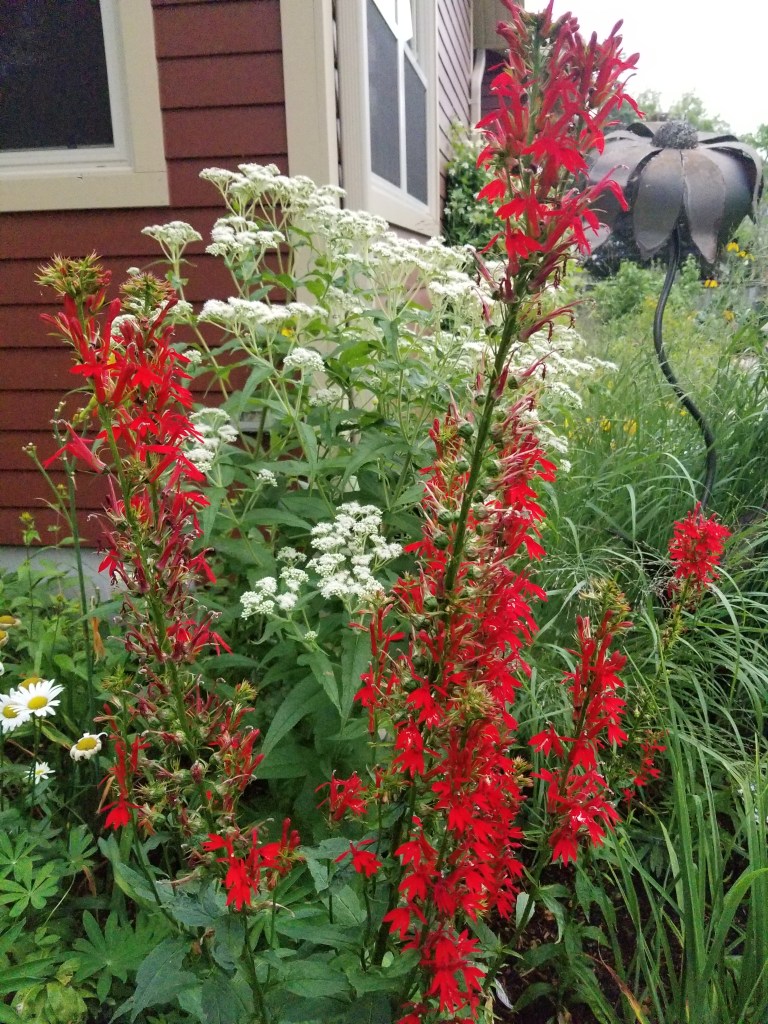
Boneset (white) and Cardinal Flower (red)

Last winter I grew some native (and non-native) plants using the Winter Sowing technique (because most native plant seed requires winter/cold stratification) and it was a great success (with some lessons learned – but that’s another blog).

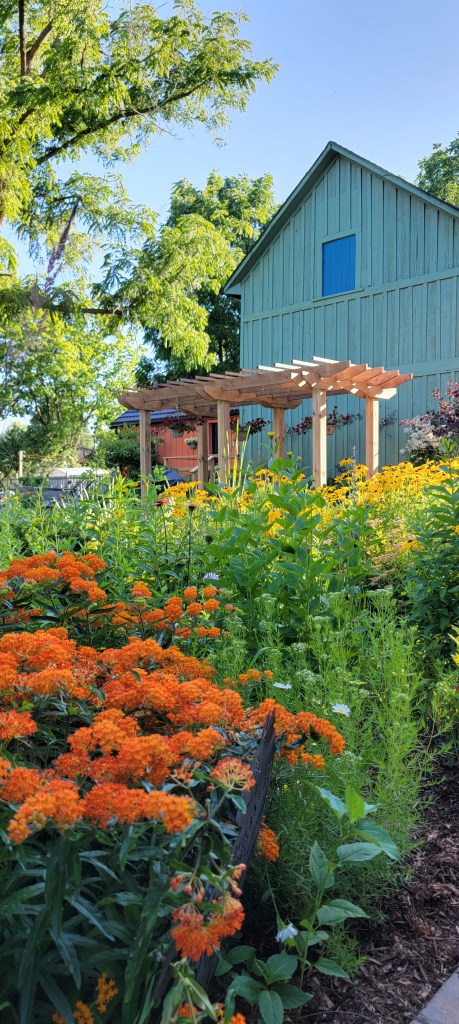
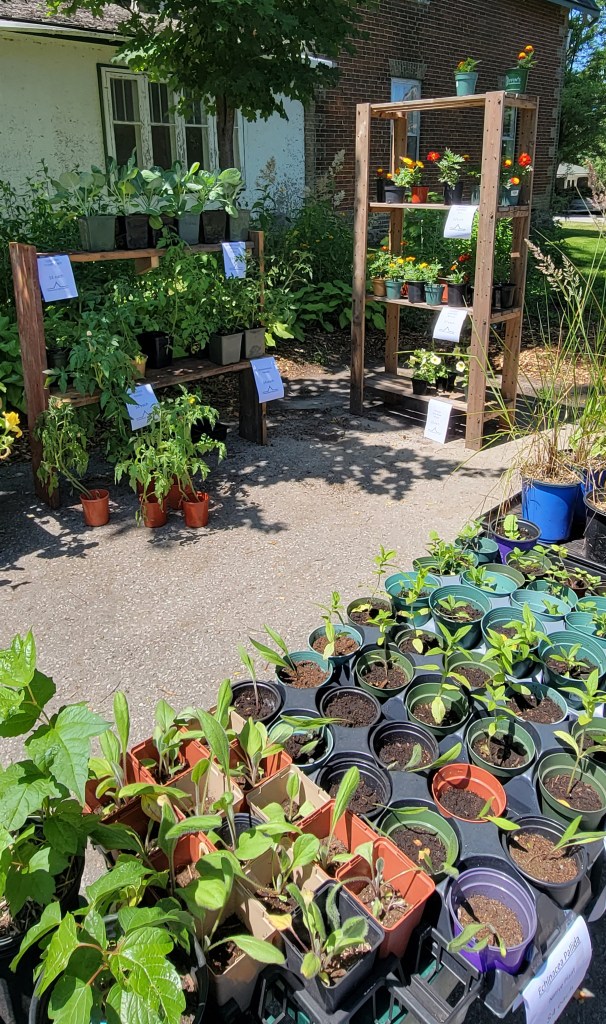
Grant set up a Plant Sale area for the garden tour and people were able to buy plants that they saw in the garden (although alas, I did not take any cuttings on my amazing orange Butterfly Weed – a type of milkweed – which really caught everyone’s attention).

The Plant Sale area

Over the day I saw many gardening friends I hadn’t seen in several years, and made all sorts of new friends. It felt like my community was coming together — like we were reconnecting after a long time apart in a beautiful place. And I realized that gardening is both a solitary and a very social activity. We even got featured in the local newspaper.

We raised funds to support our local horticultural society, we got back to feeling ‘a bit normal’, and most importantly we got to reconnect with people over a common passion — the love of gardening.

I hope that all of you will find opportunities to reconnect with people this summer and share your gardens and plants and trade stories about attracting pollinators etc. with others. It’s a feeling like no other. #happygardening

Our lovely rudbeckia and greenhouse in the background.

Another Garden Beauty

By Marilyn Homewood, Master Gardener

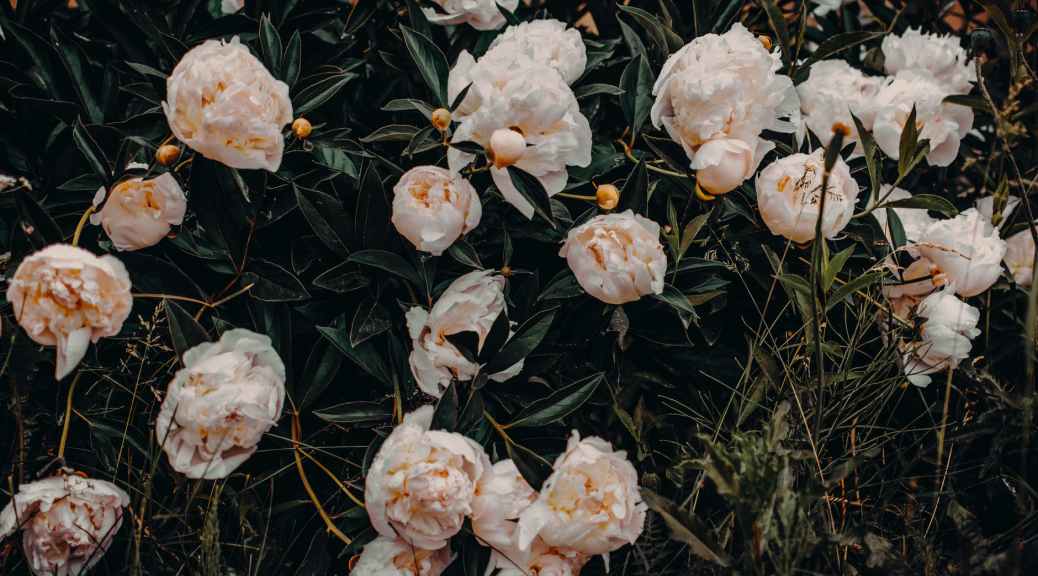
Summer solstice has just passed and with it the waning of some iconic garden varieties.  Late spring/early summer brings us not only the iris and rose but the peony as well.  Peonies are large, long-lived perennials that may stay in one place without division for up to 100 years. Peonies bloom in a wide range of forms, from simple, elegant singles to massive doubles with more than 300 petals in colours of white, pink, yellow and red tones.  They form a rounded shrub that may be up to 3 feet in height and width with glossy deep green foliage that remains attractive after the bloom is over.

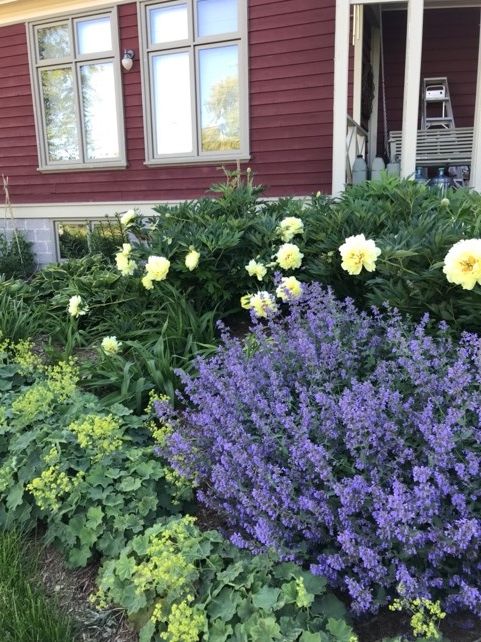
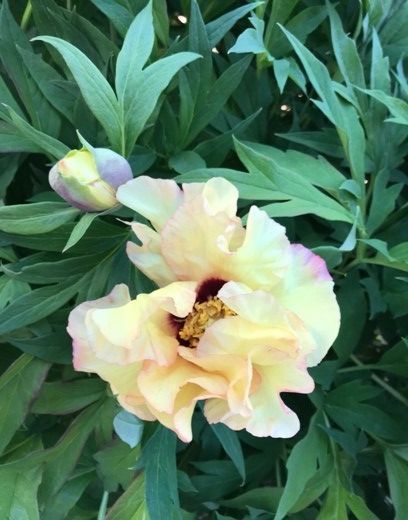
Itoh peony ‘Bartzella’ in landscape

There are three types of peonies: Herbaceous, Tree and Itoh.  Herbaceous peonies bloom in late spring/early summer and have stems that die back to the ground in the fall.  Tree peonies have a permanent woody stem, more like a shrub. Woody stalks remain standing through winter and go on to flower again the next season. The blooms on trees peonies are larger and more fleeting than those on their herbaceous counterparts.  In our area, tree peonies appreciate a sheltered spot to grow as a hard winter may result in a lot of die back. The third type of peonies are the Itoh peonies.  These plants are a result of crossing herbaceous peonies with tree peonies.  The stems of Itoh peonies die back to the ground each fall and yet the bloom is large like that of a tree peony.  These plants do not require any additional support unlike some of the herbaceous peonies.

Tree peony

Peonies perform best when planted in a location with a minimum of 6 hours of sun per day and must have fertile, well drained soil.  Once planted in a suitable location, they are relatively care free, requiring only a good clean up in the fall to cut the stems down and remove all leaves (reducing the potential for fungal growth). In the case of tree peonies, the stems are not cut but all leaves should be removed and discarded in the landfill.

Peonies are sold as bare roots from growers as well as from some of the larger companies. These can be planted in either spring or fall however from experience fall is the preferred time to get them into the ground.  As well, many nurseries sell peonies in containers that can be added to the garden at any time provided they are kept watered.

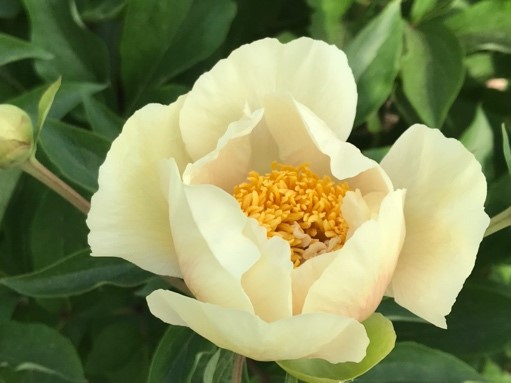
Early single peony “Claire de Lune”

Recognizing the value of a peony variety that performs well in the landscape, the American Peony Society developed an Award of Landscape Merit for cultivars that do not require support and are vigorous garden varieties.  When choosing a peony for your garden, consider one of these.

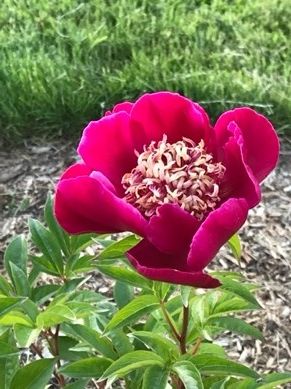
Japanese peony “Sword Dance”

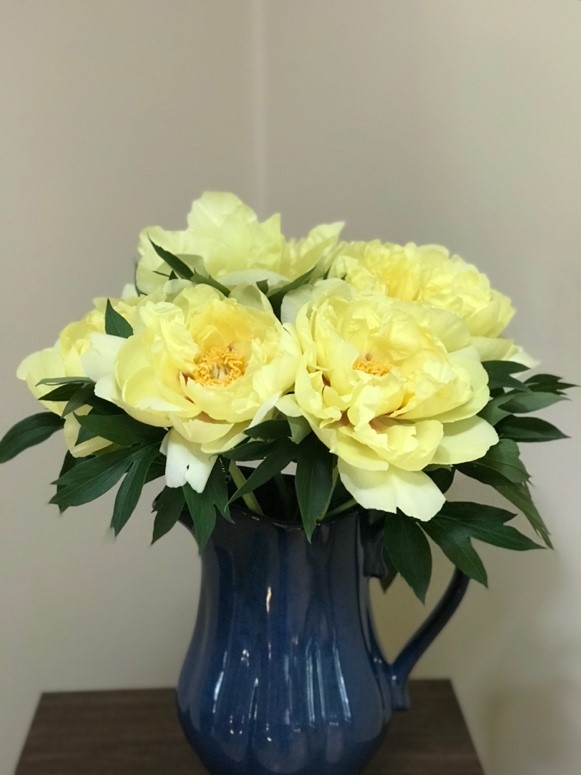
Peonies are not just for the garden. They make wonderful cut flowers as well.  For maximum vase life, harvest them when the bud is coloured, rounded and soft to the touch, keep the vase out of direct sunlight and change the water frequently (peonies like cold water and I have started to add some ice cubes to the water in the morning).  This should give you 6-7 days of vase life.  The blooms are so large that it only takes a few to fill up your vase.

Treat yourself and purchase a peony for your garden.  One can never have enough peonies!

Peonies as cut flowers

“Flowers are the music of the ground. From earth’s lips spoken without sound.” – Edwin Curran

Resources

http://ccenassau.org/resources/peonies

Home

https://www.treepeony.com

It’s Iris Time in the Garden!

By Chris Freeburn, Master Gardener

June brings a great show of Bearded Iris into the garden. Iris germanica flower in spring and although the bloom time seems short, the big colourful blooms are breath taking. Iris come in different heights, have big showy flowers in lots of fabulous colours and their elongated fan-like leaves give a different shape in the mixed border. There are 3 parts of the flower – “standards” which are the 3 upright petals, “falls” which are the lower petals usually hanging down and the “beard” which is the fuzzy hairs and is often yellow in colour. There are many varieties available, with colours ranging from shades of blue, purple, pink, peach, orange and combinations of colours where standards are one colour and falls another. Stunning!

Orange Harvest

Iris want a sunny location facing south or west, in well drained soil. They do not want to sit in water and will rot if they are too wet. Iris have rhizomes which produce roots to hold the plant in place and draw up water and nutrients. Rhizomes want their tops to be near the surface of the soil or slightly exposed, especially in heavy soil. A heavily mulched bed will not work for iris unless you leave a large area bare. Fertilize in early spring.

Raspberry Parfait

Dead-head flowers by cutting spent blossom stems right down, which encourages more bloom on rebloomers. Leaf fans should be cut back to 3” to 6” in the fall with sharp scissors.

Plants need to be divided every 3 to 4 years to reduce crowding and encourage blooming. Dividing should be done when plants are dormant in August or September. When dividing, check rhizomes for signs of disease and cut out any soft, wrinkled or marred parts. Let rhizomes dry overnight before replanting to allow cut areas to seal over to protect

Watch for Iris borer which will eat through the rhizomes. If you do get borers, dig up and cut off the damaged rhizomes.

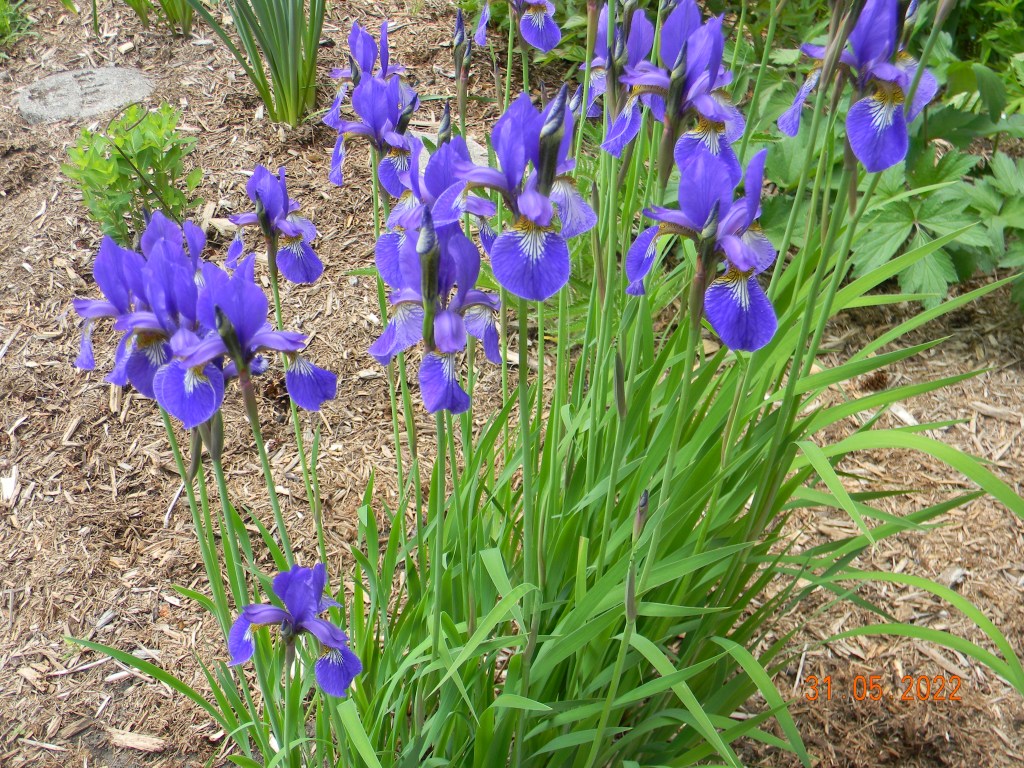
Siberian Iris

Iris are often sold bare root from seed companies and there are several online iris companies in southern Ontario. They tend to ship for fall planting when plants are dormant. You can purchase plants in containers in garden centres in spring or summer.

Royal Botanical Gardens in Burlington have a wonderful display garden if you are up for a trip. Check out their website https://www.rbg.ca/gardens

Iris siberica is another showy plant in the early summer garden. Siberian Iris grow 15” to 36” tall with lots of smaller flowers having standards and falls. Their leaves are narrower and almost grass-like. Siberian Iris can be planted into the soil rather than on top although they still have rhizomes. They can take full sun or part sun and do like a moist area. Dividing needs only to be done every 10 years or if the centre dies out.

Siberian Iris: Such amazing detail!

One of the earliest iris is Iris reticulata which is actually a bulb that you would plant in the fall. They are short and usually purple.

In Ontario we have native iris that are classed as wildflowers and known as Flags. They include Iris versicolor which you will find in shades of blue and Iris lacustris which is a smaller wildflower and very rare. These are often used in pond settings as they prefer to be wet. Iris pseudacorus is the non native yellow flag iris which is listed  on the Ontario Invasive list.

Iris are poisonous for cats, dogs and humans if eaten.

For more information check out these websites:
https://www.cdn-iris.ca/growing-bearded-irises/
https://www.chapmaniris.com/
http://ontariowildflowers.com

A Few of My Favourite Native Plants

by Emma Murphy, Master Gardener

I’ve been gardening for more than 25 years and, like many of you, thrill at the opportunity to discover new plants for my gardens. Over the past few years these have been mostly native plants, as I learn about all the benefits that they bring – here’s just a few examples of why native wildflowers, grasses, shrubs and trees do so much more than just add beauty to the landscape:

  • They support birds, pollinators and wildlife – native gardens attract birds and butterflies and provide habitat and food for native pollinators
  • They increase biodiversity – native plants increase garden health and resilience, and help contribute to a broader effect to nurture and sustain living landscapes
  • They’re tough and low maintenance – because they’re adapted to grow in their native range, locally native plants tend to thrive with little to no care and conserve one of our most precious resources – water
  • They help you save money AND create a healthier environment for people – native plants don’t require expensive fertilizers and chemicals, or toxic pesticides and herbicides
  • They help with climate change – no lawn mower costs or exhaust! and long lived native trees help store carbon dioxide
  • They make gardening easier – if you select the right native plants for your garden, you don’t have to modify or amend your soil

I’m just going to share three favourite native plants in my garden, with hopes that you may consider them for yours.

Culver’s Root (Veronicastrum Virginicum)

Culver’s Root offers a strong upright, architectural accent to any perennial garden that attracts attention from both people and pollinators!! It can reach heights of 5 feet if it’s happy (although mine hasn’t achieved that yet) and the spikes of white flowers open from the bottom up in mid-summer. It has finely toothed leaves that are lanceolate and occur in a whorl of 3 to 8 leaflets. The inflorescence has several wand-like flowering spikes that resemble an elegant candelabra.

Culver’s Root grows in zones 3-8, in full sun to part shade but it does like moist, well-drained soil. The seeds are so tiny that they should be directly sown on the soil surface in fall or in the spring – I’ve tried winter sowing some this year so we’ll see how that goes.

The plant really has no other synonyms; apparently the name was derived from a Dr. Coulvert, a late 17th to early 18th century pioneer physician who found laxative properties in the plant. More information here.

Cardinal Flower (Lobelia cardinalis)

Who doesn’t love bright red flowers in the garden? For those who say native plants can’t be showy I give you this amazing example to disprove that theory. Named for its scarlet red flowers, its tubular flowers are a magnet and important nectar source for hummingbirds and swallowtail butterflies.

Like Culver’s Root the flowering spikes open from the bottom to top and bloom for several weeks. They grow best in moist, rich soils in full sun to partial shade.

I’ve only had my plants for two seasons but I understand that the parent plants will not persist after a few years, so it’s important to either let it go to seed (so it reseeds naturally) or collect seed – this is another plant where I am trying out winter sowing (native plants are a great choice for this propagation method). While many sites will tell you it needs a really moist site mine have done fine, although I do keep the plants well watered in drier times. More information here.

Green Headed Coneflower (Rudbeckia laciniata)

Also commonly called Cut Leaved (or Cut Leaf) Coneflower, this is the straight species, not to be confused with the double cultivar many of us have in our rural gardens (often called the Outhouse Plant – or Rudbeckia laciniata “Golden Glow”).

Not a small plant (it grows 4 to 5 feet tall in my garden), it clumps and spread by rhizomes so only one to consider if you have the space! Its bright yellow, daisy-like drooping flowers with green centre disks (which can be about 3 inches across) bloom later in the summer season. It prefers moist soil, but grows well in average, medium, well-drained soil in full sun to part shade. In nature it is often found in woods, meadows, streambanks, and roadside ditches.

The Cherokee natives call this plant Sochan and the spring basal leaves are a traditional Cherokee food. Butterflies are attracted to nectar from the blooms and songbirds, especially American Goldfinches, eat the seed in the fall. It is moderately deer resistant. More information here.

So I hope you’ll take the opportunity to seek out native plants to add to your garden, finding ones that are native to your region and appropriate to your conditions. Happy Gardening!!

Rhubarb

By Lois Scott, Master Gardener

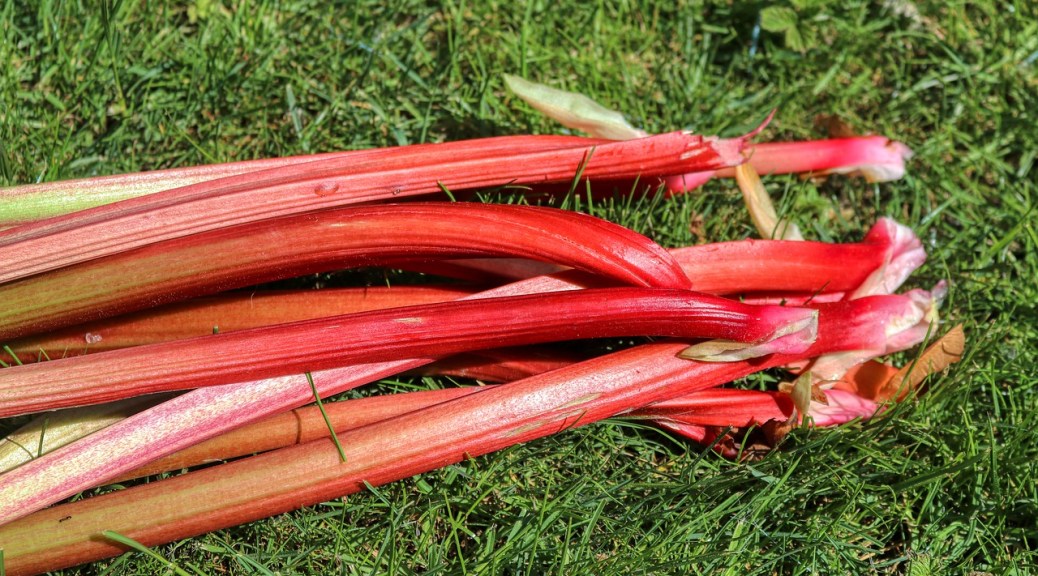
It is early May and my husband has been watching the rhubarb emerging with great anticipation.  I like rhubarb, he loves rhubarb and it will soon be time to start harvesting the stalks (petioles)!

Rhubarb (Rheum rhabarbarum), native to central Asia,is an easy, hardy, and edible perennial.  Technically a vegetable but treated as a fruit, it is long-lived, easy to care for and bothered by few pests and diseases. 

Rhubarb is sold by ‘crowns’ or perhaps you can get a division of a plant from another gardener.  Spring and early fall are the best times to plant it.  Rhubarb likes a well-drained site with full sun (6-8 hours minimum).  Give your plant plenty of space to grow, about 3m2.  Rhubarb is a heavy feeder so mulch around your new or established plant with compost or well-rotted manure.  I generally give mine a spring dressing of compost as it starts to emerge in the spring.  Rhubarb should be watered deeply during times of drought.

A new rhubarb plant will need a couple of years to get established before you start harvesting it.  Don’t harvest any stalks the first year and then very little the second year.  The plant needs those large leaves to develop to provide energy for the roots and crown to grow.  Over the growing season, flower stalks will start appearing and these should be cut off at the base to reserve energy for the plant.

Rhubarb is ready to harvest when the stalks are 25 – 40 cm long.  Grab the stalk part way down and pull or twist to the side.  When I pull rhubarb, I come prepared with a paring knife and cut off the leaves after pulling the stalks and leave them as mulch.  Rhubarb leaves are toxic as they have high levels of oxalic acid, however they can be safely composted. 

Rhubarb is a cool weather plant so as the season warms up growth may slow down.  Let your plant rest so the crown can recover.  If you have an established plant that doesn’t seem to be as vigorous as it was, it may need division which should be done in early spring.  Dig up the whole plant if possible.  Rhubarb has a very deep tap root but if you capture enough, you can divide the plant making sure each division as at least one or two buds.  Plant your divisions with the buds 4 – 5cm deep, gently firming the soil.

The only other job to do is weed through all the tempting rhubarb recipes.  Enjoy!

https://extension.psu.edu/rhubarb-be-patient-and-you-will-be-rewarded