Category Archives: Perennials

Happy Easter!

By Sharleen Pratt, Master Gardener-In-Training

I hope that you have had a good weekend with family and friends and had a chance to enjoy a little time outdoors. This time of year brings thoughts of spring bulbs, budding trees and the sound of birds which are getting very active. It won’t be long until we see our first hummingbirds in the Peterborough area.easter-3123834_640

A planned outing to some of your favourite garden centres at this time of year can be fun and educational. We are lucky here in Peterborough and the surrounding area to have a number of excellent nurseries that carry quality plants and have knowledgeable staff to help with your questions.

Go to gardenroute.ca for some amazing local businesses that specialize in being growers, maintaining gorgeous display gardens and full service garden boutiques. Members of “The Route” are Anna’s Perennials, Avant-Garden Shop, Blossom Hill Nursery, Gardens Plus, Garden Style Bridgenorth, Greenhouse on the River, Griffin’s Greenhouses, Johnston’s Greenhouses, Keene on Gardens and Williams Design Studio.

PGS-logo-tinyAll of these businesses and more can be found this weekend at the Peterborough Garden Show. It runs from Friday, April 26th to Sunday April 28th. The Peterborough & Area Master Gardeners will be there giving gardening advice and are available to answer all your questions! Come visit us at our booth. We are the ones with the red aprons! This year’s show is in a new venue, Fleming College’s Kawartha Trades and Technology Centre. Lots of free parking and the cost is only $10.00 which gives you access to the show for the whole weekend. There are many wonderful speakers and workshops. All the proceeds go back to the community. Check it out at peterboroughgardenshow.com.  Hope to see everyone at the show!

Spring Cleaning Your Gardens

by Cheryl Harrison, Master Gardener

It is that time of year again…..time to start to prepare your gardens and lawn for the outdoor living season.

It may be too early yet to walk on your lawn, it should be firm not mushy with moisture, or in your gardens, the soil should be crumbly and not stick together. I know that it is still very early but there are a few things that you can do.

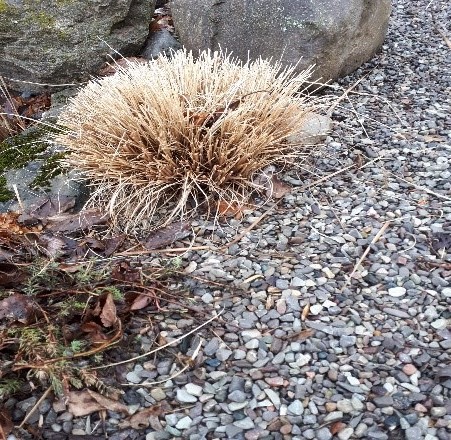
I have started to cut back the ornamental perennial grasses. These grasses begin to grow early. They like cool weather so they need to be cut back in preparation for this early growth garden.

CherylH1

I have also begun to remove some of the debris around the edges of my perennial gardens. I avoid walking in the gardens because they are still quite wet and partially frozen in some cases. We also have a small pond that I have been able to cut back the cattails. I will not get to carried away with this yet because there are some “critters” that live in the garden clutter that I do not want to disturb. For example, ladybugs will still be snoozing. You also do not want to accidentally discard a praying mantis egg case. Both insects are beneficial insects because they are predators and will eat other less beneficial insects in your garden.

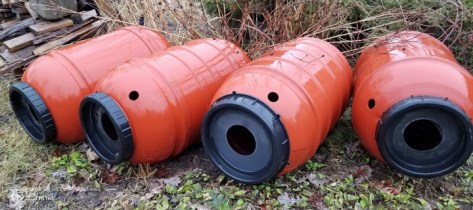
My garden shed was opened this weekend. I have started to move out my rain water collection barrels and to put them in place.

barrels

It is a great time to inspect your trees and shrubs before they leaf out. Remove any winter injured growth and any growth that does not keep the plant balanced or where branches rub together. There are some flowering shrubs that, if you prune now, you may remove this year’s flower buds so know what you are dealing with before you prune.

It is also not to late to do some planning. You will soon be able to see what survived the icy Ontario winter and what did not. You can think about what you would like to plant in the place of those that did not survive. Always remember to think about your plant zone, amount of light, moisture requirements and the type of soil when choosing a new plant. Matching a plant to the growing conditions is the best way to grow a plant that has a chance to thrive and overwinter successfully.

There is lots more to do but it is still early spring! Stay focused and finish one task at a time and your garden will be outdoor living ready before you know it.

CherylH2

The Peterborough Garden Show

By Mary-Jane Pilgrim, Master Gardener

It’s coming in 25 days.  It can’t come soon enough.  In our city, “The Garden Show” is a true sign of spring.  It’s an occasion that brings together speakers, workshop leaders, vendors, horticultural society members, master gardeners, exhibitors and many others for one reason:  “For the Love of Gardening”.PGS-logo-small

This year marks the 19th fantastic show: 
April 26 – 28, 2019 (Friday 5-9pm, Saturday 10am-5pm & Sunday 10am-4pm).

And there’s great news ! The show has MOVED – to Fleming College’s brand new Trades and Technology Centre on Brealey Drive with lots of FREE parking and a $10, one-price ticket so you can enjoy the show all weekend.

The Peterborough and Area Master Gardeners will have a booth at the show, and will be happy to answer any gardening questions that you may have. Watch for our red aprons!

The theme “Coming Up Roses” is reflected in several of the amazing speakers along with educational and fun workshops and demos.

This award-winning show was honoured in 2017 with both a “Canada 150 Garden Experience”, and “Garden Event of the Year” by the Canadian Garden Council, so come and see what all the fuss is about.

You will find many of your old favourite vendors along with some new ones.

…and don’t forget the popular “Little Green Thumbs” Children’s Garden that is always teaming with liveliness and action! There are learning activities, face painting, crafts and even a take-home project. Their theme this year is “Miniature Gardens for Elves and Fairies”.

All the show profits go back into our community to fund scholarships for post-secondary students studying in horticulture-related fields,various local projects & Community Gardens.  Since 2002, the show has put over $200,000 back into our community.

Please save the date, visit and and learn why “Everything’s Coming Up Roses” in 2019.

Learn more about the incredible speakers, workshops, bus trips, places to stay and tickets here: peterboroughgardenshow.com.


Truth or Fiction? Are Black Walnuts Toxic in my Garden?

by Emma Murphy, Master Gardener

As a Master Gardener, one of the most common questions I get asked is about the toxicity of walnut trees (Juglans nigra).

“Well I heard that the juglone stuff in the roots kills everything and that I can’t plant anything under or anywhere near a walnut tree.”

Well yes Virginia, you can plant a garden under a walnut tree, and have it thrive. Let’s look at Exhibit 1 below – an established perennial bed under a walnut tree. It’s at our house, so I guarantee it’s real, and it’s been there since late 2007.

BP4

Lots of lovely perennials here – hostas (Hosta spp.), daylilies (Hemerocallis), bearded iris (Iris germanica), summer phlox (Phlox paniculata), wild ginger (Asarum canadense), purple coneflower (Echinacea purpurea), ditch lilies (Hemerocallis fulva), although those last ones are doing just a little too well LOL. Don’t believe it’s a walnut tree? Here’s a photo from a bit further back on the street.
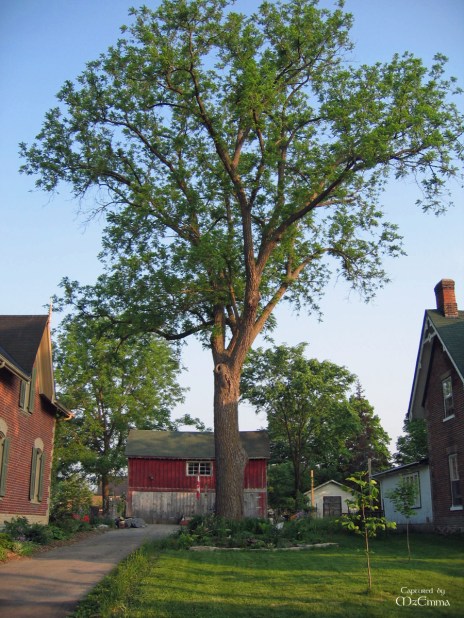
BP1

Yes, she’s a big old lady – we think she was planted around the same time the house was built, making her about 140 years old. I think she’s getting a bit tired out – most years she doesn’t produce too many walnuts. Her slightly younger cousin is to the left of the barn in the background – LOTS of walnuts off her (and yes a garden under that one too).

So where does this fallacy come from that ‘nothing grows under a walnut’? Well certainly all parts of the walnut tree contain a chemical called juglone (heck it’s even in the Latin name!). Juglone is a chemical that affects other plants growing nearby (a phenomenon called allelopathy). Simply put, allelopathy involves “living or dead plant parts that release chemicals into the soil which have an effect on other plants—positive or negative.” For walnuts it seems like an attempt at self preservation, with juglone acting like a natural herbicide on other plants.

As Professor Linda Chalker-Scott explains in her recent (2019) peer-reviewed Washington State University Extension paper, damage to tomatoes and other crops near walnut trees in the 1920s caused people to believe that toxic chemicals were involved, and this perception persisted and became widespread despite there being no evidence (and this was before social media existed!). The US Department of Agriculture did field testing – no problems. When applied in a laboratory setting to seeds and seedlings it did cause stunting, wilting, and necrosis, but the specific way it did this was unclear. The most recent science suggests that juglone disrupts photosynthetic and respiratory pathways and interferes with water uptake in plants.

Picture1

So! It does affect plants – the laboratory says so. Well yes, and no. Field tests do not support the laboratory work, which doesn’t accurately mimic real life conditions in your average residential garden (again, for more detail read the excellent paper referenced above). Two very old University Extension papers (1973 and 1993) continue to be used to state which plants are ‘sensitive’ and which are ‘tolerant’. However these were simply observational papers—meaning that they correlate the presence of walnut trees with damage to other species but do not confirm a causative relationship. Neither should be considered good scientific evidence.

Gardening With Walnut Trees – My Story

I am sure the scientists, arboretums, farmers, and garden writers will continue to debate this topic for a while. Meanwhile, here’s our story. In 2007 I wanted a garden bed under our black walnut in my front yard. At the time I had heard the walnut horror stories, so I thought – well, how about I just don’t disturb the roots of the tree? (not a good thing to do when establishing any garden beds under a tree). I put good topsoil and compost down, making sure to minimize tearing up of the soil and roots, and planted, and watered, and waited. Things grew. Winter happened. Next spring plants came up. For the most part I just moved perennials that were already on site, although some hostas were new. Here’s the garden in 2008 in the fall.

BP5_plants_2008

Fall asters (Astereae spp.), sedums (Sedum ‘Autumn Joy’ in this case), hostas (Hosta spp.), wild ginger (Asarum canadense), fall rudbeckias (Rudbeckia fulgida and triloba), purple coneflower (Echinacea purpurea), ninebark (Physocarpus opulifolius), iris (Iris spp.), astilbe (Astilbe spp.), sweet woodruff (Galium odoratum), Ozark sundrops (Oenothera macrocarpa), coral bells (Heuchera spp.), cranesbill (Geranium spp.). All doing just fine.

And 2009 below, in the spring. Irises (Iris spp.) lemon lilies (Hemerocallis lilioasphodelus), lungwort (Pulmonaria spp.), poppies (Papaver rhoeas), ditch lilies (Hemerocallis fulva), variegated solomon’s seal (Polygonatum odoratum ‘Variegatum’), bracken (Pteridium aquilinum), bleeding hearts (Dicentra spectabilis), daylilies (Hemerocallis spp.).

BP6_plants_2009

Certainly, planting in general under walnuts is challenging – they cast dense shade and have extensive, water hungry root systems. Watering after establishment and for the first season is critical. We also had our walnut tree pruned professionally (it needed it) so it actually gets decent sunlight in the latter part of the afternoon. Like any fruit or nut tree they are messy, from their spring pollen to their leaves and nuts…oh those nuts.. 2017 was a crazy year – buckets of walnuts (I even had to engage my neighbours’ lovely children from across the street to help collect them) to 2018, with almost no walnuts. My trees are old too – although well pruned, their leaves drop at that first hard frost. 1

In Defence of Walnut Trees

Black walnuts are not all bad, and I will continue to treasure them in my yard. They are an amazing shade tree, are highly valued for their fine grained dark wood (for furniture), a great food source for wildlife and birds, and my white breasted nuthatches’ favourite spot to hide their seeds.

We have definitely had our challenges with our walnut trees, and I’ve learned a great deal over the past 20 years. But one thing I know – I can garden with them around. You can too.

Note: Black walnuts are not the only tree that produce juglone – other members of the Juglandaceae also produce it as well as hickory trees. Butternut, English walnut, bitternut hickory, pignut hickory, pecan, shagbark hickory, mockernut hickory are in the same family.


Book Review: 50 Beautiful Deer-Resistant Plants

By Christine Freeburn, Master Gardener

50 Beautiful Deer-Resistant Plants – The Prettiest Annuals, Perennials, Bulbs, and Shrubs that Deer Don’t Eat

by Ruth Rogers Clausen, Published by Thomas Allen 2011, ISBN 9781604691955

Although this is an American publication, the author lives in New York state which is a similar zone to our own. A short introduction explains how to read the Quick Look charts which list zone hardiness (remember these are American zones), height and spread of plant, and deer-resistant rating for each of the 50 plants included. There are suggestions for commonly used controls such as barriers, repellants and home remedies. The author also gives some advice on planning a deer-resistant garden. wildlife-1367217_960_720

Chapters are divided by annuals, perennials, shrubs, ferns, bulbs, herbs and grasses with lovely photographs, growing tips and design ideas. Latin names are included to ensure you get the proper species and variety. An index, glossary and list of other books to ready are listed at the back of the book.

If you have deer who visit your garden and destroy your plants, you will want to read this book to give you some ideas and encouragement to have that beautiful garden. The book may be available in your local library or you can find it online at Indigo.ca.

Plants of the Year

By Lee Edwards, Master Gardener

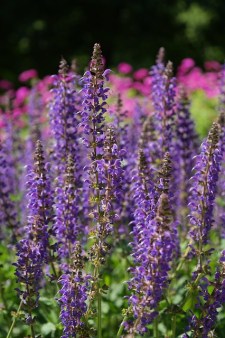
In a few months, gardeners will happily be heading back into the garden.  Along with planting native plants friendly to pollinators, this year, gardeners may also want to include one or all the National Garden Bureau’s plants of 2019; the perennial salvia (Salvia nemorosa), the annual snapdragon (Antirrhinum majus), Dahlia bulbs, and or the edible Pumpkin.  There’s also the perennial plant of the year, the betony (Stachys moneri ‘Hummelo’) chosen by the Perennial Plant Association.  Each one of these plants represent different classes of plants that are fairly easy to grow and are also relatively low maintenance.wild-sage-141575_640

Belonging to the mint family, Salvia nemorosa is a striking, hardy, ornamental variety of sage.  A full-sun, compost loving, easy to grow, drought-tolerant plant, it prefers moist, well-drained soil to produce tall, multi-branched, spectacular spikes of blue-violet flowers starting in the summer.  Once the blooms fade and the stems brown, cut back the plants size by two-thirds to encourage more blooms throughout the season.

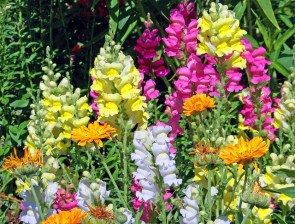
snapdragon-20809_640Snapdragons (Antirrhinum majus) are making a comeback with their fragrant, large, tubular, dragon-shaped flowers in a multitude of colors and heights.  Considered an annual in cold temperature countries, these early spring blooming plants can interestingly withstand cold weather and slow down flowering during overly warm temperature.  Great in containers, snapdragons require constant deadheading to encourage more blooms and often need staking.
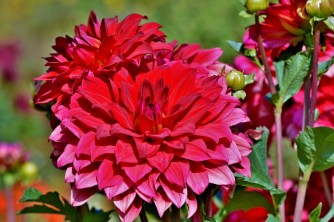
Beautiful, tuberous, tender perennials, Dahlias thrive in full sun, well-drained, warm, dahlia-3964712_640slightly acidic, and moist soil blooming from mid-summer to late fall.  Outstandingly showy and dramatic, dahlias need to be fed often with organic matter once the plants begin to grow and deadheading is needed to promote blooms.  Flowers can grow from two inches to 15 inches depending on the plant variety.

pumpkins-457716_640Pumpkins are healthy edibles high in fiber and vitamins to name just a few health benefits.  Related to melons, squash, and cucumbers, plant pumpkin seeds indoors to start, then directly in the ground once the soil has thoroughly warmed up.  Pumpkins require constant watering, pollination by bees to fruit and take from three to four months to mature.  Like many other edibles, they must be replanted every year.

Betony (Stachys moneri ‘Hummelo’) is a herbaceous perennial that blooms in late spring to early summer, showing off its bee attracting, upright, purple flower spikes atop mounding, dense, clump-forming, dark green leaves.  Stachys moneri ‘Hummelo’ likes a sunny location with a little afternoon shade and evenly moist soil.  It makes a striking display when mass planted.

Reference:  National Garden Bureau (“Year of The,”  2019). Retrieved February 18, 2019, from https://ngb.org/year-of-2019/.

Have Fun Gardening!


And the winner is…

By Sharleen Pratt, Master Gardener

medal-1622523_640Did you watch the Oscars last night? It is one of many award shows and it fuels a fascination in us to know what has been voted the best movie, best song, what book won the Giller Prize or the Canada Reads Competition? We browse through newspaper articles, blogs or Facebook posts to find out who were the most influential people, or learn new trends in food and decorating. The Plant world is no exception. There are several plant competitions and our own Peterborough Horticultural Society has Flower, Photography and Preserves Shows where the members exhibit the ‘best’ from their gardens.
I have listed below just a few plant winners, one from a very prestigious show and a few chosen winners by plant corporations. You may not agree with the choices, but there is a curiosity in many of us to know what has made the list. It can also fuel discussion amongst friends and through all this, we learn, discuss and share a passion called Gardening!

Perennial Plant Association

Each year the Perennial Plant Association selects one plant that they find to have low maintenance, are pest and disease resistant, have multiple season interest and are suitable for a wide range of climatic conditions.

This year’s perennial, Stachys monieri ‘Hummelo’ is a cousin to the familiar Lamb’s Ears, but it is a clump-forming perennial which forms a low mound of crisp green foliage. It flowers in early summer with beautiful upright spikes of bright purple flowers that are attractive to bees. It works well in containers and can be easily divided in spring. Stachys prefers a sunny location and is hardy to zone 4.

Chelsea Flower Show, London, England

At the RHS Chelsea Flower Show in London, England, the new Hydrangea Runaway Bride ‘Snow White’ was named ‘Plant of the Year 2018’. Hydranges are known and loved for their colourful lacecap flowers, but this winning plant, produces white flowers with a tinge of pink that appear from terminal and lateral buds in late spring into autumn. It is perfect for hanging baskets, patio containers and mixed borders. They have a graceful weeping habit. It is neat, compact and very hardy. Having been produced for the show by Ushio Sakazaki, this plant will not be readily available for a few years.

Proven Winners

Proven Winners searches the world for vibrant flowering annuals, perennials and shrubs that deliver excellent garden performance. They look for easy to grow, good flowering, health and vigor, length of blooming and they are all trialed and tested.

lemon_coral_sedumrgb_72
Photo courtesy of Proven Winners – http://www.provenwinners.com

Their choice for the 2019 Annual of the Year is Sedum mexicanum ‘lemon coral’. It grows in part to full sun, has a beautiful lime green foliage, is compact in size and is very drought tolerant. It works well in hanging baskets or containers. It is very heat tolerant and doesn’t require deadheading.

One of Proven Winners 2019 recommended shrubs is Berberis thunbergii Sunjoy Mini Maroon. It is a sterile barberry, and therefore, not invasive. It has deep purple-red foliage on a dense, nicely shaped mound. It needs no pruning and is highly resistant to damage from rabbits and deer. It grows to a height of 2 to 3 ft. and is hardy to Zone 4.

Pantone Colour of the Yearcolour of the year

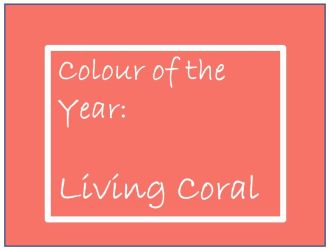
For 20 years, Pantone’s Color of the Year has influenced product development and purchasing decisions in multiple industries. Colour experts comb the world looking for new colour influences. This year’s colour is PANTONE 16-1546 Living Coral. PANTONE Living Coral is evocative of how coral reefs provide shelter to a diverse kaleidoscope of color. We can expect to see this energizing hue of coral and golden undertones popping up in our gardens. Some suggestions are: Calibrachoa Superbells ‘Coralina’, Canna Toucan ‘Coral’, Dianthus Fruit Punch ‘Classic Coral’, Rose Oso Easy ‘Mano Salsa’, and Verbena Superbena Royale ‘Peachy Keen’.

Facebook Groups for the Green Community

By Mary-Jane Pilgrim, Master Gardener

Two weeks ago, I wrote about iPhone and Android apps that can help you to identify plants & trees, know where/when/how/what to plant and also help you to connect with like-minded people for discussion.  Facebook groups serve similar purposes.  At this time of year, these groups are eye-candy for the green community as they often remind us how few days are left until spring, where to attend local (indoor) green/gardening events, and how to care for those houseplants that need a fb groups bloglittle TLC.  During the gardening season, these groups magically transform to become a forum for a little bragging for those inclined to share pictures of the results of their hard work, and also a forum for those needing a little help.  I’ve posted a plant picture to one of them, and had a definitive answer to an identification question in literally less than ONE MINUTE (Thanks, Jeff Mason!).

Here’s a list of some of the (mostly local) groups that I’m a member of.  There certainly are a lot more!  Most are public, but don’t let the ‘closed group’ label scare you.  If anything, closed groups are completely welcoming to gardeners!  They just may ask you to answer a few simple gardening questions to make sure that the group doesn’t get infected by spammers.

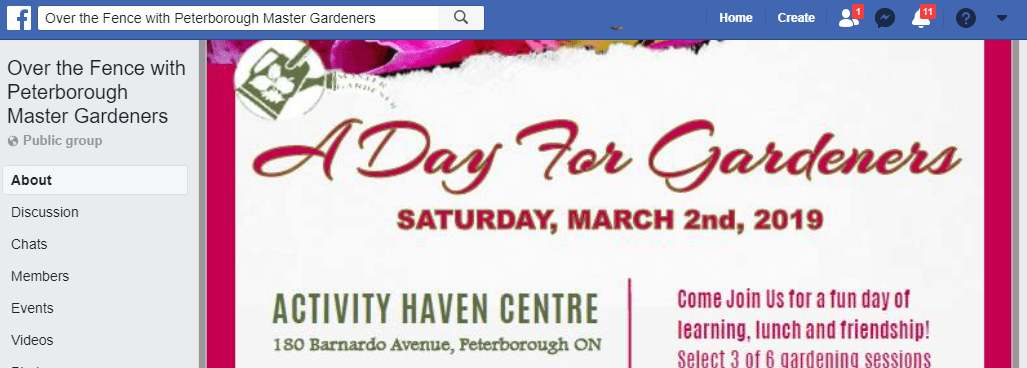
Over the Fence with Peterborough Master Gardeners (530 members)

A local group specializing in plant identification, local events, and gardening questions answered by knowledgeable Master Gardeners. Novice, expert and professional gardeners are encouraged to join and post freely.

Ontario Gardeners (3, 571 members)

This group is for us Ontarian’s to post, chat or ask about plants we have in the yard, pond or house. Check out our files section newly created Oct.2016 and will be added to over time. Happy Gardening!!!

Canadian Gardeners (10,443 members)

This group is for anyone that wants to discuss flower gardens & vegetable gardens that live in Canada. Help others with tips, share your gardening secrets and stories and maybe learn a thing or two yourself! Lots of gardening links, self help and diy posts. Share your favorite gardening books, tools, websites and photographs with your fellow Canadian Gardeners! Add your zone to aid in advise, tips and to give your fellow Canadian Gardeners the idea of conditions you garden in 😊

GardenOntario (2,026 members)

To reach, connect and help educate all members through gardening related articles, videos, live broadcasts, activities and events happening with our societies across Ontario. Affiliated with the Ontario Horticultural Association.

Canadian Succulent & Cactus Hoarders (2,166 members, closed group)

A community place for Canadians who are addicted to collecting succulents and cacti. Ask questions and show off your collection! For now buy/sell/trade posts will be allowed until the group grows big enough that it warrants a separate group.

Plants for Peterborough Canada (657 members, closed group)

Peterborough Ontario Canada – A place to share plants for free. Upload pictures, share tips, get help thinning your gardens, get advice, play the *What on earth is growing in my garden game* offer plants, get plants, swap plants, its allllllllllll about plants! We encourage FREE share. Please save the selling of plants for kijiji. We also encourage you to share photos of your gardens, and upcycling ideas to beautify them!

Garden Deals for Peterborough, Canada (208 members, closed group)

If you know of a good deal on plants or gardening material in the Peterborough, Ontario, area – please post it here. Also – please share if you find unique plants that people may be interested in!!

Beware the Vigorous Plant!

By Suzanne Seryck, Master Gardener

Being the fairly recent owner of a small city garden, I find I no longer have the space for plants that either do not behave, need too much deadheading or pruning, spread too quickly becoming invasive, need to be staked or I’ve simply grown tired of. At least 90% of my garden is full of either fruit trees, shrubs, fruit bushes, perennials or raised vegetable beds. The remaining 10 or so percent contains a patio and a very, very small lawn that my husband tells me has to stay! So needless to say if I buy any new plants I have to give an existing plant or two away (thank heavens for plant sales).

I have a few plants in mind that I am considering replacing this spring so I have spent the last week or so looking through bulb and plant catalogues to see what is new this year. Catalogues are a great place to see what is new and exciting and also to fill the gardening void that generally happens this time of the year. However, I have heard both good and bad stories regarding plants purchased from these catalogues, so it is very much a personal choice. What I did notice though were the many different terms given to what I would describe as an invasive or ‘buyer beware’ plant, especially if, like me, you do not have a large garden.

allium

Allium were described as ‘carefree’. However, if you have ever tried removing hundreds of allium bulbs from a perennial bed that have self-seeded over many years ‘carefree’ is not a term I would immediately think of.

‘Vigorous’ is a term often used in these catalogues, which could mean either that the plant is strong, robust and grows well (which we would all like) or more likely that the plant grows very quickly and will take over your entire garden in a very short time. Examples of ‘vigorous’ plants include false sunflower (Heliopsis helianthoides), knotweeds (Persicaria) and orange trumpet vine (Campsis radicans).

Baby’s breath (Gypsophila) is listed with the description that it ‘readily fills gaps’, whereas bee balm (Monarda) is described as ‘multiplying quickly’.

lily-14254_1280

Lily of the valley (Convallaria majalis), need I say more! I actually inherited this plant in my shade garden and I think I could be digging it out for a good few years. I really do love this plant, but it has to be in the right location and in a bed all by itself. Lily of the valley is described in one catalogue as ‘creating a carpet of flowers’ and in another catalogue as ‘growing fearlessly among tree roots’.

But I think the term most often used to describe a plant that might become invasive in these catalogues is ‘naturalizing’. When I think of naturalizing I think of beds or daffodils or bluebells, but then I am English so that might explain why. Plants included in this category are masterworts (Astrantia), mountain fleece (Persicaria amplexicaulis), false sunflower (Heliopsis helianthoides) and meadow rue (Thalictrum flavum).

Being an avid gardener, some may even say obsessive, there are not many plants that I do not like and all of the plants listed above I have at one time or another grown, and still do. But gardening with only a limited amount of space has changed the way I look at and select plants.

Garden Tech for the Green-Finger Inclined

By Mary-Jane Pilgrim, Master Gardener

Gardening is supposed to be natural, right? Many who enjoy the outdoors and gardening downplay screens and technology and also tend to encourage others to put down the devices and experience what’s in front of them. But what if you don’t know anything about what IS in front of you? Your smart phone or tablet can be quite the gardening companion.

Here’s a selection of apps that can be found in the App Store that will help you know when/where/what to plant, and sometimes more importantly, how to find out what’s already growing in your yard or someone else’s that you admire.

LeafSnap: An Electronic Field Guide — Free (iPhone only)

How many times have you been in a public park or garden and fell in love with the trees, but with no one to ask what they are?  Using visual recognition software, Leafsnap can identify trees from a photo of their leaves alone. I can’t tell you how many times I could have used this!

myGardenAnswers Plant Identifier — Free (iPhone/Android)

With Garden Answers Plant Identifier, you can take a picture of a plant that you want to identify and presto — you’ll get its name and all of the information about it. It’s like having an encyclopedia in your pocket. This is easily one of the best free gardening apps in existence, namely because it can automatically recognize more than 20,000 plants. This app also identifies pests and has a robust Q&A section that covers more than 200,000 of the most common gardening queries.

GrowIt!: Garden Socially — Free (iPhone/Android)

GrowIt allows you to join an enthusiastic community of gardeners, helping you to find inspiration, gather information, and share your own gardens with the world. This app is good if you want to find out what plants will grow well in your local area.  As you find plants you love in their extensive database, you can organize them into projects to help you design your own green masterpiece.

BeeSmart Pollinator Gardener — Free (iPhone/Android)

Want to grow a beautiful garden that also helps the environment? BeeSmart is an app created by Pollinator Partners that helps you choose the best plants for bees that can thrive in your specific location. Win-win.

Gardenate — $1.39 (iPhone/Android)

If you’re looking for a simple calendar for planting garden vegetables that comes with an assortment of useful hints and tips, then you should take a look at this app. Gardenate will be your best companion when it comes to keeping your garden in the best condition. There is information about over 90 plants and herbs, and a calendar to know when it’s the best time for these plants to grow.

garden tech apps