Category Archives: Native Plants

Native Shrubs

By Cheryl Harrison, Master Gardener

In the spirit of adding more native plants to my garden in order to help support diversity, native pollinators and birds, I recently purchased a New Jersey Tea shrub.  Of course, it is also a new-to-me plant so I could not resist!  This made me start thinking about other native shrubs that I could use in my garden….I already have some of the usual non-natives like hydrangea, lilac, forsythia and a few of the dwarf conifers.  But, much to my surprise, I realized that I also have, in addition to the new-to-me New Jersey Tea (Ceanothus americanus), downy arrowwood (Viburnum rafinesquianum) , dogwood (Cornus species) and ninebark (Physocarpus opulifolius)! 

New Jersey Tea – My newly purchased shrub is just a baby….it is barely 13 cm (5 inches) tall but will grow to be about 1 meter (3 feet) tall.  I will need to protect it from the rabbits, who also inhabit my garden, by caging it with chicken wire.  New Jersey Tea prefers full sun and well drained soil.  It produces small white flowers in oval clusters at the branch tips in spring.  It is hardy to zone 4.  Additional information is available here.

Downy Arrowwood – My arrowwood is blooming right now.  It is covered with clusters of tiny white flowers and many native pollinators.  The flowers will be followed by blue-black berries that the birds love.  Arrowwood prefers poor, well drained soil…..ours is planted at the edge of a gravel walkway. It can take part-sun to shade and is hardy to zone 3.  At maturity, this multi-stemmed shrub will be 1.8-2.4 meters (6-8 feet) tall.  Additional information is available here.

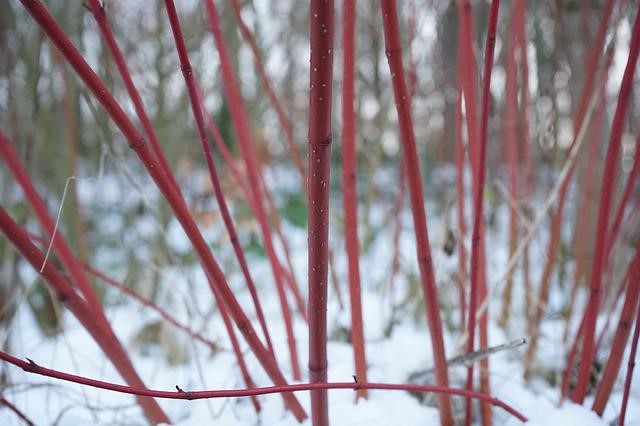
Dogwood – There are a few different species of dogwood native to Ontario including Pagoda dogwood (C. alternifolia), bunchberry (C. canadensis) and Red Osier dogwood (C. sericea).  There are more but this group are hardy to at least zone 5 (Peterborough area).  They vary in height and growing condition requirements.  For more information on dogwood look hereThe Peterborough and Area Master Gardeners also have a fact sheet available on dogwood here .

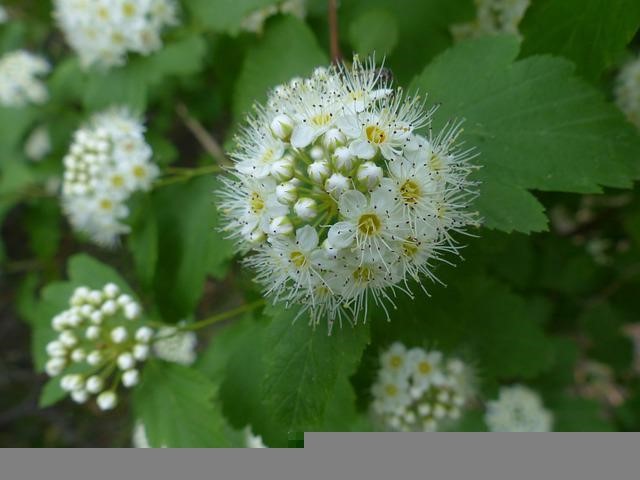
Ninebark – Ninebark is a great native shrub for your garden.  It adapts to lots of different soil conditions and moisture levels including drought once established.  It is hardy to zone 3, has pretty white blooms in summer and attractive fall foliage.  I must admit that ours is planted in good garden soil and is mulched to minimize weeds and for moisture retention so my ninebark has it pretty good.  This shrub does prefer full sun for best bloom production. The Peterborough and Area Master Gardeners also have a fact sheet available on ninebark here.

Remember that all new plants need to be coddled for their first year in your garden so keep them watered and watch for insects or critters that may cause damage.  For me, that is fairly easy because I am often out in the garden admiring my new plants!

For more native plant choices and other pollinator information, check out Pollinator Partnership Canada under Resources.  June 20-26/2022 is Pollinator Week in Canada.  Why not celebrate by adding one or more native plants to your garden?

Planting Trees

By Sharleen Pratt, Master Gardener

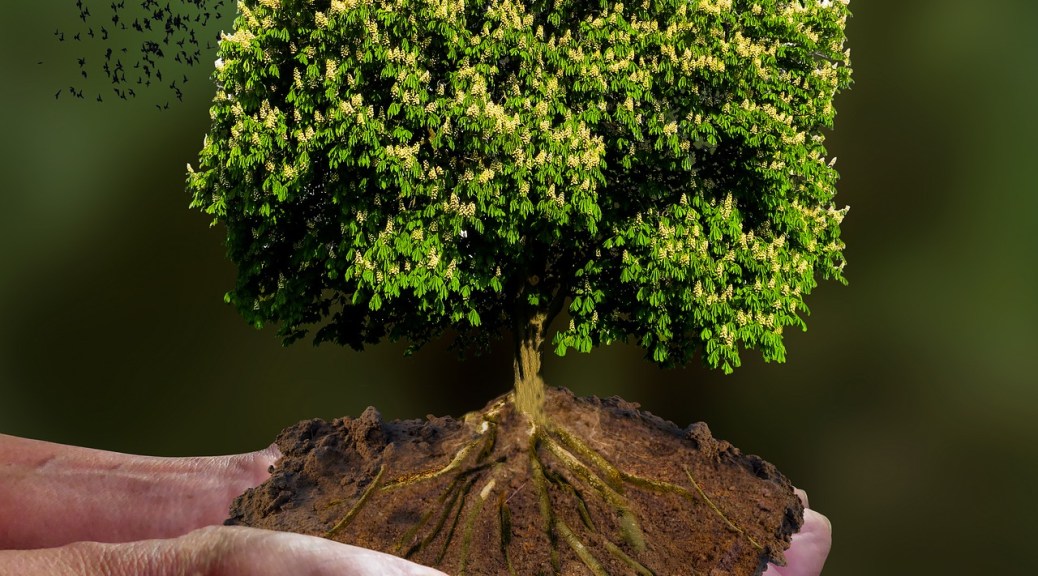
Image Courtesy of pixabay.com

Peter Wohlleben in his well-know book, The Hidden Life of Trees, describes how trees are like families, continually communicating and supporting one another. Trees improve soil and water conservation, moderate climate, increase the wildlife habitat, reduce stress and improve health.

It is imperative we continue to increase the tree canopy in our ever-growing cities.  This became more important after the recent storm that whipped through Southern Ontario and took out so many beautiful trees.

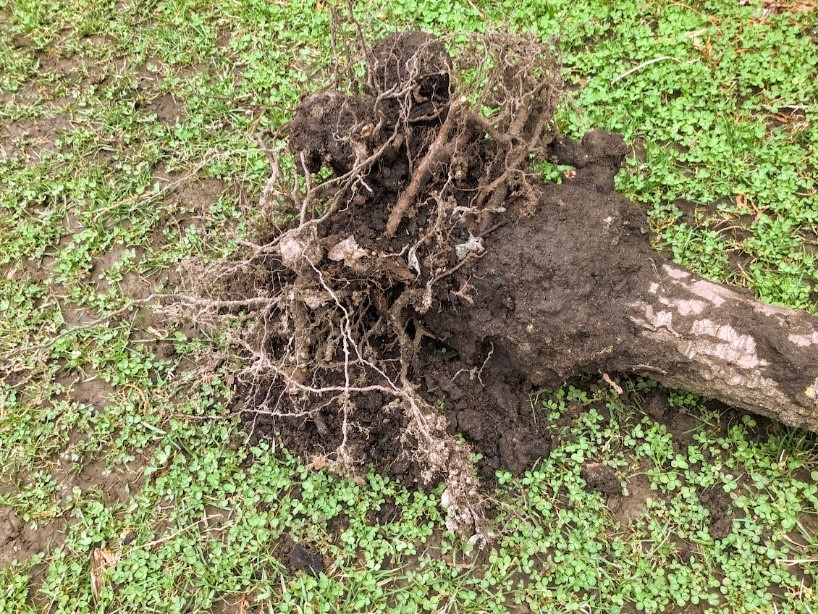
There are many factors to consider when planting a tree and it is easy to make mistakes.  I learned this the hard way this past month when I was able to literally pull a 9-year-old tree out of the ground.  Believe me, I am no incredible hulk!  I made many mistakes when planting that tree; the picture shows it was planted too deep, the roots girdled around the original root ball and by amending the dug hole with compost the tree likely resisted growing roots into the surrounding clay soil.

Image Courtesy of Author

Do your research and purchase a tree that is suitable for your yard conditions: 

  • How much sun and shade you receive each day?
  • What type of soil do you have?  
  • Would you prefer a large tree or one that is smaller and more suitable to an urban setting? 
  • What growing zone do you live in? (Check out this Zone Map if you are unsure)
  • Are you looking for a tree that will attract pollinators?   

I would suggest you consider planting a native tree. Trees that occur naturally in our surrounding area are better adapted to local climate and soil conditions and more resistant to disease. Oak trees are a powerhouse for feeding birds and attracting pollinators and insects, however, they are quite large.  A smaller tree to consider would be an Eastern Redbud or a Fall Witch Hazel.

Here is an article from Landscape Ontario with suggested native trees to consider.

HOLE DEPTH

In well-drained soils, the planting hole width should be two to three times the diameter of the root ball and only as deep as the root ball.  Widening the planting hole produces a hole with a greater volume of loose cultivated soil that allows rapid root growth.  This way roots gain access to a greater volume of loosened soil.  Do not plant the tree’s root flare below the ground.  The root flare should be within the top 5 cm of the soil surface.  Use a brush to find the top of the root flare which is where the structural roots begin.

SOIL AMENDMENT

Remove any grass roots, weeds, rocks or other debris from the planting hole. It used to be believed that you should fill the hole with an organic amendment such as compost, however, recent research has found that this doesn’t improve root development or tree growth and can sometimes be detrimental to tree performance and survival.  It is best to backfill in layers and lightly tamp and water to eliminate air pockets.  Additions of mulch and compost can be surface applied in future years to supplied much needed nutrients.

CREATING A BERM

It is wise to build a 10 cm high berm of soil extending 15 to 20 cm around the periphery of the root ball.  It should be firmed and is intended to keep water from flowing away.

MULCH

Apply mulch such as leaf litter or untreated wood chips evenly at the base of the tree.  It will help to reduce evaporation and suppress weeds.  Be sure to pull the mulch about 15 cm away from the base of the trunk.  The depth should be between 5 to 10 cm. I often see trees planted with mulch piled like a volcano.  This does not allow the water to penetrate to the roots and can also cause damage and disease to the trunk of the tree.

STABILIZATION

Only stake the tree if the roots will not support its height or if it is exposed to high winds. If a tree must be staked, place stakes no higher than 1/3 the height of the tree. Stake the tree loosely so it can move naturally in the wind. This movement will help to increase the tree’s stability.  The staking material should not constrict or rub against the bark of your plant. Remove stakes after roots have established, no longer than one growing season.

LASTLY

Remove all plant identification tags and any trunk protection or packaging material.

Supplemental watering is recommended the first 2-years after planting your tree. A sprinkle with the hose for a couple of minutes does more damage than good as this does not provide enough water to penetrate deep into the soil.  Newly planted trees must be watered regularly until frost.  Also, if water is pooling around the tree, cut back on the watering.

Do not be tempted to add additional fertilizer at this point.  Mineral imbalances can occur and cause more vegetative growth than root growth.

Do not prune the tree beyond removing any dead, diseased or damaged branches.

For further information, check out this Tree Planting Guide from Landscape Ontario.

In praise of the Trillium, our provincial flower

By Mary-Jane Pilgrim, Master Gardener

Most people know of the White Trillium (Trillium grandiflorum) as Ontario’s provincial flower. This is the flower featured on many of our provincial documents, from health cards to driver’s licenses. It was on March 25, 1937 that the Province of Ontario gave the trillium this honour.

Trilliums have three broad leaves, three small green sepals, three petals, and a three-sectioned seedpod. The “tri” in the Latin word trillium refers to these collections of three.

Trilliums are very slow-growing plants; their seeds take at least two years to fully germinate. The plant itself takes seven to 10 years to reach flowering size. After first flowering, it will bloom annually in early spring, with the blooms lasting for around three weeks. Trilliums can live for up to 25 years.

Did you know that the plants are phototropic? This means that the blooms will bend toward the sun and follow it across the sky.

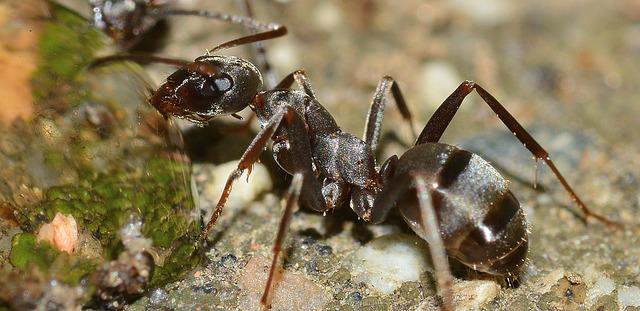
You may not know that ants are involved in the dispersion efforts of the trillium. Ants are attracted to the protein-rich seed sac on the seeds which they eat after carrying the entire seed back to their nests. The actual seeds are not harmed during this process, and are later discarded to grow a new plant in a new location.

As a spring ephemeral, trilliums have a few short weeks in the spring to collect as much sunlight and nutrients as possible to be able to survive for the rest of the year. If trilliums are picked in the height of their flowering glory, they may not be able to collect enough resources to survive.

There’s a pervasive myth that it’s against the law in Ontario to pick or relocate these native plants. In 2009, former Peterborough-Kawartha MPP Jeff Leal introduced a private members’ bill called the Ontario Trillium Protection Act. Although the bill passed first reading, it never became law. If you do relocate these spring beauties or buy them from a garden centre, mulch with leaf litter for best results. Filtered light is best as they cannot tolerate much direct sun. The soil needs to be rich in organic matter, well-drained, and moist.

There are several varieties of trilliums in Ontario, with the most common being the White Trillium. The next common variety in our region is the Red Trillium which is also called “Stinking Benjamin” (Trillium erecta). Why? Go out this spring and find one and take a sniff. You may discover it smells a bit like rotting meat. Yikes! The aroma’s purpose is to attract pollinators, and in this case, the pollinators are green flesh-flies who are out in search of rotting meat on which to lay their eggs. Instead of finding the perfect nursery, however, they end up assisting the plant in its procreative efforts.

Plants are rarely boring, once you get to know them!

A Few of My Favourite Native Plants

by Emma Murphy, Master Gardener

I’ve been gardening for more than 25 years and, like many of you, thrill at the opportunity to discover new plants for my gardens. Over the past few years these have been mostly native plants, as I learn about all the benefits that they bring – here’s just a few examples of why native wildflowers, grasses, shrubs and trees do so much more than just add beauty to the landscape:

  • They support birds, pollinators and wildlife – native gardens attract birds and butterflies and provide habitat and food for native pollinators
  • They increase biodiversity – native plants increase garden health and resilience, and help contribute to a broader effect to nurture and sustain living landscapes
  • They’re tough and low maintenance – because they’re adapted to grow in their native range, locally native plants tend to thrive with little to no care and conserve one of our most precious resources – water
  • They help you save money AND create a healthier environment for people – native plants don’t require expensive fertilizers and chemicals, or toxic pesticides and herbicides
  • They help with climate change – no lawn mower costs or exhaust! and long lived native trees help store carbon dioxide
  • They make gardening easier – if you select the right native plants for your garden, you don’t have to modify or amend your soil

I’m just going to share three favourite native plants in my garden, with hopes that you may consider them for yours.

Culver’s Root (Veronicastrum Virginicum)

Culver’s Root offers a strong upright, architectural accent to any perennial garden that attracts attention from both people and pollinators!! It can reach heights of 5 feet if it’s happy (although mine hasn’t achieved that yet) and the spikes of white flowers open from the bottom up in mid-summer. It has finely toothed leaves that are lanceolate and occur in a whorl of 3 to 8 leaflets. The inflorescence has several wand-like flowering spikes that resemble an elegant candelabra.

Culver’s Root grows in zones 3-8, in full sun to part shade but it does like moist, well-drained soil. The seeds are so tiny that they should be directly sown on the soil surface in fall or in the spring – I’ve tried winter sowing some this year so we’ll see how that goes.

The plant really has no other synonyms; apparently the name was derived from a Dr. Coulvert, a late 17th to early 18th century pioneer physician who found laxative properties in the plant. More information here.

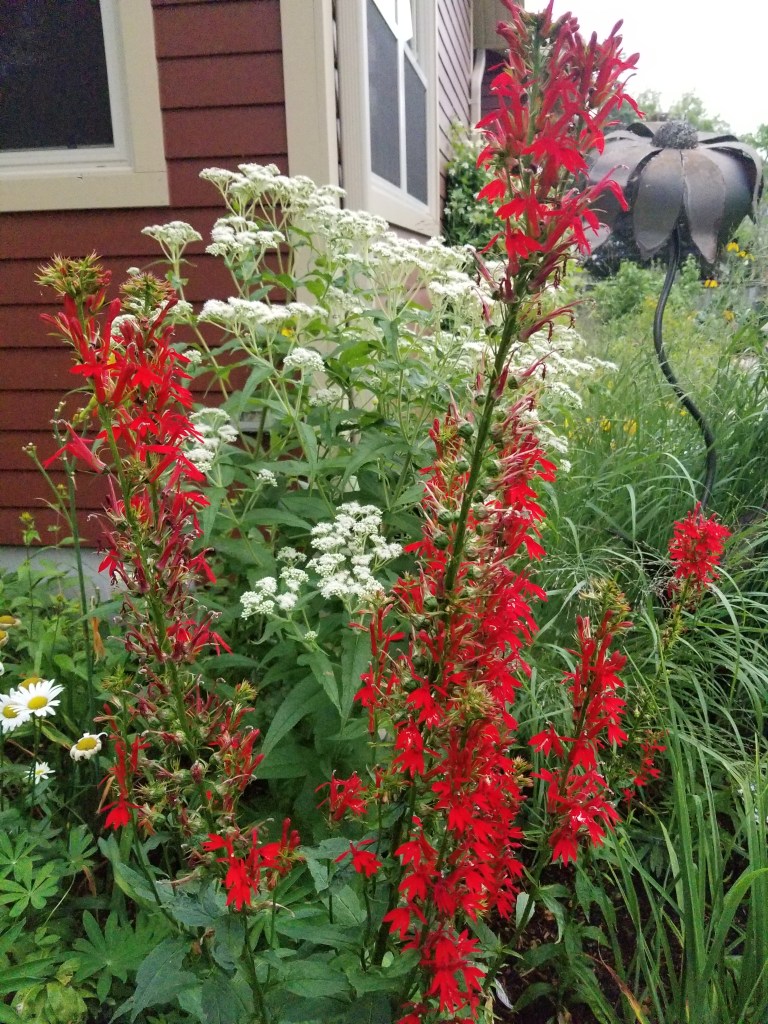
Cardinal Flower (Lobelia cardinalis)

Who doesn’t love bright red flowers in the garden? For those who say native plants can’t be showy I give you this amazing example to disprove that theory. Named for its scarlet red flowers, its tubular flowers are a magnet and important nectar source for hummingbirds and swallowtail butterflies.

Like Culver’s Root the flowering spikes open from the bottom to top and bloom for several weeks. They grow best in moist, rich soils in full sun to partial shade.

I’ve only had my plants for two seasons but I understand that the parent plants will not persist after a few years, so it’s important to either let it go to seed (so it reseeds naturally) or collect seed – this is another plant where I am trying out winter sowing (native plants are a great choice for this propagation method). While many sites will tell you it needs a really moist site mine have done fine, although I do keep the plants well watered in drier times. More information here.

Green Headed Coneflower (Rudbeckia laciniata)

Also commonly called Cut Leaved (or Cut Leaf) Coneflower, this is the straight species, not to be confused with the double cultivar many of us have in our rural gardens (often called the Outhouse Plant – or Rudbeckia laciniata “Golden Glow”).

Not a small plant (it grows 4 to 5 feet tall in my garden), it clumps and spread by rhizomes so only one to consider if you have the space! Its bright yellow, daisy-like drooping flowers with green centre disks (which can be about 3 inches across) bloom later in the summer season. It prefers moist soil, but grows well in average, medium, well-drained soil in full sun to part shade. In nature it is often found in woods, meadows, streambanks, and roadside ditches.

The Cherokee natives call this plant Sochan and the spring basal leaves are a traditional Cherokee food. Butterflies are attracted to nectar from the blooms and songbirds, especially American Goldfinches, eat the seed in the fall. It is moderately deer resistant. More information here.

So I hope you’ll take the opportunity to seek out native plants to add to your garden, finding ones that are native to your region and appropriate to your conditions. Happy Gardening!!

Year of the Garden 2022

By Cheryl Harrison, Master Gardener

Canadians love to garden!  2022 is the Canadian ornamental sector’s centennial and has been declared by the Canadian Garden Council as the Year of the Garden.  For more information, check Year of the Garden.

Our gardens became even more important to us over the last couple of years while we were sheltering at home due to the covid pandemic.   2022 is a year for us to share our gardening passion and knowledge.  It is the mission of the Peterborough and Area Master Gardeners to inform, educate and inspire the residents of Peterborough and area to create healthy and vibrant gardens, landscapes and communities through the use of safe, effective, proven and sustainable horticultural practices.  Peterborough has even declared itself as a garden-friendly city as part of the Year of the Garden festivities!

So, think how you can “live the garden life” … maybe consider gardening indoors with house plants, or in containers on your balcony or create a new garden in your yard.  You could join your local Horticultural Society to learn more about plants and then perhaps become more involved in the community.  Your next step might be to become a Master Gardener!

The Peterborough and Area Master Gardeners will celebrate the Year of the Garden by partnering with the Peterborough Public Library to renovate the gardens around their Aylmer Street building.  The gardens had originally been planted with invasive plants.  We will remove the invasives and replace them with native plants from Grow Wild, Native Plant Nursery.  The Peterborough Kawartha Association of Realtors (PKAR) are providing some much needed sponsorship funding for the project.  We are planning to involve the younger crowd in some of the planting along with our great group of adult volunteers.  We hope that, with some growing time, the gardens will become a haven with native plants and local pollinators and a beautiful spot for human visitors to rest. 

June 18/2022 has been designated as the Year of the Garden day in Peterborough.  The opening of the newly planted gardens at the Peterborough Public Library will be on that date from 10 until 2 pm.  There will also be a story walk for children, a Master Gardener advice table and more.   Another great event happening that day is the Peterborough Horticultural Society’s garden tour.  Tickets will be on sale soon for the tour.  Follow the Peterborough Master Gardeners and the Peterborough Horticultural Association on social media for more information.
Am I a Problem?

By Cheryl Harrison, Master Gardener

Well, yes … I am, but I have a plan.  February 28-March 4/22 is National Invasive Species Awareness Week.   This is an international event whose purpose is to raise the awareness of invasive species.  “Invasive terrestrial plants in a forest ecosystem can be trees, shrubs, or herbaceous plants that have been moved from their native habitat to an introduced area where they are able to reproduce quickly and crowd out native species. These plants are introduced and spread by infested packaging material, seed dispersal by both environmental and human sources, or by escaping from gardens.”  Also look at Ontario’s Invading Species Awareness Program  for more information.
Biodiversity is essential to the continued healthy life of an ecosystem.  Invasive plants can quickly destroy it and humans require the natural resources found in a healthy ecosystem.  We need food and we need water to survive.  We are a part of the ecosystem too.  Doug Tallamy says it best in his book, “Bringing Nature Home” where he writes “…ecosystems with more species function with more efficiency, are better able to withstand disturbances, are more productive, and can repel alien invasions better than ecosystems with fewer species.”

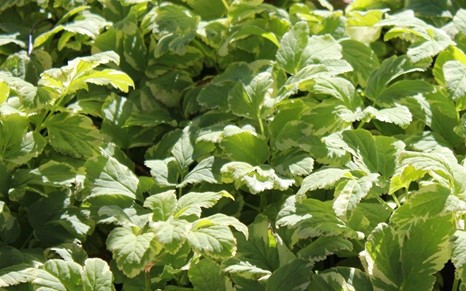
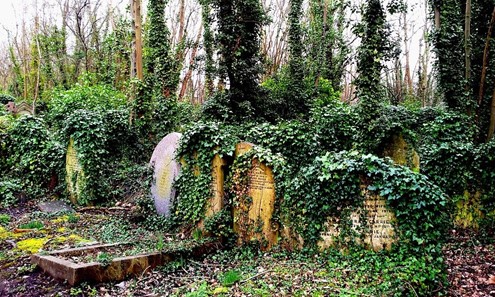
I became aware of invasive species about 15 years ago when on my walk to work, I noticed some English ivy (Hedera helix) growing in a small wooded area.  Then, I realized that English ivy had totally carpeted that area.  There were no other plants!  A couple of years later, I saw the same thing but this time, it was a larger forested area and the culprit was goutweed (Aegopodium podagraria).  Since then I have read more about invasive plants and, sadly, now often see problem areas. 

So, back to my plan.  I was aware of some of the invasive herbaceous perennials so had steered away from them.  See terrestrial plants and  aquatic plants for more information.  However, my husband and I are tree lovers and have a rural property so we frequently indulge in purchasing new trees to add to our collection.  Unfortunately, we ended up with two Norway maple (Acer platanoides) trees, two burning bush (Euonymus alatus) and a barberry (Berberis thunbergii) shrub.  This year, I plan to convince my husband that they must go.  I would like to replace the trees with two red maple (Acer rubrum) or perhaps a couple of sugar maple ((Acer saccharum).  The burning bush will be replaced by a couple of native viburnum maybe nannyberry (Viburnum lentago) and the barberry, well, it will be replaced by a native bush honeysuckle (Diervilla lonicera).  See Southern Ontario Grow me Instead Beautiful Non-invasive Plants for Your Garden. This is a great resource.  It includes some native and some non-native plants to include in your garden plans.

I am inspired to be a better gardener every time I write a blog for the Peterborough & Area Master Gardeners.  I hope that you will have a look at some of the links above and below and be inspired too.  Please only use non-invasives in your gardening plans this year. 

I also recommend reading, or re-reading, a blog by Laura Gardner, Master Gardener in Training posted on February 2/2022: Expanding Your Native Garden Palette.  For more information on what to do if you have a problem, see Best Management Practices Data Base

A new group on Facebook is the Canadian Coalition for Invasive Plant Regulations. The group is very concerned about the spread of invasive plants in Canada and would like to do something about it.

Expanding Your Native Plant Palette

By Laura Gardner, Master Gardener in Training

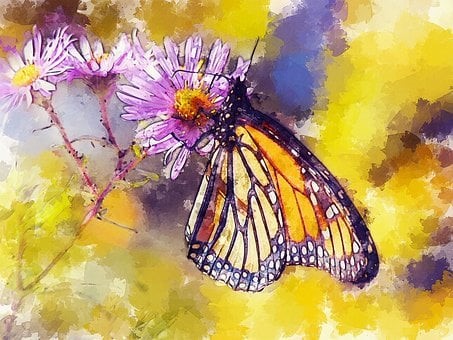
Last year I posted about Doug Tallamy’s most recent book and talked about how Quercus (Oaks) are the number one “keystone plant species.” A keystone plant is one that supports the entire life cycle of many different wildlife species—all critical to the food web. The list of keystone plants is actually quite short as only 14% of native plants support 90% of butterfly and moth species.[i] Some of these, like Danaus plexipplus (Monarch Butterfly), are specialists in that they require host plants from the genus Asclepias (Milkweed) to complete their lifecycles. Recently I learned that while most native bees are generalists and they seek out a range of plants for pollen, there are certain specialist native bees that are restricted to either a single plant genus or to a few genera. Horticulturist Jarrod Fowler determined that of native bees in the Northeastern United States, only 15% restricted pollen foraging to 33 plant genera and only 201 native host plants.[ii]

Bombus (Bumblebee) on Asclepias incarnata (Swamp Milkweed)

As examples of specialist bees, authors Lorraine Johnson and Sheila Colla mention in their book A Flower Patch for the Rusty-Patched Bumblebee: Creating Habitat Gardens for Native Pollinators in the Greater Toronto Area, two whose sole pollen source plants include Oenothera (Evening Primrose) and Monarda (Bee Balm): Lasioglossum oenotherae (Evening Primrose Sweat Bee) and Dufourea monardae (Bee Balm Sweat Bee). The former is considered vulnerable and the latter is imperiled in Ontario. A recent online presentation by biologist Heather Holm indicated that there are also specific plants that are the sole providers of pollen to Bombus (Bumblebees). For example, Monarda (Bee Balm) provide nectar to them but they do not provide pollen. Pollen is a necessary protein source as is also nectar as a carbohydrate source. Other plants are required for their pollen sources. This list can help as a guide to some of these.

When I first started gardening, I planted different Milkweed and it was all for the endangered Monarch Butterfly. I think I was influenced more by aesthetics and an influential marketing campaign than anything else. While I will continue to have these plants in my garden and continue to support Monarchs, I have become more thoughtful in my choices—especially since the percentage of native plants that are supportive is so small. What can we do to improve our native garden palettes? A good approach is to choose a wide range of geographically appropriate native plants from the top keystone genera that have flowers of different shapes, colours, season-wide blooming periods, and provide nectar and pollen. Plants that historically or genetically evolved in our region will be the most supportive of the native wildlife in our region. Consider also adding some individual species that support specific specialists. As with all plants, you still need to consider whether your planting site is suitable [e.g., light level, soil type (loam, clay, sandy), pH (acidic, alkaline), moisture, drainage, etc.].

Danaus plexippus (Monarch Butterfly) on Asclepias incarnata (Swamp Milkweed)

To help, here are two lists provided by the National Wildlife Federation that can apply to gardeners of the Peterborough area—one for northern gardens in the Northern Forests ecoregion and one for southern gardens in the Eastern Temperate Forests ecoregion. There are also two other related lists for Eastern Temperate Forests and Northern Forests—these also provide examples of ferns, vines, and grasses that are host plants and/or provide nectar and pollen. Heather Holm has also put together a wonderful list of native trees and shrubs for pollinators with their flowering periods. There are a few plants on a couple of the lists that are not found in nature in Peterborough County, however, the majority are.

Euchaetes egle (Milkweed Tussock Moth)

You may be surprised to see Solidago spp. (Goldenrod) listed as the top flowering keystone plant genus. There are 25 species native to Ontario and some of them are easily managed and do not spread like the ubiquitous S. canadensis (Canada Goldenrod) that you tend to see along roadsides and in fields. Last year I added S. caesia (Blue-Stem Goldenrod) to my garden and this year I am looking forward to adding S. rigida (Stiff Leaf Goldenrod) and S. flexacaulis (Zig-Zag Goldenrod). What will you be planting this year?

For Expanded Learning

Johnson, Lorraine and Ryan Godfrey. Get to Know Goldenrod. Online: https://www.toronto.ca/wp-content/uploads/2021/09/97fc-DS-21-0224-GoldenRodFactsheetDigital.pdf

Holm, Heather. Pollinators of Native Plants: Attract, Observe and Identify Pollinators and Beneficial Insects with Native Plants (Pollination Press, 2014).

Ohio State University’s online learning program: Tending Nature: Native Plants and Every Gardener’s Role in Fostering Biodiversity

Pollinator Partnership Canada. Selecting Plants for Pollinators: a Guide for Gardeners, Farmers, and Land Managers in the Manitoulin-Lake Simcoe Ecoregion. Online: https://pollinatorpartnership.ca/assets/generalFiles/Manitoulin.LakeSimcoe.2017.pdf


[i] Narango, D.L., Tallamy, D.W. & Shropshire, K.J. Few keystone plant genera support the majority of Lepidoptera species. Nat Commun 11, 5751 (2020). https://doi.org/10.1038/s41467-020-19565-4

[ii] Fowler, Jarrod. “Specialist Bees of the Northeast: Host Plants and Habitat Conservation.” Northeastern Naturalist 23, no. 2 (2016): 305–20. https://www.jstor.org/stable/26453772.

Are You in the Zone?

By Cheryl Harrison, Master Gardener

Gardeners are used to seeing the “zone” as part of the information provided on the label of most perennial plants, trees and shrubs purchased from a nursery.  Some labels will list a zone with the corresponding temperature in brackets afterwards.  This seems like an easy way to determine if your chosen plant will successfully grow in your garden–you will need to know the average lowest winter temperature, in your region, then figure out your zone.  You then just buy the plant labelled with your zone for success!  Easy, right?  Yes and no!

In Canada, the original 1960’s plant hardiness zones were based on information gathered at 640 weather stations across the country along with the survival results of selected trees and shrubs.  In 2012, revised maps were released using elevation, more locations and more environmental details resulting in a hardiness index which corresponds to a zone .   At present, there are 13 zones ranging from 1-13.  You may also see an “a” or “b” beside the number.  This indicates a slight variation within that region. See Plant Hardiness Zone by Municipality to find your zone.

Zone 5, author’s garden.

In the USA, the system is different.  Again, there are 13 zones ranging from 1-13 and  “a” or “b” indicates variation within the region. See US Plant Hardiness Zones.   However, the US system is only based on minimum temperature and no other factors.  You may read about a plant grown in the US and designated US zone 5.  A US zone 5 labelled plant may require warmer winter conditions than it’s corresponding zone 5 labelled Canadian plant.  Bottom line, US zones may not be the same as Canada’s.

Canadian data is based on previously collected information but we know that the weather does not always follow past patterns — it can, and will, fluctuate (e.g. freeze/thaw cycles).  There may be microclimates (see Microclimate in Wikipedia) in your own gardening space.  Good gardening practices (e.g. soil preparation)  will contribute to the successful growth of your plant.  Plant survival and growth depends on your gardening expertise and knowledge.  The zone is just one indicator of whether, or not, the plant that you are contemplating will grow well in your garden.  Oh, and Peterborough is a Canadian plant hardiness zone 5 b.

Tips: 

#1 The plant hardiness zone site now can be used to explore where the specific plant that you are thinking about purchasing will grow through the “Species-Specific Models and Maps”.  It does this by creating a “climate profile” of the plant and then mapping where it will grow in Canada.  These are preliminary maps but click here to try it out.

#2 Grow native plants!  Native plants are specifically well suited to an area especially if you can purchase locally grown plants or find locally sourced seeds. 

#3 Consult local nursery staff and your knowledgeable fellow gardeners.  They will know what will successfully grow in your area.

#4 Experiment!  If there is a plant that you really must have, but the zone is off a little…..try it.  You will need to choose a protected location for planting and probably baby it along but sometimes it may be worth it. Talking to other knowledgeable local gardeners may be especially helpful….someone may have successfully grown that special plant in their garden and may share their growing tips with you!

Zone 5, author’s garden.

Mushrooms in the Wild

By Mary-Jane Pilgrim, Master Gardener

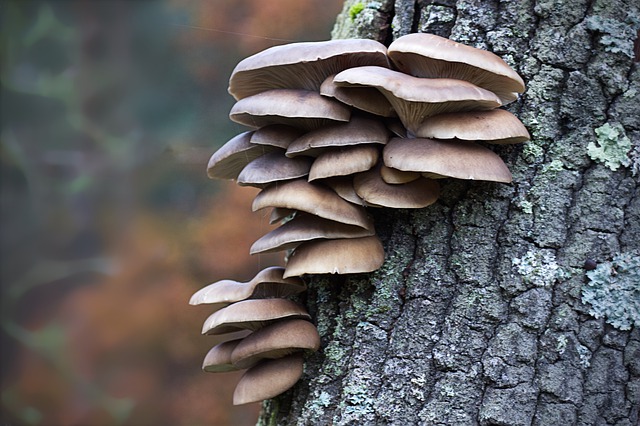
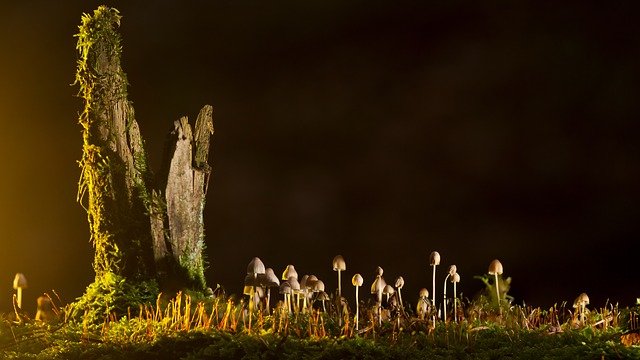
Go for a hike in the woods in November, and you’ll see plants you’ve probably never seen before. With the wetness of fall comes an entire forest of miniature fungus elements of many different shapes, sizes and colours. Some can be eaten, others don’t taste very good, some will make you sick and a small number of them will kill you. In general, the types of trees in the forest will determine what fungus and hence what mushrooms will grow there.

Mushrooms are the fleshy, spore-bearing fruit of various fungi. They are generally short-lived. They can emerge from the ground, expand, produce spores, and die back in a matter of a few days. Some are as big as dinner plates and some as small as pinheads.

This fall, myself and two active friends have been going hiking in different parks, conservation areas and public wild spaces in our area. Whenever we see a new mushroom, we generally stop and take a closer look and we’re often amazed at what we find. In additional to the white, brown and sometimes orange mushrooms, we also find different mosses and lichens. We often taunt each other to try to eat the different mushrooms, but just in jest — recognizing the danger of improper identification.

Mushrooms play an important role in our ecosystem. They are capable of decomposing pretty much any material (plant or animal) in the woods and breaking it down into the primary components of forest soil; providing nutrients that feed the plants growing in it. Many animals rely on mushrooms for food, especially squirrels and other rodents. Slugs also dine on mushrooms, and certain types of flies spend their whole lives on, and in, mushrooms.

Mushrooms develop from a mycelium; a mass of threadlike structures that make up the main part of the fungus. It is usually embedded in soil or wood. These mycelia often form connections, called mycorrhizae, with the roots of coniferous trees and other plants. Unlike plants, mushrooms cannot synthesize their own food from the sun’s energy. They lack chlorophyll – the substance which permits plants to use sunlight to form food. Mycorrhizae assist the plants around mushrooms in absorbing water and nutrients, and in turn, the fungi receives some of the carbohydrates the plant produces through photosynthesis — it’s a symbiotic relationship.

Most interesting to me are the mushrooms that grow in rings. Recently, while hiking the “UpTown” trail in HaroldTown Conservation Area east of Peterborough, we spotted several large rings of mushrooms and wondered how and why they were growing like that. Turns out that when a mushroom spore lands in a suitable location, the underground roots grow out evenly in all directions. As the fungus grows and ages, the oldest parts in the center of the pile die, creating a circle. When the fungus roots produce its mushrooms, they appear above-ground in a ring. The ring continues to grow outwardly, eating up all of the nutrients in its path, and leaving behind nutrient-rich soil.

There are edible mushrooms in our forests like chanterelles, morels, and porcini mushrooms. Also to be found from the fungi family are edible puff balls. Foraging is prohibited in Ontario’s provincial parks without proper authorization and also in conservation reserves, unless the forager is harvesting for personal consumption. In Toronto, foraging for any purpose is illegal in city parks and natural spaces. The Ontario Poison Centre views foraging as an “extremely dangerous” hobby because the difference between safe and toxic mushrooms can be microscopic.

Warning: Never consume a wild mushroom unless you are certain of its identity and edibility. Do not attempt to identify a mushroom from comparing photographs alone. Check out all the characteristics and if in any doubt, do not eat them.

Foraging aside, my suggestion after my experiences this fall is to get out and hike in the forest before the snow falls because there are still thousands of mushroom creatures along the forest floor in different shapes, sizes and colors. It’s a whole new garden in the fall once most of the green has disappeared. Take a camera along with you!

Resources:

https://www.tvo.org/article/where-the-wild-things-are-foraging-in-ontario

https://www.thecanadianencyclopedia.ca/en/article/wild-mushrooms-in-canada

Not Your Everyday Goldenrod

By Cheryl Harrison, Master Gardener

I was recently at a market where a local garden group was selling some plants including many native plants. I noticed a striking goldenrod. I remarked to one of the vendors that it still seems odd to me to see goldenrod for sale when it is so common in rural Ontario. The vendor rightly chastised me because this goldenrod was not your very common goldenrod (Solidago canadensis), it was Gray Goldenrod (S. nemoralis) . The vendor went on to describe some of the positive attributes of this plant. I have to say that the bright yellow, fluffy flowers were beautiful!

This market interaction set me thinking more about the native varieties of goldenrod, or Solidago, species. There are over 100 species of this perennial native with over 25 being found in Ontario. This plant often gets bad press as being a plant whose pollen causes allergies but the likely culprit is ragweed (Ambrosia species). Ragweed and goldenrod bloom at the same time and are often found growing in the same areas. Goldenrod’s lovely yellow flowers (note that there are a couple of Ontario species with white flowers) are attractive to bees and butterflies. They serve as a good source of nectar in the fall and their heavy pollen grains attach easily to the bodies of pollinators. Ragweed flowers are green, do not produce nectar and produce large amounts of light pollen that easily becomes airborne … hence your sneezing and your itchy eyes.

Solidago canadensis, author’s garden

Goldenrod is an easy keeper in the garden. It can grow in a variety of soils, many prefer sun but some grow well in part shade or shade and most prefer average moisture but some can grow well in very moist soil. Goldenrod spreads via seed and through rhizomes (horizontal underground stems). Some species (Tall goldenrod (S. altissima), Canada goldenrod (S. canadensis), and Giant goldenrod (S. gigantea) can quickly take over a small garden. These may be grown in a pot , in a bordered area or in that hot dry area of the garden where not many other plants will grow. This will help to keep them in check.

Goldenrod can be quite a tall plant and is very pretty in drifts in the garden, as a background plant or even as a focal point. I started a woodland garden this year and planted a zigzag goldenrod (S. flexicaulis) which grows in full shade. Goldenrod is great for adding colour to the fall garden and when grown alongside beautiful purple asters (for example, New England Aster (Symphyotrichum novae-angliae), the display is stunning!

Goldenrod has many positive attributes from its beautiful, bright yellow flowers and its tall upright growth habit to the many species that will grow in a variety of conditions including that hot, dry spot in your garden.

Goldenrod may be purchased at most native plant nurseries or grown from seed. For more information on the different species of goldenrod, please check here. For more information on growing golden rod, please check here.