Category Archives: Climate Change

Mother Nature – Good or Bad?

by Rachel Burrows, Master Gardener

There have been several instances lately when terrible “natural” things have occurred. The disastrous wildfires, the tragic floods in Texas and many more. Are they due to Mother Nature or is something else at work here?

I live close to the Warsaw Caves Conservation Area in Douro Township and walk there often. The derecho storm of 3 years ago caused enormous damage — trees were downed and uprooted in the path of the powerful wind and torrential rain. You could call this a disaster and blame Mother Nature.

However, the following spring I had never seen such stunning swathes of white trilliums (Trillium grandiflorum) where the trees had been. Trilliums prefer semi-shade, particularly under maples and aspens and it had been too shady under the evergreens. Mother Nature compensated with an amazing display where the trees had been uprooted and destroyed.

Spring trilliums

I was walking at the Caves recently and spotted 5 foot tall trembling aspens and some young maples that had taken advantage of Mother Nature’s help in providing the extra light to flourish.

This last winter was colder and snowier than we have had for several years. You might think that we would have lost some of our wonderful wild flowers. Not a bit of it.

Mother Nature put on an amazing display of our native red columbines, (Aquilegia canadensis), harebells (Campanula rotundifolia), violets (both purple and yellow), wild bergamot (Monarda fistula) and many more. We may have grumbled about the cold and snow but Mother Nature put on wonderful displays as a result.

The wildfires have caused enormous damage and it’s easy to blame Mother Nature. However, most of them have been caused by humans and the majority are caused by warming temperatures.

Mother Nature does her best to restore the landscape with plants such as willow herb ( Epilobium augustifolium), also known as fireweed. The indigenous people have used this herb as an anti-inflammatory and antioxidant.

Fireweed

Something I learned this week is that since lowbush wild blueberries (Vaccinium angustifolium) like an acid soil they flourish in areas after a fire has gone through. In fact, wild blueberries are being planted as firebreaks due to their low fuel load and fire resistant properties and the ability to be managed through controlled burns and pruning.

Wild blueberries

Mother nature is amazing and wonderful and we humans seem to do our best to work against her. We tend to blame Her for many so called “natural” events when most are caused by our polluting habits. Climate change is real and although Mother Nature does her best to compensate for the results, we need to do more to help her.

If you like to enjoy Mother Nature at her best, visit many of the wonderful conservation areas and parks that are available to us. Take a few precautions to guard against bites from black legged ticks as they are the primary carrier of Lyme and other diseases. They are particularly bad in April, May and June but due to our warmer winters they can be found year round. Wear long pants tucked into socks and long-sleeved tops, and check yourself carefully after walking in fields and woods.

Watch out for the Black legged tick

Overall Mother Nature is good, so get outside and enjoy all the wonderful things that she has given us and leave the places as you found them, take your garbage home and don’t be tempted to dig up any plants!

For More Information

Peterson’s Field Guide to Wild Flowers ( North and Central North America)

Study by the National Research Council of Canada and the Kineepik/ Metis local 9 ( wild blueberries as firebreaks)

Climate change, ticks and Lyme disease risk in Canada – Public Health Agency of Canada

Searching for Rain – Rethinking the Future of our Gardens

By Emma Murphy, Master Gardener

Heat. Humidity. Thunderstorms but no real rain. Dry soil.

cracked soil and dry leaves

What I wouldn’t give for a week of solid, consistent rain in our gardens. After the March ice storm, followed by a cool, wet spring and high water conditions until May, Mother Nature turned the water faucet off and we haven’t had solid rain for what feels like months.

I rarely have to water our established perennial gardens, which are a mix of native and non-native plants, but this month has been the exception.

So it’s time to think about the future. What can we do so our gardens survive (and thrive) during future dry or drought conditions?

Maintain Healthy Soils

Good soil is the foundation for good plant growth. Anything you can add to your soil like compost or other organic matter will make it easier for roots to penetrate deeper, creating more expansive root systems that can seek out water and nutrients. Check out Master Gardener Sharleen Pratt’s previous blog.

The result? Healthier, more drought-resistant plants. Good soils are better able to absorb surface water runoff, minimize erosion, and access nutrients and sediments.

hands holding soil with small plant seedling

Think About Future Plant Selection

Evaluate your plants for their resistance to dry conditions or drought; look for new plants (hey, who doesn’t want more plants?) that are identified as drought-tolerant or drought-resistant. Group plants according to how much water they need. Ask your local garden centre or nursery staff which plants they recommend.

Consider incorporating more native plants, which generally adapt better, have lower water demands, and fewer pest problems, plus of course the many benefits they provide to our pollinators and wildlife. In Our Nature has some great ideas.

bumble bee on native purple asters
Bumblebee on native asters

Use Mulch

Mulch reduces evaporation, moderates soil temperature, and inhibits weed growth. It is estimated that three quarters of the rain falling on bare soil is lost to plants through evaporation and runoff.

Use compost, wood chips, bark nuggets, shredded bark mulch, shredded leaves, or any other organic material to cover the surface of the soil at least 5 cm in thickness. More info and a deeper dive here.

shredded bark mulch
Shredded wood mulch

Water Well

Long, deep watering encourages roots to go deep down in the soil to where it is moist and a lot cooler. Water less frequently but for longer periods, so water reaches deep into soil. Good thorough watering promotes healthier plants.

Water only when necessary. Most plants will normally wilt in hot sun and then recover when watered. Also, a dry surface is not always a sign of water need. The surface generally dries out first and is not a true indicator of what is going on down deep near the plant root. Make use of a hand trowel or your fingers to check for moisture.

Weed Management

Weeds will compete with your plants for moisture and nutrients. Keep your gardens and areas beneath trees and shrubs weed free. Once the weeds are eradicated, apply mulch.

Consider Alternate Water Collection and Distribution Methods

Water harvesting is a great way to use water from your home’s roof and direct it onto the landscape, where the soil becomes your “holding tank.” The best example is using a rain barrel – we have various rain barrels and tanks in our garden and they are a great investment.

You can also practice ‘passive’ water harvesting by creating depressions that fill with water from the roof runoff or formal rain gardens, both of which help with stormwater runoff issues. Peterborough Greenup Rain Program

Investigate use of soaker hoses or other irrigation techniques using timers, which keep water on the soil and reduce losses by evaporation. Adjust watering frequency and amounts based on season, temperature, and amount of rainfall. Overhead watering uses more water and encourages fungal diseases.

rainwater barrel beside house
Rainwater barrel and water diverters – check out Rainbarrel.ca for location of sales

Practice Water Conservation Everywhere

Not just in your gardens. Water is our most valuable resource. Learn how to reduce water use throughout your house and gardens. The Simple Guide to Water Conservation and Make Every Raindrop Count.

water droplets on leaf

What Zone Am I?

by Christine Freeburn, Master Gardener

Having just come back from places where tropicals are growing wildly and flowers are blooming, I wanted to discuss growing zones and the importance of knowing your zone for overwintering plant success of perennials, trees and shrubs.

Plant hardiness zones can be a confusing subject. In Canada, we generally use the USDA (United States Department of Agriculture) system because it is the one we often see on labels of the potted plants we purchase at greenhouses and big box stores.

The USDA system was designed in 1960, updated in 2012 and again in 2023. These hardiness zones are determined as “geographic areas that have an average annual minimum temperature of a certain degree.”  No other factors are taken into consideration. There are 13 zones with zone 1 being the coldest and zone 13, the warmest.

Natural Resources Canada has their own system which uses factors that include the number of frost free days, amount of rainfall, snowfall, and wind as well as mean temperatures in the coldest and warmest month. There are 9 zones. Interestingly, Ontario has 7 of these zones.

To complicate things further, there are also ‘a’ and ‘b’ zones. Zone 3a is colder than Zone 3b.

When you look at the government of Canada site, you will see zone dates from 1961-1990 and then an update of 1981-2010. In most cases, zones have moved by at least half a zone. In 2024, Natural Resources Canada was to release an updated version. At press time, I did not find an update.

Plants are described as being hardy to a zone #. If a plant is listed as zone 6, it will survive in Zone 6 or higher. If you live in Zone 4, and try to grow and overwinter a Zone 6 perennial, you will probably not be successful. You are better off to look at lower numbered zones from what your area suggests, to be sure a plant is going to survive and be robust.

Reading plant labels and buying plants that are zone appropriate will help you to have more overwintering success. You will notice on most labels the zone is the USDA system. The label may say “perennial” but look at the zone. A plant can be a perennial…..but only in Florida (Zone 8 or higher).

Other factors for overwintering success include snow cover, wind, and humidity. Snow cover is a great insulator, wind can cause windburn, humidity will help plants stay hydrated.

With climate change happening, our Peterborough area has changed from 5a to 5b which means our average annual minimal temperature has moved from -26.1C to -23.3C.

Below are some towns and cities and their current zones:

  • Bancroft – Zone 4a ( interesting to note, this zone did not change in the update)
  • Haliburton – Zone 4b
  • Port Hope – Zone 6a
  • Pickering – Zone 6a
  • Hamilton – Zone 6b
  • Thunder Bay – Zone 3b
  • Lakefield, Lindsay, Norwood, and Ennismore are all the same as Peterborough’s – Zone 5b

Things to Remember

  • Canadian and American systems are not the same. For instance, Zone 5 under the USDA system should be considered Zone 6 in Canada
  • You can stretch the zones, if you have a micro climate or spot protected from wind, good snow cover and a milder winter

So depending on your gardening confidence, you can stick to Zone 3 or 4 perennials for zonal success or be adventurous and try that beautiful Zone 6 perennial.  Just remember to read your labels and check your zones.

Resources

Hardiness Zone Maps

Canada Plant Hardiness Maps

5th National Climate Assessment and an Update on the Plant Hardiness Zone Map – The Garden Professors

Plant hardiness zone maps are not created equal

The Differences Between US and Canadian Plant Hardiness Zones

Earth Day 2024 – Plant a Tree

by Cheryl Harrison, Master Gardener

Today is Earth Day!  Earth day began in 1970 in the USA by Wisconsin Senator Gaylord Nelson. Senator Nelson organized a countrywide demonstration to highlight environmental issues. In 1990, Earth Day was recognized worldwide including in Canada. On April 22nd each year, we honour the achievements of the environmental movement. 

There are lots of ways to celebrate Earth Day! One of my favourites is to plant a tree. 

The Oaks (Quercus sp.), Birches (Betula sp.) and Maples (Acer sp.) are amongst the native trees that encourage the most biodiversity in our zone 5 plant hardiness area. And like all trees, they contribute to carbon sequestration in the soil, improve air quality with the release of oxygen and the filtering of pollutants and a mature tree’s canopy can help to shade us and keep us cool in summer. 

There are 9 species of Oak trees native to Ontario and 1 native to British Columbia. Oaks are ecologically important with their support of a wide range of mammals, insects and birds. Oak acorns serve as a vital food source.  We love their majestic appearance and beautiful fall colour. 

Oak acorns

The red (Q. rubra) and the white oaks (Q. alba) are large trees that need lots of room to grow.  There are smaller oaks.  The Chinquapin oak (Q. muehlenbergii) may be grown as a large shrub or a small tree.  For more information, click Oaks.

There are 7 species of Birch trees native to Ontario.  Birch trees support wildlife including moths and butterflies, other insects, birds and small mammals. There are 3 that sport that beautiful exfoliating bark.  They are paper birch (B. papyrifera), yellow birch (B. alleghaniensis) and river birch (B. nigra).   For more information, click Birches.

Birch tree catkins

There are 7 species of native Maple trees commonly found in Ontario.  Maple trees provide homes for insects , seeds for food and nesting sites for birds and small rodents.  Some species make great understory trees for a layered look in your garden that also provides a more natural habitat.  Some are used as stately specimen trees that provide shade and gorgeous fall colour.

Both Sugar maple (A. saccharum) and red maples (A. rubrum)  grow into large specimen trees.  The sugar maple has a particularly striking fall foliage.  If it is a smaller maple that you need, try moosewood/striped maple (A. pennsylvannicum).  For more information, click Maples.

Sugar maple tapping

When planting any tree, it is important to select an appropriate location and species, to use good planting techniques and cultural practices that will help to maintain a healthy tree. For more information, click planting trees

Trees are our gifts for the future.  Celebrate Earth Day!

5 Simple New Year’s Resolutions for Gardeners

by Emma Murphy, Master Gardener

As this year ends, I’m offering a few New Year’s resolutions for gardeners for 2024. If you want more of a challenge, the Chicago Botanic Garden offers 50.

Add Native Plants To Your Garden

  • We’re all seeing the effects of climate change on our gardens.
  • Native plants adapt more readily to stressful and changing weather patterns, such as prolonged droughts or winter cold snaps, than hybrids and non-natives often seen in our nurseries.
  • Native plants help sustain beneficial insects and bird populations because they attract native pollinators and birds that might not be drawn to non-natives.
  • Create less work for you, as native plants tend to be lower maintenance than non-native ones.
  • The Native Conservancy of Canada offers some suggestions to get you started, or consult with your local Master Gardener group or Horticultural Society.
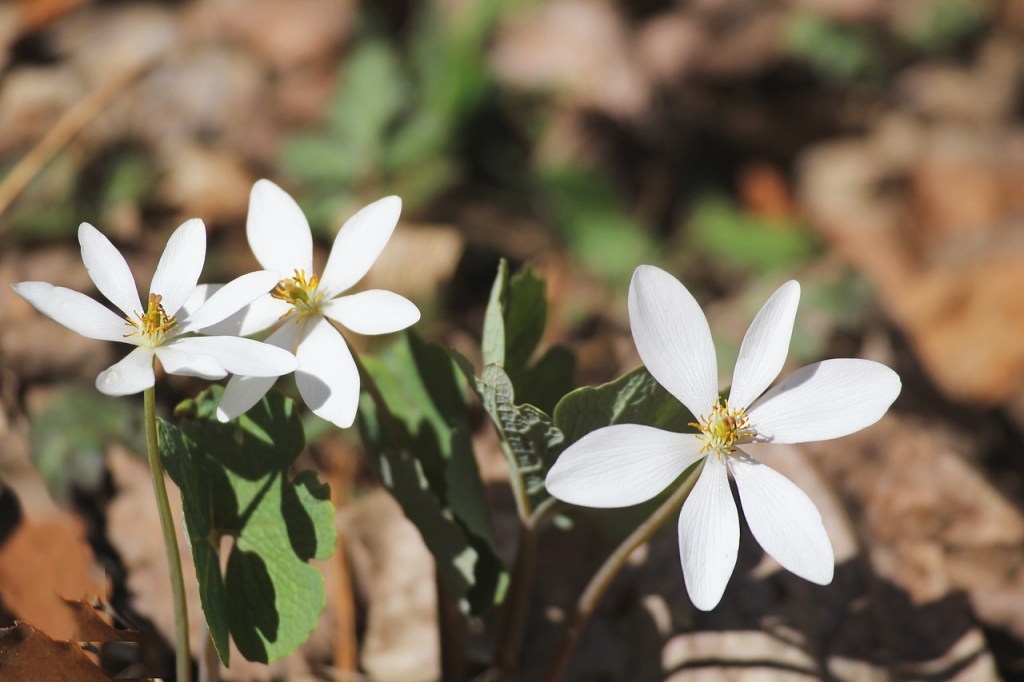
Bloodroot, Sanguinaria canadensis

Start A Compost Bin

  • Composting helps keep waste out of landfill by collecting and processing organics into material that can be used to create nutrient-rich compost used to feed and nourish soil.
  • Canadian Living offers a simple outline, as shared by Ed Begley  Jr.
  • Or more here from the Thames Region Ecological Association, including troubleshooting issues.
Compost bin

Grow More Of Your Own Food

  • The pandemic has highlighted how our agricultural systems are vulnerable to global shocks. Issues with supply chains, migrant workers, transport, trade and border closures have resulted in some foods being in short supply or prices going up (while quality goes down).
  • Insects do all the hard work, and all pollinators benefit.
  • Gardening provides benefits for your wallet, your nutrition, and reduces your environmental footprint. By growing your own food (either from seeds or small plants), your food is automatically more sustainable simply because you are doing it onsite or in a community garden. If you control the ‘inputs’ and do it well, you can save a lot of money.
  • Ultimately there is nothing more rewarding than planting and maintaining your own vegetable garden and harvesting (and sharing) your results. And we all know how much better homegrown produce tastes versus conventional produce at the grocery store. If you have too much produce, then you can just share the love with others!
  • Royal City Nursery in Guelph offers 8 Reasons to Start Growing Your Own Food from Seed
Creating a vegetable garden

Continuous Learning

  • Do what you love but keep on top of what’s trending in garden design to see if anything sparks your interest.
  • Keep track of what’s working and what’s not by documenting your garden happenings in a journal.
  • Expand your garden library and treat yourself to a new gardening book.
  • There are so many amazing (and free) garden webinars available now – learn from the experts.
  • Some of my favourite bloggers – The Impatient Gardener (in Wisconsin, similar climate to us), The Empress of Dirt (Ontario), Niki Jabbour (Halifax), The Laidback Gardener (Montreal), and Garden Myths (Robert Pavlis in Guelph, Ontario).
Online learning is a great opportunity

Reduce Your Use Of Plastic

  • Plastic is a major component in the garden, from plastic plant pots and seed trays to watering cans, and compost bins. Most plastic gardening equipment will end up in landfills, where plastic pots alone can take up to 500 years to decompose.
  • There are a few easy swaps you can make in going plastic-free: Many of us want to use less plastic in the garden, from plant labels to watering cans, tools, plant pots and the sheeting used to suppress weeds. Buying (and therefore using) less plastic will not only reduce your plastic footprint but also sends a message to manufacturers that gardeners want alternatives to plastic (especially single-use plastic).
  • Try to find biodegradable pots that made from natural materials such as coir, bamboo, wood chips, or seaweed (or commit to using your plastic pots year after year).
  • If you use plastic string, make the swap for a natural jute or hemp, and protect your fruits and vegetables with metal mesh instead of plastic netting – it lasts for years.
Find alternatives to plastic pots, or commit to using (and reusing them) for many years

Happy gardening dreams until we can get out into our gardens again….

Start a New Habitat

By Marilyn Homewood, Master Gardener

Over the past few years, it has become increasing clearer that loss of biodiversity due to loss of habitat is at a crisis level.  It is also well documented that the planting of native species provides us with an opportunity to help reverse this process by creating or enhancing ecological networks.

Renowned entomologist Douglas Tallamy has been beating this drum for some time.  It is his belief that all of us can provide part of the solution no matter our area of interest and no matter the scale of effort (no need to be a native plant purist!). He believes that small efforts by many people can make a significant contribution. Tallamy provides practical, positive advice for adapting his principles into your situation.  His philosophy is about encouraging folks to participate in regenerating biodiversity in the way they are most comfortable versus prescribing “must do’s” or formulas. He doesn’t let the perfect be the enemy of good. To this end, he is spearheading a grass roots, science-based solution called Homegrown National Park. Participants in both the US and Canada involved in this effort are encouraged to register their properties on the parks map in order to be counted towards the park’s goal of planting 20 million acres.  The website provides extensive resources to gardeners such as blogs and videos as well as a newsletter.  You can also follow the park on Instagram  @homegrownnationalpark.

Tallamy suggests 10 steps that anyone can all do to get started and make a contribution (see the link for more detail). They are as follows:

  1.  Shrink your lawn – All of us could probably do with a little less lawn to cut but no need to go without.  Replace some turf with trees, shrubs or gardens.
  2. Remove invasive species – Invasive species interfere with the ecosystems ability to function and will affect any type of garden. Removing some if not all out will reduce the impact on your plants and reduce the amount of seed that is shed into the environment.
  3. Encourage Keystone Genera – Research has shown that a few genera of plants are the backbone of local ecosystems especially as a food source for insects. Without local keystone plants, food webs will fail. Common keystone plants in the east are oak, willow, birch, elm, goldenrod, aster and sunflower. In my own case, goldenrod and aster is abundant on the farm. I now let it grow along the perimeter of my fields instead of cutting it down.
  4. Be generous with your plantings. Increasing the abundance and diversity of our plantings will assist in realizing the ecological potential of our landscape.
  5. Reduce Nighttime Light Pollution. White porch lights and security lights are a major cause of insect decline. Consider switching lighting with motion sensors or replace white bulbs with yellow (less attractive to bugs).
  6. Network with neighbours and encourage them to get involved.  Be a role model by transforming your property in attractive ways.  Display a sign to show your commitment.
  7. Build a conservation hardscape by using window well covers to prevent toads and frogs from falling into the wells where they starve to death. Mowing your lawn no lower than 3 inches helps to ensure that you mow over the turtles, toads and other small critters.
  8. Create caterpillar pupations sites under trees. Most caterpillars drop from trees to pupate in duff on ground. Replace the lawn under trees with well planted beds full of ground cover to encourage pupation.
  9. Avoid use of chemical fertilizer. Create soils rich in organic matter instead.
  10. Educate, educate and educate. Spread the word.

    “Education is the most powerful weapon which you can use to change the world.” -Nelson Mandela

A Few of My Favourite Native Plants

by Emma Murphy, Master Gardener

I’ve been gardening for more than 25 years and, like many of you, thrill at the opportunity to discover new plants for my gardens. Over the past few years these have been mostly native plants, as I learn about all the benefits that they bring – here’s just a few examples of why native wildflowers, grasses, shrubs and trees do so much more than just add beauty to the landscape:

  • They support birds, pollinators and wildlife – native gardens attract birds and butterflies and provide habitat and food for native pollinators
  • They increase biodiversity – native plants increase garden health and resilience, and help contribute to a broader effect to nurture and sustain living landscapes
  • They’re tough and low maintenance – because they’re adapted to grow in their native range, locally native plants tend to thrive with little to no care and conserve one of our most precious resources – water
  • They help you save money AND create a healthier environment for people – native plants don’t require expensive fertilizers and chemicals, or toxic pesticides and herbicides
  • They help with climate change – no lawn mower costs or exhaust! and long lived native trees help store carbon dioxide
  • They make gardening easier – if you select the right native plants for your garden, you don’t have to modify or amend your soil

I’m just going to share three favourite native plants in my garden, with hopes that you may consider them for yours.

Culver’s Root (Veronicastrum Virginicum)

Culver’s Root offers a strong upright, architectural accent to any perennial garden that attracts attention from both people and pollinators!! It can reach heights of 5 feet if it’s happy (although mine hasn’t achieved that yet) and the spikes of white flowers open from the bottom up in mid-summer. It has finely toothed leaves that are lanceolate and occur in a whorl of 3 to 8 leaflets. The inflorescence has several wand-like flowering spikes that resemble an elegant candelabra.

Culver’s Root grows in zones 3-8, in full sun to part shade but it does like moist, well-drained soil. The seeds are so tiny that they should be directly sown on the soil surface in fall or in the spring – I’ve tried winter sowing some this year so we’ll see how that goes.

The plant really has no other synonyms; apparently the name was derived from a Dr. Coulvert, a late 17th to early 18th century pioneer physician who found laxative properties in the plant. More information here.

Cardinal Flower (Lobelia cardinalis)

Who doesn’t love bright red flowers in the garden? For those who say native plants can’t be showy I give you this amazing example to disprove that theory. Named for its scarlet red flowers, its tubular flowers are a magnet and important nectar source for hummingbirds and swallowtail butterflies.

Like Culver’s Root the flowering spikes open from the bottom to top and bloom for several weeks. They grow best in moist, rich soils in full sun to partial shade.

I’ve only had my plants for two seasons but I understand that the parent plants will not persist after a few years, so it’s important to either let it go to seed (so it reseeds naturally) or collect seed – this is another plant where I am trying out winter sowing (native plants are a great choice for this propagation method). While many sites will tell you it needs a really moist site mine have done fine, although I do keep the plants well watered in drier times. More information here.

Green Headed Coneflower (Rudbeckia laciniata)

Also commonly called Cut Leaved (or Cut Leaf) Coneflower, this is the straight species, not to be confused with the double cultivar many of us have in our rural gardens (often called the Outhouse Plant – or Rudbeckia laciniata “Golden Glow”).

Not a small plant (it grows 4 to 5 feet tall in my garden), it clumps and spread by rhizomes so only one to consider if you have the space! Its bright yellow, daisy-like drooping flowers with green centre disks (which can be about 3 inches across) bloom later in the summer season. It prefers moist soil, but grows well in average, medium, well-drained soil in full sun to part shade. In nature it is often found in woods, meadows, streambanks, and roadside ditches.

The Cherokee natives call this plant Sochan and the spring basal leaves are a traditional Cherokee food. Butterflies are attracted to nectar from the blooms and songbirds, especially American Goldfinches, eat the seed in the fall. It is moderately deer resistant. More information here.

So I hope you’ll take the opportunity to seek out native plants to add to your garden, finding ones that are native to your region and appropriate to your conditions. Happy Gardening!!

Are You in the Zone?

By Cheryl Harrison, Master Gardener

Gardeners are used to seeing the “zone” as part of the information provided on the label of most perennial plants, trees and shrubs purchased from a nursery.  Some labels will list a zone with the corresponding temperature in brackets afterwards.  This seems like an easy way to determine if your chosen plant will successfully grow in your garden–you will need to know the average lowest winter temperature, in your region, then figure out your zone.  You then just buy the plant labelled with your zone for success!  Easy, right?  Yes and no!

In Canada, the original 1960’s plant hardiness zones were based on information gathered at 640 weather stations across the country along with the survival results of selected trees and shrubs.  In 2012, revised maps were released using elevation, more locations and more environmental details resulting in a hardiness index which corresponds to a zone .   At present, there are 13 zones ranging from 1-13.  You may also see an “a” or “b” beside the number.  This indicates a slight variation within that region. See Plant Hardiness Zone by Municipality to find your zone.

Zone 5, author’s garden.

In the USA, the system is different.  Again, there are 13 zones ranging from 1-13 and  “a” or “b” indicates variation within the region. See US Plant Hardiness Zones.   However, the US system is only based on minimum temperature and no other factors.  You may read about a plant grown in the US and designated US zone 5.  A US zone 5 labelled plant may require warmer winter conditions than it’s corresponding zone 5 labelled Canadian plant.  Bottom line, US zones may not be the same as Canada’s.

Canadian data is based on previously collected information but we know that the weather does not always follow past patterns — it can, and will, fluctuate (e.g. freeze/thaw cycles).  There may be microclimates (see Microclimate in Wikipedia) in your own gardening space.  Good gardening practices (e.g. soil preparation)  will contribute to the successful growth of your plant.  Plant survival and growth depends on your gardening expertise and knowledge.  The zone is just one indicator of whether, or not, the plant that you are contemplating will grow well in your garden.  Oh, and Peterborough is a Canadian plant hardiness zone 5 b.

Tips: 

#1 The plant hardiness zone site now can be used to explore where the specific plant that you are thinking about purchasing will grow through the “Species-Specific Models and Maps”.  It does this by creating a “climate profile” of the plant and then mapping where it will grow in Canada.  These are preliminary maps but click here to try it out.

#2 Grow native plants!  Native plants are specifically well suited to an area especially if you can purchase locally grown plants or find locally sourced seeds. 

#3 Consult local nursery staff and your knowledgeable fellow gardeners.  They will know what will successfully grow in your area.

#4 Experiment!  If there is a plant that you really must have, but the zone is off a little…..try it.  You will need to choose a protected location for planting and probably baby it along but sometimes it may be worth it. Talking to other knowledgeable local gardeners may be especially helpful….someone may have successfully grown that special plant in their garden and may share their growing tips with you!

Zone 5, author’s garden.

The Plastic Dilemma

By Marilyn Homewood, Master Gardener

The recent severe weather experienced by the west coast drives home the reality of our changing climate. Gardeners pride themselves on being good stewards of the land and are always trying new techniques to improve. However, there is a fly in the sustainability ointment.

The horticultural industry uses a lot of plastic. Pots, weed barrier, netting, propagation equipment; it’s overwhelming.  On a global basis, about 4 percent of world oil production is used as a feedstock for all plastic and another 4 percent is consumed as energy in the manufacturing process. Emissions are just the beginning of the problem.  The Earthways Center at the Missouri Botanical Garden estimates that about 350,000 lbs. of horticultural plastic enters the waste stream each year in America. Plastic is ubiquitous, does not degrade rather it disintegrates and some types (PVC and polystyrene) leech toxins into the soil and groundwater.  As it disintegrates, it becomes microplastic fragments that can be found both in marine settings and in the soil.  We are all aware of the impact on marine life but it has now been discovered that these fragments are in the soil and have a significant negative impact on arthropods and roundworms (all important in the breakdown of organic matter). 

Freedom from plastic is the goal but will take time. There are things gardeners can do right now to reduce their plastic consumption.

  • Extend the life of plastic you already own by careful handling and reuse
  • Forgo plastic when workable alternatives exist. Use biodegradable pots made of coir or fibre and try soil blocking for starting seedlings. Use wooden plant markers.
  • Buy bare root plants and or start plants from seeds to cut down on plastic pots
  • Use planters made of terra cotta, metal or ceramics.
  • Only use tools made from metal and wood
  • Skip the use of bagged products and purchase these products at a bulk outlet using preowned containers.
  • Use weed barriers that biodegrade such as cardboard or biofilm (made from corn)
Metal tools that last a lifetime

There may still be items for which no good alternative exists in your situation.  In these cases, purchase higher quality versions that are more durable and last a long time.  Companies such as Bootstrapped Farmer are now specializing in this type of product.

Many years ago (1996) I purchased 2 large plant trays from Lee Valley Tools and am still using them.  The trays are still in the catalogue and I am going to purchase more.  I have a metal watering can which I have had since I started to garden.  These things can be passed along to younger gardeners.  As the urgency of this issue becomes apparent, additional products come to market assisting in the transition to freedom from plastic.

“We have forgotten how to be good guests, how to walk lightly on the earth as its other creatures do.” ~ Barbara Ward


Resources

https://www.gardenorganic.org.uk/say-no-plastic-garden

https://www.npr.org/2019/07/09/735848489/plastic-has-a-big-carbon-footprint-but-that-isnt-the-whole-story

https://www.bootstrapfarmer.com/

Peat Moss

By Sharleen Pratt, Master Gardener

Peat Moss use has become a highly contentious issue, especially in Britain. The U.K. government plans to ban peat use among amateur gardeners by 2024.  With the proposed ban and a pledge to restore 35,000 hectares (86,000 acres) of peatland across the county by 2025, retailers can no longer delay the transition to peat-free compost.

A Peat Bog is layer upon layer of vegetation and it acts like a sponge that holds 20 times its own weight in water.  It is a life support for biodiversity.  It increases by 1mm per year.  Twelve metres of peat dates back to the last ice age.  Peatlands support all types of natural wildlife and native plants.

In the last 2 centuries, peat bogs have decreased by 94%, mainly in Scotland and England.  It is not an environmentally sustainable product. It used to be a major land cover in the United Kingdom.  Because of many, many years of the use of peat moss for our gardens and for fuel, less than 1% of the national peatlands remain in places like Scotland and England.

The peatlands are a wonderful natural ecosystem. They protect our climate, accumulate carbon and protect endangered species. Professor Dave Goulson, from the University of Sussex said: “Globally, peatlands store half a trillion tons of carbon, twice as much as the world’s forests.  Unearthing this precious store of carbon is a needless ecological disaster.”  They are absolutely critical in helping with flood and climate control and the protection of this unique ecosystem.

Even in Canada peatlands are carbon and climate champs!  We have about 25% of the world’s peatlands and they cover about 12% of the nation’s surface area.  They are very delicate, slow-growing ecosystems, composed of semi-decayed biomass that has accumulated for many thousands of years. They take in so much more carbon than our forests and grasslands. We emit the carbon back into the air when we put the peat moss into our gardens.

It is a nice light-weight substrate and hangs on to nutrients and is perfect for growing plants when mixed with perlite.  It is the mainstay of potting soils here and beyond and for years has been a big part of the gardening industry. Peat has long been a popular product in the Horticultural Industry as it is cheap, acts like a sponge to hold moisture and is a very good growing medium.  Fifty percent of peat moss is used by gardeners!

The Horticultural Industry are now hearing the concerns with the use of peat moss.  However, there are very few alternatives for them on the market.  Some are trying a switch to Coconut Coir, a material in the husk of the coconut.  It retains water well, up to 10 times its weight by volume.  It also contains no fungal contaminants, deters fungus gnats and doesn’t burn, which can be an issue with peat moss.  Compost is ideal but not everyone has the space to make their own and it is definitely heavier than peat moss.  Another product known as Charged Carbon acts like a sponge, removing contaminants that can prevent strong and healthy plant growth.  It is a material that comes from bamboo or feed stock.  It is heated and you are left with a carbon skeleton.  Both Coconut Coir and Charged Carbon are dramatically more efficient and environmentally responsible than the use of peat moss, however, their availability is limited and the cost of these products is much higher.  Compost is more widely available as well as other products such as leaf mold, perlite, vermiculite, and bagged manures.

Some of the industries are making simple changes, but this could take several years.  It involves understanding how the plants react to the different products, how they maintain water and watching for different growth habits.

Paul Short, President of the Canadian Sphagnum Peat Moss Association says that “they have invested a lot in restoring peat lands after harvesting”, however, research has shown that peat lands take hundreds of years to be restored back to their original condition.

We could be on the same trajectory as the U.K. if we do not look after our peatlands. They are harvested not just for horticulture.  We also have oil and gas infrastructure and fire management infrastructure running through our Canadian peatlands.

Think twice about buying that low-cost bag of planting material that contains peat.  Help by encouraging our government to support the larger companies in their efforts to phase out its use.  Look at your labels, consider the use of alternatives, if possible create your own compost and be aware of what we can do to help to preserve these amazing lands.

To learn more, read this interesting article put out by Plantlife.

From a Canadian perspective, check this article from The Canadian Wildlife Federation.