Category Archives: Light

When Plants + Sun = Trouble

By Mary-Jane Pilgrim, Master Gardener

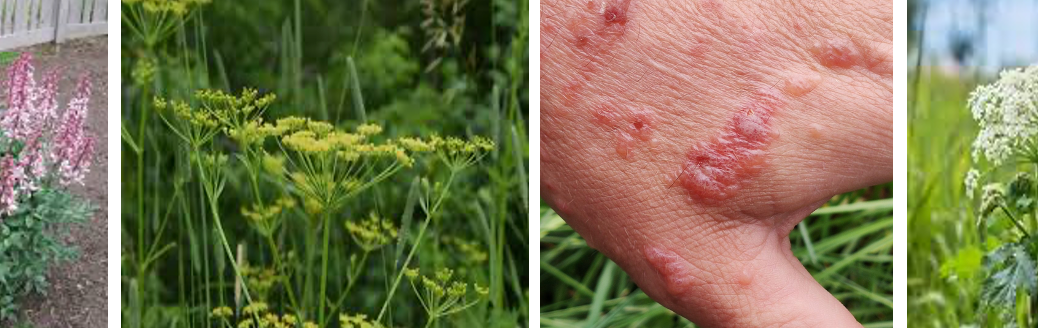
Have you ever gotten a weird red rash or burn after spending time outside? If you were pulling weeds or brushing up against certain plants, you might’ve had something called phytophotodermatitis. It sounds scary, but it’s really just a fancy name for a skin reaction that happens when plant juice meets sunshine.

Here’s how it works: some plants (like wild parsnip, giant hogweed, gas plant (Dictamnus), citrus fruits, dill, parsley, celery, fennel and even carrots) have natural chemicals in them called furanocoumarins. When these chemicals get on your skin and are then exposed to sunlight — especially strong summer sun — your skin can react. It might not hurt at first, but after a day or so you might notice red patches, streaks, or even blistering. It often looks like a burn or a splash mark.

People sometimes mistake it for poison ivy, but phytophotodermatitis is different. Poison ivy causes allergic contact dermatitis due to the urushiol oil in its sap. Phytophotodermatitis is not an allergic reaction, and it doesn’t usually itch. It’s more like a sunburn that was triggered by a plant.

Sometimes the blistering can be quite severe.

The good news? It usually goes away on its own in a few weeks, though it can leave behind darker patches of skin for a while. Severe burns may require medical treatment, including potential debridement (removal of damaged tissue) and skin grafts. Protect the affected area from sunlight for an extended period to prevent further irritation.

To avoid it, wear gloves when gardening, wash your skin after handling plants outdoors, and try to avoid sun exposure right after. And if you’re chopping limes for drinks on a sunny patio — wash your hands and arms!

It’s a sneaky kind of sunburn (or worse!), but a little knowledge goes a long way in preventing it.

March Madness

by Cheryl Harrison, Master Gardener

March is the start of gardening season!  Let the seed starting begin.  My husband is the “seed starter” at our house.  I am the “seed buyer”, the occasional “assistant transplanter” and a very helpful critic.

Husband has the seed packets organized by type of plant (e.g. perennials, vegetables – tomatoes, Brussel sprouts etc., and annuals – zinnias, marigolds etc.) and by the date that the seeds need to be started. The dates are calculated by looking at the back of the seed packets to find the length of time from seed planting to when the plant may be moved outdoors (i,e. the last expected date for frost), which is early to mid-May in the Peterborough area.  For us, this means that the perennials are started first then the vegetables and the annuals.

Some supplies.

 In fact, the back of the seed packet will also tell you:

  • How deep to plant the seed and how far apart to space the seeds when planting in a tray or for direct sowing in the garden.  Planting in individual pots may be the way to go for some plants (e.g. tomatoes). 
  • The number of days from planting to when the seed sprouts (germination) and to when you may expect to harvest.
    • The growing conditions required for the plant.  This includes light, moisture and temperature.  Seeds are often started in a special seed starting mixture which is sterile.

Husband and I check the seeds every day to ensure that moisture levels are adequate.  The surface may be dry or barely moist but there should always be moisture below the surface.  There is a fan set up to circulate air back and forth over the seeded areas.  This helps prevent damping off.  Damping off is a serious disease of seedlings that are grown in cool and wet conditions. 

Repotting tomato seedlings.

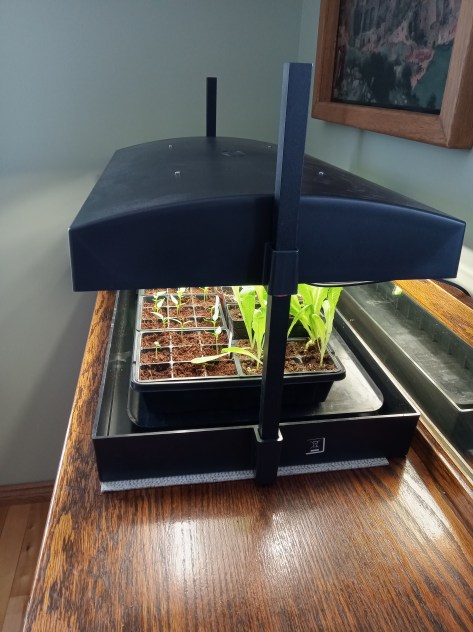
A heated home is usually warm enough to start seeds – i.e. 21-27 degrees C (70-80 degrees F).  Seedlings need 14-16 hours of light a day.  Sadly, we do not have that many hours of sunlight in a day until near the end of April.  We use indoor grow lights which do work very well. Plants that do not have enough light will stretch and become weak and spindly as they stretch towards the available light.  This makes them more susceptible to disease and they may not do well when they are moved outside.

The seedlings are transplanted from their tiny starter pots, or tray, into larger pots after they have 2-6 new leaves.  These new leaves are in addition to the 2 small leaves (cotyledons) that are the first to emerge from the seed starter after germination.  The soil in the larger pots is potting soil not seed starter. 

Seedling with only cotyledons.

We are grateful to have a homemade greenhouse where the plants, in their larger pots, are moved to continue growing until they are ready to be planted in a garden.  Prior to the greenhouse, plants were kept inside under the indoor grow lights until the weather co-operated enough to plant them outside.

Tips

  • If you are new to starting seeds, I suggest starting small.  Seed starting, while fun, can be labour intensive with planting.  There is also the cost of startup supplies.
  • Remember to label your seeds with plant type and variety (e.g. tomato – Beefsteak).  Nothing is more frustrating than when you plant seeds but do not know if you planted a tomato or a Brussel sprout.
  • Ensure that you are not using old seeds.  Old seeds may not germinate.  Purchased seed packets will be printed with an expiry date. 
  • Moisten soil and seed starter before use.
  • Seed starting is great for children.  They get to plant seeds, then care for and watch their plants grow. 

For more information:

One Challenge, Many Solutions

By Marilyn Homewood, Master Gardener

As we look through our seed catalogues on these cold days, it’s time not only to decide on what we are growing but on how we intend to grow it. The choices seem endless! Winter sowing has been covered in a previous blog. I recommend you give it a try. As for indoor seed starting, there is a plethora of ways to do it. Discovering which works best for you can make the difference to a successful season.

Open flats

A single flat tray (often called a 1020) or half tray is a traditional way to start seeds. The tray is filled with your chosen medium (be it seedling mixture, coconut coir or  potting mix).  Seeds are planted in rows in the flat, the medium moistened and set to germinate.  Once the seeds have germinated and have developed at least 2 true leaves, the seedling is “pricked” out of the mixture and potted up into a larger container. Pricking out is the term for holding onto a leaf (never the stem!) and gently teasing the seedling out of the potting mix.  Pros – single tray saves space, easier to keep moist due to the larger volume of mix.  Good for seeds with uneven germination rates such as larkspur.  You just prick seedlings out as they are ready.  Cons – 2 step process is more labour intensive.  Some types of seeds that are sensitive to root disturbance (poppies, zinnias) dislike being tugged out and usually do not do well once transplanted.

Row Trays                                                                                                                                        

Row tray

These trays are divided into 20 rows.  Using a row tray is similar to the open flat in that seedlings are pricked out and potted up.  But this system uses much less soil mixture.  This tray is commonly used for very tiny seeds that are difficult to handle such as snapdragons.  Seeds are just carefully poured onto the seedling mixture and the trays watered from below.  Pros- easier method when dealing with small seeds, germinate faster due to smaller amount of soil mix.  Cons – more labour intensive, prone to drying out quickly due to smaller amount of soil. Not recommended for varieties that dislike root disturbance.  Must also use flat bottom tray as rows trays are too short to sit in a 1020 tray.

Cell tray

Cell Trays                 

These trays are divided into “cells” that hold growth medium and one seedling.  Seed is sown into each cell.  Cell trays come in a variety of sizes 50, 72, 128, 200 cells etc.  The 72 cell size is the most common. The choice of size is usually dictated by the type of seed sown.  For example, I use 128’s for my lisianthus seeds as the seedling is very tiny for a long time.  Pros – one step, easy to keep track of how seedlings are doing, water well from bottom

Cons – May need a number of sizes depending on varieties grown, roots of seedlings with a long growth period tend to start circling in cell, this may cause production difficulties once transplanted.

You may not need 72 seedlings of the same variety and do not want varieties that germinate early to stay under the humidity dome until all have germinated.

To address this problem, I use a variation on the 72 cell tray. Instead of using a tray for each variety, I have propagation inserts that can be separated in 9 or 6 cells units.  I still plant 72 cells total of more than 1 variety, all placed in a single 1020 tray under a humidity dome.  When one variety germinates, I can remove it and put it under the grow lights.  This avoids the germinated seedling from developing fungal disease which is fatal (“damping off”). This method lets me successfully germinate different varieties in a limited space.

Soil Blocking

This is a method that compresses wetter soil mix into free standing blocks which are then seeded, germinated and grown on. The blocks are placed on flat trays with lips in order that the blocks can be carefully watered. Seedling roots are naturally air pruned in soil blocks. Plants with long growth periods benefit from the air pruning as do varieties that dislike root disturbance.   Pros – No use of plastic!!  Despite carefully washing and reusing my trays, each year there are a few casualties that can no longer be used. Soil blockers are a one- time purchase.  Seedlings are air pruned and never develop circling roots hence make more resilient transplants by reducing transplant shock.  Cons – initial soil blockers were spring loaded and hand held.  Can be hard on hands to use.  Newer blockers (Swiftblockers) can make an entire 1020 of blocks.  These are stainless steel and are heavy to use.  There are now half size versions available which are more affordable and easier to handle. Blockers are available in different block/cell sizes. Soil blocking is messy.  The mix must be relatively wet in order to compact it.  The watering of blocks is a little tricky as blocks can not be left in standing water as they will fall apart.

Winnstrips

This is a hybrid concept between cell trays and soil blocks made from heavy duty plastic. Made in 50, 72, 128 sizes, Winnstrips have air cells throughout the tray and each planting cell has 4 air slits to allow for air pruning.  Pros – Not as messy as soil blocks but with the air pruning benefits.  Good for varieties that do not like root disturbance.  Made from a polypropylene material that is very durable and can be recycled.   Cons – trays are heavier and use a great deal of potting mix.

No matter what method you use, remember to have fun!

Resources

Light in the Garden

By Marjorie Vendrig, Master Gardener in Training

It’s the darkest time of the year, daylight is at its lowest, and most gardening has ended for the season. That doesn’t mean, however, that there is nothing in the garden to be enjoyed. Garden design and planting choices should take into account the many months when the garden is still and inactive. It’s during this time when, despite the lack of light and active growth, the garden is revealed. It is stripped bare of colour and the exuberance of growth is set aside. With the leaves gone and many small plants succumbing to frost, the garden reveals itself openly and honestly.  It’s odd, but in the dark days of winter there is more light in the garden. Unencumbered by layers of leaves, loud colours, or scrambling growth, the garden becomes airy and lets us see its bones and form. There is a lot to consider and enjoy when the garden, no matter how big or how small, is revealed.

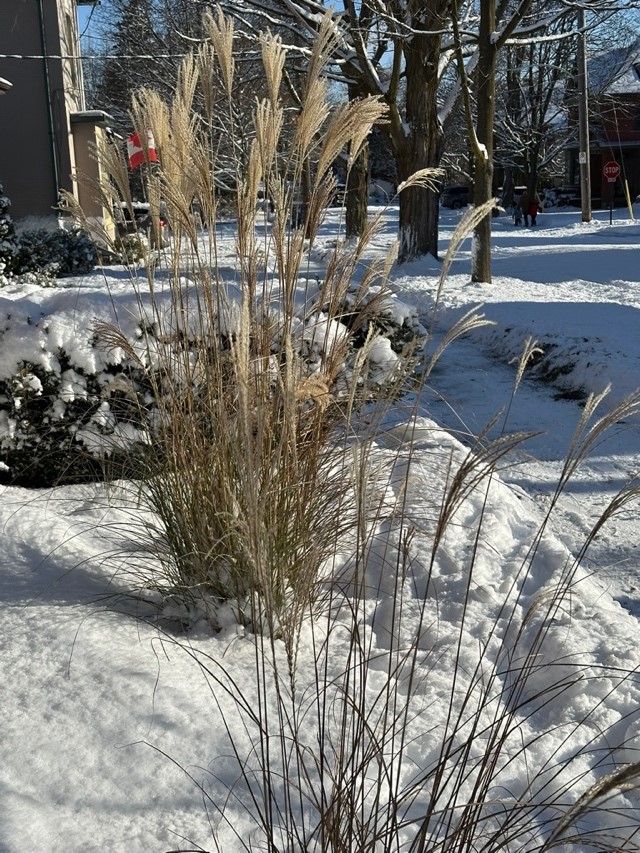
The low slanting light of late autumn and winter is an important piece of the beauty of the garden. Glancing out my bedroom window first thing every morning, I’m drawn to the morning light shining behind the swollen, grey buds of the magnolia tree next to the driveway. The buds are soft and fluffy, vulnerable yet so full of promise. In a nearby garden, there are a few large clumps of Karl Foerster grass (Calamagrostis x acutiflora) that sway and drift with the slightest breeze. Their slender stalks are a soft gentle brown, somehow able to withstand strong winds and pelting rain. Fall blooming grasses are a particular treat in fall and early winter, the slanting light is illuminated through the fluffy plumes making a beautiful statement. Hameln (Pennisetum Alopecuroides ‘Hameln’) is a favourite but there are many to choose from including some special native ones such as Side -oats Grama (Bouteloua curtipendula)  and Prairie Dropseed (Sporobolus heterolepis).

Another subtle feature of winter light is the shadow effect. The gentle lengthened shadows created by tree structure, moving grasses, seed heads, or conifer form merit consideration when choosing plants and placement. They are certainly worth more than a glance on a spectacular bright winter day.

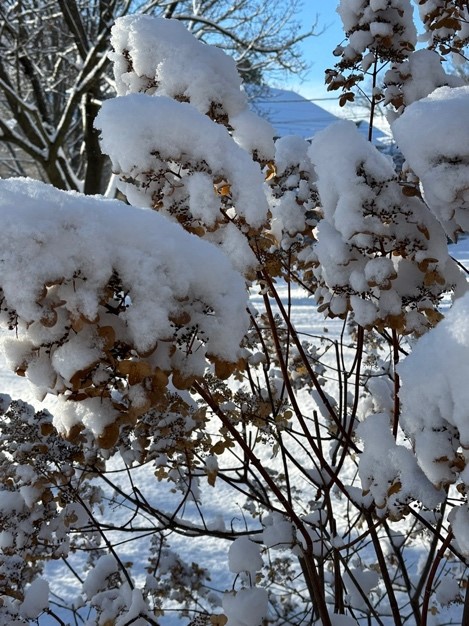
The dried flower heads of ever popular hydrangeas are a common winter garden treat especially when topped with a light dusting of early snow. Summersweet (Clethra alnifolia), a small summer flowering shrub, also retains dried flower heads through fall and winter. Other shrubs offer interest because of bark colour and texture (red twig dogwood, cornus sericea) or growth habit. Staghorn Sumac doesn’t take centre stage in the summer, but offers spectacular colour in fall.  In winter, its red fruits, antler-like branches, and graceful form make it a show-stopper.  Another shrub favourite in my fall and winter garden is Seven-Son Flower (Heptacodium miconiodes). It is an all-around wonderful, unique shrub with added appeal for its beautiful peeling bark in winter.  Other shrubs that hold particular appeal in the winter are Witch Hazel (Hamamelis virginiana)  and Corkscrew Willow (Salix babylonida).

Limelight hydrangea in the snow
Summersweet in the snow

Of course, conifers are the bones of any garden in winter. With different needle textures and lengths, and different shapes and forms, they provide obvious interest to every garden. When everything else is grey and brown, the rich textured green of a conifer stands out and when the snow comes along their interest increases. It’s important to have a variety of shapes and forms: cylindrical, mounding, conical, and weeping. In a small urban garden such as mine, I’ve found dwarf varieties and columnar species. One of my favourites is a weeping white pine (Pinus strobus ‘Pendula’), which is supported and pruned to fit a small spot.  It’s a lovely unique specimen tree with gentle movement, at certain times of the day its pleasure is doubled when the sun throws it shadow on the nearby shed. 

References

https://kawarthanow.com/2022/01/13/tips-from-peterborough-greenup-on-how-to-design-your-own-winter-garden/

Winter Gardens: Reinventing the Season by Cedric Pollet
This book features beautiful winter gardens across France and the UK

Planning a Container Vegetable Garden

By Carol Anderson, Master Gardener in Training

Even with a small space, container vegetable gardening can be successful resulting in the production of a wide selection of fresh vegetables and herbs for consumption available throughout the growing season. Careful planning, ensuring the proper environmental conditions are considered and adhering to the appropriate cultural conditions will all ensure success.

The first step in planning is to consider what you are most likely to consume – growing vegetables with either a low yield or low interest by you and your family will not likely inspire you to provide the proper care and maintenance to be successful. However, choosing vegetables and herbs that deliver throughout the season and which you/your family will enjoy is a good starting place. Next … consider the environmental conditions (sunlight, temperature, nutritional requirements, and watering needs) and cultural conditions (such as space needed, soil requirements and plant compatibility) as this will assist you in the selection and scope of your vegetable container garden.

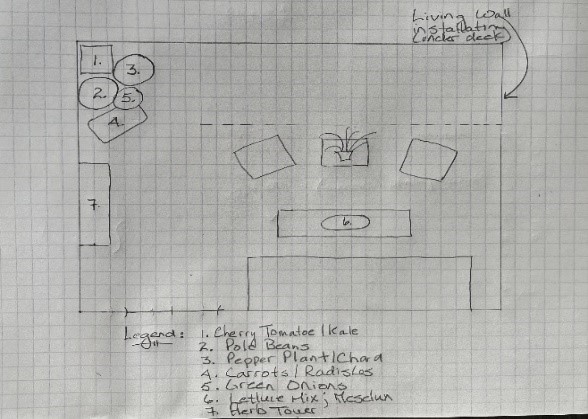
A chart, such as in the example below, allows you to carefully consider the location, groupings and planting schedule for the vegetables and herbs under consideration. Keep in mind one critical factor in our climate…the growing season in our region is short (~134 days for 5a/b)  https://www.almanac.com/gardening/frostdates/ON

Two strategies to extend this season are: 1. For crops that have a longer growing season, start them by seed indoors or purchase them as a seedling/small plant (e.g. tomatoes), and 2. Plant some cold-hardy or semi-cold-hardy vegetables to extend the season beyond the first frost (e.g. broccoli, kale, radish, carrot). In addition, I recommend that herbs be purchased as small plants as they will begin to provide season-long enjoyment quickly and are quite reasonably priced.

Another consideration to increase yield is “succession planting” – a method whereby the same crop can be sown multiple times, spaced apart in intervals. This strategy can also be utilized with inter-planting whereby a row of one crop is alternated with another crop (in this case with a shorter growing season). Once the early harvest occurs, another row of the first crop can be sewn in its’ place. This allows for 2 different crops to be planted together in the same container (e.g. carrots and radishes) with successive harvests in a small space.

One of the final considerations is time…which as we all know is precious. Understanding how much time you want to invest in the garden is important. As with any vegetable garden, sowing seeds, transplanting, fertilizing, harvesting and inspecting the plants takes time. One added component with container vegetables is the need to additional watering. Depending on the weather some crops may need to be watered daily or even twice/day. If the container garden is significant, a drip irrigation system for containers (e.g. with a backflow preventer), should be considered to reduce the watering workload!!

 Table 1. Example of a Vegetables/Herbs Planning Chart

Vegetable/ HerbDays To Germ.Days to HarvestEnvironmental ConsiderationsOther ConsiderationsYield (kg/3m row)
Beans (Pole) (DS)6-1465-70Sun; Average Moisture; Sandy well drained soilSpace seeds 6-8” around base of pole in tripod; fertilize with 10-10-10 after pods set  2.5-4.5
Kale (T)N/A Sun; well drained loam with high organic matterHeavy feeder; starter and then 30-0-02-3.5
Tomatoes (Cherry) (T)N/A50-65Sun; slightly acidic well drained soilHeavy feeder – use starter, then 33-0-0 two weeks before first ripening and 5-10-5 two weeks after ripening; bury stem deep when transplanting  100-200/ plant
Peppers (T)N/A70-85Sun; well drained loose soil; average moistureLight feeder; transplant when soil is warm  2-8
Carrots (DS)10-1455Sun; Average Moisture; Deep, well-aerated sandy loamSow shallow 3-5 weeks before the last frost; can be sown every 3 weeks for continuous harvest  3-4.5
Radishes (DS)4-720-25As aboveSow in early spring at 1/2”; thin to 2”; inter-plant with carrots+++
Leaf Lettuce (T)N/A40-80Sun/tolerates shade; rich well drained loamMedium to heavy feeder; use starter and side dress if additional needed;  2-4.5
Basil (T)7-14 Sun; Moist nutrient rich soil; well drainedPinch central stem to encourage a bushy plant; harvest the plant often for ongoing growth  Cont.
Oregano (T)N/AN/ASun/part shade; needs good drainage   Cont.
Rosemary (T)N/AN/ASun; well drained sandy or loamy soil; drought tolerantLight feeder: mix compost into the soil and then use balanced fertilizer as needed  Cont.
Thyme (T)N/AN/ASun; sandy/poor soil tolerated; dry conditions preferredAll purpose fertilizer in the spring at half strength  Cont.
DS= direct sew seed/T=transplant small plant

Once you have determined your crops to be considered for your container vegetable garden, it is a good idea to identify the containers to be used and the arrangement of these containers (see Photos 1&2 below). Containers should not only be organized to maximize space and sunlight, but also to be esthetically appealing.

In the arrangement on the left in photo 1, the tall pole beans and cherry tomato plant is set at the back, with the peppers, carrots, radishes, and green onions at the front – providing a layered look and maximizing space on a deck.

Other considerations can be either a “tower” or a Living Wall whereby vegetables/herbs are stacked, utilizing only a small footprint in a small space. A Living Wall can be created whereby multiple planters are suspended by rope or chain under the edge of a deck (as long as there is full sunlight); lettuce, potatoes, and other mixes of vegetables and herbs can be placed together creating an appealing planting with various heights and trailing plants and herbs.

If you have an inclination for growing your own food, do not be discouraged if you do not have access to a traditional garden space. Small space vegetable gardening provides an opportunity to be creative, and if planned properly, you can eat healthy fresh vegetables throughout the season.     

Photo 1. Planter Placement
Photo 2: Various Containers for Deck
Photo 3: Herb Tower

Winter Care for Houseplants

By Lois Scott, Master Gardener

Full disclosure:  Just a few short years ago, before Master Gardener training, I considered my house the place where houseplants came to die.  Changing my plant care routines has saved plant lives but winter has its challenges.

Watering

As a Master Gardener in training, I learned that 80% of house plant “failures” were due to over-watering.  That was empowering for me and changing watering practices has led to success.  In winter, plant growth is decreased and house plants need less water.  Before watering check to see if the top 1-2” of soil is dry.  With smaller plants you can also get to know the weight of a saturated pot relative to a dry pot by lifting them a few times between waterings.  Water thoroughly only when your plant feels dry.  Underwatering is much better than overwatering.  Signs of overwatering include the wilting or yellowing of lower leaves and inner leaves advancing to scorch, leaf drop and plant death. 

Fertilizing

During the winter when houseplants may not be actively growing, they do not need fertilizing.

https://extension.unh.edu/blog/2018/03/fertilizing-houseplants#:~:text=As%20a%20rule%20of%20thumb,from%20October%20until%20the%20spring.

Humidity

Humidity levels are lower in our homes during the winter.  For house plants that prefer higher humidity the only sure way to provide this is by increasing the humidity in your home which may be problematic.  Some people advocate misting plants, placing them on a pebble tray filled with water or clustering plants so that they can benefit from the water that each plant transpires.  The effectiveness of these methods is questionable.  Choosing plants that tolerate less humid conditions, like succulents is another option.  Plants suffering from low humidity may develop drying and browning around leaf edges.

Light

As light levels drop in winter some plants may need to be moved to increase the amount of light they receive or have supplemental light provided such as fluorescent grow lights.  Symptoms of not enough light include pale green, yellow to white leaves, leggy stems, dropping leaves, variegated leaves becoming solid green or flowering plants not flowering.  Lighting for plants is an involved discussion but this article https://extension.umn.edu/planting-and-growing-guides/lighting-indoor-plants has good information. 

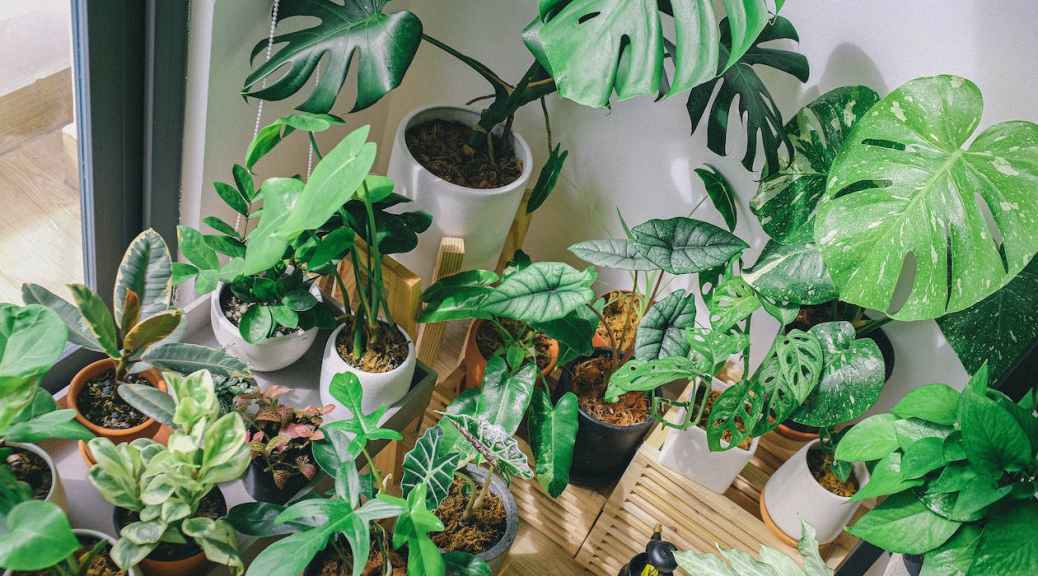
Houseplants are a beautiful indoor feature providing pleasure for many.  Mastering winter care for your house plants will keep them healthy and beautiful, a wonderful touch of green in our winter world.

Like Moths to a Flame – Rethinking Outdoor Lighting in Your Garden

by Emma Murphy, Master Gardener

A few weeks ago, the incomparable Lorraine Johnson spoke at my local horticultural society. She summarized four key actions gardeners could do to help our pollinators, and the last one stuck out for me — reduce/reconsider outdoor lighting (see her full list of actions at the bottom of the blog).

I thought, what does outdoor lighting around my house or garden have to do with pollinators? I know that the presence of lighting (or even more importantly, light frequency) is disruptive for migrating birds and nesting sea turtles, but for pollinators in my garden?

However, what I’ve learned in my research is that artificial lighting at night (aka ALAN) poses a hazard to nocturnal pollinators and prevents proper navigation, reproduction, and their ability to find food.

This really cool graphic (from Kenilworth Park and Aquatic Gardens in Washington DC) shows some examples of day and night pollinators.

Why is it a problem?

Use of ALAN has rapidly spread around the globe over the past few decades. This 2021 Nature Communications journal article states increasing evidence that ALAN adversely affects the behaviour, physiology, and survival of animals and plants, ultimately leading to a significant decline in their abundance and diversity.

This 2020 Biological Conservation journal article says that although habitat loss, pesticide use, invasive species, climate change all play a role in insect decline, ALAN is another important—but often overlooked—bringer of the “insect apocalypse”.

A Nature journal article back in 2017 also sounded the alarm, showing that in ALAN plant–pollinator communities, nocturnal visits to plants were reduced by 62% compared to dark areas.

This UK Royal Horticultural Society article lists some of the effects of ALAN, not just on pollinators but all wildlife:

  • Nocturnal insects (including many moths) who navigate using natural light sources (like the moon) are disoriented by ALAN (although research is now indicating that ALAN disrupts circadian rhythms in both nocturnal and diurnal animals).
  • Security lights appear to temporarily blind some animals and may even attract them (for example, frogs – I have seen this in my backyard near my pond).
  • Birds are disturbed from sleep by sudden lighting and can begin singing before dawn (robins especially seem sensitive to light). Birds that start migration flights at night can become disoriented.
  • In ALAN areas, shorter periods of nighttime darkness means less time for foraging/hunting for crepuscular (dawn/dusk) or nocturnal species.
  • ALAN is thought to be partly to blame for the decline of fireflies/glow worms; the females emit low, greenish light to attract mates and even low level ‘skyglow’ from distant light sources such as floodlit playing fields or towns will lessen their breeding success.

The type (frequency) of light seems to affect species differently. For example, research indicates that LEDs seem to attract more moths and flies, but fewer beetles than sodium lamps. And LEDs with cool white light (blue end of the spectrum) attract more insects than warm white ones. As a general rule insects are more sensitive or attracted to short-wavelength (UV, blue and green) than long-wavelength (orange, red and infra-red) light.

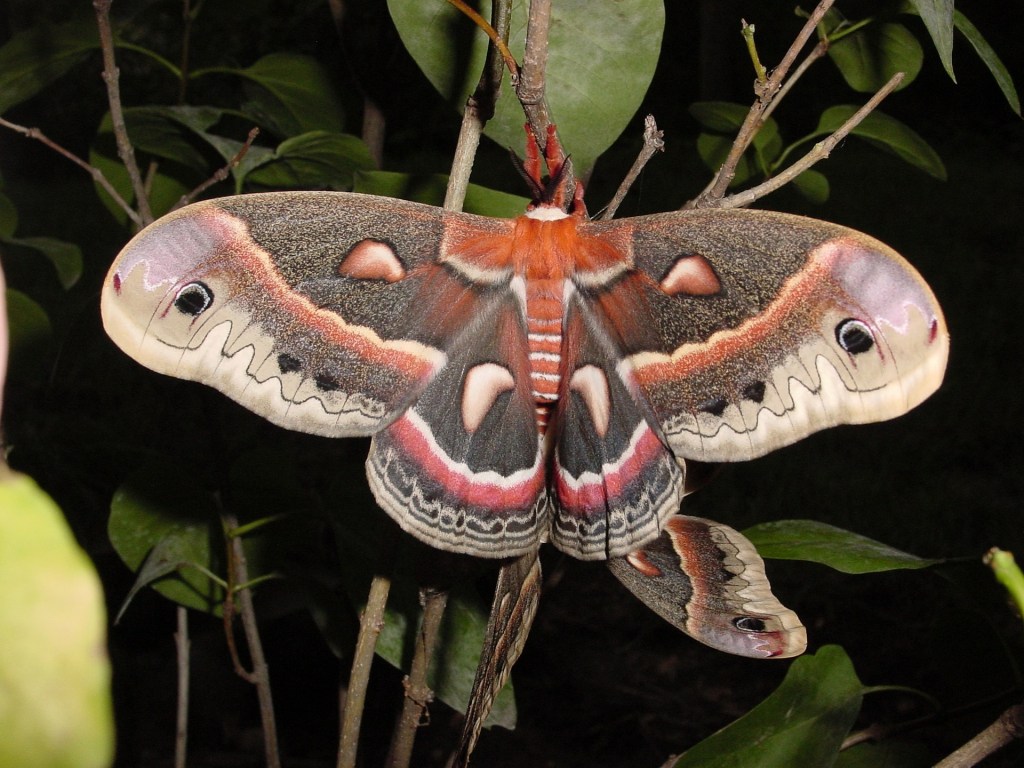
Cecropia moth (Hyalophora cecropia)

So what can gardeners do?

While ALAN has become a trendy part of our outdoor living spaces, consider whether you really need it, or modify it to minimize its impact. In my back garden I definitely need some path lighting for visiting guests, but I make sure it’s shielded lighting that is on a motion sensor so it’s only on for a short time. The International Dark-Sky Association has some great information on keeping our skies dark, including using shielded light fixtures that minimize glare, light trespass, and skyglow.

Besides, a garden can be just as magical a place enjoyed in moonlight or simply with the aid of a flashlight! And if you minimize ALAN you might just see more fireflies/glow worms in your garden, like I do (hint: having a pond or water feature also attracts them).

Want More Information?

Moths do the pollinator night shift – and they work harder than daytime insects

Fatal attraction: how street lights prevent moths from pollinating

The Darkness Manifesto: On Light Pollution, Night Ecology, and the Ancient Rhythms that Sustain Life by Johan Eklöf (on my to read list)

And Sow it Begins

By Marilyn Homewood, Master Gardener in Training

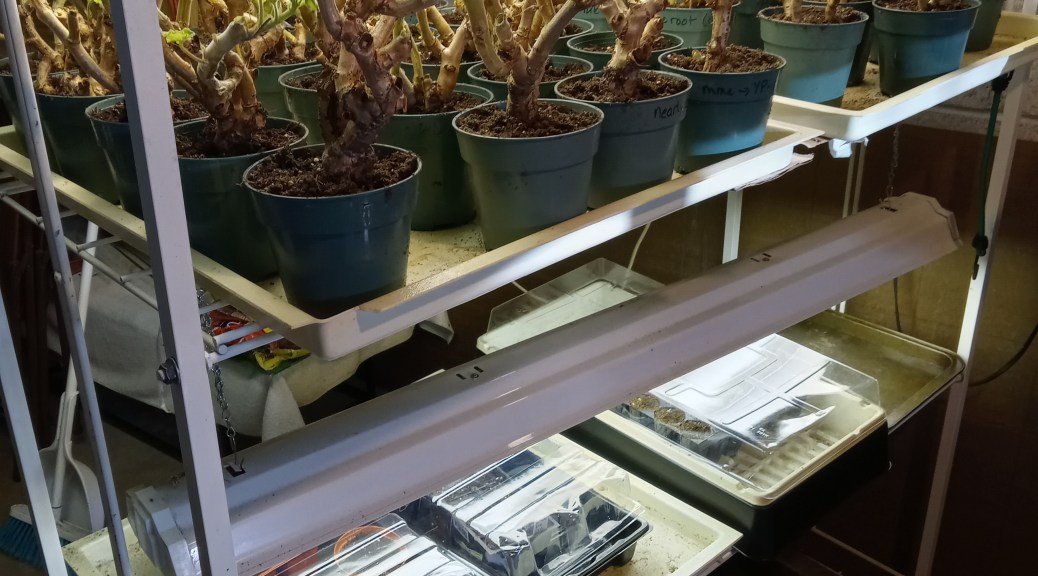
The season has begun! Canada Post has delivered seeds for this intrepid gardener to coax into cutting garden participants by providing the right conditions for survival and growth. In order to germinate, seeds need water, oxygen and warmth.  Some like foxglove have additional requirements such as light.  Once sown, seeds soak up water to soften their outer coat (“imbibition”) and then begin to metabolize stored food reserves.  A seedling soon appears.  At my house, seeds are germinated in a warm room and then moved to the sunroom where it is cooler and brighter.  My growing set up consists of a metal cart (two main levels) with adjustable grow lights hanging above the bottom shelf.  When space runs out on the cart, the tables in the sunroom are enlisted. To brush up on seed starting essentials check out the articles in the resources list.

Tips that have come in handy for me are highlighted below:

Online seed starting calculators.  I wish I had known about this before I calculated all my dates this year! Based on your last frost date, the calculator gives you the date to sow your seeds as well as an approximate date for transplanting seedlings outside. 

Sowing tiny seeds:  Gadgets don’t work for me.  This year I discovered pelleted foxglove seed and loved it.  Not only does the pellet make it large enough to handle easily, it is coloured so you can see it on the soil. For non-pelleted tiny seeds, I use a moistened toothpick to pick the seed up from a dish and drop into the plug tray. 

Vermiculite:  Once seeds are sown, covering the tops with vermiculite prevents the formation of a hard crust.  Tiny seeds such as snapdragons and foxglove get barely covered with a fine dusting.

Cold Germinators:  These are hard to start seeds like dara and bupleurum. Some annual varieties fall into this category. Put these seeds into the freezer to stratify for a few weeks. Try to not to forget where you put them.

Consistent Warm Temperature:  Most plants will germinate around 70F.  Bottom heat from a propagation mat can provide faster and more even germination.

Bottom Watering:  Using plug trays or cell packs in trays allows you to water from the bottom. Water wicks up from below reducing incidence of fungal disease and preventing tiny seeds from washing away. Option 2 – use a turkey baster to water small seedlings.  Time consuming but precise.

Supplemental Lighting:  Seedlings need 14-16 hours of good light to develop strong, stalky stems.  Even in the brightest room, the daylength is too short early in the season (February/March).

Succession Planting:  This involves sowing in batches, successively, every few weeks. This spreads out the flowering window and provides blooms over the season. 

Resources:

www.johnnyseeds.com/growers-library/flowers/succession-planting-flowers-planning-frequency-recordkeeping-tips.html

www.finegardening.com/article/10-seed-starting-tips

www.floretflowers.com/resources/seed-starting-101

www.johnnyseeds.com/growers-library/flowers/succession-planting-flowers-planning-frequency-recordkeeping-tips.html

YouTube Video: Indoor Grow Lights — $ vs $$$ comparison

“It’s not about what it is, it’s about what it can become”  
Dr. Seuss, The Lorax

‘Tis the Season … for Poinsettias!

By Cheryl Harrison, Master Gardener

When I was growing up, my mother always had a big green and red poinsettia sitting in the centre of the dining table during the holiday season. By the middle of January, it had lost all of its leaves so out it went in the trash. Oh yes, we also called it a “pointsetta”.

In Mexico, where it grows wild as a leggy shrub or small tree, the native plant (Euphorbia pulcherrima) has been associated with the Christian Christmas holiday since the 16th century. Thanks to Joel Robert Poinsett, the first U.S. Ambassador to Mexico, poinsettias were introduced to the United States in 1825. They did not really take off, though, until the California based Ecke family grew plants using a grafting technique discovered by Paul Ecke Sr. in the 1960s.  They began aggressively marketing the holiday season blooming poinsettia as a holiday tradition. In the 1980s, John Dole identified the technique used by the Ecke family to produce their compact poinsettias. This led to many more growers entering the retail market.

Poinsettias are members of the Euphorbia family. The brightly coloured “flowers” are actually bracts (modified leaves). Their bright colour helps to attract pollinators in the wild.poinsettia1

When purchasing poinsettias, look for an erect plant that has dark green leaves down to the soil and fully coloured bracts. The actual flowers, located at the centre of the bract, should be immature and red-tipped or green, not yellow with pollen because these more mature blooms will not last as long as the immature blooms. Plants displayed in plastic sleeves or crowded together may be stressed and deteriorate quickly after purchase. When purchasing any plant, always check for disease or insects. Yellow leaves, wilt or the presence of insects (check the underside of leaves too) always indicate problems and a plant that you do not want.

Poinsettias are not poisonous to humans but may cause pets to experience vomiting and diarrhea if consumed. Like all Euphorbia, damaged poinsettia stems and flowers exude a white sap that may cause skin irritation to susceptible individuals and pets.

There are over 100 varieties of poinsettias. They come in many colours from the traditional red to white, pink, cream and marbled or speckled.

Poinsettias prefer 6 hours of indirect light each day away from heat registers and cold drafts. Water the plant when it is dry but do not overwater because it may wilt and drop its bracts. (I think that is likely what happened with my mother’s poinsettias!) Allow the water to drain into a saucer after watering then discard this water. Do not let your plant sit in water. If you would like to keep your plant past the holiday season, fertilize it once a month with a houseplant fertilizer once the plant has stopped blooming.

Poinsettias may be put outside in the summer after all danger of frost has passed. But if you would like it to rebloom during the following holiday season, bring the plant back indoors before frost. Then, beginning in October, keep it in total darkness for 14 hours each night. The combination of total darkness and warm, bright days should cause the bracts to colour. This might be fun to try but to guarantee that you have a blooming poinsettia during the following holidays, purchase a new one and compost your old plant.

Poinsettias have long been associated with the holiday season. They come in several colours which will help to add holiday cheer to any home decor. Enjoy them while they last!

For more information on poinsettia care and reblooming, please see the links below.

Holiday Cactus Conundrum

by Emma Murphy, Master Gardener

Definition of conundrum
A confusing and difficult problem or question

Despite the shortening days and dark and dreary November weather, every year around this time I am delighted to see members in my various gardening groups posting photos of their “Christmas cactus” in bloom. The colours are many and varied – from red to pink to white to some lovely peach selections. People post amazing stories of plants being handed down from generation to generation and being over 100 years old.

The conundrum? They are generally not “Christmas cactus”. Since education is a big part of the role of Master Gardeners, I thought I would offer some explanation of the various types of indoor cacti we see here in Ontario (and Canada) and how to figure out what type of cacti you have!

There are actually three types of holiday cacti – all theoretically named for the time of bloom (although that gets messed up depending on whether you are north or south of the American/Canadian border!). The three types are:

  • Thanksgiving Cactus (Schlumbergera truncata)
  • Christmas cactus (Schlumbergera bridgesii [also S. buckleyi])
  • Easter cactus (Rhipsalidopsis gaetneri [also Hatiora gaertneri])

National Garden Clubs Inc.
Source: National Garden Clubs Inc.

They are all called “leaf cacti” because the plant bodies are flattened and the leaves are actually stems. These type of cacti are epiphytes from the tropical treetops of the rain forest and natural forests of Brazil and require similar care, even though they bloom at different times of the year. In their natural habitat, they grow on trees or rocks in habitats that are generally shady with high humidity, as opposed to their desert-dwelling cousins. So they don’t need bright sunlight and they don’t have nasty spines!

Most people have the Thanksgiving cacti, which bloom between November and January. Christmas cacti bloom in December, and Easter cacti in April/May.

thanksgiving cactus
Thanksgiving cactus

The leaf stems (and to some extent the flowers) tell you which type you have, rather than the bloom time. Thanksgiving cactus is often known as “lobster cactus” because the edges of the leaves are hooked, giving them a claw-like appearance. The Christmas cactus has leaf projections which are more scalloped or tear drop shaped. The Easter cactus has very rounded edges which are centralized on the leaf.

christmas-cactus-277691_1280
Christmas Cactus

EasterCactus
Easter Cactus

All three cacti are short day plants, so in order to induce the plant into bloom it must have 12 to 24 hours of darkness and cool temperatures. If you have put your plant outdoors over the summer or purchased it recently it should be kept in a cool, dark location until it sets buds. A seldom used bedroom or lower level is the ideal place. The Christmas and Thanksgiving cacti require approximately 6 weeks of short days in order to bloom (the Easter cactus requires 8 to 12 weeks to bloom). When the buds appear it can be brought into a warmer area. If it starts dropping buds it could be due to drafts, too-warm temperatures, too much water or direct sunlight.

FUN FACT! Unlike Christmas poinsettias, Christmas cacti are not toxic to dogs and cats, making this cat mum very happy.

Growing Tips

Since they are from the rainforest, they like acidic well drained soils. Use a cactus mix and add perlite, vermiculite and orchid bark. Do not overwater – why most of them die! Neglect is better than over watering. Water when the top 2 inches of soil is dry. Mist them frequently to increase humidity and fertilize them with a all purpose fertilizer. Those who hate repotting plants can take comfort in knowing that holiday cacti bloom best when they are slightly pot-bound and only need repotting every 3 or 4 years.

Common Problems

The most common issue you might face is dropping buds, which can occur when there is any type of change in the temperature, lighting, humidity, or the amount of water the plant is receiving. Try to keep the soil moist, the temperature a steady 15 to 20 degrees Celsius, no fertilizer in the late summer to fall months, and 14 hours of darkness each day. Other issues that could affect your cactus include stem rot (this fungal issue occurs when the soil is too damp – start a new plant before the infection spreads too far), root rot (happens if roots get soggy, so remove that root so it doesn’t go further up the stem, which might kill the plant), and Botrytis blight (which is grey mold and can be removed if discovered early).

When they have finished blooming, these cacti need at least two months rest. Give almost no water or fertilizer during this time. The Thanksgiving and Christmas cacti may bloom again in the spring, but probably with less (and smaller) blooms.

While holiday cacti appear to be a bit finicky, if you understand where they come from, and what they need to be happy, you may be able to successfully keep your holiday cactus for 100 years!