Category Archives: Advice

What is Happening to my Coneflowers?

By Mary-Jane Pilgrim, Master Gardener

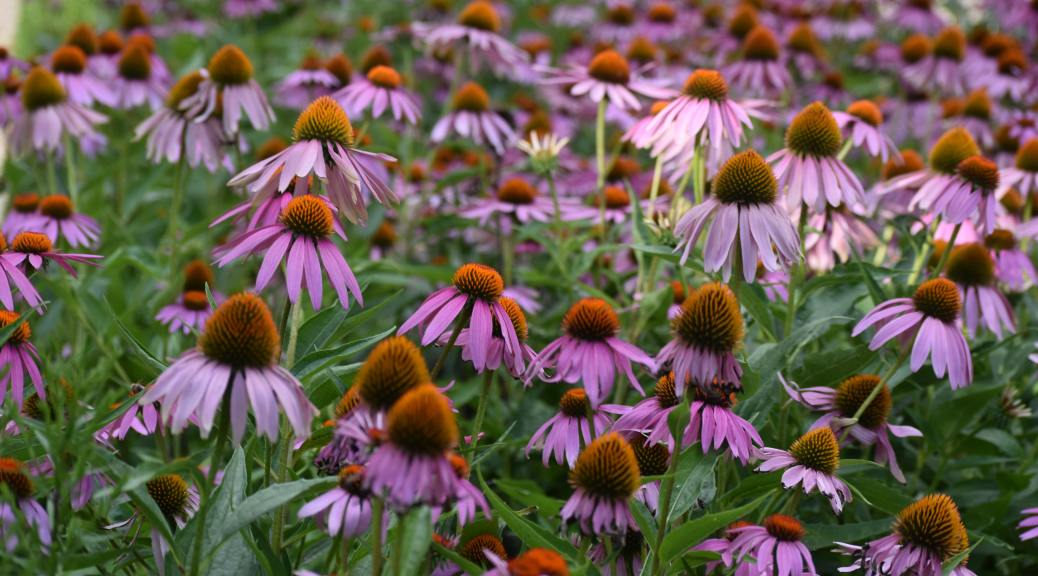
Coneflowers (Echinacea), with their vibrant blooms and potential health benefits, are a favorite among garden enthusiasts. However, these beauties can sometimes face challenges, notably from insects and disease. While both can cause issues, they’re quite different in their effects and how they impact your beautiful echinacea.

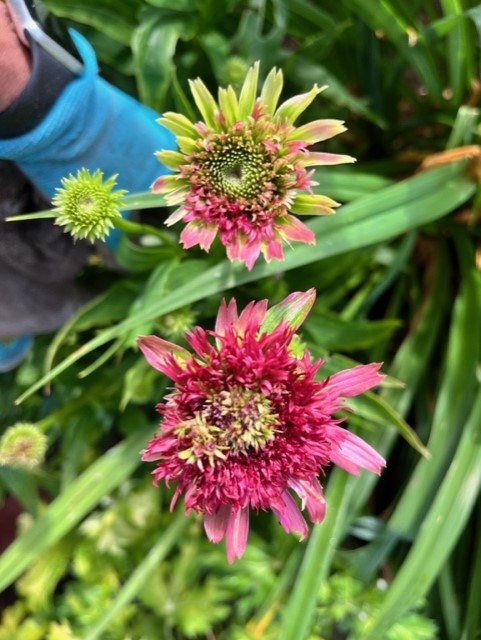
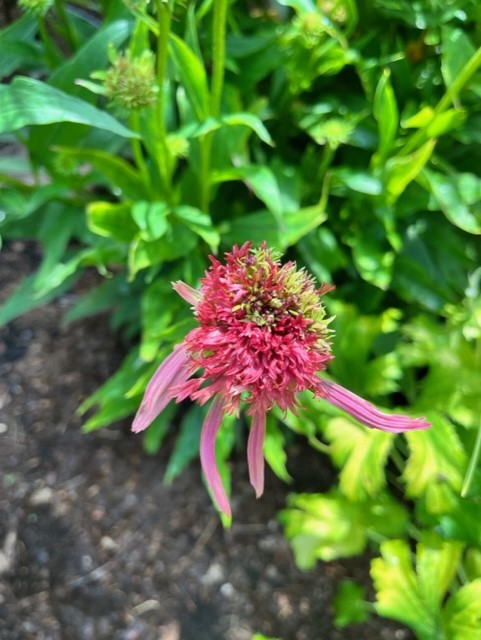
Coneflower rosette mites, or eriophyid mites, are microscopic pests that can infest your echinacea plants. They’re like those unwanted houseguests that sneak in unnoticed and cause havoc before you even realize it. These mites suck the sap from the flower cones, leading to stunted growth and a generally unhealthy appearance. To treat for eriophyid mites, remove the flowers and do not compost. The flower heads below both show damage from mites.

On the other hand, aster yellows is a plant disease caused by a bacterium called a phytoplasma. It spreads through leafhoppers, which are tiny insects that feed on plant sap. Unlike erythroid mites, aster yellows is more like a viral cold that your echinacea catches. Plants infected with aster yellows show symptoms like distorted flowers, leaf-like structures in place of flowers, and overall stunted, often yellowed, growth. The plant may have growths out of its cone or tufts of green where the petals should be. Unfortunately, there’s no cure for this disease, so the best approach is to promptly remove and destroy infected plants (including the roots) to prevent the bacteria from spreading to others. The disease primarily affects black-eyed susan (Rudbeckia hirta) and coneflowers (Echinacea spp.)

Lastly, the main difference between mite and disease symptoms are the colors of the rosettes.  Aster Yellows produces yellowish-green rosettes while the mites produce rosettes that usually retain some of the original color of the cones.  Of course, the mites do not affect the rest of the plant; their damage is confined to the flower cones.

For an excellent side-by-side comparison with photos of aster yellows and eriophyid mites on coneflowers, check out this page from Ohio State University.

Resources

Ohio State University: Coneflower Calamities: Round 3

Minnesota State Horticultural Society: Aster Yellows vs. Eriophyid Mites on Coneflower

Illinois Extension: Aster Yellows on Coneflower

Begonias, so many Options!

By Christine Freeburn, Master Gardener

The choices for summer annuals seems to grow greater every year. Filler plants like geraniums, petunias, marigolds, impatiens are lovely, but the begonia has so many variations of shapes, sizes, colour, and sun requirements, they are worth a try in your hanging baskets or containers.

Begonia are generally easy care with no deadheading and different varieties can grow in sun or shade. Flowers are often smaller but there are lots on the plant. They often just fall off or can be pinched off quickly. Leaves come in many shapes and sizes, colours and textures. When you go into a garden centre, you need to know what type of begonia you are looking for.

Fibrous rooted types include the easy Dragon Wing variety which are great in window boxes and containers. They come in red, pink or white, grow about a foot tall and wide, and can take sun or part sun. There is a new variety called Canary Wing which has yellow leaves and prefers less sun.

Wax begonias Begonia semperflorens are usually sold in cell paks, prefer part shade, can have bronze or green thicker fleshy leaves and white, pink or red flowers. Often called bedding begonia, they are great in the garden as an alternative to impatiens.

Tuberous begonias include the Solenia type Begonia x tuberhybrida which can take full sun and come in a variety of colours from shades of pink to yellow and red. Great in hangers or containers.

Solina begonia

‘Nonstop’  and ‘Illumination’ are  hybrid variety of tuberous begonia that will take the heat but want shade. They come in lovely shades of pink, red, yellow, peach or white. These also work well in containers and hangers.

Reiger begonias can produce double blooms, are more upright and also prefer shade.

Gryphon Begonia is a cane type begonia with stunning foliage and upright habit which will do well in part shade in the garden bed. Although the plant rarely flowers, the maple shaped leaves on a 2 foot plant looks great.

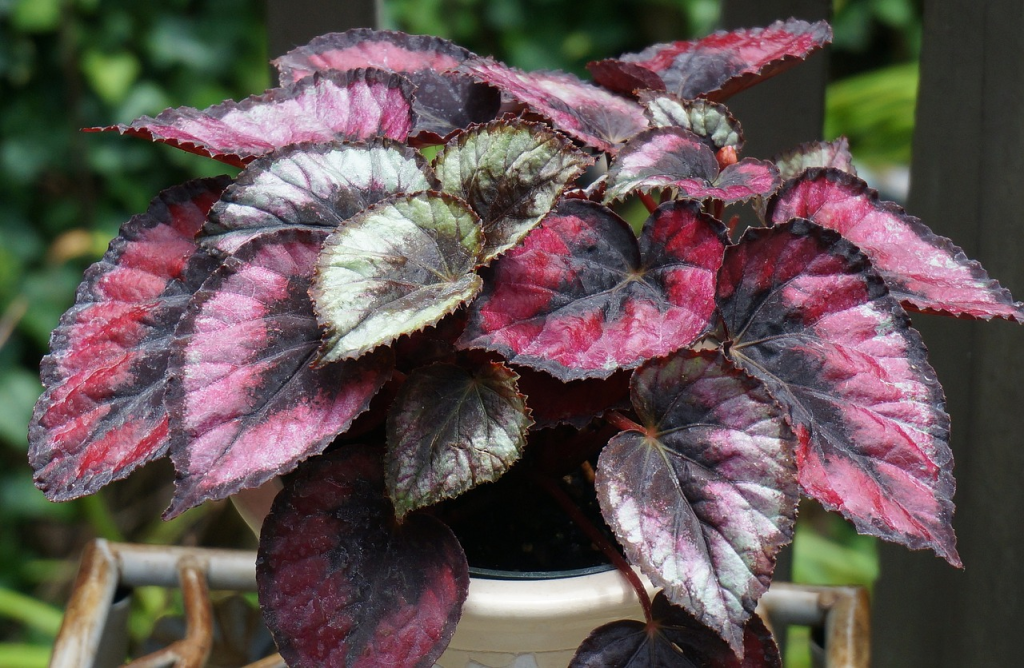
Rex Begonias have amazing furry leaves in many different shapes and colours. They do not want any sun and are often used as houseplants. Flowers are rare on these lovely specimens, but the leaves are the showstopper.

Rex begonia

And if you grew houseplants in the 70s, you might also remember the cute little indoor begonia called Strawberry Begonia Saxifraga stolonifera which grows similar to the spider plant having babies growing from trailing stems. These little houseplants are difficult to find but a nice addition to a houseplant collection.

Although begonias don’t need constant deadheading like so many other annuals, removing spent blossoms will keep the plant looking fresh and encourage new blooms.

Soil should be well draining and evenly moist but don’t over water as this can lead to root rot. Begonia stems are fleshy and brittle, and can break easily, so they don’t do well in wind. Fertilizing for bloom and good health can be done weekly over the summer months.

http://www.missouribotanicalgarden.org/

https://www.thespruce.com/

Peonies: The Stars of the Show at Present

By Mary-Jane Pilgrim, Master Gardener

Peonies are like the royalty of the flower world, with their lush petals and captivating fragrances. If you’re itching to grow more of these stunning beauties in your garden, you’re in luck!

Peony plants fall into one of three categories: herbaceous peonies, tree peonies, and intersectional/Itoh peonies (modern crosses between herbaceous and tree types). This article addresses the propagation of herbaceous peonies by seed and by division.

  1. Growing Peonies from Seeds: Starting peonies from seeds is like embarking on a rather long gardening adventure. First, collect ripe seeds from mature peony plants once the flower heads have dried. Give them a good soak in water for a day to help with germination. Then, plant the seeds in well-draining soil in a pot or tray. Cover the container with plastic wrap to create a cozy greenhouse effect.

Now, it’s time for a little winter simulation. Pop the container in a cool spot like your fridge for about three months. After the chill period, move the container to a warmer spot with indirect sunlight. Keep the soil moist, and be patient. It might take a while, but soon you’ll see those precious seedlings sprouting. Once they grow bigger, you can transplant them into individual pots or your garden. Remember, it may take a couple of years for them to bloom.

  1. Dividing Peonies: Dividing peonies is like giving them a fresh start and making more peony magic happen. Autumn or early spring is the perfect time to divide these beauties. Carefully dig up a mature peony plant, making sure to keep as many roots intact as possible. Gently shake off excess soil and look for natural divisions or “eyes” on the plant – these are the points where new shoots will emerge.

Grab a clean and sharp knife, and cut the plant into sections, making sure each division has a few healthy roots and eyes. Then, replant these divisions in well-prepared soil in a sunny spot. Give them a good drink of water and watch as they settle in and grow. Don’t be surprised if it takes a year or two for the divided peonies to bloom, but when they do, it’ll be worth the wait!

With these two propagation methods, you can expand your peony collection and enjoy a blooming paradise in your garden. Whether you choose seeds or division, the joy of growing peonies will reward you with breathtaking blossoms and a sense of accomplishment. Happy gardening!

To Fertilize or Not Fertilize?

By Lois Scott, Master Gardener

Gardeners are typically highly invested in having a beautiful and productive garden and want to do what is best for their plants.  Although fertilizers are very often considered a necessary tool in providing optimal growing conditions they should be used with care and only when a soil test says they are needed.  https://www.ontario.ca/page/soil-leaf-and-petiole-tissue-and-forages-and-feed-testing-labs

Commercial fertilizers or ‘plant food’ usually list three major nutrients on their products; nitrogen, phosphorus and potassium or N-P-K.  These are very important plant nutrients but according to Linda Chalker-Scott PhD, author of the book “How Plants Work” https://horticulture.wsu.edu/people/chalker-scott/ “Our home landscape soils usually have enough phosphorus and potassium to meet our plant’s needs.  So, wouldn’t more be better?  She goes on to explain that excess levels of phosphate fertilizer can be bad for soil organisms by inhibiting the “development of the mycorrhizal relationship between fungi and plant roots causing plants to expend more energy for root growth.  Another negative aspect of excess phosphorus is that it reduces the ability of plants to take up iron, a plant micronutrient.  Excess phosphorus may also dissolve in runoff water causing blooms of harmful algae, depleting waterways of oxygen.  Organic fertilizers such as bone meal, guano and chicken manure can also create an excess of phosphate in the soil”. https://gardenprofessors.com/fertilizers-a-cautionary-tale/

When your vegetable garden and/or annuals are growing abundantly but you start seeing older leaves turning yellow, your soil may need a boost of nitrogen-rich fertilizer.  Nitrogen can become deficient in an actively growing garden and using something like alfalfa meal can replenish it.

Slow and steady may be the best approach to providing your plants with the ideal growing conditions.  According to Dr. Chalker-Scott, “using organic mulches like composts, wood chips and pine needles provide a slow feed of nutrients to the soil, the way that nature provides nutrients”.

Pruning Herbaceous Perennials “The Chelsea Chop”

By Marilyn Homewood, Master Gardener

As the spring bulbs fade and we move past our “last frost” date (or so we hope!), the perennials are starting to grow by leaps and bounds. This can lead us to consider ways to manage their size or bloom time. The Chelsea Chop is a method of pruning that limits the size of a plant, controls the flower season (which can assist in creating peak season bloom combinations) and often decreases the floppiness of a number of herbaceous perennials.

In England, the time for this type of pruning is carried out now which is around the same time as the Chelsea Flower Show is held, hence the name.  In our neck of the woods, timing would be most appropriate in late spring or very early summer when the plant has a fairly substantial amount of vegetative growth.  When I am going to do this, I like to have it done before the onset of our hotter, drier weather so that it does not stress the plant overly (on average by mid June).

Phlox chopped in front to extend blooming season

Plants that have received the Chelsea Chop are not as tall or leggy, so that they may not need supporting.  Flowers are smaller but are more numerous (removal of top shoots encourages branching of laterals).

It should be noted that you can not chop all summer blooming plants.  Woody sub-shrubs do not respond well.  If the spring has been dry, drastic pruning could shock your plants so a light hand is recommended in those years.

Many summer and autumn flowering perennials are good candidates for the chop.  These plants include:

  • Garden phox (Phlox paniculata)      
  • Yarrow (Achillea spp.)
  • Bellflower (Campanula spp)
  • Aster (Symphyotichum spp)
  • Coneflower (Echinacea spp)
  • Black-eyed Susan (Rudbeckia spp)
  • Upright Sedum Hylotelephium spp)
  • Penstemon (Penstemon spp)
  • Goldenrod (Solidago spp.)
  • Shasta daisy (Leucanthemum superbum)

This list is not complete.  Try experimenting with some of the vigorous plants in your garden.  I have a cultivar of catmint (Nepeta “Six Hills Giant”) that is large and spreading.  In one area of my garden, I prefer it to stand a little more to show the blooms to effect so I chop it back by about one third in the last week of May.

Nepeta more upright and floriferous due to chopping

The chop is done in two ways depending on the effect one desires.  In the first method, clumps of perennials are cut back by one third to one half.  This will delay flowering and keep plants shorter and more compact.  The second method involves cutting back only half of the stems on a plant, this has the effect of extending the flowering season over a longer period.  I commonly used the second method on my Garden Phlox keeping the plants in bloom for a longer time. Pruning can be done with sharp shears or with secateurs.  Garden shears are often faster when there is a large volume of pruning to be done.  Try out the chop and see if you can alter the form or flower of some of your favourites!

Resources

https://www.gardenersworld.com/plants/11-plants-to-chelsea-chop/

https://www.bethchatto.co.uk/discover/our-blog/guides/the-chelsea-chop-how-to-do-it.htm

How to Make Your Vegetable Garden Beautiful

By Cheryl Harrison, Master Gardener

I was recently browsing through a hard copy April, 2009 issue of the “Fine Gardening” magazine.  I came across an article, “Who Says Your Kitchen Garden Can’t Be Beautiful”… to see the full article check the link here.   The author, Jennifer Bartley,  planted her raised vegetable garden for the edibles that it produced but in such a way that the garden was also beautiful! 

This appeals to me because vegetable gardens are definitely not my passion.  However, I do love to eat my own fresh veggies and so I have a vegetable garden.

I have raised vegetable beds where I have intermittently practiced square foot gardening (see square foot gardening for more information).  I have also planted marigolds and nasturtiums amongst my vegetables which are pretty but also serve a purpose….the marigolds for insect control and the nasturtiums because they are edible.  For more information on flowers for your vegetable garden check the link here. I have been inching towards trying to make my vegetable garden more visually appealing without realizing it.

Ms. Bartley talks about using “four simple design tips” including:

  • Arrange bunches of bold colour.
  • Plant snug beds.
  • Smooth out the edges.
  • Define your space.

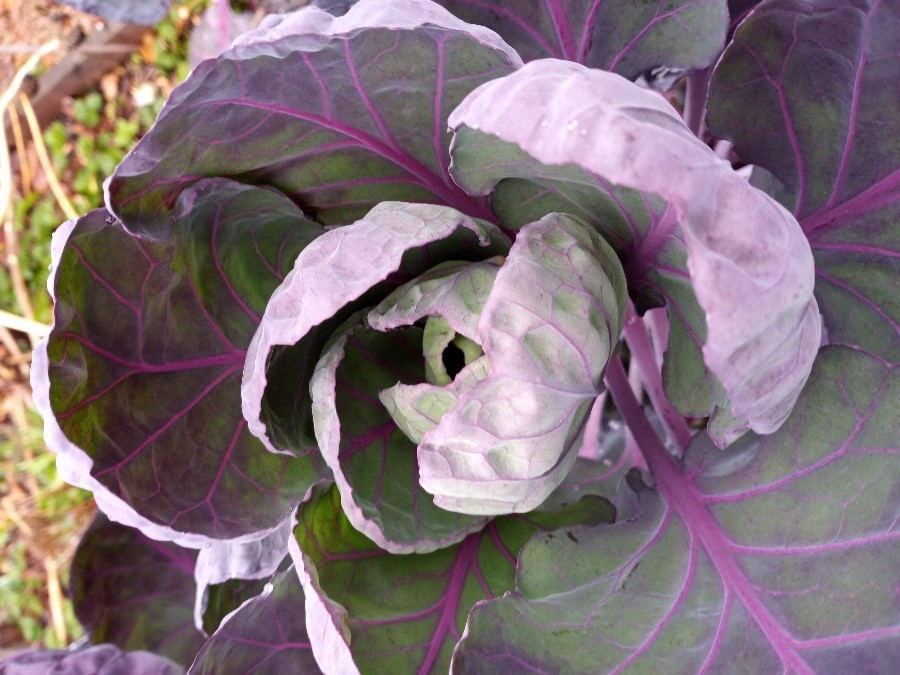
Arrange bunches of bold colour – I do a planting plan ahead of time every year.  Try grouping your vegetables, flowers, fruits and herbs together so that you have lots of colour and texture (different leaf shapes).  For example, you may edge the bed with the leafy fronds of carrot followed by beets and parsnip, maybe you plant some asparagus in the centre for the height or an obelisk in the centre and plant runner beans to climb it.  You could use yellow, green or purple bush beans to fill in the blanks.  I grew some purple Brussel sprouts last year and the leaves were spectacular!

Plant snug beds – This tip works well with raised beds.  There is no need to plant your vegies in rows.  Instead, group the vegetables together close enough to cover the soil when they are grown but not so close that they will crowd each other to prevent proper maturity.  Covering the soil helps with moisture retention and weed suppression.  Thinning your carrots allows them to mature properly and provides the delicious “thinnings” for your salad.

Smooth out the edges – Just like your flower beds, vegetable gardens are at their best when they are clean and pathways are clear.  I use straw in my pathways because it is available and my garden is wet in the spring so the straw covers the mud between the raised beds.  You could use bark mulch, gravel, brick or whatever you have. 

Define your space – We humans like a certain amount of order and proportion in our world.  If a space is too big, or too small, it can make us feel uncomfortable.  The edges of a raised bed help to define the space.  In our garden, we have several raised beds so have a defined entry to the garden and a wooden cedar fence to further define the space.  You might choose to use a pot filled with herbs at your entry, a rock or cedar stump on either side or a berry producing shrub.

It is also a great idea to have a bench in the garden where you may rest and admire your work.  Also, don’t stop with just a scarecrow … you may choose to add other garden ornaments in order to make your own beautiful vegetable garden!

Divide to Multiply

by Marilyn Homewood, Master Gardener

Despite the lingering snow, the longer days and stronger sun tell us that spring is indeed here! With that we begin to think about all of the chores we wish to accomplish. Division of perennials is a common task. So why do we divide?

Division is a common means of vegetative propagation. It is an easy way to increase the number of plants you have available. Division is also required maintenance for some perennials in order to achieve maximum bloom year after year. Although a fairly simple process, there are a couple of considerations you must make.

Time of Year

Because successful division depends on the growth of new roots, the best times of the year to divide are spring and fall when the soil is warm, water is available and stressors are at a minimum.

Many perennials can also be divided during the summer months but high temperatures mean an increase in water loss. This leads to a stressed plant so extra care must be provided to ensure the plant remain well hydrated. Also, there are some ornamental grasses that only grow new roots in the spring. These plants should not be divided in the fall as they will not grow new roots that can take up water.

Method of Division

This will depend on the type of root and crown system the plant has. No matter the type of plant, keep in mind that each plant division must contain at least one bud or growing point and a few healthy roots. If you are unsure of the what you are dealing with, there is a link to a list from the University of Minnesota at the end of this blog.

Clumpers – These plants often have fibrous root systems sometimes with rhizomes but grow many smaller crowns at the base of the original each having its own root system. This often makes for easy separation with little tissue damage. Examples include ajuga, daylily and hosta.

Runners – These are plants that spread by covering the ground by shallow horizontal stems. They root along their nodes and send up new shoots making them easily dividable by separating the root ball. Examples include bee balm and goldenrod.

Tight, woody crowns – These plants are a little more challenging to divide as the buds are often tightly packed on a hardened crown. For best results the plant must be older when split to ensure that divisions with have growing points. Examples include baptisia and peony.

Thick rhizomes or tubers – Rhizomes are technically stems that grow underground. Divided sections must contain at least one growing eye. Examples in this group would be bearded iris and dahlia. These varieties should only be divided when dormant.

Tap rooted plants –These cannot rarely be divided unless multiple tap roots have developed and are better propagated by using root cuttings. Plants in this group includes oriental poppies.

Basic Steps for Division

  1. Dig out the plant. If not replanting immediately, protect from desiccation. Removing the plant from the ground can destroy tiny root hairs (responsible for water uptake). Protecting the plant means a faster recovery on the division is replanted. I often place the root ball in a plastic bag and place in a shaded area.
  2. Separate your plant into pieces using the most appropriate method. Make sure to take generous divisions of sufficient size to ensure growing points and healthy roots.
  3. Replant, digging hole wide enough. Roots like to grow out and down so give them enough space to spread out. Be sure that the soil has good contact with the root system by firming the soil then water the division in, slowly allowing the soil to further settle against the roots.

Resources

The Science Behind Plant Division

Divide and Conquer: How to Divide and Multiply Perennials

How and When to Divide Perennials

Table for Dividing Perennials

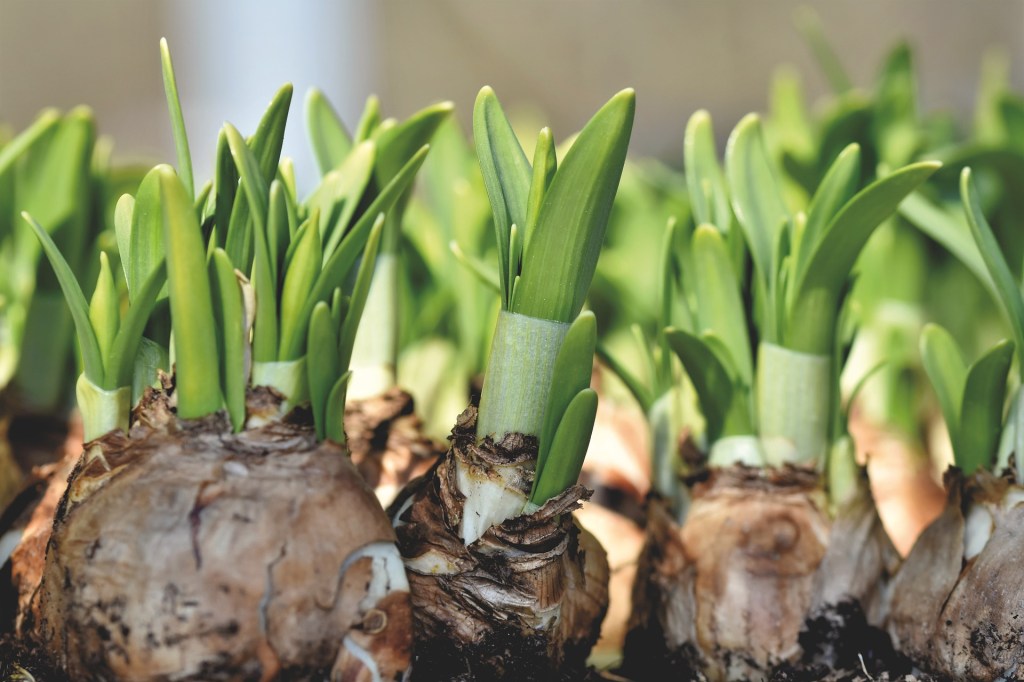
Planting Spring Bulbs Now…Yes It Is Possible

by Carol Anderson, Master Gardener in Training

Can spring bulbs be planted in late winter/early spring and still bloom? The answer is yes!

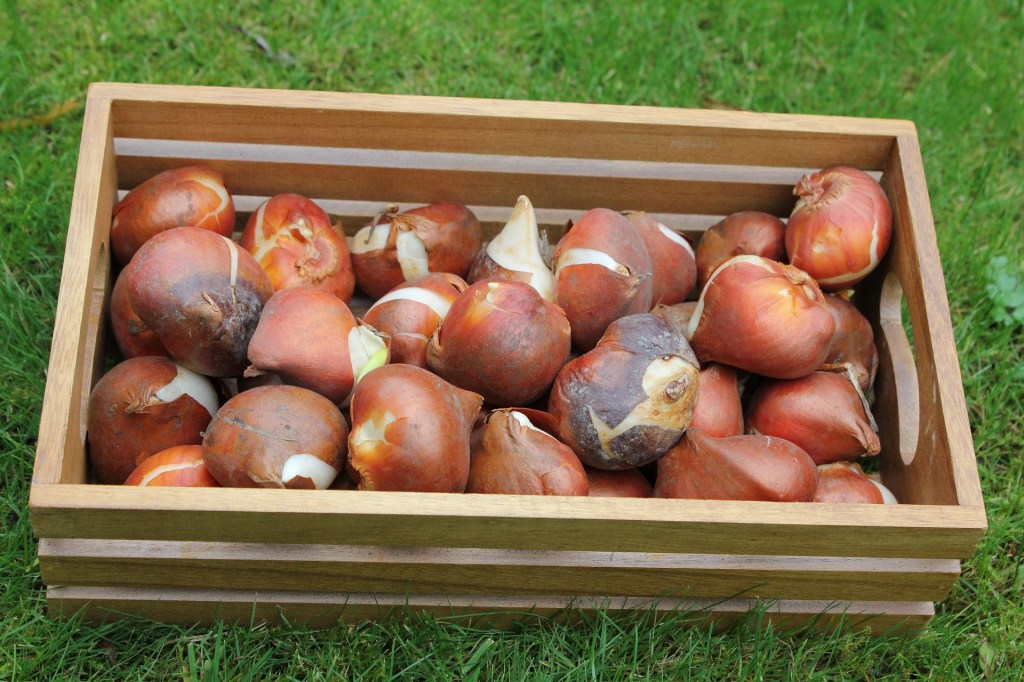
Perhaps you forgot to plant your spring bulbs in the fall (as is customary and recommended), it is better to take your chances now (late winter) and plant the bulbs rather than waiting for next fall as bulbs may not survive out of the ground this long.

Regardless of your circumstance, if you have “stray” bulbs still in your possession and they have been stored properly…you can “force” (or “trick”) your spring bulbs into blooming.

Bulbs can be divided into two groups, those that require a chill period, and those that don’t. For those that do require chilling, this chill period is less than what the bulbs would experience in the ground in a typical Ontario winter.

To force cold hardy bulbs into bloom you must first encourage them to produce new roots. This is accomplished by keeping them cool and moist for a period of time. Dropping the temperature during the cooling period to mimic the shift in soil temperatures that occurs naturally during the winter is a very effective method to encourage rooting, but can only be accomplished if you have the right set up (separate refrigerator, etc…).

Regardless, a proper cooling period that is around 40 degrees F (4.5 degrees C) throughout should be satisfactory to stimulate rooting and subsequent flowering.

Here is what you need to do:

StepNotes
Ensure that those forgotten bulbs are still good.If they have been stored in a cool, dry and dark location (and even better in a paper bag) they should be okay. Bulbs should be plump, firm and dry. Any sign of softness or evidence of mould signals that they are likely better in the trash can.
Pot the bulbs in a well-drained potting mix according to depth requirements for that bulb. Space the bulbs much more closely than you otherwise would have (almost touching).Any pot can be used as long as there is 3-4” of soil under the bulb for rooting. It is recommended that “soil-less” potting mix is used as this allows excess moisture to drain away preventing potential growth of pathogens.
Water well and place in a cool dark spot (not freezing) for the required cooling period (see Table 1 below). Check moisture levels during this period and water if top is dry to the touch.Although the ideal rooting temperature varies, most bulbs do best if stored at 40-60 degrees F for 3-4 weeks after potting, and then 32-40 degrees for the balance of the cooling period, mimicking the actual change in seasons. However, most bulbs will do well if the temperature is maintained close to 40 degrees F for the duration of the chilling period.
Check for rooting after the recommended chilling time.Look for fleshy white roots in the bottom of the pots. Pots can stay in the cool zone until you are ready to bring them in of pot outside.
Bring the pots into the warmth/light in the house.Ideally a sunny window in a cooler room (~65 degrees F). The bulbs think that spring has arrived and will sprout and ultimately flower in ~ 2-5 weeks.
Once the bulbs sprout and flower, they can be transplanted into larger outdoor containers outside.They can also be transplanted into the garden directly at this point, maintaining the same depth
If grown in containers outside, remember that just like bulbs in the garden, allow them to completely die back (including the foliage).Bulbs need all of the energy from the stems in order to replenish and store energy in the bulb for next years growth/bloom.
Note: Bulbs can also be chilled in a refrigerator where the temperature can be turned down after 3-4 weeks to truly mimic the changing seasons. However, ensure there is no fresh fruit in the same refrigerator as the ethylene gas produced can affect flowering.

Table 1. Recommended Rooting Times by Bulb Type

Bulb TypePlanting DepthCooling Period
Anemone4 inches8-10 weeks
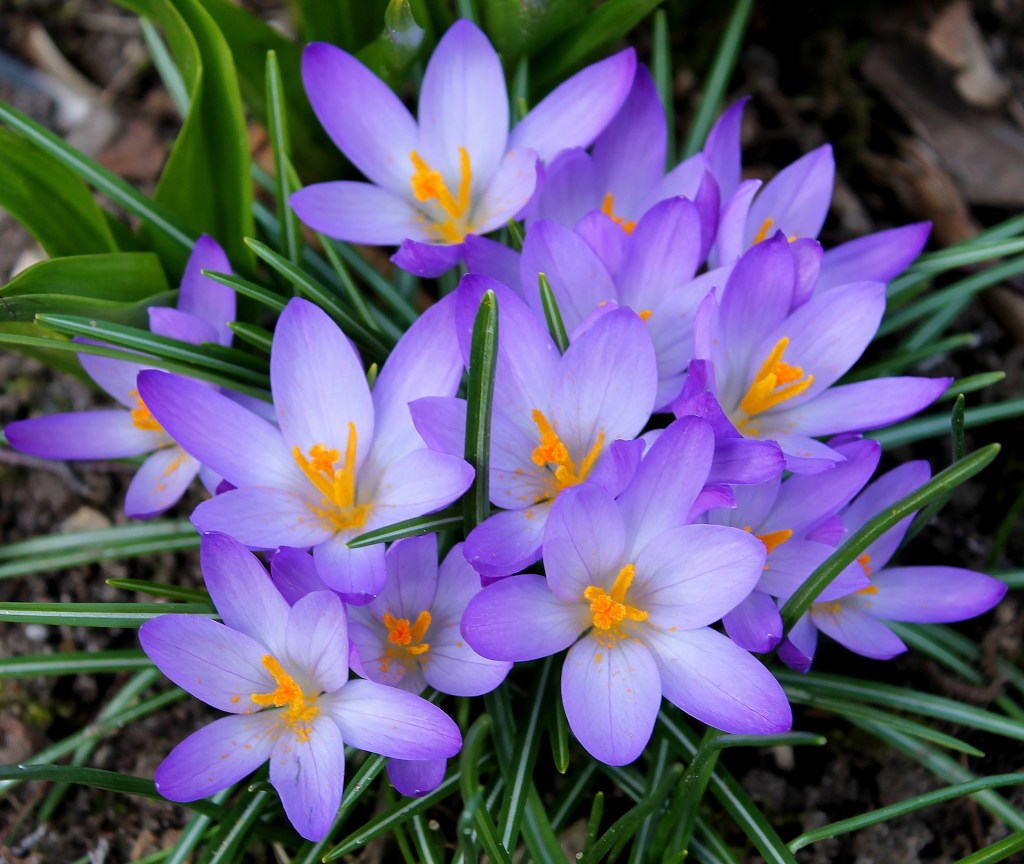
Crocus4 inches8-10 weeks
Hyacinth6 to 8 inches12-14 weeks
Narcissus (Daffodil)6 to 8 inches14-17 weeks
Snowdrops3 inches10-12 weeks
Tulip6 to 8 inches14-16 weeks

Keep in mind that forced bulbs planted into the garden may not bloom the subsequent year. However, in the end, it may be better to try and “trick” your spare or forgotten bulbs into blooming this spring and enjoy them rather than take the chance that they are spoiled by next Fall.

Sources: www.whiteflowerfarm.com ; www.frustratedgardener.com ; www.halcyon-landscape.co.uk

Will This Old Veggie Seed Grow?

By Lois Scott, Master Gardener

You have probably heard this adage applied to various activities/hobbies, but here I go.  Buying seeds and starting seeds are two different activities.  I engage in both, but sometimes the buying outruns the starting and I find myself looking at an unused package of vegetable seed purchased in the past and wondering if those seeds are viable.  Checking vegetable seed viability is easy and may save you from the disappointment of a poor harvest.

To say a seed is viable is to say it is alive.  Checking for this can be easily done by wrapping a number of seeds (10-20) in a moistened paper towel, placing them in a sealed plastic bag in a warm place (21-26*C) and then checking for germination in a week or so.  Your germination rate is a percentage, calculated by multiplying the seeds germinated by 100 and dividing that by the total number of seeds in your trial.  It is recommended that if your germination rate is below 70% you should buy new seed.  In my demonstration featured in the two photos shown, I used 10 seeds and 7 sprouted.  My germination rate is 70%. 

Checking for seed viability by putting seeds in water and discarding the floating ones is not a reliable test.

Different types of vegetable seeds remain viable for different lengths of time https://today.oregonstate.edu/news/give-seeds-test-performance but proper storage of seeds will optimize their viability.  They are best stored in a cool place like a refrigerator, cool basement or root cellar. https://hortnews.extension.iastate.edu/how-store-seeds-and-test-germination-rates 

Some seed companies also list on the back of their seed packages the optimum germination rate and the year the seeds were packed and tested.  So, I know that the rapini seeds I haven’t used were packed in 2022 and maybe I should plant them this year!

It’s coming to that seed starting time of year so don’t hesitate to give some of your older seeds a chance to prove themselves and save yourself from vegetable garden let-down.

Gardening in January

By Christine Freeburn, Master Gardener

Here we are in the dark days of winter; the holidays are over, the new year has been rung in, and the days are getting longer as we see the snow falling and the temperatures plunging.

Although we can’t go out and play in the garden, there are still lots of things we can do to satisfy our green thumbs.

Clean and sharpen garden tools
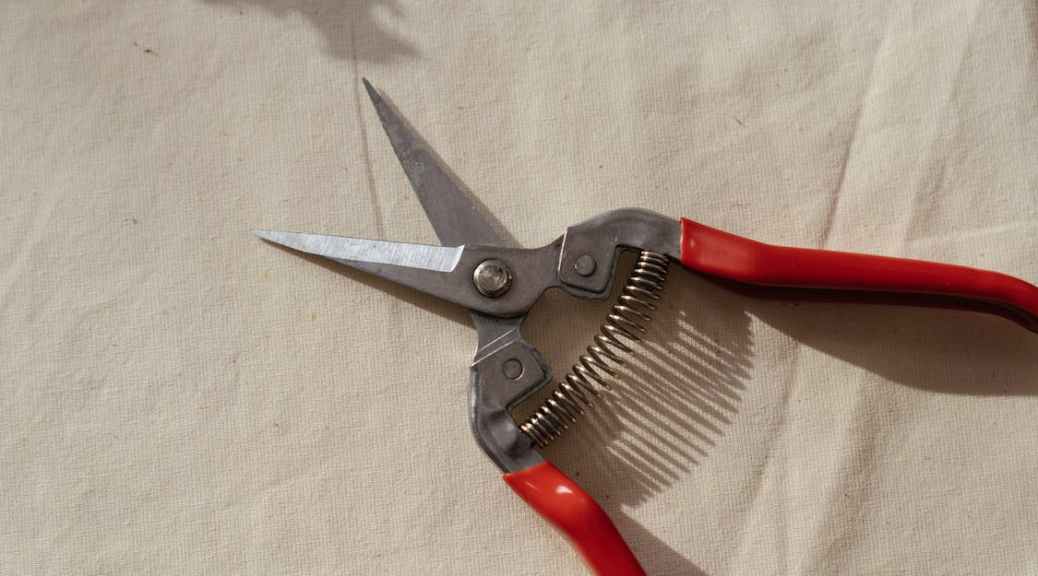
Buying good quality tools and keeping them clean and sharpened just makes good sense. Diseases can be passed through your tools, so always wipe with soap & water or even better with disinfectant wipes. Check out this site for tips on keeping tools in great condition.

Check out seed catalogues online
Growing plants from seed gives you a wider variety to choose from and also the satisfaction of growing your own. If you are a vegetable grower, try something new this coming season. If you are like me, you will want to order a paper copy catalogue from your favourite seed companies.

Start a garden journal
Set something up on your computer with charts and photos, or start a written record in a blank book or special garden journal. Record new plant purchases and who you bought them from and where they were planted in your garden. Include successes, ways to improve and dreams for next season.

Review last year’s garden successes
If you have kept a journal, you can check your notes. How can you improve for this coming season? Did you plant the right plant in the best location? Were soil, light and water conditions the best they could be? Remember that weather can determine success or failure as well. Some plants thrive with wet cooler springs while others enjoy hot and humid weather.

Check your houseplants for signs of pests or diseases
Gnats and aphids seem to come alive during the next couple of months. Have Safers soap ready to combat those nasty pests. Remove diseased leaves and isolate plants that are sick. Many houseplants are in resting stages and are not actively growing, so do not fertilize. Houseplants may not be drinking as much either so water sparingly. Have a bright indirect spot in your home? Maybe it’s time for a new specimen. Remember to isolate your new plant to ensure it is not infested or diseased before introducing to the rest of your collection.

Brighten your home with some fresh cut flowers
There is nothing like fresh cut flowers to brighten up a gloomy winter day. Check out this post on our website for caring for cut flowers.

Read a gardening book
When the weather outside is frightful, be sure to have a list of books to read, whether physically or electronically. Lorraine Johnson’s A Garden for the Rusty-Patched Bumble Bee is on my list.

Outside garden maintenance
When you are outside shovelling snow, throw some clean snow on and around any of your more tender perennials. Things like rhododendrons and hibiscus overwinter better if they have a nice layer of snow to cover and insulate them. If the weather has gotten mild and the snow has melted, cut and use your old Christmas tree branches to cover and protect from the coming frigid temperatures and bright burning sunlight.

Sign up for some online learning
There are many local garden organizations that have newsletters, blogs, YouTube videos and live zoom events available. Be sure you are learning from a reputable and local site if you want to add to your knowledge for your own garden. You can, of course, enjoy the foliage of some exotic locations, but know we can’t grow most of it in our zone 5 environment.

Try these sites for local learning. Some sites offer free webinars while others will charge.

https://arboretum.uoguelph.ca/educationandevents/workshops
https://splibrary.ca/events/gardening-changing-climate
https://www.eventbrite.ca/e/attracting-pollinators-to-the-garden-tickets

Already signed up for some online learning?  You can share with us or post on our facebook page “Over the Fence with the Peterborough Master Gardeners

As of today, there are only TEN more weeks till spring.

Use this time to rest, plan and dream for the next season.