Let’s Talk about Baptisia!

By Cheryl Harrison, Master Gardener

Baptisia species are part of the pea, or legume, family (Fabaceae) of plants.   The folks who develop new plants have been working on Baptisia for a few years.  The old reliable B. australis, with its pretty blue flowers, is still very available but the new hybrids feature various different flower colours.

As expected with all members of the pea family, Baptisia host rhizobia bacteria on root nodules. These bacteria are able to take nitrogen from the air and convert it to a form that is usable by the plant.  This is called nitrogen fixation.  Nitrogen is a necessary nutrient for most plants.

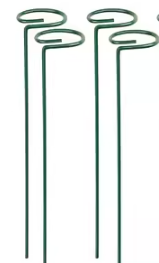
Baptisia prefers full sun but will grow in part shade and may reach .5-1.5 Metres (2-4 ft.) high and will die back to the ground in fall after a hard frost.  They prefer moist, well-drained soil and are drought tolerant.  All my Baptisia grow well in our zone 4-5 garden.  Baptisia spread by seeds which are pea/bean-like and form in pods.  The dry seeds rattle in the pods in the fall winds and if you brush against the plant….this makes an unusual sound in the garden.  You can prune the plant after flowering to help maintain a more rounded form but you will lose those interesting seed pods!  My plants do not flop but you may wish to add some support if needed.  The numerous, and gorgeous, flower blooms are lined up along the tall stems in late spring to early summer.  Once the flowers are done, this shrub-like herbaceous perennial will still look good in your garden with its lush green foliage and attractive seed pods.  For more information, check out this “Baptisia Plant Guide”.

Bonus….this plant is deer and rabbit resistant.  We have at least one resident rabbit and the odd deer passing through, but I have never seen any foraging damage on my Baptisia plants.  However, they are attractive to bees and butterflies.

Baptisia australis, wild/blue false indigo, are native to the eastern half of the U.S. although it has become naturalized in Ontario. The old common name wild/blue false indigo refers to the plant’s use in the southern states as a substitute for the dye indigo during the 18th century.  As mentioned, this plant has blue flowers.

Baptisia hybrid ‘Dark Chocolate’ is one that I have in my garden.  It has all of the usual Baptisia characteristics with the addition of dark brown flower blooms.  That may sound odd but they really are quite attractive.  Mine is growing beside a garden path so that a garden visitor can have a close look when strolling by.

Another Baptisia hybrid is ‘Lemon Meringue’.  This one, as you likely can guess, has yellow flowers.  It too has the typical Baptisia look.

Baptisia flowers also come in white, lavender and purple…..I hope to collect them all.  With its eye-catching presence, a Baptisia would make a great specimen plant in anyone’s garden!

Annuals in a Pollinator Garden?

by Laura Gardner, Master Gardener

If you’re thinking of creating a pollinator garden with native perennial plants, there will be a period where your space will be rather underwhelming or undeveloped.

There is a saying, “first year they sleep, second year they creep, and third year they leap.” In the first year of their growth, many native plants focus channeling their energy into root development instead of flowering. It is important to consider other ways to increase floral resources for pollinators while you wait for these plants to grow.

Consider adding a few native species that are short-lived annuals or biennials—either potted plants or directly sown seed. If started early in the spring, Black-Eyed Susan (Rudbeckia hirta), for example, will bloom in the first year. It usually produces enough seed to ensure future generations.

Spotted Horsemint (Monarda punctata) and Lanceleaf Coreopsis (Coreopsis lanceolata) are a couple of others that will also bloom the first year when started early. Near-native annual sunflowers (Helianthus annuus) are another great choice for new pollinator gardens. An important consideration for choosing annual sunflowers is to make sure that they are not pollenless types.

That said, there really are not a whole lot of native annual species that you can add. To help fill in the gap, it is possible to consider some non-native annuals. An aspect of this that is concerning is whether these plants provide adequate nectar and/or pollen to pollinators.

Many annuals have been bred for size, colour, vigour, and length of bloom period and not so much for their nectar and pollen production. When I visit a garden centre, I pay attention to see if there are any insects visiting the plants. I usually don’t see a whole lot of activity. Of course, this is anecdotal, so what does the research say?

From my cursory reading, the research is a bit uneven. A UK study in 2017 found that most ornamental flowering plants found in garden centres were unattractive to pollinators.[i]

Another US study that looked at a select group of annuals found that while native plants were superior overall, there were some non-native annuals that could be important forage for pollinators. It was found that in comparison with Zinnia, Marigold (Tagetes), Lantana, and Starcluster (Pentas), Sweet Alyssum (Lobularia maritima) was the top performer. In particular, the cultivars “Frosty Knight” and “Snow Princess” showed the greatest diversity and abundance of pollinators compared to the other Lobularia types as well as the other species.[ii]

This year I planted some Lobularia near my vegetable garden in the hopes of attracting beneficial parasitic wasps. The adult wasps will seek out the nectar from the flowers and look for caterpillars on my Brassicas for their young.

Image source: “”Sweet Alyssum” by Mustang Joe is marked with CC0 1.0. To view the terms, visit https://creativecommons.org/publicdomain/zero/1.0/?ref=openverse.

Another more recent study from June of this year also found that while the native plants in the study were visited more by pollinators than the non-native plants, there were still some desirable non-native annuals. Specifically, Begonia and Impatiens were visited more frequently by pollinators than Pansy, Petunia, New Guinea Impatiens, and Geranium.

Similar to the previously mentioned study, these researchers found that there was variability between cultivars of a species. Of the cultivars, the four most visited were Begonia ‘Cocktail Brandy’, Begonia ‘Ambassador Rose Blush’, Impatiens ‘Accent Coral’, and Impatiens ‘Super Elfin XP White.’[iii]

Now, an important question that comes out of this is whether these plants provide quality floral resources for pollinators. Pollinator visits to flowers does not necessarily mean that they are benefiting from the resource. More research is needed in this area. Until then, we can make a few reasonable annual plant choices to help in the interim while the other plants in our new pollinator gardens mature.


[i] Garbuzov, Mihail & Alton, Karin & Ratnieks, Francis. (2017). Most ornamental plants on sale in garden centres are unattractive to flower-visiting insects. PeerJ. 5. e3066. 10.7717/peerj.3066.
[ii] E Erickson, S Adam, L Russo, V Wojcik, H M Patch, C M Grozinger, More Than Meets the Eye? The Role of Annual Ornamental Flowers in Supporting Pollinators, Environmental Entomology, Volume 49, Issue 1, February 2020, Pages 178–188, https://doi.org/10.1093/ee/nvz133

[iii] David Smitley, Colin Oneil, Erica Hotchkiss, Erik Runkle, Jared Studyvin, Evaluation of the most popular annual flowers sold in the United States and Europe indicates low visitation rates by pollinators and large variation among cultivars, Journal of Economic Entomology, Volume 117, Issue 3, June 2024, Pages 1057–1070, https://doi.org/10.1093/jee/toae084

Please don’t eat the Daisies: Rabbit and Deer Resistant Plants

By Christine Freeburn, Master Gardener

For many gardeners, deer are a constant problem in the garden. They can destroy a hosta display or your treasured roses in an afternoon. In my neighbourhood rabbits are plentiful and they eat many kinds of plants from tulips to hosta. I have chicken wire around the base of most of my clematis. I fence off my euonymus, willow and Rose of Sharon in the winter with fencing high enough to be well above the snow line. I have my vegetable garden fenced and try to remember to keep the gates closed. (although, this spring a determined female rabbit  learned how to jump into my fenced compost pile and then into the vegetable garden where she decided to make a nest).  I spray my tulips, roses and anything else that the critters start munching on with a product that repels deer and rabbits. It is stinky and washes off if there is heavy rain so needs to be resprayed for best results. I also use a product called Hen Manure to deter squirrels and chipmunks. Sprinkling hen manure in your freshly planted annual containers, will keep these creatures from digging. And it is an organic fertilizer too. I also cover a raised vegetable garden bed with a row cover which looks and feels like a bridal veil. It allows sun and rain in, but keeps squirrels, chipmunks and pests like beetles out and can be good for light frosts. Doesn’t look pretty but it works.

Rabbits & deer generally don’t like plants that have a fragrance. Think of mints, marigolds, sages and monardas.  Rough or fuzzy leaf textures are also characteristics that deer and rabbits don’t enjoy.

There are some lovely perennials available that fit in those categories. Check plant tags as many growers are now listing if the plant is resistant to deer and rabbits.

Below, I have listed some plants that are generally resistant.

Perennials for Sun

  • Monkshood     Aconitum carmichaelii
  • Geranium        Geranium macrorrhizum
  • Peony               Paeonia officinalis
  • False Indigo    Baptisia australis
  • Salvia               Salvis x sylvestris
  • Yarrow            Achillea millefolium
  • Lavender        Lavandula augustifolia
  • Catmint           Nepeta
  • BeeBalm         Monarda
  • Russian Sage  Perovskia atriplicifolia
  • Amsonia          Amsonia
  • Grasses – Karl Foerster, Big Bluestem, Northern Sea Oats, Blue Fescue, Blue Oat Grass

[Above, clockwise from left: Astilbe, yarrow, sage, monarda]

Perennials for Shade

  • Bleeding Heart     Dicentra eximia
  • Hellebore               Helleborus orientalis
  • Lady’s Mantle         Alchemilla mollis
  • Snakeroot               Actaea racemosa
  • Spurge                     Euphorbia polychroma
  • Astilbe                     Astilbe x arendsii
  • Japanese Spurge   Pachysandra terminalis
  • Barrenwort             Epimedium graniflorum
  • Bugloss                    Brunnera macrophylla
  • Hakone Grass         Hakonechloa macra
  • Lungwort                Pulmonaria
  • Sedge                       Carex morrowii
  • Ferns – Christmas, Cinnamon, Ostrich, Autumn, Japanese Painted

[Above, clockwise from left: Rabbit, geranium, Japanese painted fern, bleeding heart]

There are some shrubs that deer and rabbits usually don’t bother with. They include Weigela (Weigela florida), Spirea (Spiraea japonica) and Potentilla (Potentilla fruticosa).

Bulbs like Daffodils (Narcissus), Snowdrop (Galanthus nivalis),  Ornamental Onion (Allium) and Autumn Crocus (Colchicum) are not favourites for deer.

Annuals like Dusty Miller (Senecio cineraria),  Licorice (Helichrysum petiolare), Caster Bean (Ricinus communis) and Marigold (Tagetes tenuifolia) have rough or fuzzy leaves or a strong smell that deer or rabbits don’t like.

Herbs like Oregano, Rosemary, Thyme, Sage & Basil have a fragrance creatures stay away from also.

The plants listed above are generally resistant, but are not guaranteed to be deer and rabbit proof. If food is scarce or the creature is adventurous, they will try anything. Sometimes, rabbits just nip the flowers and leave them (grrrrr!)

Having wildlife in the garden is lovely and we enjoy watching our rabbits. But it is nice to have enough of the right plants that will survive and give a nice display of flowers. Balance in nature.

Preparing your garden NOW for the summer heat

By Mary-Jane Pilgrim, Master Gardener

As the summer heat ramps up in Ontario, it’s time to get your garden ready to thrive in the hotter summer months. Here are some essential tips to ensure your garden stays healthy and vibrant despite the scorching temperatures that are most likely to hit us by the end of the month.

First, make sure to water your perennial plants deeply but less frequently now to get them used to what’s ahead. Early morning is the best time to water as it allows the moisture to penetrate the soil before the sun evaporates it. Consider investing in a drip or spray irrigation system to deliver water directly to the roots or lower portions of the plants, minimizing water loss through evaporation. Collect water in rain barrels for hand watering.

Newly planted trees, natives and other plants will begin to need extra support to make it through our harsh summer, and it is often a time that gardeners also struggle. Gardening seems so much easier in the spring, when everything is new and fresh, but do not give up when the temperature climbs and climbs! Summer gardening is so important to having a good garden year-round and working outside in the summer has its rewards too.

Native and non-native plants that have been planted this spring are probably not well enough established to be on their own this first summer, so they will need supplemental water this summer. For this purpose, I’ve purchased a couple dozen “pop bottle watering spikes” that screw onto a 2L pop bottle. Cut the bottom off of the bottle, put the spike on the threaded end and invert into the soil. The spike delivers water at a drip pace — I place these bottle waterers at the base of every new addition each year. By next summer, they can usually handle the dry conditions in our area a little better.

Version 1.0.0

Newly planted trees and shrubs get the “holey pail” treatment. Source a small pail like the ones that kitty litter comes in, and drill about 5 holes in the base. Place a pail beside each new tree or shrub. When temperatures soar and rain is scarce, drop a couple of litres of water into the pail. It will trickle out into the soil around the tree at a slow speed that will allow the tree to utilize the water.

Mulching is another crucial step in preparing your garden for the summer heat. Apply a layer of organic mulch on your flower beds and possibly a cheaper alternative such as straw or wood chips around your veggie beds to help retain moisture in the soil, regulate soil temperature, and suppress weed growth.

Don’t forget your trees! Apply 2 to 3 inches (5-7cm) of mulch around your trees, keeping it at least a few inches away from the trunk, avoiding mulch that has been artificially dyed.

Lastly, keep an eye out for pests and diseases, which tend to thrive in warm, humid conditions. Regularly inspect your plants for any signs of trouble and take appropriate measures to prevent infestations.

By following these simple tips, you can ensure your garden stays as lush and thriving as possible throughout the hot summer months which are just around the corner!

Planting Cedars in the Ontario Landscape

By Emma Murphy, Master Gardener

I see this question every year on our Master Gardeners of Ontario Facebook group – someone goes to their local big box store in the spring, purchases emerald cedars (usually Thuja occidentalis ‘Smaragd’ or ‘Brandon’) to create an instant hedge and within 6 months to a year they are browning and dying and people ask what they are doing wrong.

What’s the Issue?

Both these cedars are native to North America. So-called “Emerald Cedars” are usually Thuja Occidentalis ‘Smaragd’.

FUN FACT – Smaragd is the Danish word for “emerald”.

According to some British Columbia (BC) growers Thuja Occidentalis ‘Brandon’ supposedly grows slightly faster and is bushier and hardier.

Both grow in a columnar shape. This spring I also saw Thuja occidentalis ‘Skybound’ in my local big box store, which is apparently hardier than the ‘Brandon’ cultivar.

In general I don’t recommend any of them for Ontario gardens, and this is why.

Emerald cedars arrive by the truckload each spring from BC growers, where they are grown in cooler summer temperatures with abundant rainfall (compared to Ontario).

Ontario’s summer heat and increasing drought conditions simply cannot support these shrubs; Ontario winters are also a challenge because of frigid temperatures and drying winds causing desiccation or moisture loss of needles. Ontario’s more humid conditions also result in fungal diseases affecting the shrubs.

Photo credit: Pacific West Cedars, BC

Generally seen at big box stores, they are often poorly transported across the country with no water, completely root bound, and poorly-maintained at the stores, and stressed cedar (hey you’ve moved it to a hot Ontario summer from where it was born) often means they die over the summer or in winter even if you care for it.

Bigger is Not Better, and Other Problems

Also, bigger is not better, as they often don’t survive transplanting, and you see a lot of dead or dying brown emerald cedars. If you really want a large emerald cedar (6-7 feet) you should be paying good money from a reliable year-round nursery, not a big box store. I speak from experience as I tried to create a hedge at my previous house in Kitchener.

If you do insist on planting them they must be in full sun. Make sure they get plenty of water in their first year of growth, right up to when the snow flies. A thick layer of mulch will help them to retain that moisture as well. Come winter time, protect them with a layer of burlap to protect them from heavy blankets of snow, which can bend or snap delicate branches.

What’s the Alternative?

For me that’s way too much work. If you are looking to create a visual barrier or hedge I would recommend planting Ontario-grown white cedars (also Thuja occidentalis). It is inexpensive and often dug from ‘native plantations’ that are bare root seedlings.

Finding Ontario Eastern white cedar means that the tree was grown in Ontario which ensures a good adaptation to our climate. They grow well in all soils – from clay to sandy, in full sun to part shade. After planting, trees need regular watering, particularly during dry periods, for the first few years. Once established white cedars are low maintenance and very resistant to issues.

There’s no instant hedge here – they take a few years to settle in but once they have you can expect up to a metre of new growth each year (in the third year). Plant ones that are a metre high or less to start – in this case bigger doesn’t mean better as they will take longer to settle in. There are quite a few companies that will also come and actually trench and put in the cedar for you, or just sell you the plants. Just Google “Ontario white cedar” and several companies will show up.

Or…you can look for other hedging choices like Skyrocket Juniper (Juniperis scopulorum ‘Skyrocket’) or if you have shadier conditions – Japanese Yew (Taxus cuspidata ‘Capitata’) or Hick’s Yew (Taxus x media ‘Hicksii’). I’m excited that the Canada Yew (Taxus canadensis) is finally also being propagated in Ontario and will be a choice in the future.

Another Option – Creating a Native Hedgerow

I’ve been looking at a hedge to provide some shielding from my neighbour’s property so I explored the idea of a native hedgerow in a Master Gardener blog in January this year. Here’s one of the good resources that I was looking at from the Ottawa Field Naturalists’ Club.

Credit: People’s Trust for Endangered Species, UK

They suggest the ideal hedgerow is

  • Planted with a variety of berry- and seed-bearing shrubs for food
  • Interspersed with cedar for added cover
  • Thick, bushy, largely unpruned and entangled with vines

Whatever you choose to do, there are many options that are better than “emerald cedars”.

Stopping the Slide

By Lois Scott, Master Gardener

After reclaiming the full width of a garden path, I realized I needed to deal with the erosion of soil from the adjacent garden area. Erosion is a problem for me in a few other areas such as the public sidewalk which has garden sloping down to it. Not only soil goes sliding but after a heavy rain I find myself in the neighbour’s driveway apron sweeping up my mulch.

So, I have two goals. The first goal is the need for additional plants to better hold the soil and the second goal is for these plants to be a green mulch reducing the need for wood mulch in these sloped areas. MG Laura Gardner discusses the idea of green mulch in her blog from May 2023 https://peterboroughmastergardeners.com/2023/05/08/mulling-about-mulches/ . In Laura’s blog, green mulch is described by Benjamin Vogt as being a lower plant layer that covers 90% of the ground. To meet my first goal, I need to expand my plantings of fibrous rooted plants. Fibrous roots are the opposite of tap roots (like a carrot) and are most effective at binding the soil. When looking for fibrous rooted plants good choices are native grasses, native sedges (Carex), and most colonizing native wild flowers. For this blog I am referring to herbaceous plants but there are many native shrubs and trees that are excellent at preventing erosion. https://watersheds.ca/how-native-plants-help-with-erosion-control/

Some parts of these sloped areas are working well for me with plant material effectively holding soil and effectively mulching the soil. For other areas I need denser plantings for both sunny and dry, semi-shade and moist. Prairie Smoke (Geum triflorum) and Pussytoes (Antennaria neglecta) are two favourite native plants I have that may get used together in a spot that is sunny and dry. I am expanding my use of the native grass Prairie Dropseed (Sporobolus heterolepsis) along the sidewalk and a sedge (Carex), yet to be chosen, will underplant my Culver’s Root (Veronicastrum virginicum). Wild Ginger (Asarum canadense) and Foamflower (Tiarella stolonifera) will be expanded to cover and hold soil in a shadier, moist area. These native plant choices will all work to hold the soil and act as a green mulch.

Pussytoes

If you are interested in learning more about how to stabilize a slope, please check out this post from the Halton Master Gardeners. https://haltonmastergardeners.com/2021/12/18/stabilizing-slopes/

Prairie Dropseed stabilizing the side of a swale.

Maximizing the Beauty of Spring Bulbs

By Marilyn Homewood, Master Gardener

Each year, I marvel when the colour returns to the garden in the form of spring bulbs and each year I make a plan to add more!  The beds are full of narcissus so much so that I have started planting in spots in my front fields.  However, this fall I am aiming to do a Stinzenplanten (a Dutch term also known as a stinze lawn or stinze).  A stinzenplanten is a naturalized and wild bulb garden that lives underground and emerges in the earliest spring.  Why am I writing about a fall project now??  Some of the best fall bulb prices by retailers such as Veseys and Brecks take place in May when everyone is busy planting their summer gardens.

Because stinzes are planted using many of the “minor” bulbs, they begin to bloom very early thereby extending your season.  Generally, they (and their foliage) are gone by the time you need to mow the lawn.  (This is important since bulbs recharge for the following year by absorbing sunrays through their green foliage.  Once the foliage has yellowed it is safe to mow).  This does of course depend on the bulbs you choose to use.  In my own experience daffodils do not make great candidates for this type of endeavour.  Their long, heavy foliage does not yellow until mid June.  That is a long time to go without mowing!! 

In our zone by picking bulbs from the very early spring, early spring and midspring groups you should have 6 plus weeks of solid bloom.

Very Early Spring Bulbs include Snowdrops (Galanthus woronowwii) the first to appear, often from under the snow; Winter aconite (Eranthis cilicica) a sunny yellow hardy bulb.

Early Spring varieties include Snow glories (Chiondoxa forbesii) whose star shape flowers comes in a variety of blue colours, Crocus (Crocus vernus and species crocus) is a striking bloom that is available in many different colours.

Early to Mid Spring bulbs to consider are Blue Shades Anemone (Anenome blanda) with its daisy like appearance which look a little less formal than the other bulbs; Snakes Head Fritillary (Fritillaria meleagris) is an unusual bloom with its checkerboard appearance; Grape Hyacinth (Muscari) known for its unique, grape like clusters of flowers in a variety of colours.

Selecting the best spot for your display

For most of us, underplanting the entire lawn would not be feasible so why not choose a spot that will give the best show for your viewing pleasure.  Remembering that the stinze will start in winter when we are still very housebound.  Pick a well-drained area as you would for any bulb.  Not only do you avoid the bulbs rotting but this will encourage spread and naturalization of your planting.  Some folks choose areas under and around deciduous trees. 

For me, I am going to borrow an idea from @mettebfauerskov and lay my stinze out following a random pattern of the garden hose on a section of lawn that is between the laneway and an island bed.  It will be easily seen from the house and driving in and out.

Bulbs should be planted about 3 inches deep and can be planted as close as 3 inches.  Many people use their bulb agars to drill the holes and then throw 2 or 3 bulbs into each hole and cover with dirt.  I will probably just use my hori hori knife to dig.  Most of these bulbs are not bothered by wildlife.  Crocus is the exception but, in my experience, when you are planting large numbers, the squirrels never get them all (I overplant this bulb to account for some loss).  As well, if you put your planting off until the end of October the feeding frenzy has begun to subside and there is less pressure on your bulbs. 

Resources

https://fedcoseeds.com/bulbs/naturalizing-with-bulbs.html

Act now to keep jumping worms out!

By Silvia Strobl, Master Gardener in Training

At the 2024 Master Gardeners of Ontario Conference I had a chance to hear Dr. Michael McTavish, Ontario’s foremost expert on earthworms, speak about invasive jumping worms. First reported in southwestern Ontario in 2014, Ontario now has four species of these pheretemoid (litter dwelling) Asian worms. They’ve been observed as far north as Ottawa and their populations are growing at an alarming rate. In the USA, research on biocontrols is ongoing, but currently there are no registered pesticide options for either gardeners or land managers. Prevention is the only strategy.

Dr. McTavish’s message resonated with me. My conference roommate, a Master Gardener from Hamilton, has been dealing with them for two years. Her garden is one of the 44 confirmed jumping worm locations in Ontario (Figure 1). Since I visit Hamilton monthly to help in my mother’s garden, we both need to take precautions to avoid introducing this pest not only to mom’s Hamilton garden but also mine north of Peterborough.

Figure 1: Jumping worms have been reported to EDDMaps in the following Ontario jurisdictions: Lambton County (1), Niagara (2), Hamilton (12), Brant (1), Waterloo (1), Wellington (1), Halton (3), Peel (4), Dufferin (1), Simcoe (1), Toronto (14), York (1), Lennox & Addington (1), Lanark (1), but this is an under count since not everyone reports sightings (EDDMaps accessed April 29, 2024). For example, another Master Gardener, located in Ottawa, has found them in that jurisdiction.

In gardens, jumping worms quickly consume organic matter in the upper soil layer resulting in soil drying, erosion, loss of nutrients, and ultimately decreased plant growth. In forests, jumping worms rapidly consume the leaf litter disrupting nutrient cycles, preventing seed germination, decreasing biodiversity, damaging the soil biome, and degrading habitat. To learn more about the impacts, view this video by one of America’s leading researchers on jumping worms, Dr. Brad Herrick from the University of Wisconsin Madison Arboretum:

In the US jumping worms have been expanding their range since 1951, but in Ontario we still have opportunities to avoid introducing this pest to our gardens. Dr. McTavish identified three actions for gardeners.

  1. Learn to identify jumping worms

Look for these three things in your garden or any natural area you frequent regularly:

  • Loose, dry, crumbly worm casts in layers, not piles. Casts look like coffee grounds or ground beef and layers can be up to 10–15 cm thick (Figure 2, below).

Figure 2: Photo Credit, Michael McTavish.

  • Worms in the casting layer that thrash about wildly when disturbed
  • Adult worms with a milky white ring that completely encircles the worm fairly close (14 segments) to the head (Figure 3, below). As well, the skin has a distinctive glassy sheen, the body has a snappy, turgid feel when grasped, and the tail may detach when the worm is threatened. The clitellum is the reproductive structure where the cocoons are stored and secreted.

Figure 3: Photo Credit, Bev Wagar.

Cocoons hatch in May when soil temperatures are consistently 10oC. The juvenile worms don’t have the identifying white ring until about 60 days later in the summer when they become adults. At that time they reproduce asexually (parthenogenetic), and a single worm can produce several dozen egg cases (cocoons) in one season. Cocoons are small and indistinguishable from dirt, hence easily transported on our shoes, tools and when moving infested plant roots and compost (Figure 4, below). The adult worms die in late fall when the soil freezes, but the cocoons survive the winter.

Figure 4: Photo credit, Marie Johnston, UW-Madison Arboretum https://dnr.wisconsin.gov/topic/Invasives/fact/jumpingWorm).

The best time to identify jumping worms is at the adult stage in summer and fall.

  1. Report observations to EDDMaps

Most of the confirmed jumping worm records in Ontario are from gardens, but they have also been found on trails and in parks. If you do see one, report your sighting by taking and uploading a photo taken with your smartphone to EDDMaps. You can choose a privacy option to obscure the exact geographical location as has been done for most of the records in EDDMaps to date. There are several official verifiers, including Dr. McTavish, and distribution information contributed by citizen scientists will motivate further research on control of this invasive species.

  1. Use best practices to slow the spread

Practicing sanitation and dedicating tools and shoes for work only in known infested areas and not moving soil, plants and compost will limit spread of jumping worms. If you do have jumping worms you can still do a lot to slow the spread to other areas, and the following practices can also substantially decrease the likelihood that they won’t invade your garden in the first place.

  • Inspect any new plant, soils and mulch materials, including bagged leaves, coming into your garden. If you find jumping worms, put them in a jar filled with vinegar or isopropyl alcohol or a ziploc bag. Do not put them in the compost or throw them away.
  • Ideally, make your own mulch and compost on your own property. In New York State Jumping Worms spread was traced to wood chip mulch piles made from the 15,000 trees downed in Hurricane Sandy that were moved to different parks (Dobson 2024).
  • If exchanging plants, swish plant roots and gently massage the roots to remove most of the soil in first one bucket of lukewarm water and then if more soil is present, another bucket. Inspect the roots for cocoons which are visible to the human eye when not obstructed by soil. Let soil settle in the buckets for a couple of days before carefully draining the water and then solarize the soil (Görres 2024).
  • If you do bring in bulk soil, compost or mulch, solarize it by spreading it 15 to 20 centimetres thick on dry cardboard over a length of 3 to 4.5 metres and cover it with translucent painter’s plastic drop cloth (6 mil thick). Let it sit for 72 hours and get to more than 40oC which will kill worms and cocoons as these don’t survive temperatures over 40oC (Johnston and Herrick 2019).
  • Get in the habit of cleaning the soles of your shoes or boots before and after hiking in natural areas or visiting or working in other gardens. Not only will this help avoid spreading jumping worm cocoons, it will also help avoid spreading seeds of invasive plants.

Anything we do now to prevent or slow the spread of jumping worms gives researchers time to do studies to identify control options and seek regulatory approvals. It might also give native plants and wildlife time to adapt to yet another forest pest.

I left Hamilton last week after washing my garden shoes, gardening clothes, and Hori-Hori garden knife. I also showed my mother the video at the above link and, given the incidence of jumping worms in Hamilton, asked her not to accept any plants from other gardens.

What will you do differently to mitigate the possibility of bringing jumping worms into your garden?

References

Dobson, Annise. 2024. Jumping Worms: What you need to know, and how you can help prevent their spread. https://youtu.be/3qneehkTz_w?si=zTQcchMzzOTSEE3t

Görres, Josef. 2024. Spread, Impact and Control of Jumping Worms. Presentation to University of Rhode Island Master Gardener Program.  https://youtu.be/rtb4ffRNCS4

Herrick, Brad. 2020. Invasive Jumping Worms. https://youtu.be/8CPQH8q1Pfc?si=7dyrzNXFl91np7BI

Johnson, M.R. and B.M. Herrick. 2019. Cocoon Heat Tolerance of Pheretimoid Earthworms Amynthas tokioensis and Amynthas agrestis. The American Midland Naturalist Vol. 181, No. 2, pp. 299-309. https://www.jstor.org/stable/45434119?read-now=1#page_scan_tab_contents

McTavish, M. 2022. Jumping worms–white-collared invaders spreading in southern Ontario. https://www.invasivespeciescentre.ca/wp-content/uploads/2022/03/JumpingWormIDGuide_2022-02-17.pdf

Resources

McTavish, M. 2023. ATTENTION: Invasive jumping worms in Ontario. Factsheet.

Related

JUMPING WORMS & INVASIVE SPECIES AWARENESS

Sept. 19, 2022

.

Planning a Container Vegetable Garden

By Carol Anderson, Master Gardener in Training

Even with a small space, container vegetable gardening can be successful resulting in the production of a wide selection of fresh vegetables and herbs for consumption available throughout the growing season. Careful planning, ensuring the proper environmental conditions are considered and adhering to the appropriate cultural conditions will all ensure success.

The first step in planning is to consider what you are most likely to consume – growing vegetables with either a low yield or low interest by you and your family will not likely inspire you to provide the proper care and maintenance to be successful. However, choosing vegetables and herbs that deliver throughout the season and which you/your family will enjoy is a good starting place. Next … consider the environmental conditions (sunlight, temperature, nutritional requirements, and watering needs) and cultural conditions (such as space needed, soil requirements and plant compatibility) as this will assist you in the selection and scope of your vegetable container garden.

A chart, such as in the example below, allows you to carefully consider the location, groupings and planting schedule for the vegetables and herbs under consideration. Keep in mind one critical factor in our climate…the growing season in our region is short (~134 days for 5a/b)  https://www.almanac.com/gardening/frostdates/ON

Two strategies to extend this season are: 1. For crops that have a longer growing season, start them by seed indoors or purchase them as a seedling/small plant (e.g. tomatoes), and 2. Plant some cold-hardy or semi-cold-hardy vegetables to extend the season beyond the first frost (e.g. broccoli, kale, radish, carrot). In addition, I recommend that herbs be purchased as small plants as they will begin to provide season-long enjoyment quickly and are quite reasonably priced.

Another consideration to increase yield is “succession planting” – a method whereby the same crop can be sown multiple times, spaced apart in intervals. This strategy can also be utilized with inter-planting whereby a row of one crop is alternated with another crop (in this case with a shorter growing season). Once the early harvest occurs, another row of the first crop can be sewn in its’ place. This allows for 2 different crops to be planted together in the same container (e.g. carrots and radishes) with successive harvests in a small space.

One of the final considerations is time…which as we all know is precious. Understanding how much time you want to invest in the garden is important. As with any vegetable garden, sowing seeds, transplanting, fertilizing, harvesting and inspecting the plants takes time. One added component with container vegetables is the need to additional watering. Depending on the weather some crops may need to be watered daily or even twice/day. If the container garden is significant, a drip irrigation system for containers (e.g. with a backflow preventer), should be considered to reduce the watering workload!!

 Table 1. Example of a Vegetables/Herbs Planning Chart

Vegetable/ HerbDays To Germ.Days to HarvestEnvironmental ConsiderationsOther ConsiderationsYield (kg/3m row)
Beans (Pole) (DS)6-1465-70Sun; Average Moisture; Sandy well drained soilSpace seeds 6-8” around base of pole in tripod; fertilize with 10-10-10 after pods set  2.5-4.5
Kale (T)N/A Sun; well drained loam with high organic matterHeavy feeder; starter and then 30-0-02-3.5
Tomatoes (Cherry) (T)N/A50-65Sun; slightly acidic well drained soilHeavy feeder – use starter, then 33-0-0 two weeks before first ripening and 5-10-5 two weeks after ripening; bury stem deep when transplanting  100-200/ plant
Peppers (T)N/A70-85Sun; well drained loose soil; average moistureLight feeder; transplant when soil is warm  2-8
Carrots (DS)10-1455Sun; Average Moisture; Deep, well-aerated sandy loamSow shallow 3-5 weeks before the last frost; can be sown every 3 weeks for continuous harvest  3-4.5
Radishes (DS)4-720-25As aboveSow in early spring at 1/2”; thin to 2”; inter-plant with carrots+++
Leaf Lettuce (T)N/A40-80Sun/tolerates shade; rich well drained loamMedium to heavy feeder; use starter and side dress if additional needed;  2-4.5
Basil (T)7-14 Sun; Moist nutrient rich soil; well drainedPinch central stem to encourage a bushy plant; harvest the plant often for ongoing growth  Cont.
Oregano (T)N/AN/ASun/part shade; needs good drainage   Cont.
Rosemary (T)N/AN/ASun; well drained sandy or loamy soil; drought tolerantLight feeder: mix compost into the soil and then use balanced fertilizer as needed  Cont.
Thyme (T)N/AN/ASun; sandy/poor soil tolerated; dry conditions preferredAll purpose fertilizer in the spring at half strength  Cont.
DS= direct sew seed/T=transplant small plant

Once you have determined your crops to be considered for your container vegetable garden, it is a good idea to identify the containers to be used and the arrangement of these containers (see Photos 1&2 below). Containers should not only be organized to maximize space and sunlight, but also to be esthetically appealing.

In the arrangement on the left in photo 1, the tall pole beans and cherry tomato plant is set at the back, with the peppers, carrots, radishes, and green onions at the front – providing a layered look and maximizing space on a deck.

Other considerations can be either a “tower” or a Living Wall whereby vegetables/herbs are stacked, utilizing only a small footprint in a small space. A Living Wall can be created whereby multiple planters are suspended by rope or chain under the edge of a deck (as long as there is full sunlight); lettuce, potatoes, and other mixes of vegetables and herbs can be placed together creating an appealing planting with various heights and trailing plants and herbs.

If you have an inclination for growing your own food, do not be discouraged if you do not have access to a traditional garden space. Small space vegetable gardening provides an opportunity to be creative, and if planned properly, you can eat healthy fresh vegetables throughout the season.     

Photo 1. Planter Placement
Photo 2: Various Containers for Deck
Photo 3: Herb Tower

Earth Day 2024 – Plant a Tree

by Cheryl Harrison, Master Gardener

Today is Earth Day!  Earth day began in 1970 in the USA by Wisconsin Senator Gaylord Nelson. Senator Nelson organized a countrywide demonstration to highlight environmental issues. In 1990, Earth Day was recognized worldwide including in Canada. On April 22nd each year, we honour the achievements of the environmental movement. 

There are lots of ways to celebrate Earth Day! One of my favourites is to plant a tree. 

The Oaks (Quercus sp.), Birches (Betula sp.) and Maples (Acer sp.) are amongst the native trees that encourage the most biodiversity in our zone 5 plant hardiness area. And like all trees, they contribute to carbon sequestration in the soil, improve air quality with the release of oxygen and the filtering of pollutants and a mature tree’s canopy can help to shade us and keep us cool in summer. 

There are 9 species of Oak trees native to Ontario and 1 native to British Columbia. Oaks are ecologically important with their support of a wide range of mammals, insects and birds. Oak acorns serve as a vital food source.  We love their majestic appearance and beautiful fall colour. 

Oak acorns

The red (Q. rubra) and the white oaks (Q. alba) are large trees that need lots of room to grow.  There are smaller oaks.  The Chinquapin oak (Q. muehlenbergii) may be grown as a large shrub or a small tree.  For more information, click Oaks.

There are 7 species of Birch trees native to Ontario.  Birch trees support wildlife including moths and butterflies, other insects, birds and small mammals. There are 3 that sport that beautiful exfoliating bark.  They are paper birch (B. papyrifera), yellow birch (B. alleghaniensis) and river birch (B. nigra).   For more information, click Birches.

Birch tree catkins

There are 7 species of native Maple trees commonly found in Ontario.  Maple trees provide homes for insects , seeds for food and nesting sites for birds and small rodents.  Some species make great understory trees for a layered look in your garden that also provides a more natural habitat.  Some are used as stately specimen trees that provide shade and gorgeous fall colour.

Both Sugar maple (A. saccharum) and red maples (A. rubrum)  grow into large specimen trees.  The sugar maple has a particularly striking fall foliage.  If it is a smaller maple that you need, try moosewood/striped maple (A. pennsylvannicum).  For more information, click Maples.

Sugar maple tapping

When planting any tree, it is important to select an appropriate location and species, to use good planting techniques and cultural practices that will help to maintain a healthy tree. For more information, click planting trees

Trees are our gifts for the future.  Celebrate Earth Day!