Category Archives: Sun Gardening

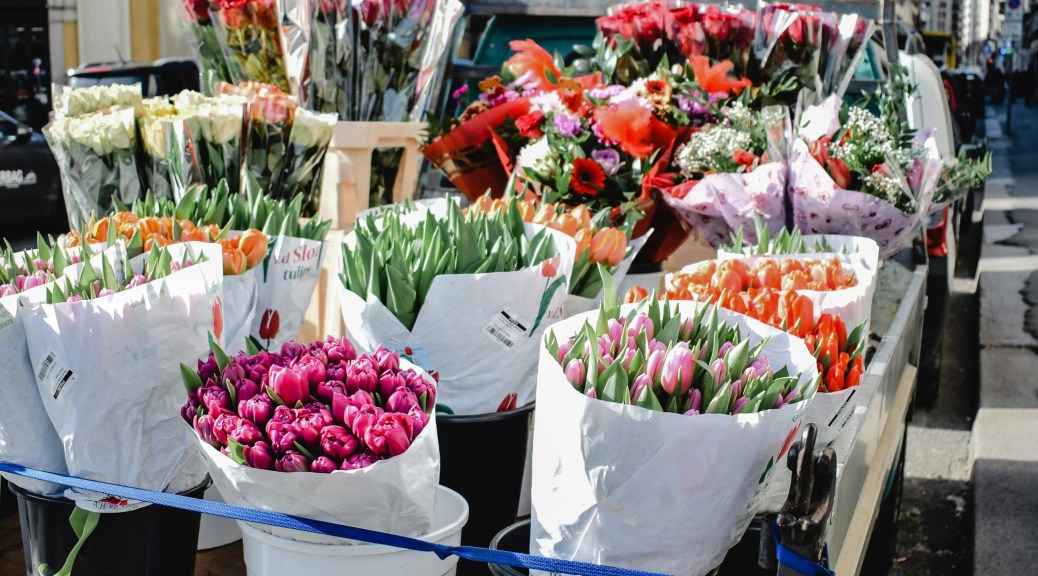
Yes, You Can Still Plant Tulips!

By Christine Freeburn, Master Gardener

Unlike daffodils, which should be in the ground by Thanksgiving, tulip bulbs can be planted anytime from September until when the ground freezes in December. When you plant later in the season, squirrels are not as active, so may not discover and dig up your bulbs.

Planting in circles or groups rather than in a straight line is more pleasing to the eye.  Plant tulips in well drained soil at least 6-8 inches deep and 2-3 inches apart.

Hen manure is a good fertilizer and it will also deter squirrels. For 5 or 6 bulbs, dig your hole (digging that 8” deep will also deter squirrels), put in a couple tablespoons of fertilizer in the hole, place bulbs (one in middle with the rest around), cover with soil, pat firmly, sprinkle more fertilizer, cover bare earth with leaves or mulch (to disguise it from squirrels) and water thoroughly.

You can also use heavy wire to cover the area to keep squirrels from digging or place a board or rock over the area, removing it when the ground has frozen.

After your flowers fade in spring, you can cut back the flower stem but let the leaves die back naturally. This allows photosynthesis to continue, giving food back into the bulb so it will produce again the next year. Plant perennials close by so they emerge and hide the tulip leaves as they decline.

There are thousands of different tulip varieties in many colours, shapes and sizes. Below is a list of some of the main tulip varieties with their characteristics.  

NOTE: Don’t forget our first ever Peterborough Master Gardener Spring Blooming Bulb sale still has tulips (and other beautiful spring bulbs) available. Click here for more information and to order! Pickup is in Peterborough.

Single early tulip

Single Early     

  • blooms in cooler weather with daffodils              
  • cup shape with 6 petals
  • average height of 10-18 inches
  • live for 3-4 years
Single late tulip

Single Late

  • also called Cottage tulip
  • tallest varieties standing 18-30 inches tall          
  • bloom when temperatures warm           
  • long lasting blooms but shorter life
Double early tulip
Double late tulip

Double Early and Late

  • also known as Peony tulips because of their multi-petaled structure       
  • can be early or late varieties     
  • blooms can be 6 inches on 10-16 inch stems     
  • sensitive to rain and may flop
  • shorter lived type
Darwin hybrid tulip

Darwin Hybrid

  • cross between Fosteriana and late blooming single tulips
  • tall sturdy stems 22 to 34 inches                       
  • large blooms    
  • perform year after year
Triumph tulip

Triumph

  • sturdy stemmed variety growing 16 to 24 inches tall       
  • cross between single early and Darwin  
  • blooms mid season      
  • edges on petals are often a different colour        
Parrot tulip

Parrot

  • vibrant colours and feathery or ruffled petals      
  • long stems and large blooms make them tend to be more delicate          
  • tend to be later blooming
  • not long lived, but showy
Fringed tulip

Fringed

  • also known as Crispii tulips       
  • nice frilly edges which can sometimes contrast with rest of bloom           
  • often late bloomers
  • will only live a few years
Fosteriana tulip

Fosteriana

  • also known as Emperor tulips    
  • early to mid season bloomer with big blooms and large narrow leaves     
  • perform year after year 
Greigii tulip

Greigii

  • also known as Turkestan tulips 
  • big colourful flowers tend to be on shorter stems
  • mid season bloomer     
  • leaves are streaked or spotted maroon  
  • perform year after year
Kaufmanniana tulip

Kaufmanniana

  • early to mid season blooming time        
  • blooms resemble waterlilies as they tend to open float in bright sunlight  
  • usually short stemmed, about 6 to 10 inches tall
  • perform year after year 
Lily flower tulip

Lily Flower

  • late blooming   
  • long pointed petals which arch outwards
  • 14 to 30 inches tall
Viridiflora tulip

Viridiflora

  • known as a green tulip for the green markings on the petals       
  • late season but long blooming
  • 16 to 24 inches tall
Rembrandt tulip

Rembrandt

  • variegated petals in deep purple or reddish streaks                    
  • 18 to 26 inches tall       
  • original cultivar no longer available, but you may find Rembrandt type
Species tulip

Species

  • known as botanical
  • smaller and shorter but prolific  
  • naturalize well  
  • perform year after year
  • squirrels do not dig or eat
  • (If you’ve read this far, this is my favourite tulip…long lived, squirrel-proof, multiply well)

References

Toronto Master Gardeners Gardening Guide for Growing Tulips

Best Tulips Guide

What’s Still Feeding Pollinators in Your Fall Garden?

by Silvia Strobl, Master Gardener

It has been a warm start to the fall season, but despite a little more frequent rain in September, the summer drought has continued here north of Peterborough in my 4b Plant Hardiness Zone garden. My soil is also sandy and dry. So what could still be blooming and feeding our most effective pollinators, the native bumble bees?

Although bumble bees are more active in spring and summer, they still need nectar and pollen in fall because the gynes, unmated females that will become next year’s new queen bees if fertilized, are mating and then must build up fat reserves and find a place to overwinter (The Xerces Society 2025). At this time of year you may see bumble bees sleeping on flowers in the morning, especially after a cold night or overnight rainfall. These are mostly the solitary male bumble bees that sleep outdoors. They are searching for a mate, and then they will die. Bad weather may also force female bumble bees to sleep outdoors, but their preference is to return to the hive at night (St. John 2023).

Here are a few drought-hardy native species that were still blooming and supporting pollinators in my garden on October 10th. All are resistant to deer. Sun, soil and moisture requirements, height, bloom colour and bloom time are noted for each.

Smooth Aster (Symphyotrichum laeve)

Full sun – light shade; Sand, loam, clay; Dry to Medium; 4 feet tall; Lavender to light blue; September – October

Smooth Aster has very frost-hardy flowers that often bloom into early November. The lavender to light blue flowers provide a lavish display. It has an upright form, is salt tolerant, and has the ability to survive drought.

Given that it blooms into early November, Smooth Aster is an important food source for late season bumble bees. The backdrop of Sugar Maple in full fall colour contrasts nicely with its lavender blooms.

New England Aster (Symphyotrichum novae-angliae)

Full sun – Part sun; Sand, loam, clay; Moist-average soil; Tolerates dry soil but may look scraggly; 2-5 feet tall; Purple, pink; August – October

New England Aster is another late bloomer, often lasting until it is hit by a few hard frosts (Booth nd). It is a clumping perennial that can be divided every 3-5 years and also “politely” seeds into garden gaps. To keep it from flopping over in fertile soils, it can be “Chelsea-chopped” in mid-June to restrict its height. It is an important nectar plant for migrating Monarch butterflies, as well as a larval host for 5 butterflies and more than 40 moth species (Booth and Gray 2024).

A male Common Eastern Bumble Bee (Bombus impatiens) sleeping on New England Aster blooms.

Zig Zag Goldenrod (Solidago flexicaulis)

Part shade to Full Shade; Prefers, fertile loam but tolerates heavy clay; Well-drained soils; 1-3 feet tall; Yellow; August – October

Zig Zag Goldenrod is a non-aggressive goldenrod that is a great addition to the shade garden. It provides pollen and nectar for both short- and long-tongued bees, wasps, flies and butterflies and it is the larval host plant for over 45 species of moths (Booth and Gray 2024).

The leaves of Zig Zag Goldenrod can also change colour in fall, adding to the plant’s aesthetic value.

Blue-stemmed Goldenrod (Solidago caesia)

Part shade to Full Sun; Most well-drained soils, tolerates poor soil; 1.5 – 3 feet tall; Yellow; August – October

Blue-stemmed goldenrod has yellow clusters of flowers that bloom all along the purplish-blue stem in early autumn, creating streaks of gold if planted in large patches. Unlike other goldenrods, it does not spread aggressively. Its leaves host larvae of 45 moth species (Gray and Booth 2024).

Common Eastern Bumble Bee on Blue-stem Goldenrod.

Button Blazing Star (Liatris aspera)

Full Sun; Dry-Medium; Sand, loam; 2 – 5 feet tall; Yellow; August – October; Purple-Pink

Button Blazing Star is one of the most drought tolerant blazing stars. Unlike Dense Blazing Star (Liatris spicata) its flowers are held on individual stems rather than in spikes and the corms cannot be divided. Birds especially prefer its seeds (Diboll and Cox 2023).

Button Blazing Star provides nectar to migrating Monarchs in my garden on Sept. 2. It was still blooming on October 10th.

The evening of October 9th we had a second hard frost (-6oC with wind chill) but the next day all of these native perennials were still blooming. If you are looking at your garden this Thanksgiving and not seeing any plants still flowering and supporting pollinators, maybe make plans to add one or two of these next spring?
REFERENCES

Booth, S. no date. Native Asters for Ontario Gardens.

Diboll, N. & H. Cox. 2023. The Gardener’s Guide to Prairie Plants. The University of Chicago Press. 636 pp.

Gray, R. and S. Booth. 2024. The Gardener’s Guide to Native Plants of the Southern Great Lakes Region. Firefly Books. 352 pp.

St. John, K. 2023. A Closer Look at Sleeping Bumblebees. Outside my Window blog post.

The Xerces Society. 2025. Bumble Bees: Nesting and Overwintering.

RELATED

When Plants + Sun = Trouble

By Mary-Jane Pilgrim, Master Gardener

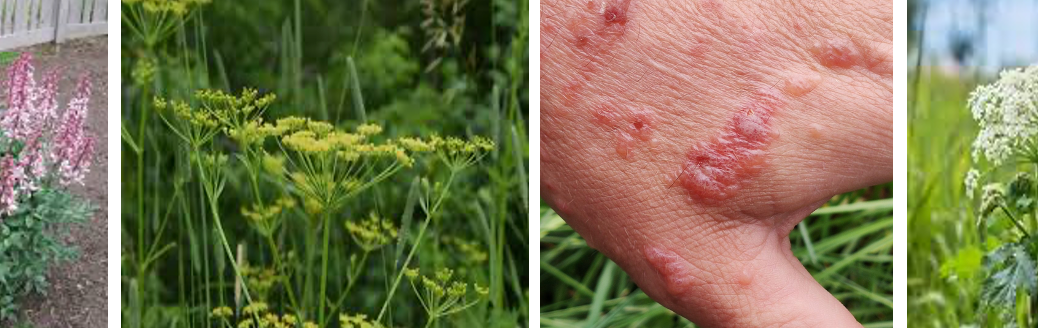
Have you ever gotten a weird red rash or burn after spending time outside? If you were pulling weeds or brushing up against certain plants, you might’ve had something called phytophotodermatitis. It sounds scary, but it’s really just a fancy name for a skin reaction that happens when plant juice meets sunshine.

Here’s how it works: some plants (like wild parsnip, giant hogweed, gas plant (Dictamnus), citrus fruits, dill, parsley, celery, fennel and even carrots) have natural chemicals in them called furanocoumarins. When these chemicals get on your skin and are then exposed to sunlight — especially strong summer sun — your skin can react. It might not hurt at first, but after a day or so you might notice red patches, streaks, or even blistering. It often looks like a burn or a splash mark.

People sometimes mistake it for poison ivy, but phytophotodermatitis is different. Poison ivy causes allergic contact dermatitis due to the urushiol oil in its sap. Phytophotodermatitis is not an allergic reaction, and it doesn’t usually itch. It’s more like a sunburn that was triggered by a plant.

Sometimes the blistering can be quite severe.

The good news? It usually goes away on its own in a few weeks, though it can leave behind darker patches of skin for a while. Severe burns may require medical treatment, including potential debridement (removal of damaged tissue) and skin grafts. Protect the affected area from sunlight for an extended period to prevent further irritation.

To avoid it, wear gloves when gardening, wash your skin after handling plants outdoors, and try to avoid sun exposure right after. And if you’re chopping limes for drinks on a sunny patio — wash your hands and arms!

It’s a sneaky kind of sunburn (or worse!), but a little knowledge goes a long way in preventing it.

To Stake or Not to Stake

By Marjorie Vendrig, Master Gardener in Training

It’s midsummer in the garden and many plants – annuals, perennials, vegetables – need to be staked and pulled upright or back. They might be flopping over to the point where stems break and buds and blossoms are lost, they might be spilling over onto other plants, blocking light and restricting growth. In the event of high wind or heavy rains, unsupported plants can easily be destroyed or can quickly become an unsightly mess.

Staking is one of those jobs that many gardeners avoid; it never seems to get done at planting time or early in the season when the plants don’t really require mechanical support. Another reason for putting off staking is that many stakes or plant supports are unsightly and look out of place, particularly very early in the season. The result is that staking is often done too late; emergency staking often looks more unsightly than a flopped over plant

Staking of some plants can be avoided: late bloomers such as sedums or asters can be maintained at a shortened height. This is done by developing shorter, bushier plants by pinching the plant by about one third in early summer. It’s a common practice for many annuals: cosmos, zinnias, nicotiana, and many other annuals are pinched back before they arrive at the nursery. (Pinching back of annuals has come to be known as the Chelsea chop, the timing for pinching back or ‘chopping’ coincides with Britain’s famous RHS Chelsea Flower Show at the end of May.)

Knowledge of the mature size of the plant, its light requirements, and any specific soil or nutrient needs could avoid the need for staking some plants. A plant with elongated, weak stems will require staking, whereas a strong-stemmed, sturdy plant that is not reaching for light or that has not been overwhelmed by neighbours is a more likely candidate to stand on its own. An honest evaluation of light levels in the garden and the sun / shade tolerance of plants are prerequisites for finding the optimal location for plants, helping to eliminate some staking.

Best advice for avoidance aside, there are still many plants that need to be staked and it’s best to match the type of support to the vigour and growth of the plant:

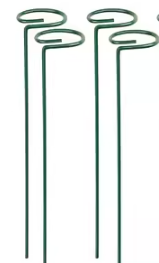
  • Circular grid supports with epoxy or plastic coated wire squares are best suited to clump forming perennials such as phlox, delphiniums, and some campanulas. These work best when put in place early on in the growing season with care taken to feed growing leaders through the squares. Any escapees can be tied loosely to the outside of the circle. Dahlia, peony and other top-heavy bloomers are also candidates for this approach.
  • Once blooms appear on dahlias, or other tall growers, spiral rings or Y-shaped supports are useful to prop up the blossoms. Several supports are often needed for each plant.
  • Tall, heavy blossomed dahlias and other tall growers might do better with two or even three or more stakes surrounding the plant, making sure to avoid the tuber or roots when pushing or pounding in the stakes. Bamboo, plastic coated metal, or even rebar are good choices for the supports. They should be pounded as far as possible into the grounds so that they won’t get pulled over with the weight of a wet, heavy plant. Using twine, tie a knot around one of the stakes, then a figure eight to encircle one of the stems, do the same for the other supports and stems. An alternative technique with large multi-staked plants is to tie a knot around one of the stakes, then surround the plant and loop around the next stake. As the plants grow and the blooms get heavier, several levels of twine might be necessary. Stems and plants should not be tied too tightly.
  • For shorter plants at the front of a border (penstemon, yarrow, cone flower), pea stakes are a good approach. Pea stakes are multi-stemmed off-cuts from prunings. This is an old method, historically used in vegetable gardens to support pea vines. The twigs, from birch, forsythia, viburnum, etc., are pushed into the ground around the perimeter of the plant. The plant grows up and over the stake, no tying is required, and if done early in the season, the twigs get hidden later in the season. Pea stakes are also a good way to guide climbers over to a trellis. With a bit of practice and creativity, pea stakes can be an eye-catching approach to an otherwise unappealing chore.

References

https://www.rhs.org.uk/plants/types/perennials/staking

https://hort.extension.wisc.edu/articles/pea-staking

https://www.finegardening.com/project-guides/gardening-basics/how-to-avoid-staking-plants

Preparing your garden NOW for the summer heat

By Mary-Jane Pilgrim, Master Gardener

As the summer heat ramps up in Ontario, it’s time to get your garden ready to thrive in the hotter summer months. Here are some essential tips to ensure your garden stays healthy and vibrant despite the scorching temperatures that are most likely to hit us by the end of the month.

First, make sure to water your perennial plants deeply but less frequently now to get them used to what’s ahead. Early morning is the best time to water as it allows the moisture to penetrate the soil before the sun evaporates it. Consider investing in a drip or spray irrigation system to deliver water directly to the roots or lower portions of the plants, minimizing water loss through evaporation. Collect water in rain barrels for hand watering.

Newly planted trees, natives and other plants will begin to need extra support to make it through our harsh summer, and it is often a time that gardeners also struggle. Gardening seems so much easier in the spring, when everything is new and fresh, but do not give up when the temperature climbs and climbs! Summer gardening is so important to having a good garden year-round and working outside in the summer has its rewards too.

Native and non-native plants that have been planted this spring are probably not well enough established to be on their own this first summer, so they will need supplemental water this summer. For this purpose, I’ve purchased a couple dozen “pop bottle watering spikes” that screw onto a 2L pop bottle. Cut the bottom off of the bottle, put the spike on the threaded end and invert into the soil. The spike delivers water at a drip pace — I place these bottle waterers at the base of every new addition each year. By next summer, they can usually handle the dry conditions in our area a little better.

Version 1.0.0

Newly planted trees and shrubs get the “holey pail” treatment. Source a small pail like the ones that kitty litter comes in, and drill about 5 holes in the base. Place a pail beside each new tree or shrub. When temperatures soar and rain is scarce, drop a couple of litres of water into the pail. It will trickle out into the soil around the tree at a slow speed that will allow the tree to utilize the water.

Mulching is another crucial step in preparing your garden for the summer heat. Apply a layer of organic mulch on your flower beds and possibly a cheaper alternative such as straw or wood chips around your veggie beds to help retain moisture in the soil, regulate soil temperature, and suppress weed growth.

Don’t forget your trees! Apply 2 to 3 inches (5-7cm) of mulch around your trees, keeping it at least a few inches away from the trunk, avoiding mulch that has been artificially dyed.

Lastly, keep an eye out for pests and diseases, which tend to thrive in warm, humid conditions. Regularly inspect your plants for any signs of trouble and take appropriate measures to prevent infestations.

By following these simple tips, you can ensure your garden stays as lush and thriving as possible throughout the hot summer months which are just around the corner!

The Joy of Sharing our Gardens

Reflections after a Garden Tour

by Emma Murphy, Master Gardener

It’s been a tough few years for all of us because of COVID-19, but I had time to reflect this weekend on why it’s been hard for me as a gardener. While it’s been wonderful to have our gardens as an oasis and source of comfort during the pandemic, I realized that other than a few close friends, no one had seen all the work (and the results) that my husband Grant and I had achieved over that time.

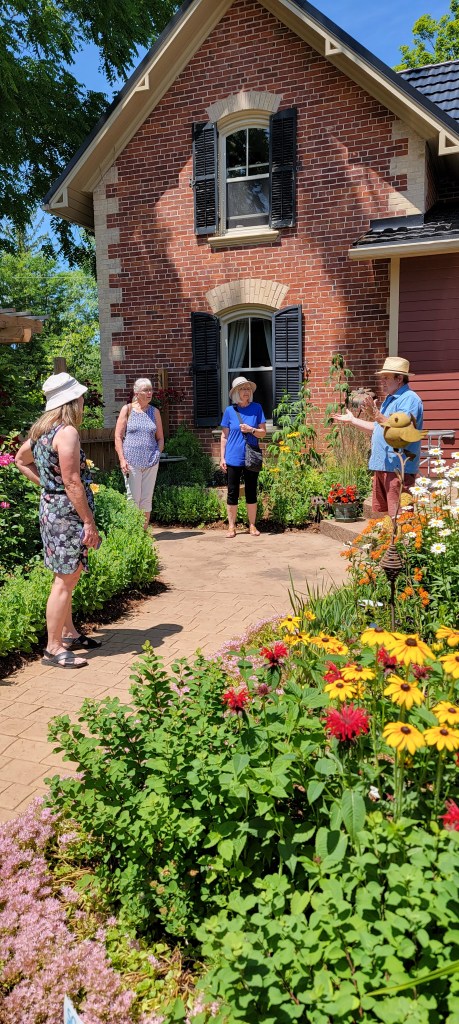
So it was with great anticipation that we looked forward to our Lakefield garden being featured on a garden tour organized as a fundraiser to celebrate 60 years of the Lakefield Horticultural Society.

While we spent a few very crazy days trying to put the final touches on our garden (my husband decided he would build a beautiful pergola [awesome] a week before the event [not so awesome] so plants had to be moved into pots and then back into the beds just a few days before) — sorry I digress — everything was perfect on the day — the weather was spectacular, we placed the last bits of mulch to cover a few empty patches and we looked forward to welcoming our guests.

The new pergola.

As the first people arrived (I think our first visitor was a man on a bicycle!) I began to realize how much I had missed the joy of sharing our gardens with others. And as the day progressed, it was wonderful to hear other people’s perceptions — for some it was inspiring, for some a bit overwhelming (we have a 3/4 acre property in a small village), for some they loved that we had plants they had never seen before (not your typical garden). Everyone seemed to leave with a smile on their face, which made our day.

Grant created numerous raised beds over the past few years — at my request — and we’ve had great success with them. We also purchased a “COVID present” for ourselves — a long wished-for greenhouse to extend our gardening season, and it’s been put to good use.

We’ve spent time over the past few years planting more native plants as I learn more about the benefits of creating habitat as well as having an aesthetically pleasing garden. Hey, it’s not all about me!! Doug Tallamy’s book is a great start to understanding the benefits we can provide in our humble gardens to the greater ecosystem.

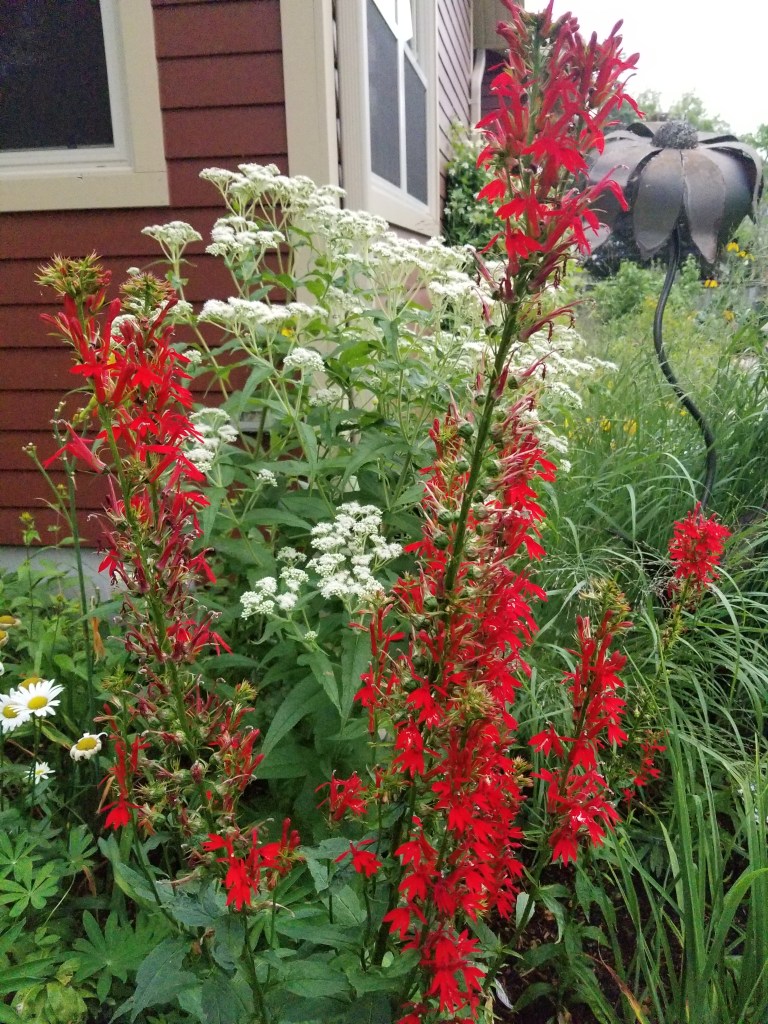
There is definitely a balance — we’re aiming for a 50/50 balance of native/non-native — because I love my daylilies and peonies and don’t want to give them up (they give me pleasure), but I also love the hundreds of pollinators (bees, butterflies, wasps etc.) that flock to my Common Boneset (Eupatorium perfoliatum), Pearly Everlasting (Anaphalis margaritacea), Cup Plant (Silphium perfoliatum), and Cardinal Flower (Lobelia cardinalis) because I am choosing to plant native plants.

Boneset (white) and Cardinal Flower (red)

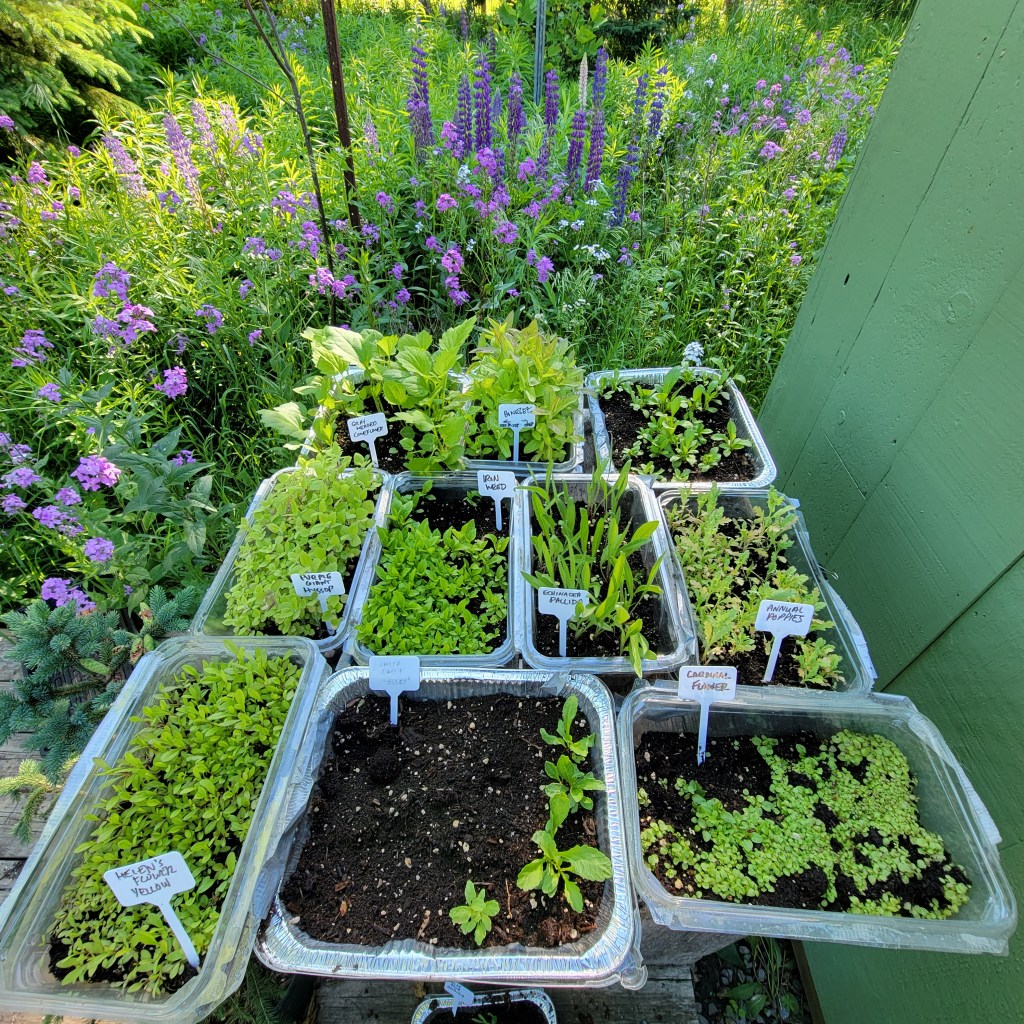
Last winter I grew some native (and non-native) plants using the Winter Sowing technique (because most native plant seed requires winter/cold stratification) and it was a great success (with some lessons learned – but that’s another blog).

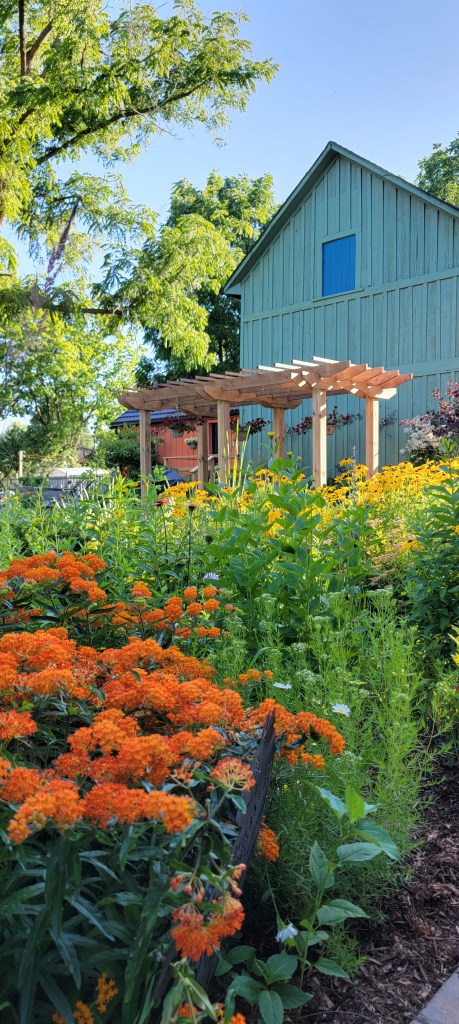
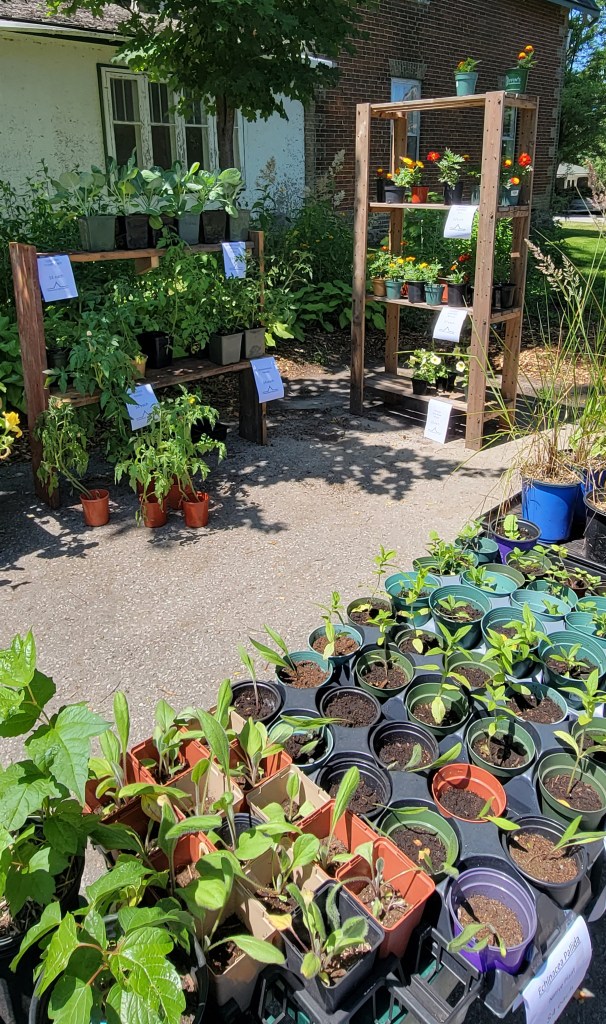
Grant set up a Plant Sale area for the garden tour and people were able to buy plants that they saw in the garden (although alas, I did not take any cuttings on my amazing orange Butterfly Weed – a type of milkweed – which really caught everyone’s attention).

The Plant Sale area

Over the day I saw many gardening friends I hadn’t seen in several years, and made all sorts of new friends. It felt like my community was coming together — like we were reconnecting after a long time apart in a beautiful place. And I realized that gardening is both a solitary and a very social activity. We even got featured in the local newspaper.

We raised funds to support our local horticultural society, we got back to feeling ‘a bit normal’, and most importantly we got to reconnect with people over a common passion — the love of gardening.

I hope that all of you will find opportunities to reconnect with people this summer and share your gardens and plants and trade stories about attracting pollinators etc. with others. It’s a feeling like no other. #happygardening

Our lovely rudbeckia and greenhouse in the background.

Another Garden Beauty

By Marilyn Homewood, Master Gardener

Summer solstice has just passed and with it the waning of some iconic garden varieties.  Late spring/early summer brings us not only the iris and rose but the peony as well.  Peonies are large, long-lived perennials that may stay in one place without division for up to 100 years. Peonies bloom in a wide range of forms, from simple, elegant singles to massive doubles with more than 300 petals in colours of white, pink, yellow and red tones.  They form a rounded shrub that may be up to 3 feet in height and width with glossy deep green foliage that remains attractive after the bloom is over.

Itoh peony ‘Bartzella’ in landscape

There are three types of peonies: Herbaceous, Tree and Itoh.  Herbaceous peonies bloom in late spring/early summer and have stems that die back to the ground in the fall.  Tree peonies have a permanent woody stem, more like a shrub. Woody stalks remain standing through winter and go on to flower again the next season. The blooms on trees peonies are larger and more fleeting than those on their herbaceous counterparts.  In our area, tree peonies appreciate a sheltered spot to grow as a hard winter may result in a lot of die back. The third type of peonies are the Itoh peonies.  These plants are a result of crossing herbaceous peonies with tree peonies.  The stems of Itoh peonies die back to the ground each fall and yet the bloom is large like that of a tree peony.  These plants do not require any additional support unlike some of the herbaceous peonies.

Tree peony

Peonies perform best when planted in a location with a minimum of 6 hours of sun per day and must have fertile, well drained soil.  Once planted in a suitable location, they are relatively care free, requiring only a good clean up in the fall to cut the stems down and remove all leaves (reducing the potential for fungal growth). In the case of tree peonies, the stems are not cut but all leaves should be removed and discarded in the landfill.

Peonies are sold as bare roots from growers as well as from some of the larger companies. These can be planted in either spring or fall however from experience fall is the preferred time to get them into the ground.  As well, many nurseries sell peonies in containers that can be added to the garden at any time provided they are kept watered.

Early single peony “Claire de Lune”

Recognizing the value of a peony variety that performs well in the landscape, the American Peony Society developed an Award of Landscape Merit for cultivars that do not require support and are vigorous garden varieties.  When choosing a peony for your garden, consider one of these.

Japanese peony “Sword Dance”

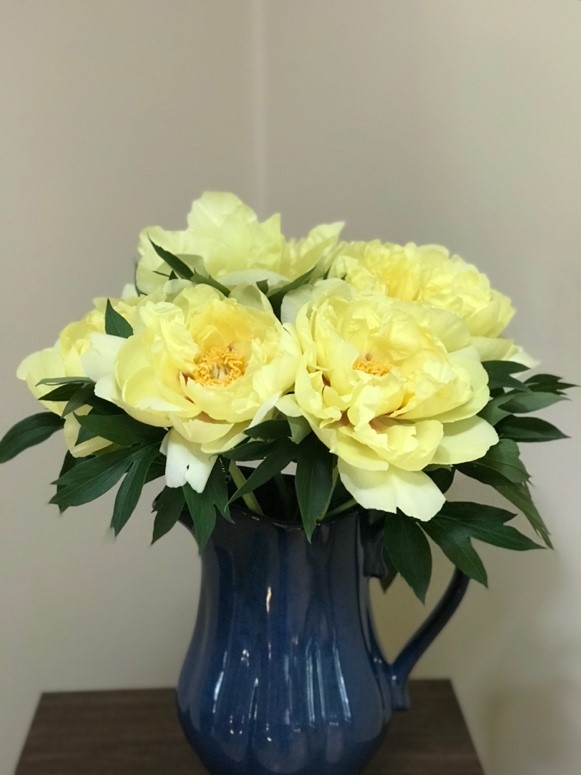
Peonies are not just for the garden. They make wonderful cut flowers as well.  For maximum vase life, harvest them when the bud is coloured, rounded and soft to the touch, keep the vase out of direct sunlight and change the water frequently (peonies like cold water and I have started to add some ice cubes to the water in the morning).  This should give you 6-7 days of vase life.  The blooms are so large that it only takes a few to fill up your vase.

Treat yourself and purchase a peony for your garden.  One can never have enough peonies!

Peonies as cut flowers

“Flowers are the music of the ground. From earth’s lips spoken without sound.” – Edwin Curran

Resources

http://ccenassau.org/resources/peonies

Home

https://www.treepeony.com

Not Your Everyday Goldenrod

By Cheryl Harrison, Master Gardener

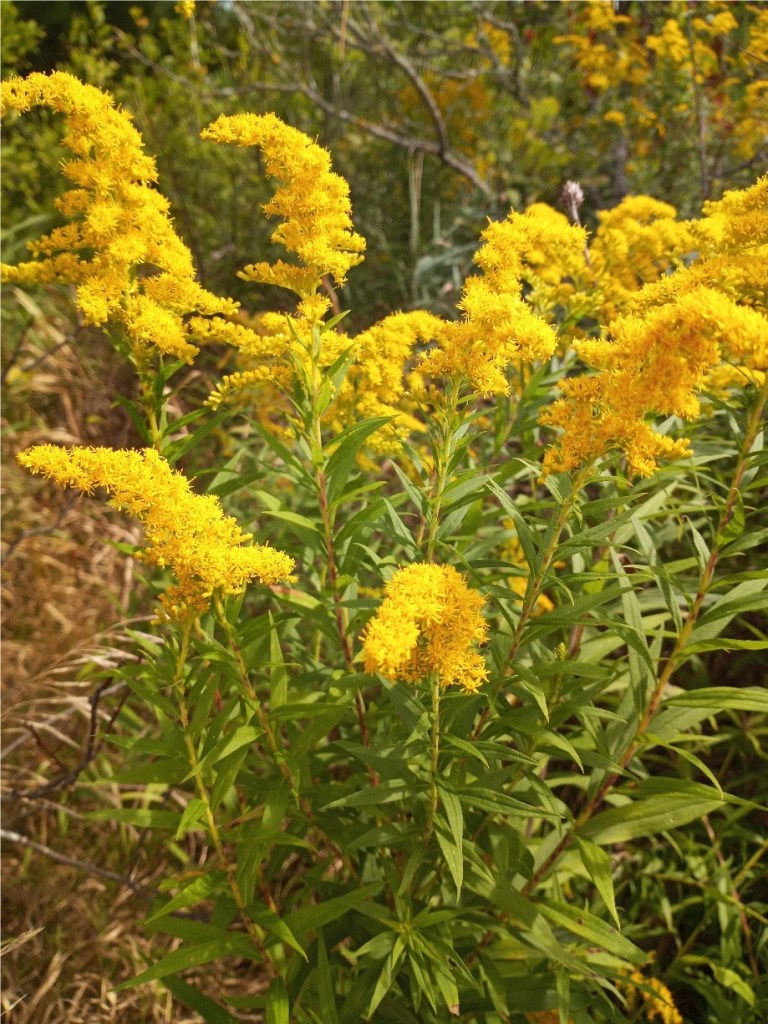
I was recently at a market where a local garden group was selling some plants including many native plants. I noticed a striking goldenrod. I remarked to one of the vendors that it still seems odd to me to see goldenrod for sale when it is so common in rural Ontario. The vendor rightly chastised me because this goldenrod was not your very common goldenrod (Solidago canadensis), it was Gray Goldenrod (S. nemoralis) . The vendor went on to describe some of the positive attributes of this plant. I have to say that the bright yellow, fluffy flowers were beautiful!

This market interaction set me thinking more about the native varieties of goldenrod, or Solidago, species. There are over 100 species of this perennial native with over 25 being found in Ontario. This plant often gets bad press as being a plant whose pollen causes allergies but the likely culprit is ragweed (Ambrosia species). Ragweed and goldenrod bloom at the same time and are often found growing in the same areas. Goldenrod’s lovely yellow flowers (note that there are a couple of Ontario species with white flowers) are attractive to bees and butterflies. They serve as a good source of nectar in the fall and their heavy pollen grains attach easily to the bodies of pollinators. Ragweed flowers are green, do not produce nectar and produce large amounts of light pollen that easily becomes airborne … hence your sneezing and your itchy eyes.

Solidago canadensis, author’s garden

Goldenrod is an easy keeper in the garden. It can grow in a variety of soils, many prefer sun but some grow well in part shade or shade and most prefer average moisture but some can grow well in very moist soil. Goldenrod spreads via seed and through rhizomes (horizontal underground stems). Some species (Tall goldenrod (S. altissima), Canada goldenrod (S. canadensis), and Giant goldenrod (S. gigantea) can quickly take over a small garden. These may be grown in a pot , in a bordered area or in that hot dry area of the garden where not many other plants will grow. This will help to keep them in check.

Goldenrod can be quite a tall plant and is very pretty in drifts in the garden, as a background plant or even as a focal point. I started a woodland garden this year and planted a zigzag goldenrod (S. flexicaulis) which grows in full shade. Goldenrod is great for adding colour to the fall garden and when grown alongside beautiful purple asters (for example, New England Aster (Symphyotrichum novae-angliae), the display is stunning!

Goldenrod has many positive attributes from its beautiful, bright yellow flowers and its tall upright growth habit to the many species that will grow in a variety of conditions including that hot, dry spot in your garden.

Goldenrod may be purchased at most native plant nurseries or grown from seed. For more information on the different species of goldenrod, please check here. For more information on growing golden rod, please check here.

Planning and Dreaming

by Judy Bernard, Master Gardener

Winter is a time for planning and dreaming about our gardens.

Since we decided to move and downsize, I’ve been planning on how I want to create my new garden. Right now, under the snow, is mostly compacted construction zone. Debris from bricks, rocks, and stones ( I’ve collected some of the larger stones for garden beds) and weeds have been partly covered by sand fill. I’m hoping that we will have topsoil and sod fairly early in the spring. In the meantime, I’ve been dreaming and planning.

watercolour-2045917_1920

Our house is oriented east-west. There are two story houses to the north and south of us. Before planning on what shrubs and plants to put in those areas, I want to see how much shade they provide and for how long during the daytime. I’m keeping a record of where the sun is in the sky relative to those areas. The front and back are wide open, like a blank canvas.

summer-4282857_1280

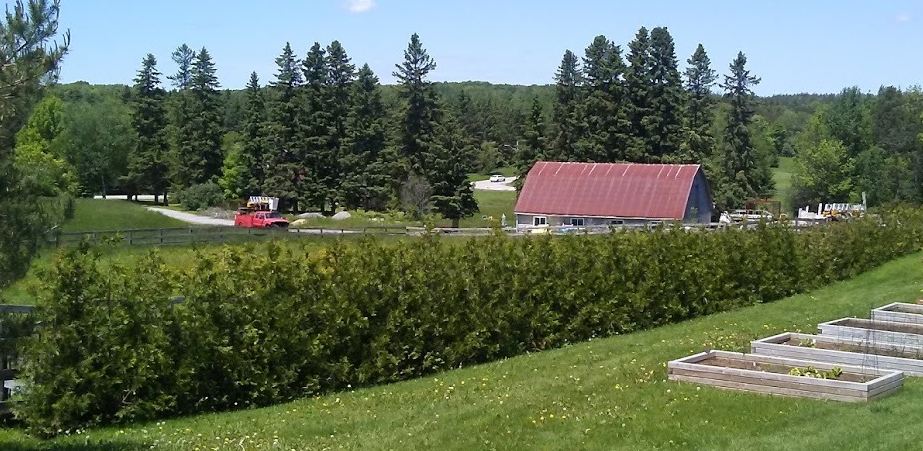
At the same time, I’m making plans for what trees and shrubs I want to put in those areas. My choices are for mostly native shrubs, trees and and fruit producing plants. Other than the usual garden centres, I’ve been looking for places to purchase native plants and have found some close by Peterborough that grow shrubs and trees. Richardson’s Pineneedle Farms in Pontypool is one. They are a major commercial grower and have a lot of native shrubs and trees for sale. You can buy in bulk there. Another one Eastern Evergreen Inc. grows white cedar for hedges and is located in Warkworth.

With an office in downtown Peterborough, Cedar Ontario has a long track record of providing healthy natural eastern white cedar trees and installing hedges throughout Peterborough and the Kawarthas.

2019-Smith-8' 3rd season-2
Photo courtesy of Cedar Ontario

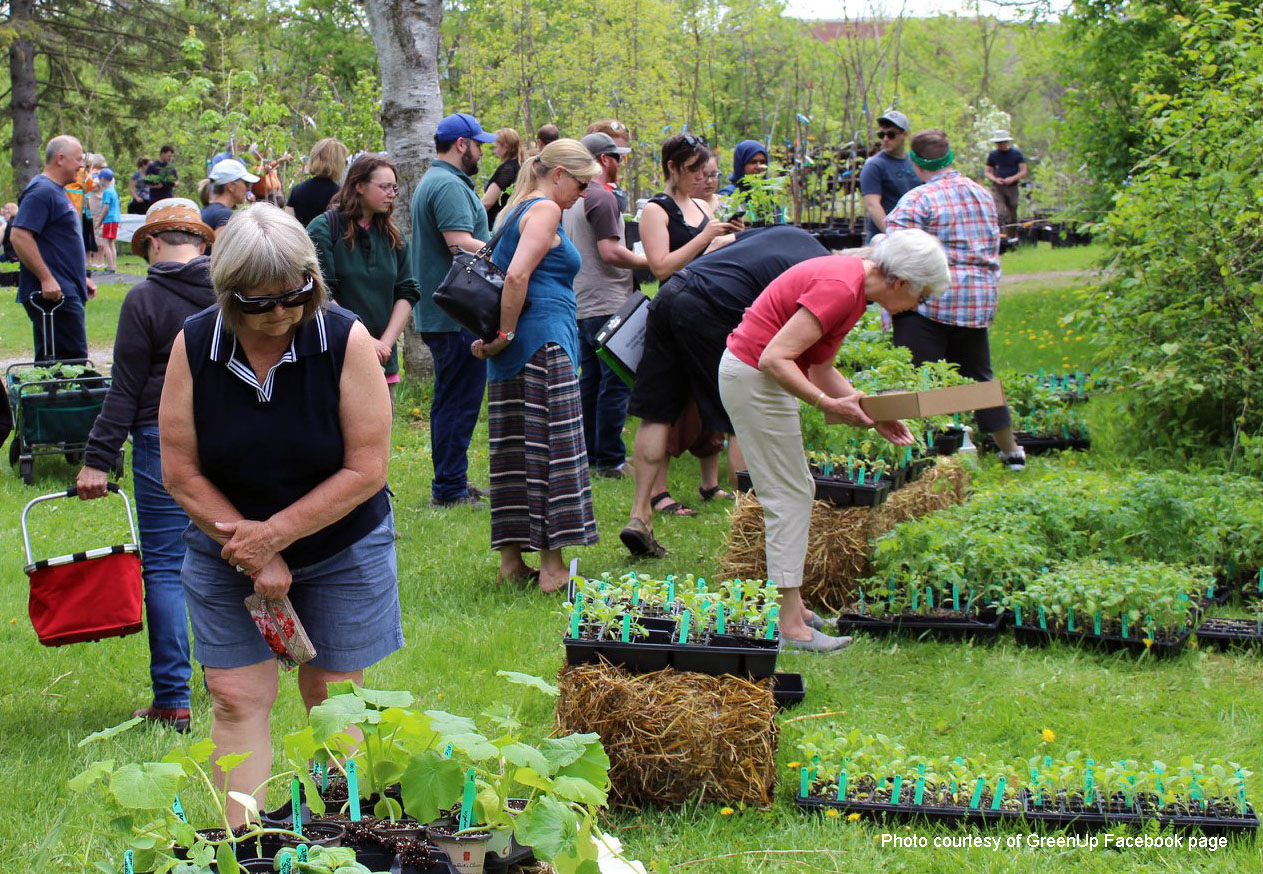
When it opens, Ecology Park in Peterborough is another good place to purchase native plants. Their big annual plant sale is Saturday May 16th at 10 am. Remember to bring your own containers for leaf compost and cedar mulch. The bulk sales are self loading , with a 20 bucket limit per person, per visit. Knowledgeable staff and are there to help you (and often Master Gardeners are there too).

plantsalecourtesyofGreenUpFBpage

In the meantime, I’m researching trees and shrubs, drawing plans, and dreaming.


Daylilies: The Perfect Perennial

By Mary-Jane Pilgrim, Master Gardener

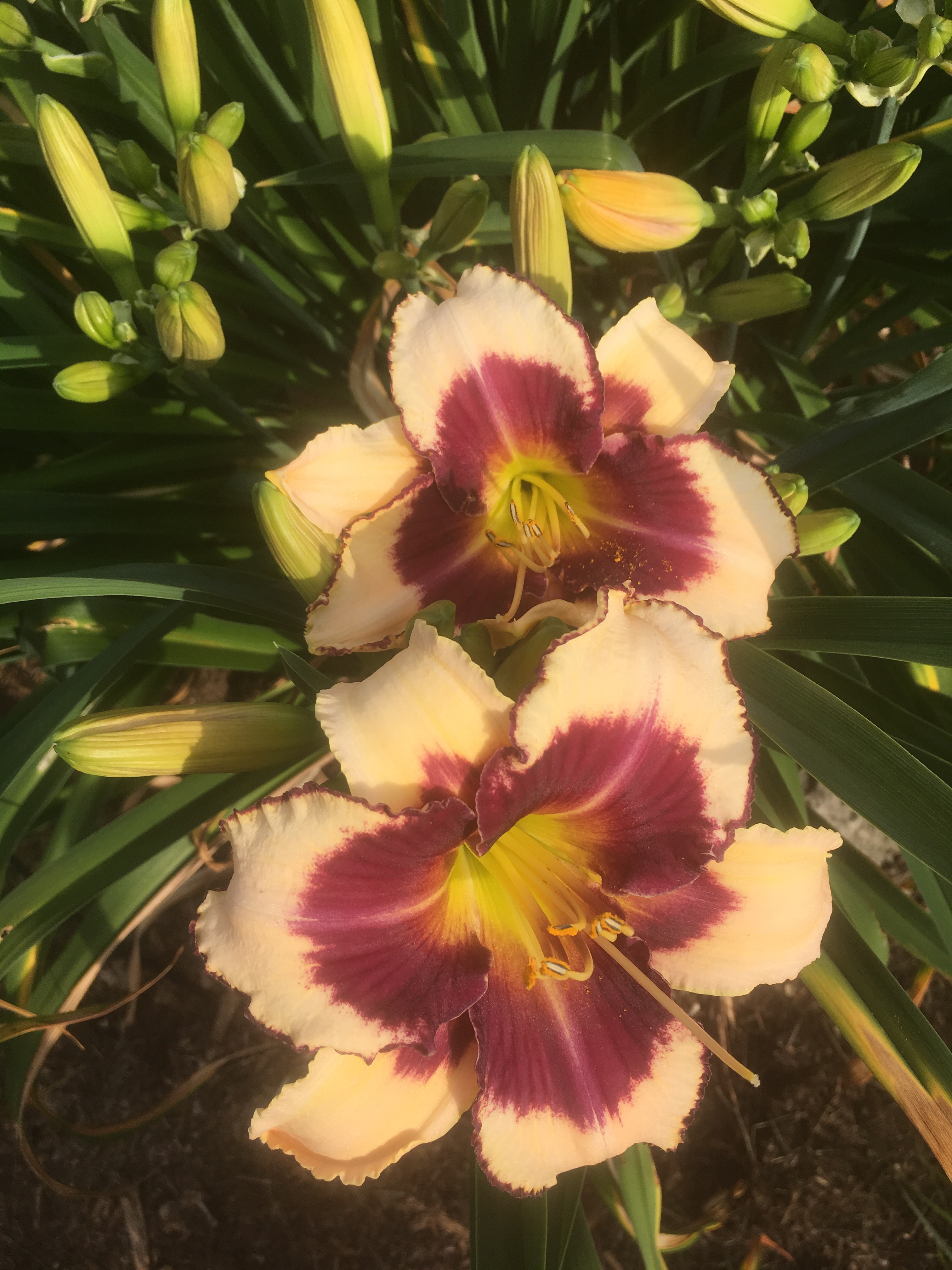
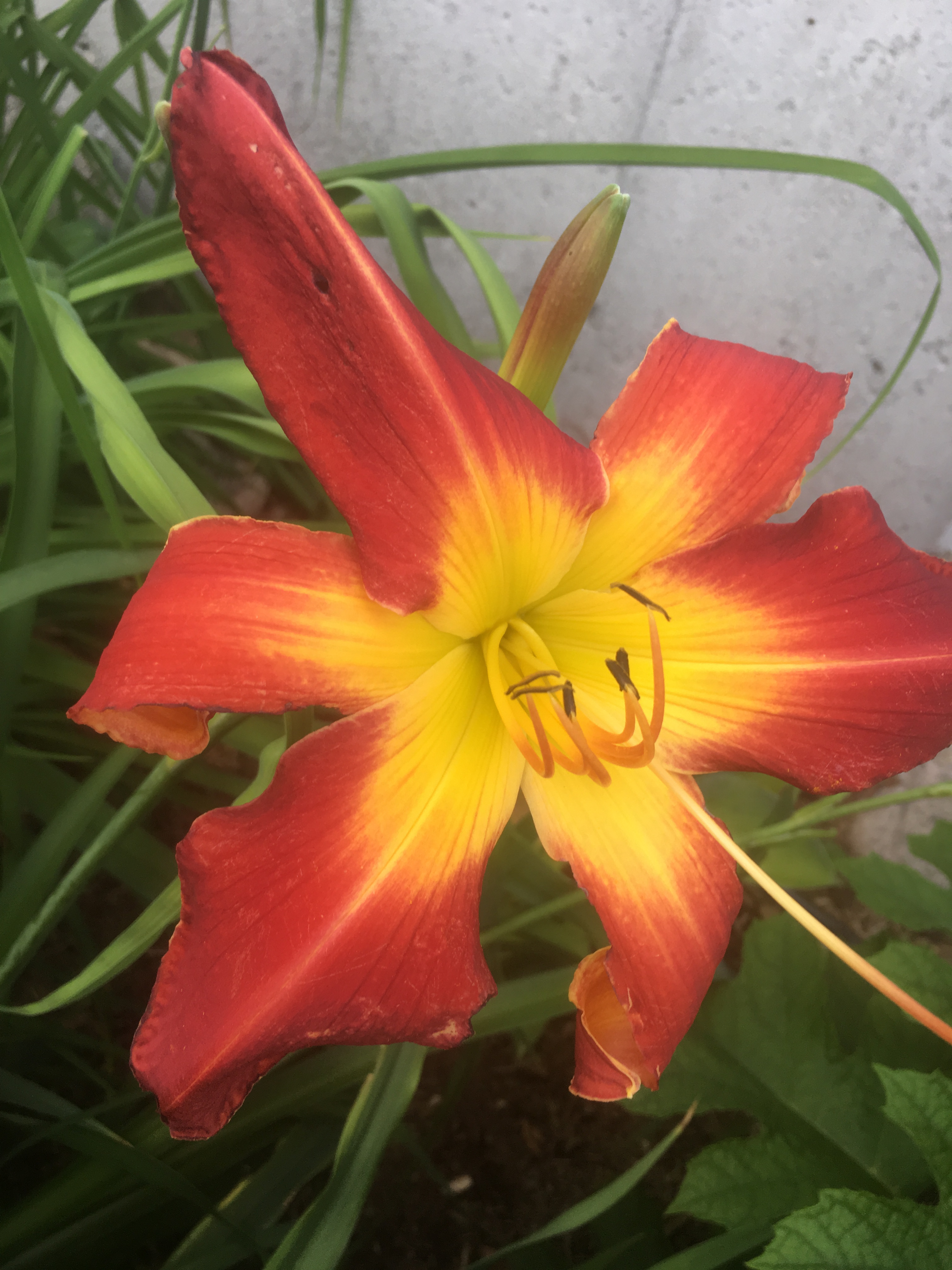
Daylilies are popular perennial flowering garden plants. They bloom in our area in July and are often called the ‘perfect perennial’ because of its amazing qualities: showy flowers, wide array of vibrant colors, drought tolerance, ability to grow in most hardiness zones and low care requirements. Daylilies are a remarkable and stunning addition to any garden.

IMG_6722
Witch Stitchery

Daylilies are not true lilies even though their trumpet-like flowers resemble lily flowers. True lilies of the genus Lillium grow from onion-like bulbs, while daylilies grow from a mass of fleshy roots that hold moisture and nutrients. Unlike true lilies, daylily flowers are edible and can be consumed raw or cooked.

IMG_6724
Chicago Heather Marsh

Daylily blooms grow at the end of tall stalks called scapes that can range from 6 to 36 inches long. The genus name, Hemerocallis, is derived from Greek words for beauty and day, referring to the fact that each pretty bloom lasts only one day. Don’t be discouraged though; each daylily flower stalk produces many buds so flowers are produced over a bloom period of several weeks. Many cultivars are reblooming which means that the bloom period for those varieties are extended. There are 20 native species of daylilies and more than 80,000 hybrids.

IMG_6729
Homeward Pilgrim

Because they grow wild in so many places, many people think daylilies are a native North American plant, but they are not. They were introduced to North America by Europeans during the colonial period. Their roots can survive out of the ground for weeks which allowed them to arrive here with the colonists’ ships and spread across the Americas in pioneer wagon trains.

They grow best in zones 4 through 9.  They suffer few pest and disease problems and have a long blooming season. They can be a great solution for areas that are steep or otherwise hard to mow. Their dense root system reduces soil erosion and can choke out most weeds.

IMG_6735
Rocket Booster

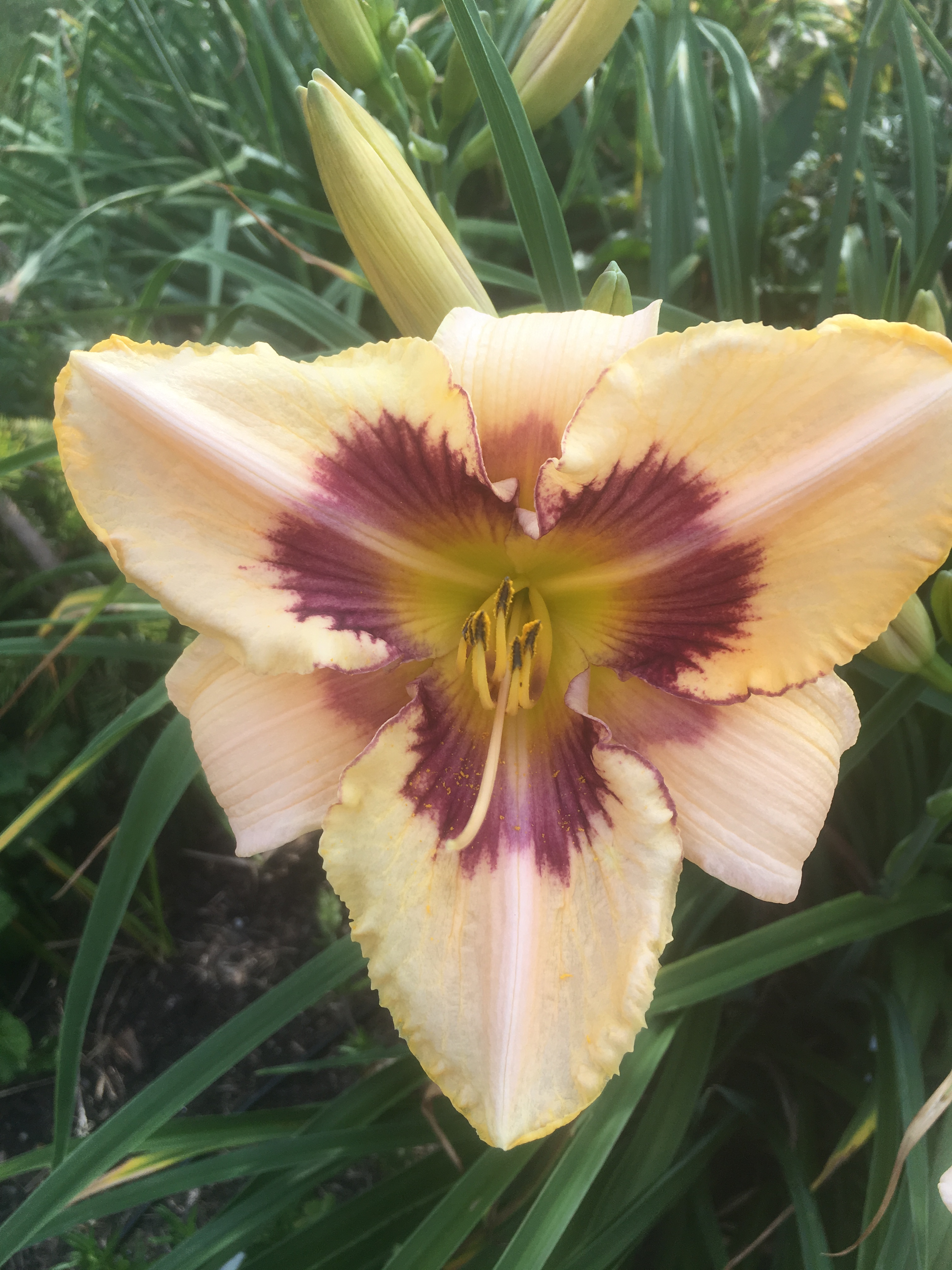
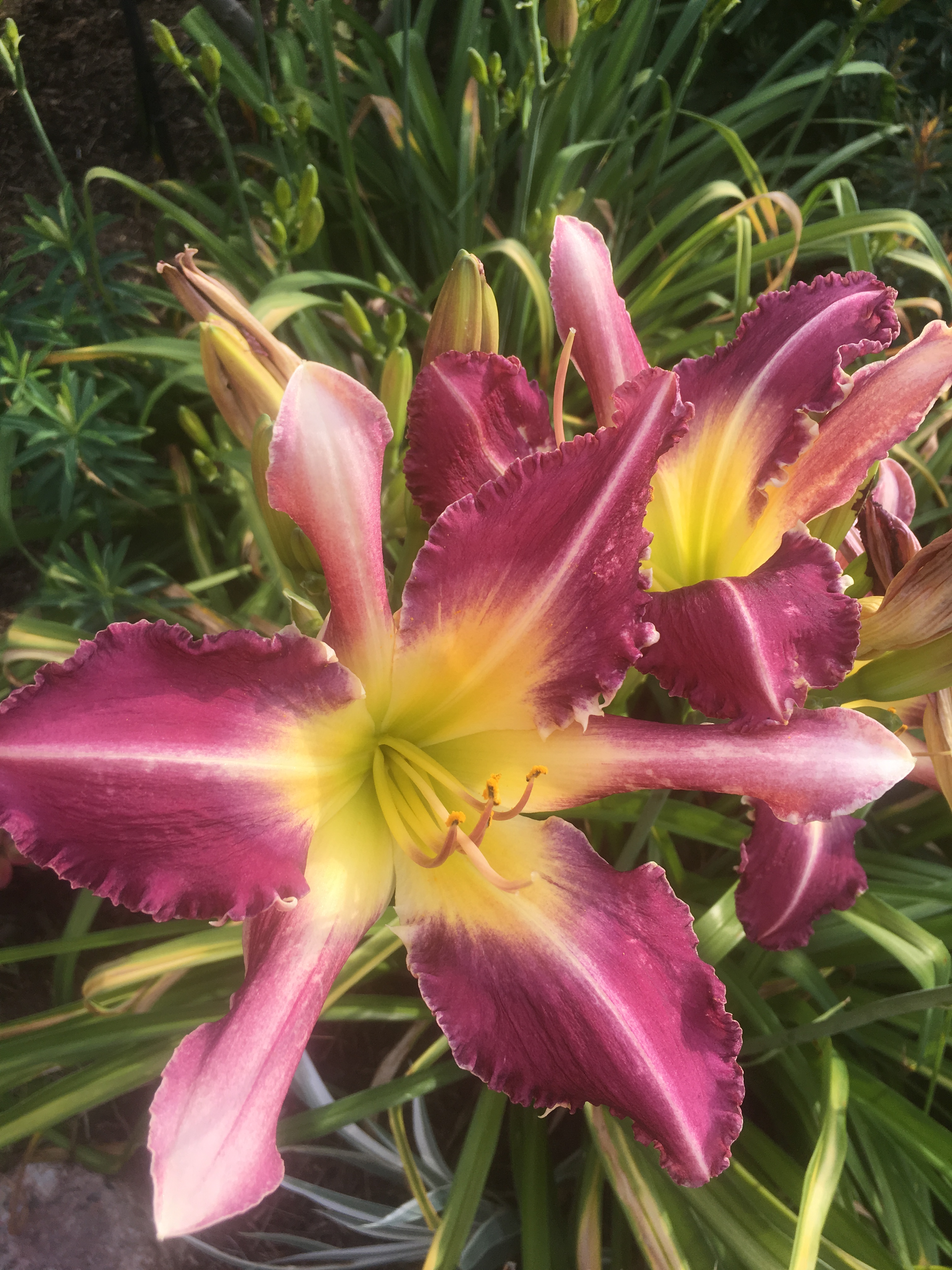
In the wild, daylilies occur only in orange or yellow. But since the 1930s, breeders have developed hybrid varieties with flower colors ranging from cream through varied shades of yellow, orange, red, crimson, pink and purple. There are hybrids that have petal edge bands or petal tips or throats of a contrasting color, or with ruffled or scalloped petal edges.

Daylilies will grow for many years without any attention, but the plants will produce more flowers if they are divided about every 5 years or so. This is a job for late summer, after the plants have finished blooming. Dig up the entire plant and place it on a tarp. Cut or pull the clump apart into manageable clumps. Before replanting, use scissors to trim the foliage back to a height of 5 or 6″. When re-planting, daylilies must go into the ground at least 6 weeks before the ground freezes and should be in a location where they get at least six hours of sun daily.

For more information:

Everything You Should Know about Daylilies
All about Daylilies
How to Grow Daylilies