
By Sharleen Pratt, Master Gardener
 This book is, without a doubt, one of my favourite go-to gardening books! The new revised third edition of Lorraine Johnson’s book, 100 Easy-to-Grow Native Plants for Canadian Gardens, is a testament to Lorraine’s expertise. She writes in the forward that “one of the greatest satisfactions of growing native plants is that you are supporting a complex web of ecological relationships that are the basis of a healthy, resilient ecosystem.” Lorraine Johnson is the former president of the North American Native Plant Society and the author of numerous other books. She lives in Toronto.
 The photos by Andrew Layerle, along with detailed descriptions of the plants, make this book most helpful when trying to decide what native plants you would like to incorporate into your garden. I think many of us can relate to her point that “gardeners tend to be voyeuristic creatures and plant lists are our chaste form of porn”! We all crave the perfect plant and often browse through books over the winter months with dreams of starting a new garden and we wait patiently for the spring weather that allows us to once again get our hands dirty.
 The plants are divided into a number of different categories and Lorraine does a good job at listing the common name (although she warns there are sometimes many), the botanical name, the height, blooming period, exposure, moisture, habitat and range. She gives a good description, the maintenance and requirements, along with suggestions on propagation and good companions. I love that she also mentions the wildlife benefits of each plant.
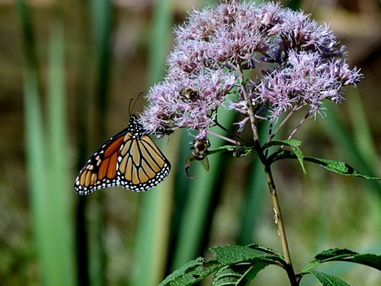
 Lorraine has also included Quick-Reference Charts at the back of the book that separate the plants by region as well as specific conditions, such as acidic soil, water requirements, etc. She has lists of plants suitable to prairie habitat, drought-tolerant plants, plants for moist areas, and plants that attract butterflies and other pollinators.
I have grown several of her suggested native plants, such as wild ginger, solomon’s seal, pasque flower, foamflower, wood poppy, dutchman’s breeches, cardinal flower, butterfly milkweed, bottle gentian, bloodroot, and big bluestem .. I love them all!
Check out this book over the winter months. I guarantee you will not be disappointed.





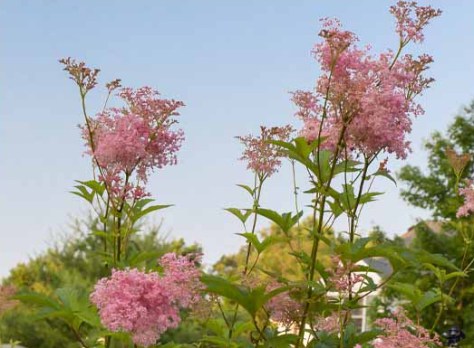


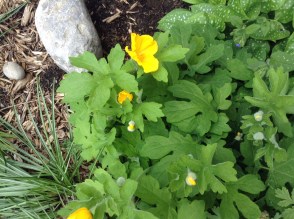 A few years back on a gardening bus trip, we were gifted with a small wood poppy from a fellow Master Gardener. It is a lovely plant with irregular lobed leaves that range in colour from light to dark green. This poppy requires shade and prefers moist conditions or the leaves may wither. You will be thrilled with the lovely yellow blooms that appear in late spring. It grows to about 1 ½ feet tall into a small, bushy plant. They readily self-sow in ideal conditions such as moist woodlands, but in my garden I have never found more than a few babies.
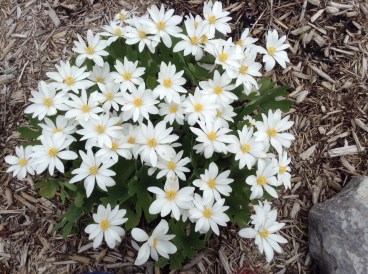 You know that spring has arrived when you are thrilled with the appearance of bloodroot’s cheerful white flowers that open during the day and close at night. The leaves are clasped to the stem and slowly unfurl to reveal large, saucer-shaped but deeply scalloped foliage. It is very effective as a groundcover and prefers rich, moist woodland soil. It will tend to go dormant in the hot summer months. You will notice the roots’ red juice, hence the name. The sap was used by Native Americans for dyes. We are lucky in Peterborough to have a beautiful mural of Bloodroot under the Hunter Street bridge that was painted by Jill Stanton.
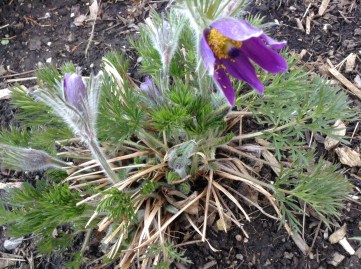 This is a very interesting plant due to its large bloom in relation to the overall size of the plant. The Pasque flower has a silky, hairy, fern-like foliage and erect open bell-shaped lavender flowers. The foliage is deeply divided. It is not that fussy about soil conditions. It generally requires full sun but mine does well in sun with partial shade. It grows to about 12 inches and is well behaved. It is a beautiful spring addition to the garden, but like the bloodroot, it may go dormant in the hot summer months. Pasque comes from Old French for Easter in reference to the spring bloom time. All Anemone plants come from the Latin meaning sway as the flowers sway in the wind
 The Peterborough & Area Master Gardeners