Category Archives: Houseplants

The Price of Growth: How Plant Propagation Shapes Plant Prices

By Brandi McNeely, Master Gardener in Training

While shopping for plants at my local big box store recently, I came across a beautiful Monstera Thai Constellation at a reasonable price. If you’re a plant collector like me, you might think, that’s awesome! If you’re not, you might ask, what’s a Thai Constellation, and what’s the big deal?

Serious plant collectors can tell you what’s trending in the market and the crazy prices these plants sell for. Thai constellations are a natural sport of standard Monsteras, with showy variegated leaves (whereas the standard plant is solid green).

In the last few years, specimens have been selling for hundreds of dollars in specialty shops – but now they are readily available in large quantities at relatively low prices in big box stores. Why the change? To understand this, you need to understand propagation techniques.

Seed Starting

When you purchase your annual flowering plants in the spring, chances are they were started from seed at the nursery. Many plants (marigolds, zinnias, and celosia) are easy to start from seed and grow quickly, making seed starting a cost effective method of propagation for nurseries. So easy in fact, that many people start their own at home using this same method.

Division

Some plants are propagated using division. Think of your garden in the Spring when hostas begin popping up. You can use a spade to cut the plant in two, instantly doubling your plants. Some tropical plants are propagated using this method, including snake plants and calathea.

Grafting

Grafting is the horticultural technique of joining two different plants to grow together as one. When you purchase a Honeycrisp apple tree from a garden center, the tree is a Honeycrisp stem (scion) grafted onto the rootstock of another apple variety. Honeycrisp won’t grow true to seed and must be grafted in order to produce true fruit.

Cuttings

Have you ever cut a stem from a house plant and rooted it in water on a windowsill? Nurseries use this technique on a much larger scale. Using stem cuttings and growing medium, nurseries can produce large quantities of plants for sale (although this does require time to allow the cuttings to grow into small plants). Pothos are a great example of plants that are easily propagated through stem cuttings.

Tissue Culture

This brings us back to the Thai Constellation. Monsteras are easily
propagated through stem cuttings, but growing one variegated offshoot
for stem cuttings takes time. Tissue culture is a relatively new practice in the houseplant industry, where plant tissue is grown in a nutrient rich medium to produce a large volume of plants in a laboratory setting. These plants are a clone of the mother plant, ensuring consistent characteristics within large scale production. Tissue culture can produce plants on a large scale fairly quickly, driving down the cost of new, rare variations.

One plant can take years to grow into a small, steady supply of plants. Low supply and high demand results in high prices for buyers.

With advancements in propagation methods like tissue culture, the once-exclusive world of rare plants is becoming more accessible to everyday plant lovers. What was once only available to collectors willing to pay top dollar can now be found in the garden section of your local store.

Understanding how propagation influences both supply and cost helps explain market trends and reminds us that behind every “rare” plant, there’s often a bit of science making it possible for more people to enjoy its beauty.

Toxic Indoor Plants and Your Pets: A Guide

by Emma Murphy, Master Gardener

While I like to think of myself as a decent outdoor gardener, the same cannot be said of my indoor houseplant expertise.

However, I have worked hard at it over the years and we’ve had some lovely Clivia, various cactus, some Pothos, a Norfolk Island pine, and a goldfish plant (Columnea gloriosa) in my office at various times.

My pre-2018 houseplants (my Mum’s cat Cleo showed no interest at all)

This was pre-2018, when my indoor kitties had no interest in my houseplants, and no nibbles were had.

That all changed when these two arrived in October 2018 – meet Lulu and Roxy.

Meet Lulu and Roxy – our tuxedo and ginger and white female cats (respectively).

While I love both of them, Lulu’s favourite activities are digging in the dirt and chewing on plants. Roxy just likes to rub up against them, knock them over and then maybe have a nibble.

While indoor plants can add beauty and life to your home, it’s essential to be aware of their potential toxicity to our furry friends. Certain plants can be harmful or even fatal to pets, especially cats and dogs. Understanding which plants are safe and which to avoid is crucial for ensuring a pet-friendly environment.

Many common indoor plants are toxic to pets, such as Pothos (Devil’s Ivy), which causes vomiting and oral irritation in cats and dogs, lilies (which are particularly dangerous for cats) and sago palms, which are extremely toxic, especially to dogs, causing severe liver damage. The Ontario SPCA has a list of the 17 most poisonous plants, but it’s not an exhaustive list.

If you suspect your pet has ingested a toxic plant, it’s best to consult a veterinarian immediately. Look for signs such as difficulty breathing, vomiting, diarrhea, or lethargy. It’s always better to be safe than sorry.

Reliable Resources on Plant Toxicity for Pet Owners

Here are some reputable websites offering advice on pet safety and plant toxicity:

The American Society for the Prevention of Cruelty to Animals’ (ASPCA’s) Animal Poison Control Center
A comprehensive and excellent searchable list of toxic and non-toxic plants.

Pet Poison Helpline Canada
Assistance for pet owners who suspect poisoning, including plant toxicity resources (there is a cost).

PetMD
Plants poisonous to cats
Plants poisonous to dogs
Detailed information on animal health and safety, including plant toxicity.

So What Plants Can I Have In My House?

If you’re looking to enhance your home with pet-friendly plants, here are a few options for you to consider. Personally, I find the palms, ferns and spider plants still tough to have in our house because I think our cats will gravitate to anything that is grass-like.

Unfortunately if your cat or dog is a habitual nibbler, you might be better off without houseplants altogether. We love our kitties more than we love our houseplants. For now I’ll just stick to my Phalaenopsis orchids and my various seasonal cactus and focus my gardening efforts on the outside of our house.

Spider Plant (Chlorophytum comosum)
African Violet  (Saintpaulia ionantha)
Prayer Plant (Maranta leuconeura)
Orchids (Phalaenopsis spp.)
Easter, Christmas or Thanksgiving Cactus (Schlumbergera or Rhipsalidopsi spp.)
Bromeliads (Bromeliaceae)      
Bamboo Palm (Chamaedorea seifrizii)
Sword/Boston Fern (Nephrolepis exaltata)
Nerve Plant (Fittonia)   
Ponytail Palm (Beaucarnea recurvata)
Hoya (Hoya carnosa)   
Gerber Daisy (Gerbera jamesonii)         
Areca Palm (Dypsis lutescens)
Calathea (Calathea spp.)
Lady Palm (Rhapis excelsa)
Lucky Bamboo (Dracaena sanderiana)
Friendship Plant (Pilea involucrata)

Also have a look at this Laidback Gardener post.

Got the Gardening Winter Blues?

by Emma Murphy, Master Gardener

Last night I dreamed of green, lush tropical gardens. It was yet another sign I am suffering from the February winter blues or as I call it “Garden Deficit Disorder”.

Yes, the days are getting a little longer with every sunrise, and we have had a fair bit of sun over the past month (which helps a lot) but I have more than half a metre of snow blanketing my gardens while my English cousins are sending photos of snowdrop drifts after their ‘long winter’.

I do like the winter season, if for no other reason than my aging body needs a rest from the garden. But it’s also the only downtime I have to plan for next year’s garden, order seeds and attend garden workshops, because I know once spring arrives I will not have a minute to spare.

So I’ll offer up a few gardening related activities for the wintertime that may help you through the blues…

Browse those Seed Catalogues

Whether you get paper copies or just look at them online, seed catalogues will bring a smile to your face, even if you don’t buy anything. The wonderful folks at Seeds of Diversity have put together an great map of Canadian seed companies. Some of my favourites are Northern Wildflowers (Sudbury), William Dam Seeds (near Dundas), Floribunda Seeds (near Peterborough) and Hawthorn Seeds (Mount Forest).

cartoon showing someone in bed with seed catalogs
Credit: Joseph Tychonievich

Catch Up on Your Reading

Winter is the only time (and my favourite time) to cuddle up with my newest garden book, while enjoying beautiful photos and deciding which new plants will be my garden next year.

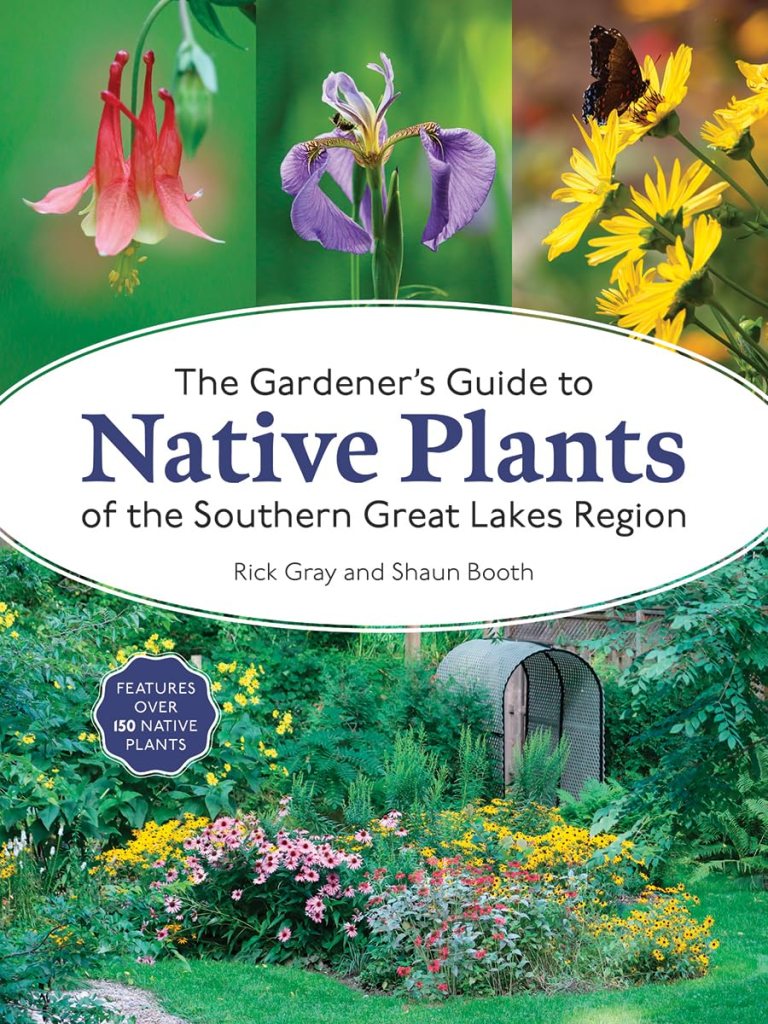
If you’re interested in native plants I highly recommend The Gardener’s Guide to Native Plants of the Southern Great Lakes Region (I did a book review here) and A Northern Gardener’s Guide to Native Plants and Pollinators: Creating Habitat in the Northeast, Great Lakes and Upper Midwest by Lorraine Johnson.

Another favourite I’ll be drooling over (it’s visually stunning) is Planting – A New Perspective by Piet Oudolf and Nigel Kingsbury.

Or even a fictional book involving gardening makes me happy – highly recommend The Last Garden in England by Julia Kelly.

Buy a New Houseplant (or 2, or 10)

While I love seeing colourful houseplants over the winter, our harsh interior conditions (furnace heat and low humidity) are not ideal for them. I will confess – I am a much better gardener outside than inside, plus I have the additional challenge of two cats that like to nibble. But do a little research and find the right plant for your space, or if you’re not ready for that investment, just pick up some fresh cut flowers to brighten your day.

Review your Garden Photos

On dull winter days I try to review and organize the zillions (ok maybe a slight exaggeration) of garden photos on my phone (I even have a gardening folder). I download the photos to my computer and organize them, all the while just enjoying the memories and seeing the colour! It’s wonderful that digital cameras and our smart phones now make it so much easier these days to capture our gardens in all their glory.

Here’s one of my chipmunks munching on some Green-headed/cutleaf coneflower (Rudbeckia laciniata) buds this summer.

Attend a Seedy Saturday or Sunday

If you’d like some more social interaction with likeminded gardeners or even just some advice, finding a local Seedy Saturday or Sunday is perfect. They occur across Canada, mostly in February and March. Seeds of Diversity have a comprehensive list – use the menu on the right of the page to filter by province. Peterborough’s Seedy Sunday is March 9th.

Find Gardening Seminars (online or in person)

If I can think of anything positive about the pandemic, it’s that we all transitioned to more online learning, and platforms like Zoom made it easy for garden experts to reach large audiences. While it’s always wonderful to see speakers in person, online presentations mean I can watch gardening experts that I might otherwise never have the chance to see in person.

Our Grey County Master Gardeners offer a great series, as does Mississauga-based Blooming Boulevards, and I’ve also been attending the Home Gardening seminars offered by the Iowa State MG Program and some by the Wild Ones organization in the US.

An upcoming in-person gardening event in Peterborough is the very popular A Day for Gardeners – save the date!

Gardening Blogs and Websites

Personally I tend to follow those who have similar growing conditions to me (Zone 4b, harsh winters, Central Ontario) but I do have several (including a few in the UK) which I like to just view and enjoy.

You should of course sign up to receive the weekly Peterborough Master Gardener blog, delivered straight into your email on Monday mornings. Our members cover various topics and issues which will be of interest to gardeners, and you can also search older blogs for specific information using the search function.

Here are a few of my favourite blogs/newsletters. Many of these folks also have YouTube channels and extensive information on their websites.

The Empress of Dirt (Ontario)

The Impatient Gardener (Wisconsin)

The Laidback Gardener (Quebec)

The folks at Savvy Gardening (Pittsburgh, Halifax, Dundas)

I hope these ideas help get you through these cold winter days and nights. Let’s all dream about spring and a new gardening season!

photo of butterfly on echinacea with text on garden deficit disorder

Winter Care for Houseplants

By Lois Scott, Master Gardener

Full disclosure:  Just a few short years ago, before Master Gardener training, I considered my house the place where houseplants came to die.  Changing my plant care routines has saved plant lives but winter has its challenges.

Watering

As a Master Gardener in training, I learned that 80% of house plant “failures” were due to over-watering.  That was empowering for me and changing watering practices has led to success.  In winter, plant growth is decreased and house plants need less water.  Before watering check to see if the top 1-2” of soil is dry.  With smaller plants you can also get to know the weight of a saturated pot relative to a dry pot by lifting them a few times between waterings.  Water thoroughly only when your plant feels dry.  Underwatering is much better than overwatering.  Signs of overwatering include the wilting or yellowing of lower leaves and inner leaves advancing to scorch, leaf drop and plant death. 

Fertilizing

During the winter when houseplants may not be actively growing, they do not need fertilizing.

https://extension.unh.edu/blog/2018/03/fertilizing-houseplants#:~:text=As%20a%20rule%20of%20thumb,from%20October%20until%20the%20spring.

Humidity

Humidity levels are lower in our homes during the winter.  For house plants that prefer higher humidity the only sure way to provide this is by increasing the humidity in your home which may be problematic.  Some people advocate misting plants, placing them on a pebble tray filled with water or clustering plants so that they can benefit from the water that each plant transpires.  The effectiveness of these methods is questionable.  Choosing plants that tolerate less humid conditions, like succulents is another option.  Plants suffering from low humidity may develop drying and browning around leaf edges.

Light

As light levels drop in winter some plants may need to be moved to increase the amount of light they receive or have supplemental light provided such as fluorescent grow lights.  Symptoms of not enough light include pale green, yellow to white leaves, leggy stems, dropping leaves, variegated leaves becoming solid green or flowering plants not flowering.  Lighting for plants is an involved discussion but this article https://extension.umn.edu/planting-and-growing-guides/lighting-indoor-plants has good information. 

Houseplants are a beautiful indoor feature providing pleasure for many.  Mastering winter care for your house plants will keep them healthy and beautiful, a wonderful touch of green in our winter world.

It’s Spring… It’s Spring!

By Cheryl Harrison, Master Gardener

Yes, it is finally spring!  We can feel the sun getting warmer and see the light lasting longer and so can your orchids.

Before the outdoor gardening season starts, have a look at your Phalaenopsis orchids … actually check all of your houseplants but I am going to stick with just Phalaenopsis orchids for now.  Your orchids may have already started to bloom.  I have 5 Phalaenopsis orchids and one of them has been in bloom for a couple of weeks.  The others are not in bloom but, after inspection, I realized that they all needed to be repotted.  How do I know that??

Orchids are epiphytes which means that they grow on other plants but are not parasitic so do not hurt the other plants.  Epiphytes have aerial roots to anchor themselves to a tree, for example, or in a pot. The aerial roots pull minerals, moisture and nutrients from the air.  They are not growing in soil.  When I checked the medium in the pots of my Phalaenopsis, by gently lifting the plant from its pot, the medium had broken down and looked more like soil than the appropriate mixture of bark, perlite and sphagnum moss (or renewable coconut chips).

Phalaenopsis orchids often need to be repotted after purchase because they may have been in the pot for quite some time and the potting medium has decomposed or they may be in an incorrect potting medium.  Incorrect potting mediums include anything that holds too much moisture and/or is compacted around the plant’s roots e.g. regular potting soil or a ball of sphagnum moss.  They also need to be repotted every 2 to 3 years because again, the medium in their pots will have decomposed, begun to become compacted around the roots and hold too much water. Too much water will lead to root rot followed by a decline in plant health and subsequent plant death.

The other indicator that repotting may be needed with Phalaenopsis orchids occurs because the plant is monopodial which means that it grows taller with new leaf growth at the tip of the stem.  The plant can end up top heavy and if not well anchored in its pot, it can fall over as flowers, stem and leaves are pushed up out of the pot by the roots.  With repotting, you can settle the plants roots back down into the pot.  If the potting medium is still in good shape, then it does not need to be replaced but if you are repotting the plant anyway then it may be a good time to replace the medium.

I have collected my supplies to repot my plants.  Note that I am not going to disturb the one that is blooming.  I will leave it until it is done blooming then repot because I do not want it to drop its flowers with the shock of being repotted.  The flowers are way too pretty!

Now you know why my Phalaenopsis orchids need to be repotted, so check your plants before you get too busy with the start of outdoor gardening season … it’s spring!

For more information:

How to Repot an Orchid: Phalaenopsis, Chicago Botanical Garden

Clivia: Perhaps a Houseplant for your Collection?

By Cheryl Harrison, Master Gardener

I recently acquired a Clivia miniata.    This plant was new to me which, of course, was part of it’s appeal.  It also has dramatic long strappy green leaves and flowers during our cold, gray Ontario winter. 

When you bring a new plant home, be sure to carefully inspect it for hitchhikers; you do not want to bring in disease or insects which could be problematic for your current houseplants .   For example, Clivia may occasionally suffer from scale or mealy bug.  Thankfully, my new plant is lovely and healthy!

Clivia are part of the Liliaceae family.  Amaryllis is in the same family.  Clivia flowers are similar in shape to Amaryllis but smaller.  Clivia form a large ball of flowers so have lots of impact… colours range from yellow to red.  My plant has orange flowers.  Clivia may grow to be 2 to 3 feet (60-90 centimetres) tall and almost as wide.  This means that it requires a heavy pot to balance the top growth or it may tip over.  They like to be root-bound so may stay in the same pot for up to 5 years.

Clivia is native to South Africa.  The common name is flame lily, Natal lily or bush lily.  The plant was named after Lady Charlotte Florentine Clive, Duchess of Northumberland in England.  Clivia was very popular during the Victorian era.  If you would like to know more about the history of this plant, check here.

This plant is the ideal house plant.  It could be placed in a North window or in indirect light from an East or West window.  High humidity is not required so no misting is needed.  Clivia prefers rich, well drained organic soil.  A half strength dilution of 20-20-20 fertilizer may be applied monthly in the summer. This plant’s  large fleshy roots will rot if watered too much so allow the soil to become dry to the touch between waterings. 

Clivia may be placed in bright shade outdoors in the summer but does not like cool temperatures so must be wintered indoors.  In fall, when you bring your plant indoors, it needs a rest period to encourage that wonderful winter bloom.   Reduce watering but give it just enough water to keep the leaves hydrated and place the plant in a cool area for 6-8 weeks.  Then, place your plant back in its usual spot and water as described above.  Your plant should flower but this may take up to 8 weeks.  Clivia may flower 2-3 times per year but note that the plant is slow growing and needs to mature before it blooms.  This may take 3 to 5 years if you have purchased a young plant.  For more Clivia information, please see here.

I encourage you to welcome the easy to grow Clivia into your home!  Their beautiful leaves, and eye-catching blooms make them a striking plant to add to your houseplant collection.

Your Amaryllis is NOT Just for Christmas!!!

by Carol Anderson, Master Gardener in Training

Amaryllis (Hippeastrum spp) is a beautiful flowering bulb that is native to South America. In Canada, we have traditionally considered it as “The flower of Christmas/Winter Bloom” and as such it is often given as a gift and sold during and for the holiday season.

Due to our harsh climate, the Amaryllis has been considered largely as an indoor plant that brings beautiful blooms (and great joy) into our homes during the cold and often grey days of winter. However, with some care, patience, and appreciation for the process, you can enjoy your prized Amaryllis for perhaps as long as 25 years (if you are lucky!!).

How to Enjoy Your Amaryllis Year Round

The trick to year-round enjoyment is ensuring that the Amaryllis bulb experiences a “cool period” (~50-55 degrees F) for 8 to10 weeks before attempting to bloom/rebloom. This “rest period” (not a true dormancy) is critical but can be accomplished through careful planning – enabling both a winter and summer blooming period to occur year after year. The Amaryllis can be enjoyed indoors during the winter months or in a spectacular garden display during the summer.

When to Grow Your Amaryllis

You can determine the best timing to plant, depending upon when you would like to enjoy the peak blooming period. The following timeline demonstrates the 3 critical periods and growth patterns for the Amaryllis. Understanding this timeline enables you to plan around when you would like to enjoy the spectacular blooms.

For example, a cool period from September through November, followed by a planting and a growth period from December through January will ensure winter blooms in January – March to bring life and enjoyment in the winter months inside your home.

Following the minimum “cool period”, you can consider when you would like to enjoy the blooms again, remembering that the bulbs require a warm moist growing period of ~ 8 weeks with bright indirect light before they will bloom again. Therefore, if planting outdoors to enjoy summer blooms, the bulbs may need to be started indoors where the temperature is warmer (70-75 degrees F) to stimulate the necessary growth of roots and shoots.

How to Grow Your Amaryllis

Here are some growing tips to ensure success:

  1. Upon purchase or when coming out of the “cool period”, soak the bulb roots for 1-2 hrs in room temperature water to rehydrate the roots before planting.
  2. Depth: Plant the bulb 2/3 under the soil with 1/3 above the soil line ensuring that the bulb is above the pot edge.
  3. Soil: use a good nutritious potting compost that has good drainage (avoid peat to prevent moisture retention that could cause rotting).
  4. Water sparingly until the stems appear, and then regularly
  5. Light: bright indirect light; keep warm with a temperature 70-75 degrees during the growing period (Note: a lower temperature ~ 65 degrees once blooming will prolong the blooming period)
  6. Staking: stems can grow >24 inches and blooms are “top-heavy”. Staking is recommended. Consider using a natural twig/dogwood staking mesh (see below) which can later be covered with evergreen/holy sprigs pinecones and cranberries for a beautiful table display.
  7. Enjoy!!!!

Replanting

The leaves of the Amaryllis are needed to continue photosynthesis and replenish and store the necessary food/sugars in the bulb for future blooming…so remember to keep them intact until they die back. Some tips for replanting…

  • Remove old flowers right away (so that plant energy is redirected)
  • Trim stem to the top of the bulb when it begins to sag
  • Cut back leaves (only when they turn brown) to 1-2” above the bulb tip
  • Remove the bulb from the soil (new nutritious soil will be needed for regrowth)
  • Clean bulb of excess soil and store in a 45-55 degree cool, dark area until ready to plant. (Note: a fridge crisper can be used…but not if apples are present due to ethylene gas that could affect blooming).

Summary

Enjoying your Amaryllis blooms both summer and winter is possible for any enthusiast. Although it requires some planning and work, the pay-off can be extraordinary.

A mass planting with 10-12 bulbs (or more) outdoors in summer can be easily converted to beautiful indoor displays throughout your home during the holiday season – bringing joy and the anticipation for spring gardening into our hearts and minds during the deep winter months…

Philodendron — An Easy Care Houseplant

By Chris Freeburn, Master Gardener

The Philodendron is a tropical plant found in South and Central America and the Carribean. It is the second largest group in the Araceae family. This family of plants includes Pothos (which are often confused with Philodendron), Alocasias (Elephant Ears), Monstera (this plant is its own genus), Aglaonema (Chinese Evergreen), and ZZ plants. There are many different varieties of Philodendron from vine types to large tropicals which grow at different height levels in the jungles of their tropical homes. Many vine type species live as epiphytes in their native environment, growing like air plants and climbing up their host plant to reach more sunlight. Most have large heart shaped leaves that grow alternately on stems.

Philodendron and Pothos are often difficult to distinguish. When you look closely at the base of the leaves, philodendrons will have a covering or sheath, called a calaphylls, over the leaf which form where the stem and petiole (leaf stem) attach.

(Philodendron showing cataphylls, and pothos showing no cataphylls)

P. Hederadeum is the most common species available as a houseplant. Heartleaf will trail or can be trained to grow up a trellis.

Upright or bush philodendrons also can have aerial roots similar to orchid roots which grow above the soil. These roots form because the plants originally grew in tropical jungles where philodendrons grow into the trees.

 If you are looking for an easy to grow houseplant, try the philodendron. Or if you want to increase your houseplant varieties, there are many different varieties to choose from.There are upright types like ‘Birkin’ which has dark glossy leaves with white streaks in the veins. Many varieties have dark green leaves while others have chartreuse leaves like ‘Moonlight’ or ‘Mekloni Gold’. Growers have introduced cultivars named ‘Prince of Orange’, ‘Ceylon Beauty’, Black Cardinal’, Narrow Escape’ and ‘Brazil’.

(“Imperial Red”, and “Birkin”)

In our homes, philodendron are one of the easier houseplants to grow. They prefer bright indirect light, but will tolerate lower light. Do not over water. Let the soil dry out between watering.

Fertilizing with a 20-20-20 solution in spring and summer is okay, but let your plant rest in the fall and winter, watering less as well. Philodendrons rarely have pest or disease problems. They contain calcium oxalate which is poisonous to humans and pets if ingested.

Philodendrons that vine tend to be slower growers but shouldn’t get pot bound. Repotting your houseplant when roots fill the pot with fresh potting soil will make your plant happier. You may also need to wipe dust from the shiny leaves by using a soft damp cloth.

I saw an article on a website recently where people were talking about the beauty of tropicals in their native environment. They wondered about bringing them home to Canada. Please remember that transporting living plants into other countries is not legal. Also, that gorgeous gigantic tropical would not be happy in your home. The plants that are for sale in Canada have been bred to be in your home, but will never get as lush as those that grow in hot humid countries. Enjoy them while visiting in their environment and love their hybridized cousins in your home.

Google Lens (free!) for all of your identification needs

By Mary-Jane Pilgrim, Master Gardener

If you’re outside enjoying the fresh air, and happen across a flower or bird or insect and you’re not sure what you’re looking at, a new feature from Google can help you out.

Google Lens lets you search what you see. Using a photo, your camera or almost any image, Lens helps you discover visually similar images and related content, gathering results from all over the internet.

All you need to do is: On your phone, open the Google app and in the search bar, tap Google Lens. Point your camera at the flower to identify the plant. Swipe up to learn about the discovery.

On Android, Google Lens is likely already built right in — open the Google App or Google Photos app. Tap Discover or tap the Google Lens icon.

On Apple, Google Lens is part of the Google app — a separate app from using Google on Chrome, Firefox or Safari. Go to the App Store and download/install Google as a unique app if you haven’t already done so.

When you open the Google App, you’ll see a screen like this with the Lens icon. It’s your window to discovery!

Last week, I went for a long walk and checked out a lot of the volunteer trees and plants along the rural roadway. Sometimes I wanted to verify an item I thought I already knew, but more often I wanted to determine the name of a common but name-unknown item. Google Lens scored on both fronts. Now if only I could remember all of those names!

If you have a bug infestation, use Google Lens to identify the bug if you can get it to sit still long enough!

There’s plenty more you can do with Google Lens, too, including pulling the contact information from business cards, identifying unusual foods and almost anything else. It can also translate words on the screen into other languages, and read them back to you.

The ability of the app to actually CORRECTLY identify plants and bugs is pretty decent, and will get better over time. It helps to allow Google to use location services, so that it’s not searching through the entire rain forest to determine the name of the plant in your neighbourhood. You can also allow Lens access to your photos, so that you can identify items you’ve already taken pictures of.

Best of all, it’s free and will always be free. Try it!

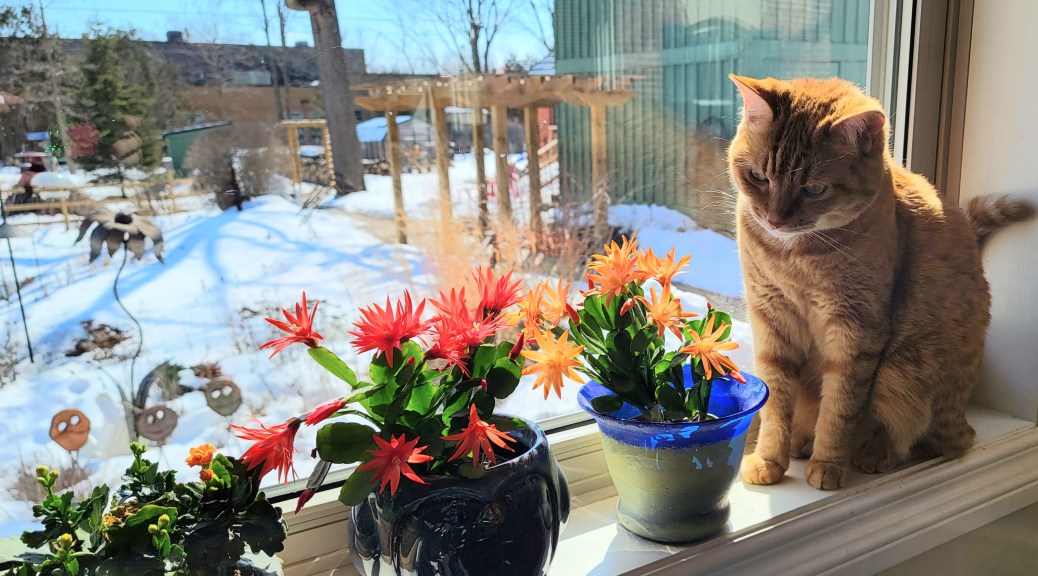
Why is my Thanksgiving Cactus Blooming in March?

By Mary-Jane Pilgrim, Master Gardener

Sometimes we get questions that sound more complicated than they really are. After observing an odd occurence in my own home, I’ve been contemplating this one: “Why is my Thanksgiving Cactus blooming in March?”  Sometimes, it’s a very simple answer:  Because it’s not a Thanksgiving Cactus – it’s an Easter Cactus.

However, that’s not the case for MY cactus. Using the image below, I’ve correctly identified my plant as a Thanksgiving Cactus (Schlumbergera truncata) based on its leaf structure. It also bloomed profusely last fall. So what gives?

A couple of weeks ago, while watering, I noticed that some buds were forming on the window side of the plant, but not on the other side facing me. I turned the plant around. A few weeks later, it’s “bloom city” on that side, but the other side has exactly zero blooms.

I did some investigation, and it turns out that blooms require two things: cooler temperatures and long nights. These cacti are short-day plants, which means that blooms are triggered by long dark cool nights. They need for between 14-16 hours of uninterrupted darkness and 8 hours of daylight for between 3 – 6 weeks to set flower buds. Our winter seems to fit that bill — flowering that shows at Thanksgiving will often be followed by a second rush just before, at, or maybe after Easter because of the light and temperature.

Once you notice that your cactus is budding or re-budding, it’s a really good idea to leave it in exactly the same place, and to not move it. Moving the plant may result in bud drop. Also, while in flower, allow the soil to dry down somewhat between waterings.

Resources

Do Christmas Cactus (Thanksgiving, Holiday) Flower More Than Once A Year? Oh Yes!

How to Make Christmas Cactus Bloom Several Times Per Year