Category Archives: Bees & Pollinators

What’s Still Feeding Pollinators in Your Fall Garden?

by Silvia Strobl, Master Gardener

It has been a warm start to the fall season, but despite a little more frequent rain in September, the summer drought has continued here north of Peterborough in my 4b Plant Hardiness Zone garden. My soil is also sandy and dry. So what could still be blooming and feeding our most effective pollinators, the native bumble bees?

Although bumble bees are more active in spring and summer, they still need nectar and pollen in fall because the gynes, unmated females that will become next year’s new queen bees if fertilized, are mating and then must build up fat reserves and find a place to overwinter (The Xerces Society 2025). At this time of year you may see bumble bees sleeping on flowers in the morning, especially after a cold night or overnight rainfall. These are mostly the solitary male bumble bees that sleep outdoors. They are searching for a mate, and then they will die. Bad weather may also force female bumble bees to sleep outdoors, but their preference is to return to the hive at night (St. John 2023).

Here are a few drought-hardy native species that were still blooming and supporting pollinators in my garden on October 10th. All are resistant to deer. Sun, soil and moisture requirements, height, bloom colour and bloom time are noted for each.

Smooth Aster (Symphyotrichum laeve)

Full sun – light shade; Sand, loam, clay; Dry to Medium; 4 feet tall; Lavender to light blue; September – October

Smooth Aster has very frost-hardy flowers that often bloom into early November. The lavender to light blue flowers provide a lavish display. It has an upright form, is salt tolerant, and has the ability to survive drought.

Given that it blooms into early November, Smooth Aster is an important food source for late season bumble bees. The backdrop of Sugar Maple in full fall colour contrasts nicely with its lavender blooms.

New England Aster (Symphyotrichum novae-angliae)

Full sun – Part sun; Sand, loam, clay; Moist-average soil; Tolerates dry soil but may look scraggly; 2-5 feet tall; Purple, pink; August – October

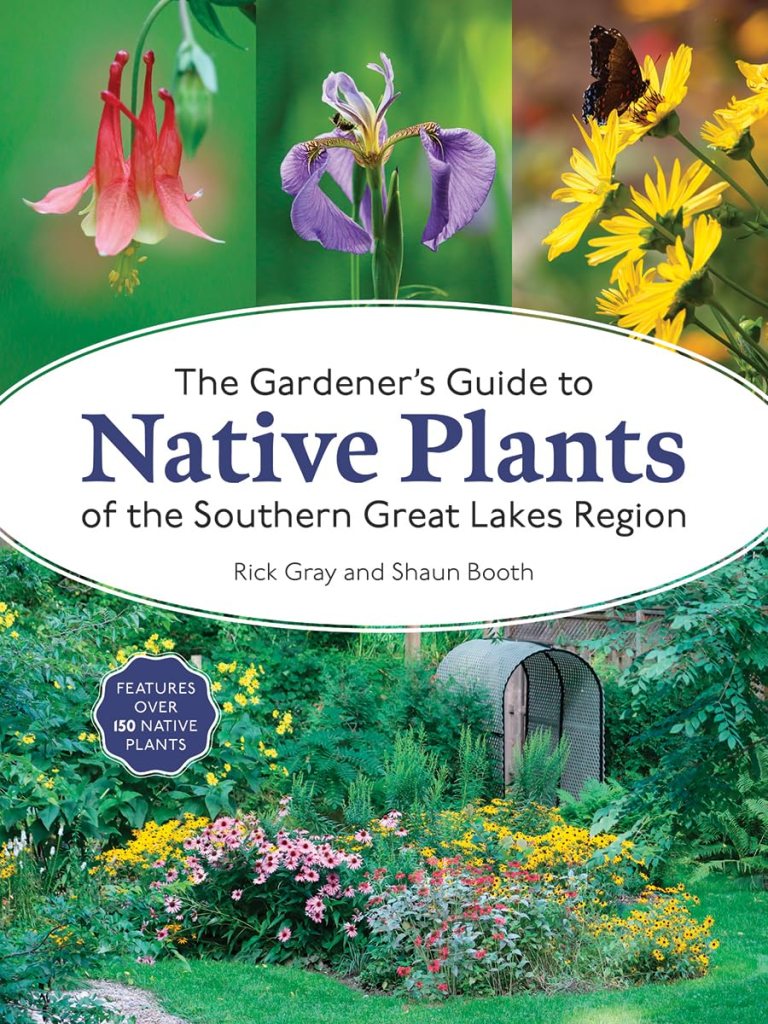
New England Aster is another late bloomer, often lasting until it is hit by a few hard frosts (Booth nd). It is a clumping perennial that can be divided every 3-5 years and also “politely” seeds into garden gaps. To keep it from flopping over in fertile soils, it can be “Chelsea-chopped” in mid-June to restrict its height. It is an important nectar plant for migrating Monarch butterflies, as well as a larval host for 5 butterflies and more than 40 moth species (Booth and Gray 2024).

A male Common Eastern Bumble Bee (Bombus impatiens) sleeping on New England Aster blooms.

Zig Zag Goldenrod (Solidago flexicaulis)

Part shade to Full Shade; Prefers, fertile loam but tolerates heavy clay; Well-drained soils; 1-3 feet tall; Yellow; August – October

Zig Zag Goldenrod is a non-aggressive goldenrod that is a great addition to the shade garden. It provides pollen and nectar for both short- and long-tongued bees, wasps, flies and butterflies and it is the larval host plant for over 45 species of moths (Booth and Gray 2024).

The leaves of Zig Zag Goldenrod can also change colour in fall, adding to the plant’s aesthetic value.

Blue-stemmed Goldenrod (Solidago caesia)

Part shade to Full Sun; Most well-drained soils, tolerates poor soil; 1.5 – 3 feet tall; Yellow; August – October

Blue-stemmed goldenrod has yellow clusters of flowers that bloom all along the purplish-blue stem in early autumn, creating streaks of gold if planted in large patches. Unlike other goldenrods, it does not spread aggressively. Its leaves host larvae of 45 moth species (Gray and Booth 2024).

Common Eastern Bumble Bee on Blue-stem Goldenrod.

Button Blazing Star (Liatris aspera)

Full Sun; Dry-Medium; Sand, loam; 2 – 5 feet tall; Yellow; August – October; Purple-Pink

Button Blazing Star is one of the most drought tolerant blazing stars. Unlike Dense Blazing Star (Liatris spicata) its flowers are held on individual stems rather than in spikes and the corms cannot be divided. Birds especially prefer its seeds (Diboll and Cox 2023).

Button Blazing Star provides nectar to migrating Monarchs in my garden on Sept. 2. It was still blooming on October 10th.

The evening of October 9th we had a second hard frost (-6oC with wind chill) but the next day all of these native perennials were still blooming. If you are looking at your garden this Thanksgiving and not seeing any plants still flowering and supporting pollinators, maybe make plans to add one or two of these next spring?

REFERENCES

Booth, S. no date. Native Asters for Ontario Gardens.

Diboll, N. & H. Cox. 2023. The Gardener’s Guide to Prairie Plants. The University of Chicago Press. 636 pp.

Gray, R. and S. Booth. 2024. The Gardener’s Guide to Native Plants of the Southern Great Lakes Region. Firefly Books. 352 pp.

St. John, K. 2023. A Closer Look at Sleeping Bumblebees. Outside my Window blog post.

The Xerces Society. 2025. Bumble Bees: Nesting and Overwintering.

RELATED

The Secret Life of the Eastern Bumblebee


By Thom Luloff, Master Gardener in Training

On a warm spring morning in Ontario, a familiar hum drifts through the air. Low, steady, and purposeful, it comes from a black-and-yellow visitor weaving between garden blossoms—the Eastern Bumblebee (Bombus impatiens). To most of us, it’s a sign of summer’s return, but beneath that fuzzy exterior lies a fascinating story of evolution, resilience, and quiet importance.

Bumblebees belong to the genus Bombus, a group that diverged from honeybee ancestors around 25 to 40 million years ago (Hines, 2008). Unlike honeybees, which thrive in massive colonies, bumblebees are social but live in smaller, more seasonal groups. The Eastern Bumblebee has evolved as a master of cool and temperate climates, thanks to its thick fuzz and the ability to generate heat by vibrating its flight muscles—a survival skill that lets it fly on chilly mornings when other pollinators remain grounded (Heinrich, 2004).

Every spring, the story begins anew with a solitary queen who has survived winter hibernation beneath leaf litter (leave the leaves!) or soil. Emerging hungry, she forages for nectar and pollen while searching for a suitable nest site—often an abandoned rodent burrow or a hollow beneath grasses. There, she lays her first clutch of eggs, which hatch into female workers. These workers soon take over foraging, allowing the queen to remain in the nest and focus on laying eggs (Colla et al., 2011). As the colony grows through summer, new males and future queens are produced. Mating occurs in late summer and early fall, after which the old colony dies, leaving only the fertilized young queens to overwinter and begin the cycle again the following year.

Eastern Bumblebees are generalist foragers, meaning they visit a wide range of flowers. They sip nectar for energy and collect pollen to feed their larvae. Unlike honeybees, which rely heavily on certain crops, Eastern Bumblebees are flexible, visiting everything from clovers and goldenrods to tomatoes and blueberries (Goulson, 2010). Their unique ability to perform “buzz pollination”—vibrating flowers to release hidden pollen—makes them essential for crops like tomatoes, peppers, and cranberries, which depend on this technique.

In the grand web of life, Eastern Bumblebees are lynchpins. By transferring pollen as they forage, they ensure the reproduction of wildflowers and food crops alike. This not only feeds people but also supports wildlife, since countless birds and mammals depend on the seeds and fruits that bumblebees help create. In forests, meadows, and city gardens, their work sustains plant communities that form the backbone of biodiversity.

Despite their adaptability, Eastern Bumblebees face mounting challenges. Habitat loss from urbanization and intensive agriculture has reduced nesting and foraging opportunities. Pesticides—especially neonicotinoids—pose lethal and sublethal risks, impairing navigation and reproduction (Woodcock et al., 2017). Climate change adds another layer of stress, disrupting flowering times and exposing bees to extreme weather (Kerr et al., 2015). 

The Eastern Bumblebee may be small, but its impact is enormous. With every hum in your backyard or park, it carries the story of millions of years of evolution, a seasonal cycle of resilience, and a vital role in keeping our ecosystems alive. Protecting them means protecting the beauty and abundance of the natural world.

References

Colla, S. R., Richardson, L., & Williams, P. H. (2011). Guide to the Bumble Bees of North America. Princeton University Press.

Goulson, D. (2010). Bumblebees: Behaviour, Ecology, and Conservation. Oxford University Press.

Heinrich, B. (2004). Bumblebee Economics. Harvard University Press.

Hines, H. M. (2008). Historical biogeography, divergence times, and diversification patterns of bumblebees (Bombus). Systematic Biology, 57(1), 58–75. https://doi.org/10.1080/10635150801898912

Kerr, J. T., Pindar, A., Galpern, P., et al. (2015). Climate change impacts on bumblebees converge across continents. Science, 349(6244), 177–180. https://doi.org/10.1126/science.aaa7031

Woodcock, B. A., Bullock, J. M., Shore, R. F., et al. (2017). Country-specific effects of neonicotinoid pesticides on honey bees and wild bees. Science, 356(6345), 1393–1395. https://doi.org/10.1126/science.aaa1190

Hot News in the Vegetable Garden

by Lois Scott, Master Gardener

Excessive heat can certainly make it hard for me to work in the garden.  It can also affect how your vegetables work.

For most plants ideal growing temperatures range from 15 to 30 degrees Celsius (C).  When temperatures are above 32 degrees C for long periods of time plant growth is slowed and some plants will begin to show stress.  This link describes a number of heat-related issues and some solutions. 

A neighbour and new gardener commented that he wasn’t getting any fruit forming on his only squash plant and wondered if he had a plant with only female or male flowers.  I reassured him that squash plants and other cucurbit vegetables like cucumber and zucchini all produced male and female flowers on the same plant. 

While this is true, apparently daytime temperatures of 32 degrees C and up and night time temperatures of over 21 degrees C can change the ratio of male to female flowers to more male than female flowers.  These same temperatures can also cause flowers and small fruit to drop.  Too much or too little water can also cause flowers and fruit to drop. 

Watering may be within our control but temperatures may not be!  There are varieties that are touted to be heat tolerant and could be a good option for our increasingly hot summers.

Another cause of no fruit or deformed fruit is poor pollination.  Apparently, many bees don’t like to work when it’s hot.  Temperatures over 32 degrees C causes many bees to slow down and pollinate less. 

Tomatoes may also be affected by very hot weather.  During hot spells with daytime temperatures above 29 degrees C and night time temperatures above 21 degrees C, tomato plants may become stressed, depleting the plants energy stores and changing the flower making it harder for them to be pollinated.  The flower will then drop from the plant.

Heat may also keep your tomatoes from turning red.  Tomatoes ripen in two stages.  They are green, seeds form, the area around the seeds becomes soft and gelatinous and they are mature.  Then they turn red.  The ideal temperature for turning red is 20 to 25 degrees C. The pigments that turn mature tomatoes red are not produced when the temperature is above 29 degrees C. 

The good news is that when the temperature is ideal, they will turn red. More here.

Gardening provides lots of learning opportunities to improve outcomes but sometimes the weather gets in the way!

Can You Help our Most Effective Pollinator?

By Silvia Strobl, Master Gardener

Pollinator insects – bees, wasps, beetles, flower flies, ants and butterflies–play an important role in the production of almost 75% of global food crops (FAO 2018). For example, only the tiny chocolate midge is able to pollinate flowers of the cacao tree and produce cacao pods! But bees, including native bees, are responsible for the biggest share at 35% of global food production (Ritchie 2021), including economically important commercial crops such as apples and blueberries! 

Bees are such effective pollinators because of the specialized hairs and pollen carrying structures on their legs that enable them to gather and transport pollen. The vast majority of bee pollinators are wild, including over 20,000 species of native bees worldwide and 400 species in North America. In natural ecosystems, bees visit the most plants and have the most interactions with flowers as compared to other insect pollinators (Radar et al. 2020). 

Bees have specialized hairs and pollen carrying structures as seen in the large filled pollen sacs of this Common Eastern Bumble Bee (Bombus impatiens) collecting nectar and pollen on native Shrubby St. John’s-wort (Hypericum prolificum). 

I enjoy photographing the busy native Bumble Bees in my garden that collect pollen from a wide variety of flowers, often late into summer evenings. Here are a few species that you may see, too. 

This Yellow-banded Bumblebee (B. terricola) with its distinct yellow and black abdominal band pattern is collecting nectar and pollen from the native Virginia Mountain Mint (Pycnanthemum virginianum). This species is ranked as “Special Concern” in Ontario, meaning it is not endangered or threatened, but may become threatened or endangered due to a combination of biological characteristics and identified threats. Its nests are often underground in abandoned rodent burrows or decomposing logs.
Here the Perplexing Bumblebee (B. perplexus) is collecting nectar and pollen from native Anise Hyssop (Agastache foeniculum). As its name suggests, this bumble bee can be rather perplexing to identify! As it’s not very common, rather little is known about it.
The Brown-belted (B. griseocollis) is a short-tongued Bumble Bee and native Butterfly Milkweed (Asclepsis tuberosa) is just one of the flowers it prefers. It is one of the most abundant and widespread bumble bees in northeast North America.

You can find excellent guides to help you identify the bumble bees in your garden here and you can learn more about native bees in this excellent publication.

Sadly, all pollinators are experiencing alarming declines due to habitat loss, pesticide exposure, invasive species, parasites/diseases and climate change. One study found that when compared to 125 years ago, 30% of plant:pollinator associations have been lost (Mathiasson and Rehan 2020).  Five Bumble Bee species, American, Gypsy Cuckoo, Rusty-patched, Suckley’s Cuckoo, and Yellow-banded, are currently listed as Endangered, Threatened or Special Concern in Ontario.

Gardeners Can Help!

Gardeners can help native bees by creating habitat, providing floral resources and maintaining a pesticide-free garden:

  1. Nesting & overwintering habitat 
  • Most native bees (60-70%) nest in the ground. Use a thin layer of mulch and avoid using landscape paper/fabric which prevents bees from making a nest in the ground.
  • Leave some scrubby areas in your garden for bees
  • For the 30-40% of stem nesting bees, cut back perennials later in spring leaving those with hollow stems at varying lengths (20 to 60 cm) as shown in this excellent guide. If you do cut, leave the bottom 20 cm in place, bundle the cut stems, and place them in your garden.
An entrance hole of a bumble bee ground nest in a patch of native Pussy Toes (Antennaria neglecta) in the author’s garden.
  1. Floral resources
  • Plant a diversity of native and non-native plants to have continuous blooms, and sources of nectar and pollen, from early spring to late fall
  • Include at least one native early spring blooming shrub or tree (e.g., willow, redbud, cherry) for emerging queen bees
  1. Pesticide-free habitat
  • Avoid using pesticides. Recent research from the University of Guelph has shown that ground-nesting native bees experience reduced pollen collection, induced hyperactivity or decreased number of offspring emerging per nest even when so-called “bee-safe” pesticides were used (Rondreau and Raine 2024).

Your habitat restoration efforts, especially adding native flowering plants, will go a long way to helping our native bee pollinators, and also our food security.

References

FAO. 2018. Why bees matter. https://openknowledge.fao.org/server/api/core/bitstreams/0f47dba8-ab04-4968-a2bc-8a9c06218653/content

Mathiasson, M.E. and S. M. Rehan. 2020. Wild bee declines linked to plant-pollinator network changes and plant species introductions. Insect Conservation & Diversity. https://resjournals.onlinelibrary.wiley.com/doi/abs/10.1111/icad.12429

Radar, R., S.A. Cunningham, B.G, Howlett, and D.W. Inouye. 2020. Non-bee insects as Visitors and Pollinators of Crops: Biology, Ecology, and Management. Annual Reviews Vol. 65:391-407. https://www.annualreviews.org/content/journals/10.1146/annurev-ento-011019-025055

Ritchie, H. 2021. How much of the world’s food production is dependent on pollinators? Retrieved from: https://ourworldindata.org/pollinator-dependence

Rondreau, S. and N.E. Raine. 2024. Single and combined exposure to ‘bee safe’ pesticides alter behaviour and offspring production in a ground-nesting solitary bee (Xenoglossa pruinosa). Proceedings of the Royal Society Biological Sciences. https://royalsocietypublishing.org/doi/10.1098/rspb.2023.2939

Pests & Diseases in the Summer Garden

By Rachel Foebel, Master Gardener in Training

Now that we finally have some warm weather, we welcome the highest populations of insect pests and diseases that we will experience throughout the year in the garden. Here I will highlight some general principals of pest management to achieve thriving plants, a delicious harvest (if we’re talking vegetables) and a healthy, balanced ecosystem in your garden.

  1. Healthy Soil = Healthy Plants

Plants have many adaptive mechanisms to protect themselves and keep themselves alive. Healthy soil provides plants the tools they need to do this. Achieve this with addition of organic matter, adequate moisture and space for the roots to grow (ie. minimal compaction). Deficiencies and imbalances can render them susceptible to pest damage.

If you’re not feeding the soil, the soil is feeding on itself.

2.Resistant/Tolerant Varieties

Look for seeds/plants that have built in resistance to common pest or disease problems you have dealt with in the past. This is often noted in seed guides, like the photo below or on plant labels.

Source: westcoastseeds.com

3. Crop Rotation

Simply moving your vegetables around each year allows for better nutrient availability to each plant type but also makes it harder for the pests/diseases to find your plants.

Utilizing some beds, cover cropping/tarping others

4. Monitor Regularly

Keep an eye on your garden, daily if possible. This way you can spot problems early and manage them while they are small.

“The best medicine for the garden is the gardener.”

5. Reduce overhead watering

Overhead watering increases risk of disease transmission from soil to plant and from plant to plant. The water can splash up from the soil onto the leaves, bringing disease with them. It can also sit on the leaves of the plant and make an excellent environment for fungal pathogens to thrive.

Left: Much to retain moisture Right: Drip irrigation or soaker hoses

6. Promote Ventilation

Trellising, pruning and adequate spacing can help reduce the risk of infestations and disease.

Tomato plant with the bottom leaves and extra foliage pruned off.

7. Removal of diseased plants & Sanitation

If caught early, a plant with diseased parts may be saved by removing the damaged portion before it spreads to the whole plant or its neighbours. 

Always be sure to sanitize your tools and hands between plants to prevent spread.

The tools used to remove diseased plant material can transfer disease to other plants.

8. Learn your pest’s life cycle

Learning how the pest overwinters, when it emerges and begins to reproduce, and what stages of its growth it is a threat to your plants will help you to decide how to manage a pest more efficiently.

Many defoliators are only a problem during their larval stage.

9. Attract natural predators

Beneficial insects and organisms help keep the pests in check. Flowers like sweet alyssum, nasturtium and marigolds are commonly known for attracting insects that feed on common garden insect pests. Choose single or heirloom varieties to maximize pollen availability. Birds are also excellent bug eaters. 

Left: Sweet Alyssum Right: Nasturium

10. Prevention using Barriers

Insect netting for both flying and crawling bugs or fencing for deer/rabbits can help keep pests from becoming a problem.

Insect netting to keep the winged insects off.

11. Chemicals are only a short term ‘solution’.

Pesticides should always be thoroughly researched and used mindfully. They often come at a cost, harm both beneficial organisms and pests, and may not be good for your own health. They can help keep problem populations in check but can also just put the problem off temporarily only to be experienced again in future seasons. They are often not a long term or sustainable pest management solution.

(There is only water in this jug).

12. Fight pests with life, not death.

Create opportunities for the garden to balance its own ecosystem out by allowing as much biodiversity of plants, critters, microbes, and humans as possible.

Left: Girls in the garden Right: Annuals, perennials, flowers, edibles and volunteers are all welcome in this garden.

Pollinator Week

By Cheryl Harrison, Master Gardener

Pollinator Week 2025 is scheduled from June 16-22 this year.  It is an annual celebration initiated by Pollinator Partnership to raise awareness of the vital role pollinators play in our ecosystems and food systems. This year’s theme, “Pollinator Cultural Connections,” emphasizes the deep ties between pollinators and human culture.

What Is Pollinator Week?

Pollinator Week is a global event dedicated to celebrating, protecting and promoting pollinators—bees, butterflies, birds, bats, and other insects—that are essential for the reproduction of over 75% of flowering plants and about one-third of the world’s food crops.

The 2025 Theme: “Pollinator Cultural Connections”

The 2025 theme invites reflection on how pollinators are interwoven with human culture, including agriculture, art, and spirituality. Many Indigenous communities have long recognized the importance of pollinators not only for their ecological contributions but also as a foundation for cultural symbolism.

What Can We Do?

You can contribute to pollinator conservation by:

  • Planting native pollinator-friendly gardens: Use a variety of flowering native plants to support pollinators .
  • Supporting local initiatives: Engage with community events and support programs like Bee City Canada, which recognizes and supports municipalities, Indigenous communities, campuses, and schools taking action to protect pollinators .
  • Educating others: Share information about the importance of pollinators and ways to protect them through social media and community outreach.

One of the fun Pollinator Week activities is a Bioblitz.  From the Pollinator Partnership web site:  “A Bioblitz brings together trained scientists and citizen scientists in a fun, friendly competition to record species observations. Community science efforts like this help advance scientific knowledge and foster public engagement, enable widespread participation in the scientific process, and break down traditional barriers between scientists and the public.”

I signed up for the Bioblitz.  For more information see link.

I love taking photos of the pollinators that visit my gardens.

Tips for Creating a Pollinator-Friendly Garden

  • Diverse Planting: Incorporate a variety of native plants with different bloom times to provide continuous food sources for pollinators throughout the growing season.  Native plants are more readily available now.  I only began adding them to my gardens a few years ago.  My gardens consist of lots of the usual perennials eg. day lilies, peonies, iris, daisies.  The natives fit right in!
  • Provide Shelter: Include features like bee hotels, leaf piles and tall grasses to offer shelter for pollinators.
  • Eliminate Pesticide Use: Pesticides can harm pollinators.
  • Water Source: Provide a shallow water source, such as a birdbath with stones for landing.  Pollinators will visit for a drink.

Celebrating Pollinator Week 2025 highlights the interconnectedness between pollinators and human culture.  Participate in local events, support conservation efforts and make informed choices to contribute to the protection and celebration of these essential creatures.

Other Resources

Invite These Super Pollinators and Pest Managers to your Garden by Silvia Strobl, Master Gardener.  See link.

How to Make the Perfect Pollinator Garden.  See link.

Pollinator Partnerships – Threats to Pollinators.  See link.

Ontario Native Plants list.  See link.

PS:  I consider reading the book “Bringing Nature Home” by Doug Tallamy, as my pollinator epiphany.   See link for more information about this book.

Myrmecochory – How Ants Help Expand Our Gardens

by Emma Murphy, Master Gardener

Ants are everywhere, but only occasionally noticed. They run much of the terrestrial world as the premier soil turners, channelers of energy, dominatrices of the insect fauna ~ Bert Holldobler

This spring I noticed that my patches of native bloodroot (Sanguinaria canadensis) and large-flowered bellwort (Uvularia grandiflora) appear to have spread to places where I didn’t plant it. So that got me wondering “how did that happen?”

Large-flowered Bellwort (Uvularia grandiflora) with Wild Ginger (Asarum canadense)

Apparently the answer is myrmecochory, which is defined as the dispersal of seeds by ants. Many plants have evolved to depend on a specific group of insects to disperse their seeds—in this case ants!

Plants that use ants to disperse their seeds have a fat-filled structure on the seed exterior called an elaiosome, which is a super snack for an ant. These structures or “food bodies” are rich in lipids, amino acids or other nutrients.

Elaiosome (e-lay-o-zome)
(Greek: elaion=oil + soma=body) literally meaning ‘oil body’

Ant with Bloodroot seed (photo credit: Donna Bos)

Plants that use this technique include many of the spring ephemerals such as trout lily (Erythronium americanum), violets (Viola spp), trilliums (Trillium spp), bloodroot, wild ginger (Asarum canadense), dicentra (Dutchman’s breeches, squirrel corn, bleeding hearts), hepatica, spring beauty (Claytonia virginica), large-flowered bellwort, and sedges in the Carex genus.

How it Works

  • Elaiosome Production
    Myrmecochorous plants produce seeds with an elaiosome
  • Ant Attraction
    The elaiosome attracts ants, who are drawn to the food source.
  • Seed Transport
    Ants carry the seed back to their nest, where they consume the elaiosome.
    • Seed Dispersal
      The seed is then discarded, often near the ant nest, providing a good environment for germination and seedling establishment.

The seeds are dispersed away from the parent plant, which reduces competition with the parent plant and improves chances of successful germination in the new spot. The ants may also discard the seeds in nutrient-rich areas within the colony, further enhancing germination success.

Thanks to the ants, the seeds are buried in nourishing soil, protected from predators (e.g., slugs and mice) who would eat the entire seed, not just the elaiosome.

Myrmecochory occurs worldwide, with over 11,000 plant species depending on this partnership. In eastern North America, ants in the genus Aphaenogaster do the majority of the work. These ants nest in leaf litter and woody debris on the ground, so it’s important to minimize plowing and soil disturbance.  

Aphaenogaster worker ants can often be spotted carrying seeds back to their nest (Photo credit: Katja Schulz – Flickr)

Ants are Important

Ants are a vital part of our ecosystem and worth protecting. They are keystone species – their diversity and behaviour affect their habitats and the surrounding plant and animal communities. So by conserving ants, we protect many other organisms that rely on them for the lifecycles.

The intricate tunnels and galleries ants create loosen the soil and allow moisture, nutrients, and air to move downwards. They carry leaf litter, prey, and other food items deep into the soil, which then are broken down by other invertebrates and microbes into the nutrients that all plants need to grow.

So next time you see your favourite spring plant has popped up in another location, thank the ants!

Want More Information?

Don’t crush that ant—it could plant a wildflower

Ants As Seed Dispersers a.k.a. The Myrmecochory Episode!

Ants Aren’t Your Enemy

Using Broken Branches as Plant Supports

By Marjorie Vendrig, Master Gardener in Training

Gardeners and municipal services in Peterborough and areas hit by the ice-storm are busy picking up the broken branches and limbs and using them for city compost and recycling programs.

Another use for some of this wood might be found in our own gardens, repurposing them for use as stakes and supports. The timing for the ice storm was perfect; the broken branches are young and supple and without leaves so they can be bent easily and shaped to suit needs. Small branches can be bent or twisted to create low supports for perennials or annuals that become leggy as the season progresses or to prop up flowers as the plants bloom. Heavier and longer branches can be used as poles for teepees in vegetable gardens for beans and peas or for climbers such as sweet peas and clematis.

This Photo by Unknown Author is licensed under CC BY-SA-NC

British and European gardeners have historically avoided plastic and metal as garden supports, instead ‘pea sticks’ are the norm. Pea sticks are usually coppiced hazel branches, but any young pliable wood will work.  Birch, lilac, red dogwood, along with oak and maple twigs and branches are at the top of the list, willow is popular as well but it tends to root and sprout – an advantage or disadvantage depending on where and how it is used. In some cases, a branch with lots of twigs and small growth is the best choice as the plant will grow under and over the branches.  In in other instances the small twigs might appear messy and a visual distraction.  When selecting your sticks, it’s important to take into account your garden aesthetic – are you going for the scrambling abundance of a country garden, or the formal structure of a classic retreat? Sarah Raven, a well-known British gardener has taken things a step further and made an effort to use only native wood when creating plant supports for her vegetable gardens.

In the ice-storm clean up, I collected a few branches for use as supports. My sweet pea seedlings are ready to plant outside, they’ll be perfect growing up and around the broken branch of a very special cornus Kousa, a sad loss from the storm. The long stem on the bottom is cut off at a sharp angle to be pushed into the soft spring soil as deep as possible.  The spread of the small twigs and branches will be close to the ground within easy reach of the seedlings planted around the base where they will quickly grow up and through the twigs and branches. Clematis would also do well on this structure and it’s likely strong enough to withstand several seasons. The popular annual mandevilla vine is another good choice as a climber. All add vertical interest to garden design.

My scrambling cotoneaster became too leggy and suffered a lot this winter. It’s now had a hard prune and I am using the cut offs to create small branch cages around some perennials. Yarrow, nepeta, tradescantia, and phlox are good candidates for this simple approach. Four or more long branches, each about 3’ long and with a similar diameter were chosen.  The new spring growth from the cutoffs will soon turn brown so I snipped off the new

growth and twigs, then pushed the thick end of each branch into the soil about 6” from its base, repeating this at the other three corners, to create four points of a box around the plant. The upright ends of the branches are then bent into hoops towards the opposite corner and wound around one another to create a hoop. More support is provided at the front where the plant flops towards the sun. I’ve made the hoop about 2/3 the final height of the plant and should be able to increase the height a bit by untwisting the ends a bit, if necessary.  At the end of the season, I’ll leave the hoops in place if they are sturdy enough for another season or add them to the compost pile.

My technique is very much that of a beginner; I expect I’ll refine things with more practice. Even still, the natural wood hoops are more appealing than  a plastic pole with string around it. In formal gardens in the UK, I have seen cages of plant supports that are works of art in themselves. It all takes time and patience.

References

Sarah Raven, Using Native Wood Structures (Retrieved May 7, 2025)

Types of Woodland Management, (Retrieved May 7, 2025)

Longfield Gardens, DIY Plant Supports, (Retrieved May 9, 2025)

Gardens Illustrated, How to Make your Own Plant Supports and Protection That Are Easy, Cheap and Full of Charm, (Retrieved May 8, 2025)

Invite These Super-Pollinators & Pest Managers to Your Garden

By Silvia Strobl, Master Gardener

You may know that native bees are the most important of our native pollinators, but which insects are the second most important pollinators of food crops and native wildflowers?

Perhaps you’ve never heard of flower flies? Visiting flowers more often and moving more pollen than pollinators such as butterflies, flower flies range in size from less than 1/4 inch long to more than 3/4 inch long, but pollinate at least 72% of global food crops and about 70% of wildflowers (Pollinator Partnership, 2024).

Maybe you have mistaken their strongly contrasting black and yellow bands on the abdomen for a bee or a wasp? Their colouring mimics that of these stinging insects—an evolutionary development known as Batesian mimicry. The English naturalist, Henry Walter Bates, came up with this term for harmless species that take on the physical traits of dangerous or bad-tasting species. So although hover flies lack a stinger, their colouring imitates the warning colours of bees and wasps that do have stingers, thereby offering protection by deceiving predators.

The larvae of flower flies are stellar pest managers, consuming aphids, leafhoppers, mealy bugs and thrips. In fact, one larva can eat up to 400 aphids over its two to three week development!

Females lay hundreds of eggs, depositing each tiny white egg singly on leaves or shoots near colonies of aphids. The larvae hatch in two to three days and resemble small legless maggots,  ranging in colour from creamy-white to green or brown (Mahr 2025).

Four common flower flies that I have observed and photographed in my garden, and whose identity has been verified by experts on iNaturalist, are shown and described in the following. Lists of flowers visited are from Skevington et al 2019).

Caption: This Orange-legged Drone Fly (Eristalis flavipes) is found in a many habitats. It visits a wide range of flowers, including this Zinnia in my garden, but also Spreading Dogbane (Apocynum androsaemifolium), Button Bush (Cephalanthus occidentalis), Thistles (Cirsium spp.) Joe-Pye Weeds (Eupatorium spp), Apple (Malus spp.), Ninebark (Physocarpus opulifolius), Primroses (Primula spp.), Sedum (Sedum spp.), Goldenrods (Solidago spp.), Meadowsweet (Spirea spp.), Asters (Symphyotrichum spp.), and Viburnum (Viburnum spp.).
Caption: This adult Eastern Calligrapher‘s (Toxomerus geminatus) beautiful black and white pattern is well disguised on the disc flower of the native Lance-leaved Coreopsis (Coreopsis lanceolata). The adults consume both pollen and nectar, and have been recorded visiting: Joe Pye Weeds, Ninebark, Goldenrods, brambles (Rubus spp.), feverfew and tansy (Tanacetum spp.) and blueberries (Vaccinium spp.). The larvae pierce aphids and mites with their hooked mouthparts before feeding on them.
Caption: The Narrow-headed Marsh Fly (Helophilus fasciatus) is one of the earliest and latest flower flies, shown here pollinating late blooming Smooth Aster (Symphyotrichum laeve) in my garden. Some flowers visited include Button Bush, Joe-Pye Weeds, Grass leaved Goldenrod (Euthamia graminifolia), Ninebark and Golden Alexanders (Zizia spp.). The adults lay eggs on vegetation overhanging ponds and when the larvae hatch they fall into the water where they complete their development.
Caption: Transverse Banded Flower Fly (Eristalis transversa) on flower of the native Tall Coreopsis (Coreopsis tripteris).The adults consume pollen and nectar from:
Native shrubs such as Buttonbush, Ninebark, and Viburnums
Native coneflowers (Rudebekia spp.), Goldenrods, and Asters
Non-native winter cress or yellow rocket (Barbarea spp.), sedums, feverfew and tansy

There are 416 known flower fly species in eastern North America (Skevington et al. 2019). So I hope to observe and photograph at least a few more species on flowers in my garden this season! Nearly all flower flies can readily be identified by their:

  • Large heads with large forward-facing eyes that often fuse together. Bees have kidney-shaped eyes on the side of their heads.
  • Stubby, short antennae as opposed to the long antennae that bees have
  • Only 2 wings compared to 4 wings for bees and wasps (Erikson 2020)
  • A “false” vein in their wing venation i.e., a vein that is not joined to any others

From: https://ipm.ucanr.edu/PMG/S/I-DP-SYRP-KC.003.html#gsc.tab=0

How do you attract these super pollinators and pest managers to your garden?

  1. Flower flies prefer white and yellow flowers that are open and have easily accessible pollen and nectar, for example the disc flowers in the daisy (or Asteraceae family), but they also use orange, pink, purple, and blue daisy-like flowers. According to a recently published book about the flower flies of northeastern North America, native plants are essential to supporting a diversity of flower flies (Skevington et al. 2019). Non-native plants that attract flower flies include: Queen Anne’s lace, wild mustard, sweet alyssum, coriander, dill, broccoli, kale, lettuce, mustards, dandelion, plums and cherries (Mahr, 2025, Pollinator Partnership 2024).
  2. Don’t use pesticides since they can kill both the larvae and the adult flower flies.
  3. To give the larvae something to eat, tolerate some level of aphids and other pests in your garden.

Don’t be surprised if by doing these things you suddenly start seeing flower flies in your garden. Also known as hover flies, you may even observe their darting back and forth flying behaviour i.e., when males hover in the open hoping to attract a female, or when males of some species defend a territory.

Flower flies are some of the most beneficial insects you can have in the garden so invite them in by planting the annual non-native and native flowers they prefer.

Literature Cited

Erikson, B. 2020. Flower flies: insects with a “PR problem”. Wild Pollinator Partners.

Mahr, S. 2025. Hover, Flower or Syrphid Flies (Syrphidae). Wisconsin Horticulture, Division of Extension.

Pollinator Partnership. 2024. Flower flies—masters of disguise. 2-pages.

Skevington J.H., M.M. Locke, A.D. Young, K. Moran, W.J. Crins and S.A. Marshall. 2019. Flower Guide to the Flower Flies of Northeastern North America. Princeton University Press. 512 pp. (Note: all 6 authors are Canadians from Ontario).

Deadwood in the Garden

By Lois Scott, Master Gardener

It was my sister that put the notion in my head that I would like a snag in my garden and the recent ice storm provided the opportunity.  A standard Serviceberry cultivar was too broken to save but it left a reasonable and safe trunk for my smallish garden.  It also left some small logs to tuck under shrubs.

Dead wood provides positive impacts to biodiversity as many beneficial species are on the search for dead wood.  ‘Some of these species include cavity nesting birds and mammals, beetles, fungi and other plants and beneficial insects.  Decaying wood positively impacts soil keeping your garden sustainable for years to come’.  https://ecologicaldesignlab.ca/site/uploads/2024/12/04_good-garden-practices.pdf 

Ecologically speaking a snag refers to a standing dead or dying tree, often missing a top or most of the smaller branches.  A snag is also known as a den, cavity or wildlife tree.  The following link (Ottawa Field Naturalists’ Club) provides an excellent description of the importance of wildlife trees to wildlife.  They provide food, safe cavity nesting sites and platforms, roosting and denning sites, hunting perches, display stations and foraging sites for a wide variety of species.  https://ofnc.ca/conservation-how-to/the-importance-of-snags-and-downed-logs-to-wildlife

Safety first so have a certified arborist advise you on the appropriateness of a potential tree.

Photo:  Top of the snag in author’s garden

Dead wood that is lying in your garden is an excellent addition.  It will be quickly colonized by natural decay fungi known as saprophytic fungi, my new word of the day!  These fungi help recycle the carbon and nutrients stored in woody tissue back into the garden soil which benefits your plants.  A small pile of logs can support many different insects and provide shelter for small mammals, reptiles and amphibians and shelter for over-wintering and hibernating wildlife.  https://www.rhs.org.uk/wildlife/dead-wood-compost-heap-habitats  This may not make everybody’s heart sing but I like the idea.

Photo:  A favourite chunk of wood in author’s garden

The small snag I now have may be more ecologically beneficial as a log on the ground but I have some ideas for it.  I plan on providing some support on it for a vine, maybe a Apios americana (American Groundnut).  There will probably be a small birdhouse attached.  The new logs have joined other decaying wood that I use as garden edging and garden decoration. 

One man’s garbage is another man’s treasure!