Even though we are more than half way through November many gardeners are still finding things to do, enjoy or plan for in the garden.
This fall I planted a number of woody plants including three small trees and 2 shrubs which have required ongoing watering. With new woody plantings it is important to water them well, right up to the time that the ground freezes, paying attention to not drowning them but preventing the roots from drying out.
Tree roots are actively growing in the cool fall weather so they need the moisture. Here’s how to do it right.
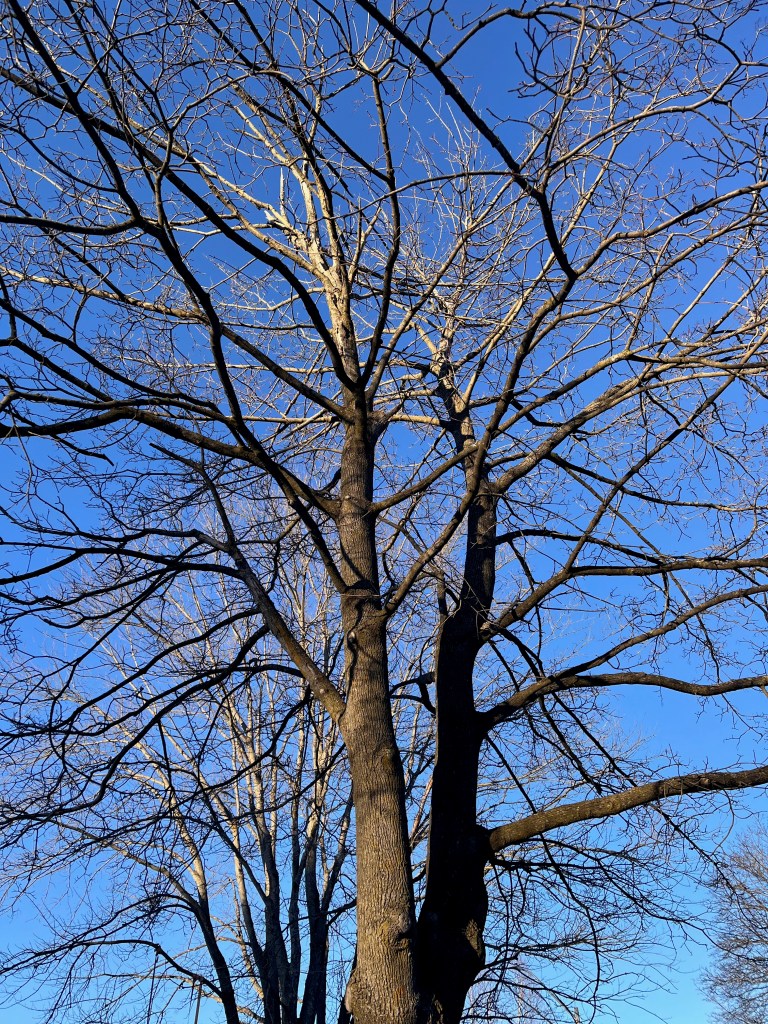
As the season advances and the trees are bare it is an excellent time to see if there are any pruning needs. Wood that is diseased, damaged or dead/dying should be pruned sooner rather than later.
According to Lee Reich, author of ‘The Pruning Book’, pruning for structure is best left until late winter after the coldest part of the winter is past. Wounds in wood heal most quickly just as plant growth is getting underway rather than the fall when wounds heal poorly and many fungi are spreading their ‘disease producing spores’.
Of particular note is the caution to not prune any Oak species during the growing season due to Oak Wilt disease. If you do need to prune during the growing season apply wound paint to the cut area.
I am planning for some structural pruning on a Star Magnolia in late winter 2025 and I can now see the tree’s structure to plan for that which is a process I enjoy.
This November I am still enjoying the frost tolerant kale and arugula that were started in grow bags in late summer. They have stopped actively growing with the cold temperatures but are still very edible. At this time of year there is no concern about them bolting (going to seed)!
Walking our neighbourhood has also afforded me the opportunity to see and enjoy what nature and gardens have to offer in November. Oaks still bearing their beautiful fall foliage and my neighbour’s fabulous roses are just a few of the visual treats.
I hope your November garden reflections are enjoyable and satisfying!
I confess to LOVING this time of year. The heat and humidity of the summer is gone, and our gardens are still looking lovely. Although my established gardens are beginning the slow process of fading and getting settled in for their winter sleep, fall is a wonderful time to plant for so many reasons.
They may not look perfect but they’ll be going to sleep soon and will wake up next spring in their new homes.
You Have Time
Unlike your annuals or tender perennials, most perennials (and native plants in particular) can be planted in September and well into October (depending on where you live in Ontario).
Smaller trees and shrubs in particular are fine to plant once they have gone dormant and leaves have dropped, as long as they are well watered until freeze up.
I love the fall as it seems less frenzied than the spring gardening season, with time to reflect on the summer that has passed. Unlike spring and summer, temperatures moderate during fall, not only for the plants but also for us! It’s terrific working weather – you start with your sweatshirt on in the morning, but by the afternoon the temperatures have warmed up considerably and you might be in a t-shirt. During July and August I can only work in my gardens in the early morning or late evening due to the heat. Your plants don’t like to be planted in the heat of summer either. So fall is my happy time.
Assessing and Dividing
Fall is the perfect time to look around your garden – do you have holes, bad-looking spots, poorly performing plants? Are there places that need something new or something moved?
I need to revamp this garden and think about moving some perennials around.
Fall is a great time to divide overgrown perennials, especially those that bloom in the spring. I just dug up all of my fragrant hostas the other day and moved them to a new location so that I can expand my shade native plant garden. Next up – planting a hedgerow.
Hostas at the front of the bed were removed to put in more native plants
Warmer Soil Temperatures
During fall, soil temperatures remain warm from the summer sun, so conditions are ideal for root growth.
Cooler Air Temperatures
Gone is the humidity and heat of the summer and the unpredictability of spring weather (and worries about frost). Daytime high temperatures are nice and there is less water evaporation from leaves.
More Rain, Less Work
With fall also comes more frequent rainfall and less need to water new plantings. There aren’t crazy swings in moisture levels – fall rains are warm and welcome and moisture levels are perfectly balanced, encouraging root growth.
When you plant in spring and early summer, the weather can be very variable, especially with regard to temperatures and rainfall. The soil is still cool, and plants take a while to get established.
Fall rains rejuvenate our gardens
Some Challenges
It can be challenging to plant new perennials in the fall – stock and selections at nurseries may be less (however the prices may be better!) and some plants have been sitting in plastic pots for months and look less than perfect. Be sure to purchase new plants at a nursery that takes good care of their plants over the gardening season (that generally does not include big box stores – shop local where you can) and pull the plant out and check for a healthy root mass in the pot.
Ideally, give your plants at least 6 weeks of optimal growing weather of fall before the colder winds start blowing in.
One Last Note
It’s a really good idea to add mulch to your fall gardening – it helps insulate the ground and maintains warm soil temperatures even during early winters. So, you are providing a nice warm area for young plants to establish their root systems before the frost.
A Special Note on Native Plants
They might look a little sad in the nursery, with not much top growth and it may be browning. However, under that soil are roots, lots of roots, and that is what you are buying when you purchase a native plant.
Although a bit brown on top, this native plant has great roots just ready for a new home.
So when you see a small three inch plant with roots coming out the bottom, recognize that it’s the perfect size to plant, and don’t worry about its ability to survive the winter.
Sleep, Creep, Leap
You may have heard the phrase “sleep, creep, leap” with respect to many plants, and especially native plants. Unlike most perennials, native plants just want to get their roots established during the first year (which is why they appear to ‘sleep’).
So if you plant in the fall, the roots are growing furiously, pushing south to grab moisture and nutrients to sustain them through the heat of summer next year. In the second year native plants creep, with more top growth and maybe even flowering. Watch out in the third year! They leap to their full size and blooming capacity.
So, if you can plant in the fall, the sooner your native plants can put down their roots in their new home, and be ready to grow in the spring season.
Bottom line? Fall weather is optimal for growth.
The perfect combo of warm soil temperatures near the root and cooler air temperatures on the top offer the ideal growing conditions for any new plantings or dividing existing perennials.
So get out in your gardens! (It’s also time to think about planting your spring flowering bulbs. Check out Master Gardener Cheryl Harrison’s excellent blog on how to do this.
Welcome to the second edition of Garden Jeopardy featuring a number of smaller native trees.
I do love trees and in my suburban garden the opportunity to grow multiple smaller varieties is appealing. The choices are many and discovering an interesting characteristic or benefit about a particular species inspires my choices. Hopefully this edition will be inspiring for gardeners looking to add more trees to their gardens this fall. You can confirm your responses at the end.
A shade-tolerant tree with smooth, blue-tinged bark and a fluted trunk sometimes known as ‘musclewood’.
A tree that bears white, showy clusters of flowers in June or July that develop into orange or red fruits that are persistant throughout the winter and much loved by birds.
A small evergreen tree that is resistant to insects and rot, rarely requires pruning and produces dark blue, berry-like cones that are a food source for Cedar Waxwings.
A species at risk tree for part to full shade that is a host tree for the Giant Swallowtail butterfly, the largest butterfly found in Canada.
An understory tree with branches in distinct layers that produces clusters of white flowers in spring, red leaves in the fall and is an important butterfly larval host.
A tough, adaptable and urban friendly tree with a distinct upright trunk, wide-spreading crown and the densest Canadian wood.
A tree bearing pea-flower shaped intense pink flowers in spring prior to leafing out, that is not native to Peterborough but will thrive here in a protected area.
An excellent Peterborough source for the aforementioned trees.
A bedraggled Giant Swallowtail in my garden.
What is the Blue Beech; Carpinus caroliniana?
What is the American Mountain Ash; Sorbus americana?
What is the Eastern Redcedar; Juniperus virginiana?
What is the Common Hoptree; Ptelea trifoliata?
What is the Alternate-Leaf Dogwood; Cornus alternifolia?
What is the Ironwood, Hop-hornbeam; Ostrya virginiana?
I see this question every year on our Master Gardeners of Ontario Facebook group – someone goes to their local big box store in the spring, purchases emerald cedars (usually Thuja occidentalis ‘Smaragd’ or ‘Brandon’) to create an instant hedge and within 6 months to a year they are browning and dying and people ask what they are doing wrong.
What’s the Issue?
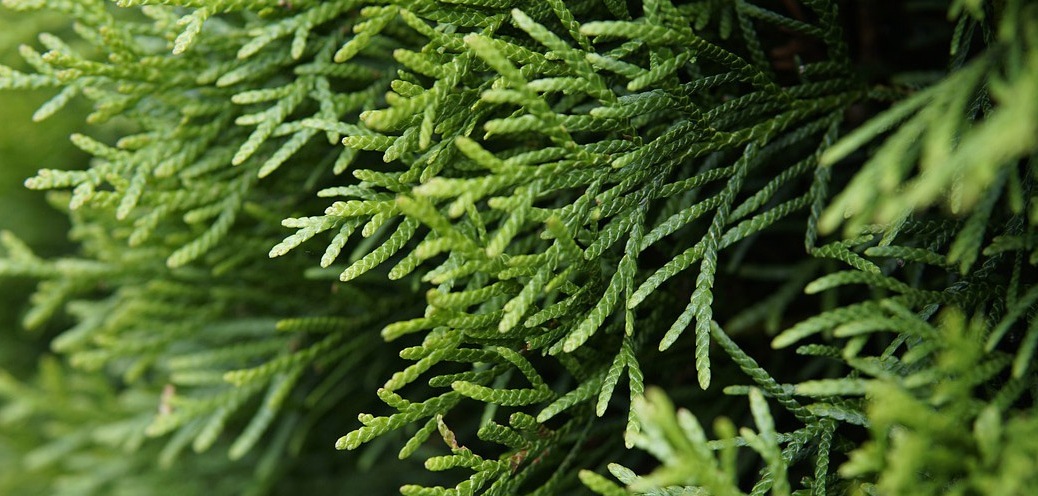
Both these cedars are native to North America. So-called “Emerald Cedars” are usually Thuja Occidentalis ‘Smaragd’.
FUN FACT – Smaragd is the Danish word for “emerald”.
According to some British Columbia (BC) growers Thuja Occidentalis ‘Brandon’ supposedly grows slightly faster and is bushier and hardier.
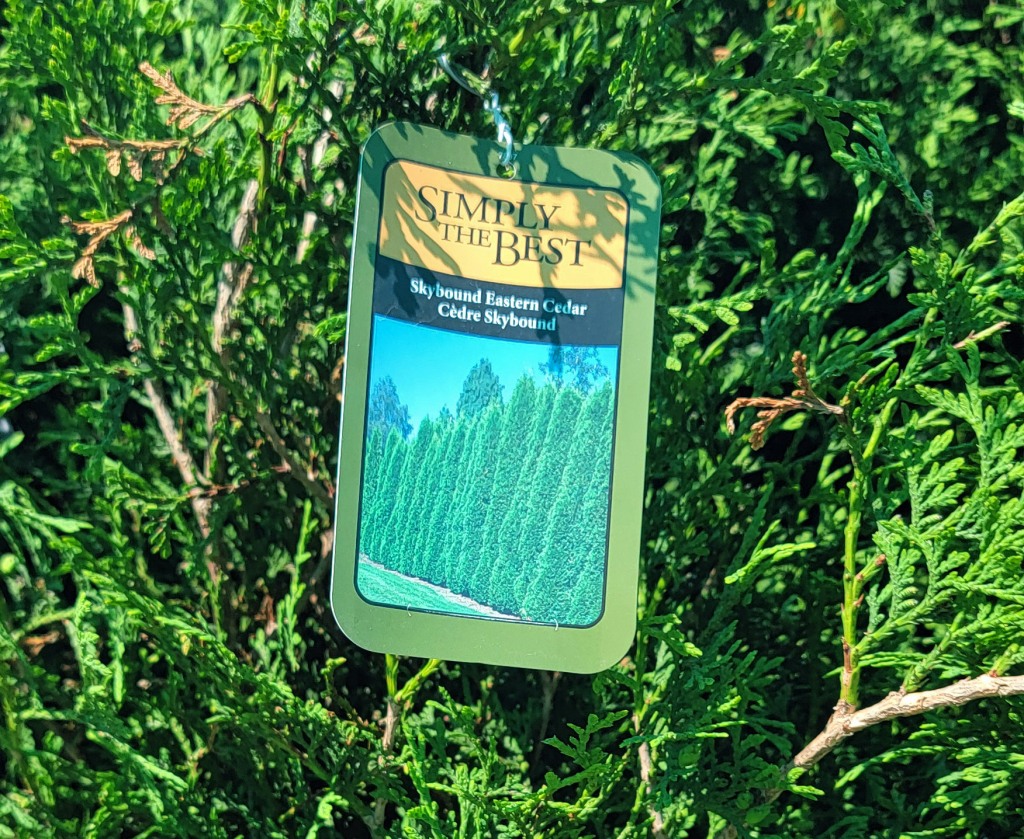
Both grow in a columnar shape. This spring I also saw Thuja occidentalis ‘Skybound’ in my local big box store, which is apparently hardier than the ‘Brandon’ cultivar.
In general I don’t recommend any of them for Ontario gardens, and this is why.
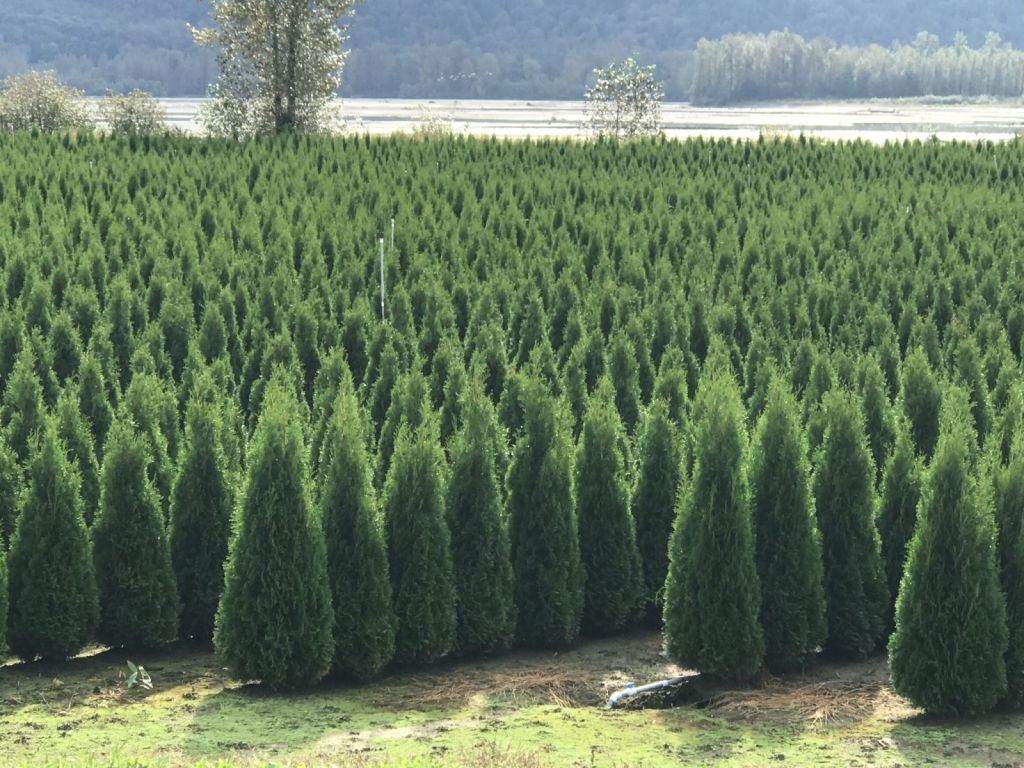
Emerald cedars arrive by the truckload each spring from BC growers, where they are grown in cooler summer temperatures with abundant rainfall (compared to Ontario).
Ontario’s summer heat and increasing drought conditions simply cannot support these shrubs; Ontario winters are also a challenge because of frigid temperatures and drying winds causing desiccation or moisture loss of needles. Ontario’s more humid conditions also result in fungal diseases affecting the shrubs.
Photo credit: Pacific West Cedars, BC
Generally seen at big box stores, they are often poorly transported across the country with no water, completely root bound, and poorly-maintained at the stores, and stressed cedar (hey you’ve moved it to a hot Ontario summer from where it was born) often means they die over the summer or in winter even if you care for it.
Bigger is Not Better, and Other Problems
Also, bigger is not better, as they often don’t survive transplanting, and you see a lot of dead or dying brown emerald cedars. If you really want a large emerald cedar (6-7 feet) you should be paying good money from a reliable year-round nursery, not a big box store. I speak from experience as I tried to create a hedge at my previous house in Kitchener.
If you do insist on planting them they must be in full sun. Make sure they get plenty of water in their first year of growth, right up to when the snow flies. A thick layer of mulch will help them to retain that moisture as well. Come winter time, protect them with a layer of burlap to protect them from heavy blankets of snow, which can bend or snap delicate branches.
What’s the Alternative?
For me that’s way too much work. If you are looking to create a visual barrier or hedge I would recommend planting Ontario-grown white cedars (also Thuja occidentalis). It is inexpensive and often dug from ‘native plantations’ that are bare root seedlings.
Finding Ontario Eastern white cedar means that the tree was grown in Ontario which ensures a good adaptation to our climate. They grow well in all soils – from clay to sandy, in full sun to part shade. After planting, trees need regular watering, particularly during dry periods, for the first few years. Once established white cedars are low maintenance and very resistant to issues.
There’s no instant hedge here – they take a few years to settle in but once they have you can expect up to a metre of new growth each year (in the third year). Plant ones that are a metre high or less to start – in this case bigger doesn’t mean better as they will take longer to settle in. There are quite a few companies that will also come and actually trench and put in the cedar for you, or just sell you the plants. Just Google “Ontario white cedar” and several companies will show up.
Or…you can look for other hedging choices like Skyrocket Juniper (Juniperis scopulorum ‘Skyrocket’) or if you have shadier conditions – Japanese Yew (Taxus cuspidata ‘Capitata’) or Hick’s Yew (Taxus x media ‘Hicksii’). I’m excited that the Canada Yew (Taxus canadensis) is finally also being propagated in Ontario and will be a choice in the future.
Another Option – Creating a Native Hedgerow
I’ve been looking at a hedge to provide some shielding from my neighbour’s property so I explored the idea of a native hedgerow in a Master Gardener blogin January this year. Here’s one of the good resources that I was looking at from the Ottawa Field Naturalists’ Club.
Credit: People’s Trust for Endangered Species, UK
They suggest the ideal hedgerow is
Planted with a variety of berry- and seed-bearing shrubs for food
Interspersed with cedar for added cover
Thick, bushy, largely unpruned and entangled with vines
Whatever you choose to do, there are many options that are better than “emerald cedars”.
Flowering shrubs are the great “bones” of your garden. They give structure, are generally long lived, offer winter interest and protection for creatures. But most do need to be pruned as they age. When you prune depends on when in the season the shrub blooms. Early bloomers like forsythia, deutzia, flowering almond, purple sandcherry or bridal wreath spireas should be pruned after flowering. Summer flowering shrubs such as hydrangea, dogwood, potentilla, summer flowering spireas, butterfly bush or rose of sharon can be pruned in late winter or early spring. Taking just the spent flowers would be a light prune which can be done when the shrub is young, looking healthy and keeping its natural shape. The practice of cutting out a third of the bush which includes the oldest discoloured branches, branches that cross each other, or dead branches will keep your shrub looking good and producing good bloom. Cutting stems on an angle facing out and just above a bud is a best practice.
An older, established shrub can become wonky looking, have many dead branches, grow too large or stop producing flowers. This is when you can do a drastic prune called coppicing.
Coppicing is a procedure that has been popular in England and Europe for ages. It involves cutting back the shrub to the ground or just above the ground. This stimulates the roots and the plant will send up fresh new shoots which will develop into a renewed shrub.
Many gardeners will coppice their Annabelle hydrangea each year, so it comes up from the ground to become the beautiful late summer flowering shrub.
Coppicing is usually done in late winter or early spring, when the plant is still dormant. Coppiced shrubs should be mulched with a good compost or fertilizer.
Dogwood before and after coppicing (no growth left, but still early)
Unfortunately, flowering will not happen in the year this pruning is done.
Shrubs that can benefit from this aggressive pruning include:
Deutzia
Forsythia
Elderberry (sambucus)
Red Osier Dogwood (cornus sericea)
Smokebush (cotinus)
Beauty bush (kolkwitzia)
Ninebark (physocarpus)
Weigela
Mock Orange (philadephus)
Rose of Sharon (hibiscus syriacus)
Willow (french pussywillow, salix)
Little Lime hydrangea before and after light prune
Sean James does not recommend coppicing lilac which tend to just send up suckers, or potentilla which are slow to respond when coppiced. Here is a link to show you Sean James coppicing a deutzia
Pruning of any kind can seem intimidating to the beginner. Like any task, the more you do it, the more comfortable you will be. A tip that I use is to stand back and look at your shrub as you prune, to see the overall effect. And remember to research if you are not sure when to prune to avoid pruning off the flower buds that may be setting.
Now get your pruners sharpened and out you go!
But don’t look at the solar eclipse today without proper eye protection!
When a deciduous tree or shrub doesn’t have its foliage, other parts of the plant such as the stems and branches are more noticeable. For example, some species like this Manitoba Maple (Acer negundo) have a noticeable waxy cuticle or bloom on its young stems. This coating or layer acts as a defense mechanism that protects the plant from moisture loss, ultraviolet radiation, dust, fungi, pathogens, and insects. Concerning the latter, researchers found that a certain beetle species could temporarily lose its grip after its “tarsal setae” was covered with the wax stem crystals from A. negundo.[i] Research has also shown that A. negundo is able to regenerate the wax within only a few hours after its removal.[ii]
Waxy Cuticle of a Young Manitoba Maple (Acer negundo)
Dandelions in February?
I don’t remember the last time I saw a Dandelion (Taraxacum officinale) in my garden bloom so early in the year. Coltsfoot (Tussilago farfara) are usually the first yellow flowered plants to appear, but this one is clearly a Dandelion. From what I’ve read, it isn’t all that unusual. A researcher at the University of Western observed that “if there is a January or February thaw that lasts for at least a week, then flowering and seed production can occur.”[iii] This week’s mild temperatures caused the snow to recede by my walkway, unveiling a yellow bloom. It may be considered a “day-neutral” plant, but some also view it as a “short-day” species. “Day-neutral” species do not require a specific photoperiod to flower and “short-day” species flower with day lengths less than 12 hours.[iv] Its non-dormant seeds are also able to germinate at temperatures as low as 5 degrees Celsius.[v] In winter, they lie close to the ground as a basal rosette with the crown drawn towards the ground for maximum protection from the elements.[vi] More developed plants will have large energy stores in their tap roots to fuel more vegetative and flower growth in the spring.
Closeup of Dandelion
No Fall Cleanup
Last summer I planted a mass of Annual Sunflowers (Helianthus annus). Ideally, the dead plants would have been left completely intact in the fall to overwinter, but the flower/seed heads were so heavy that the stems had broken under the weight. I cut the pithy stems and seed heads and left them in a pile nearby for wildlife. The chipmunks were quite appreciative. Come spring, the old stems will remain for stem nesting bees such as Megachillidae species (e.g. Small Mason Bees and Leaf-Cutter Bees). Approximately 30% of our native bees require above-ground nesting sites. Rather than including commercial “bee hotels” in my garden, I am aiming for a constant cycle of old and new plant stems. New sunflowers will be planted around the old stems to eventually become new nest sites. Providing a wide range of different sized hollow and pithy-stemmed plants will also attract a variety of different bees. Some hollow-stemmed species in my garden include Milkweed (Asclepias), Bee Balm (Monarda), Cup Plant (Silphium), Anise Hyssop (Agastache), and Joe Pye Weed (Eutrochium). Some pithy-stemmed species include Ironweed (Vernonia), Aster (Symphyotrichum), Goldenrod (Solidago), and Coneflower (Echinacea).[vii]
An Arrangement of Dead Plant Stems for Nesting Bees
A Dying Maple
Last summer, I noticed that a Norway Maple (Acer platanoides) tree in my front yard was showing dieback of the canopy in the centre. I can only guess, but I suspect that root girdling was the main cause. Environmental stresses such as drought and road salt could only have compounded the situation. Another strike against this tree is that it has weak co-dominant stems. I contacted the city to have them check it out. I came home to see the dreaded pink spot spray-painted on the trunk—it is marked to come down. I feel mixed emotions—on one hand, it is an invasive species that isn’t the best for our ecosystem but on the other hand, it is still sad to see any living tree come down—especially one that wasn’t very old. If it could remain safely standing as a snag, that would be beneficial for wildlife. A snag is a dead tree that is left to breakdown naturally. It serves as a nesting site for birds and other wildlife and the insects that reside in them serve as food for wildlife, fungi, and other microorganisms.
A Dying Maple
A Neighbour’s Snag
What’s going on in your garden?
[i] Gorb, E.V. and Gorb, S.N. (2002), Attachment ability of the beetle Chrysolina fastuosa on various plant surfaces. Entomologia Experimentalis et Applicata, 105: 13-28. https://doi.org/10.1046/j.1570-7458.2002.01028.x
[ii] Tomaszewski, Dominik & Zieliński, Jerzy. (2014). Sequences of epicuticular wax structures along stems in four selected tree species. Biodiversity: Research and Conservation. 35. 9-14. 10.2478/biorc-2014-0014.
[iii] S. M. Stewart-Wade, S. Neumann, L. L. Collins, and G. J. Boland. 2002. The biology of Canadian weeds. 117. Taraxacum officinale G. H. Weber ex Wiggers. Canadian Journal of Plant Science. 82(4). p. 835. https://doi.org/10.4141/P01-010
The new year arrived with not a speck of snow on the ground and although the ground was frozen and well watered from rainfall, that lack of snow can cause damage in your gardens. Snow, beautiful snow is a great insulator for your perennial beds. I often throw extra snow on things like my rhododendron or hibiscus as I am shoveling sidewalks. Mulch or leaves will also insulate the ground so it is always good to mulch up your garden in the fall, because we can’t depend on snowfall through the cold winter months.
February often brings a thaw as well as the ice and storms that can do damage to trees and flowering shrubs. Cold temperatures, biting winds and the strong winter sun can bleach or dry evergreens when they are not protected by snow. Wrapping in burlap will not save plants from the cold, but it will protect them from wind and sun.
Sunscald can happen when the sun shines brightly on cold winter days, raising the temperature on tree bark which can trigger it to start to grow. When the sun sets and temperatures drop, bark cells in the cambium layer are killed. The cambium layer is just below the tree bark where nutrients travel between roots and leaves. Sunscald will cause scarring or cankers on the trunk and tends to be on the south side of the tree. It usually will not kill a tree but it can put stress on it. It can be harmful on young trees whose bark is thinner. Wrapping your young tree trunk with white tree guards can help with this. Tree guards will also help keep rabbits and other creatures from chewing the bark. Remember to remove this guard in spring.
Dieback can happen on flowering shrubs during a cold dry period. Flower buds that set in the fall can also be killed off from the cold. Plants like forsythia and rhododendron may need to be planted in protected areas with good snow protection and without wind so they produce flowers. Other shrubs like hydrangea that are not for our zone 5b gardens may not flower in our area because they set their buds in fall and when we get those cold winter days and nights, the buds die. Pruning in fall can encourage growth when the plant should be beginning to rest for winter, so don’t prune too late into fall.
Frost heaving happens when soil freezes and thaws, and when there is not enough snow cover to keep the ground insulated. The semi evergreen coralbell (heuchera) can suffer and die if they heave. Be sure these perennials are well watered and planted into the ground well before freeze up.
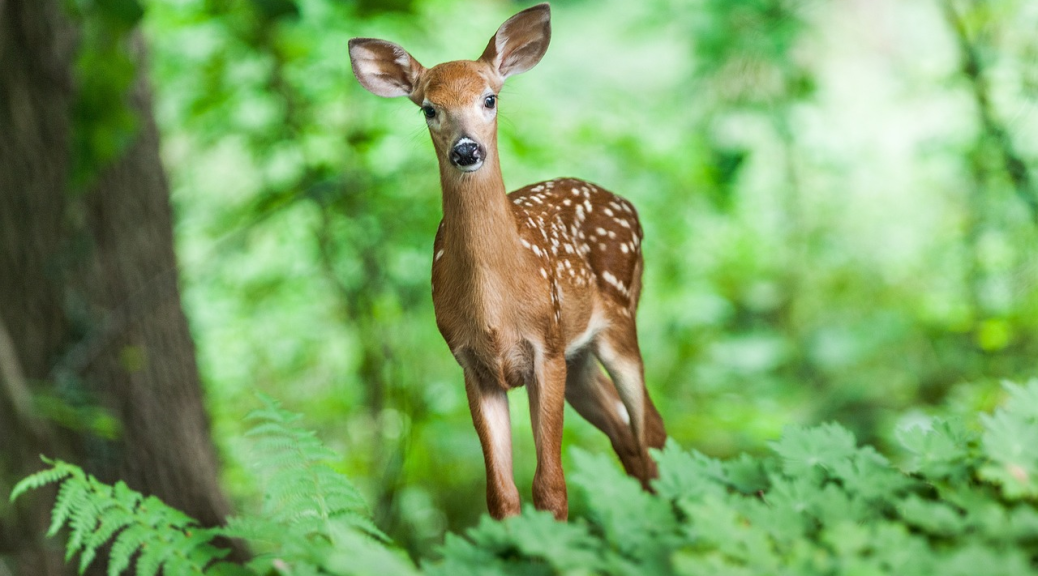
When the freezing temperatures and snow arrives, animals like rabbits, mice, voles and deer often feed on the flowering shrubs and trees in your garden, eating bark, twigs and flower buds. I have had rabbits eat euonymus, bridal wreath spirea, yews and willow trees. This winter I have put up burlap fencing around some of my bushes so rabbits can’t “prune” them. I want snow, but I hope it doesn’t pile up too high so the little varmints can just hop over!
Although I’ve lived in Canada for almost 50 years, I grew up in Bristol, England for some of my formative years, and always loved the traditional hedgerows that existed along rural roads and properties. Every time we return to the UK on a trip, I marvel at the diversity and intricacy of these functional garden/farm structures.
On our three quarter of an acre property in a small village north of Peterborough (Zone 4b/5a) I have a neighbour on one side who has a chain link fence and loves their golf green lawn. On the other side there is no fence at all, but I’ve been growing a few elderberries (Sambucus canadensis) and cup plants (Silphium perfoliatum) to hide a poorly maintained house – the first shrub suckers well and the second plant grows fast and tall.
So I’d love to have a traditional English-style hedgerow on both edges that would provide visual screening as well as animal and bird habitat…so I went looking to see how to adapt the traditional English hedgerow to Ontario.
Hedgerows can provide amazing bird habitat
The origins of hedgerows
It’s thought that hedgerows (or hedges) were first used by humans as ‘dead hedges’ to enclose livestock using thorny plants. Once agriculture began, clearing woodlands created fields with tree and shrub boundaries that were managed to create livestock-proof ‘living fences’.
Hedgerows have been planted since the time of the Romans and reached their peak in Britain during the Enclosure Acts of the 1700s when an estimated 200,000 miles of mostly hawthorn (Crataegus spp) hedgerows were planted.
Credit: People’s Trust for Endangered Species, UK
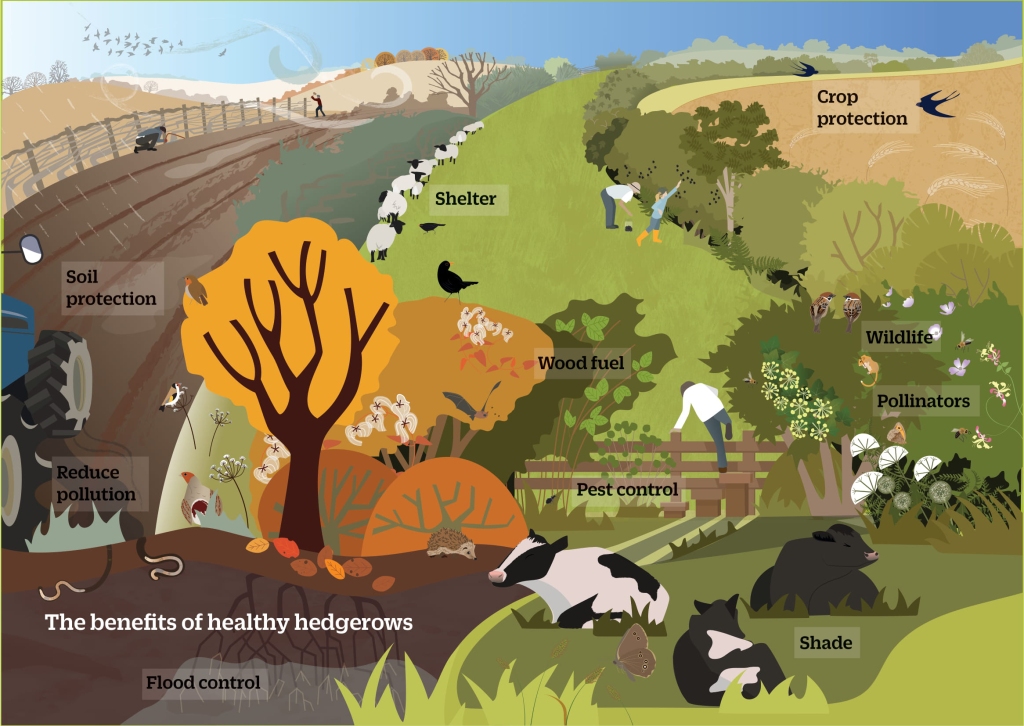
Hedgerows have many purposes, as you can see from this graphic from the People’s Trust for Endangered Species. They have an excellent video on how to manage a hedgerow here, but it’s not quite the same in Ontario, as we don’t have the same hedgerow species or coppicing techniques.
In their best form I think hedgerows can be a mini-ecosystem with key ingredients that animals and birds need to survive — food, shelter, nesting and denning sites. Hedgerows also function as corridors, connecting one habitat to another and offering a safe passage for wildlife. They help muffle sound, create privacy, and act as windbreaks.
Planted with a variety of berry- and seed-bearing shrubs for food
Interspersed with cedar for added cover
Thick, bushy, largely unpruned and entangled with vines
The Ontario Rural Skills Network suggests that hedgerows can be single species but are best if they comprise a diversity of plants. Planting should be very dense, with a double line spaced 40cm (16in) apart with plants in a staggered pattern at 30cm (12in), giving 5 plants per metre.
Because they’re comprised of living shrubs, hedgerows grow and require management. It’s all about creating a balance between growth and avoiding them becoming gapped and unmanageable. A hedgerow may take seven to 10 years to establish, depending on the species composition.
I’m just at the beginning of my plan for hedgerows on our property, but winter is a great time to do research. Both sites are sunny and have well drained soil, and I want to focus on using Ontario native plants as much as possible. I’m looking at a combination of seed- or nut-bearing shrubs (like speckled alder and hazel) and berry producers (serviceberry, chokecherry, red osier dogwood). Thorny shrubs (native roses, wild raspberry, hawthorns) will give added wildlife protection. The design will probably be different for each one, but that’s the fun of it.
The OFNC has excellent lists of plants you can consider for an Ontario hedgerow. I’m thinking about using
Speckled alder (Alnus incana)
Beaked hazel (Corylus cornuta)
Hawthorns (Crataegus spp.)
Common elderberry (Sambucus canadensis)
Flowering raspberry (Rubus odoratus)
Willow spp. (Salix spp.) – native if I can find them – there is an amazing group in
Choke cherry (Prunus virginiana)
Red osier dogwood (Cornus stolonifera or C. sericea)
Eastern white cedar (Thuja occidentalis)
Wild (riverbank) grape (Vitis riparia)
Next steps
I’m just at the beginning of my journey. In my next blog post on March 25th, I’ll give you an update on my research and my plans for my spring hedgerow projects. Until then, here’s some interesting sites to look at if you are thinking about something similar. And, by all means, if you have created a hedgerow in your Ontario garden, I would love to hear about it.
A little forest … seems like a bit of an oxymoron. I always thought of a forest as a loose grouping of trees and other plants that covers a large area? I was introduced to a little, or Miyawaki, forest this past spring at the Lilac Festival in Warkworth, Ontario. The Peterborough & Area Master Gardeners partnered with the Northumberland Master Gardeners to offer a Native Plant educational event on the same May weekend as the Festival. We had a successful educational event, the Lilac Festival was great fun AND I saw my first little forest!
The Miyawaki forest method was created by Japanese botanist Akira Miyawaki. He developed the idea of restoring damaged ecosystems by layering various species of native trees, shrubs and ground cover. A site is chosen and prepared by layering cardboard and mulch. Various species of young native plants are then planted close together in a relatively small area, as compared to traditional planting methods, for the number of plants chosen. This method has been used in urban areas to demonstrate native plant forest environments.
The Miyawaki method of planting a forest is relatively new to Canada but there are more of this type of forest creation popping up across the country. All mixed native plant forests have many benefits including improving air quality, providing wildlife habitat, sequestering carbon and more. However, even though the Miyawaki forest creation method is a fairly new concept, it is bringing the forest closer to people by getting the benefits, and importance, of forests more widely noticed just because it is a relatively new concept. I know that I enjoyed looking at the plants in the Warkworth little forest. It gave me ideas about what I could do on my own property. Let’s face it, a walk through a forest, even a little one, is always a relaxing way to spend an afternoon!
Trees have had a social network for hundreds of years!
Do trees communicate? This concept is still up for discussion.
Trees communicate amongst themselves – one form of communication is through electrical impulses through their roots. Another form of communication is by scent released into the air.
For example:
“On the African savannah, giraffes were feeding on Vachellia tortilis (umbrella thorn acacias), the trees didn’t like this, so minutes later they started pumping toxic substances into their leaves to rid themselves of the large herbivores. The tree gave off a “warning gas” and other trees in the vicinity got the signal and followed suit.”1
The giraffes got the message and moved onto other trees.
Communication by electrical impulses through their root system to other trees is accomplished through the fungal networks around their root tips. Messages are transmitted to the fungi which in-turn “operate like fiber-optic Internet cables”2 sending messages for miles along the fungal network to other trees in the forest about insects and other dangers lurking.
There are various scent compounds depending on the attack that is occurring. Trees have the ability to identify which species of insect is attacking by its saliva. The identification is so specific, it can release pheromones which attract the predator of the species attacking the tree.
If a tree finds itself in harm’s way it sends a message through the tree’s internal network which in turn signals the leaves to release a scent compound. “Not just any old scent compounds, but compounds specifically formulated for the task at hand”3.
The transmission of scent compounds travels in the air for miles. Animals and small critters in the forest detect the scents being released. If a predator picks up the scent, it knows a food source is nearby and follows the scent.
Tree Root Facts
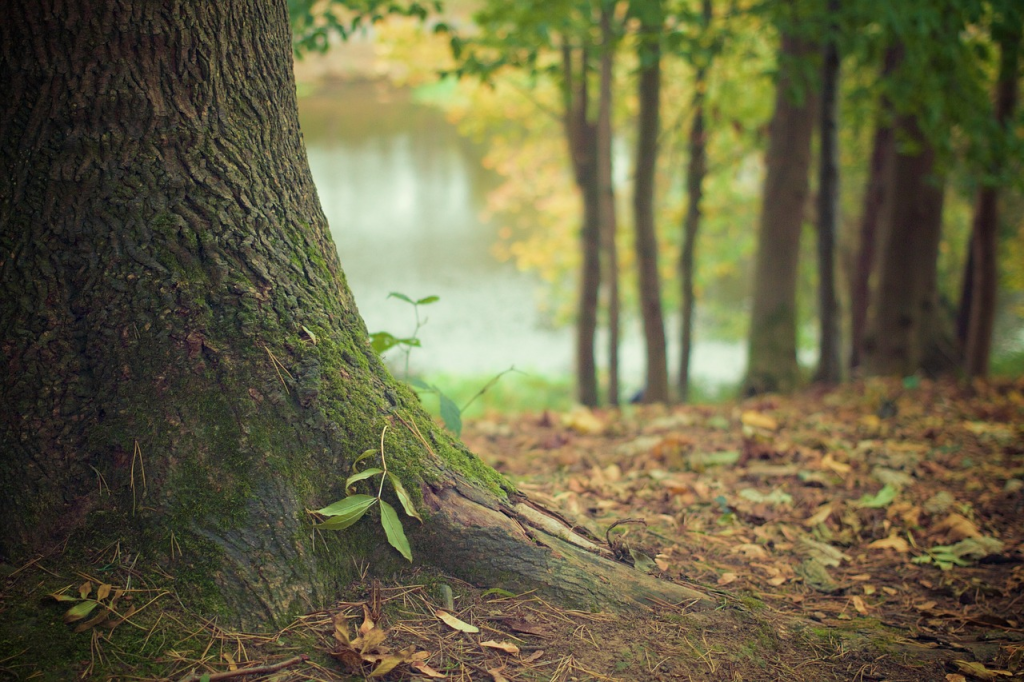
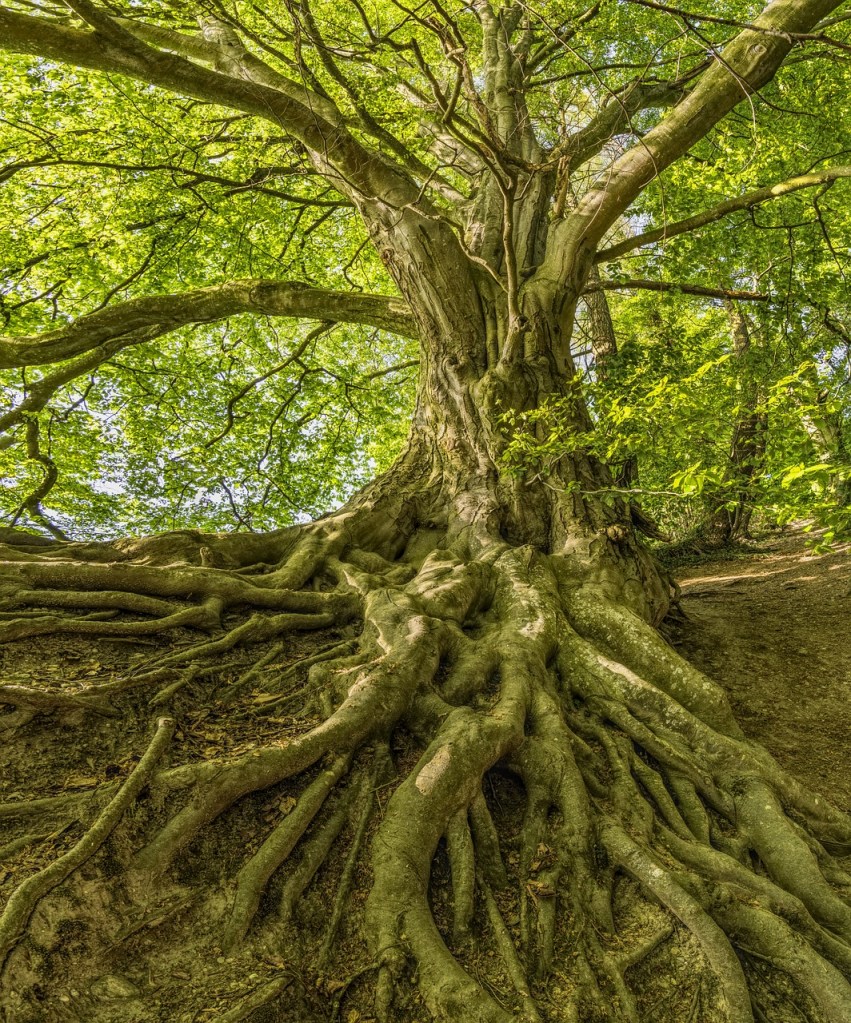
Most tree roots do not penetrate deep into the soil. Root depths range from 6 – 18 inches, staying close to the surface of the soil in order to absorb water, nutrients and oxygen from the soil.
Tree root systems cover more ground horizontally. Some irregular root patterns extend 2 – 3 times larger than the crown of the tree.
There are three basic root systems: a. Tap root systems (straight, thick and tapering) include species such as Pine, Eastern Redbud, Walnut, White Oak, Sycamore, American Hornbeam and Douglas Fir. b. Heart root systems (combination of large and small roots descending down and across) include species such as Norway Maple, Larch, Lime and Beech. c. Flat root systems (no obvious primary root, several horizontal roots spreading laterally) include species such as Spruce, Sugar Maple, Silver Maple, Hackberry, Birch, Fir and Cottonwood.
I believe this is a form of communication or social networking – communicating to other trees, animals, fungi, insects, pests and beneficial predators.
References
Wohlleben, Peter (forward by Tim Flannery; translated by Jane Billinghurst) The Hidden Life of Trees: What They Feel, How They Communicate – Discoveries from a Secret World. Greystone Books Ltd. Vancouver, BC 2015, P.7.













 The Peterborough & Area Master Gardeners