Category Archives: Perennials

Benefits of Gardening for Kids

By Amy Woodward, Master Gardener

Spring is upon us and summer is fast approaching…what a great time to introduce children to gardening.  During the spring, children can start planting seeds indoors or plant cool weather crops outdoors.  In the summer children can continue to plant and maintain the garden.  During the fall children can harvest and enjoy what has been sown.amy

As I child I can remember countless hours spent outside in the garden.  In this electronic age, many kids spend time indoors hidden behind a screen or television.  This summer, encourage your kids to limit the amount of screen time and get outdoors and try gardening.  Gardening is a healthy, fun activity that has many benefits for kids.  I would encourage anyone who has considered planting a garden with children to do so.

Why kids should garden:

  • Creates more family time
  • Reduces stress
  • Encourages children to eat more vegetables
  • It is educational & healthy
  • It is good exercise
  • Helps reduce waste
  • Teaches responsibility

Getting Children Interested in Gardening:pansy-2173208_640

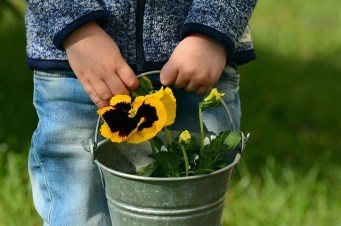
  • Give children their own space such as a square foot garden or their own container
  • Supply children with their own tools
  • Plant flowers that attract insects
  • Grow interesting plants
  • Promote composting

Gardening activities:

  • Convert a sandbox into a garden
  • Set up a worm farm or make a bat house
  • Use eggshells to grown plants in
  • Plant in old rain boots
  • Make garden markers from rocks
  • Create a fairy garden
  • Make a small greenhouse

Recommended Gardening activities for kid’s websites:

https://kidsgardening.org/garden-activities/

https://www.kcedventures.com/gardening-with-kids

https://www.parenting.com/family-time/activities/10-inspired-gardening-projects-kids

Some tasks to get started on now…

By MJ Pilgrim, Master Gardener

Spring is just starting to peek through the winter cold and soon it will soon be time to start getting your hands dirty again. Before you break out your trusty garden tools and seed packets, there are a few garden chores you need to tackle to get your garden off on the right foot.

Inspect Raised Garden Beds: Check garden beds for any damage. Over the winter, rain, snow and ice can damage the wood frames of a raised garden bed. Repair or replace as necessary.

Check Your Garden Tools: Get your garden tools a good wipe down and inspect for rust on the tool heads. Oil and sharpen if necessary, paying particular attention to wooden handles that show signs of splits or cracks; rub them down with boiled linseed oil.

fresh-2386786_640Turn Your Compost: It’s time to turn your compost pile and check for any that is black and crumbly and thus ready to use. Making your own compost is free and a great way to amend your soil! Add compost to improve soil by scratching in finished compost into the top one inch of soil.

Top Dress Garden Beds: If you run short of home-grown compost, use well-seasoned manure to top-dress your garden beds in preparation for planting. If you planted a winter cover crop, now is the time to dig it into the soil in preparation for planting the beds.

Plan to Divide Perennials: Spring is a great time to think about dividing or moving plants around as you walk around your gardens.  Any plant that has gotten too large or that has a bare spot in the centre is a good candidate.   Sharing is a cost-efficient way to add more plants to your landscape, but be mindful of pests, disease, and weeds. Only share plants from your garden that are healthy and inspect plants from friends or plant sales thoroughly. If there are any signs of distress or discoloration, do not plant it in your garden.

Weed and Mulch: Eradicate those pesky early spring weeds (or late fall weeds that didn’t get attention) before they get too comfortable in your garden. Be careful of where you step as it will compact the spring soil.  Remove any young weeds first and then put down a layer of mulch. Alternatively, you can plant your garden tightly with perennials, annuals, trees, and shrubs to crowd out weeds. Leaving bare earth anywhere is a recipe for a weed-infested space!

flower-3258961_640

Prune: Remove any dead branches from shrubs, trees and perennial foliage after new growth has begun. Prune the spring bloomers, like forsythia and rhododendrons, as needed soon after flowering is complete. Thin and shape hedges after the first flush of new spring growth.

Taking the time now to complete a few essential spring garden tasks will bring you benefits for the rest of the season.

Young Seedlings & “Damping Off”

By Christine Freeburn, Master Gardener

There is nothing more disheartening than checking your freshly sprouted seeds to discover them rotted and almost dead. Damping Off is a fungal disease that often kills young seedlings. There are several fungi that are responsible, however the most common ones are soil-borne.

Damping off can be identified by these symptoms:

seedling-1386653__340
Seedling 1386653 by Alex80, 2016, used under CC0 1.0.
  • wilted leaves while soil is moist
  • rotten mushy seedlings
  • roots that have rotted off
  • stems that have thin, brown, almost transparent sections
  • white mold, almost cobweb-like on plant stems or surface of soil

Here are some tips to prevent this disease:

  • don’t plant seeds too closely together – plants need air to be healthy
  • fill container to top with soil, so seedlings grow up where air circulates
  • keep air circulating around the young seedlings – do not cover
  • water from the bottom with room temperature water
  • do not let container sit in water – no waterlogged soil
  • use good sterilized seed starting soil and clean containers
  • keep seedlings warm – cool wet conditions are where fungi thrive
  • apply a natural fungicide like a weak solution of chamomile tea

Basically, the best solution to controlling damping off is to give your young seedlings the best soil, watering techniques, and temperature control to ensure success.


The Right Way to Plant Trees, Shrubs and Other Plants

by Lee Edwards, Master Gardener

The task of planting is among the many tasks avid gardeners faces every season. Therefore, we’ll focus on the proper way to plant trees, shrubs and plants thereby reducing transplant stress while promoting lush, healthy, plants and root growth.ecology-2985781_640

1. Dig A Proper Hole

To achieve the correct hole size that allows a plant, tree or shrub’s roots to stretch out, dig a hole wider than the width of the plant’s container; about two to two and a half times wider, and as deep as but not deeper than the container’s depth. Then, water the hole.

2. Remove Plant From Container

Ease the plant from its container, gently pushing up from the bottom. If roots are densely packed outside the container (rootbound), loosen the roots before removing the plant. Do not pull on the plant’s trunk, stem or branches when removing from the container, as this may severely damage the plant.

3. Inspect and Prune

Once out of the container, inspect the plant thoroughly. Prune damaged, girdling (circling), dying roots, and suckers. Water the roots, wrap with moist paper, and place in a shaded area away from the wind until ready to plant (same day). If you plan to plant in a few days, cover the paper with mulch and water thoroughly.

For bareroot plants, prune, completely wet then wrap roots, and keep shaded until roots are fully hydrated. For burlapped and dug plants, cut away burlap/wires, prune, wet then wrap roots, and keep shaded until ready to plant.

4. Prepare Soil

gardening-690940_640.jpgSoil is important. Use the soil that was dug from the hole and amend it as needed; for example, add loamy soil to clay soil to ease denseness, or organic matter to sandy soil to slow the soil draining quickly. Ensure the soil is suitable for the plant being planted with sufficient nutrients to satisfactorily support and sustain the plant.

5. Plant Properly

The depth a plant is planted is important. If a plant’s crown is too far below soil level, stunted growth or crown rot may occur. A crown planted too high above soil level may cause sunscald and unnecessary drying out.

Place the plant in the pre-dampened hole and spread out its roots. Make sure the roots sit on firm soil with the crown slightly above soil level to safeguard the crown from sinking below soil level after watering. Fill the hole halfway with soil and tamp down with your hands. Water thoroughly to remove any air pockets. Fill the hole with the rest of the soil and create a shallow, bowl shape at soil level around the plant. Tamp down firmly.

6. Water and Mulch

To reduce transplant stress, water the roots slowly and thoroughly allowing the water to completely sink down and around the roots. Add mulch as needed to maintain moisture then water again. For the next six weeks, regularly water taking care not to allow the soil to dry out.

Have Fun Gardening!

Lee Edwards is a Realtor, Master Gardener, and co-owner of Avid Gardeners-a Garden Consulting & Maintenance Company. She enjoys spending time with her family and best pal, Sir Max, along with reading, gardening and writing articles for online publications.

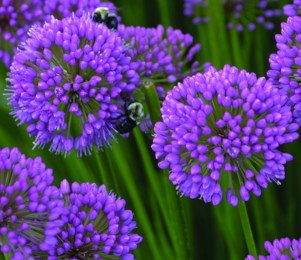
Perennial Plant of the Year 2018: Allium ‘Millenium’

Adapted from perennialplant.org allium millenium

Allium ‘Millenium’ has numerous virtues to add to the landscape setting and will not disappoint.  It boasts low-maintenance,  dependability, and is not invasive.

Soil: Grows best in well-drained soils.

Uses: Full-sun gardens–where its sleek structure can complement many other growth habits. Cut flowers retain a blush of their summer color.

Unique Qualities: Allium ‘Millenium’ is a butterfly magnet. The plant is interesting through multiple seasons for both foliage and large, gorgeous blooms. Reseeding is much less a problem than in other alliums.

Maintenance: Allium ‘Millenium’ is subject to no serious insect or disease problems. Deer and rabbits usually avoid ‘Millenium’.  Alliums are bulbs that are available in stores for fall planting.

Growing best in full sun, each plant typically produces an upright foliage clump of grass-like, glossy deep green leaves reaching 10-15” tall in spring. In midsummer, two to three flower scapes rise above the foliage with each scape producing two or three showy two-inch spherical umbels of rose-purple florets that last as long as four weeks. Alliums are sometimes avoided due to their reseeding behavior. Fortunately, ‘Millenium’ exhibits 50% reduced seed production, raising less concern for self-sown seedlings.

Blooming at a time when most of our garden begins to decline in the tired excess of the season, ‘Millenium’ offers much needed color.  It is truly an all-season plant that offers attractive shiny foliage spring through summer and caps off the season with its crown of perfectly round rose-purple flower umbels.

Got the Winter Road Salt Blues? Some Advice on What to Plant

by Emma Murphy, Master Gardener (Twitter @Hey_MzEmma)

It’s an unfortunate reality. We live in Canada and we get snow, lots of snow. And then there’s the ice. So our industrious public works folks are out there putting down road salt (sodium chloride) and sand to keep us moving. We also apply salt or sand on paths and walkways on our property. Unfortunately it seeps into the soil and kills plant roots. Road salt mixed with melted snow creates a mist that blows on to our properties, especially when cars splash through melted snow. Having lost a few very nice plants to a combination of huge snowbanks and road salt, I was curious about what plants can survive (and maybe flourish) in a front garden that inevitably gets doused in road salt.

What Does Road Salt Do?

The negative effects of road salt on humans and the natural environment have been well documented. The Smithsonian magazine has two great articles on the subject.
The Hidden Dangers of Road Salt  What Happens to All the Salt We Dump on the Roads? 

Road salt doesn’t just dissolve into thin air. It splits into sodium and chloride ions and gets absorbed into roadside plants, licked up by wildlife or accumulates in aquatic ecosystems—sometimes with devastating consequences. All that saltiness can help invasive or even toxic species spread, not to mention increase traffic danger due to deer and moose drawn to salt-covered roads. (From a gardening perspective, if you want to deep dive into the nasty things that happen to soil structure from salts, this article by the Soil Science Society of America provides some great insight.)

salting truck

What Perennials Can Handle Road Salt?

Our Savvy Gardening friend Tara Nolan (@ThatTaraNolan) (who you may remember as a speaker from our 2017 Peterborough Garden Show) recently posted a great blog post on how we can combat the road salt challenge in our gardens.

Salt-tolerant Plants that will Survive in Road Salt-laced Soil

So what are some of Tara’s favourites salt-resistant plants?

Autumn Joy Stonecrop (Sedum spectabile ‘Autumn Joy’)
Butterfly weed (Asclepias tuberosa)
Blanket Flower (Gaillardia)
Russian sage (Perovskia atriplicifolia)
Columbine (Aquilegia)
‘Karl Foerster’ reed grass (Calmagrostis acutifolia ‘Karl Foerster’)
Silver mound Artemisia (Artemisia schmidtiana Silver Mound)

IMG_4946
Gaillardia
100-0046_IMG
Autumn Joy Stonecrop

Some other ones I found doing an Internet search:

Rugosa roses (Rosa rugosa)
Lilacs (Syringa vulgaris)
Summersweet (Clethra alnifolia)
Lady’s Mantle (Alchemilla mollis)
Daylilies (Hemerocallis)
Catmint (Nepeta)

So, if your garden is looking less than wonderful due to winter salt damage, try some of these options!

IMG_0841
Daylilies

The Soil in Your Garden

by Christine Freeburn – Master Gardener

For the plants in your garden to be the best they can be, you need to start with the best soil you can make. Enhancing your soil with compost and manure is the best way to do this.

Soil provides physical anchorage for plants

You need your soil to have enough texture to hold your plants without being so heavy that it strangles them.

You should know what your SOIL TEXTURE is.  To do this, you can try this simple test:

  • fill a quart jar one third full with a sample of your soil
  • dig down into the soil to get a sample
  • fill the jar with water, put the lid on tightly and shake well.

As the soil settles, you will be able to see different layers.  The bottom level is the sand portion.  Next will be silt. Silt has larger particles than sand, but smaller than clay.  Last will be clay.

The amount of each that you have in your soil will determine what type of soil you have….clay, sandy, silty or any combination of these. The best soil is sandy loam, which is about 60% sand and 40% clay.

This will also tell you how your soil deals with water….does it drain well or hold and stay wet longer.

You can amend your soil to improve the texture, but it is a constant challenge. Sometimes it is better to accept what type of soil you have and grow plants that prefer a sandy soil or a clay soil.

Soil supplies water and nutrients to plants

When you water, water the soil and roots of your plants, not the leaf portions. Water is absorbed through the roots and channels up into the leaves.

pH

Another thing you should know about your soil is it’s pH…is it acidic or alkaline. pH has a scale of 1 to 10, with acidic soil have a low number. Most plants like 6.0 to 7.5. This is where they can best absorb the nutrients in your soil. You might have heard that plants like rhodendrons prefer acidic soil, which would have a lower pH.

Knowing the nutrients in your soil is important also. You can send away to Guelph University to get your soil tested, however that can be expensive. You can use an inexpensive soil testing kit also. It will also test for pH.

There are 3 big nutrients and these are Nitrogen, Phosphorus and Potassium. You will be familiar with them as the three numbers on fertilizers. Many fertilizers are synthetic, however you can get organic types.

Nitrogen is for leaves and greening of your plants.NPK-01.png

  • fish emulsion
  • blood meal

Phosphorus is for bloom

  • bone meal

Potassium is for roots and overall health of plant

  • wood ash
  • composted seaweed

Other natural fertilizers

  • animal manures – make sure they are well composted or they will burn your plants or be full of weeds
  • manure tea – dilute manure in water, let sit for a week, then water plants
  • comfrey tea – another good nutritional source
  • epson salts – put a tsp in hole when planting

Know your soil, it’s texture, pH and nutritional content

Grow the plants that will thrive in those conditions or be prepared to make amendments

Soil is a living thing which needs to be enriched on a regular basis

Compost and Topdress

Growing Strawberries in Containers

by Pat Freistatter

Why grow strawberries in containers? 

  • It does not require a lot of space.
  • Containers can be close to your kitchen
  • Bacterial and fungal diseases and damage from slugs are reduced.
  • Containers can be moved around to take advantage of warmth and light from the sun.

Note: Strawberries on plants still need to be protected from Insects and birds

What type of strawberry plant grows best in containers?

  • Any type of strawberry plant can be used.
  • June bearing strawberry plants provide one large crop.
  • Day neutral strawberry plants produce fruit throughout summer, except during hot weather.
  • Ever-bearing strawberry plants produce 2-3 harvests each summer from early spring to fall.

What type of container can be used?

  • Many types of containers can be used: eg. hanging basket, pot, wooden box (must have several drainage holes in the bottom)
  • Strawberry plants have a small and shallow root ball so they can be grown in small containers; as small as 25 cm in diameter and 20 cm deep (Note: small containers must be watered more often)
  • Light coloured pots keep the plant roots cooler in the heat of the summer.

What type of soil should be used?

  • Use loose, loamy potting soil that will hold water, but allow excess water to drain away.

How do you plant the strawberry plant?

  • Fill the container with potting soil to within 2.5 cm of the rim
  • Put plant in pot and cover the roots, up to the crown (where the leaves emerge), with the soil and water well. Add more potting mix if needed after the soil settles.
  • Strawberry plants can spread out about 60 cm – put only 1– 2 plants in a small container.

When should the plant be watered?

  • Water strawberries whenever the soil feels dry to about 2.5 cm below the surface.
  • Avoid both soggy and dried out soil.
  • Daily watering may be needed in periods of hot, dry weather.
  • Keep moisture off the leaves to prevent fungal diseases that will damage the fruit.

How should the plant be fertilized and when?

  • Strawberries should be fertilized every 3-4 weeks, as soon as the first flowers appear, with a fertilizer high in phosphorus.

How much sun should the plant receive?

  • At least 6-8 hours of sun – rotate container every 3-4 days if possible

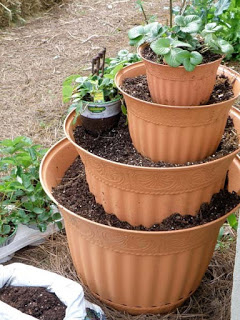
Fun things to do with strawberries in containers: Create a Strawberry Waterfall

  • Stack a few lightweight pots filled with potting mix, starting from largest to smallest.
  • Plant strawberries around the edge.
  • Take care of your strawberry fountain following the previous directions for containers.

Planting a Flower Patio Container – Things to Consider

by Pat Freistatter

Location of Container

  • Sunlight – how much sunlight will the container will receive – afternoon sun is hottest – choose plants for those light conditions

Viewing Container

  • larger leaves with coarse textures and tall spiky grass can be viewed from a distance and make a visual statement
  • fine textured plants invite you to look more closely at the detail
  • a taller pot may be needed if you want the flowers to be viewed from afar

Container Size and Material

  • Container needs to be big enough to hold enough soil for the growing season
  • Fiberglass or plastic pots do not dry out as fast as clay and other porous containers.
  • Three to seven 1 cm holes need to be drilled into the bottom of container for adequate drainage.

Soil Mixture Contents

  • Materials such coconut husk fiber and sphagnum peat moss help retain water
  • Black earth (humus), composted manure, perlite, lime, and fertilizer support plants throughout growing season.

Colours and size of plants

  • White flowers catch your eyes and help other darker colours jump out
  • A variety of leaf shapes and sizes increase drama and interest in your pot

Plant soil and moisture requirements

  • All plants in container need to have same moisture requirements – don’t mix plants that like dry conditions with those that prefer wet feet

Structure

  • Thriller – tall centre
  • Filler – plants around thriller
  • Spiller – plants that spill over the edge of the container

Note: if the back of your container will be up against a wall, then the taller plants should be at the back 

Container Maintenance

  • Check planter daily to ensure it doesn’t dry out
  • Fertilize container every couple of weeks with water-soluble fertilizer
  • Remove dead flowers to encourage re-blooming.
  • Empty and wash out containers at end of season

PlantWatch

by Cauleen Viscoff

(previously published in the Peterborough Examiner)

Now that the weather is softening, and we are convinced that spring really is around the corner, there are reasons to herald its arrival other than with Easter eggs, birdsongs and flowers to pick.

There is a little-known group of folks around the world who are quietly making a difference. They are monitoring birds, insects, frogs and plants. Recording the blossom times of some plants are good indicators of climate change. We all know that our climate is making some subtle as well as some not-so-subtle changes – some better and some not so much. So what does watching plants have to do with climate change?

Plant-watching has a long tradition and a rich history throughout the world. In 1750, the Swedish scientist and artist Linnaeus, turned plant-watching into a systematic science. He made calendars of flowering times for 18 places in Sweden, noting the exact climatic conditions at the time of blooming.

This became the foundation of modern plant phenology (the science dealing with the influence of climate on the recurrence of such annual phenomena of animal and plant life as budding and bird migrations- Dictionary.com). Phenology then spread to many European countries and revealed, over the centuries, that some spring wildflowers are super-sensitive weather instruments.

More than 100 years ago in Canada, Nova Scotia’s superintendent of education, Dr. Alexander H. MacKay, had students collect plant, animal, agricultural and weather phenology from 1897 to 1923. And then, in 1987, the Alberta Wildflower Survey started up and blossomed (pun intended) into a program that initiated the Alberta PlantWatch. This program then spread back to Nova Scotia, Newfoundland and now today, PlantWatch is part of our national Nature Watch series of volunteer monitoring programs designed to help identify ecological changes that may be affecting our environment.

There are PlantWatch programs in each province and territory.

PlantWatch enables “citizen scientists” (volunteers gathering research for scientists) to get involved by recording the flowering times for certain selected plant species and reporting these dates to researchers on the PlantWatch website. When the data is submitted electronically, it is instantly added to web maps showing bloom dates all across Canada … So those observations make a difference right away!

The collection of that much data across the vast expanse of our country would be impossible for the small existing group of scientists presently working in this field.

As Canadians, we are fortunate to live in a country with such a wide variety of plant species. By participating in PlantWatch, we can learn about our country’s great botanical diversity and at the same time, help scientists track the effects of global warming and climate change in Canada.

The plants chosen for this program bloom every spring, largely in response to rising temperatures. However, some species are flowering almost a month earlier than they were a century ago!. Some of these plants you are familiar with and grow in your own yards and gardens. Poplar, Common Purple Lilac, Dandelion (bet you have lots of those..), Red Maple and Trillium are just a few.

Scientists believe that climate change is affecting bloom times – a trend that is continuing. They predict that the greatest increases in temperature will be in Western and Northern Canada, while some parts of Eastern Canada may actually be cooling (although last summer was hotter than ever).

By reporting on the PlantWatch species found in our local communities, we can help researchers discover how common plants are responding to climate change, and track where those changes are taking place in Canada and at what rate.

And now, for the first time in Canada, the PlantWatch program has partnered with the Master Gardeners of Ontario. We are excited about our potential contributions to science because we believe that observing local plants can be fun, but more importantly, the data we collect can serve a greater purpose by assisting scientists, land managers and those responsible for our natural resources to help in the environmental decisions they will need to make both now and in the future.

We urge you to join us in making a difference. You don’t have to be a professional, or even a gardener.

Take a look at the website; the plants are described in detail with glorious photos. Gather up your your children, grandchildren, friends and neighbours – sign up, get outside and watch spring happen – make your observations and”¦.make a difference.

Peterborough gardener Cauleen Viscoff, PlantWatch co-ordinator, Master Gardeners of Ontario Inc., can be reached at plantwatchontario@gmail.com. For more information, visit www.naturewatch.ca