Spring Bulbs – Beyond Daffodils and Tulips

by Suzanne Seryck, Master Gardener

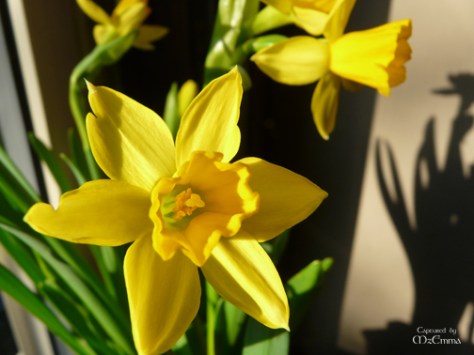
October and November is a great time to plant spring bulbs – these are the bulbs that will extend the colour in your garden,  often blooming when there is still snow on the ground. These bulbs – the most well-known being daffodils and tulips – bloom from March or April until late spring. They are incredibly low maintenance, you plant them once and then forget about them, with the exception of daffodils which often need dividing every 5 years or so. However the reward outweighs the hardship of dividing them, a clump of 5 can easily multiply to 40 or 50.

Daffodils and tulips are, by far, the most recognized spring bulbs, coming in many different colours, sizes and bloom times. However if you look beyond, you start to notice the many other different spring bulbs available.

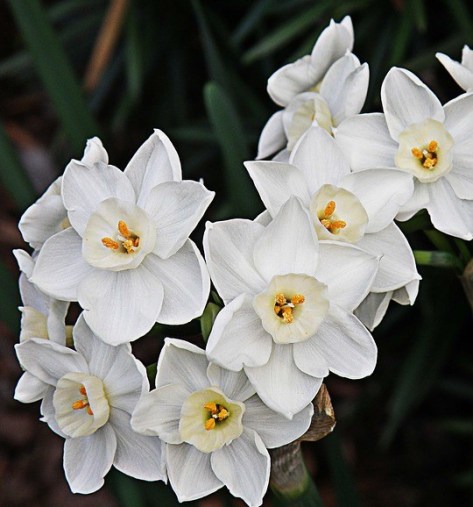
daffodils_EM

I live in Lindsay and like many cities, if you drive around in the spring, you will notice the many blue lawns. These are actually either glory of the snow (Chionodoxa spp.), or siberian squill (Scilla), tiny blue bulbs that naturalize in both your lawn and your flower beds. The difference between the two depends on the direction that the flower head faces, but either are perfect in the lawn. As well as blue they also come in lavender, pink or white.

Squill_EM

Snowdrops (Galanthus), which are among the earliest blooming spring bulbs will also naturalize in your lawn or flower beds, however in my garden, they are slower to multiply. They can be either single or double with a small white or snow colored flower.
I plant a lot of grape hyacinth or muscari in my garden, however I find them too large for my lawn and instead plant them in the perennial beds. They are also great under shrubs, trees or hedges. They come in blue, violet, pink and white and multiply easily, quickly spreading to form large clumps. Blue muscari works very well when paired with daffodils and can be planted in the same hole. Bulbs are typically planted at a depth determined by the size of the bulbs, allowing you to layer the muscari on top of the daffodils.

Crocuses whilst beautiful in their many different colours seem to be especially appetizing to squirrels. I planted orange crocuses two years ago and out of the twenty crocuses I planted, I may have seen one actually bloom, I was left with either holes where the bulbs used to be, or they would be nipped off when they were about 1 inch tall. I still plant them, but I make sure to plant a daffodil in the same hole, squirrels do not like the smell of daffodils and tend to stay away.

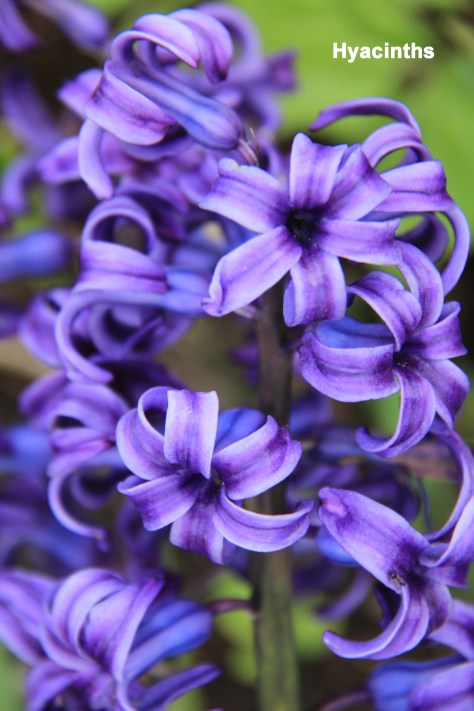
Other spring bulbs I have planted in my gardens include anemone, oxalis adenophylla, which is a very pretty pink colour, hyacinths, winter aconites, a very cheery shade of buttercup yellow, iris hollandica and of course English bluebells. I have to admit I do have a lot of daffodils and tulips in my garden from my early gardening days, but I am now starting to look beyond and plant the many different spring bulbs now available.hyacinths_EMHint: If you’re looking for ideas for something different check out this GardenMaking magazine article with ideas for 25 unique bulbs for your garden.


The Myth of Fragile Roots Planting Trees and Shrubs

By Emma Murphy, Master Gardener

(This blog entry builds on last week’s excellent post by Sue Flinders-Adams)

“When you transplant, try not to disturb the roots, just take the whole pot-shaped lump of soil/roots and pop it into its new home.” How many people have heard this story when purchasing a new tree or shrub from a nursery?

We take a shrub out of its container and see white fragile-looking roots and instinctively we don’t want to damage them or add to transplant shock. We know that healthy growth in a shrub is dependent on a good root system, so why would we mutilate or injure them?

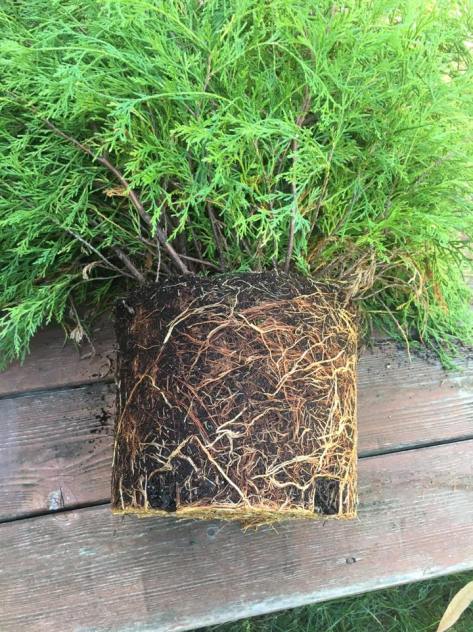
nottoopotboundbutstill

Are Roots Really That Fragile?

Well, it turns out that those roots are not as fragile as we think. While you should take care with when transplanting seedlings, especially annual flowers and vegetables, woody perennials, shrubs, and trees all benefit from a more vigorous approach, according to Linda Chalker-Scott, Ph.D., Extension Horticulturist and Associate Professor at Washington State University and one of the ‘Garden Professors’ that I admire for their scientifically-based knowledge of horticulture.

Garden Professors on Facebook or Garden Professors Website

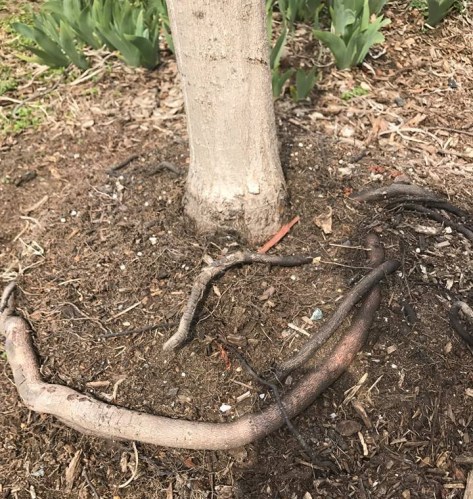
When we purchase gallon-sized pots in the nursery, the plants are often pot-bound, the often suffered from circled root systems, which if not corrected become even more problematic once the shrub is in the ground. Eventually they become girdling roots, which will lead to the early death of otherwise healthy trees and shrubs, as you see below.

timhamilton

(photo courtesy of Tim Hamilton)

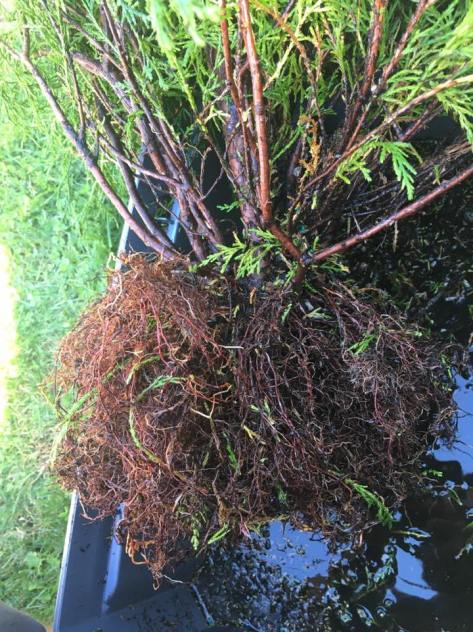
Think of it this way – roots respond to respond to pruning in much the same way as the crown—it stimulates new growth. If you prune the roots when you transplant, especially those that are excessively long or misshapen, the plant will respond by generating new, flexible roots that help them establish in the landscape. The best way to do this is by root-washing the shrub – taking it out of the pot, putting it in a wheelbarrow or other container, and washing off all the media so that you can see what the root system looks like.

cutcrossingandgirdlingroots

Two Critical Things to Do

  1. Prune the roots in a root-bound shrub or tree to avoid future problems
  2. Remove the media (soil) that shrub or tree came in

The second suggestion relates to the soil that comes with your tree or shrub. I always thought you just put it right in the ground, but evidence suggests that (generally) the container media is a soil-less mix with a large proportion of organic matter and pumice. It is best to remove this media as part of your root inspection, and use it as topdressing after planting, followed by mulch.

If you put the media in with your new plant, the material will inhibit root development outside the planting hole. It will also lose water more rapidly than the surrounding native soil (because of its porous nature), resulting in increased water stress to your new transplant.

Watering is Essential

As with all transplanting, regular and deep watering is needed to keep the new shrubs or trees happy while they establish their new root systems. The fall is a great time to plant trees and shrubs so happy planting!

Want To See How It’s Done?

Doug Gifford of Michigan recently posted to the Garden Professors Facebook page about his root washing, root-pruning, and planting of shrubs. You can check out the link here. Credit to Doug for most of the photos on this blog post.

shookoutandwet

A Special Note

If you plant a shrub or tree already in full leaf they will be more stressed than those that are dormant. Dormant planting is better as all resources go towards root establishment. You may see leaf damage or even death in the short run. But as long as the roots are kept cool and moist throughout the transplanting process, and as long as you keep the area mulched and watered, it should be fine in the long run.

Check out more detail on this issue in this blog post. It talks about the four things that result in landscape planting failures and how changes in the nursery industry have resulted in more problems with roots. Many of these issues also apply to balled and burlapped (B&B) trees – more information here.

This year, Dr. Chalker-Scott extended her experiment to perennials, as talked about in this blog entry  Three months later she revisited the site – here are the results.

For more information on other horticultural myths check out these pages. Even better? Spread the word to others 😊
Horticultural Myths – Dr. Linda Chalker-Scott
Garden Myths (Robert Pavlis’ site – he is based in Guelph, Ontario)

Planting to Encourage Proper Root Growth and Branching

By Sue Flinders-Adams, Master Gardener

Here are a few tips to ensure that the new shrub or tree you just brought home will thrive and grow to its full potential.

1. Before planting, soak the plant in the pot, in a pail of water for a few hours or even overnight to hydrate the roots.

2. Carefully remove plant from the pot. If it doesn’t come out easily gently press on the sides so that the roots will come away from the pot, and tap on the bottom.

3. There are usually roots circling the pot – gently coax these roots away from the root ball to encourage outward growth. If roots are left in the ‘circling’ position, they will continue to grow in this direction, circling the plant and even girdling the trunk of the tree in 10 or 15 years.flinders pic 1

4. The picture shows the roots that have been spread out in the very large hole. Partially cover the roots to hold them in place and water thoroughly with transplant fertilizer, according to the directions. Fill in the hole with the surrounding soil. Top dress with an inch or two of composted manure, and then 3 inches of mulch. Prune off any dead branches.flinders pic 2

5. Branches are often cramped and a little twisted from shipping. Gently pull them away to a better positon and secure with plant supports (pictured). In a couple of weeks you can take the supports away and the branches will continue to grow in that direction.

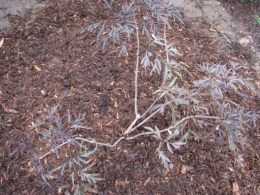
6. flinders pic 3Three weeks later, the Black Lace Elder is looking very happy. It is October which explains the lack of new growth.
The Plant Lover’s Guide to Salvias (Book Review)

By:  Mary Jane Parker, Master Gardener

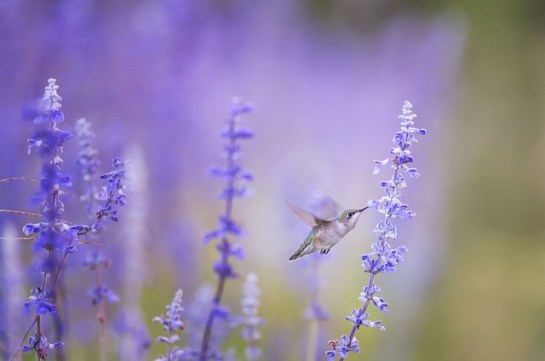
If you care deeply about natural gardening and attracting bees, insects and hummingbirds to your garden, then salvias should be one of your go-to plants. They have wonderful flowers and fragrant leaves and for me, they bloom almost all summer.

In this very readable book, The Plant Lover’s Guide to Salvias, John Whittlesey outlines designing with salvia plants in different climate zones. We learn that salvias are generally hot climate plants and many have low water requirements but some of the perennial ones can be treated as annuals in our climate. Some are rated for zones close to ours and will survive here as perennials. I have had Salvia glutinosa growing here for many years and the book rates that one only a US zone 6a. Culinary sage (Salvia officinalis) has overwintered for me also for a number of years.

hummingbird 1851489_640

The author next goes through and discusses 150 species and exceptional hybrids, their country of origin and specific cultural practices for each and any notable characteristics such as a strong hummingbird attractor.

Finally, he discusses general cultural techniques and then provides a listing of sources for plants and seed. After having read the book and descriptions of different salvia species, I have ended up with a two-page list of interesting species I wish to try.

The Peterborough Horticultural Society has this book available in their lending library or you can purchase from Timber Press.

Forest Bathing

By Suzanne Seryck, Master Gardener

As gardeners we spend a lot of time in our gardens; some might even say a little too much. There is always something to do. This time of the year when we’re not harvesting our vegetables, we are weeding, maybe still deadheading, amending the soil or mulching ready for next year, some more weeding, planting (fall is a great time to plant trees, shrubs, perennials or spring bulbs), over-seeding the lawn and of course, more weeding. What we tend not to do, and I’m speaking very much for myself here, is to slow down or even stop for a few hours to enjoy our gardens, someone else’s garden or maybe just take a walk.

There is a new gardening trend in North America called ‘Forest Bathing’. Forest bathing  or Shinrin-yoku was first developed in Japan in the late 1980’s and means to bathe in the forest atmosphere or to take the forest in through our senses. By being outside in a natural environment, you are letting in the sights, sounds and smells of nature which help calm, rejuvenate and restore. The intention of forest bathing is to slow down, taking the time to unwind and become immersed and connected to the natural environment.away-3024773_640

I know that on many mornings, when I take a cup of tea and venture into my garden early, I am always filled with a sense of peace and wonder, and immediately take a few deep breaths and feel at ease ready to take on the day. So it comes as no surprise to me to learn that over the past several decades scientific studies have discovered numerous health benefits associated with being in both wild and natural areas.  Researchers have found that many trees give off organic compounds that may be beneficial to people. Studies comparing the effects of walking in the city to those of walking in the forest have found that for those walking in forest environments, there was a significant reduction in both blood pressure and stress hormones (http://www.natureandforesttherapy.org/the-science.html). Other health benefits include, improved mood, increased ability to focus, accelerated recovery from surgery or illness, an increase in energy levels, improved sleep and a boosted immune system with an increase in the Natural Killer (NK) cells.

Living in the City of Kawartha Lakes and Peterborough we are lucky enough to have an abundance of trails,  parks and forests, all of which will be at their best in the new few weeks. After writing this article, I will be finding my inner peace in my local conservation area and I hope you will too.

For more information: http://www.shinrin-yoku.org/shinrin-yoku.html

New Garden Planning; a Look Ahead

By Cheryl Harrison, Master Gardener

Fall is a great time to get a head start on the new garden that you have been dreaming about for next year.

Deciding the new garden’s location depends on the purpose of the garden.  Will it be a quiet area for relaxing?  Look at the view from outside and also through the windows from inside your home when assessing potential locations.

Consider the growing conditions.  Is the potential location windy, sunny, shady or combination sun/shade?  It may be important to know the location of utility lines and pipes depending on how radical the planned change to the landscape.  Do you have access to water?  New plants usually need supplementary water for their first year.  Also check the area for flooding and provide drainage when necessary.IMG_1164

Think about garden structures……perhaps an arbor, fence or pergola or maybe a bird bath or bench?  For larger structures, you may need a construction permit.  A landscape professional can be a great person to consult at any stage of planning.

Soil condition is vey important to the growth of plants.  Newly built homes often have very little topsoil layered over nutrient poor subsoil.  It may be necessary to dig out some of the subsoil and replace it with good topsoil.  This “digging” step is when to be aware of the location of your utilities.

Create a new garden by edging the chosen area with a sharp shovel or edging tool then placing the material (usually a combination of grass and soil) into the centre of the new garden location.  Smother unwanted growth by covering the area with 4-5 layers of newspaper, or cardboard, and water it down.  Then layer topsoil about 15 cm (6 inches) on top and add additional organic material like composted manure.  Finish the new garden bed with a 7-10 cm (3-4 inch) layer of mulch.  The newspaper/cardboard layer, and the mulch will eventually decompose to become part of the garden’s soil.

Your new garden bed is ready for planting.  Choose plant material by looking at plant catalogues and on web sites.  What a great way to spend a fall or winter afternoon!

Preparing Your Perennial Garden for (gasp!) Winter…

By Mary-Jane Pilgrim, Master Gardener

Winter is fast approaching, and it’s time to prepare your gardens for the long, cold months ahead. By spending a little time this fall preparing, you can insure a healthier start to next year’s  season. Here’s a checklist of fall activities to get them ready for winter before it gets too cold to comfortably work outside.

  1. In all areas, spring-flowering bulbs, such as tulips and daffodils, should be planted six weeks before you expect the ground to freeze.
  2. Dig and store tender summer bulbs, such as dahlias and canna lilies, after the first hard killing frost. Store them in wood shavings or crumpled/shredded newspaper in a cool, dry place.
  3. Stake and tie up any young trees or shrubs that may break under the weight of wet snow or ice. Use soft (but strong) ties around the bark of trees, as wire or twine can cut into the bark and cause serious damage. Place wooden tepees over shrubs growing under eaves where snow tends to fall off the roof.
  4. After the first couple of frosts, hosta and daylily leaves will pull up very easily. Doing the removal in the fall means that you don’t have to deal with a slippery mess next spring.
  5. To prune or not to prune perennials to ground level? It’s a good idea to leave some plant material for visual interest through the winter months; ornamental grasses and hydrangeas have attractive seed heads and always look gorgeous in the winter, especially sprinkled with snow. With the exception of hosta and daylily leaves, I choose to leave everything else for spring cleanup.
  6. Protect hybrid roses with rose cones or bark mulch piled over the crown of the plant after a hard freeze.
  7. Remove all weeds from your perennial beds, and add compost to create a good base for next year’s growth. Compost applied in the fall is better than the spring as it has had time to break down and release its nutrients into the soil.
  8. Move containers to a protected location when frost threatens. After a frost, remove soil and plants from containers and store ceramic and clay pots in a garage or basement. Place used potting soil in the compost pile. If the containers have perennials planted in them, consider digging a hole to bury the plant including the pot, or bury in leaves in a protected area. Potted perennials will not usually survive the winter if not buried/covered.
  9. Instead of raking and bagging the leaves to cart off to the landfill, shred leaves with a mower to create amazing leaf mulch which can be spread on the garden as a winter protectant.  The earthworms will love the food, and the leaves will eventually break down, adding nutrients to the soil. If you decide to cover gardens with unmulched leaves, do not apply a thickness of more than about 10 centimetres (four inches). Any deeper will smother bulbs and perennials trying to grow in the spring.
  10. Take pictures of your gardens to assist with your dreaming and planning for the next season after the snow flies!
  11. As you wind down the garden season, make notes on what worked and what didn’t work, to help you plan for a successful garden next year. You are more likely to remember key points now rather than next April or May.
  12. Join a local garden or horticultural society. Many organizations meet over the winter on a monthly basis and provide interesting speakers who can help chase away the winter blues and provide you with great ideas for your upcoming garden season.

Bringing Outside Plants Indoors

By Chris Freeburn, Master Gardener

The long hot summer is coming to an end. Now is the time to start thinking about what plants you are going to bring into your home to overwinter and how you can do that successfully. During the summer months, many houseplants can become outdoor plants.thumbnail_DSCN2619

It is relatively easy to overwinter ivies which can go into outdoor containers. Take cuttings from your ivies, spray them with a safer soap solution to eliminate pests and place the stems in water to root in a bright window. You can also try this with other annuals like coleus or wandering jew. Once the stems have rooted, plant them in good potting soil and you can enjoy them through the winter months and have them again for outdoors the following year. In early summer put plants such as oxalis, kalanchoe, asparagus fern, or wandering jew outside to enjoy on your deck. Most can come back into the house in early September after a thorough spray with safers soap.

Tropicals

Tropicals like hibiscus and bouganvillia love to be outside during the hot summer months but it is sometimes a challenge to overwinter them indoors. The trick to avoiding plant shock is to bring your plant in before the nights get too cool. Tropicals like a warm, even temperature so if you wait too long to bring into your home, the plant will shock, drop leaves and look like it is dying. I have had a bouganvillia drop almost all its leaves when I left it out during a lovely fall season. The trouble was the nights were down around +10 while the days were up over 20 degrees. I cut the branches back, saw there was still green in the stems, so put it in indirect light, watered lightly and eventually new leaves began to sprout and it came back to be placed outside again the next summer. If you can stop that reaction by bringing in earlier, it is worth the effort.

Spray for Bugs!

Any plant that comes inside should be sprayed for bugs. There is nothing worse than an indoor pest infestation which can travel from one plant to another. Using a good safer soap product and completely spraying leaves, stems and soil a couple of days before you bring them in will help. Now is also the time to transplant plants into fresh new soil. Over the summer, your plants will have grown below the soil as well as above. If you are bringing in plants from a container, plant up in a pot that is just larger than the root ball with new soil. This will help to eliminate those pests as many will lay their eggs in the soil to hatch and attack your plant. You can also prune back plants that have gotten large. Most annuals do well with a bit of a haircut.

Bringing plants indoors and extending their life can be a fun and rewarding task. Don’t be discouraged if you experience some failures. It is always nice to have to go out and purchase something new to add to your collection!

Protecting my Tomatoes

By Judy Bernard, Master Gardener

I love tomatoes, especially the ones I can pick fresh from the vine.

Last week I was anxiously awaiting my first tomato. I could see it slowly ripening. Two or three more days and it would be perfect. When I went to pick it, it had small bite marks in it. I feel the most likely culprit is a chipmunk. The bite sizes were about right.

I read somewhere that  old rose canes cut into short pieces 5-10cm sprinkled on the ground will keep cats from digging in the garden. Maybe they will deter chipmunks so  I put them around my tomato plants. I’m keeping my fingers crossed that it will work.tomatoes-879441_640

I’ve also seen large bites taken out of the tomato. They were deer size. To keep them away, I’ve put plastic webbing around my tomatoes, making sure none were within easy reach.

Slugs also like to eat ripening tomatoes. I went outside with my flashlight one night last year and the tomatoes, the ones that were just the right colour, were covered with slugs. This year, I’ve been collecting my egg shells to mash up fine. They’re going to be spread on the ground around the tomato plants hoping to keep the slugs off. Keep your fingers crossed for me.

The tomato plants in my raised beds 60-70cm high haven’t seen any critter damage (yet). I’ve also got a couple of plants that came up from seed that aren’t protected. I’m willing to share and hopefully the other plants will come through unscathed.

Weed Control

by Sharleen Pratt, Master Gardener in Training

Some of Mother Nature’s weedier creations can become a real nuisance in the garden because they rob other more desirable plants of nutrients, moisture and light. If they become established, they can be very difficult to control, therefore, it is highly recommended for the health of your plants, that you weed on a regular basis. The best time to weed is right after it rains as the weeds will be much easier to pull.

A weed is generally any plant that is not welcome in your garden! They are usually plants that can grow in any kind of soil, reproduce prolifically and interfere or compete with other more desirable plants. Many weeds have been introduced from another country and often become invasive. They can be very difficult to control and it is important that all gardeners try to prevent these particular plants from taking hold and spreading through their neighborhood.

Weed Identification can be intimidating! A few of the more common weeds, generally found in your lawn are:

BROADLEAF PLANTAIN, Plantago major (pictured above)

Broadleaf plantain is a perennial weed that spreads rapidly by seed and new shoots arising from the roots. Broadleaf plantain is distinguished by its rosette of dull green, oval leaves with thick green stalks, and its elongated spikes of tiny green flowers. Each flower is followed by a small egg-shaped pod with 5 to 15 tiny dark brown or nearly black seeds that are rather glossy. The flowers set seed from spring until late autumn. Broadleaf plantain is easily removed with a dandelion fork. It can be out-competed in a lawn by over-seeding and aeration.

COMMON CHICKWEED, Stellaria mediastellaria-media-846435_640

The common chickweed may be an annual, winter annual or perennial. They have small white flowers with 4 to 5 petals. They reproduce by seed and by horizontally spreading leafy stems that root at the nodes. Common chickweed will flower through the spring, summer and fall. One plant can produce 10,000 to 20,000 seeds. The seed remains viable for up to 10 years.  Hand-weeding is best when the seedlings are small. It can be reduced by over-seeding since chickweed doesn’t like a lot of competition.

PURSLANE, Portulaca oleraceaPurslane

Purslane is a summer annual, reproducing by seed. It has fleshy leaves and stem, which lie prostrate on the ground. The seeds in small capsules are black, kidney-shaped and extremely small. An average plant produces 60,000 seeds. Purslane is one of the most common weeds in gardens throughout Ontario. Though rarely producing roots from the stem, if even a small portion of the root of an uprooted plant touches the soil, it can grow a new root system and become established. It is easily pulled and dies at first frost.

CREEPING BUTTERCUP, Ranunculus repensbuttercup

Creeping buttercup is a perennial and reproduces by seed and runners. There are two common buttercups, one is a tall buttercup and the other is a creeping buttercup. The tall plant does not have runners and, therefore, reproduces by seed only. Both will flower in early spring to the end of July. Flowers are bright yellow, about 1 inch across. Each plant is capable of producing up to 250 seeds. The first leaves are kidney-shaped and somewhat hairy below. This weed is poisonous to grazing animals, and care should be taken to control it from spreading. Creeping buttercup survives best in moist location, so any improvement in drainage will help to control it. Persistent cultivation will also help, as well as constant mowing.

CREEPING CHARLIE or GROUND IVY, Glechoma hederaceaCreeping-Charlie

Creeping Charlie, also known as Creeping Jenny or Ground Ivy is a perennial which reproduces by creeping tangled rootstocks and also by seed. It is part of the mint family. The leaves are opposite and palmately veined. They have a bright green surface. The seeds are smooth and dark brown. The plant reproduces well through its surface runners. It has rapid growth in early spring and is a persistent plant whose leaves and stems stay green under the snow, allowing it to flower early. It flowers in spring around the same time as the dandelion. This plant spreads easily in a lawn, particularly in shady areas. Close mowing will help. If possible, be sure to dig out the small seedlings by hand in early spring. With large patches, heavy mulch or newspaper would help to kill an infestation.

FIELD BINDWEED, Convolvulus arvensisbindweed-2453936_640

Field bindweed is a perennial weed that spreads rapidly by seed and creeping roots. It is a hairless, twining, or trailing plant with deep, cord-like roots. There is an extensive spreading, underground root system. The creeping white rhizomes have been reported to grow up to 30m in length and 5m deep. Under favourable conditions, plants may flower within 6 weeks of germination and the twining nature of the plant can cause serious problems with crops. It is part of the morning-glory family. Seedlings can tolerate frost temperatures of minus 8C. Seeds can remain viable for up to 50 years. A severe infestation of bindweed is capable of producing over 800 kg of seed per acre.

An excellent website to help you identify weeds is: www.omafra.gov.on.ca/english/crops/facts/ontweeds/weedgal.htm