Category Archives: Websites

Finding Freedom: Guerilla Dahlia Dividing

By Marilyn Homewood, Master Gardener

As the days shorten and the leaves fall, it is time to engage in the annual ritual that I call the dahlia conundrum.  Dahlia growers spend sleepless nights wondering whether to wash clumps or store with the dirt on; what to store in—peat, shavings, vermiculite or saran wrap; store as a clump or as individual tubers. They fill the Amazon coffers by ordering the newest recommended snips as though these snips will miraculously reveal the tiny hidden eyes in the crown of the tubers.  They pack every individual tuber away, ending up with far too many containers of dahlia tubers.  After all, how many tubers do you really need next year??

This year, I decided to make my own life easier and divide with the goal of having enough tubers for planting next year (with a backup in case of bad storage).  And discard the extra tubers no matter the volume.  First, I dug up my tubers, shook off the dirt and let them dry overnight.  Before dividing I check each plant for signs of disease or damage. Potentially diseased plants are discarded and damaged tubers removed.

Freshly dug dahlia tuber

When I come across a large clump, I split the stem (and hence the clump) with a chisel and mallet.  Effective and fast if not a little messy.  Next step, I look for a small grouping of tubers that can be stored as a unit.  This is what is more commonly done in Europe.  If small clumps are saved, then you no longer need to search for eyes.  There will be sufficient crown material to provide an eye or two.  Just be sure the tubers are firm, not damaged and that the necks are intact. 

Clumps labelled with flagging tape

I label each small clump with flagging tape which can be easily attached to the clump and tied in place.  I repeat this process only until I have the desired number of units of tubers.  The rest goes to the compost pile.  I was ruthless!  Before moving onto the next plant, I disinfected my tools. 

Dahlias are known to be infected by a large number of viruses which can be transmitted from plant to plant by pruning equipment.  Studies in the USA have shown that over 80% of dahlia stock is infected by a virus.  While good data is not available for Canada, it only seems likely that a significant portion of our tubers may be infected as many growers here import new varieties from the USA.  Insects also transmit these viruses between plants.  In the live plants, viruses are often discovered by observing changes in the coloration of the leaves.  Sometimes it is hard to be absolutely certain but with dahlia’s there is a saying “When in doubt, throw it out”.  It is not uncommon that when I discover a plant showing chlorotic changes in the leaves, that I simply pull the entire plant up tubers intact and discard it in the waste (never the compost!).  Left in the garden, these plants can infect all of your other dahlias.

Disinfectants known to be effective are 10% bleach solution using  a contact time of 10 minutes, Virkon S, a viricidal agent commonly used in veterinary cleaning applications; Virkon has the advantage of being non corrosive and has a contact time similar to bleach. Lysol All Purpose Cleanser has also shown viricidal activity provided that a contact time of 2 minutes is achieved.  70% rubbing alcohol is a common viricidal agent with a minimal contact time making it suitable for the wiping of snips between plants when harvesting blooms.  Remember to clean all dirt and sap from tools prior to using a disinfectant.

Once all the needed clumps have obtained, tubers can tucked away into the storage medium of your choice (vermiculite medium grade for me) and put into an area that is 50 degree F or less for the winter.  Check on tubers monthly to adjust moisture levels and wait for the next spring.

 Left: Vermiculite in bulb crate
Right: Tubers packed in bulb crates ready to store in basement

My efforts this year reduced my time dividing by 66% and cut the volume of dahlias stored in half!  More time for planting fall bulbs!

Resources

Clean and disinfect gardening tools and containers:
https://extension.umn.edu/planting-and-growing-guides/clean-and-disinfect-gardening-tools

American Dahlia Society: https://www.dahlia.org/docsinfo/understanding_virus_in_dahlia/virus-documentation-index

Dahlia Mosaic Virus: https://dahlia.org/wp-content/uploads/2018/01/ADS-DMV_Symptoms_Slides.pdf

Why Spiders are Your Greatest Garden Guardians

By Thom Luloff, Master Gardener in Training

If you’re an avid gardener, you’ve likely encountered spiders in your flower beds, vegetable patches, or even hanging from delicate webs strung between your favorite plants. For many, spiders evoke an immediate reaction of discomfort or fear, but these eight-legged creatures are some of your garden’s most important—and often underappreciated—residents.  Spiders play a crucial role in maintaining ecological balance and biodiversity, and they can be your best allies in managing pests without the need for chemical sprays.

The Ecological Role of Spiders

Spiders are predators—and highly effective ones at that. They feed on a variety of garden pests such as aphids, flies, beetles, and caterpillars, which, if left unchecked, could wreak havoc on your plants. By keeping these populations in check, spiders act as a natural form of pest control, reducing the need for harmful insecticides. In fact, studies show that spiders consume more insects each year than the weight of the entire human population combined! Garden ecosystems would struggle to manage pest populations, leading to overpopulation of insects that can damage crops and ornamental plants. In addition to maintaining balance in pest populations, spiders contribute to the biodiversity of your garden by providing food for other wildlife, such as birds and small mammals.

The Evolutionary Journey of Spiders

Spiders have been around for over 300 million years, evolving from ancient arachnid ancestors that roamed the Earth long before the dinosaurs. Through millions of years of evolution, they developed their silk-spinning abilities, which they now use for everything from building webs to creating egg sacs and even parachuting as juveniles (yes, baby spiders can “fly” short distances on silk threads). This evolutionary adaptability has made them some of the most successful predators on the planet, thriving in almost every environment, from deserts to forests—and yes, your garden.

Cool Facts

  1. Not all spiders spin webs—some, like the jumping spider, actively hunt their prey, pouncing on insects with speed and precision.
  2. Spider silk is one of the strongest materials in nature, stronger than steel of the same thickness, and scientists are studying how to replicate it for human use .
  3. female spider can produce thousands of eggs, though only a small percentage will survive to adulthood, ensuring that spider populations remain balanced in the ecosystem.

Spiders: Friends, Not Vermin

Contrary to popular belief, spiders are not vermin. Unlike pests like rats or cockroaches, spiders do not scavenge human food or spread disease. They are solitary creatures that prefer to be left alone, and they actively help your garden by preying on harmful insects. A garden without spiders would be more vulnerable to insect infestations, leading to less healthy plants and lower yields of fruits, vegetables, and flowers.

Thom with the Barn Orb-Weaver, his favourite spider 🙂

Meet 4 Friendly Garden Spiders of Peterborough

Now that you know how vital spiders are, let’s introduce you to five common garden spiders you might encounter in your Peterborough garden. These gentle creatures are doing hard work to keep your garden healthy, so next time you see them, take a moment to appreciate their efforts.

  1. Barn Orb-WeaverAraneus cavaticus
    • This fascinating garden ally is known for constructing large, intricate orb-shaped webs. These spiders are commonly found in barns, sheds, and near garden structures, often spinning their webs at night. Characterized by their rounded, bulbous abdomen, Barn Orb-Weavers typically range in color from orange to brown, with distinctive pale markings on their bodies. Despite their size and striking appearance, Barn Orb-Weavers are harmless to humans. They serve as a valuable asset in the garden by controlling insect populations, catching flies, moths, and other garden pests in their webs. Active from late summer through fall, they rebuild their webs each night, ensuring a fresh, sticky trap for their next meal. Known for being the inspiration behind Charlotte in the beloved story Charlotte’s Web, this spider holds a special place not just in literature, but in the ecological balance of gardens and rural spaces alike. Their presence signals a healthy ecosystem, and their web-spinning talents should be welcomed as an essential part of nature’s pest control system.
  2. Bold Jumping Spider (Phidippus audax)
    • With their striking black bodies and iridescent green or blue chelicerae (mouthparts), jumping spiders are some of the most curious and approachable spiders you’ll meet. These small but mighty spiders don’t spin webs to catch prey; instead, they leap from plant to plant, using their excellent eyesight to hunt down pests.
  3. Yellow Garden Spider (Argiope aurantia)
    • This stunning black-and-yellow spider is often found in gardens with tall plants and flowers. Known for its large, wheel-shaped web, the yellow garden spider weaves a zigzag pattern in the center of its web, which is believed to help it catch even more insects. It’s a fantastic predator of flying insects like mosquitoes and flies.
  4. Wolf Spider (Pardosa species)
    • Unlike orb-weavers, wolf spiders do not create webs. Instead, they are ground-dwellers that chase down their prey in garden beds and among fallen leaves. Though they may look a bit intimidating due to their size and speed, they are completely harmless to humans and extremely beneficial to gardeners

Where Do Spiders Fit in the Ecosystem?

Spiders are an integral part of the ecosystem, serving as both predators and prey. By keeping insect populations in check, they ensure that plants remain healthy and free of infestations. They also provide food for birds, reptiles, and other animals higher up in the food chain. If we were to eliminate spiders, we would see a rise in destructive insect populations, which could lead to reduced biodiversity and weaker ecosystems overall. Encouraging spiders to thrive in your garden is one of the best things you can do for your plants, your local wildlife, and the environment. So, the next time you spot a spider spinning its web or prowling the garden floor, take a moment to thank it for the invaluable service it’s providing. No squishing!

Conclusion: A Home for Spiders Is a Healthy Garden

In the grand scheme of nature, spiders are our silent partners, working diligently to create a balanced, thriving environment. By welcoming them into our gardens, we contribute to a healthier ecosystem and ensure that our plants can flourish without the need for harmful chemicals. So, let’s embrace our eight-legged friends and recognize that the key to a healthy, biodiverse garden might just be hanging from the next web you see.

References

  1. Nyffeler, M., & Birkhofer, K. (2017). An estimated 400–800 million tons of prey are annually killed by the global spider community. The Science of Nature, 104(3), 30.
  2. Foelix, R. F. (2011). Biology of Spiders (3rd ed.). Oxford University Press.
  3. Garwood, R. J., & Dunlop, J. A. (2014). The origins of spiders: Insights from the fossil record. Evolutionary Biology, 41(3), 523-535.
  4. Vollrath, F., & Knight, D. P. (2001). Liquid crystalline spinning of spider silk. Nature, 410, 541-548

Fall and the Invasion of the Earwigs

As fall arrives, many gardeners notice an increase in earwigs lurking around their plants. These small, dark brown insects with pincers on their tails can look a bit intimidating, but their impact on your garden is a mix of good and bad.

Earwigs get their name from the old European myth that they crawl into your ears and tunnel into your brain to lay their eggs while you are sleeping. YIKES! Lucky for us, this old wives’ tale is not true. But the pincers on the back on an earwig’s body are still enough to freak people out. 

Earwigs are most active at night and can often be found hiding in damp, dark spots during the day. In the fall, they seek shelter from the cooler weather, often in garden beds, under mulch, or in piles of leaves. While earwigs have a bad reputation for munching on plants, their role in the garden isn’t all negative.

On the downside, earwigs do eat leaves, flowers, and vegetables like lettuce, strawberries, and soft fruits, which can cause damage to your garden. However, they don’t typically cause significant harm unless their population is out of control like in a season that’s wetter than normal.

On the positive side, earwigs help clean up the garden by eating decaying plant matter and even feeding on pests like aphids and mites. This makes them useful in keeping some pest populations down naturally. Earwigs will even eat other earwigs!

If you find earwigs causing damage, there are simple ways to manage them. Traps made from rolled-up newspaper or damp cardboard can attract them overnight. In the morning, simply dispose of the traps.

While earwigs can cause some harm to plants, they also play a helpful role in garden cleanup and pest control, making them a creature worth understanding in the fall garden ecosystem.

Resources

https://www.environmentalpestcontrol.ca/blog/earwigs-good-bad-ugly

https://www.growveg.com/guides/dealing-with-earwigs-in-your-vegetable-garden/

Saving Seeds

By Judy Bernard, Master Gardener

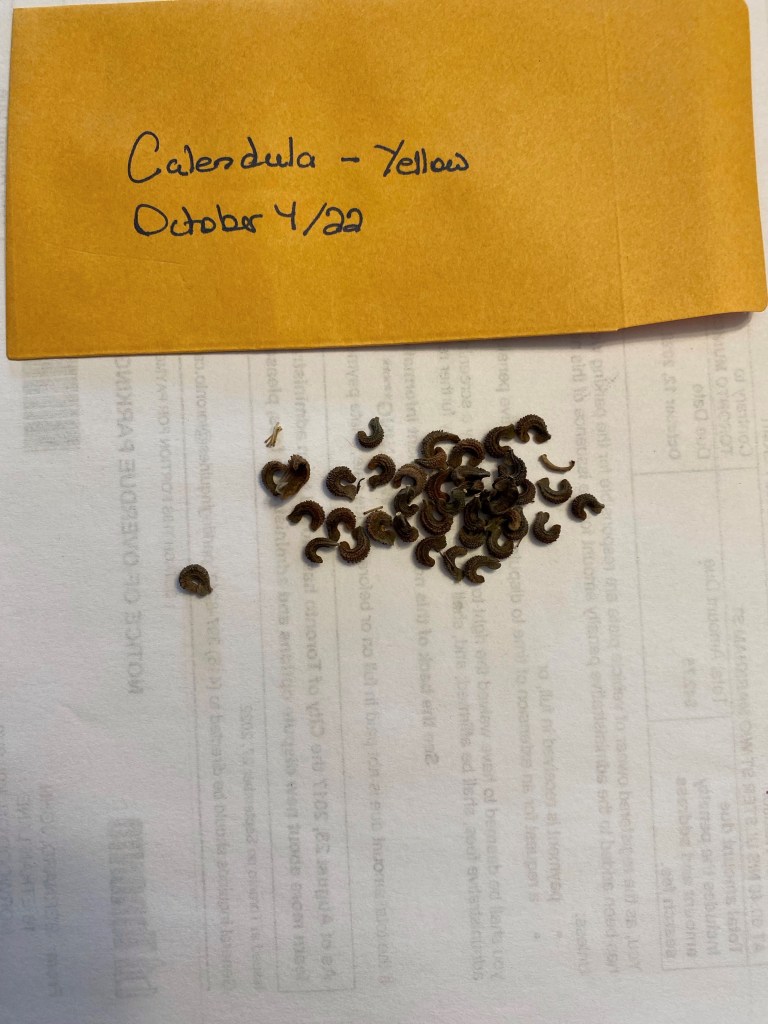
When I was asked to put together an article on seed saving for our local Horticultural Society’s newsletter, I thought it would also be a good topic for this forum. Seed collecting can be a fun activity. You can share the seeds with other gardeners and trade for some varieties you don’t have in your garden.

Some things are quite obvious; like pumpkin seeds and squash seeds that you save, dry, and keep for the next year. Vegetable seeds too can be saved, like beans and peas when they get too ripe to eat; let them mature on the plants until the pods are dry and harvest the seeds.

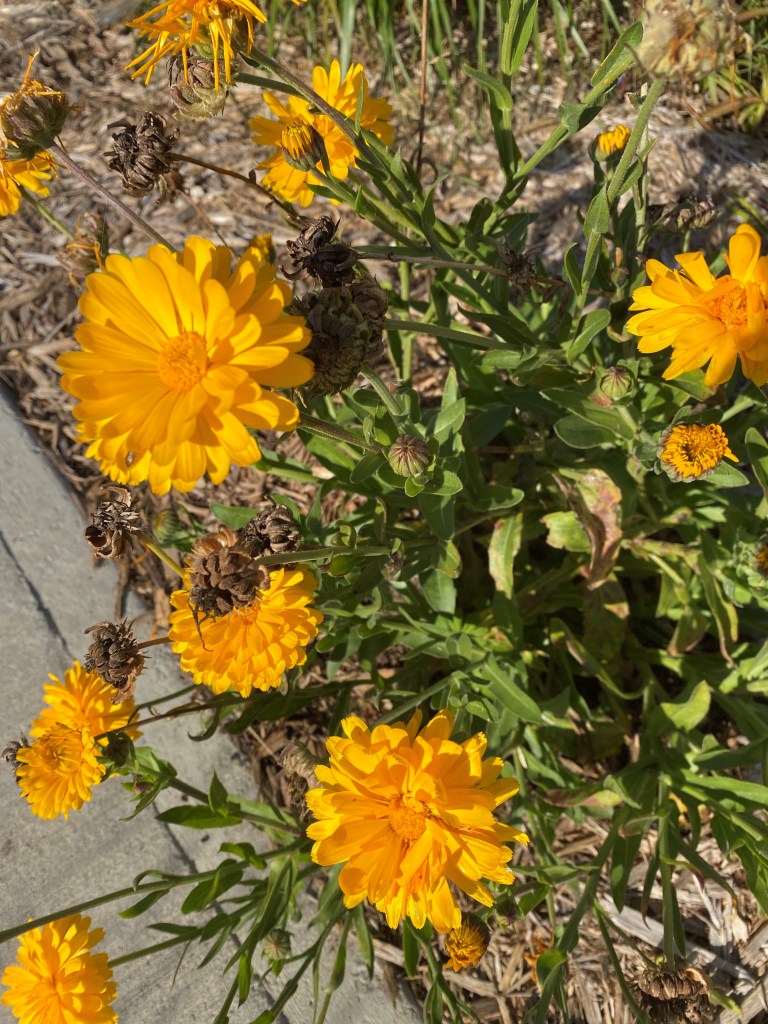
By not deadheading some flowers, you can let them  go to seed and collect the seeds when the flower heads have dried. Many plants will self-seed like the dandelions we see all over our lawns. By collecting seeds we have some control over where they will grow.

For the most part, the majority of plants flower yearly, however there are those that only come into flower every other year like Hollyhocks and members of the carrot family. This can be frustrating if you forget where you have seeds planted or scattered like I do. This link describes types of plants.

For most seeds, we don’t have to do anything else except collect the seeds, and plant them the following year. Others do need special treatment:

  • Fermentation – A process where the outer gelatinous “skin” (my term) is removed from the seeds of such vegetables as tomatoes and cucumbers.
  • Scarification – Some seed shells are so hard that they need to be abraded or sanded/scratched to allow moisture to get into the seed germ.
  • Stratification – Some seeds need a period of cold to allow them to germinate. Winter sowing is a form of this strategy.

Some seeds are viable for a long time, others not so. To check viability, wet a paper towel and partly wring it out. It should be wet but not dripping. Put a few seeds on one half of the towel, fold the other half of the  towel over seeds and put in a plastic bag and seal. Within a few days you will be able to tell if the seeds germinate or not.

Seeds need to be stored in a dry cool environment. I keep mine in a labeled paper envelope in a larger plastic box in the basement.

For more information on seed saving check out this excellent article from the University of Minnesota.

Have fun with this aspect of gardening!

Winter Protection for Your Garden

By Christine Freeburn, Master Gardener

The new year arrived with not a speck of snow on the ground and although the ground was frozen and well watered from rainfall, that lack of snow can cause damage in your gardens. Snow, beautiful snow is a great insulator for your perennial beds. I often throw extra snow on things like my rhododendron or hibiscus as I am shoveling sidewalks. Mulch or leaves will also insulate the ground so it is always good to mulch up your garden in the fall, because we can’t depend on snowfall through the cold winter months.

February often brings a thaw as well as the ice and storms that can do damage to trees and flowering shrubs. Cold temperatures, biting winds and the strong winter sun can bleach or dry evergreens when they are not protected by snow. Wrapping in burlap will not save plants from the cold, but it will protect them from wind and sun.

Sunscald can happen when the sun shines brightly on cold winter days, raising the temperature on tree bark which can trigger it to start to grow. When the sun sets and temperatures drop, bark cells in the cambium layer are killed. The cambium layer is just below the tree bark where nutrients travel between roots and leaves. Sunscald will cause scarring or cankers on the trunk and tends to be on the south side of the tree. It usually will not kill a tree but it can put stress on it. It can be harmful on young trees whose bark is thinner. Wrapping your young tree trunk with white tree guards can help with this. Tree guards will also help keep rabbits and other creatures from chewing the bark. Remember to remove this guard in spring.

Dieback can happen on flowering shrubs during a cold dry period. Flower buds that set in the fall can also be killed off from the cold. Plants like forsythia and rhododendron may need to be planted in protected areas with good snow protection and without wind so they produce flowers.  Other shrubs like hydrangea that are not for our zone 5b gardens may not flower in our area because they set their buds in fall and when we get those cold winter days and nights, the buds die. Pruning in fall can encourage growth when the plant should be beginning to rest for winter, so don’t prune too late into fall.

Frost heaving happens when soil freezes and thaws, and when there is not enough snow cover to keep the ground insulated. The semi evergreen coralbell (heuchera) can suffer and die if they heave. Be sure these perennials are well watered and planted into the ground well before freeze up.

When the freezing temperatures and snow arrives, animals like rabbits, mice, voles and deer often feed on the flowering shrubs and trees in your garden, eating bark, twigs and flower buds. I have had rabbits eat euonymus, bridal wreath spirea, yews and willow trees. This winter I have put up burlap fencing around some of my bushes so rabbits can’t “prune” them. I want snow, but I hope it doesn’t pile up too high so the little varmints can just hop over!

References

https://www.gardenmyths.com/sunscald-trees-prevention

extension.umn.edu/planting-and-growing-guides/protecting-trees-and-shrubs-winter

laidbackgardener.blog/2023/12/13/how-will-this-mild-weather-affect-our-plants

www.gov.mb.ca/agriculture/crops/plant-diseases/print,winter-sunscald-frost-cracking

tidcf.nrcan.gc.ca/en/diseases/factsheet/1000135

Winter Care for Houseplants

By Lois Scott, Master Gardener

Full disclosure:  Just a few short years ago, before Master Gardener training, I considered my house the place where houseplants came to die.  Changing my plant care routines has saved plant lives but winter has its challenges.

Watering

As a Master Gardener in training, I learned that 80% of house plant “failures” were due to over-watering.  That was empowering for me and changing watering practices has led to success.  In winter, plant growth is decreased and house plants need less water.  Before watering check to see if the top 1-2” of soil is dry.  With smaller plants you can also get to know the weight of a saturated pot relative to a dry pot by lifting them a few times between waterings.  Water thoroughly only when your plant feels dry.  Underwatering is much better than overwatering.  Signs of overwatering include the wilting or yellowing of lower leaves and inner leaves advancing to scorch, leaf drop and plant death. 

Fertilizing

During the winter when houseplants may not be actively growing, they do not need fertilizing.

https://extension.unh.edu/blog/2018/03/fertilizing-houseplants#:~:text=As%20a%20rule%20of%20thumb,from%20October%20until%20the%20spring.

Humidity

Humidity levels are lower in our homes during the winter.  For house plants that prefer higher humidity the only sure way to provide this is by increasing the humidity in your home which may be problematic.  Some people advocate misting plants, placing them on a pebble tray filled with water or clustering plants so that they can benefit from the water that each plant transpires.  The effectiveness of these methods is questionable.  Choosing plants that tolerate less humid conditions, like succulents is another option.  Plants suffering from low humidity may develop drying and browning around leaf edges.

Light

As light levels drop in winter some plants may need to be moved to increase the amount of light they receive or have supplemental light provided such as fluorescent grow lights.  Symptoms of not enough light include pale green, yellow to white leaves, leggy stems, dropping leaves, variegated leaves becoming solid green or flowering plants not flowering.  Lighting for plants is an involved discussion but this article https://extension.umn.edu/planting-and-growing-guides/lighting-indoor-plants has good information. 

Houseplants are a beautiful indoor feature providing pleasure for many.  Mastering winter care for your house plants will keep them healthy and beautiful, a wonderful touch of green in our winter world.

A Banner Year for Bunnies

By Lois Scott, Master Gardener

The bunnies have been thick in my garden this summer.  We have seen wave after wave of adorable but hungry juvenile rabbits that have made the chipmunks look like garden angels!

According to Wikipedia the Eastern cottontail habitat “includes open grassy areas, clearings, and old fields supporting abundant green grasses and herbs, with shrubs in the area or edges for cover”.  This, including the neighbours’ property and the adjacent park describes the habitat around my home. 

This article by the Halton Master Gardeners describes two general strategies for protecting your plants from being eaten by rabbits and rabbit (and deer) resistant plants.  They suggest physical barriers and bad smell or taste:

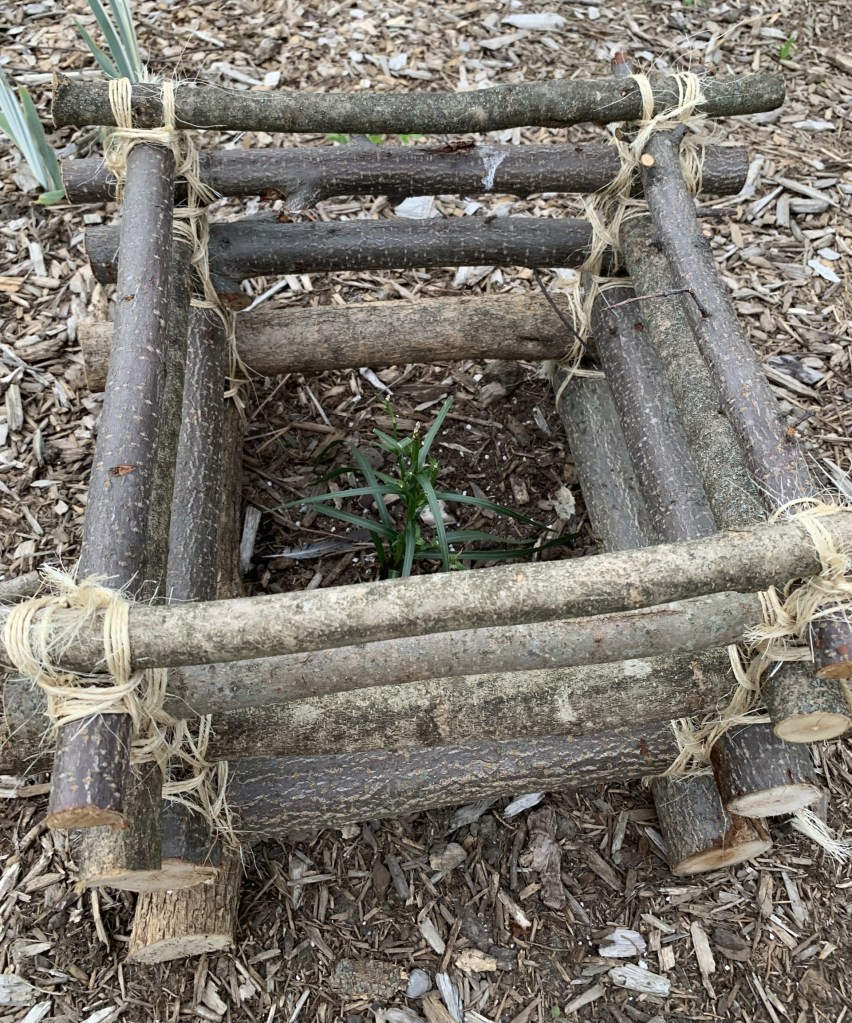
Hardware cloth (wire-based) is my go-to for plant protection.  I have it around young trees and shrubs year-round to protect them from winter browsing.  I have chosen to protect certain herbaceous plants in my garden by using hardware cloth and other more ‘creative’ barriers such as my ‘lashed together’ log cabin to protect a cylindrical liatris that the rabbits can’t get enough of.  If you are fencing a garden rather than a plant the fencing should be at least 2 feet high and sunk vertically into the ground at least eight inches.  Rabbits dig! 

Hardware cloth deters rabbits

This site https://www.torontowildlifecentre.com/wildlife-emergency-rescue-hotline/conflicts-with-wildlife/common-rabbit-problems/keep-rabbits-out-of-your-garden/  also recommends ‘scaring’ away rabbits by “placing unfamiliar visual stimuli around the yard such as shiny pinwheels, beach balls or foil balloons” or “mesh bags filled with pet fur or human hair hung at rabbit eye level” as long as there isn’t a rabbit nest close by as it may cause the mother to abandon the nest.  I think I may prefer the rabbits!

More creative “log cabin” used to protect rabbit-preferred plants

When it comes to what plants might be rabbit resistant, remember that these plants are only resistant, not foolproof.   I guarantee the rabbits haven’t read the list and when growing bunnies are hungry, they become less selective. 🙂

My garden is looking very full at this time of year so in spite of missing significant parts of certain plants the damage is not really noticeable when looking at the garden as a whole.  Rabbit populations go up and down so next year I may be wondering where all the bunnies are.

Low Maintenance Gardening

By Marilyn Homewood, Master Gardener

Sound too good to be true??  Years of trial and error on a property with a (shallow) dug well has taught me the value of adequate bed preparation for long term success of the landscape garden that consists primarily of perennials, shrubs and bulbs (with the odd annual and biennial tossed in).  I have large landscape beds and could not keep up without some kind of strategy. 

It may seem somewhat discordant to be discussing bed preparation in July but a little planning and preparation can go a long way towards achieving a garden that requires less maintenance, is easier to work in, requires little to no supplemental water or feeding all while looking attractive. The solution lies under our feet. 

My beds have all been dug to a depth of 18 inches.  This one time initial dig allows for loosening of compacted earth, removal of rocks (or boulders) and generous amendment of the soil with organic matter such as rotted manure or leaf or mushroom compost. This preparation will allow plant roots to reach deeper into the earth (especially those with large fibrous roots or tap roots) where residual moisture is still available during drought. Plants will become more resilient and able to survive on the rainfall alone.  In my garden, I have not watered the landscape beds since they were begun with the exception for first year plants that are getting established.  In dry spells, the blooms may be somewhat smaller but are still found in abundance.   

Coneflowers blooming well despite drought

The loosening of the soil also creates a better-draining soil makes it less likely that plants become water-logged or oxygen-deprived in those times when water is abundant.  This also minimizes loss of plants/bulbs to rot.   

The use of organic matter amendments helps the soil to retain the water that is provided by the rainfall by increasing the porosity of the soil.  And finally, an application of a thick layer of mulch (I use shredded bark) on the surface of the soil helps prevent evaporation of moisture from the ground and well as inhibiting the greedy weeds that will compete for moisture.

Second year delphiniums are 6-7 feet despite no water

Organic matter (OM) amendments provide a number of other benefits which ultimately gives healthy plants while saving us labour.  It enhances soil structure which increases the porosity of the soil leading to improved water infiltration, better drainage/aeration and help soils to resist compaction.  This makes soil more friable and easier for the gardener to work in as well as easing root penetration in the soil profile.  

OM helps to store and supply macronutrients (ex. nitrogen) and makes micronutrients (calcium, magnesium and potassium) available to the plant by increasing the soils’ ability to hold onto these elements (prevents leeching).  Also binds metal micronutrients (iron, aluminum, zinc, copper, manganese) and increases their availability to the plant.  All this means that your need for chemical fertilizers will be reduced or not required. 

Despite my best efforts, I had to make a succulent only garden in a difficult spot

OM also enhances soil microbial diversity that assists in the suppression of disease so plants are healthier. 

Deep beds mean deep roots; improved soil structure means better drainage and water holding capacity; increased biological activity mean more nutrients released for plant use and microbial diversity means less disease.  The result is healthy, vigorous plants that need less watering, less additional feeding/supplementation and less treatment for disease. 

Resources: 

Cornell University Cooperative Extension, Agronomy Factsheet 41, “Soil Organic Matter”, http://franklin.cce.cornell.edu/resources/soil-organic-matter-fact-sheet 

Leslie Cooperband (2002), “Building Soil Organic Matter with Organic Amendments” University of Wisconsin-Madison, 

Lois Berg Stack (2016), “Soil and Plant Nutrition: A Gardener’s Perspective” University of Maine Cooperative Extension: Garden & Yard, https://extension.umaine.edu/gardening/manual/soils/soil-and-plant-nutrition/ 

Begonias, so many Options!

By Christine Freeburn, Master Gardener

The choices for summer annuals seems to grow greater every year. Filler plants like geraniums, petunias, marigolds, impatiens are lovely, but the begonia has so many variations of shapes, sizes, colour, and sun requirements, they are worth a try in your hanging baskets or containers.

Begonia are generally easy care with no deadheading and different varieties can grow in sun or shade. Flowers are often smaller but there are lots on the plant. They often just fall off or can be pinched off quickly. Leaves come in many shapes and sizes, colours and textures. When you go into a garden centre, you need to know what type of begonia you are looking for.

Fibrous rooted types include the easy Dragon Wing variety which are great in window boxes and containers. They come in red, pink or white, grow about a foot tall and wide, and can take sun or part sun. There is a new variety called Canary Wing which has yellow leaves and prefers less sun.

Wax begonias Begonia semperflorens are usually sold in cell paks, prefer part shade, can have bronze or green thicker fleshy leaves and white, pink or red flowers. Often called bedding begonia, they are great in the garden as an alternative to impatiens.

Tuberous begonias include the Solenia type Begonia x tuberhybrida which can take full sun and come in a variety of colours from shades of pink to yellow and red. Great in hangers or containers.

Solina begonia

‘Nonstop’  and ‘Illumination’ are  hybrid variety of tuberous begonia that will take the heat but want shade. They come in lovely shades of pink, red, yellow, peach or white. These also work well in containers and hangers.

Reiger begonias can produce double blooms, are more upright and also prefer shade.

Gryphon Begonia is a cane type begonia with stunning foliage and upright habit which will do well in part shade in the garden bed. Although the plant rarely flowers, the maple shaped leaves on a 2 foot plant looks great.

Rex Begonias have amazing furry leaves in many different shapes and colours. They do not want any sun and are often used as houseplants. Flowers are rare on these lovely specimens, but the leaves are the showstopper.

Rex begonia

And if you grew houseplants in the 70s, you might also remember the cute little indoor begonia called Strawberry Begonia Saxifraga stolonifera which grows similar to the spider plant having babies growing from trailing stems. These little houseplants are difficult to find but a nice addition to a houseplant collection.

Although begonias don’t need constant deadheading like so many other annuals, removing spent blossoms will keep the plant looking fresh and encourage new blooms.

Soil should be well draining and evenly moist but don’t over water as this can lead to root rot. Begonia stems are fleshy and brittle, and can break easily, so they don’t do well in wind. Fertilizing for bloom and good health can be done weekly over the summer months.

http://www.missouribotanicalgarden.org/

https://www.thespruce.com/

To Fertilize or Not Fertilize?

By Lois Scott, Master Gardener

Gardeners are typically highly invested in having a beautiful and productive garden and want to do what is best for their plants.  Although fertilizers are very often considered a necessary tool in providing optimal growing conditions they should be used with care and only when a soil test says they are needed.  https://www.ontario.ca/page/soil-leaf-and-petiole-tissue-and-forages-and-feed-testing-labs

Commercial fertilizers or ‘plant food’ usually list three major nutrients on their products; nitrogen, phosphorus and potassium or N-P-K.  These are very important plant nutrients but according to Linda Chalker-Scott PhD, author of the book “How Plants Work” https://horticulture.wsu.edu/people/chalker-scott/ “Our home landscape soils usually have enough phosphorus and potassium to meet our plant’s needs.  So, wouldn’t more be better?  She goes on to explain that excess levels of phosphate fertilizer can be bad for soil organisms by inhibiting the “development of the mycorrhizal relationship between fungi and plant roots causing plants to expend more energy for root growth.  Another negative aspect of excess phosphorus is that it reduces the ability of plants to take up iron, a plant micronutrient.  Excess phosphorus may also dissolve in runoff water causing blooms of harmful algae, depleting waterways of oxygen.  Organic fertilizers such as bone meal, guano and chicken manure can also create an excess of phosphate in the soil”. https://gardenprofessors.com/fertilizers-a-cautionary-tale/

When your vegetable garden and/or annuals are growing abundantly but you start seeing older leaves turning yellow, your soil may need a boost of nitrogen-rich fertilizer.  Nitrogen can become deficient in an actively growing garden and using something like alfalfa meal can replenish it.

Slow and steady may be the best approach to providing your plants with the ideal growing conditions.  According to Dr. Chalker-Scott, “using organic mulches like composts, wood chips and pine needles provide a slow feed of nutrients to the soil, the way that nature provides nutrients”.